Your deal just hit the evaluation stage. Now what?
The prospect says "we need to test this before we commit." You've heard it before. Most AEs default to whatever their company has always run, or whatever the buyer asks for, without questioning whether it's the right format for this specific deal.
That's how you end up running a 6-week proof of concept for a deal that needed a 2-week proof of value. Or the reverse. Either way, you've burned SE hours, lost momentum, and the deal slips to next quarter.
Here's the thing most teams miss: the evaluation format you choose shapes the entire deal trajectory. According to Gartner, the average B2B buying group involves 6 to 10 decision-makers, each armed with 4 to 5 pieces of independently gathered information. When that many people need to align on a purchase decision, how you structure the evaluation matters as much as the product itself.
This guide gives you a decision framework, not just definitions. You'll know exactly when to run a POC, when to run a POV, and how to avoid the mistakes that turn evaluations into deal killers.
What's inside
This guide covers the definitions of POC and POV in a SaaS sales context, the key differences between them, a decision framework for choosing the right format, common mistakes that stall deals, step-by-step implementation for both, measurement criteria, and practical next steps. Written specifically for AEs, SEs, and sales leaders running evaluations in 2026.
TL;DR
- A POC tests whether a product works technically. A POV tests whether it delivers measurable business value.
- Most mid-market and enterprise deals benefit more from a POV than a POC, but the right choice depends on where the buyer's doubt sits.
- The biggest mistake is running a POC when the buyer's real objection is about value, not feasibility.
- Scope, timeline, and success criteria should be agreed before the evaluation starts, not after.
- Interactive demos can reduce evaluation timelines by letting stakeholders self-serve before committing to a full POC or POV.
What is a proof of concept (POC)?
A proof of concept (POC) is a scoped technical evaluation that tests whether a product can perform specific functions in a buyer's environment. The POC acronym stands for "proof of concept" in business, and the poc meaning in software is straightforward: can this product do what we need it to do?
That's the only question a POC answers. It's a technical validation exercise. The goal is to confirm feasibility, not to prove ROI.
In a SaaS sales context, a sales POC typically looks like a limited deployment in a controlled environment. The buyer's technical team picks 2 to 5 specific use cases, sets up a test environment with sample data, and runs the product through those scenarios. The SE usually drives the technical side, while the buyer's IT or engineering team evaluates the results. Teams using presales software can streamline much of this technical coordination.
Typical timelines run 1 to 4 weeks for mid-market deals and 4 to 8 weeks for enterprise. The longer enterprise timelines usually reflect integration complexity, security requirements, or the need to test across multiple environments.
What does success look like? It's binary. The product either passes the technical requirements or it doesn't. There's no gray area. Either your API can process 10,000 transactions per second in their staging environment, or it can't. Either the integration with their existing stack works within acceptable latency thresholds, or it doesn't.
A mid-market fintech company testing whether your API can handle their transaction volume in a staging environment. That's a POC.
One common misconception worth addressing: a POC is not a free trial. A free trial is self-serve and unstructured. A buyer signs up, pokes around, and draws their own conclusions. A POC is scoped, time-bound, and has defined success criteria agreed upon by both sides before it starts.
What is a proof of value (POV)?
A proof of value (POV) is a structured evaluation that tests whether a product delivers measurable business outcomes against the buyer's specific objectives. The POV acronym stands for "proof of value" in sales, and it goes beyond technical feasibility to answer a harder question: will this product deliver enough business value to justify the investment?
Where a POC tests capability, a POV tests impact.
In practice, a proof of value typically looks like a structured pilot with defined KPIs. Real users interact with the product using real (or representative) data, and the results are measured against specific business metrics the buyer cares about. It's not a sandbox. It's a controlled experiment designed to produce a business case.
The AE and the buyer's champion drive a POV together, with SE support for the technical setup. This is a cross-functional effort. The champion needs to define what "value" means before the evaluation starts. If they can't articulate success criteria, the POV will fail.
Typical timelines run 2 to 6 weeks for mid-market deals and 4 to 12 weeks for enterprise. The longer timelines reflect the need to gather enough data to draw meaningful conclusions about business impact, especially as the average B2B sales cycle length continues to increase.
Success is quantifiable. Not binary. "Reduced ticket resolution time by 22%." "Increased pipeline coverage from 2.5x to 3.8x." "Cut onboarding time from 14 days to 7 days." These are POV outcomes. Product analytics tools can help you measure and present these results with precision.
A Series C SaaS company testing whether your tool reduces customer onboarding time from 14 days to 7 days for their customer success team. That's a POV.
The key distinction from a POC: a proof of value requires the buyer to commit to defining what "value" means upfront. This forces a conversation about business priorities that often hasn't happened yet in the deal, which is precisely why POVs tend to produce stronger buying signals.
POC vs POV: Key differences
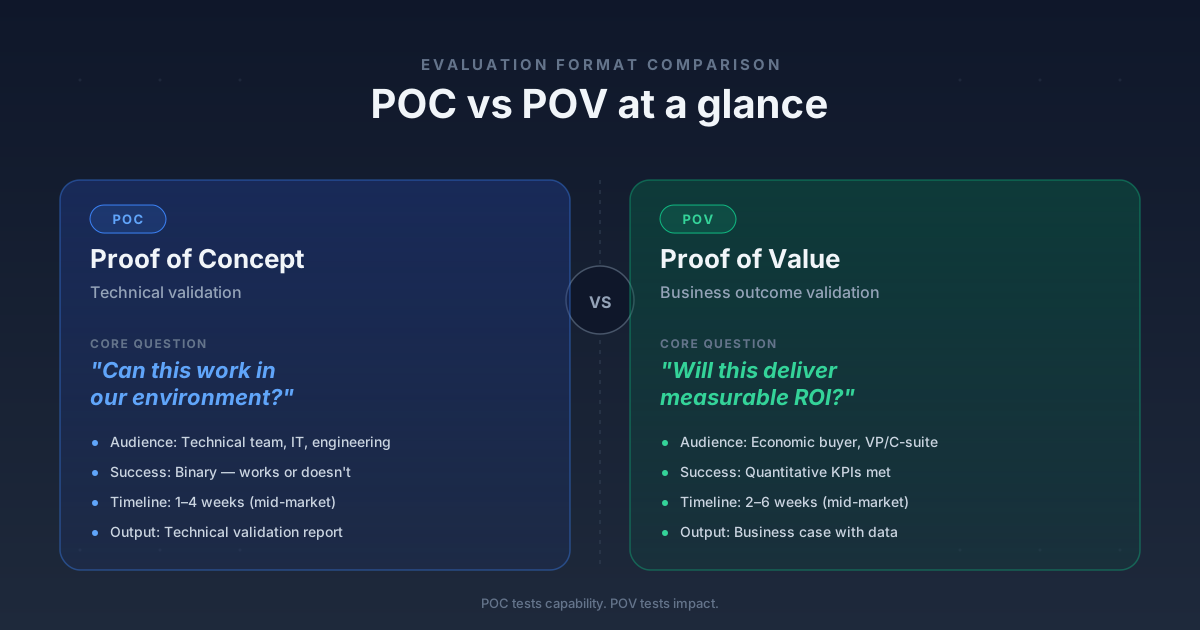
The difference between a proof of value vs proof of concept comes down to one thing: where the buyer's doubt sits. Technical doubt calls for a POC. Value doubt calls for a POV.
Here's the side-by-side breakdown:
| Dimension | Proof of concept (POC) | Proof of value (POV) |
|---|---|---|
| Core question | “Can this work in our environment?” | “Will this deliver measurable ROI?” |
| Primary audience | Technical team, IT, engineering | Economic buyer, VP/C-suite, champion |
| Success criteria | Binary: works or doesn’t | Quantitative: specific KPIs met |
| Typical timeline | 1 to 4 weeks (mid-market), 4 to 8 weeks (enterprise) | 2 to 6 weeks (mid-market), 4 to 12 weeks (enterprise) |
| Resources required | SE-heavy, limited stakeholders | Cross-functional: AE + champion + SE |
| Output | Technical validation report | Business case with data |
| Best for | New technology, integration-heavy products, regulated industries | Value-driven sales, competitive deals, executive buy-in |
The core question is the most important row. "Can it work?" is a fundamentally different question from "Is it worth it?" The first has a yes/no answer. The second requires measurement and judgment.
Primary audience matters for deal strategy. A POC satisfies the technical evaluators who can block a deal. A POV satisfies the economic buyers who fund it. In most enterprise deals, you need both audiences convinced.
Resources required is where the operational difference hits hardest. A POC is SE-heavy, with 2 to 3 technical evaluators on the buyer side. A POV requires cross-functional coordination: the AE managing the narrative, the champion providing access and context, the SE handling setup, and end users generating the data.
The risk if you skip each one is different too. Skip the POC and you risk a technical failure post-purchase. Skip the POV and you risk no-decision outcomes, where the buyer acknowledges the product works but can't justify the spend internally.
When to use a POC vs. a POV
When a POC is the right call
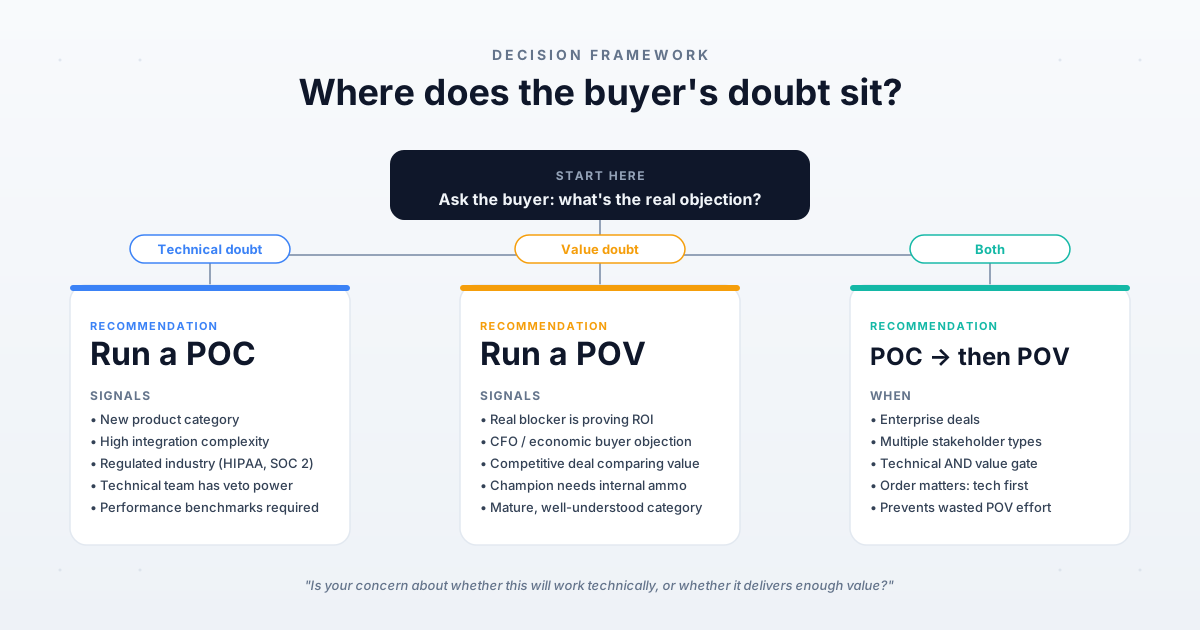
Run a POC when the buyer's primary doubt is whether your product can technically deliver in their environment. Specifically:
- The buyer has never used anything in your product category before
- Integration complexity is high (APIs, data migration, custom security requirements)
- Regulated industries where compliance must be proven before any value discussion starts
- The buyer's technical team has explicit veto power over purchasing decisions
- Performance requirements need to be validated against specific benchmarks
Your prospect is a healthcare company that needs to confirm your platform meets HIPAA requirements and can integrate with their EHR system before any business case discussion starts. Run a POC.
When a POV is the right call
Run a POV when the buyer already understands the technology (or the category is mature) and the real blocker is proving ROI. Specifically:
- The real objection is proving ROI to the economic buyer or CFO
- Multiple stakeholders need to see business impact, not just technical specs
- The deal is competitive, and the buyer is comparing you against alternatives on value
- The champion needs ammunition to sell internally
- The product category is well-understood and technical feasibility isn't in question
Your champion is a VP of Sales who believes in your product but needs to show the CRO that it will reduce sales cycle length by at least 15%. Run a POV.
When to run both (and in what order)
Enterprise deals often require both. The standard sequence is POC first to clear the technical gate, then POV to build the business case.
Running a POV without technical validation creates risk. If the product fails technically after you've built the business case, you've wasted everyone's time and damaged credibility.
Not every deal needs both. The question is: where does the buyer's doubt sit? If the product category is well-understood and the buyer's concern is purely about value, you can skip the POC entirely. If technical feasibility is the only question and the buyer already has budget approved, you might skip the POV.
Common mistakes when running POCs and POVs
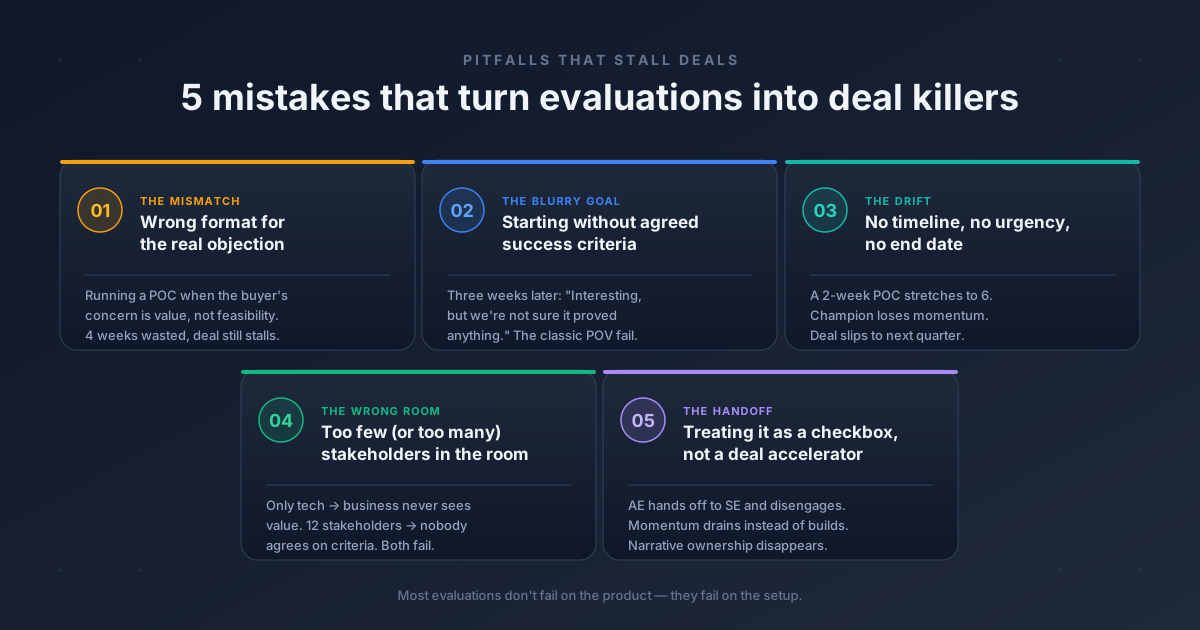
1. Running a POC when the real objection is about value
The buyer says "we need to test it" but what they mean is "we're not convinced it's worth the price." A POC won't answer that question. You'll spend 4 weeks proving the product works, and the deal still stalls because nobody built the business case.
What works instead: Ask the buyer directly: "Is your concern about whether this will work technically, or whether it will deliver enough value to justify the investment?" The answer determines the format. If they hesitate, it's usually a value question.
2. Starting without agreed success criteria
The evaluation kicks off without defining what "success" looks like. Three weeks later, the buyer says "it was interesting but we're not sure it proved anything." This is the most common POV failure mode.
What works instead: Before the evaluation starts, document 3 to 5 specific, measurable outcomes that both sides agree constitute success. Get the champion and the economic buyer to sign off. If the economic buyer won't engage in defining success criteria, that's a signal the deal has a champion problem, not an evaluation problem.
3. Letting the evaluation drag without a timeline
Open-ended evaluations kill deal velocity. A POC that was supposed to take 2 weeks stretches to 6 because nobody set a hard deadline. Meanwhile, the champion loses urgency and the deal slips to next quarter.
What works instead: Set a firm end date and a review meeting before the evaluation starts. Build it into the mutual action plan. If the buyer pushes back on a timeline, ask what's preventing them from committing to a date. The answer usually reveals a deeper blocker.
4. Involving too few (or too many) stakeholders
A POC with only the technical team means the business side never sees value. A POV with 12 stakeholders means nobody can agree on success criteria. Both fail.
What works instead: Match stakeholders to the evaluation type. POC: 2 to 3 technical evaluators. POV: champion + economic buyer + 1 to 2 end users. More than that, and you're running a committee, not an evaluation.
5. Treating the evaluation as a checkbox instead of a deal accelerator
Some AEs treat POCs and POVs as obstacles to get through rather than opportunities to build the business case. They hand it off to the SE and disengage until the results come back.
What works instead: The AE should own the narrative around the evaluation. Weekly check-ins with the champion. Progress updates tied to the success criteria. The evaluation should be building momentum toward a purchase decision, not consuming it. Sales engagement tools can help AEs stay on top of these touchpoints without letting anything slip.
How to run a POC: step by step
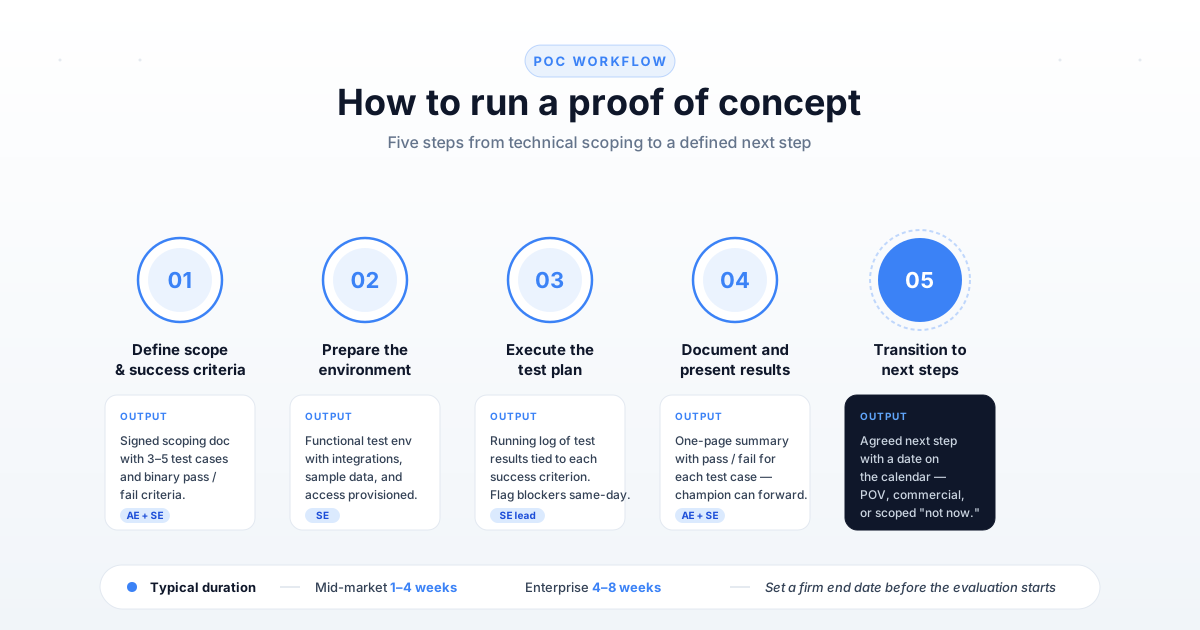
Step 1. Define scope and success criteria with the buyer
Work with the buyer's technical team to identify the specific capabilities being tested. What constitutes pass/fail? Get this in writing. A one-page scoping document with test cases, environment requirements, and success thresholds prevents scope creep and misaligned expectations.
Output: Signed scoping document with 3 to 5 test cases and binary pass/fail criteria.
Step 2. Prepare the environment
Set up the test environment, sample data, integrations, and access. The SE should own this step. The most common failure here: the environment isn't ready when the evaluation starts, burning the first week on setup instead of testing.
Output: Functional test environment with all required access provisioned.
Step 3. Execute the test plan
Run the agreed test cases. Document results in real time. Flag blockers immediately rather than waiting for the review meeting. If a test case fails, the buyer's team needs to know the same day so you can troubleshoot or adjust.
Output: Running log of test results tied to each success criterion.
Step 4. Document and present results
Create a clear, concise results summary tied to the success criteria. Present to both technical and business stakeholders. The output should be a document the champion can forward internally without needing you in the room to explain it.
Output: One-page results summary with pass/fail for each test case.
Step 5. Transition to next steps
A successful POC should lead to either a POV (if business value still needs proving) or a commercial conversation. A failed POC should lead to a clear "not now" or a scoped remediation plan. Don't let a completed POC sit without a defined next step. Every day between POC completion and the next meeting is momentum lost.
Output: Agreed next step with a date on the calendar.
How to run a POV: step by step
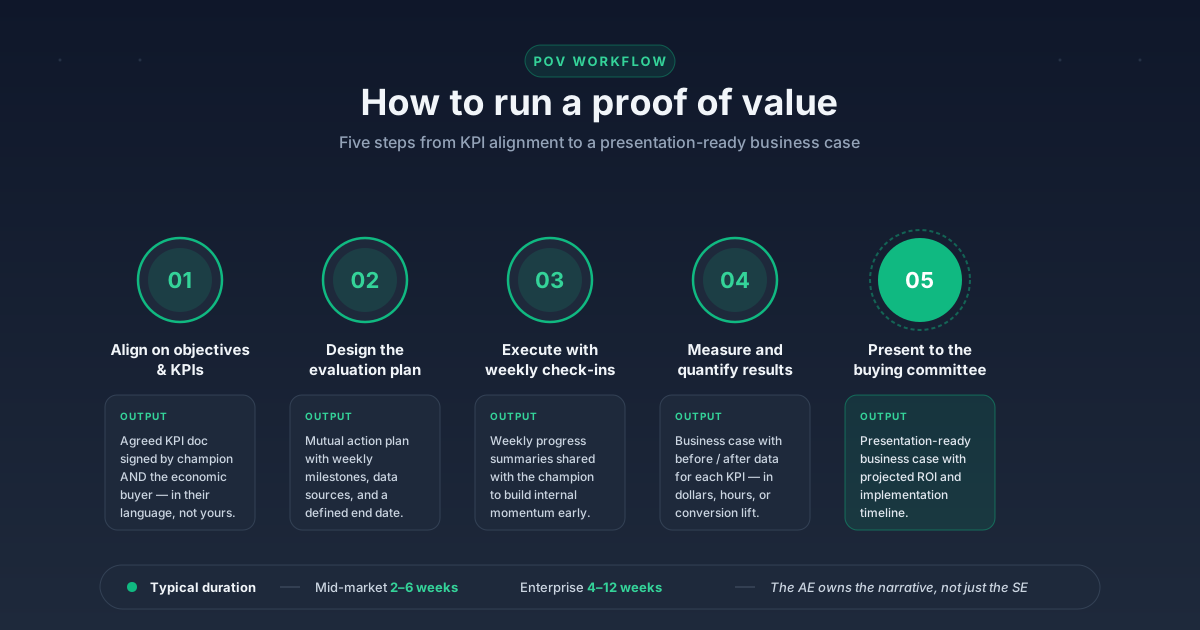
Step 1. Align on business objectives and KPIs
Work with the champion and economic buyer to define 3 to 5 measurable business outcomes. These should be tied to the buyer's actual priorities, not your product's feature list. If the buyer can't articulate what success looks like in their own language, the POV isn't ready to start.
Output: Agreed KPI document signed by the champion and economic buyer.
Step 2. Design the evaluation plan
Define the timeline, participants, data sources, and measurement methodology. Include a mutual action plan with milestones and check-ins. Be specific about what data will be collected, how it will be measured, and who is responsible for each piece. Sales analytics software can be invaluable for tracking the metrics that matter during a POV.
Output: Evaluation plan with weekly milestones and a defined end date.
Step 3. Execute with regular check-ins
Run the POV with weekly progress updates. Share interim data with the champion so they can build internal momentum. If early results are off-track, adjust before the final review. A POV that surprises everyone at the end (good or bad) is a POV that wasn't managed well.
Output: Weekly progress summaries shared with the champion.
Step 4. Measure and quantify results
Compile results against the agreed KPIs. Quantify impact in the buyer's language: dollars saved, hours recovered, conversion lift, cycle reduction. This is the business case document. It needs to be presentation-ready, not a raw data dump.
Output: Business case document with before/after data for each KPI.
Step 5. Present the business case to the buying committee
The POV output should be a presentation-ready business case the champion can use in their internal approval process. Include before/after data, projected ROI at full deployment, and a proposed implementation timeline. The champion shouldn't need to build a separate deck. Your output is their internal pitch.
Output: Presentation-ready business case with projected ROI and implementation timeline.
Best practices for POCs and POVs
Set a mutual action plan before the evaluation starts
Document the timeline, milestones, stakeholders, and the decision process after the evaluation. This prevents drift and keeps the deal moving. The mutual action plan should include what happens if the evaluation succeeds: "If we hit these KPIs, we move to contract review by [date]."
Use the evaluation to multi-thread
A POV is a natural opportunity to multi-thread by involving stakeholders who haven't been in the conversation yet. Use check-in meetings to bring in the economic buyer, IT, or end users. Every new stakeholder who sees positive interim results becomes another voice supporting the purchase decision.
Give stakeholders self-serve access to the product experience
Not every stakeholder can attend every meeting. Giving them a way to experience the product on their own terms keeps engagement high without requiring more SE time. Tools like Guideflow let teams create self-serve interactive product experiences that stakeholders can explore asynchronously. This is particularly useful when buying committees have 6 to 10 people with conflicting schedules. You can set up a demo center where every stakeholder accesses the right experience for their role.
Document everything in real time
Don't wait until the end to compile results. Weekly summaries keep the champion engaged and give them material to share internally. If a stakeholder asks "how's the evaluation going?" your champion should have an answer ready, not a promise to follow up.
Tie the evaluation outcome to a commercial next step
Before the evaluation starts, agree on what happens if it succeeds. "If we hit these KPIs, we move to contract review by [date]." This prevents the "great POV, but we need to think about it" stall that kills deals in the weeks after an evaluation ends.
How to measure POC and POV success
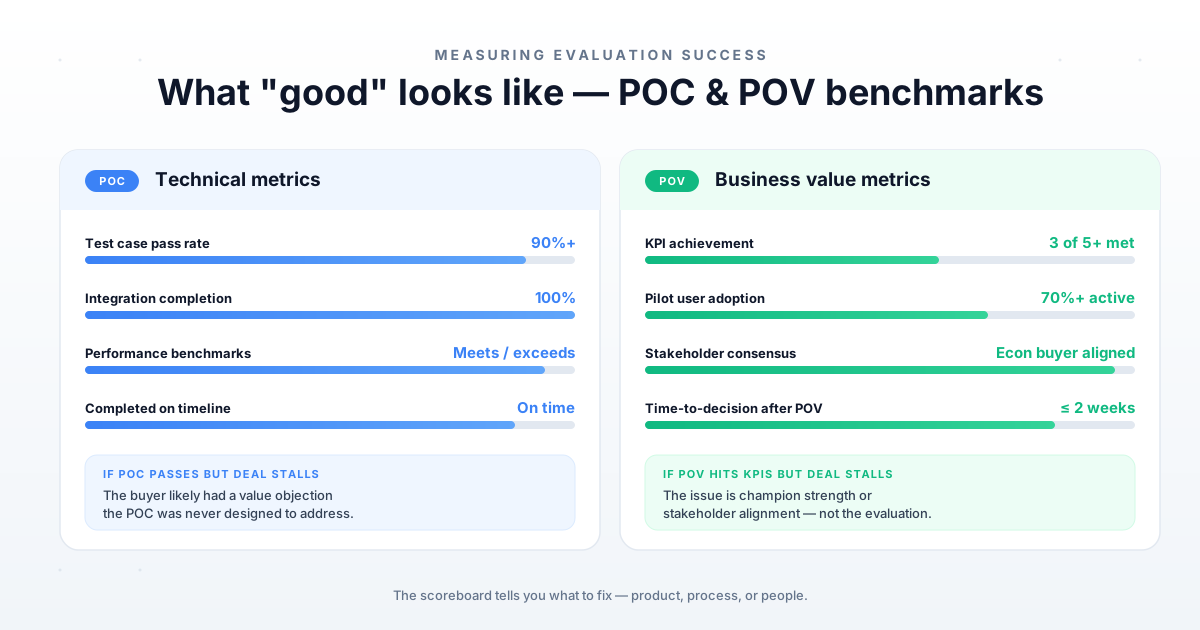
POC metrics
| Metric | What it measures | Good result |
|---|---|---|
| Test case pass rate | Technical feasibility | 90%+ of defined test cases pass |
| Integration completion | Compatibility with buyer’s stack | All required integrations functional |
| Performance benchmarks | Speed, scale, reliability | Meets or exceeds agreed thresholds |
| Time to complete | Evaluation efficiency | Completed within agreed timeline |
POV metrics
| Metric | What it measures | Good result |
|---|---|---|
| KPI achievement | Business value delivered | 3 of 5+ agreed KPIs met or exceeded |
| User adoption during pilot | Real-world usability | 70%+ of pilot users actively engaged |
| Stakeholder consensus | Buying committee alignment | Economic buyer confirms value |
| Time-to-decision after POV | Deal velocity impact | Decision within 2 weeks of POV completion |
If your POV hits the KPIs but the deal still stalls, the problem isn't the evaluation. It's champion strength or stakeholder alignment. A POV that produces strong results but doesn't convert usually means the champion can't drive the internal buying process. Revenue intelligence platforms can help you spot these signals earlier by surfacing deal health indicators before the evaluation even starts.
If your POC passes technically but the deal doesn't progress, the buyer likely had a value objection that the POC was never designed to address. This circles back to the most common mistake: running the wrong evaluation format.
What to do next
Five actions you can take in the next 24 hours:
Identify which active deals need a POC, which need a POV, and which need neither. Use the decision framework from this guide. If you can't tell where the buyer's doubt sits, that's your first discovery question on the next call.
Build a one-page scoping document with fields for success criteria, timeline, stakeholders, and next steps. Use it for every evaluation going forward. Consistency in scoping prevents the most common failure modes.
Have a 15-minute conversation about how you currently run evaluations and where the process breaks down. Agree on ownership for each step. The AE owns the narrative and the timeline. The SE owns the technical execution.
that stakeholders can explore without scheduling another meeting. This reduces the SE bottleneck and keeps deals moving between check-ins.
Every deal with a POC or POV should have the evaluation scoped, time-bound, and tied to a commercial next step before it begins.
Closing
The difference between a POC and a POV isn't academic. Choosing the wrong format costs weeks of cycle time and SE hours, and often leads to "no decision" outcomes. The right evaluation format, scoped correctly with agreed success criteria, is one of the highest-impact moves an AE can make to increase win rate and deal velocity.
Pick the format that matches where the buyer's doubt sits, scope it before you start, and tie the outcome to a next step.
Start your journey with Guideflow today!
FAQs
A POC (proof of concept) tests whether a product works technically in the buyer’s environment. A POV (proof of value) tests whether the product delivers measurable business outcomes. The core distinction: POC answers “can it work?” while POV answers “is it worth it?”
POC stands for proof of concept. In a business context, it refers to a scoped evaluation that validates whether a product or technology can perform specific functions before a full purchase commitment. The POC sales meaning is the same: a technical validation step within the sales process.
POV stands for proof of value. In sales, it refers to a structured evaluation where the buyer tests a product against specific business KPIs to determine whether the investment is justified. The output is a business case, not a technical report.
Yes. In enterprise deals, it’s common to run a POC first to clear technical validation, then a POV to build the business case. The sequence matters: technical feasibility should be confirmed before investing in a value assessment. Some deals can skip the POC if the product category is well-understood.
POCs typically run 1 to 4 weeks for mid-market deals and 4 to 8 weeks for enterprise. POVs run 2 to 6 weeks for mid-market and 4 to 12 weeks for enterprise. The key is setting a firm timeline before starting. Open-ended evaluations stall deals.
POCs are primarily technical: SEs, IT, and engineering evaluators (2 to 3 people). POVs are cross-functional: the AE, champion, economic buyer, and 1 to 2 end users. Matching stakeholders to the evaluation type is critical for getting a clear outcome.
A failed POC means the product doesn’t meet technical requirements. The next step is either a scoped remediation plan or a mutual “not now” decision. A failed POV means the product didn’t deliver enough measurable value. This is harder to recover from, which is why agreeing on realistic success criteria upfront matters.
Interactive demos serve as a pre-evaluation step, letting stakeholders explore the product before committing to a full POC or POV. They reduce the time and SE resources needed for initial validation and keep buying committee members engaged between meetings. Sharing interactive demos asynchronously means every stakeholder on the buying committee can experience the product on their own schedule. They don’t replace a full evaluation but they can shorten the timeline and improve stakeholder alignment.