

You already paid to acquire these customers. Then they went quiet. No opens, no logins, no purchases. The instinct is to spend more on new acquisition, but that math rarely wins.
Winning back a lapsed customer costs a fraction of acquiring a fresh one, and the return is measurable. WinBack Labs' 2023 Customer WinBack Benchmark Study found that winback campaigns return an average of 26% of past customers for small and mid-sized businesses, generating around $242.7K in first-year revenue per campaign. That is revenue sitting in your existing database, waiting for the right message at the right moment.
Most teams still run winback like a manual email blast. Same offer, same timing, same list. It underperforms because the real levers are timing, segmentation, and relevance, not send volume. A 90-day-lapsed power user needs a different message than a one-time trial signup who never activated. Blanket discounts erode margin and train customers to wait for the next coupon.
The market has caught up. The churn win-back automation category was valued at $4.2B in 2025 and is projected to reach $18.7B by 2034, per MarketIntelo (2025), with software holding a 62.4% share. The tools below help you detect inactivity, segment precisely, and orchestrate re-engagement across channels without adding manual work.
What's inside
This guide is for growth marketers, lifecycle marketers, CRM managers, and retention leads who need to recover revenue from lapsed customers without hiring more headcount.
We picked and ranked these seven platforms against the criteria that decide winback outcomes:
- Automation depth: trigger logic, journey branching, and inactivity detection
- Segmentation quality: how precisely you can group lapsed customers by behavior and value
- Channel coverage: email, SMS, push, in-app, and orchestration across them
- Measurement: attribution, suppression, and list hygiene controls
You'll see a side-by-side comparison table, a breakdown of each tool, and a buyer's checklist before you commit budget.
TL;DR
- Best for enterprise lifecycle teams: Braze, for cross-channel journey orchestration at scale with predictive churn signals.
- Best for individualized timing: Hightouch, for warehouse-native audiences and AI-driven send-time decisioning.
- Best for cross-channel orchestration: Iterable, for multichannel journeys with deep experimentation.
- Best for ecommerce reactivation: Klaviyo, for email and SMS winback tied to purchase behavior.
- Best for mobile and app retention: MoEngage, for push, in-app, and behavioral analytics on app users.
- Best for simple email reactivation: Campaign Monitor, for lean teams that want straightforward journeys.
What is winback campaign software?
Winback campaign software is a category of lifecycle marketing tools that detect customer inactivity, trigger automated re-engagement journeys, personalize messages and offers, and measure revenue recovered from lapsed customers.
It differs from a basic email service provider in one way that matters: it treats winback as a behavioral workflow, not a one-off send. The software watches for lapse signals, decides who to contact and when, and adapts the sequence based on response.
Core capabilities to expect:
- Inactivity detection: identify lapse windows based on last login, last purchase, or engagement decay
- Segmentation: group lapsed customers by value, recency, product usage, and churn risk
- Automated journeys: multi-step sequences that branch on behavior
- Personalization: dynamic content, offers, and timing per segment or individual
- Cross-channel delivery: email, SMS, push, and in-app coordinated as one journey
- Measurement and suppression: attribution of recovered revenue, plus sunset rules and list hygiene
Winback campaigns sit inside broader lifecycle marketing automation. The campaign management software market, which covers these journeys, was valued at $14.49B in 2025 and is forecast to reach $36.45B by 2035, per Market Research Future (2024). The category is maturing fast because retention economics keep winning the budget argument.
When to use winback campaign software
Re-engage inactive customers before churn hardens
There's a window where a lapsed customer is recoverable and a window where they're gone. Winback software watches the signals: declining open rates, dropped logins, a purchase gap that exceeds the normal cycle. The trigger fires while intent still exists, not months later when the account is cold. Timing is the single biggest lever, and manual campaigns almost always fire too late.
Recover revenue with segmented offers
A one-size-fits-all discount is weak because it treats a high-value lapsed customer the same as a low-intent trial. Segmented offers change the economics. A loyal customer who lapsed on a product change might need a feature update, not a coupon. A price-sensitive segment might respond to a targeted deal. Segmentation lets you spend incentive budget where it recovers the most revenue.
Automate follow-up across email, SMS, push, and in-app
Email alone leaves reach on the table. Some lapsed customers stopped opening email months ago but still check push notifications or respond to SMS. Channel orchestration means the journey follows the customer to where they're actually reachable, and the platform coordinates so you don't hit the same person on four channels at once.
Comparison table
This table lets you compare automation depth, personalization, channel coverage, and pricing at a glance before you read the full breakdowns. Tools are ordered by relevance to winback and re-engagement use cases.
| # | Product | Best for | Key differentiator | Pricing | G2 rating |
|---|---|---|---|---|---|
| 1 | Braze | Enterprise lifecycle teams | Cross-channel journey orchestration with predictive churn | Custom pricing (MAU / action credits) | 4.5/5 |
| 2 | Hightouch | Data-rich growth teams | Warehouse-native audiences plus AI Decisioning | Free tier; usage-based paid plans | 4.6/5 |
| 3 | Iterable | Cross-channel lifecycle teams | Multichannel journeys with deep experimentation | Custom pricing | 4.4/5 |
| 4 | Klaviyo | Ecommerce and B2C teams | Purchase-behavior email and SMS winback | Free plan; paid scales with profiles | 4.6/5 |
| 5 | MoEngage | Mobile and app retention | Cross-channel engagement with behavioral analytics | Custom pricing | 4.5/5 |
| 6 | Campaign Monitor | Lean email-focused teams | Straightforward email automation and journeys | Free plan; paid tiers available | 4.1/5 |
| 7 | AIQ | Retail loyalty and marketing | AI messaging tied to loyalty and ecommerce data | From $399/month per store | 4.7/5 |
Best winback campaign software for 2026
1. Braze
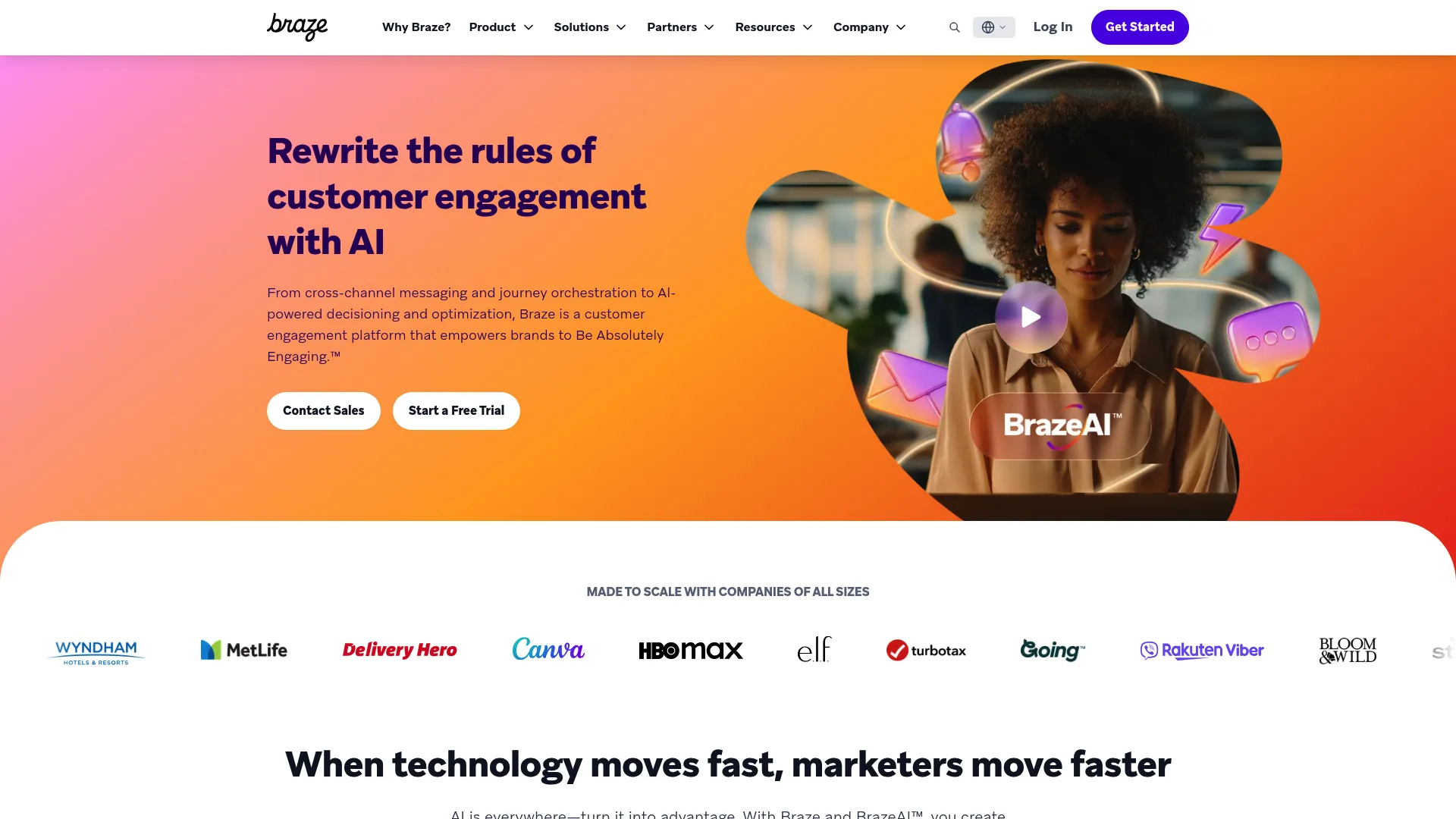
Braze is a customer engagement platform built for cross-channel messaging, journey orchestration, and AI-powered personalization at scale. For winback specifically, Braze pairs its Canvas journey builder with predictive churn scoring, so you can trigger re-engagement before a customer fully lapses. It is the platform enterprise lifecycle teams reach for when a winback campaign has to span email, push, in-app, and SMS in one coordinated flow.
Best for: Enterprise and growth marketing teams running real-time cross-channel customer engagement.
Key strengths
- Braze Data Platform: unified customer profiles for lapse detection
- Cross-channel messaging: email, push, in-app, SMS in one journey
- Journey orchestration: Canvas builder with behavioral branching
- BrazeAI: predictive churn and personalization
Why choose Braze: Choose Braze when your winback motion needs to coordinate several channels for millions of users and react to behavior in real time. It fits teams with the data infrastructure and headcount to run sophisticated lifecycle programs.
Braze pricing: Braze lists four platform editions, Braze Go, Select, Pro, and Enterprise, with pricing that scales by monthly active users and action credits. A free trial is available. No public numeric price is shown on the pricing page, so plan on a sales conversation to scope cost.
2. Hightouch
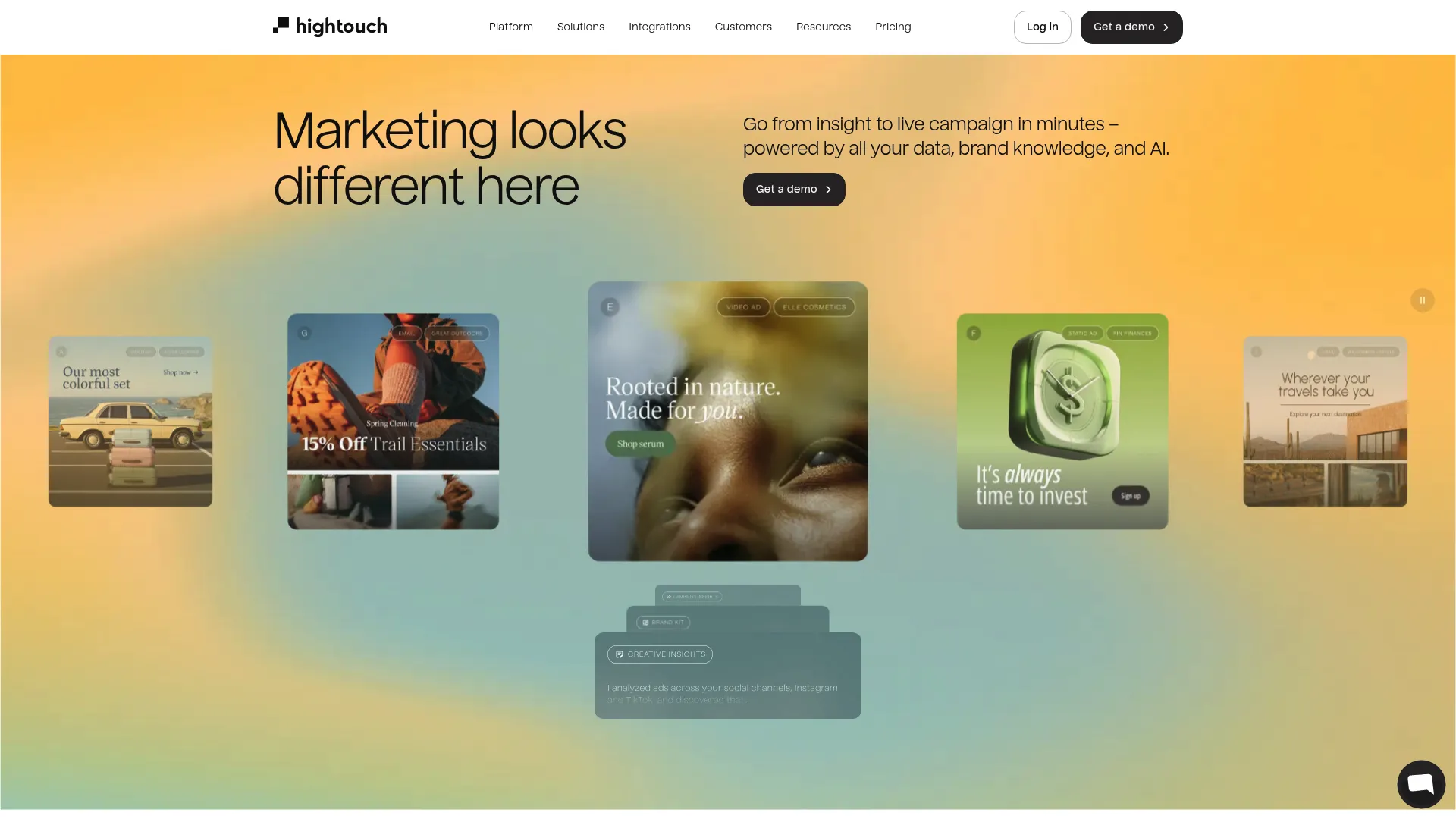
Hightouch is a composable CDP and agentic marketing platform that activates data straight from your warehouse. That warehouse-native model is the point: your winback audiences are built on the same trusted data your analysts already use, so lapse definitions stay accurate and consistent. Its AI Decisioning layer optimizes who to contact and when, which makes it a strong fit for individualized winback timing.
Best for: Data-rich growth teams that want warehouse-native audience building with AI-driven send decisions.
Key strengths
- Reverse ETL: syncs to 300+ downstream destinations
- Hightouch Events: real-time personalization triggers
- AI Decisioning: optimizes timing and targeting per user
- Observability: monitors data quality feeding campaigns
Why choose Hightouch: Choose Hightouch when your customer data lives in a warehouse and you want winback audiences and sunset logic defined on that single source of truth. It suits teams tired of syncing stale lists between tools.
Hightouch pricing: Hightouch offers a free Basic Reverse ETL tier with up to two active syncs. Its Agentic Marketing Platform and Composable CDP are usage-based and require a demo. No public dollar price is shown on the pricing page.
3. Iterable
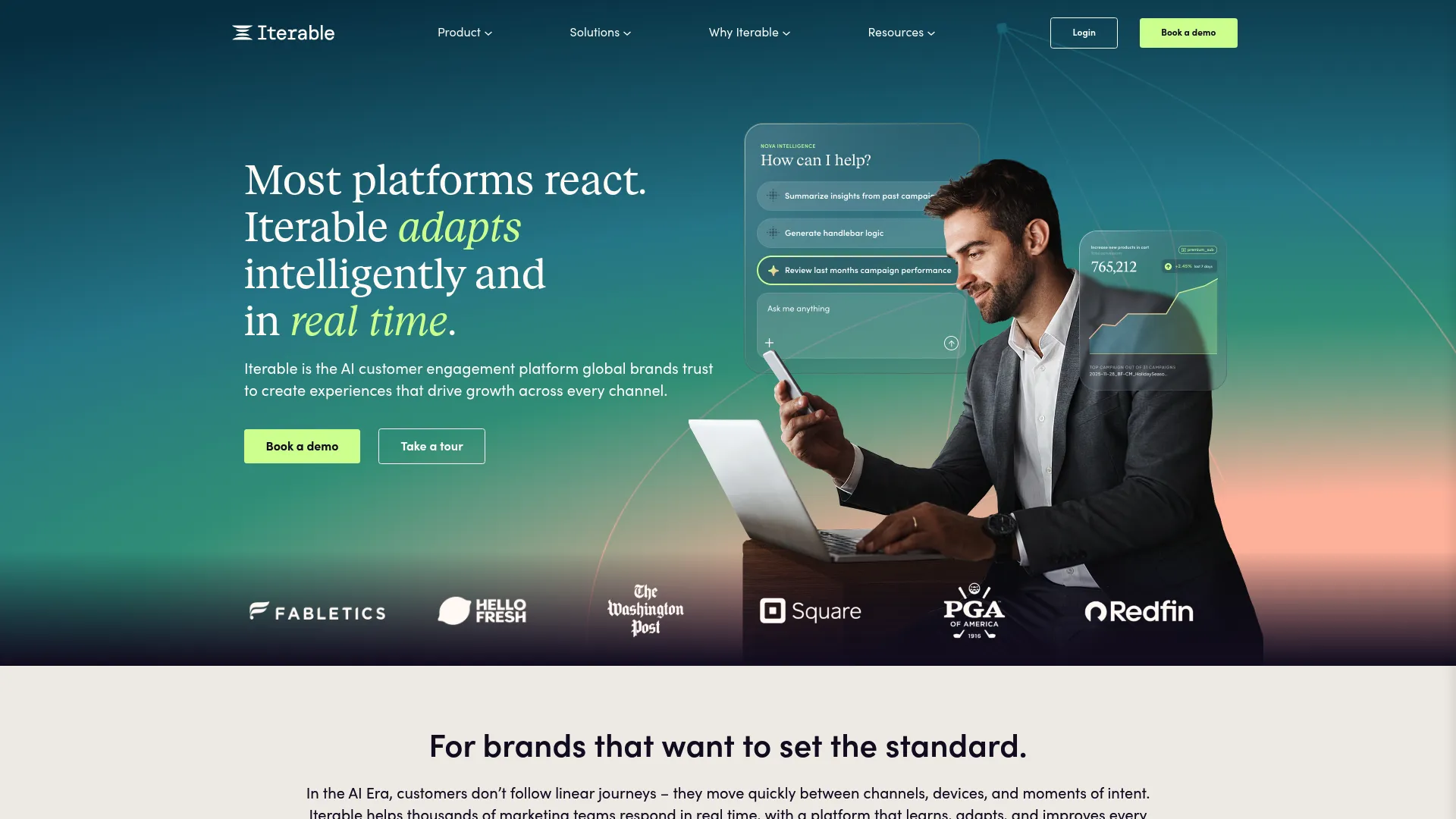
Iterable is an AI customer engagement platform for cross-channel messaging and orchestration. Its winback strength is breadth: you can build a lapsed-customer journey that moves across email, SMS, push, in-app, web push, and more, then test variations at each step. That experimentation depth lets lifecycle teams find the reactivation sequence that actually recovers customers rather than guessing.
Best for: Cross-channel lifecycle teams running coordinated re-engagement programs.
Key strengths
- Cross-channel messaging: email, SMS, push, in-app, web
- Journeys: visual campaign orchestration with branching
- Personalization: dynamic content per segment
- Experimentation: A/B and multivariate testing built in
Why choose Iterable: Choose Iterable when your winback program needs true multichannel reach plus the testing tools to optimize each step. It fits mid-market and enterprise teams that treat reactivation as an ongoing experiment.
Iterable pricing: Iterable does not publish pricing on its site and directs prospects to contact sales for an estimate. Expect enterprise-oriented, usage-based packaging scoped to your channels and volume.
4. Klaviyo
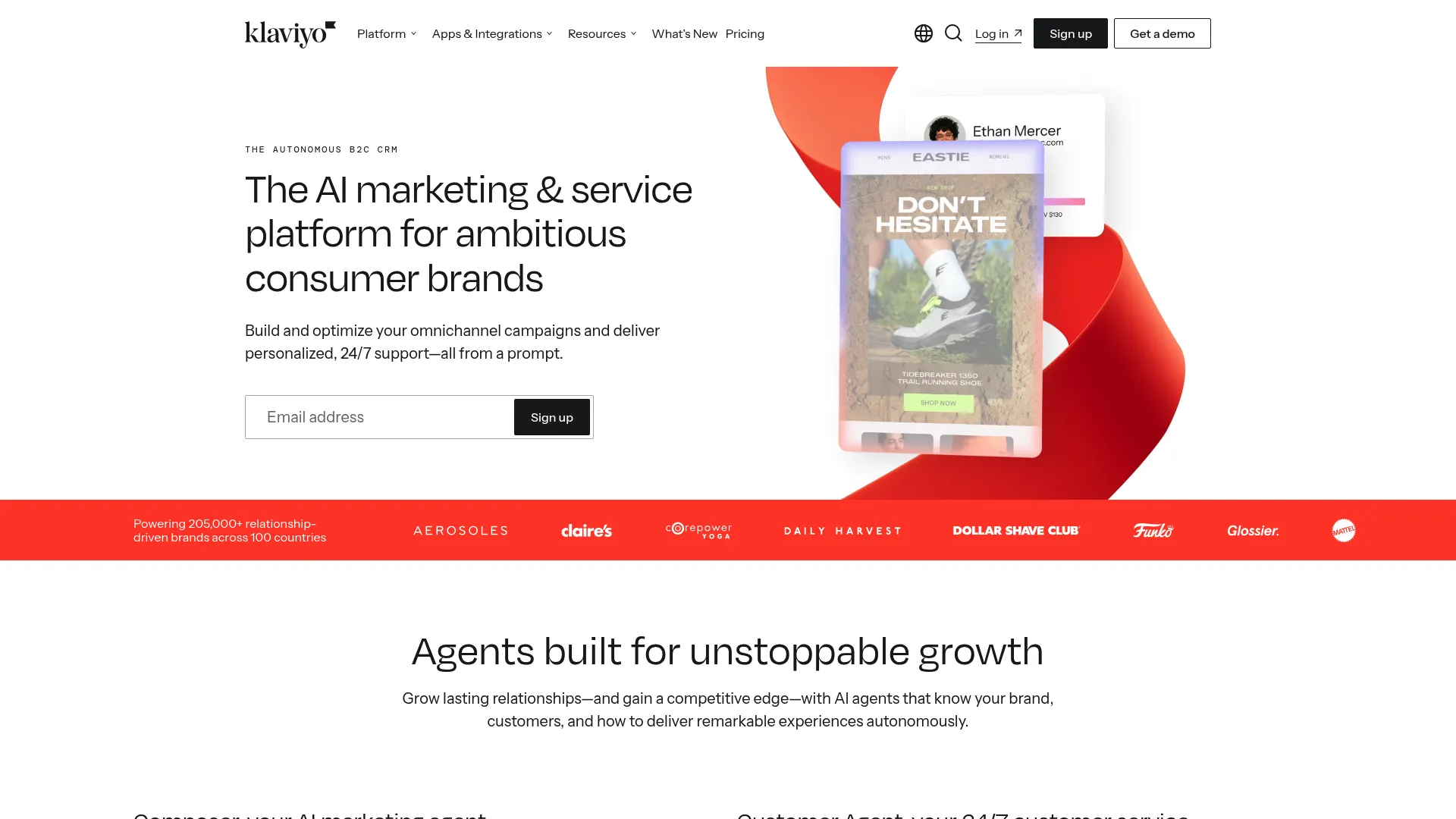
Klaviyo is a customer engagement platform strongest in ecommerce and B2C, where winback ties directly to purchase behavior. It builds rich customer profiles, then triggers email and SMS flows when a buyer stops purchasing within their normal cycle. Setup is approachable, so lean commerce teams can launch a lapsed-purchaser flow without a dedicated ops person.
Best for: Ecommerce and B2C teams that want purchase-driven winback across email and SMS.
Key strengths
- Customer profiles: unified segmentation on purchase data
- Automated flows: email, SMS, and push winback sequences
- Segmentation: behavior and value-based grouping
- Integrations: connects to 350+ apps
Why choose Klaviyo: Choose Klaviyo when your customers buy on a repeat cycle and you want reactivation flows keyed to purchase gaps. It is a practical fit for commerce-led teams that value fast setup over enterprise complexity.
Klaviyo pricing: Klaviyo offers a free plan with up to 250 active profiles, 500 email sends per month, and $5 of mobile messages per month. Paid tiers scale with the number of active profiles; higher-tier prices are not publicly listed on the pricing page.
5. MoEngage
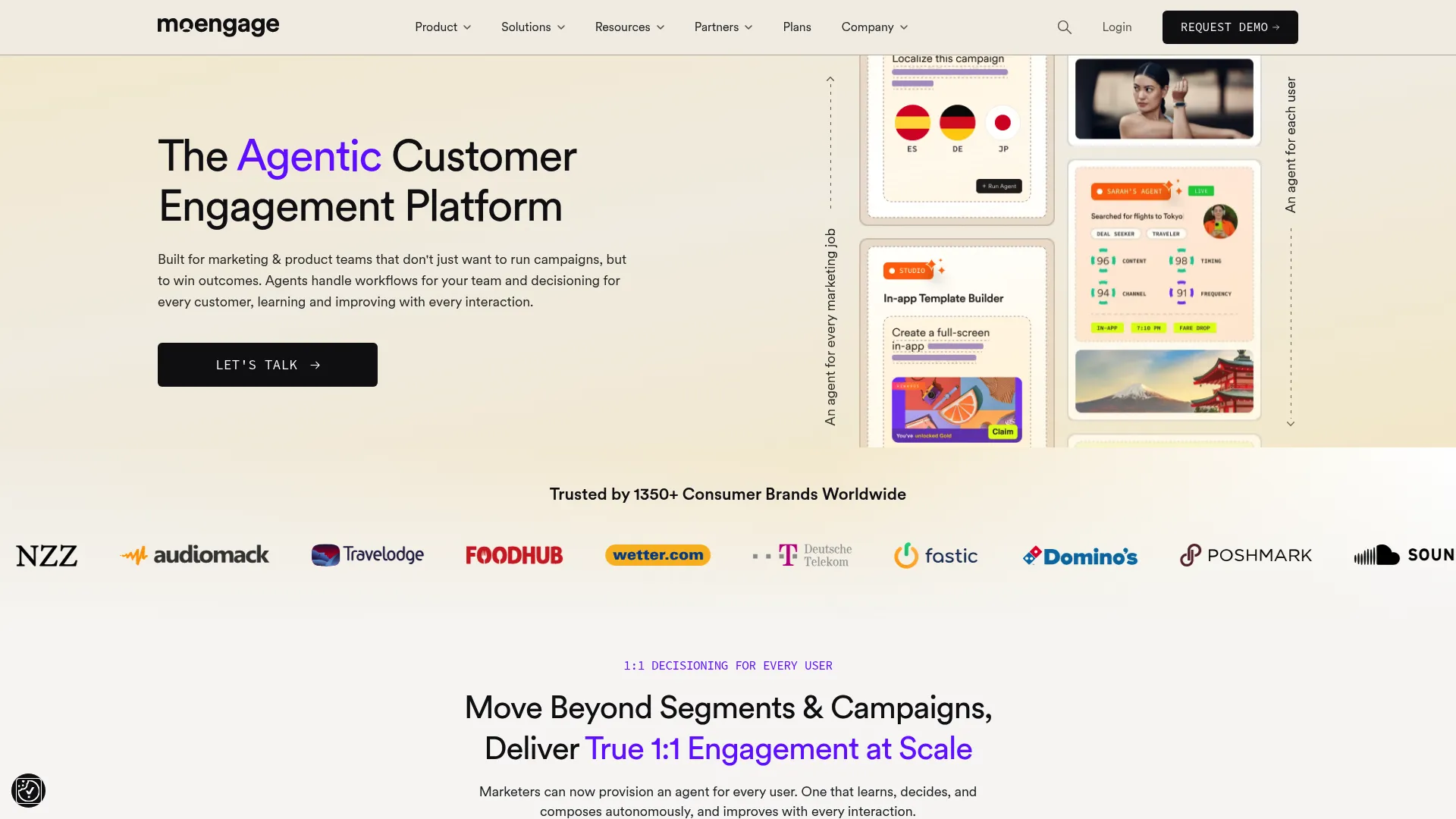
MoEngage is an agentic customer engagement platform built for cross-channel marketing, analytics, and personalization, with real strength in mobile and app retention. For winback, that matters: many lapsed app users abandoned email long ago but still respond to push and in-app messages. MoEngage combines behavioral analytics with those channels to re-engage users where they still open the app.
Best for: B2C and mobile-first teams that need omnichannel retention journeys for app users.
Key strengths
- Cross-channel campaigns: push, SMS, email, in-app
- Customer analytics: behavioral insights and cohorts
- Personalization: web and app content tailoring
- Segmentation: activity-based lapse targeting
Why choose MoEngage: Choose MoEngage when a large share of your lapsed customers live in your mobile app and email alone won't reach them. It fits teams that want analytics and engagement in one retention platform.
MoEngage pricing: MoEngage lists plans including Growth, Enterprise, MoEngage Inform, and MoEngage Personalize. Public numeric prices are not shown on the pricing page; the plans route to a sales conversation.
6. Campaign Monitor
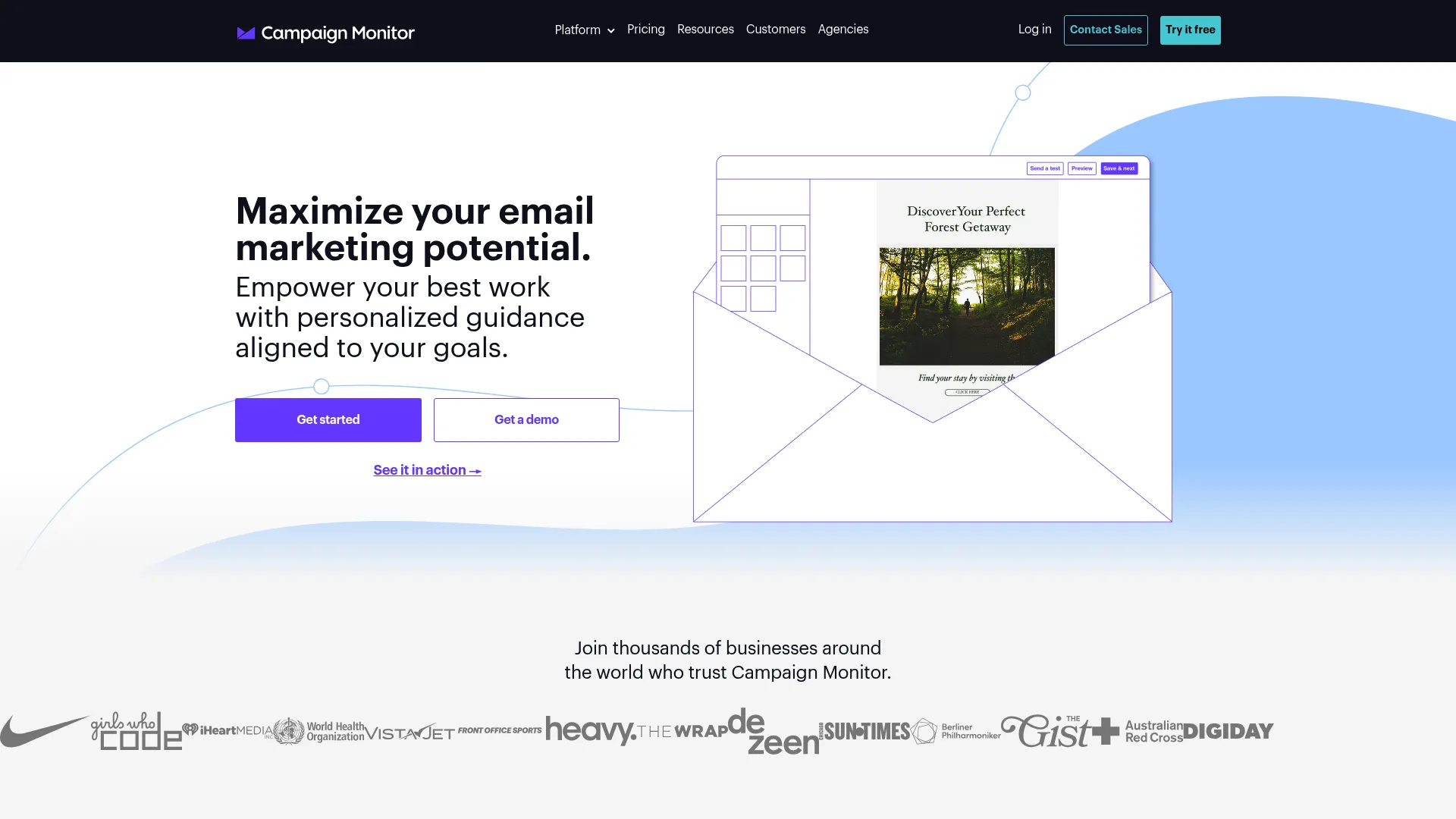
Campaign Monitor is an email marketing platform for creating, sending, and tracking campaigns, with automation journeys that cover the essentials of email winback. Its appeal is directness. A lean team can build a lapsed-subscriber re-engagement sequence with templates and a straightforward journey builder, without wading through enterprise configuration.
Best for: Lean teams that want simple, email-focused winback with minimal setup.
Key strengths
- Email campaign creation: templates and drag-and-drop editor
- Automations: journey-based winback sequences
- Analytics: campaign engagement reporting
- Segmentation: list-based targeting
Why choose Campaign Monitor: Choose Campaign Monitor when email is your primary winback channel and you want a tool the whole team can run quickly. It performs best for small teams that value simplicity over multichannel orchestration.
Campaign Monitor pricing: Campaign Monitor's public pricing page shows Free, Lite, Essentials, Premier, and custom Enterprise plans. Its website builder is listed at $10 per month. Some paid-tier prices are not exposed in the public page text, so confirm current rates on the pricing page.
7. AIQ
AIQ, branded as Alpine IQ, is an AI-driven platform for retail brands that combines ecommerce, loyalty, marketing, analytics, and data operations. For winback, it ties targeted re-engagement, rewards, deals, and drip messaging to loyalty and purchase data. That loyalty-plus-messaging combination gives retail operators a direct path to revenue recovery from lapsed shoppers.
Best for: Retail operators needing integrated loyalty, ecommerce, and customer marketing automation.
Key strengths
- AI-driven messaging: SMS, email, voice, push, direct mail
- Loyalty tools: reward tiers and omnichannel sign-up
- Ecommerce and analytics: synced customer data
- Drip messaging: automated re-engagement sequences
Why choose AIQ: Choose AIQ when loyalty and rewards are central to your winback strategy and you want messaging tied directly to that program. It fits retail brands consolidating loyalty, ecommerce, and marketing in one place.
AIQ pricing: AIQ describes pricing as custom but publishes default rates in its help center, starting at $399 per month per store license. It also lists a transaction-based license and a $70 per month "Half baked" tier. There is no free tier.
Considerations
Before you commit budget, verify these five criteria against your own data and stack. The right tool depends on how your customers lapse and where you can reach them.
Timing and trigger logic
Check how the platform defines a lapse and how flexibly you can set the trigger window. A fixed 90-day rule fails when your product has multiple purchase cycles. Look for behavioral triggers, last-activity thresholds you control, and predictive signals that fire before a customer fully churns. Timing is the single biggest driver of winback recovery.
Segmentation depth
Confirm you can segment lapsed customers by value, recency, product usage, and churn risk, not just by list membership. A tool that only supports static lists will push you toward blanket offers. Dynamic, behavior-based segments let you match incentive spend to the customers most likely to return and worth the most.
Channel coverage
Verify the channels your lapsed customers actually respond to. If most of your churned users abandoned email, an email-only tool caps your reach. Check whether the platform coordinates email, SMS, push, and in-app as one journey, and whether it prevents over-messaging across channels.
Measurement and attribution
Confirm the platform can attribute recovered revenue back to specific winback journeys, not just report opens and clicks. Your CFO will ask what the campaign returned. Look for cohort tracking, holdout groups, and reporting that ties reactivation to real revenue so you can defend the spend.
Suppression and list hygiene
Check for sunset rules and suppression logic. Repeatedly emailing someone who will never return hurts deliverability and margin. A strong platform lets you set exit conditions, suppress unresponsive contacts after a defined sequence, and keep your sender reputation intact.
Conclusion
Winback is the highest-ROI motion most teams underuse. The revenue is already in your database; the question is which tool fits how your customers lapse and where you can reach them.
For enterprise lifecycle teams that need real-time cross-channel orchestration, Braze and Iterable lead. For growth teams whose customer data lives in a warehouse and who want individualized timing, Hightouch is the strongest fit. For ecommerce and lean teams, Klaviyo and Campaign Monitor deliver purchase-driven reactivation without enterprise overhead, and MoEngage is the pick when your lapsed users live in a mobile app. AIQ suits retail brands that run winback through loyalty.
The practical next step: shortlist two or three tools by your channel needs and existing stack fit, then run a scoped pilot on one lapsed segment. Measure recovered revenue against a holdout before you roll it out wide.
While you're rethinking how you re-engage buyers, remember that the message matters as much as the tool. Static links convert less than experiences people can click through. If you want prospects and lapsed users to actually see your product's value, Guideflow lets you build interactive demos they can explore on their own. You can capture your product in a few clicks, personalize the story per audience, share it anywhere, and analyze engagement in real time.
Start your journey with Guideflow today!
FAQs
They overlap heavily and are often used interchangeably. In practice, winback campaigns focus on customers who stopped purchasing or paying, while reactivation campaigns target subscribers or users who went inactive, like a dormant email list or an app user who stopped logging in. The playbook is similar: detect the lapse, segment, and re-engage with a relevant message.
It depends on your purchase or usage cycle, not a fixed calendar. A good sequence usually runs three to five touches over a few weeks, with clear exit conditions. If someone hasn't responded after the final touch, suppress them rather than keep sending. Base your lapse window on your product's normal cycle, then trigger while intent still exists.
There isn't one best incentive, which is why segmentation matters. A high-value customer who left over a product issue may respond to a feature update or a personal note, not a coupon. A price-sensitive segment may need a targeted discount. Match the incentive to the reason the customer lapsed, and reserve steep discounts for segments where the recovered revenue justifies the margin hit.
Use whichever channel the lapsed customer still responds to, which is often both in sequence. Email carries more detail and costs less to send. SMS gets higher immediate attention and reaches people who stopped opening email. The strongest winback programs coordinate email, SMS, push, and in-app so the message follows the customer without over-messaging any single channel.
Set sunset rules before you launch. Define a maximum number of touches and a window, then suppress contacts who don't engage after the final message. Continuing to message someone who will never return hurts deliverability and can drag down your sender reputation. Stopping cleanly protects the rest of your list.
Recovered revenue and reactivation rate are the metrics that matter, not opens and clicks alone. Track how many lapsed customers returned, the revenue they generated, and the cost of the incentive. Use a holdout group so you can prove the campaign caused the recovery. WinBack Labs' 2023 study reported roughly $242.7K in first-year revenue per SMB campaign, which shows why attribution is worth setting up properly.
Yes. B2B teams use winback software to re-engage churned accounts, expired trials, and dormant users inside a subscription. The signals differ from ecommerce, think dropped logins, declining feature usage, or a renewal that lapsed, but the workflow is the same: detect inactivity, segment by account value and risk, and trigger a relevant re-engagement sequence.
No. A discount is one tool, and often the wrong first move. Many customers lapse for reasons a coupon won't fix, like a product gap, a bad support experience, or simply forgetting the value. Leading with a discount trains customers to wait for one and erodes margin. Test value-led messages, feature updates, and personal outreach before you reach for price.






.avif)