Inventory breaks quietly, then all at once. One quarter your stock numbers feel roughly right. The next quarter, a missed reorder triggers a $200K fulfillment delay, finance can't reconcile carrying costs, and your board slide has a gap where inventory turnover should be.
Spreadsheets carry teams through the early stages. They stop working the moment multiple people update stock simultaneously, one warehouse becomes three, or a single sales channel becomes five. At that point, the problem is no longer stock accuracy alone. It's cash tied up in slow-moving items, orders delayed because a reorder point was never set, and leadership meetings built on numbers nobody fully trusts.
The global inventory management software market reached $3.7 billion in 2025, according to Grand View Research, with cloud-based tools holding 65.51% of revenue that year (Mordor Intelligence, 2026). The growth reflects a straightforward fact: As businesses scale, the cost of getting inventory wrong rises faster than the cost of the software that prevents it.
This guide covers 15 tools, how they differ by operating model, and how to pick the one that becomes the right system of record for your team.
What's inside
This guide is for founders, operators, finance leads, ecommerce teams, manufacturers, and anyone managing physical stock across locations or channels. Tools were selected based on:
- Inventory tracking depth: variants, lots, serial numbers, multi-location
- Integration fit: ecommerce, accounting, ERP, shipping, POS
- Pricing transparency: real tier data from vendor pages, not estimates
- G2 ratings: verified from live listings
You'll get a comparison table, use-case guidance, a buyer's checklist, and FAQs covering category fundamentals.
TL;DR
- Best for small and midsize inventory teams: inFlow covers stock, purchasing, sales, and fulfillment without requiring an ERP rollout
- Best for visual mobile inventory: Sortly gives field teams a photo-based tracking tool with a free plan to start
- Best for ecommerce operations: Ordoro connects shipping, dropshipping, and multichannel inventory; Cin7 covers broader channel and warehouse needs
- Best for manufacturing inventory: Katana ties production planning directly to stock and purchase orders
- Best for ERP-scale inventory: NetSuite ERP puts inventory, finance, and order management in one system
- Best for shipping-led fulfillment: ShipStation handles multi-carrier order operations; ShipBob and ShipMonk suit teams ready to outsource warehousing
What is inventory management software?
Inventory management software is a system businesses use to track stock levels, locations, orders, purchasing, fulfillment, and inventory value across physical and digital sales channels.
Modern inventory management systems cover a broad set of operational workflows:
- Stock tracking: Item counts, variants, SKUs, serial numbers, lots, and batches
- Location management: Warehouses, bins, stores, job sites, trucks, and 3PL nodes
- Barcode and QR scanning: Faster receiving, picking, cycle counts, and inter-location transfers
- Purchasing and replenishment: Purchase orders, low-stock alerts, reorder points, and supplier records
- Sales and fulfillment: Order routing, packing, shipping, returns, and channel sync
- Reporting: Inventory value, turnover, stockouts, aging stock, and demand trends
- Integrations: Ecommerce platforms, accounting software, ERP, shipping carriers, POS systems, and marketplaces
Inventory planning software adds another layer: Demand forecasting, replenishment scheduling, and safety stock modeling. That capability separates tools built for stock-tracking from those built for supply chain decisions.
Why does this matter at the founder level? Inventory is cash. Overstock ties up working capital; stockouts cost revenue and customer trust. A finance lead who can't reconcile inventory value with the general ledger is flying blind going into a board meeting. The right inventory system software gives operations a source of truth and gives leadership a number they can defend.
When to use inventory management software
Replace spreadsheets before they become the system of record
A spreadsheet inventory process breaks the moment two people update the same file at once, or the moment one person leaves and takes the formula logic with them. If your team is manually reconciling stock counts after every sales cycle, or if reorders happen because someone remembered rather than because the system flagged a threshold, that's the moment to switch. The cost of migration is small compared to one missed reorder during a peak sales period.
Connect inventory to sales, finance, and fulfillment
Inventory data lives in three places at most scaling companies: The ecommerce platform, the accounting system, and a spreadsheet someone maintains manually. Every export, copy, and paste is a reconciliation risk. Inventory tracking systems that integrate with ecommerce channels, accounting practice management software, and shipping tools eliminate that manual layer. Clean handoffs mean faster month-end close and fewer surprises in fulfillment.
Forecast demand without guessing from last month's orders
Demand forecasting software lets teams set reorder points based on historical velocity, lead times, and seasonal patterns rather than intuition. For a growing product business, the difference between a tool with forecasting and one without is the difference between proactive purchasing and reactive firefighting.
Inventory management software comparison
The table below compares all 15 tools by use case, pricing, and G2 rating. Pricing reflects verified data from each vendor's pricing page. G2 ratings were verified from live listings. Tools not on G2 or without a confirmed rating are noted.
| # | Product | Best for | Key differentiator | Pricing | G2 rating |
|---|---|---|---|---|---|
| 1 | inFlow | Small and midsize inventory teams | Inventory, purchasing, sales, and barcode in one system | From $99/mo (billed annually) | 4.4/5 |
| 2 | Sortly | Mobile-first visual inventory | Photo-based tracking with QR and barcode support | Free plan; paid from $24/mo | Not confirmed |
| 3 | Ordoro | Ecommerce order and inventory workflows | Shipping, dropshipping, and inventory in one layer | Free plan; paid from $59/mo | 4.8/5 |
| 4 | Katana | Manufacturing inventory | Production planning tied to stock and purchase orders | Free plan; paid from $299/mo | 4.4/5 |
| 5 | Odoo | Modular business operations | Inventory connected to a broader app suite | Free (one app); paid from $24.90/user/mo | 4.2/5 |
| 6 | Finale Inventory | Barcode-heavy warehouse operations | Multichannel inventory with warehouse and replenishment controls | From $499/mo | 4.8/5 |
| 7 | ShipMonk | Outsourced fulfillment | 3PL fulfillment with inventory visibility | Custom pricing | 3.3/5 |
| 8 | ShipBob | Ecommerce fulfillment | Distributed fulfillment network with inventory management | Custom pricing | 3.7/5 |
| 9 | GEP Quantum Intelligence | Enterprise supply chain planning | AI-led procurement and supply chain intelligence | Custom pricing | 4.3/5 |
| 10 | NetSuite ERP | ERP-scale inventory control | Inventory, finance, order management in one ERP | Custom pricing (annual license + modules) | 4.1/5 |
| 11 | Cin7 | Multichannel product sellers | Inventory, POS, B2B, and ecommerce channel management | From $349/mo | 4.1/5 |
| 12 | Shopify | Shopify-native sellers | Store inventory connected to Shopify commerce workflows | From $29/mo (billed annually) | 4.4/5 |
| 13 | QuickBooks | Accounting-led small businesses | Inventory tied to bookkeeping and financial reporting | Free plan; paid from $19/mo | 4.0/5 |
| 14 | ShipStation | Shipping-led teams | Shipping workflows with inventory visibility for order operations | From $14.99/mo | 4.3/5 |
| 15 | Sage Intacct | Finance-led inventory visibility | Accounting and inventory data for scaling finance teams | Custom pricing | Not confirmed |
Best 15 inventory management software tools for 2026
1. inFlow
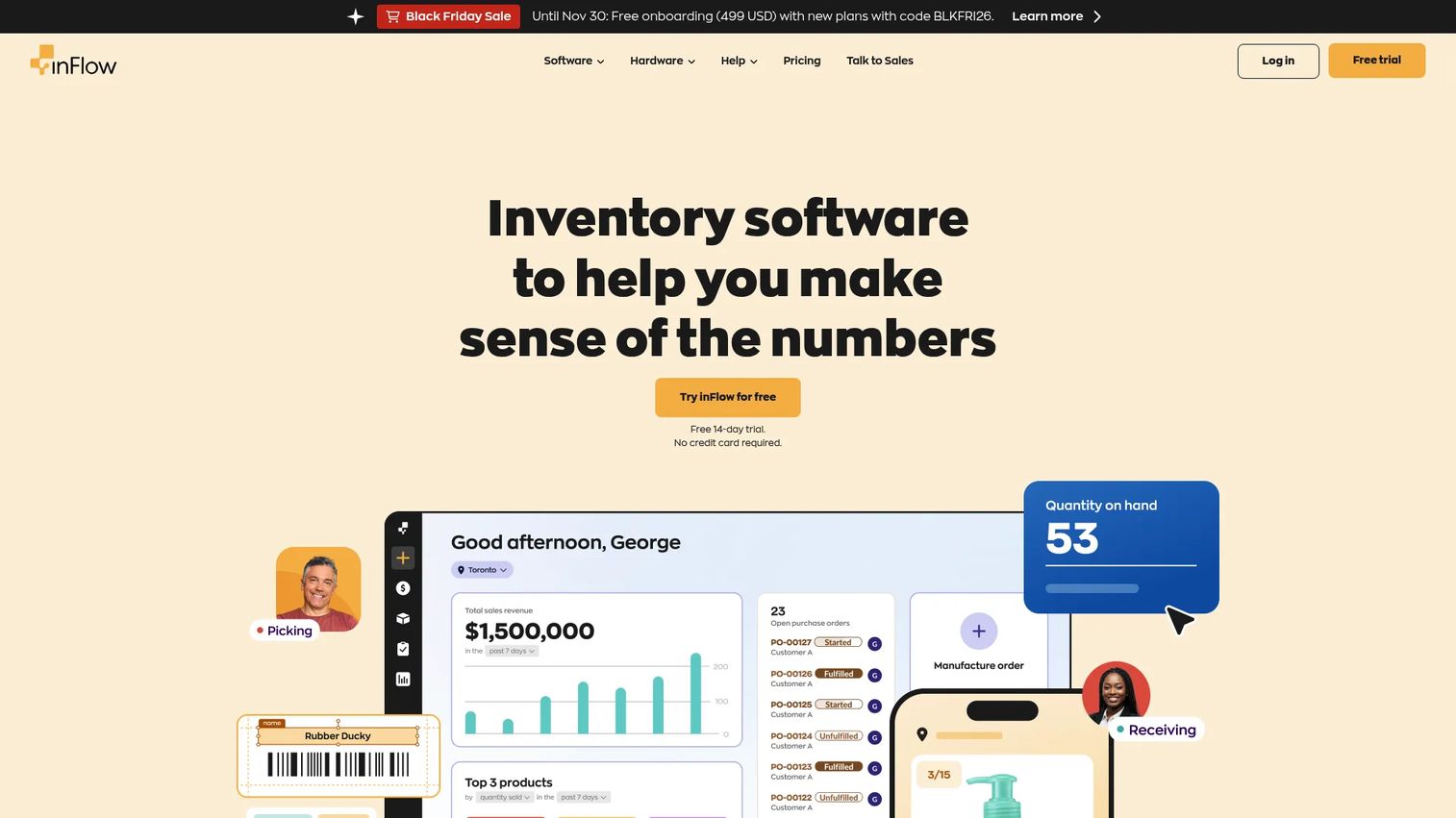
inFlow is an inventory management platform built for small and midsize product businesses. It covers stock tracking, purchasing, sales, fulfillment, barcode scanning, multi-location management, and manufacturing workflows in a single system. Teams use it to replace spreadsheets without committing to a full ERP implementation. inFlow also offers a B2B online showroom, letting wholesale buyers browse and place orders directly.
Best for: Small and midsize companies moving beyond spreadsheets and needing inventory, purchasing, and sales connected.
Key features
- Multi-location stock tracking across warehouses and sites
- Barcode scanning for receiving, picking, and counting
- Reorder points and purchase order creation
- B2B online showroom for wholesale ordering
- Manufacturing, bills of materials, and assembly tracking
Why choose inFlow: It covers the operational breadth most growing product businesses need without the implementation overhead of an ERP. If your team needs stock control, purchasing, and sales workflows in one place and wants to be operational quickly, inFlow is worth shortlisting.
inFlow pricing: Plans start at $99/month (Lite, billed annually). Core runs $299/month, Pro $499/month, and Max $699/month. A 14-day free trial is available. All plans include unlimited products, sales, and purchases; differences are in team size, locations, and access controls.
G2 rating: 4.4/5
2. Sortly
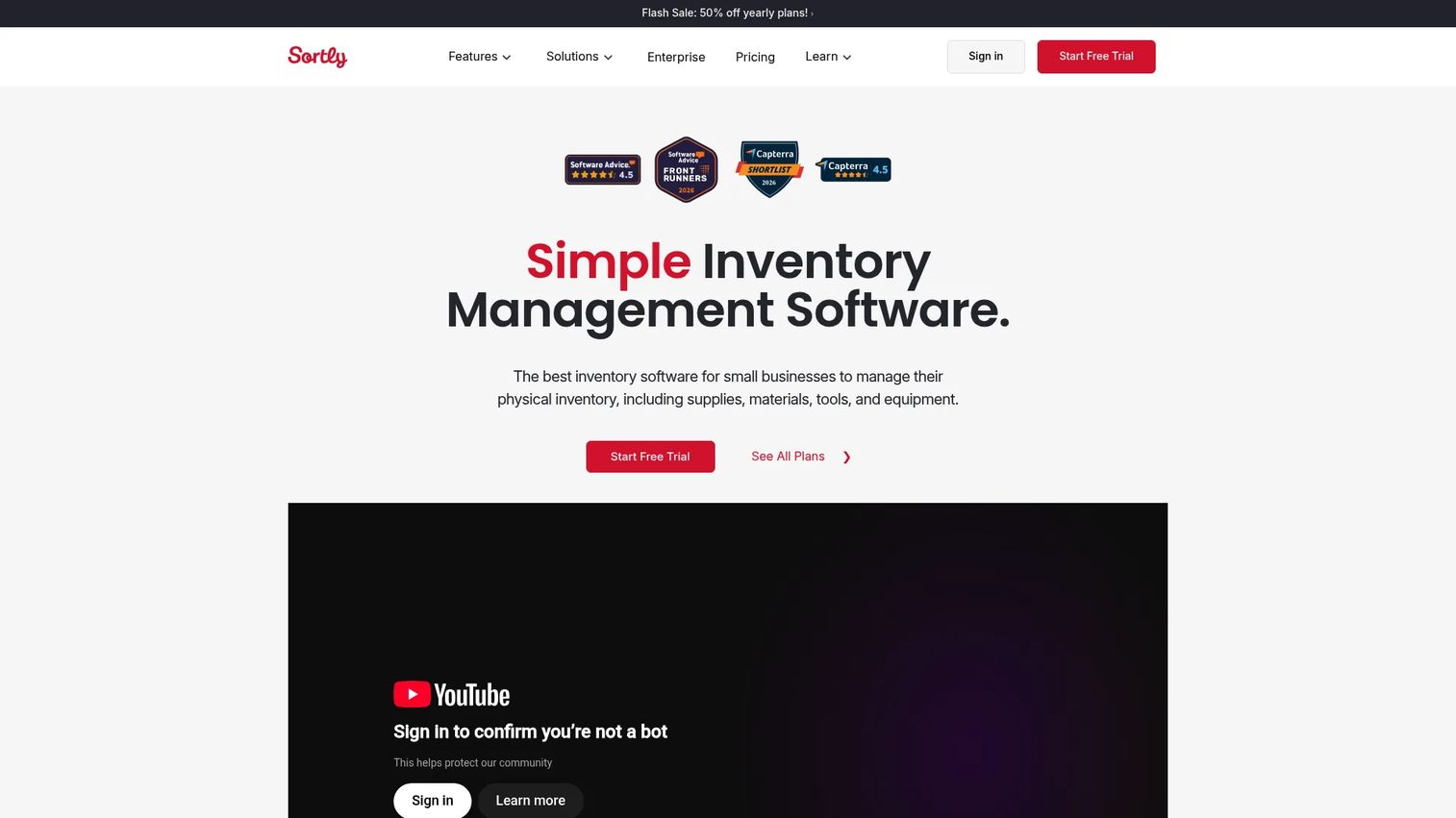
Sortly is a visual, mobile-first inventory tool designed for teams managing physical assets, supplies, equipment, and simple stock workflows. Rather than building around purchase orders and sales channels, it organizes inventory through item photos, folders, custom fields, and location tags. Teams in construction, facilities, healthcare, and retail often use it for non-retail stock that doesn't fit neatly into an ecommerce-focused tool.
Best for: Small teams that need fast field adoption for physical inventory without heavy implementation.
Key features
- Photo-based item records with custom fields and tags
- QR code label creation and barcode scanning
- Mobile app with offline access
- Low-stock and date-based alerts
- CSV and PDF exports for reporting
Why choose Sortly: It's a strong choice when inventory is physical and the primary job is tracking, not order management. Teams that care about fast adoption over deep ERP workflows find it fits without training overhead. If you need multichannel sync or purchase order automation, look further down this list.
Sortly pricing: A free plan is available with limited entries. The Advanced plan runs $24/month (billed yearly at $288/year). Ultra is $74/month and Premium is $149/month. Enterprise pricing is by quote.
3. Ordoro
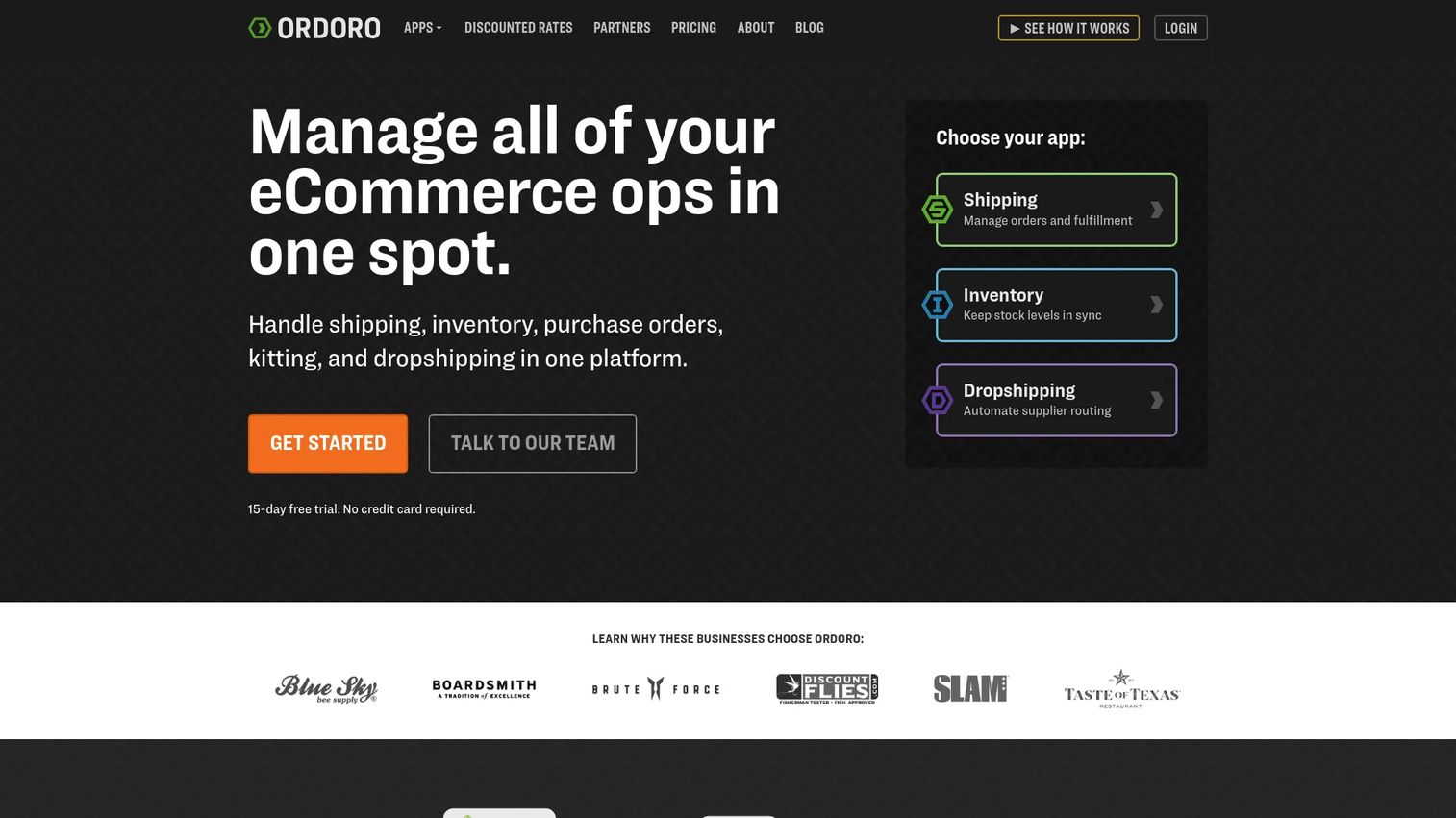
Ordoro is ecommerce operations software that connects inventory with shipping, order management, dropshipping, and supplier workflows. It's built for online sellers that need to manage orders across channels without running a separate system for each. Its app-based pricing means teams pay for what they use: Shipping, inventory, or dropshipping, and can combine plans as operations grow.
Best for: Ecommerce teams handling order routing, shipping labels, and inventory together across multiple sales channels.
Key features
- Multichannel inventory synchronization
- Batch shipping label creation
- Dropship order routing to vendors
- Purchase order automation
- Supplier portal and vendor tracking
Why choose Ordoro: It's the right call when the inventory problem is tied directly to ecommerce order flow rather than warehouse complexity. The free Shipping Essential plan lets teams start at no cost and add inventory management as they scale.
Ordoro pricing: Shipping Essential is free. Shipping Advanced starts at $59/month and Shipping Premium at $149/month. Inventory Advanced runs $349/month and Inventory Premium $499/month. A 15-day free trial is available with no credit card required.
G2 rating: 4.8/5
4. Katana
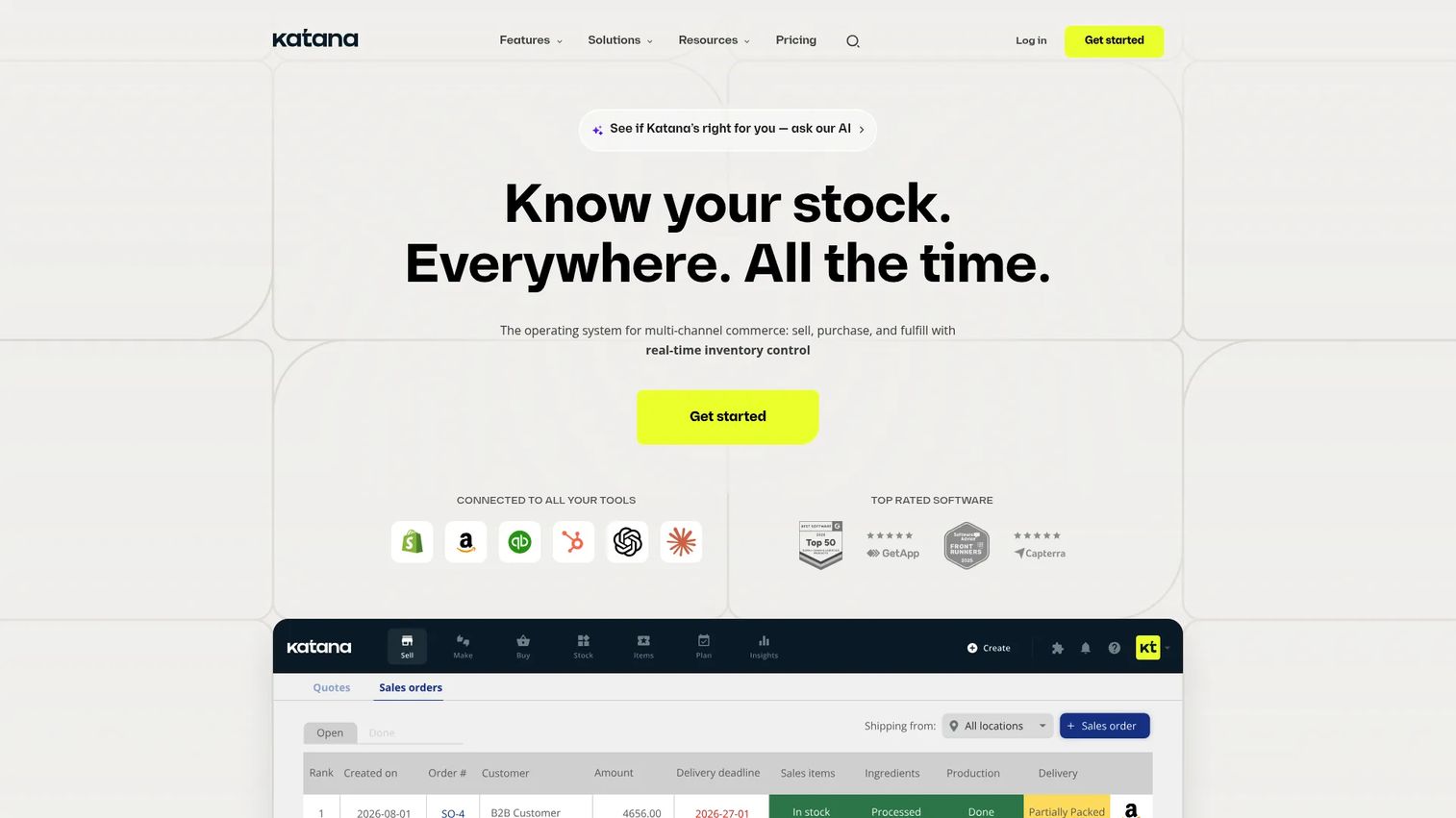
Katana is cloud inventory and manufacturing resource planning software for small and midsize manufacturers. Where most inventory tools treat production as an afterthought, Katana centers it: Raw material availability, shop-floor visibility, production scheduling, and sales order sync all connect in one view. Teams manufacturing physical goods use it to stop managing production and purchasing in separate spreadsheets.
Best for: Small and midsize manufacturers that need production planning and inventory linked to purchasing and sales.
Key features
- Production planning and manufacturing order management
- Raw material and finished goods tracking
- Shop floor control and operator task views
- Purchase order management tied to production needs
- Sales order sync across ecommerce and accounting integrations
Why choose Katana: The manufacturing fit is the differentiator. If your inventory problem starts upstream, in material availability and production scheduling rather than fulfillment, Katana solves it directly. Teams without a production component will find other tools on this list a cleaner fit.
Katana pricing: A free plan is available for up to 30 SKUs. The Core plan starts at $299/month (usage-based, billed monthly) and includes unlimited users, SKUs, and integrations, one inventory location, and 24/7 support. Additional locations and add-ons carry separate fees.
G2 rating: 4.4/5
5. Odoo
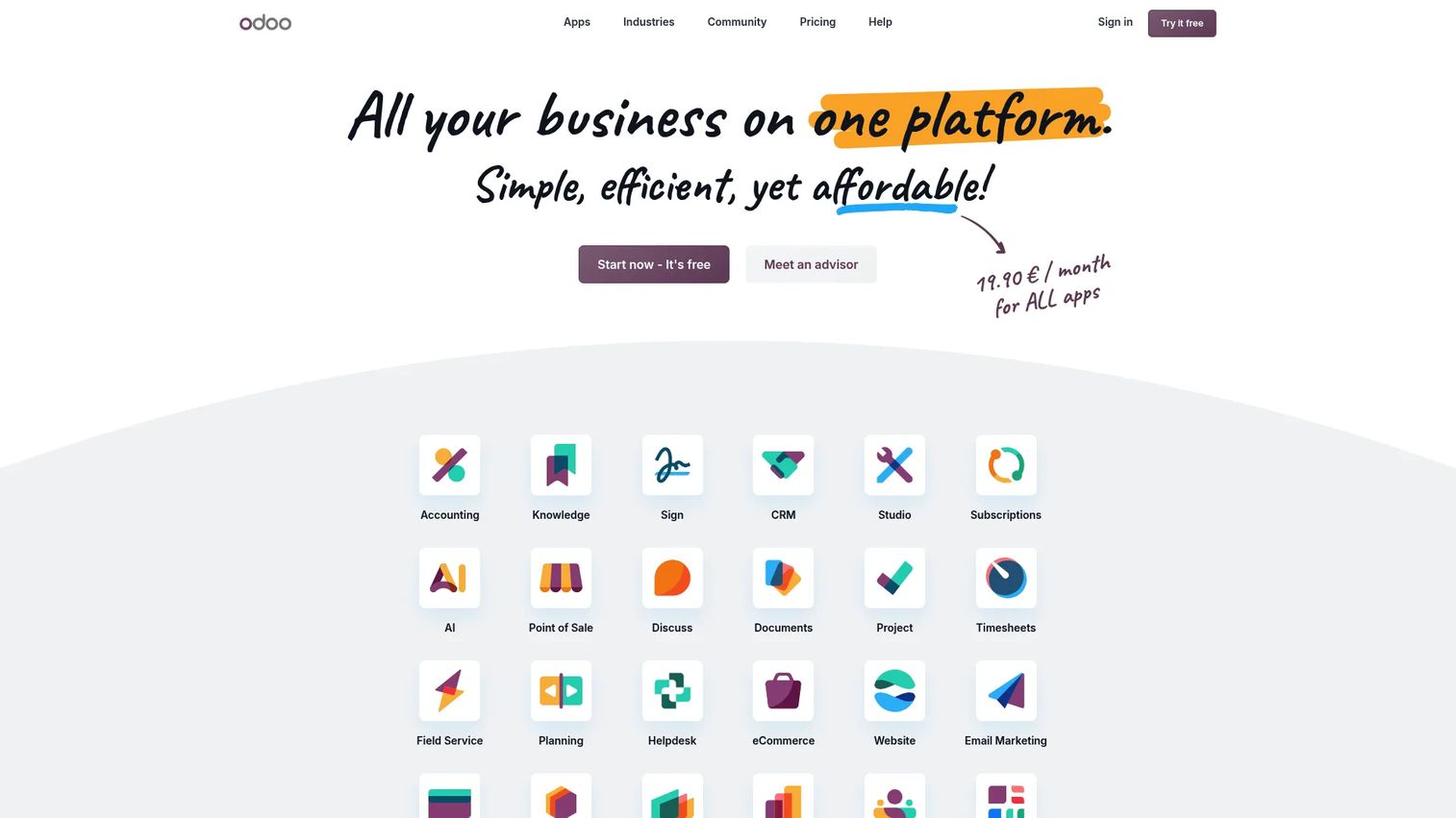
Odoo is a modular business software suite. Its inventory app is one component of a broader platform covering accounting, CRM, manufacturing, ecommerce, POS, HR, and project management. Teams that want inventory connected to a wider operating system, without stitching together five separate tools, often land on Odoo. The tradeoff: Implementation planning matters more here than with purpose-built inventory tools.
Best for: Teams that want inventory connected to broader business operations and are comfortable with a modular setup process.
Key features
- Modular app suite connecting inventory to accounting, CRM, and manufacturing
- Configurable warehouse routes and put-away rules
- Barcode operations for picking, packing, and receiving
- Automated reordering rules based on minimum stock thresholds
- Manufacturing and bill of materials integration
Why choose Odoo: The breadth is unmatched at the price point. One App Free gives a team a starting point at no cost. The Standard plan at $24.90/user/month scales across all apps. For founders who want to consolidate rather than add tools, Odoo is worth evaluating. Expect to invest time in the initial configuration.
Odoo pricing: One App Free (one app, unlimited users on Odoo Online) at $0. Standard plan is $24.90/user/month (billed yearly). Custom plan, which adds Odoo Studio, multi-company support, and external API access, runs $49.00/user/month (billed yearly).
G2 rating: 4.2/5
6. Finale Inventory
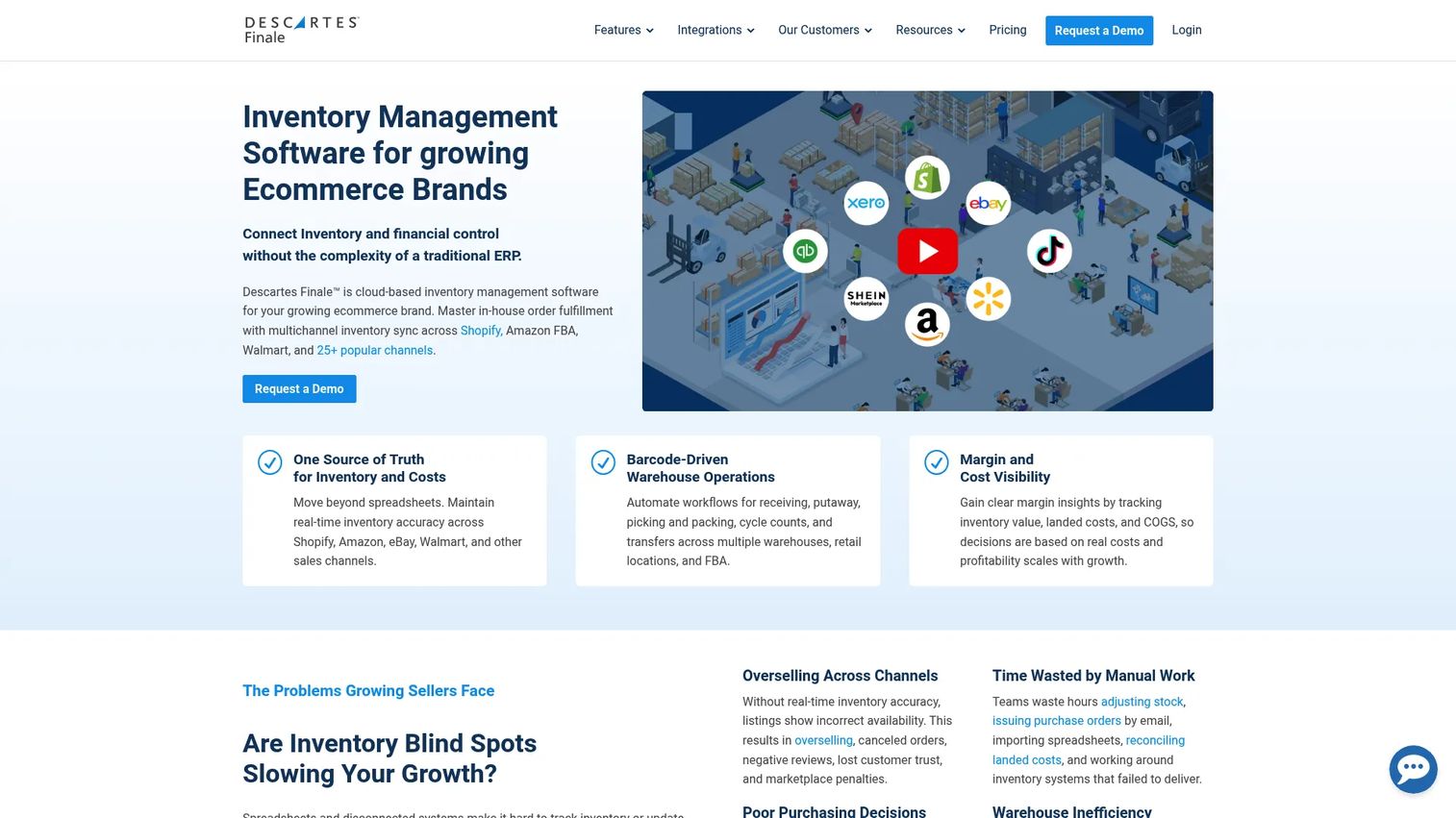
Finale Inventory is cloud-based inventory management software from Descartes, built for growing ecommerce businesses with warehouse and barcode workflows. It handles multichannel inventory sync, multi-warehouse management, kitting, lot and serial tracking, procurement, and demand forecasting. Teams that have outgrown a lightweight tracker but don't want a full ERP rollout often find it hits the right level of operational control.
Best for: Multichannel ecommerce sellers and warehouse teams that need barcode operations, replenishment controls, and accounting visibility.
Key features
- Multichannel inventory synchronization across ecommerce platforms
- Multi-warehouse inventory management and transfers
- Mobile barcode scanning and warehouse workflows
- Procurement, replenishment, and demand forecasting
- Inventory accounting with landed costs and reporting
Why choose Finale Inventory: It sits between lightweight trackers and full ERP systems. For teams running barcode-heavy warehouse operations across multiple channels, the operational depth is meaningful. The Essentials plan covers core needs; the Growth plan adds mobile barcode WMS and expanded support.
Finale Inventory pricing: Essentials starts at $499/month. Growth is $799/month and adds the mobile Barcode WMS module, plus email, phone, and Zoom support. Enterprise pricing is custom and includes API and EDI access with a dedicated account manager.
G2 rating: 4.8/5
7. ShipMonk
ShipMonk is a technology-enabled 3PL and fulfillment platform. It handles warehouse operations, inventory management, order processing, returns, and carrier shipping on behalf of ecommerce brands. The value proposition is outsourced logistics combined with real-time inventory visibility, not standalone software. ShipMonk fits teams making a decision about whether to operate their own warehouse or hand it to a fulfillment partner.
Best for: DTC and omnichannel ecommerce brands that want inventory and fulfillment managed by a 3PL.
Key features
- Order, inventory, transportation, and warehouse management platform
- Real-time multi-location inventory with lot, expiry, and safety-stock controls
- Configurable automation rules for routing, holds, tagging, and packaging
- Branded tracking, returns management, and proactive claims filing
- B2B and retail fulfillment with EDI, routing, labeling, and quality checks
Why choose ShipMonk: The operational choice here is whether to run fulfillment internally or outsource it. ShipMonk makes outsourcing viable while maintaining inventory visibility through its platform. If warehouse management is the bottleneck rather than software selection, it deserves a place on your shortlist.
ShipMonk pricing: All pricing is custom. Fees cover platform access, onboarding, fulfillment, storage, and shipping. Contact ShipMonk for a quote.
G2 rating: 3.3/5
8. ShipBob

ShipBob is a full-stack ecommerce fulfillment platform that combines warehousing, inventory distribution, order management, shipping, and analytics. Its network of fulfillment centers lets ecommerce brands place inventory closer to customers, which reduces shipping costs and delivery times. ShipBob's software and integrations are included for customers; actual costs cover receiving, warehousing, picking, packing, and shipping.
Best for: Growing ecommerce brands scaling outsourced fulfillment and looking for distributed inventory placement.
Key features
- Distributed fulfillment centers across the continental United States
- Inventory placement recommendations by order geography
- Order routing across fulfillment nodes
- Returns management
- Integrations with ecommerce platforms and marketplaces
Why choose ShipBob: Delivery speed and inventory distribution matter as much as software features here. ShipBob works well when fulfillment speed is a competitive factor and the team wants warehousing, inventory, and shipping in one outsourced relationship.
ShipBob pricing: Fulfillment pricing is quote-based. Costs depend on storage, pick-and-pack, shipping carrier rates, and order volume. The software platform is provided at no extra charge for customers. Contact ShipBob for a fulfillment cost estimate.
G2 rating: 3.7/5
9. GEP Quantum Intelligence
GEP Quantum Intelligence is an AI-native procurement and supply chain orchestration platform for enterprises. It addresses source-to-pay workflows, category management, supplier management, and supply chain risk visibility. This is not a small-business inventory tracker. It serves large organizations where inventory is one component of a strategic procurement and supply chain planning function.
Best for: Large enterprises with complex supply chain planning, procurement, and supplier management requirements.
Key features
- AI agents for sourcing, category management, and procure-to-pay workflows
- Supplier management and risk visibility
- Enterprise governance with authorization controls and audit trails
- Supply chain intelligence and planning analytics
- Integrations with SAP, Oracle, NetSuite, Microsoft Dynamics, Workday, and others
Why choose GEP Quantum Intelligence: Fit it to organizations where inventory is embedded in strategic procurement decisions rather than operational stock tracking. The platform earns its place when supply chain risk, category spend management, and enterprise governance are the primary drivers.
GEP Quantum Intelligence pricing: All pricing is custom. Scope, modules, user count, and implementation services drive the cost. Contact GEP directly for a quote.
G2 rating: 4.3/5
10. NetSuite ERP
NetSuite ERP is a cloud ERP that combines financial management, inventory, order management, supply chain, procurement, warehouse management, and CRM in one platform. Teams choose it when inventory, accounting, and operational reporting need to live in a single system rather than being stitched together across separate tools. It's built for growing and global organizations, not for teams in their first operational software purchase.
Best for: Scaling companies that need inventory, finance, and order management connected in a single ERP system.
Key features
- ERP inventory control with multi-location and multi-currency support
- Financial management including general ledger, accounts payable, and accounts receivable
- Order management and warehouse fulfillment workflows
- Demand planning and supply chain management
- Dashboards, saved searches, and consolidated reporting across subsidiaries
Why choose NetSuite ERP: When inventory, accounting, and leadership reporting need to share a single source of truth, NetSuite covers it. The tradeoff is implementation: Licensing, module selection, user count, and the one-time implementation fee add up. Budget and timeline accordingly before starting the evaluation.
NetSuite ERP pricing: Pricing is an annual license fee built from three components: The core platform, optional modules, and user count. A separate one-time implementation fee applies. No public numeric price is listed; contact NetSuite sales for a quote.
G2 rating: 4.1/5
11. Cin7
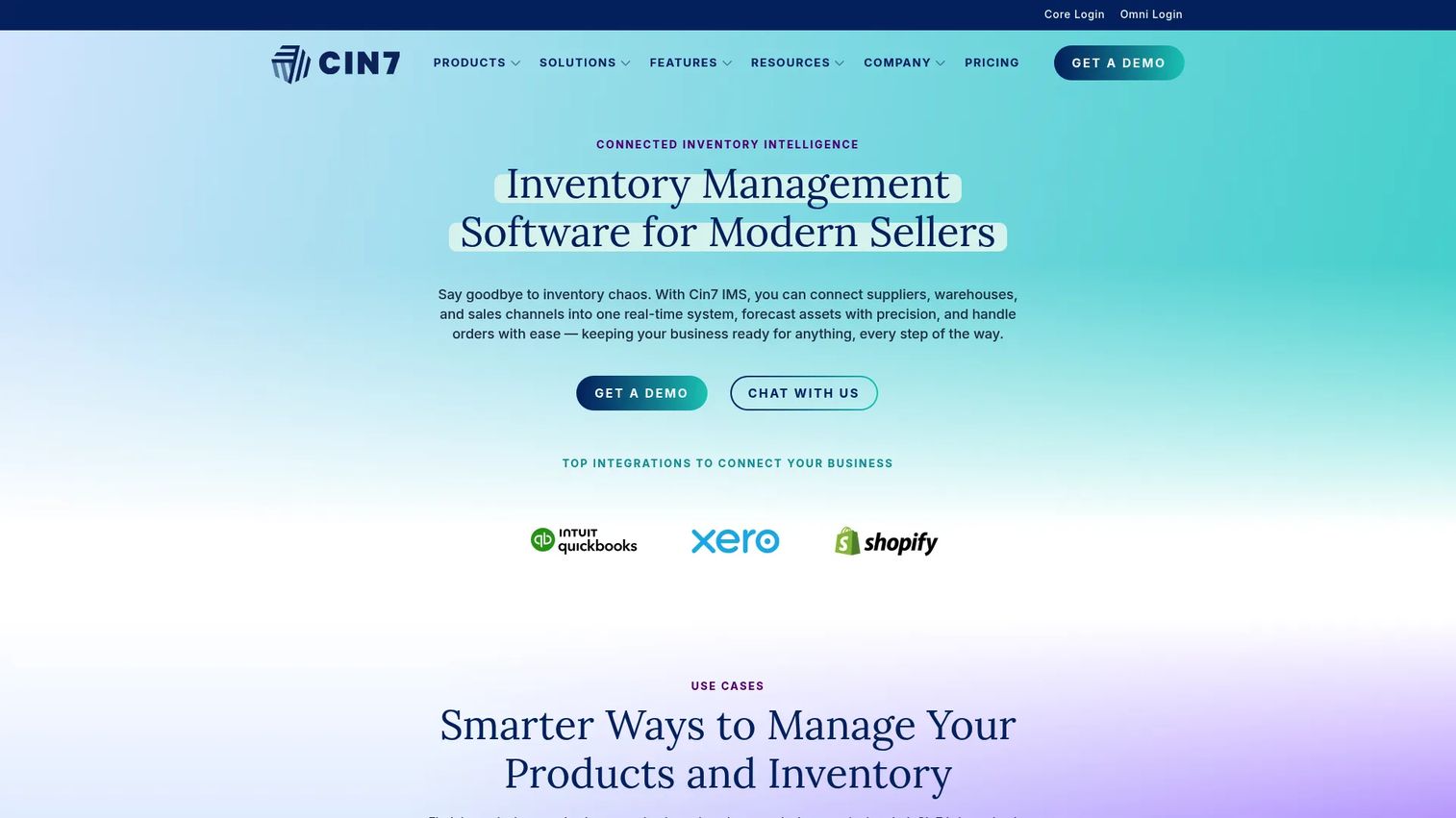
Cin7 is inventory management software that connects suppliers, warehouses, sales channels, and order operations in one system. It suits product businesses managing inventory across ecommerce, retail, wholesale, B2B ordering, POS, and warehouse workflows simultaneously. Cin7's channel breadth is its differentiator: Teams that need one inventory view across many selling surfaces find it handles the complexity well.
Best for: Product sellers managing inventory across multiple sales channels and stock locations.
Key features
- Multichannel inventory management across ecommerce, wholesale, and retail
- B2B ordering portal for wholesale customers
- POS integrations for retail locations
- Warehouse management and pick-pack-ship workflows
- Demand planning and inventory reporting
Why choose Cin7: Channel breadth and warehouse coverage in one tool. For teams running ecommerce alongside wholesale and POS, the alternative is usually a patchwork of tools that require manual reconciliation. Cin7 handles the reconciliation automatically.
Cin7 pricing: Standard starts at $349/month. Pro runs $599/month and Advanced $1,199/month. An Omni plan exists for larger operations without a publicly listed price. Contact Cin7 for a quote on Omni.
G2 rating: 4.1/5
12. Shopify

Shopify is a complete commerce platform. Its inventory capabilities, including product and variant tracking, multi-location inventory, POS sync, and fulfillment, are built for merchants whose operations center on Shopify's commerce infrastructure. For teams already running their store on Shopify, the inventory functionality is a practical starting point. For teams with complex warehouse operations or manufacturing, a dedicated inventory tool will reach further.
Best for: Shopify merchants that want inventory managed inside their existing commerce platform.
Key features
- Product inventory tracking with variant and SKU management
- Multi-location inventory visibility across stores and warehouses
- POS inventory sync for in-person selling
- Shopify Fulfillment Network and third-party logistics integrations
- App marketplace for advanced inventory management extensions
Why choose Shopify: Commerce is the center of operations for this buyer. Inventory is a feature of the platform, not a separate system. That's the right setup for a DTC brand running on Shopify; it's a limiting one for a manufacturer or multi-channel wholesaler.
Shopify pricing: Basic starts at $29/month (billed annually). Grow is $79/month and Advanced is $299/month. Plus starts from $2,300/month. Monthly billing runs $39, $105, $399, and from $2,300 respectively. A 3-day free trial is available, followed by $1/month for three months.
G2 rating: 4.4/5
13. QuickBooks
QuickBooks is cloud-based accounting software. Its inventory features, covering stock levels, cost of goods sold, purchase orders, and inventory value reporting, are most useful for small businesses where the primary goal is connecting inventory to bookkeeping. Inventory functionality requires the Plus plan or above; Simple Start and Essentials don't include it.
Best for: Accounting-led small businesses that need inventory tied directly to financial reporting.
Key features
- Inventory value tracking and COGS reporting
- Purchase orders connected to vendor records
- Sales invoices and payment tracking
- Accounting integration across all transactions
- Mobile app for on-the-go access
Why choose QuickBooks: When the finance team is the primary inventory stakeholder and the primary job is connecting stock to the general ledger, QuickBooks handles it without adding a separate tool. Complex warehouses, multi-location operations, and manufacturing will need a dedicated system alongside it.
QuickBooks pricing: A free plan is available. Plus, which includes inventory tracking, starts at $70/month (promotional rate; standard price is $140/month). Advanced is $170/month (standard: $340/month). Prices reflect a 50% promotional discount for 3 months shown at generation time.
G2 rating: 4.0/5
14. ShipStation
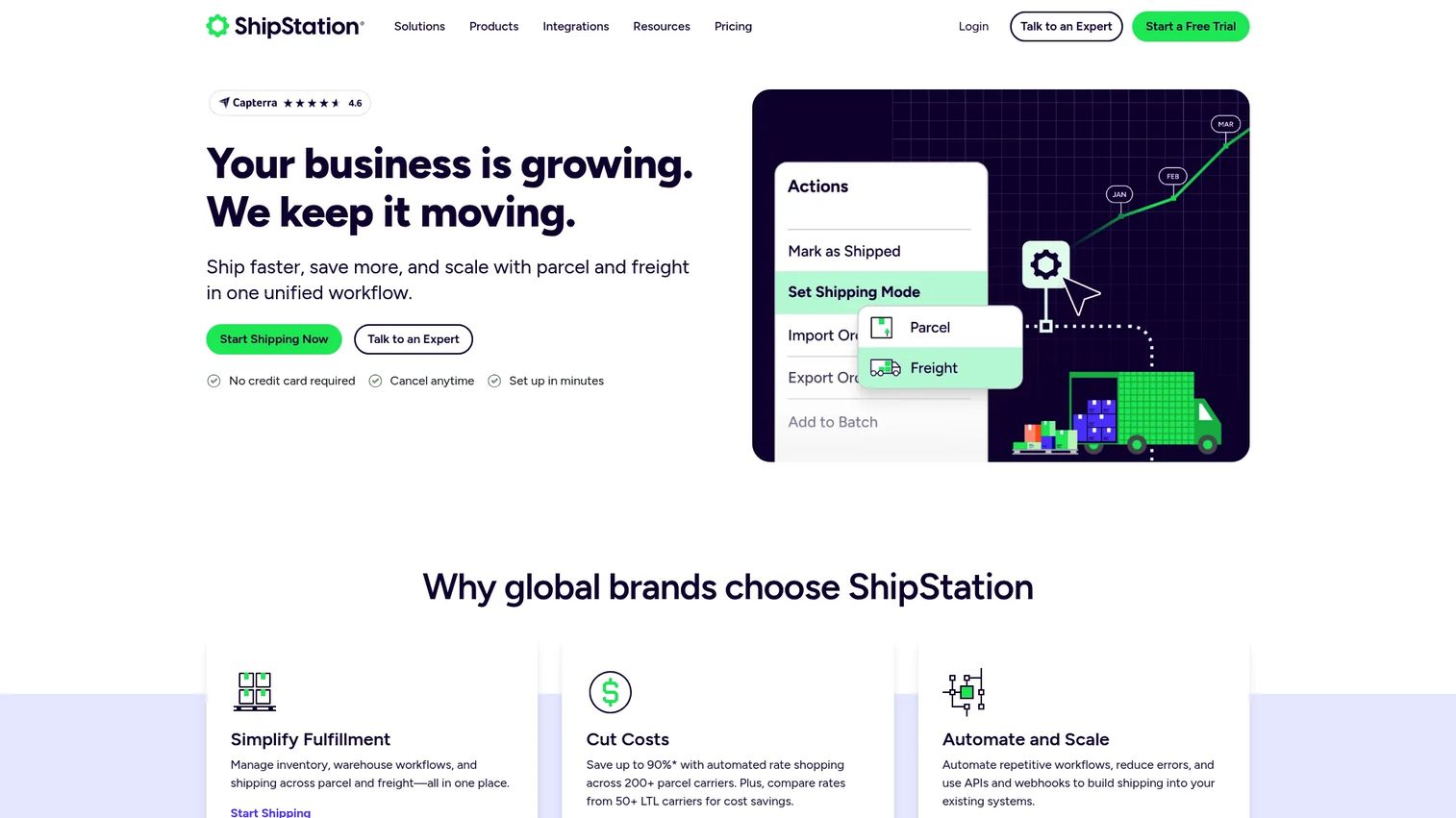
ShipStation is a shipping and order management platform. Its inventory capabilities, including product tracking, low-stock visibility, and warehouse management at higher tiers, support teams whose primary operational bottleneck is shipping. The platform connects to most major carriers, marketplaces, and ecommerce platforms, making it useful for teams that need multi-carrier rate comparison and label workflows alongside basic order fulfillment software functions.
Best for: Ecommerce businesses that need multi-carrier shipping workflows connected to order management.
Key features
- Multi-carrier rate comparison and label purchasing
- Fulfillment automation rules for routing and packaging
- Order management with splitting and combining
- Returns and exchanges processing
- Inventory visibility alongside shipping operations
Why choose ShipStation: It's the right tool when shipping efficiency is the primary problem and inventory visibility is a secondary need. Teams with deep warehouse management requirements should look at Finale Inventory or Cin7 instead.
ShipStation pricing: Starter starts at $14.99/month and covers 50 shipments, 3 users, and basic automation. Standard is $29.99/month and adds 10 users, unlimited automations, and basic warehouse management. Premium is $349.99/month and includes advanced inventory and warehouse management, custom analytics, and auto-routing. Annual billing offers 20% savings.
G2 rating: 4.3/5
15. Sage Intacct

Sage Intacct is cloud financial management and accounting software for growing and mid-sized organizations. Its inventory and purchasing capabilities serve finance teams that need inventory data to show up cleanly in multi-entity financial reporting, not operations teams running complex warehouse workflows. For teams where the CFO or Controller is driving the software decision, it's a natural fit.
Best for: Finance-led organizations that need inventory data integrated into multi-entity accounting and board-level reporting.
Key features
- Multi-entity accounting and financial consolidation
- Accounts payable and receivable automation
- Purchasing workflows connected to inventory and financial records
- AI-powered finance, close, and AP workflows
- Multi-dimensional dashboards and reporting
Why choose Sage Intacct: The finance team's version of inventory visibility. If the primary requirement is that inventory transactions hit the general ledger cleanly and reports consolidate across entities, Sage Intacct is built for that job. Teams that need barcode scanning, warehouse routing, or multichannel sync need a separate operational tool alongside it.
Sage Intacct pricing: All pricing is by quote. Subscriptions are annual. Cost varies by organizational size, number of entities, and required modules. Contact Sage for a pricing estimate.
G2 rating: Not confirmed from current listing.
Considerations when choosing inventory management software
Start with your system of record
Before comparing features, decide where inventory data should live. For ecommerce-first teams, it might live in an ecommerce platform or order management tool. For finance-first teams, it belongs in an accounting or ERP system. For operations-first teams, a dedicated inventory system may be the right anchor. Choosing a tool that conflicts with where your team already works creates reconciliation work rather than eliminating it.
Match the tool to operational complexity
A team counting supplies in one location and a manufacturer tracking raw materials, work in progress, and finished goods across three facilities have fundamentally different requirements. Over-buying on features creates implementation drag and a system nobody uses fully. Start with the workflows your team runs today and evaluate whether the tool handles the next stage of growth.
Check integrations before the feature list
Inventory software creates value at its edges: Where it connects to your best ecommerce platform for small business, your accounting system, your shipping carriers, and your warehouse tools. Verify those integrations exist and are native rather than requiring a third-party connector before you commit. A tool with strong features but weak integrations will create manual work at every handoff.
Verify the reporting your team actually needs
The tool should answer weekly operational questions: What's in stock, what needs reordering, what's moving slowly, and what's tied up in overstock. Beyond that, board-ready visibility means inventory value flows into financial reporting without a manual export. Confirm both layers are available in the plan you're evaluating.
Calculate the full implementation cost
The subscription price is one component. Migration, barcode hardware setup, location mapping, staff training, and process cleanup often cost more than the first year of the subscription. Ask vendors directly about implementation timelines and typical onboarding overhead before selecting a plan.
Conclusion
The right inventory management software is the one that fits your operating model, not the one with the longest feature list.
For small and midsize teams replacing spreadsheets, inFlow covers the core: Stock, purchasing, sales, and fulfillment in a single system. Sortly suits teams with simpler physical inventory needs and a mobile-first workflow. For ecommerce operations, Ordoro handles order and shipping complexity; Cin7 and Finale Inventory cover broader warehouse and channel requirements.
Manufacturing teams should start with Katana. Finance-led organizations evaluating accounting-connected inventory should look at QuickBooks for smaller teams and Sage Intacct for multi-entity finance. NetSuite ERP covers the full ERP scope when inventory, finance, and order management need to share one system. For enterprise supply chain planning, GEP Quantum Intelligence operates at a different level of strategic procurement.
Shipping-led teams should evaluate ShipStation for multi-carrier order operations. ShipBob and ShipMonk are the right shortlist when outsourcing fulfillment is the actual decision being made.
Pick the category that matches your problem first. Then shortlist two or three vendors, run a sample workflow through each (receive stock, create a purchase order, fulfill an order, reconcile inventory value), and evaluate on fit rather than feature count.
Start your journey with Guideflow today!
FAQs
Inventory management software is a system for tracking stock levels, locations, purchasing, fulfillment, and inventory value across physical and digital channels. Core capabilities typically include barcode scanning, reorder point alerts, purchase order management, demand forecasting, and integrations with ecommerce platforms, accounting systems, and shipping carriers. The category covers tools ranging from simple mobile trackers to full ERP platforms.
The four standard inventory types are raw materials, work in progress, finished goods, and maintenance, repair, and operations (MRO) inventory. Most small business inventory tools focus on finished goods and simple stock tracking. Manufacturing platforms like Katana also address raw materials and work in progress. MRO inventory, covering supplies and equipment used in operations rather than sold, is often managed separately in asset tracking tools.
Start with your operating model: Ecommerce, manufacturing, wholesale, retail, 3PL, or finance-led. That determines which integrations matter most and which workflows the tool needs to own. Then evaluate barcode and scanning support, replenishment and reorder capabilities, reporting depth, and implementation effort. Pricing is a real factor, but so is the cost of a tool that doesn't get adopted.
It depends on the type of small business. An ecommerce seller benefits from Ordoro or Shopify's built-in inventory. A team managing physical supplies or equipment will find Sortly faster to adopt. A small business with accounting as the primary concern may start with QuickBooks Plus, which includes inventory tracking. There is no single winner; the operating model determines the fit.
Ecommerce teams should prioritize multichannel inventory sync, order routing, shipping label workflows, returns handling, and marketplace integrations. Ordoro covers those workflows at an accessible price point. Cin7 and Finale Inventory add warehouse depth for teams with more complex operations. ShipBob and ShipMonk are worth evaluating when fulfillment outsourcing is on the table.
QuickBooks handles inventory for some small business use cases, specifically stock level tracking, purchase orders, COGS reporting, and inventory value connected to the general ledger. It requires the Plus plan or above. For complex warehouse operations, multi-location management, or manufacturing workflows, a dedicated inventory tool alongside QuickBooks is usually the better approach.
The clearest triggers are multiple people updating stock simultaneously, missed reorders because no alert system exists, inventory value that doesn't reconcile with financial records, manual updates required after every sale, or operations expanding across new locations. Each of those signals operational risk that compounds with growth. The cost of migration is smaller than one significant stockout or fulfillment delay caused by stale data.
Stock tracking accuracy, barcode scanning support, purchase order management, low-stock alerts, demand forecasting, and integration with your existing ecommerce and accounting software are the core capabilities. Multi-location support matters as soon as you operate across more than one site. Rank features by the frequency of the workflow in your own operations, not by the length of a feature checklist. A tool that does your top three jobs well beats one that does fifteen jobs adequately.