Your 6 a.m. class has three no-shows. Two members want to freeze memberships. A drop-in emailed at midnight asking if there is space in the 7 p.m. flow, and your front desk found out this morning. None of that is a teaching problem. It is an operations problem, and it compounds every week you run the studio on spreadsheets, DMs, and a shared calendar.
That is the real reason yoga studios shop for software. Not to add a booking widget, but to stop revenue leaking through no-shows, missed renewals, and manual reminders that someone forgets to send. The stakes are getting higher too. The global yoga studio management software market was valued at roughly USD 415 to 437 million in 2024 and is projected to grow at a 10.6 to 13.1% CAGR through 2033, according to Growth Market Reports (2024). Over 40,000 studios now compete inside a USD 66 billion global yoga market, per YogaStudioInsider (2026). Software is how the operationally tight ones stay full while the rest chase admin.
If you run the studio like a systems buyer, the question is not "which tool has the most features." It is "which one removes manual work, keeps payments clean, and scales across locations without routing every decision through you." This guide compares nine platforms against that standard. If you are also evaluating adjacent operational tooling, our roundups on event management software, loyalty management software, and community management software cover related buying decisions studios often make at the same time.
What's inside
This guide compares yoga studio software across booking, scheduling, memberships, billing, client management, automated reminders, reporting, and hybrid or virtual class delivery. We split the field into three groups: all-in-one studio management platforms, booking-first scheduling tools, and broader wellness platforms that fit yoga alongside other services.
We selected and ranked each tool on five criteria that actually matter to an operator: breadth of studio operations coverage, ease of use for staff and clients, client experience quality, pricing clarity, and fit across solo, growing, and multi-location studios. Every pricing figure and rating below reflects verified first-party sources as of mid-2026.
TL;DR
- Best all-in-one for scale: Mindbody, if you need mature scheduling, payments, memberships, and reporting across locations.
- Best for client experience plus automation: WellnessLiving, for a branded client app and marketing built into the platform.
- Best affordable, no-contract pick: StudioBookings, for smaller or budget-aware studios that want full booking and memberships without lock-in.
- Best branded member app for growth: Glofox, for studios that want a polished mobile experience as they expand.
- Best simple all-in-one with a website: OfferingTree, for instructors and small studios that want to get online fast.
- Best booking-first tools: Acuity Scheduling, SimplyBook.me, and Calendly, when scheduling matters more than deep studio operations.
- Best broad wellness platform: Vagaro, for studios mixing classes with appointments and retail.
What is yoga studio software?
Yoga studio software is a platform that manages the operational side of running a yoga business: class scheduling, client bookings, memberships, payments, communication, and reporting, often with a client-facing app and virtual class support. Some tools are full studio operating systems that handle every workflow; others are booking-first scheduling tools that do a narrower job extremely well.
Core capabilities to expect across the category:
- Scheduling and booking: Class calendars, appointment booking, recurring classes, and a self-serve booking page for clients.
- Memberships and passes: Recurring memberships, class packs, drop-ins, and automated renewals.
- Payments and billing: Integrated card processing, recurring billing, and failed-payment handling.
- Reminders and waitlists: Automated email and SMS reminders, waitlist promotion, and cancellation policies to cut no-shows.
- Client management: Profiles, attendance history, waivers, and communication logs.
- Reporting: Revenue, attendance, retention, and staff performance dashboards.
- Client apps and portals: Branded mobile apps or web portals where members book, pay, and manage their accounts.
- Virtual and hybrid classes: Live-streaming, on-demand libraries, and online class access alongside in-studio schedules.
The practical split is this. A full yoga studio management software runs the whole business. A yoga studio booking software focuses on getting people into classes cleanly, and pairs with other tools for the rest.
When to use yoga studio software
Not every studio needs the same depth. Match the tool to the operating problem you are actually solving.
Replace manual bookings and reminders
If you are still taking bookings over DMs, tracking attendance in a spreadsheet, and sending reminders by hand, a yoga studio scheduling software pays for itself fast. Self-serve booking pages, automated confirmations, and reminders remove the front-desk back-and-forth and free staff for higher-value work.
Manage recurring memberships, passes, and payments
When your revenue runs on monthly memberships, class packs, and drop-ins rather than one-off appointments, you need recurring billing, automated renewals, and pass tracking. This is where a lighter scheduler stops being enough and a full studio management or yoga billing software earns its place.
Support hybrid or virtual class delivery
If you stream live classes, sell on-demand libraries, or offer online access alongside in-studio sessions, virtual delivery has to be part of the decision. A virtual yoga studio software handles streaming links, on-demand hosting, and access control so hybrid members get the same clean experience as in-person ones.
Reduce front-desk work with automation
When classes fill, cancellations spike, and waitlists get long, manual coordination breaks down. Automated waitlists, self-service rescheduling, and check-in remove the repetitive work and keep classes full without a staffer babysitting the calendar.
Comparison table
Here is how the nine platforms compare at a glance. Intent describes the primary job each tool is built for, so you can match it to your studio's operating complexity before reading the deep dives. Pricing and G2 ratings reflect verified first-party and G2 sources as of mid-2026.
| # | Product | Intent | Key differentiation | Pricing | G2 rating |
|---|---|---|---|---|---|
| 1 | Mindbody | All-in-one studio management | Mature ops and payments at multi-location scale | From $79/mo per location | 4.4/5 |
| 2 | WellnessLiving | All-in-one with client app | Branded client app plus built-in marketing | From $69/mo | 4.5/5 |
| 3 | StudioBookings | Affordable studio management | Full features, no contract, low entry price | From $25/mo | 4.5/5 |
| 4 | Glofox | Growth-focused studio management | Branded member app and multi-location readiness | From $99/mo | 4.5/5 |
| 5 | OfferingTree | Simple all-in-one plus website | Website builder bundled with booking and payments | From $26/mo | 4.9/5 |
| 6 | Acuity Scheduling | Booking-first scheduling | Clean self-scheduling with reminders and payments | From $27/mo | 4.7/5 |
| 7 | SimplyBook.me | Flexible booking engine | Highly customizable booking with a free tier | Free; paid from £12.9/mo | 4.4/5 |
| 8 | Calendly | Lightweight scheduling | Simplest setup for classes and appointments | Free; paid from $10/seat/mo | 4.7/5 |
| 9 | Vagaro | Broad wellness platform | Classes, appointments, and retail in one system | From $23.99/mo | 4.6/5 |
1. Mindbody
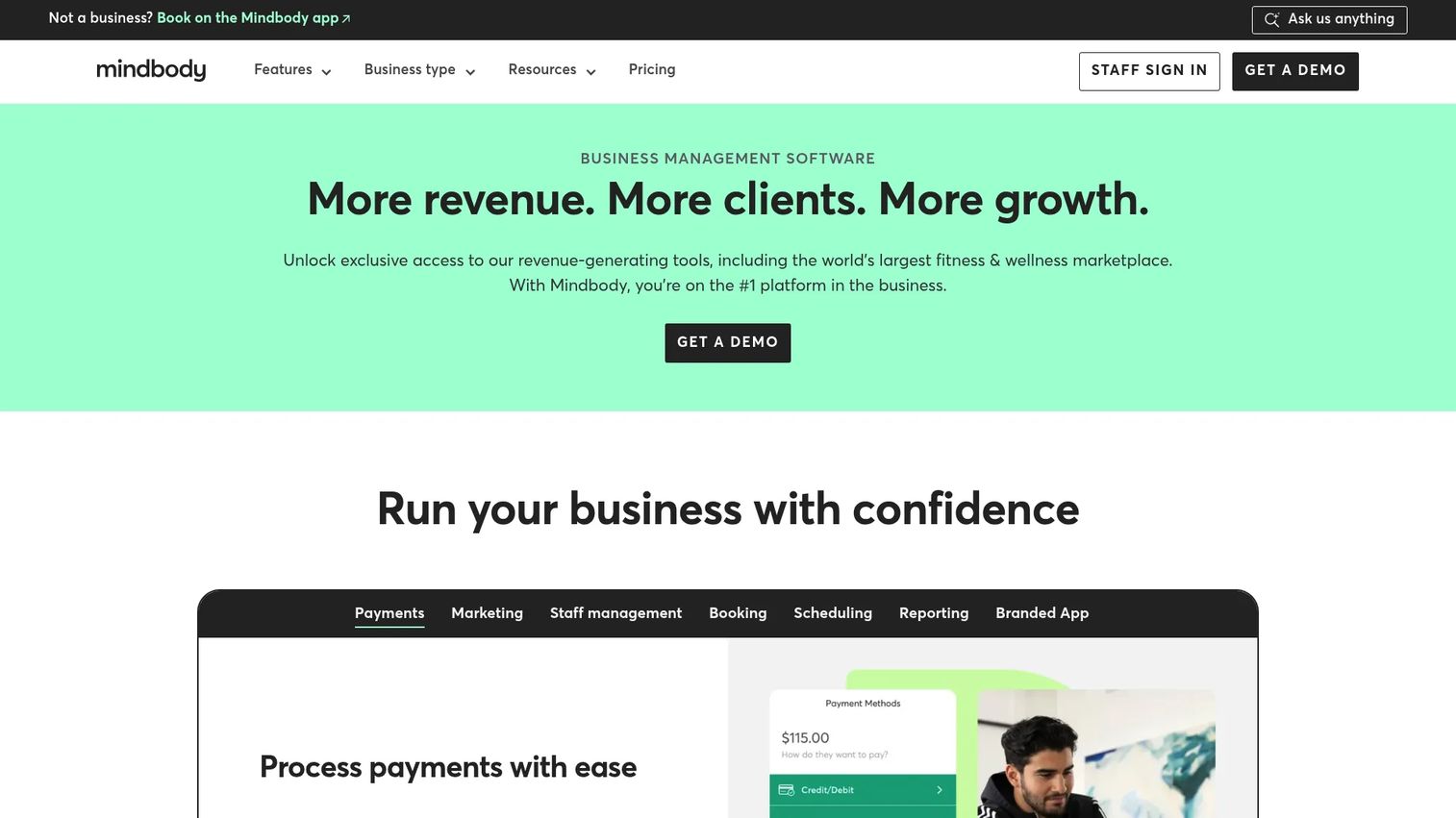
Mindbody is business management software for fitness, wellness, and beauty businesses, and it is one of the most mature options in the category. It handles class scheduling, integrated payments, client management, and reporting in a single system built to run studios at scale. For a studio that has outgrown lighter tools and needs an operating system rather than a booking page, Mindbody is the default comparison point.
The depth shows up in the operational details: recurring class schedules, staff coordination, membership and pass management, and reporting that survives the kind of scrutiny a multi-location operator applies to attendance and revenue. It also plugs into a consumer marketplace where prospective clients discover studios, which adds a discovery channel most standalone tools do not offer.
Best for: Multi-location fitness, wellness, or beauty businesses that need scheduling, payments, and client management in one mature platform.
Key strengths
- Deep studio operations: Booking, memberships, payments, and reporting in one system built for complexity.
- Multi-location scale: Handles multiple locations, staff, and service lines without stitching tools together.
- Consumer marketplace: Client-facing discovery that can drive new bookings beyond your own channels.
Why choose Mindbody: If you run a growing or multi-location studio and want one platform that covers the full operation, Mindbody's maturity is the argument. It rewards studios ready to commit to a structured system and use the reporting to make weekly decisions.
Mindbody pricing: Mindbody lists three plans, Starter, Accelerate, and Ultimate, with pricing starting at $79 per month per location. Each plan requires contacting sales for a quote, and there is no free tier. Its G2 rating sits at 4.4/5.
2. WellnessLiving
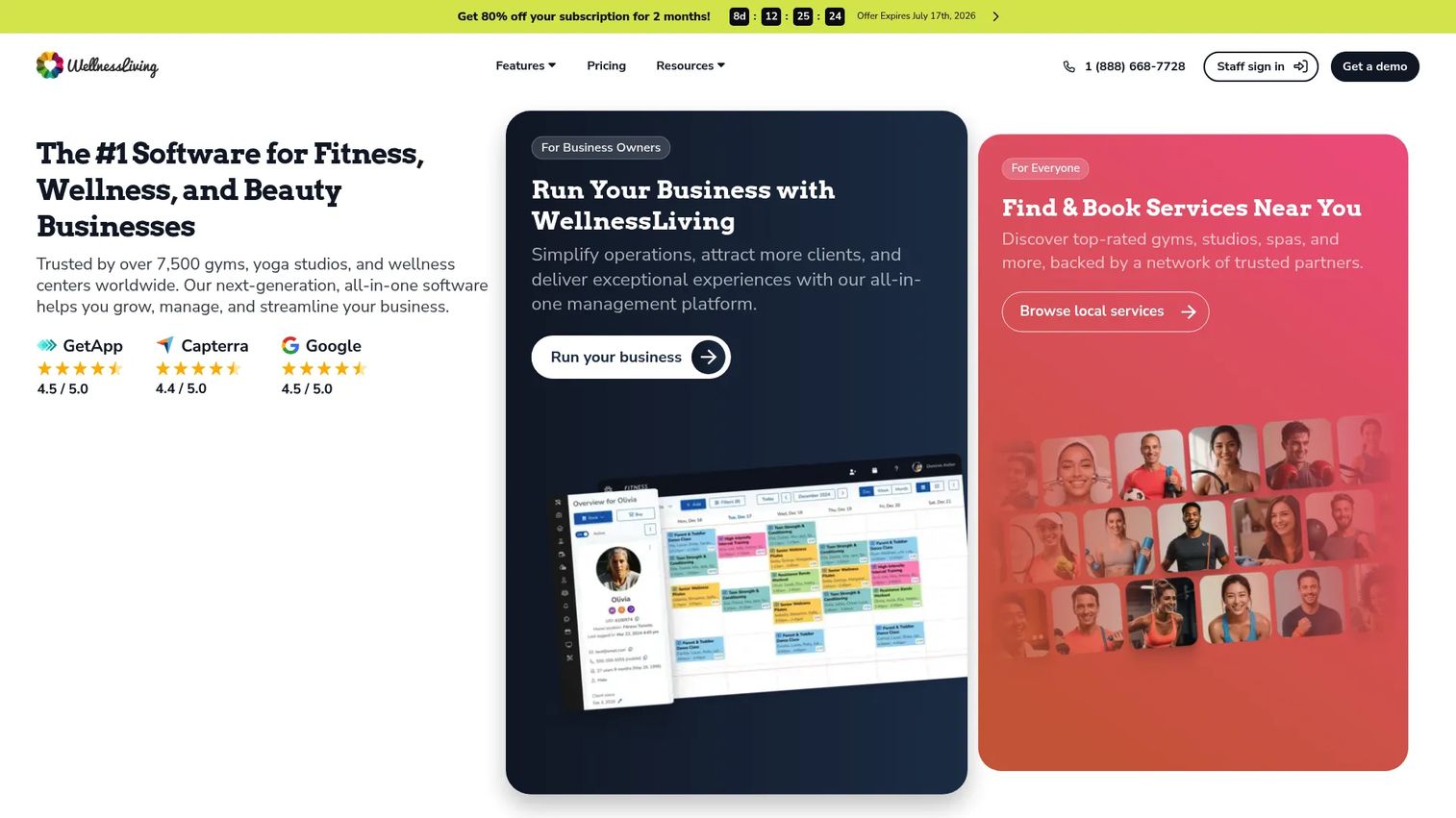
WellnessLiving is all-in-one business management software for fitness, wellness, and beauty businesses, and it leads with client experience. Class and appointment booking, client and staff management, and automated email and SMS reminders sit alongside marketing tools in one platform. For studios that want retention and engagement built in rather than bolted on, this is the pairing to look at.
The standout is the branded client app plus the marketing automation that runs review requests, win-back campaigns, and reminders without manual effort. Waitlists, reporting, and virtual class support round out an operating stack that covers most of what a growing studio needs day to day.
Best for: Fitness and wellness studios that want scheduling, CRM, and marketing in one platform with a strong client-facing experience.
Key strengths
- Branded client app: Members book, pay, and manage accounts under your brand.
- Marketing automation: Automated email and SMS for reminders, reviews, and win-back campaigns.
- Operational breadth: Booking, staff management, waitlists, and reporting in one system.
Why choose WellnessLiving: Choose it when client experience and retention automation matter as much as booking. The built-in marketing means you are not wiring up a separate tool to nurture and re-engage members.
WellnessLiving pricing: WellnessLiving's public pricing page shows Starter at $69 per month, plus Business and BusinessPro tiers with introductory monthly offers, and an Enterprise plan by custom quote. There is no free tier. Its G2 rating is 4.5/5.
3. StudioBookings
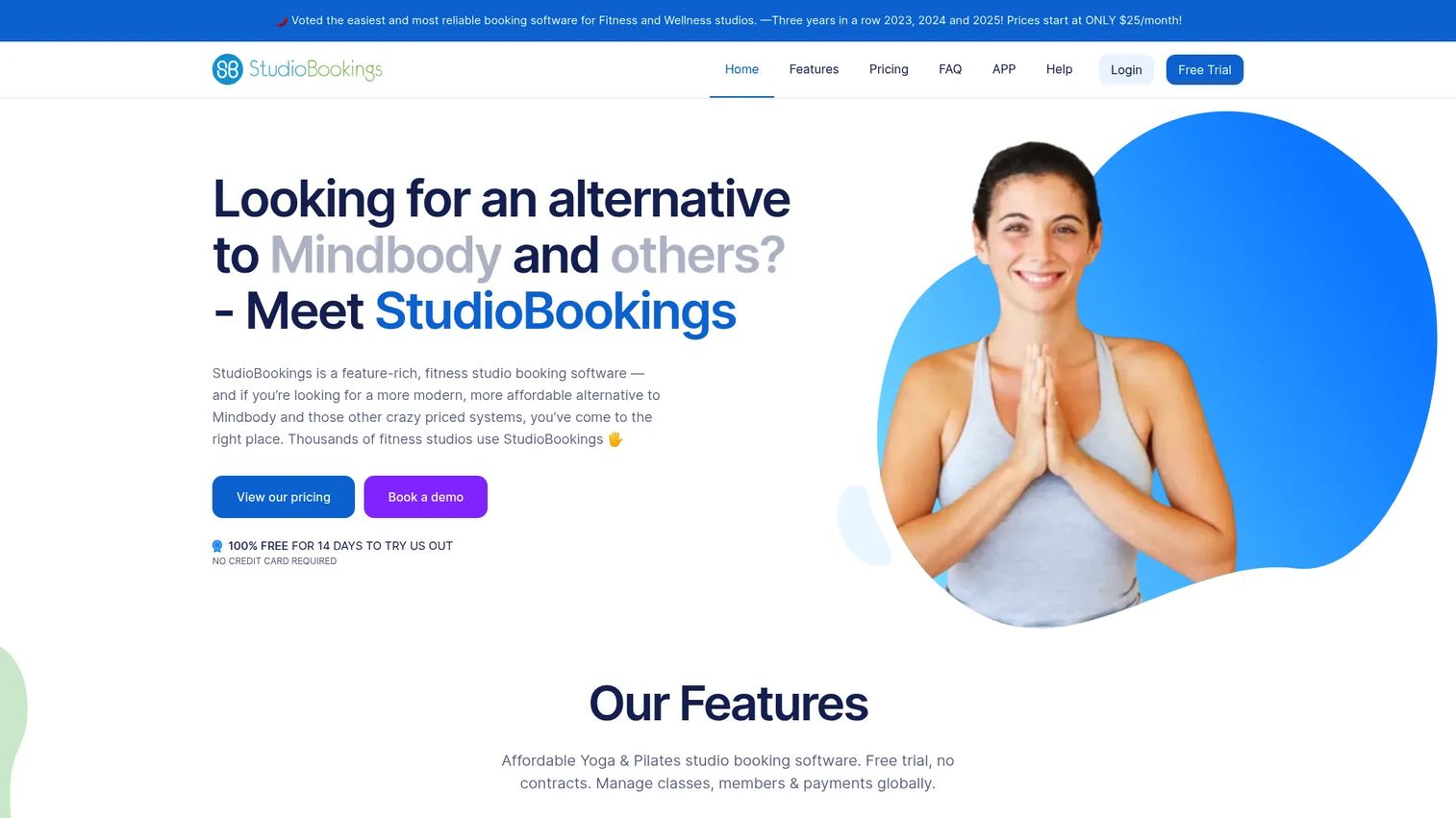
StudioBookings is fitness and wellness studio booking and management software for classes, appointments, members, and payments. Its pitch is simple: full studio management without the price tag or the contract. Online class bookings and waitlists, member management and logins, and online payments with reporting come in every plan, so you are not gated out of core features at the entry tier.
For a smaller or budget-aware studio, that flat, everything-included model removes the guesswork from pricing. You get the operational coverage of a heavier platform, but the entry point is low enough that a solo owner or single-location studio can run the whole business on it without overpaying for capacity they do not use yet.
Best for: Yoga, Pilates, barre, and fitness studios that want affordable booking and membership management without a contract.
Key strengths
- Everything in every plan: Bookings, waitlists, member logins, payments, and reporting with no feature gating.
- Low entry price: Solo-owner pricing that makes full studio software accessible to small studios.
- No contract: Month-to-month flexibility instead of long lock-in.
Why choose StudioBookings: If you want the coverage of a full studio management system without enterprise pricing or a commitment, StudioBookings is built for exactly that buyer. It is a fitness studio scheduling software that respects a small studio's cash constraints.
StudioBookings pricing: Plans start at $25 per month for a solo owner, with all features included in every plan at no extra cost. Its G2 rating is 4.5/5, based on a small review sample.
4. Glofox
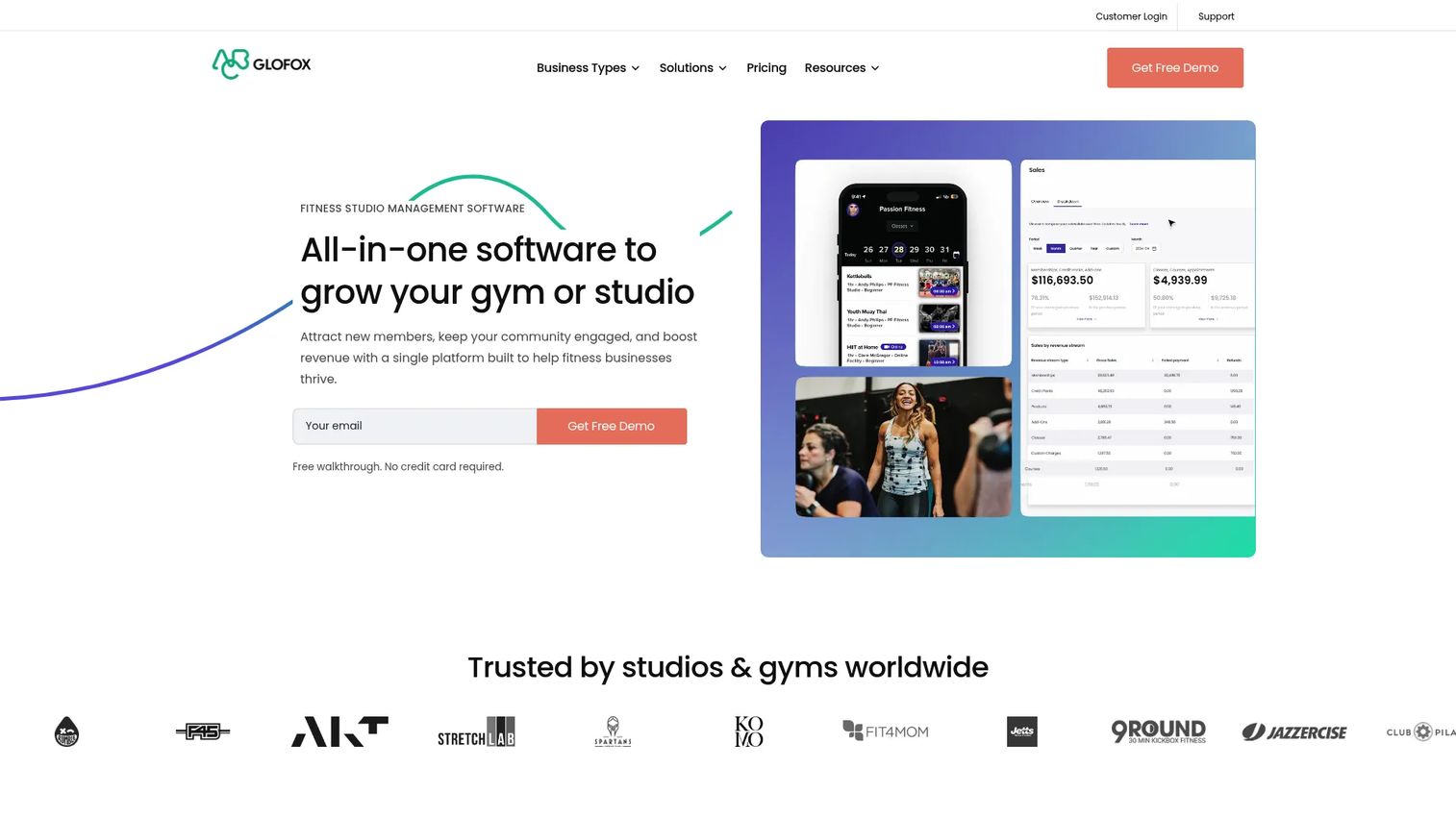
Glofox is gym and studio management software built for fitness businesses that care about a polished, branded member experience. Class booking and scheduling, member management and payments, and reporting and analytics come together with a strong emphasis on the mobile app members use to book and pay. For growth-oriented studios, that branded experience is the differentiator.
Where Glofox tends to fit best is the studio scaling past a single location or wanting its brand front and center in every member interaction. The branded app, automated billing, and reporting give operators the infrastructure to grow membership without the client experience feeling generic or off-brand.
Best for: Fitness studios and gyms that need branded booking, billing, and member management as they grow.
Key strengths
- Branded member app: A mobile experience that carries your brand, not the vendor's.
- Member and payment management: Automated billing and membership handling built in.
- Reporting and analytics: Attendance and revenue visibility to guide growth decisions.
Why choose Glofox: Choose Glofox when the member-facing experience is part of your competitive edge and you are building toward multiple locations. It is a studio scheduling software that treats brand and mobile as first-class, not afterthoughts.
Glofox pricing: Glofox's public plans page shows pricing starting at $99 per month across Essential, Boost, Elite, and Enterprise tiers, with Enterprise on a custom quote. Individual plan prices are not publicly listed, and there is no free tier. Its G2 rating is 4.5/5.
5. OfferingTree
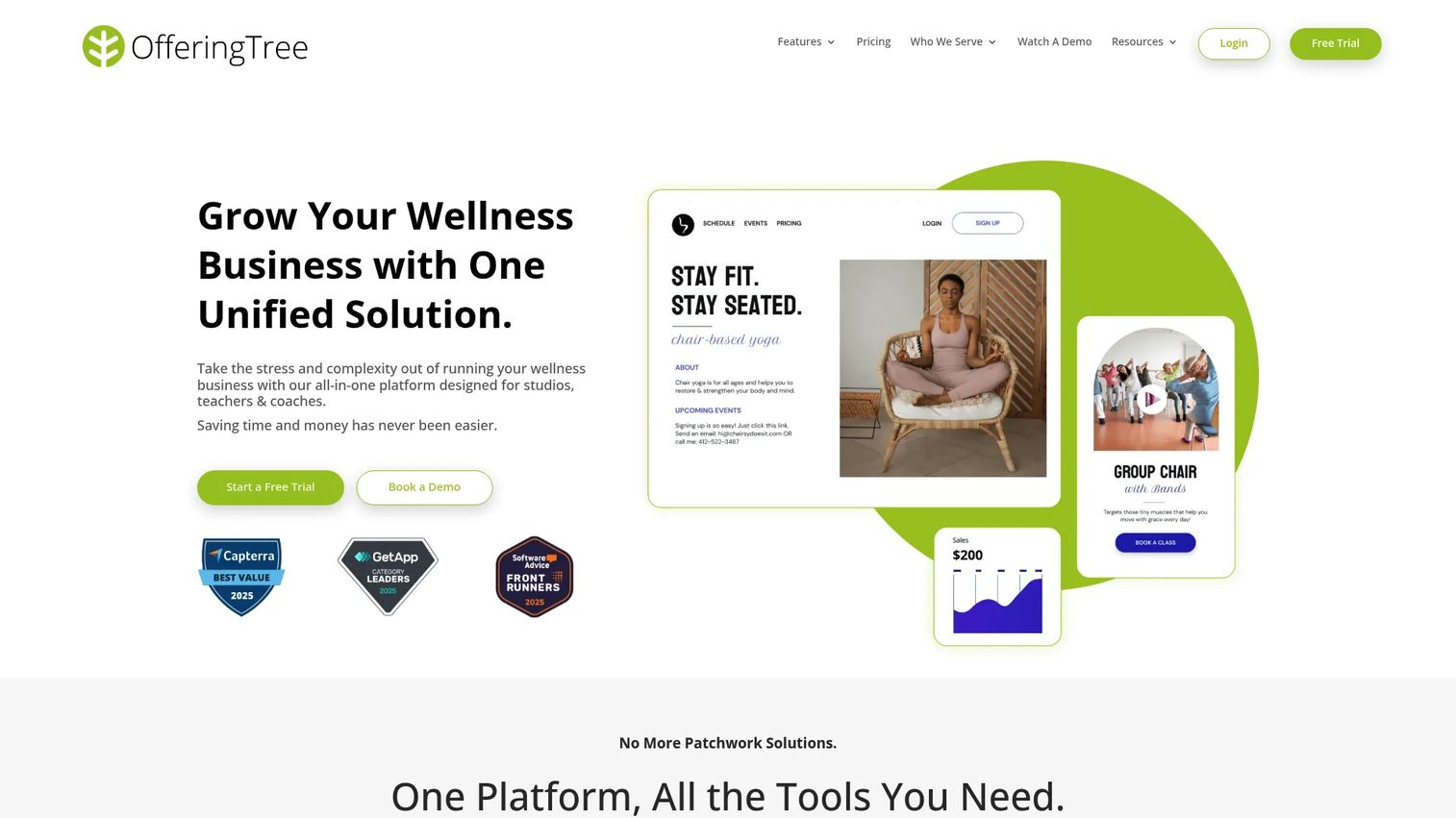
OfferingTree is all-in-one software for wellness businesses to build websites, manage bookings, host on-demand content, and run marketing. What sets it apart is that the website and the booking engine live in the same place, so instructors and small studios can get a professional online presence and take bookings without stitching a site builder to a separate scheduler.
Booking covers classes, appointments, events, courses, memberships, and packages, and the platform adds email marketing, automations, and SEO tooling. For a solo teacher or small studio that wants fewer moving parts, the bundled website plus booking plus on-demand hosting is a genuine simplification, and the on-demand content support makes hybrid delivery straightforward.
Best for: Wellness studios, yoga teachers, and fitness businesses that want an all-in-one booking and website platform.
Key strengths
- Website plus booking: A hosted website and booking engine in one tool, no integration needed.
- On-demand content hosting: Built-in support for virtual and hybrid class libraries.
- Marketing built in: Email marketing, automations, and SEO tooling included.
Why choose OfferingTree: Choose it when you want your site, bookings, memberships, and on-demand classes managed from one simple platform. It is the fastest path to a professional online presence for instructors who do not want to run a stack of tools.
OfferingTree pricing: OfferingTree shows Essentials from $26 per month billed annually, Pro from $49 per month, and Pro Plus from $83 per month, each with monthly and annual options and a free trial rather than a free tier. Its G2 rating is 4.9/5.
6. Acuity Scheduling
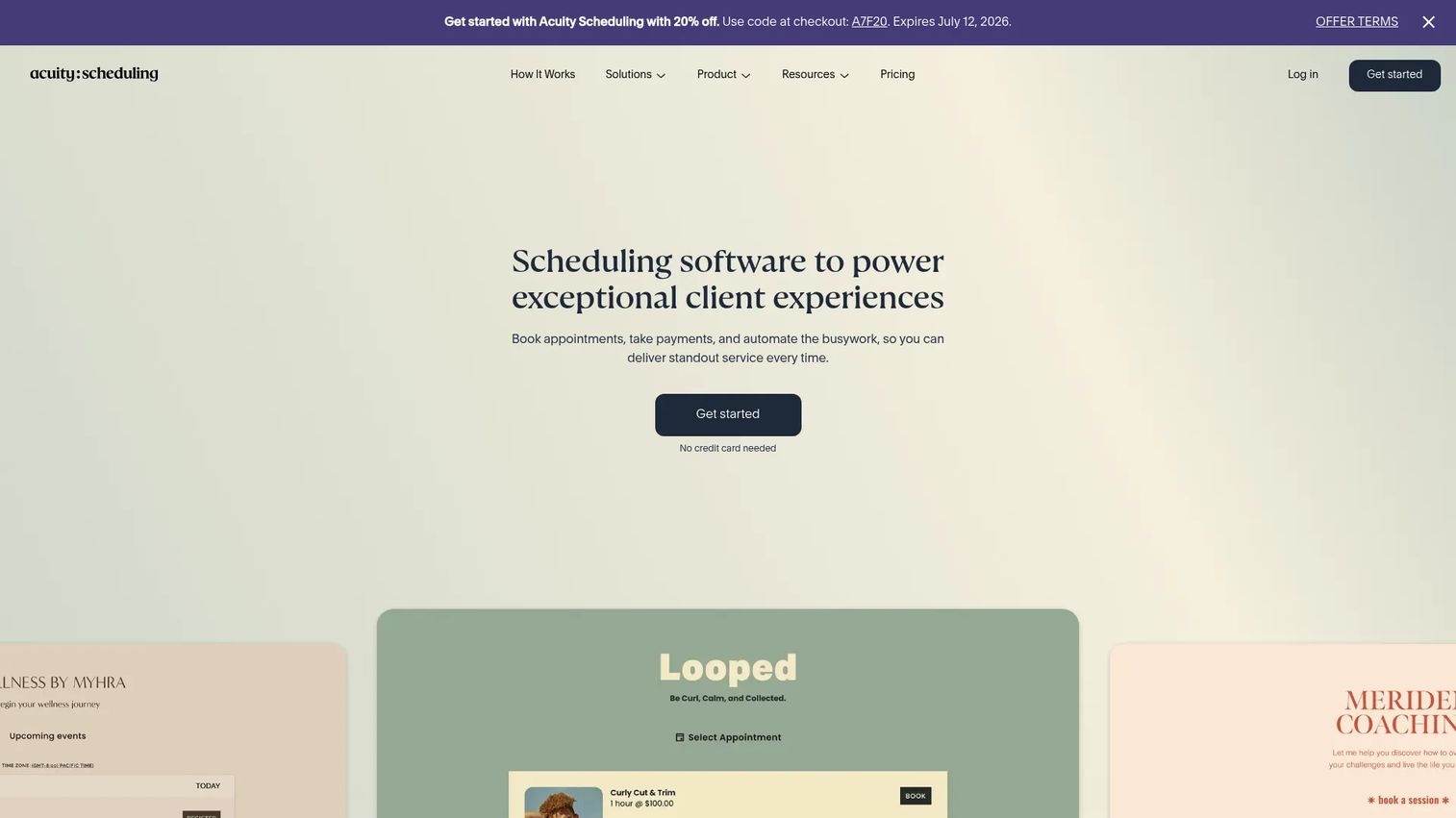
Acuity Scheduling is online appointment scheduling software for businesses that take bookings, and it is a clean booking-first option for studios with lighter operational needs. Online booking and scheduling, calendar sync and a mobile app, and payments with reminders and custom intake forms make it a strong yoga studio booking software for instructors running classes and private sessions.
It shines at the booking layer: clients self-schedule, get automated reminders, pay upfront, and fill out intake forms before they arrive. If your operation is primarily about getting people into slots cleanly rather than running complex memberships across locations, Acuity handles that job with very little friction and a low learning curve.
Best for: Service businesses and instructors that need client self-scheduling with reminders and payments.
Key strengths
- Self-scheduling: Clients book their own slots with clear availability and calendar sync.
- Reminders and payments: Automated reminders plus upfront payment collection.
- Custom intake forms: Waivers and intake collected before the session starts.
Why choose Acuity: Choose Acuity when clean, self-serve booking is the priority and you do not need deep membership operations. It is a booking-first tool that instructors and small studios can set up in an afternoon.
Acuity pricing: Acuity shows a Standard plan at $27 per month and a Premium plan at $49 per month, with a 7-day trial and no credit card required to start. There is no free tier. Its G2 rating is 4.7/5.
7. SimplyBook.me
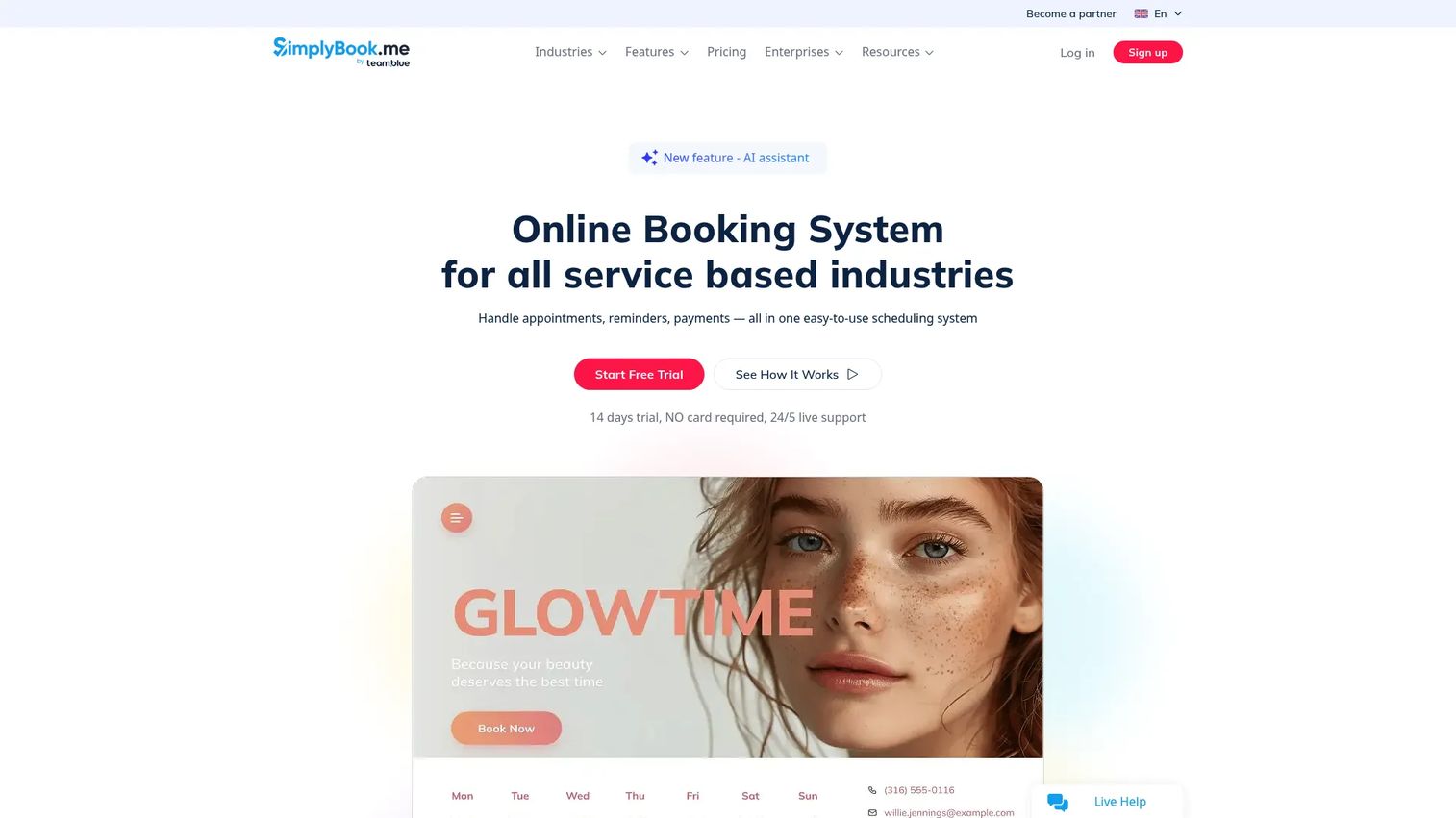
SimplyBook.me is online appointment booking and scheduling software for service-based businesses, and its edge is flexibility. 24/7 online booking, calendar sync and integrations, and payments with reminders and custom booking pages let a studio shape the booking flow around how it actually works rather than forcing a template.
It fits smaller studios and mixed-service operators well, because you can add just the features you need through a modular system. If you run yoga alongside workshops, private sessions, or other services, a flexible booking engine like this is often enough on its own, and the free tier makes it easy to start.
Best for: Service businesses that need customizable online scheduling with team management.
Key strengths
- Highly customizable booking: Modular features and custom booking pages shaped to your workflow.
- 24/7 self-booking: Clients book anytime with automated reminders.
- Payments and integrations: Built-in payment collection plus calendar and app integrations.
Why choose SimplyBook.me: Choose it when you want a flexible booking engine you can tailor, especially across mixed services. The free tier and modular add-ons let you start small and scale features as the studio grows.
SimplyBook.me pricing: SimplyBook.me offers a Free plan with up to 50 bookings per month, then Basic at £12.9 per month, Standard at £25, Premium at £55, and a custom-priced Enterprise plan. Its G2 rating is 4.4/5.
8. Calendly
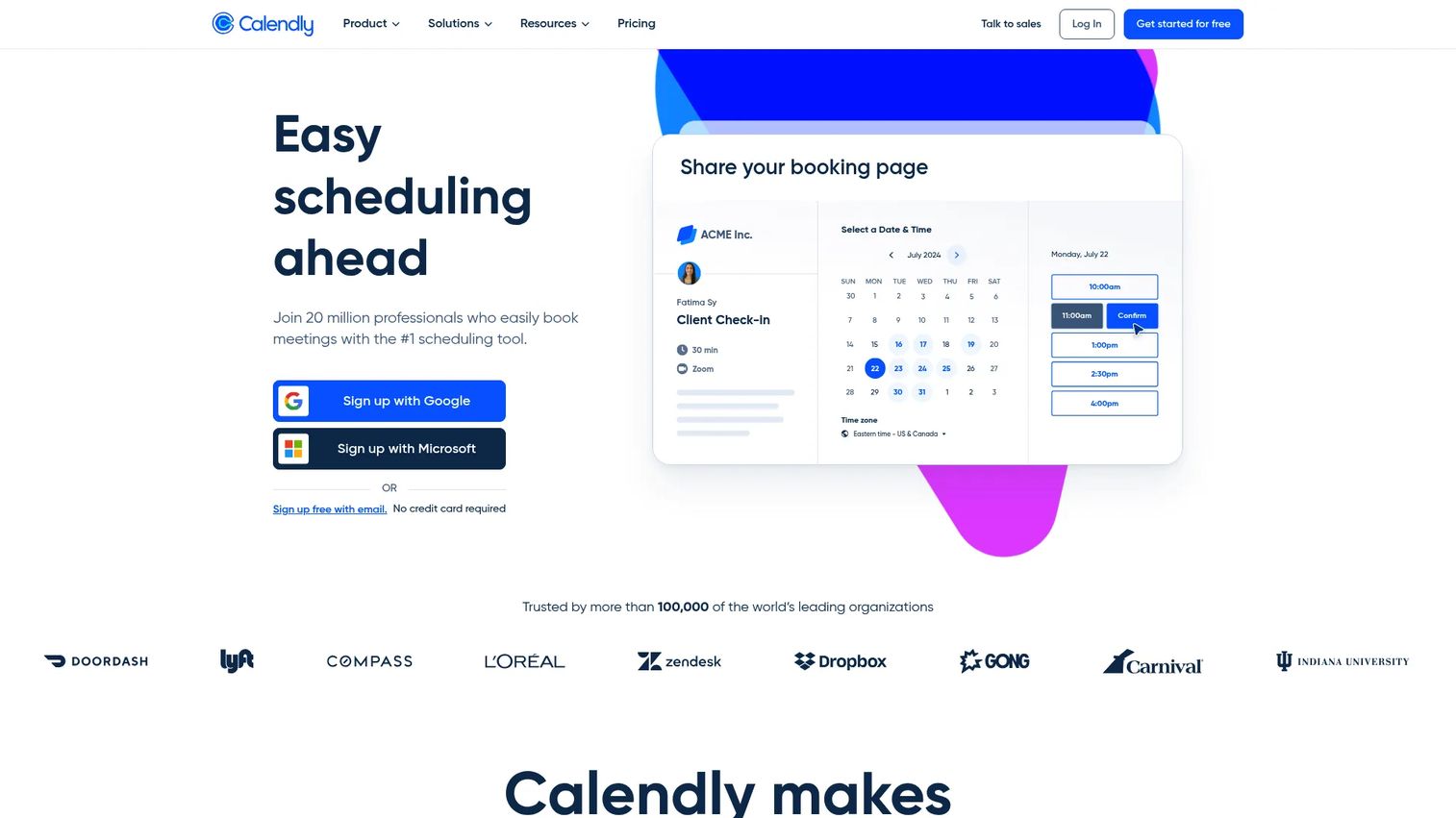
Calendly is scheduling automation software for individuals and teams, and it belongs on this list as the honest lightweight option. Unlimited event types on paid plans, calendar connections with scheduling automation, and routing and team scheduling make it dead simple to let clients book classes or private sessions without any back-and-forth.
Be clear about what it is: Calendly is a scheduler, not a full studio management system. It does not run memberships, class packs, or studio reporting. But when the buyer wants minimal setup and just needs clients to book a slot, Calendly is hard to beat on simplicity, and it works as a useful contrast point for anyone comparing booking-only tools against full studio platforms.
Best for: Instructors and teams that want automated scheduling and booking links with minimal setup.
Key strengths
- Fastest setup: Share a booking link and start taking bookings immediately.
- Scheduling automation: Calendar connections, routing, and round-robin for teams.
- Free tier: A genuinely usable free plan to start.
Why choose Calendly: Choose Calendly when simplicity is the whole point and you do not need studio operations. It is the right yoga class booking system for a solo teacher who wants bookings handled and nothing more.
Calendly pricing: Calendly offers a free plan, Standard at $10 per seat per month billed yearly, Teams at $16 per seat per month, and Enterprise starting at $15,000 per year. Its G2 rating is 4.7/5.
9. Vagaro
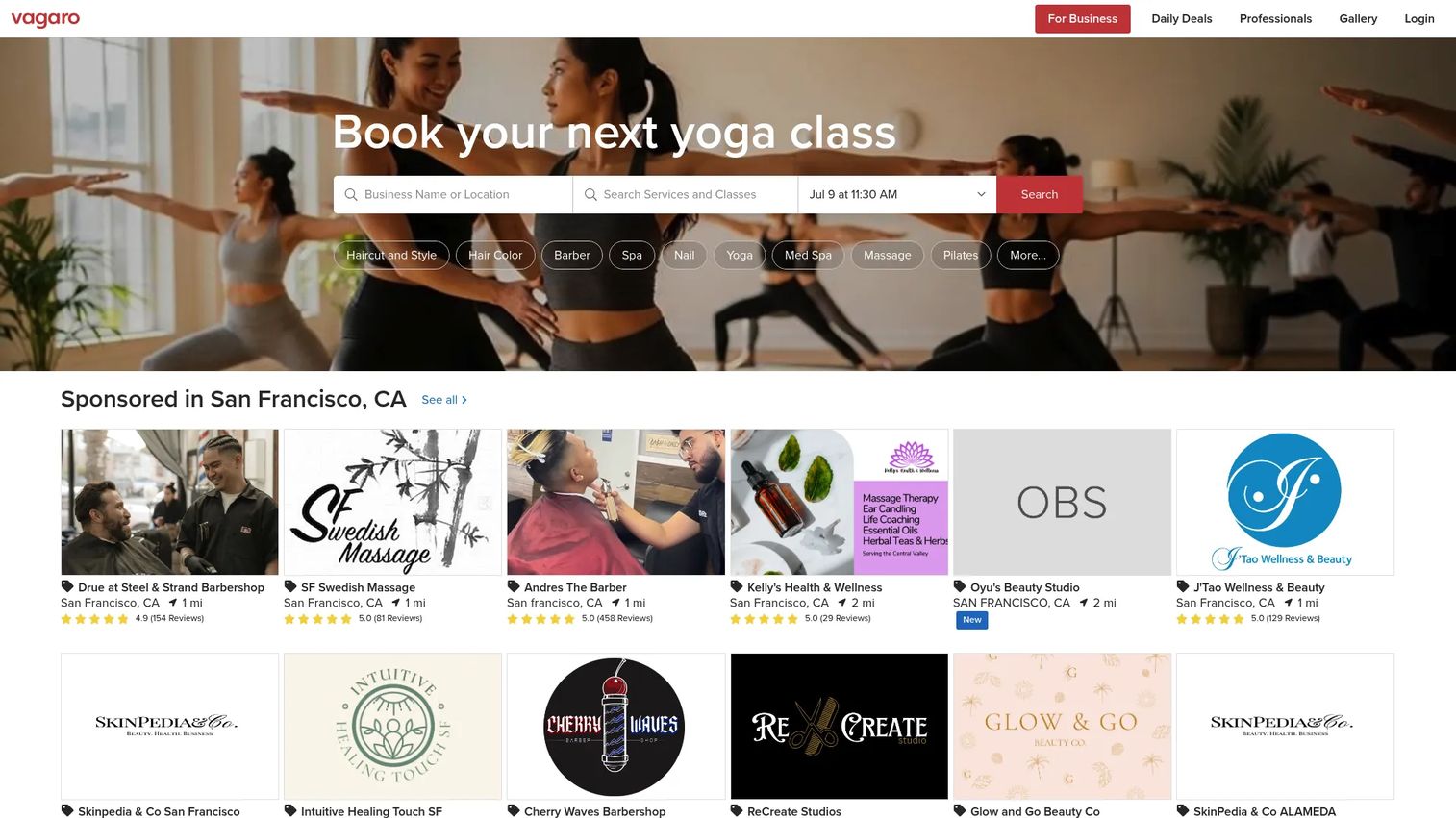
Vagaro is all-in-one booking, payments, and business management software for beauty, wellness, and fitness businesses. Its breadth is the point: online booking and calendar management, payments and merchant services, and memberships, packages, gift certificates, and reporting all live in one system. For a studio that mixes classes with appointments or retail, that coverage is useful.
Vagaro fits yoga studios running more than one service model. If you offer classes plus private sessions, sell products at the front desk, and want client management across all of it, Vagaro's wide feature set handles the mix. It also carries a consumer-facing marketplace where clients discover and book wellness businesses.
Best for: Beauty, wellness, and fitness businesses that want scheduling, payments, and client management in one system.
Key strengths
- Broad service coverage: Classes, appointments, memberships, and retail in one platform.
- Payments and merchant services: Integrated processing plus gift certificates and packages.
- Client management and marketplace: Full client profiles plus a consumer discovery channel.
Why choose Vagaro: Choose Vagaro when your studio runs mixed service models and you want one platform for classes, appointments, and retail. It is a broad wellness platform that fits yoga inside a wider business.
Vagaro pricing: Vagaro starts at $23.99 per month, which includes one calendar license, with additional employee calendars priced separately. There is no free tier. Its G2 rating is 4.6/5.
What to compare before you choose
The right pick depends less on feature counts and more on how your studio actually operates. Run every option through these criteria before you commit.
Operational breadth vs booking depth
Decide whether you need a full studio operating system or a booking-first tool. A studio running memberships, packs, and reporting across locations needs the former. A solo instructor filling classes needs the latter. Buying a heavy platform for a light job wastes money; buying a scheduler for a complex operation creates workarounds.
Memberships and payment handling
If recurring revenue drives your studio, scrutinize recurring billing, failed-payment recovery, and pass management. A yoga studio payments software that automates renewals and dunning protects revenue you would otherwise chase manually.
Client app and experience
Look at what the client actually touches. A branded app or clean portal reduces support questions and makes booking and payment feel effortless, which drives retention. Decide whether a branded yoga client app is worth the tier that unlocks it.
Hybrid and virtual support
If you stream or sell on-demand, confirm the platform hosts video, controls access, and ties virtual sessions to memberships. Hybrid yoga classes software should make online and in-studio feel like one system, not two.
Pricing clarity and contract terms
Compare yoga studio software pricing on total cost, not entry price. Check for payment processing fees, per-location charges, and contract length. No-contract, everything-included pricing is easier to forecast than tiered plans that gate essentials.
Choosing the right yoga studio software
The decision splits cleanly. If you run a growing or multi-location studio and need one platform for scheduling, payments, memberships, and reporting, an all-in-one studio operating system is the right layer: Mindbody for depth and scale, WellnessLiving for client experience and marketing, Glofox for a branded member app, or StudioBookings if you want that coverage without a contract. If you want your website and bookings in one simple tool, OfferingTree is the fastest path.
If your operation is lighter and booking is the real job, a scheduling-first tool wins on simplicity and cost. Acuity Scheduling and SimplyBook.me handle self-serve booking, reminders, and payments well, and Calendly is the minimal option when you just need clients to grab a slot. For studios mixing classes with appointments or retail, Vagaro's breadth fits yoga inside a wider wellness business.
Start with your operating complexity, not the feature list. Map memberships, locations, and whether virtual delivery matters, then shortlist two tools that fit and trial both. The right yoga business software is the one that removes the most manual work from your week.
Start your journey with Guideflow today!
FAQs
For small studios, the choice comes down to how much operation you run. StudioBookings and OfferingTree give affordable all-in-one coverage with memberships and payments, while Acuity Scheduling, SimplyBook.me, or Calendly are enough if you mainly need clean booking. Lightweight tools cost less and set up faster; all-in-one platforms handle memberships and reporting a scheduler cannot.
Studios running recurring revenue lean on full studio management platforms like Mindbody, WellnessLiving, Glofox, StudioBookings, or Vagaro. These handle recurring memberships, class packs, automated renewals, and failed-payment recovery. That automation is what separates a full yoga management software from a basic booking system yoga owners might start with.
Booking software focuses on one job: getting clients into classes and appointments cleanly, with reminders and payment collection. Yoga studio management software covers the whole operation, including memberships, billing, client management, reporting, staff coordination, and often virtual classes. Booking-first tools are lighter and faster to set up; management platforms run the entire business.
For hybrid or virtual delivery, look at platforms with built-in streaming and on-demand hosting. WellnessLiving and OfferingTree support virtual and on-demand content directly, and Mindbody and Vagaro offer virtual class handling within broader operations. Live streaming plus on-demand access tied to memberships is what makes hybrid feel like one system rather than two disconnected tools.
Many full studio platforms include a branded client app or web portal where members book, pay, and manage accounts. WellnessLiving and Glofox emphasize branded mobile apps, while others offer a client-facing web portal. Booking-first tools like Acuity and Calendly provide clean booking pages rather than a full branded app.
Yes. Automated email and SMS reminders, waitlist promotion, cancellation policies, and self-service rescheduling all cut no-shows. When a client cancels, waitlist automation fills the slot without staff intervention, and upfront payment or deposits raise commitment. These features are standard across the all-in-one platforms and available in most booking-first tools.
StudioBookings is built around affordability and no-contract, month-to-month flexibility, with all features included at a low entry price. OfferingTree and Acuity Scheduling also offer accessible monthly pricing, and SimplyBook.me has a free tier for very small operations. Compare total cost including payment processing fees, not just the headline monthly price.
Compare data migration, payment processing and recurring billing, membership and pass handling, automation such as reminders and waitlists, and reporting depth. Confirm how client records, memberships, and payment history transfer, and check contract terms and per-location fees. The goal is a platform that removes manual work and gives clean reporting for weekly decisions without disrupting active members.