You can drive paid traffic, write the landing page, and build the nurture flow. Then the report says the same thing: Visitors clicked, skimmed, and left. The page views look fine. The bounce rate tells a different story.
Static assets are easy to publish and hard to learn from. A PDF nobody reads, a video that plays to 15%, a form that feels like a tax return - none of these tell you whether someone actually wants what you're selling. According to Ascend2 and TopRank Marketing (2025), 78% of marketers say interactive content increases repeat engagement. That gap between passive and participatory is where growth marketers are losing qualified pipeline every week.
Interactive marketing tools give visitors something to do: Click through a product, answer a quiz, explore a calculator, watch and choose. Those actions generate intent signals, not just impressions. And the best tools do it without requiring an engineering ticket to launch or update.
What's inside
This guide covers interactive marketing tools across formats built for growth marketers who need measurable, two-way customer experiences. Tools were selected based on four criteria:
- Two-way experience: The tool creates active participation, not passive consumption
- Lead capture or intent tracking: Visitor behavior generates usable data
- Launch speed: A marketer can build and publish without engineering support
- Stack fit: The tool integrates with CRM, marketing automation, or analytics workflows
Pricing and G2 ratings reflect current figures verified at writing time.
TL;DR
- Best overall: Guideflow for interactive product demos, buyer-led exploration, demo centers, and product engagement analytics
- Best for forms and surveys: Typeform for polished conversational lead capture
- Best for quizzes and calculators: Outgrow for interactive lead magnets with scoring
- Best for shoppable video: Tolstoy for ecommerce video discovery experiences
- Best for conversion analysis: Hotjar (now part of Contentsquare) for heatmaps and session recordings
- Best for landing pages: Unbounce for no-code campaign pages and A/B testing
What is interactive marketing software?
Interactive marketing software helps marketers create two-way digital experiences where visitors click, answer, explore, choose, watch, or respond instead of passively reading or viewing.
The category spans several formats:
- Interactive product demos: Guided, clickable walkthroughs that let prospects experience a product without a live meeting or login
- Forms and surveys: Conversational question flows for lead capture, research, and feedback
- Quizzes and calculators: Personalized outputs like ROI estimates, recommendations, or scores in exchange for visitor information
- Interactive video: Video with embedded clicks, choices, and purchase paths
- Webinars: Live or automated events where attendees engage through polls, Q&A, and offers
- Landing pages: Campaign-specific pages built for conversion testing and lead capture
- Behavior analytics: Heatmaps, session recordings, and feedback tools that reveal how visitors interact with pages
- Visual design tools: Drag-and-drop creation of campaign assets, presentations, and branded content
Key capabilities to evaluate across the category:
- No-code experience creation
- Conditional logic or branching paths
- Lead capture and enrichment
- CRM and marketing automation integrations
- Engagement analytics beyond page views
- Personalization by segment, account, or behavior
- Embed and share options
One important distinction: Interactive marketing tools focus on the visitor experience itself. SEO platforms, ad networks, and CRMs support campaigns, but they do not create the two-way moments that generate intent signals. These tools do.
The clearest measure of whether a tool belongs in this category is whether it changes what a visitor does, not just what they see.
When to use interactive marketing tools
Turn paid traffic into product engagement
Paid, organic, and partner traffic typically lands on static pages. Interactive demos, calculators, and quizzes give visitors something to explore instead of a wall of copy to skim. A visitor who clicks through a product flow or answers a qualifying question generates a richer intent signal than a page view. That signal goes directly into lead scoring and CRM.
Qualify leads before sales gets involved
Forms capture contact information. Interactive tools capture buying behavior. A prospect who completes a product demo, finishes a calculator, or watches 90% of an interactive video has shown something about their interest level. Growth marketers using these signals can route high-intent leads differently, without adding more work to the sales queue.
Personalize campaigns without waiting on engineering
Interactive tools let marketers create segment-specific experiences for different roles, industries, or funnel stages. A startup team of two can publish a personalized demo or a quiz-based lead magnet in hours. Mid-market teams can branch calculator flows by company size or use case. No design bottleneck, no ticket filed.
Interactive marketing tools comparison
The table below covers all 12 tools with verified pricing and G2 ratings. Guideflow leads because it covers the highest-intent B2B marketing use case: Letting buyers experience a product before talking to sales.
| # | Product | Best for | Key differentiator | Pricing | G2 rating |
|---|---|---|---|---|---|
| 1 | Guideflow | Interactive product demos | Buyer-led product exploration with demo analytics | Free; paid from $35/mo | 5.0 |
| 2 | Typeform | Interactive forms and surveys | Conversational forms with conditional logic | Free; paid from $29/mo | 4.5 |
| 3 | Outgrow | Quizzes and calculators | Interactive lead magnets with scoring and segmentation | Free; paid from $14/mo | 4.7 |
| 4 | Tolstoy | Shoppable and interactive video | AI-powered video experiences for ecommerce discovery | From $8/mo | 4.7 |
| 5 | Ceros | Immersive interactive content | No-code visual content studio for branded campaigns | Contact sales | 4.1 |
| 6 | Hotjar | Behavior analytics | Heatmaps, session recordings, and feedback (now Contentsquare) | Free; paid from $39/mo | 4.3 |
| 7 | Unbounce | Landing pages and conversion testing | AI-assisted landing page creation with A/B testing | From $29/mo | 4.3 |
| 8 | HubSpot | CRM-connected campaigns | Marketing automation tied directly to CRM data | Free; paid from $800/mo | 4.4 |
| 9 | Mailchimp | Email and lifecycle campaigns | Email automation with forms and landing pages | Free; paid from $13/mo | 4.3 |
| 10 | Canva | Visual campaign assets | Fast design production with 1,000+ templates | Free; paid from $144/yr | 4.7 |
| 11 | Wistia | Video marketing | Branded video hosting with lead capture and analytics | Free; paid from $79/mo | 4.6 |
| 12 | Demio | Webinars and live events | Browser-based webinars with engagement tracking | From $45/mo | 4.6 |
Best 12 interactive marketing tools for 2026
1. Guideflow
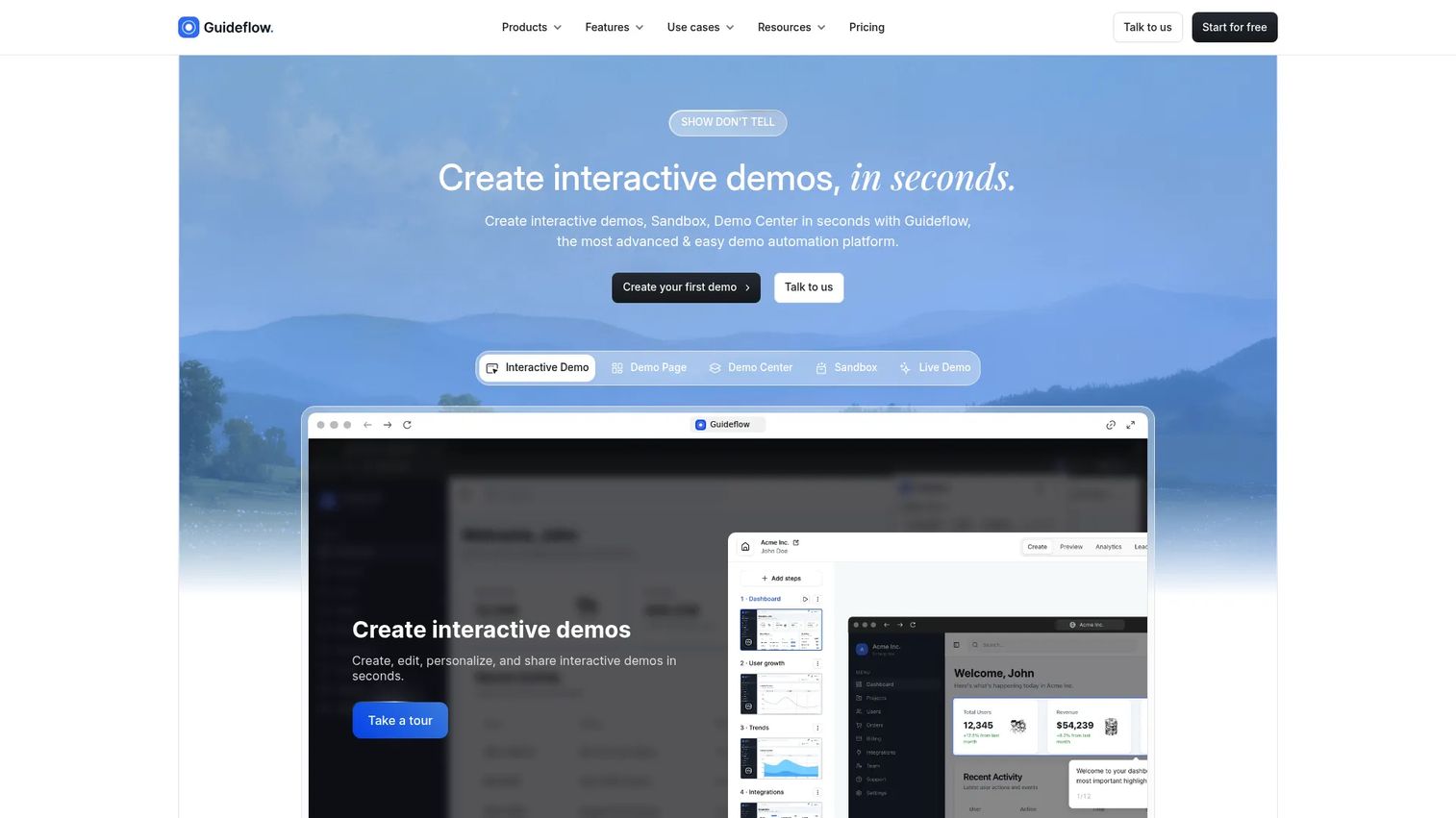
Guideflow is a demo automation platform that lets B2B marketing teams create interactive product demos, sandboxes, demo centers, live demos, and mobile demos without engineering support. You capture your product directly from your browser, refine the experience in a no-code editor, and share it via link, embed, or demo center. The result is a buyer who explores your product at their own pace instead of waiting for a scheduled call.
For growth marketers, the core advantage is what happens after a visitor engages. Step-level analytics show which flows they completed, where they dropped off, and what they clicked. That data flows into CRM, Slack, and marketing automation, so high-intent interactions become qualified pipeline signals, not just site traffic.
Best for: B2B SaaS demand generation, product marketing, and growth teams who need self-serve product experiences tied to measurable buyer intent.
Key features
- Interactive demos, sandboxes, demo centers, live demos, and mobile demos
- No-code capture via browser in a few clicks
- AI-generated steps, translations, voiceovers, and avatars
- Personalization: Dynamic variables, branching paths, role-specific flows
- Step-level engagement analytics with CRM and Slack integrations
Why choose Guideflow: Guideflow performs best when marketers need to show product value instead of describing it. Interactive demos work across landing pages, email outreach, paid campaigns, event follow-up, onboarding, support documentation, and partner enablement. The same captured demo can serve every surface without a rebuild.
Guideflow pricing: A free plan is available with five guideflows and unlimited viewers. The Solo plan runs $35/month (billed annually) or $40/month. The Growth plan is $499/month (billed annually). Enterprise pricing is available on request.
G2 rating: 5.0/5
Start your journey with Guideflow today!
2. Typeform
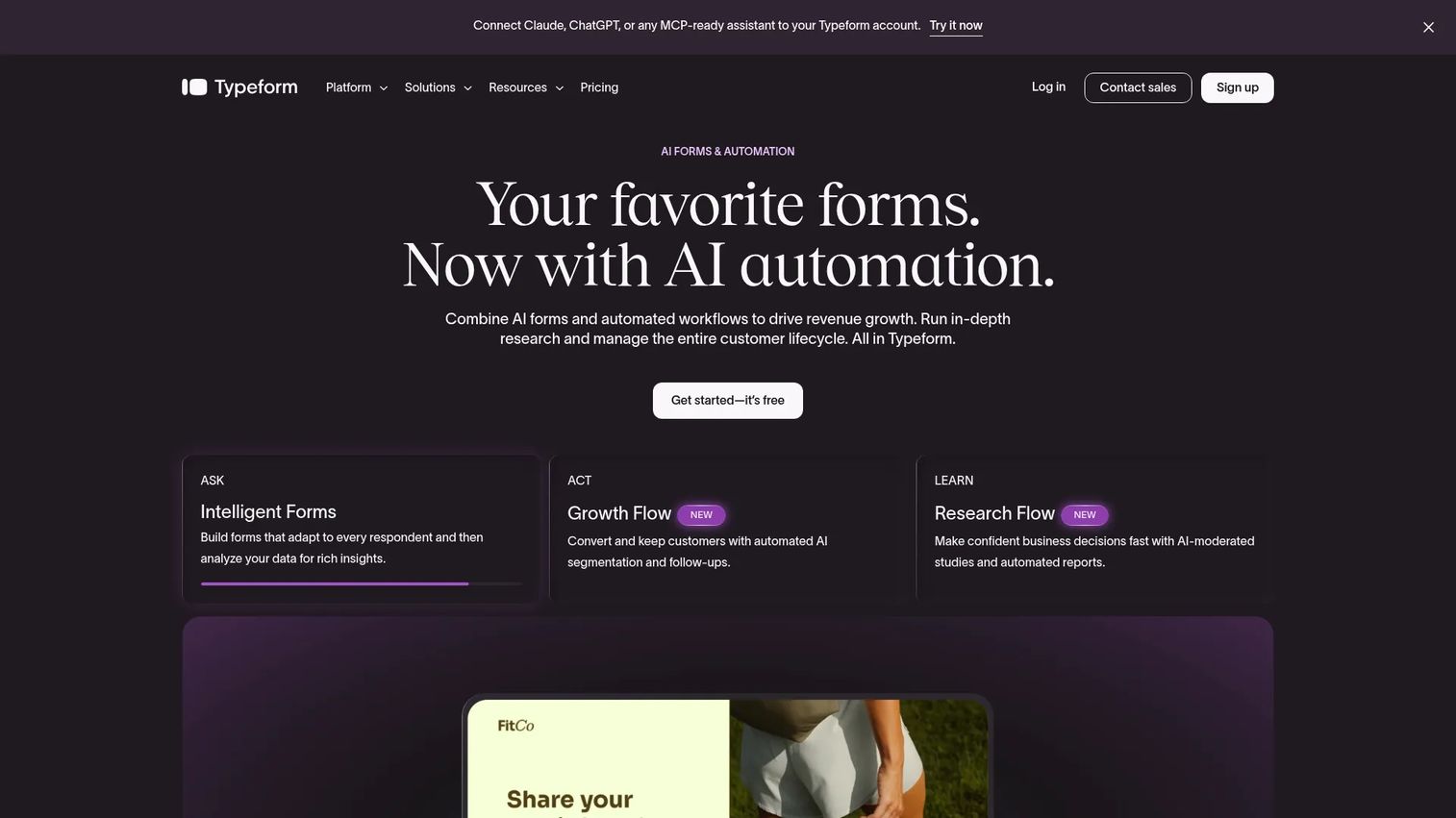
Typeform is an AI-powered form and survey platform that turns flat input fields into conversational question flows. Instead of presenting all questions at once, Typeform shows one question at a time, using conditional logic to branch the path based on each answer. Marketing teams use it for lead capture, customer research, event registration, post-campaign feedback, and qualification flows embedded in landing pages or emails.
The platform includes templates, branding controls, webhooks, native integrations with HubSpot, Salesforce, Mailchimp, and other tools, plus analytics that show completion rates and drop-off by question.
Best for: Growth marketers who need polished, branded forms and surveys that feel less like a form and more like a conversation.
Key features
- Conversational one-question-at-a-time interface
- Conditional logic and branching paths
- Video and audio response options
- Native integrations with CRM and marketing automation
- Drop-off analytics by question
Why choose Typeform: Choose Typeform when the main interaction is question-based and form completion rate matters. It works well before pushing contacts into CRM or marketing automation, and the experience is significantly more engaging than a standard inline form.
Typeform pricing: A free plan is available. The Basic plan starts at $29/month, Plus at $59/month, and Business at $99/month. The Growth Flow plan runs $349/month. Enterprise pricing is custom.
G2 rating: 4.5/5
3. Outgrow
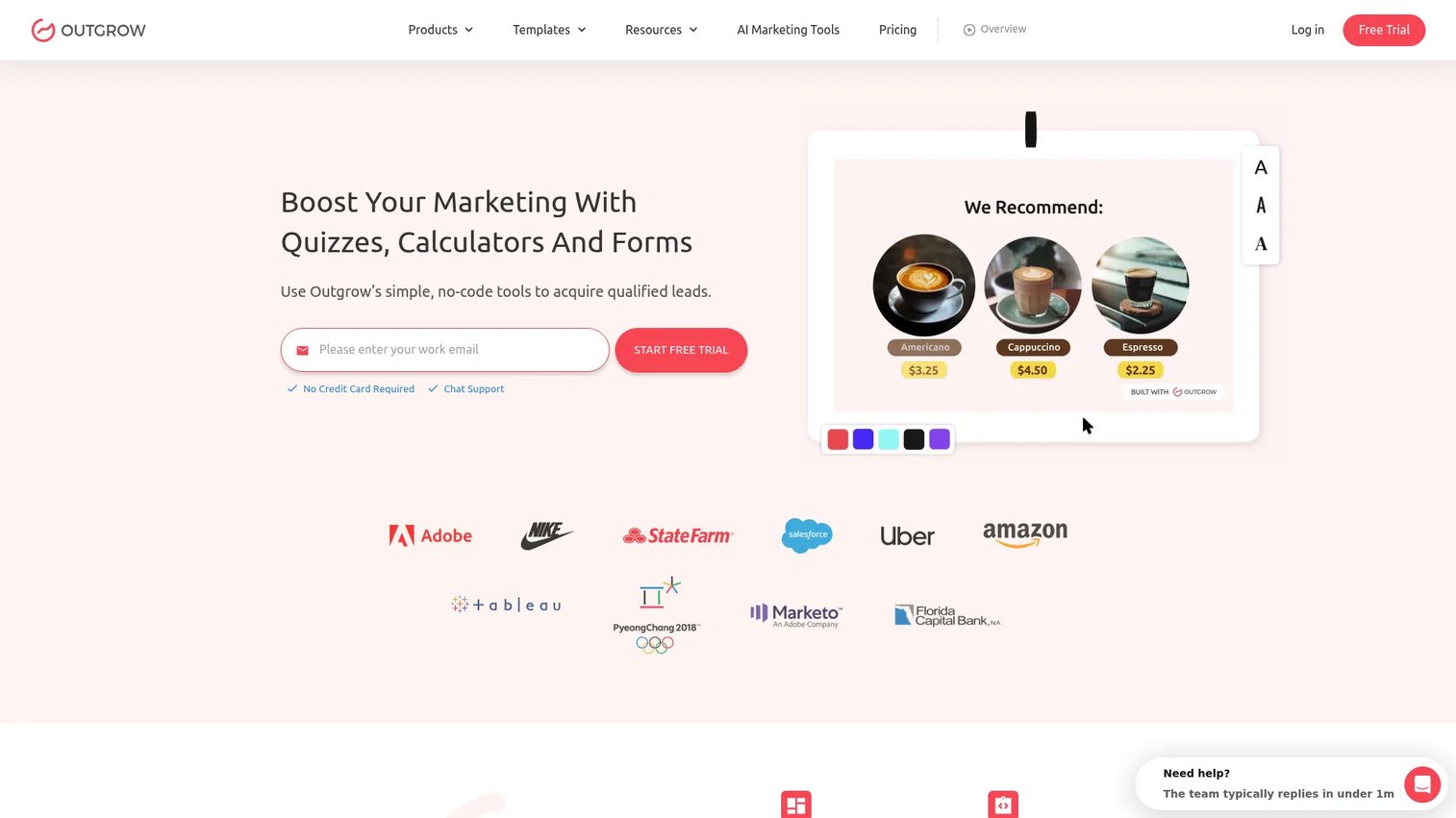
Outgrow is a no-code interactive content platform for building quizzes, calculators, assessments, polls, chatbots, and recommendation tools. The core idea is a value exchange: A visitor provides information and receives a personalized result, whether that's an ROI estimate, a product recommendation, or a readiness score. That exchange generates a lead capture moment that feels useful rather than extractive.
Marketers use Outgrow for top-of-funnel campaigns where the interactive asset itself is the hook. A B2B team might build a "What's your demo readiness score?" assessment. An ecommerce brand might deploy a product finder quiz.
Best for: Marketers building calculators, quizzes, assessments, and lead magnets for top-of-funnel capture where a personalized output drives the conversion.
Key features
- Quizzes, calculators, assessments, polls, and chatbots
- Lead scoring and segmentation by response
- Embeddable content with custom-domain hosting
- Native integrations plus Zapier for extended connections
- Analytics with response-level breakdowns
Why choose Outgrow: Choose Outgrow when the campaign needs a personalized result. ROI calculators, readiness assessments, and product recommendation quizzes all fit well. The free plan covers basic forms and surveys, with interactive content types unlocking at paid tiers.
Outgrow pricing: A free plan covers basic forms and surveys. The Freelancer Limited plan starts at $14/month (billed annually), Freelancer Pro at $25/month, Essentials at $95/month, and Business at $600/month. Enterprise pricing is custom.
G2 rating: 4.7/5
4. Tolstoy
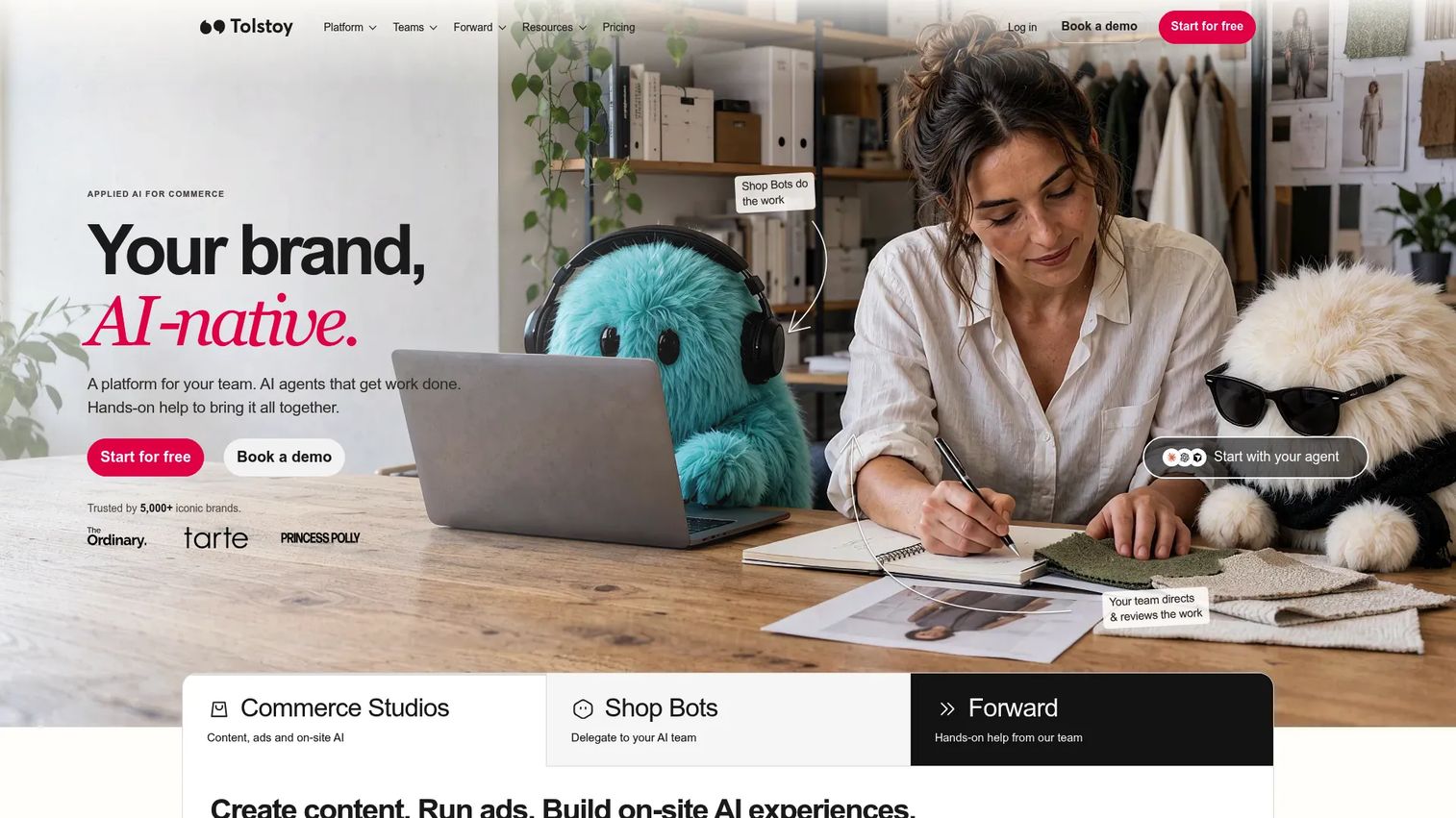
Tolstoy is an AI ecommerce platform focused on shoppable video and product discovery. It lets brands create video experiences where viewers can browse products, get recommendations, and complete purchases without leaving the video context. Features include shoppable video tiles, Stories, carousels, an AI Sales Agent with virtual try-on, and AI-generated product imagery and video.
The platform sits primarily in the ecommerce stack, connecting to product catalogs and purchase flows. According to Digiday and PadSquad (2025), 58% of advertisers used shoppable overlays in video ads, which signals how quickly this format is becoming standard for commerce-driven brands.
Best for: Ecommerce and retail marketers who want shoppable video, interactive product discovery, and AI-assisted content on product and campaign pages.
Key features
- Shoppable videos, Stories, carousels, and tiles
- AI Sales Agent with product recommendations
- Virtual try-on capabilities
- AI-generated product images and video
- Video analytics and engagement data
Why choose Tolstoy: Choose Tolstoy when video is the core interaction and the goal is product discovery or purchase behavior. It fits ecommerce journeys better than B2B product demo workflows, and the starter pricing makes it accessible for smaller teams.
Tolstoy pricing: Plans start at $8/month (Starter), $29/month (Plus), $129/month (Pro), and $299/month (Max). Enterprise pricing is custom. A 30-day publishing trial is available for eligible accounts.
G2 rating: 4.7/5
5. Ceros
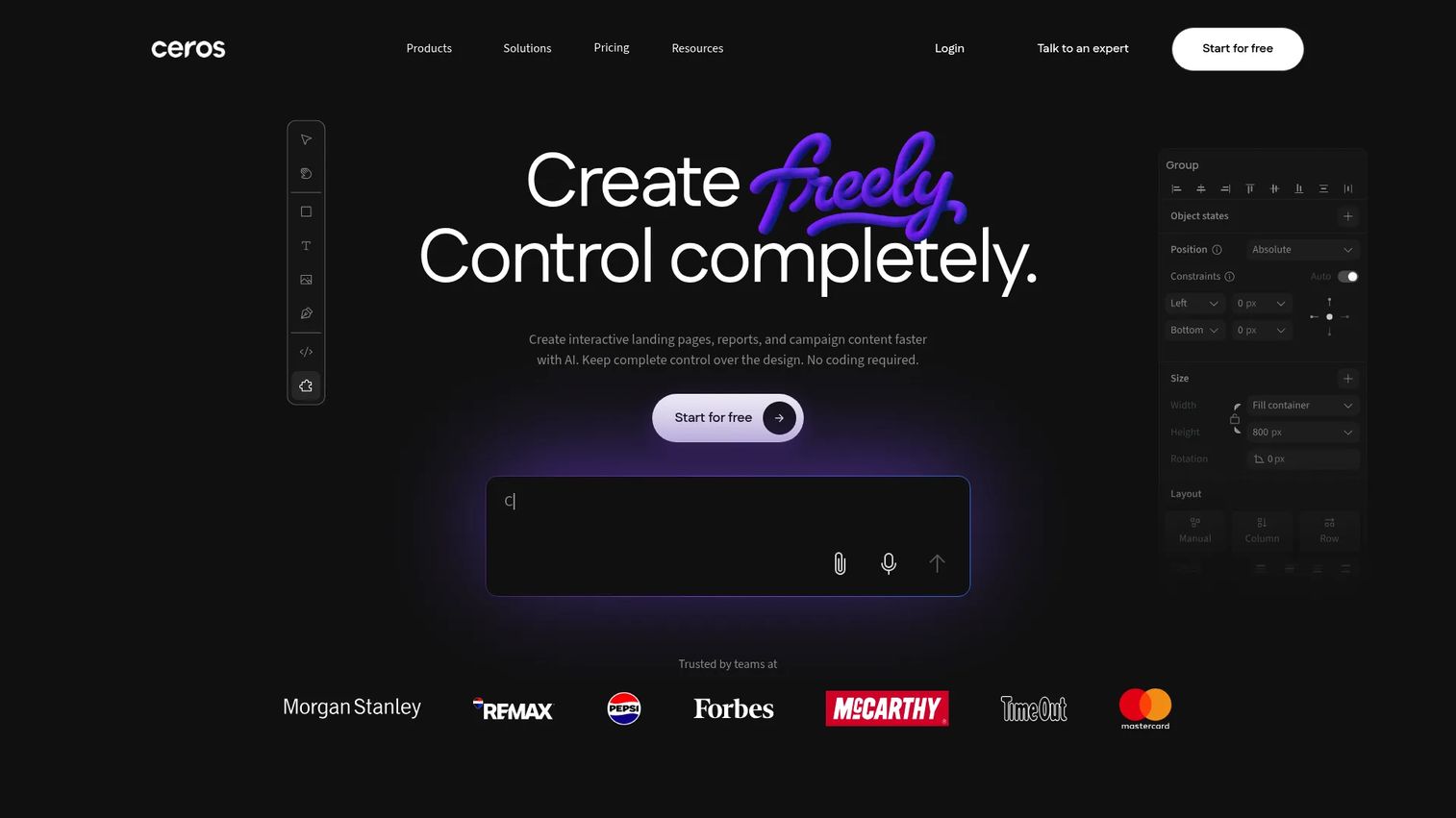
Ceros is a no-code platform for creating immersive, interactive web experiences. Brand and content teams use it for campaign microsites, digital reports, interactive infographics, presentations, and landing pages where design quality and visual storytelling are the priority. The platform includes a freeform design canvas, animation tools, real-time collaboration, unlimited publishing, and built-in analytics.
Ceros also includes Flex AI, which assists with layout suggestions, copy generation, alt text, and layer organization inside the design environment.
Best for: Brand, content, and campaign teams building high-design interactive editorial or campaign experiences where visual fidelity matters more than quick form capture.
Key features
- No-code freeform design canvas with animation tools
- Microsite and interactive campaign creation
- Real-time collaboration and review workflow
- Unlimited publishing with built-in analytics
- Flex AI for layout, copy, and alt text assistance
Why choose Ceros: Choose Ceros when the interactive asset is a high-design campaign experience rather than a lead form or product demo. It works best for teams with creative direction and design resources. The Starter plan is free to try; Growth and Enterprise require a sales conversation.
Ceros pricing: The Starter plan is free to try (1 Creator, 3 Editors, unlimited Reviewers). Growth and Enterprise plans are contact-sales only.
G2 rating: 4.1/5
6. Hotjar
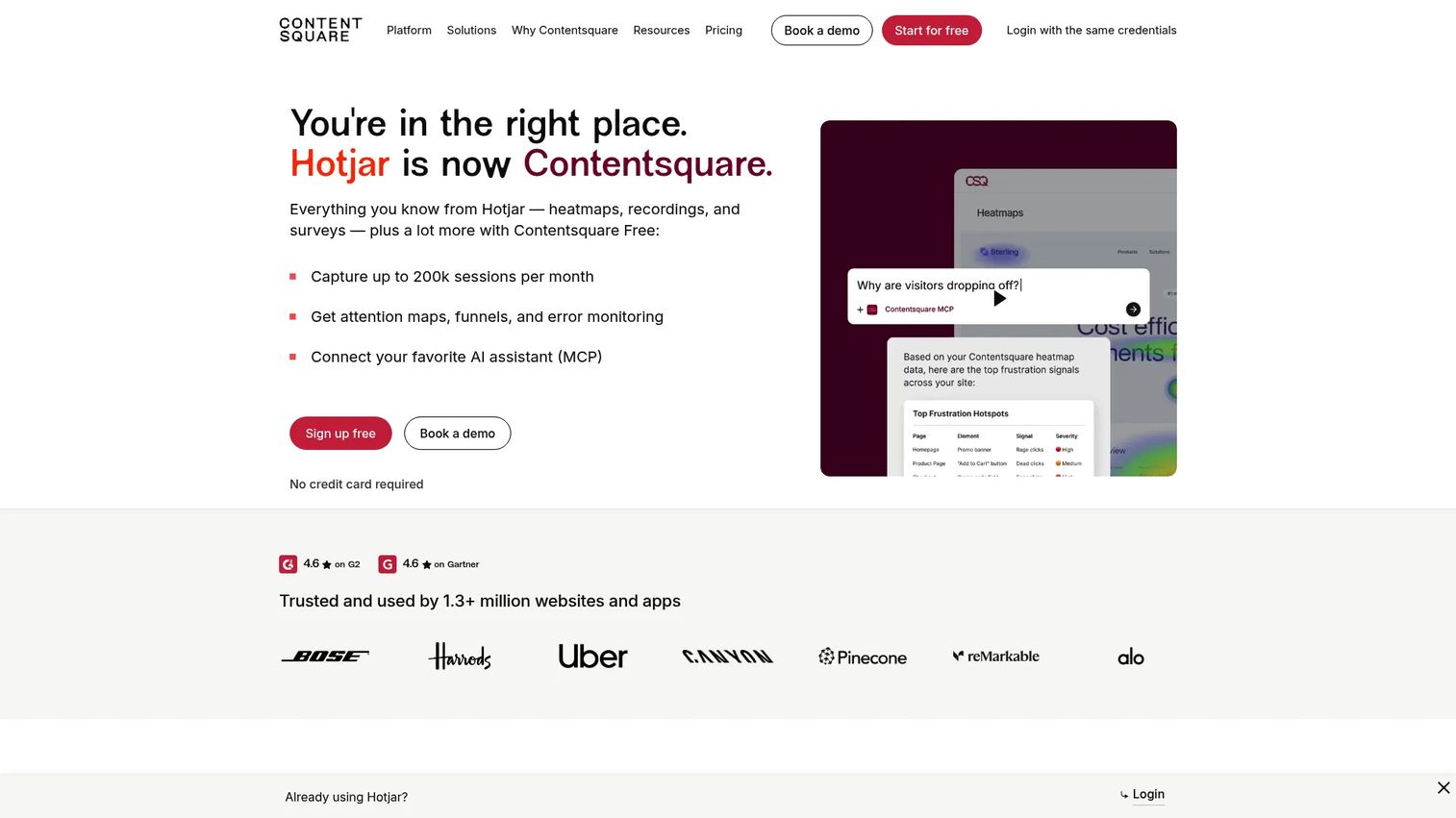
Hotjar is now part of Contentsquare, following an acquisition that merged Hotjar's behavioral analytics into Contentsquare's digital experience platform. For growth marketers, the core tools remain: Heatmaps, session recordings, funnel analysis, surveys, feedback widgets, and error monitoring. These capabilities show how visitors interact with pages, where they click, how far they scroll, and where they abandon.
Hotjar does not create interactive campaigns directly, but it reveals where interactive experiences work or stall. It pairs well with landing pages, embedded demos, and form funnels.
Best for: Conversion marketers who need behavioral data, heatmaps, session recordings, and on-site feedback to improve campaign pages and product experiences.
Key features
- Heatmaps and scroll maps
- Session recordings
- Funnel and drop-off analysis
- On-site surveys and feedback widgets
- Error monitoring
Why choose Hotjar: Choose Hotjar when the question is "what are visitors doing?" rather than "what should we build?" It answers conversion questions that traffic reports cannot. New accounts are now created through Contentsquare, and Hotjar-branded tools are accessible within that platform.
Hotjar pricing: A free plan is available. The Growth plan starts at $39/month. Pro and Enterprise plans are custom. All pricing is now managed through Contentsquare.
G2 rating: 4.3/5
7. Unbounce
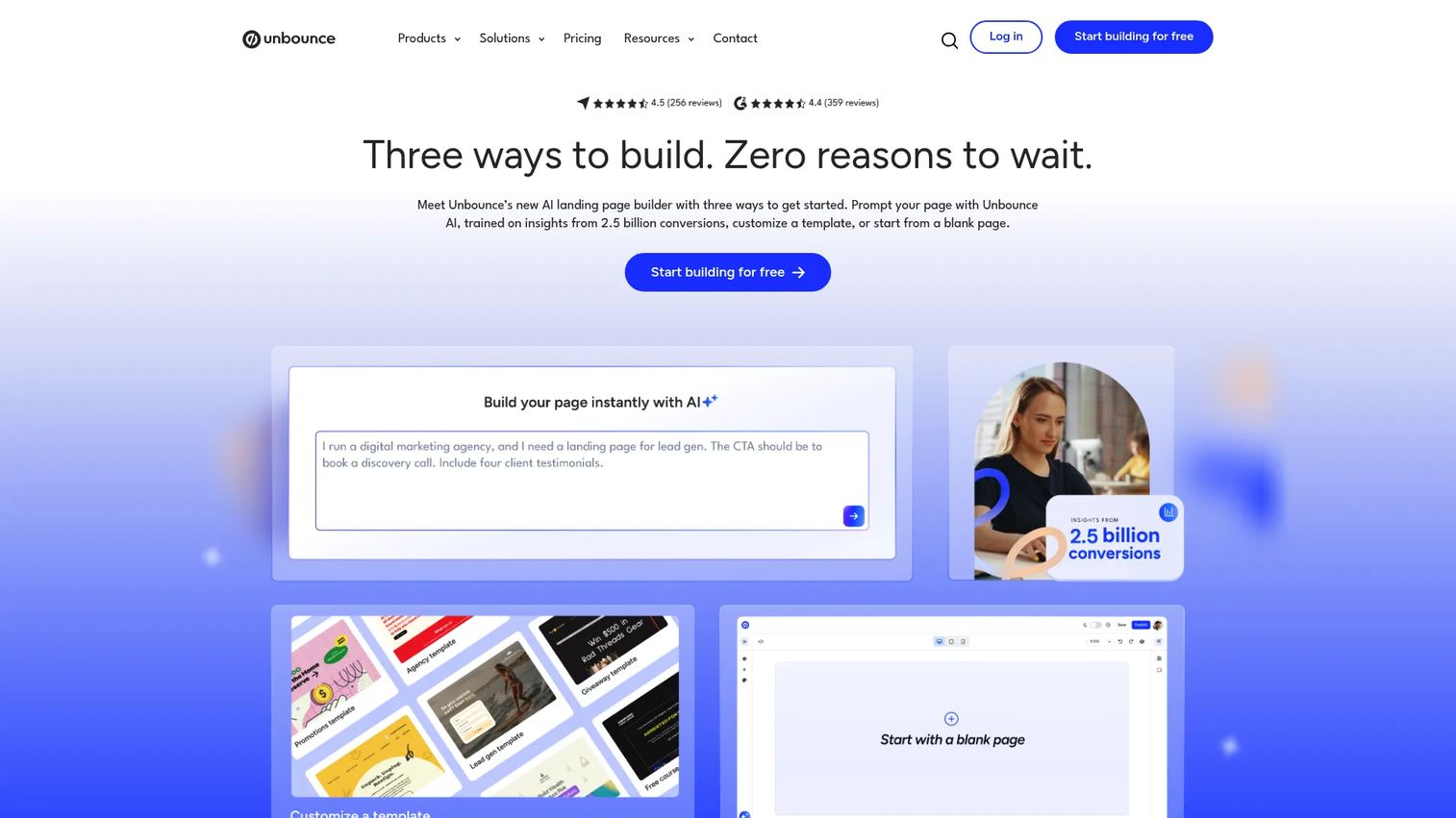
Unbounce is an AI-powered landing page platform for marketers building campaign pages without waiting on developers. It includes a drag-and-drop page builder with 100+ templates, A/B testing, popups, sticky bars, AI copywriting tools, and AI traffic optimization that routes visitors to the highest-converting page variant automatically.
Performance marketers use Unbounce for paid search and social campaigns, gated offer pages, event registration, and offer testing where conversion rate on the page itself is the primary metric.
Best for: Performance marketers who need fast landing page launches, conversion testing, and campaign-specific pages without developer dependencies.
Key features
- Drag-and-drop landing page builder with 100+ templates
- A/B and multivariate testing
- Popups and sticky bars
- AI copy tools and AI traffic optimization
- Lead capture forms with integration support
Why choose Unbounce: Choose Unbounce when the interactive experience centers on the landing page itself. It fits paid campaigns, gated offers, and offer testing well. A 14-day free trial is available; no permanent free tier exists.
Unbounce pricing: The Starter plan is $29/month. The Build plan is $99/month, Experiment at $149/month, and Optimize at $249/month. Concierge and Agency plans are custom.
G2 rating: 4.3/5
8. HubSpot
HubSpot is an all-in-one customer platform that connects marketing, sales, CRM, and customer service. For growth marketers, the Marketing Hub covers forms, landing pages, email automation, chat, campaign reporting, and lead nurturing workflows, all tied to a shared contact database. The power of HubSpot is orchestration: Interactive touchpoints from forms, landing pages, and email flows all feed into one contact record and trigger automated follow-up.
This is less about one interactive asset type and more about connecting the full buyer journey from first form fill to closed deal. It scales well for teams that also run sales sequences, renewal campaigns, and product emails from the same platform.
Best for: Growth teams that want interactive touchpoints connected to CRM, lifecycle marketing, and sales follow-up in one system.
Key features
- CRM with unified contact and company records
- Forms, landing pages, and email automation
- Workflow automation with branching logic
- Chat and conversational bots
- Campaign attribution and revenue reporting
Why choose HubSpot: Choose HubSpot when the main challenge is connecting interactive touchpoints to lifecycle marketing and pipeline tracking. It consolidates several marketing operations jobs, though the Professional tier ($800/month) is a significant step up from the free tools.
HubSpot pricing: A free plan is available. Marketing Hub Starter runs $7/month per seat. Professional starts at $800/month and requires a $3,000 onboarding fee. Enterprise starts at $3,600/month with a $7,000 onboarding fee.
G2 rating: 4.4/5
9. Mailchimp
Mailchimp is an all-in-one marketing platform covering email, SMS, automation, landing pages, and audience segmentation. It's widely used by small and mid-sized teams that need email campaigns, automated customer journeys, signup forms, and basic landing pages without building a complex martech stack. AI-powered copy recommendations and marketing suggestions are available across paid plans.
For the digital marketer audience, Mailchimp fits when email is the primary interactive channel and the need for campaign complexity stays moderate. It integrates with Shopify, WooCommerce, and WordPress, making it particularly common in ecommerce and content business stacks.
Best for: Small and mid-sized teams that need email campaigns, forms, basic automation, and simple landing pages in one accessible platform.
Key features
- Email campaigns with segmentation and scheduling
- Customer journey builder with branching automation
- Signup forms and landing pages
- SMS marketing on paid plans
- AI-assisted copy and marketing recommendations
Why choose Mailchimp: Choose Mailchimp when email is the primary channel and the interactive layer is relatively contained. It's a practical consolidation choice for teams that need forms, landing pages, nurture paths, and audience segments without paying for a full CRM platform.
Mailchimp pricing: A free plan supports up to 250 contacts and 500 sends per month. Essentials starts at $13/month, Standard at $20/month, and Premium at $350/month. Pricing scales by contact count.
G2 rating: 4.3/5
10. Canva
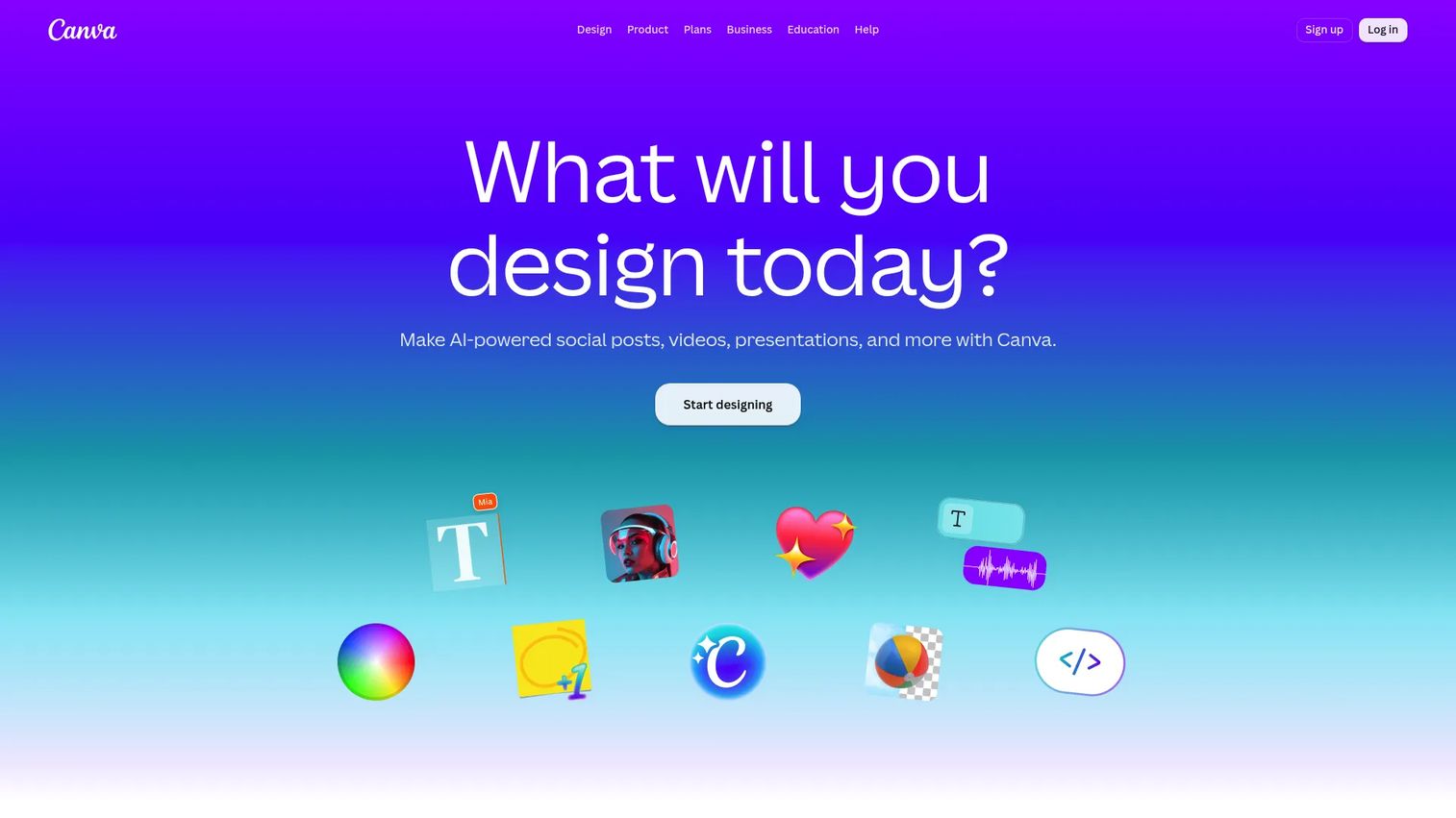
Canva is an online design and publishing platform used by marketers to create visual campaign assets without design expertise. The editor includes 1,000+ design types, drag-and-drop tools, AI-generated images and videos, presentation builders, social post templates, video creation, and brand kits for consistent visual identity.
For growth marketers who hit creative bottlenecks, Canva moves production from "wait for a designer" to "publish today." It supports interactive presentations and clickable documents, though its strength is speed of visual asset production rather than deep lead capture or analytics.
Best for: Small teams and growth marketers who need fast, branded visual asset production for social, ads, events, and presentations without design bottlenecks.
Key features
- Drag-and-drop editor with 1,000+ design types
- AI image, video, and content generation
- Presentations, videos, websites, and social assets
- Brand kit with colors, fonts, and logos
- Team collaboration and approval workflows
Why choose Canva: Choose Canva when creative production speed is the constraint. It helps marketers ship more without adding headcount or waiting on design. For teams that also need lead capture or behavioral analytics, Canva pairs with dedicated tools in those categories.
Canva pricing: A free plan is available. Pro costs $144/year per person. The Business plan is $250/year per person. Enterprise pricing requires a sales conversation.
G2 rating: 4.7/5
11. Wistia
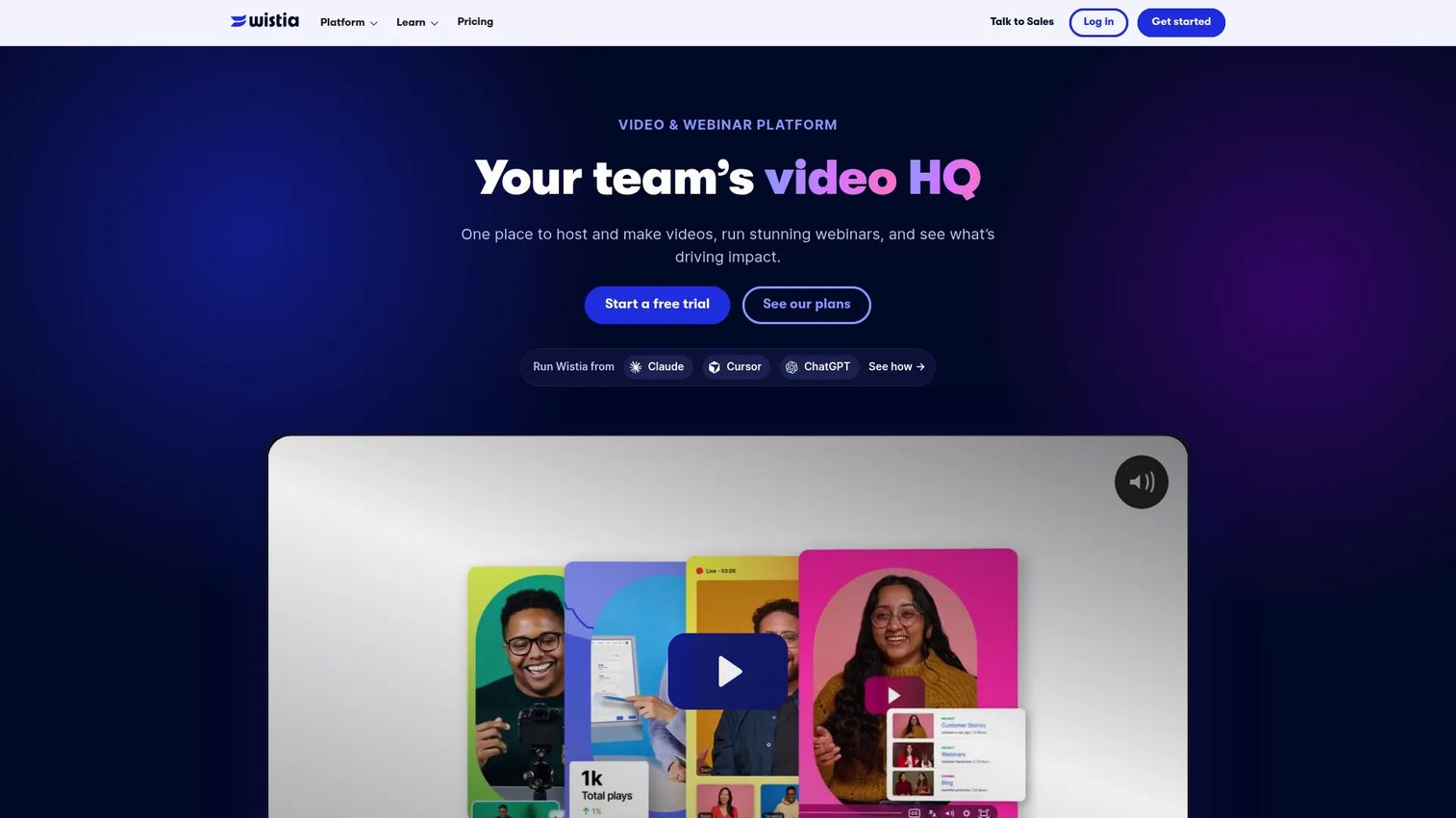
Wistia is a video and webinar platform for hosting, creating, analyzing, and distributing marketing video. B2B marketing teams use it for branded video libraries, product videos, webinars, and lead-generating video assets. The platform includes a custom video player, video analytics with heatmaps and engagement graphs, channels and galleries for organizing content, and lead capture tools through forms and calls to action embedded in the video player.
Wistia's Business + Signals plan adds lead scoring, marketing automation integrations, and revenue attribution tied to video engagement, which makes it relevant for teams that treat video performance as a pipeline metric.
Best for: B2B marketers using video libraries, product explainers, webinars, and lead-generating video assets where brand control and engagement data matter.
Key features
- Branded video hosting with a custom player
- Video analytics including heatmaps and engagement graphs
- In-player calls to action and email capture forms
- Channels and galleries for content organization
- Lead scoring and attribution on Business + Signals
Why choose Wistia: Choose Wistia when video performance and brand control are the priorities. It suits content marketers and demand generation teams already running video as a core channel, particularly those who want engagement data tied to lead activity.
Wistia pricing: A free plan is available. The Business plan is $79/month (billed annually). Business + Signals is $329/month (billed annually). Enterprise pricing is custom.
G2 rating: 4.6/5
12. Demio
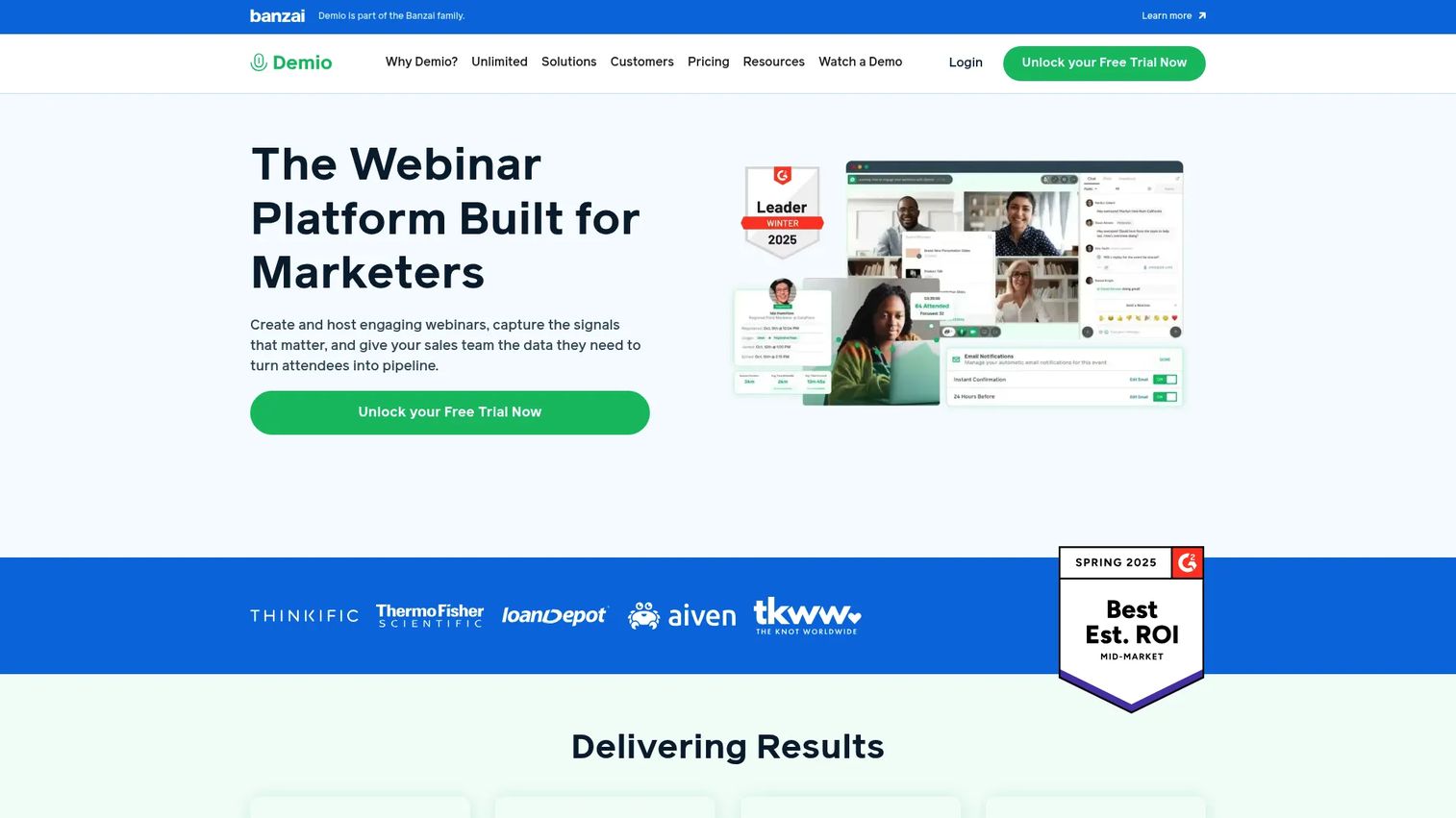
Demio is a webinar marketing platform for live, automated, and on-demand events. Webinars are interactive marketing experiences: Attendees register, answer polls, ask questions in live Q&A, click featured offers, and engage in real time. Demio supports all three webinar formats in a browser-based environment with no downloads required, plus custom registration pages, automated follow-up emails, branded rooms, and engagement analytics.
Demand generation teams use Demio for product education sessions, mid-funnel nurture events, partner webinars, customer training, and pipeline acceleration campaigns. A 14-day free trial is available, limited to 20 attendees and one-hour sessions.
Best for: Demand generation teams running webinars, product education sessions, partner events, and live campaign interactions for mid-funnel pipeline building.
Key features
- Live and automated webinar hosting (browser-based, no downloads)
- Polls, Q&A, chat, handouts, and featured actions during events
- Custom registration pages and branded event rooms
- Engagement analytics and attendee reporting
- Automatic webinar recordings and showcase event pages
Why choose Demio: Choose Demio when the interaction happens in a scheduled, real-time event. It works well for teams that treat webinars as a demand generation channel rather than an afterthought, and the engagement data gives marketers actual intent signals from each session.
Demio pricing: The Starter plan is $45/month (billed annually). Growth and Premium plans vary by host capacity and attendee room size. A 14-day free trial is available.
G2 rating: 4.6/5
Considerations when choosing interactive marketing tools
Match the tool to the interaction type
"Interactive" covers a wide range of behaviors. A quiz, a webinar, a product demo, and a heatmap each solve different jobs. Start with the specific behavior you want from the visitor, such as exploring a product, answering qualifying questions, or watching and clicking through video, and then choose the tool built for that moment.
Check what it replaces
Growth marketers are consolidating. Before adding a tool, ask whether it replaces a static landing page, a manual demo request form, a PDF download nobody reads, or a standalone form that feeds nowhere useful. The best interactive tools earn their spot by reducing something else, not by sitting alongside it.
Verify lead capture and CRM fit
Interactive tools generate intent data, but that data needs to reach the right place. Check field mapping, CRM sync, marketing automation triggers, consent handling, and lead routing before committing. A quiz that captures 500 responses but doesn't connect to your CRM hasn't improved attribution.
Review analytics depth
Page views and video plays are vanity metrics for most growth marketers. What matters is completion rate, step-level drop-off, specific clicks, form answers, and account-level engagement. Ask whether the tool surfaces behavioral signals or just session counts.
Test launch speed and ongoing maintenance
Interactive assets decay when they're hard to update. A product demo with an outdated UI, a calculator with stale numbers, or a landing page that's never been tested loses credibility fast. Evaluate whether your team can build, publish, update, and reuse assets without filing a ticket or starting over.
Conclusion
Interactive marketing tools cover a lot of ground. The right choice depends on the interaction you're trying to create and the signal you want to capture.
For best interactive demo tools for marketing teams, Guideflow leads because it turns product interest into buyer-led exploration and measurable pipeline intent. Typeform handles forms and surveys. Outgrow covers quizzes and calculators. Tolstoy and Wistia serve video-led demand generation, with Tolstoy stronger for ecommerce and Wistia better for B2B content and lead capture. Ceros suits high-design campaign experiences. Hotjar and Unbounce solve conversion optimization problems on existing pages. HubSpot and Mailchimp orchestrate campaigns across channels. Canva accelerates creative production. Demio runs webinar-based engagement for mid-funnel pipeline.
If you're building a B2B SaaS marketing stack and you don't have a way for buyers to experience your product before talking to sales, that's the highest-leverage gap to close first. For more on how best interactive demo tools for product marketing fit into campaign strategy, or how best marketing automation software tools connect these assets to lifecycle workflows, those guides cover the adjacent decisions.
Start your journey with Guideflow today!
FAQs
Interactive marketing tools are software platforms that help marketers create two-way digital experiences. Instead of presenting static content, they enable visitors to click, answer, explore, choose, or respond, generating behavioral data alongside contact information. The category includes interactive demos, forms, quizzes, calculators, interactive video, webinars, and landing page optimization tools.
For B2B SaaS teams, the most impactful interactive tool is one that lets buyers experience the product without scheduling a live meeting. Interactive demo platforms serve this use case by giving prospects a guided, clickable product walkthrough they can share internally and return to on their own timeline. Forms and marketing automation tools handle the downstream nurturing once a contact has been captured.
Interactive tools generate stronger qualification signals than static pages because they require a visitor to act. A prospect who completes a product demo, finishes a quiz, or answers a calculator's questions has revealed something specific about their interest level. Those behavioral signals feed into lead scoring, segment routing, and sales prioritization in a way that a page view cannot.
Digital marketing tools is a broad category that includes SEO platforms, ad networks, CRMs, email, and analytics. Interactive marketing tools specifically focus on the visitor-facing experience: The moment a prospect engages with your content. The distinction matters because interactive tools generate two-way signals, while most digital marketing tools support campaign distribution and reporting.
Quiz and calculator tools should include no-code builders, conditional logic, lead capture on completion, scoring or personalized output, embed options, and CRM integrations. Outgrow is built specifically for this use case and covers quizzes, ROI calculators, assessments, product recommendations, and polls. The Essentials plan at $95/month (billed annually) unlocks the full interactive content suite.
Landing page tools need a no-code builder, A/B testing, integrated forms, analytics, and fast publishing. Unbounce covers all of these with AI-assisted copy and traffic optimization that routes visitors to the best-performing variant automatically. For teams already on HubSpot, that platform includes landing pages within the Marketing Hub and connects them directly to CRM and email workflows.
Interactive tools and marketing automation serve different functions and work best together. Interactive tools capture behavior and intent at the moment of engagement. Automation tools route, nurture, and report on that data across time. A quiz that captures a lead's company size and use case becomes much more valuable when the follow-up email sequence is personalized based on those answers, which requires a connected marketing automation layer.
Run through six checks before committing: How fast can you publish a first asset? Which CRM and automation tools does it connect to natively? What engagement metrics does it surface beyond session counts? What does it replace in the current stack? What are the maintenance requirements when the product or campaign changes? Can you pilot with a free plan or trial before entering a contract? The answers reveal whether the tool fits your motion or adds another system to manage.