Last updated: October 2026
Your prototype detects defects in a lab. Now it has to run across hundreds of cameras, intermittent networks, hardware constraints, and a release schedule that does not pause for ML experiments.
That gap between a working proof of concept and a managed device fleet is where most edge AI projects stall. Local inference is only one layer of the problem. Product teams also need a platform that fits the target device, handles model versioning, supports staged rollouts, surfaces telemetry, and is owned by someone after launch.
The global edge AI market stood at $25.2 billion in 2025 and is projected to reach $225.5 billion by 2035, according to Global Market Insights (2026). Yet Gartner, as reported by Network World in 2026, found that enterprise edge AI adoption sat at just 10% in 2025. The technology is real. The deployment gap is realer.
Which edge AI platform fits the hardware, operating model, and product roadmap you are responsible for?
What's inside
This guide is for product managers at B2B SaaS, IoT, and connected-product companies comparing edge AI platforms for a production rollout. Items were chosen based on the following criteria:
- Hardware breadth: Support for MCUs, CPUs, GPUs, NPUs, gateways, and edge servers
- Lifecycle coverage: Data preparation, model optimization, deployment, monitoring, and rollback
- Operating model fit: Embedded development workflows vs. cloud-native fleet operations vs. enterprise Kubernetes environments
- Verified pricing: Official pricing pages first, then marketplace or documented usage costs
TL;DR
- Best for end-to-end edge MLOps: Edge Impulse covers data collection, model training, optimization, deployment, and monitoring in one workflow
- Best for GPU-accelerated vision and robotics: NVIDIA Jetson Platform suits teams standardizing on Jetson hardware for computer vision and accelerated AI workloads
- Best for AWS-centered device fleets: AWS IoT Greengrass serves teams already running device operations and telemetry pipelines in AWS
- Best for Intel hardware optimization: Intel OpenVINO is the right pick for teams deploying inference across Intel CPUs, GPUs, and NPUs
- Best for enterprise hybrid AI operations: Red Hat OpenShift AI or Azure IoT Operations, depending on whether Kubernetes platform governance or Microsoft's industrial edge data plane is the priority
What are edge AI platforms?
Edge AI platforms are software products and development stacks that help teams build, optimize, deploy, operate, and monitor machine learning inference on devices or infrastructure close to where data is created.
The key word in that definition is "platforms." A microcontroller SDK, a cloud training service, or a hardware module is not a platform on its own. A platform connects those layers into a managed workflow.
What edge AI platforms do
A typical edge AI platform supports some or all of the following lifecycle stages:
- Ingest sensor, image, audio, video, or telemetry data
- Prepare and label datasets for model training
- Train or import models from standard frameworks
- Optimize models for a device's memory, compute, and power limits
- Package inference for deployment to devices, gateways, or edge clusters
- Deploy versions, monitor performance, and roll back when results drift
- Synchronize selected metrics and data with cloud systems
No single platform in this list owns every stage equally well. The right choice depends on which stages you need most and who will own each one after launch.
Platform categories in this guide
| Category | Primary job | Example in this article | PM decision factor |
|---|---|---|---|
| End-to-end edge MLOps | Build and operate the full edge ML lifecycle | Edge Impulse | Lower integration burden across data, model, and deployment |
| Hardware AI stack | Run accelerated AI on a specific hardware ecosystem | NVIDIA Jetson Platform | Performance fit, hardware roadmap alignment |
| Inference optimization toolkit | Convert and optimize models for target hardware | Intel OpenVINO | Strong when deployment targets align with supported processors |
| IoT edge runtime | Deploy and manage software on connected device fleets | AWS IoT Greengrass | Best when fleet operations and cloud integration drive the project |
| Edge operations layer | Operate edge workloads across Kubernetes clusters and sites | Azure IoT Operations, Red Hat OpenShift AI | Best for distributed environments with governance requirements |
Core capabilities to evaluate
- Supported device classes and operating systems
- Model framework and runtime compatibility
- Deployment, update, rollback, and fleet controls
- Model performance monitoring and data capture
- Security, access control, and auditability
- Cloud, analytics, and industrial protocol integrations
When to use an edge AI platform
Run decisions where latency matters
Machine vision quality checks, safety alerts, and local anomaly detection cannot wait for a cloud round trip. Running inference on the device keeps response time independent of network conditions. This is the primary driver for edge AI in manufacturing quality control, robotics, and field monitoring.
Limit raw data transfer from distributed sites
Cameras, audio sensors, and high-frequency telemetry produce more data than most pipelines can absorb upstream. Processing at the edge reduces what gets transmitted, which matters for both bandwidth cost and operational complexity. The platform should support configurable data selection, not just full-stream forwarding.
Turn a prototype into a managed device fleet
One prototype running on a developer workstation is not a product. Scaling to hundreds or thousands of devices means model versions, staged rollouts, fallback behavior, and telemetry visibility. A platform's update and rollback path is as important as its inference performance. If you have not tested a model update across a representative device group before launch, you have not finished the pilot.
Edge AI platform comparison
These seven platforms do not solve the same layer of the stack. Use this table to route by architecture first, then evaluate the tool sections that match your deployment environment. Pricing verified October 2026.
| # | Product | Best for | Key differentiator | Pricing | G2 rating |
|---|---|---|---|---|---|
| 1 | Edge Impulse | End-to-end edge ML development for embedded and physical AI products | Covers data, training, optimization, deployment, and monitoring across constrained and powerful hardware | Free Developer plan; Enterprise custom pricing | 4.5/5 |
| 2 | NVIDIA Jetson Platform | GPU-accelerated vision, robotics, and generative AI at the edge | Jetson hardware plus JetPack SDK and platform services for accelerated edge workloads | Developer kits from $399 (one-time); JetPack SDK included | N/A |
| 3 | AWS IoT Greengrass | AWS-based device fleets and cloud-connected edge workloads | Edge runtime with AWS service integration and per-active-core billing | $0.16 per active Core device per month, plus related AWS usage | 4.1/5 |
| 4 | Intel OpenVINO | Optimizing and deploying AI across Intel CPUs, GPUs, and NPUs | Open source model optimization and multi-device inference controls | Free and open source | 4.3/5 |
| 5 | Azure IoT Operations | Kubernetes-enabled industrial edge environments using Microsoft infrastructure | Edge data plane with Azure Arc, device registry, and industrial connectivity | Usage-based per Kubernetes node; first 30 days trial | N/A |
| 6 | Red Hat OpenShift AI | Enterprise AI workloads spanning on-premises, cloud, and edge | Model training, serving, and monitoring on a Red Hat hybrid cloud foundation | Subscription pricing through Red Hat sales | 4.4/5 |
| 7 | Latent AI | Model optimization for constrained and mission-critical edge inference | Focused on efficient AI deployment under latency, memory, and power constraints | Free tier available; Premium at $99/developer/month; Enterprise custom pricing | N/A |
Pricing and ratings verified October 2026 from each vendor's official pricing page and G2 listing. N/A indicates no current relevant G2 profile at the time of review.
Best 7 edge AI platforms for 2026
The ranking below reflects category coverage, operating model fit, hardware compatibility, deployment governance, and suitability for product teams moving beyond prototypes.
1. Edge Impulse
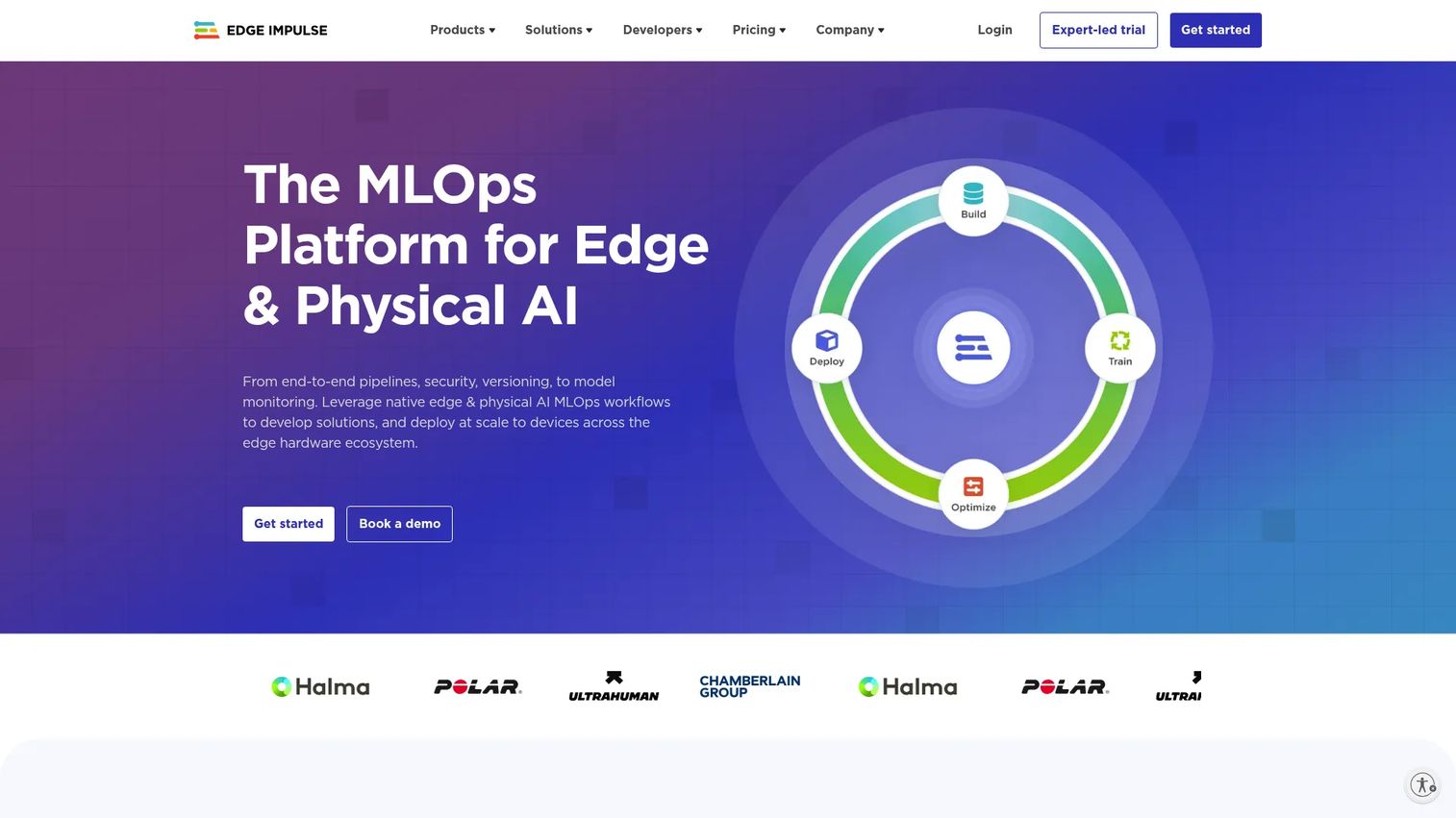
Edge Impulse is an MLOps platform for developing, optimizing, and deploying edge and physical AI models across devices from MCUs to GPUs. It covers the full workflow from data collection and labeling through model training, device-aware optimization, deployment, and monitoring. Hardware support spans microcontrollers, NPUs, CPUs, GPUs, gateways, sensors, cameras, and containerized environments. For product teams building embedded AI products, it is the most complete single-platform option in this list.
Best for: PMs launching embedded AI products that need a shared workflow across data engineering, embedded development, and ML operations.
Key features
- Dataset collection and labeling workflows for sensor, audio, image, and time-series data
- Built-in model training, testing, and EON Tuner for on-device optimization
- Device-aware model profiling and deployment packaging
- Deployment to embedded and gateway hardware across MCUs, NPUs, CPUs, and GPUs
- Model monitoring and version controls for production deployments
Why choose Edge Impulse
Edge Impulse reduces the coordination overhead between product, embedded engineering, and ML teams. It is especially well-suited when the product's intelligence depends on sensor, audio, vision, or time-series data and the team needs a single environment rather than assembling separate tools for each lifecycle stage. Teams already running a large Kubernetes edge estate may still need a separate operations layer alongside it.
Edge Impulse pricing
The Developer plan is free and covers individual developers, students, and university use. Enterprise pricing is custom and adds expanded compute, collaboration, deployment automation, API access, and production-grade support capabilities. Contact Edge Impulse for an Enterprise quote.
G2 rating: 4.5/5 (verified October 2026)
2. NVIDIA Jetson Platform
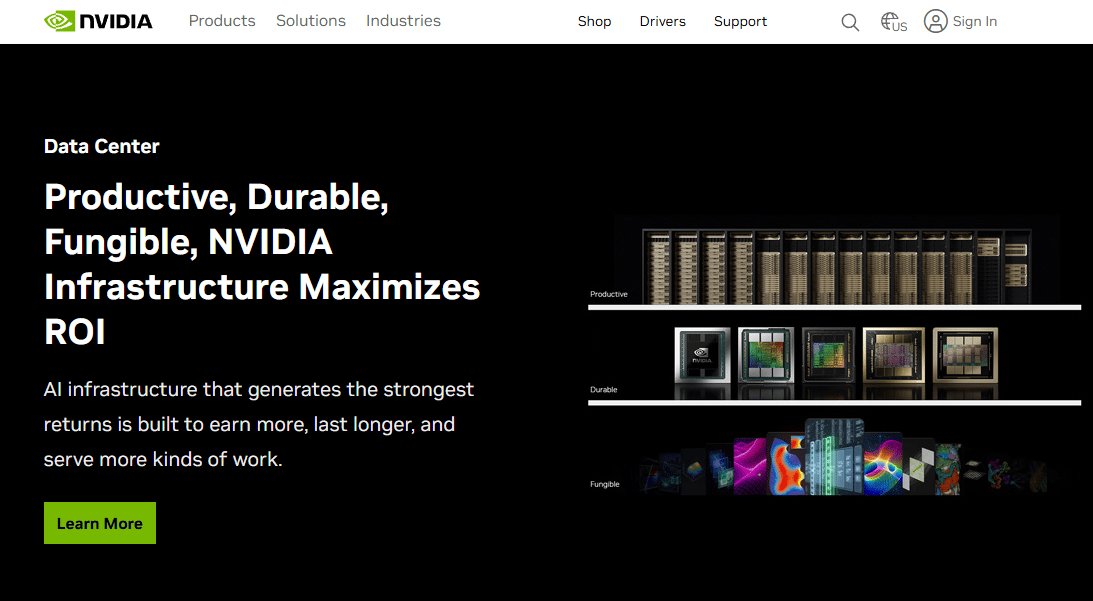
NVIDIA Jetson Platform combines Jetson hardware modules with the JetPack software stack for developing and deploying AI applications at the edge. JetPack includes Jetson Linux, CUDA-accelerated AI libraries, developer tools, and security and OTA update capabilities. Jetson Platform Services extend this with modular, API-driven AI services covering generative AI, video analytics, object detection, and visual language models. The platform targets robotics, vision AI, industrial automation, retail, transportation, and healthcare edge deployments.
Best for: PMs building GPU-accelerated products that require computer vision, multi-camera processing, robotics, or local generative AI inference on Jetson hardware.
Key features
- Jetson modules covering a range of compute profiles from Orin Nano to AGX Thor
- JetPack SDK with CUDA libraries, developer tools, and OTA security capabilities
- TensorRT inference optimization for accelerated model deployment
- Containerized AI services via Jetson Platform Services
- Robotics and video analytics tooling with vision and language model support
Why choose NVIDIA Jetson Platform
Jetson is the right fit when GPU compute, CUDA ecosystem access, and accelerated inference matter more than hardware neutrality. It is most relevant for products where a single hardware family is acceptable and where performance-per-device drives the design. Teams that need to deploy across heterogeneous hardware will find the platform's hardware specificity a constraint worth acknowledging upfront.
NVIDIA Jetson Platform pricing
JetPack SDK is included with Jetson hardware at no additional software cost. Developer kit hardware starts at $399 for the Jetson Orin Nano Super, with the Jetson AGX Orin at $3,499 and the Jetson AGX Thor at $5,499 (one-time purchase, MSRP). Note that developer kits are designed for development and validation work; production module pricing follows a separate volume procurement path with NVIDIA or distribution partners.
3. AWS IoT Greengrass
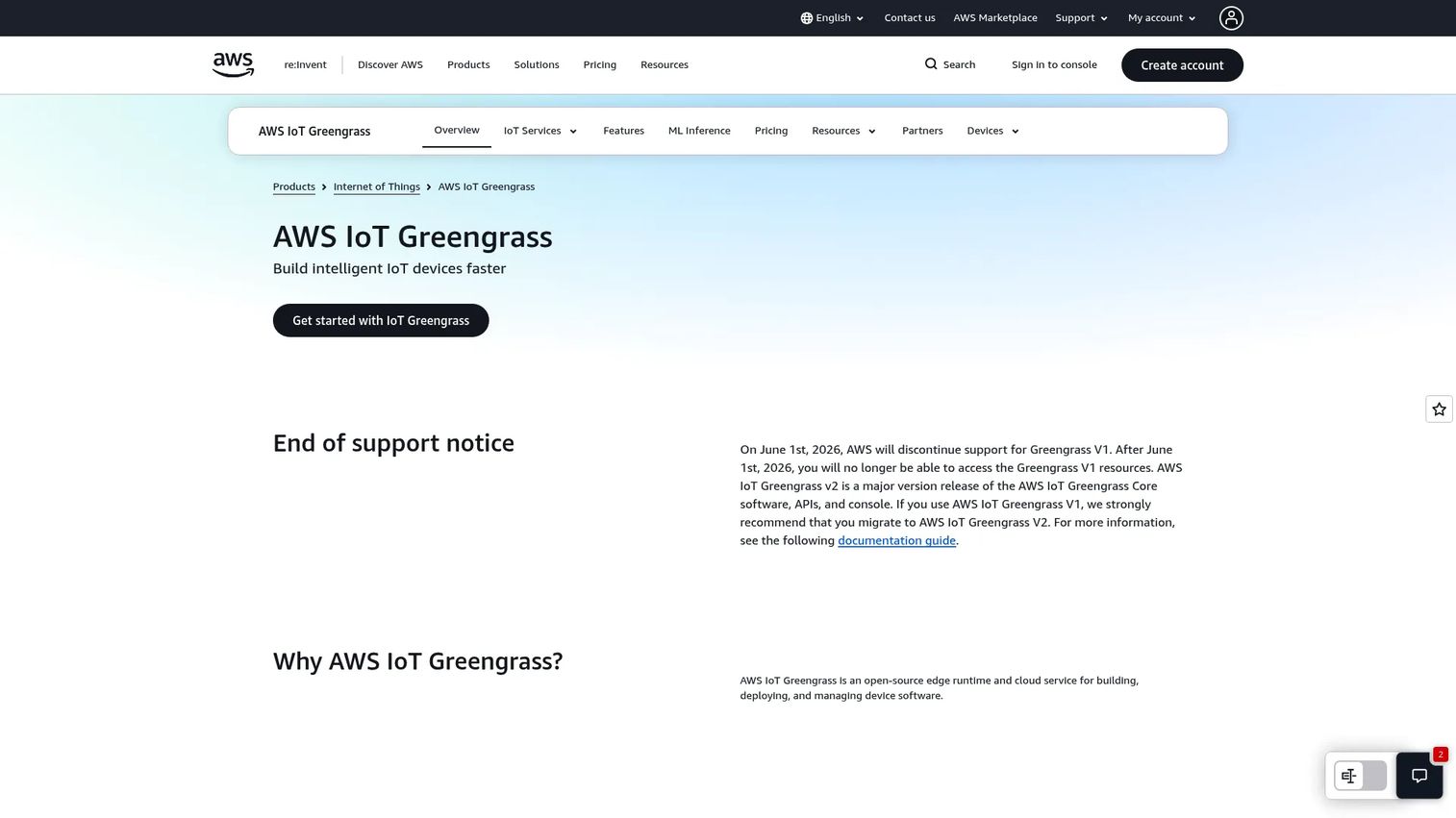
AWS IoT Greengrass is an open-source IoT edge runtime and cloud service for building, deploying, and managing device software at the edge. It runs local processing using AWS Lambda, Docker containers, native processes, or custom runtimes, and supports local messaging, data stream management, and machine learning inference. Remote deployment, fleet management, secure over-the-air updates, and modular component architecture make it well-suited for teams that already run device estate operations and telemetry pipelines in AWS. All copy refers to Greengrass V2, the current version; AWS ended support for V1 on June 1, 2026.
Best for: PMs managing AWS-connected device fleets that need local processing while retaining centralized AWS cloud operations.
Key features
- Local compute with Lambda, containers, native processes, and custom runtimes
- Local messaging, data stream management, and ML inference at the edge
- Remote fleet deployment with secure OTA updates and modular components
- Tight integration with AWS IoT services, S3, Kinesis, and Lambda
- Device software lifecycle controls including component versioning and rollback
Why choose AWS IoT Greengrass
Greengrass is the natural choice for teams that have already built their telemetry pipeline, device registry, and analytics stack on AWS. The value compounds as device fleet size grows and as more AWS services are connected for data processing and model retraining. Teams without an existing AWS footprint will carry more integration overhead before seeing the fleet operations benefits.
AWS IoT Greengrass pricing
AWS charges $0.16 per active Greengrass Core device per month based on U.S. published pricing examples. Additional charges apply for connected AWS services (S3, Kinesis, Lambda) and data transfer. The total cost scales with fleet size and the volume of data processed through connected AWS services.
G2 rating: 4.1/5 (verified October 2026)
4. Intel OpenVINO
Intel OpenVINO is an open-source AI toolkit for optimizing and deploying deep learning inference across Intel hardware and environments. It converts and compresses models from TensorFlow, PyTorch, and other frameworks, then deploys them with accelerated inference across Intel CPUs, GPUs, and NPUs. Automatic device selection routes inference to the best available hardware at runtime. OpenVINO Model Server and OpenVINO GenAI extend the toolkit to serve both conventional and generative AI models in containerized or local environments.
Best for: PMs shipping AI features on Intel-based devices, industrial PCs, AI PCs, and edge servers where model footprint and inference portability matter.
Key features
- Model conversion and optimization from TensorFlow, PyTorch, and ONNX
- Inference acceleration across Intel CPUs, GPUs, and NPUs
- Automatic device selection for runtime hardware routing
- OpenVINO GenAI for generative and conventional AI deployment
- Local and containerized deployment via OpenVINO Model Server
Why choose Intel OpenVINO
OpenVINO is compelling when Intel hardware is already part of the device roadmap or enterprise standard, and the team needs precise control over the inference stack. It delivers strong portability within Intel environments and requires the organization to own more engineering integration than a full edge MLOps platform. Teams that need a built-in dataset workflow or fleet management layer should plan for additional tooling alongside it.
Intel OpenVINO pricing
OpenVINO is free and open source. Engineering time, hardware, cloud infrastructure, and ongoing operations all carry their own costs, but the toolkit itself has no license fee.
G2 rating: 4.3/5 (verified October 2026)
5. Azure IoT Operations
Azure IoT Operations is an Azure Arc-enabled set of edge services for capturing, processing, normalizing, and transferring operational data between physical environments and the cloud. It runs on Kubernetes-enabled environments such as AKS Edge Essentials, and supports MQTT, OPC UA, and OpenTelemetry for industrial connectivity. Asset and device discovery, cloud connectors, analytics integrations, and built-in Azure security complete the operational data plane. The platform is designed for industrial and asset-intensive organizations that already use Azure governance and need a consistent operational model across edge sites and cloud environments.
Best for: PMs delivering industrial or enterprise edge products where Azure governance, Kubernetes operations, and operational technology connectivity are already part of the infrastructure.
Key features
- Near-real-time edge data processing and normalization
- Automatic asset and device discovery using OPC UA and standard protocols
- MQTT, OPC UA, and OpenTelemetry interoperability
- Unified deployment and governance through Azure Arc
- Cloud connectors and analytics integrations with built-in Azure security
Why choose Azure IoT Operations
Azure IoT Operations makes sense where the product must integrate with Azure's operational model and support edge data workloads across multiple industrial sites. It serves a different layer than an embedded model training platform. Its strength is the operational data plane, asset connectivity, and the governance controls that enterprise and industrial environments require. Teams not committed to Azure infrastructure will need a different entry point.
Azure IoT Operations pricing
Microsoft prices Azure IoT Operations on a usage-based model measured by the number of Kubernetes nodes running its workloads, with the first 30 days treated as a trial period. Microsoft's pricing page displays the rate as a per-node hourly charge rather than a fixed monthly figure; use the Azure pricing calculator or contact Microsoft for a current estimate based on your node count and expected usage.
G2 rating: N/A (no current relevant G2 profile at time of review)
6. Red Hat OpenShift AI
Red Hat OpenShift AI is a flexible hybrid-cloud platform for developing, training, deploying, serving, monitoring, and managing predictive, generative, and agentic AI applications. It runs on OpenShift and supports deployment across on-premises infrastructure, public cloud, edge environments, and disconnected sites. Integrated open-source tooling includes PyTorch, Kubeflow, MLflow, Jupyter, and vLLM. A model registry, AI hub, generative AI studio, and MCP server support complete the enterprise AI operations layer. For organizations that already use, or are willing to adopt, OpenShift as their platform foundation, it provides a consistent operating model across infrastructure locations.
Best for: PMs at enterprise software or industrial companies standardizing AI operations across cloud, on-premises, and distributed edge environments.
Key features
- MLOps, GenAIOps, and AgentOps capabilities on a unified platform
- Model development, training, serving, testing, and monitoring
- Hybrid deployment across on-premises, cloud, edge, and disconnected environments
- Integrated tooling: PyTorch, Kubeflow, MLflow, Jupyter, and vLLM
- Model registry, AI hub, and enterprise identity with governance controls
Why choose Red Hat OpenShift AI
Red Hat OpenShift AI gives large organizations a consistent operating model for AI across different infrastructure locations. Platform engineering, security, and MLOps teams share governance controls, which reduces fragmentation as AI workloads spread from cloud to edge. It is not the simplest starting point for a small embedded device team; its strength is in environments where cross-site consistency and enterprise governance are primary constraints.
Red Hat OpenShift AI pricing
Red Hat uses subscription pricing through its sales channels, following the OpenShift subscription model with core-pair and bare-metal options under Standard or Premium support. An OpenShift Container Platform subscription is required separately. Contact Red Hat sales for a quote that reflects your infrastructure mix and support tier.
G2 rating: 4.4/5 (verified October 2026, listed as Red Hat OpenShift Data Science on G2)
7. Latent AI
Latent AI provides secure, hardware-agnostic edge AI tools for designing, optimizing, deploying, monitoring, and updating machine learning models on edge devices. Its platform covers model compression, quantization, and compilation with hardware-aware optimization, a secure runtime with watermarking and encryption, version tracking, and diagnostics. Field-updatable AI supports disconnected or off-grid deployments, and the platform integrates with TensorFlow, PyTorch, and ONNX. Latent AI is designed for product teams whose edge AI roadmap is tightly constrained by compute budget, memory limits, power envelope, or deployment certification requirements.
Best for: PMs whose device budget or mission-critical reliability requirements make model footprint and deterministic behavior the primary constraints.
Key features
- Hardware-aware model compression, quantization, and compilation
- Secure runtime with watermarking, encryption, and version tracking
- Field-updatable AI for disconnected and off-grid environments
- Model design, training, evaluation, optimization, and deployment in one workflow
- Integration with TensorFlow, PyTorch, and ONNX
Why choose Latent AI
Latent AI earns evaluation when the device constraint is the product constraint. If model performance per watt, memory footprint, and deterministic inference behavior drive product viability, it can be a better fit than a broad platform that optimizes for developer experience over deployment efficiency. The free tier allows initial exploration, while Premium and Enterprise tiers add private data, expanded compilation, and on-premises training.
Latent AI pricing
Latent AI offers a Free tier for initial exploration. The Premium plan runs $99 per developer per month (billed monthly or annually) and adds private data and models, unlimited compilation and deployment, on-premises training and compilation, and expanded model and hardware support. Enterprise pricing is custom; contact Latent AI sales for a quote.
Considerations when choosing an edge AI platform
Match the platform to the device roadmap
Confirm supported processors, accelerators, memory ceilings, operating systems, and container requirements before committing to a software stack. A model that runs well on an edge server may not fit a battery-powered endpoint with a 256KB memory budget. Hardware compatibility is faster to validate in a two-week pilot than to untangle after six months of development.
Separate model development from fleet operations
Some platforms help the team build and optimize models. Others help deploy and operate software across device fleets. Many production edge AI environments need both layers. Plan for this separation explicitly, because a gap between model development tooling and deployment operations is where releases stall and rollback plans fail.
Define operational ownership before launch
Name who owns data collection, model approval, deployment rings, rollback decisions, incident response, and drift monitoring. Product teams that skip this step tend to build a platform that no one can operate sustainably. The platform choice should make those ownership boundaries clear, not leave them undefined.
Measure total cost, not entry price
Add hardware, cloud usage, implementation time, support contracts, telemetry storage, data transfer, and fleet scale to the cost model. Free toolkits can still produce high operational cost if the team must build core lifecycle controls independently. A $0 SDK that requires 12 weeks of custom integration engineering has a real cost.
Test the update and rollback path before launch
Do not evaluate only inference latency in a lab environment. Run a pilot that deploys a new model version to a representative device group, monitors performance against a baseline, and executes a rollback. This is where deployment platforms prove their value and where gaps in the operating model become visible before they become incidents.
Conclusion
Each platform in this list covers a different layer of the edge AI stack. Edge Impulse covers end-to-end embedded ML from data to deployment. NVIDIA Jetson Platform anchors performance-intensive vision and robotics on Jetson hardware. AWS IoT Greengrass serves teams whose device fleet operations already run on AWS. Intel OpenVINO delivers inference portability across Intel hardware at no license cost. Azure IoT Operations targets industrial edge environments built on Azure and Kubernetes governance. Red Hat OpenShift AI provides a consistent hybrid AI operations model for enterprise organizations. Latent AI addresses teams where compute, memory, and power constraints drive the product design.
Start with the platform layer that removes your highest pilot risk. If hardware compatibility is uncertain, validate it first. If fleet update reliability is the risk, prioritize operational controls. If the team cannot own the model lifecycle, choose a platform that covers data through deployment in one workflow.
Start your journey with Guideflow today!
FAQs about edge AI platforms
An edge AI platform is software that supports machine learning inference and related lifecycle tasks near the data source, rather than sending all data to centralized infrastructure for processing. Platforms vary significantly in scope: Some focus on model optimization and deployment tooling, others on device fleet management, and others on the full lifecycle from data collection through monitoring and rollback.
Edge AI runs inference on or near the device producing data, keeping decisions local to the source. Cloud AI sends data to centralized infrastructure for processing, which introduces latency and network dependency. Most production systems use both: Edge inference handles time-sensitive decisions, while cloud services support model training, analytics, fleet coordination, and retraining workflows.
The answer depends on hardware constraints and who owns the development workflow. Edge Impulse is the strongest starting point for teams that need end-to-end embedded ML tooling across MCUs, NPUs, and gateways. Intel OpenVINO suits teams deploying specifically on Intel-based devices. When the target hardware ecosystem is already fixed, a hardware-aligned stack such as NVIDIA Jetson Platform may be a better fit than a hardware-neutral alternative.
Vision workloads require evaluation against camera count, resolution, model size, latency target, GPU or accelerator support, and deployment environment. NVIDIA Jetson Platform is a common starting point for GPU-accelerated vision on Jetson hardware. Intel OpenVINO is a strong option for Intel-based edge servers and AI PCs where model optimization and multi-device inference matter. Edge Impulse covers vision alongside other sensor modalities in a managed workflow.
Many edge deployments run local inference offline without continuous cloud connectivity. Cloud connectivity is still commonly used for model updates, telemetry synchronization, fleet management, and retraining data upload. Latent AI specifically supports field-updatable AI for disconnected or off-grid environments. Any platform that relies on cloud-managed component deployment, such as AWS IoT Greengrass, requires connectivity for update operations even if local inference continues offline.
Production-grade platforms support staged rollout, version control, telemetry-based performance checks, and rollback. The update path should be tested before launch, not treated as an afterthought. A safe rollback to the previous model version, triggered by a performance threshold, matters as much as initial inference accuracy. Platforms that lack native update controls push this responsibility onto the engineering team.
Industrial systems are a major segment, but edge AI is also used in healthcare devices, retail cameras, transportation, wearables, robotics, smart home products, and local AI applications. The platform choice follows the device environment and operating model, not the industry label. A consumer wearable and a factory camera may both need edge inference, but they require very different platform capabilities for device management, update cadence, and security controls.
Cost components can include: Platform or toolkit licensing (free for OpenVINO; per-developer for Latent AI Premium at $99/month; per-active-device for AWS IoT Greengrass at $0.16/month), hardware (Jetson developer kits from $399), cloud service usage, engineering integration time, support contracts, telemetry storage, and data transfer. Enterprise platforms such as Red Hat OpenShift AI and Azure IoT Operations require quotes because the total depends on infrastructure scale, support tier, and existing subscription agreements. Evaluate the full cost stack across a 12-month pilot before comparing entry prices.