A tenant reports a leaking water heater by text at 9pm. Your on-site manager sees it the next morning, forwards it to a vendor by email, and the vendor calls back two days later asking for the unit number. By the time the repair happens, the ceiling below has water damage and the tenant has left a review.
None of that was a labor problem. It was a coordination problem.
That is the real job of property maintenance software: cut the delay and ambiguity between a request coming in and a repair getting done. It is not about digitizing a paper form. It is about routing work orders, scheduling preventive tasks, tracking vendors, and keeping a documented trail so nothing slips.
The stakes are getting harder to ignore. More than 72% of property management firms worldwide now use digital software tools for lease tracking, accounting, and maintenance coordination, according to Industry Research.biz (2025). Maintenance visibility drives both tenant retention and repair costs, and a slow, opaque process erodes both. This guide breaks down seven tools that handle property management maintenance software workflows, and helps you match one to your portfolio size and operational complexity.
What's inside
This guide is for property managers, multifamily operators, landlords, and operations teams choosing a system to centralize maintenance requests and prove time and cost savings. We selected tools based on four criteria that matter most for maintenance software for property management:
- Work order workflow and request intake: how requests get captured, routed, and closed
- Preventive maintenance and mobile access: recurring schedules plus a usable mobile maintenance app
- Vendor coordination and reporting: dispatch, status updates, and maintenance analytics
- Pricing transparency and portfolio fit: what you actually pay as you scale
TL;DR
- Best for all-in-one operations and inspections: SafetyCulture
- Best for landlord-friendly maintenance coordination: Hemlane
- Best for accounting plus property management depth: Buildium
- Best for larger portfolio operations and breadth: AppFolio
- Best for maintenance-first operational teams: UpKeep
- Best for rental workflow detail and vendor tracking: Propertyware
- Best for budget-conscious starters: TenantCloud
The right pick depends on one question: do you want a full property management suite, a maintenance-first platform, or a low-cost starter for a small portfolio?
What is property maintenance software?
Property maintenance software is a system that centralizes maintenance requests, routes work orders, schedules preventive tasks, coordinates vendors and technicians, and captures documentation across a rental or property portfolio. It replaces the scattered mix of texts, emails, and spreadsheets that most teams outgrow fast.
The core job is simple to state and hard to do well: reduce the delay between a problem being reported and a repair being completed, while keeping a clean record of everything that happened.
Key capabilities to expect from property maintenance management software:
- Work order management: create, assign, prioritize, and close jobs
- Maintenance request intake: a tenant-facing maintenance request portal or intake flow
- Preventive maintenance scheduling: recurring inspections and routine tasks
- Mobile technician workflows: field access, photos, and status updates
- Vendor coordination: assign, notify, and track third-party work
- Reporting and audit trails: maintenance analytics and documentation
It helps to separate three overlapping categories. Property management work order software focuses narrowly on the work order lifecycle. Broader property maintenance software adds request intake, preventive scheduling, and vendor coordination on top. Full property management software wraps maintenance inside leasing, accounting, and tenant communication. Some tools on this list lean one way, some cover all three.
When to use property maintenance software
Centralize maintenance requests
If your requests arrive by text, email, phone, and hallway conversation, things get lost. A single intake flow gives every request a timestamp, an owner, and a status. Tenants stop wondering whether anyone saw their message, and your team stops reconstructing what happened from memory. This is where apartment maintenance software earns its cost fastest: fewer missed requests, less double-handling.
Schedule recurring preventive work
Reactive-only maintenance is expensive. A missed HVAC filter change becomes a compressor failure. Preventive maintenance scheduling turns routine inspections and seasonal tasks into recurring work that fires automatically. That means fewer emergency repairs, better compliance documentation, and fewer surprises during turnover or inspection.
Manage vendors and technicians on the go
When work spans multiple properties, dispatch has to happen from a phone. A mobile maintenance app lets you assign a vendor, attach photos, update status, and capture sign-off from the field. Teams running several buildings get the biggest lift here, because the alternative is a manager acting as a human router between tenants and vendors all day.
Comparison table
Read this table top to bottom by relevance to maintenance workflows, not alphabetically. Pricing reflects publicly listed starting tiers as of July 2026, and per-unit or per-seat models are noted where they change the math. Every tool here offers mobile access, though depth varies by plan.
| # | Product | Best for | Key differentiator | Pricing | G2 rating |
|---|---|---|---|---|---|
| 1 | SafetyCulture | Inspections and operational maintenance | Mobile-first checklists and recurring tasks | Free; Premium $24/seat/mo | 4.6/5 |
| 2 | Hemlane | Landlord maintenance coordination | Software plus optional managed services | Free Starter; paid from $30/mo | Not listed |
| 3 | Buildium | Accounting plus maintenance depth | All-in-one property management suite | From $62/mo | 4.4/5 |
| 4 | AppFolio | Larger portfolio operations | Breadth across leasing, accounting, maintenance | Quote-based | 4.6/5 |
| 5 | UpKeep | Maintenance-first teams | Dedicated CMMS with preventive maintenance | From $24/user/mo | 4.5/5 |
| 6 | Propertyware | Single-family rental detail | Custom workflows and open API | From $1/unit/mo | Not listed |
| 7 | TenantCloud | Budget-conscious starters | Low-cost portals and rent collection | From $35/mo | 4.4/5 |
Best 7 property maintenance software tools for 2026
1. SafetyCulture
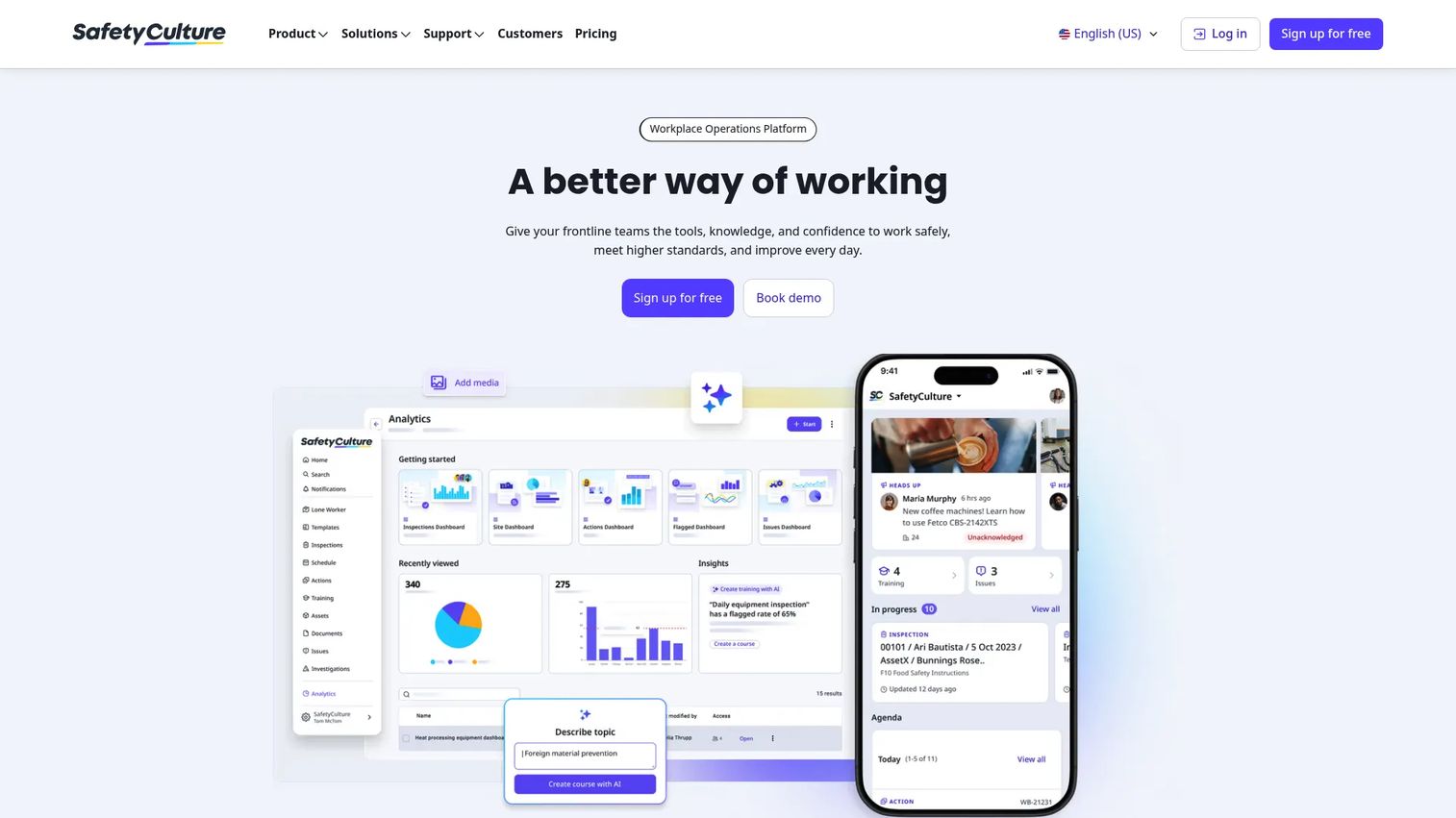
SafetyCulture is a workplace operations platform built around digital inspections, audits, training, and tasks. For property teams, that translates into inspection checklists, recurring schedules, and lightweight work order and action management that lives on a phone. It is less a full property management suite and more an operational layer for teams that want visibility and fast mobile adoption across sites.
Where it fits: property teams that treat maintenance as an operational discipline, running move-in and move-out inspections, safety checks, and recurring property management maintenance tracking software workflows across multiple buildings.
Key strengths
- Digital inspections and reusable checklists
- Recurring schedules and task and action management
- Mobile-first capture with photos and sign-off
- Training and analytics for on-site teams
Why choose SafetyCulture: It works best when your priority is standardized inspections and field execution rather than rent and accounting. If your team already lives on mobile, adoption is quick.
SafetyCulture pricing: Free plan available for up to 10 seats. Premium is $24 per seat per month, Lite seats start from $5 per seat per month when billed annually, and Enterprise is custom.
2. Hemlane
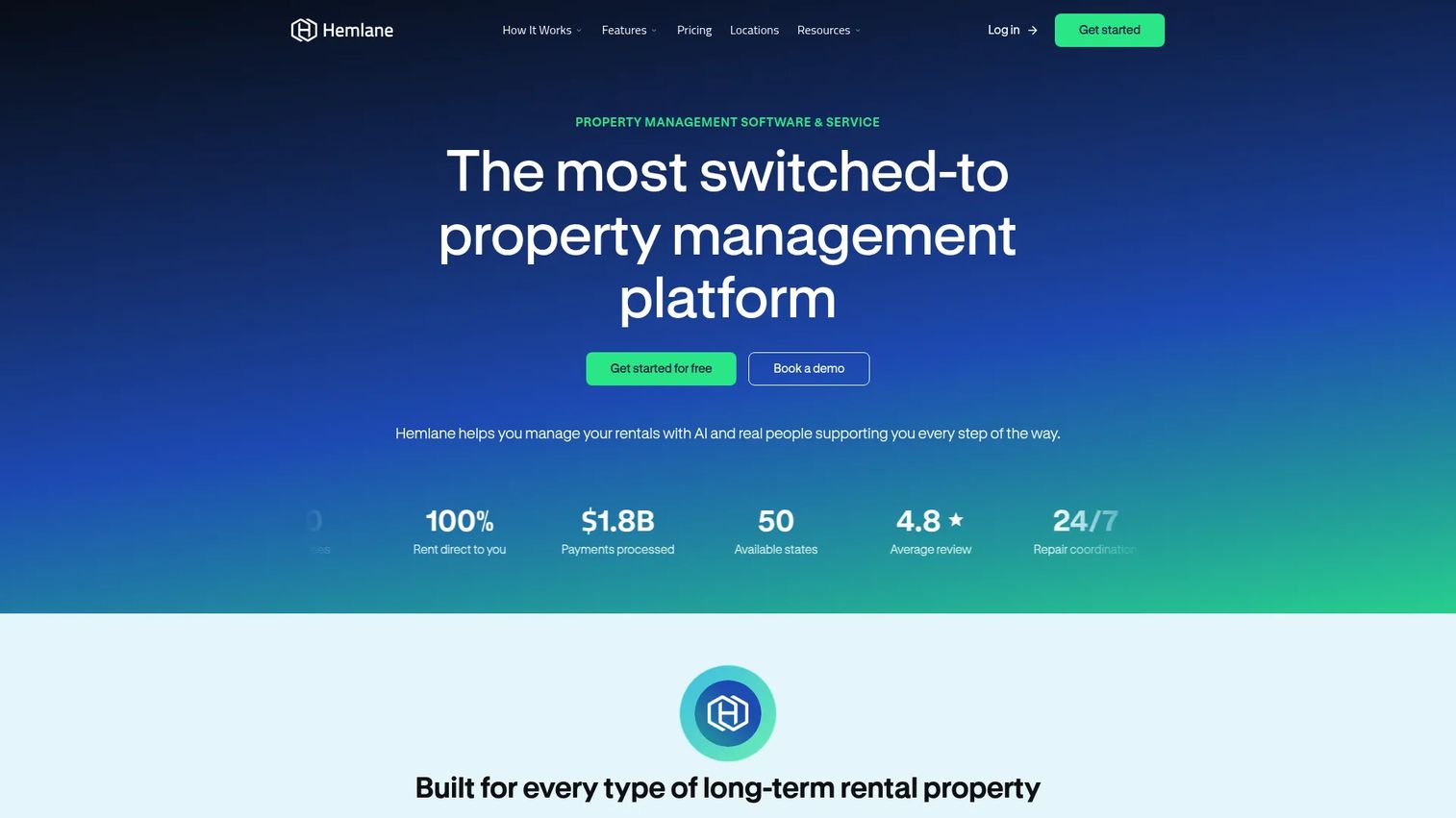
Hemlane is property management software for rental owners and managers, with a distinctive twist: you can run it as software only, or layer on managed services like a 24/7 repair coordination team. That makes it appealing for landlords who want structure around maintenance without hiring a full operations staff. Maintenance requests, vendor communication, and coordination sit alongside leasing, rent collection, and accounting.
Where it fits: landlords and small-to-mid property managers who want rental property maintenance software plus the option to offload repair coordination.
Key strengths
- Maintenance coordination with optional managed repair service
- Rental advertising and listing syndication
- Tenant screening and applicant tracking
- Lease management, rent collection, and accounting
Why choose Hemlane: It performs best for smaller portfolios that want more process than a spreadsheet without heavy operational overhead. The service add-ons let you scale coordination up or down.
Hemlane pricing: Starter is free forever. Paid software plans run Basic at $30/mo, Essential at $48/mo, and Complete at $86/mo, each including a $28 platform fee. Optional services like tenant placement, inspections, and eviction shield are priced separately.
3. Buildium
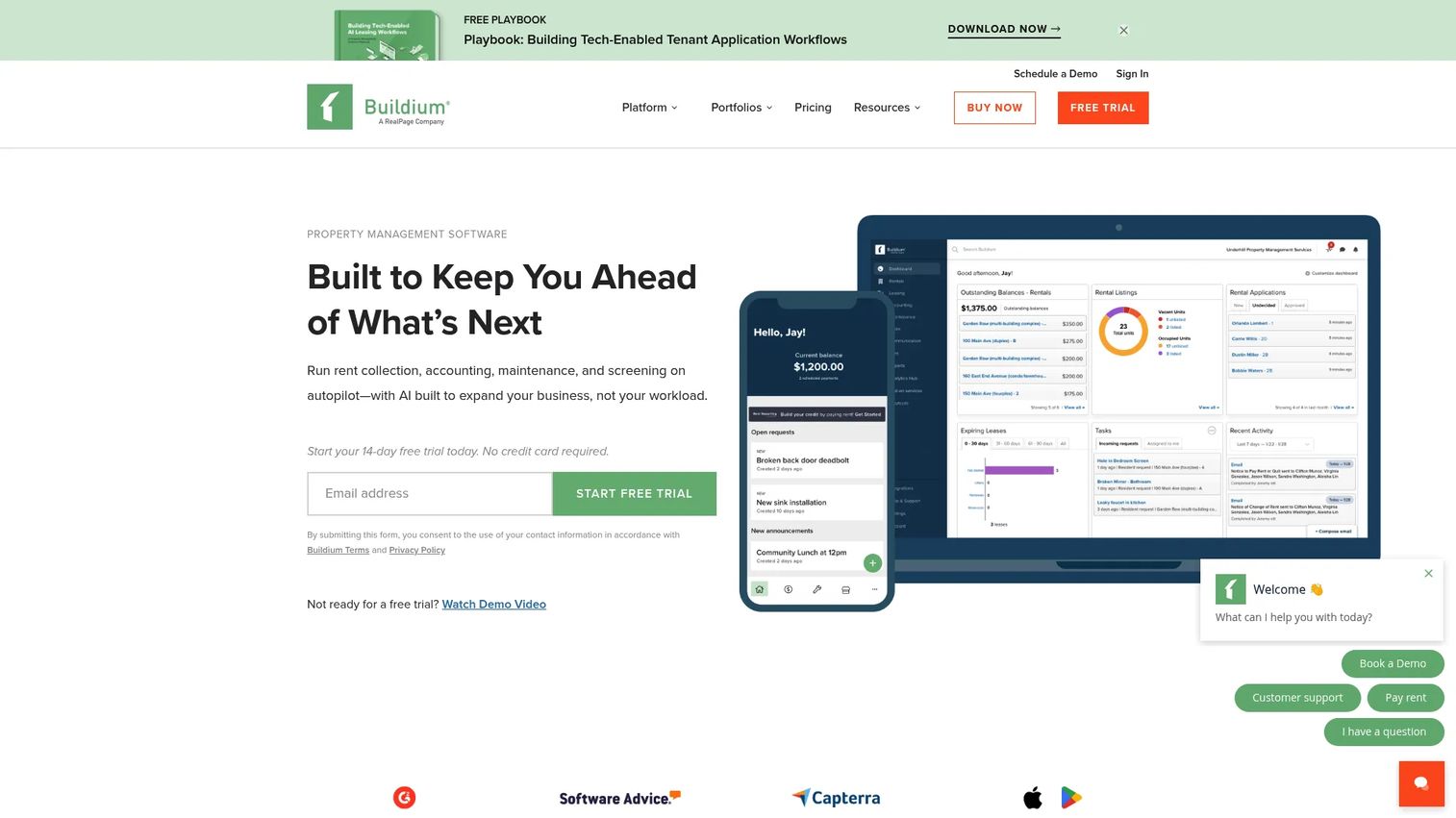
Buildium is an all-in-one property management platform spanning residential, community association, commercial, and student housing portfolios. Its strength for maintenance buyers is integration: work orders, requests, and vendor activity connect directly to accounting, reporting, and resident communication. You see maintenance spend inside the same system that tracks rent and owner statements.
Where it fits: property managers who want maintenance as one connected part of a complete operation, with reporting that ties repair costs back to units and owners.
Key strengths
- Maintenance management with a tenant portal
- Online payments, autopay, and full accounting
- Leasing and tenant screening
- Reporting and analytics across the portfolio
Why choose Buildium: Choose it when maintenance data needs to live next to your books. The reporting depth suits teams that answer to owners and need clean cost documentation.
Buildium pricing: Three public tiers, Essential at $62/month, Growth at $192/month, and Premium at $400/month, with lower per-transaction fees at higher tiers. A 14-day free trial is available.
4. AppFolio
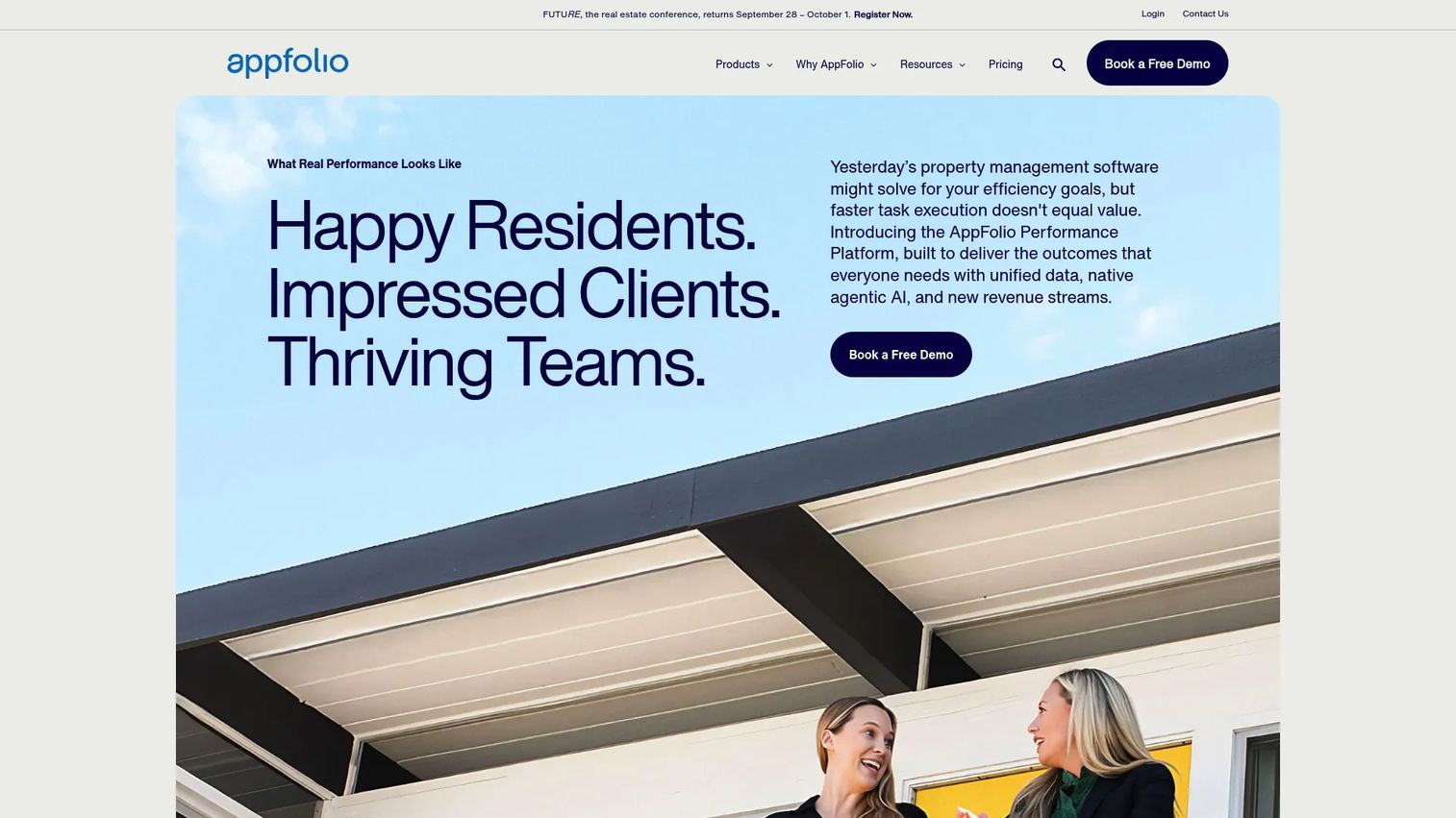
AppFolio is a cloud-based property and investment management platform aimed at real estate operators running at scale. Maintenance sits inside a broad system covering accounting, marketing, leasing, and resident communication, with work order management and automation built in. For larger portfolios, the breadth and mobile access are the draw.
Where it fits: mid-to-large operators who want property management work order software as part of a single platform rather than a standalone tool. Smaller landlords may find it heavier than they need.
Key strengths
- Work order management with automation
- Property accounting and portfolio reporting
- End-to-end marketing and leasing
- Mobile access for field and office teams
Why choose AppFolio: It suits portfolios large enough to justify a full platform and a quote-based contract. If you are running dozens of properties, the consolidation pays off; if you have a handful of units, lighter tools fit better.
AppFolio pricing: Quote-based. The site lists Core, Plus, and Max plans with minimum spend and unit requirements rather than public dollar amounts. Request a quote to get numbers for your portfolio size.
5. UpKeep
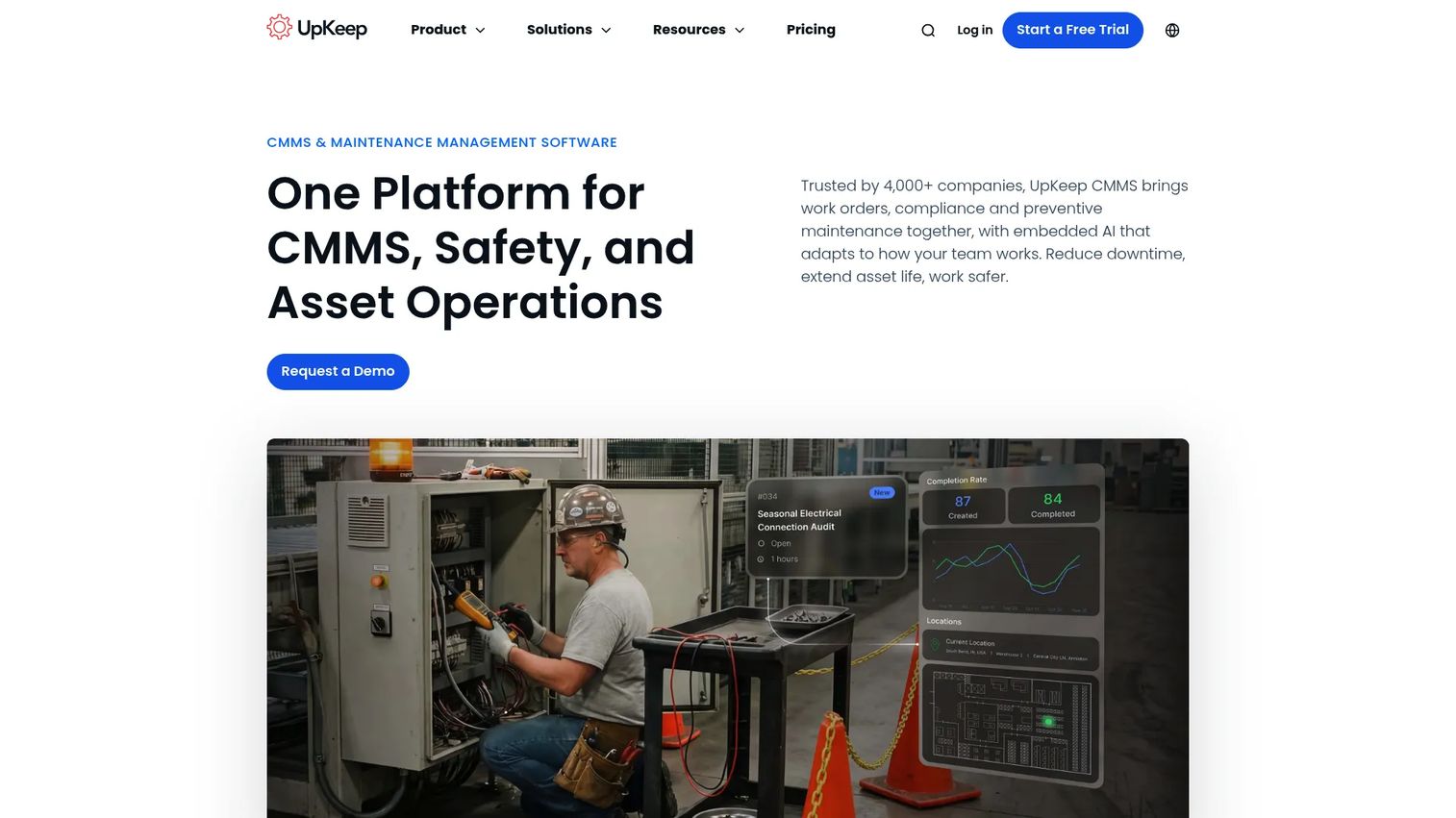
UpKeep is a maintenance-first asset operations platform, a CMMS built for teams whose core job is keeping equipment and buildings running. For property operators, that means work order management, preventive maintenance, asset and parts tracking, and a strong mobile maintenance app with offline mode. It is strongest when maintenance operations are the central problem, not one feature inside a leasing suite.
Where it fits: operations teams that want deep maintenance analytics, preventive maintenance scheduling, and technician workflows over accounting and leasing features.
Key strengths
- Work order management and preventive maintenance
- Asset tracking with parts and inventory
- Mobile access with offline mode
- AI assistant plus reporting for cost tracking
Why choose UpKeep: Pick it when the ROI you care about is maintenance efficiency: fewer emergency repairs, better technician utilization, and documented preventive work. It pairs well with a separate property management system when you need both.
UpKeep pricing: Essential is $24 per user per month and Premium is $55 per user per month. Professional and Enterprise use custom pricing. All plans include a free trial with no credit card required.
6. Propertyware
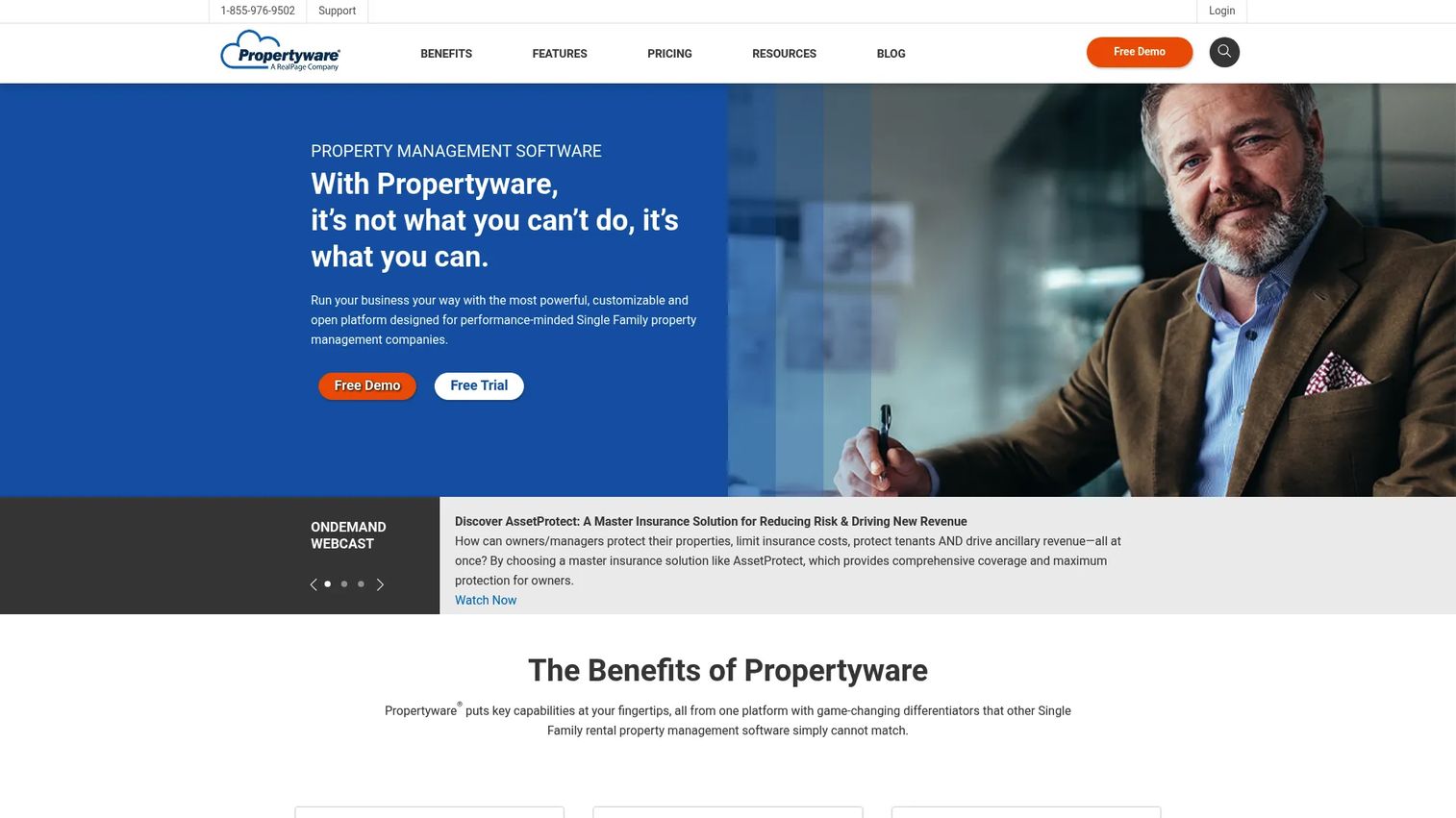
Propertyware is property management software built specifically for single-family rental operators, with heavy customization, unlimited custom reports, and an open API. Its maintenance lifecycle covers request intake, standardized tasks, inspections, and vendor tracking, with owner and tenant portals on both ends. The per-unit pricing model makes it predictable as a rental portfolio grows.
Where it fits: single-family rental companies that want tight maintenance operations and the ability to shape workflows and reporting to their exact process.
Key strengths
- Maintenance request intake and standardized tasks
- Custom dashboards and unlimited custom reports
- Owner and tenant portals
- Open API and two-way data exchange
Why choose Propertyware: Choose it for rental-focused teams that value customization and per-unit pricing over an out-of-the-box suite. The reporting flexibility is a real advantage for teams reporting to owners.
Propertyware pricing: Per-unit monthly pricing with plan minimums. Basic is $1 per unit per month, Plus is $1.50, and Premium is $2. An Enterprise API option adds $1 per unit per month to any package.
7. TenantCloud
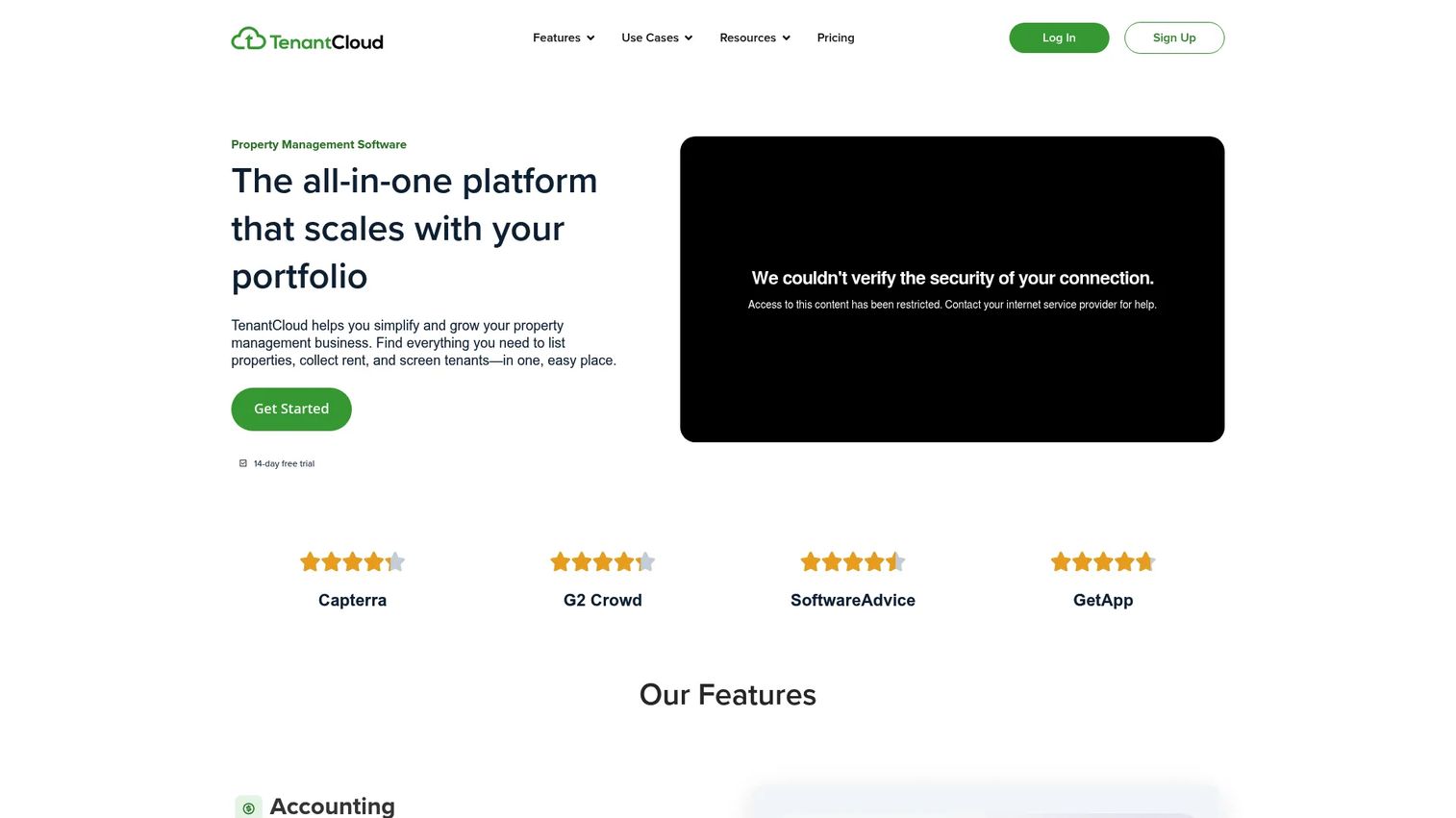
TenantCloud is cloud-based property management software aimed at self-managing landlords and small-to-mid property managers. It handles the essentials: online rent collection, tenant screening, rental applications, and a tenant portal where maintenance requests come in. For a small portfolio getting off spreadsheets, it is an affordable entry point with a low learning curve.
Where it fits: budget-conscious landlords who need basic maintenance request handling, portals, and rent collection without paying for a full operational suite.
Key strengths
- Maintenance request handling through a tenant portal
- Online rent collection and applications
- Tenant screening
- Affordable tiered plans for small portfolios
Why choose TenantCloud: It suits landlords starting out or running a handful of units. Teams with heavier maintenance operations or larger portfolios may outgrow it and move to a more workflow-focused platform.
TenantCloud pricing: Starter has a free option. Growth is $35/mo, Pro is $60/mo, and Business starts at $100/mo with custom options for larger portfolios.
Considerations before you buy
Request intake and routing
Look at how a tenant actually submits a request, and what happens next. A clean maintenance request portal with automatic routing beats a form that lands in one inbox. Test the path from submission to assignment before committing.
Preventive maintenance and scheduling
Confirm the tool supports recurring tasks, not just one-off jobs. Preventive maintenance scheduling is where you avoid the expensive failures. Check whether you can set schedules by asset, unit, or property.
Mobile and vendor coordination
Your field workflow lives on a phone. Evaluate the mobile maintenance app for photo capture, status updates, and offline use. For vendor management, check how you assign, notify, and track third-party work.
Reporting, pricing, and scale
Match the pricing model to your growth. Per-unit pricing scales cleanly with a rental portfolio; per-seat pricing suits small teams. Look past the entry tier for platform fees, transaction fees, and implementation costs, and confirm the maintenance analytics answer the questions owners will ask.
Conclusion
The right property maintenance software depends on what shape your operation is.
- All-in-one property management with accounting: Buildium
- Larger portfolios at scale: AppFolio
- Landlord coordination with optional services: Hemlane
- Maintenance-first operations: UpKeep
- Single-family rental detail: Propertyware
- Inspection and field operations: SafetyCulture
- Budget starter: TenantCloud
Start by naming your constraint. If you need a full suite that ties maintenance to rent and owner reporting, shortlist Buildium or AppFolio. If maintenance efficiency is the whole point, look at UpKeep. If you are a landlord getting off spreadsheets, TenantCloud or Hemlane will move you forward without heavy setup.
Next step: shortlist two tools that match your portfolio size, run a real work order through each trial, and watch how fast a request goes from intake to closed. That single test tells you more than any feature list.
FAQs
Property maintenance software is a system for managing maintenance requests, work orders, preventive tasks, and vendor coordination across a property portfolio. It centralizes intake, routes jobs, and documents completed work. The goal is fewer missed requests and faster, better-documented repairs.
They overlap but are not identical. CMMS (computerized maintenance management software) focuses on asset and equipment maintenance across industries, with strong preventive maintenance and parts tracking. Property maintenance software applies those ideas to rental and property operations, adding tenant-facing request intake, tenant portals, and often leasing or accounting context. UpKeep is a CMMS used in property settings, while Buildium and AppFolio are property-specific suites.
Prioritize request intake, work order routing, and mobile access, since those drive day-to-day speed. Add preventive maintenance scheduling to cut emergency repairs, and vendor management to track third-party work. Reporting and audit trails matter for proving cost savings to owners. Match the depth of each to your portfolio size.
It reduces costs in a few ways. Faster routing shortens the time between a report and a repair, which prevents small problems becoming large ones. Preventive maintenance scheduling avoids expensive emergency work. Centralized tracking cuts duplicate dispatches and lost requests, and complete documentation supports better vendor negotiation and owner reporting.
Smaller teams usually want simple request handling, low cost, and easy adoption over deep feature sets. TenantCloud and Hemlane fit well, offering affordable plans, tenant portals, and basic maintenance coordination. SafetyCulture is a strong choice if inspections and field checklists are your priority.
As portfolios grow, automation, reporting, vendor coordination, and scale matter more. AppFolio and Buildium suit larger operations with breadth across accounting, leasing, and maintenance. UpKeep fits when maintenance operations themselves are complex and need dedicated preventive maintenance and asset tracking. Per-unit pricing, as with Propertyware, can also scale predictably.
Many tools include a tenant portal for submitting and tracking maintenance requests, but portal depth varies by product and plan. Buildium, AppFolio, Propertyware, and TenantCloud offer resident-facing portals. Confirm which plan tier includes portal access and what tenants can actually do, from submitting requests to viewing status and uploading photos.
Look past the entry price to the model. Per-unit pricing, like Propertyware's, scales with your portfolio, while per-seat pricing, like SafetyCulture or UpKeep, suits small teams. Watch for platform fees (Hemlane includes a $28 platform fee), transaction fees on payments, and implementation or onboarding costs. Free tiers and trials, offered by SafetyCulture, Hemlane, Buildium, TenantCloud, and UpKeep, let you test the real workflow before you commit.