A Uber Eats order comes in. Then a DoorDash order. Then a direct web order for a completely different virtual brand running out of the same eight burners. Your line cook is squinting at three tablets. One ticket gets missed. A refund goes out. Repeat that forty times a night.
Ghost kitchens now make up roughly 25% of the global food delivery market, according to New Market Pitch (2026). That share is not slowing down. The broader ghost kitchen market sits around USD 99.30 billion in 2026 and is forecast to hit USD 223.66 billion by 2033, per Coherent Market Insights (2026). More volume means more channels, more tickets, and more places for orders to fall through the cracks.
The software you run underneath all of it decides whether that chaos is manageable or expensive. A good ghost kitchen POS system pulls every channel into one intake layer, routes tickets to the kitchen, and keeps your branded storefronts consistent. A fragmented stack does the opposite. This guide compares seven platforms on the things that actually matter when orders are flying: POS, KDS, online ordering, delivery aggregation, storefront branding, and honest pricing and bundles.
What's inside
This guide is for founders, operators, and restaurant teams comparing ghost kitchen software before a launch, a scale-up, or a stack replacement. We picked platforms on the criteria that decide whether a delivery-first kitchen runs clean:
- POS fit for delivery-first and multi-brand operations
- Kitchen display system (KDS) support for ticket flow
- Online ordering, including white-labeled storefronts
- Third-party delivery integration and delivery aggregation
- Payments processing and hardware lineup
- Pricing and bundles transparency, not just a headline number
Each tool gets an honest read on where it fits, where it does not, and what it costs.
TL;DR
- Best overall: Square, for integrated point of sale, KDS, and no-commission online ordering in one platform.
- Best for branded ordering and loyalty: Lunchbox, built for multi-brand digital storefronts and loyalty programs.
- Best all-in-one restaurant tech cloud: eatOS, with white-labeled app, KDS, POS, and delivery in bundled pricing.
- Best for POS-first operators: Clover, a hardware-forward POS with loyalty, inventory, and delivery integrations.
- Best for a broader restaurant stack: Toast, for teams that want an expandable restaurant operations platform.
- Best for service and support depth: TouchBistro, a traditional restaurant stack with strong front-of-house and back-of-house workflow.
- Best for delivery aggregation: Otter, the delivery layer that consolidates orders across apps into one screen.
What is ghost kitchen software
Ghost kitchen software is the operating layer that collects orders from every channel, routes them to the kitchen, manages the delivery handoff, and keeps your storefront branded, all without a dining room.
The core job is simple to state and hard to do well. Orders arrive from your own website, from a white-labeled ordering storefront, and from third-party apps like DoorDash, Uber Eats, and Grubhub. The software needs to pull all of that into one place, fire tickets to the right station, and track the order until a driver picks it up. Do that badly and you get missed tickets, manual re-entry, and refunds. Do it well and your kitchen throughput climbs.
Most ghost kitchen platforms cover some combination of these capabilities:
- Online ordering: direct web and app ordering channels
- Kitchen display system (KDS): digital tickets that replace paper and coordinate stations
- Point of sale (POS): the transaction and order-management core
- Delivery app integration: direct connections to third-party delivery apps
- White-labeled storefronts: branded ordering pages and apps per concept
- Payments processing: card, digital wallet, and online payment handling
- Loyalty and repeat ordering: programs that bring customers back
- Hardware compatibility: tablets, kitchen screens, printers, and payment devices
How ghost kitchen software differs from generic restaurant POS
A generic restaurant POS is built around a dining room: tables, servers, tabs, tips, floor plans. Ghost kitchen software strips that out and centers on delivery. The priority shifts to order aggregation across delivery apps, order routing to prep stations, and running multiple virtual brands from one physical kitchen. A traditional POS can sometimes be configured for delivery-first work, but a purpose-built ghost kitchen stack treats delivery aggregation and multi-brand storefronts as the main event, not an add-on.
When to use ghost kitchen software
Centralize orders across channels
When orders arrive from your website plus three delivery apps, manual entry becomes the failure point. A single intake layer pulls every order onto one screen so your team stops tablet-juggling. Fewer missed tickets, less re-keying, fewer refunds. If a staffer is manually copying delivery-app orders into your POS, you have already outgrown a fragmented setup.
Run multiple virtual brands from one kitchen
Ghost kitchens rarely stop at one concept. A single kitchen might run a burger brand, a wings brand, and a salad brand, each with its own branded storefronts and ordering paths. Ghost kitchen software lets you spin up separate menus, storefronts, and reporting per concept while consolidating the kitchen work. That is how you test new virtual restaurant software concepts without new leases.
Reduce ticket chaos during peak hours
Peak service is where fragmented stacks break. A kitchen display system tied to your POS and delivery channels keeps tickets sequenced, timed, and assigned to the right station. Prep speed goes up, handoff accuracy improves, and error rates drop. When the KDS and POS coordinate, a slammed Friday night looks like a busy shift instead of a meltdown.
Comparison table
Sorted by relevance to running a delivery-first ghost kitchen. Pricing reflects publicly listed starting figures at the time of writing; processing fees and hardware are extra.
| # | Product | Best for | Key differentiator | Pricing | G2 rating |
|---|---|---|---|---|---|
| 1 | Square | Integrated POS, KDS, and online ordering | No-commission online ordering plus free POS tier | Free plan; paid from $49/mo per location | 4.6/5 |
| 2 | Lunchbox | Branded ordering and loyalty | Multi-brand digital storefronts and CRM | Custom (book a demo) | 5.0/5 |
| 3 | eatOS | All-in-one restaurant tech cloud | Bundled POS, KDS, ordering, and delivery | Bundles from $0; POS license $59/mo | Not listed |
| 4 | Clover | POS-first operators | Hardware-forward POS with app market | KDS from $799 + $25/mo per device | 3.9/5 |
| 5 | Toast | Broader restaurant stack | Expandable restaurant operations platform | Starter Kit $0; POS from $69/mo | 4.2/5 |
| 6 | TouchBistro | Service and support depth | Front-of-house and back-of-house workflow | POS from $69/mo | 4.1/5 |
| 7 | Otter | Delivery aggregation | Consolidates delivery apps into one screen | From $29/mo per location | 3.5/5 |
Best ghost kitchen software for 2026
1. Square
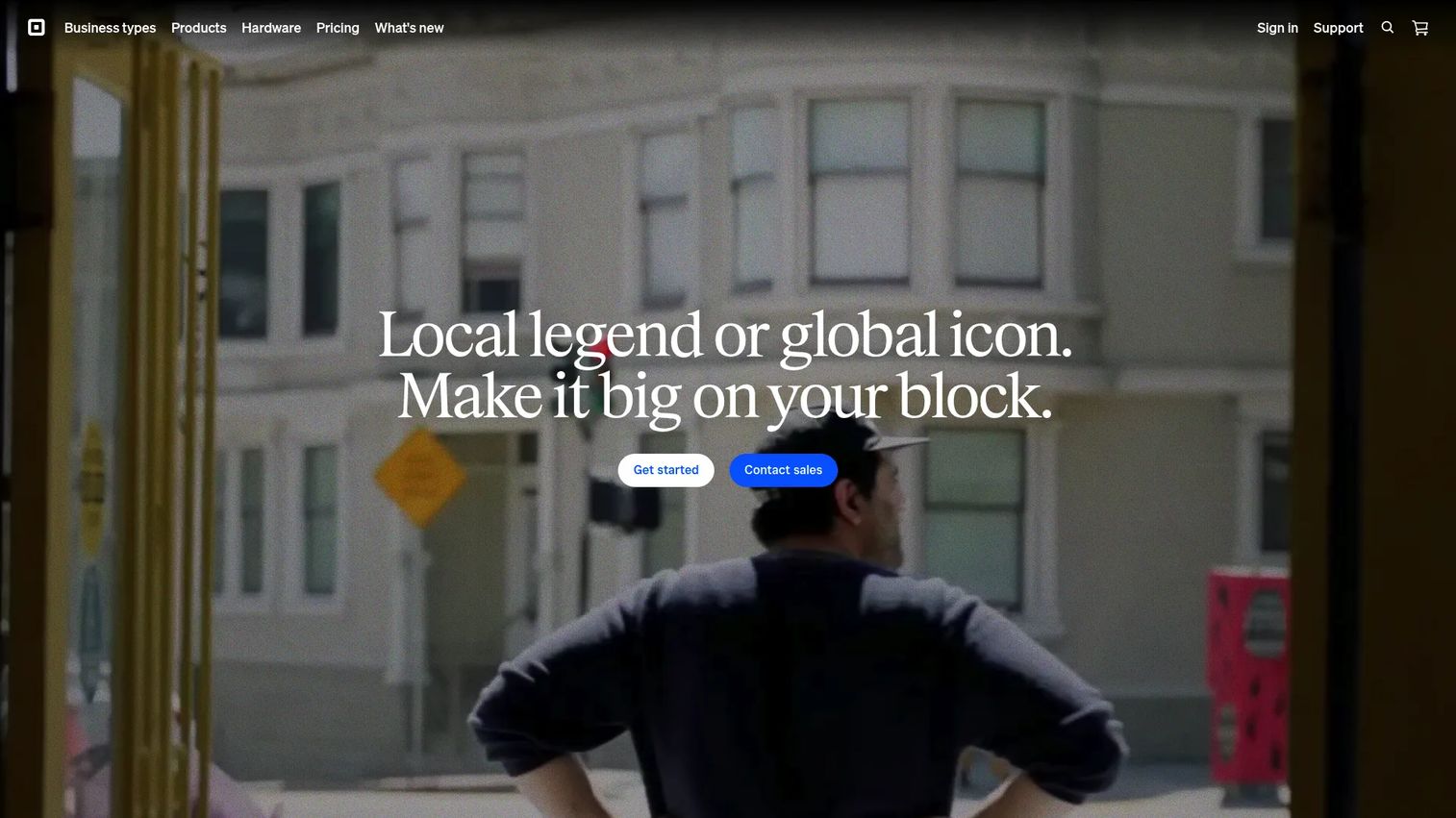
Square is a commerce platform covering payments, point of sale, and business software for small and growing operations. For ghost kitchens, the draw is that POS, Square Online, KDS, and payments processing live under one roof, so you are not stitching four vendors together. Square Online gives you a no-commission online ordering channel, which matters when delivery-app fees are already eating margin.
Best for: small and growing delivery-first operators who want POS, online ordering, and KDS in one platform without a big upfront commitment.
Key features
- Payment processing: in-person, online, invoice, and API
- Point-of-sale software with restaurant modes and add-ons
- Square Online for no-commission direct online ordering
- Hardware lineup for checkout and kitchen operations
Why choose Square: it fits operators who want a free entry point and room to scale across multiple concepts without renegotiating a contract. The trade-off is depth for very large multi-location chains, where a dedicated restaurant platform may go further.
Square pricing: Square Free is $0 per month per location plus processing fees. Square Plus is $49 per month per location and Square Premium is $149 per month per location, both with a 30-day free trial. Square Pro is custom pricing.
Square holds a 4.6/5 rating on G2 for Square Point of Sale.
2. Lunchbox
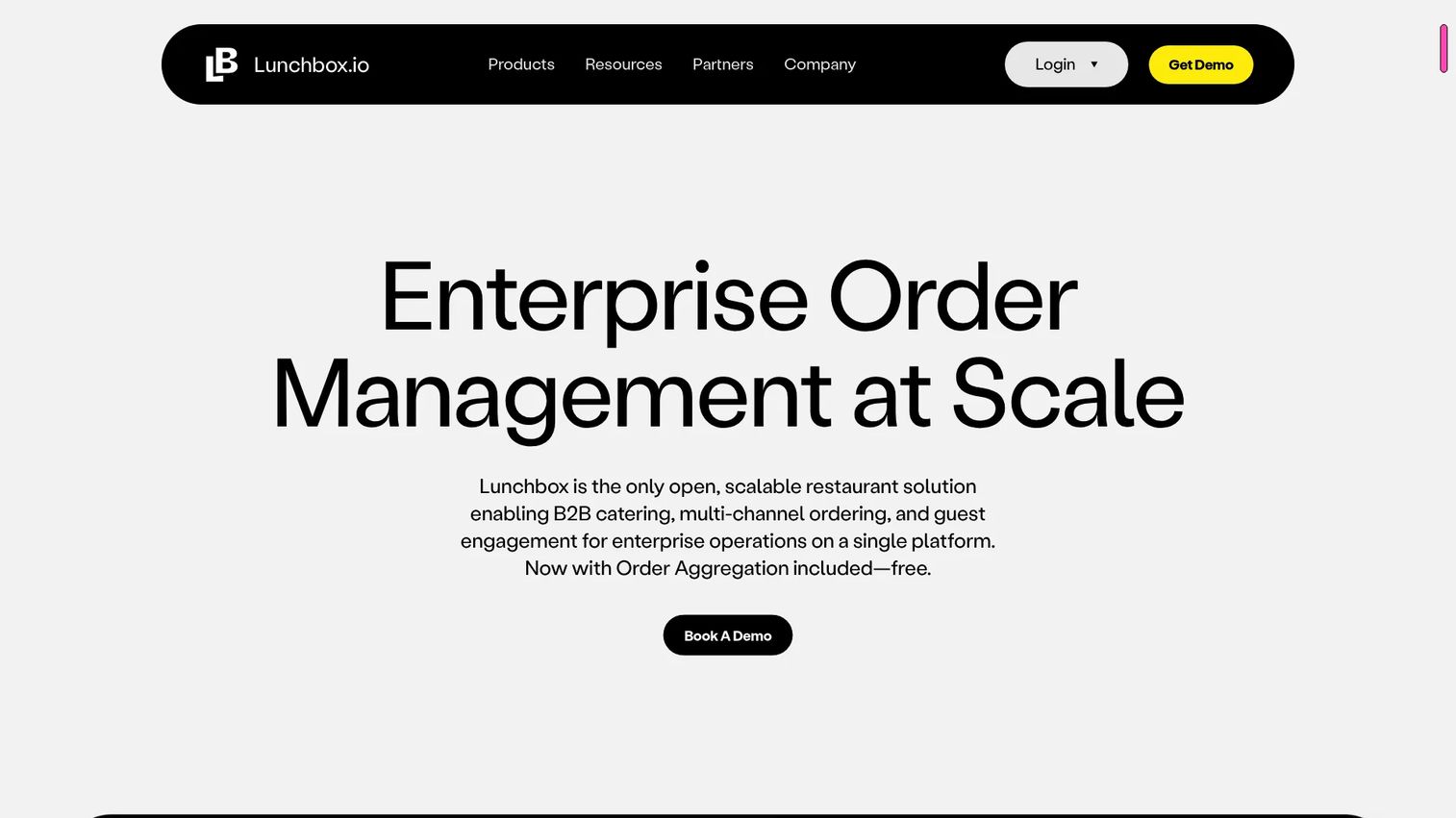
Lunchbox is enterprise restaurant technology built around digital ordering, catering, loyalty, marketing, and order aggregation. The positioning is storefront-first: web and app ordering that carries your brand, backed by a marketing CRM and loyalty programs. For multi-brand and food-hall operators, the separate branded storefronts and ordering paths are the point.
Best for: multi-brand and enterprise operators who want branded digital storefronts, loyalty, and lead capture across concepts.
Key features
- Web and app ordering under your brand
- Marketing CRM for customer data and campaigns
- Loyalty and Scan to Pay
- Order aggregation across channels
Why choose Lunchbox: it suits operators whose growth depends on owned customer relationships and repeat ordering rather than renting audiences from delivery apps. It leans enterprise, so smaller single-concept kitchens may find it heavier than they need.
Lunchbox pricing: The site routes to a demo booking, and pricing is set per service order.
Lunchbox holds a 5.0/5 rating on G2, based on a very small number of reviews.
3. eatOS
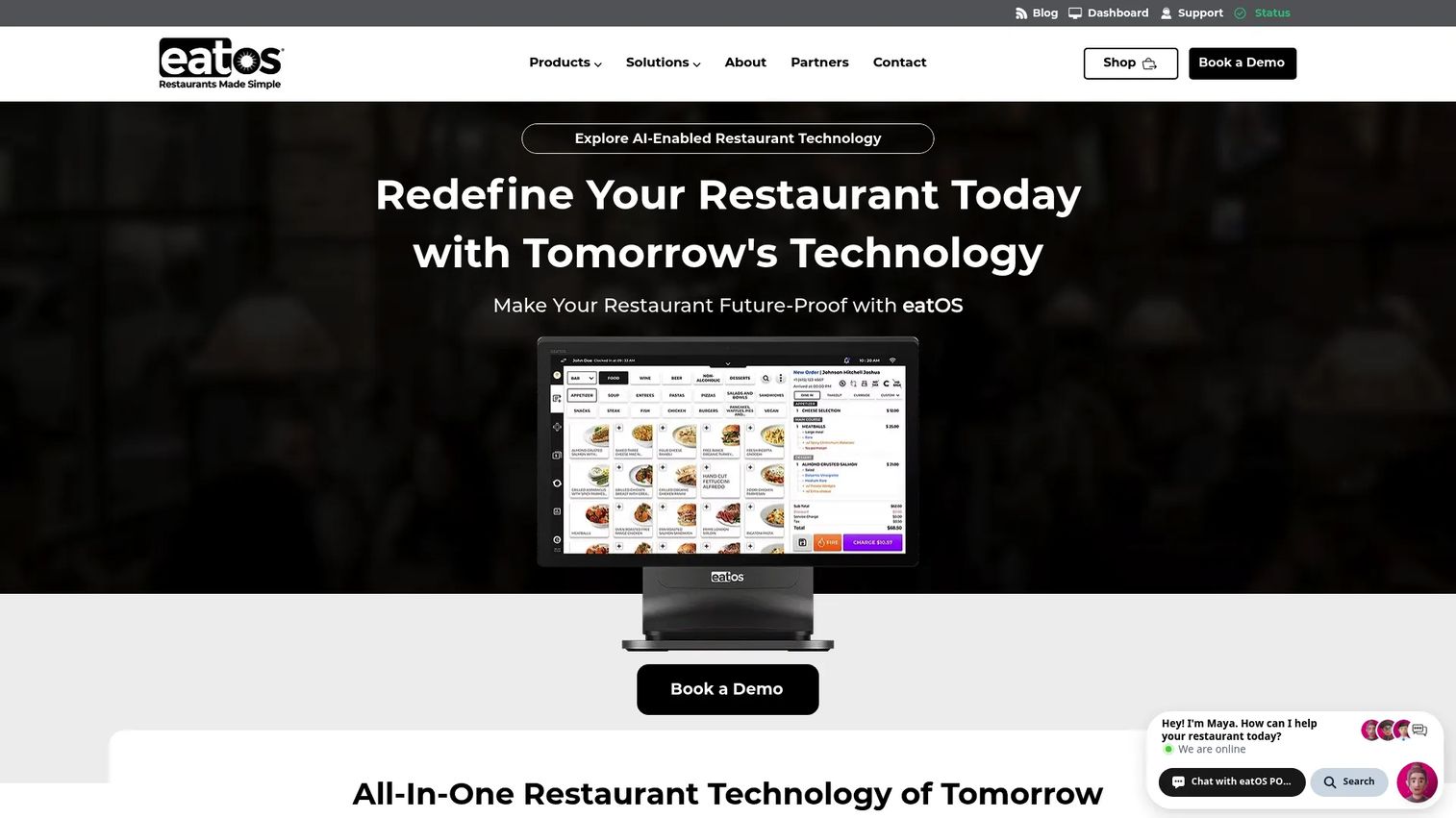
eatOS is restaurant management and POS software that bundles hardware, payments, ordering, and operations into one tech cloud. It covers point of sale, online ordering and delivery, and a kitchen display system, so a ghost kitchen can run intake, prep, and handoff from one vendor. The bundle-plus-license pricing model lets you start lean and add capabilities as concepts grow.
Best for: operators who want an all-in-one restaurant operations suite with bundled hardware and transparent per-license add-ons.
Key features
- Point of sale for delivery-first service
- Online ordering and delivery support
- Kitchen display system for ticket flow
- Self-service kiosk licensing available
Why choose eatOS: the license-based add-ons make it easy to see what each capability costs, which helps when you are budgeting a new virtual concept. The broader suite covers more restaurant operations software ground than a pure ordering tool.
eatOS pricing: the Quick Service Bundle starts at $0.00 and the Full Service Bundle starts at $849.00, both with 2.99% + 10c processing fees. Standalone licenses run $59/month for POS, $50/month for online ordering, $25/month for KDS, and $99/month for a self-service kiosk.
A current G2 rating for eatOS was not listed at the time of writing.
4. Clover
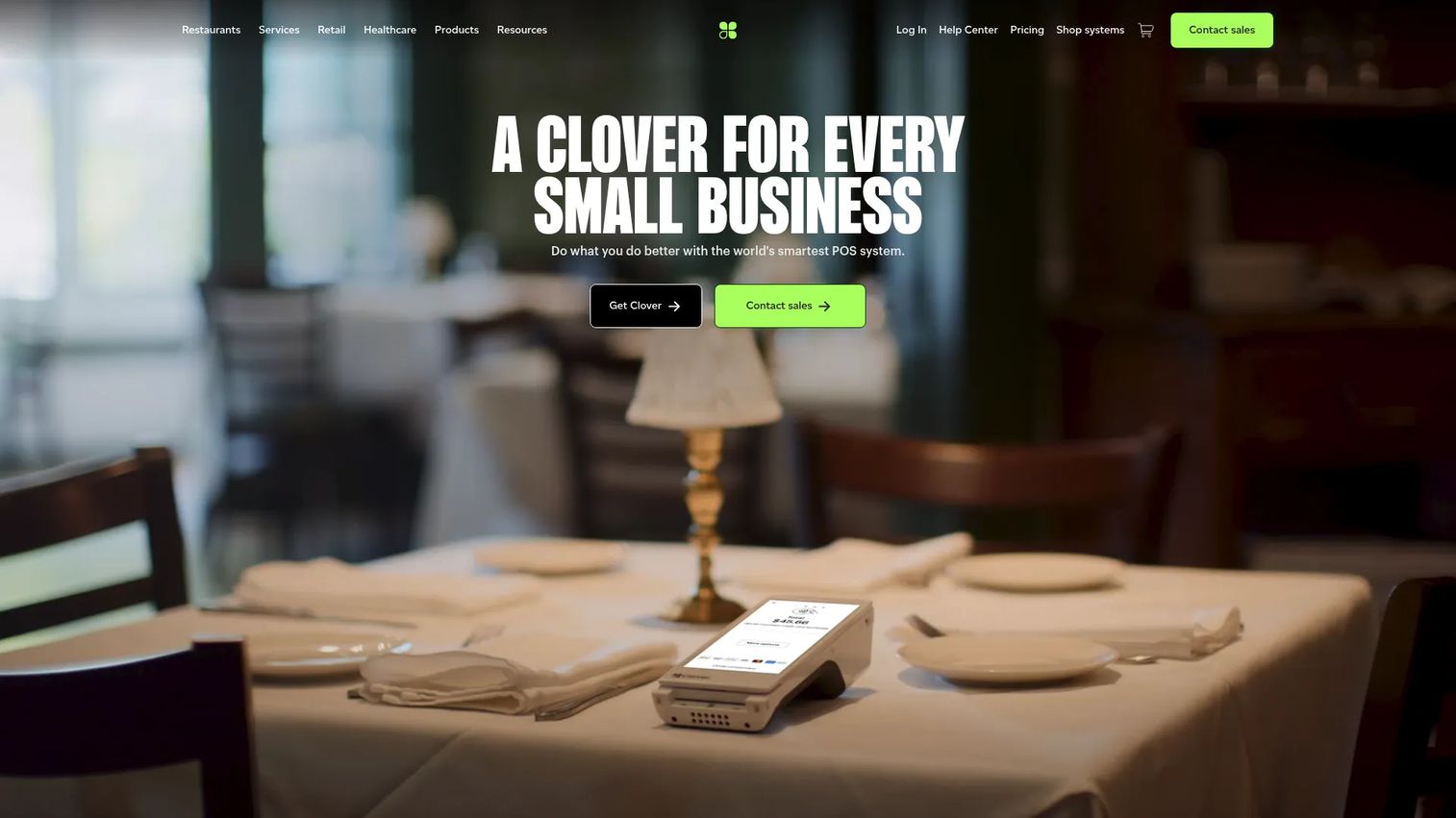
Clover is a cloud-based POS and payments platform for small businesses, built around a strong hardware lineup and an app market. For ghost kitchens, the appeal is a POS-first foundation with online order centralization, loyalty programs, inventory tracking, KDS, and third-party delivery integration layered on through apps. That modularity lets you shape the stack around how your kitchen actually runs.
Best for: POS-first operators who want durable hardware plus app-based flexibility for delivery and loyalty.
Key features
- POS hardware options across form factors
- Payments processing built in
- Inventory tracking and reporting
- KDS and delivery integrations via app market
Why choose Clover: it fits operators who value hardware reliability and want to add delivery, loyalty, and inventory piece by piece. Package tiers matter here, since which apps and features you get depend on the plan, so confirm the tier before committing.
Clover pricing: the 14-inch KDS is $799 plus $25/month per device, and the 24-inch KDS is $899 plus $25/month per device. Other devices and plans are shop or contact-sales options, so confirm full pricing directly.
Clover holds a 3.9/5 rating on G2.
5. Toast
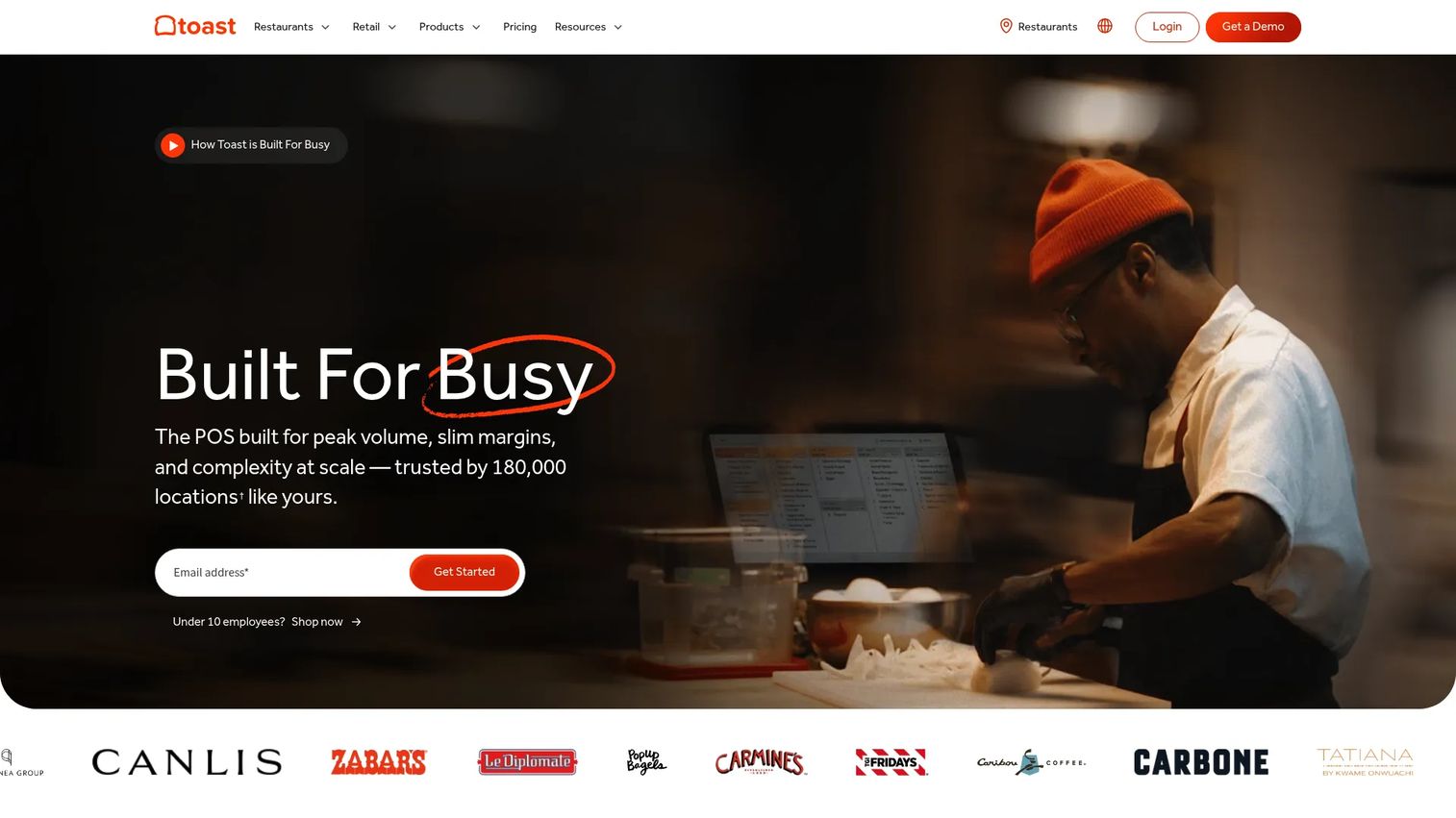
Toast is a restaurant technology platform covering POS, payments, online ordering, and operations. Its strength for ghost kitchens is breadth: cloud-based POS and order management, KDS, payments processing, plus inventory, accounting sync, payroll, and scheduling. If you expect to grow beyond delivery-only into a broader operation, Toast has room to expand into.
Best for: operators who want an expandable restaurant platform that can grow past a delivery-first setup.
Key features
- Cloud-based POS and restaurant operations
- Online ordering, marketing, loyalty, and guest CRM
- KDS and order management
- Inventory, payroll, scheduling, and finance tools
Why choose Toast: the platform breadth means you consolidate more functions with one vendor as you scale. That breadth can be more than a lean single-concept ghost kitchen needs on day one, so match the package to your actual volume.
Toast pricing: the Starter Kit begins at $0 per month. Point of Sale starts at $69 per month. Build Your Own is custom pricing, since totals vary by package and hardware.
Toast holds a 4.2/5 rating on G2.
6. TouchBistro
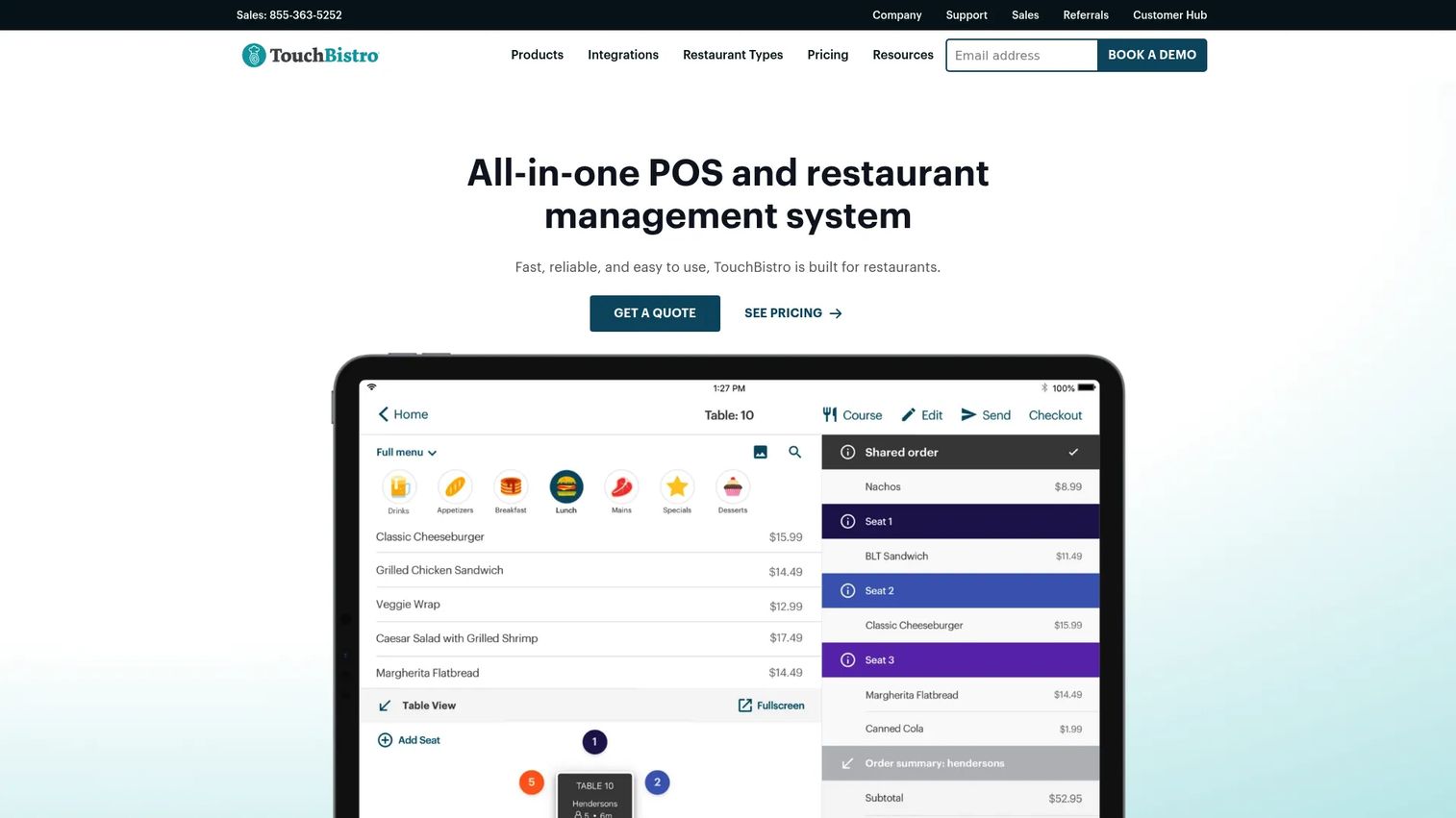
TouchBistro is restaurant POS and management software with a traditional front-of-house and back-of-house workflow at its core. It covers point of sale, menu management, and order management, with strong hardware compatibility. For ghost kitchens run by operators who came from full-service restaurants, the familiar workflow and support depth are the draw.
Best for: smaller or service-oriented operators who want a traditional restaurant stack with hands-on support.
Key features
- Point of sale with restaurant workflows
- Tableside and order management
- Floor plan and table management
- Menu management and hardware compatibility
Why choose TouchBistro: it fits teams that value a proven restaurant workflow and support relationship over a delivery-only tool. Its roots are in table service, so pair it with delivery aggregation if your volume is heavily third-party app driven.
TouchBistro pricing: Point of Sale starts at $69 per month and the Essentials Bundle starts at $119 per month. Custom Setup is quote-based, and hardware plus payment processing may add cost.
TouchBistro holds a 4.1/5 rating on G2.
7. Otter
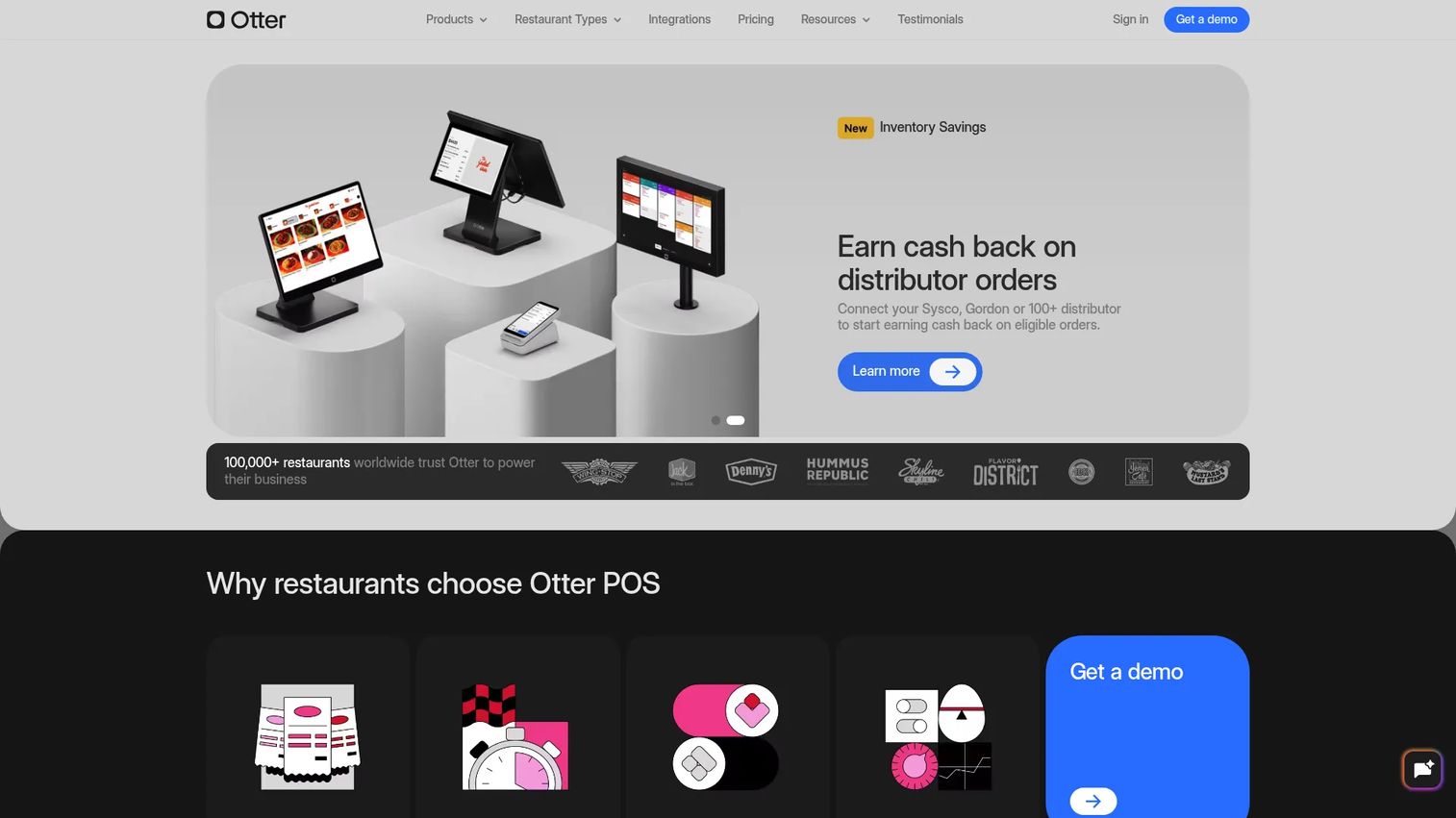
Otter is a restaurant operating system built for order aggregation across delivery apps, plus online ordering, analytics, and monitoring. Its core job is the delivery layer: consolidating DoorDash, Uber Eats, and other channels into one screen with multi-channel order management. For a ghost kitchen drowning in tablets, that consolidation alone can change how a shift runs.
Best for: delivery-heavy operators who need to unify third-party app orders and monitor performance from one place.
Key features
- Order aggregation across delivery apps
- Online ordering and direct orders
- Live alerts and restaurant monitoring
- Ratings and reviews management
Why choose Otter: it is the strongest pick when delivery aggregation is your primary pain, but it works best as the delivery layer inside a broader stack rather than a full POS replacement. Many operators run Otter alongside a POS rather than instead of one.
Otter pricing: the Ratings & Reviews Delivery App plan is $29/month per location, and the Delivery App plus Social App plan is $69/month per location. Order aggregation tiers (Lite, Standard) and setup fees exist but were not fully listed publicly.
Otter holds a 3.5/5 rating on G2.
Considerations
POS, KDS, and online ordering need to work together
The single biggest source of ghost kitchen errors is tools that do not talk to each other. When your POS, kitchen display system, and online ordering run as separate islands, someone re-keys orders by hand. That is where missed tickets and refunds come from. Evaluate how tightly the POS, KDS, and ordering layers are integrated inside one platform before you look at anything else.
Check delivery aggregation depth
"Integration" is a word vendors use loosely. What you want is direct third-party delivery integration that pushes DoorDash, Uber Eats, and Grubhub orders straight into your intake layer and KDS. The alternative is manual tablet juggling, which does not scale past a couple of channels. Ask exactly which delivery apps connect directly and which still require a separate device.
Verify storefront branding and loyalty options
Delivery apps rent you customers; a white-labeled ordering storefront lets you own them. Confirm whether the platform supports branded storefronts per concept and whether loyalty programs and repeat ordering are built in or bolted on. For multi-brand kitchens, per-concept branding is not a nice-to-have, it is the mechanism for building direct demand.
Confirm hardware support and setup requirements
Ghost kitchens run on tablets, kitchen screens, printers, and payment devices. Check whether the software works with hardware you already own or forces a full replacement, because the hardware lineup and swap cost can dwarf the software fee. Ask about implementation speed too, since a launch that slips two weeks costs real revenue.
Compare pricing bundles, not just headline prices
The advertised monthly number is rarely the real number. Payments processing fees, per-device charges, per-location pricing, add-on licenses, and support tiers all stack up. Compare pricing and bundles across a full month of realistic volume, not the starting figure on the pricing page.
Conclusion
The right ghost kitchen software depends less on which tool wins a spec sheet and more on which pattern matches your kitchen. If you want POS, KDS, and no-commission online ordering integrated with a free entry point, Square is the strongest all-around fit. If owned customer relationships and multi-brand branded storefronts drive your growth, Lunchbox is built for that. eatOS makes sense when you want an all-in-one tech cloud with transparent per-license pricing, while Clover and Toast suit POS-first and broader-platform operators respectively.
For a delivery-heavy kitchen buried in third-party app tablets, Otter fixes the aggregation problem fastest, usually as a layer inside a larger stack. TouchBistro fits operators who want a traditional restaurant workflow with support depth.
Next step: map your decision to three things. Kitchen complexity, branded storefront needs, and delivery volume. High delivery volume across many apps points toward aggregation-first. Multiple virtual brands point toward storefront-first. A single growing concept points toward an integrated POS-first platform. Start a trial with the one that matches, and test it against a real peak shift before you commit.
Start your journey with Guideflow today!
If your team also needs to show a software product without stitching together five tools, Guideflow turns your product into self-serve interactive demos in minutes. You can capture a flow from your browser, personalize it for each audience, share it anywhere, and analyze engagement in real time. Interactive demos work across landing pages, sales follow-ups, onboarding, partner enablement, and support docs, so a single capture serves the whole customer lifecycle. Start your journey with Guideflow today!
FAQs
For running several virtual brands from one kitchen, storefront-first platforms fit best. Lunchbox is built for multi-brand digital storefronts and loyalty, while Square and eatOS handle multiple concepts with separate menus and ordering paths. The key is per-concept branding plus consolidated kitchen and reporting in one place.
Most do. Square, eatOS, Clover, Toast, and TouchBistro all offer point of sale plus kitchen display system capability, either bundled or as add-ons. Otter focuses on order aggregation and is usually run alongside a POS rather than replacing one. Always confirm whether the KDS is included or a separate license.
The strongest platforms offer direct third-party delivery integration, pushing DoorDash, Uber Eats, and Grubhub orders into one intake layer and KDS automatically. Otter specializes in this delivery aggregation. Weaker setups still require a separate tablet per app, so ask exactly which apps connect directly before buying.
Look past the headline monthly price. Payments processing fees, per-device and per-location charges, add-on licenses, and support tiers change the real cost significantly. Compare full pricing and bundles against a realistic month of order volume across all your channels, not the starting figure on the pricing page.
Yes. Lunchbox, eatOS, and Square Online all support branded, white-labeled ordering storefronts so customers order under your brand rather than a delivery app's. This matters for ghost kitchens because branded repeat ordering builds direct customer relationships and reduces reliance on high-commission delivery apps.
Often no. Lunchbox, Toast, Clover, and Square include loyalty programs and repeat-ordering features inside the platform. Whether you need a standalone tool depends on how sophisticated your CRM and campaign needs are. For most ghost kitchens, built-in loyalty covers the essentials without another subscription.
A typical ghost kitchen runs on tablets for order intake, kitchen display screens for tickets, receipt or label printers, and payment devices. Some platforms bundle a hardware lineup, others let you bring your own. Confirm compatibility and replacement cost early, since hardware often outweighs the monthly software fee.