Last updated: October 2026
Your security team sees a malicious request. Engineering sees an application trace. The gap between those two views is exactly where attackers operate.
Runtime Application Self-Protection (RASP) closes that gap by operating inside or alongside the running application, giving security teams context about whether an attack actually reaches a vulnerable query, command, or file operation. A WAF inspects traffic at the edge. An IPS watches the network perimeter. Neither knows what happens once a request enters the application logic.
That distinction matters more as your product matures. Customer security reviews increasingly ask for evidence of runtime protection, not just perimeter controls. Engineering teams deal with exposed APIs, injection flaws, and third-party dependency risks that pre-production scanning alone cannot address in production.
Choosing a RASP tool is not a standard software purchase. It affects release governance, service ownership, incident response workflows, and the engineering capacity required for rollout. This guide gives product and security leaders a practical shortlist, a comparison table, and a framework for moving from monitor mode to blocking with confidence.
What's inside
This guide covers seven RASP tools evaluated across the application and mobile security landscape for 2026. Selection criteria:
- Runtime coverage: Which attack types and application layers does the tool instrument
- Deployment model: Agent, plugin, compiler-based, or platform integration
- Operational fit: Monitor mode, blocking controls, alert routing, and rollback options
- Pricing transparency: Verified against live vendor pages in October 2026
- G2 rating: Verified from live listings at time of writing
The guide also includes a decision table comparing RASP with WAF, IPS, IAST, DAST, and SAST, plus a buyer's checklist for PMs coordinating security, engineering, and SRE.
TL;DR
- Best for broad enterprise application and API protection: Contrast Protect, for teams that need dedicated runtime defense with configurable blocking
- Best for runtime coverage paired with WAF controls: Imperva RASP, for organizations consolidating application security programs
- Best for developer-oriented embedded protection: Aikido Zen, open source and free to install, with SQL injection blocking, API rate limiting, and API discovery
- Best for observability-led security teams on Datadog: Datadog App and API Protection, priced at $31 per AAP host per month billed annually
- Best for Dynatrace observability users: Dynatrace Runtime Application Protection, available at $13 per 8 GiB host per month
- Best for Java and .NET runtime environments: Waratek, with IAST and RASP combined, starting at $2,499 per month
- Best for mobile application protection: Appdome, for Android and iOS teams needing no-code RASP within CI/CD pipelines
What is RASP security?
RASP security is a class of application security technology that detects and may block attacks using context from inside a running application.
Unlike perimeter controls that inspect HTTP traffic at the edge, RASP connects directly to the application runtime. It observes how untrusted input interacts with code, database queries, file operations, and command execution. When behavior matches an exploit pattern, RASP can record enriched context, alert security teams, or block the request before damage occurs.
Vendor naming varies across the market. You may encounter "runtime application protection," "exploit prevention," "in-app WAF," or "application protection" depending on the vendor, but the underlying capability is the same category.
How RASP works at runtime
- Instrument or connect to the application runtime via agent, plugin, or compiler integration
- Observe inbound requests, data flow, and execution paths as they happen
- Identify behavior that matches an exploit pattern or dangerous code interaction
- Record enriched context including the specific code path reached
- Alert, monitor, block, or terminate the request based on configured policy
Key RASP capabilities
- Runtime instrumentation and code-level context
- Attack detection and validation against real execution paths
- Configurable blocking controls per attack class or service
- Application and API visibility across request flows
- Monitor mode for baseline collection before blocking is enabled
- Security signals feeding DevSecOps and incident response workflows
RASP versus adjacent controls
Understanding where RASP fits alongside other AppSec controls helps PMs set realistic expectations during vendor evaluations and roadmap conversations.
| Control | Primary role | Runs where | Best use |
|---|---|---|---|
| RASP | Detect and block exploitation with application context | In or close to the application runtime | Production protection and attack validation |
| WAF | Filter web traffic using rules and request patterns | Edge or gateway | Broad HTTP protection and virtual patching |
| IPS | Detect and prevent network attacks | Network perimeter | Network-level traffic control |
| IAST | Identify vulnerabilities while tests execute | Test environments | Finding weaknesses before release |
| DAST | Probe a running application from outside | Test or staging environments | Black-box security testing |
| SAST | Analyze source code or binaries | Development pipeline | Early code review and defect discovery |
RASP does not replace the controls above. For more on application security testing software that covers SAST, DAST, and IAST alongside runtime options, see that guide for context on layered security programs.
When to use RASP security
Protect exposed APIs and internet-facing applications
High-value API routes, authentication workflows, file-handling endpoints, and administrative interfaces all carry elevated risk. RASP instruments those code paths so teams see whether attacks reach sensitive operations, not just whether they arrive at the edge. This is particularly relevant when customer security questionnaires ask for production-level evidence of attack detection.
Add production context to remediation sequencing
RASP generates runtime evidence about which vulnerabilities are actually reached or executed in production. For PMs managing a backlog of security findings from SAST or DAST, that signal changes prioritization. A critical vulnerability that RASP confirms is actively targeted moves differently through the sprint than one that never fires in production.
Roll out blocking after validating monitor mode
Most production rollouts should begin in monitor mode. Teams collect baseline data, validate detection quality, confirm alert ownership, and define rollback procedures before enabling blocking. Moving service by service, or exploit class by exploit class, keeps incidents manageable and gives engineering clear handoff criteria.
Use RASP when:
- The product exposes business-critical APIs to external users
- Security needs production evidence, not only pre-production scan results
- WAF rules generate high noise without application-layer context
- Engineering needs a controlled path from detection to blocking with clear ownership
RASP security tools comparison
Some of the tools below are purpose-built RASP platforms. Others package runtime protection within a broader observability, application security, or mobile security product. The table reflects that variation, along with verified pricing and G2 ratings as of October 2026.
| # | Product | Best for | Key differentiator | Pricing | G2 rating |
|---|---|---|---|---|---|
| 1 | Contrast Protect | Enterprise web application and API security | Runtime protection with application-layer threat intelligence | Free tier; Pro from $750/mo | 4.5/5 |
| 2 | Imperva RASP | Teams pairing RASP with broader AppSec controls | Plugin-based deployment, zero-day protection via LANGSEC | Custom pricing | 5.0/5 |
| 3 | Aikido Zen | Developer teams seeking embedded runtime defense | Open source, free to install; SQL injection and API rate limiting | Free (open source); Protect suite: Custom | 4.6/5 |
| 4 | Datadog App and API Protection | Security teams already using Datadog APM | RASP-powered exploit prevention linked to APM traces | From $31/AAP host/mo (annual) | 4.4/5 |
| 5 | Dynatrace Runtime Application Protection | Observability-led organizations using OneAgent | Code-level protection with transaction analysis | From $13/mo per 8 GiB host | 4.5/5 |
| 6 | Waratek | Java and .NET production environments | Compiler-based IAST plus RASP in one platform | From $2,499/mo (Team plan) | 4.7/5 |
| 7 | Appdome | Mobile application teams (Android and iOS) | No-code RASP embedded in CI/CD, no SDK required | Custom pricing; 30-day trial available | 4.8/5 |
Pricing and G2 ratings verified in October 2026 from vendor pricing pages and live G2 listings.
Best 7 RASP security tools for 2026
1. Contrast Protect
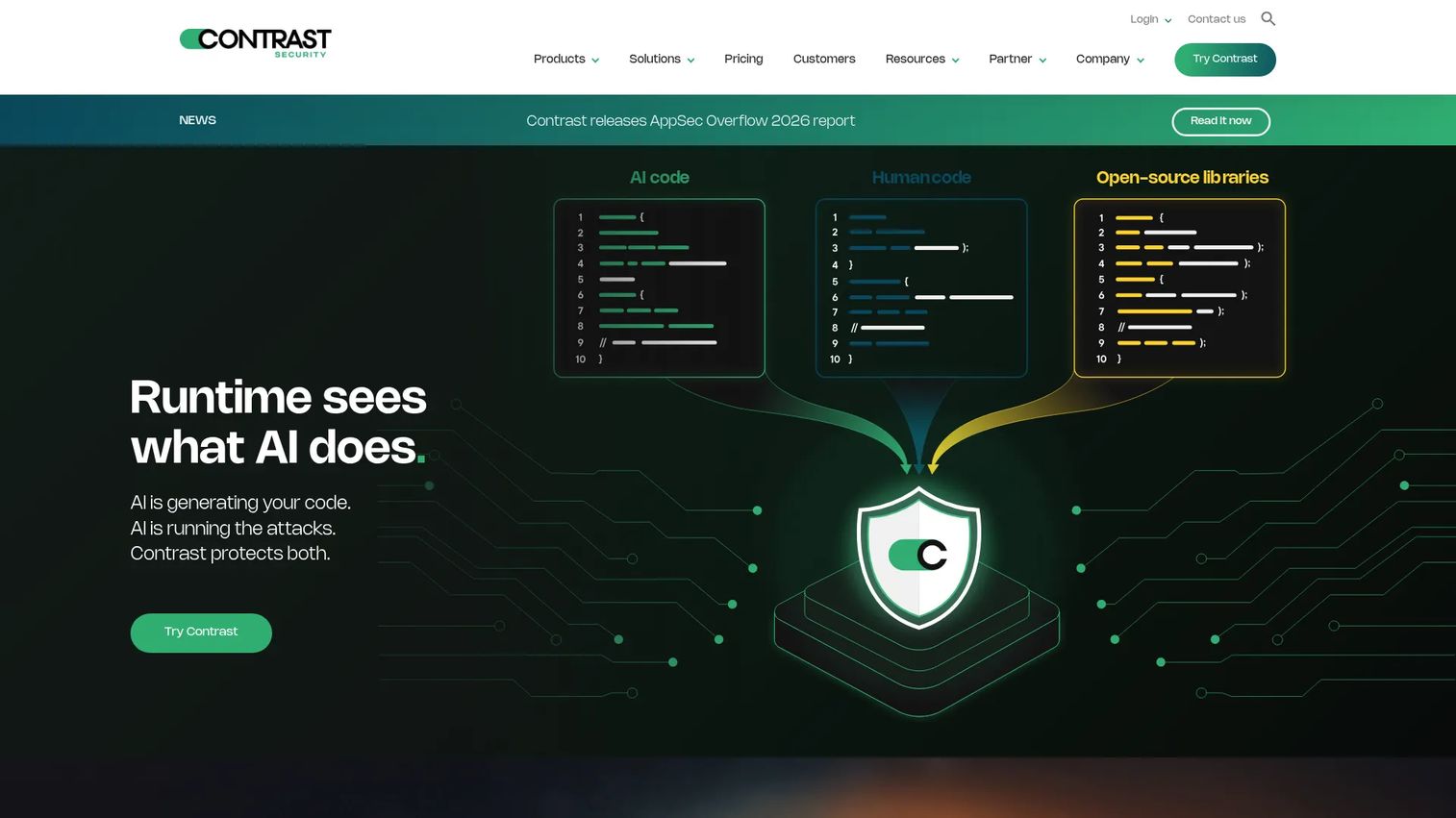
Contrast Protect is a dedicated runtime application protection product designed to detect, monitor, and block attacks against production applications and APIs. The platform instruments applications to observe execution context, then enforces configurable protect rules for attack classes including SQL injection, command injection, cross-site scripting, expression-language injection, and JNDI injection. IP denylists, allowlists, and virtual patching are available without requiring application code changes.
Best for: Product and security teams managing a portfolio of web applications and APIs that need runtime visibility paired with configurable blocking controls.
Key features
- Runtime attack monitoring and blocking across production applications
- Protect rules for SQL injection, command injection, XSS, EL injection, JNDI injection
- IP denylists and allowlists with source-name management
- Virtual patches without application code changes
- Application-layer threat intelligence across request flows
Why choose Contrast Protect: Contrast is a good fit for organizations that want purpose-built RASP capabilities and security instrumented directly into the application. Teams that need a dedicated security program around runtime context rather than a bolt-on to an observability platform will find this model cleaner to operate.
Contrast Protect pricing: A free CVE Shield monitoring tier covers up to two applications. The Pro plan runs $750 per month billed annually and covers monitoring and blocking for up to eight applications. Enterprise pricing requires a conversation with sales and includes broader integrations, compliance reporting, RBAC, and SAML SSO.
G2 rating: 4.5/5 (verified October 2026 from the Contrast Security G2 listing).
What to validate: Confirm supported language runtimes, agent deployment method for your container or application server setup, SIEM integration options, and how findings map back to service ownership in your incident workflow.
2. Imperva RASP
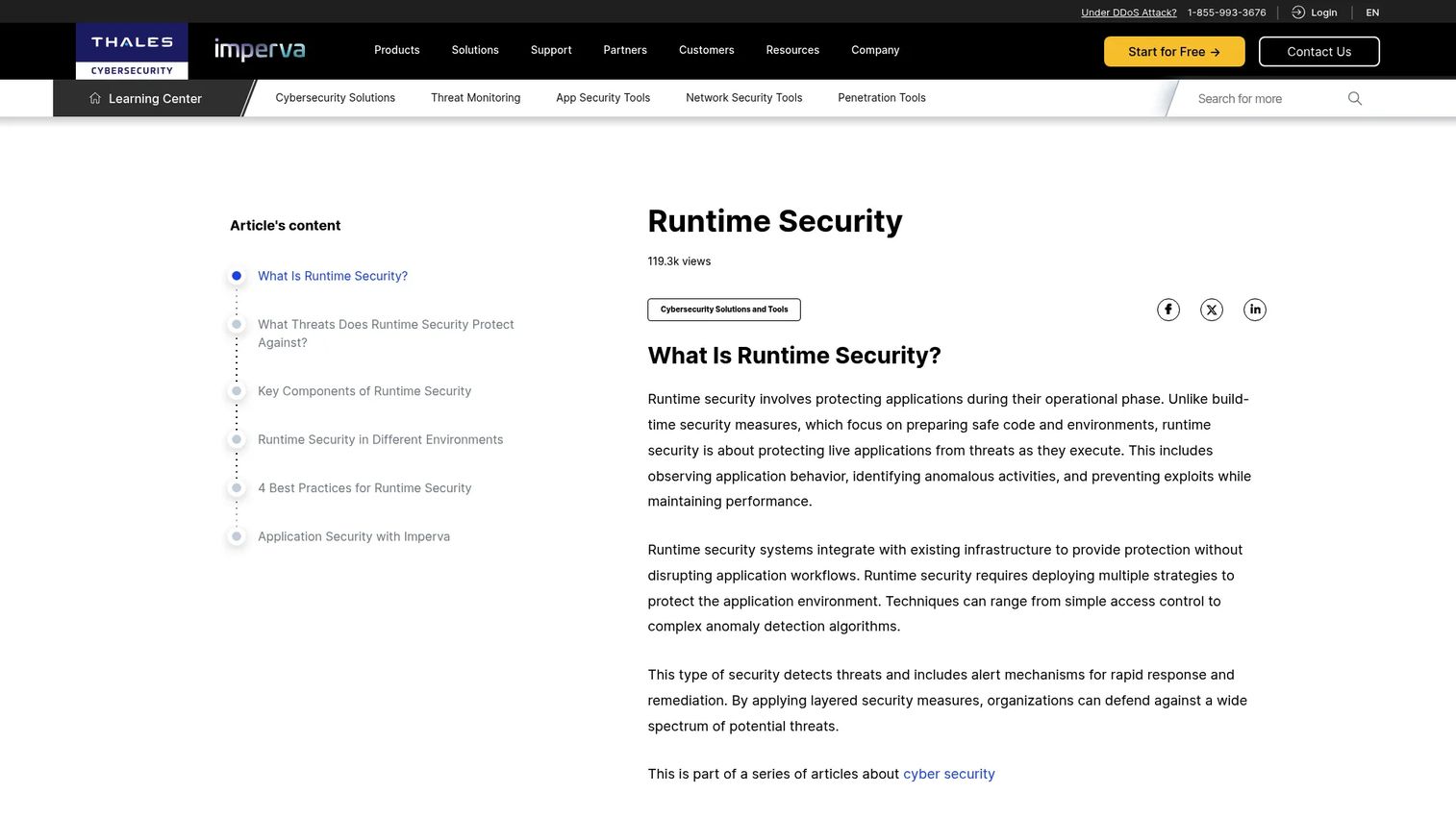
Imperva RASP embeds security directly within the application runtime to detect and neutralize attacks, including zero-day exploits, without relying on signature updates. The product uses Language Theoretic Security (LANGSEC) to validate input at the code level, providing protection across on-premises, cloud, and containerized deployment environments. It deploys through existing build pipelines as a plugin and requires no network calls, keeping the instrumentation self-contained within the application.
Best for: Organizations with mature web application and API security programs that want runtime protection alongside existing WAF or edge controls.
Why choose Imperva RASP: Imperva is a natural fit when your organization already evaluates Imperva's broader application security portfolio. The plugin-based deployment model suits teams that prefer to keep runtime instrumentation inside the build pipeline rather than managing a separate agent infrastructure.
Key features
- Plugin-based deployment through existing build pipelines
- Zero-day protection using Language Theoretic Security (LANGSEC)
- Coverage across on-premises, cloud, and container environments
- Protection for original application code and third-party dependencies
- Out-of-the-box attack reporting and context
Imperva RASP pricing: Imperva does not display numeric pricing on its product pages. Contact Imperva sales for a quote. G2 reviewers rate the product at 5.0/5 from two verified reviews, and the product page reflects enterprise packaging.
G2 rating: 5.0/5 (verified October 2026 from the Imperva RASP G2 listing).
What to validate: Check the runtime support matrix for your specific language versions, confirm how the plugin integrates with your container build process, and clarify ownership between your AppSec team and infrastructure team during rollout.
3. Aikido Zen
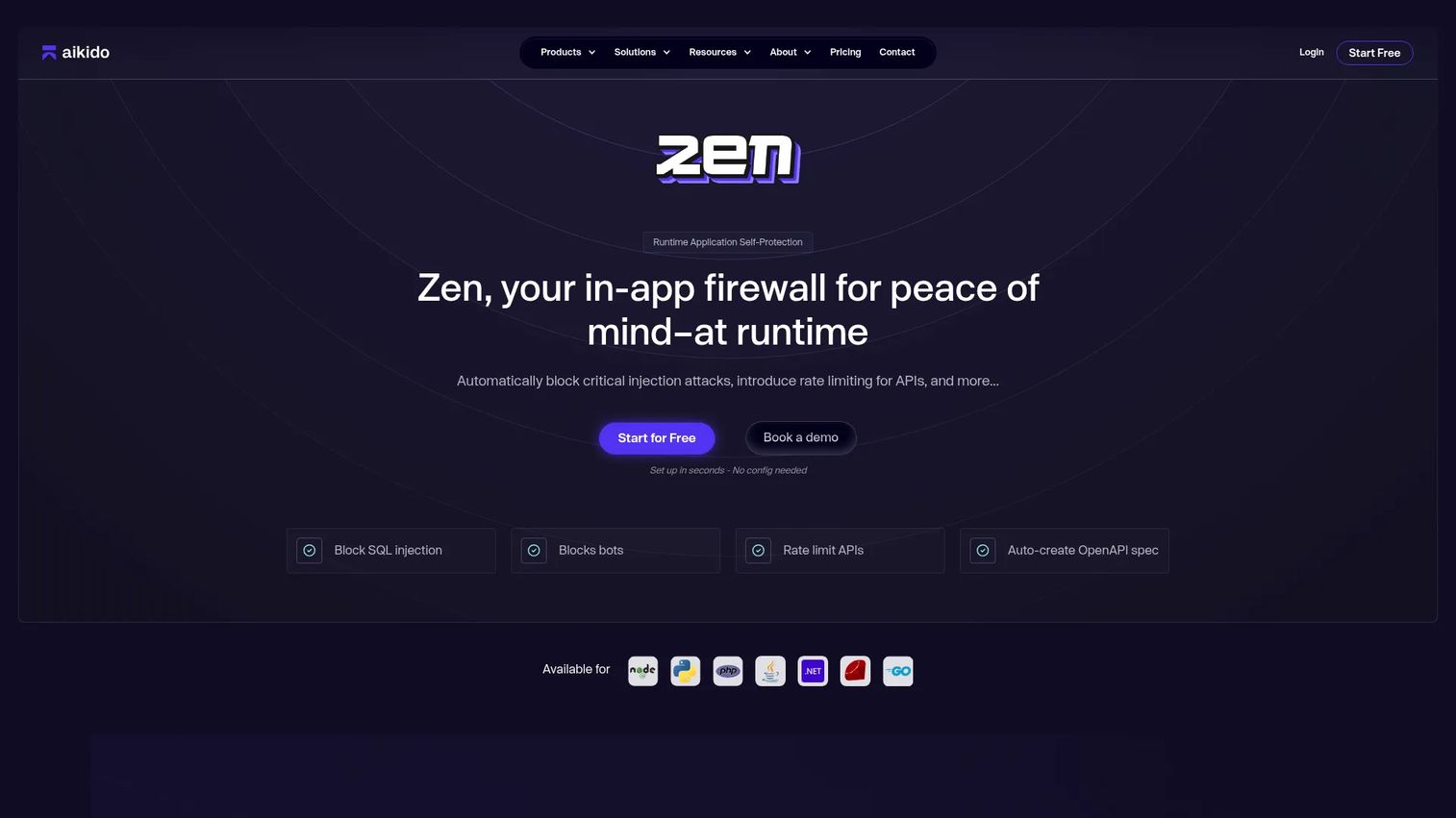
Aikido Zen is an open-source embedded in-app firewall that provides runtime protection against injection attacks, abusive API traffic, and other application threats. It installs directly into the application and blocks attacks without external WAF rules or network inspection. Capabilities include SQL and NoSQL injection prevention, bot and Tor blocking, user-aware API rate limiting, automatic API discovery, AI and LLM usage monitoring, and IDOR protection.
Best for: Developer-focused teams that want security controls embedded close to application code and want to avoid maintaining external WAF rule sets.
Key features
- SQL and NoSQL injection prevention at the application layer
- User-aware API rate limiting and traffic controls
- Bot, Tor, and known-threat-actor blocking
- Automatic OpenAPI and API discovery
- IDOR protection and AI/LLM usage monitoring
Why choose Aikido Zen: Zen is a strong option when the engineering team wants to own runtime protection through the application itself rather than a separate infrastructure layer. The open-source model lowers the barrier to evaluation, and the API-aware controls are useful for teams whose primary attack surface is an API-heavy product.
Aikido Zen pricing: Zen is open source and free to install. The Aikido Protect suite, which includes Zen alongside broader security capabilities, is priced on a quote basis. Contact Aikido for commercial packaging details.
G2 rating: 4.6/5 (verified October 2026 from the Aikido Security G2 listing).
What to validate: Confirm supported languages and runtime versions, review the API abuse coverage relative to your specific threat model, and assess whether the open-source version covers your enterprise governance requirements or whether the Protect suite is needed.
4. Datadog App and API Protection
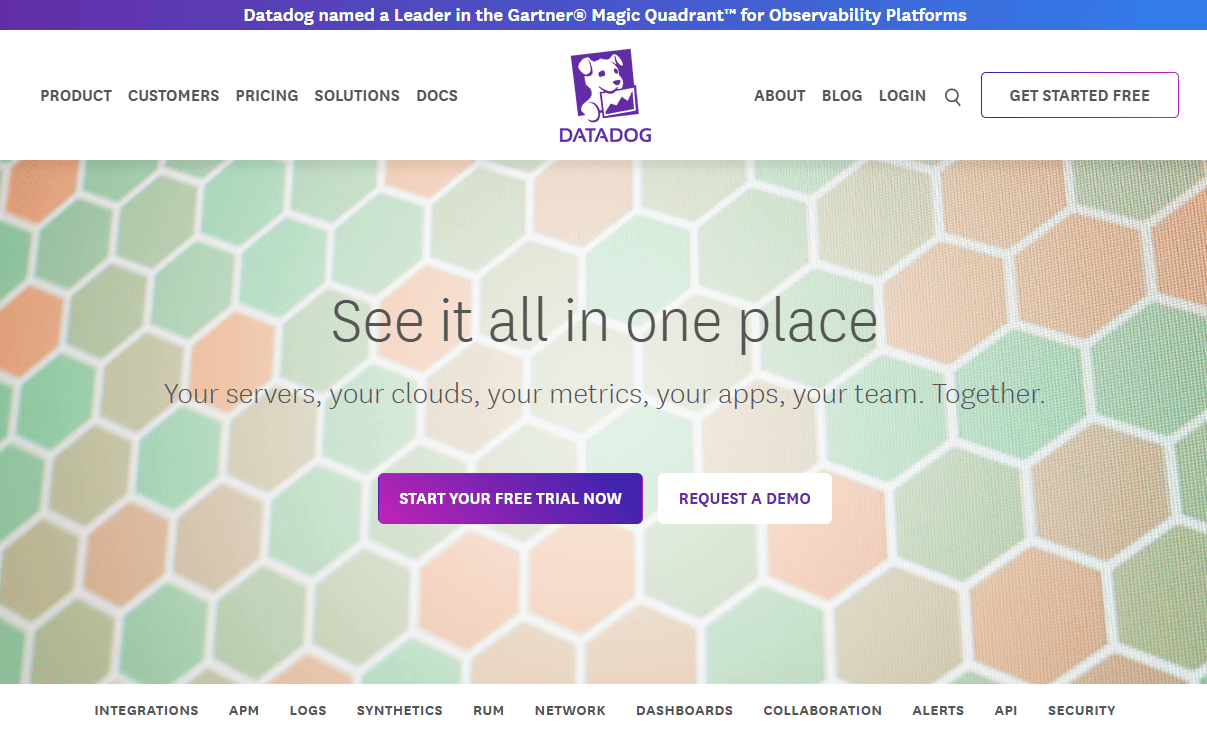
Datadog App and API Protection integrates RASP-powered exploit prevention directly into Datadog's APM and observability platform. The product provides API discovery and posture management, real-time runtime threat detection, in-app WAF capabilities, and blocking of malicious IPs, users, or requests. Security findings are correlated with APM traces, giving teams a single surface for investigating attacks alongside application performance data.
Best for: Security and DevOps teams already operating from Datadog who want runtime protection without switching context to a separate security tool.
Key features
- RASP-powered exploit prevention linked to APM trace context
- API discovery and posture management for undocumented or permissive endpoints
- Real-time detection of injection attacks, account takeover, and API abuse
- In-app WAF with blocking controls
- Unified threat and performance investigation in existing Datadog dashboards
Why choose Datadog App and API Protection: The primary argument for this tool is operational consolidation. If your SRE and engineering teams already live in Datadog, adding runtime protection in the same environment reduces the coordination overhead between security and engineering during an incident.
Datadog App and API Protection pricing: $31 per AAP host per month billed annually. Month-to-month and on-demand billing are available at $36 per AAP host per month. Separate pricing applies for Fargate and serverless coverage. Costs grow as the number of instrumented hosts increases.
G2 rating: 4.4/5 (verified October 2026 from the Datadog G2 listing).
What to validate: Model the host count across services you plan to instrument, confirm tracer support for your language stack, and check whether your APM instrumentation already satisfies the prerequisites for App and API Protection or requires additional configuration. See also our guide to application performance monitoring tools for context on Datadog's broader observability positioning.
5. Dynatrace Runtime Application Protection
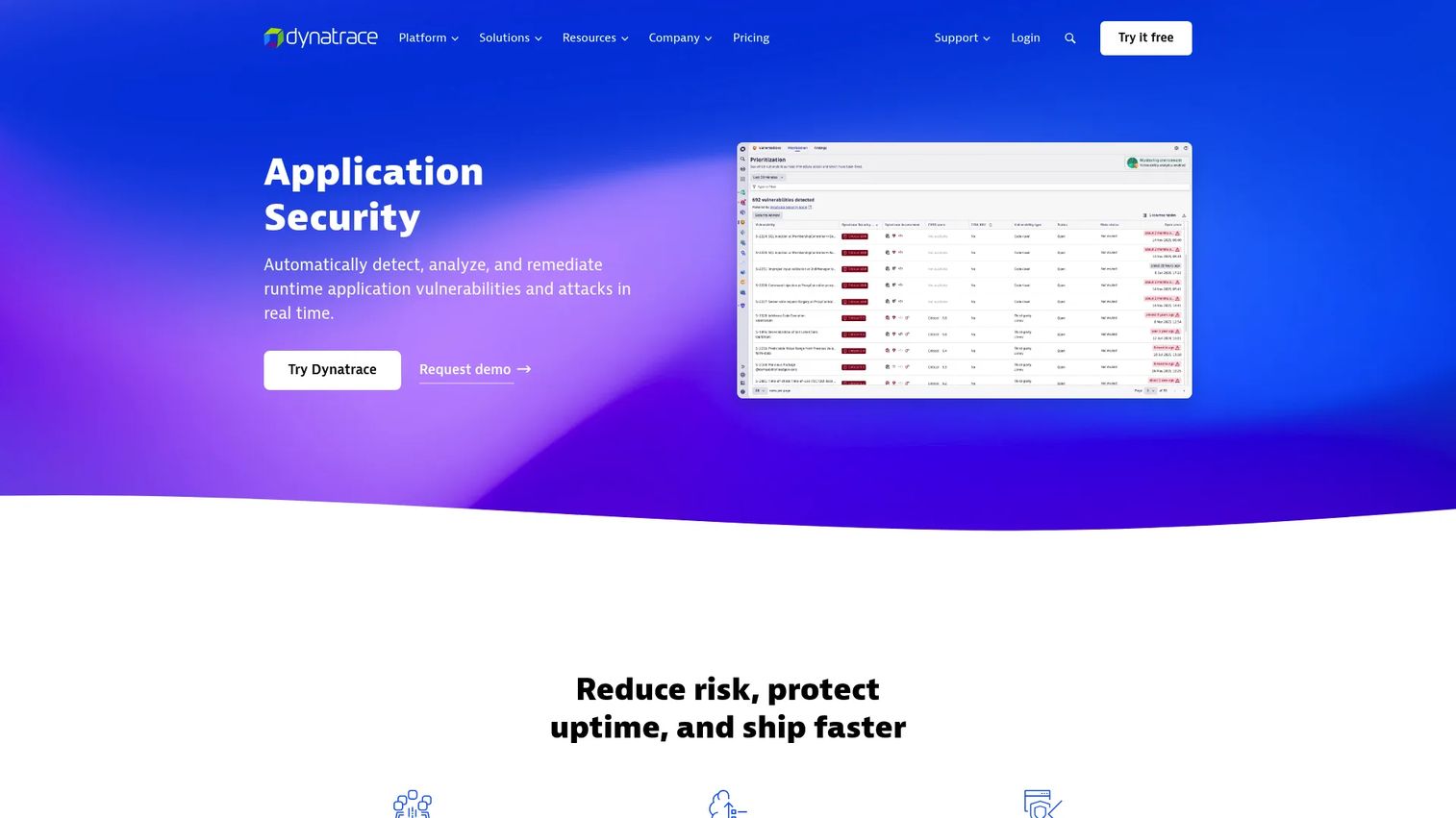
Dynatrace Runtime Application Protection delivers code-level attack detection and configurable blocking using OneAgent and transaction analysis. The product detects SQL injection, JNDI injection, command injection, and SSRF attacks at the code level, with automatic blocking available once configured. Coverage extends to web applications and APIs, with a performance footprint designed for production environments.
Best for: Organizations already relying on Dynatrace observability that need application security signals tied directly to production service behavior.
Key features
- Code-level detection of SQL injection, JNDI injection, command injection, SSRF
- Configurable monitor mode and block mode per attack class
- OneAgent integration for code-level visibility
- Transaction analysis linking security events to service context
- Production-ready performance footprint
Why choose Dynatrace Runtime Application Protection: Like Datadog's offering, the strongest case here is operational alignment. Teams that use Dynatrace for observability, performance, and service dependency mapping gain attack detection in the same context. The monitor-to-block workflow is well defined, which helps PMs structure a phased rollout with engineering.
Dynatrace Runtime Application Protection pricing: Available as an Application Security capability under Dynatrace commitment-based pricing. The list rate is $13 per month per 8 GiB host, calculated at $0.00225 per memory-GiB-hour.
G2 rating: 4.5/5 (verified October 2026 from the Dynatrace G2 listing).
What to validate: Confirm OneAgent deployment coverage for your services, review deep monitoring prerequisites for the specific language versions you run, understand restart requirements during agent rollout, and model total cost against your current host memory footprint.
6. Waratek
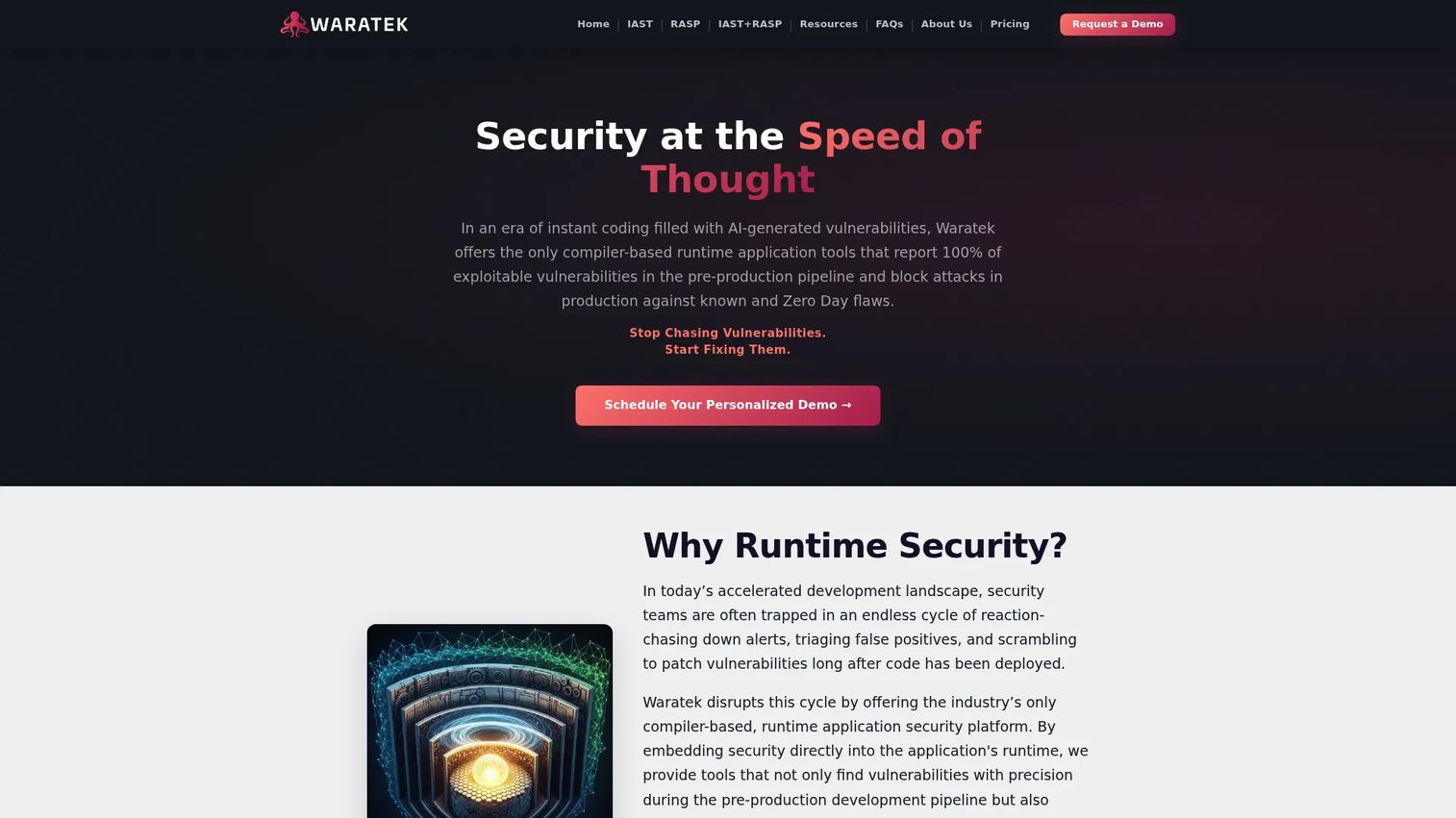
Waratek provides compiler-based runtime application security for Java and .NET environments, combining IAST for vulnerability detection in test with RASP for blocking in production. The platform protects against known CWEs, zero-day vulnerabilities, and AI-driven attacks without requiring source code changes or application downtime. It is particularly relevant for organizations with large Java estates, legacy JVM workloads, or critical applications where code changes carry high risk.
Best for: Security and platform engineering teams protecting Java or .NET applications that need runtime defense alongside vulnerability detection in a single platform.
Key features
- Compiler-based IAST with runtime analysis for pre-production vulnerability detection
- RASP with real-time attack blocking and virtual patching in production
- Protection against known CWEs, zero-day attacks, and AI-driven threats
- No source code changes or application downtime required
- Coverage for Java and .NET runtimes
Why choose Waratek: The combination of IAST and RASP in one platform is the key differentiator. PMs managing Java-heavy portfolios can use Waratek to connect pre-production vulnerability findings to production runtime protection without managing two separate vendor relationships. For teams evaluating AI software testing tools alongside runtime protection, Waratek's IAST capability is worth including in that evaluation.
Waratek pricing: The Team IAST plan starts at $2,499 per month, with additional applications costing $833 per month each (up to two). Enterprise IAST pricing is custom. RASP pricing for open-source and closed-source applications is available on request. A free trial is available for the Starter plan.
G2 rating: 4.7/5 (verified October 2026 from the Waratek G2 listing).
What to validate: Confirm supported Java and .NET versions, check application server compatibility for your deployment environment, understand restart behavior during agent initialization, and clarify whether IAST and RASP are separately licensed or bundled in your target plan.
7. Appdome
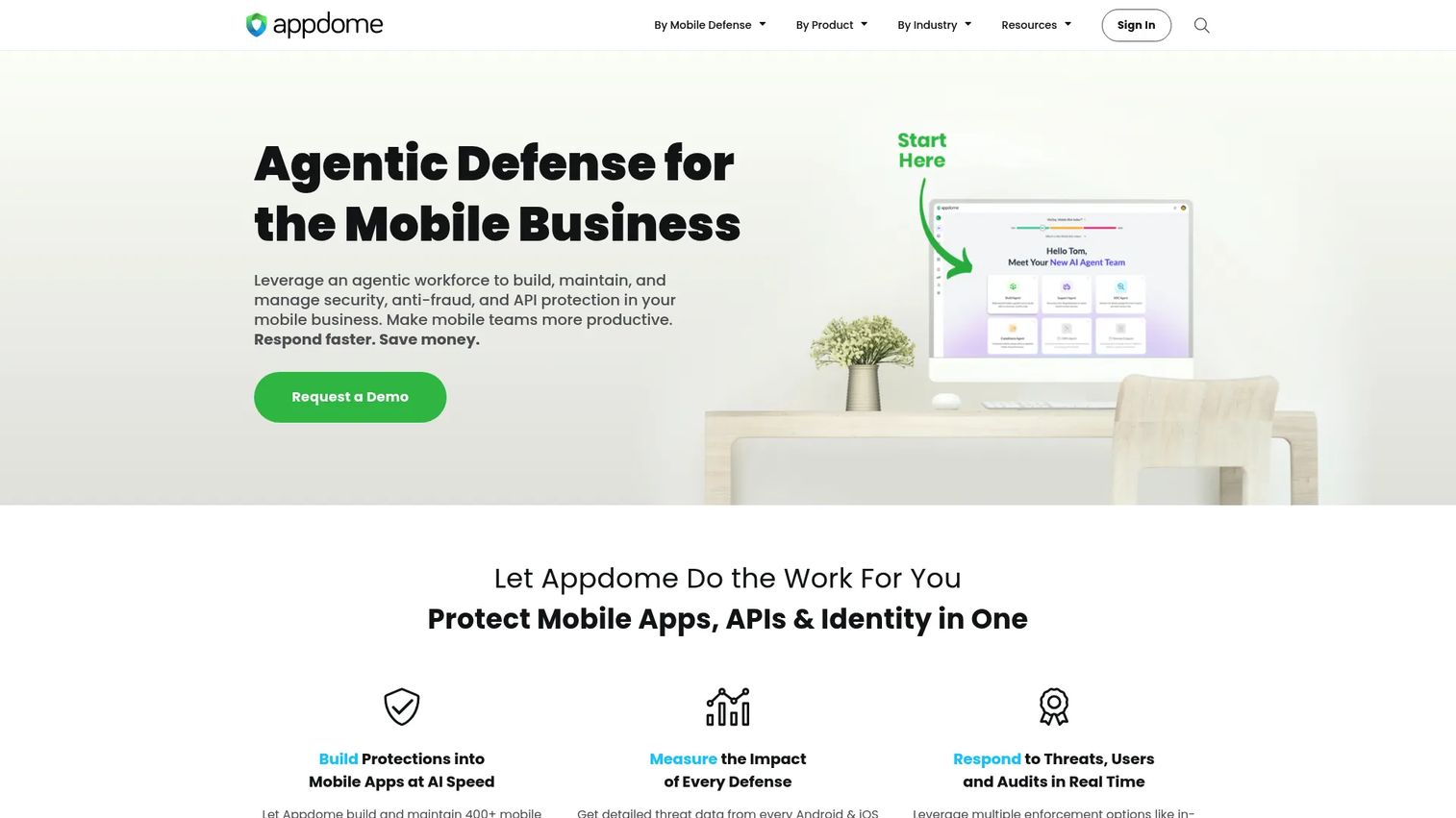
Appdome is an agentic platform that automates mobile app security, including RASP protection, fraud prevention, bot defense, and API protection for Android and iOS applications. The product is embedded into mobile CI/CD pipelines without SDK integration or code changes. The threat intelligence layer, ThreatScope, surfaces real-time attack data through Threat-Events, allowing mobile product teams to monitor and respond to threats across their deployed app population.
Best for: Enterprise mobile product teams that need continuously maintained security defenses embedded into Android and iOS release pipelines.
This is the right tool when the primary attack surface is the mobile application binary, not the server or API layer. Mobile RASP addresses threats like runtime tampering, hooking, reverse engineering, and patching attacks that server-side RASP tools are not designed to handle. Confusing the two coverage areas is a common evaluation mistake.
Key features
- Automated RASP and app shielding for Android and iOS
- Anti-fraud, anti-bot, anti-malware, and account-takeover defense
- Mobile API protection with app, device, and session attestation
- ThreatScope threat intelligence with Threat-Events real-time data
- No-code, no-SDK CI/CD integration
Why choose Appdome: Appdome is the natural choice when your threat model centers on the distributed mobile client, including hooking frameworks, tampered binaries, and device-level abuse. The no-code CI/CD integration is a meaningful advantage for mobile teams who want security embedded in the release process without requiring SDK work from engineering. For teams also evaluating attack surface management software, Appdome's mobile API attestation addresses a different layer of that surface.
Appdome pricing: Appdome offers three packages: GO, SRM, and DEV. Numeric pricing requires a quote request. A 30-day free trial is available on the official product page.
G2 rating: 4.8/5 (verified October 2026 from the Appdome G2 listing).
What to validate: Confirm how Appdome integrates with your specific CI/CD toolchain (Android and iOS build steps), review policy configuration ownership between security and mobile engineering, and clarify which RASP controls are included in your target package versus available as add-ons.
Considerations when choosing RASP security tools
Match the tool to your actual attack surface
A mobile RASP product does not address server-side API exploitation. A Java-focused runtime agent will not cover a Python or Go service. Before vendor demos, document the programming languages, framework versions, container platforms, and service ownership across the applications you plan to instrument. Mismatching a tool to the wrong surface wastes evaluation time and delays rollout.
Build a monitor-mode baseline before enabling blocking
Enable blocking only after you have collected baseline detection data, reviewed alert quality with engineering, confirmed exception policies, and documented rollback procedures. A phased rollout by service or by attack class is more manageable than a portfolio-wide block mode activation. PMs should plan this as a formal rollout milestone, not an automatic follow-on to installation.
Verify runtime and framework support before shortlisting
Request the vendor's support matrix for your language versions, application server configurations, and container runtime before proceeding to a proof of concept. Missing runtime support discovered late in an evaluation is a common source of delay and renegotiation.
Model operating cost beyond the license
Usage-based pricing (per host, per service, per application) scales with the breadth of your instrumentation. Factor in agent operations, observability platform dependencies for tools like Datadog and Dynatrace, alert triage time, and the engineering capacity required to complete the rollout. The license cost is often the smaller number.
Connect runtime findings to existing remediation workflows
RASP evidence becomes more actionable when it reaches your ticketing system, SIEM, incident management platform, and service ownership mapping. Evaluate whether each vendor supports the integrations your team already uses for breach and attack simulation software and security operations workflows before committing.
How to choose the right RASP security tool for your team
Choose a purpose-built application security platform for broad server-side coverage
Contrast Protect and Imperva RASP suit organizations that need a dedicated runtime security program across web applications and APIs. Both are designed specifically for this job rather than packaging RASP alongside a broader observability product. Contrast's transparent pricing and free tier make it easier to start an evaluation without a sales engagement.
Choose observability-integrated runtime protection when telemetry drives your operations
Datadog App and API Protection and Dynatrace Runtime Application Protection work best when security, SRE, and engineering already operate from those platforms. The value is in the shared context: Attack events correlated with APM traces in the same dashboard your team already uses. The tradeoff is that cost grows with host count, so model that before committing.
Choose embedded developer-facing protection for API-heavy applications
Aikido Zen is a fit for teams that prefer security instrumented at the application layer through the build, without a separate agent infrastructure. The open-source model makes it easy to evaluate before any commercial conversation. For teams building in Python, Node, or Ruby with API-first architectures, Zen's rate limiting and injection prevention are directly relevant.
Choose specialized coverage for Java, .NET, or mobile
Route Java and .NET organizations to Waratek, especially if combining pre-production vulnerability detection with production runtime blocking is a priority. Route Android and iOS product teams to Appdome. Neither tool crosses over effectively to the other's domain, so the runtime environment is the clearest decision signal here.
Build a one-page requirements matrix before scheduling technical demos. Include supported runtimes, deployment model, monitor-to-block workflow, alert routing, and estimated coverage scope. That document will sharpen vendor conversations and give engineering a clear input for effort estimation.
Conclusion
RASP security covers distinct ground depending on the application environment. For broad web application and API protection, Contrast Protect offers a purpose-built platform with a free entry tier. Imperva RASP suits teams consolidating runtime protection within a broader AppSec program. Aikido Zen brings developer-embedded protection with open-source flexibility.
For teams operating inside observability platforms, Datadog App and API Protection ties runtime blocking to APM trace context, while Dynatrace Runtime Application Protection delivers code-level detection for OneAgent users. Waratek addresses Java and .NET environments with a combined IAST-plus-RASP model. Appdome stands alone as the choice for mobile attack surfaces.
The right starting point is the applications you own, the runtimes they run on, and the observability stack your team already uses. From there, define the monitor-mode baseline before any blocking conversation, and make sure findings have a clear path into your incident and remediation workflows.
For additional context on the broader security tooling landscape, see our guides on best AI cybersecurity solutions, best endpoint protection software, and best AI security posture management tools.
Start your journey with Guideflow today!
FAQs
RASP security, short for Runtime Application Self-Protection, is a class of application security technology that observes application behavior during execution to detect and potentially block attacks. Unlike perimeter controls, RASP operates inside or alongside the running application, so it can see whether an attack reaches a vulnerable code path rather than only whether it arrives at the network boundary. It complements other AppSec controls rather than replacing them.
A WAF inspects HTTP traffic at the edge or gateway using request patterns and rules, without knowing what happens once a request enters the application. RASP uses internal application context, so it can detect whether a request actually reaches a sensitive operation like a database query or shell command. Many organizations deploy both controls: The WAF provides broad HTTP filtering, while RASP adds code-level validation for exploitation attempts that pass through.
No. SAST analyzes source code during development to find potential vulnerabilities before release. DAST probes a running application from outside in test or staging environments. IAST instruments the application during test execution to identify weaknesses as tests run. RASP's role is runtime detection and protection in production, not pre-production weakness discovery. The controls work best in combination across the software development lifecycle.
Monitor mode first, for most production rollouts. Teams should use the monitoring period to validate detection quality, confirm that alerts are reaching the right owners, identify any false positives in business-critical flows, and document rollback procedures. Moving to blocking without that baseline risks disrupting legitimate traffic. A service-by-service or attack-class-by-attack-class activation is safer than enabling blocking across all services simultaneously.
Common categories include SQL injection, command injection, SSRF, file inclusion, cross-site scripting, and exploitation attempts targeting vulnerable code paths or third-party dependencies. Mobile RASP also addresses tampering, hooking, and patching attacks specific to mobile binaries. Coverage varies meaningfully by product and runtime, so reviewing each vendor's supported attack classes against your threat model is an important validation step.
Performance impact depends on the specific product, the instrumented runtime, the traffic profile of the application, and which protections are enabled. Agent-based instrumentation adds overhead at the point of inspection. Most vendors design for production-grade performance, but teams should run performance testing during a controlled rollout in staging before enabling RASP in production. Do not assume published benchmarks reflect your specific application and load characteristics.
Yes, provided the product supports the application runtime and deployment environment. Teams should verify whether the vendor supports their container image format, agent sidecar or init-container deployment patterns, and orchestration platform before evaluating further. Serverless environments carry specific compatibility requirements that vary by vendor and runtime.
Start by gathering input from AppSec, platform engineering, SRE, and service owners. The evaluation should cover supported runtimes for your specific language versions, the deployment model and its engineering prerequisites, the monitor-to-block workflow and rollback options, alert routing into existing SIEM or ticketing systems, the total operating cost across all services you plan to instrument, and how the vendor's reporting maps to the security evidence your customers or auditors expect. For teams tracking broader application health alongside security, application performance monitoring tools and API testing tools guides may also inform the evaluation stack.