Your product ships weekly. Your access model is still built around a network perimeter that stopped making sense when your first contractor logged in from a coffee shop.
That gap is expensive. According to the Ponemon Institute (2024), 61% of organizations have begun adopting zero trust, but only 18% have implemented all its principles. The organizations stuck in the middle carry the worst of both worlds: The operational overhead of a legacy access model and the attack surface of a distributed workforce.
Zero trust software changes the equation by verifying every access request based on identity, device health, and contextual signals, rather than assuming anything inside the network is safe. For product managers, the stakes are concrete: Failed security reviews slow enterprise deals, weak access controls create compliance gaps, and the wrong tooling forces your engineering team into months of custom work.
This guide compares 14 zero trust software products across ZTNA, identity, SASE, endpoint, cloud access, and privileged access, so you can shortlist the right layer for your architecture without reading a dozen vendor websites.
What's inside
This guide is for product managers, platform leads, and security-adjacent PMs evaluating zero trust tools, whether you're preparing for an enterprise security review, replacing VPN access, or reducing privileged account risk.
Selection criteria:
- Identity and access depth: SSO, MFA, conditional access, lifecycle management
- ZTNA and network controls: Private app access, microsegmentation, network-level enforcement
- Endpoint and device posture: Device health signals, endpoint protection, risk-based access
- Cloud, SaaS, and workload coverage: CASB, secure web gateway, cloud workload controls, privileged access
Pricing and G2 ratings are drawn from vendor pricing pages and G2 listings.
TL;DR
- Best for enterprise SASE: Zscaler handles ZTNA, secure internet access, and cloud security at large scale through a mature cloud-delivered platform
- Best for Palo Alto environments: Palo Alto Networks Prisma Access extends existing Palo Alto security controls into cloud-delivered access
- Best for identity-first Zero Trust: Okta starts at $6/user/month and covers SSO, adaptive MFA, and lifecycle management; Microsoft Entra is the natural pick for Microsoft-standardized orgs
- Best for cloud-first private access: Cloudflare Zero Trust offers a free plan for teams under 50, with paid tiers from $7/user/month
- Best for privileged access: CyberArk covers PAM, secrets management, and machine identity controls for high-risk accounts
- Best for lightweight ZTNA: Twingate starts at $5/user/month and replaces VPN access with resource-level controls without broad network exposure
- Best for endpoint-driven Zero Trust: SentinelOne Singularity starts at $179.99/year per endpoint and ties endpoint telemetry directly into identity and threat response
What is zero trust software?
Zero trust software is security software that continuously verifies users, devices, applications, and workloads before granting access, instead of trusting anything by default because it sits inside a network perimeter.
The model rests on three core principles defined in NIST SP 800-207:
- Verify explicitly: Every access request is authenticated and authorized based on identity, device health, location, and session risk
- Use least privilege: Access grants are scoped to the minimum required for the task, reducing lateral movement risk
- Assume breach: Systems are designed with the assumption that an attacker may already be present, so segmentation and monitoring limit damage
Zero trust is an operating model, not a single tool. Most organizations implement it in layers across identity, devices, networks, applications, and data.
Key capabilities to evaluate:
- Zero trust network access (ZTNA) for private application access without VPN
- Identity and access management with SSO and adaptive MFA
- Conditional access based on device posture and contextual risk
- Secure web gateway (SWG) and cloud access security broker (CASB)
- Data loss prevention (DLP) across SaaS, web, and cloud
- Privileged access management (PAM) for admin accounts and machine identities
- Network segmentation and microsegmentation
- Cloud and workload access governance
- Analytics, logging, and continuous threat detection
The CISA Zero Trust Maturity Model organizes these layers across five pillars: Identity, devices, networks, applications, and data. That framework is a useful map for checking where your current stack has gaps before shortlisting tools.
When to use zero trust software
Replace VPN access for private applications
When your team needs to access internal tools, development environments, or customer-facing infrastructure from distributed locations, ZTNA gives you resource-level controls without the broad network exposure of a VPN. This is especially relevant for engineering teams, contractors, and hybrid workforces who need scoped access to specific services rather than full network presence.
Reduce friction during enterprise security reviews
Enterprise buyers increasingly ask for evidence of identity controls, device posture enforcement, and privileged access governance before signing. Zero trust tools generate the audit logs, conditional access policies, and access review documentation that answer those questions. For PMs managing enterprise readiness, the right zero trust layer directly shortens security review cycles.
Protect cloud, SaaS, and workload access
Human users are only part of the access problem. Service accounts, API keys, CI/CD pipelines, and machine identities all create risk that perimeter-based controls miss entirely. Zero trust platforms with CASB, workload identity controls, and secrets management address the non-human identity surface that grows with every new integration your product ships.
Zero trust software comparison
The table below positions each tool by its strongest Zero Trust layer. No single tool completes a full Zero Trust program, so use this as a shortlisting filter rather than a final decision.
| # | Product | Best for | Key differentiator | Pricing | G2 rating |
|---|---|---|---|---|---|
| 1 | Zscaler | Enterprise SASE and ZTNA | Cloud-native Zero Trust Exchange for users, apps, and internet traffic | Custom pricing | 4.5/5 |
| 2 | Palo Alto Networks Prisma Access | Palo Alto security environments | Cloud-delivered ZTNA, SWG, CASB, and firewall controls | Custom pricing | 4.3/5 |
| 3 | Okta | Identity-first Zero Trust | Workforce identity, adaptive MFA, SSO, and lifecycle management | From $6/user/month | 4.5/5 |
| 4 | Cloudflare Zero Trust | Cloud-first edge security | Global edge network with access, gateway, DLP, and browser isolation | Free; paid from $7/user/month | 4.6/5 |
| 5 | SentinelOne Singularity | Endpoint-driven Zero Trust | Endpoint, identity, and threat telemetry in one platform | From $179.99/yr per endpoint | 4.7/5 |
| 6 | Cisco Secure Access | Cisco-standardized enterprises | Unified access and security policy for Cisco environments | Custom pricing | 4.3/5 |
| 7 | Microsoft Entra | Microsoft-native identity and access | Conditional access, identity protection, and private access | Free; paid from $7/user/month | N/A |
| 8 | Fortinet | Network-heavy environments | ZTNA tied to Fortinet fabric, firewall, and endpoint agents | Custom pricing | 4.4/5 |
| 9 | Netskope | Data-centric SSE | Strong SaaS, web, cloud, and data protection controls | From $10.59/user/year | 4.4/5 |
| 10 | CyberArk | Privileged access and identity security | PAM, secrets, workforce identity, and machine identity controls | Custom pricing | 4.5/5 |
| 11 | CrowdStrike | Endpoint and identity risk | Device, identity, and threat signals from endpoint telemetry | From $7.99/device/month | 4.7/5 |
| 12 | AWS Verified Access | AWS-native private access | Access to private apps using AWS identity and device context | Usage-based from $0.27/hour | 4.7/5 |
| 13 | Cato Networks | Converged SASE | Global private backbone with networking and security | Custom pricing | 4.5/5 |
| 14 | Twingate | Lightweight ZTNA | Resource-level private access without broad network exposure | Free; paid from $5/user/month | 4.6/5 |
Best 14 zero trust software tools for 2026
1. Zscaler
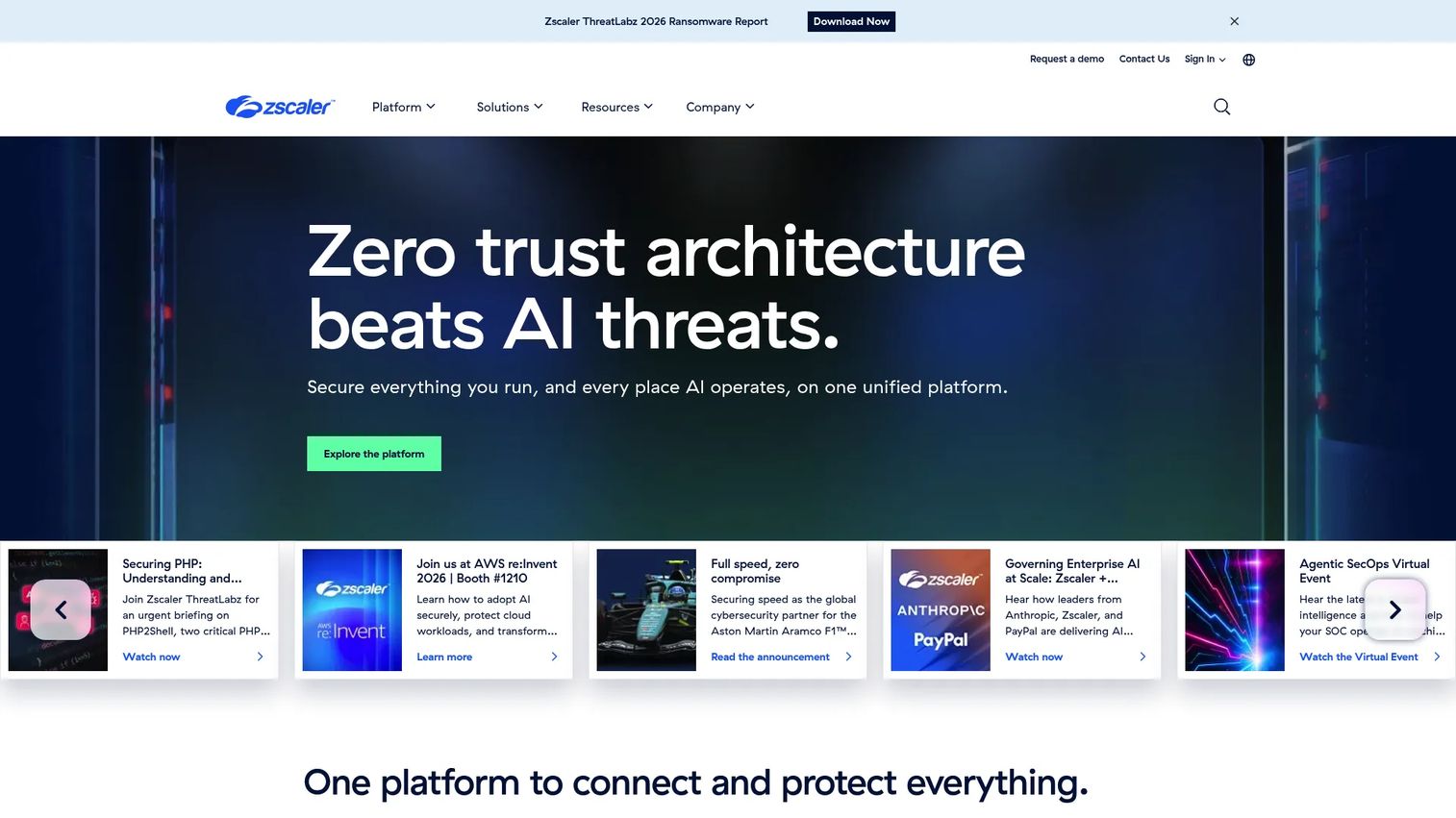
Zscaler is a cloud-native zero trust platform built around its Zero Trust Exchange, which routes all traffic through a global network of enforcement points rather than through a central data center. It covers ZTNA for private app access, secure internet access, cloud workload security, and digital experience monitoring. The platform suits large enterprises consolidating VPN replacement, secure web gateway, CASB, and data protection under one architecture.
Best for: Enterprises consolidating ZTNA, SWG, CASB, and data protection under a mature SASE model.
Key features
- Zscaler Private Access (ZPA): VPN-free private application access
- Zscaler Internet Access (ZIA): Secure internet and SaaS traffic inspection
- Zero Trust Firewall: Cloud-delivered network-level enforcement
- Cloud app control and CASB
- Data loss prevention across web and cloud
Why choose Zscaler: It fits large, distributed organizations that want to consolidate access and inspection through a proven cloud platform. Teams should plan for meaningful implementation effort, including policy design and app inventory, before rollout.
Zscaler pricing: Zscaler sells through Essentials Platform and Zscaler Platform bundles; the price depends on user count, deployment scale, and selected modules. Contact sales for a quote.
G2 rating: 4.5/5
2. Palo Alto Networks Prisma Access
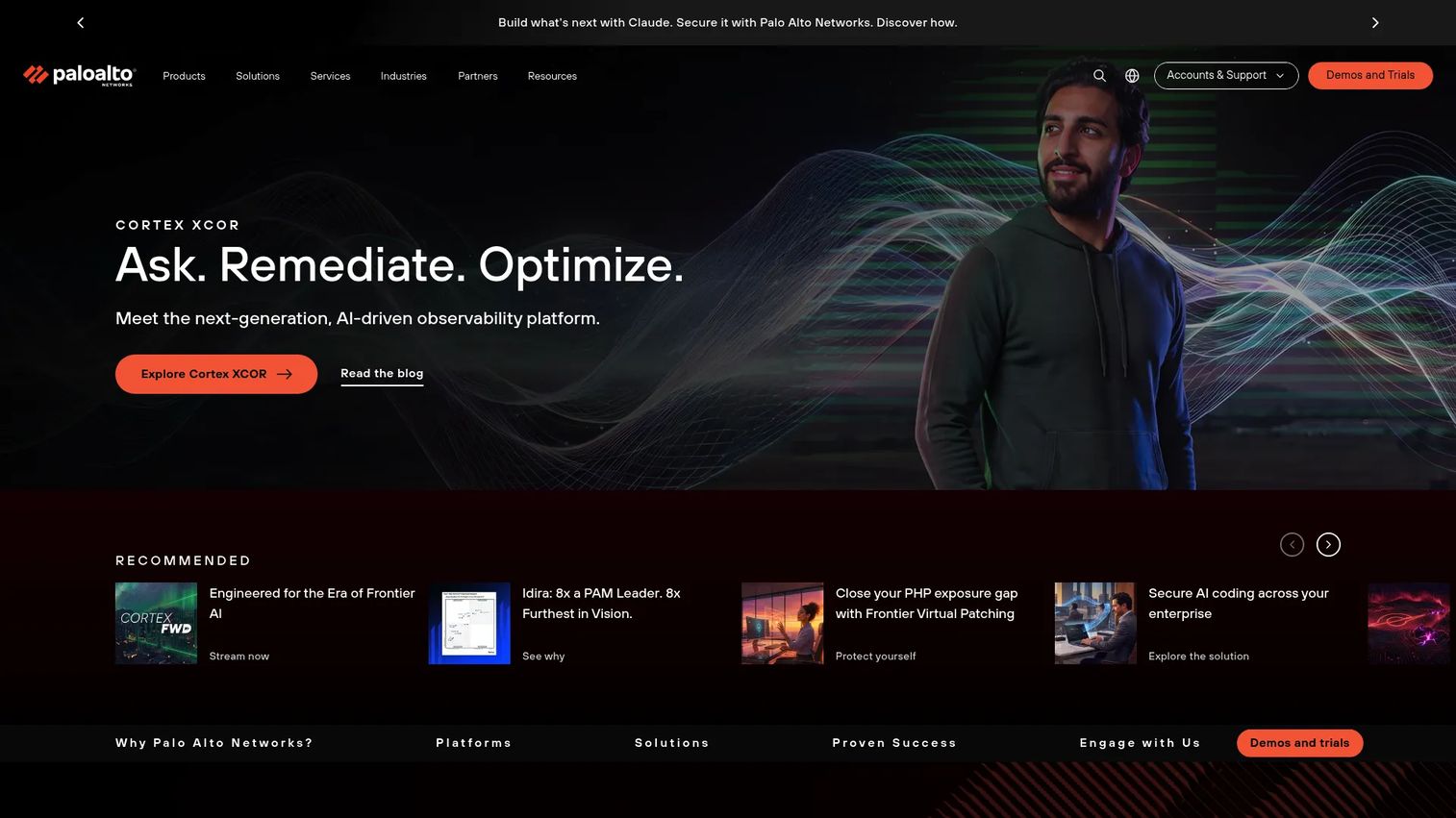
Palo Alto Networks Prisma Access is a cloud-delivered security platform that extends Palo Alto's firewall and threat prevention capabilities to remote users, branch offices, and mobile devices. It provides ZTNA for private apps, a secure web gateway, CASB controls, cloud-delivered firewall-as-a-service, and centralized policy management through Strata Cloud Manager. Organizations already running Palo Alto hardware firewalls get the most direct value, since policy and visibility share the same management plane.
Best for: Security teams standardizing around Palo Alto Networks that want cloud-delivered access and deep packet inspection.
Key features
- ZTNA Connector for private application access
- Cloud-delivered next-generation firewall and threat prevention
- Secure web gateway with URL filtering and SSL inspection
- CASB for SaaS visibility and control
- GlobalProtect for mobile user access
Why choose Palo Alto Networks Prisma Access: Deep inspection capabilities and a consistent policy model make it a strong fit for mature security teams with existing Palo Alto infrastructure. Teams without prior Palo Alto tooling will carry a steeper integration curve.
Palo Alto Networks Prisma Access pricing: License editions include Secure Web Gateway, ZTNA, and Enterprise tiers; contact sales for a quote.
G2 rating: 4.3/5
3. Okta
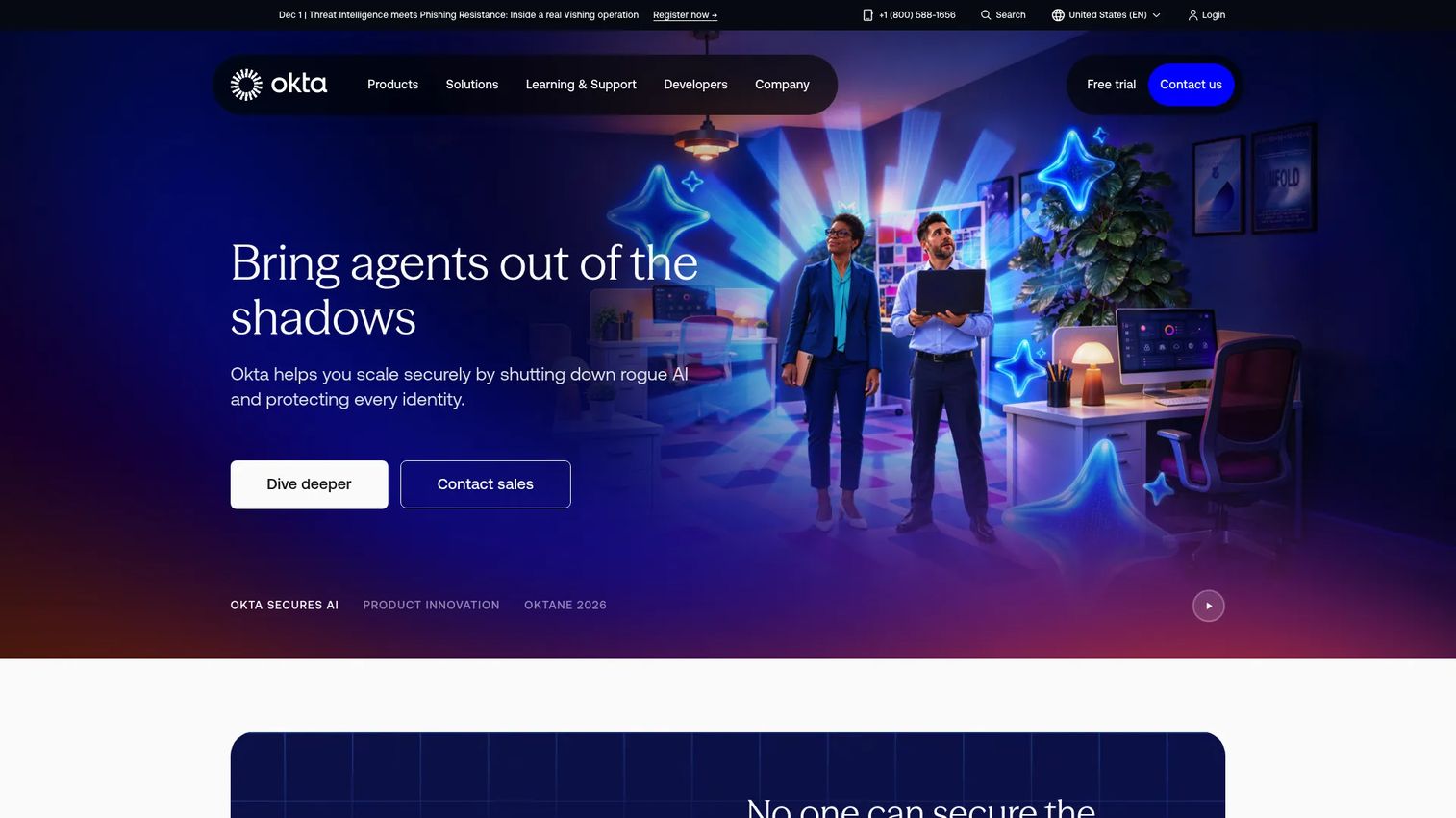
Okta is an identity platform covering workforce access, customer identity, and AI agent identity. Its Workforce Identity product provides SSO, adaptive MFA, lifecycle management, identity governance, and API access management. Okta integrates with thousands of applications and supports conditional access decisions based on device context, risk signals, and user attributes. For product and IT teams whose zero trust program starts with identity, Okta is frequently the first layer deployed.
Best for: Teams that need Zero Trust to begin with identity and authentication policy before expanding to network or endpoint controls.
Key features
- Single sign-on across cloud and on-premises apps
- Adaptive MFA with device context and risk signals
- Lifecycle management for user provisioning and deprovisioning
- Identity governance and access reviews
- API access management
Why choose Okta: It covers broad app integrations, strong MFA options, and clear per-user pricing, which makes budgeting predictable. Teams running SaaS-heavy environments benefit most from Okta's pre-built integrations.
Okta pricing: Workforce Identity starts at $6/user/month (Starter, billed annually). Core Essentials is $14/user/month; Essentials is $17/user/month. Professional and Enterprise tiers are priced on inquiry. A free Integrator plan covers up to 10 monthly active users in non-production environments.
G2 rating: 4.5/5
4. Cloudflare Zero Trust

Cloudflare Zero Trust is a cloud-first access and security platform delivered through Cloudflare's global edge network. It includes Cloudflare Access for ZTNA, a secure web gateway with DNS and HTTP filtering, browser isolation, CASB for SaaS visibility, DLP, and digital experience monitoring. The platform is well regarded for fast deployment and clear plan packaging, and it covers both smaller cloud-native teams and enterprise security programs through its contract tier.
Best for: Cloud-first teams that want fast ZTNA and internet security rollout from a global edge network, with a free starting point for small teams.
Key features
- Cloudflare Access: ZTNA for self-hosted, SaaS, and non-web apps
- Secure web gateway with DNS, HTTP, and network filtering
- Browser isolation and remote browser controls
- CASB and data loss prevention
- Cloudflare Tunnel for application connector
Why choose Cloudflare Zero Trust: The free plan covers up to 50 users with core access and gateway controls, making it practical for teams validating zero trust before committing to enterprise pricing. The edge network also delivers low-latency access globally.
Cloudflare Zero Trust pricing: Free plan available for teams under 50 users. Pay-as-you-go is $7/user/month (billed annually) for teams over 50 with narrower SSE needs. Enterprise deployments use custom annual contract pricing.
G2 rating: 4.6/5
5. SentinelOne Singularity
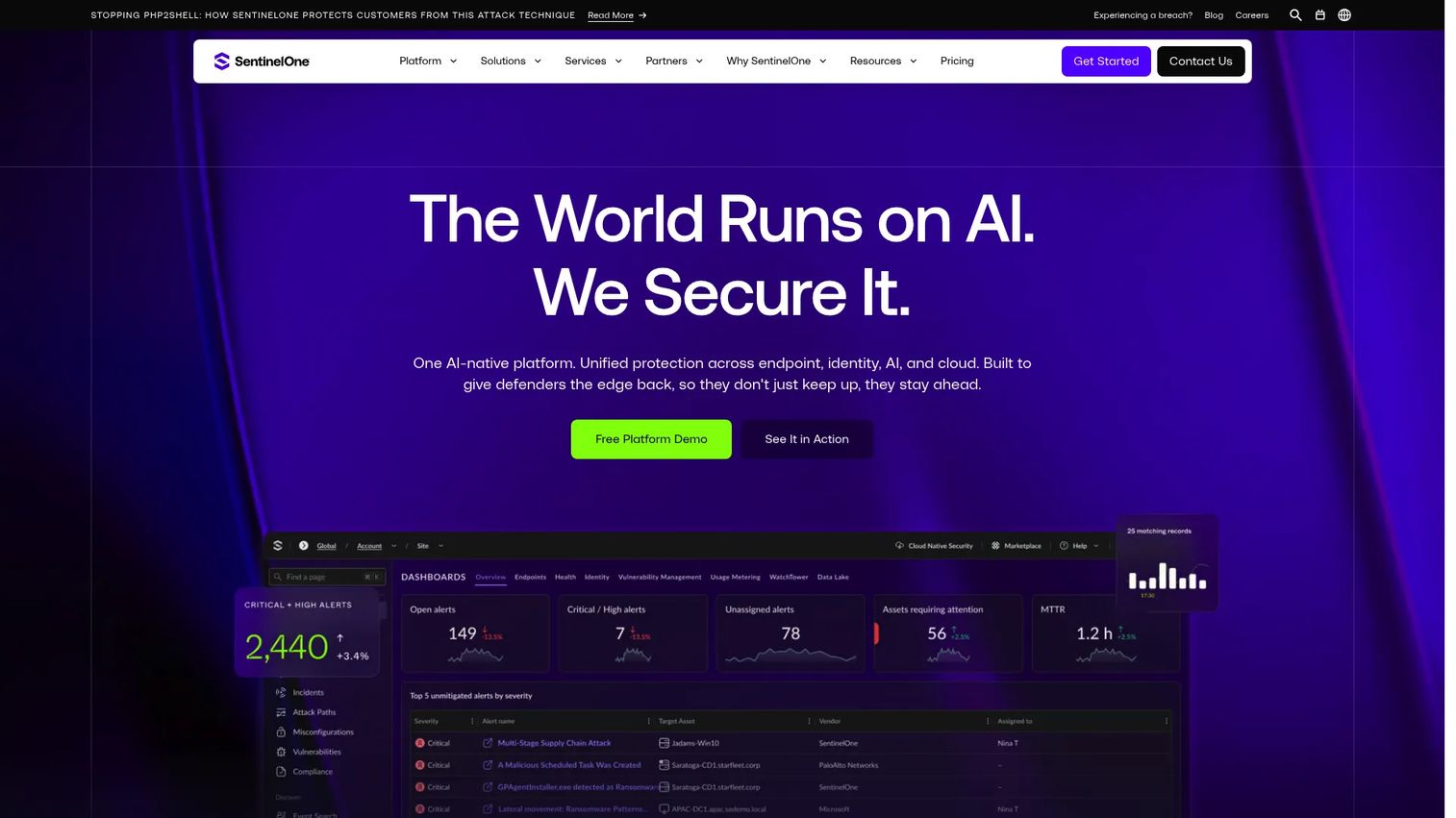
SentinelOne Singularity is an AI-driven cybersecurity platform that unifies endpoint protection, identity security, cloud workload coverage, and security operations in one data foundation. Its Singularity platform autonomously detects and responds to threats across endpoints and identities, feeding device and risk telemetry into access decisions. For zero trust programs that start from endpoint trust, SentinelOne provides the signals that inform whether a device should be granted access.
Best for: Security teams that want endpoint and identity risk signals to drive access decisions, paired with autonomous threat detection and response.
Key features
- Autonomous endpoint detection, response, and protection
- Identity threat detection and response
- Real-time cross-surface signal correlation
- AI Security Assistant and no-code response automation
- Device telemetry for access policy integration
Why choose SentinelOne Singularity: It strengthens the device-posture layer of a zero trust program and pairs well with ZTNA or IAM tools that consume endpoint signals. It is not a standalone ZTNA or identity platform.
SentinelOne Singularity pricing: Singularity Complete starts at $179.99/year per endpoint (billed annually). Singularity Commercial is $229.99/year per endpoint and adds identity detection and managed threat hunting. Singularity Enterprise uses custom pricing.
G2 rating: 4.7/5
6. Cisco Secure Access
Cisco Secure Access is a cloud-delivered Security Service Edge platform that unifies ZTNA, secure web gateway, CASB, firewall-as-a-service, DNS security, and digital experience monitoring. It covers private app access, internet access security, SaaS protection, and remote browser isolation through a centralized policy console. The platform is designed for Cisco-centric environments where network, endpoint, and identity products already share a common management and visibility layer.
Best for: Enterprises already running Cisco networking, security, or endpoint products that want unified access and internet security policy management.
Key features
- Zero Trust Network Access for private apps
- Secure web gateway, CASB, and firewall-as-a-service
- DNS-layer security and remote browser isolation
- VPN-as-a-service and data loss prevention
- Digital experience monitoring
Why choose Cisco Secure Access: Organizations with deep Cisco infrastructure get the strongest value, since the platform integrates with existing Cisco identity, endpoint, and network controls. Teams without a Cisco foundation will find less native leverage from the unified management layer.
Cisco Secure Access pricing: Pricing is tiered across Secure Access Essentials, Advantage, and DNS Defense; it is calculated based on covered-user counts and subscription term (12-, 36-, or 60-month). Contact sales for a quote.
G2 rating: 4.3/5
7. Microsoft Entra
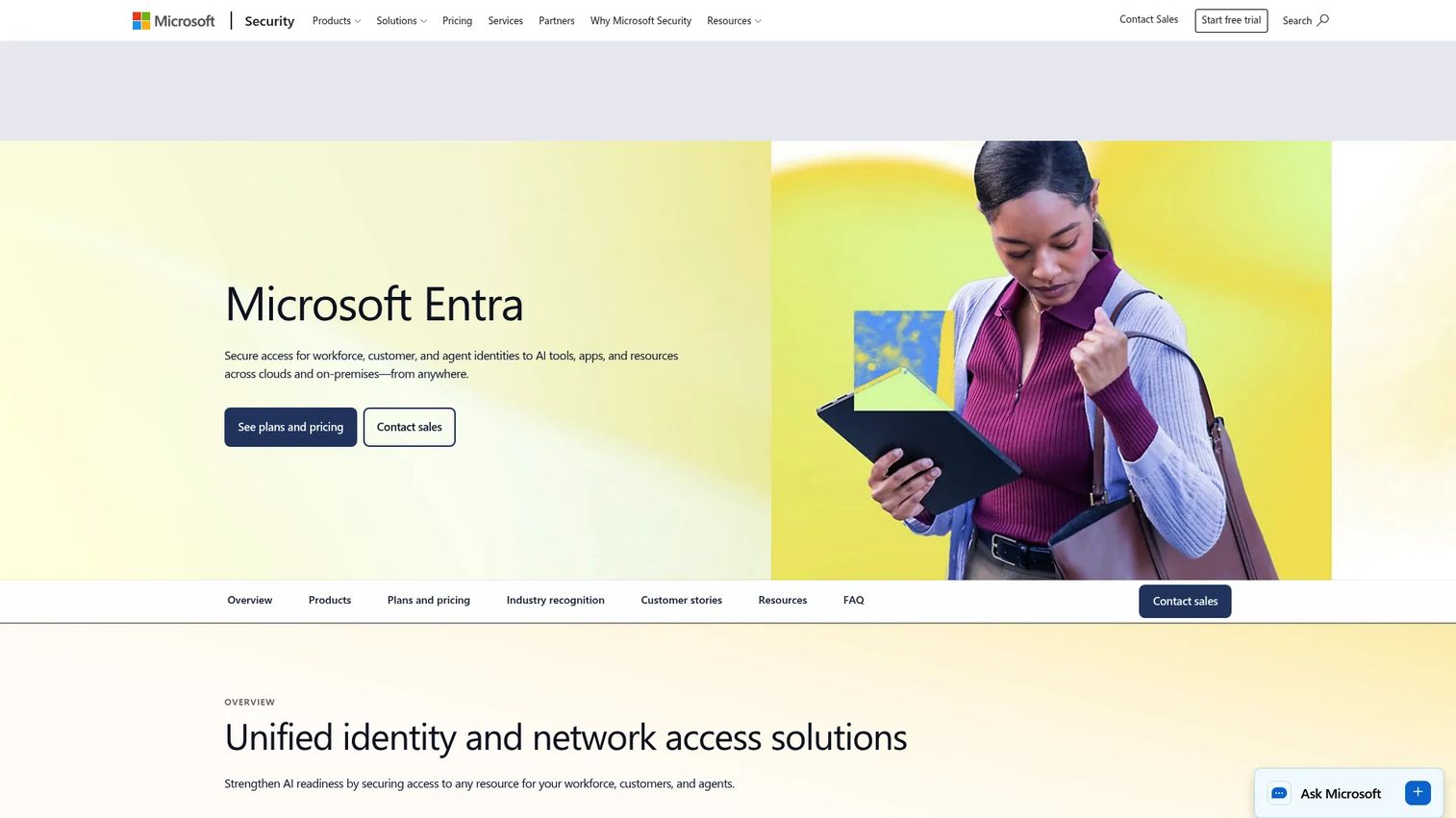
Microsoft Entra is a family of identity and network access products covering workforce and customer identity, conditional access, identity governance, privileged identity management, and global secure access for private and internet-bound traffic. For organizations already running Microsoft 365, Azure, Intune, and Defender, Entra reduces tool sprawl by consolidating identity, device compliance, and access policy in one management plane. The Microsoft Entra Suite adds network access controls alongside identity governance.
Best for: Organizations standardized on Microsoft 365 and Azure that want identity and conditional access controls without adding a separate identity provider.
Key features
- Conditional Access based on identity, device, and risk signals
- Entra ID for SSO and multi-factor authentication
- Identity Protection with risk-based access policies
- Entra Private Access for internal app connectivity
- Privileged Identity Management (PIM) for admin access governance
Why choose Microsoft Entra: It is the lowest-friction zero trust identity layer for Microsoft-centric teams, particularly where Intune manages devices and Defender provides endpoint signals. Teams not in the Microsoft ecosystem will find limited cross-platform advantages.
Microsoft Entra pricing: Entra ID Free is included with Microsoft cloud subscriptions. Entra ID P1 is $7/user/month (billed annually); P2 is $10/user/month. The Entra Suite is $12/user/month and combines identity and network access capabilities.
8. Fortinet
Fortinet provides an integrated security and networking fabric that connects ZTNA, next-generation firewalls, endpoint protection, and secure SD-WAN through a unified management console. Its Universal ZTNA capability extends access controls to on-premises and cloud-hosted private apps via FortiClient agents, coordinating with FortiGate firewalls for enforcement. The Fortinet Security Fabric is built for environments where network security, endpoint agents, and firewall infrastructure need to operate as a coordinated system.
Best for: Network-heavy environments standardized on Fortinet security infrastructure that need ZTNA integrated with existing firewall and endpoint controls.
Key features
- Universal ZTNA for private app access on-premises and in the cloud
- FortiClient endpoint agent with EPP, EDR, and ZTNA
- FortiGate next-generation firewall integration
- Secure SD-WAN and SD-Branch connectivity
- Centralized management via FortiManager
Why choose Fortinet: Teams already running FortiGate firewalls and FortiClient endpoints get tight integration across network and endpoint layers without deploying a separate ZTNA gateway. Organizations without existing Fortinet infrastructure will not capture the same operational efficiency.
Fortinet pricing: The price depends on product, model, subscription services, and deployment requirements. Contact sales or a Fortinet partner for a quote.
G2 rating: 4.4/5
9. Netskope
Netskope is a cloud-native platform for SASE and Security Service Edge, with particular depth in data-centric controls. Its Netskope One platform combines ZTNA for private apps, next-generation secure web gateway, CASB for cloud app visibility, DLP across SaaS and web, user behavior analytics, and AI security governance. The platform is built for enterprises where data sensitivity and cloud usage patterns must shape access decisions, not just identity or device posture alone.
Best for: Enterprises with regulated data or complex SaaS environments that need data protection controls tightly integrated with ZTNA and web security.
Key features
- Netskope Private Access for ZTNA to private applications
- Next-generation secure web gateway
- Cloud Access Security Broker for SaaS visibility
- Data loss prevention across cloud, SaaS, and web
- User behavior analytics and AI security governance
Why choose Netskope: It is a strong fit when the zero trust decision needs to include data sensitivity classifications and cloud usage context. Teams evaluating Netskope should check the access control software landscape to understand where it fits alongside identity and endpoint layers.
Netskope pricing: Netskope publishes list pricing. Advanced Analytics Base starts at $10.59/user/year. The Next Gen SWG Enterprise package is $156/user/year; the SSE Enterprise Package is $172.47/user/year; and the SSE Private Access Enterprise Package is $372.47/user/year. All billed annually.
G2 rating: 4.4/5
10. CyberArk
CyberArk is an identity security platform focused on privileged access management and machine identity controls. It covers PAM for admin and service accounts, secrets management for developer and DevOps workflows, workforce identity and SSO, endpoint privilege security, and session monitoring. CyberArk addresses the non-human identity risk that grows as SaaS products add more integrations, service accounts, and CI/CD pipelines. For product teams managing infrastructure access and third-party service credentials, CyberArk controls the highest-risk identities in the stack.
Best for: Organizations that need Zero Trust controls specifically around privileged access, admin accounts, service credentials, and machine identities.
Key features
- Privileged access management and modern privilege controls
- Secrets management for developer and DevOps workflows
- Machine identity and workload identity governance
- Endpoint privilege security
- Session monitoring and recording for privileged sessions
Why choose CyberArk: When the primary risk is admin access, service accounts, and developer credentials rather than general workforce identity, CyberArk addresses the layer that general IAM tools underserve. See also the best identity verification software guide for adjacent options.
CyberArk pricing: CyberArk prices by custom contract. Contact sales or request a demo for a quote. G2 reviewers report enterprise contracts that reflect the depth of PAM and secrets coverage selected.
G2 rating: 4.5/5
11. CrowdStrike
CrowdStrike is an AI-native cybersecurity platform built around its Falcon platform, which unifies endpoint protection, identity threat detection, cloud workload security, and threat intelligence. Its endpoint telemetry and device risk scoring provide the signals that inform zero trust access decisions, particularly when device trust is a primary control variable. CrowdStrike Falcon also covers identity threat detection, which connects endpoint behavior to account compromise scenarios.
Best for: Security teams that need endpoint risk and identity signals to inform access policy, combined with autonomous detection and response.
Key features
- Falcon platform for endpoint protection and detection
- Identity threat detection and response
- Device risk scoring and device posture assessment
- Threat intelligence and managed threat hunting
- Cloud workload protection
Why choose CrowdStrike: It is a strong device-posture signal source for zero trust programs where endpoint trust determines access scope. Like SentinelOne, it complements ZTNA and IAM rather than replacing them. The autonomous endpoint management software guide covers adjacent endpoint tooling.
CrowdStrike pricing: Falcon Go starts at $7.99/device/month (or $59.99/device/year). Falcon Pro is $14.99/month ($99.99/year). Falcon Enterprise is $19.99/month ($184.99/year). Falcon Complete (managed detection and response) uses custom pricing.
G2 rating: 4.7/5
12. AWS Verified Access
AWS Verified Access provides VPN-less access to corporate applications and infrastructure hosted in AWS, using identity and device posture context to evaluate every connection. It integrates with AWS IAM Identity Center, SAML/OIDC identity providers, and third-party device trust providers to enforce fine-grained access policies per application. Access attempts are logged to Amazon S3, CloudWatch, or Kinesis for audit and monitoring. For product and platform teams running internal tools or operations infrastructure in AWS, it places access policy directly inside the cloud environment rather than in a separate product.
Best for: AWS-heavy teams that need private application access governed by identity and device context without deploying a separate ZTNA gateway.
Key features
- Fine-grained access policies based on user identity and device posture
- HTTP(S) and non-HTTP(S) access including TCP, SSH, and RDP
- Integration with AWS IAM Identity Center and third-party IdPs
- Centralized policy grouping per access group
- Access logging to Amazon S3, CloudWatch, and Kinesis
Why choose AWS Verified Access: It is the most natural fit when your internal tools already run in AWS and your team wants access policy to live inside the same environment. Teams running infrastructure across multiple clouds will find it less flexible than a cloud-agnostic ZTNA product.
AWS Verified Access pricing: Usage-based with no upfront commitment. HTTP(S) app hours are $0.27/hour for the first 148,800 app-hours, then $0.20/hour. Data processing is $0.02/GB. Non-HTTP(S) endpoint hours are $0.20/hour. Standard AWS data transfer charges apply.
G2 rating: 4.7/5
13. Cato Networks
Cato Networks is a converged SASE platform that delivers networking and security through a global private backbone. Its Cato SASE Cloud combines SD-WAN for site connectivity, ZTNA for private app access, secure internet access, threat prevention, CASB, DLP, and endpoint security in a single managed service. The convergence means that organizations modernizing both network connectivity and security inspection can do it through one vendor and one console. This is particularly relevant for multi-site businesses where access performance and security policy are linked.
Best for: Teams wanting to consolidate networking and security across branches, remote users, and cloud access through a single SASE service.
Key features
- Cato SASE Cloud with global private backbone
- SD-WAN for branch and site connectivity
- ZTNA for private application access
- Secure internet access with SWG, IPS, and threat prevention
- CASB, DLP, endpoint protection, and XDR
Why choose Cato Networks: Cato's value concentrates when both network modernization and security consolidation are on the roadmap. Organizations that only need ZTNA without WAN optimization will likely find it over-specified. For broader SASE context, the best AI security posture management tools guide covers adjacent security layers.
Cato Networks pricing: Cato prices by user licenses, site bandwidth, and modular security capabilities. Contact sales for a quote.
G2 rating: 4.5/5
14. Twingate
Twingate is a lightweight ZTNA product focused on private resource access as a VPN replacement. It uses encrypted peer-to-peer and relayed connections, resource-level access controls, and lightweight connectors deployed in the environment where your resources live. Teams connect via an identity provider they already use, Twingate enforces device posture checks, and access is scoped to specific services rather than a full network segment. The developer-friendly architecture includes Terraform, Pulumi, and Kubernetes Operator support, which makes it practical for engineering-led rollouts.
Best for: Startups and mid-market engineering teams that need scoped private access without deploying a full SASE program.
Key features
- Resource-level access controls with no broad network exposure
- Lightweight connectors with peer-to-peer encrypted connections
- SSO and identity provider integrations (Okta, Azure AD, Google, and others)
- Device posture controls and split tunneling
- Terraform, Pulumi, and Kubernetes Operator automation
Why choose Twingate: It is the most practical starting point for teams that need to replace VPN access quickly, with an engineering-friendly setup and predictable per-user pricing. Teams that also need secure web gateway or CASB controls will need to pair it with a separate SSE product. The access review software guide is worth reviewing for governance controls alongside ZTNA.
Twingate pricing: Starter is free for up to 5 users. Teams plan is $5/user/month (billed monthly). Business is $10/user/month. Enterprise uses custom pricing.
G2 rating: 4.6/5
Considerations when choosing zero trust software
Start with your control plane
Before evaluating vendors, identify whether your program starts with identity, endpoint, network, cloud workload, or privileged access. Identity-first teams shortlist Okta, Microsoft Entra, and CyberArk. Network-first teams look at Zscaler, Cloudflare, Cato, or Twingate. Endpoint-first teams consider CrowdStrike or SentinelOne alongside a ZTNA layer. The starting point shapes the whole shortlist.
Map gaps against NIST SP 800-207 and the CISA Zero Trust Maturity Model
NIST SP 800-207 defines zero trust architecture principles. The CISA Zero Trust Maturity Model organizes implementation across five pillars: Identity, devices, networks, applications, and data. Use these frameworks to audit your current coverage before buying. Teams often discover that their identity layer is strong but their device posture and network segmentation are missing before they run an RFP.
Verify integration depth before committing
Weak integrations between your IdP, endpoint management, SIEM, and ZTNA create engineering maintenance work and operational gaps. Check specifically for integration depth with the tools already in your stack: Your identity provider, MDM or endpoint management platform, cloud provider, and logging infrastructure. The engineering cost of patching poor integrations is a real opportunity cost.
Evaluate rollout cost separately from license cost
Zero trust projects require policy design, application inventory, device posture baseline work, and user change management. These costs are real and often exceed license fees for the first year. Build a rollout estimate alongside your pricing comparison. For PMs, this is where the opportunity cost conversation with engineering becomes concrete.
Define what you will measure after launch
Useful post-launch metrics include VPN session reduction, blocked risky login attempts, security review completion time, and admin access reduction. Set a baseline before rollout. A zero trust program that cannot demonstrate measurable access outcomes is hard to defend in a roadmap review or board conversation.
Conclusion
The right zero trust software depends on where your access risk is highest and what your existing stack already covers.
Zscaler fits enterprises consolidating ZTNA, SWG, CASB, and internet access under a mature SASE architecture. Palo Alto Networks Prisma Access extends those controls for teams already invested in Palo Alto security. Okta and Microsoft Entra are the clearest choices for identity-first programs, with Okta covering broad SaaS environments and Entra covering Microsoft-standardized organizations. Cloudflare Zero Trust and Twingate offer faster private access rollout, with Cloudflare covering more of the SSE layer and Twingate staying tightly focused on resource-level ZTNA. CyberArk addresses privileged access and machine identity controls that general IAM tools miss. Netskope serves data-centric teams where cloud usage patterns shape access policy. AWS Verified Access is the natural pick for AWS-native private app access. Cato Networks suits organizations modernizing networking and security at the same time.
A practical next step: Map your current coverage across identity, device, network, application, and data against the CISA Zero Trust Maturity Model. Identify the layer with the largest gap. Shortlist two or three tools based on architecture fit, then validate integration depth and rollout cost before making a final call.
For related security tooling, see the guides on best AI cybersecurity solutions, application security software, and best endpoint protection software.
FAQs
Zero trust software verifies every access request based on identity, device health, contextual signals, and policy, rather than assuming any user or device is trusted because it sits inside a network boundary. It enforces least-privilege access, assumes breach, and monitors continuously after authentication. It is an operating model implemented through a combination of identity, network, endpoint, and data controls.
Zero Trust is the broader security model and operating philosophy. ZTNA (zero trust network access) is one specific implementation layer that replaces VPN-based private application access with per-application, identity-aware connections. A complete Zero Trust program also includes identity governance, endpoint posture, data controls, and cloud workload security beyond what ZTNA alone covers.
Most organizations start with identity: SSO, adaptive MFA, and conditional access policies that account for device health and risk signals. After that, the typical sequence is device visibility and posture baseline, then high-risk application access controls, then privileged access governance, and eventually network segmentation and data protection. The NIST SP 800-207 and CISA Zero Trust Maturity Model both provide structured implementation roadmaps.
SASE (Secure Access Service Edge) combines networking and security services including ZTNA, SWG, CASB, firewall-as-a-service, and SD-WAN in a cloud-delivered platform. Zero Trust is the security model that SASE platforms are designed to support. Not all Zero Trust implementations require a full SASE platform; many organizations start with identity and ZTNA before adding SWG or SD-WAN.
SaaS teams typically start with identity controls (Okta or Microsoft Entra), private app access for engineering and internal tools (Twingate or Cloudflare Zero Trust), and endpoint posture (CrowdStrike or SentinelOne). Privileged access and secrets management (CyberArk) becomes critical as the team grows and service accounts multiply. The right starting point depends on where current access risk is highest.
PMs evaluating zero trust tools should focus on enterprise-readiness requirements their customers ask about in security questionnaires, the engineering cost of integrating the tool with existing identity and endpoint infrastructure, user friction during rollout, measurable access outcomes they can report to leadership, and whether the tool scales with the product's architecture over the next two to three years.
The price depends on user count, the modules selected, traffic volume, number of endpoints, and deployment model. Some tools publish per-user or per-device pricing: Okta starts at $6/user/month, Cloudflare Zero Trust at $7/user/month, Twingate at $5/user/month, and CrowdStrike Falcon Go at $7.99/device/month. Enterprise SASE platforms (Zscaler, Palo Alto, Cisco, Cato) and PAM tools (CyberArk) are sold through custom enterprise contracts.
ZTNA replaces the most common VPN use cases, specifically private application and resource access, with more granular, identity-aware controls. Organizations typically migrate gradually, keeping VPNs for legacy workflows that ZTNA connectors cannot yet cover. Tools like Twingate, Cloudflare Access, and Zscaler Private Access are specifically designed as VPN replacements for modern app access patterns.