
You shipped the feature. Users signed up. Then nothing happened. They logged in once, poked around, and never came back. Most product teams treat adoption as an onboarding problem. It's not. It's a value delivery problem. The fix starts with how users experience your product from day one.
This guide covers 12 proven ways to improve product adoption, moving users from signup to habitual use. It also covers the metrics that tell you whether it's working.
TL;DR
- Product adoption measures whether users integrate your product into their workflows, not just whether they signed up or logged in once.
- Most adoption efforts fail because they rely on static content, generic onboarding, and passive education that users forget immediately.
- Self-serve, interactive experiences let users learn by doing, which accelerates time to value and improves retention.
- Personalization by persona, role, or use case increases relevance and reduces friction during onboarding.
- Track activation rate, feature adoption, and time to first value to identify where users drop off and what to fix.
What is product adoption
Product adoption is the process by which users move from first contact to regular, habitual use of your product. Signing up or logging in once doesn't count. Adoption means users derive ongoing value and integrate the product into their daily workflows.
Different users adopt at different speeds. The technology adoption curve, first described by Everett Rogers in 1962, segments users into innovators, early adopters, early majority, late majority, and laggards. Your adoption approach needs to account for this variation.
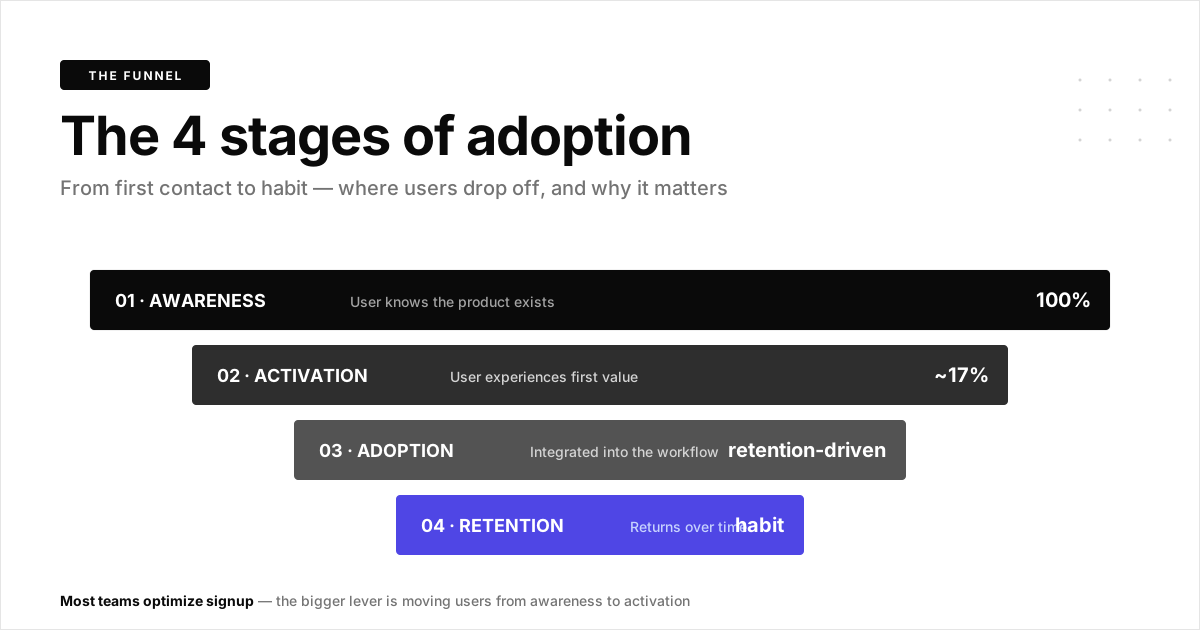
Here's how the stages break down:
- Awareness: User knows the product exists
- Activation: User experiences first value
- Adoption: User integrates product into regular workflow
- Retention: User continues returning over time
Product adoption vs user adoption
Product adoption and user adoption often get used interchangeably, but they measure different outcomes and require different strategies.
Product adoption tracks how broadly a product spreads across an organization or market segment. It answers questions like: How many departments use the tool? What percentage of seats are active?
Are we expanding into new teams? This is an organizational or market-level metric.
User adoption focuses on individual behavior and proficiency. It measures whether a specific person has integrated the product into their workflow, uses it regularly, and derives ongoing value. This is a person-level metric.
Both matter for growth, but they require different tactics. Product adoption depends on executive buy-in, cross-functional rollout, and account expansion strategies. User adoption depends on onboarding quality, feature discovery, and individual habit formation.
| Dimension | Product adoption | User adoption |
|---|---|---|
| Focus | Organization or market-wide traction | Individual user engagement |
| Measured by | Account-level metrics, expansion | Individual activation, feature use |
| Driven by | GTM, product marketing, CS | Onboarding, UX, in-app guidance |
For B2B SaaS, you often need to drive user adoption at the individual level to achieve product adoption at the account level.
Why improving product adoption matters
Adoption is the leading indicator of retention and revenue and 25% higher activation drives 34% more revenue. Low adoption means users churn before experiencing value. High adoption means users become advocates, expand usage, and reduce support burden.
The business case is straightforward: lower CAC payback, higher LTV, reduced support tickets, and stronger net revenue retention.
How to measure product adoption
You can't improve what you don't measure. The following metrics help you track adoption progress, identify where users get stuck, and quantify the impact of your optimization efforts.
Activation rate
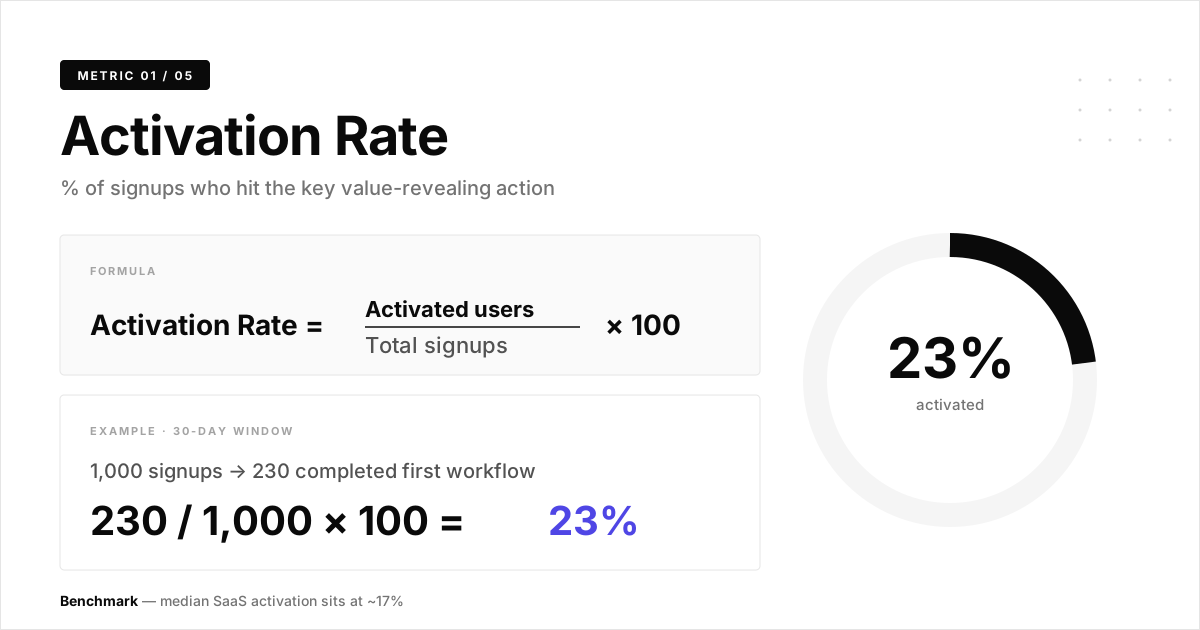
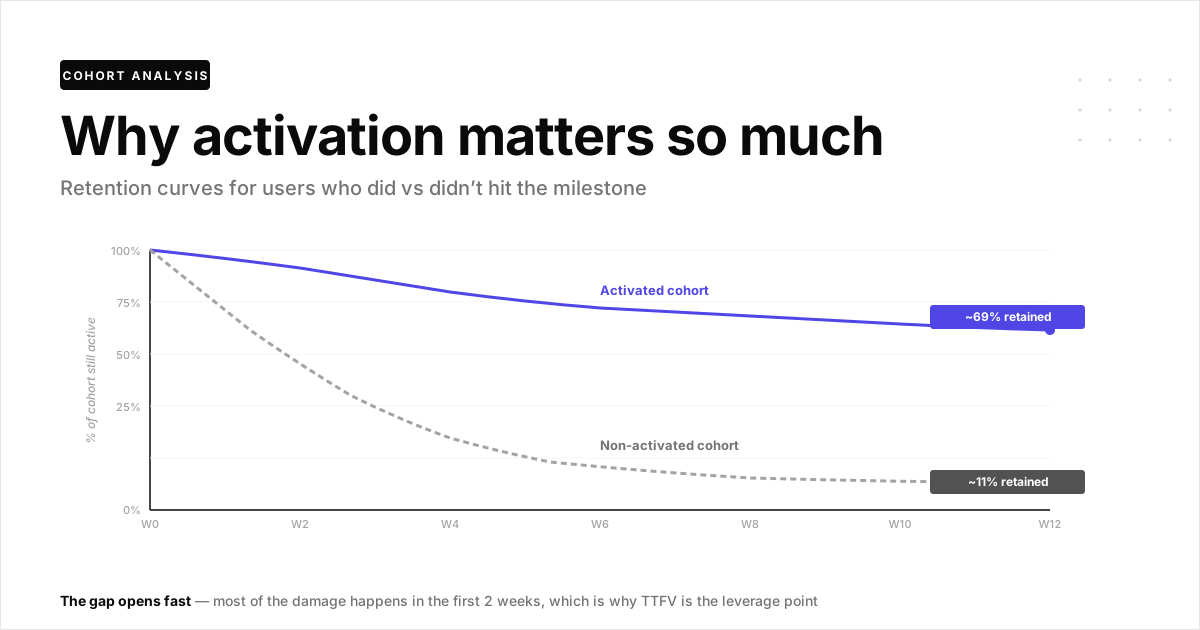
Activation rate is the percentage of users who complete a key action that correlates with long-term retention. You define what "activated" means for your product based on which behaviors predict continued usage. It might be creating a first project, inviting a teammate, completing a first workflow, or connecting an integration.
This is the most important early adoption metric and median SaaS activation is 17%. Calculate it by dividing activated users by total signups within a specific timeframe, typically 7 or 30 days.
Feature adoption rate
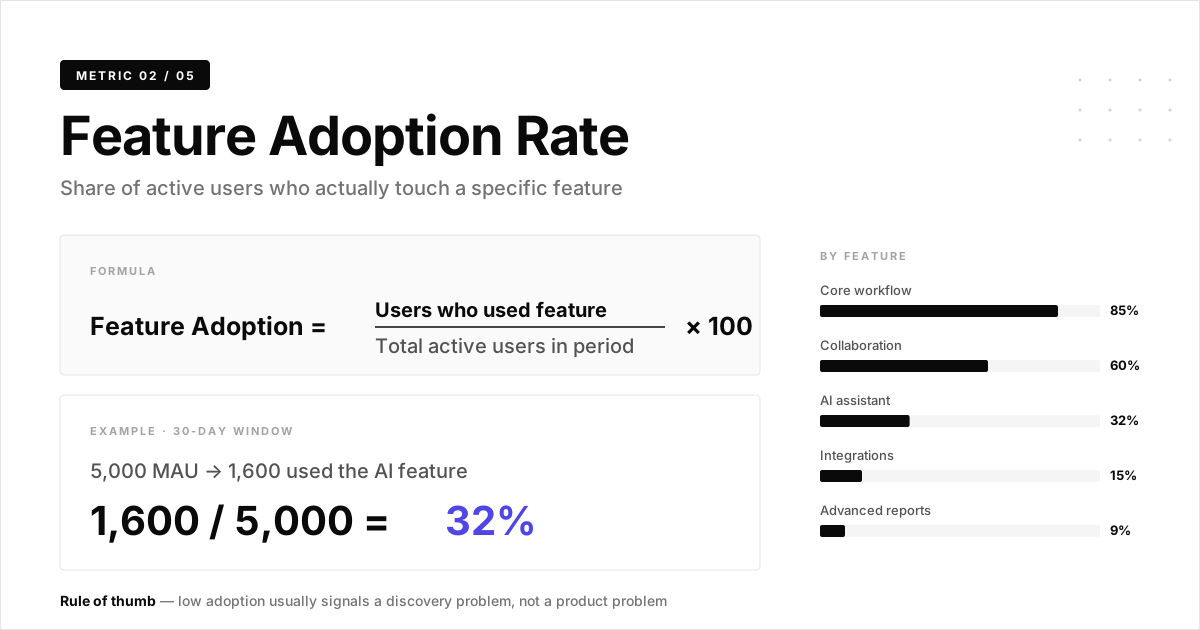
Feature adoption rate measures the percentage of users who use a specific feature within a time period. Calculate it by dividing users who engaged with a feature by total active users in that period. Tracking feature-level adoption reveals whether users discover and use the capabilities that deliver value.
Low feature adoption often signals a discovery problem, not a product problem. Users may not know the feature exists, understand its value, or know when to use it. Track adoption for your core features separately from secondary capabilities to identify which need better positioning or in-app guidance.
User stickiness and DAU/MAU
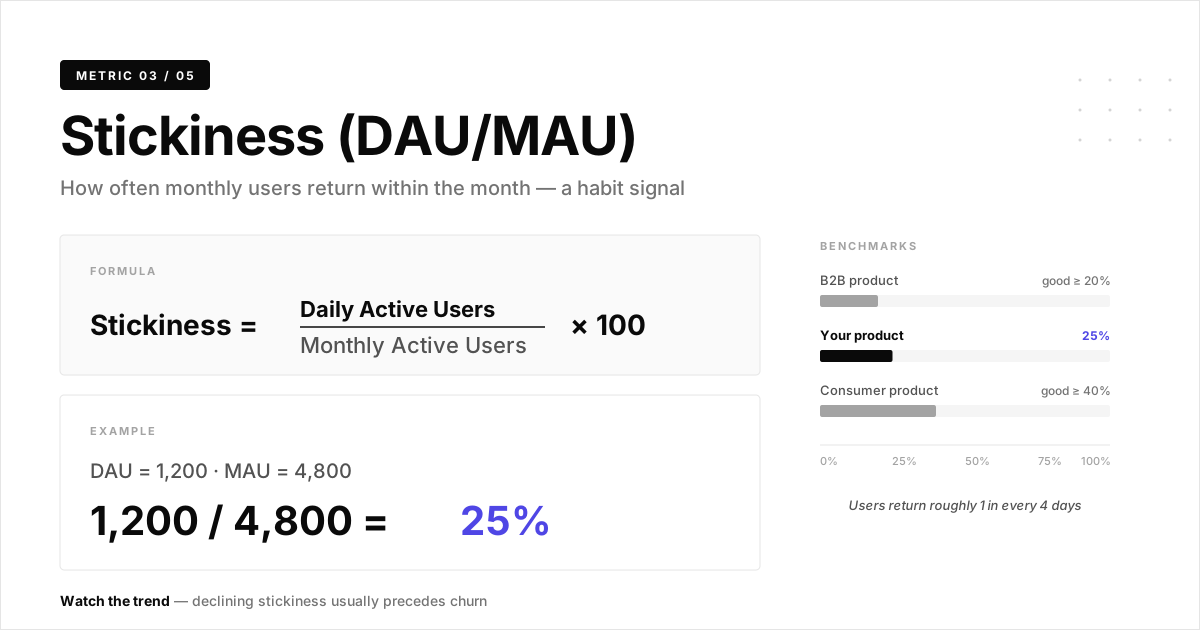
Stickiness is daily active users divided by monthly active users, expressed as a percentage. A higher ratio means users return frequently. This measures habit formation.
A DAU/MAU ratio above 20% indicates strong engagement for most B2B products, while consumer products often target 40% or higher.
Track this metric over time to see whether product changes increase or decrease usage frequency. Declining stickiness often precedes churn.
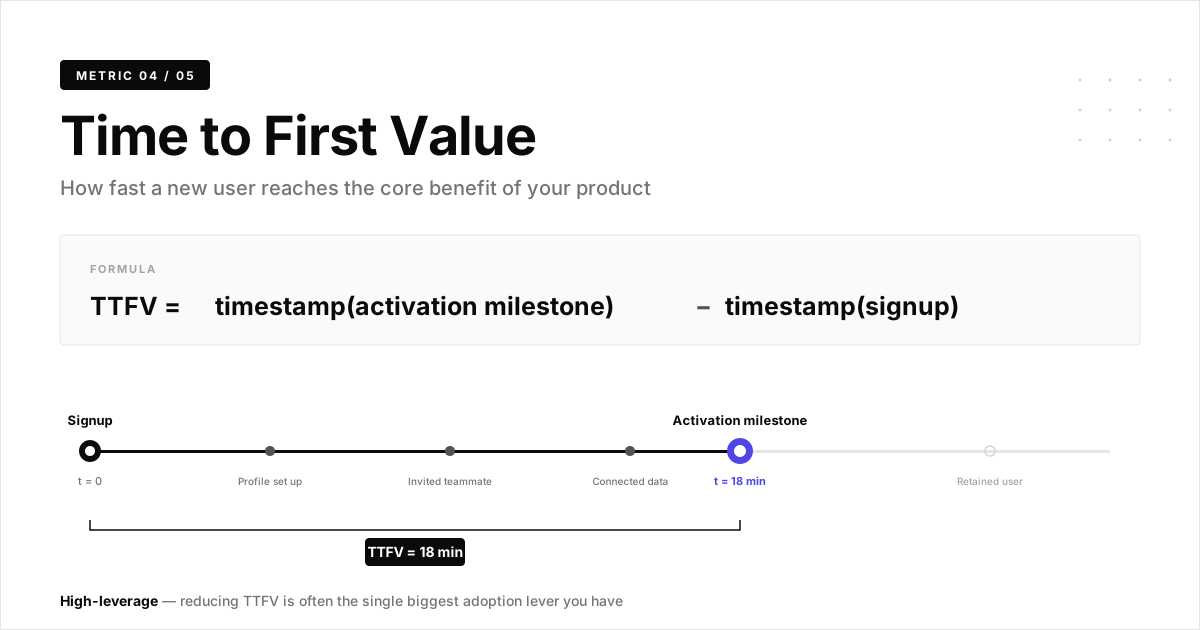
Time to first value
Time to first value (TTFV) measures how long it takes a new user to experience the core benefit of your product. Measure from signup to the moment they complete your activation milestone. Shorter TTFV correlates with higher activation and retention.
Reducing TTFV is often the highest-leverage adoption improvement you can make. Benchmark your current TTFV, then test changes that remove steps, reduce required inputs, or guide users more directly to value. Even small reductions in TTFV can produce measurable improvements in conversion and retention.
Product engagement score
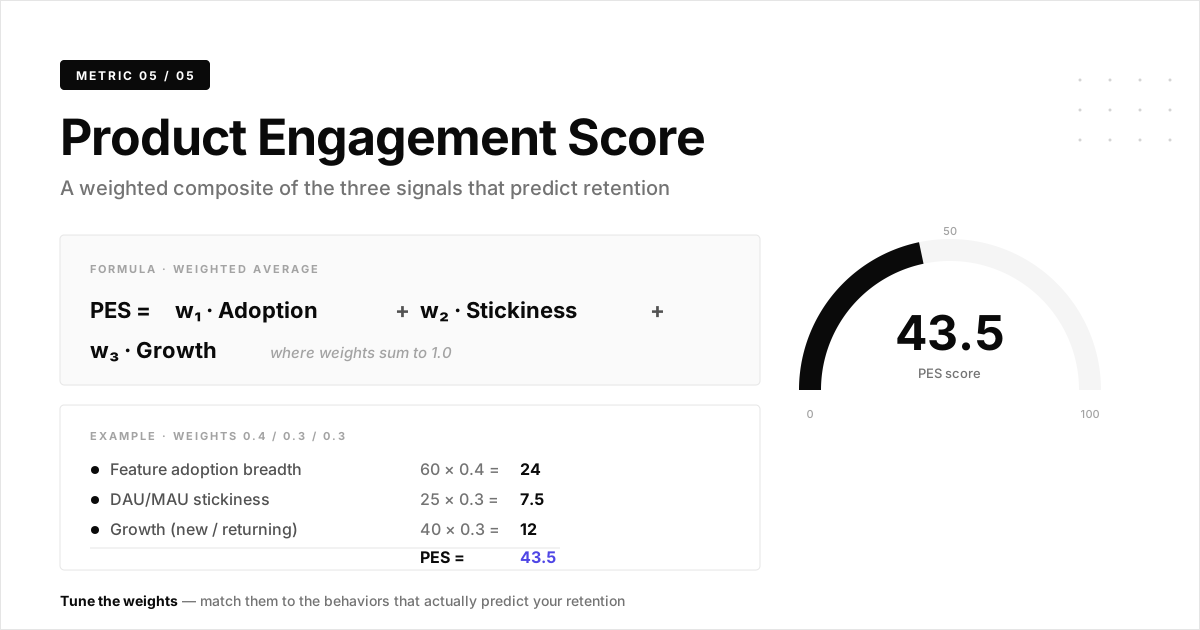
A product engagement score (PES) is a composite metric combining adoption, stickiness, and growth indicators. It provides a single number to track overall product health. Calculate it by combining metrics like feature adoption, usage frequency, and breadth of feature usage.
Teams often weight different behaviors based on what matters most for their product. A project management tool might weight collaboration features heavily, while an analytics platform might prioritize report creation and sharing. Define your PES formula based on which behaviors correlate most strongly with retention and expansion.
12 strategies to improve product adoption rates
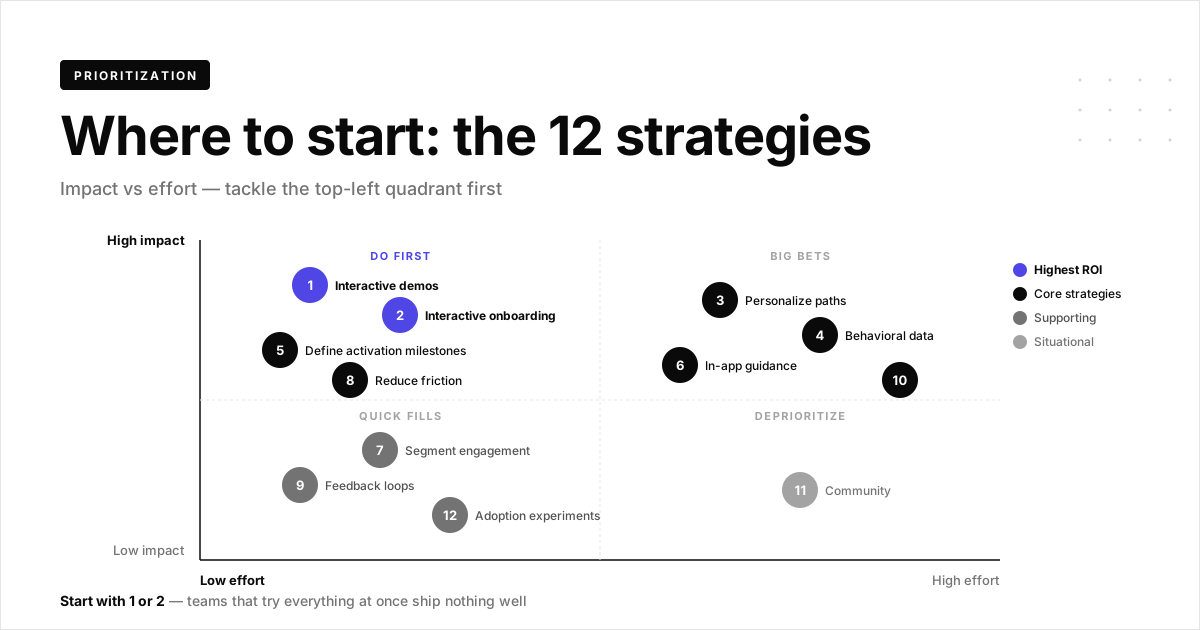
The following approaches are ordered by impact. Use them to improve product adoption by addressing the root cause of low adoption: friction and lack of hands-on experience.
1. Replace static content with self-serve product experiences
Screenshots, videos, and PDFs create passive learning. Users imagine how the product works instead of experiencing it. Interactive demos and sandbox environments let users click through real workflows before committing.
This reduces the cognitive load of evaluation and accelerates time to value and can drive 42% higher feature adoption. Marketing teams can embed interactive experiences on landing pages and in email campaigns to let prospects explore on their own schedule.
2. Build interactive onboarding that shows value immediately
Onboarding works best when it demonstrates your product's core value in the first session, not just explains features. Guide users to complete one meaningful action rather than touring every feature.
The goal is action, not information. Step-by-step interactive guides outperform tooltip overload because users learn by doing.
3. Personalize adoption paths by persona and use case
Different users have different jobs to be done. A finance user and a sales user need different first experiences.
Segment users by role, use case, or intent and tailor the onboarding path accordingly because 30% to 50% higher activation follows personalized onboarding. Personalize demos for every prospect with dynamic variables to increase relevance and reduce time to value.
4. Understand your users through behavioral data
Adoption approaches work best when informed by what users actually do, not what you assume they do. Track which features users engage with, where they drop off, and what paths successful users take.
Use analytics to identify friction points and inform iteration. The data tells you where to focus.
5. Define clear activation milestones
Teams benefit from identifying the specific actions that indicate a user has reached value. Activation milestones become the targets for onboarding and engagement.
Without clear milestones, adoption efforts lack focus. Examples include: created first demo, shared with teammate, received engagement data.
6. Deliver contextual in-app guidance
Users benefit from help at the moment they need it, not in a training session days earlier. In-app messages, tooltips, and guides delivered based on user behavior improve feature discovery and reduce support burden.
Contextual guidance (triggered by behavior or location) outperforms scheduled guidance (sent at arbitrary times).
7. Segment users and tailor engagement
Not all users benefit from the same communication. Segment by lifecycle stage (new, activated, power user, at-risk), role, plan tier, or behavior.
Tailor messages and guidance to each segment's needs. Generic broadcasts get ignored.
8. Reduce friction at every decision point
Every click, form field, or decision is a potential drop-off. Audit the user journey for unnecessary steps.
Simplify account setup, reduce required fields, enable single sign-on, and remove barriers to starting. Fewer steps between signup and value means higher activation.
9. Create feedback loops that drive iteration
Improving product adoption requires continuous learning. Collect user feedback through in-app surveys, NPS, and direct conversations.
Use feedback to identify what's confusing or missing. Close the loop by acting on feedback and communicating changes.
10. Make adoption a cross-functional priority
Adoption is not owned by one team. Product, marketing, sales, and customer success all influence whether users adopt.
Create shared metrics and regular alignment across teams. Siloed efforts where each team optimizes their slice without coordinating rarely work.
11. Build community to reinforce engagement
Communities (user groups, forums, Slack channels) create peer support and accountability. Users learn from each other, share use cases, and stay engaged beyond the product itself. Training and enablement teams increasingly use interactive demos to scale this education efficiently.
Community is especially valuable for developer-focused products or products with complex workflows.
12. Test adoption experiments continuously
Adoption approaches are hypotheses, not fixed playbooks. Run A/B tests on onboarding flows, messaging, and feature education.
Measure impact on activation and retention. Kill what doesn't work and double down on what does.
Common product adoption mistakes
Understanding what doesn't work is just as important as knowing what does. Teams that want to improve product adoption must avoid these common mistakes. Each creates friction that prevents users from reaching value, and each has a specific fix.
Relying on static screenshots and videos
Passive content doesn't create understanding or muscle memory. Users watch a video or scroll through screenshots, then close the tab and forget what they saw.
Videos have completion rates below 20% for anything longer than 60 seconds. They provide no engagement signal to tell you whether the viewer understood the content or found it relevant.
Screenshots age quickly as your product evolves, creating confusion when the interface doesn't match what users see. Neither format lets users practice the workflow or build confidence before committing.
The fix: replace static content with interactive, hands-on experiences that let users click through real workflows. Interactive demos show exactly how features work while capturing engagement data that reveals which capabilities resonate with different user segments.
Treating all users the same
One-size-fits-all onboarding ignores the diversity of user needs. A developer evaluating your API needs a completely different first experience than a marketing manager exploring your analytics dashboard. Different roles have different jobs to be done, different technical proficiency levels, and different definitions of value.
Generic onboarding tours that walk every user through every feature create cognitive overload and waste time on capabilities that specific users will never need. Users disengage when the experience feels irrelevant to their specific use case.
The fix: segment users by role, use case, company size, or technical skill level, then build tailored onboarding paths for each segment. Ask qualifying questions during signup to route users to the right experience, and use behavioral data to refine segmentation over time.
Measuring vanity metrics instead of activation
Signups and logins don't indicate adoption. Teams celebrate growth in registered users or monthly active users while activation stays flat and churn increases. These vanity metrics create a false sense of progress because they measure interest, not value delivery.
A user who logs in once, looks around, and never returns counts as "active" in many reporting systems but represents a failed adoption experience. Tracking top-of-funnel volume without measuring whether users reach meaningful milestones obscures the real health of your product.
The fix: define specific activation milestones that correlate with long-term retention, then track what percentage of new users reach those milestones within a defined timeframe. Measure feature adoption rates for your core capabilities, not just overall login frequency. Report on cohort retention curves that show whether users who activate continue using the product over time.
Ignoring post-onboarding engagement
Adoption doesn't end after the first session. Many teams invest heavily in initial onboarding, then abandon users once they complete the first workflow. Users benefit from ongoing education as they encounter new features, expand to additional use cases, or take on more advanced workflows.
Without continued engagement, users plateau at basic usage patterns and never discover the capabilities that would make them power users. They miss feature launches, don't understand how to apply the product to new problems, and eventually churn when a competitor offers better guidance.
The fix: build lifecycle engagement programs that deliver contextual education based on user behavior and tenure. Trigger feature announcements when users show intent signals related to new capabilities.
Create progressive onboarding that introduces advanced features after users master the basics. Use in-app messages to highlight relevant use cases as users' needs evolve.
Building adoption flows that require engineering
When every onboarding change requires a sprint, iteration slows to a crawl. Product and marketing teams submit tickets, wait weeks for engineering capacity, then discover the change didn't work as expected. By the time they can test a second iteration, momentum is lost and priorities have shifted.
Engineering-dependent adoption flows create a bottleneck that prevents rapid experimentation. Teams ship once, see mediocre results, but lack the ability to iterate quickly enough to find what works. The cost of change becomes so high that teams stop trying to improve adoption altogether.
The fix: use no-code tools that let marketing, product, and customer success teams build and iterate on adoption experiences without engineering dependency. Platforms for interactive demos, in-app guidance, and onboarding flows enable non-technical teams to test variations, measure results, and optimize continuously without waiting for development cycles.
Product adoption software and tools
Several categories of software support efforts to improve product adoption. Look for tools that enable creation, personalization, and measurement without engineering dependency.
- Interactive demo platforms: Create clickable product experiences for marketing and sales. Guideflow lets teams capture any workflow and turn it into a shareable demo, reducing buyer friction and accelerating onboarding.
- In-app guidance tools: Deliver tooltips, tours, and contextual messages based on user behavior or location. These tools help users discover features in the moment, reducing support tickets and improving feature adoption.
- Product analytics platforms: Track user behavior, session recordings, and funnel drop-offs to identify friction points. Use this data to prioritize adoption improvements with the highest impact.
- Customer success platforms: Monitor account health scores and usage patterns to identify at-risk users. These platforms trigger automated interventions or alert CS teams when adoption is low.
- Survey and feedback tools: Collect user sentiment through in-app surveys, NPS scores, and targeted feedback requests. These tools help you understand why users aren't adopting features and what's missing.
How to build a user adoption strategy
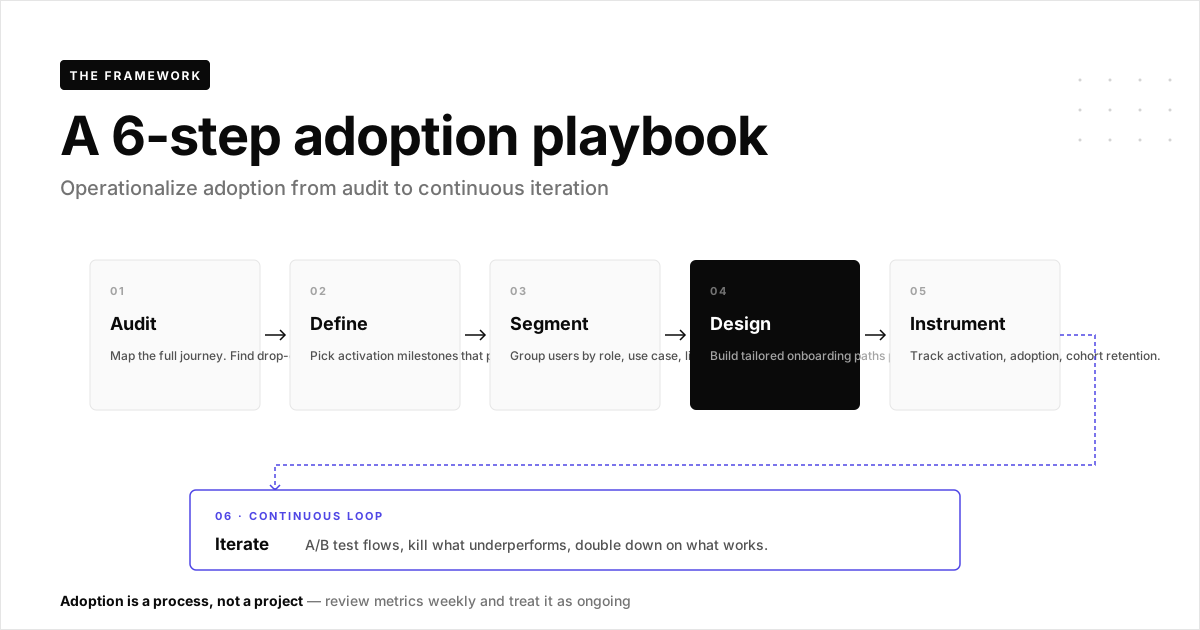
Here's a framework to improve product adoption and operationalize what you've learned:
- Audit current state: Map the complete user journey from signup to activation. Use analytics to identify drop-off points and track which features activated users engage with versus those who churn.
- Define activation milestones: Identify the specific actions that correlate with long-term retention, such as completing a first workflow or inviting a teammate. Validate milestones by comparing retained and churned users, then set a timeframe of 7 or 30 days.
- Segment your users: Create distinct user groups based on role, use case, lifecycle stage, or behavior. Each segment needs different messaging and guidance.
- Design adoption paths: Build tailored onboarding flows for each segment that guide users to their activation milestone. Map the shortest path to value and remove unnecessary steps.
- Instrument and measure: Set up event tracking for activation milestones, feature adoption metrics, and retention cohorts. Configure dashboards showing activation rate by segment and time to first value.
- Iterate continuously: Run A/B tests on onboarding flows, messaging, and feature education. Review metrics weekly, kill underperforming experiments, and treat adoption optimization as an ongoing process.
Turn product adoption into revenue growth
To improve product adoption, start with one or two approaches rather than trying everything at once. Adoption is a direct driver of retention, expansion, and efficiency.
Teams that improve product adoption consistently see gains in retention and revenue. Focus on reducing time to first value and improving activation before optimizing later-stage engagement.
FAQs about product adoption strategies
Early indicators like activation rate changes can appear within weeks. Sustained retention and revenue impact typically takes one to three quarters depending on sales cycle and product complexity.
Benchmarks vary widely by industry and product type. Teams generally aim for activation rates above the majority of their user base and monitor improvement over their own baseline rather than external comparisons.
No-code tools for interactive demos, in-app guidance, and onboarding let marketing and CS teams iterate without engineering sprints. Product teams can build and refine adoption experiences independently.
Product adoption refers to overall engagement with the product. Feature adoption measures usage of specific capabilities within the product.
Trial adoption is typically measured by activation milestones reached within the trial period. This metric correlates with conversion to paid.
Re-engagement campaigns highlighting new features or use cases can reactivate churned users. However, prevention through early adoption intervention is more effective than recovery.
Customer success teams monitor adoption signals, intervene when users show signs of low engagement, and guide users toward value through proactive outreach.
Start with the highest-friction points in the user journey. Focus on reducing time to first value and improving activation before optimizing later-stage engagement.