
A single expired vial pulled from a crash cart during an audit is more than a write-off. It is a documentation problem, a compliance flag, and a signal that your tracking system missed something it should have caught weeks earlier.
That gap costs money. The global medical inventory management software market was valued at $3.2 billion in 2025 and is forecast to reach $6.4 billion by 2034 at an 8.7% CAGR, according to MarketIntelo (2026). Software makes up 62.3% of that spend, roughly $1.99 billion in 2025. Healthcare teams are not buying spreadsheets anymore. They are buying systems that catch the expired vial before the auditor does.
The hard part is that "medical inventory software" describes wildly different tools. Some are barcode-first tracking apps. Some are enterprise ERPs. Some are field-ops platforms for medical device reps. Picking the wrong category wastes a budget cycle and leaves the same stockouts and expired stock in place. This guide sorts through that.
What's inside
This guide is for healthcare operations managers, clinic administrators, hospital supply chain teams, and medtech ops leads building a shortlist. It is also useful for product managers researching how this market is structured.
We selected tools based on four things that matter to compliance-heavy buyers:
- Healthcare fit: barcode workflows, lot traceability, and expiration handling built for medical supplies, not just retail stock.
- Compliance and audit readiness: clean audit trails, access controls, and reporting that survives inspection.
- Operational depth: purchasing, reorder automation, and multi-location inventory control.
- Verified pricing and ratings: public prices and current G2 scores where available.
TL;DR
- Best for clinics and specialty practices: FlexScanMD, built specifically for medical practices with barcode workflows and compliance-focused supply tracking.
- Best for medtech and field operations: Movemedical, for device companies tracking consignment, loaner, and trunk stock in the field.
- Best barcode-first control: Wasp Inventory, with cloud or on-premise deployment and clear public pricing from $108/month.
- Best simple, visual option: Sortly, with a free tier and photo-based inventory for smaller clinics.
- Best for enterprise ERP needs: NetSuite, when inventory has to connect to finance, purchasing, and order management across departments.
- Best replenishment automation: eTurns, for teams cutting manual reordering across stockrooms and vehicles.
What is medical inventory software
Medical inventory software is a system that tracks medical supplies, devices, medications, and equipment across healthcare facilities, using barcode or RFID scanning, expiration and lot tracking, and reorder automation to reduce stockouts, waste, and compliance risk. A medical inventory system replaces manual counts and spreadsheets with real-time visibility into what you have, where it sits, and when it expires.
Unlike generic warehouse software, healthcare inventory management software has to handle the specifics of clinical supply: lot numbers, expiration dates, recall traceability, and controlled-substance documentation. A medical supply inventory management software platform ties each item to an audit trail so you can prove chain of custody during an inspection.
Core features to expect:
- Barcode scanning and RFID: Scan items in and out at the point of use for accurate, fast counts.
- Expiration alerts and low stock alerts: Get warned before items expire or run out.
- Lot and serial traceability: Track every unit by lot number for recalls and compliance.
- Multi-location inventory: See stock across clinics, storage rooms, carts, and vehicles in one view.
- Purchasing and receiving: Manage orders, receipts, and vendor records in one place.
- Reorder automation: Trigger purchase orders automatically at min/max thresholds.
- Audit trail and reporting: Keep a timestamped record of every transaction for compliance.
- EHR integration: Connect inventory usage to clinical systems where supported.
The category spans everything from lightweight mobile apps for a single clinic to full ERP suites for hospital networks. Matching the tool to your actual operating complexity matters more than any single feature.
When to use medical inventory software
Cut expired stock and stockouts
If you are writing off expired supplies or scrambling when a critical item runs out, expiration alerts and reorder automation pay for themselves quickly. Date-based tracking flags items before they expire. Min/max rules trigger reorders before shelves go empty. This is the most common reason clinics and hospitals buy.
Pass audits without the panic
Manual logs fall apart under inspection. A medical inventory system with a full audit trail keeps a timestamped record of every scan, transfer, and adjustment. When an auditor asks for the chain of custody on a lot number, you pull it in seconds instead of digging through paper.
Control inventory across many locations
A clinic with one supply room has different needs than a hospital network with dozens of storage points, carts, and off-site facilities. Multi-location inventory tracking gives you one view across all of them, so you can transfer stock between sites instead of over-ordering at each one.
Medical inventory software comparison
Here is how the eight tools compare on fit, differentiation, pricing, and rating. Pricing and G2 ratings reflect verified values where publicly available. Where a vendor does not publish pricing, plans are quote-based and require a demo request.
| # | Product | Best for | Key differentiation | Pricing | G2 rating |
|---|---|---|---|---|---|
| 1 | FlexScanMD | Clinics and specialty practices | Purpose-built for medical practice inventory | Demo-based | Not listed |
| 2 | Movemedical | Medtech field operations | Consignment, loaner, and trunk stock tracking | Demo-based | 3.8/5 |
| 3 | Wasp Inventory | Barcode-first control | Cloud or on-premise deployment | From $108/mo | 3.6/5 |
| 4 | Sortly | Small clinics, visual tracking | Photo-based mobile inventory | Free; paid from $24/mo | 4.3/5 |
| 5 | eTurns | Replenishment automation | Point-of-use and vehicle tracking | From $40/mo | 4.2/5 |
| 6 | NetSuite | Enterprise ERP needs | Inventory tied to full financial suite | Quote-based | Not listed |
| 7 | Fishbowl | Manufacturing and distribution | Accounting integration and warehouse workflows | From $229/mo | 4.0/5 |
| 8 | inFlow Inventory | SMB distribution | Flexible stock and order control | From $39/mo | 4.4/5 |
Best 8 tools for medical inventory management
1. FlexScanMD
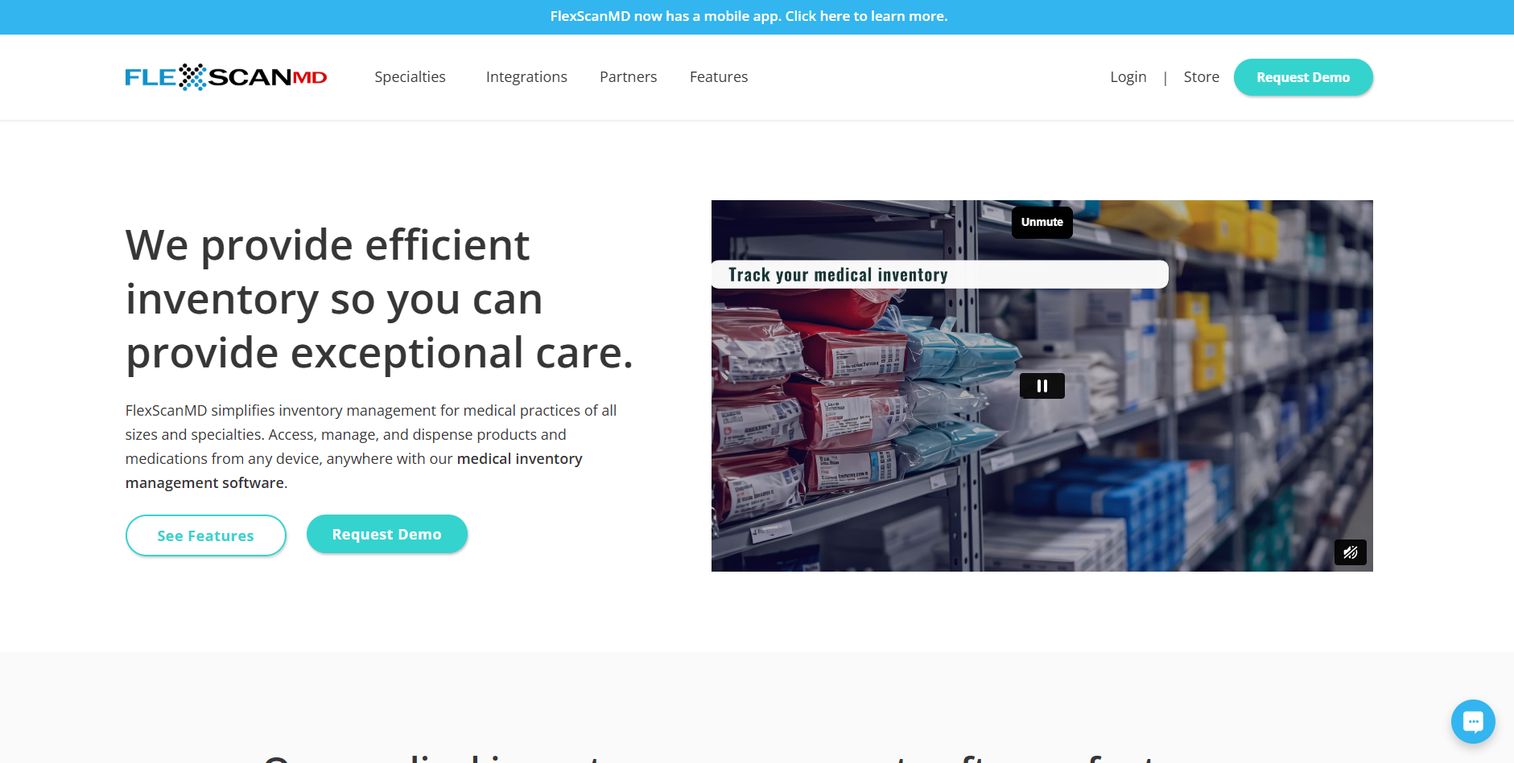
FlexScanMD is cloud-based medical inventory management software built specifically for healthcare practices. Instead of adapting a retail or warehouse tool, it starts from the reality of a medical office: barcode-labeled supplies, expiration-sensitive stock, and the need to prove compliance. That focus makes it the strongest fit for clinics and specialty practices that want inventory control without enterprise overhead.
The platform pairs a mobile app with barcode creation and scanning, so staff track items in and out at the point of use. Real-time alerts and reporting surface low stock and expiring items before they become a problem. Because it runs in the cloud, teams across multiple rooms or sites see the same numbers without maintaining local servers.
Best for: Medical practices and specialty clinics that need barcode workflows and compliance-focused supply tracking.
Key strengths
- Mobile app for point-of-use tracking
- Barcode creation and scanning
- Real-time alerts and reporting
- Cloud access across locations
- Compliance and security focus
Why choose FlexScanMD: If your operation is a clinic or specialty practice rather than a hospital network or device company, FlexScanMD speaks your language out of the box. It avoids the complexity of ERP suites while still handling barcodes, alerts, and audit-ready records.
FlexScanMD pricing: FlexScanMD does not publish plan prices on its site. Access is arranged through a demo request, and the vendor notes discounted monthly subscription access through partners. Request a quote for current numbers.
2. Movemedical
Movemedical is a cloud-based platform for medical device companies that manage inventory in the field. Where most tools assume stock sits in a room, Movemedical assumes it moves: consignment at hospitals, loaner kits shipped for procedures, trunk stock in a rep's car. That field-first design makes it the medical device inventory management software choice for medtech teams.
The platform gives real-time visibility across every stocking location and ties inventory to the order-to-cash process. Reps and ops teams track each item across consignment, loaner, and trunk stock, then automate usage capture and ordering. This cuts the last-mile waste that comes from lost kits and untracked consignment.
Best for: Enterprise medical device companies needing field inventory visibility and workflow automation.
Key strengths
- Real-time field coordination
- Track items across consignment, loaner, and trunk stock
- Automate order-to-cash and usage capture
- Modular platform architecture
- Built for device-heavy operations
Why choose Movemedical: For a device company, inventory in a rep's car is inventory at risk. Movemedical is built for that exact problem, which generic inventory tools handle poorly. It fits teams whose stock lives in the field, not a warehouse.
Movemedical pricing: Movemedical does not list public prices. Pricing is quote-based and arranged through a demo. Its G2 rating stands at 3.8/5.
3. Wasp Inventory
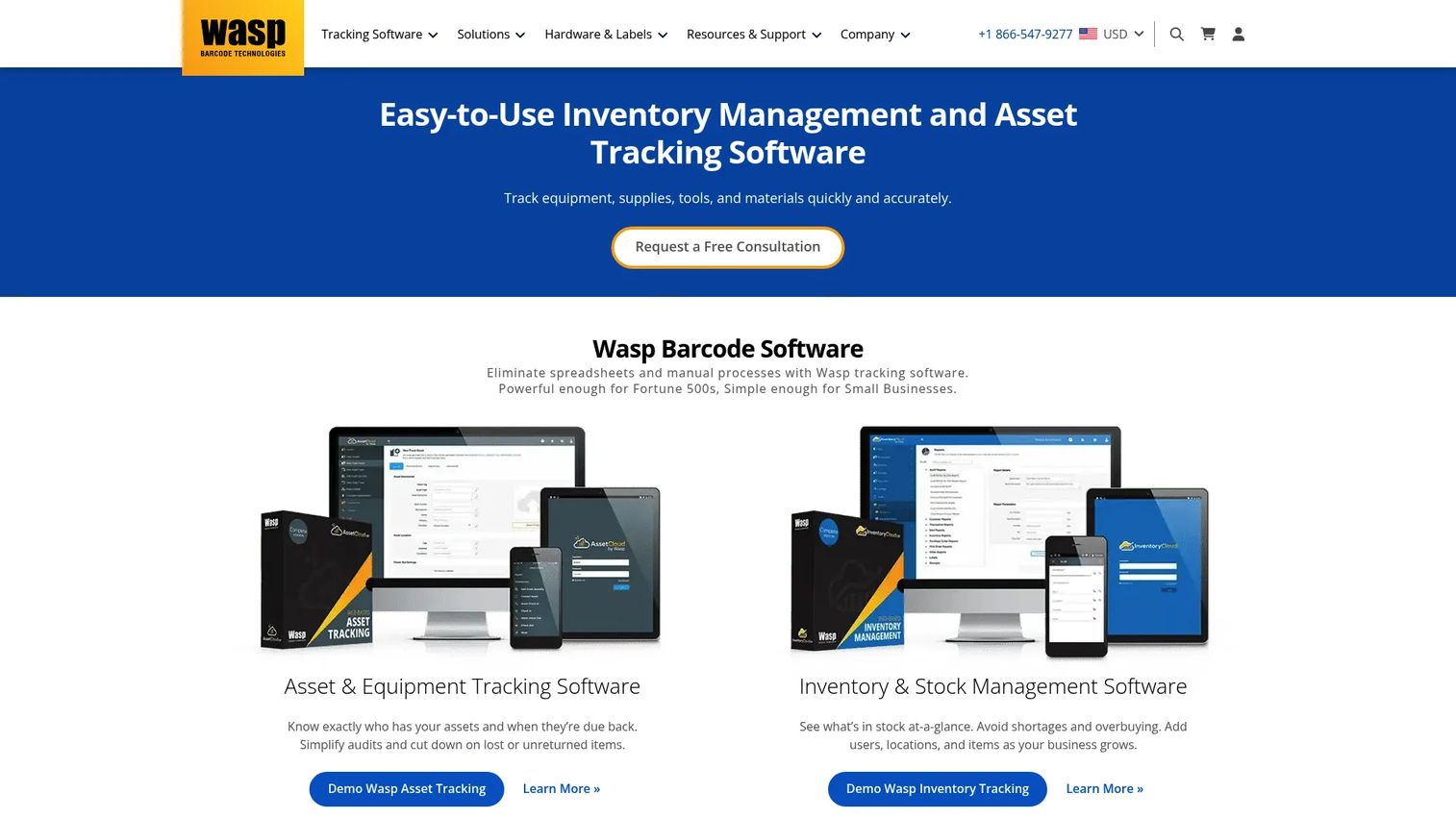
Wasp Inventory is barcode-first inventory management software that works across cloud and on-premise deployments. That deployment choice matters for healthcare buyers with data-residency or IT policies that keep certain systems off the public cloud. For hospital inventory management software needs where control over hosting is a factor, Wasp is worth a look.
The core is barcode scanning tied to alerts and reorder points, backed by a mobile app for counts and transfers. Teams centralize tracking across storage locations, set reorder rules, and pull reports for audits. The lot and transfer tracking supports the traceability healthcare operations need for recalls.
Best for: Healthcare operations needing barcode-based inventory control with cloud or on-premise options.
Key strengths
- Barcode scanning for accurate counts
- Alerts and reorder points
- Mobile app for transfers and cycle counts
- Cloud or on-premise deployment
- Centralized multi-location tracking
Why choose Wasp Inventory: If your IT team requires on-premise hosting or you want the option, Wasp gives you that without giving up barcode workflows or reorder automation. Public pricing also makes budgeting straightforward.
Wasp Inventory pricing: Basic Cloud starts at $108/month and Basic on-premise at $163/month, both billed annually. Complete plans run $333/month cloud and $500/month on-premise. Enterprise is contact-for-pricing. Its G2 rating is 3.6/5.
4. Sortly
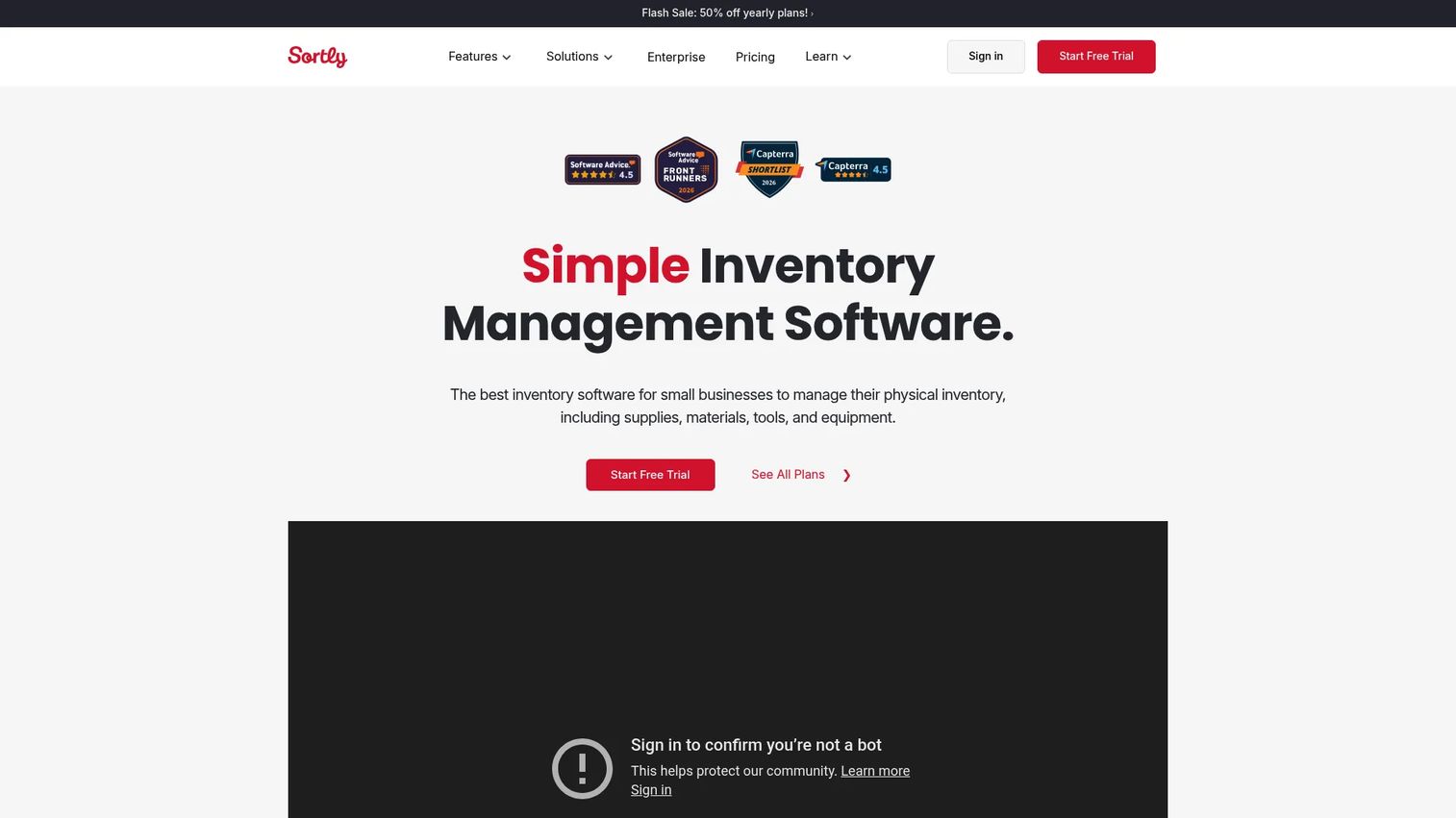
Sortly is inventory management software built around visual, photo-based tracking across web and mobile. For a smaller clinic that finds full medical platforms too heavy, Sortly offers a fast path to organized inventory. Staff photograph items, scan barcodes, and set alerts without a long implementation.
The app handles inventory photos, built-in barcode scanning and labeling, low-stock and date-based alerts, plus reporting and integrations. Date-based alerts cover the expiration tracking clinics need, and the mobile-first design means teams adopt it quickly. A free tier lets small teams start before committing budget.
Best for: Small to mid-sized clinics needing simple visual inventory and light equipment tracking.
Key strengths
- Photo-based visual inventory
- Built-in barcode scanning and labeling
- Low-stock and date-based alerts
- Mobile app with fast adoption
- Reporting and integrations
Why choose Sortly: Sortly wins on simplicity and speed to adopt. It fits clinics tracking supplies and light equipment rather than complex medtech field operations. The free tier lowers the barrier to getting organized.
Sortly pricing: A free plan is available. Advanced is $24/month, Ultra is $74/month, and Premium is $149/month, with a 14-day trial on paid plans. Enterprise is quote-based. Its G2 rating is 4.3/5.
5. eTurns
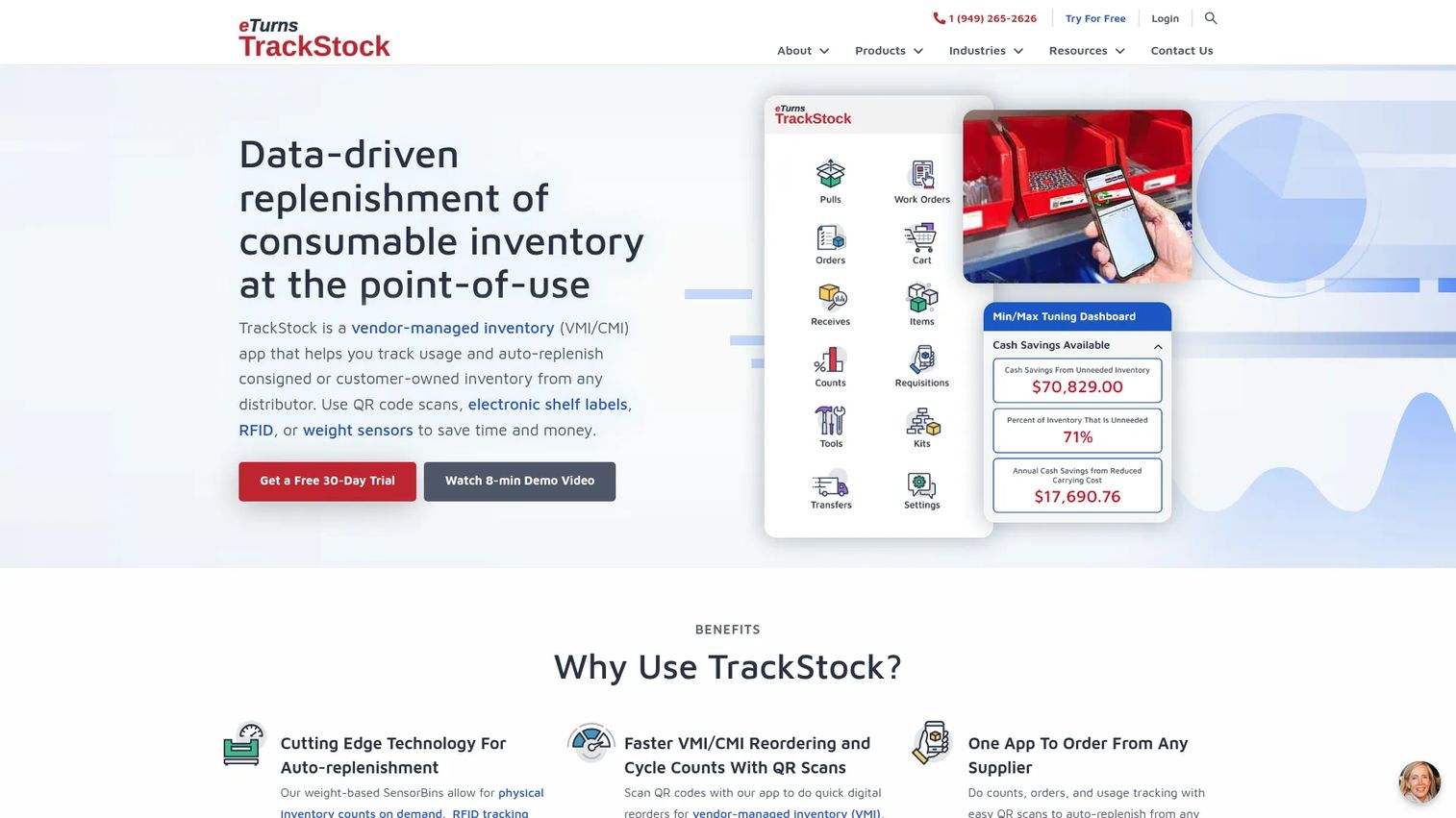
eTurns makes TrackStock, inventory replenishment and point-of-use tracking software for stockrooms and vehicles. Its focus is automation: cutting the manual work of reordering across many supply points. For healthcare teams drowning in replenishment tasks, that automation is the draw.
The platform uses barcode scanning for reorders, cycle counts, pulls, receives, transfers, and returns. Min/max replenishment rules and reporting dashboards keep stock at target levels without constant attention. Optional RFID, SensorBins, and electronic shelf labels extend automation further at high-volume points.
Best for: Distributors, contractors, and healthcare service teams needing automated inventory replenishment and usage tracking.
Key strengths
- Barcode scanning for reorders, counts, and transfers
- Min/max replenishment automation
- Reporting dashboards
- Optional RFID and SensorBins
- Point-of-use and vehicle tracking
Why choose eTurns: If manual reordering eats your team's time, eTurns automates it across both fixed stockrooms and mobile vehicles. The vendor-managed inventory support suits teams coordinating supply across multiple sites.
eTurns pricing: Stockroom plans run from $40/month (Replenish) to $399/month (Optimize), billed semi-annually per stockroom. Vehicle plans run $40 to $129/month per vehicle. A 30-day free trial is offered. Its G2 rating is 4.2/5.
6. NetSuite
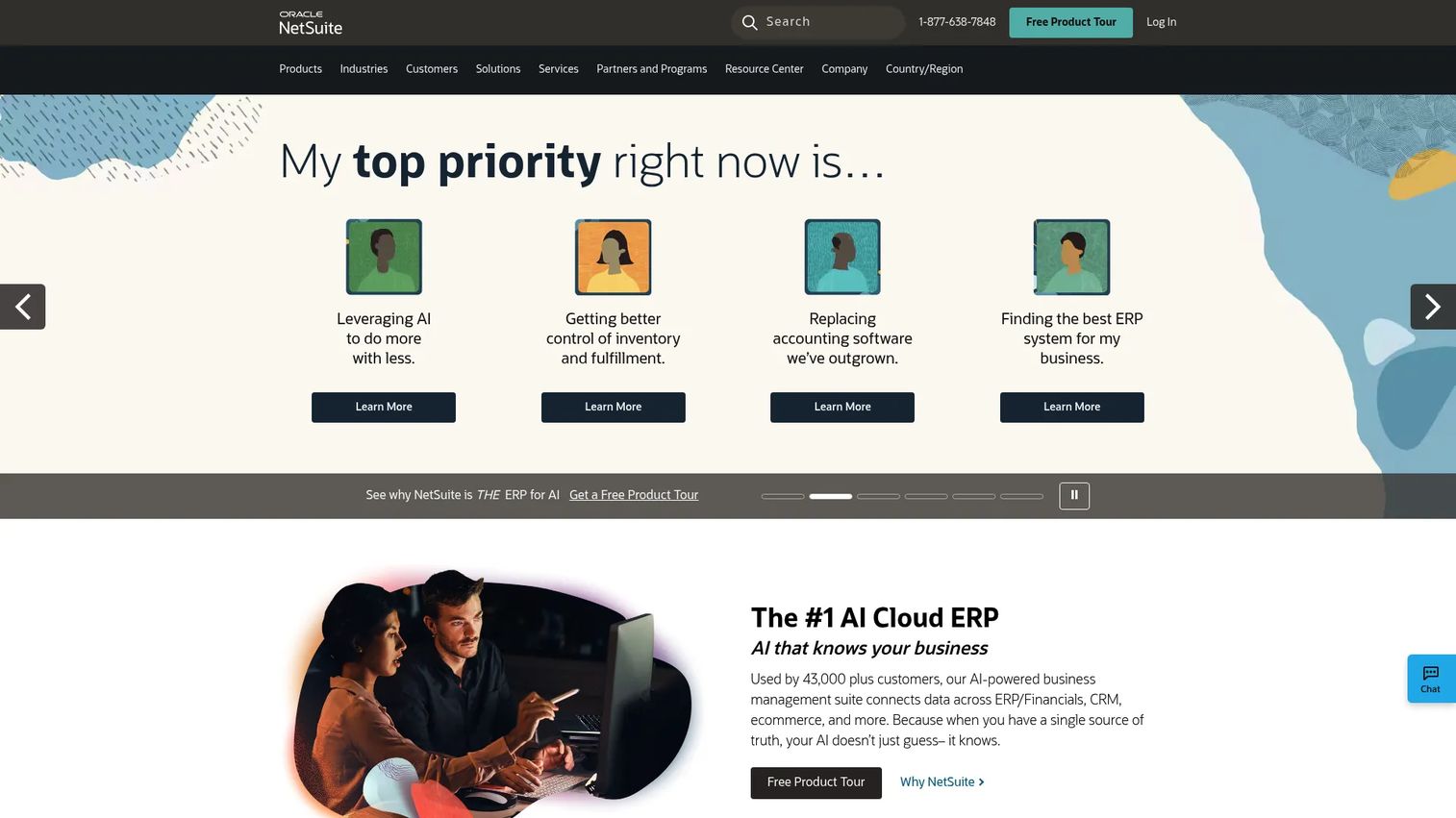
NetSuite is a cloud ERP suite covering finance, operations, ecommerce, and CRM, with inventory as one module inside a much larger system. For a healthcare or medtech organization that needs inventory tied to purchasing, order management, and financial reporting across departments, NetSuite handles the whole back office rather than inventory alone.
The value is integration. Inventory movements feed directly into financials, subscription billing runs through SuiteBilling, and the SuiteCloud platform lets teams customize workflows. For larger orgs where inventory decisions touch finance and operations at once, that connection removes the gaps between separate systems.
Best for: Growing healthcare and medtech organizations needing an integrated cloud ERP suite.
Key strengths
- Cloud ERP and financials
- SuiteBilling subscription management
- SuiteCloud customization and extensibility
- Inventory tied to purchasing and orders
- Cross-department reporting
Why choose NetSuite: NetSuite fits when inventory cannot live in isolation. If purchasing, order management, and finance need to share one system, an ERP is the right layer. Smaller clinics will find it heavier than needed.
NetSuite pricing: NetSuite does not publish public pricing. Plans are quote-based and configured by module, users, and deployment through a sales conversation. Request a quote for numbers specific to your setup.
7. Fishbowl

Fishbowl is inventory and manufacturing software for businesses that make, move, and sell physical products. For medtech operations with production or distribution complexity, Fishbowl brings warehouse-grade workflows plus accounting integration that lighter tools lack.
The platform covers multi-location inventory tracking, barcode scanning, and integration with QuickBooks and Xero. That accounting link means inventory and books stay aligned without double entry. For teams running warehouse or distribution workflows alongside inventory control, Fishbowl handles both.
Best for: SMBs needing inventory control with accounting integration and manufacturing support.
Key strengths
- Multi-location inventory tracking
- Barcode scanning
- QuickBooks and Xero integration
- Warehouse and distribution workflows
- Manufacturing support
Why choose Fishbowl: Fishbowl suits medtech teams whose operations look more like manufacturing or distribution than clinical supply. The accounting integration keeps finance in sync, which matters as volume grows.
Fishbowl pricing: Fishbowl Inventory starts from $229/month, billed annually. Fishbowl Advanced, for manufacturing and warehouse operations, starts from $595/month, priced by users and deployment. Its G2 rating is 4.0/5.
8. inFlow Inventory
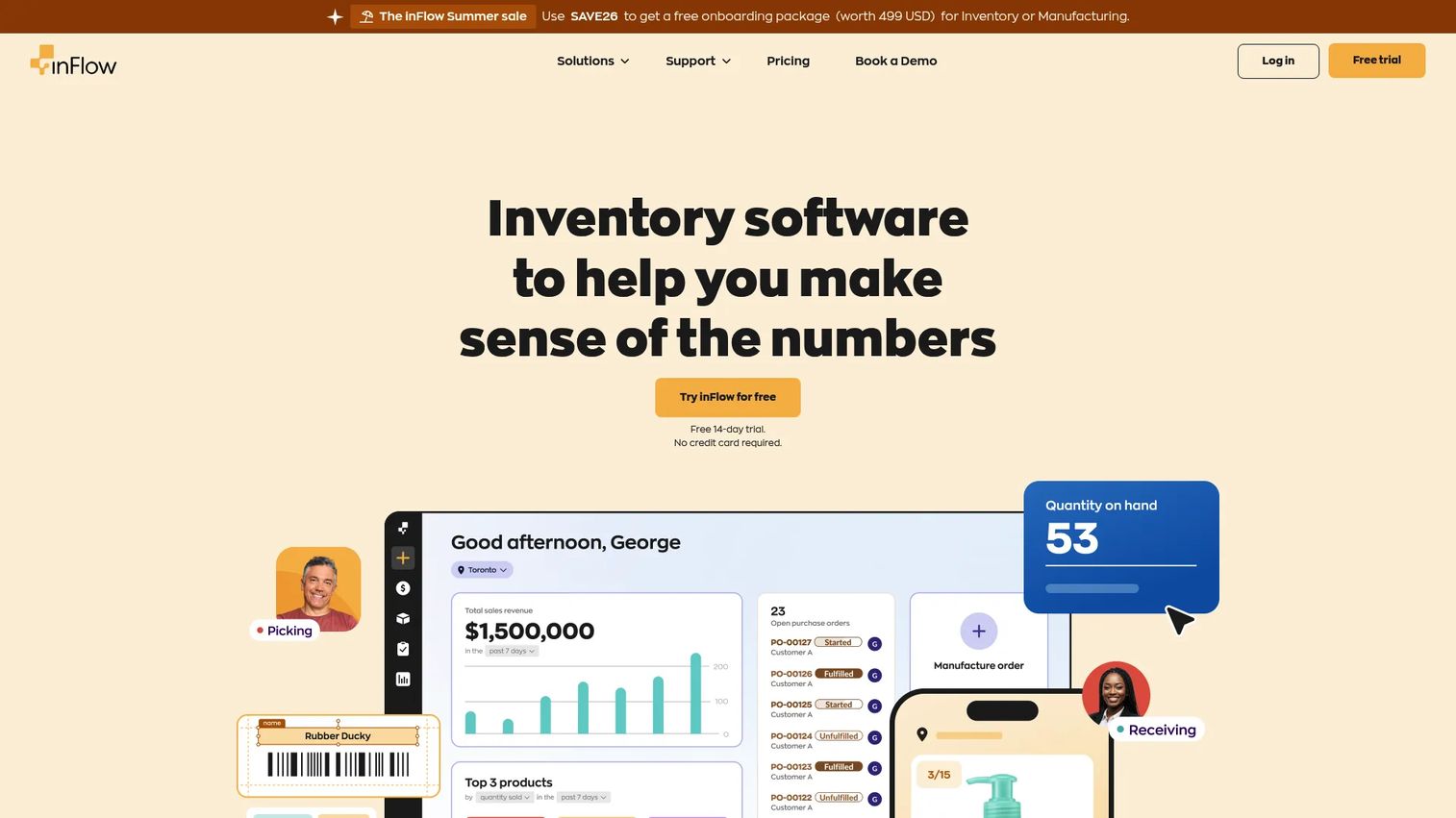
inFlow Inventory is flexible inventory management software for tracking stock, sales, purchases, and manufacturing workflows. It fits smaller healthcare distributors, clinics, or device-adjacent operations that want speed over heavy enterprise process. Setup is quick and the interface stays approachable.
The platform handles inventory tracking with current stock views, sales and purchase order management, plus barcode scanning, labels, and mobile apps. Purchasing and receiving flow through one system, and reorder points keep stock at target levels. For teams that value usability, inFlow gets them running fast.
Best for: B2B wholesale, distribution, and inventory-heavy healthcare operations needing stock and order control.
Key strengths
- Inventory tracking with current stock views
- Sales and purchase order management
- Barcode scanning, labels, and mobile apps
- Reorder points
- Fast setup and approachable interface
Why choose inFlow Inventory: inFlow trades enterprise depth for speed and usability. It fits smaller distribution or clinic operations that want barcode workflows and purchasing without a long rollout.
inFlow Inventory pricing: Plans start at $39/month for Small Business, $49/month for Mid-Size, and $59/month for Enterprise. A 14-day free trial is available. Its G2 rating is 4.4/5.
Considerations before you buy
Match the tool to your operating complexity
A single-room clinic and a hospital network with off-site facilities need different systems. Buying enterprise ERP for a small practice wastes budget and slows adoption. Buying a lightweight app for a device field operation leaves consignment untracked. Map your actual complexity first.
Verify compliance and audit trail depth
Ask exactly what the audit trail records and how long it retains data. Check whether it captures lot numbers, expiration dates, and every transaction with a timestamp. Confirm access controls and whether reporting produces what your auditors expect. Overclaimed compliance is a real risk.
Check integration with your existing stack
Inventory data rarely lives alone. Confirm whether the tool offers EHR integration, connects to your accounting system, or feeds purchasing. A tool that forces double entry into finance creates its own errors. Integration depth often matters more than any single feature.
Test barcode and RFID workflows in practice
Barcode scanning speeds counts, but only if the workflow fits how staff actually move. Run a pilot with real supplies before committing. If you handle high-volume points, ask whether RFID or shelf-label automation is supported and what it costs to add.
Plan for data migration and rollout
Moving from spreadsheets or an old system takes work. Ask about data import, training, and how long implementation typically runs. A tool that adopts fast and imports cleanly reduces the operational drag that stalls many rollouts.
Conclusion
The right medical inventory management choice depends on who you are. For a clinic or specialty practice, FlexScanMD is the most direct fit, built for medical inventory with barcode workflows and compliance in mind. For a hospital or larger organization that needs inventory tied to finance and purchasing, NetSuite gives you the full ERP layer. For a medtech team managing consignment, loaner, and trunk stock in the field, Movemedical is built for that exact motion.
If barcode-first control is the priority, Wasp Inventory offers cloud or on-premise deployment with clear pricing. For replenishment automation, eTurns cuts manual reordering across stockrooms and vehicles. For simple visual tracking, Sortly gets small clinics organized fast, and inFlow Inventory suits smaller distribution operations that want speed.
Shortlist two or three that match your complexity, then request a demo from each. Test barcode workflows, audit trail depth, and integrations against your real supplies before you commit.
FAQs
Medical inventory software tracks medical supplies, devices, medications, and equipment across healthcare facilities. It uses barcode or RFID scanning, expiration and lot tracking, and reorder automation to cut stockouts, reduce waste, and keep records audit-ready. It replaces manual counts and spreadsheets with real-time visibility into what you have and where it sits.
The features that matter most are barcode scanning, expiration and low stock alerts, lot and serial traceability, multi-location inventory, and a complete audit trail. Purchasing, receiving, and reorder automation reduce manual work. For clinical settings, expiration handling and traceability tend to matter more than raw feature count.
It keeps a timestamped record of every scan, transfer, and adjustment, so you can prove chain of custody during an audit. Lot and serial tracking supports recalls, and access controls limit who can change records. When an inspector asks for the history on a lot number, you pull it in seconds instead of digging through paper.
Barcode scanning covers most needs: fast counts, point-of-use tracking, and accurate transfers. For high-volume storage or automated replenishment, RFID and shelf-label systems add hands-free tracking. Most clinics do fine with barcodes alone, while large hospitals and distribution points may benefit from adding RFID.
Hospitals need multi-location inventory once stock lives in more than one place: multiple storage rooms, carts, satellite clinics, or off-site facilities. Multi-location tracking gives one view across all of them, so teams transfer stock between sites instead of over-ordering at each one. A single supply room rarely needs it.
Medical inventory software focuses on tracking supplies, devices, and expirations. ERP software like NetSuite covers the whole back office: finance, purchasing, order management, and inventory as one module. Choose dedicated inventory software when tracking is the main need, and ERP when inventory has to connect to finance and operations across departments.
Teams evaluate medical device inventory management software on whether it tracks stock that moves: consignment at hospitals, loaner kits, and trunk stock in the field. They check usage capture, order-to-cash automation, and real-time field visibility. A tool built for warehouses rarely handles field-based device inventory well, which is why medtech teams look for field-first platforms.
Ask exactly what the audit trail records and how long it retains data. Ask about expiration and lot tracking, multi-location support, and integrations with your EHR or accounting system. Request a walkthrough of a barcode count with your own supply types, and ask about data migration, training, and typical implementation time before you commit.