Your warehouse holds everything. Product usage, subscription status, health scores, lifetime value, the exact feature a user touched last Tuesday. All of it sits in beautiful, modeled tables that almost nobody on the frontline ever opens.
Meanwhile, your sales team works from a CRM field that went stale three weeks ago. Your marketing team builds a campaign around a segment that no longer exists. Your support agents open a ticket with zero context on how much the account actually spends. The insight exists. It just never reached the people who could act on it.
That gap is the reason reverse ETL exists. The global reverse ETL market reached an estimated $485 million in 2024 and is growing at roughly 35% CAGR, driven by real-time personalization and data activation needs, according to Data Intelo. The broader data pipeline market it sits inside was worth $12.09 billion in 2026 and is projected to hit $48.33 billion by 2030, per Integrate.io. Teams are not buying these tools for fun. They are buying because analytics that stay trapped in dashboards do not change outcomes.
For product managers especially, this is an activation problem. You can instrument every event, build every segment, and prove every insight, but if that data never reaches the systems where onboarding, lifecycle, and expansion actually happen, the work sits idle. Reverse ETL is the layer that pushes modeled data back into the tools your teams already live in. If you are also evaluating the adjacent stack, our guides to the best customer data platform options and marketing automation tools pair well with this one, and the best marketing analytics software roundup covers the measurement side.
What's inside
This guide covers the best reverse ETL tools for teams that need to sync warehouse data into CRM, marketing, support, and sales systems without building brittle custom integrations. We picked and ranked platforms on five criteria that decide long-term fit: connector coverage and destination depth, sync latency and freshness, transformation and identity matching, governance and auditability, and total cost of ownership. Each tool entry covers who it fits, its core strengths, why you would choose it, and verified pricing where a public figure exists. The goal is decision help, not another definition dump.
TL;DR
- Best overall for data activation and warehouse sync: Hightouch, for broad connector coverage and warehouse-native audience activation.
- Best dedicated reverse ETL with strong governance: Census, for reliable syncs and controls that scale to larger data teams.
- Best if you already run a broad data movement stack: Fivetran, which adds activation on top of managed ingestion.
- Best integrated analytics plus activation: Domo, when you want BI and downstream workflows in one place.
- Best customer data infrastructure fit: RudderStack, for event collection plus warehouse-first activation.
- Best budget-friendly option: Skyvia, for lean teams and simpler stacks that still need warehouse to app sync.
What is reverse ETL?
Reverse ETL is the process of moving modeled, cleaned data out of your data warehouse and into the operational apps where teams work, such as CRM, marketing automation, and support tools. Where traditional pipelines pull data into the warehouse for analysis, reverse ETL sends it back out for action. That is the whole idea behind data activation and operational analytics: turning the warehouse from a reporting archive into the system of record that powers frontline tools.
Here is how it fits against the patterns it gets confused with:
- What reverse ETL does: Syncs warehouse tables and models into business applications so teams act on live data inside the tools they already use.
- How it differs from ETL: ETL extracts data from sources, transforms it, then loads it into a warehouse or database. Reverse ETL runs the opposite direction, moving transformed warehouse data out to apps.
- How it differs from ELT: ELT loads raw data into the warehouse first, then transforms it in place. Reverse ETL picks up after that transformation and delivers the result to destinations.
- Common destination systems: CRM (crm sync), marketing automation platforms, support desks, sales enablement tools, ad platforms, and finance or ops systems.
- Why it matters in the modern data stack: It closes the loop. Modeled data becomes closed-loop analytics that both reports on and drives the business, instead of dying in a dashboard.
If you are still mapping the surrounding categories, the best CRM software and best data visualization tools guides give useful context on the destinations and the reporting layer.
Reverse ETL vs ETL vs ELT
The confusion is understandable. All three move data, and the acronyms only differ by one word or a reversed order. The distinction that matters is direction and timing.
| Pattern | Direction | When transformation happens | Primary purpose |
|---|---|---|---|
| ETL | Sources to warehouse | Before loading | Centralize and clean source data for analysis |
| ELT | Sources to warehouse | After loading, in the warehouse | Load fast, transform in place at scale |
| Reverse ETL | Warehouse to apps | Upstream, before sync | Activate modeled data in operational tools |
Reverse ETL vs ETL comes down to which way the data flows: ETL fills the warehouse, reverse ETL empties it into the tools people use. Reverse ETL vs ELT is subtler, since both assume a warehouse already holds transformed data, but ELT is about getting data in and modeling it, while reverse ETL is about getting the finished models out. In a mature stack, you run all three. ELT ingests, dbt or SQL models, and reverse ETL activates.
How reverse ETL works
The end-to-end workflow is consistent across nearly every platform on this list.
- Warehouse or lake as source. Your Snowflake, BigQuery, Redshift, or Databricks instance holds the modeled tables you want to activate.
- Modeling and transformation. You define the audience, entity, or record set, usually with SQL, a visual builder, or an existing dbt model.
- Sync orchestration. The platform maps warehouse fields to destination fields, handles conflict rules, and schedules the sync.
- Destination app. Records land in CRM, marketing automation, support, ad platforms, or wherever the team acts.
- Monitoring and error handling. The tool tracks sync status, surfaces failed rows, and alerts you when something breaks.
Sync modes fall on a spectrum. Batch sync runs on a schedule, say every hour or once a day, and fits attributes that do not change minute to minute. Near-real-time sync tightens that window to minutes for fresher fields like lead scores. Event-driven sync fires the moment something happens in the warehouse, which suits triggers like a trial converting or a usage threshold crossing. Most teams mix modes by destination and use case rather than forcing everything into one cadence.
When to use reverse ETL
Personalize campaigns from warehouse attributes
Your warehouse knows which users hit an activation milestone, which accounts are trending toward churn, and which cohorts convert. Reverse ETL pushes those attributes into your marketing automation platform so campaigns segment on real behavior, not guesses. That is the difference between a generic nurture and a message tied to what someone actually did.
Route and enrich leads in CRM
Sales works from the CRM, so the CRM has to be right. Reverse ETL syncs enriched firmographics, product usage, and lead scores into Salesforce or HubSpot so reps prioritize the accounts that matter. Lead enrichment and identity resolution happen upstream in the warehouse, then land as clean fields reps trust.
Trigger customer success workflows
Health scores and usage signals live in the warehouse. Sync them into your success platform and you can trigger customer success workflows automatically: a check-in when usage drops, an expansion play when adoption spikes, a renewal alert before it is too late. Closed-loop analytics stops being a slide and starts being an action.
Send product usage signals to sales and support
Support agents resolve tickets faster when they see plan tier, usage, and account value in context. Sales spots expansion when they see which premium features a champion keeps opening. Reverse ETL feeds those product signals into support desk sync and sales enablement tools so every conversation carries context.
Comparison table
Read this table as a shortlist filter, not a final verdict. Intent tells you the primary job each tool is built for, key differentiation is the reason a team picks it over the rest, and pricing plus G2 rating give you a rough fit and reputation check. Verified public prices are shown where a vendor lists them; several enterprise platforms quote custom pricing, which is normal for this category.
| # | Product | Intent | Key differentiation | Pricing | G2 rating |
|---|---|---|---|---|---|
| 1 | Hightouch | Data activation and warehouse sync | Composable CDP plus AI decisioning on top of reverse ETL | Free Basic Reverse ETL tier; usage-based paid plans | - |
| 2 | Census | Dedicated reverse ETL with governance | Reliable warehouse-to-app syncs with strong controls | Free plan; Professional from $350/mo | - |
| 3 | Fivetran | Managed ingestion plus activation | 700+ managed connectors with 15-minute syncs | Free and Standard plans; usage-based (MAR) | 4.3/5 |
| 4 | Domo | Analytics plus activation | 1,000+ connectors with BI and AI in one platform | 30-day free trial; consumption-based, contact sales | 4.3/5 |
| 5 | RudderStack | Customer data infrastructure | Event collection plus warehouse-first activation | Free forever; Growth from $265/mo | 4.7/5 |
| 6 | Polytomic | Bidirectional warehouse sync | Two-way syncs across warehouses, databases, and APIs | From $500/mo; Standard and Enterprise contact sales | 4.8/5 |
| 7 | Workato | Integration and orchestration | iPaaS automation across many business apps | Usage-based; contact sales | 4.7/5 |
| 8 | Skyvia | Budget-friendly integration | No-code pipelines across 200+ sources | Free; paid from $99/mo | 4.8/5 |
1. Hightouch
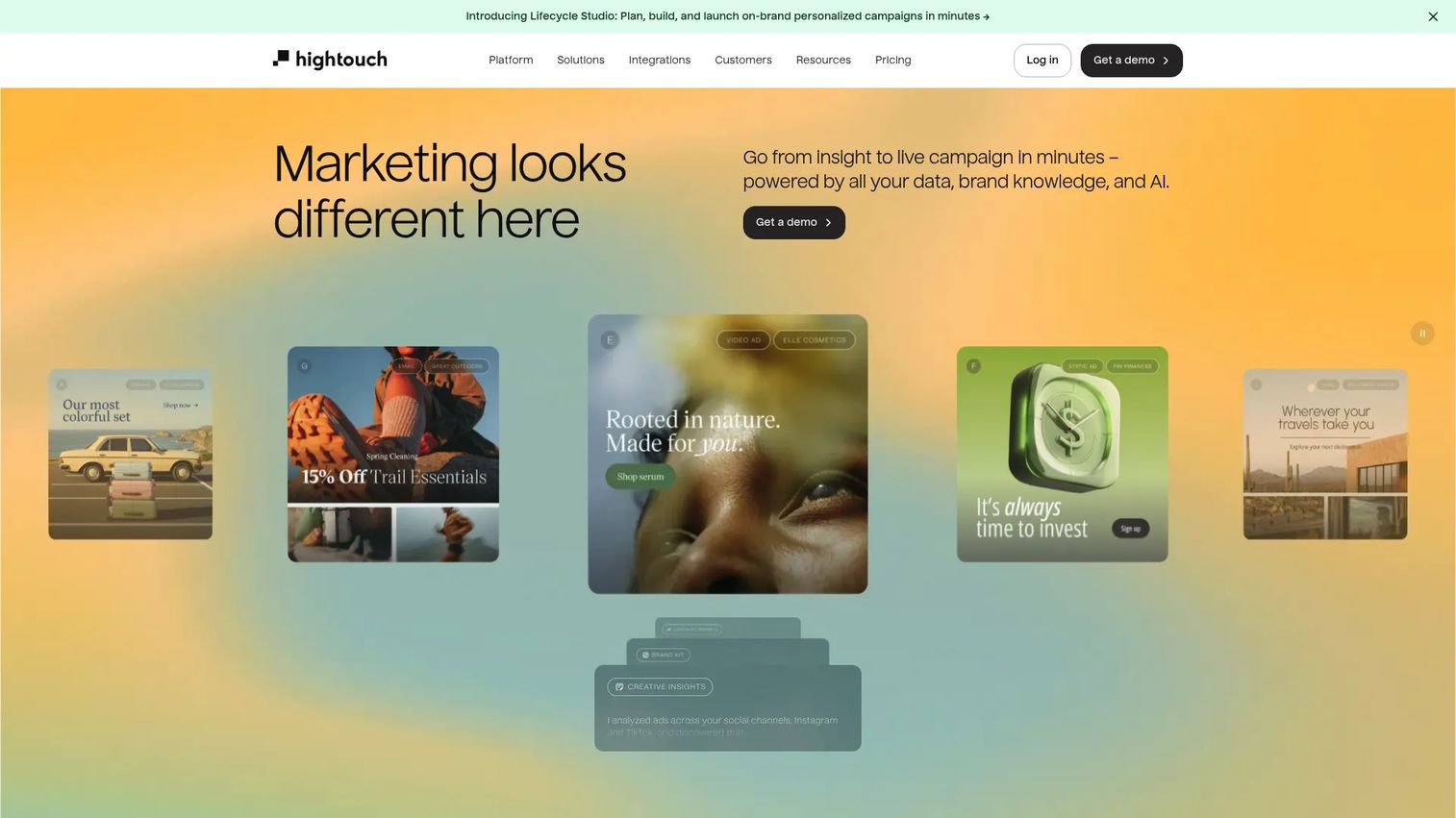
Hightouch is a customer data and AI platform that combines a composable CDP, activation, and AI decisioning on top of a mature reverse ETL engine. It reads directly from your warehouse and syncs modeled data into marketing, sales, and customer-facing tools, which makes it the default choice for teams that want data activation without maintaining custom sync code. For product managers, it means audiences and attributes you model once become usable across every downstream tool.
Best for: Enterprises and data teams that want to activate warehouse data into a wide range of marketing and customer-facing tools.
Key strengths
- Composable CDP and AI decisioning: Build audiences and let AI optimize how they get treated, all anchored to your warehouse.
- Reverse ETL and audience activation: Broad connector coverage pushes modeled data into the tools frontline teams use daily.
- Events collection and real-time personalization: Capture behavioral events and personalize experiences on fresher data.
Why choose Hightouch: If your priority is breadth of destinations and warehouse-native segmentation, Hightouch is hard to beat. It suits teams that already treat the warehouse as the source of truth and want activation, CDP, and AI decisioning under one roof rather than stitched together.
Hightouch pricing: Hightouch lists a free Basic Reverse ETL tier, which is a genuine on-ramp for smaller syncs. Paid self-serve and composable CDP plans are usage-based and demo-led, so there is no single public dollar figure. Pricing scales with what you activate, which fits teams that want to start free and expand.
2. Census
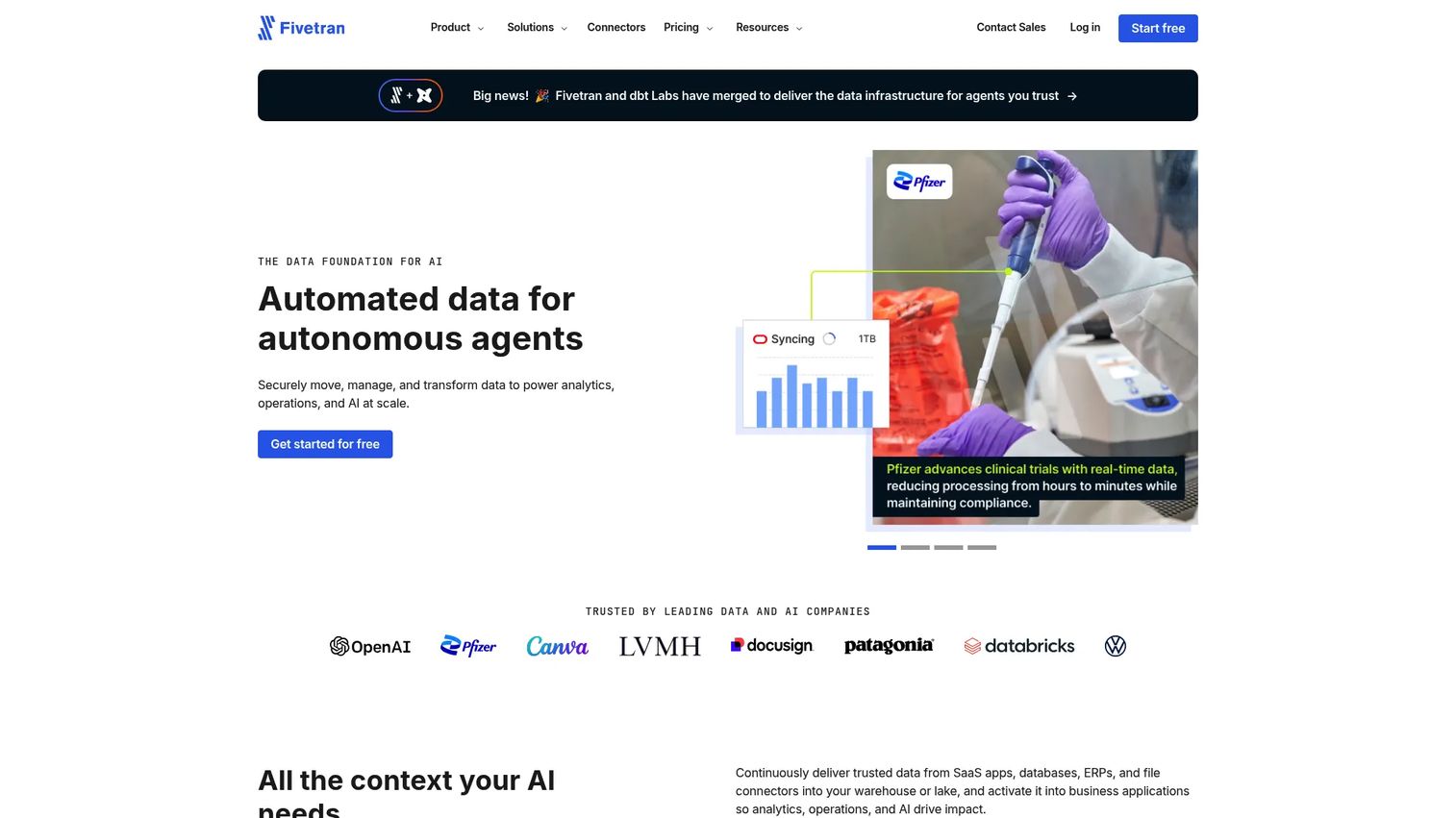
Census is a dedicated data activation platform focused on syncing warehouse data into business apps without heavy engineering work. It leans into governance, segmentation, and sync reliability, which is why it tends to land well with larger data teams that need audit trails and permissions alongside their warehouse to app sync. If you own onboarding data and need it to reach lifecycle tools cleanly, Census is built for that job.
Best for: Teams that need to sync warehouse data into operational tools with governance and permissions built in.
Key strengths
- Reverse ETL and warehouse-to-app syncs: Reliable delivery of modeled data into CRM, marketing, and support destinations.
- Audience segmentation: Build and manage audiences on warehouse data without exporting to another system.
- Data transformation and governance: Controls, permissions, and observability that scale with larger teams.
Why choose Census: Census is a strong pick when reliability and governance rank above raw destination count. Data teams that need to prove who changed what, and when, get the auditability they want without giving up self-serve activation for less technical colleagues.
Census pricing: Census offers a free plan with one destination, which is enough to prove the workflow. A Professional plan reported at $350 per month adds a second destination, and larger deployments move into custom pricing. Start free, validate a use case, then scale destinations as adoption grows.
3. Fivetran
Fivetran is best known as an automated data integration platform for moving data into warehouses and lakes, and it adds reverse ETL through its activation capabilities. The appeal is consolidation: if Fivetran already runs your ingestion, keeping activation with the same vendor means fewer contracts, one operational surface, and connectors you already trust. For teams standardizing on a broad data movement stack, that matters.
Best for: Teams that already use Fivetran for ingestion and want to keep activation with the same vendor.
Key strengths
- 700+ fully managed connectors: Deep source coverage that reduces custom pipeline work.
- 15-minute syncs: Frequent refreshes keep both ingestion and activation reasonably fresh.
- Role-based access control: Governance that fits teams standardizing on one platform.
Why choose Fivetran: Fivetran fits when ingestion is already the backbone of your stack and you want activation layered on rather than bolted on from a separate vendor. The reverse ETL scope is one part of a broader platform, which is exactly the point for teams optimizing for fewer tools.
Fivetran pricing: Fivetran publishes Free and Standard plans and prices on monthly active rows (MAR), so cost tracks with data volume rather than seats. There is no universal public starting figure for the whole platform, and it holds a 4.3/5 rating on G2. Volume-based pricing rewards teams that keep syncs tight and efficient.
4. Domo
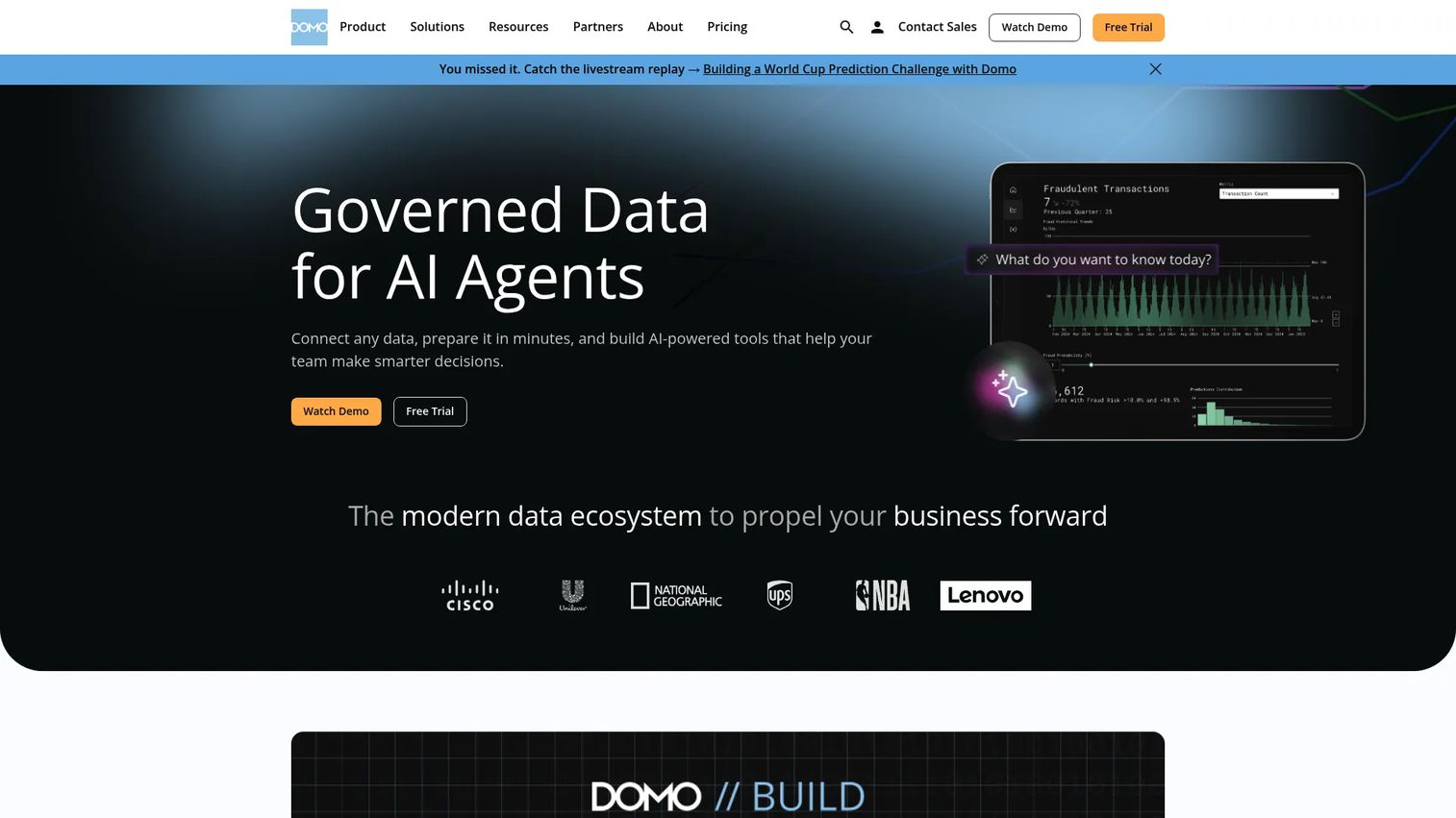
Domo is a cloud data experience platform that folds integration, analytics, AI, and workflow automation into one environment, with activation capabilities alongside its BI. It suits teams that would rather run analysis and downstream operational workflows in a single tool than assemble a dedicated reverse ETL layer separately. For a product team that wants dashboards and activation in the same place, Domo consolidates the stack.
Best for: Teams that want an all-in-one BI, data integration, and AI platform with governance.
Key strengths
- 1,000+ pre-built connectors: Broad source coverage for both ingestion and downstream flows.
- Magic ETL and SQL dataflows: Visual and SQL transformation without leaving the platform.
- Dashboards, embedded analytics, and AI tools: Reporting and activation living in one environment.
Why choose Domo: Domo makes sense when the buyer wants analytics and operational workflows together rather than a best-of-breed reverse ETL specialist. Teams that value one governed platform over a modular stack get analysis, embedding, and activation without wiring multiple vendors.
Domo pricing: Domo uses a consumption-based credit model and offers a 30-day free trial, then directs paid customers to contact sales, so no numeric subscription price is published. It carries a 4.3/5 rating on G2. The trial is a low-risk way to test whether the all-in-one model fits before committing.
5. RudderStack
RudderStack is a customer data platform built to collect, unify, govern, and activate customer data, with a warehouse-first approach that appeals to product and data teams. It pairs event collection with downstream activation, so the same platform that captures behavior also pushes modeled attributes back out. That combination is attractive when you care about event pipelines and operational use cases together, not one or the other.
Best for: Teams that want a customer data platform with event collection, transformations, and warehouse-first activation.
Key strengths
- 16+ SDK sources: Collect events across web, mobile, and server environments.
- 200+ cloud destinations: Wide activation coverage into marketing, sales, and analytics tools.
- Transformations with JavaScript and Python: Shape data in code before it reaches destinations.
Why choose RudderStack: RudderStack fits teams that want event collection and warehouse activation in one customer data platform rather than separate tools. Product teams focused on instrumentation and lifecycle triggers get a pipeline that runs from capture to activation.
RudderStack pricing: RudderStack offers a free-forever plan with 250K events per month, a Growth plan starting at $265 per month with 1M events, and custom Enterprise pricing. It holds a 4.7/5 rating on G2. Event-based pricing suits teams that can start on the free tier and scale as volume grows.
6. Polytomic
Polytomic is a bidirectional ETL and data syncing platform that handles reverse ETL alongside ETL, ELT, and CDC streaming. Its two-way integrations across warehouses, databases, SaaS apps, spreadsheets, and APIs make it a practical fit for teams that want straightforward warehouse to app sync without narrowing themselves to a single direction. For sales, marketing, and support use cases, it keeps records aligned across systems.
Best for: Teams needing a no-code platform for bidirectional sync across warehouses, databases, SaaS apps, and APIs.
Key strengths
- Full sync coverage: ETL, ELT, CDC streaming, and reverse ETL in one platform.
- Self-hosted deployment, RBAC, and audit logs: Governance and control for security-conscious teams.
- Two-way integrations: Sync across databases, warehouses, apps, spreadsheets, and APIs.
Why choose Polytomic: Polytomic suits teams that want one tool for movement in both directions and value no-code operation with real governance. Its self-hosted option and audit logs make it credible for teams with stricter security requirements.
Polytomic pricing: Polytomic pricing begins at $500 per month. Standard and Enterprise are contact-sales plans, with Enterprise adding on-prem deployment, SSO, a dedicated engineer, and phone support. It earns a 4.8/5 rating on G2. The entry price signals a fit for teams past the earliest stage that want depth and governance.
7. Workato
Workato is an enterprise orchestration and automation platform that integrates apps, data, processes, and AI agents, with reverse ETL-like capabilities as part of a much broader scope. It fits buyers who want to automate workflows across many business systems, not only push warehouse data to apps. If your requirement extends into cross-app orchestration and governance, Workato covers more ground than a dedicated activation tool.
Best for: Enterprises that need governed integration, automation, and orchestration across many systems.
Key strengths
- Integration and workflow automation: Connect and automate processes across a large app ecosystem.
- Data orchestration: Move and coordinate data across systems as part of larger workflows.
- API platform and governance: Enterprise-grade controls for regulated environments.
Why choose Workato: Workato is the pick when the job is broader than warehouse activation and includes cross-app automation and orchestration. Enterprises consolidating integration and automation under one governed platform get reach that a single-purpose reverse ETL tool does not aim to cover.
Workato pricing: Workato uses a usage-based model with platform edition fees plus usage fees, and it does not publish numeric prices, so plans move through sales. It holds a 4.7/5 rating on G2. The model fits larger organizations that can size usage against the breadth of automation they plan to run.
8. Skyvia
Skyvia is a no-code cloud data integration, automation, backup, and connectivity platform that supports reverse ETL workflows alongside ETL and ELT. It connects across 200+ sources and leans toward ease of use, which makes it a sensible option for smaller teams or simpler stacks that need lighter-weight activation. When you want warehouse to app sync without a heavy platform commitment, Skyvia keeps things approachable.
Best for: Teams needing no-code data integration and automation across many cloud apps and databases.
Key strengths
- ETL, ELT, and reverse ETL pipelines: Cover multiple movement patterns in one no-code tool.
- Data sync, migration, and workflow automation: Handle everyday integration jobs without engineering.
- Live connectivity across 200+ sources: Broad app and database coverage for smaller stacks.
Why choose Skyvia: Skyvia is the budget-conscious choice for lean teams that need reverse ETL among several integration jobs rather than a specialized activation platform. Public tiered pricing and a free plan make it easy to start small and predict costs.
Skyvia pricing: Skyvia publishes clear tiers for data integration: a free plan at $0, Basic at $99 per month, Standard at $199, Professional at $499, and custom Enterprise pricing, with annual options on paid tiers. It carries a 4.8/5 rating on G2. Transparent pricing is a real advantage when budget predictability matters.
Considerations
Before you commit, walk the same checklist for every shortlisted tool. The differences that bite later are rarely visible in a demo.
Connector coverage and destination depth
List every destination you need today and the two or three you will need next year. Then verify not just that a connector exists, but how deep it goes: which objects, which fields, which write modes. A connector that syncs contacts but not custom objects can quietly block your use case.
Sync latency and freshness requirements
Match the sync mode to the job. Batch sync is fine for attributes that change slowly. Lead scores and health signals want near-real-time sync. Conversion and threshold triggers want event-driven delivery. Confirm the freshness each tool actually delivers on the destinations you care about, not the headline number.
Governance, permissions, and auditability
If a non-technical teammate can change a sync that touches the CRM, you need to see who changed what and when. Check role-based access, approval flows, versioning, and audit logs. For regulated environments, confirm compliance posture before, not after, procurement.
Transformation and identity matching
Decide where transformation happens: upstream in dbt or SQL, or inside the tool. Then look hard at identity resolution and conflict handling. When two systems disagree on the same record, the tool's default merge rules decide who wins, and that logic shapes data quality across every destination.
Total cost of ownership and implementation effort
Look past the sticker. Usage-based and MAR-based models scale with volume, so model your real data patterns. Add implementation time, maintenance, and the engineering hours you save versus custom pipelines. The cheapest license is not always the lowest TCO.
How to choose the right reverse ETL tool
The right pick follows your stack and your constraints, not a leaderboard.
- If you need deep enterprise governance, prioritize the platforms with the strongest permissions, audit logs, and controls. Census and Polytomic both suit data teams that must prove exactly who changed what.
- If you already run a broad data stack vendor, evaluate the bundled activation layer first. Fivetran for ingestion-led stacks and Domo for analytics-led ones both let you consolidate instead of adding a vendor.
- If you need cross-app automation beyond warehouse sync, compare iPaaS options. Workato reaches into orchestration and process automation that a dedicated reverse ETL tool is not built to cover.
- If you are a lean team, prioritize quick setup, transparent pricing, and the essential destinations. Skyvia and the free tiers on Hightouch, Census, and RudderStack let you prove value before you spend.
For most product-led teams that treat the warehouse as the source of truth and want the widest activation surface, Hightouch is the strongest starting point. RudderStack is the natural pick when event collection and activation belong in the same platform.
Conclusion
Reverse ETL is not about replacing your warehouse. It is about putting modeled data where teams actually work, so the insight you already built changes what happens in CRM, marketing, support, and sales.
By team type, the shortlist is clear. Hightouch is the best overall for warehouse-native data activation. Census is the best enterprise-governed dedicated platform. Fivetran and Domo are the best broader-platform fits when you want ingestion or analytics in the same vendor. RudderStack fits customer data infrastructure needs, Polytomic covers bidirectional sync, Workato reaches into cross-app orchestration, and Skyvia is the best lightweight, budget-friendly option.
Your next step: shortlist two tools that match your stack and governance needs, then run a single real use case through each, one destination, one audience, end to end. The tool that gets clean data into the app fastest, with controls you trust, is the one to scale. While you map the surrounding stack, our guides to content marketing tools, account based marketing software, and agentic analytics platforms are worth a look, and you can always start your journey with Guideflow when you need to show your product, not just move its data.
FAQs
Reverse ETL takes the clean, modeled data sitting in your warehouse and copies it into the apps your teams use, like your CRM, marketing platform, and support desk. Instead of pulling data in for analysis, it pushes data back out for action. Think of it as the delivery step that turns insight into something a rep or agent can actually act on.
ETL moves data from sources into a warehouse and transforms it along the way, so the goal is to centralize and clean data for analysis. Reverse ETL runs the opposite direction, moving already-transformed warehouse data out to business apps. Same building blocks, opposite flow, different purpose.
ELT loads raw data into the warehouse first and transforms it in place, focusing on getting data in and modeling it at scale. Reverse ETL picks up after that modeling is done and delivers the finished result to operational tools. ELT is about ingestion and transformation, reverse ETL is about activation.
Marketing uses it to personalize campaigns from warehouse attributes. Sales uses it to enrich and prioritize leads in the CRM. Support and customer success use it to see account context and trigger workflows, and ops teams use it to keep systems in sync. Any team that acts on data inside an app, rather than a dashboard, benefits.
It depends on how your CDP is built. A warehouse-native or composable CDP often includes reverse ETL as its activation layer, so you may already have it. A packaged CDP that stores data outside your warehouse can leave gaps that a dedicated reverse ETL tool fills, especially when you want the warehouse as the single source of truth.
Check connector coverage and destination depth, the sync latency each tool delivers, and how it handles transformation and identity resolution. Then weigh governance, permissions, and audit logs against your compliance needs, and model total cost of ownership against your real data volume. The best fit balances all five, not just price.
Most support a spectrum. Batch sync runs on a schedule for slow-changing attributes, near-real-time sync tightens the window to minutes for fresher fields, and event-driven sync fires the moment something happens in the warehouse. Teams usually mix modes by destination rather than forcing everything to one cadence.
For most warehouse-to-app use cases, yes, and that is the point: managed connectors, field mapping, and error handling replace brittle scripts your team would otherwise maintain. Very unusual destinations or bespoke logic can still need custom work, but a good reverse ETL platform removes the majority of that engineering burden and keeps syncs observable.