Restaurant marketing looks simple from the outside. Send offers, post photos, reply to reviews, fill slow nights. Inside the workflow, it is messier. Guest data lives in the POS, reservations sit in a separate system, loyalty lives in another app, and campaign performance gets rebuilt in spreadsheets every month.
That fragmentation has a cost. According to the National Restaurant Association's State of the Restaurant Industry report (2025), 65% of restaurant operators planned to invest in digital or location-based marketing that year, yet most still fight to connect what a campaign costs to what a customer actually did next. The gap between sending an email and knowing whether it drove a reservation or a direct order is where most restaurant marketing ROI disappears.
The right restaurant marketing software closes that gap. It connects guest data to campaigns, campaigns to outcomes, and outcomes to decisions you can defend to an operator or a CFO. This guide compares 15 tools, covering email marketing, SMS, loyalty, reviews, social, events, websites, and POS-connected marketing, so you can build a stack that proves its value.
What's inside
This guide compares 15 restaurant marketing tools for 2026, chosen for restaurant relevance, integration depth, and measurable impact on guest acquisition and retention.
- Who it's for: Restaurant marketing managers, growth marketers at multi-location brands, and operators choosing tools without a dedicated marketing hire
- How tools were chosen: Restaurant-specific use case fit, POS and reservation integration quality, pricing accessibility, and G2 reviewer sentiment
- What's covered:
- Best tools for repeat visits, loyalty, and guest retention
- Best tools for email, SMS, and marketing automation
- Best tools for reviews, social, events, and restaurant websites
- What to check before adding another tool to your restaurant stack
TL;DR
- Best overall restaurant marketing platform: Klaviyo, for teams that want restaurant guest data, segmentation, email, SMS, and marketing analytics in one layer
- Best for POS-native marketing: Toast, Square, or Lightspeed, depending on which POS already runs the restaurant
- Best for reservation-heavy hospitality groups: SevenRooms and OpenTable, where guest profiles and booking behavior drive campaigns
- Best for retention and loyalty: Thanx, for restaurants prioritizing repeat visits and lifecycle marketing tied to transaction data
- Best for reputation and local visibility: Birdeye, for review management, listings, and local SEO workflows
- Best lightweight stack pieces: Mailchimp, Textedly, Hootsuite, Canva, Tripleseat, Eventbrite, and BentoBox, depending on the specific gap
What is restaurant marketing software?
Restaurant marketing software helps restaurants attract guests, collect and organize customer data, run campaigns, measure performance, and increase repeat visits across channels like email, SMS, social, reservations, ordering, loyalty, and reviews.
This is not a single narrow tool category. It spans restaurant CRM, loyalty management, email and SMS automation, reputation management, event marketing, social publishing, website and ordering platforms, and POS-connected campaign tools. The strongest platforms connect first-party data from POS, online ordering, and reservations so marketers can segment by actual visit behavior, not just demographic guesses.
Core capabilities to look for
- Guest profiles and restaurant CRM: Unified records tied to reservations, orders, loyalty, and feedback
- POS, reservation, and ordering integrations: Data flows that connect transactions to campaigns
- Email and SMS campaign automation: Triggered messages based on visit dates, lapsed behavior, or loyalty milestones
- Segmentation by behavior and spend: Target lapsed diners, high-LTV guests, or specific locations separately
- Review management and local listings: Workflows for responding to reviews and keeping listings accurate
- Social media publishing: Content calendars for Instagram, Facebook, and other channels
- Event and private dining promotion: Lead capture, proposals, and ticketing for experiences
- Marketing analytics and attribution: Campaign outcomes tied to repeat visits and direct orders
How restaurant marketing software differs from generic marketing platforms
A generic email marketing tool can send campaigns. Restaurant marketers usually need triggers based on table reservations, order history, loyalty status, or time since last visit. Win back a guest who hasn't ordered in 60 days. Send a private dining offer to guests who previously booked for six or more. Promote weekday lunch to customers near a specific location. Connect a campaign to direct orders, not just opens. Generic tools can't do that without substantial workarounds. Restaurant-specific software is built for those workflows.
When to use restaurant marketing software
Drive repeat visits with segmented campaigns
A $10 discount sent to every guest on your list trains your best customers to wait for offers. The more effective approach targets lapsed diners, high-frequency loyalists, and location-specific audiences with different messages and incentives. Restaurant marketing software makes that segmentation executable without a data engineer.
Connect POS, ordering, and campaign data
Restaurant marketers cannot prove ROI when tickets, bookings, delivery orders, and emails live in separate systems. The right platform reduces spreadsheet reconciliation and makes it visible whether a campaign drove a booked table or a direct order, not just an open or click. That's the attribution your CFO will actually believe.
Market across locations without losing local relevance
Central teams need brand governance and consolidated reporting. Local operators need promotions that fit their market, menu, and staffing. Good restaurant marketing software handles both: A single system where brand standards hold and location managers can still push a slow-Tuesday special.
Restaurant marketing software comparison
The table below is a shortlist, not a universal ranking for every restaurant. Use the "Best for" column first to narrow by operating model. All pricing and G2 ratings were verified against vendor pages and current G2 listings.
| # | Product | Best for | Key differentiator | Pricing | G2 rating |
|---|---|---|---|---|---|
| 1 | Klaviyo | Restaurant CRM and lifecycle marketing | Guest segmentation across email, SMS, and analytics | From $20/mo | 4.6/5 |
| 2 | Square | Independent restaurants and local operators | POS-native customer engagement and payments data | Free; paid from $49/mo per location | N/A |
| 3 | Toast | Restaurants using Toast POS | Restaurant-native POS, ordering, loyalty, and marketing | From $0/mo (Starter Kit) | 4.2/5 |
| 4 | SevenRooms | Reservation-heavy restaurants and groups | Guest profiles tied to reservations and hospitality data | Custom pricing | 4.7/5 |
| 5 | Mailchimp | Simple email marketing | Familiar email automation for smaller teams | Free; paid from $13/mo | 4.4/5 |
| 6 | Textedly | SMS campaigns | Straightforward bulk texting and promotions | From $29/mo | 4.6/5 |
| 7 | Birdeye | Reviews and reputation | Review management, listings, and local reputation | Custom pricing | 4.7/5 |
| 8 | Hootsuite | Social media scheduling | Multi-channel publishing and social workflow management | From $99/mo per user | 4.3/5 |
| 9 | Canva | Restaurant creative production | Fast menu, social, and promo design | Free; Pro from $144/yr | 4.7/5 |
| 10 | Tripleseat | Private dining and events | Event lead management and catering sales workflows | Custom pricing | 4.5/5 |
| 11 | Eventbrite | Ticketed events and pop-ups | Event discovery, ticketing, and attendee promotion | Free for free events; fees per ticket | 4.3/5 |
| 12 | BentoBox | Restaurant websites and direct ordering | Restaurant-specific sites and online ordering | Custom pricing | 4.6/5 |
| 13 | Lightspeed | POS-connected marketing and loyalty | Restaurant POS with customer engagement tools | From $89/mo | 4.4/5 |
| 14 | OpenTable | Reservations and diner discovery | Marketplace reach plus reservation and guest engagement | From $149/mo | 4.4/5 |
| 15 | Thanx | Loyalty and retention | Loyalty, personalization, and lifecycle marketing | Custom pricing | N/A |
Best 15 restaurant marketing software tools for 2026
1. Klaviyo
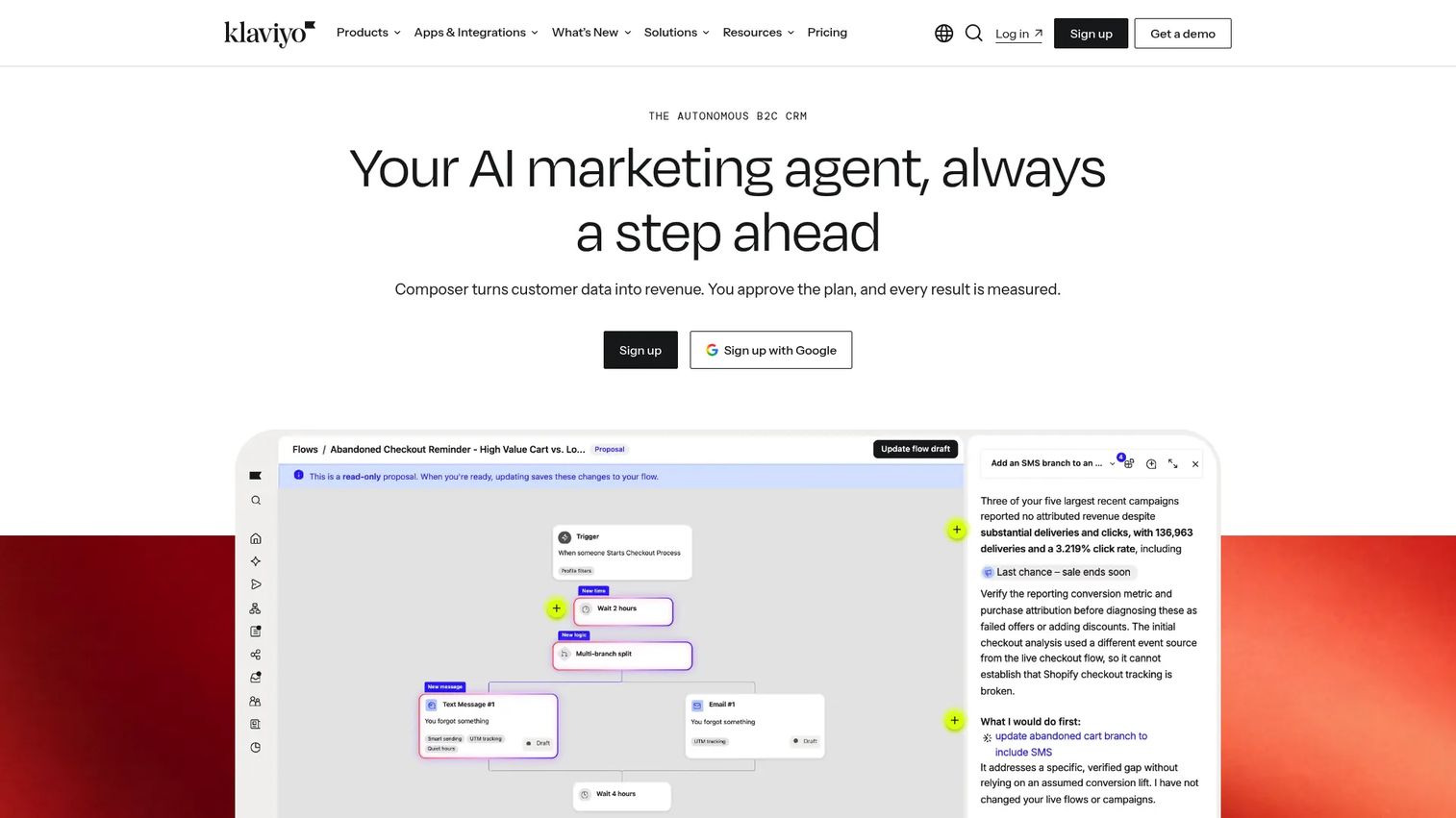
Klaviyo is a B2C CRM and marketing platform built around customer data, email, SMS, and automation. For restaurant marketers, it works as the central marketing layer that connects guest records to campaigns and campaigns to measurable outcomes. It integrates with POS and ordering platforms, so you can segment by visit frequency, order value, lapsed status, and loyalty tier rather than by generic demographic data.
Best for: Multi-location restaurant brands and growth marketers who need lifecycle campaigns and data-driven segmentation.
Key features
- Email and SMS campaigns with behavioral triggers
- Customer segmentation using predictive analytics
- Marketing automation flows for winback, birthday, and loyalty campaigns
- 400+ integrations including restaurant and ordering platforms
- AI-powered campaign assistant for content and optimization
Why choose Klaviyo: It fits restaurants ready to treat guest data as a growth asset. Klaviyo earns its place in a stack when the goal is retention and repeat revenue, not just one-off campaign sending.
Klaviyo pricing: Free plan covers up to 250 active profiles and 500 email sends per month. Paid Email plans start at $20/month for 500 active profiles. Pricing scales by active profile count.
G2 rating: 4.6/5
2. Square
Square is an all-in-one commerce platform for payments, POS, and business operations. For independent restaurants, cafes, and food trucks already using Square hardware, its customer and marketing tools let you build basic guest profiles, run email campaigns, and manage a loyalty program without adding separate software. The appeal is consolidation: Fewer disconnected tools, one dashboard for sales and customer data.
Best for: Operators who want POS, payments, customer data, and basic marketing close together without managing multiple vendors.
Key features
- POS customer profiles built from payment transactions
- Email marketing campaigns tied to purchase history
- Square Loyalty for repeat visit incentives
- Online ordering with first-party customer data
- Payment data for segmentation and reporting
Why choose Square: The consolidation value is real for smaller operations. If the restaurant is already on Square, adding marketing and loyalty here avoids another monthly subscription and another login.
Square pricing: Square Free has no monthly fee per location. Square Plus runs $49/month per location and Square Premium is $149/month per location. Loyalty and marketing tools may require add-ons or specific plan tiers.
3. Toast
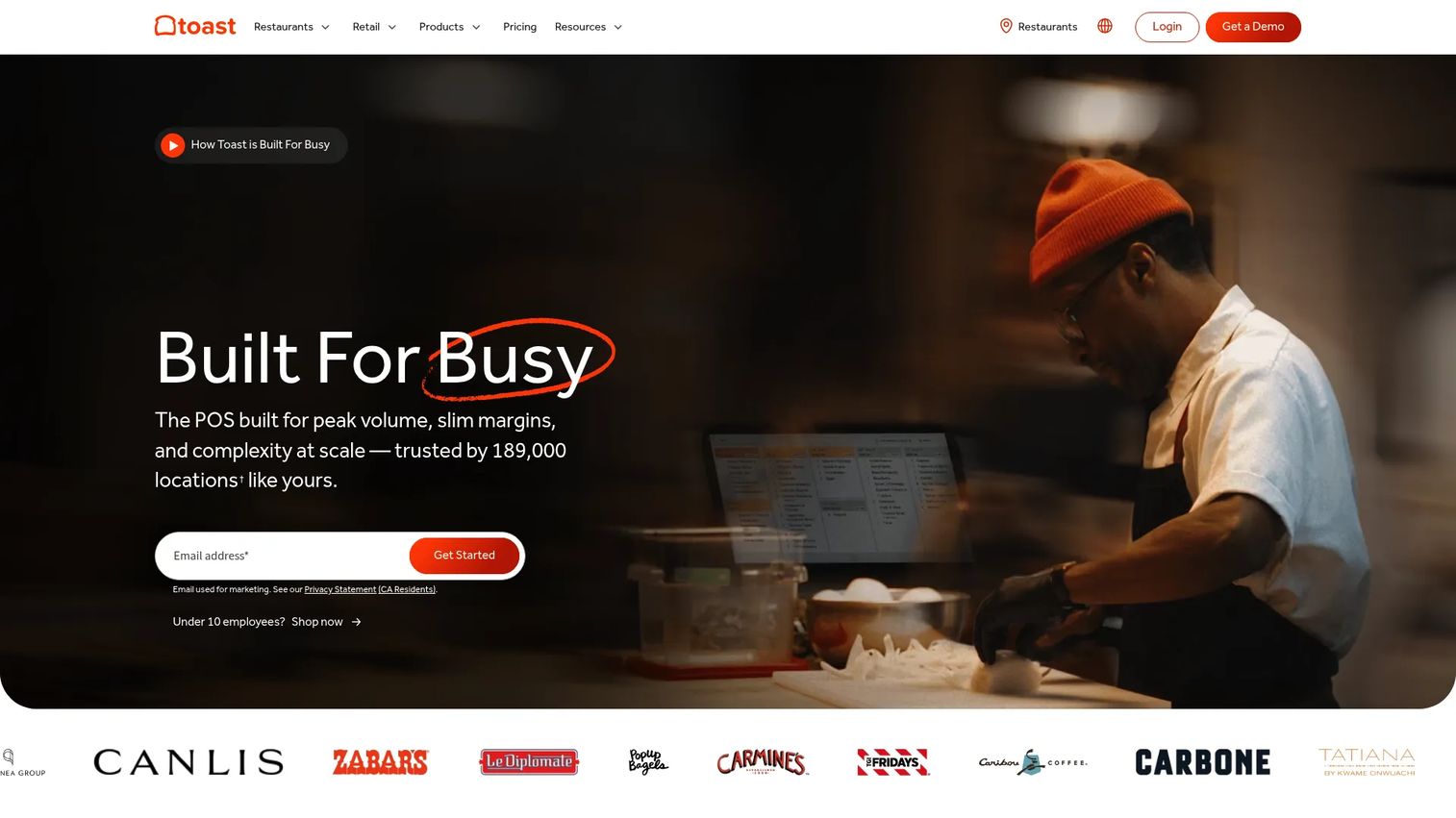
Toast is a restaurant-native platform covering POS, payments, online ordering, loyalty, marketing, payroll, and back-office reporting in one system. For restaurants committed to Toast POS, the marketing tools sit directly on top of transaction data. Birthday campaigns, loyalty rewards, and email sequences trigger from real order and visit behavior, not from imported lists.
Best for: Restaurants using Toast that want marketing connected to ordering data, loyalty, and direct revenue, without a separate marketing platform.
Key features
- POS-native guest data from every transaction
- Loyalty program with points, rewards, and member segmentation
- Email marketing with order-based triggers
- Online ordering with first-party customer capture
- Restaurant reporting across sales, labor, and marketing performance
Why choose Toast: The main advantage is restaurant context. When the entire stack runs on Toast, campaigns connect directly to order behavior and campaign ROI is visible in the same reporting layer as sales.
Toast pricing: Starter Kit begins at $0/month. Point of Sale plans start at $69/month. Marketing and loyalty features may be add-ons depending on the plan. Ask sales about module pricing and hardware costs separately.
G2 rating: 4.2/5
4. SevenRooms
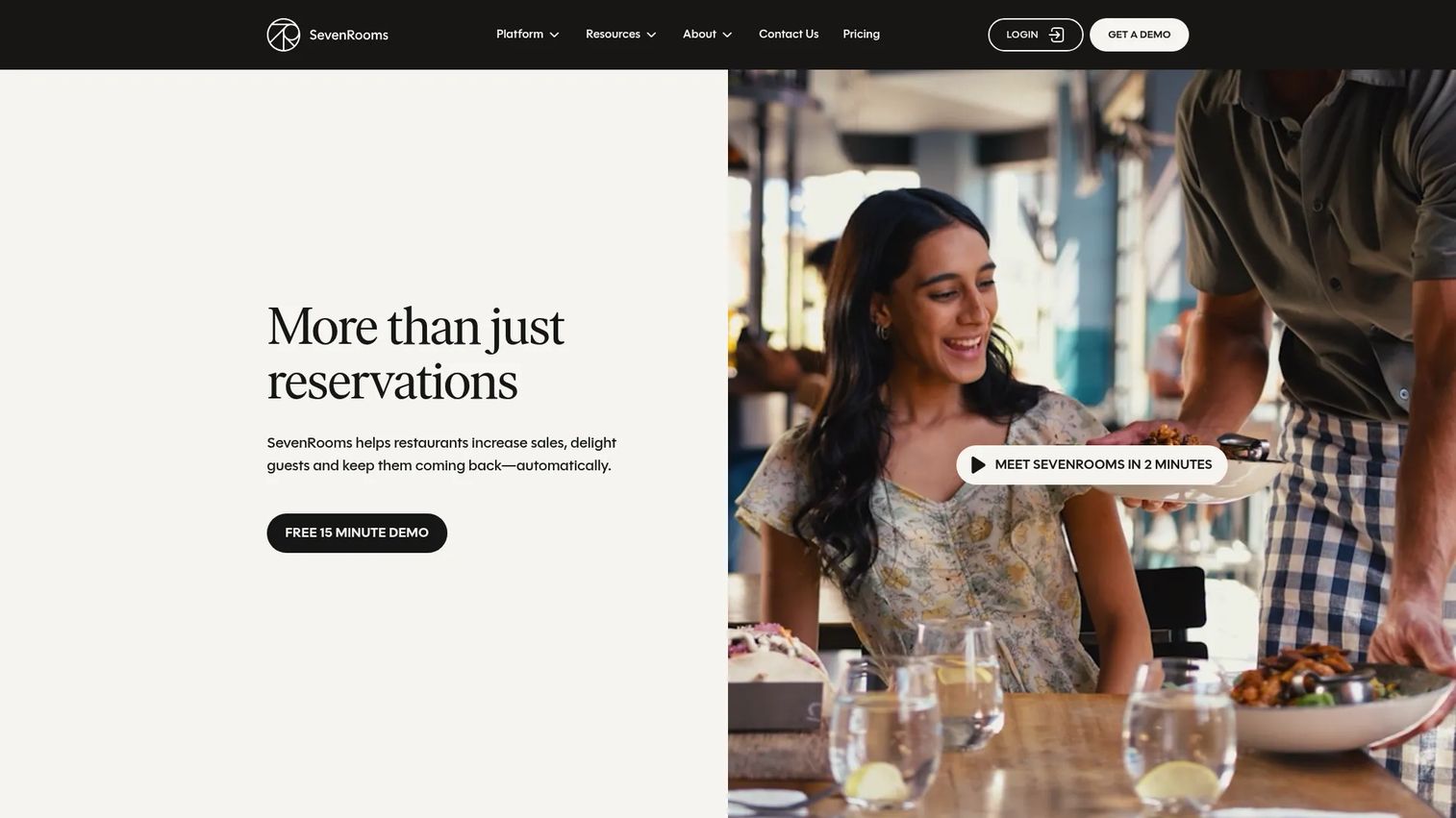
SevenRooms is a hospitality guest-experience platform combining reservations, CRM, marketing automation, table management, events, and reputation tools. Where most marketing software starts with campaigns, SevenRooms starts with the guest profile and works outward. Every reservation, dining preference, spend pattern, and feedback entry builds a richer record that feeds more personalized outreach.
Best for: Restaurants and hospitality groups where bookings, guest recognition, and service-level personalization drive retention.
Key features
- Guest CRM with reservation history, preferences, and tags
- AI-powered table management and seating optimization
- Automated email and SMS campaigns triggered by reservation behavior
- Guest feedback and reputation management
- Voice AI for call-based reservations and guest inquiries
Why choose SevenRooms: It fits restaurants where marketing and hospitality are the same function. When recognizing a returning guest at the door and following up with a personalized offer after their visit are both part of the strategy, SevenRooms handles both sides.
SevenRooms pricing: Starter, Growth, and Premium packages are available. All are quote-based with no public numeric tiers. Ask about location count, module selection, and reservation volume when requesting a quote.
G2 rating: 4.7/5
5. Mailchimp
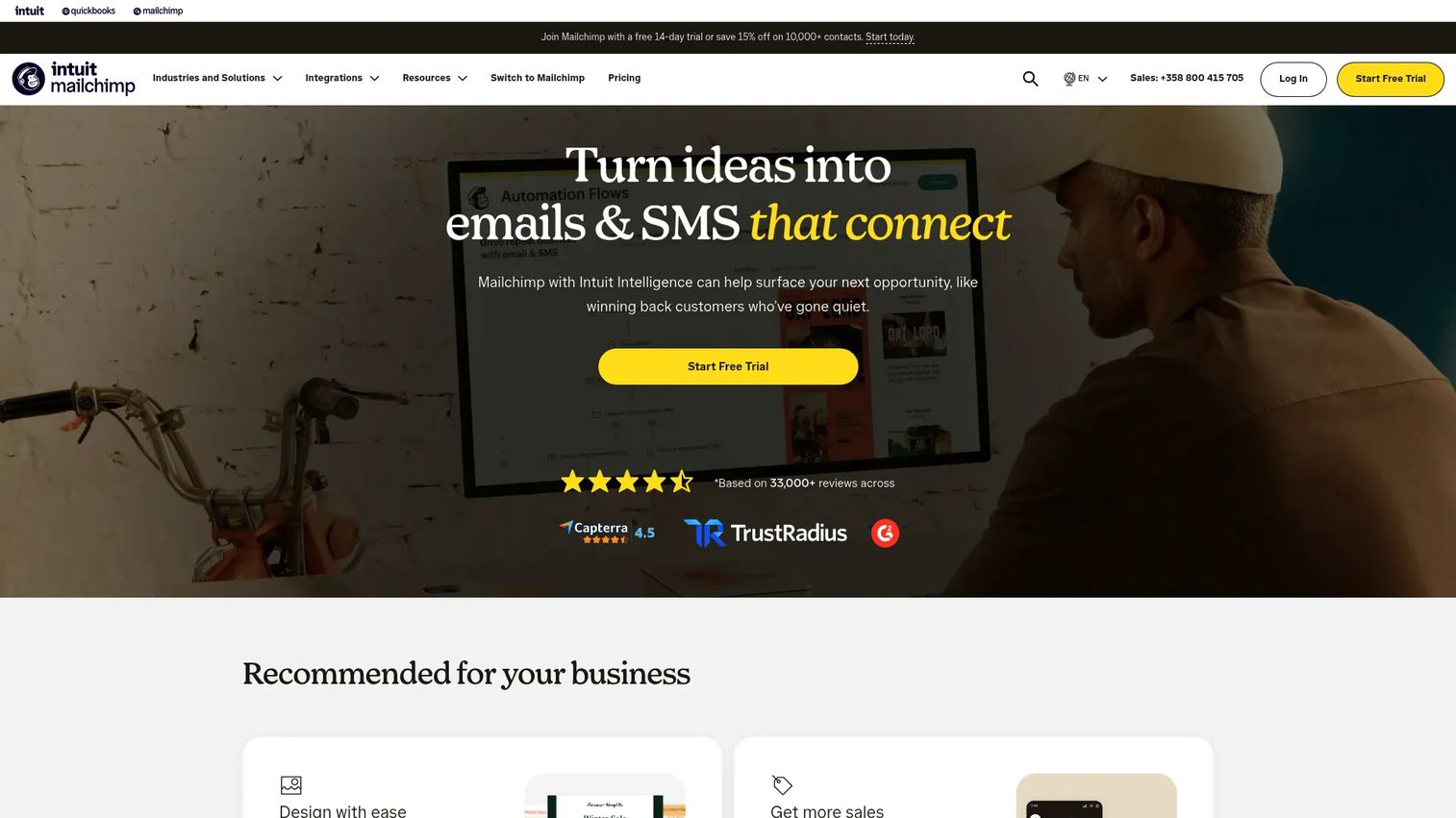
Mailchimp is a broad email marketing and automation platform that many restaurant teams already know. It handles email campaigns, audience segments, basic automation flows, and landing pages. It is not built specifically for restaurants, and it doesn't natively connect to POS or reservation data, but it covers the foundational email workflow well for teams that aren't ready to invest in a deeper restaurant CRM.
Best for: Smaller restaurants or teams starting with email marketing before investing in a platform with POS or ordering integrations.
Key features
- Email campaigns with drag-and-drop builder and templates
- Audience segments and behavioral targeting
- Basic automation flows including welcome and re-engagement series
- Landing pages for promotions and event sign-ups
- Campaign performance reporting
Why choose Mailchimp: Accessibility and familiarity. Many restaurant marketers already have an account. It works when the immediate need is consistent email execution and the guest list exists as an exported CSV from the POS or reservation system.
Mailchimp pricing: Free plan covers up to 250 contacts and 500 sends per month. Essentials starts at $13/month, Standard at $20/month, and Premium at $350/month. Pricing scales by contact count across all paid tiers.
G2 rating: 4.4/5
6. Textedly
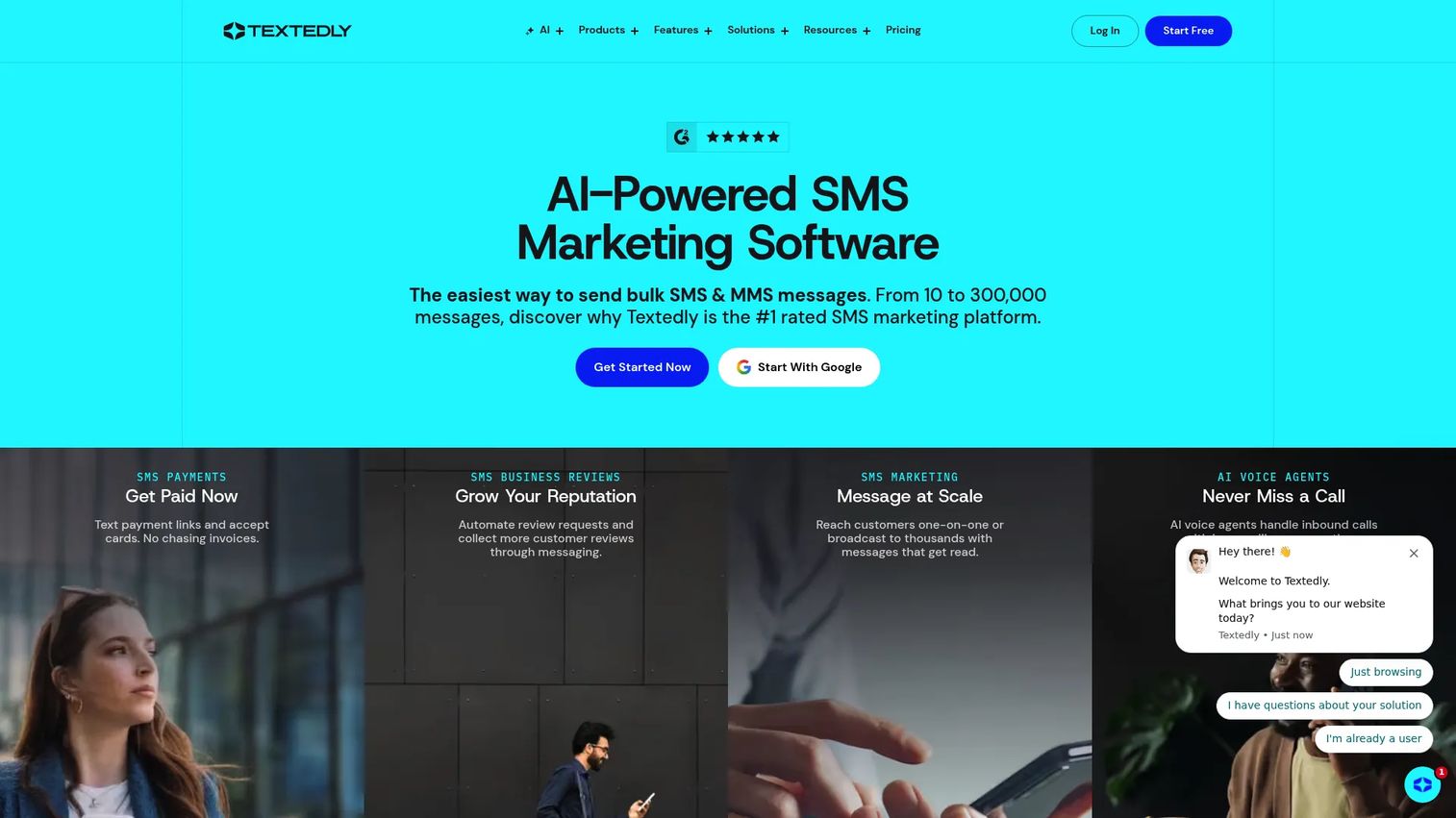
Textedly is an SMS marketing platform for mass text campaigns, automated messaging, and two-way customer communication. For restaurants, SMS is the highest-urgency channel for flash promotions, slow-night specials, and time-sensitive event announcements. Textedly handles the mechanics: Keyword opt-ins, scheduled sends, MMS with images, and contact management. SMS consent and compliance need to be managed carefully and are the restaurant's responsibility, not the platform's.
Best for: Restaurants that need direct SMS promotions without integrating a full marketing suite or CRM.
Key features
- Bulk SMS and MMS campaigns with scheduling
- Keyword opt-ins for contact list building
- Two-way SMS inbox for customer replies
- Contact management and segmentation
- AI messaging tools and 3,000+ third-party integrations
Why choose Textedly: It's a focused SMS marketing tool at an accessible price. Best evaluated alongside your compliance setup and alongside whatever platform holds guest contact records, since Textedly doesn't natively connect to restaurant POS or CRM data.
Textedly pricing: Plans start at $29/month (Basic). Volume tiers scale from $49/month (Bronze) through $5,520/month (Legend), differentiated by monthly outbound message volume. Annual billing adds 20% more messages at the same price. A free account includes 50 messages.
G2 rating: 4.6/5
7. Birdeye
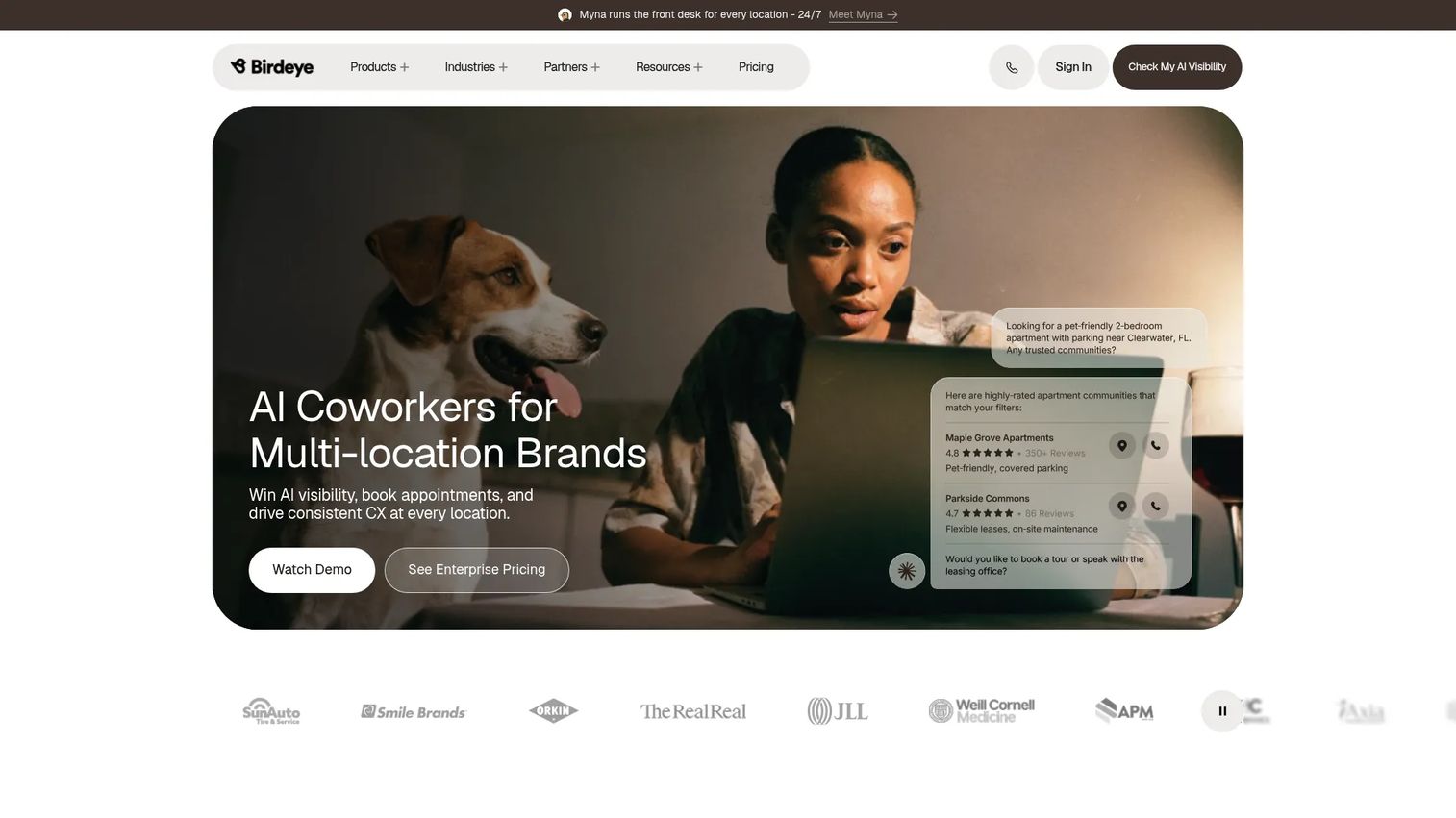
Birdeye is an AI-powered reputation, social media management, and customer-experience platform for multi-location brands. For restaurants, reviews are a conversion channel, not just feedback. A three-star average on Google costs you covers every day. Birdeye automates review requests, monitors incoming reviews across platforms, surfaces insights, and helps teams respond at scale rather than one review at a time.
Best for: Restaurants with meaningful review volume that need to operationalize response workflows and protect local search visibility.
Key features
- Review generation, response automation, and marketing
- Local listings optimization and AI search visibility tracking
- Social publishing and engagement management
- Customer surveys and referral programs
- Messaging and chatbot for inbound guest inquiries
Why choose Birdeye: Reputation is marketing for restaurants. Birdeye fits teams that need a system for reviews rather than a manual tab they check occasionally. It's particularly useful for multi-location groups where consistent review response across 10 or 20 locations would otherwise consume significant staff time.
Birdeye pricing: Pricing is quote-based and varies by number of locations, products selected, and contract terms. Contact Birdeye with location count and the specific modules you need (reviews, listings, messaging, social).
G2 rating: 4.7/5
8. Hootsuite
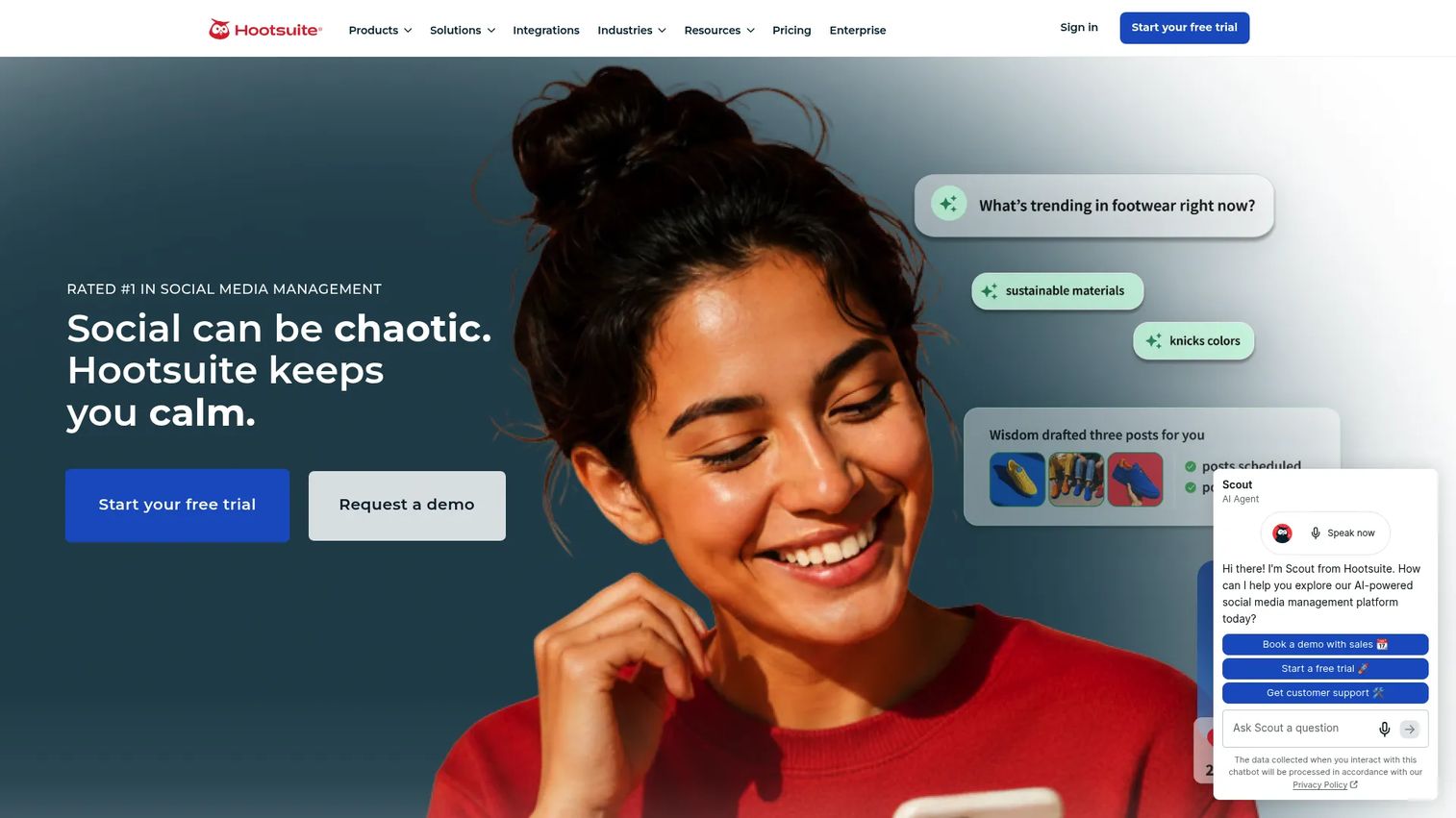
Hootsuite is a social media management platform for scheduling, publishing, listening, and reporting across multiple channels. According to Deloitte Digital (2025), 90% of restaurants said social media was very or extremely important to their digital marketing approach. DoorDash's Consumer Trends report (2025) found that 22% of consumers discovered new restaurants through Instagram specifically. Hootsuite centralizes that publishing work: Content calendar, approval workflows, inbox management, and performance reporting in one place.
Best for: Restaurant marketers managing multiple social channels or multiple locations where content volume and coordination are the main friction points.
Key features
- Social scheduling and content calendar across channels
- Unified inbox for comments, mentions, and messages
- Social listening and sentiment monitoring
- Analytics and competitive benchmarking
- Approval workflows for multi-stakeholder publishing
Why choose Hootsuite: It earns its place when social publishing involves more than one person, more than two channels, or more than a handful of locations. Coordination overhead, approval delays, and inconsistent posting schedules are where Hootsuite removes friction.
Hootsuite pricing: Standard plan is $99/month per user (annual billing). Professional is $199/month per user, Advanced is $399/month per user, and Enterprise is custom. No free tier is available; a 14-day free trial is offered.
G2 rating: 4.3/5
9. Canva
Canva is an online visual design platform for creating graphics, presentations, videos, and other visual content using drag-and-drop templates. For lean restaurant marketing teams, creative bottlenecks are real. Waiting on a designer to produce a weekly social post, a menu update, or an event flyer slows campaigns. Canva lets a marketing manager handle that work directly, with brand kits ensuring consistency across outputs.
Best for: Lean restaurant marketing teams without dedicated design resources who need fast, consistent branded assets.
Key features
- Drag-and-drop editor with 1,000+ restaurant-relevant templates
- Brand Kits for consistent colors, fonts, and logos
- Social graphics, print-ready menus, flyers, and email headers
- Team collaboration and approval workflows
- AI design tools including background removal and content generation
Why choose Canva: When a promotion idea is ready but the asset isn't, Canva closes that gap without a design ticket. It doesn't replace a designer for complex brand work, but it handles the weekly creative volume that slows most restaurant marketing teams.
Canva pricing: Free plan available. Pro is $144/year. Business is $250/year per person. Enterprise pricing requires a sales conversation.
G2 rating: 4.7/5
10. Tripleseat
Tripleseat is an event management software platform for hospitality venues handling private dining, catering, group bookings, and banquet sales. Restaurant event revenue works differently from everyday dining. A single private dinner for 40 guests might generate more margin than 50 individual covers. Tripleseat manages the sales process: Lead capture from web forms, proposals, contracts, digital signatures, payments, and event coordination.
Best for: Restaurants and hospitality groups where private dining and events are a meaningful revenue line, not just an occasional booking.
Key features
- Event lead capture via web forms and inquiry inbox
- Proposals, contracts, BEOs, and digital signatures
- Catering workflow management and coordination tools
- Shared calendars and automated task management
- AI-powered reporting and multi-location management
Why choose Tripleseat: It turns event demand into a managed sales process with tracked leads and revenue visibility. Without a system, event inquiries live in inboxes and revenue stays underreported.
Tripleseat pricing: All packages are quote-based. When requesting a quote, ask about location count, event volume, Direct Book add-ons, and floor plan tools.
G2 rating: 4.5/5
11. Eventbrite
Eventbrite is a global self-service ticketing and event discovery platform. For restaurants running ticketed experiences, wine tastings, chef's table dinners, pop-ups, or holiday events, Eventbrite handles registration, ticketing, attendee communication, and check-in. It also provides marketplace discovery: People searching for things to do in a city can find a restaurant's event without any additional promotion effort.
Best for: Restaurants that run ticketed events and want both a registration system and exposure to Eventbrite's diner discovery network.
Key features
- Event pages with customizable registration forms
- Online ticket sales and payment processing
- Attendee email communication and reminders
- Promotion tools and paid advertising options
- Mobile check-in and QR code scanning
Why choose Eventbrite: It fits restaurants where the event itself is the marketing moment. Eventbrite doesn't replace a restaurant CRM, but it handles the ticketing workflow and delivers some discovery lift that a private registration form on the restaurant's own site wouldn't.
Eventbrite pricing: Free events have no platform fee. Paid tickets incur a 3.7% plus $1.79 service fee per ticket, plus a 2.9% payment processing fee per order. Pro plans start at $15/month. Premium is $69/month or $708/year.
G2 rating: 4.3/5
12. BentoBox
BentoBox is a restaurant marketing and commerce platform for websites, online ordering, ecommerce, and catering. For restaurants still sending customers to third-party delivery platforms to complete orders, BentoBox provides an owned alternative: A restaurant-specific website with built-in ordering, gift cards, event pages, and merchandising. First-party orders mean first-party customer data.
Best for: Restaurants that need a stronger owned web presence and want to reduce dependence on marketplace platforms for direct ordering and reservations.
Key features
- Restaurant-specific website design and CMS
- Online ordering with first-party customer capture
- Gift card and merchandise sales
- Event pages and catering inquiry forms
- Ecommerce tools for branded products
Why choose BentoBox: The website is often the conversion point for a restaurant. BentoBox is built for restaurant commerce rather than adapted from a generic CMS, which matters when the goal is converting a website visitor into a direct order. Note that BentoBox services are currently available to Clover POS customers.
BentoBox pricing: Pricing is quote-based and not posted publicly. When requesting a quote, ask about location count, ordering volume, ecommerce features, and implementation timeline.
G2 rating: 4.6/5
13. Lightspeed
Lightspeed is a cloud-based POS and commerce platform for restaurants, retail, and golf businesses. For restaurant marketers evaluating or already using Lightspeed POS, the marketing-adjacent tools add customer profiles, loyalty, and reporting to the transaction layer. Like Toast and Square, the main value proposition is consolidation: Operational and customer data in one system rather than stitched together from exports.
Best for: Restaurants using or evaluating Lightspeed POS that want customer engagement, loyalty, and reporting connected to their operational stack.
Key features
- Restaurant POS with integrated payments
- Customer profiles built from transaction history
- Loyalty and rewards programs
- Online ordering integration
- Reporting dashboards for sales and customer behavior
Why choose Lightspeed: It suits operators where POS modernization and marketing connectivity are part of the same buying decision. If the POS is already Lightspeed, the marketing layer is worth evaluating before adding a separate restaurant CRM.
Lightspeed pricing: Retail plans start at $89/month (Basic), $149/month (Core), and $289/month (Plus). Restaurant-specific pricing was not fully confirmed from the primary pricing page; contact Lightspeed for restaurant plan details and add-on costs.
G2 rating: 4.4/5
14. OpenTable
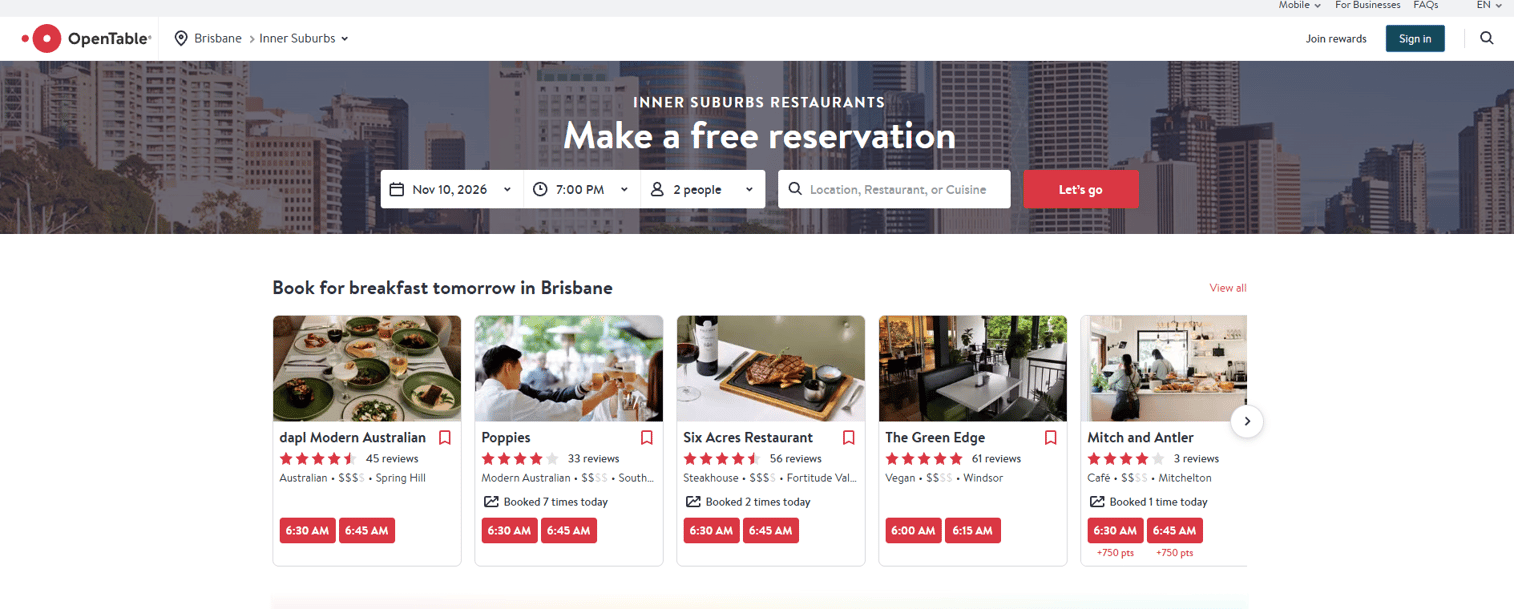
OpenTable is restaurant management software for reservations, table operations, marketing, and guest relationships. Beyond the reservation widget, OpenTable gives restaurants access to its large diner marketplace, where guests actively searching for somewhere to eat can discover and book your restaurant directly. The tradeoff is marketplace dependence: OpenTable brings demand, but the guest relationship sits partly on its platform.
Best for: Reservation-driven restaurants that want discovery, bookings, and guest engagement tools connected to a large diner network.
Key features
- Online reservations and customizable booking widget
- Automated table assignment, waitlist, and floor plan management
- Guest profiles with dining history and preferences
- Automated email campaigns and post-visit follow-up
- Review management and diner feedback collection
Why choose OpenTable: It supports demand capture as much as marketing execution. When reservations are central to growth and the restaurant wants both a booking system and marketplace visibility, OpenTable handles both in one platform.
OpenTable pricing: Basic plan starts at $149/month. Core is $299/month and Pro is $499/month. Additional fees may apply for network covers, website reservations, and prepaid experiences.
G2 rating: 4.4/5
15. Thanx
Thanx is a restaurant guest-engagement platform combining loyalty, CRM, digital ordering, marketing automation, and offer management. Where most loyalty tools offer a points-and-punch-card system, Thanx builds on AI-powered segmentation using 400+ guest attributes to deliver personalized offers at the right moment in a guest's lifecycle. The focus is on direct digital revenue: Repeat visits, higher frequency, and measurable attribution back to specific campaigns.
Best for: Multi-location restaurant brands that prioritize loyalty, frequency, and retention over one-off acquisition campaigns.
Key features
- Multi-channel loyalty with card-linked and check-in participation
- AI segmentation using 400+ guest attributes for personalized offers
- Automated lifecycle campaigns with A/B testing and custom triggers
- Digital ordering and mobile apps designed for repeat purchase
- Revenue attribution and engagement reporting with daily data sync
Why choose Thanx: It fits restaurants with enough repeat customer volume to justify a loyalty-led strategy. The attribution reporting is worth evaluating: Thanx ties offers to actual transactions rather than engagement metrics alone, which makes campaign ROI defensible to operators and finance teams.
Thanx pricing: Pricing is quote-based with no public tiers. When requesting a quote, ask about location count, loyalty program structure, digital ordering modules, and integration requirements with your POS or reservation system.
Considerations when choosing restaurant marketing software
Start with the customer data you already have
Map where guest contact and transaction data currently lives before evaluating any new platform. POS exports, reservation systems, loyalty apps, website forms, and ordering platforms each hold a piece. The right software depends on which source has the most reliable identity and purchase history. A tool that can't connect to your primary data source will require manual work that erodes most of the efficiency gain.
Decide what you need to replace
Growth marketers fighting tool sprawl should ask whether a new platform replaces an existing email tool, SMS provider, social scheduler, loyalty app, or review management subscription. The question most restaurant operators don't ask often enough is: "Does this replace something we already pay for?" If the answer is no, the total cost of the stack just grew.
Check integrations before comparing campaigns
Restaurant marketing breaks when integrations are shallow. Verify POS, reservation, ordering, and loyalty integrations specifically before committing. A platform with a beautiful campaign builder and a weak integration with your POS delivers limited value, because the guest behavior data that makes segmentation useful never arrives cleanly.
Measure visits and orders, not just opens
Email open rates and click-throughs matter, but restaurant marketers need repeat visits, direct orders, booked tables, and loyalty enrollment to prove ROI. Ask each platform how it attributes campaign outcomes to in-store or online revenue. If the answer involves manual matching or CSV exports, that's a real operating cost the subscription price doesn't reflect.
Price the full operating model
Monthly platform fees are the starting point, not the total cost. Add per-message fees for SMS volume, per-location pricing for multi-unit brands, implementation costs, add-on modules for loyalty or review management, and the staff time to manage the tool. Compare that total against the repeat revenue or saved labor the platform actually produces.
Conclusion
Restaurant marketers don't need more channels. They need a stack that connects guest data, campaigns, and revenue outcomes in a way they can explain to an operator or CFO.
Klaviyo leads the list for teams that want lifecycle marketing and segmentation built on real guest data. Toast, Square, and Lightspeed serve restaurants where the POS is already the center of the technology stack. SevenRooms and OpenTable fit reservation-driven operations where booking behavior shapes every campaign. Thanx earns its place for brands serious about loyalty, frequency, and attribution tied to actual transactions. Birdeye covers reputation, which is a conversion channel restaurants underinvest in. Hootsuite and Canva handle social and creative workflows. Tripleseat and Eventbrite address private dining and ticketed events. BentoBox serves restaurants building out their owned web and ordering presence. Mailchimp and Textedly fill specific email and SMS gaps without requiring a larger platform commitment.
Start by choosing the one revenue problem you need to solve first: Repeat visits, direct orders, reputation, events, reservations, or social consistency. Pick the tool that owns that workflow and integrates with the data you already trust. Add the next layer when the first one is producing measurable results.
FAQs
Restaurant marketing software is software that helps restaurants attract guests, manage customer data, run campaigns, and measure outcomes across channels like email, SMS, social, reservations, ordering, loyalty, and reviews. It differs from generic marketing tools because it connects to restaurant-specific data sources like POS, reservation systems, and online ordering platforms to trigger campaigns based on actual guest behavior.
Smaller restaurants typically start with the marketing tools built into their existing POS (Square, Toast, or Lightspeed), a simple email platform like Mailchimp, and a social scheduling tool. Add review management and a loyalty or SMS tool once the basic stack is producing consistent results. The right starting point depends on which POS the restaurant already runs and where the biggest revenue gap sits: Repeat visits, online ordering, or new guest discovery.
The best restaurant CRM depends on the data source that matters most. Reservation-heavy restaurants benefit from SevenRooms or OpenTable, where guest profiles build from booking behavior. Direct-order brands benefit from a POS-connected platform like Toast or Klaviyo connected to ordering data. Loyalty-led brands benefit from Thanx, which ties CRM to card-linked transaction history. There is no single winner across all operating models.
A complete restaurant marketing platform should include guest profiles and segmentation, email and SMS campaign automation, POS and reservation integrations, review management, loyalty or repeat-visit incentives, campaign attribution tied to orders or visits, and reporting that shows revenue impact, not just engagement metrics.
Costs vary significantly by tool, location count, contact volume, message volume, and add-on modules. Email platforms like Mailchimp start at $13/month for small lists. POS-native tools like Toast start at $0/month for basic packages with marketing as an add-on. Full restaurant CRM and loyalty platforms like SevenRooms and Thanx are quote-based and priced per location and module. Plan for total operating cost including implementation, per-message fees, and staff time, not just the monthly subscription line item.
Many restaurants need both. POS software captures transactions. Marketing software turns that data into campaigns, segments, offers, and reporting. Some POS platforms include marketing features that may be sufficient for smaller operations. For multi-location brands or restaurants with serious retention goals, a dedicated marketing layer on top of POS data typically produces better segmentation and attribution than POS-native marketing tools alone.
Restaurant marketing automation refers to campaigns that trigger automatically based on guest behavior, dates, preferences, or lifecycle stage. Common examples include: A winback offer sent to guests who haven't visited in 60 days, a birthday or anniversary message sent the week before the date, a post-visit review request sent 24 hours after a reservation, an abandoned online ordering flow reminder, and a loyalty milestone message when a guest reaches a points threshold. Automation removes the manual scheduling work and ensures campaigns reach the right guest at the right moment without requiring a campaign manager to intervene.
Multi-location teams should prioritize platforms with location-level permissions, so local managers can run market-specific promotions without touching brand-level settings. Central reporting across all locations is essential for proving ROI at the brand level. POS or reservation integrations should work reliably across all locations, not just a subset. Segmentation by specific market, location, or guest zip code matters for local relevance. Evaluate whether the platform prices by location, because per-location fees compound quickly at scale and can make a tool that looks affordable for five locations prohibitive at twenty.