Last updated: October 2026. Author: Team Guideflow.
Your finance lead asks what the company spends on software. IT has one number. Procurement has another. The board deck has a third.
At Series B, this stops being an accounting problem and becomes a governance problem. Hiring accelerates, teams buy their own SaaS tools without central approval, cloud commitments grow material, and renewal decisions land before anyone can confirm usage. According to Flexera's State of ITAM (2025), 35% of organizations said SaaS waste increased over the past year. Zylo's SaaS Management Index (2025) puts the cost at an average of $21 million annually in unused SaaS licenses.
The right software asset management tool gives your IT and finance leaders a shared source of truth before waste, compliance gaps, or a renewal surprise becomes a board problem. This guide helps you find which software asset management solution fits where you are now.
What's inside
This guide is for Series B founders, finance leaders, and IT operations managers who need tighter control over software spend, renewals, and license compliance. Tools were selected based on four criteria:
- Discovery accuracy across SaaS, endpoints, cloud, and data centers
- License reconciliation and Effective License Position depth
- Integration fit with identity, ITSM, procurement, and finance systems
- Pricing model transparency and implementation realism
Pricing and G2 ratings were verified against vendor pages and current G2 listings in October 2026.
TL;DR
- Best for deep enterprise licensing: Flexera One IT Asset Management handles complex publisher rules, hybrid estates, and audit exposure
- Best for ITSM-native governance: ServiceNow Software Asset Management for teams already running IT operations in ServiceNow
- Best for visible asset-based pricing: ManageEngine AssetExplorer starts at $955/year for 250 IT assets, with a free tier for up to 25 nodes
- Best for SaaS discovery and spend visibility: Xensam (SaaS lifecycle focus) or Oomnitza (broader technology management), depending on your priority
- Best for engineering-license optimization: Open iT for organizations managing expensive specialized software like CAD or simulation tools
What is software asset management software?
Software asset management software is a system for discovering software, reconciling usage against license entitlements, managing renewals, and reducing compliance or overspend risk across SaaS, cloud, endpoints, and data centers.
What SAM software tracks
- Installed software and SaaS subscriptions across devices and users
- License entitlements, contracts, purchase orders, and renewal dates
- Usage data, inactive accounts, duplicate tools, and underused licenses
- Software lifecycle data, including end-of-support timelines
- Cloud instances, servers, and ownership records
Core capabilities to look for
- Discovery across endpoints, SaaS, cloud, and data centers
- Software recognition, normalization, and enrichment
- License entitlement ingestion and reconciliation
- Effective License Position reporting
- Usage metering and reclamation workflows
- Renewal calendars and vendor spend reporting
- ITSM, CMDB, procurement, and identity integrations
- Audit evidence and governance reporting
SAM vs. ITAM vs. CMDB
These three categories overlap, and many platforms span more than one. Here's the practical distinction:
| System | Primary job | What founders should expect |
|---|---|---|
| SAM | Software licenses, usage, compliance, and spend | Better renewal decisions and lower software waste |
| ITAM | Hardware, software, contracts, and lifecycle management | A broader operating system for technology assets |
| CMDB | Configuration items and service relationships | Context for IT operations, incidents, and change management |
Not every company needs all three platforms. Start with the problem that has the most dollar exposure.
When to use software asset management tools
Prepare for renewals before the budget is locked
Software contracts get more expensive when renewal owners can't see usage or alternatives before negotiation windows close. Strategic vendors need 90 to 180 days of runway for meaningful leverage. Without a SAM tool surfacing active users and contract terms, finance and IT are negotiating blind.
Build an audit-ready license position
If your company is growing fast, onboarding enterprise customers, or approaching a true-up with a major publisher, entitlement records and discovery data need to be clean before someone asks for them. A software audit without organized evidence is a six-figure problem.
Control SaaS and cloud sprawl as the company scales
The Series B pattern is consistent: Decentralized buying, duplicate collaboration tools, paid accounts left behind after offboarding. The goal isn't just a longer inventory. It's surfacing owners, flagging unowned renewals, and creating action paths before the invoice arrives.
Use SAM now if any of these apply to you:
- Renewals are managed in spreadsheets
- Finance and IT disagree on software spend
- You can't identify unused licenses by owner
- A major audit or true-up is approaching
- Procurement lacks a complete entitlement record
Software asset management tools comparison
The 12 tools below cover the range from deep enterprise license compliance platforms to SaaS-focused spend management and specialist engineering software usage tools. Use this table to narrow the field before reading the full entries.
| # | Product | Best for | Key differentiator | Pricing | G2 rating |
|---|---|---|---|---|---|
| 1 | Flexera One IT Asset Management | Deep enterprise licensing and hybrid ITAM | License intelligence, use-rights analysis, broad publisher coverage | Custom pricing | 4.3/5 |
| 2 | ServiceNow Software Asset Management | ServiceNow-centric enterprise operations | SAM workflows inside a broader ITSM and ITAM platform | Custom pricing | 4.4/5 |
| 3 | ManageEngine AssetExplorer | Cost-conscious teams needing IT asset and license tracking | Asset-based pricing with ITAM workflows | From $955/year (250 assets) | 4.2/5 |
| 4 | Ivanti Neurons for ITAM | IT teams needing automation across endpoint and service workflows | Asset intelligence connected to Ivanti service and endpoint management | Custom pricing | 4.3/5 |
| 5 | CerteroX SAM | License optimization and publisher-focused compliance | Dedicated SAM depth with normalization and optimization | Custom pricing | 4.3/5 |
| 6 | Xensam | SaaS discovery, lifecycle controls, and spend visibility | AI-powered SaaS discovery with usage tracking | Custom pricing | 5.0/5 |
| 7 | Matrix42 Software Asset Management | European enterprise ITAM programs | ITSM and asset management depth in one suite | Custom pricing | 5.0/5 |
| 8 | USU SAM for Clients + Datacenter | Complex software license compliance | License management across client, server, and datacenter | Custom pricing | 4.5/5 |
| 9 | Oomnitza Enterprise Technology Management | Broad technology lifecycle management | Cross-system asset intelligence and workflow automation | Custom pricing | 4.6/5 |
| 10 | InvGate Asset Management | Mid-market IT teams that want approachable ITAM | Asset discovery with CMDB mapping and visible pricing | From $1,499/year | 4.7/5 |
| 11 | TeamDynamix ITAM | Organizations standardizing on enterprise service management | ITAM paired with workflow and service management | Custom pricing | 4.5/5 |
| 12 | Open iT | Engineering and technical software usage optimization | Detailed usage metering for high-cost specialized software | Custom pricing | 4.8/5 |
Pricing and G2 ratings verified in October 2026 from vendor pricing pages and current G2 listings.
Best 12 software asset management tools for 2026
1. Flexera One IT Asset Management
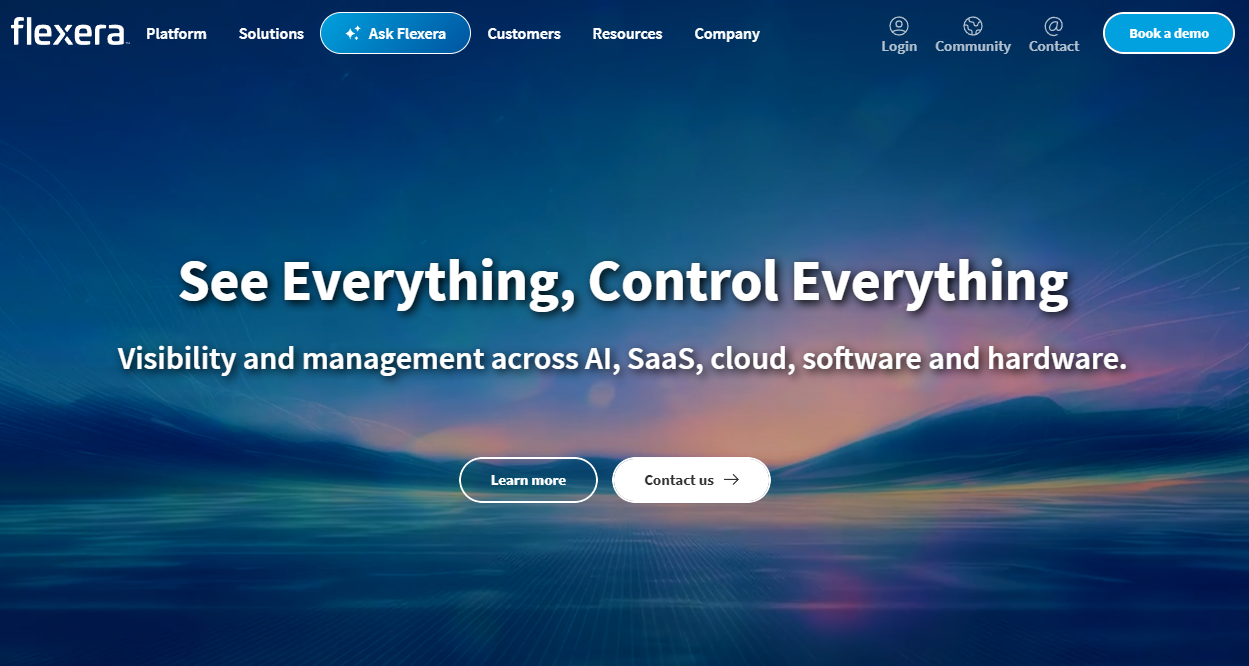
Flexera One IT Asset Management covers the full spectrum of enterprise ITAM: Hardware, software, SaaS, cloud, and containers. Its core strength is license intelligence. The platform ingests entitlements, maps them against real usage, and calculates an Effective License Position that holds up under publisher scrutiny. For companies managing complex Microsoft, Oracle, IBM, or SAP contracts, Flexera is one of the few platforms with the use-rights depth to handle them.
Best for: Large enterprises with complex publisher licensing, hybrid IT estates, and meaningful audit or true-up exposure.
Key features
- Hybrid asset inventory and discovery across endpoints and cloud
- Entitlement and contract ingestion with AI assistance
- Effective License Position reporting
- Product use-rights intelligence by publisher
- License optimization recommendations and reclamation workflows
- ITSM and CMDB data enrichment
Why choose Flexera: Choose it when inaccurate license data creates real financial risk, not just administrative friction. If your company manages a handful of SaaS subscriptions and a small device fleet, Flexera is more platform than you need at this stage.
Flexera One pricing: Flexera uses subscription-based pricing tied to usage metrics. The specific metric varies by offering and may be based on clients, servers, users, public cloud spend, or cloud instances. Contact Flexera for a quote.
G2 rating: 4.3/5 (verified October 2026)
2. ServiceNow Software Asset Management
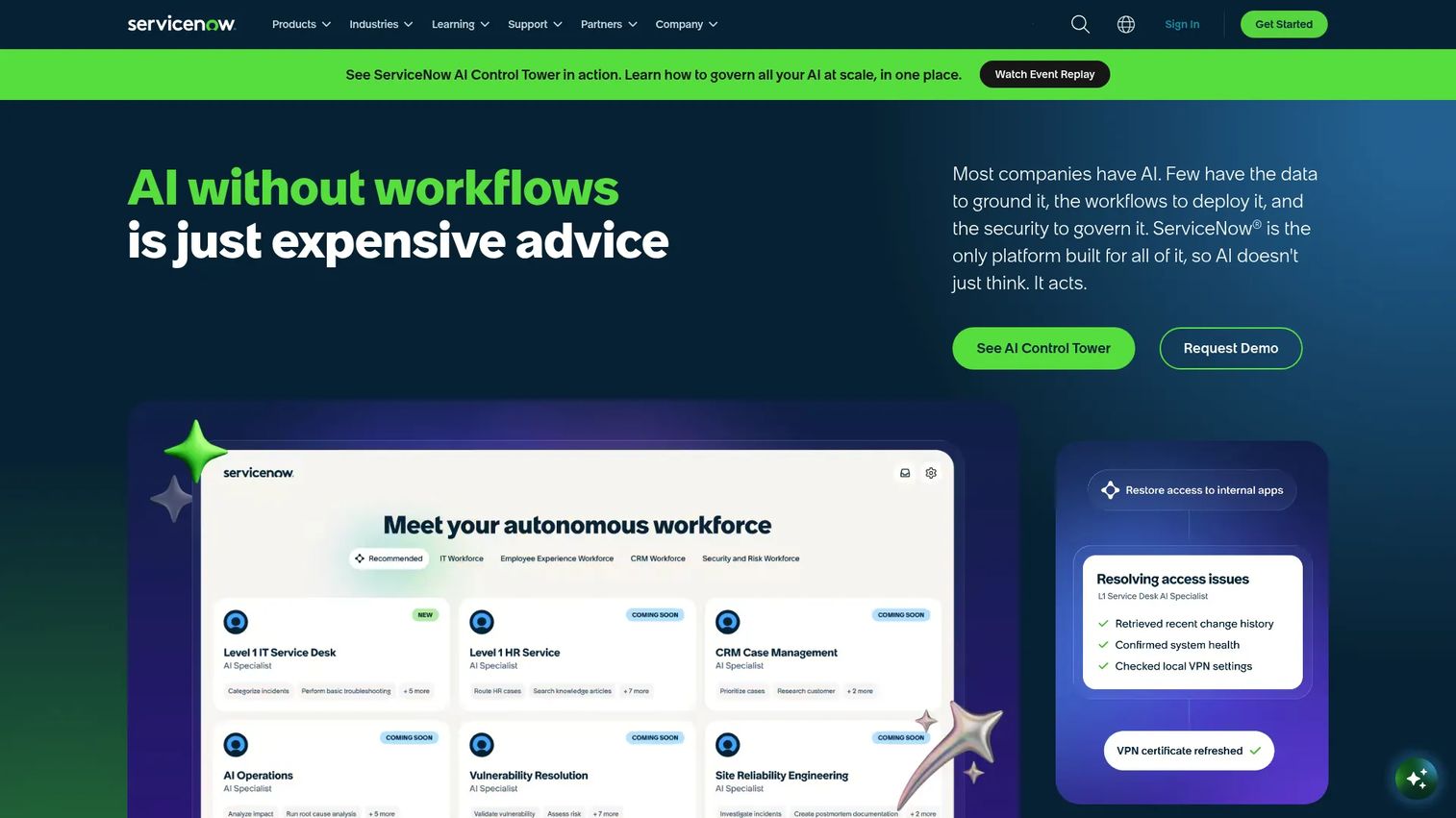
ServiceNow Software Asset Management makes most sense when ServiceNow is already the operating backbone for IT service delivery. Rather than running a separate SAM tool, the software asset data lives inside the same platform as your incident, request, change, and configuration workflows. That integration eliminates the handoff cost between ITSM and asset data, which is where a lot of license decisions get lost. The platform handles software license lifecycle, compliance, reclamation, and SaaS subscription management.
Best for: Enterprises that already have meaningful ServiceNow adoption and need SAM connected to IT operational workflows rather than a standalone analytics layer.
Key features
- Software license lifecycle workflows and optimization
- License compliance, audit readiness, and entitlement management
- SaaS subscription management and license reclamation
- ITSM and CMDB integration
- Enterprise workflow automation
Why choose ServiceNow: The strongest case is fragmented ownership across IT teams, not standalone license analytics. If your ServiceNow environment has data-model debt, implementation scope expands fast.
ServiceNow SAM pricing: ServiceNow prices through Subscription Units tied to managed IT resource categories. Contact ServiceNow for current agreement terms.
G2 rating: 4.4/5 (verified October 2026)
3. ManageEngine AssetExplorer
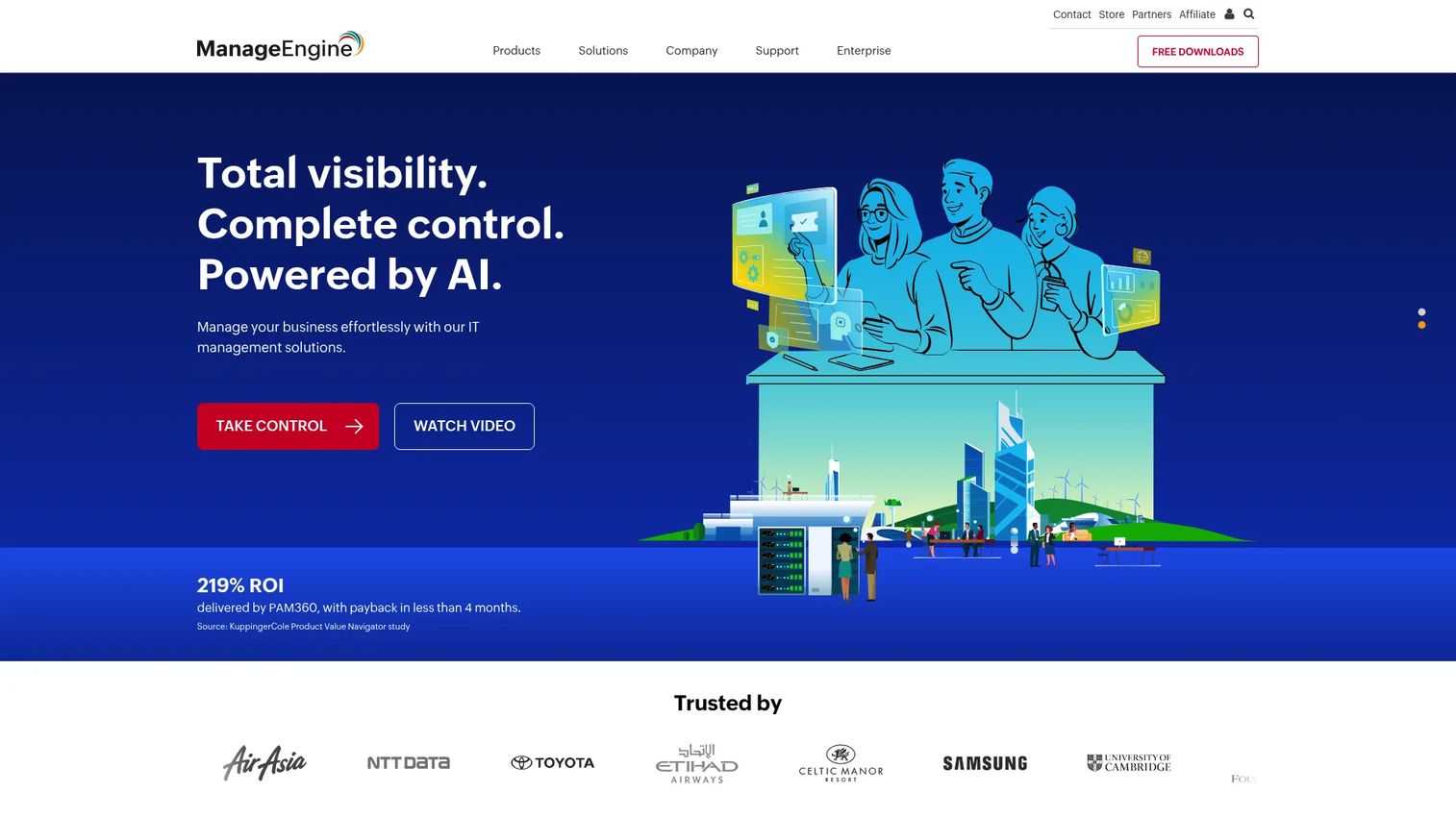
ManageEngine AssetExplorer sits in a different tier from the enterprise platforms above. It offers hardware and software asset tracking, contract management, license compliance, and CMDB functionality at a price that teams can model before talking to sales. A free edition covers up to 25 nodes, making it one of the few tools on this list where you can start before committing a budget. See related asset inventory software options if you're evaluating broader asset tracking tools alongside this one.
Best for: Series B and mid-market companies that need inventory accuracy and basic license accountability without buying an enterprise platform on day one.
Key features
- Software license management and compliance tracking
- Asset discovery and inventory across hardware and software
- Contract and purchase-order tracking
- Asset lifecycle reporting
- iOS and Android mobile application for field asset management
Why choose ManageEngine AssetExplorer: Visible pricing makes it easier to build a first-year budget. It's a practical starting point when the immediate goal is operational discipline rather than complex publisher reconciliation.
ManageEngine AssetExplorer pricing: A free edition is available for up to 25 nodes. Paid plans are priced by the number of managed IT assets, billed annually: $955/year for 250 assets, $1,795/year for 500 assets, and $2,995/year for 1,000 assets, scaling upward from there.
G2 rating: 4.2/5 (verified October 2026)
4. Ivanti Neurons for ITAM
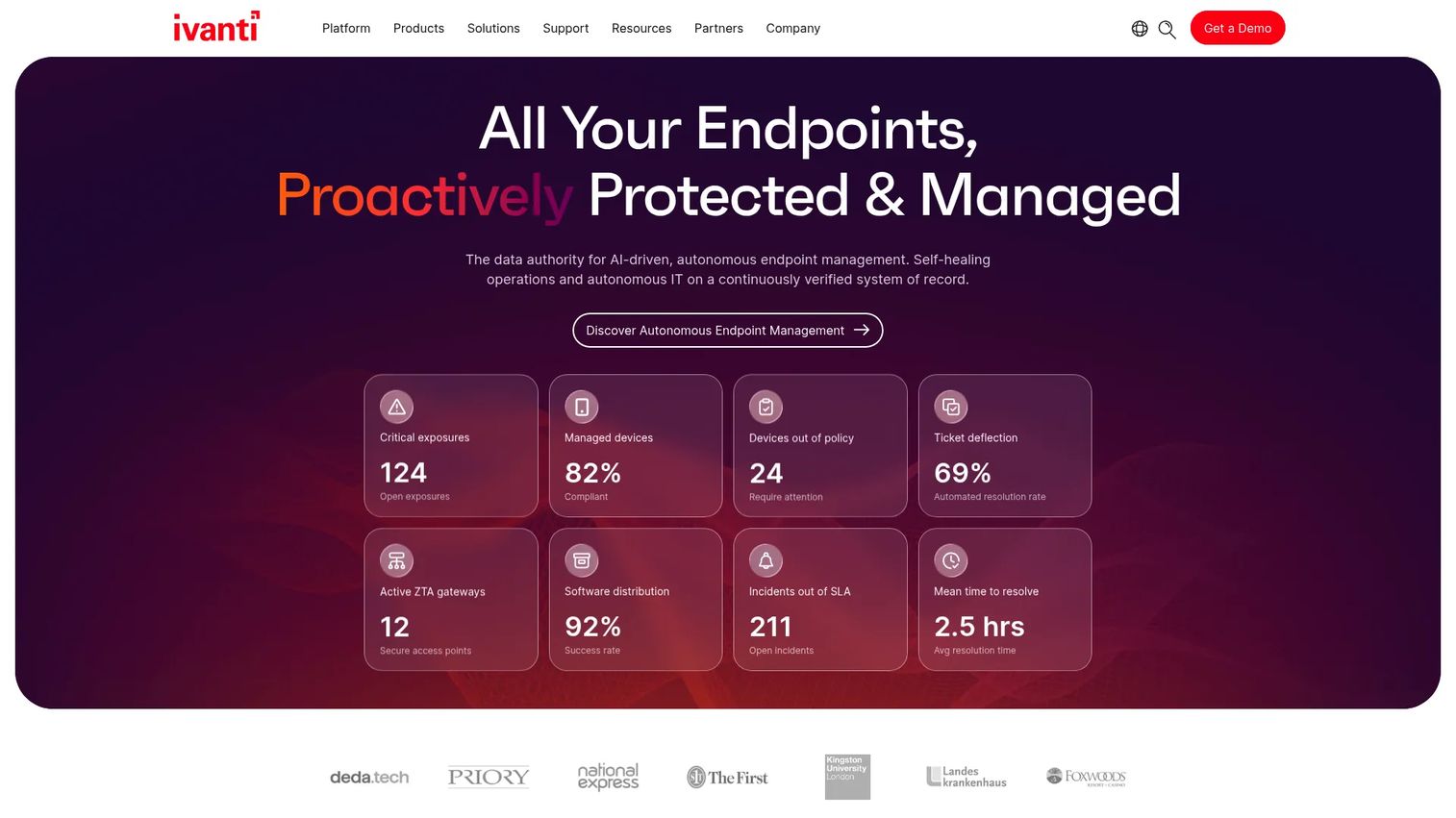
Ivanti Neurons for ITAM is an IT operations platform with ITAM capabilities built in. The value case is strongest when endpoint management, service management, security, and asset data need to feed one another rather than living in separate systems. Asset discovery connects to ownership tracking, lifecycle management, and procurement workflows. If a device goes unmanaged or software gets deployed outside policy, Ivanti can surface that in the same platform where IT handles service requests and endpoint remediation. Check out our asset lifecycle management software guide for context on adjacent tools in this space.
Best for: IT teams that already use, or are evaluating, Ivanti for endpoint, service, or security operations and want ITAM data in the same environment.
Key features
- Continuous asset discovery, reconciliation, and normalization
- Hardware and software asset repository with ownership and lifecycle tracking
- Procurement, purchase order, contract, and vendor management
- Product and service catalog integration
- Barcode scanning and mobile asset management
Why choose Ivanti: It fits teams where asset data needs to trigger operational actions, such as reclaiming software after offboarding or catching unmanaged endpoints during onboarding. Validate which modules your use case requires before budgeting.
Ivanti Neurons for ITAM pricing: Ivanti uses quote-based packaging. Pricing varies depending on which Ivanti modules, discovery agents, and service management integrations your environment requires. Contact Ivanti for a proposal.
G2 rating: 4.3/5 (verified October 2026)
5. CerteroX SAM
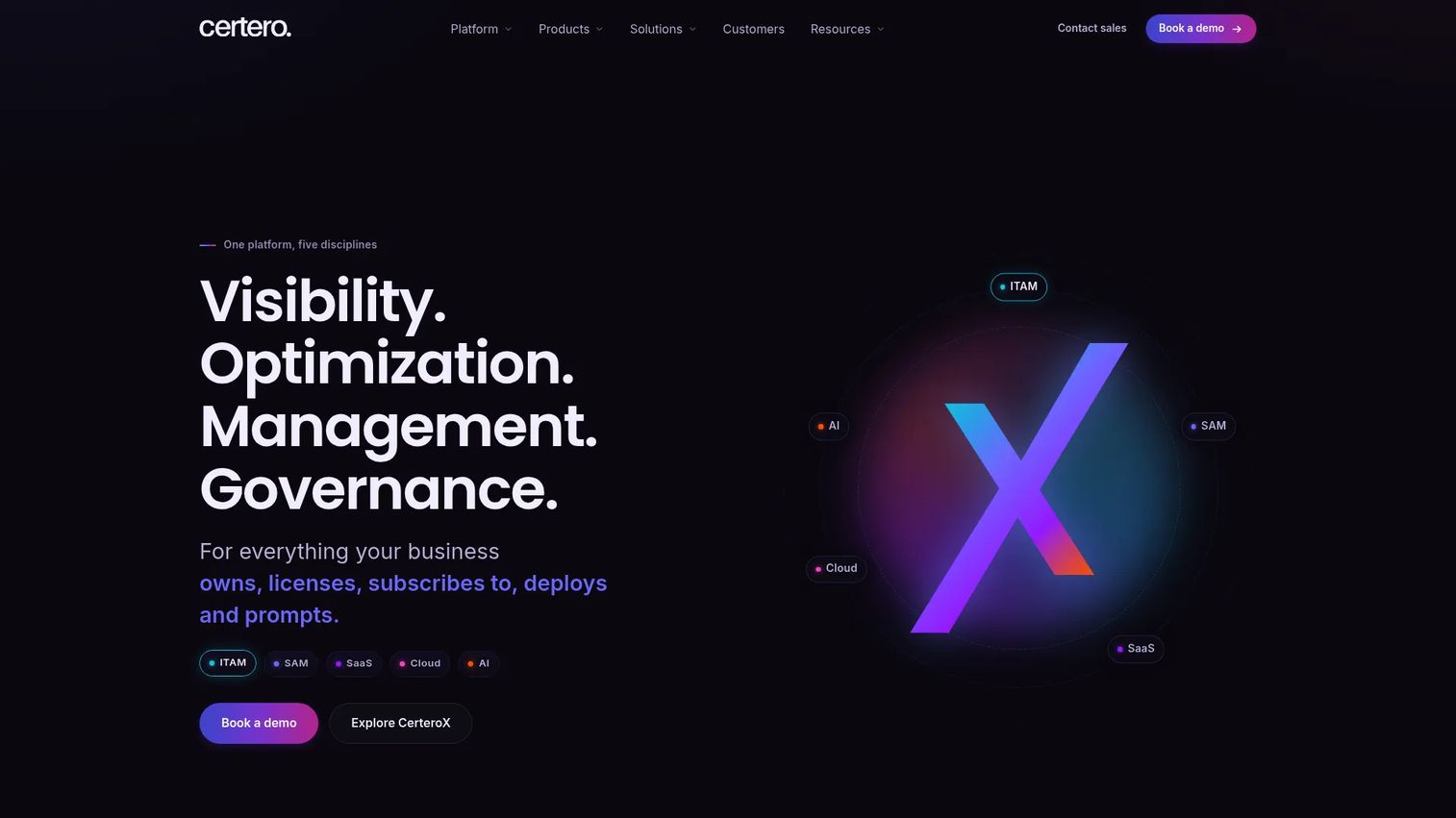
CerteroX SAM belongs on the shortlist when license complexity, not SaaS seat cleanup, is the core problem. The platform specializes in software recognition, normalization, and reconciliation. Its Software Recognition Database normalizes discovered software against publisher and version data, AppsMonitor tracks rolling 90-day usage metrics, and the Effective License Position engine calculates purchased, used, available, and variance figures across publisher terms. For Microsoft licensing specifically, it handles volume, retail, OEM, and FPP transaction types. See our guide on audit management software if audit readiness is your primary driver.
Best for: Companies entering a software audit, preparing for publisher true-ups, or managing high-value contracts where license exposure is a financial risk.
Key features
- Software Recognition Database with publisher and version normalization
- AppsMonitor usage metering with rolling 90-day utilization data
- Effective License Position calculations: Purchased, used, available, variance, and exposure
- License, transaction, agreement, and supplier management
- Continuous compliance tracking, audit trails, and governance policies
Why choose CerteroX SAM: It fits a business where license complexity is already costing money or creating audit exposure. If your main issue is SaaS renewals and seat reclamation, a SaaS-focused tool will serve you better.
CerteroX SAM pricing: Certero uses quote-based enterprise pricing. Request a proposal that covers asset count, publishers in scope, implementation, and integration requirements.
G2 rating: 4.3/5 (verified October 2026)
6. Xensam
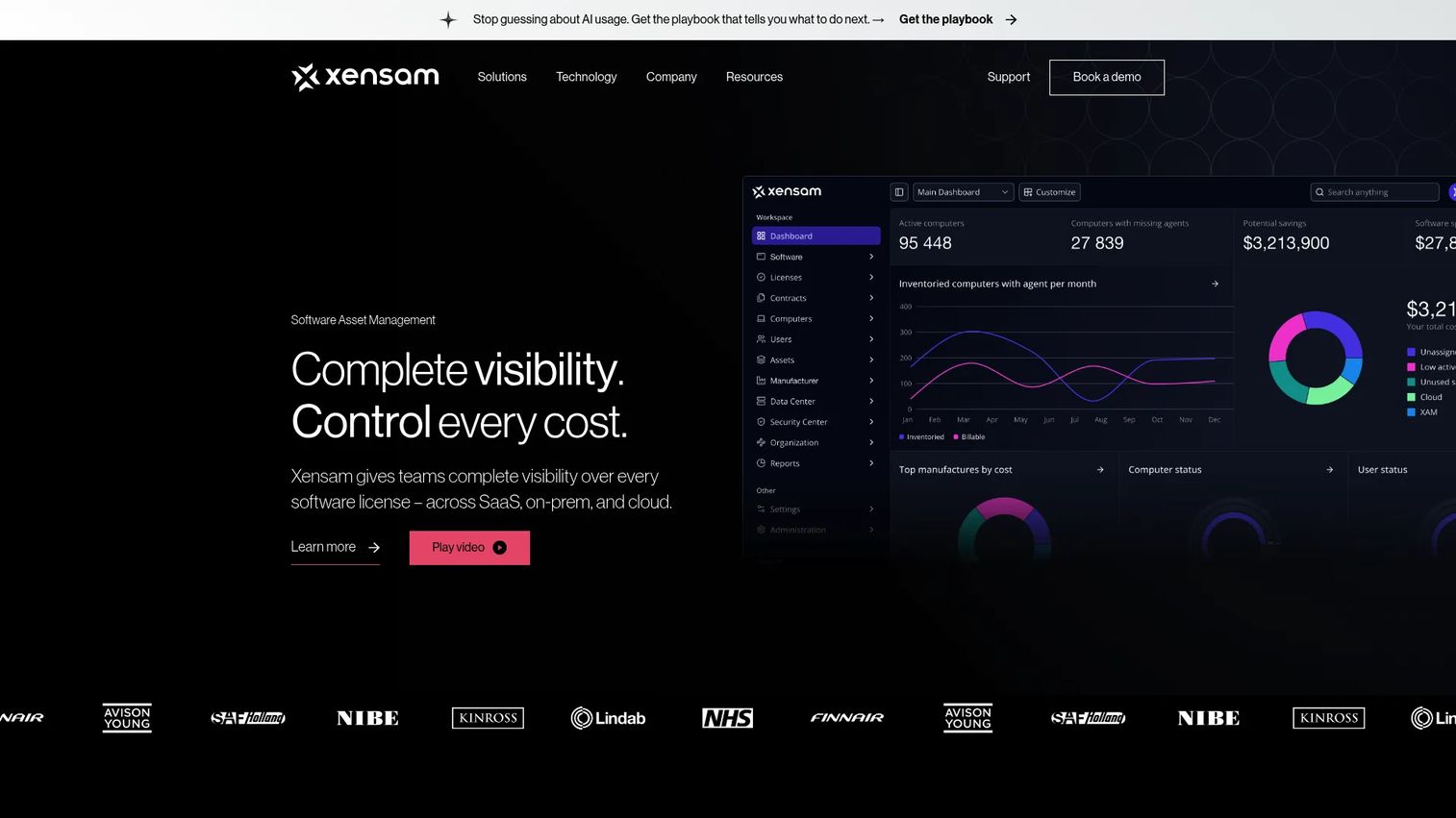
Xensam is worth evaluating if software asset management means SaaS spend, employee lifecycle actions, and shadow IT for your organization, rather than heavy on-premises license reconciliation. Its AI-powered discovery finds SaaS applications automatically, tracks active usage, and surfaces tools that employees have stopped using. Offboarding workflows can revoke access and reclaim licenses without manual IT intervention. For founders dealing with SaaS sprawl after rapid hiring, that automation has an obvious payback. This connects to cloud cost optimization software if cloud spend is a parallel concern.
Best for: SaaS companies with fast hiring cycles, distributed software purchasing, and a growing stack of cloud subscriptions that need active lifecycle management.
Key features
- Automated software discovery across SaaS, on-premises, and cloud
- Active software usage tracking and spend reporting
- Shadow IT visibility
- Offboarding workflows with license reclamation
- REST API and no-code integrations
Why choose Xensam: The scenario it fits best: Paid apps keep appearing after employees leave, and finance has no clear owner for upcoming renewals. Xensam surfaces that picture and creates action paths.
Xensam pricing: Xensam sells through quote-based plans. The price scales with employee count, applications, and the integrations and automation modules your environment requires. Contact Xensam for a current quote.
G2 rating: 5.0/5 (verified October 2026)
7. Matrix42 Software Asset Management
Matrix42 Software Asset Management brings software license management into a broader enterprise service management environment. The platform handles license compliance, cost optimization, contract and vendor management, cloud cost management for Azure and AWS, and SaaS discovery alongside its ITSM capabilities. It also offers a 30-day free trial, which is uncommon in the enterprise ITAM space. If your company operates with formal IT service management processes and wants SAM inside the same governance layer, Matrix42 warrants evaluation.
Best for: Mid-market and enterprise IT teams that want ITAM connected to service management, with a coordinated operating model rather than a standalone asset tool.
Key features
- Software visibility, inventory, and lifecycle management
- License compliance management and reconciliation
- Cost optimization and spend control
- Cloud cost management for Azure and AWS
- Contract and vendor management
Why choose Matrix42: A credible option when coordinated ITSM and ITAM governance is the goal. Assess whether your team will use the wider service management footprint before committing.
Matrix42 pricing: Matrix42 uses quote-based pricing and offers a 30-day free trial. Contact Matrix42 for a tailored quote based on deployment model, asset volume, and required modules.
G2 rating: 5.0/5 (verified October 2026)
8. USU SAM for Clients + Datacenter
USU SAM for Clients + Datacenter is designed for organizations that need to manage software licensing across endpoints, servers, data centers, and hybrid cloud environments. Its AI-driven discovery and product recognition handle the normalization problem at scale. The platform includes license calculations for clients, servers, cloud, and mobile devices, alongside dashboards for cost reporting and financial forecasting. It also offers a simulation sandbox for modeling licensing scenarios and cloud migration impacts before making commitments. This connects to broader cloud compliance tools evaluation if cloud governance is a parallel priority.
Best for: Enterprises with hybrid infrastructure, high-value publisher contracts, and an established SAM function that needs to defend a license position under scrutiny.
Key features
- AI-powered discovery, data normalization, and automated product recognition
- License calculations for clients, servers, cloud, and mobile
- Advanced dashboards, cost reporting, and financial forecasting
- Simulation sandbox for licensing and cloud-migration scenarios
- Built-in vendor and IT-system connectors
Why choose USU SAM: It fits teams whose license obligations extend well beyond employee SaaS subscriptions. Most relevant when infrastructure deployments and technical licensing terms create financial exposure.
USU SAM pricing: USU sells through quote-based enterprise agreements. Request a proposal that separates platform costs, managed publisher coverage, implementation, and any advisory support.
G2 rating: 4.5/5 (verified October 2026)
9. Oomnitza Enterprise Technology Management
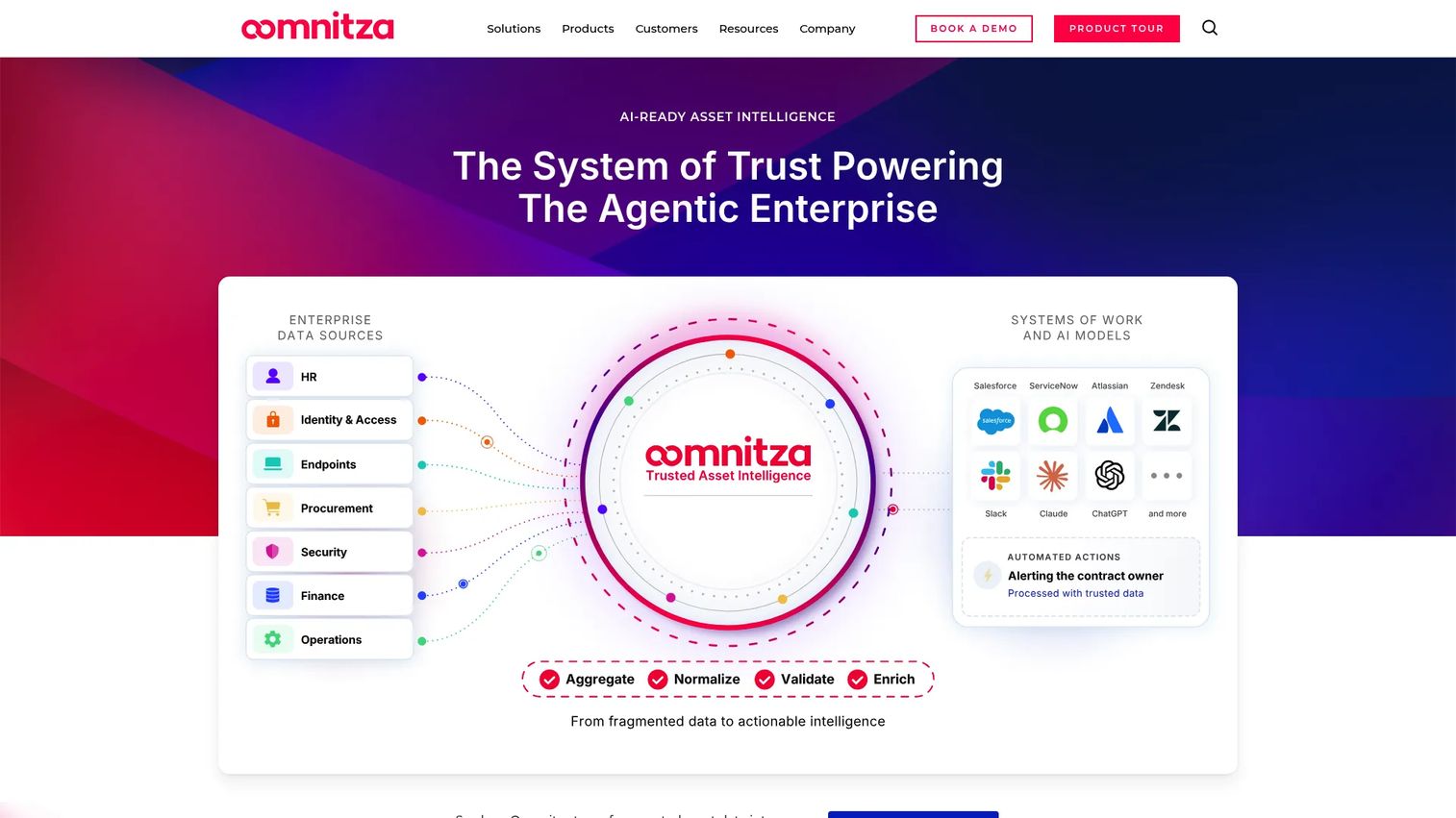
Oomnitza sits in a slightly different category: Enterprise technology management rather than pure SAM. It aggregates asset data across hardware, software, SaaS, cloud, network, and infrastructure through more than 1,500 agentless integrations, then automates lifecycle workflows across IT, HR, procurement, and security. The value case is clearest when IT, HR, and procurement each own a fragment of the asset record and no one sees the full lifecycle. Oomnitza connects those fragments and routes actions automatically. For founders trying to give a new IT or operations leader clean data on day one, this architecture is attractive. See the asset discovery software guide for context on how discovery tools compare.
Best for: Companies trying to connect device, SaaS, identity, procurement, and employee lifecycle data across multiple systems, rather than simply tracking licenses in one tool.
Key features
- Hardware and software asset management
- Asset, SaaS, cloud, network, and infrastructure visibility
- Low-code/no-code workflows and automation
- Agentless integrations with 1,500+ systems
- Read/write API access and system write-back
- Audit readiness and technology data governance
Why choose Oomnitza: The fit is strongest when workflow orchestration across departments is the problem, not just license reconciliation. Pricing is based on a platform license combined with usage-based modules per asset or user.
Oomnitza pricing: Oomnitza offers Essentials and Enterprise tiers, both quoted annually per organization. The price combines a platform license with usage-based modules. Contact Oomnitza for a quote specific to your asset count and integration scope.
G2 rating: 4.6/5 (verified October 2026)
10. InvGate Asset Management
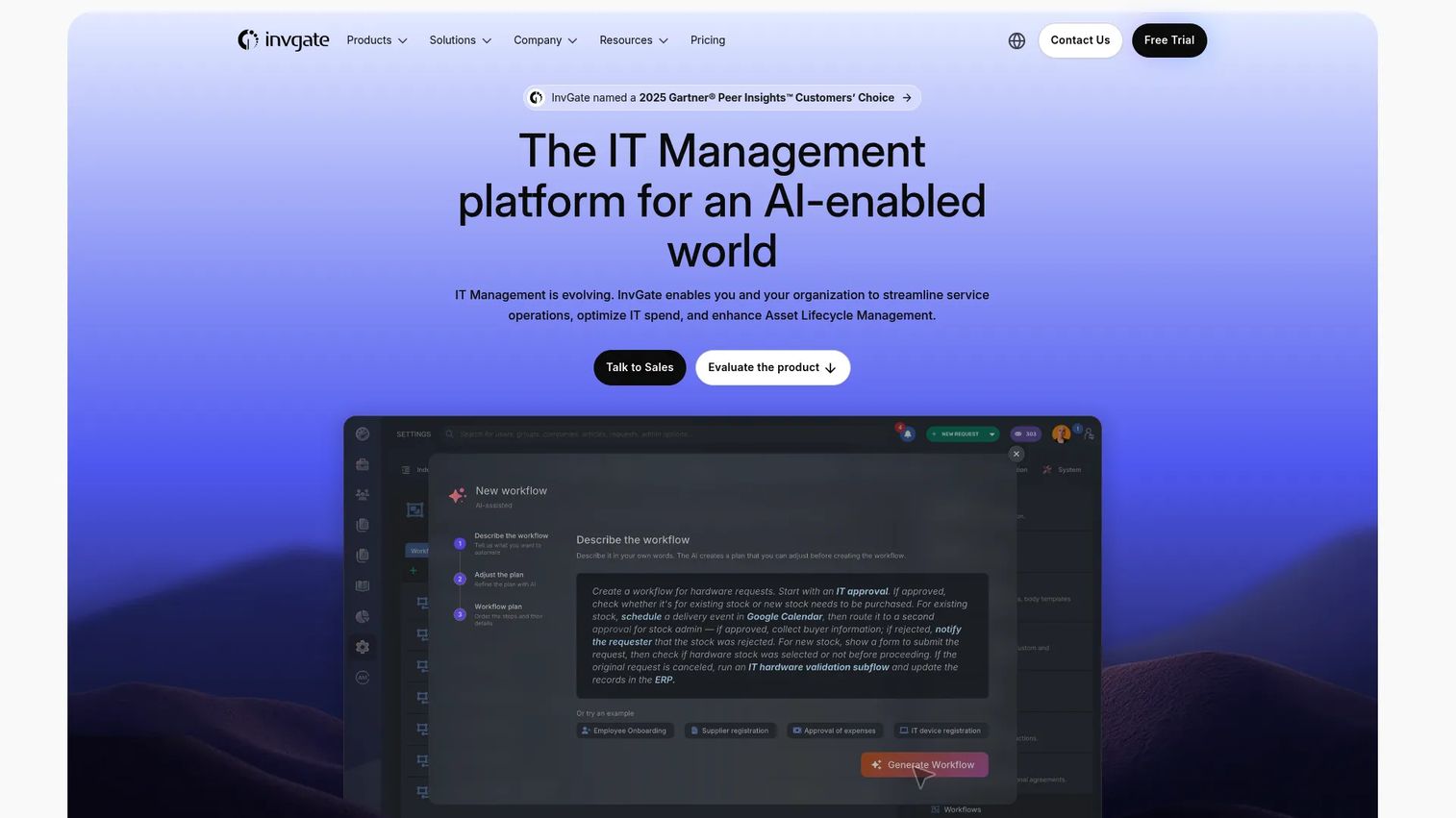
InvGate Asset Management is a practical choice for mid-market IT teams that want operational discipline without starting with a heavyweight enterprise platform. It covers automated discovery, unified inventory, asset lifecycle, CMDB relationship mapping, software license tracking, and integrations with tools like Intune, JAMF, AWS, and Azure. The Starter tier provides enough for a team formalizing its asset operations, and the pricing is one of the few on this list with specific dollar figures on the vendor's website. See the application portfolio management software guide if you're also rationalizing your broader application portfolio.
Best for: IT teams that want to know what exists, who owns it, and where it stands in its lifecycle, without a months-long implementation project to get there.
Key features
- Automated asset discovery and unified inventory
- Asset lifecycle, ownership, location, warranty, and contract tracking
- CMDB relationship mapping
- Software license and IT spend management
- Health Rules, Smart Tags, dashboards, and reporting
- Software deployment and configuration management
Why choose InvGate: The Starter tier is accessible for companies formalizing asset operations. If deep publisher license reconciliation is the primary driver, validate that depth before committing.
InvGate Asset Management pricing: Plans are priced annually and based on IP devices. The Starter tier covers up to 500 IP devices at $1,499/year. The Pro tier starts at $2,500/year ($5 per IP device/year) for 500 to 5,000 devices and adds SSO and automatic CMDB mapping. Enterprise starts at $12,000/year for up to 1,000,000 devices, with data residency and on-premise hosting options. A free trial is available.
G2 rating: 4.7/5 (verified October 2026)
11. TeamDynamix ITAM
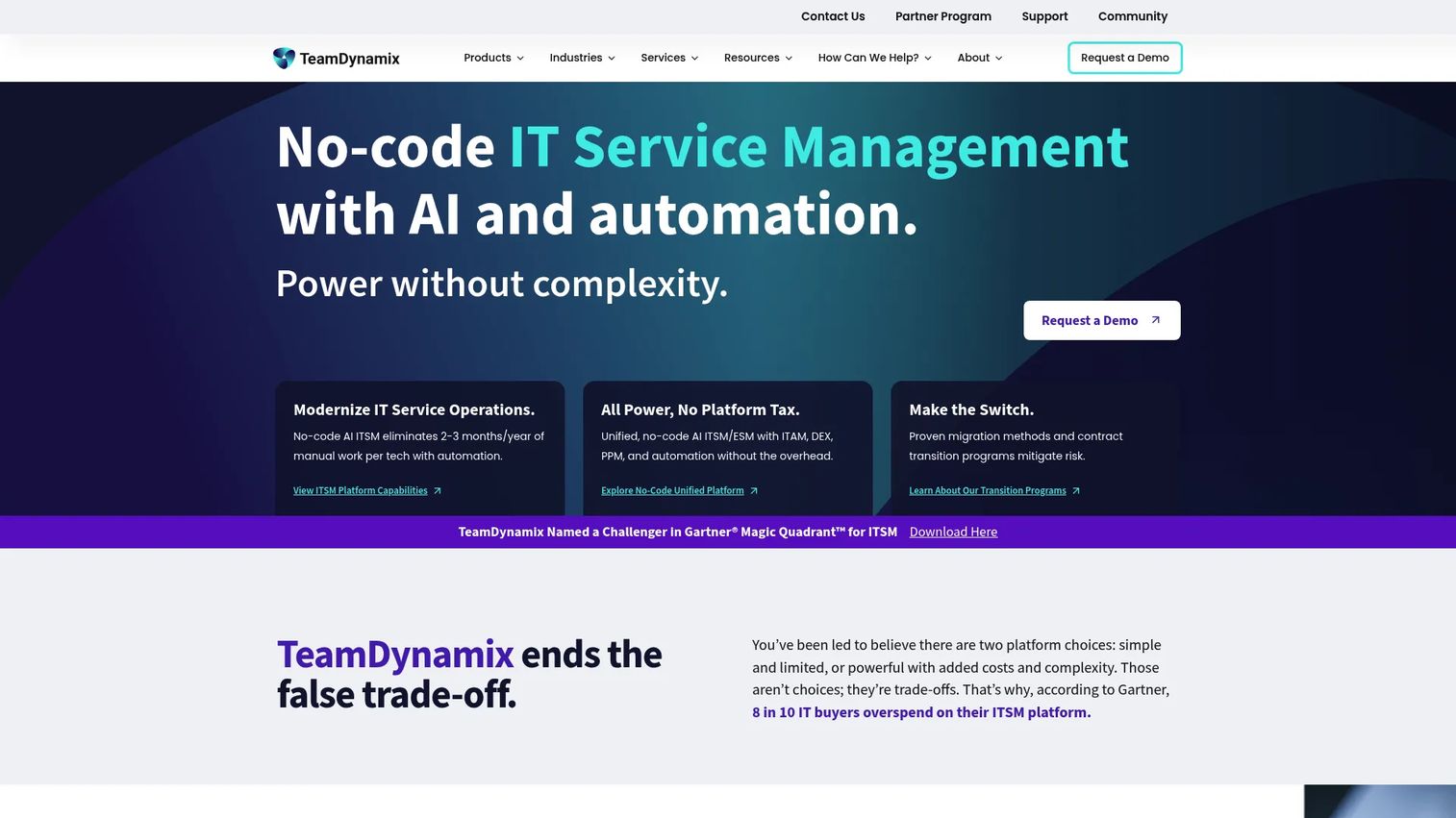
TeamDynamix ITAM combines IT asset management with enterprise service management, workflow automation, and portfolio capabilities. Hardware lifecycle tracking covers procurement, warranties, leases, refresh cycles, and disposal. Software license usage and compliance tracking sits alongside automated discovery across Windows, macOS, ChromeOS, Linux, and network devices. The CMDB integrates with ITSM so that configuration items connect to service delivery rather than existing as a separate record. Real-time asset location mapping and interactive floorplans are notable capabilities for organizations with distributed office environments.
Best for: Organizations building a unified IT service and asset process across departments, rather than running separate asset and service tools.
Key features
- Software license usage and compliance tracking
- Hardware lifecycle management including procurement, warranties, and disposal
- Automated hardware and software discovery across major operating systems
- CMDB and configuration-item relationships integrated with ITSM
- Real-time asset location mapping and interactive floorplans
Why choose TeamDynamix: Worth considering when your company has outgrown a collection of separate IT tools and needs ITAM to connect to intake, service requests, and cross-functional workflows.
TeamDynamix pricing: TeamDynamix uses quote-based agreements. Contact TeamDynamix directly through their pricing inquiry page to get a proposal covering ITAM, service management, and any portfolio or project management components.
G2 rating: 4.5/5 (verified October 2026)
12. Open iT
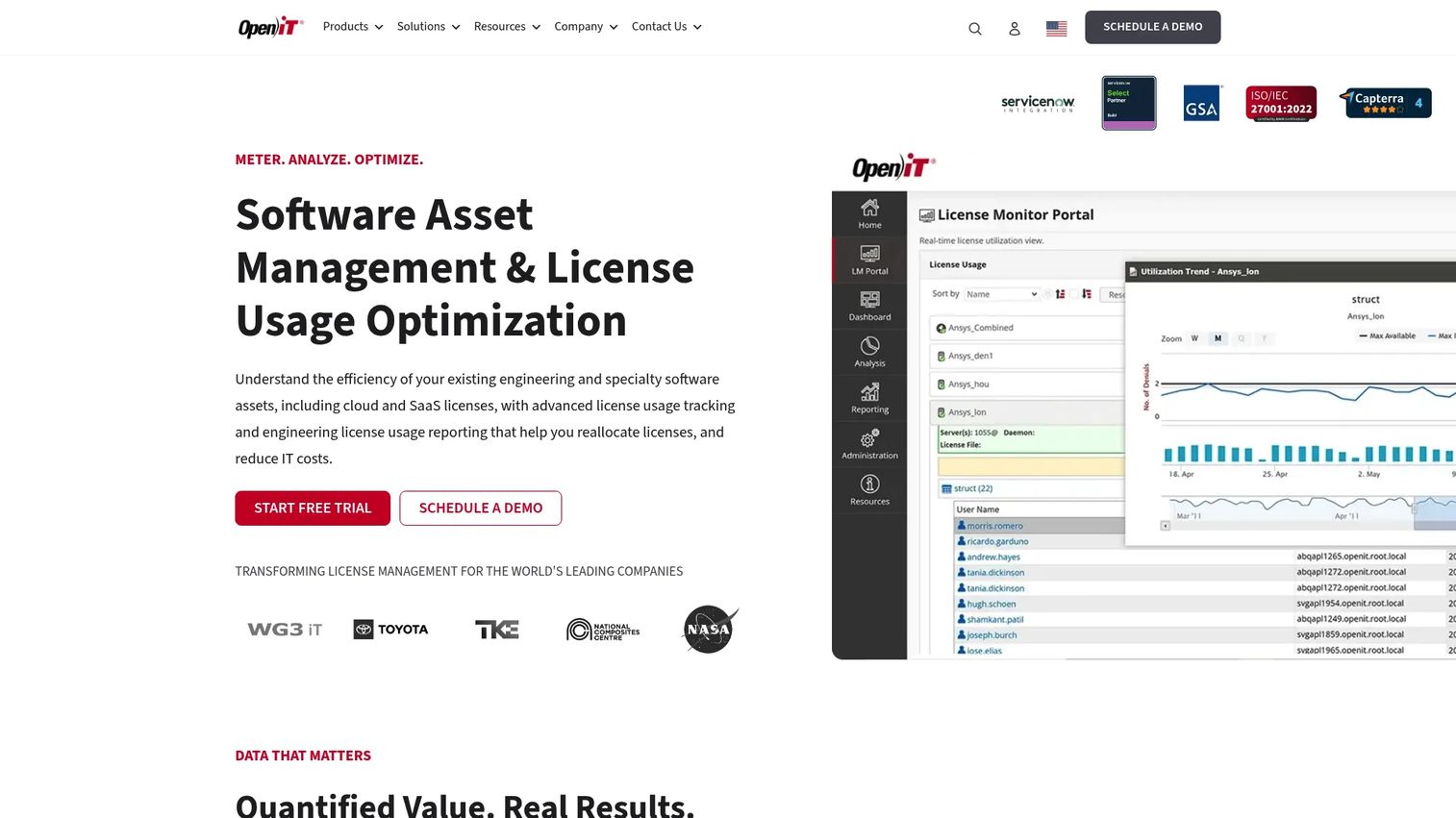
Open iT is a specialist tool. It solves a specific problem that most SAM platforms handle poorly: Measuring actual usage of expensive engineering, scientific, and technical software. If your company runs CAD, simulation, EDA, or other licensed engineering tools, the cost of over-buying or under-using those licenses is often larger than your entire SaaS subscription spend. Open iT tracks true active usage across on-premises, cloud, SaaS, and standalone applications, supports license forecasting and anomaly detection, and includes natural-language AI querying for generating reports. Its chargeback and cost allocation capabilities let you attribute software costs to the teams and projects consuming them.
Best for: Companies running costly engineering, design, scientific, or simulation software environments where usage metering can produce direct cost savings.
Key features
- Software license usage metering and optimization
- Real-time monitoring, historical reporting, and customizable dashboards
- True active-usage measurement across on-premises, cloud, and SaaS
- License forecasting and anomaly detection
- Storage and compute resource analysis
- Chargeback and cost allocation
Why choose Open iT: The business case depends on measuring concurrent usage, peak demand, and underused licenses on high-value technical software. It is a narrow but high-ROI fit for the right organization.
Open iT pricing: Open iT uses quote-based pricing. The price is driven by supported applications, license servers, user populations, and reporting requirements. Contact Open iT for a proposal.
G2 rating: 4.8/5 (verified October 2026)
Considerations when choosing software asset management tools
Start with the data you already trust
The best platform can't repair every data problem automatically. Before purchase, map your sources of truth: Identity systems, endpoint management, SaaS, contracts, purchase orders, cloud billing, and any existing ITSM or CMDB. A SAM tool is only as good as the data it ingests.
Separate SaaS cleanup from complex license compliance
These are genuinely different problems. SaaS-focused tools handle discovery, renewals, offboarding, and seat reclamation well. License compliance platforms handle complex publisher terms, datacenter software, and audit defense. Trying to solve both with one tool that's optimized for neither creates a gap on both sides.
Price the operating model, not just the subscription
Implementation, integrations, data cleanup, administration, and publisher coverage packs often cost more than the platform license in year one. Model the full cost before committing, especially for enterprise-tier tools where services are a separate line item.
Assign an executive owner and a named operational owner
Finance or procurement owns spend discipline. IT owns data integrity. Security contributes controls. Name one person responsible for the monthly review. Without an operational owner, the tool produces reports that nobody acts on.
Require workflows, not just reporting
A dashboard without action paths leaves waste untouched. Prioritize tools that can route approvals, reclaim licenses automatically, flag renewals, assign owners, and document exceptions. Reporting tells you what exists. Workflows are what change the number.
Conclusion
The software asset management market now covers $4.11 billion (Fortune Business Insights, 2025), and the tools have diverged into distinct categories. The right pick depends on where your exposure actually sits.
Flexera and CerteroX are the strongest options for complex publisher license compliance and audit defense. ServiceNow SAM wins when IT operations already runs inside the ServiceNow platform. ManageEngine AssetExplorer and InvGate offer the most accessible entry pricing for teams formalizing asset operations. Xensam and Oomnitza handle SaaS and technology lifecycle management for companies with distributed purchasing. USU covers hybrid datacenter environments with deep license modeling. Open iT solves engineering software usage for a specific but high-value problem.
Your first goal isn't to catalog every application. It's to build a repeatable system that tells your leaders what you own, what you use, what you owe, and what needs action before the next renewal cycle. Pick the tool that fits the specific gap, not the one with the longest feature list.
Start your journey with Guideflow today!
FAQs
SAM focuses specifically on software inventory, licenses, entitlements, usage data, renewals, and compliance. ITAM covers the broader lifecycle of technology assets, including hardware, contracts, devices, and often SaaS as well. Many modern platforms, including several on this list, span both categories, so the practical distinction depends more on which capabilities a specific tool emphasizes than on the category label.
An Effective License Position (ELP) is the reconciled view of your software deployments and usage against your license entitlements and contractual rights. It answers the question: For a given publisher, are you under-licensed, over-licensed, or in compliance? An ELP helps companies identify shortages before a publisher audit, find over-purchases before renewal, and build a defensible record if a true-up is required.
Once software buying becomes decentralized, renewals extend beyond a handful of core applications, or offboarding starts leaving paid accounts behind, a SAM tool starts paying for itself. Smaller companies can start with an asset-based or SaaS-focused platform, then add deeper license compliance capabilities as the complexity grows. Waiting until an audit or a board question arrives makes the implementation harder.
Tools optimized for SaaS management prioritize automated discovery of cloud applications, renewal visibility, inactive-seat recovery, and employee offboarding workflows. Xensam and Oomnitza are the strongest picks on this list for that focus. Companies with complex publisher license obligations may need a broader SAM platform alongside a SaaS management layer.
They can, but only if the organization acts on the data they surface. Savings typically come from reclaiming unused licenses, removing duplicate tools, improving negotiating position at renewal, and catching over-purchases before the next contract term. The platforms that pair reporting with automated reclamation workflows produce better outcomes than those that stop at dashboards.
They centralize entitlement evidence, discovery data, license calculations, contract records, and remediation workflows in a single auditable system. They make it faster to respond to a publisher's audit request with organized documentation rather than reconstructing records from emails and spreadsheets. A SAM tool doesn't eliminate audit risk on its own. The underlying data, contracts, and processes still need regular maintenance to hold up under scrutiny.
The priority depends on where your exposure sits. Most organizations benefit from identity provider integration (to track user provisioning and offboarding), endpoint management, ITSM or CMDB, procurement, and contract repositories. Companies with significant cloud spend also need cloud billing integration. Finance systems and HRIS matter for spend allocation and headcount-driven license planning. Ask each vendor which integrations are native versus require custom configuration.
A SaaS discovery rollout can surface useful data within weeks, since it typically relies on SSO or browser-based discovery rather than agent deployment. Enterprise license reconciliation takes longer, often several months, because it depends on contract ingestion, data normalization, integration with endpoint and identity systems, and getting ownership records into shape. Define a narrow first use case, get that working, then expand scope. Starting with everything at once extends timelines without producing faster value.