A student signs up for orientation, downloads the campus app, opens it twice, and never touches it again. By week six, they've missed two advising appointments and skipped the career fair. By spring, they don't re-enroll.
Most institutions blame the student. Not enough motivation, wrong fit, life got in the way. But the data tells a different story. The students who persist are the ones who stay connected to people, events, and services. Connection is not an accident. It is something you can design for, measure, and improve.
That is the job of student engagement software. Not to send more emails, but to build student belonging and persistence across the full lifecycle. The market reflects the shift: the global student engagement software market was valued at USD 1.5 billion in 2024 and is projected to reach USD 3.8 billion by 2032, growing at a 10.5% CAGR, according to Verified Market Research (2024).
A good student engagement platform pulls participation, communication, and risk signals into one place. The best student success software turns those signals into action before a student drifts. This guide ranks seven tools that do exactly that, and helps you pick the right student retention software for your campus.
What's inside
This guide is for higher education leaders, student affairs teams, retention staff, and campus technology buyers comparing engagement tools for 2026. We focused on platforms built for institutions, not single classrooms.
We selected and ranked tools on four criteria:
- Student lifecycle coverage: how much of recruitment, onboarding, engagement, and retention the tool handles
- Analytics depth: quality of the student analytics dashboard and reporting
- Mobile experience: strength of the mobile campus app and self-serve access
- Personalization and implementation fit: how well it tailors experiences and slots into your existing SIS and LMS stack
TL;DR
- Best for unified campus engagement: Ready Education
- Best for retention and student success workflows: Suitable
- Best for mobile-first campus experiences: campusM
- Best for advising and student success operations: EAB Navigate
- Best for a unified digital campus workspace: Ellucian Experience
- Best for co-curricular and community engagement: CampusGroups
- Best for classroom-adjacent engagement tools: Student Centered World
Pick based on the problem you are solving. If retention is the crisis, start with a student success software approach. If the campus app is the center of your strategy, lead with a mobile-first platform.
What is student engagement software?
Student engagement software is technology that helps higher education institutions increase participation, connection, and persistence across academic and co-curricular touchpoints. It combines communication, event management, analytics, and personalization so campuses can reach students earlier, keep them involved, and intervene before they disengage.
The category sits at the intersection of student experience and student success. A student engagement and retention platform does not just push announcements. It captures what students do, surfaces who is at risk, and gives staff a way to respond.
Core capabilities to expect:
- Mobile app or portal access: a single front door for schedules, services, events, and resources
- Event and attendance tracking: check-ins, RSVPs, and participation histories
- Personalization and segmentation: experiences tailored by program, population, or behavior
- Analytics and dashboards: a student analytics dashboard that tracks involvement and flags risk
- SIS and LMS integrations: connections to systems like Banner, Colleague, Workday, and Canvas
- Recognition, milestones, or gamification: badges, points, and co-curricular transcripts that reward participation
The difference between a basic communication tool and true student retention management software is the loop. Engagement produces data. Data reveals risk. Risk triggers action. Action drives persistence. Tools that close that loop belong in this category. Tools that only broadcast do not.
When to use student engagement software
Improve retention and persistence
Retention is the reason most institutions buy. Engagement software helps identify at-risk students earlier by combining attendance, service usage, and app activity into a single view. When a first-year student stops showing up to events and misses advising, the system flags it. Staff reach out before a quiet disengagement becomes a withdrawal. That early signal is what separates student retention software from a mass-email tool.
Centralize campus communication and participation
Students juggle a dozen logins and a flood of emails they never open. A single platform reduces that fragmentation. Events, services, deadlines, and resources live in one mobile campus app, so students find what they need without hunting. For staff, one system replaces the patchwork of spreadsheets, listservs, and disconnected event tools that make participation impossible to track.
Personalize the student experience
A commuter transfer student and a residential first-year need different things. Engagement platforms use role-based, segmented, and behavior-driven experiences to serve each population differently. Personalization for students means the right nudge at the right moment: a study-group prompt for a struggling student, a leadership event for an involved one. Segmentation by program, campus, or population makes that scale.
Comparison table
Here is how the seven platforms compare on intent, differentiation, pricing, and ratings. Where a vendor does not publish pricing, we note it as custom or contact sales rather than guess.
| # | Product | Best for | Key differentiation | Pricing | G2 rating |
|---|---|---|---|---|---|
| 1 | Suitable | Retention and student success workflows | Guided pathways plus co-curricular transcripts | Custom / contact sales | Not published |
| 2 | Ready Education | Unified campus engagement | Web and mobile student experience with analytics | Custom / contact sales | 4.1/5 |
| 3 | campusM | Mobile-first campus experiences | Personalized app with attendance and check-ins | Custom / contact sales | Not published |
| 4 | Student Centered World | Classroom-adjacent engagement | Teacher-focused PD and engagement training | From $7 | Not published |
| 5 | EAB Navigate | Advising and student success operations | Student success CRM with two-way SMS and AI | Enterprise / contact sales | Not published |
| 6 | Ellucian Experience | Unified digital campus workspace | Role-based dashboards across campus systems | Foundation at no added cost | Not published |
| 7 | CampusGroups | Co-curricular and community engagement | Groups, events, and a free campus community app | Free tier + custom | 4.1/5 |
1. Suitable
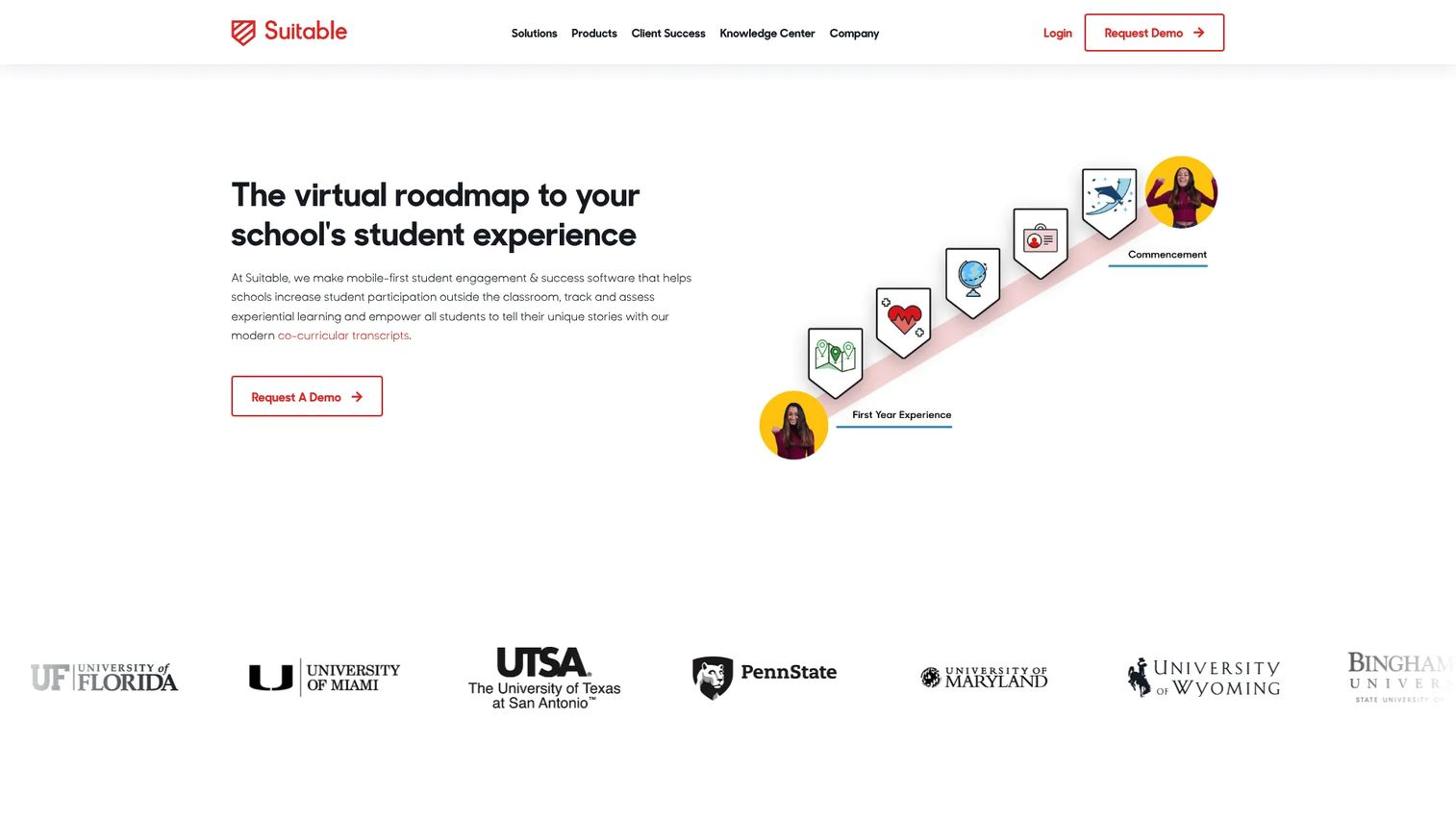
Suitable is a mobile-first student engagement and success platform built for colleges and universities that treat persistence as a design problem. Instead of hoping students stumble into the right experiences, Suitable maps guided pathways that walk each student through a personalized journey of academic, co-curricular, and career milestones. Complete a step, earn recognition, and the platform captures it in a co-curricular transcript that follows the student into the job market.
That structure is what makes it a genuine student engagement and retention platform rather than a communication add-on. Institutions focused on student belonging and persistence use it to turn vague goals like "get involved" into concrete, trackable actions.
Best for: Colleges and universities that want to structure and reward the full student journey from orientation through career readiness.
Key strengths
- Guided pathways for personalized student learning journeys
- Co-curricular transcripts that document involvement
- Student organization management in one place
- Engagement analytics tied to milestones and recognition
- Mobile-first access for students on any device
Why choose Suitable: If your retention strategy depends on getting students to do specific things, complete onboarding, attend advising, join a group, Suitable's pathway model gives you the scaffolding. It fits institutions that want experiential learning and recognition baked into one system rather than bolted on.
Suitable pricing: Suitable does not publish pricing on its site. Access is demo-led, so you will need to contact the company for a quote based on your institution's size and scope.
2. Ready Education
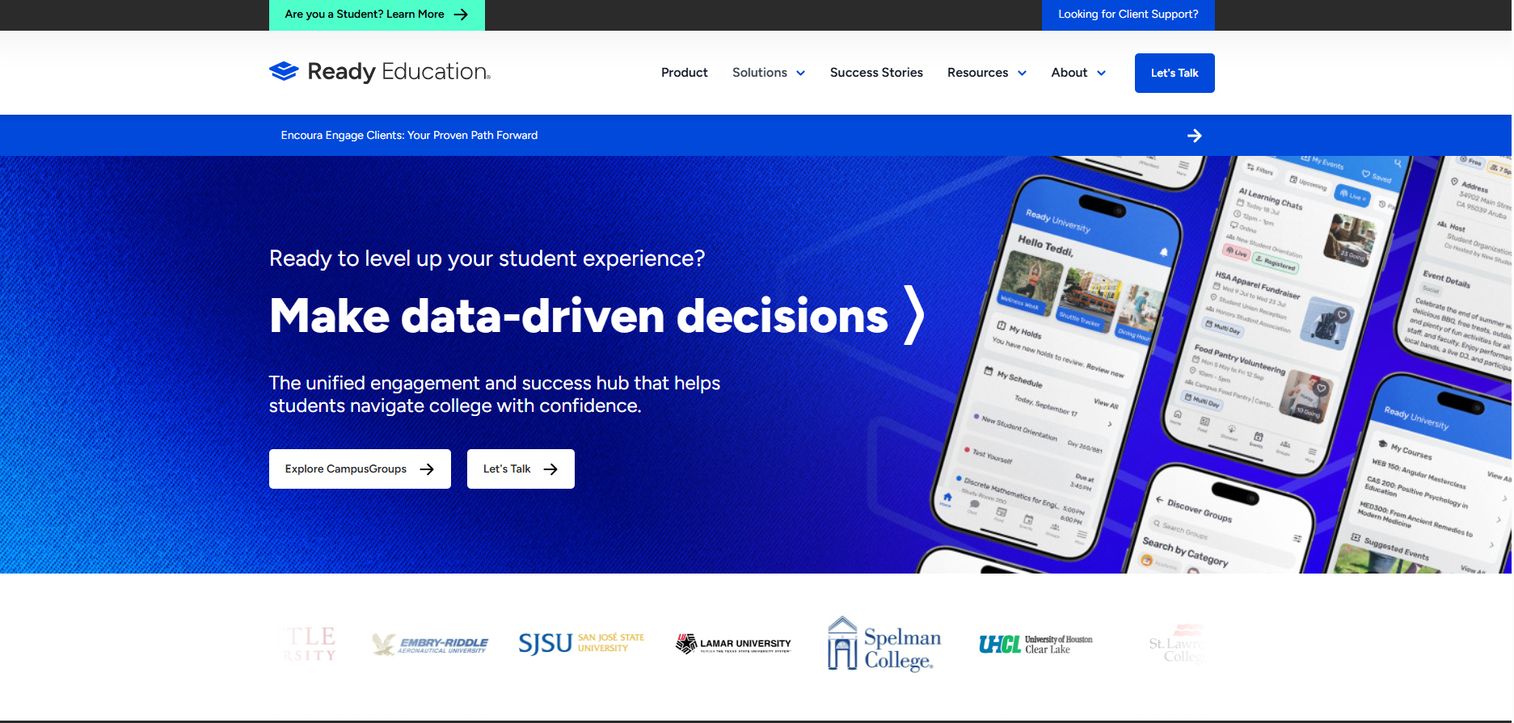
Ready Education positions itself as a student success hub that unifies the campus experience across web and mobile. The platform brings clubs, groups, events, targeted communication, and services into one place, then layers dashboards and analytics on top so staff can see what is working. It is built around belonging: the idea that students who feel connected to their campus are the ones who persist.
For institutions that want a broad, campus-wide engagement layer rather than a niche tool, Ready Education covers a lot of ground. It handles the day-to-day student experience while feeding a student analytics dashboard that retention teams can act on.
Best for: Colleges and universities seeking one unified student engagement and success platform across the whole campus.
Key strengths
- Web and mobile student experience in one platform
- Clubs, groups, and event management
- Targeted communication with dashboards and analytics
- SIS and LMS integration for a connected data picture
- Belonging-focused engagement across the student lifecycle
Why choose Ready Education: Choose it when the campus app is the center of your engagement strategy and you want communication, events, and analytics under one roof. It suits institutions consolidating several point tools into a single student engagement platform.
Ready Education pricing: Ready Education does not display public pricing. The company describes its pricing as flexible and scalable and asks institutions to request a demo or quote. On G2, it holds a 4.1/5 rating.
3. campusM
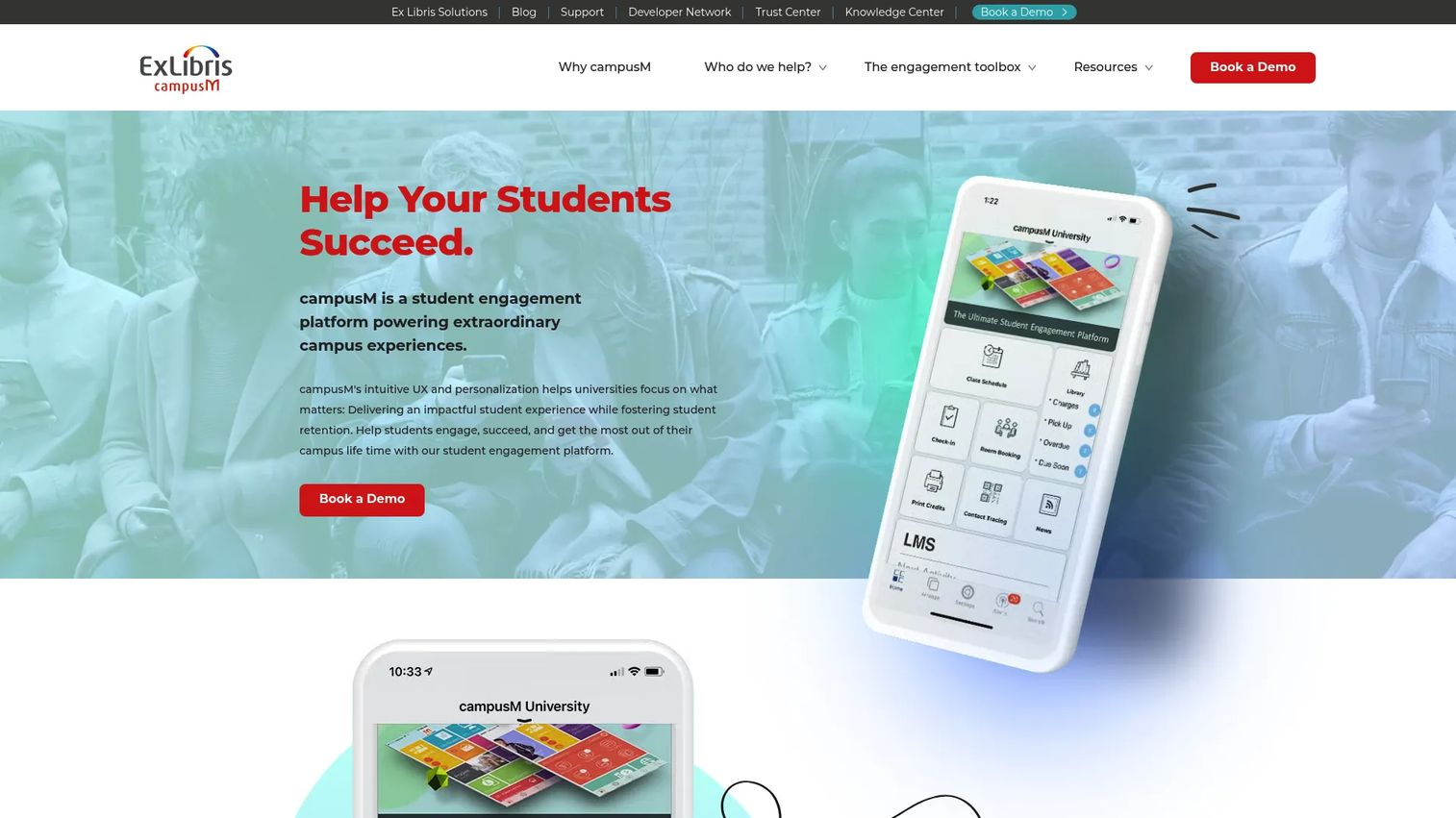
campusM, from Ex Libris, is a student engagement platform for universities and colleges that lead with a mobile-first strategy. It delivers personalized mobile and web experiences, attendance tracking and check-ins, events, and messaging, all managed through a no-code app manager that lets staff build and update the campus app without a development team. The personalization runs deep, adapting what each student sees based on their role, program, and behavior.
For campuses where the mobile campus app is the front door to everything, campusM offers operational breadth. Attendance tracking in particular makes it useful as student retention management software, since consistent no-shows are one of the earliest and clearest risk signals a campus can catch.
Best for: Higher education institutions that want a mobile-first campus app and portal with strong personalization and attendance features.
Key strengths
- Personalized mobile and web experiences
- Attendance tracking and digital check-ins
- Events, messaging, and calendars in one app
- No-code app management for non-technical staff
- LMS integration and accessibility support
Why choose campusM: Pick it when you want a highly personalized mobile experience and the ability to manage the app in-house without engineering support. Its attendance and check-in tooling makes it a strong fit for institutions tying participation data to retention.
campusM pricing: campusM does not publish pricing on its site. Pages direct prospective buyers to a demo or contact form, so pricing is set per institution.
4. Student Centered World
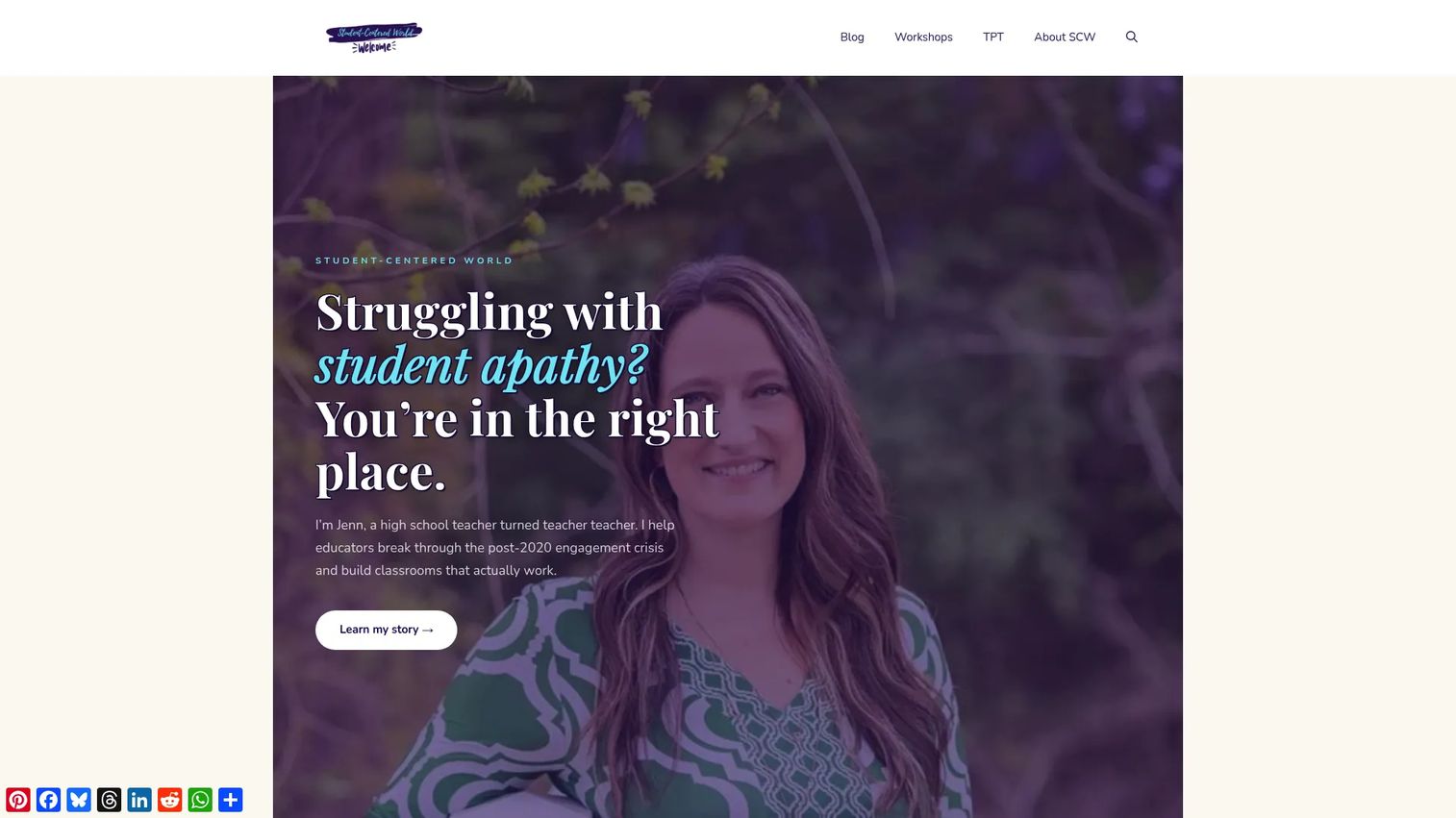
Student Centered World is the practical outlier on this list. It is not an institutional platform. It is a teacher-focused professional learning brand centered on classroom engagement and student-centered instruction. Through workshops, an on-demand PD library, and programs like The Classroom Reset, it helps educators design more engaging, participation-heavy classrooms.
The distinction matters for buyers. Classroom engagement tools solve a different problem than campus-wide engagement platforms. Where the other six tools track participation, risk, and persistence across the institution, Student Centered World builds the skills and strategies individual instructors use inside a single room. If your gap is instructional practice rather than campus operations, it is worth a look.
Best for: Educators and instructional teams seeking student-engagement professional development and classroom strategy training.
Key strengths
- Student engagement and motivation workshops
- On-demand PD library (Vault Forward)
- The Classroom Reset program
- Practical, teacher-led engagement strategies
- Low-cost entry for individual educators
Why choose Student Centered World: Choose it if the problem you are solving is instructor capability, not campus infrastructure. It complements a full engagement platform rather than replacing one, and it is aimed at teachers and schools rather than retention operations.
Student Centered World pricing: Publicly listed offerings include a $7 July Jumpstart VIP, $97 lifetime access to Vault Forward, and $129 lifetime access to The Classroom Reset. There is no free tier.
5. EAB Navigate
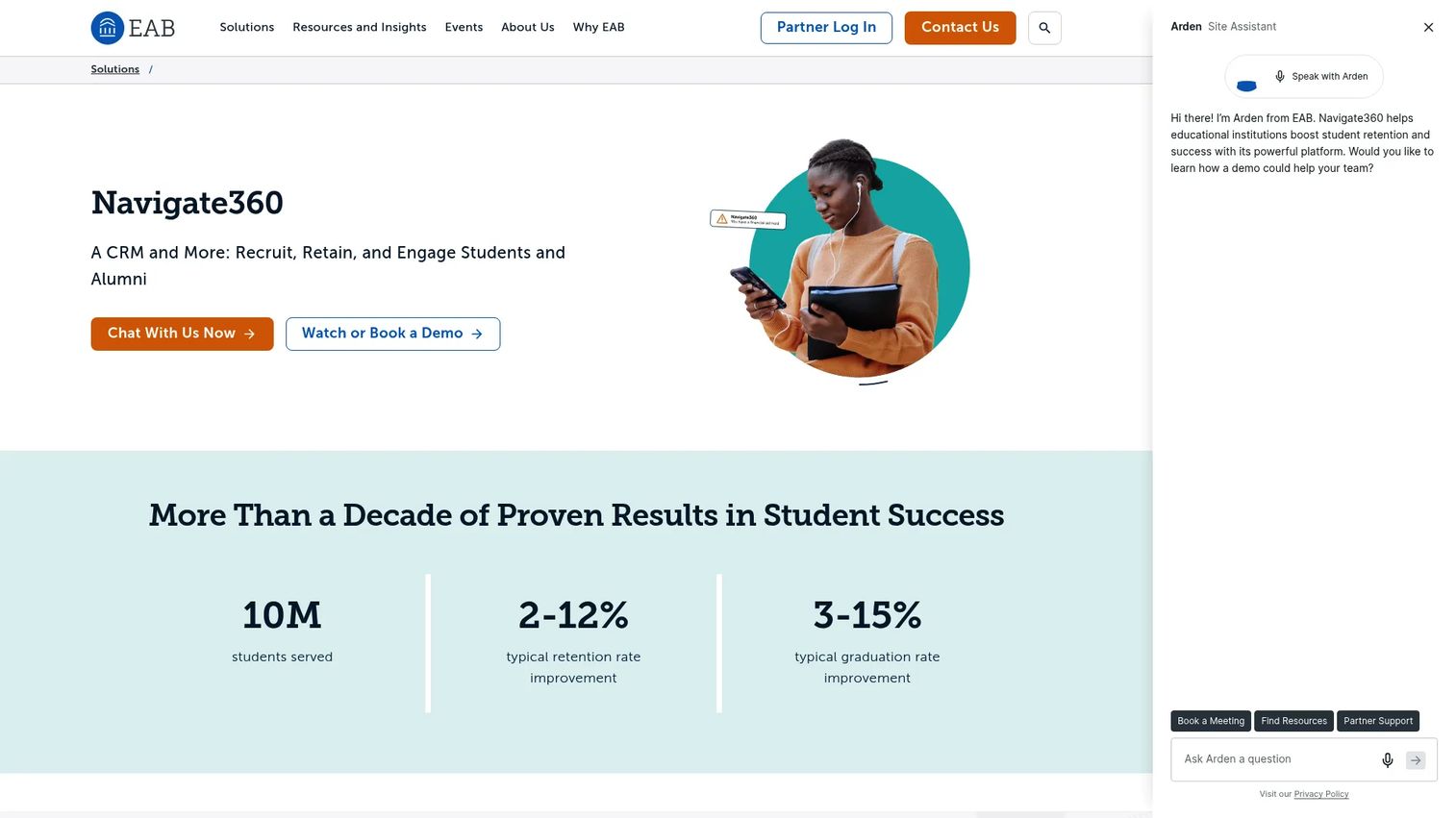
EAB Navigate, part of Navigate360, is a higher-ed CRM and student success platform built for recruiting, retaining, and engaging students and alumni. It leans hard into advising and intervention. A complete student profile pulls together academic and engagement data, two-way SMS keeps students in reach, and AI features help staff prioritize who needs attention first. Appointments, surveys, and a self-service student mobile app round out the workflow.
This is where the line between a student engagement platform and student success software gets useful. Navigate is less about broadcasting campus life and more about managing the operations of keeping students on track. It is student retention software in the most direct sense: identify risk, assign an intervention, follow through.
Best for: Higher-education institutions that need an enterprise student success CRM centered on advising and intervention.
Key strengths
- Complete student profile combining academic and engagement data
- Two-way SMS for direct student outreach
- Appointments and surveys for advising workflows
- AI assistant and AI navigator for prioritization
- Self-service student mobile app and reporting analytics
Why choose EAB Navigate: Choose it when advising and retention operations are the core problem, not campus event management. It differs from campus apps and engagement hubs by focusing on the case-management side of student success, the coordinated care that catches students before they fall through.
EAB Navigate pricing: EAB states that pricing is enterprise-based and depends on institution enrollment and scope. No public list price is shown, so you will need to contact EAB for a quote.
6. Ellucian Experience
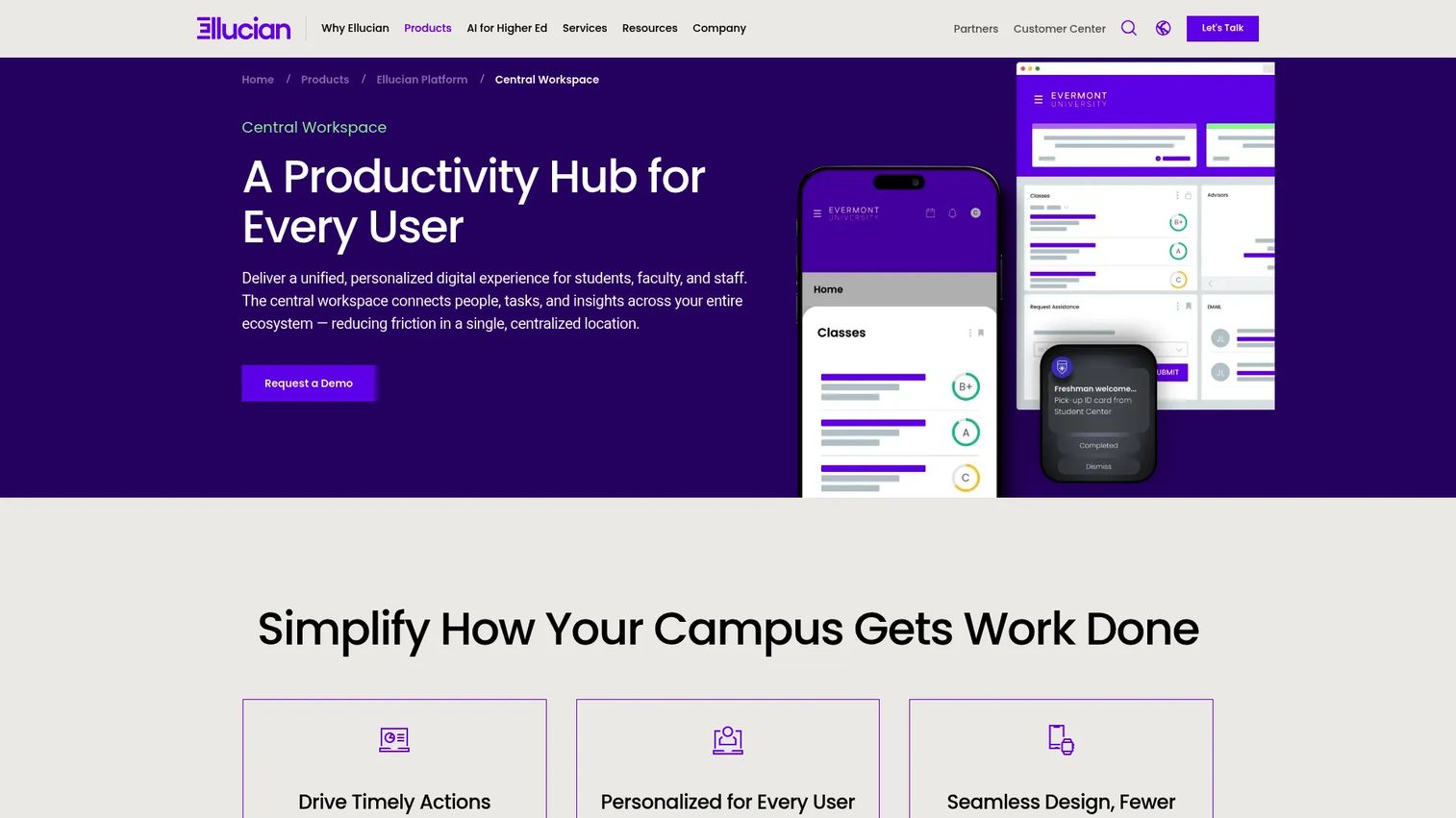
Ellucian Experience is a centralized, personalized digital workspace for students, faculty, and staff. Rather than a standalone engagement app, it is a portal-style layer that unifies tasks, insights, and workflows across an institution's systems. Role-based dashboards mean a first-year student, an advisor, and a finance clerk each see a tailored view of what matters to them, with notifications and personalization built in.
Its strength is integration. Because it connects across student, finance, and HCM systems, it works as the connective tissue of a digital campus. For institutions already in the Ellucian ecosystem, it extends what they own into a more engaging, personalized front door.
Best for: Higher-ed institutions that want a unified campus portal and role-based digital experience across systems.
Key strengths
- Role-based dashboards and personalized experiences
- Centralized access to tasks, insights, and workflows
- Integration across student, finance, and HCM systems
- Notifications and personalization for students
- Portal-style access for the whole campus community
Why choose Ellucian Experience: Choose it if you are already invested in Ellucian systems or want a broad digital campus layer rather than a dedicated engagement app. It excels at unifying fragmented systems into one personalized workspace, which supports student lifecycle engagement from a data and access angle.
Ellucian Experience pricing: Experience Foundation is available to all Ellucian customers at no additional cost. Experience Premium adds advanced features and developer tools; its price is not publicly listed, so contact Ellucian for details.
7. CampusGroups
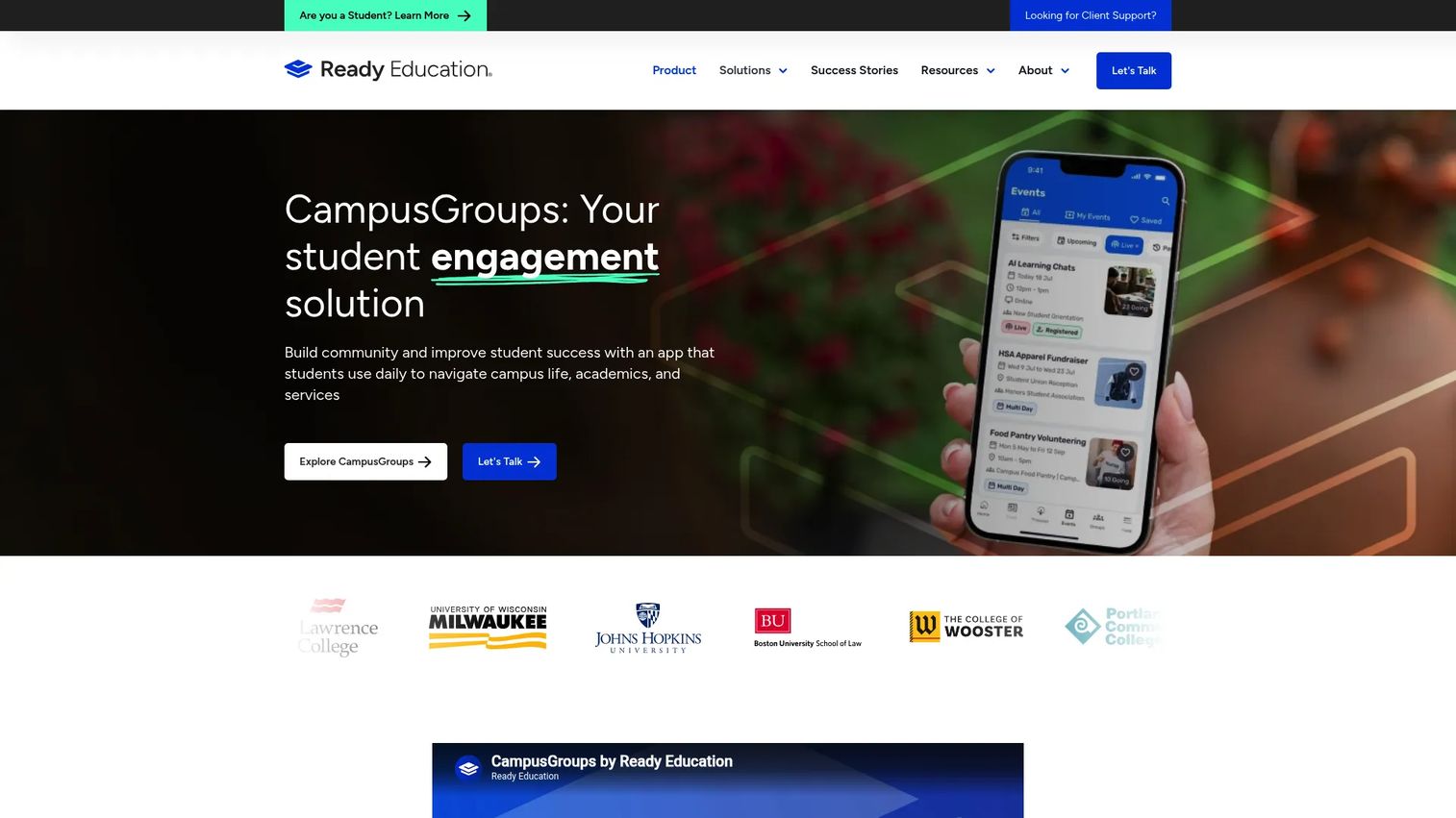
CampusGroups is a campus engagement platform built around student organizations, events, communications, and administration. It handles groups and membership management, events and calendars with attendance tracking, and student involvement analytics, plus chat, email, and a mobile app to keep the community connected. For student life and engagement teams, it is participation-heavy by design.
This is the tool to reach for when co-curricular life is the priority. It excels at the community side of engagement: getting students into clubs, tracking who shows up, and building the involvement history that feeds a co-curricular transcript. Those involvement records are also useful risk signals, since a student who stops participating is often a student worth checking on.
Best for: Higher-ed institutions managing student groups, events, and campus engagement in one platform.
Key strengths
- Groups and membership management
- Events, calendars, and attendance tracking
- Chat, email, and mobile app engagement
- Student involvement analytics
- Free campus community app to start
Why choose CampusGroups: Choose it when student life and participation drive your strategy and you want deep tooling for organizations and events. Its involvement analytics make participation visible, which supports both community building and early retention signals.
CampusGroups pricing: CampusGroups offers a free campus community app. Additional features require contacting sales, and the company does not publicly list paid pricing beyond the free tier. On G2, it holds a 4.1/5 rating.
How to choose the right platform
Before you sign anything, run each tool through the same checklist. The differences between these platforms are real, and the wrong fit costs you more than money.
Lifecycle coverage
Decide how much of the student journey you need one tool to cover. Some platforms own the whole arc from recruitment to alumni; others focus tightly on advising or co-curricular life. Map your gap first, then buy against it.
Analytics and risk signals
A student analytics dashboard is only useful if it turns activity into action. Check whether the tool flags at-risk students automatically, how it defines risk, and whether staff can respond inside the platform. A student success dashboard that only reports the past is half a tool.
Mobile experience
If students live on their phones, the mobile campus app is your real product. Test it as a student would. Is it fast, current, and easy to navigate, or is it a wrapper around a clunky portal? Ask who updates it and how often.
Integration fit
The platform has to talk to your SIS and LMS. Confirm support for your specific systems, whether Banner, Colleague, Workday, or Canvas, and ask about data sync frequency. Integration gaps become manual work, and manual work becomes stale data.
Personalization depth
Personalization for students should go beyond a first-name merge field. Look for segmentation by program, population, and behavior, and role-based experiences for different campus groups. The deeper the segmentation, the more relevant every nudge.
Conclusion
The right choice comes down to the problem you are actually solving, not the longest feature list.
Use Suitable or EAB Navigate when retention is the core problem. Suitable structures the journey and rewards participation; EAB Navigate runs the advising and intervention operations behind student success software.
Use Ready Education or campusM when the campus app is the center of your strategy and you want communication, events, and analytics in one mobile-first place.
Use CampusGroups when student life and co-curricular participation are the priority, and Ellucian Experience when you want a unified digital campus workspace across systems.
Use Student Centered World only if your gap is classroom instruction rather than campus-wide operations.
Start with the engagement problem that keeps your team up at night, drop-off, disconnection, or fragmented data, and shortlist the two tools that attack it most directly. Then book demos and put each one in front of the students and staff who will actually use it. The best platform is the one your campus adopts, not the one with the biggest brochure.
FAQs
Student engagement software helps colleges and universities increase participation, belonging, communication, and retention across student touchpoints. It combines a mobile campus app, event and attendance tools, analytics, and personalization so institutions can reach students earlier and keep them connected. The goal is student belonging and persistence, not just more announcements.
Look for mobile access, a student analytics dashboard, personalization and segmentation, event and attendance management, SIS and LMS integrations, and retention support. The strongest platforms close the loop: engagement generates data, data surfaces risk, and staff act on that risk. Recognition features like badges and a co-curricular transcript help sustain participation over time.
It reduces drop-off by surfacing risk early and making support easy to reach. When attendance falls, service usage stops, or app activity goes quiet, the platform flags the student so staff can intervene before a quiet disengagement becomes a withdrawal. Centralizing communication and services also removes the friction that pushes students away.
A student engagement platform focuses on participation and campus experience: events, communication, involvement, and the mobile app. Student success software leans toward advising, case management, and intervention. Many institutions run both, and some tools blend the two. EAB Navigate sits closer to the success and advising side, while CampusGroups and campusM lean toward engagement and participation.
Ready Education and campusM are the strongest fits for a mobile-first strategy. Ready Education unifies the web and mobile student experience with dashboards and belonging-focused engagement. campusM emphasizes deep personalization and no-code app management, plus attendance tracking. Choose based on whether you prioritize a broad campus hub or a highly personalized, staff-managed app.
Yes. Platforms with involvement tracking, badges, and a co-curricular transcript record what students do outside the classroom and build a participation history over time. Suitable structures this around guided pathways and recognition, while CampusGroups tracks it through organizations and event attendance. Those records also double as early retention signals.
Common metrics include event attendance, mobile app usage, service usage, participation rates, and downstream retention and persistence. A good student success dashboard connects those activity signals to outcomes, so teams can see which engagement efforts actually move re-enrollment. The point is not activity for its own sake; it is proving that engagement drives persistence.