A customer places an order online at 9 a.m. and picks the "collect in store" option. By the time they arrive, the item is out of stock, the store team never got the alert, and now someone is refunding an order that should have been a five-minute win. That is the gap most retailers are trying to close.
Click and collect software exists to unify online checkout, real-time inventory, order routing, and in-store handoff into one workflow, so the promise you make at checkout matches what happens at the counter. The stakes are rising fast. The global click-and-collect software market sat at roughly $1.15 billion in 2025 and is projected to reach $4.33 billion by 2035, a 14.2% CAGR, according to Market.us (2025). Market.us also reports that around 1 in 10 online orders globally are now fulfilled through click-and-collect.
If you are comparing click and collect solutions for BOPIS, curbside pickup, and store pickup workflows, this guide breaks down seven platforms by how they actually handle inventory accuracy, order allocation, and handoff. No generic omnichannel buzzwords, just the operational and integration details that decide whether pickup works.
What's inside
This guide compares seven click and collect software platforms for retail operations, ecommerce, and product teams building a pickup strategy. We picked tools that span the real spread of the market, from enterprise pickup orchestration to ecommerce-native store pickup.
We evaluated each on the criteria that actually predict whether pickup succeeds:
- Inventory visibility: real-time stock accuracy and reservation logic across locations
- Pickup workflow automation: order routing, allocation rules, and exception handling
- Integration depth: POS, ecommerce, ERP, and notification connections
- Notification options: SMS, email, and status updates for BOPIS and curbside pickup
- Operational fit: store handoff steps, staff workflows, and pickup network flexibility
TL;DR
- Best for enterprise orchestration: Fluent Commerce, for rules-based allocation across stores, DCs, and lockers.
- Best for retail module workflows: Peak Technologies, for practical store execution and handoff mechanics.
- Best for pickup workflow clarity: TransVirtual, for transport and delivery coordination logic.
- Best for automated store fulfillment hardware: AutoStore, for robotics-supported high-volume pickup.
- Best for cloud retail modernization: Cybertill, for tying online and store data on one platform.
- Best for ecommerce-native store pickup: Shopify, for merchants who want simpler local pickup tied to their storefront.
- Best for enterprise retail ecosystems: Oracle Retail, for large organizations with complex orchestration and governance needs.
What is click and collect software?
Click and collect software is a retail order management system that coordinates online order placement, real-time inventory, order routing, pickup notifications, and in-store, curbside, or locker handoff so customers can buy online and collect their purchase without waiting for delivery.
The category is often called BOPIS software (buy online pickup in store), and it sits at the intersection of ecommerce, inventory, and store operations. A capable click and collect solution typically handles the following:
- Real-time inventory visibility: accurate stock counts across stores, DCs, and warehouses, so you only promise what you can fulfill.
- Order routing and allocation: rules that decide which location fulfills each order based on stock, distance, and capacity.
- Pickup notifications: SMS and email updates that tell customers when an order is ready and how to collect it.
- Store handoff workflows: in-store pick and pack, barcode scanning, signature capture, and contactless pickup steps.
- POS and ecommerce integrations: transaction and inventory syncing between the storefront, POS, and back office.
- Analytics and exception handling: pickup SLA tracking, order status visibility, and out-of-stock recovery.
The strongest omnichannel fulfillment software treats these as one connected system rather than bolted-on features. That is what separates a reliable pickup experience from a queue of frustrated customers at the service desk.
When to use click and collect software
Not every retailer needs full pickup orchestration. Here is how to pattern-match your situation to the category.
Reduce shipping costs and improve local convenience
When home delivery eats your margin, turning stores into pickup points shifts the last mile back to the customer. Pickup is often faster than shipping and cheaper for you to fulfill. It also drives foot traffic, and foot traffic drives attach-rate purchases at the counter. If your delivery costs are climbing and you have physical locations near demand, click and collect software pays for itself quickly.
Route orders to the right store or pickup location
Inventory is rarely even across a network. One store is overstocked, another is picked clean, and a locker or partner site might absorb demand better than either. Rules-based order allocation matters here. Good click and collect solutions let you route each order to the location that can actually fulfill it fastest, based on stock, capacity, and proximity, instead of forcing manual reassignment when a store cannot deliver.
Improve curbside and contactless pickup execution
Curbside pickup software lives or dies on the handoff. Late pickup notifications, unclear staff workflows, and no barcode scanning create confusion at the exact moment the customer is waiting in the parking lot. Systems that automate status updates, verify orders with scanning or signature capture, and give store teams a clear pick-and-pack sequence remove the improvisation that breaks curbside and contactless pickup.
Comparison table
The table below helps you compare click and collect solutions by orchestration depth, operational fit, and integration needs. Use it to shortlist before reading the detailed sections.
| # | Product | Best for | Key differentiator | Pricing | G2 rating |
|---|---|---|---|---|---|
| 1 | Fluent Commerce | Enterprise pickup orchestration | Rules-based allocation across stores, DCs, and lockers | Custom pricing | 4.9/5 |
| 2 | Peak Technologies | Retail store execution | End-to-end supply chain and mobile workforce services | Custom pricing | Not listed |
| 3 | TransVirtual | Pickup and delivery coordination | Usage-based transport management with tracking | From $0.24 per note | 4.6/5 |
| 4 | AutoStore | Automated store fulfillment | Cube-based robotics for goods-to-person pickup | Custom pricing | Not listed |
| 5 | Cybertill | Cloud retail modernization | Omnichannel EPOS and multi-branch inventory | Custom pricing | Not listed |
| 6 | Shopify | Ecommerce-native store pickup | Local pickup tied to storefront and inventory | From $29/mo | 4.4/5 |
| 7 | Oracle Retail | Enterprise retail ecosystems | Merchandising, order management, and store ops at scale | Custom pricing | Not listed |
Best click and collect software for 2026
Below are the seven platforms in detail. Each section covers the operational fit, the integration story, and what store ops, ecommerce, and IT teams should care about before buying.
1. Fluent Commerce
Fluent Commerce is cloud-native distributed order management software built for omnichannel retail and B2B fulfillment. Its click and collect story centers on rules-based orchestration: deciding which location fulfills each order and how the pickup flow runs across a large, uneven network. For retailers managing pickup across stores, distribution centers, lockers, and partner locations, it treats the whole pickup network as one addressable system.
The platform pairs real-time inventory visibility with order management and orchestration, so promises made at checkout reflect what stores can actually collect and hand off. It also supports ship-from-store and returns alongside click and collect, which matters when the same store staff juggle multiple fulfillment types in a single shift.
Best for: Enterprise retailers and distributors needing omnichannel order and inventory orchestration across many locations.
Key features
- Order management and orchestration
- Real-time inventory visibility across locations
- Ship-from-store, click and collect, and returns support
- Rules-based order allocation for pickup routing
Why choose Fluent Commerce: If your bottleneck is deciding where each order should be fulfilled and keeping that decision accurate across a complex network, this is the orchestration layer for it. It fits IT and operations teams that need real allocation logic, not a single-store pickup add-on.
Fluent Commerce pricing: The pricing page is public but does not list numeric tiers; it routes to a demo request, so pricing is custom and quote-based. Fluent Commerce holds a 4.9/5 rating on G2.
2. Peak Technologies
Peak Technologies provides end-to-end supply chain, mobility, printing, and mobile data capture services, with retail click and collect built around practical store execution. Where enterprise orchestration platforms focus on routing logic, Peak leans into the physical handoff: POS integration, notifications, parcel receiving, and the staff workflow that gets an order from the shelf to the customer.
Its strength is the mechanics store teams actually touch. SMS and email pickup notifications keep customers informed, curbside and contactless procedures reduce confusion at handoff, and mobile data capture supports barcode scanning during in-store pick and pack. For retailers whose pickup problems are operational rather than architectural, that focus on store process clarity is the draw.
Best for: Enterprises needing supply chain and mobile workforce technology to run reliable in-store pickup and curbside handoff.
Key features
- Managed mobility services for store staff
- Supply chain services and parcel handling
- Printing and labeling solutions
- POS integration and pickup notifications
Why choose Peak Technologies: Choose it when the friction is on the floor, not in the routing engine. It fits store operations teams that want the handoff, scanning, and notification steps to run the same way in every location.
Peak Technologies pricing: Pricing is quote-based and handled through sales; no public numeric pricing was available. G2 does not currently list enough reviews to show a rating.
3. TransVirtual
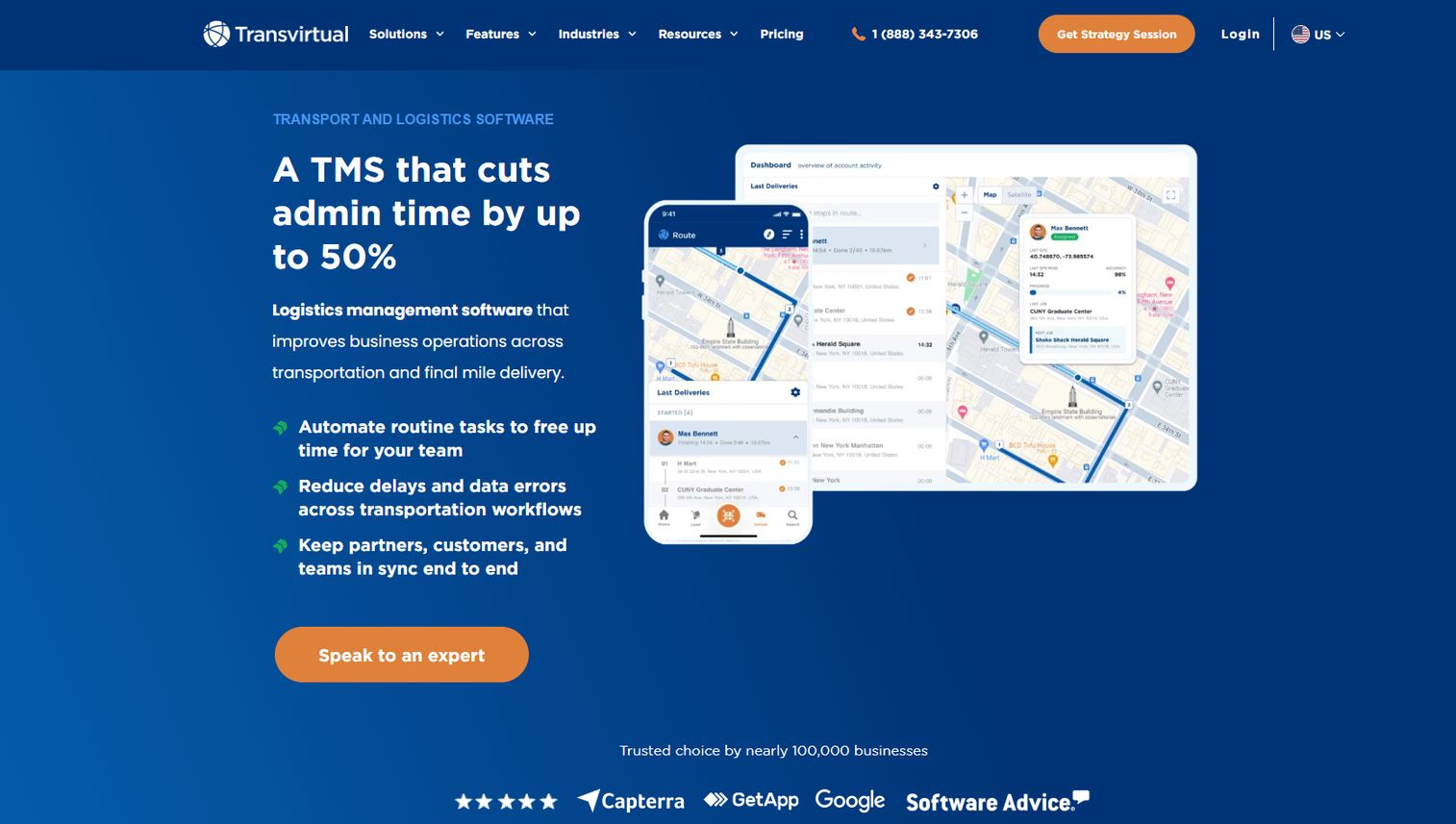
TransVirtual is cloud-based transport management software covering delivery, routing, tracking, invoicing, and rate-card management. It approaches click and collect from the movement and coordination side: getting orders to the right pickup point, tracking them accurately, and confirming the handoff with proof of delivery.
For retailers whose pickup depends on moving stock between locations or coordinating with carriers before collection, that transport-first model brings useful operational clarity. Electronic proof of delivery captures the handoff, real-time GPS tracking shows where inventory is, and automated invoicing ties the financial side to the pickup event. It is a clean reference model for teams that want tight tracking and verification around the collection step.
Best for: Transport and logistics-heavy retailers needing a usage-based system with tracking, invoicing, and rate management around pickup.
Key features
- Real-time GPS tracking
- Route optimization
- Electronic proof of delivery (ePOD)
- Automated invoicing and billing
- Carrier integrations
Why choose TransVirtual: Pick it when coordination and verification between locations drive your pickup reliability. The usage-based model suits teams that want to scale cost with volume rather than commit to fixed seats.
TransVirtual pricing: Usage-based, starting from $0.24 per note, with no upfront costs listed and a demo prompt for details. TransVirtual holds a 4.6/5 rating on G2.
4. AutoStore
AutoStore provides cube-based warehouse automation systems and software for high-density, goods-to-person fulfillment. Its role in click and collect is different from the software-only players: it automates the physical retrieval behind pickup, so orders are assembled by robots and staged for collection at speed. For high-volume environments where pick labor is the bottleneck, that hardware-plus-software approach changes the math.
The system combines cube-based automated storage with robots, ports, and a controller, layered with software and AI optimization across design, operations, and diagnostics. In a store or fulfillment hub handling heavy pickup demand, it compresses the time between order and ready-for-collection, which is exactly where large-volume click and collect operations feel strain.
Best for: Warehouses and fulfillment hubs needing high-density automated storage and fast goods-to-person pickup preparation.
Key features
- Cube-based AS/RS warehouse automation
- Modular components: bins, robots, ports, grid, controller
- Software and AI optimization across design and operations
- Goods-to-person fulfillment for rapid order assembly
Why choose AutoStore: Choose it when pick throughput, not routing logic, is your constraint. It fits retailers running high-volume pickup who want robotics to absorb the labor-intensive part of order preparation.
AutoStore pricing: AutoStore does not publish standard pricing; the site directs visitors to contact sales for a quote based on system design and scale.
5. Cybertill
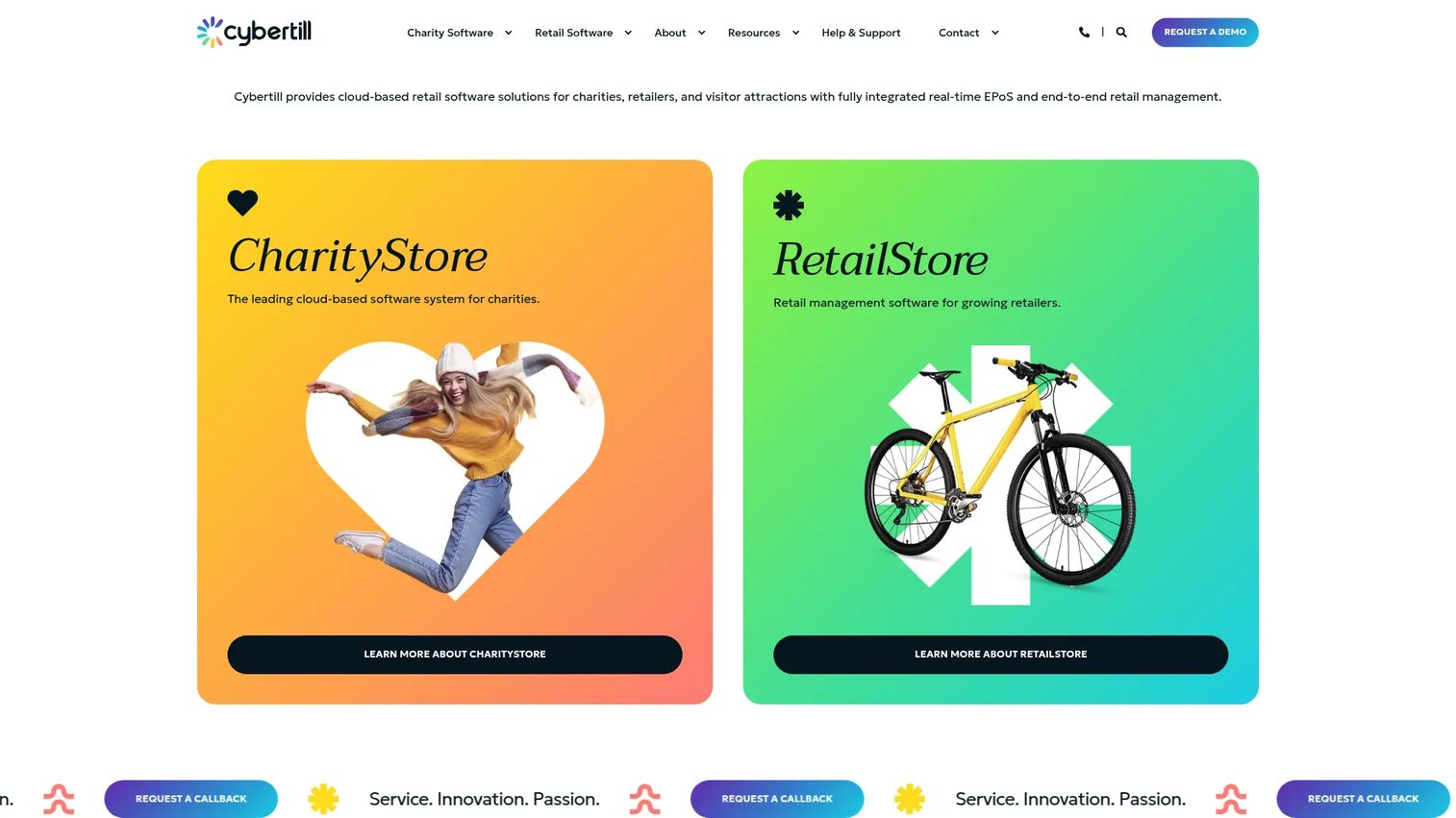
Cybertill is cloud-based omnichannel retail management software for retailers and charity shops, with click and collect fitting inside a broader EPOS and inventory platform. Rather than a standalone pickup tool, it ties online and store data together so pickup runs on the same real-time inventory the rest of the business uses.
That matters most for teams modernizing legacy operations. When your POS, stock, and online store finally share one source of truth, pickup stops being a manual reconciliation exercise. Multi-branch inventory management keeps stock accurate across locations, and promotional and pricing tools stay consistent whether a customer buys online for pickup or at the counter. For charity and multi-store retailers, features like ListAid and Round Up donations round out the platform.
Best for: Multi-store retailers and charity retailers needing omnichannel EPOS and inventory software with integrated pickup.
Key features
- Multi-branch inventory management
- Promotional management and pricing tools
- Charity retail features such as ListAid and Round Up donations
- Cloud-based omnichannel EPOS
Why choose Cybertill: Pick it when click and collect is one part of a larger modernization effort, not a point solution. It fits retailers who want online and store operations on a single cloud platform instead of stitching systems together.
Cybertill pricing: Pricing is quote-based through sales; no public numeric pricing or tiers were available on the site.
6. Shopify

Shopify is a commerce platform for building, running, and scaling online and in-person stores, and its local pickup fits merchants who want store pickup tied directly to their storefront. If you already run on Shopify, enabling pickup uses the same inventory, checkout, and store data you manage every day, which keeps the number of moving parts low.
That native fit is the appeal for smaller and mid-market merchants. Store pickup connects to local inventory per location, checkout offers pickup at the point of sale, and the shipping, inventory, and marketing tools all live in one place. You are not integrating a separate orchestration layer; you are switching on a workflow the platform already understands. For merchants who want simpler setup over deep enterprise routing, that trade is worth it.
Best for: Merchants on Shopify who want store pickup workflows tied to their storefront and local inventory with minimal setup.
Key features
- Online store builder
- Checkout and payments
- Shipping, inventory, and marketing tools
- Local store pickup tied to per-location inventory
Why choose Shopify: Choose it when you want ecommerce-native pickup without adding infrastructure. It fits merchants who value fewer moving parts over enterprise-grade allocation rules.
Shopify pricing: Plans start at $29/mo (Basic, billed yearly), then Grow at $79/mo and Advanced at $299/mo, with Plus from $2,300/mo. A 3-day free trial is available, then $1/month for the first 3 months. Shopify holds a 4.4/5 rating on G2.
7. Oracle Retail
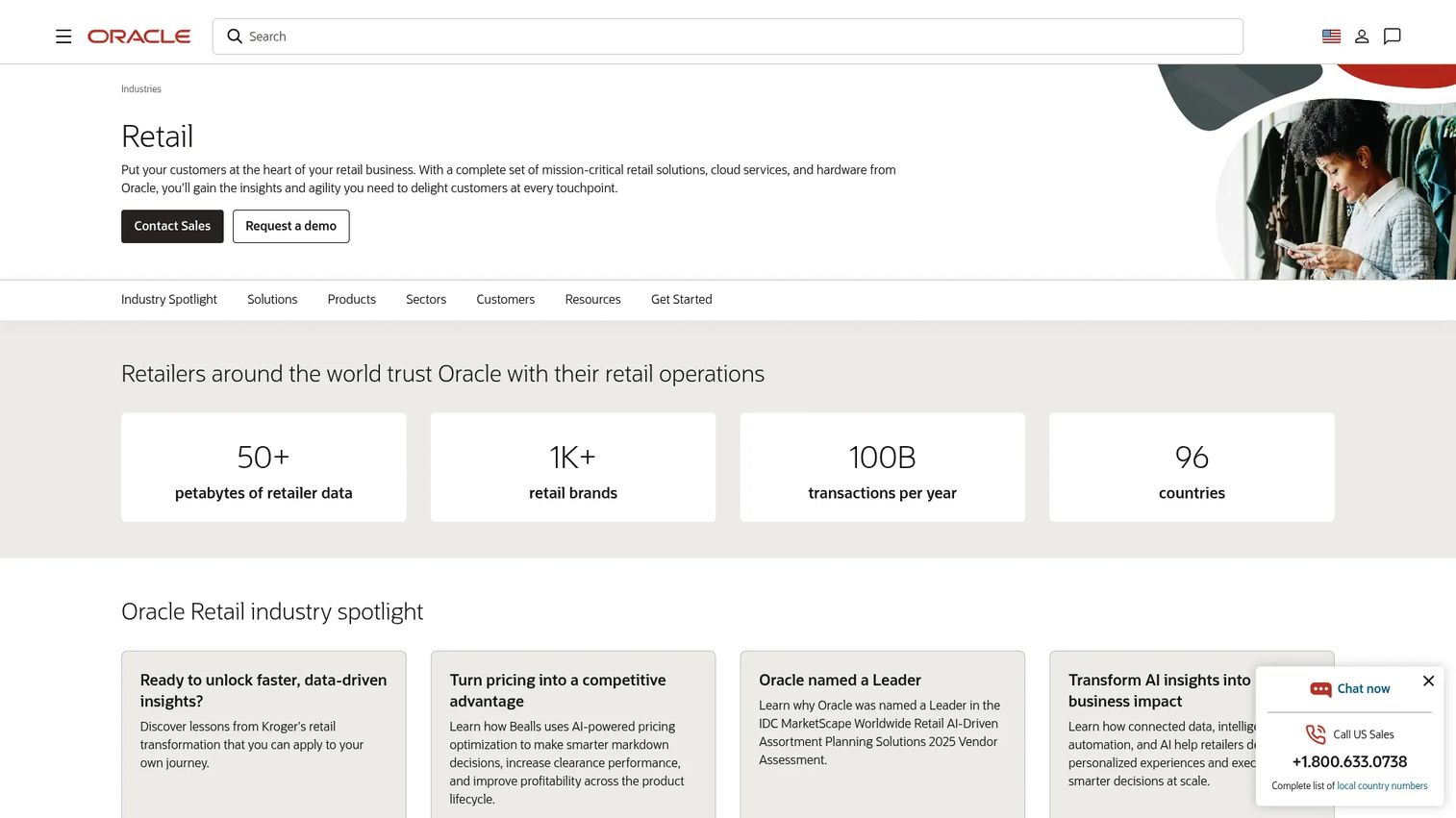
Oracle Retail is Oracle's retail software and cloud suite spanning merchandising, omnichannel operations, pricing, inventory, loyalty, and store operations. Click and collect sits inside a much larger platform built for the scale, governance, and integration demands of large retail organizations.
For enterprises, the value is breadth. Omnichannel order management and POS handle the pickup transaction, inventory planning and store inventory operations keep stock accurate across a wide network, and merchandising and financial planning tie pickup into the broader retail operation. When your requirements include complex orchestration, deep reporting, and strict governance across many systems, that end-to-end scope is the reason to evaluate it.
Best for: Large retailers needing an enterprise retail platform across stores, ecommerce, inventory, and pricing.
Key features
- Merchandising and financial planning
- Omnichannel order management and POS
- Inventory planning and store inventory operations
- Enterprise-scale reporting and governance
Why choose Oracle Retail: Choose it when pickup is one requirement inside a full enterprise retail platform decision. It fits organizations that need governance, scale, and systems breadth over a lightweight pickup tool.
Oracle Retail pricing: Oracle routes retail pricing through Contact Sales and a Pay As You Go price list; no public numeric price was shown on the retail pages.
Considerations
Before you commit to any click and collect solution, verify these five areas against your own operations.
Inventory accuracy
Ask how the system handles real-time inventory, reservation logic, and out-of-stock exceptions. If stock counts lag or orders are not reserved at checkout, you will oversell and refund. Test how quickly a sale in-store updates availability for online pickup.
Integration depth
Confirm which POS, ecommerce, ERP, CRM, and notification systems the platform connects to, and whether an API is available for the gaps. Pickup depends on transaction and inventory syncing, so shallow integration shows up fast as reconciliation work for your team.
Store operations fit
Walk through the actual handoff. Check the pick-and-pack steps, staff workflow, barcode scanning, and how curbside exceptions are handled when a customer arrives early or an order is short. The best routing logic still fails if the counter workflow is unclear.
Pickup network flexibility
Verify support for lockers, partner stores, multiple pickup locations, and the order allocation rules that route demand between them. If you plan to expand your pickup network, make sure the routing model scales with it rather than forcing manual reassignment.
Measurement and analytics
Look for order status visibility, pickup SLA tracking, and store-level reporting. You cannot improve pickup times or spot underperforming locations without instrumentation. Confirm the data is granular enough to segment by store, order type, and pickup method.
Conclusion
The right click and collect software depends on your inventory complexity and store network, not on a feature checklist. For enterprise orchestration across large, uneven networks, Fluent Commerce and Oracle Retail bring the routing depth and governance. For operational execution on the store floor, Peak Technologies and AutoStore focus on the handoff and the physical throughput behind it.
For workflow clarity and modernization, TransVirtual offers tight tracking and verification, while Cybertill ties online and store data onto one cloud platform. And for merchants who want ecommerce-native store pickup with minimal setup, Shopify keeps the moving parts low.
Start by scoring your real bottleneck. If it is deciding where orders get fulfilled, prioritize orchestration. If it is the counter handoff, prioritize store operations tools. Match the omnichannel fulfillment software to the problem you actually have, then shortlist two platforms and run a pickup pilot in a handful of stores before rolling out.
FAQs
Click and collect software coordinates online orders, pickup routing, notifications, and in-store handoff in one workflow. It connects your storefront, real-time inventory, and store operations so a customer can buy online and collect their purchase without waiting for delivery.
BOPIS, or buy online pickup in store, is a common synonym for click and collect, especially in the US market. Click and collect is slightly broader in some regions, covering locker and curbside pickup as well as in-store collection. In practice, most BOPIS software and click and collect software cover the same core workflows.
Inventory accuracy comes first, because you cannot promise pickup on stock you do not have. After that, prioritize pickup notifications, store handoff workflow support, order allocation rules, and POS integration. These four decide whether the pickup experience holds up under real volume.
Pickup shifts the last mile back to the customer, so you avoid the shipping expense of delivering each order to a home address. Fulfilling from a nearby store is often cheaper and faster than shipping from a central warehouse. Pickup also drives store traffic, which can lift attach-rate purchases at the counter.
Yes, as long as it includes pickup instructions, real-time status updates, and handoff workflow support. Curbside pickup depends on the customer and store team being synced at the moment of arrival. Look for SMS and email pickup notifications plus a clear staff workflow for verifying and delivering the order to the vehicle.
Usually yes. Pickup depends on accurate store inventory and transaction syncing, and the POS is where in-store sales update stock. Without POS integration, online availability drifts out of sync with reality and you risk overselling items that were already bought at the counter.
Retailers with multiple locations, high local foot traffic, or complex omnichannel fulfillment needs see the most benefit. If your delivery costs are climbing and you have stores near demand, pickup converts that proximity into cheaper, faster fulfillment. Single-location merchants can still benefit from simpler ecommerce-native store pickup.
Locker pickup uses a fixed, self-serve collection point where the customer retrieves an order from a secured compartment, often outside staffed hours. Store pickup uses a staff-managed handoff at a counter or curbside. Lockers reduce labor and extend pickup windows, while staffed pickup supports verification, questions, and attach-rate selling.