Your ERP says the order shipped. The shop floor says the line went down twice last shift, a batch got rejected, and nobody logged why. Both are right. That gap between what the planning system believes and what actually happened on the floor is exactly where deals go sideways, audits fail, and yield quietly leaks.
Manufacturing execution system software closes that gap. It sits between your ERP and your machines, capturing what really happens as it happens: which operator ran which step, on which equipment, against which work order, with which materials. The category is growing fast for a reason. The global MES market is estimated at USD 17.6 to 19.2 billion in 2026 and is projected to reach roughly USD 29 to 42 billion by the early 2030s, a compound annual growth rate near 9 to 12 percent, according to Mordor Intelligence (2024) and Grand View Research (2024).
The problem is that "MES software" covers a huge range of tools. Some are enterprise platforms built for regulated multi-site operations. Others are configurable app platforms that a plant team can shape in weeks. Choosing the wrong one means an 18-month implementation that stalls, or a lightweight tool that can't handle your genealogy and compliance requirements. This guide compares eight of the strongest options for 2026 and gives you a buyer-first way to shortlist them by deployment model, ERP fit, operational complexity, and compliance needs.
Software evaluation is software evaluation, whether you're picking a shop floor system or a contract lifecycle management software platform: the criteria that matter are integration depth, adoption, and provable outcomes.
What's inside
This guide is for manufacturing operations leaders, plant managers, manufacturing IT, and quality leaders comparing MES vendors in a mid-to-late evaluation stage. We selected these eight platforms based on four criteria that decide real-world fit: deployment model (cloud, on-premise, or hybrid), depth of ERP integration, operational complexity the system can handle, and strength of quality and traceability features for regulated industries. Every entry includes what it does well, who it fits, verified feature details, and pricing guidance where public data exists. You'll also get a comparison table, a buyer's checklist, and answers to the questions buyers actually ask before signing.
TL;DR
- Best for standardized multi-site regulated operations: AVEVA Manufacturing Execution System, with strong genealogy and hybrid-cloud deployment.
- Best for ERP-connected enterprise visibility: DELMIA Manufacturing Execution System, tightly coupled to a broader operations suite.
- Best for MES fundamentals and SAP-centric stacks: SAP Manufacturing Execution, with component-level traceability.
- Best for complex global discrete and process manufacturing: Siemens Opcenter Execution.
- Best for configurable, fast-iterating shop floor apps: Tulip Platform, a no-code frontline operations platform.
- Best for a connected cloud MES plus ERP operating model: Plex Smart Manufacturing Platform.
- Best for high-complexity electronics and semiconductor plants: Critical Manufacturing MES.
- Best for teams already invested in the Infor ecosystem: Infor MES.
What is manufacturing execution system software?
Manufacturing execution system software is a shop floor execution layer that tracks, documents, and controls production in real time as materials move from raw input to finished goods. It connects planning systems above (ERP) to equipment and operators below (machines, PLCs, IIoT sensors), turning a paper or spreadsheet floor into a paperless shop floor with a live digital record of every step.
An MES answers the questions ERP cannot: what is running right now, at what rate, with what quality, using which lot of material, on which machine, by whom. That real-time production visibility is what drives OEE improvement, faster root-cause analysis, and defensible compliance records.
Core capabilities most MES software includes:
- Production scheduling and dispatching: sequencing work orders and releasing them to the right resource at the right time.
- Shop floor execution and operator guidance: digital work instructions, step enforcement, and paperless data capture.
- Traceability and genealogy: full forward and backward tracking of materials, lots, and units for recall and root-cause work.
- Quality management: in-process checks, nonconformance handling, and statistical process control.
- Document control: version-controlled instructions, specs, and procedures tied to each operation.
- Performance analysis: OEE, yield, downtime, and throughput dashboards fed by machine data.
- ERP integration: two-way data flow so orders, materials, and confirmations stay in sync.
- IIoT and machine connectivity: direct data collection from equipment for automatic, accurate records.
Together these features form the backbone of manufacturing operations management and are the reason MES sits at the center of any smart factory initiative.
When to use manufacturing execution software
Not every plant needs a heavyweight enterprise MES. Match the tool to the problem you're actually solving.
Replace paper and spreadsheets with a paperless shop floor
If operators still record data on clipboards and someone keys it into a system hours later, you're flying blind. MES software captures data at the source, cuts transcription errors, and gives you a live view of the line. This is the highest-ROI starting point for most manufacturers.
Prove traceability and compliance in regulated industries
Pharma, medical devices, food and beverage, and aerospace need genealogy that survives an audit. When you must reconstruct exactly which components went into a specific unit or batch, MES traceability turns a multi-day scramble into a query. If compliance is your driver, weight quality management and document control heavily.
Standardize execution across multiple sites
Running the same processes across several plants but getting different results? A modular MES lets you define standard work centrally and roll it out consistently, then compare OEE and yield across sites on a level field. This is where ERP integration and multi-site governance matter most.
Comparison table
The table below sorts the eight platforms by how they map to common buyer profiles. Pricing for enterprise MES is almost always quote-based, so treat the pricing column as a guide to packaging, not a final number. Verify every figure against the vendor during your evaluation.
| # | Product | Intent | Key differentiation | Pricing | G2 rating |
|---|---|---|---|---|---|
| 1 | AVEVA Manufacturing Execution System | Standardized multi-site MES | Native AVEVA System Platform integration, genealogy, hybrid cloud | Contact vendor | 0.0/5 |
| 2 | DELMIA Manufacturing Execution System | Enterprise ERP-connected execution | Visibility and traceability within a broader operations suite | Contact vendor | 4.0/5 |
| 3 | SAP Manufacturing Execution | SAP-centric shop floor control | Component-level traceability, tight SAP stack alignment | Contact vendor | 4.0/5 |
| 4 | Siemens Opcenter Execution | Complex global operations | Optimized sequencing across discrete and process industries | Contact vendor | 4.1/5 |
| 5 | Tulip Platform | Configurable frontline apps | No-code app editor, native device and machine connectivity | From $100/mo per interface | 4.5/5 |
| 6 | Plex Smart Manufacturing Platform | Cloud MES plus ERP | Integrated MES, ERP, and supply chain in one cloud platform | Annual subscription | 3.9/5 |
| 7 | Critical Manufacturing MES | High-complexity manufacturing | Modular Industry 4.0 architecture, unit and lot tracking | Contact vendor | Not rated |
| 8 | Infor MES | Infor-ecosystem execution | Real-time integration across production, quality, and maintenance | Contact vendor | Not rated |
1. AVEVA Manufacturing Execution System
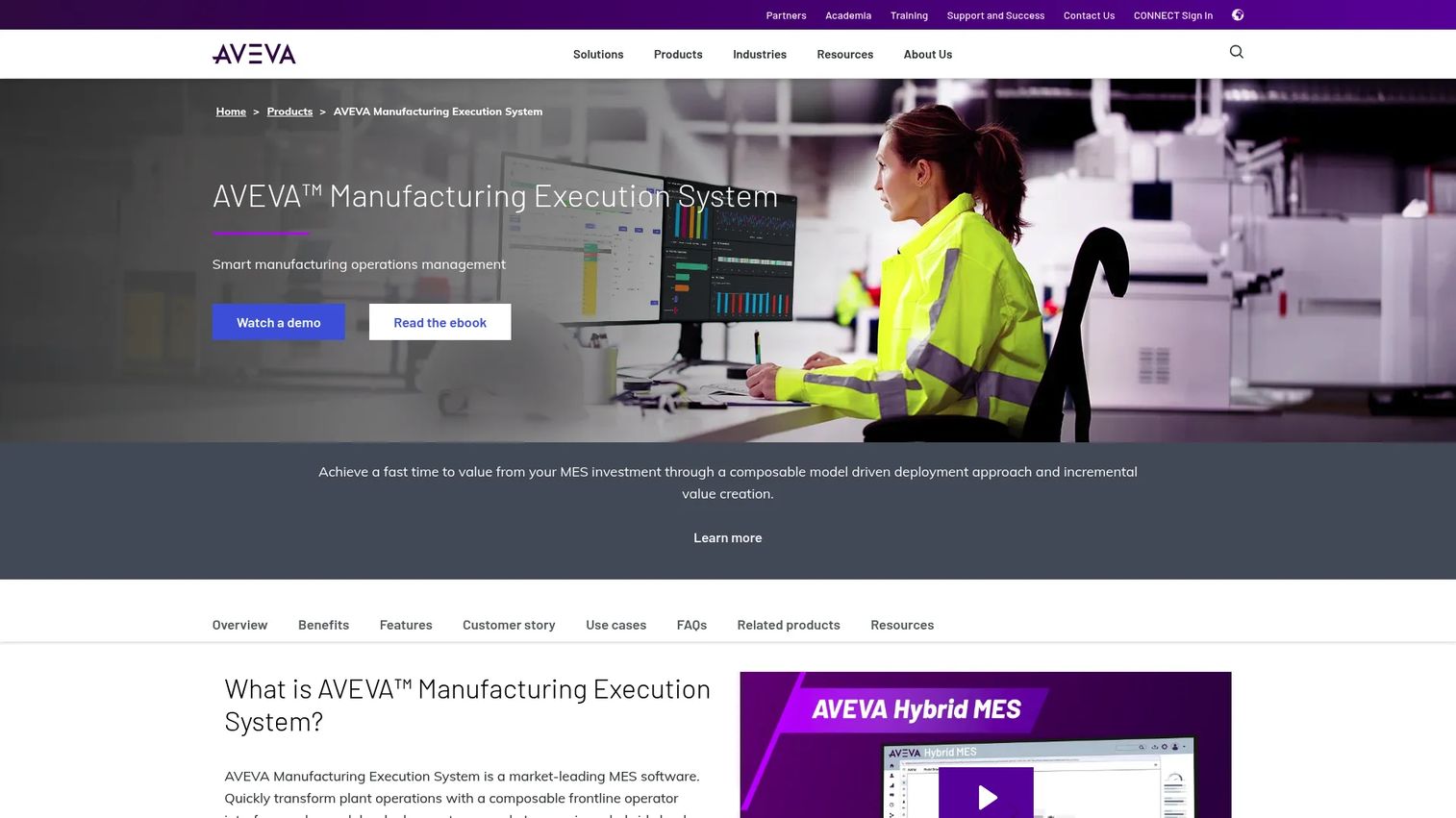
AVEVA Manufacturing Execution System is built for manufacturers running batch, hybrid, and repetitive production who need standardized execution across regulated, multi-site operations. It manages both human and machine activities, coordinates production scheduling with execution tracking, and maintains end-to-end product genealogy. Its tightest advantage is native integration with the AVEVA System Platform, which lets plants connect execution to the wider automation and data layer they likely already run.
Best for: Manufacturers needing standardized MES for regulated, multi-site operations with strong shop floor visibility.
Key strengths
- End-to-end genealogy: Tracks and traces inventory and materials with full product genealogy for recall and root-cause work.
- Digital workflow automation: Manages digital workflows and automates work tasks to move plants off paper.
- Multi-site standardization: Supports MES standardization across sites with hybrid-cloud deployment.
Why choose AVEVA: If your plants already run AVEVA automation and system software, the native integration removes a large chunk of integration risk. AVEVA fits operations that value standardized, governed execution across several regulated sites over a lightweight single-plant rollout.
AVEVA pricing: AVEVA does not publish pricing for its Manufacturing Execution System. Expect quote-based enterprise packaging tied to sites, users, and modules. Contact AVEVA for a scoped quote and request a proof of concept against your own genealogy and compliance requirements.
2. DELMIA Manufacturing Execution System
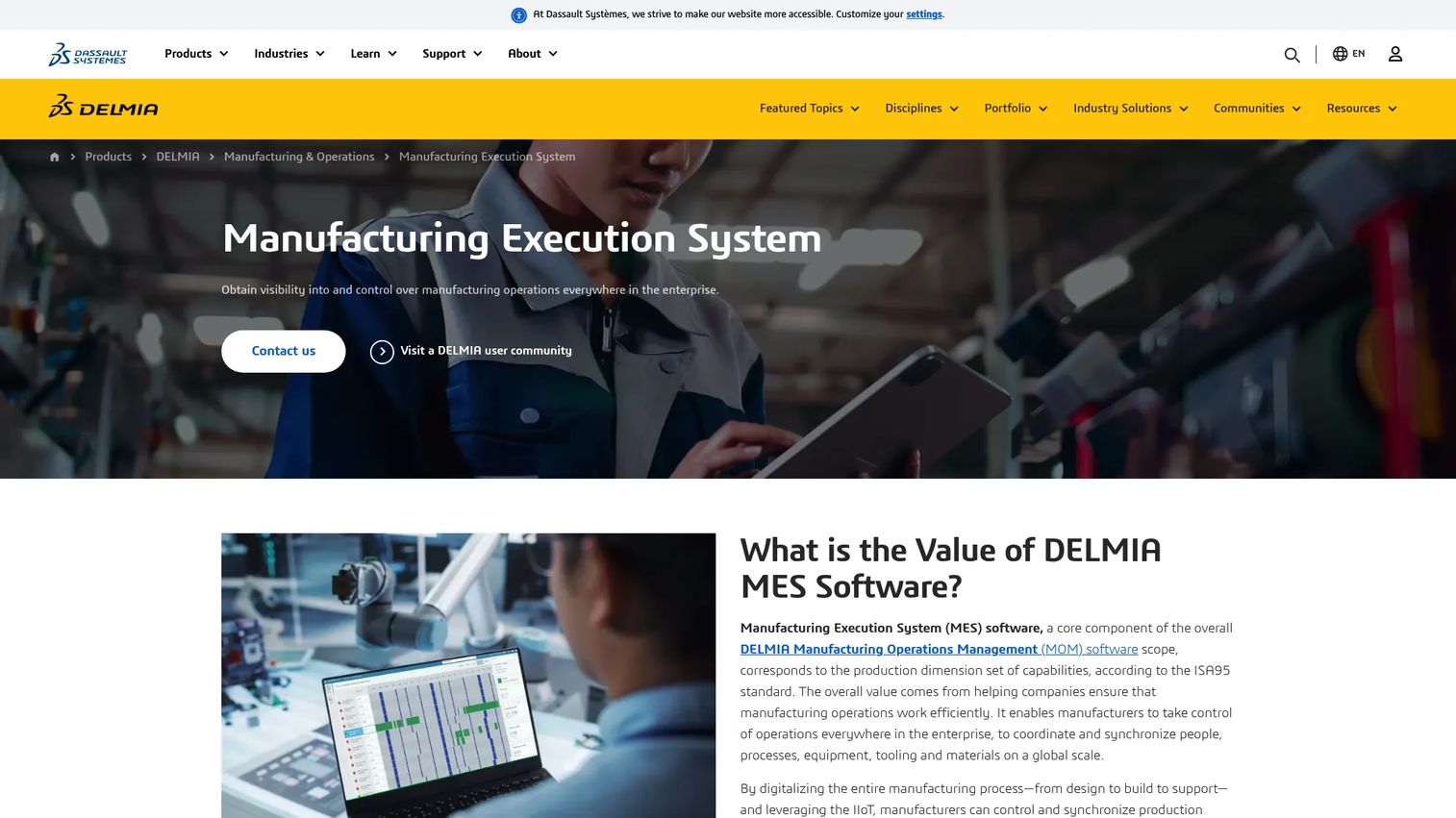
DELMIA Manufacturing Execution System from Dassault Systèmes gives enterprise manufacturers visibility and control over shop floor operations while connecting cleanly to ERP. It standardizes manufacturing processes, delivers real-time production visibility, tracks inventory and materials, and drives paperless shop floor execution. It sits inside the broader DELMIA operations portfolio, which appeals to organizations that want execution wired into planning and modeling rather than bolted on afterward.
Best for: Enterprise manufacturers needing MES visibility, traceability, and ERP-connected shop floor execution.
Key strengths
- Real-time visibility: Surfaces live production status across the floor for faster decisions.
- ERP integration: Connects execution data to planning systems for synchronized orders and confirmations.
- Paperless execution: Replaces manual records with digital, standardized shop floor workflows.
Why choose DELMIA: DELMIA fits organizations that already lean on the Dassault Systèmes stack or want a single vendor spanning modeling, planning, and execution. It performs best when standardized processes and ERP-connected visibility across the enterprise matter more than a fast single-line pilot.
DELMIA pricing: DELMIA does not publicly display pricing; its product page directs buyers to contact sales, and G2 confirms pricing details are not currently available. Plan for enterprise quote-based packaging and scope your integration requirements early.
3. SAP Manufacturing Execution
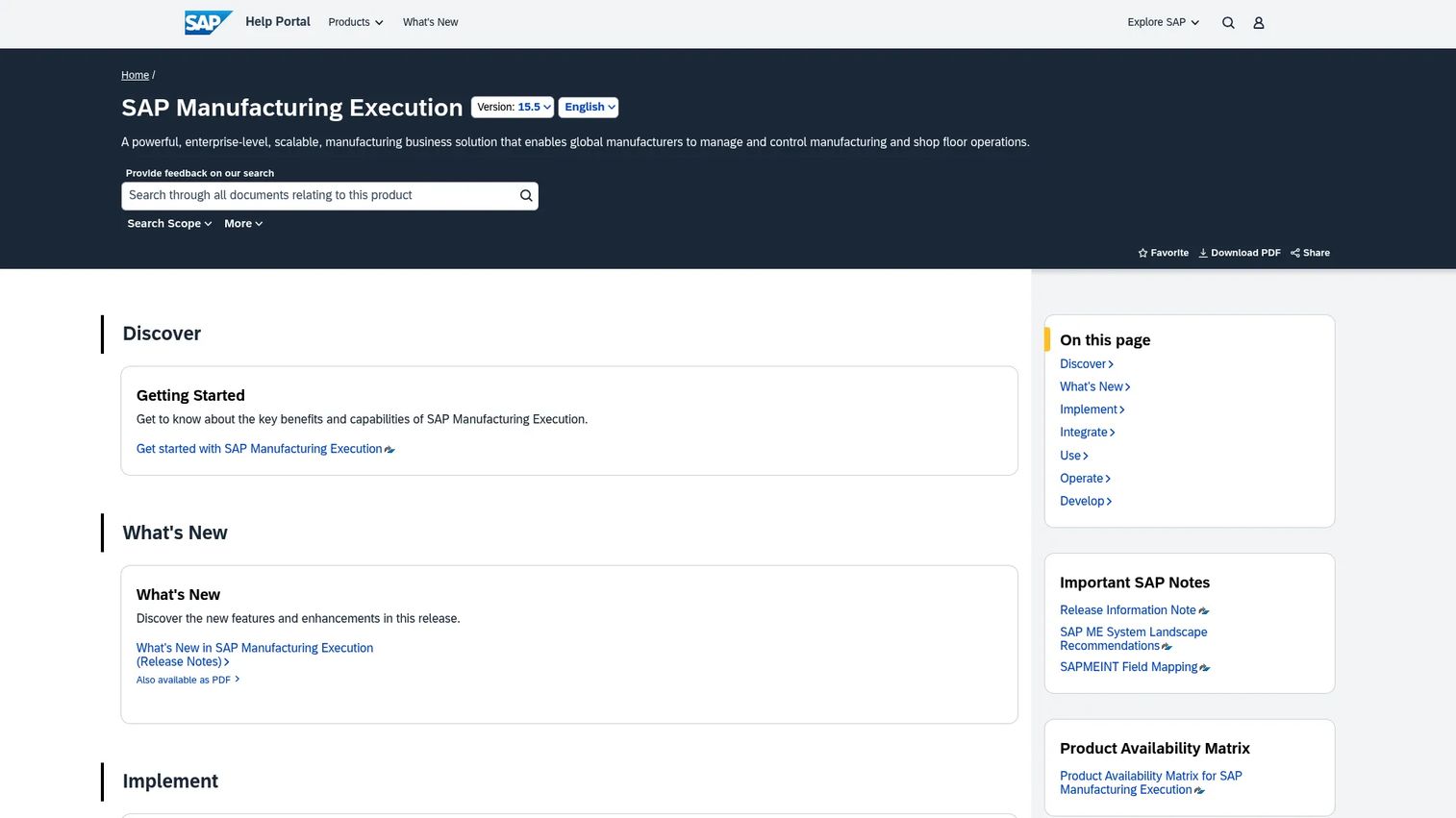
SAP Manufacturing Execution is enterprise software for managing and controlling shop floor operations, with a strong pedigree in standards-led MES thinking around ISA-95 and the MESA model. It delivers real-time visibility across manufacturing operations, complete component and material-level traceability, and a Production Operator Dashboard for shop floor execution. For SAP-centric manufacturers, it is the natural execution layer beneath the ERP they already run.
Best for: Large manufacturers needing MES-style shop floor control and deep component-level traceability inside an SAP stack.
Key strengths
- Real-time operations visibility: Live status across manufacturing operations for faster response.
- Component-level traceability: Complete material and component genealogy for compliance and recall.
- Operator dashboard: A production operator interface that guides and records shop floor execution.
Why choose SAP: If your ERP is SAP, this execution layer minimizes integration friction and master-data duplication. SAP also fits buyers who want MES grounded in recognized standards and are evaluating the broader SAP digital manufacturing ecosystem for cloud MES evolution.
SAP pricing: SAP does not publish a first-party numeric price for SAP Manufacturing Execution. Pricing is quote-based and typically negotiated as part of a broader SAP agreement. Confirm licensing model and included modules directly with SAP.
4. Siemens Opcenter Execution
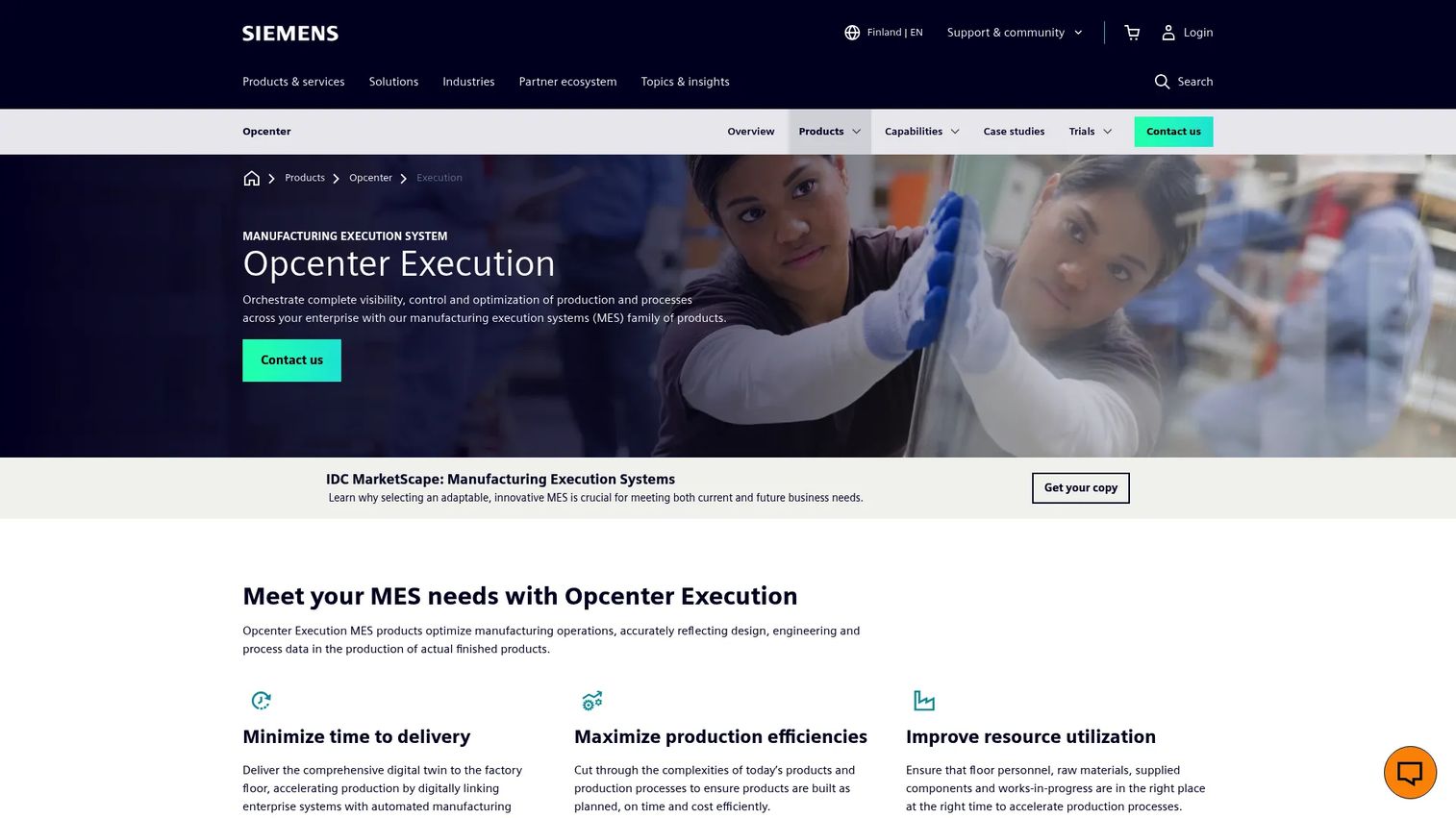
Siemens Opcenter Execution is part of the Opcenter manufacturing operations management family, built to orchestrate production visibility, control, and optimization across complex operations. It handles optimized sequencing, resource allocation and control, and production tracking with traceability. Siemens offers industry-specific execution variants covering discrete, process, electronics, medical device, pharma, and semiconductor manufacturing, which is why it shows up so often in global, high-complexity environments.
Best for: Manufacturers needing an enterprise MES for complex discrete, process, electronics, medical, pharma, or semiconductor operations.
Key strengths
- Optimized sequencing: Schedules and sequences production to improve throughput and reduce changeover waste.
- Resource control: Allocates and controls equipment, materials, and labor across the floor.
- Traceability: Tracks production with genealogy for regulated and high-complexity work.
Why choose Siemens Opcenter Execution: It fits organizations standardizing execution across multiple global sites and process types where consistency and depth outweigh speed of first deployment. Implementation is a genuine enterprise project, so scope integrations and change management carefully, and align internal stakeholders before you start.
Siemens Opcenter Execution pricing: Siemens does not publicly display a price and routes visitors to contact sales for a quote. Expect enterprise packaging scoped by industry variant, sites, and modules. Request a quote and a proof of concept against your specific industry requirements.
5. Tulip Platform
Tulip Platform takes a different path from traditional enterprise MES. It is a frontline operations platform that lets teams build and run digital workflows with a no-code app editor, spanning mobile, desktop, touchscreen, and wearable devices. Native connectivity to devices, sensors, machines, and the edge means you can wire up data collection without a heavy integration project, and analytics plus governance support regulated environments. Manufacturers use it for digital work instructions, quality apps, and shop floor execution use cases they can shape themselves.
Best for: Manufacturers needing a configurable frontline operations platform they can iterate on quickly.
Key strengths
- No-code app editor: Build and change shop floor apps for phones, tablets, touchscreens, and wearables without engineering.
- Native connectivity: Connect devices, sensors, machines, and edge directly for accurate, automatic data capture.
- Governance and analytics: Built-in analytics and controls that support regulated environments.
Why choose Tulip: Choose Tulip when your team wants flexibility and fast iteration over a fixed, prescriptive MES. It fits plants that want to digitize incrementally, prove value on one line, then expand, rather than committing to a multi-year enterprise rollout up front.
Tulip pricing: Tulip publishes pricing openly. Essentials starts at $100 per month per interface, and Professional at $250 per month per interface, both billed annually with a 10-interface minimum. Enterprise and Regulated Industries plans are contact-sales. Public plans make it easy to model costs before you commit.
6. Plex Smart Manufacturing Platform
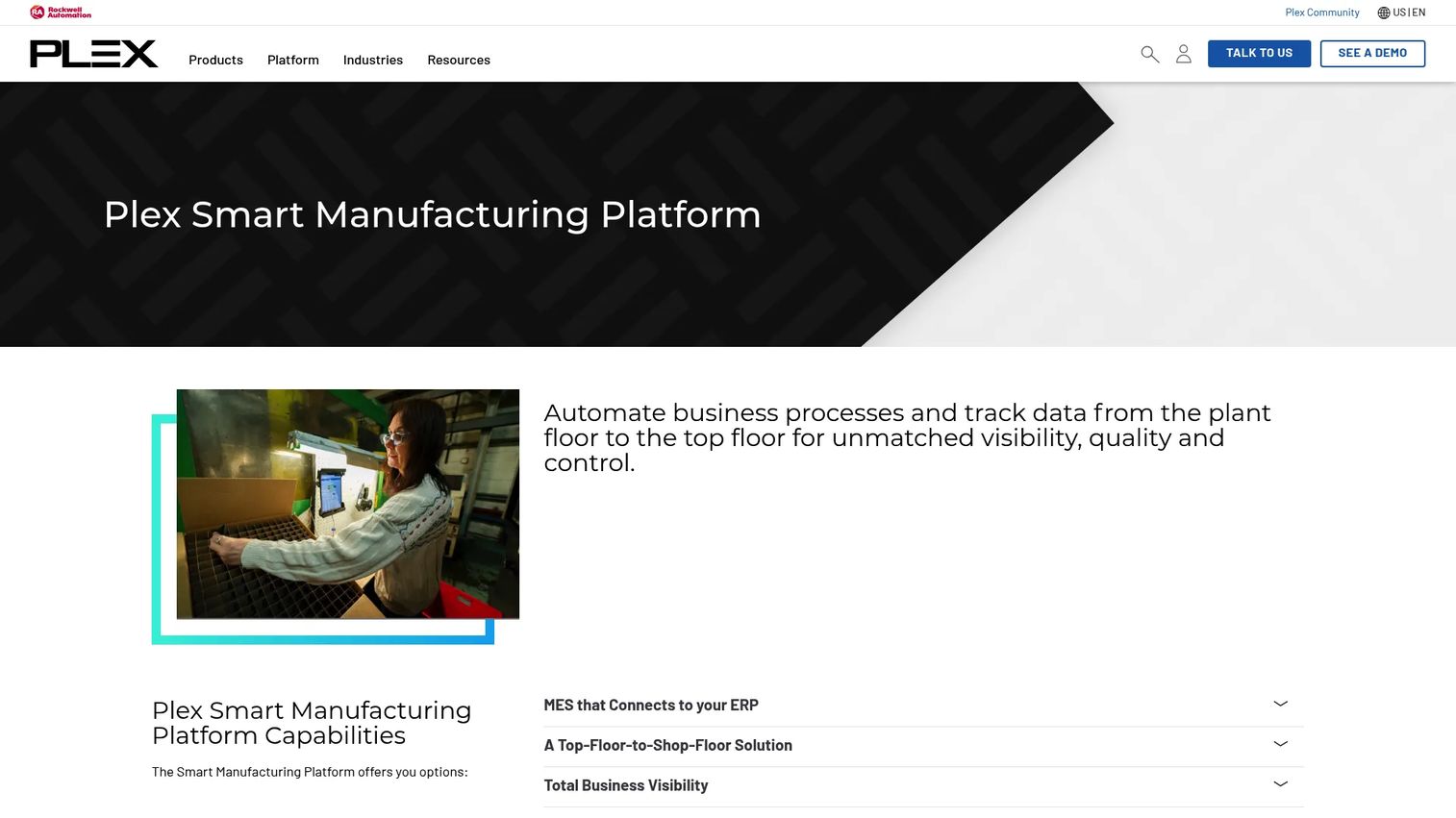
Plex Smart Manufacturing Platform is cloud manufacturing software that connects, automates, tracks, and analyzes operations from the plant floor to the top floor. Its distinguishing move is combining MES with ERP and supply chain management in one integrated cloud platform, so execution, planning, and quality live together rather than in separate systems stitched by middleware. Plex Mobile and cloud-native infrastructure extend that connected model across the plant.
Best for: Manufacturers needing a cloud MES and ERP platform with supply-chain and quality capabilities in one operating model.
Key strengths
- MES that connects to ERP: Execution and planning share one data model on a cloud foundation.
- Fully integrated suite: MES, ERP, and supply chain management in a single platform.
- Cloud and mobile: Plex Mobile and cloud infrastructure for access across the plant.
Why choose Plex: Plex fits manufacturers who want fewer moving systems and a single connected operating model instead of separate MES and ERP contracts. It performs best when you value integration and cloud delivery over deploying a best-of-breed MES alongside an existing ERP.
Plex pricing: Plex describes annual subscription packaging with unlimited users and machines but does not publish a numeric starting price on its packaging pages. Confirm the subscription structure and what is bundled directly with Plex during evaluation.
7. Critical Manufacturing MES
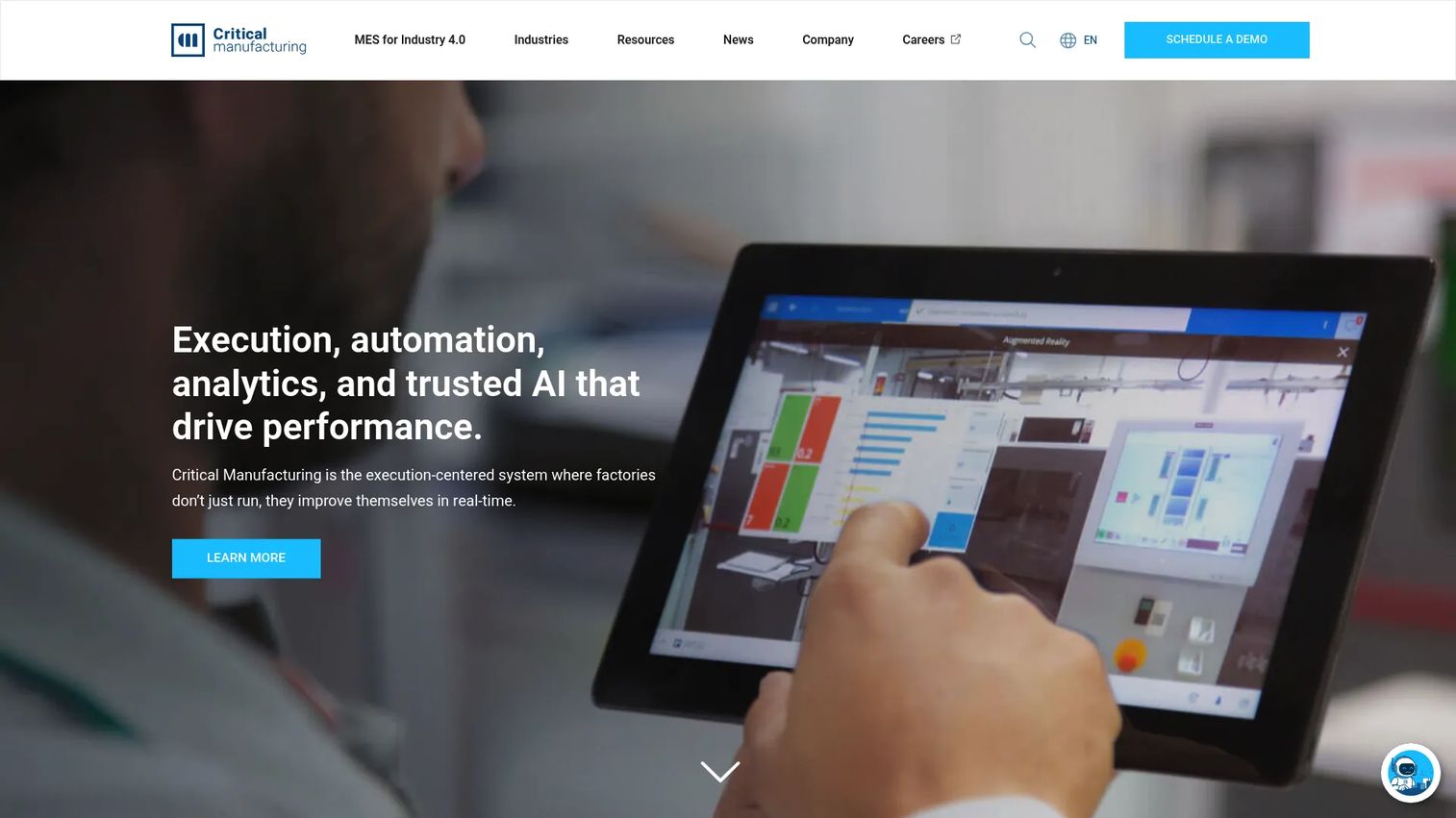
Critical Manufacturing MES is an enterprise MES built for discrete manufacturers with modular Industry 4.0 capabilities. It handles batch, lot, and unit tracking, advanced planning and scheduling, and offers low-code, drag-and-drop interfaces so teams can configure the system to their processes. Its depth in high-complexity manufacturing makes it a frequent choice in electronics, semiconductor, and automotive environments where product tracking down to the unit is non-negotiable.
Best for: Large discrete manufacturers, especially electronics and semiconductor, needing a configurable, high-complexity MES.
Key strengths
- Unit-level tracking: Batch, lot, and unit tracking for granular genealogy in complex products.
- Advanced scheduling: Planning and scheduling built for intricate, multi-step production.
- Low-code configuration: Drag-and-drop interfaces to tailor the system without deep custom development.
Why choose Critical Manufacturing: It fits manufacturers whose product complexity and traceability requirements exceed what lighter tools handle comfortably. The modular architecture lets you adopt capabilities as you need them, which suits electronics, automotive, and regulated environments scaling their Industry 4.0 roadmap.
Critical Manufacturing pricing: Critical Manufacturing does not publish pricing; its site uses contact and demo requests rather than displayed prices. Expect enterprise quote-based packaging scoped to modules and complexity. Request a demo aligned to your industry and traceability depth.
8. Infor MES
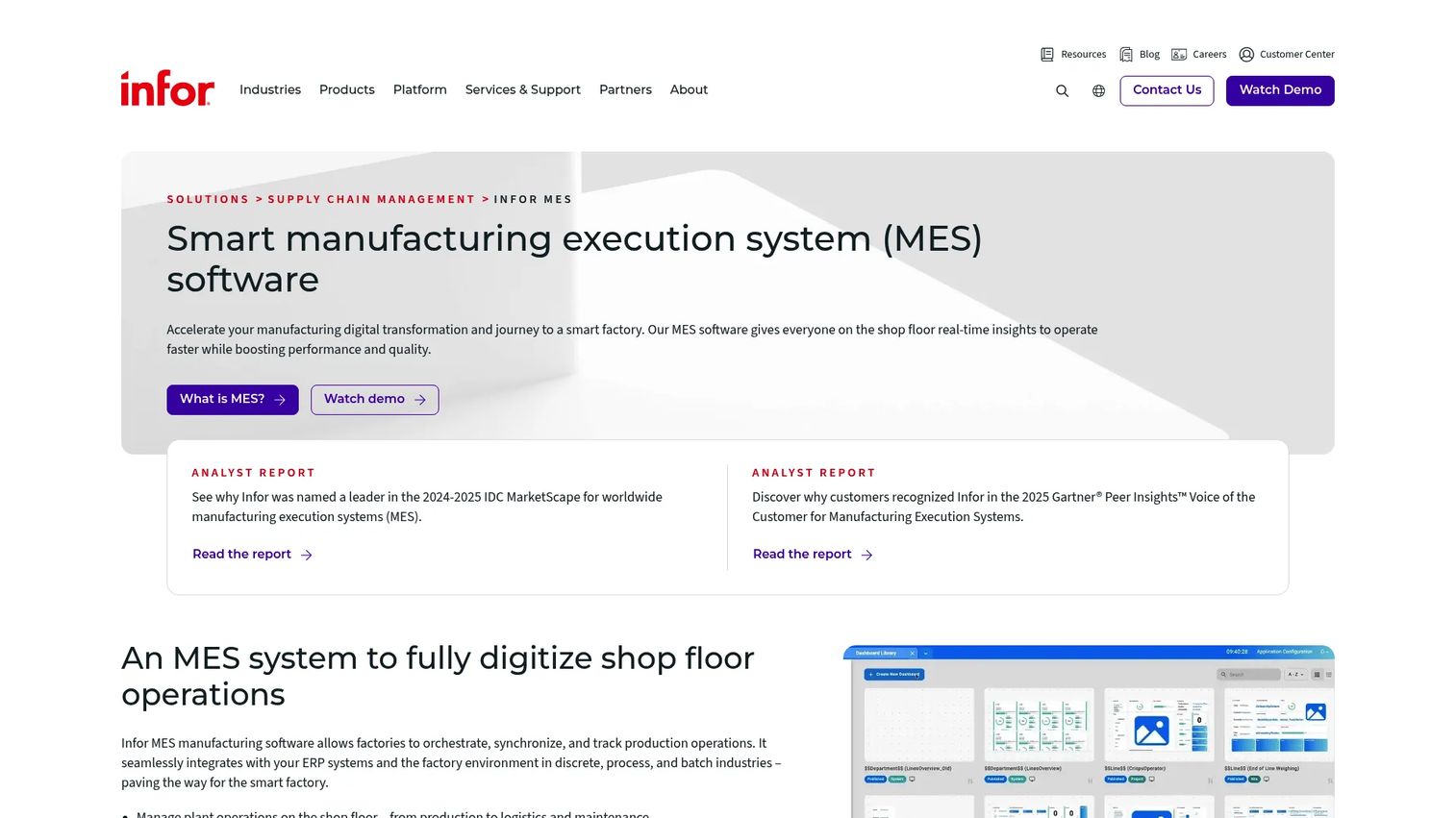
Infor MES delivers real-time shop floor control, visibility, and analytics, with modules spanning production, inventory, quality, maintenance, logistics, energy, tooling, and workflow. Real-time integration and automation connect execution to the wider Infor manufacturing portfolio, and built-in KPIs and dashboards give operations teams reporting out of the box. Its natural home is inside organizations already standardized on Infor for ERP and supply chain.
Best for: Manufacturers needing a configurable MES for multi-site shop floor operations, especially existing Infor customers.
Key strengths
- Real-time integration: Live integration and automation across shop floor systems.
- Broad module coverage: Production, inventory, quality, maintenance, logistics, energy, tooling, and workflow modules.
- Built-in analytics: Reporting with prebuilt KPIs and dashboards for fast operational insight.
Why choose Infor: If you already run Infor ERP or supply chain products, Infor MES reduces integration and master-data work and keeps you inside one vendor relationship. It fits multi-site operations that want configurable execution wired into an existing Infor footprint rather than adding a separate best-of-breed system.
Infor pricing: Infor does not publish a first-party price for Infor MES. Pricing is quote-based and typically bundled within a broader Infor agreement. Confirm licensing, modules, and deployment model directly with Infor.
Considerations before you buy MES software
MES is one of the highest-stakes software decisions a plant makes. Work through this checklist before you sign.
ERP integration depth
Confirm exactly how the MES exchanges data with your ERP: which fields, in which direction, and how often. Shallow integration creates duplicate master data and reconciliation work. The same discipline that governs a strong contract management or audit management rollout applies here: clean data flow beats feature lists.
Compliance and traceability requirements
If you operate in a regulated industry, map your genealogy, document control, and electronic-record needs against the vendor's capabilities before shortlisting. Ask for evidence, not marketing claims: how would this system reconstruct a specific unit's full history during an audit?
Deployment model and IT reality
Cloud MES lowers infrastructure burden and speeds updates; on-premise gives tighter latency control and appeals to plants with strict governance. Hybrid splits the difference. Choose based on your IT capacity, network reliability on the floor, and data-residency rules, not vendor fashion.
Master data readiness and adoption
An MES is only as good as the data it captures and the operators who use it. Assess whether your item masters, routings, and bills of material are clean enough to feed the system. Then plan for operator adoption, because a paperless shop floor only pays off when people actually use it. Treat this like any component content management or loyalty management rollout: adoption, not licensing, decides ROI.
Reporting and measurable outcomes
Decide upfront which metrics prove success: OEE, yield, scrap, downtime, on-time delivery. Confirm the system can produce those numbers in the format your leadership expects, and that you can export or feed them into your analytics stack.
Conclusion
There is no single best manufacturing execution system software, only the best fit for your plant type, ERP footprint, and compliance profile. If you run SAP or Infor, start your shortlist with their native MES layers to cut integration risk. If your product complexity is high, in electronics or semiconductor, weigh Critical Manufacturing and Siemens Opcenter Execution. If you want fast iteration and a configurable frontline platform, Tulip earns a look. If a single connected cloud MES-plus-ERP model appeals, evaluate Plex. AVEVA and DELMIA both fit standardized, multi-site enterprise operations that value governed execution.
The practical next step: pick the two or three platforms that match your deployment model and ERP stack, then run a proof of concept against your real genealogy, quality, and OEE requirements. The vendor that proves those outcomes on your floor, not in a slide deck, is the one to trust. For evaluating adjacent software categories cleanly, browse more comparison guides like best event management software and community management software, or explore how teams use Guideflow to build interactive product experiences.
FAQs
Manufacturing execution system software is a shop floor layer that tracks and controls production in real time, from raw material to finished goods. It records which operator ran which step, on which machine, using which materials, and feeds that data to reporting and ERP. The result is real-time visibility, traceability, and a defensible compliance record.
ERP is the planning and financial system: it manages orders, inventory value, purchasing, and scheduling at a business level. MES is the execution layer on the shop floor that captures what actually happens as work runs. ERP tells the plant what to make; MES records how it was made and reports back. They work best tightly integrated, not as substitutes.
Regulated and high-complexity industries gain the most, including pharmaceuticals, medical devices, food and beverage, aerospace, and electronics. These sectors need strict traceability, genealogy, and document control to satisfy audits and manage recalls. Any manufacturer chasing OEE gains, yield improvement, and a paperless shop floor also benefits.
Look for production scheduling and dispatching, digital work instructions and document control, inventory and material tracking, quality management, and full genealogy. Add performance analysis for OEE and yield, IIoT machine connectivity, and two-way ERP integration. Together these cover the core of manufacturing operations management.
Neither is universally better; the right choice depends on your context. Cloud MES reduces infrastructure burden, speeds updates, and scales across sites easily. On-premise offers tighter latency control and suits plants with strict governance or data-residency rules. Many manufacturers land on hybrid, keeping latency-sensitive execution local while using cloud for analytics and multi-site standardization.
It varies widely with scope, from a few months for a single-line, configurable rollout to well over a year for a multi-site enterprise deployment. The biggest drivers are the number of ERP and machine integrations, plant complexity, master-data readiness, and how much process standardization you attempt at once. Phasing the rollout by line or site usually beats a big-bang launch.
Verify ERP integration depth field by field, confirm the system meets your compliance and traceability requirements with evidence, and check that your master data is clean enough to feed it. Confirm the deployment model fits your IT reality, and that reporting produces the exact OEE, yield, and quality metrics leadership expects. Finally, plan for operator adoption, because usage decides whether the investment pays off.