Your prospects are asking ChatGPT which software to buy. If your brand doesn't appear in that answer, you've lost the deal before you knew it existed.
Answer engine optimization tools track and improve how AI platforms like ChatGPT, Perplexity, and Claude mention your brand when users ask for recommendations. This guide covers 15 answer engine optimization tools for monitoring AI visibility, optimizing content for citations, and converting AI-referred traffic into pipeline.
What's inside
Answer engine optimization tools track how AI platforms like ChatGPT, Perplexity, Gemini, and Claude mention your brand when users ask for software recommendations. Unlike traditional SEO software that monitors Google rankings, these answer engine optimization tools measure citations in AI-generated responses and suggest ways to improve them.
This guide covers 15 tools for tracking brand mentions in AI search, optimizing content for citations, and measuring visibility across generative engines. We selected platforms based on AI visibility tracking depth, content optimization features, pricing transparency, and G2 ratings where available.
TL;DR
- Best for AI visibility tracking: AIclicks and Profound cover 10+ AI engines with real-time citation monitoring
- Best for content optimization: Surfer SEO and Frase combine traditional SEO with AI-ready content formatting
- Best free AEO grader: HubSpot AEO Grader provides brand sentiment scoring and content gap analysis at no cost
- Best for enterprise teams: BrightEdge Prism and Clearscope offer enterprise-scale AEO features with advanced analytics
- Bonus: Guideflow pairs AEO strategy with interactive demos that convert AI-referred traffic
What is answer engine optimization
Answer engine optimization is the practice of structuring content so AI-powered search engines cite your brand in their responses. When someone asks ChatGPT "What's the best project management tool for remote teams?" or queries Perplexity about CRM options, AEO determines whether your product appears in that answer.
AEO tools track, measure, and improve how frequently AI platforms mention your content. You might also hear this called generative engine optimization (GEO). Both terms describe the same discipline.
How AEO differs from traditional SEO
The mechanics look different from what you're used to with Google optimization.
| Factor | Traditional SEO | Answer engine optimization |
|---|---|---|
| Target | Google and Bing SERPs | AI chat responses |
| Success metric | Rankings and clicks | Citations and brand mentions |
| Content format | Keywords and backlinks | Structured data and authority signals |
| Tracking method | Rank trackers | AI visibility monitoring |
Traditional SEO tools tell you where you rank on page one. AEO tools tell you whether AI systems even know you exist when answering relevant questions, especially as Gartner predicted traditional search volume would drop 25% by 2026.
Why AI search visibility matters for B2B SaaS
According to G2's 2025 Buyer Behavior Report, nearly 8 in 10 B2B buyers say AI search has changed how they research software. If your brand isn't cited in AI responses, you're invisible during early research, and competitors who do appear capture that intent first.
This shift is particularly acute for B2B buyers. When an IT director asks Claude to compare security tools or a marketing manager queries Gemini about automation platforms, the brands mentioned in those responses shape the consideration set before any website visit happens.
When to use AEO tools
AEO tools serve three primary functions, and most teams benefit from at least one.
Track brand mentions in ChatGPT and Perplexity
Visibility monitoring scans AI platforms to detect when and how your brand appears in responses. This reveals citation gaps you didn't know existed and shows how competitors are positioned in AI answers.
Without this data, you're guessing whether your content strategy actually reaches AI-referred prospects.
Optimize content for AI citations
Content optimization features suggest structured data, semantic markup, and authoritative formatting that AI engines prefer when selecting sources. AEO analysis tools examine what makes content "citable" and provide specific recommendations - AirOps' 2026 State of AI Search report found rich schema yields 2.8× more citations.
The connection to E-E-A-T signals (Experience, Expertise, Authoritativeness, Trustworthiness) matters here. AI systems tend to cite sources that demonstrate clear expertise and provide direct, well-structured answers.
Measure AI search performance metrics
Analytics capabilities track citation frequency, sentiment, share of voice in AI responses, and competitive benchmarks. AEO metrics differ from traditional SEO KPIs, so dedicated tracking works better than retrofitting existing tools.
Best AEO tools comparison table
| Rank | Product | Best for | Key differentiation | Pricing | G2 rating |
|---|---|---|---|---|---|
| 1 | AirOps | AI-powered SEO workflows | Automated content analysis and optimization at scale | Custom | 4.7/5 |
| 2 | AIclicks | AI visibility tracking | Dedicated AEO monitoring across LLMs | Custom | 4.5/5 |
| 3 | Profound | Multi-engine coverage | Tracks 10+ AI platforms | Custom | 4.4/5 |
| 4 | Semrush | SEO teams adding AEO | All-in-one with emerging AEO features | $139/mo | 4.5/5 |
| 5 | Ahrefs Brand Radar | Authority building | Brand mention and backlink analysis | $129/mo | 4.5/5 |
| 6 | SE Ranking | Agencies | Multi-client AEO management | $65/mo | 4.8/5 |
| 7 | Peec AI | Continuous monitoring | Real-time AI visibility tracking | Custom | 4.3/5 |
| 8 | Scrunch AI | Brand perception | Sentiment analysis in AI responses | Custom | 4.2/5 |
| 9 | Qwairy | Question discovery | User intent analysis for AI answers | Custom | 4.4/5 |
| 10 | Gauge | Competitive benchmarks | AI visibility benchmarking | Custom | 4.3/5 |
| 11 | HubSpot AEO Grader | Free assessment | Brand sentiment and content gaps | Free | N/A |
| 12 | Surfer SEO | Content optimization | AI content editor with semantic analysis | $99/mo | 4.8/5 |
| 13 | Frase | Content research | Question research and AI writing | $15/mo | 4.8/5 |
| 14 | Clearscope | Enterprise content | Authority signals and readability | $189/mo | 4.9/5 |
| 15 | MarketMuse | Content strategy | Topic modeling for AI visibility | $149/mo | 4.6/5 |
15 best answer engine optimization tools for AI visibility
The platforms below help B2B teams monitor brand mentions across AI search engines and optimize content for citations.
1. AirOps
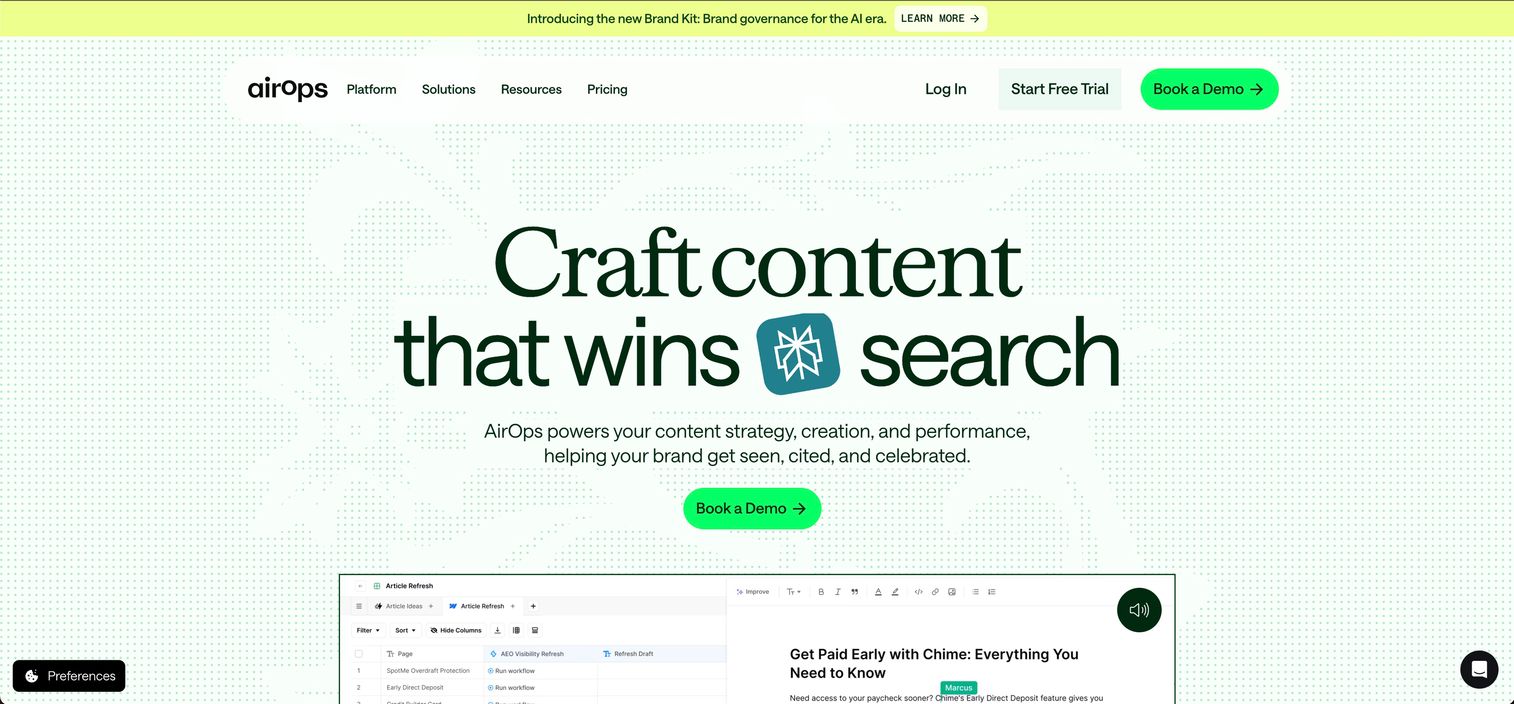
AirOps provides AI-powered SEO workflows with emerging AEO capabilities. The platform helps content teams scale optimization through automated analysis and recommendations that work for both traditional search and AI citations.
Best for: Content teams scaling SEO and AEO efforts through AI-powered workflows.
Key strengths
- AI workflow automation: Automates content analysis and optimization recommendations at scale
- SEO and AEO integration: Combines traditional search optimization with AI visibility tracking
- Content intelligence: Identifies optimization opportunities across your existing content library
AirOps pricing
Custom pricing based on workflow complexity and team size.
2. AIclicks
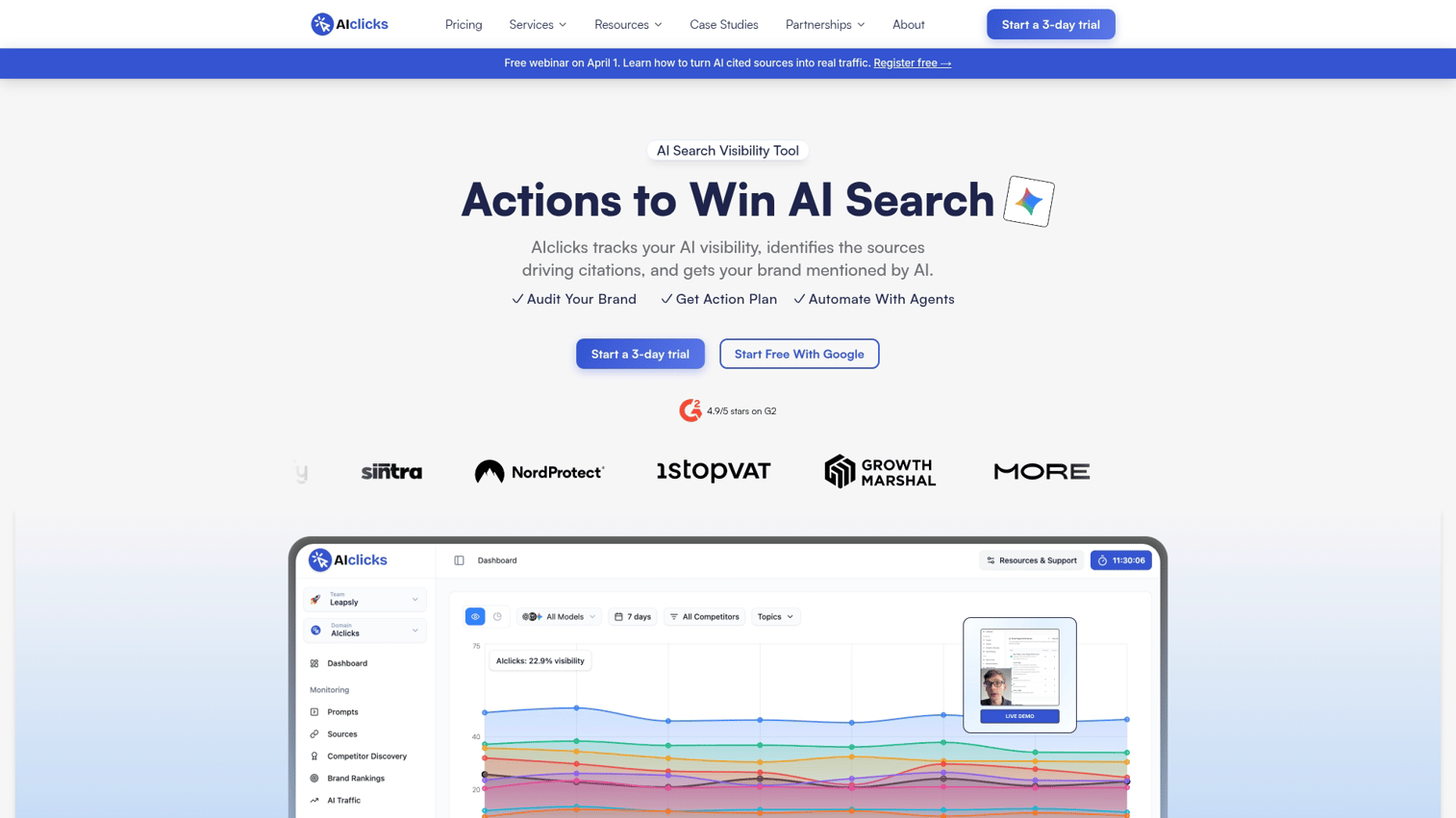
AIclicks provides dedicated AI visibility tracking across major LLMs. The platform monitors how ChatGPT, Claude, Perplexity, and other AI systems mention your brand and surfaces citation patterns you can act on.
Best for: Teams wanting specialized AEO tracking without the complexity of enterprise SEO suites.
Key strengths
- Multi-LLM monitoring: Tracks brand mentions across ChatGPT, Claude, Gemini, and Perplexity
- Citation analysis: Shows context around brand mentions and competitor positioning
- Alert systems: Notifies you when citation patterns change significantly
AIclicks pricing
Custom pricing based on monitoring scope and team size.
3. Profound
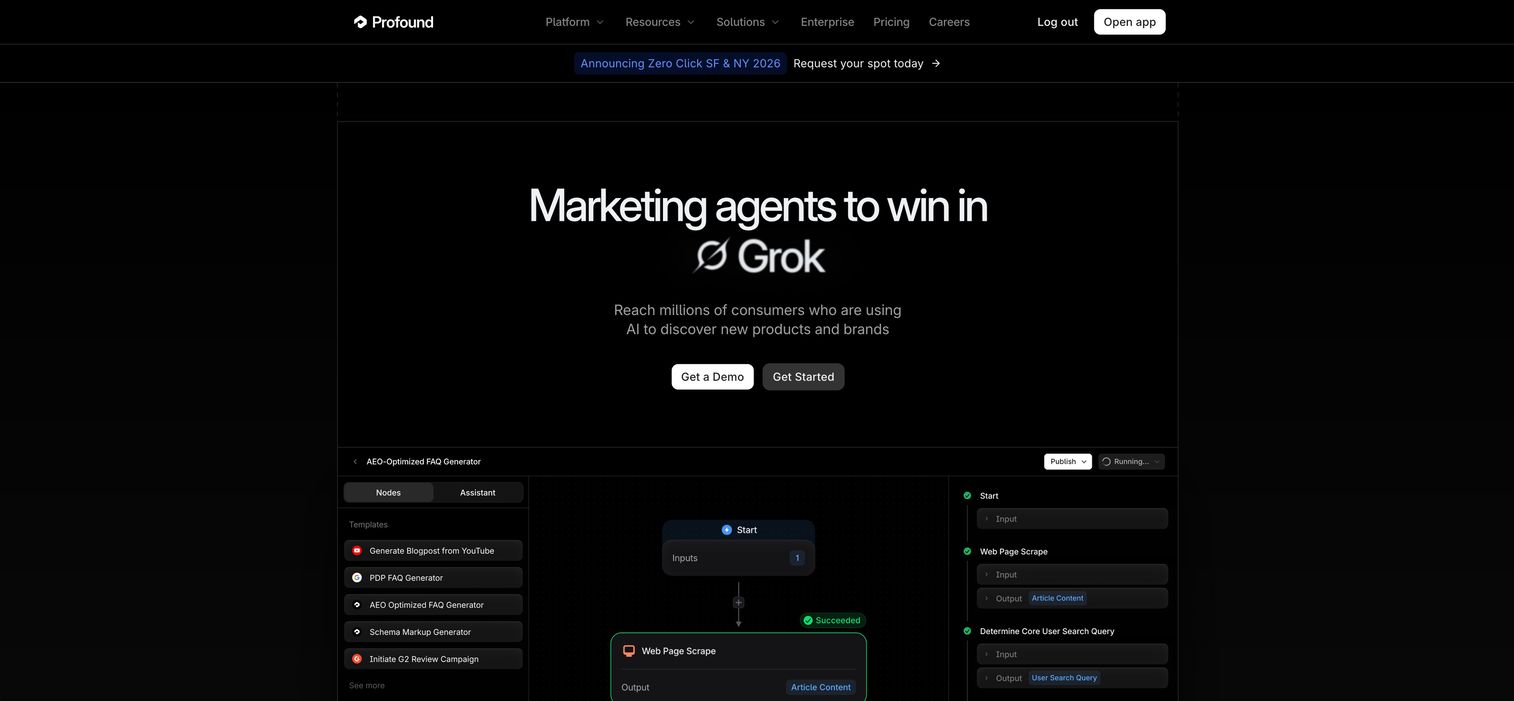
Profound tracks visibility across 10+ AI engines with a focus on semantic markup and structured data recommendations. The platform combines monitoring with actionable content optimization guidance.
Best for: Content teams prioritizing AI citations who want both tracking and optimization in one platform.
Key strengths
- Broad engine coverage: Monitors ChatGPT, Perplexity, Gemini, Claude, and emerging AI search platforms
- Structured data focus: Recommends schema markup that improves AI citation likelihood
- Competitive intelligence: Shows how competitors appear in AI responses to similar queries
Profound pricing
Custom pricing with tiered plans based on monitoring volume.
4. Semrush
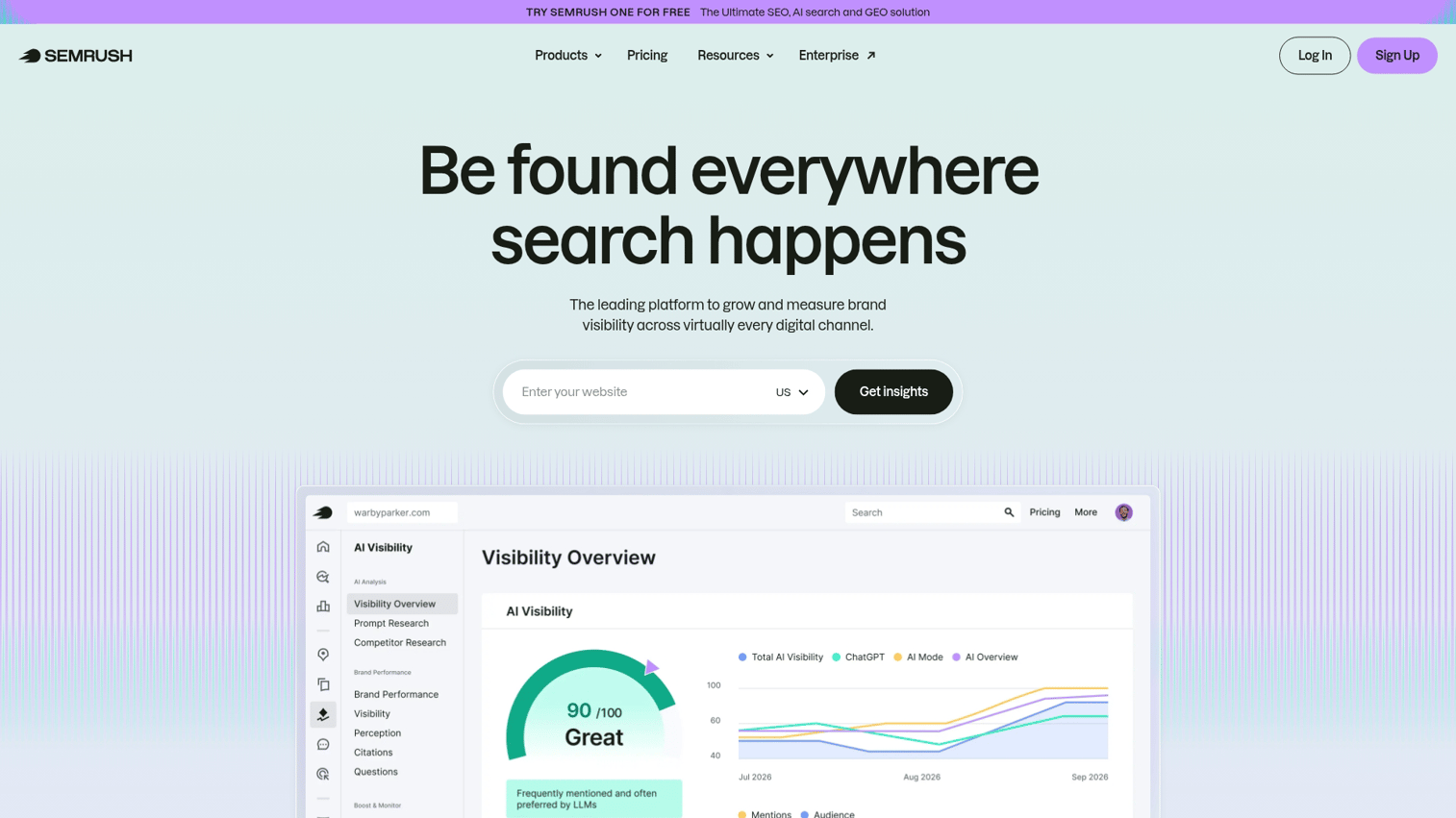
Semrush offers an all-in-one SEO suite with emerging AEO features. Teams already using Semrush for traditional SEO can add AI visibility tracking without switching platforms.
Best for: Teams already invested in Semrush who want to add AEO capabilities to their existing workflow.
Key strengths
- Integrated SEO and AEO: Combines traditional rank tracking with AI visibility monitoring
- Competitor analysis: Shows how competitors perform in both Google and AI search, including backlink analysis
- Extensive integrations: Connects with CRM, analytics, and marketing automation tools
Semrush pricing
Plans start at $139/month for Pro, with Business and Enterprise tiers available.
5. Ahrefs Brand Radar
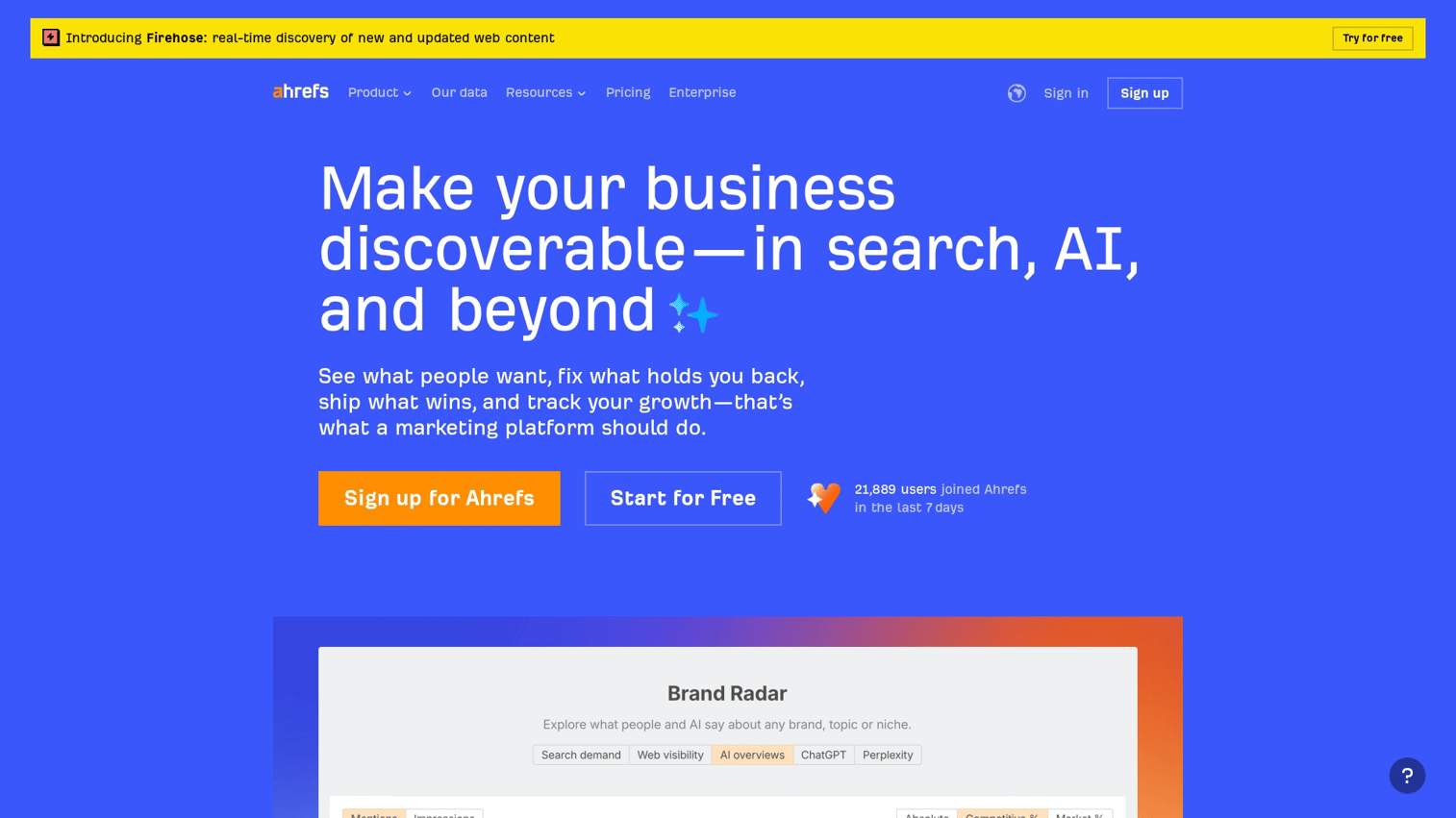
Ahrefs Brand Radar focuses on brand mention tracking and backlink analysis. While traditionally an SEO tool, the platform's authority-building features support AEO by strengthening the signals AI systems use to determine citation worthiness.
Best for: Teams focused on building authority signals that improve both traditional and AI search visibility.
Key strengths
- Brand mention monitoring: Tracks where your brand appears across the web
- Backlink analysis: Identifies authority-building opportunitiesthrough keyword research
- Content gap identification: Shows topics where competitors have coverage you lack
Ahrefs pricing
Plans start at $129/month for Lite, scaling up with features and usage.
6. SE Ranking AI search toolkit
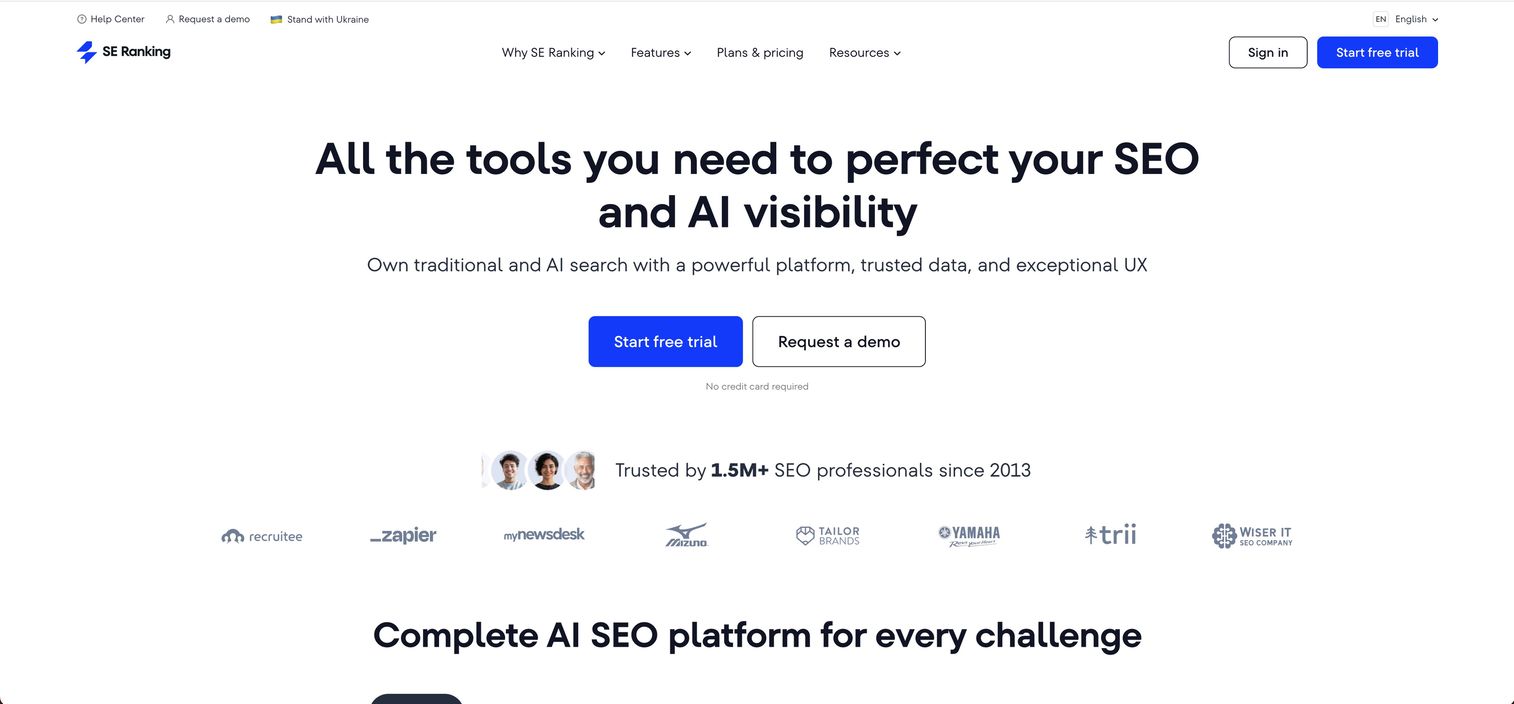
SE Ranking provides AI search visibility monitoring alongside traditional rank tracking. The platform suits agencies managing multiple clients who want AEO analysis across accounts.
Best for: Agencies managing multiple brands who want consolidated AEO reporting.
Key strengths
- Multi-client management: Handles AEO tracking across multiple brands from one dashboard
- White-label reporting: Generates client-ready reports with custom branding
- Scalable pricing: Costs scale reasonably with client count
SE Ranking pricing
Plans start at $65/month, with agency pricing available for larger client counts.
7. Peec AI
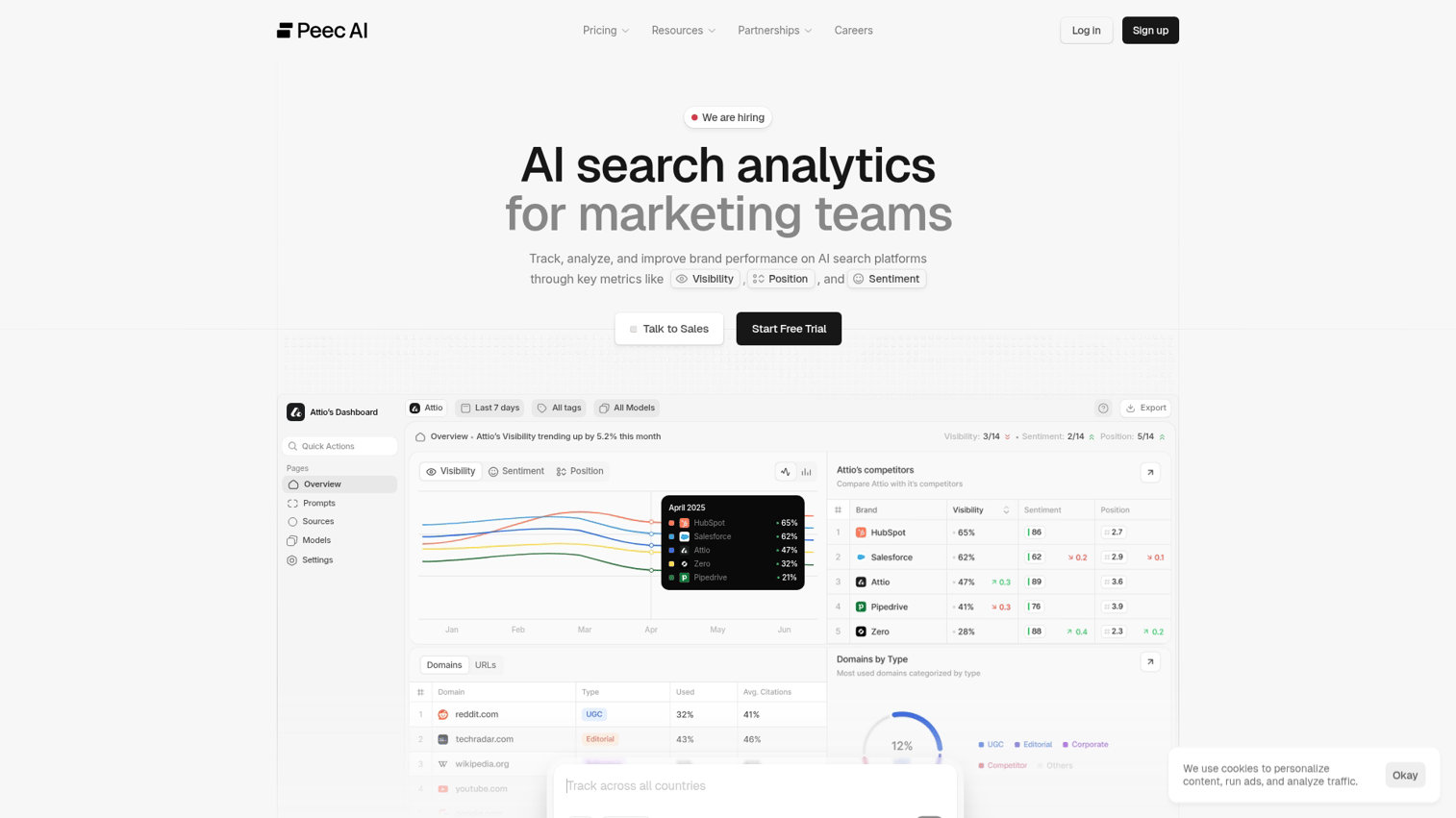
Peec AI specializes in real-time AI visibility tracking with continuous monitoring. The platform alerts you to citation changes as they happen rather than in daily or weekly reports.
Best for: Teams wanting continuous monitoring rather than periodic snapshots.
Key strengths
- Real-time tracking: Monitors AI responses continuously rather than on a schedule
- Instant alerts: Notifies you when citation patterns shift
- Competitive tracking: Monitors competitor mentions alongside your own
Peec AI pricing
Custom pricing based on monitoring scope.
8. Scrunch AI
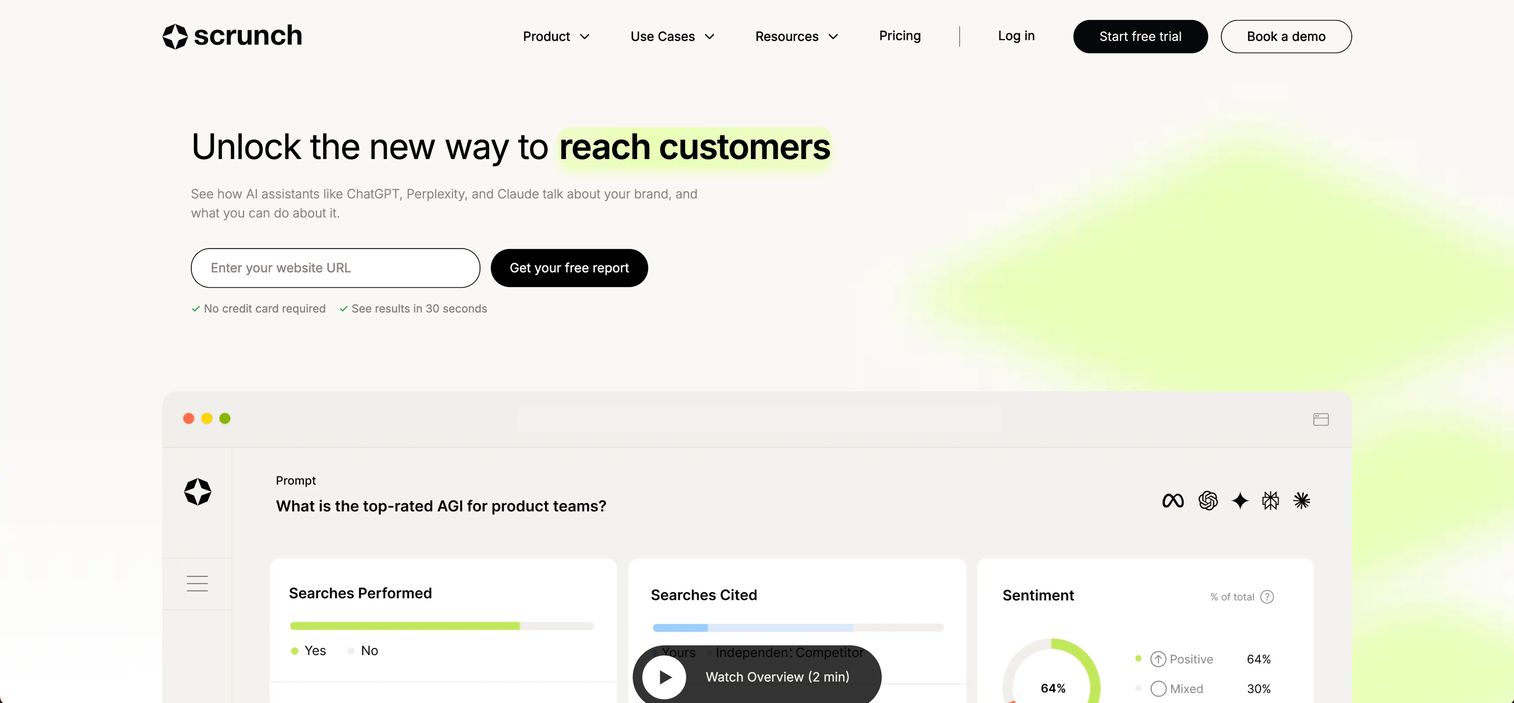
Scrunch AI focuses on brand sentiment analysis within AI responses. Beyond tracking whether AI mentions you, the platform analyzes how AI systems characterize your brand.
Best for: Marketing teams tracking brand perception in AI search.
Key strengths
- Sentiment analysis: Measures whether AI mentions are positive, neutral, or negative
- Citation context: Shows the full context around brand mentions
- Trend tracking: Monitors sentiment changes over time
Scrunch AI pricing
Custom pricing based on monitoring requirements.
9. Qwairy
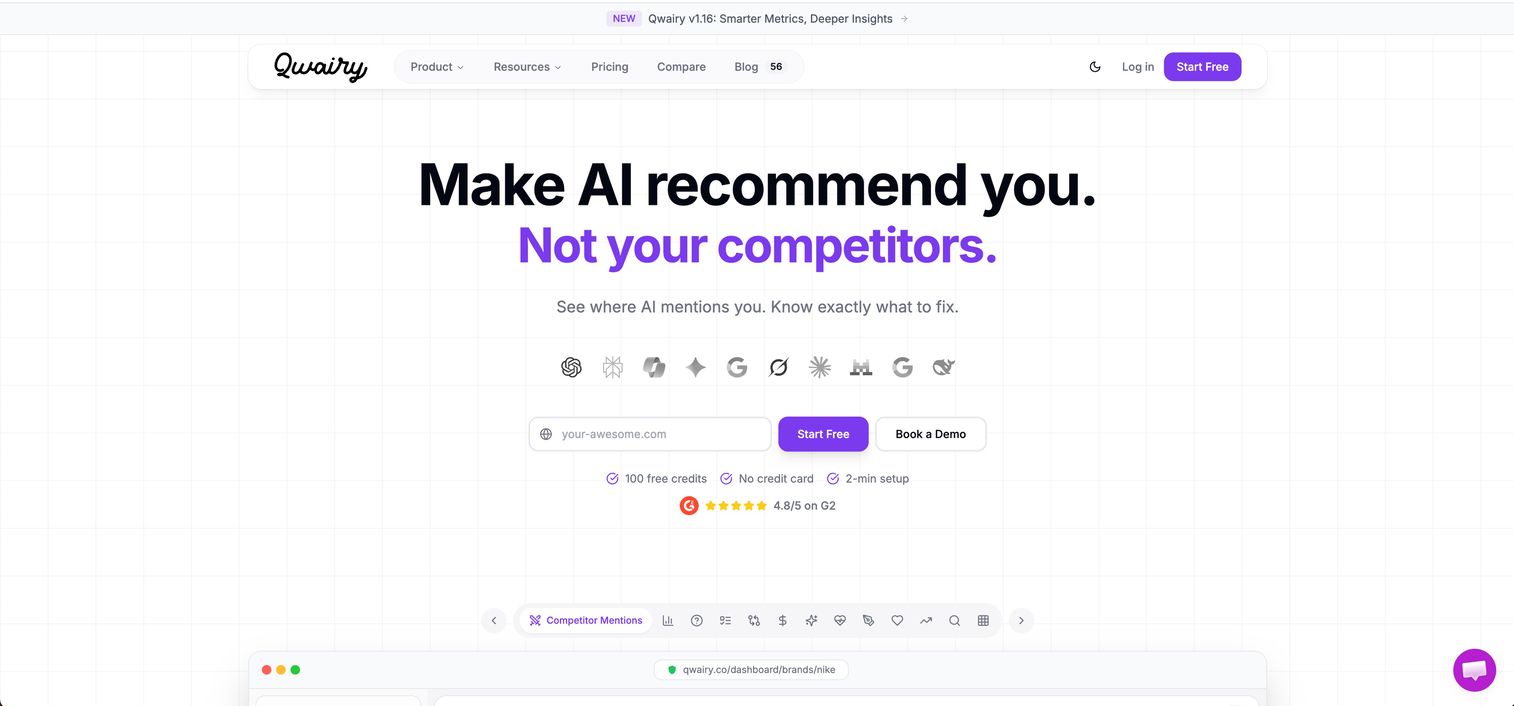
Qwairy focuses on question discovery and user intent analysis. The platform identifies what questions users ask AI systems and helps you create content that answers them.
Best for: Content strategists researching what questions to target for AI visibility.
Key strengths
- Question discovery: Identifies questions users ask AI systems in your category
- Intent analysis: Categorizes questions by user intent and buying stage
- Competitive gaps: Shows questions where competitors have coverage you lack
Qwairy pricing
Custom pricing based on research scope.
10. Gauge
Gauge provides AI visibility benchmarking against competitors. The platform focuses on comparative analysis rather than absolute metrics.
Best for: Teams wanting competitive benchmarks for AI visibility.
Key strengths
- Competitive benchmarking: Shows your AI visibility relative to competitors
- Share of voice: Measures what percentage of AI responses mention your brand
- Category analysis: Tracks visibility across different topic areas
Gauge pricing
Custom pricing based on competitive scope.
11. HubSpot AEO Grader
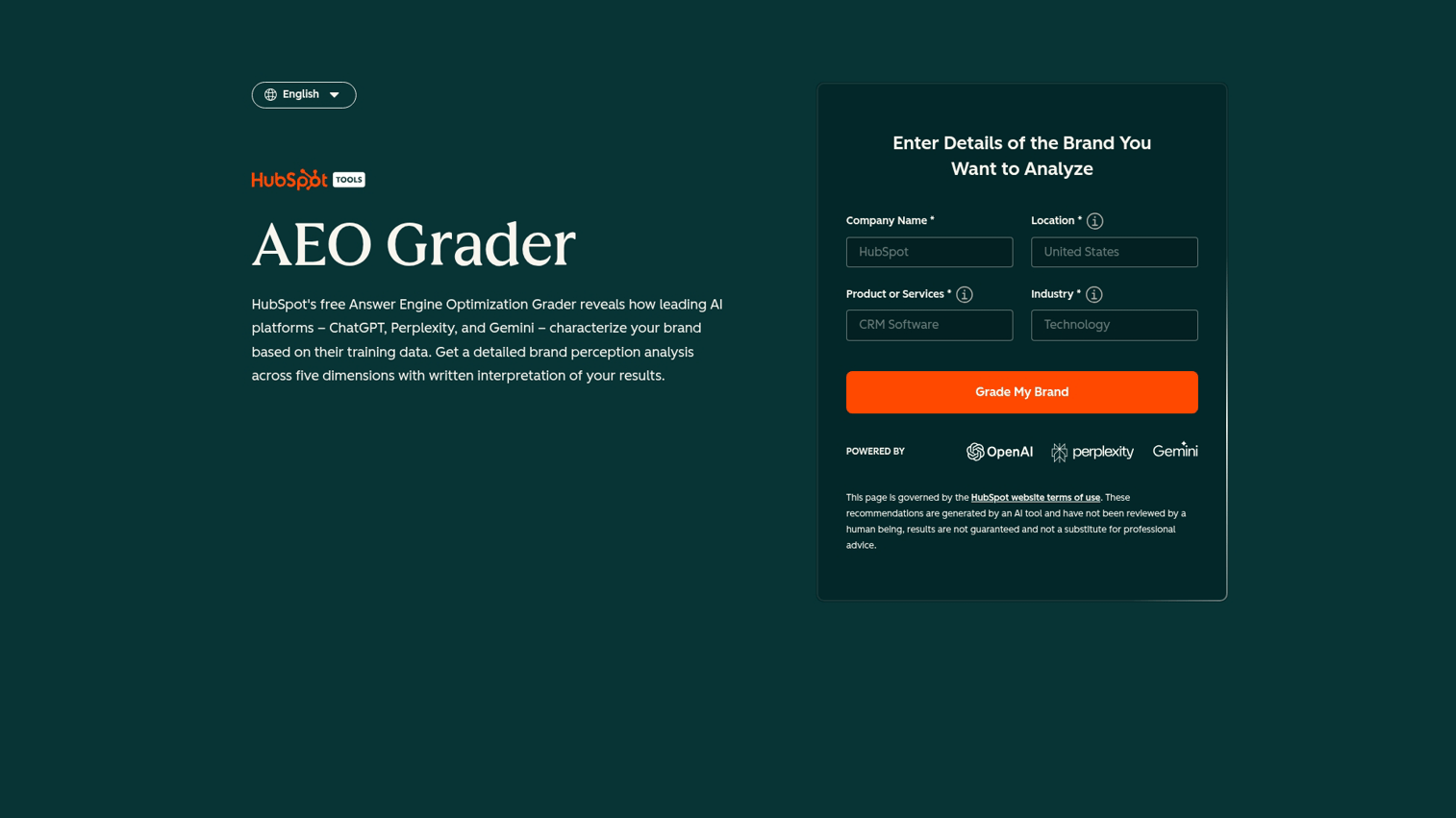
HubSpot AEO Grader provides free AEO assessment including brand sentiment scoring and content gap analysis. The tool offers a starting point for teams new to AEO.
Best for: Teams wanting a free starting point for AEO assessment.
Key strengths
- Free assessment: No cost to run initial AEO analysis
- Brand sentiment scoring: Measures how AI systems characterize your brand
- Strategic recommendations: Provides actionable next steps
HubSpot AEO Grader pricing
Free.
12. Surfer SEO
Surfer SEO combines content optimization with AI-ready formatting. The platform's content editor helps you create pages that perform well in both traditional and AI search.
Best for: Content teams optimizing articles for both traditional and AI search.
Key strengths
- AI content editor: Provides real-time optimization suggestions as you write
- Semantic analysis: Identifies related terms and concepts to include
- Structure recommendations: Suggests formatting that AI systems prefer to cite
Surfer SEO pricing
Plans start at $99/month for Essential, with higher tiers for teams.
13. Frase
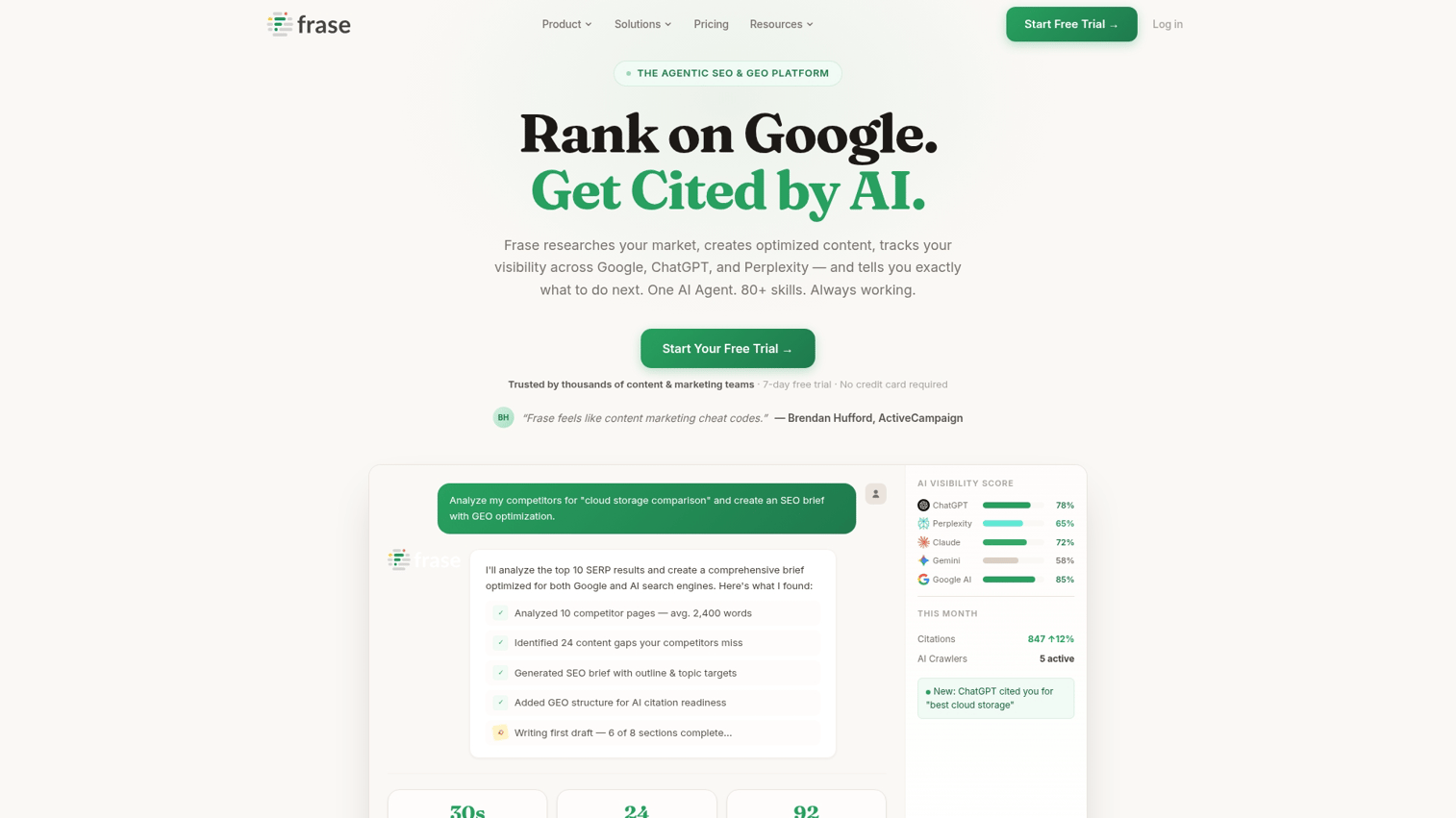
Frase focuses on question research and content briefs. The platform helps you identify what questions to answer and provides AI writing assistance for creating that content.
Best for: Content teams creating AEO-optimized articles from research through writing.
Key strengths
- Question research: Identifies questions users ask about your topics
- Content briefs: Generates outlines based on top-performing content
- Competitor analysis: Shows what questions competitors answer
Frase pricing
Plans start at $15/month for Solo, with Team plans available.
14. Clearscope
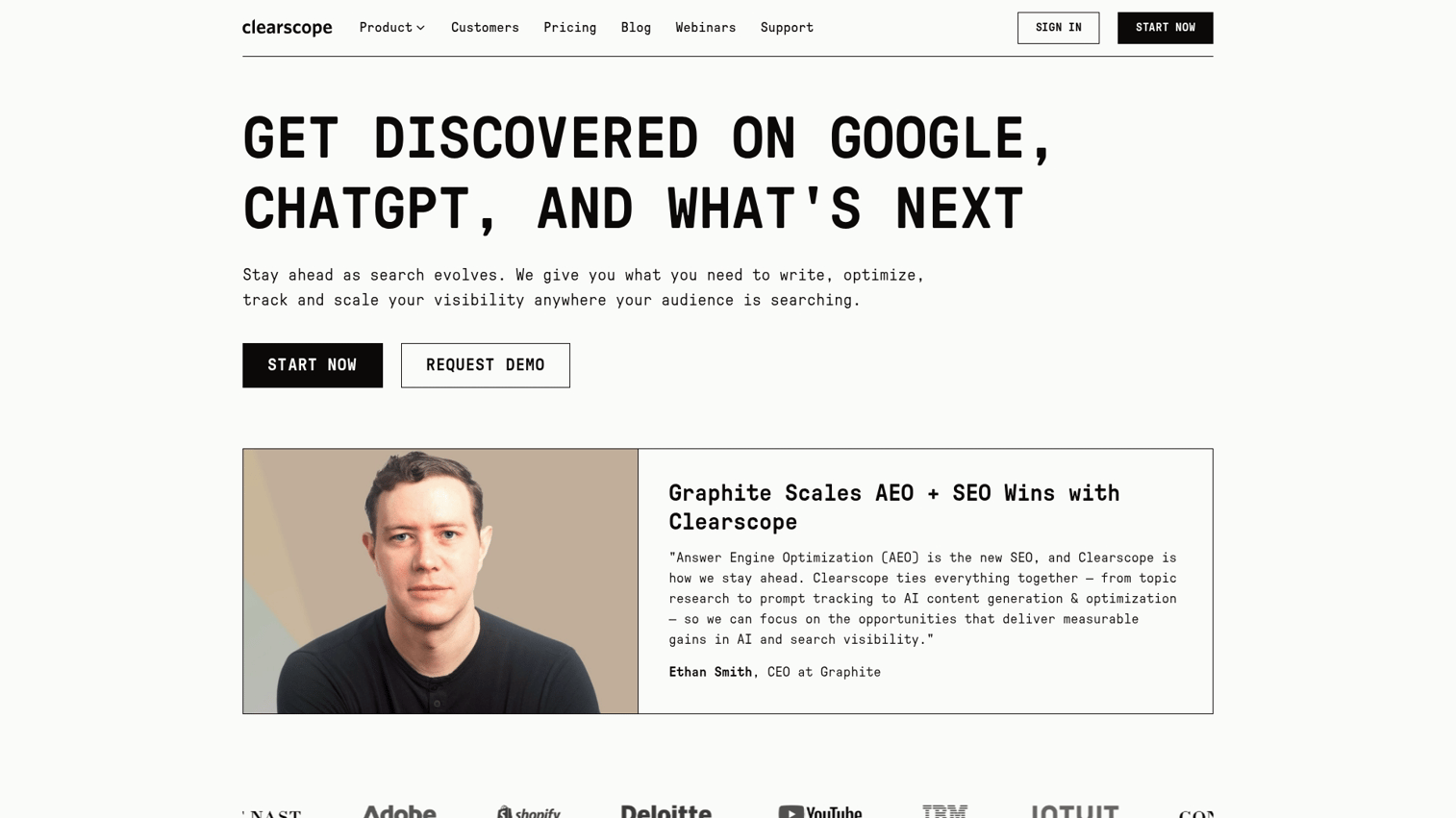
Clearscope provides enterprise-grade content optimization with a focus on authority signals. The platform helps large content teams maintain quality standards that improve AI citation likelihood.
Best for: Enterprise content teams focused on authority signals.
Key strengths
- Content grading: Scores content against top performers in your category
- Readability analysis: Ensures content is accessible and well-structured
- Team workflows: Supports collaboration across large content teams
Clearscope pricing
Plans start at $189/month for Essentials.
15. MarketMuse
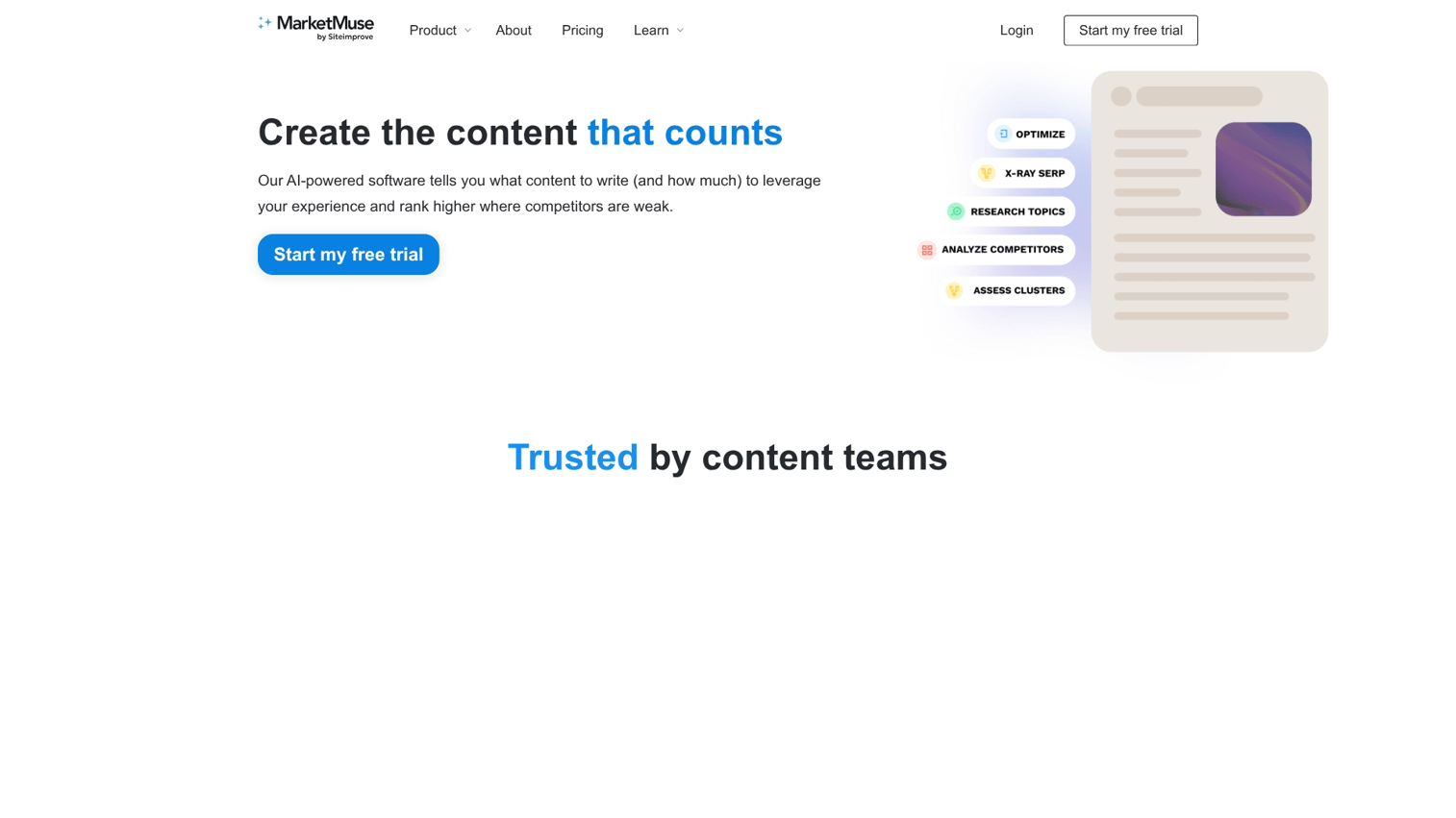
MarketMuse provides content planning and topic modeling. The platform helps you build comprehensive content strategies that improve AI visibility across topic clusters.
Best for: Teams building comprehensive content strategies for AI visibility.
Key strengths
- Topic modeling: Identifies topic clusters and content gaps
- Content planning: Prioritizes content creation based on opportunity
- Authority building: Recommends content that establishes topical authority
MarketMuse pricing
Plans start at $149/month for Standard.
Bonus: Guideflow
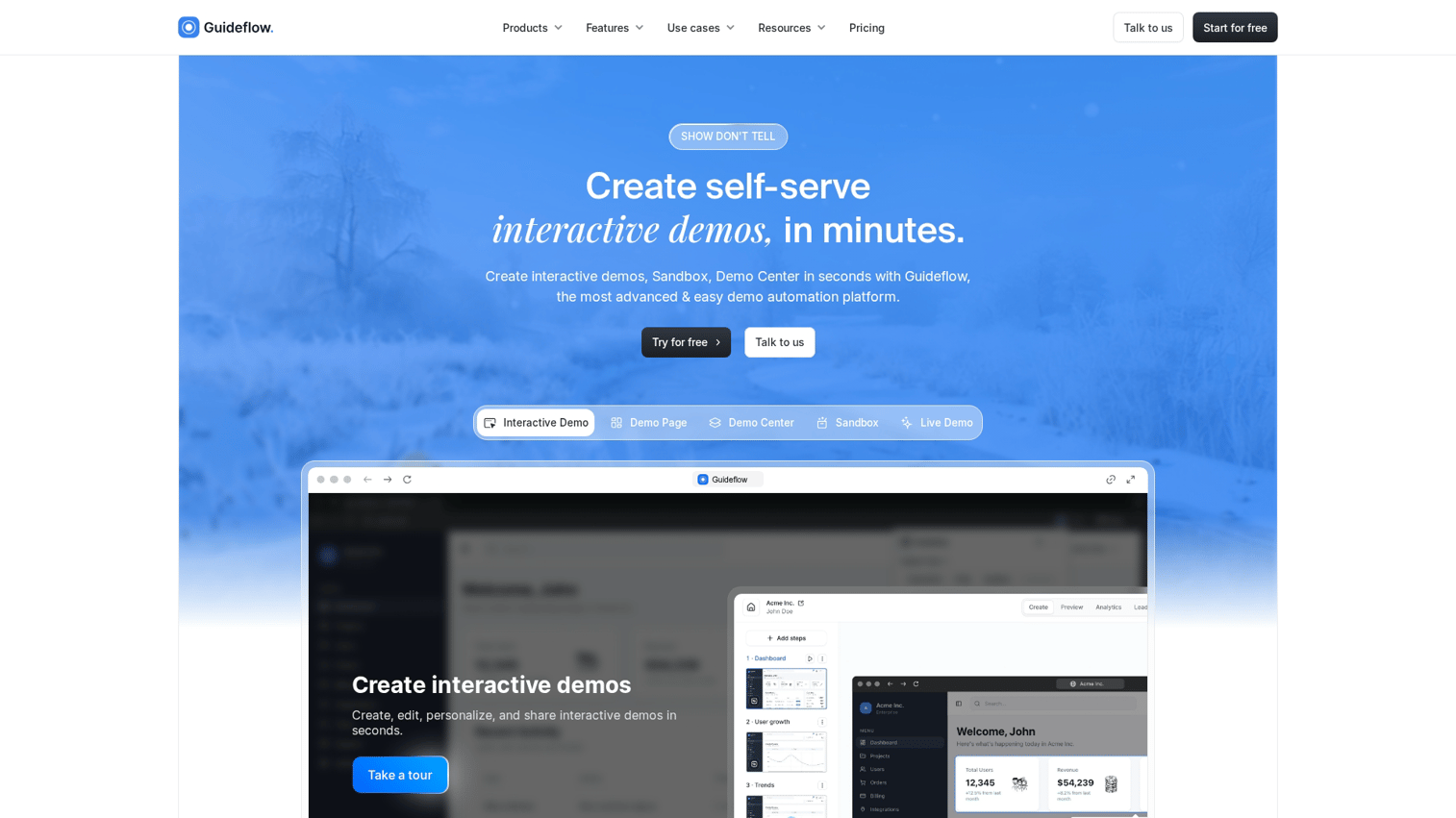
Guideflow isn't an AEO tool, but it's the perfect complement to your answer engine optimization strategy. While AEO tools get your brand mentioned in AI responses, Guideflow converts that visibility into pipeline by letting prospects experience your product immediately after discovery.
When ChatGPT or Perplexity mentions your solution, interactive demos reduce friction between that citation and actual conversion. The platform captures your product flows and turns them into clickable, step-by-step experiences you can embed on landing pages or link in outbound. AI-referred traffic often arrives with high intent but limited context. An interactive demo fills that gap without requiring a sales call, similar to how sandbox demos accelerate deals.
Best for: SaaS teams optimizing post-AEO conversion who want prospects to try the product immediately after discovering it through AI search.
Key strengths
- Capture product flows: Record your application directly from the browser and generate interactive walkthroughs automatically
- Personalize for personas: Tailor demos with dynamic variables, custom text, and role-specific content
- Track engagement analytics: Monitor impressions, completion rates, and conversion to understand which flows drive pipeline
- Embed anywhere: Share via public links, embed on your site, or distribute through email and social
Why choose Guideflow
Pick Guideflow when your AEO strategy generates visibility but you're losing prospects between AI citation and conversion. Interactive demos scale a core sales action: showing, not telling.
Guideflow pricing
- Free: $0/month (5 guideflows, unlimited viewers, 7-day analytics)
- Solo: $40/month (unlimited guideflows, advanced analytics, lead forms)
- Growth: $499/month
- Enterprise: From $2,999/month
How to evaluate answer engine optimization tools and software
Use the criteria below to compare answer engine optimization tools for your specific situation.
AI visibility tracking features
When evaluating tracking tools, look for:
- Platform coverage: Which AI engines does the tool monitor? ChatGPT, Perplexity, Gemini, and Claude are the minimum
- Update frequency: Real-time tracking catches changes faster than daily or weekly monitoring
- Historical data: Longer history helps you measure progress and identify trends
Content optimization for generative search
The best AEO analysis tools provide actionable content fixes, not just visibility data. Look for structured data recommendations, semantic markup suggestions, and E-E-A-T optimization guidance.
Brand mention monitoring in AI responses
Evaluate citation tracking accuracy, sentiment analysis, and competitive mention comparison. Some tools track brand mentions in ChatGPT specifically while others cover broader AI platforms.
Marketing stack integration
Check for CRM integrations, analytics platform connections, and reporting export options. Integration with existing tools reduces manual work and helps you connect AEO data to pipeline metrics.
How to choose the best AEO tool for your team
The right answer engine optimization tools depend on your team size, budget, and primary use case.
Best AEO tools for startups and small teams
Focus on free or low-cost options with essential tracking features. Start with HubSpot AEO Grader to understand your baseline, then add one dedicated tracking tool as budget allows.
Avoid enterprise platforms with features you won't use. The complexity adds overhead without proportional benefit.
AEO software for marketing agencies
Agencies managing multiple clients benefit from multi-client management, white-label reporting, and scalable pricing. SE Ranking and similar platforms support multiple brand tracking from one dashboard.
AEO platforms for enterprise marketing teams
Enterprise buyers typically want advanced analytics, team collaboration features, security compliance, and API access. BrightEdge Prism and Clearscope offer enterprise-scale AEO features with dedicated support.
Best AEO checkers for content teams
Content-focused teams benefit from tools that combine research with optimization. Frase and MarketMuse help you identify what questions to answer and how to structure content for AI citations.
Get started with answer engine optimization today
Choose one AEO tracking tool to monitor your current AI visibility, then pair it with content optimization to improve citations. Measuring your baseline is the first step.
For B2B SaaS teams, complement AEO efforts with interactive product demos that convert AI-referred traffic into qualified leads - Exposure Ninja reports AI search traffic converts at 14.2% compared to Google's 2.8%.
When prospects discover your brand through ChatGPT or Perplexity, a self-serve demo experience removes friction between discovery and evaluation.
FAQs about answer engine optimization tools
Answer engine optimization tools track how AI platforms like ChatGPT and Perplexity mention your brand, while traditional SEO tools focus on Google search rankings and organic traffic. The metrics differ: AEO measures citations and brand mentions, while SEO measures rankings and clicks.
Most AEO tracking tools display your current AI visibility immediately. Improving your citation frequency through content optimization typically requires consistent effort over several weeks as AI systems re-index and update their knowledge bases.
Yes, most dedicated AEO tracking software monitors brand mentions across ChatGPT, Perplexity, Gemini, Claude, and other major AI search engines from a single dashboard. Coverage varies by platform, so verify which engines each tool monitors.
AEO tools address a different visibility channel than traditional SEO software. Teams serious about AI search presence benefit from adding dedicated answer engine optimization tools to their existing stack, though some SEO platforms now include basic AEO features.
Leading AEO platforms offer native integrations or API connections with major CRMs and marketing automation tools. This allows teams to correlate AI visibility data with pipeline metrics and understand which AEO efforts drive actual business outcomes.
AI engines favor structured content with clear headings, direct answers to specific questions, authoritative sources, and semantic markup. Content that demonstrates expertise and provides comprehensive coverage of a topic tends to get cited more frequently.
Accuracy varies by platform. The best AEO tools query AI engines directly and use pattern matching to identify brand mentions, competitor references, and citation context. Some tools provide confidence scores to indicate tracking reliability.
Early-stage startups benefit from AEO tools primarily for competitive intelligence and understanding how AI engines currently position their category. This insight informs content strategy from the start, even before you have extensive content to optimize.