
Revenue slips through the cracks between systems. A patient checks in, eligibility never gets verified, the claim goes out with a coding error, the payer denies it, and nobody notices until the receivable ages past 90 days. By then, recovering that dollar costs more than it earns. This is the quiet math that kills margin in healthcare, and it happens because eligibility, claims, denials, and collections often live in separate tools that do not talk to each other.
The best revenue cycle management software fixes the gaps, not just the speed. It gives billing teams a single view of the patient-to-payment path, so a denial in week three connects back to the eligibility check that should have caught it in week one. The global healthcare revenue cycle management software market is expected to reach USD 48.3 billion in 2026, per Persistence Market Research, with North America accounting for roughly 40% of it. That growth reflects a real shift: providers are done manually chasing reimbursements and want automated, interoperable RCM software that closes the loop.
If you run operations at a growing practice or health system, the mindset here mirrors what any operator wants from their stack: predictable revenue, cleaner data, and fewer manual bottlenecks. That framing is why teams evaluating software in adjacent categories, from contract management to audit management software, tend to apply the same lens. This guide evaluates nine platforms through five criteria that actually determine whether a tool improves cash flow or just adds another login.
What's inside
This guide is for healthcare operators, revenue cycle leaders, practice managers, and founders comparing revenue cycle management software for 2026. We built the shortlist around five things that separate a real workflow platform from a feature list: end-to-end coverage across the patient-to-payment cycle, integration depth with EHR and clearinghouse systems, compliance and security posture, analytics that surface denials and underpayments early, and scalability across specialties and locations. Every entry includes verified feature sets, G2 ratings where available, and clear buyer-fit guidance so you can narrow to a two or three vendor shortlist before you sit through a single demo.
TL;DR
- Best for full-cycle automation: Waystar covers claims, eligibility, denials, and patient payments in one platform.
- Best for integrated EHR and RCM workflows: athenahealth links clinical and financial data on a cloud-native platform.
- Best for specialty-focused flexibility: OmniMD and AdvancedMD fit ambulatory and specialty practices that want one system.
- Best for enterprise environments: Epic and Oracle Health serve large health systems that need deep integration and governance.
- Best for AI-driven and managed billing support: CureMD pairs AI-assisted claims processing with hands-on billing services.
What is revenue cycle management software?
Revenue cycle management software is a category of healthcare technology that automates and tracks every financial step from patient registration through final payment reconciliation. It connects the clinical event to the money, so a provider gets paid accurately and on time without teams manually stitching data between systems.
The revenue cycle itself runs in a sequence. It starts at registration and eligibility verification, moves through service documentation and coding, then claim submission, payment posting, denial management, and patient collections. Good RCM software instruments each stage so nothing falls through, and it feeds analytics that tell you where dollars are stalling.
Core capabilities of healthcare revenue cycle management software include:
- Eligibility verification: Confirm coverage and benefits before service to prevent downstream denials.
- Prior authorization: Track and manage payer approvals for procedures that require them.
- Claims scrubbing: Catch coding and formatting errors before submission to lift first-pass acceptance.
- Denial management: Route, work, and appeal denied claims with clear ownership and status.
- Payment posting: Reconcile payer and patient payments against expected amounts.
- Analytics and reporting: Surface KPIs like days in A/R, denial rate, and net collection rate.
- EHR and clearinghouse integration: Sync clinical and financial data across the systems you already run.
- Patient billing and collections: Generate statements, estimates, and self-service payment options.
The strongest revenue cycle management solutions treat these as one connected workflow rather than eight disconnected modules. That is the difference between software that reports on your revenue problem and software that prevents it.
When to use revenue cycle management software
Improve cash flow without adding more manual billing work
You feel this when your days in A/R keep climbing and your billing team is already maxed out. RCM software is the right move when the lag between service delivery and reimbursement is your bottleneck, not headcount. Automated eligibility checks, claim scrubbing, and denial routing reduce the rework that eats billing capacity. The goal is cleaner claims on the first pass and faster recovery on the ones that slip, so cash flow improves without hiring more people to chase it.
Connect clinical and financial data
When your EHR, practice management system, and payer portals live in silos, revenue leaks at every handoff. This is when integrated revenue cycle software earns its place. Interoperability means eligibility data, clinical documentation, and billing codes flow together, so you stop reconciling spreadsheets and start trusting one source of truth. Reporting visibility across the full cycle also lets leadership spot patterns, like a specific payer or procedure driving denials, before they compound.
Scale across specialty or multi-location operations
Growth changes what you need from software. A single-provider clinic can run lean, but a multi-location group or specialty practice needs configurable workflows, role-based governance, and analytics that roll up across sites. This is when scalability becomes the deciding factor. You want a platform that supports different specialty billing rules, standardizes process across locations, and gives leadership a consolidated view of revenue performance without manual aggregation.
Comparison table
Here is how the nine revenue cycle management software vendors compare on intent, primary use case, pricing visibility, and verified G2 rating. Pricing across this category is largely quote-based, so we note where public figures exist and where you will need to request a quote.
| # | Product | Intent | Key use case | Pricing | G2 rating |
|---|---|---|---|---|---|
| 1 | Waystar | Full-cycle RCM automation | Claims, eligibility, denials, patient payments | Request pricing | 4.4/5 |
| 2 | athenahealth | Integrated EHR + RCM | Cloud clinical and financial workflows | % of collections, custom | 3.6/5 |
| 3 | OmniMD | Specialty EHR + RCM suite | Ambulatory and specialty practice workflows | Custom | 4.2/5 |
| 4 | NextGen Healthcare | Ambulatory EHR/PM + RCM | A/R optimization and collections | Custom | 3.8/5 |
| 5 | AdvancedMD | Cloud practice management | All-in-one for independent practices | From $130/provider/mo | 3.6/5 |
| 6 | CureMD | AI-assisted + managed billing | Claims processing and managed RCM services | Custom | 3.0/5 |
| 7 | eClinicalWorks | EHR-centric RCM | Ambulatory revenue cycle workflows | From $449/mo per provider | 3.7/5 |
| 8 | Epic | Enterprise RCM | Large health system integration and governance | Custom | 4.2/5 |
| 9 | Oracle Health | Enterprise healthcare ops | Large-system RCM and interoperability | Custom | Not rated |
1. Waystar

Waystar is a healthcare revenue cycle platform built to simplify payments, claims, denials, and analytics across the full cycle. It sits between providers and payers as a clearinghouse and workflow layer, handling claim submission, eligibility, and payer-payment automation in one place. Teams that want to consolidate scattered billing tools into a single platform tend to shortlist it first.
Best for: Healthcare organizations that need broad revenue cycle, claims, and payer-payment automation in one platform.
Key strengths
- Claim management and clearinghouse workflows: Submit, track, and correct claims through one connected system for higher first-pass acceptance.
- Denial recovery and appeals: Route denials to the right owner and manage appeals so revenue does not age out.
- Eligibility and price transparency: Run eligibility, benefits, and status inquiries, and generate patient estimates before service.
Beyond those, Waystar layers in analytics and reporting that surface where claims stall and which payers or procedures drive denials.
Why choose Waystar: If your core pain is claims and denials living in one tool and patient payments in another, Waystar's value is consolidation. It performs strongly for teams that want end-to-end coverage without stitching a clearinghouse to a separate billing product. Its 4.4/5 G2 rating is the highest in this list, which reflects broad satisfaction across billing teams.
Waystar pricing: Waystar lists packaged Claim Management plans named Starter, Core, Performance, and Premium, but does not publish prices. The pricing page directs you to request a quote, so expect a custom figure based on volume and modules. There is no publicly listed free tier.
2. athenahealth
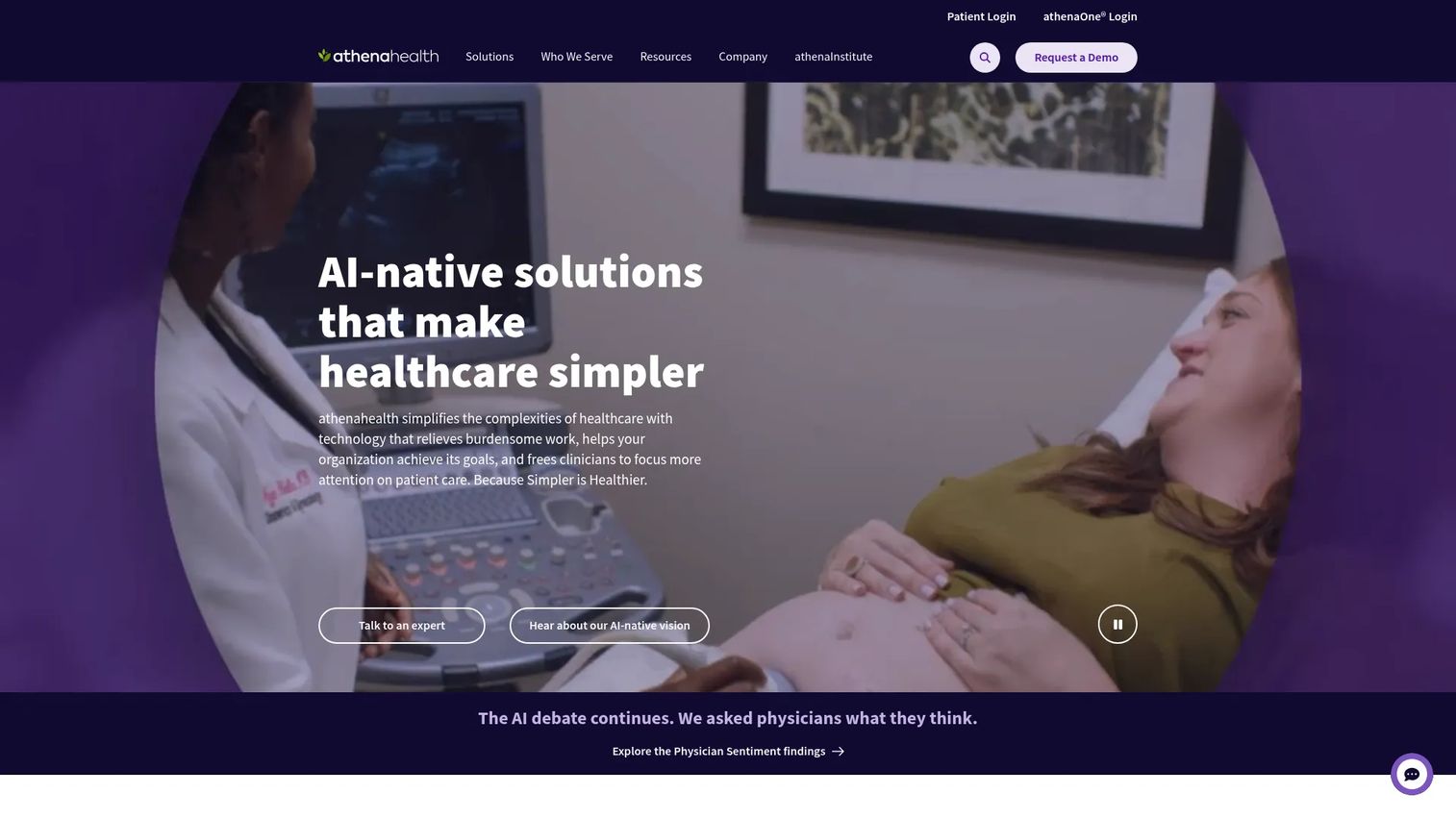
athenahealth builds athenaOne, a cloud platform that combines EHR, medical billing, practice management, and patient engagement in one system. The appeal is that clinical and financial workflows share the same data, so a documented visit flows into a clean claim without manual re-entry. Practices that want their revenue cycle tied directly to their clinical system often land here.
Best for: Medical practices and health systems seeking an integrated, cloud-based clinical and revenue-cycle platform.
Key strengths
- Integrated EHR, billing, and practice management: Clinical documentation, claims, and scheduling live in one platform, cutting handoff errors.
- AI-native workflows: Native AI capabilities automate routine billing and administrative steps across the cycle.
- Patient engagement layer: A patient portal, mobile app, telehealth, and automated outreach support billing and collections on the patient side.
Why choose athenahealth: athenahealth fits when you want one vendor for both clinical and financial operations rather than integrating separate systems. Its percentage-of-collections model aligns the vendor's incentive with your reimbursements, which some practices prefer over flat fees. Its G2 rating sits at 3.6/5, so validate service and support fit during evaluation.
athenahealth pricing: athenahealth does not publish flat pricing. The company uses a percentage-of-collections model for athenaOne and invites practices to request custom pricing. Your rate depends on specialty, volume, and the modules you enable.
3. OmniMD
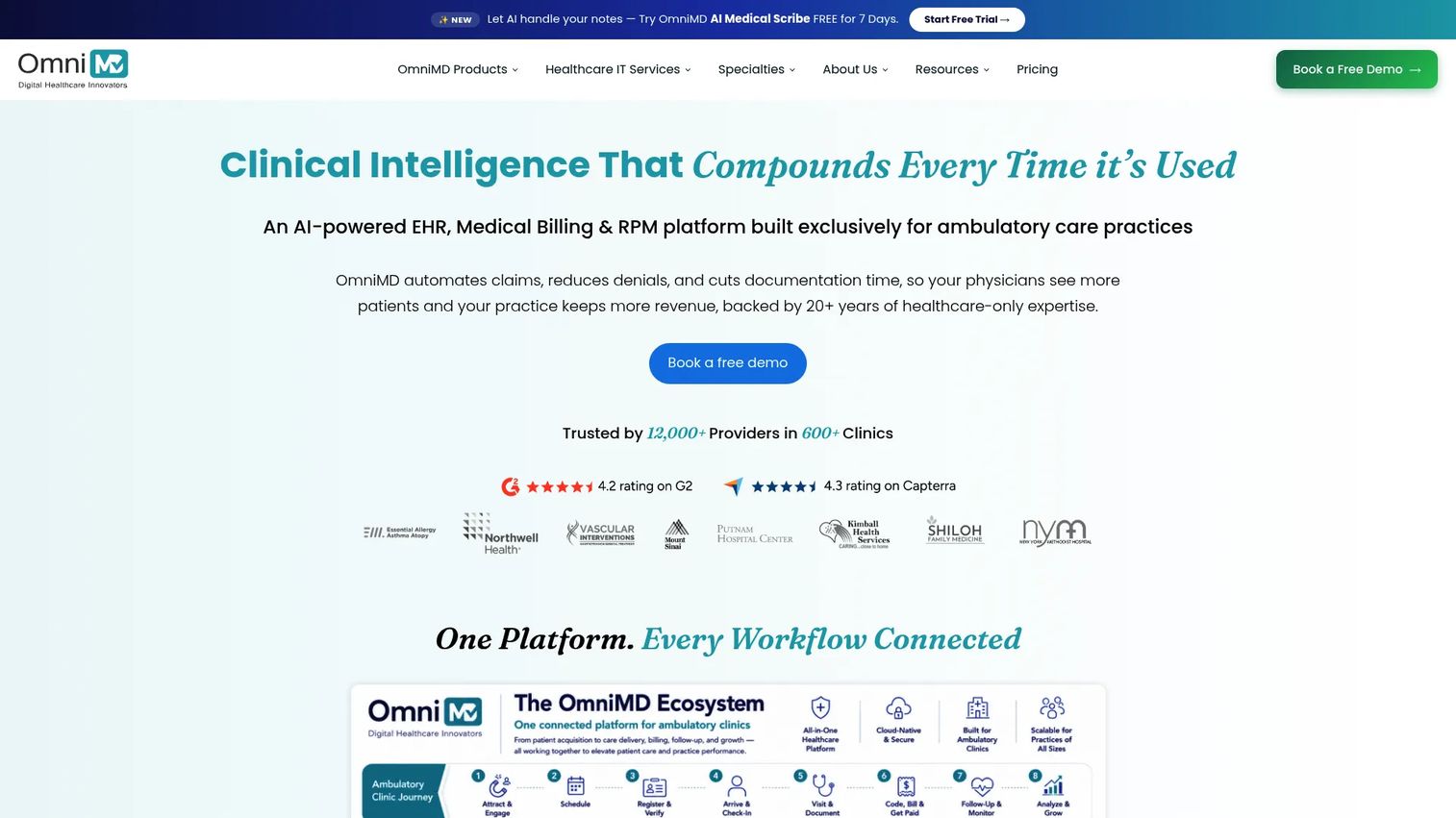
OmniMD is a cloud-based healthcare suite that unifies EHR, practice management, billing, and AI-enabled clinic workflows. It leans toward specialty and ambulatory practices that want an integrated system rather than best-of-breed point tools. The revenue cycle module sits alongside charting, scheduling, and patient engagement, so financial and clinical data stay connected.
Best for: Medical practices and clinics that want an integrated EHR, billing, and AI workflow suite.
Key strengths
- Unified EHR and RCM: Scheduling, charting, patient portal, and revenue cycle share one platform for cleaner data flow.
- AI front desk and medical scribe: AI tools reduce administrative load at the front desk and in documentation, which feeds cleaner claims.
- Analytics and integrations: Reporting, telehealth, and lab and imaging integrations round out the specialty workflow.
Why choose OmniMD: OmniMD works well for specialty practices that want configurability without an enterprise implementation. It holds a solid 4.2/5 G2 rating, and the unified suite means your billing team is not toggling between disconnected systems. Choose it when specialty workflow flexibility matters more than name-brand scale.
OmniMD pricing: OmniMD uses customized pricing across three plans: EHR Essentials, Growth Clinics Suite, and Enterprise & Multi-Location. Prices vary by number of providers, visits, and modules, so you request a custom quote. OmniMD publicly advertises a 7-day free trial for its AI Medical Scribe.
4. NextGen Healthcare
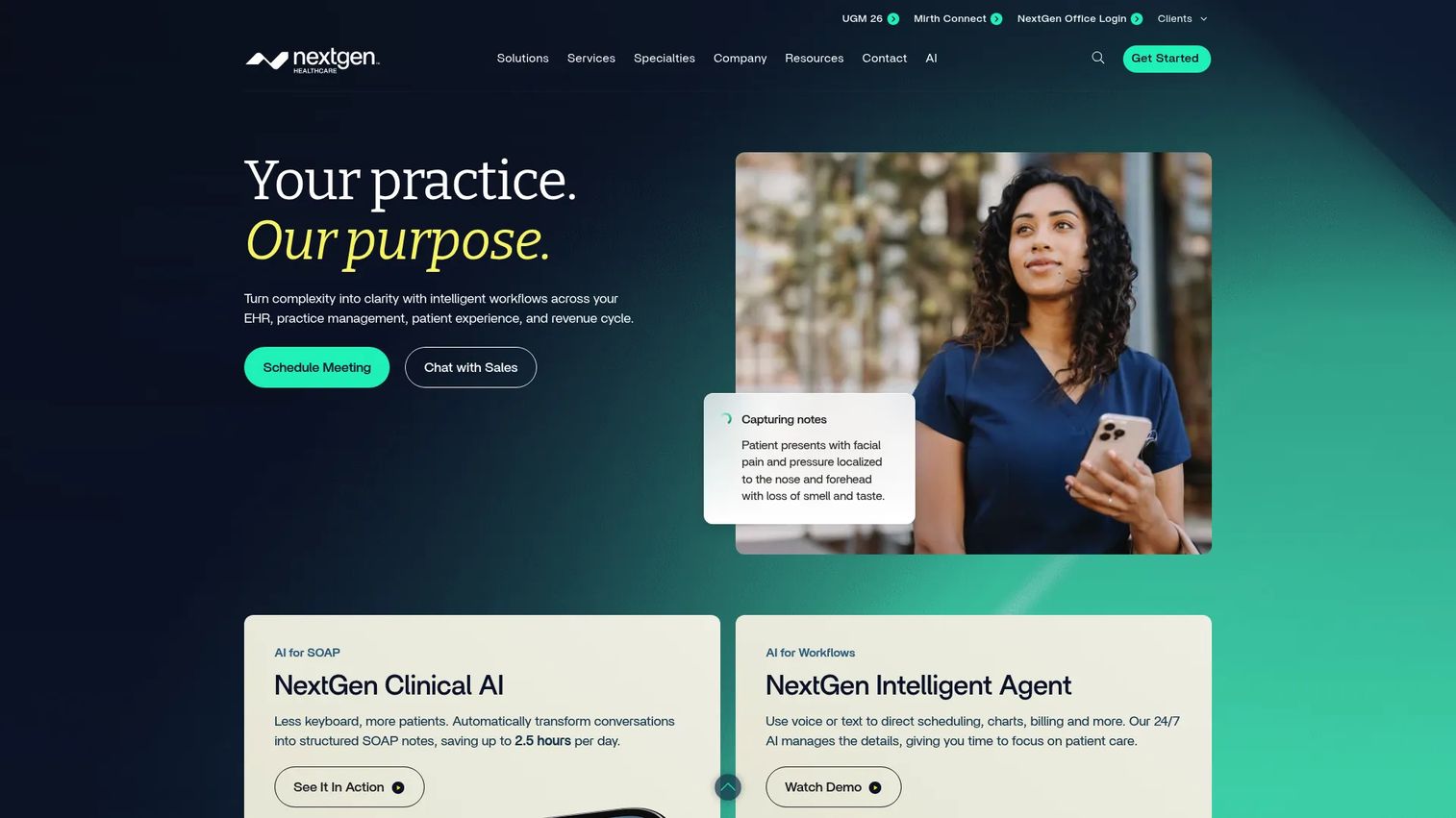
NextGen Healthcare offers cloud-based EHR, integrated practice management, and patient experience tools aimed at ambulatory practices. Its revenue cycle capabilities focus on A/R optimization, eligibility, prior authorization, and collections, and the company pairs software with consulting and services. That hybrid model appeals to teams that want expertise, not just a platform.
Best for: Ambulatory practices needing an integrated EHR/PM platform with revenue cycle support.
Key strengths
- A/R optimization and collections: Tools and services target aging receivables and payment recovery.
- Eligibility and prior authorization: Front-end verification reduces denials before claims go out.
- KPI reporting: Dashboards track the metrics leadership needs to manage revenue performance.
Why choose NextGen Healthcare: The software-plus-services model is the differentiator. Busy practices that lack deep billing expertise in-house can lean on NextGen's consulting to complement the platform. It carries a 3.8/5 G2 rating, so weigh the services relationship carefully against your internal capacity during evaluation.
NextGen Healthcare pricing: NextGen does not publish pricing on its site. The company directs prospective buyers to contact sales or request a demo for a custom quote based on practice size and the modules and services you need.
5. AdvancedMD
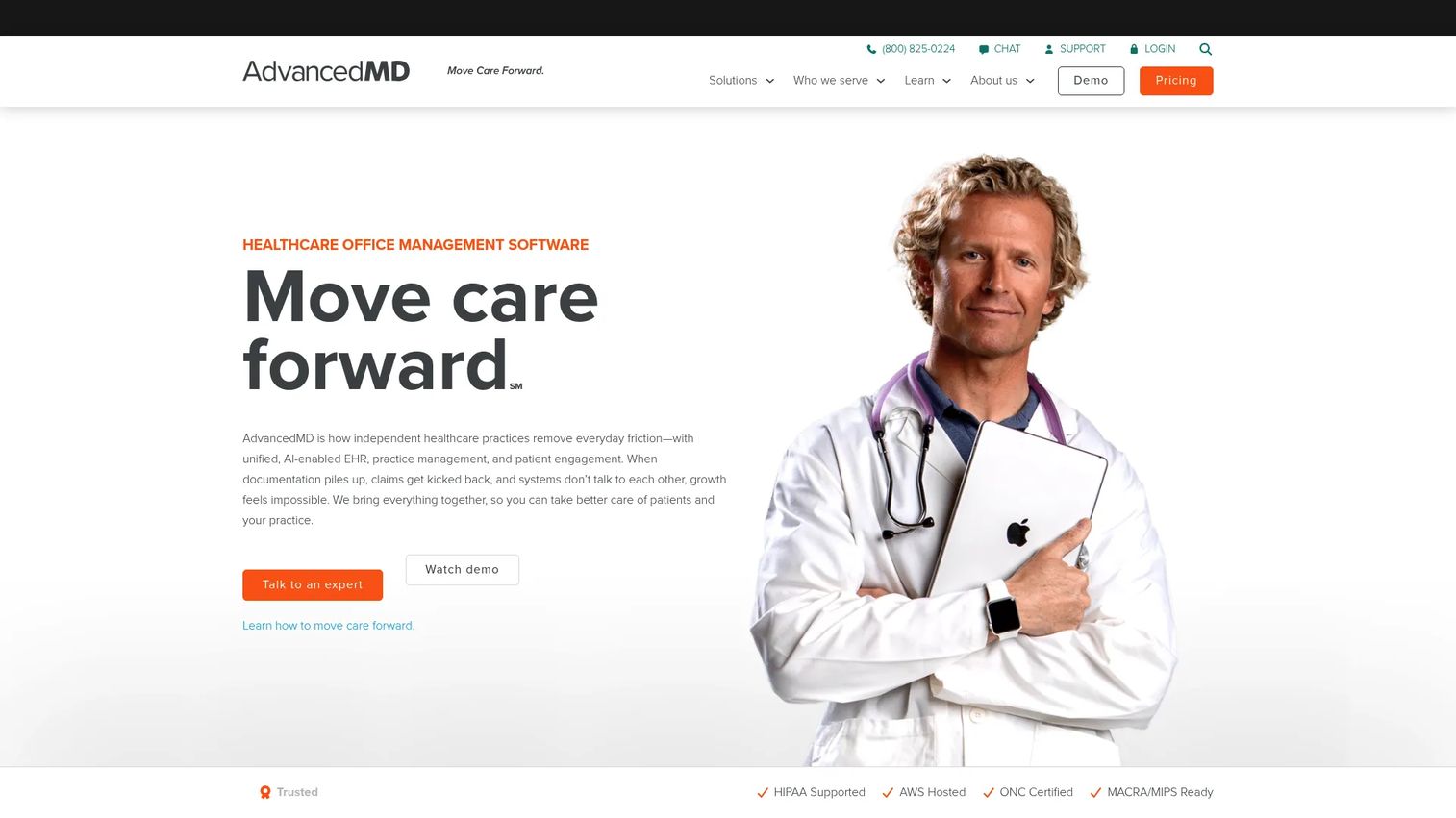
AdvancedMD is a cloud-based platform combining practice management, EHR, patient engagement, and medical billing for independent healthcare practices. It bundles the full stack, so smaller teams get scheduling, documentation, claims, and billing without integrating multiple vendors. The pricing transparency here is a welcome exception in a quote-heavy category.
Best for: Independent healthcare practices that need an all-in-one EHR, PM, and billing platform.
Key strengths
- All-in-one practice management and EHR: Scheduling, charting, and billing in a single cloud platform reduce vendor sprawl.
- Claims and billing management: Claim scrubbing and eligibility checks lift first-pass acceptance for small teams.
- Telehealth and ePrescribing: Built-in telehealth and prescribing support round out the clinical side.
Why choose AdvancedMD: AdvancedMD fits smaller and independent practices that want one platform and a published starting price. The all-in-one model means less integration work, and the transparent per-provider pricing makes budgeting easier. Its 3.6/5 G2 rating suggests validating the billing workflow against your specialty during a trial.
AdvancedMD pricing: AdvancedMD Now starts at $130 per provider per month, billed month-to-month after a 30-day free trial. Specialty pricing ranges and RCM pricing as a percentage of collections are also available, so your final cost depends on specialty and bundle.
6. CureMD
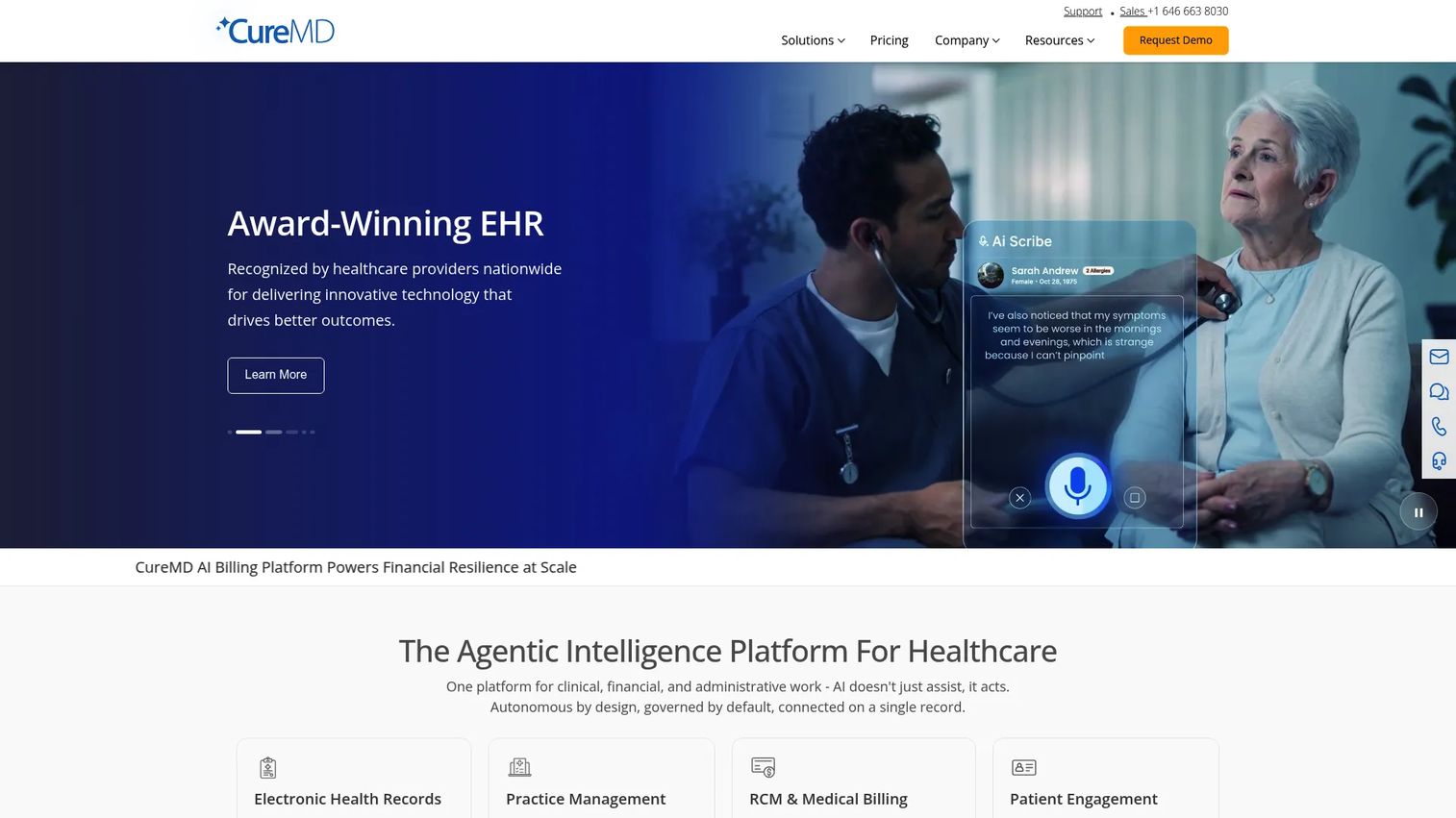
CureMD is a cloud-based healthcare software and services provider offering EHR, practice management, and medical billing. What sets it apart in this list is the combination of AI-assisted claims processing with hands-on managed billing services. Practices that want to outsource the heavy lifting of revenue cycle work, not just license software, tend to consider it.
Best for: Healthcare practices seeking an all-in-one EHR, PM, and billing platform with managed billing support.
Key strengths
- AI-assisted claims processing: Automation targets claim accuracy and denial management to lift clean-claim rates.
- Managed revenue cycle services: CureMD offers hands-on billing support, from verification and payment posting to statements and reporting.
- Integrated EHR and practice management: Clinical and financial workflows run on one platform for connected data.
Why choose CureMD: CureMD works best for AI-driven revenue cycle management software buyers who also want a team handling billing operations. If your practice lacks billing depth in-house and wants managed services layered on software, that combination is the draw. Its G2 rating sits at 3.0/5, so scrutinize the managed-services relationship and support responsiveness closely before committing.
CureMD pricing: CureMD does not publish numeric pricing. The site presents personalized pricing for specialized practices and directs you to request a custom quote based on your specialty and service needs.
7. eClinicalWorks
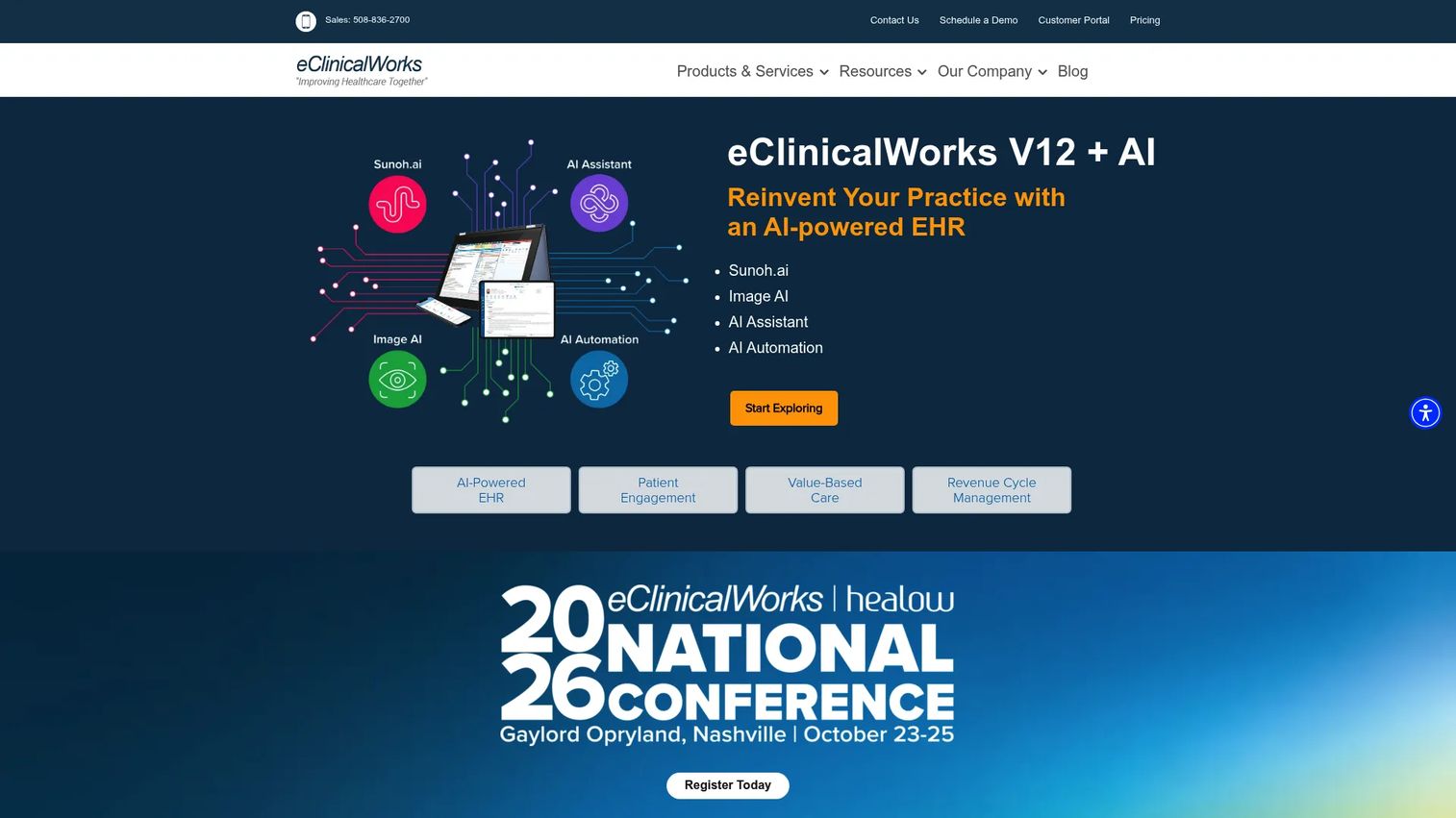
eClinicalWorks is a cloud-based healthcare IT platform spanning EHR, practice management, patient engagement, population health, and revenue cycle management. Its RCM workflows sit inside a widely adopted EHR ecosystem, so practices already running eClinicalWorks clinically can extend into revenue cycle without adding a separate vendor. That ecosystem gravity is the main reason teams shortlist it.
Best for: Ambulatory healthcare practices wanting a cloud EHR with practice management, patient engagement, and RCM options.
Key strengths
- EHR/PM cloud platform: Scheduling, eligibility, claims, and clinical documentation share one system.
- Revenue cycle management options: Practices can license software or use RCM as a managed service.
- Patient portal and engagement: Self-service tools support billing and collections on the patient side.
Why choose eClinicalWorks: The case is strongest for teams already inside the eClinicalWorks ecosystem, where extending into RCM avoids a new integration. It also offers rare pricing transparency for this category. Its 3.7/5 G2 rating is mid-pack, so confirm the revenue cycle workflow matches your billing process during evaluation.
eClinicalWorks pricing: eClinicalWorks publishes tiered pricing: EHR Only at $449 per month per provider, EHR with Practice Management at $599 per month per provider, and RCM as a Service at 2.9% of practice collections. No start-up costs are shown for these plans.
8. Epic
Epic is the enterprise EHR platform of record for many of the largest health systems, with clinical, financial, interoperability, and AI products built around it. Its revenue cycle capabilities are designed for scale, deep integration across inpatient and ambulatory settings, and the governance large organizations require. This is enterprise territory, not a fit for a small practice.
Best for: Large healthcare organizations needing an enterprise EHR platform with integrated revenue cycle.
Key strengths
- Enterprise revenue cycle depth: Financial and billing workflows integrate tightly with clinical operations at scale.
- Interoperability and APIs: Developer APIs and interoperability tools connect Epic across a complex system.
- Clinical and acute care coverage: Inpatient, acute, and ambulatory workflows run on one platform.
Why choose Epic: Epic is the choice when you are running a large health system that needs one platform governing clinical and financial operations across many facilities. The integration depth and governance controls are built for complexity. It holds a 4.2/5 G2 rating, reflecting strong satisfaction among the enterprise organizations it serves.
Epic pricing: Epic does not publish a public product price. Pricing is determined by client and model, typically negotiated through a direct enterprise engagement based on organization size and scope.
9. Oracle Health
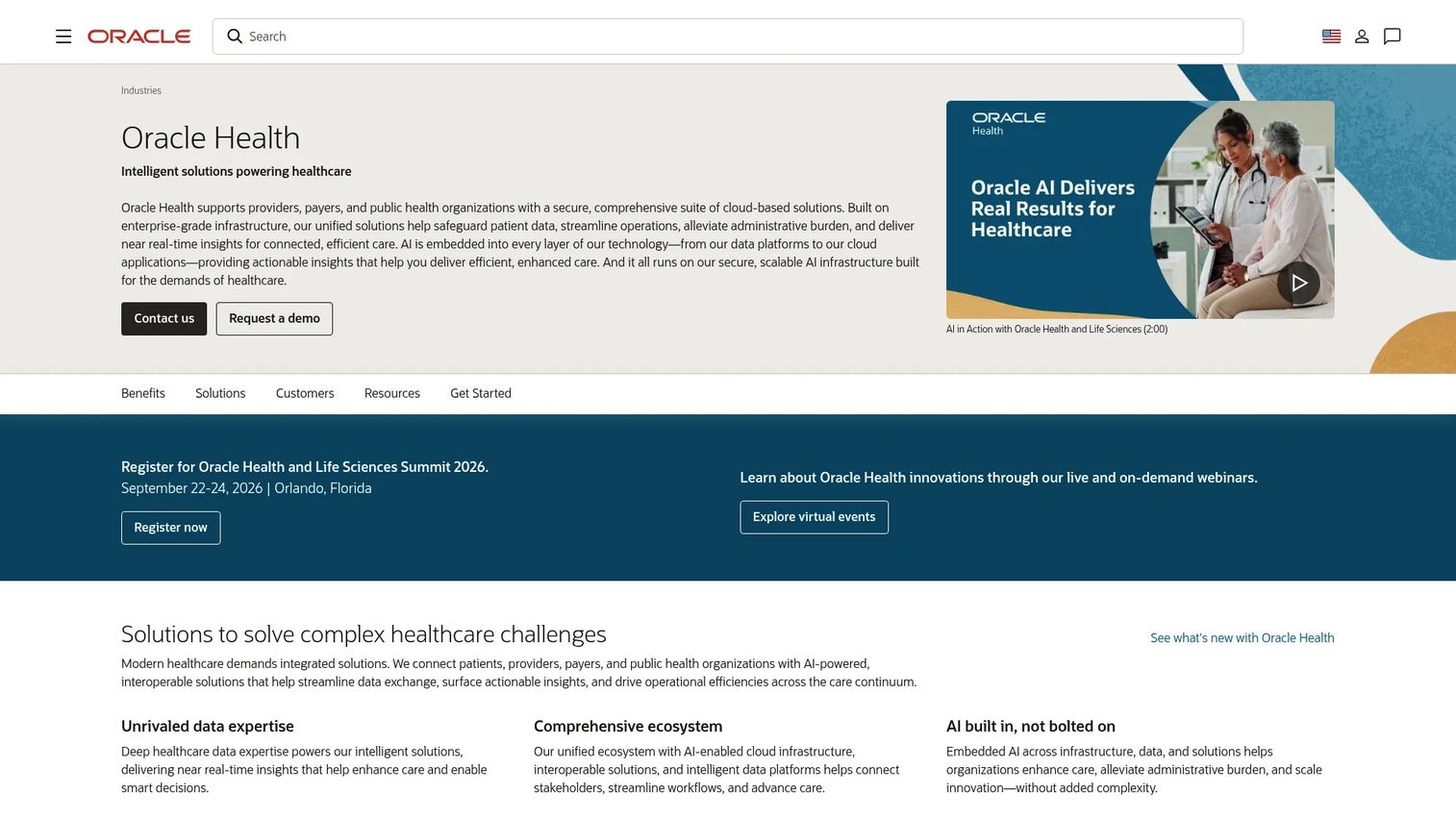
Oracle Health is Oracle's healthcare suite offering cloud-based clinical, operational, interoperability, analytics, and security capabilities for large healthcare organizations. Its revenue cycle workflows sit within a broad enterprise platform that emphasizes embedded AI, cloud innovation, and interoperability. Like Epic, it targets health systems that need enterprise-grade breadth rather than a lightweight practice tool.
Best for: Large healthcare providers and health systems needing an enterprise healthcare platform.
Key strengths
- Enterprise EHR with embedded AI: Oracle Health's EHR carries native AI and cloud capabilities across clinical and financial workflows.
- Interoperability and exchange: Offerings like Oracle Health HIE and Seamless Exchange connect data across systems.
- Reporting and population health: Analytics and population health tools support large-scale operational visibility.
Why choose Oracle Health: Oracle Health appears alongside Epic in enterprise evaluations, and the deciding factors are usually your existing infrastructure, cloud strategy, and interoperability priorities. Organizations already invested in Oracle's broader technology stack often weigh it heavily. Public G2 ratings for the brand as a whole were not available at review, so lean on enterprise references and analyst input during selection.
Oracle Health pricing: Oracle Health does not display a public starting price. Pricing is tiered and often charged per production environment, and Oracle directs prospective buyers to contact sales or request a demo for a custom quote.
How to choose the right revenue cycle management software
Before you book demos, use this checklist to narrow the field. The right healthcare revenue cycle management solutions depend on your workflow complexity, specialty, integration stack, and scale.
Integration depth with your existing systems
Your RCM software has to sync cleanly with your EHR, practice management system, clearinghouse, and payer portals. Ask vendors exactly which systems they integrate with natively versus through a third party. Integration gaps are where revenue leaks, so this is often the single most important criterion. Teams evaluating any category-spanning platform, from RCM to contract lifecycle management, learn to interrogate integration claims early.
End-to-end workflow coverage
Confirm the platform covers the full cycle: eligibility, prior authorization, claim scrubbing, denial management, payment posting, and patient collections. A tool that handles claims beautifully but ignores denials leaves money on the table. Map the vendor's modules against your actual revenue cycle before you commit.
Compliance and HIPAA posture
Any platform touching patient and payment data must meet HIPAA requirements and maintain a strong security posture. Verify certifications, data handling practices, and breach history. This is non-negotiable, and it is worth the same rigor you would apply to evaluating audit management or security tooling.
Analytics and denial visibility
You want dashboards that surface days in A/R, denial rate, net collection rate, and underpayment patterns in real time. Analytics is what turns reactive billing into proactive revenue management. Push vendors to show you the actual reporting, not a marketing screenshot.
Conclusion
The best revenue cycle management software for your organization comes down to fit, not brand recognition. For broad full-cycle automation across claims, eligibility, and denials, Waystar leads. If you want clinical and financial workflows on one integrated cloud platform, athenahealth and eClinicalWorks make the shortlist. Specialty and independent practices should look at OmniMD, AdvancedMD, and NextGen Healthcare for configurable, all-in-one coverage. When you need AI-assisted processing paired with managed billing services, CureMD fits. And for large health systems that need enterprise integration and governance, Epic and Oracle Health are the enterprise picks.
Your next step is simple: shortlist two or three vendors that match your specialty, integration stack, and scale. Then, during demos, validate two things specifically, how the platform integrates with your existing EHR and clearinghouse, and how deep its claim automation and denial management actually run. Those two answers will tell you more than any feature list. If you want to see how buyer research works in adjacent categories, browse how teams evaluate event management software and marketing resource management with the same discipline.
FAQs
Revenue cycle management software automates and tracks the financial workflow from patient registration through final payment. It handles eligibility verification, claims submission and scrubbing, denial management, payment posting, and patient billing and collections. The goal is to get providers paid accurately and faster while reducing manual work and revenue leakage across the cycle.
Focus on five things: integration depth with your EHR and clearinghouse, automation across claims and denials, analytics that surface KPIs like days in A/R and denial rate, compliance and HIPAA posture, and usability for your billing team. Match those against your practice size and specialty, since a solo clinic and a multi-location group need very different levels of configurability.
Yes, and integration is usually central to the buying decision. Most revenue cycle management companies offer native or third-party connections to major EHR and practice management systems, plus clearinghouses and payer portals. Confirm exactly which integrations are native versus built through a partner, because that difference affects data accuracy and how much manual reconciliation your team still does.
For hospitals and large health systems, enterprise platforms like Epic and Oracle Health are the common choices. Hospital revenue cycle management software has to handle inpatient and outpatient billing, deep clinical integration, complex governance, and high transaction volume. These enterprise systems are built for that scale, though they require significant implementation investment and are not a fit for small practices.
Smaller practices usually want simpler workflows, faster setup, and cloud-first platforms. AdvancedMD, OmniMD, and eClinicalWorks fit well because they bundle EHR, practice management, and billing without an enterprise implementation. AdvancedMD and eClinicalWorks also publish starting prices, which makes budgeting easier for independent and specialty practices evaluating their options.
Yes, denial management is a core function. The software helps prevent denials through eligibility verification and claim scrubbing before submission, then routes denied claims for appeal with clear ownership and status tracking. Analytics dashboards surface denial patterns by payer or procedure so you can fix root causes. Process discipline matters as much as automation here, since a tool only works if your team acts on what it flags.
AI matters when it measurably improves claims accuracy, denial prediction, eligibility checks, or payment workflows. The AI in healthcare revenue cycle management market was valued at roughly USD 20.68 billion in 2024, per Towards Healthcare, and is growing fast. That said, judge AI revenue cycle management software by outcomes like higher clean-claim rates, not by the label. AI is useful when it reduces manual work and recovers revenue, not when it is just a marketing feature.