Your reps spend hours researching accounts, crafting personalized emails, and chasing down contact information that turns out to be outdated. Meanwhile, competitors using the right prospecting tools are already booking meetings with the same buyers.
What's inside
This guide covers the best sales prospecting tools to help your team build a stronger pipeline in 2026. You'll find a detailed comparison table, category breakdowns by use case, and practical guidance on how each tool fits into your existing sales workflow. We selected tools based on data accuracy, CRM integration depth, automation capabilities, and real-world adoption by B2B sales teams.
TL;DR
- Best all-in-one prospecting tool: Apollo.io combines a large contact database with built-in sequencing
- Best for data accuracy: Cognism offers phone-verified, GDPR-compliant B2B data
- Best for social selling: LinkedIn Sales Navigator provides unmatched network access
- Best for prospect engagement before calls: Guideflow lets prospects experience your product through interactive demos
- Key selection criteria: data quality, CRM integration, automation capabilities, and compliance
What are sales prospecting tools
Sales prospecting tools automate lead generation, contact data enrichment, and multi-channel outreach. Platforms like Apollo.io, LinkedIn Sales Navigator, and Clay provide verified B2B data, AI-driven insights, and CRM integration so your team can identify and connect with high-quality prospects faster.
The core problem here is straightforward: manual research is slow, contact data decays at 2.1% per month, and reps spend too much time on non-selling activities. The right sales prospecting tool gives your team accurate information and automates repetitive tasks so they can focus on conversations that actually close deals.
What prospecting tools typically handle:
- Lead identification: Finding companies and contacts that match your Ideal Customer Profile
- Data enrichment: Verifying and adding contact details, company information, and technographics
- Outreach automation: Sequencing emails, calls, and social touches consistently
- Intent signals: Detecting when prospects show buying behavior online
Why B2B sales teams invest in prospecting tools
The average B2B purchase now involves multiple stakeholders, and 80% of the time buyers have already chosen a preferred vendor before talking to sales. Without the right tools, your team is working with outdated contact information, missing buying signals, and losing deals to competitors who respond faster.
Think about what happens without automation: reps spend 70% of their time on non-selling activities, contact data goes stale, and personalization at scale becomes impossible. Prospecting tools address each of those friction points directly.
Sales prospecting tools comparison
| # | Product | Best for | Key differentiator | Pricing | G2 Rating |
|---|---|---|---|---|---|
| 1 | Guideflow | Prospect engagement via interactive demos | No-code demo creation with personalization | Free tier available | 4.8/5 |
| 2 | ZoomInfo | Large-scale B2B data | Largest contact database | Custom pricing | 4.4/5 |
| 3 | LinkedIn Sales Navigator | Social prospecting | Advanced search on LinkedIn network | From $99/mo | 4.3/5 |
| 4 | Apollo.io | All-in-one prospecting | Combined database and sequencing | From $49/mo | 4.8/5 |
| 5 | Cognism | GDPR-compliant EU data | Phone-verified mobile numbers | Custom pricing | 4.6/5 |
| 6 | Lusha | Quick contact enrichment | Browser extension for instant data | From $29/mo | 4.3/5 |
| 7 | 6sense | Account-based prospecting | AI-powered buying stage predictions | Custom pricing | 4.4/5 |
| 8 | Seamless.AI | Real-time contact search | AI-powered real-time verification | From $147/mo | 4.2/5 |
| 9 | LeadIQ | Capturing prospect data | One-click capture from LinkedIn to CRM | From $75/mo | 4.2/5 |
| 10 | HubSpot Sales Hub | HubSpot CRM users | Native integration with HubSpot ecosystem | From $45/mo | 4.4/5 |
| 11 | Clearbit | Data enrichment and lead scoring | Real-time data enrichment API | Custom pricing | 4.4/5 |
| 12 | Clay | Automated prospecting workflows | No-code, multi-source data enrichment | From $149/mo | 4.9/5 |
| 13 | Gong | Conversation intelligence | AI analysis of sales calls | Custom pricing | 4.7/5 |
| 14 | Salesloft | Revenue orchestration | Multi-channel cadence management | Custom pricing | 4.5/5 |
| 15 | Hunter.io | Email finding on a budget | Simple domain search for emails | Free tier available | 4.4/5 |
15 best sales prospecting tools for teams
1. Guideflow
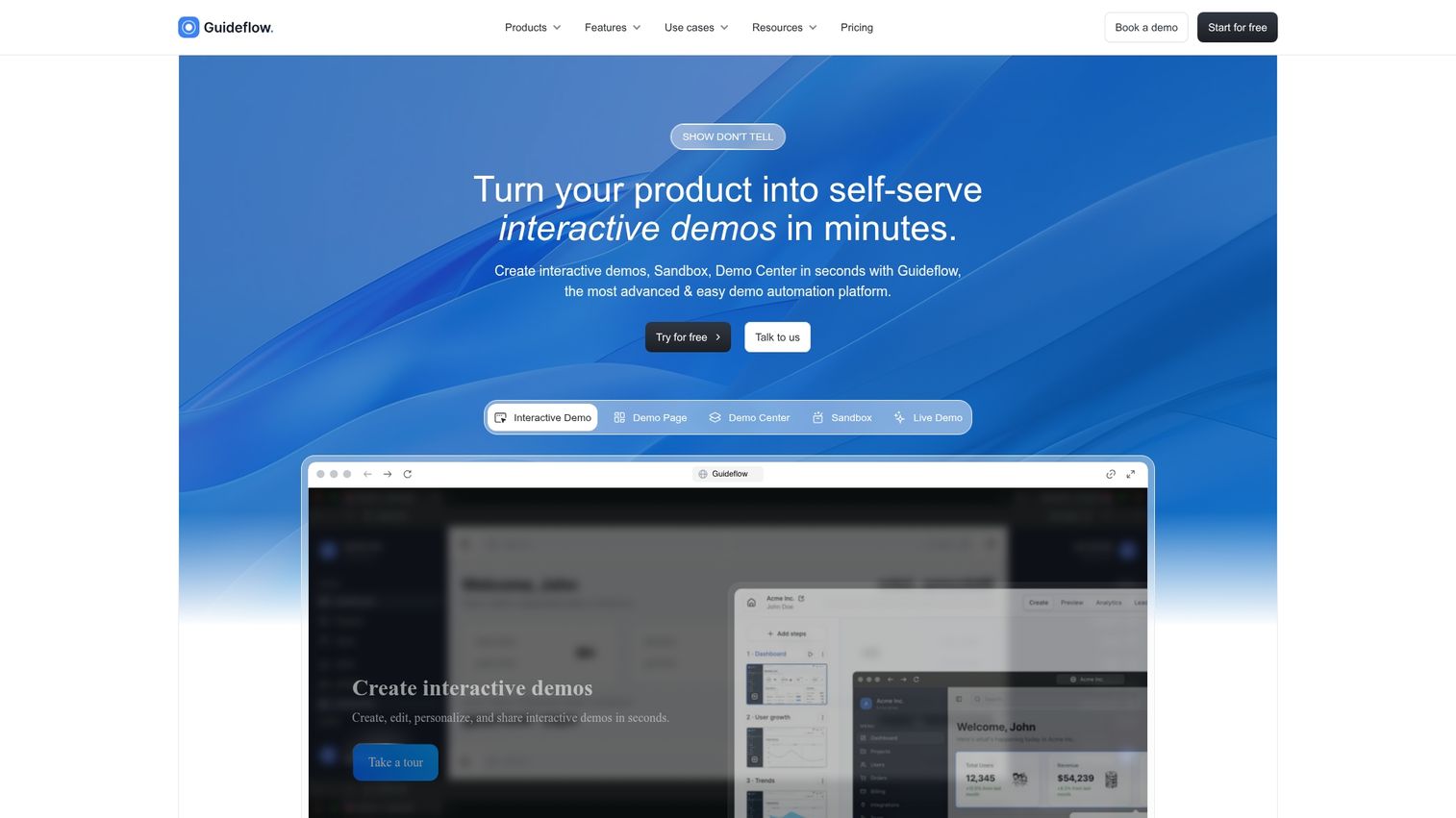
Guideflow is the best tool for engaging prospects before the first call through interactive demos. Sales teams use Guideflow to create and share clickable product experiences that let prospects explore on their own terms, which reduces no-shows and accelerates qualification.
The platform's no-code capture allows you to build demos in minutes, personalize them at scale using CRM data, and track prospect engagement with detailed analytics. When a prospect spends time exploring specific features, your team knows exactly what matters to them before the call even starts.
Key strengths
- No-code demo creation: Build clickable product walkthroughs in minutes without engineering help
- CRM-driven personalization: Tailor each demo to the prospect's company, role, and use case
- Engagement analytics: See which features prospects explore and how long they spend on each step
- Multi-channel distribution: Embed demos in emails, landing pages, and outreach sequences
Pricing: Free tier available, paid plans from $40/month
Start your journey with Guideflow today!
2. ZoomInfo
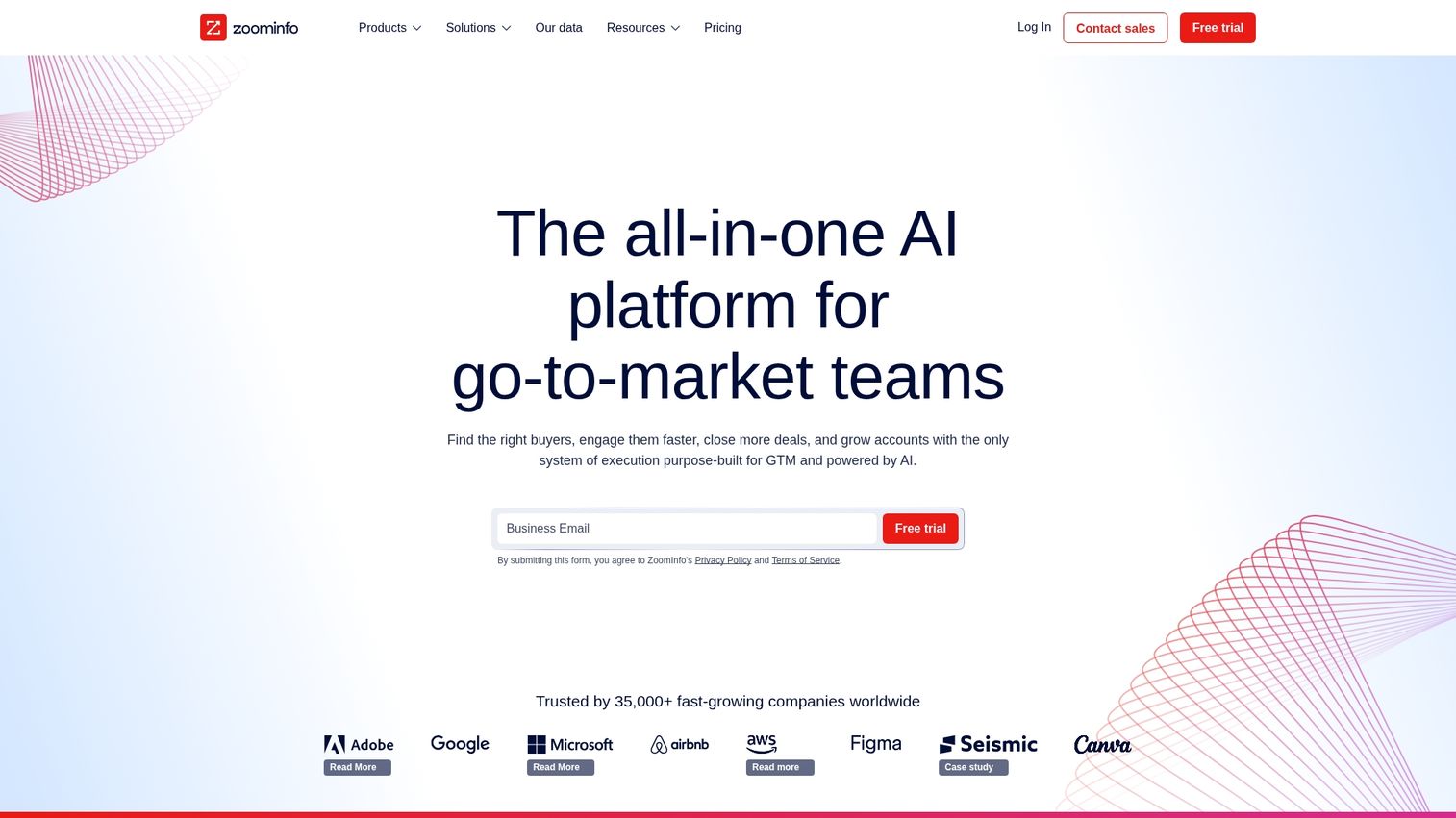
ZoomInfo is best for large-scale B2B contact data and company intelligence. The platform provides verified emails, direct dials, organizational charts, and intent data to help teams find and connect with decision-makers across enterprise accounts.
ZoomInfo's comprehensive data makes it a top choice for teams running high-volume outbound, though its pricing reflects an enterprise focus. Org chart mapping is particularly useful when selling into complex buying committees.
Key strengths
- Massive B2B contact database: Access to millions of verified business contacts
- Intent data and buying signals: Identify accounts actively researching your category
- Org chart mapping: Understand reporting structures for account planning
- Direct dial phone numbers: Reach decision-makers without going through gatekeepers
Pricing: Custom pricing, typically enterprise-focused
3. LinkedIn Sales Navigator
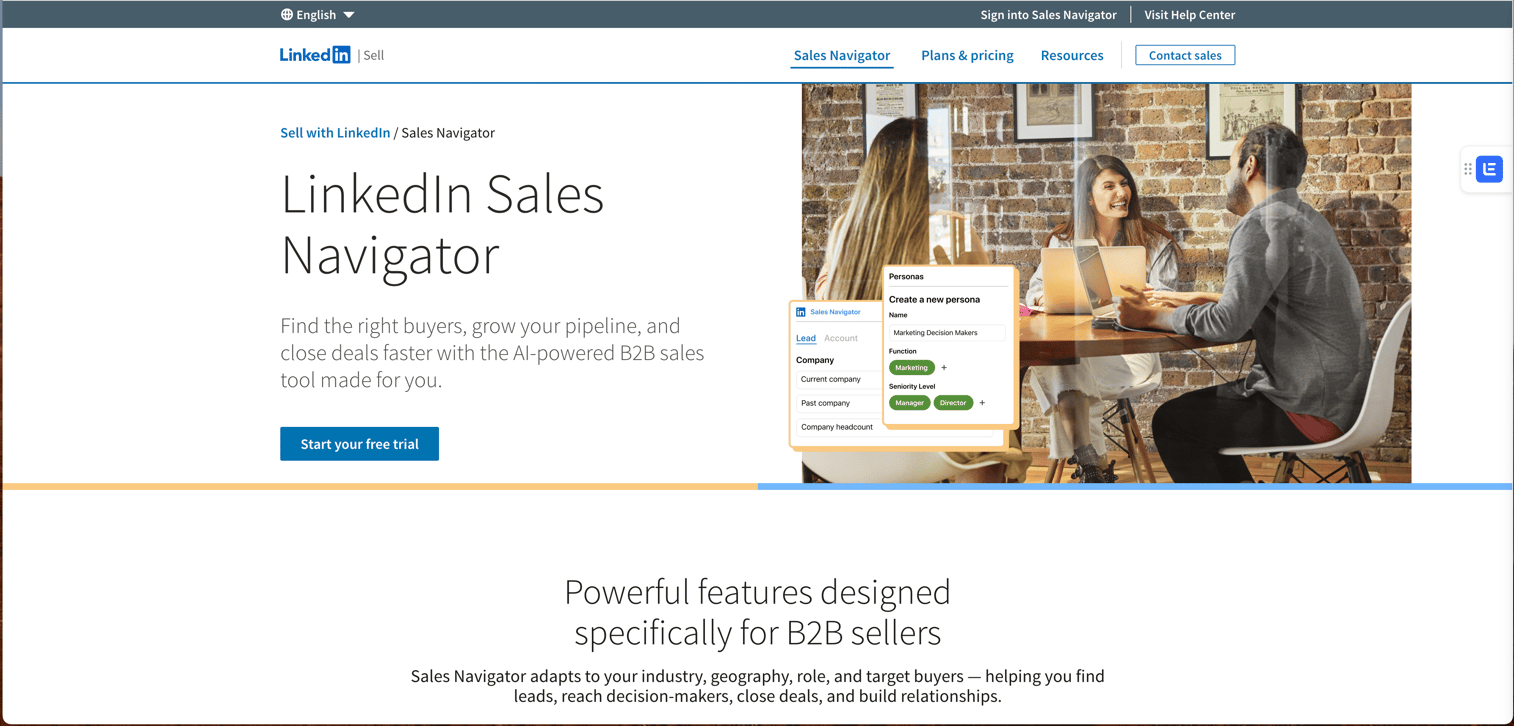
LinkedIn Sales Navigator is the best tool for social prospecting and leveraging your professional network. The platform offers advanced search filters, lead recommendations, InMail credits for direct outreach, and CRM sync capabilities.
While powerful for finding and researching prospects on the world's largest professional network, Sales Navigator works best when combined with other prospecting tools for contact enrichment and outreach automation. Real-time updates on job changes and company news help you time your outreach effectively.
Key strengths
- Advanced lead and account search: Filter by company size, industry, seniority, and more
- Real-time updates: Get notified when prospects change jobs or post content
- InMail for direct outreach: Message prospects outside your network
- CRM integration: Sync leads and activities with Salesforce, HubSpot, and others
Pricing: From $99/month for Core plan
4. Apollo.io
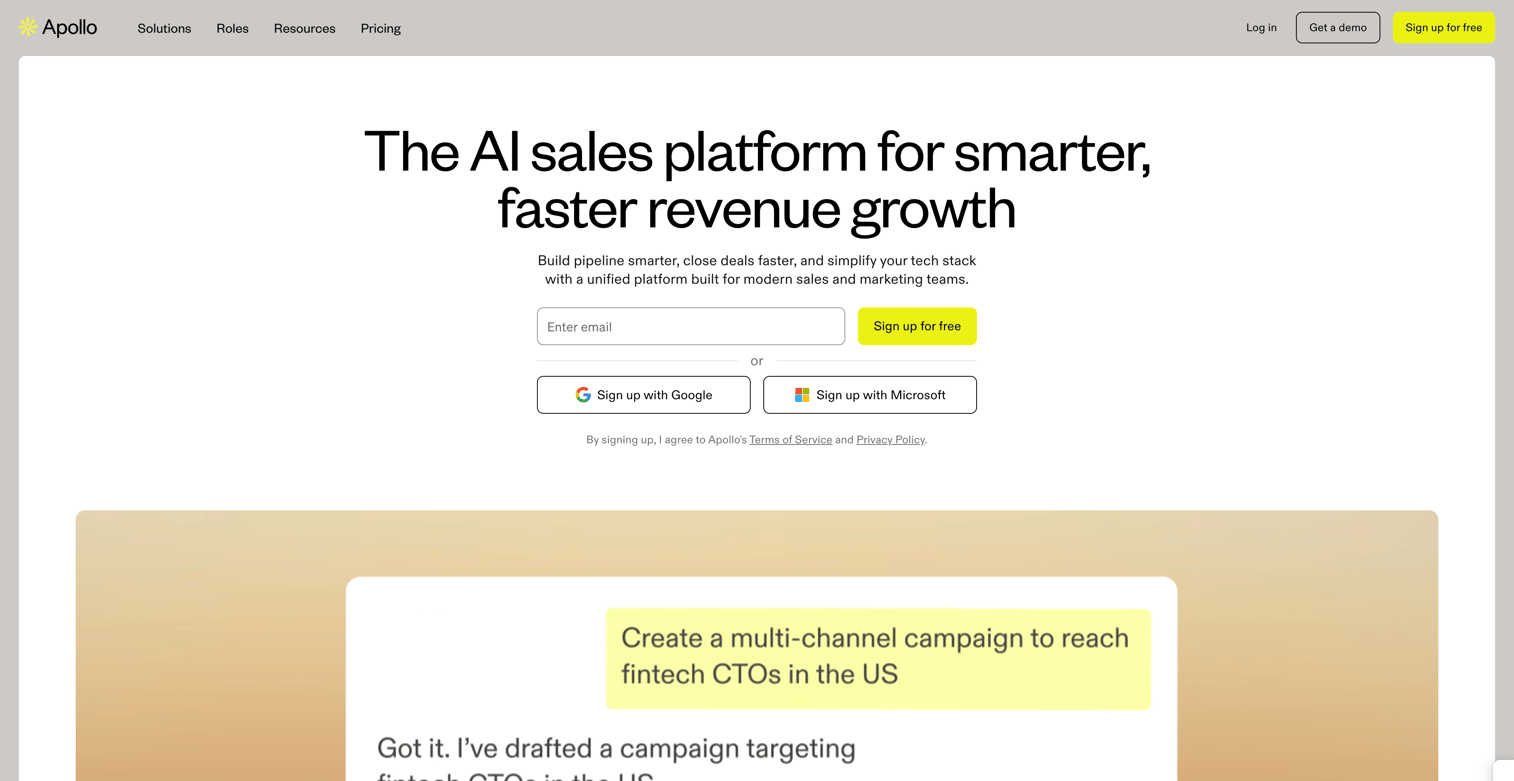
Apollo.io is the best all-in-one platform that combines a large contact database with outreach and engagement features. Teams can find prospects, run email sequences, and track engagement all within one tool.
Apollo is an excellent option for high-volume outbound teams on tighter budgets who want a comprehensive solution without the enterprise price tag. The Chrome extension makes it easy to capture prospects while browsing LinkedIn.
Check how to create a stage on Apollo:
Key strengths
- Combined prospecting database and sequencing: Find contacts and reach out from one platform
- Email and call automation: Build multi-step outreach sequences
- Chrome extension: Capture prospect data while browsing LinkedIn
- Accessible pricing: More affordable than enterprise alternatives
Pricing: From $49/month, free tier available
5. Cognism
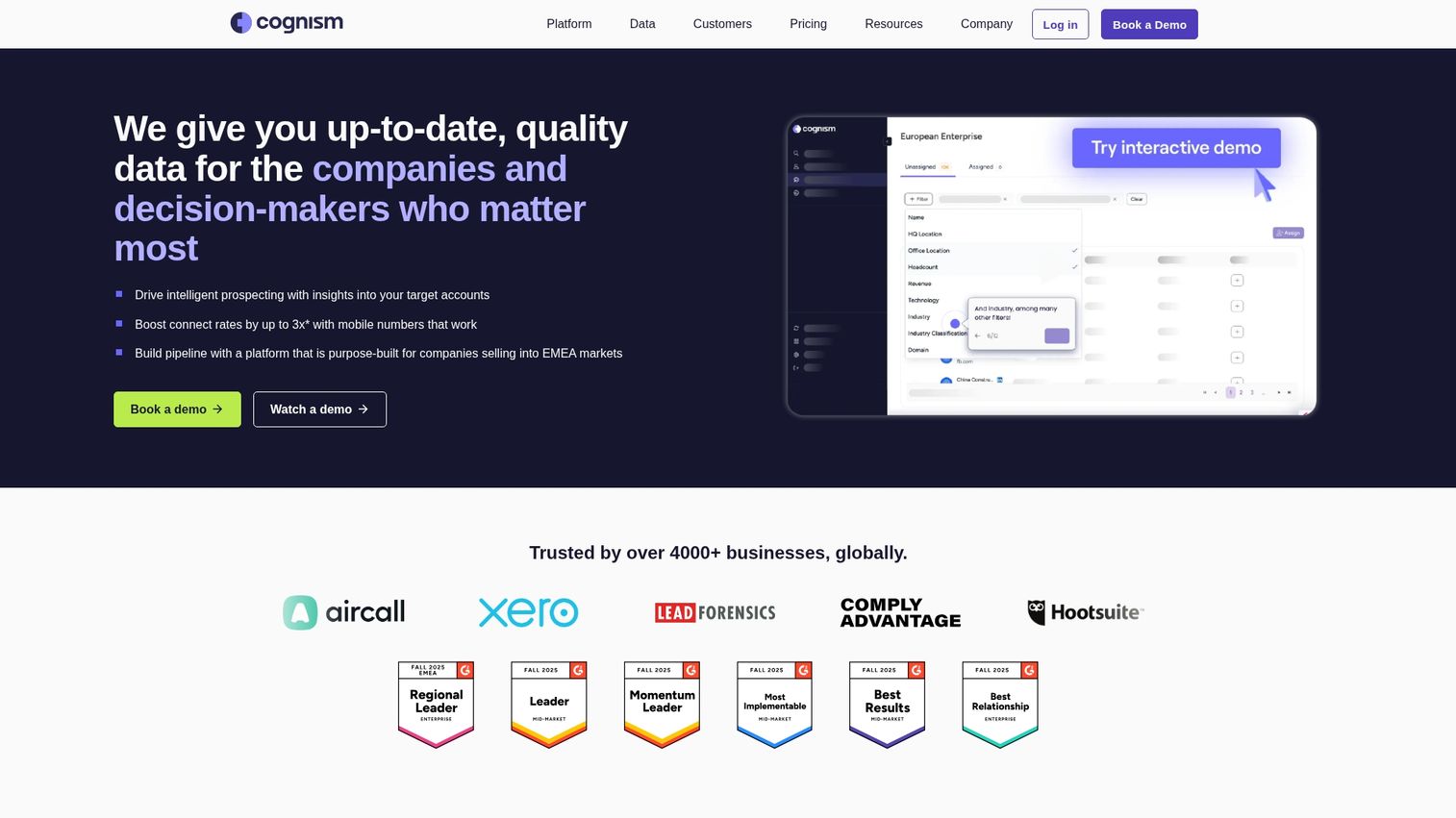
Cognism is best for GDPR-compliant, phone-verified B2B data, especially for teams selling into European markets. The platform emphasizes data compliance and accuracy with a unique process for verifying mobile numbers.
The Diamond Data verification process and Bombora intent data integration make Cognism a strong choice for teams in regulated industries or those who prioritize phone outreach. If your reps rely heavily on cold calling, verified mobile numbers can significantly improve connect rates.
Key strengths
- Phone-verified mobile numbers: Higher connect rates for cold calling
- GDPR and CCPA compliant data: Safe for teams selling into regulated markets
- Diamond Data verification: Human-verified contact information
- Bombora intent data integration: Identify accounts showing buying signals
Pricing: Custom pricing
6. Lusha
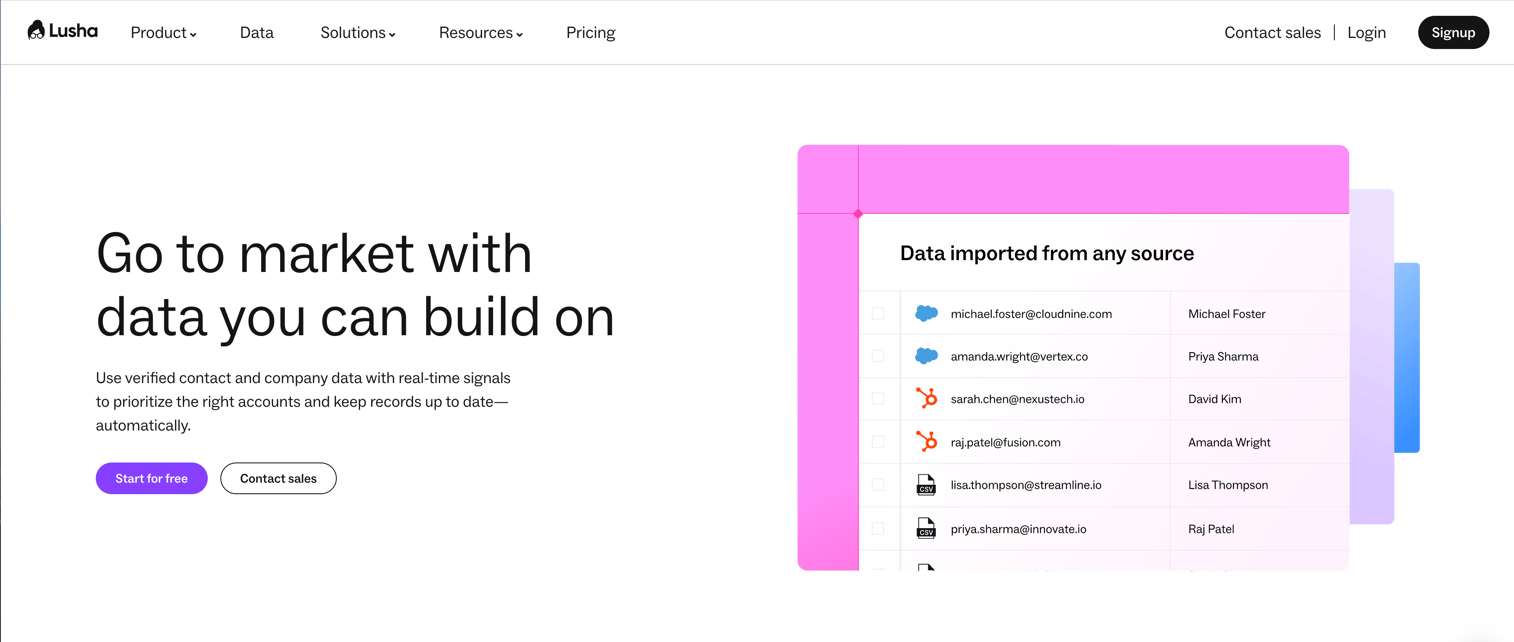
Lusha is best for quick contact enrichment during prospecting. The browser extension reveals contact data with a single click while you browse LinkedIn or company websites.
Lusha is simple, fast, and a great tool for individual reps who want to quickly find emails and phone numbers on the fly. The credit-based pricing model works well for teams with variable prospecting volumes.
Key strengths
- Browser extension: Get contact data instantly while browsing
- Direct dial and email finder: Access verified phone numbers and emails
- CRM integration: Push contacts directly to Salesforce and HubSpot
- Credit-based pricing: Pay for what you use
Pricing: From $29/month
7. 6sense
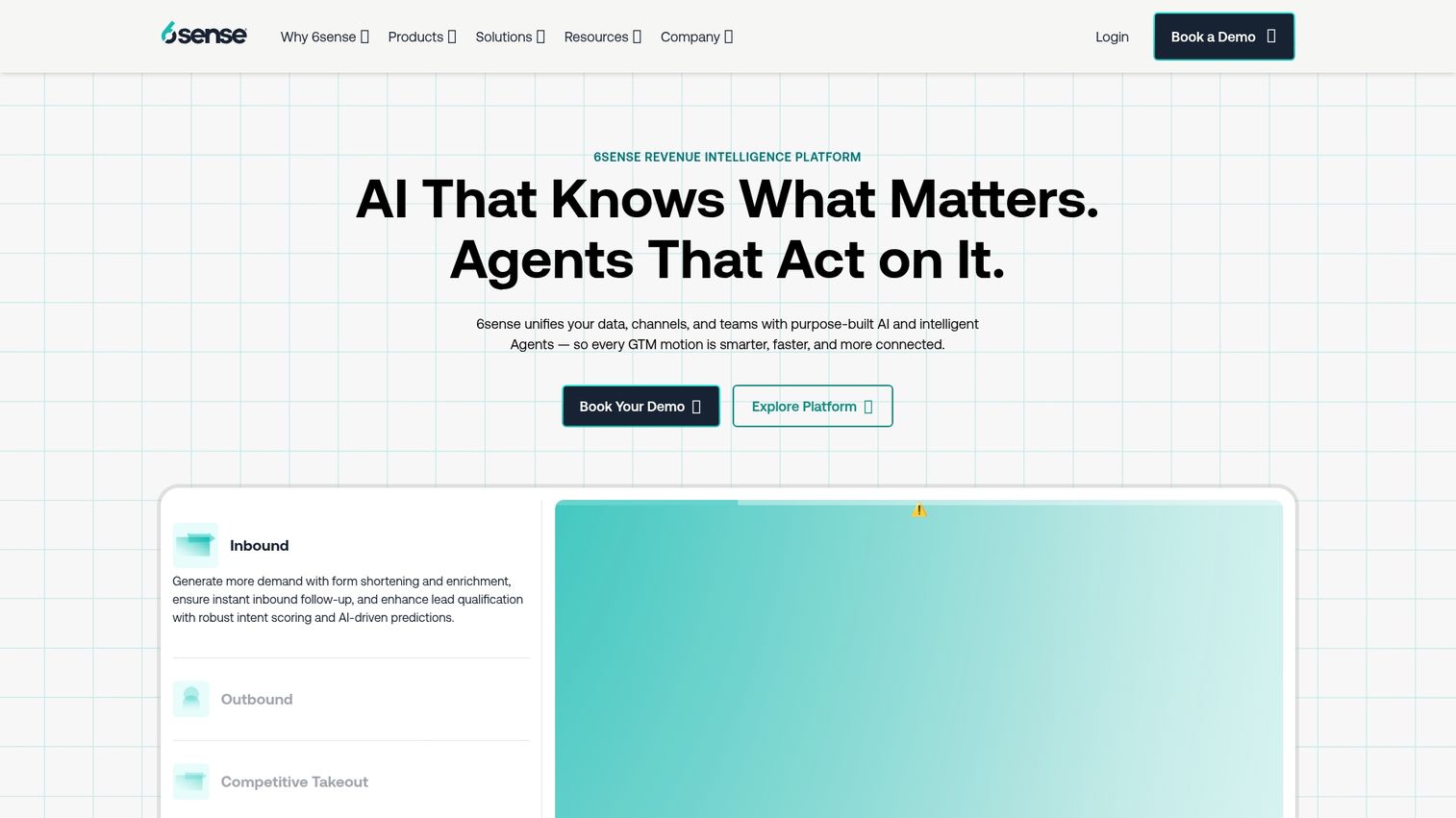
6sense is best for account-based prospecting powered by intent data. The platform excels at identifying anonymous website visitors, scoring accounts based on their buying stage, and helping teams orchestrate outreach based on intent signals.
6sense is an enterprise-focused account-based marketing platform designed to align sales and marketing efforts on high-value accounts. AI-powered buying stage predictions help you prioritize accounts that are actually in-market.
Key strengths
- Anonymous visitor identification: See which companies visit your website
- AI-powered account scoring: Prioritize accounts by buying readiness
- Buying stage predictions: Know where accounts are in their journey
- Multi-channel orchestration: Coordinate outreach across sales and marketing
Pricing: Custom pricing
8. Seamless.AI
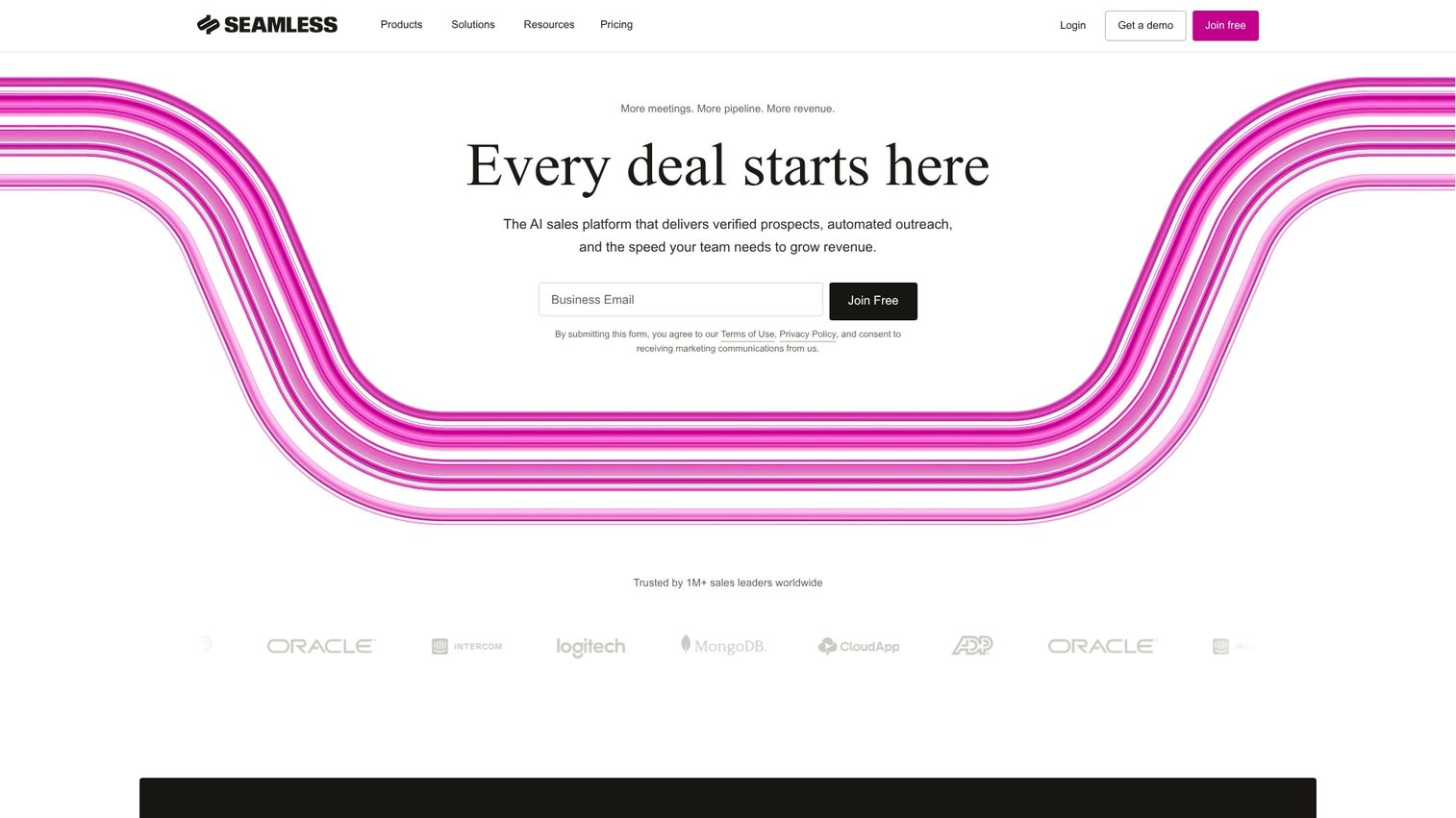
Seamless.AI is best for real-time contact search and list building. The platform positions itself as an AI-powered search engine that finds verified emails and phone numbers on demand, ensuring data is fresh.
Seamless.AI is a good fit for teams that prefer building lists with real-time data rather than relying on a static database. The Autopilot feature can build lists automatically based on your criteria.
Key strengths
- Real-time contact verification: Data is verified at the moment of search
- AI-powered search engine: Find contacts matching specific criteria
- Autopilot list building: Automatically build lists based on your ICP
- Chrome extension: Capture data while browsing LinkedIn
Pricing: From $147/month
9. LeadIQ
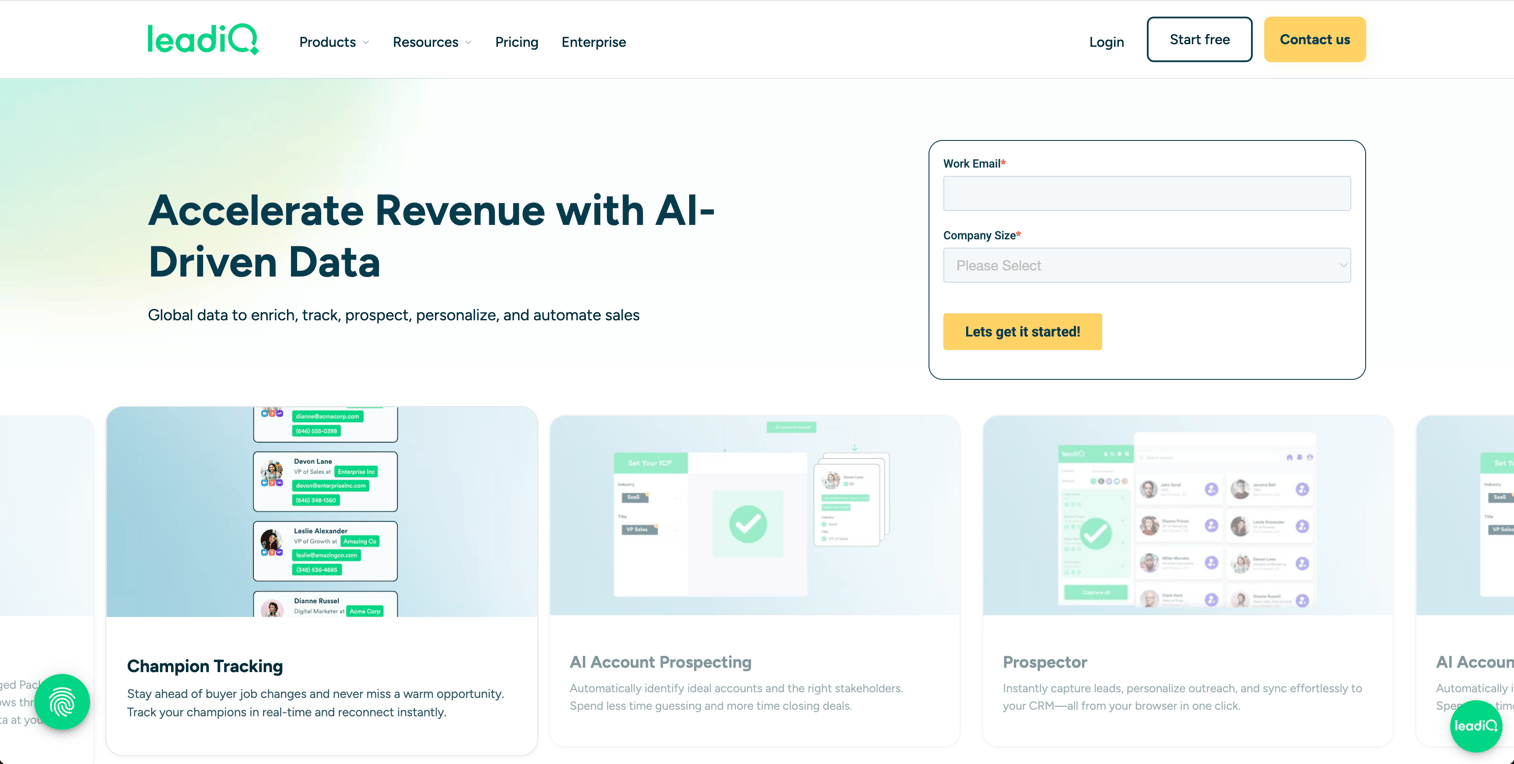
LeadIQ is best for capturing prospect data while browsing. The platform allows for one-click capture of contacts from LinkedIn directly into your CRM, automatically enriches the data, and provides AI-powered assistance for generating personalized messages.
LeadIQ is a strong tool for SDR teams focused on high-volume, efficient prospecting. The Scribe feature uses AI to help write personalized outreach based on the prospect's profile.
Key strengths
- One-click capture to CRM: Send contacts directly to Salesforce or HubSpot
- Automatic data enrichment: Fill in missing contact details automatically
- AI message writing: Generate personalized outreach with Scribe
- LinkedIn integration: Capture data without leaving the platform
Pricing: From $75/month
10. HubSpot Sales Hub
HubSpot Sales Hub is the best choice for teams already using the HubSpot CRM. The platform offers a suite of built-in prospecting features including email sequences, meeting scheduling, and deal tracking.
While HubSpot may not have the database depth of a specialized tool like ZoomInfo, its seamless integration within the HubSpot ecosystem makes it a powerful and convenient option for existing users. The free CRM tier makes it accessible for teams just getting started.
Prospecting starts with segmentation - this tutorial shows how to build targeted prospect lists in HubSpot using filters and criteria
Key strengths
- Native CRM integration: Everything lives in one system
- Email templates and sequences: Automate follow-up without leaving HubSpot
- Meeting scheduling: Let prospects book time directly
- Pipeline management: Track deals from first touch to close
Pricing: From $45/month, free tier available
11. Clearbit
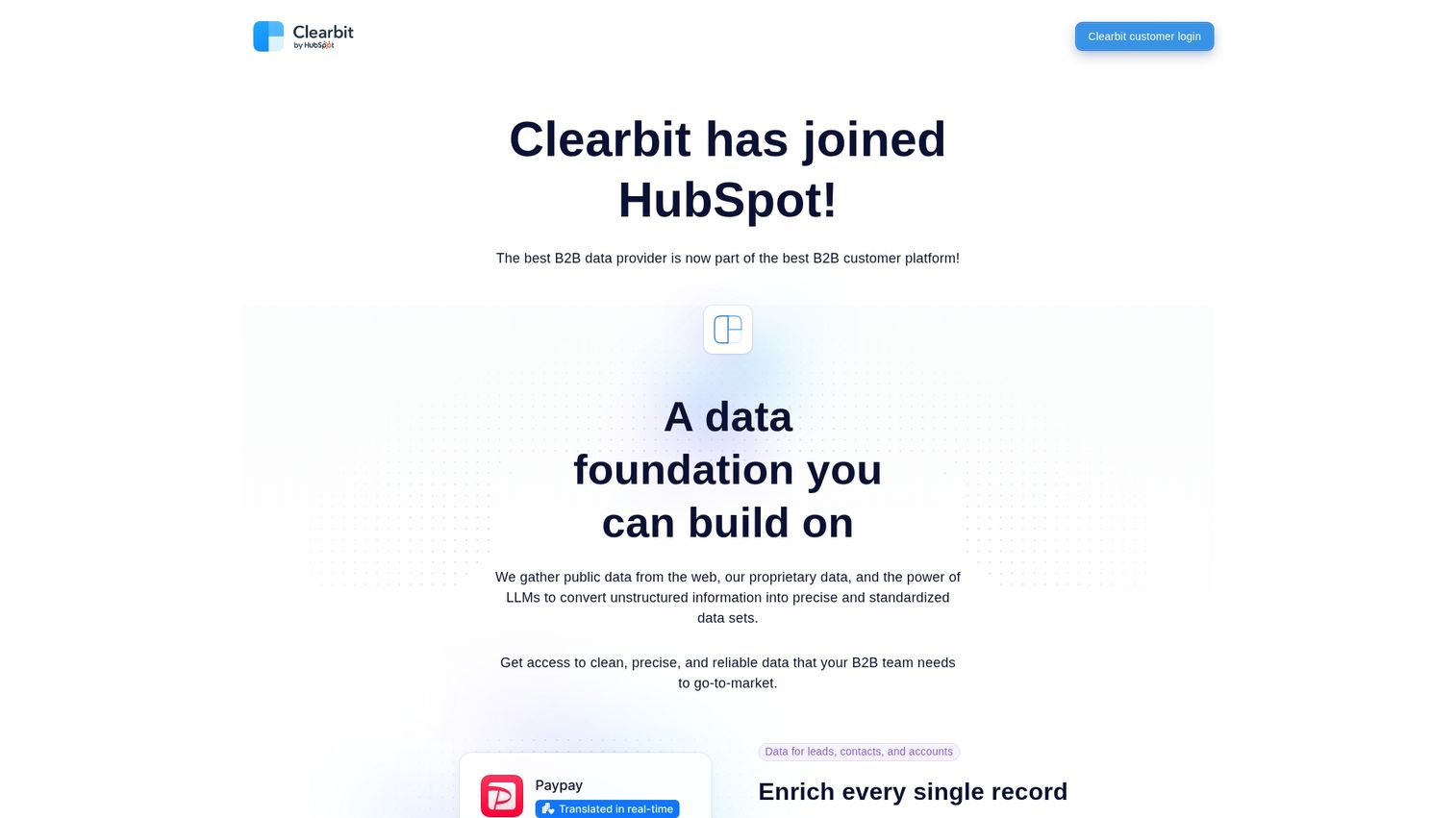
Clearbit is best for data enrichment and lead scoring. The platform works in real-time to enrich lead records with firmographic and technographic data points as they enter your system.
Clearbit is a powerful tool for aligning marketing teams and sales on lead qualification and for personalizing outreach automatically. The form shortening feature can improve conversion rates on your website by reducing the number of fields prospects fill out.
Key strengths
- Real-time data enrichment: Enrich records as they enter your system
- Form shortening: Reduce form fields while capturing complete data
- Lead scoring data: Score leads based on firmographic fit
- API for custom integrations: Build enrichment into your own workflows
Pricing: Custom pricing
12. Clay
Clay is best for creating automated prospecting workflows with AI-powered enrichment. The platform is a no-code workflow builder that can pull data from multiple sources and enrich it automatically.
Clay is ideal for tech-savvy teams that want to build highly customized and automated prospecting processes. The waterfall enrichment feature checks multiple data providers to maximize coverage.
Key strengths
- No-code workflow automation: Build complex prospecting flows without engineering
- Multi-source data enrichment: Pull data from dozens of providers
- AI research capabilities: Automate prospect research with AI
- Waterfall enrichment: Check multiple sources to maximize data coverage
Pricing: From $149/month
13. Gong
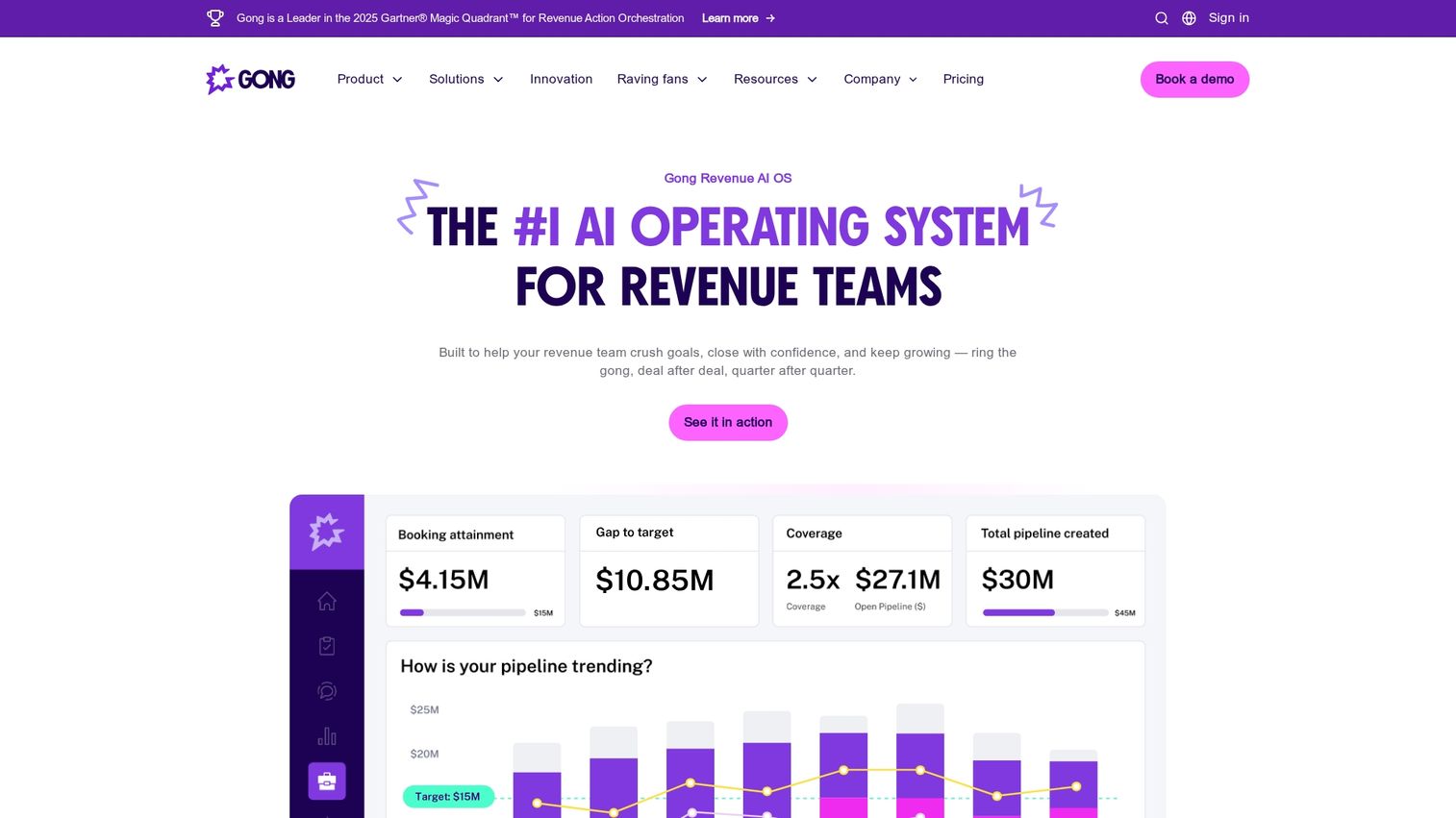
Gong is best for conversation intelligence and surfacing deal insights. The platform records and analyzes sales calls, emails, and meetings to identify buying signals, highlight deal risks, and provide coaching opportunities.
While not a traditional prospecting tool, Gong helps identify which prospects are most engaged and what messaging resonates. Insights from won deals can inform your prospecting approach for similar accounts.
Key strengths
- Call recording and analysis: Understand what happens in sales conversations
- Deal risk identification: Spot deals that are stalling or at risk
- Coaching recommendations: Help reps improve based on data
- Buyer sentiment tracking: Know how prospects feel about your solution
Pricing: Custom pricing
14. Salesloft
Salesloft is best for revenue orchestration and managing sales cadences. The platform provides a robust system for creating multi-channel sequences, a built-in call dialer, and deep analytics on what's working.
Salesloft is a strong choice for structured outbound teams running sophisticated sales playbooks. Cadence analytics help you understand which sequences drive the best results.
Key strengths
- Multi-channel cadences: Combine email, phone, and social in one sequence
- Built-in dialer: Make calls without leaving the platform
- Email tracking and analytics: See opens, clicks, and replies
- Salesforce integration: Sync activities and data automatically
Pricing: Custom pricing
15. Hunter.io
Hunter.io is best for email finding on a budget. The platform offers a simple domain search to find email addresses associated with any company, an email verifier to check deliverability, and basic outreach campaign features.
Hunter.io is a great entry point for small teams or individuals just starting to use prospecting tools. The free tier provides enough credits to test the tool before committing.
Key strengths
- Domain email search: Find all emails associated with a company
- Email verification: Check if addresses are deliverable before sending
- Simple cold email campaigns: Basic outreach features included
- Affordable pricing: Free tier and low-cost paid plans
Pricing: Free tier available, paid plans from $49/month
Types of sales prospecting tools
Understanding the different categories helps you build a tech stack that covers all your needs without overlap.
Lead generation and prospecting database tools
Database tools provide the raw material for prospecting: contact data, company information, and pre-built prospect lists. You use them when you want to build or enrich target account lists with accurate contact details. Examples include ZoomInfo, Apollo.io, Cognism, and Lusha.
CRM and sales engagement platforms
Engagement platforms manage prospect relationships and sequence outreach. They help you track all interactions, automate follow-up, and manage your sales pipeline from first touch to close. Examples include HubSpot Sales Hub, Salesloft, and Pipedrive.
This guide breaks down what CRM actually does, compares the top 10 platforms for 2026, and walks you through how to choose the right one for your team.
Social selling and networking tools
Social selling tools leverage professional networks to find and connect with prospects. They work best when your target buyers are active on platforms like LinkedIn and are receptive to social outreach. The primary example is LinkedIn Sales Navigator.
Intent data and buyer signal tools
Intent tools identify prospects who are showing active buying behavior, such as researching your product category or visiting competitor websites. You use them to prioritize outreach to prospects who are most likely ready to engage. Examples include 6sense, Gong, and Bombora.
Demo automation and prospect engagement tools
Demo automation tools allow prospects to experience your product before committing to a sales call. Interactive demos reduce friction in the prospecting process by letting buyers self-qualify and understand your value proposition on their own time. The primary example is Guideflow.
How prospecting tools fit the sales workflow
Different tools serve different stages of the prospecting process. Here's how to map them to your workflow.
Stage 1: Finding and identifying target prospects. Build your target list by matching your Ideal Customer Profile. Tools like ZoomInfo, Apollo.io, and LinkedIn Sales Navigator help you identify accounts and contacts worth pursuing.
Stage 2: Researching and qualifying leads. Enrich your data and score leads based on their fit. Tools like Clearbit, Clay, and 6sense add context and verify information before you begin outreach.
Stage 3: Personalizing outreach at scale. Craft relevant messages using the data you've gathered. Tools like LeadIQ and Salesloft help you personalize without spending hours on manual research.
Stage 4: Engaging prospects before the first call. Let prospects experience your product's value before they commit to a meeting. By providing interactive demos or sandbox environments, you allow buyers to self-educate and qualify themselves.
Stage 5: Following up and measuring results. Track engagement and iterate on your approach. Tools like Gong, HubSpot, and the analytics features within most engagement platforms help you prioritize follow-up.
Key features to look for in B2B prospecting tools
Use this framework to evaluate which tool is right for your team.
- Data accuracy and database coverage: The value of a prospecting tool is directly tied to the quality of its data. Ask vendors about refresh frequency, verification methods, and bounce rate guarantees.
- CRM and tech stack integration: A tool is only useful if it fits into your team's existing workflow. Look for native, bi-directional sync with your CRM and connections to your marketing automation tools.
- Automated prospecting and AI capabilities: Automation saves your reps valuable time. Look for automated list building, AI-powered personalization, and workflow automation features.
- Team collaboration and sharing: For team-based prospecting, look for shared lists and credits, territory management, and the ability to share templates and sequences.
- Compliance and data security: Critical for teams selling into regulated industries or the EU. Ask about GDPR and CCPA compliance, security certifications, and data storage practices.
How to choose the best prospecting tool for your team
| Your situation | Recommended approach | Best tools to consider |
|---|---|---|
| Small team, limited budget | Start with one all-in-one tool that combines data and outreach | Apollo.io, Hunter.io |
| High-volume outbound | Prioritize data scale and robust sequencing capabilities | ZoomInfo, Salesloft |
| Account-based selling | Focus on intent data, account scoring, and targeted orchestration | 6sense, Cognism |
| Complex product, long sales cycle | Add demo automation to reduce friction and educate buyers early | Guideflow, plus a data tool |
| EU/regulated markets | Prioritize compliance and data verification methods | Cognism |
Build a stronger pipeline with the right prospecting stack
The best approach to modern prospecting combines high-quality data tools with powerful engagement tools. While data is the foundation, modern buyers expect more than a generic email. The key is to let them experience your product's value before they ever commit to a call. By incorporating interactive demos into your outreach, you can stand out from competitors, reduce friction, and build a more qualified pipeline. When prospects can explore your product on their own terms, they show up to calls more informed and more ready to buy.
Start your journey with Guideflow today!
FAQs about sales prospecting tools
Prospecting tools help you find and enrich new leads, while CRM software manages existing relationships and tracks deals through your pipeline. Many teams use both together, with prospecting tools feeding qualified contacts into the CRM.
Most tools use a combination of public web scraping, private data partnerships, user contributions, and AI algorithms to compile and verify business contact details. The best tools verify data regularly to reduce bounce rates.
Yes, most modern prospecting tools offer native integrations with popular CRMs like Salesforce and HubSpot, plus APIs for custom connections to marketing automation and other sales tools.
Intent data reveals when prospects are actively researching solutions like yours based on their online behavior. Intent data helps you prioritize outreach to buyers who are ready to engage rather than cold prospects.
Pricing ranges from free tiers for basic tools to enterprise contracts costing thousands per month for comprehensive platforms like ZoomInfo. Most tools charge based on contact volume, user seats, or credits.
The 5 P's are Purpose, Preparation, Personalization, Perseverance, and Practice. The 5 P's represent the core disciplines that make prospecting efforts effective regardless of which tools you use.
Track metrics like meetings booked, response rates, time saved on manual research, and total pipeline generated compared to your investment in the tool. Most platforms provide dashboards to help with ROI analysis.
Yes, many enterprise tools offer scaled-down plans for smaller teams. However, all-in-one platforms like Apollo.io or focused tools like Hunter.io often provide better value for teams with limited budgets.
Interactive demos let prospects experience your product on their own terms before committing to a call. Interactive demos reduce the friction that causes ghosting and no-shows while helping buyers self-qualify based on actual product experience.
Combine enrichment data from prospecting tools with dynamic content like personalized emails, custom landing pages, and tailored interactive demos that adapt to each prospect's company, role, and use case.