An employee files a harassment complaint on Monday. By Thursday, the details live in three places: a manager's inbox, a half-finished spreadsheet, and a Slack thread someone forgot to screenshot. Two weeks later, legal asks for the timeline. Nobody can reconstruct it cleanly.
That is the real cost of running employee relations on tools never built for it. Not just lost hours. Lost defensibility. When a case escalates, the question is never "did you care?" It is "can you show your process held up?"
The market has noticed. The global HR case management software market was valued at USD 472.7 million in 2026 and is forecast to reach USD 1.05 billion by 2035, a 9.2% CAGR, according to Market Growth Reports (2024). The same research found over 79% of U.S. enterprises with more than 500 employees now deploy HR case management software for regulatory and compliance-driven cases. The pull is no longer "nice to have." It is risk infrastructure.
For a founder watching operational drag pile up, this matters beyond HR. Manual case handling is one of those hidden taxes that scales badly, the kind of work that routes through too few people and leaves no audit trail when it counts. The same instinct that drives teams toward audit management software and contract lifecycle management applies here: replace fragile manual process with a system that holds up under scrutiny. If you are also evaluating adjacent governance stacks like contract management, the evaluation logic is similar.
This guide compares seven HR case management tools built to make employee relations defensible, consistent, and visible.
What's inside
This guide covers seven HR case management systems chosen for employee relations workflow depth, investigation support, reporting and analytics, HRIS integration, and security controls. We weighed each tool on how well it handles intake, assignment, documentation, and case tracking, plus how cleanly it produces an audit trail when a case escalates.
It is built for teams replacing spreadsheets, generic help desks, or fragmented HR processes with a defensible system of record. Whether you run a 40-person company or a 4,000-person one, the picks below map to different needs: enterprise investigations, broader HR service delivery, workflow-first operations, and structured casework.
TL;DR
- Best overall for enterprise employee relations: HR Acuity, built for defensible investigations and risk analytics.
- Best for HR service delivery plus case handling: Dovetail, for teams wanting a broader operations layer.
- Best for operational workflow and HRIS compatibility: LaborSoft, for single-login employee and labor relations.
- Best for cloud-based casework and support: Workpro Casework, for configurable workflow and reporting.
- Best for broad HR suites with case capabilities: UKG, for teams already in a wider HCM stack.
- Best for integrity and employee relations workflows: Rely Platform, for sensitive workplace issues.
- Best for structured HR casework in UK and enterprise environments: Civica HRCasework, for public sector and regulated teams.
What HR case management software is
HR case management software is a system that captures, tracks, investigates, documents, and reports on employee relations cases from intake through resolution, with a built-in audit trail. It replaces ad hoc email and spreadsheet handling with a structured, consistent, defensible process.
Unlike a generic ticketing tool, employee case management software understands the difference between a password reset and a harassment allegation. It enforces consistency, protects sensitive records, and produces the documentation that compliance, legal, and leadership rely on.
The core jobs it handles:
- Intake: capture issues from employees, managers, hotlines, or portals, anonymously or named.
- Assignment and triage: route cases to the right investigator and prioritize by risk.
- Case tracking: maintain a single timeline of every action, note, and status change.
- Investigations: run consistent, repeatable workflows with templates and structured documentation.
- Documentation: store interviews, evidence, and decisions in one secure record.
- HR reporting and analytics: surface trends, recurring issues, and risk patterns across the organization.
- HRIS integration: sync employee, org, and role data so cases stay accurate.
- Security and permissions: control who sees what, with a compliance-grade audit trail.
A capable HR case management system turns reactive firefighting into a documented, measurable process. That shift is what makes it infrastructure, not admin.
When to use HR case management software
Not every team needs a dedicated platform on day one. These are the moments the case for one gets hard to argue against.
Replace spreadsheets and inbox triage
Manual tracking works until it does not. Once you are running more than a handful of concurrent cases, spreadsheets fragment, versions conflict, and the timeline of who-knew-what-when gets murky. That murkiness is the risk. When a case becomes a legal matter, an incomplete or editable record is a liability. Employee relations case management software gives you one source of truth that nobody can quietly overwrite.
Standardize investigations and documentation
Two investigators handling similar complaints two different ways is a defensibility problem. Workplace investigations software enforces the same structured workflow every time: the same intake fields, the same interview templates, the same evidence handling, the same documentation standard. Consistency is not bureaucracy here. It is what holds up when a decision is challenged, and it protects both the employee and the organization.
Gain reporting and trend visibility
A single case tells you about one incident. Fifty cases tell you about your culture. HR reporting and analytics dashboards surface recurring issues, hotspot teams, and patterns you would never catch case by case. That visibility lets HR move from reactive to proactive, flagging risk before it becomes a headline. For founders, it is the difference between "we handle complaints" and "we can show the board our risk profile."
Comparison table
Here are the seven tools ranked by relevance to employee relations and investigations use cases. Pricing for most vendors in this category is quote-based, which is common for compliance-sensitive software sold to enterprise HR teams.
| # | Product | Intent | Key use case | Pricing | G2 rating |
|---|---|---|---|---|---|
| 1 | HR Acuity | Enterprise employee relations | Defensible investigations and risk analytics | Quote-based | 4.6/5 |
| 2 | Dovetail | HR service delivery plus cases | Centralizing feedback and case workflows | Free plan; Enterprise custom | 4.5/5 |
| 3 | LaborSoft | Operational ER and labor relations | HRIS-compatible case workflows | Quote-based | 4.6/5 |
| 4 | Workpro Casework | Configurable casework | Workflow, reporting, and compliance | Quote-based | 4.3/5 |
| 5 | UKG | Broad HCM suite | HR, payroll, and case capabilities | Quote-based | 4.4/5 |
| 6 | Rely Platform | Integrity and ER cases | Sensitive workplace investigations | Not publicly listed | Not available |
| 7 | Civica HRCasework | Structured HR casework | Employee relations in regulated environments | Quote-based | 4.1/5 |
The pattern is clear: HR Acuity, LaborSoft, and Rely Platform lead on investigation rigor, while Dovetail and UKG pull toward broader HR operations. Your ranking should follow your primary job to be done. Below, each tool gets a closer look.
1. HR Acuity
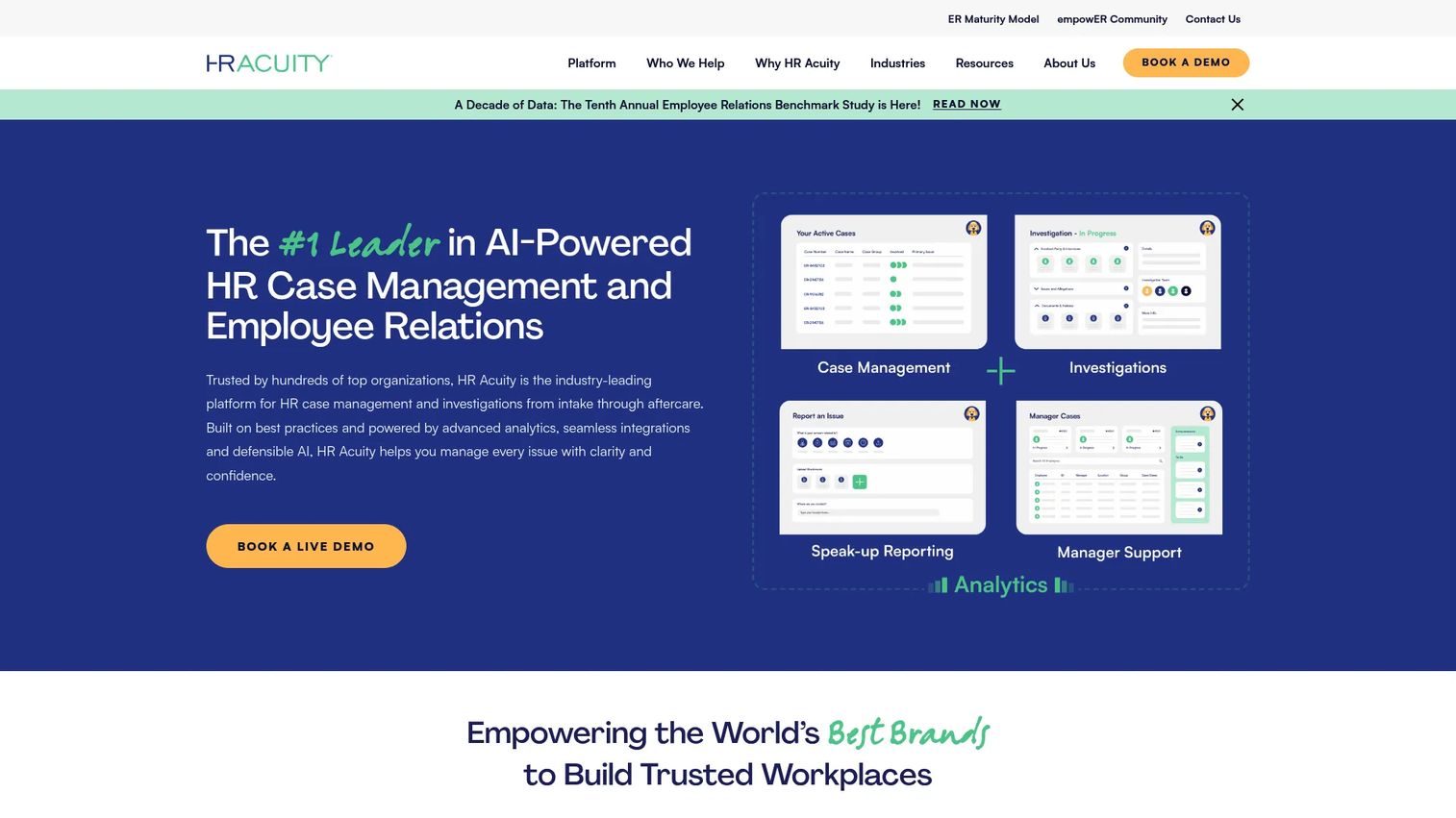
HR Acuity is purpose-built for enterprise employee relations and workplace investigations, not retrofitted from a generic ticketing system. It centralizes case management, investigations, speak-up reporting, and analytics in one platform designed around the documentation standards that legal and compliance teams expect. For organizations where a mishandled case carries real regulatory and reputational risk, this is the category leader.
Best for: Large organizations that need defensible, consistent employee relations case management and workplace investigations at scale.
Key strengths
- All-in-one case management: Intake, assignment, investigation, and resolution live in one consistent system of record.
- Consistent, compliant investigations: Standardized workflows enforce the same rigor on every case, which is what defensibility actually requires.
- Analytics and dashboards: Trend and risk reporting turn individual cases into organization-wide visibility for HR and leadership.
Why choose HR Acuity: If your primary concern is investigation rigor and the ability to prove your process held up, HR Acuity is the strongest fit on this list. It adds speak-up reporting and AI-assisted workflows on top of a foundation built specifically for employee relations, making it the natural choice for enterprise HR teams that treat case handling as risk management.
HR Acuity pricing: HR Acuity does not publish public pricing. Plans are quote-based and sold through its team, which is standard for enterprise employee relations software with compliance and security requirements. Expect a sales conversation scoped to your headcount and module needs. The platform holds a 4.6/5 rating on G2.
2. Dovetail
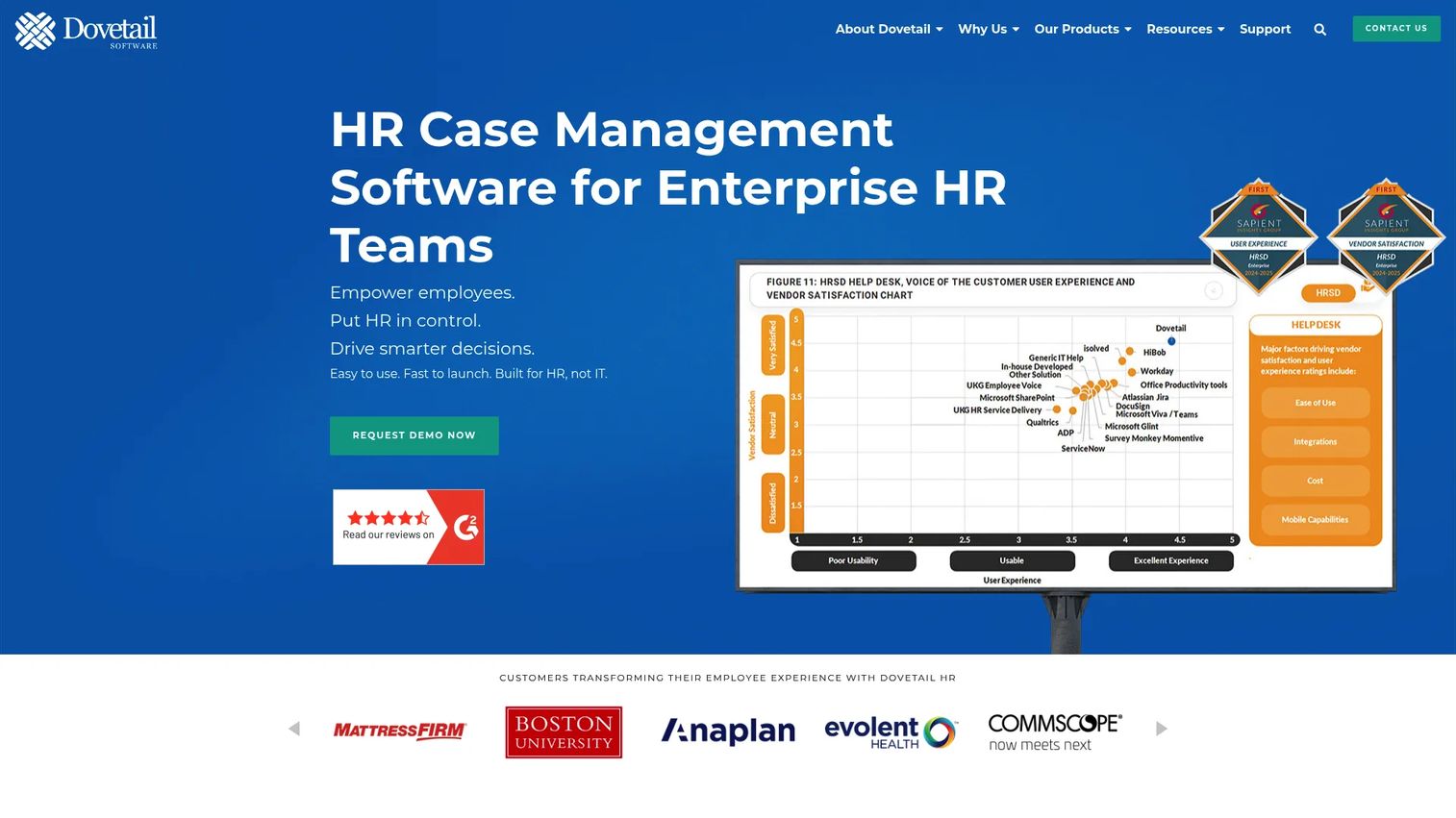
Dovetail approaches the problem from an HR service delivery angle, pairing case management with a broader operations layer. Teams that want case tracking to sit alongside an employee portal, dashboards, and HRIS-connected workflows tend to gravitate here. It fits organizations building a unified HR operations experience rather than a standalone investigations tool.
Best for: HR teams that want case handling embedded in a wider service delivery and employee experience layer.
Key strengths
- AI-assisted analysis: Surfaces signals across cases, documents, and feedback to speed up resolution and spot patterns.
- Integrations and developer tools: Connects to your stack via API and integrations so case data stays in sync.
- Flexible plan structure: A free plan plus an enterprise tier lets teams start small and scale into governance and depth.
Why choose Dovetail: Dovetail suits teams that view employee case management as one piece of a larger HR operations and feedback picture, not an isolated investigations silo. If you want analytics, integrations, and case workflows under one roof, it earns the look. Teams focused purely on high-stakes investigations may weigh it against the more ER-specific options on this list.
Dovetail pricing: Dovetail publishes a Free plan at $0 per user per month and an Enterprise plan with custom pricing scoped through sales. The free tier makes it one of the easier options to evaluate before committing budget. It carries a 4.5/5 rating on G2.
3. LaborSoft
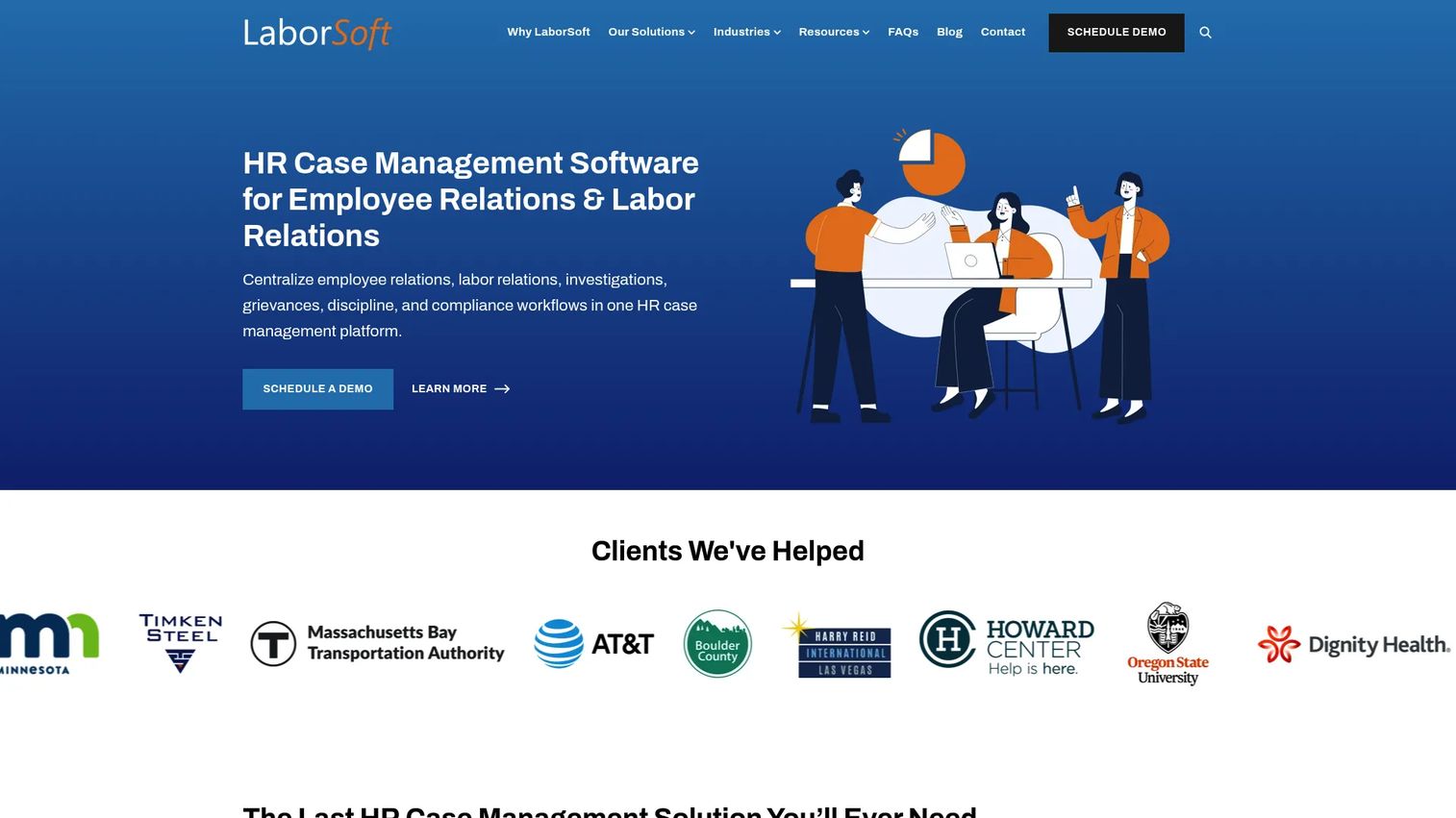
LaborSoft is cloud-based HR case management built for employee relations and labor relations workflows, with strong HRIS compatibility. It centralizes investigations, grievances, discipline, and compliance cases in one configurable system, then connects to major HRIS platforms via secure data imports. For organizations that want a single operational login covering both employee and labor relations, it is a natural fit.
Best for: Organizations needing configurable employee and labor relations case management with clean HRIS integration.
Key strengths
- Centralized case management: One system for employee relations, labor relations, investigations, grievances, discipline, and compliance.
- Customizable processes: Configure alerts, case types, reports, and dashboards to match your actual workflow, not a vendor's default.
- HRIS integration: Connects with major HRIS systems via secure SFTP CSV imports so employee data stays accurate.
Why choose LaborSoft: LaborSoft fits teams that want workflow flexibility and labor relations depth without stitching together separate tools. Its configurability means you adapt the system to your process rather than the reverse, which matters for unionized environments and complex grievance handling. Teams that prioritize this operational breadth over a pure investigations focus will find it well suited.
LaborSoft pricing: LaborSoft uses subscription-based pricing that varies by number of users and required modules, with quotes provided on request. There is no free tier; you contact the team for scoping. The platform holds a 4.6/5 rating on G2.
4. Workpro Casework
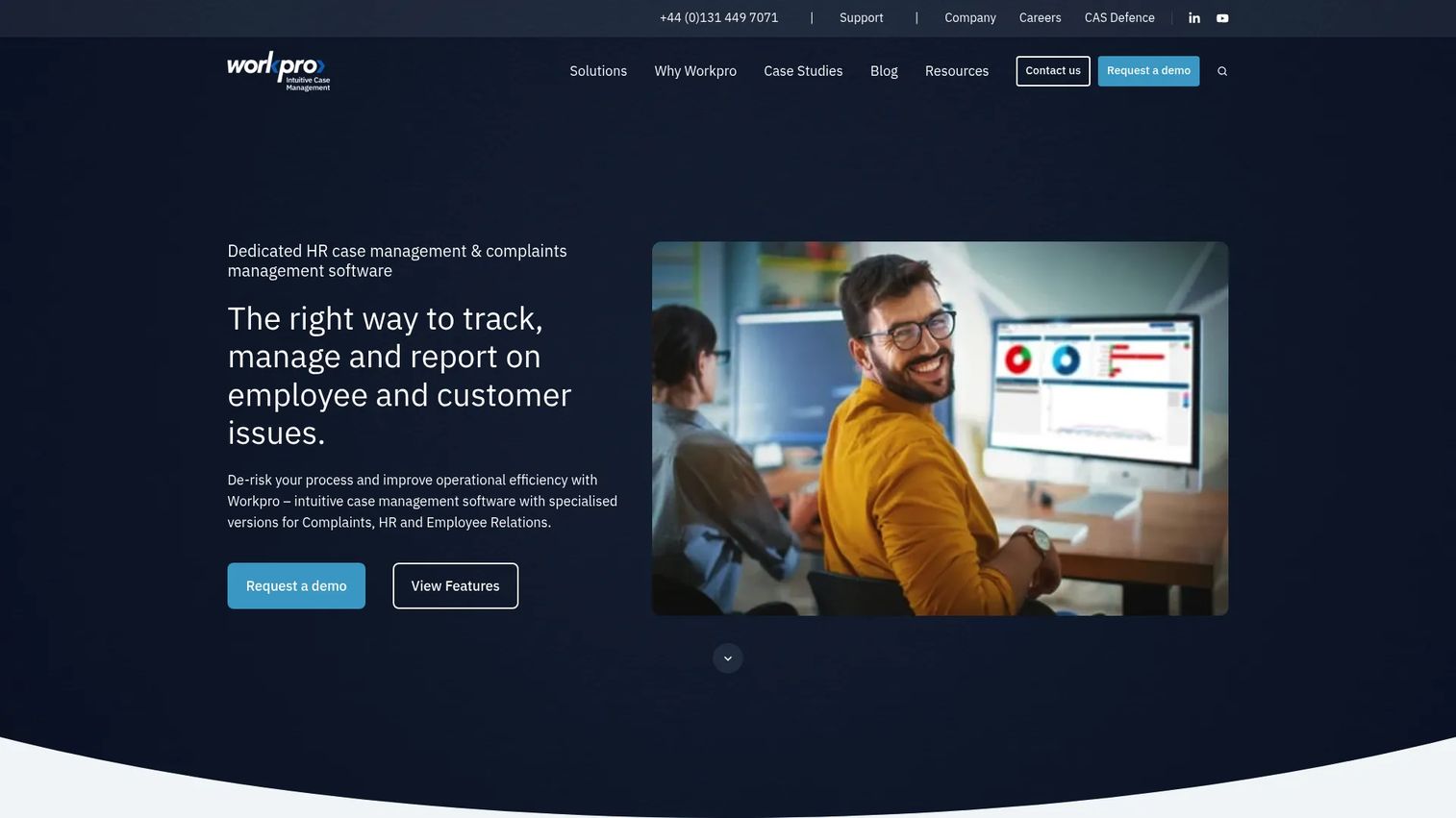
Workpro Casework is configurable case management software covering HR alongside complaints, FOI/SAR, ombudsman, and other regulated casework. For HR teams, it delivers flexible case capture, structured workflow, document management, and strong reporting and audit controls. Its breadth across casework types makes it a fit for organizations that handle multiple regulated case streams under one platform.
Best for: Organizations needing configurable casework management with strong workflow, reporting, and compliance controls.
Key strengths
- Configurable workflow: Adapt case capture and process to your HR cases without custom development.
- Document management: Templates and MS Word integration keep correspondence and records consistent and organized.
- Dashboards and audit trail: Reporting, security controls, and a full audit trail support compliance and oversight.
Why choose Workpro Casework: Workpro suits teams that value configuration and a defensible audit trail, especially where HR casework sits beside other regulated case types. Its flexibility lets you shape the system to your process, and its reporting depth supports governance. Organizations wanting one casework platform across functions, rather than an HR-only tool, will find the breadth useful.
Workpro Casework pricing: Workpro does not list public numeric pricing. Annual running costs include licensing, hosting, and support, with one-off deployment costs, and ballpark figures are available on request. Plan for a scoping conversation. The Workpro seller profile holds a 4.3/5 rating on G2.
5. UKG
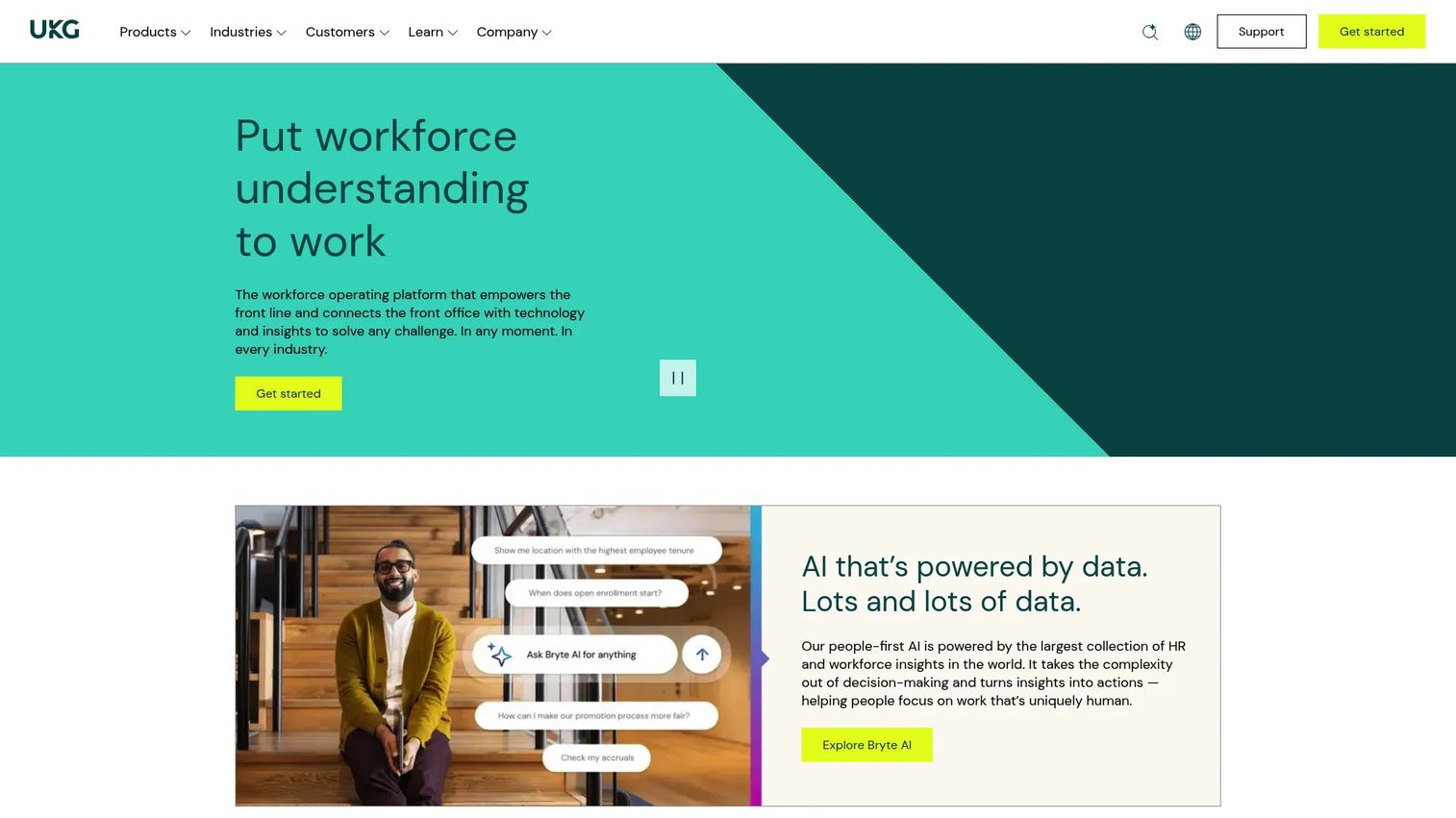
UKG is a broad workforce operating platform spanning HR, payroll, time, scheduling, and analytics, with case management capabilities that fit naturally for teams already in the ecosystem. Here, case handling is part of a wider HCM suite rather than a standalone investigations product. For organizations consolidating HR systems, that breadth is the draw, and routing, collaboration, and self-service come built in.
Best for: Mid-sized organizations that want integrated HR, payroll, time, and scheduling alongside case capabilities.
Key strengths
- Unified HR platform: HR, payroll, and workforce management in one system reduces tool sprawl.
- Time, scheduling, and analytics: Operational HR data and workforce intelligence sit alongside case workflows.
- AI-guided insights: Workforce intelligence surfaces patterns across the broader employee dataset.
Why choose UKG: UKG makes the most sense when case management is one need among many and you value consolidation over a specialized investigations tool. Teams already running UKG Ready get case capabilities without adding another vendor. If your primary requirement is deep, defensible employee relations investigations, weigh it against the ER-specific platforms on this list, since UKG's strength is suite breadth.
UKG pricing: UKG Ready offers four plans, Start, Core, Plus, and Advanced, but the pricing page shows "Get pricing" with no public numeric prices. Expect a quote scoped to your headcount and module mix. UKG Ready holds a 4.4/5 rating on G2.
6. Rely Platform
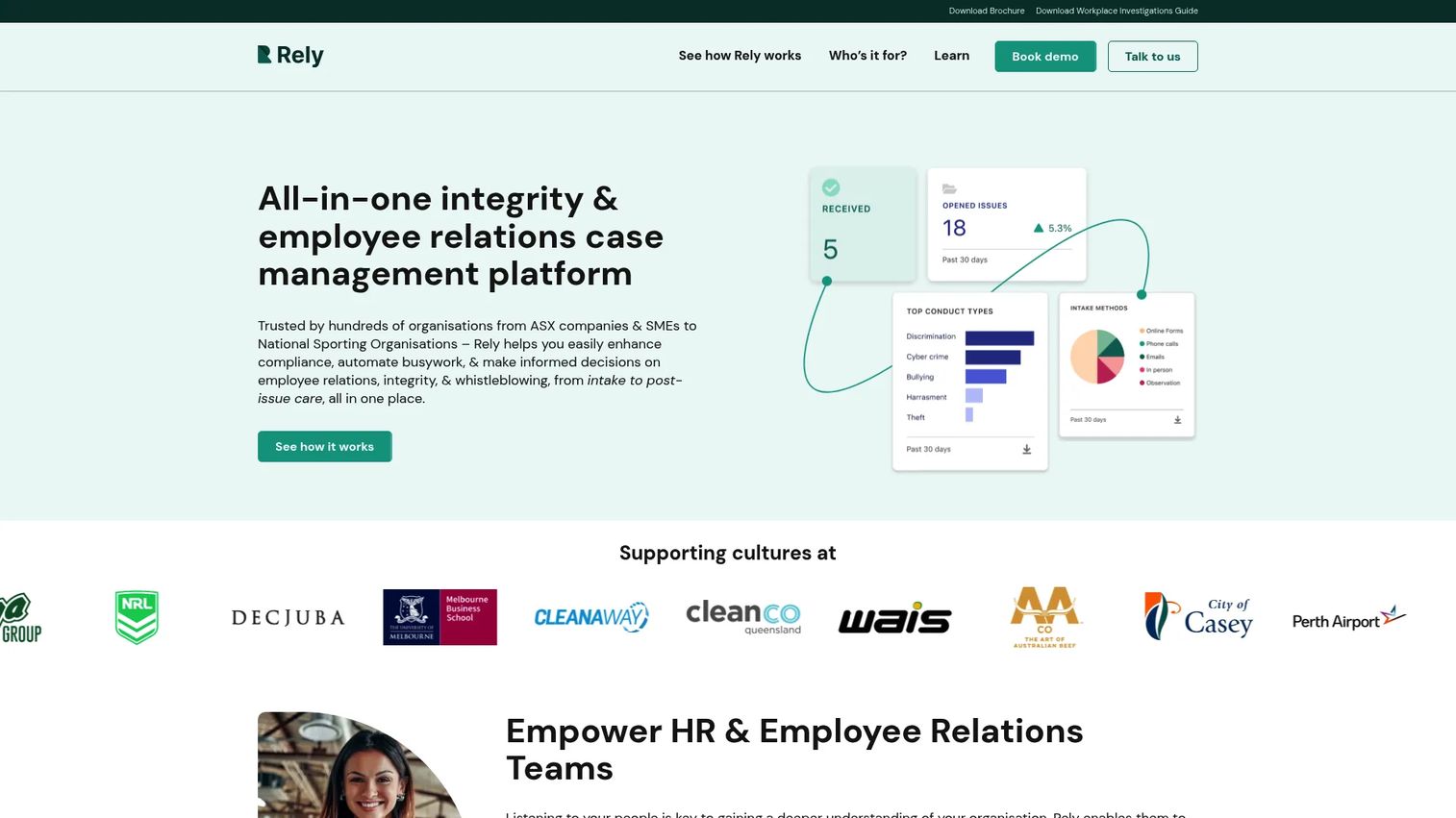
Rely Platform is an intelligent case management platform built around workplace integrity: issues, incidents, complaints, whistleblowing, and investigations. It positions itself around trustworthy workplace operations, with custom intake forms, configurable workflows, and a reporter portal that supports both anonymous and named reporting. For HR, compliance, and investigations teams handling sensitive matters, that integrity-first framing is the differentiator.
Best for: HR, compliance, and investigations teams managing sensitive workplace issues end to end.
Key strengths
- End-to-end case management: Covers the full lifecycle of workplace issues from intake to resolution.
- Custom intake and workflows: Build the forms, workflows, and automations your investigations process actually needs.
- Reporter portal: Supports anonymous or known reporting, which matters for whistleblowing and speak-up culture.
Why choose Rely Platform: Rely Platform fits teams that want integrity and investigations workflows treated as a first-class concern rather than a feature bolted onto a broader suite. Its intake flexibility and reporter portal make it well suited to whistleblowing and sensitive-case handling. Because it centers on compliance and investigations, it pairs naturally with organizations building a defensible speak-up program.
Rely Platform pricing: Rely Platform does not publish public pricing, and plans appear to be quote-based. You will need to contact the team for scoping against your case volume and workflow requirements. A current G2 rating was not available at the time of writing.
7. Civica HRCasework
Civica HRCasework is the HR case management product from Civica, a public sector software vendor, built to handle employee relations cases and requests with a structured lifecycle. It leans into correspondence templates, branded emails and letters, auto-generated acknowledgements, and regionalized data protection. For public sector and regulated enterprise HR teams, that compliance-aware design is the appeal.
Best for: Public sector and regulated organizations needing structured HR case management for employee relations and requests.
Key strengths
- Correspondence templates: Branded email and letter templates keep employee communications consistent and on-brand.
- Auto-generated responses: Automatic acknowledgements and responses reduce manual admin on routine case steps.
- Data protection by design: Single-tenant database schemas and regionalized data protection support compliance requirements.
Why choose Civica HRCasework: Civica HRCasework suits organizations, especially in the public sector, that need structured case lifecycle control with compliance and data protection baked in. Its correspondence automation and security posture fit environments where every communication and record must be auditable. Teams in regulated UK and enterprise contexts will find its design aligned to their obligations.
Civica HRCasework pricing: Civica does not publish public pricing for HRCasework; it appears to be quote-based or undisclosed. Plan for a demo request and a scoping conversation through Civica's sales team. The product holds a 4.1/5 rating on G2.
What to evaluate before you buy
Shortlisting is the easy part. These are the criteria that separate a tool that survives an audit from one that creates new risk.
Investigation rigor and defensibility
Look at how the system enforces consistency. Can it template investigations, lock records once finalized, and produce a clean, tamper-evident timeline? When a case is challenged, your process is the thing on trial. Prioritize tools that make rigor automatic rather than optional.
Reporting and analytics depth
A case-by-case view is table stakes. What you want is the org-wide picture: recurring issues, hotspot teams, time-to-resolution, and risk trends. Strong HR reporting and analytics is what lets HR brief leadership and a board with confidence, not just close tickets.
HRIS integration
Cases are only as accurate as the employee data behind them. Confirm the tool supports HRIS integration with your system of record, whether through native connectors or secure imports. Stale org and role data undermines both routing and reporting.
Security and permissions
Employee relations data is among the most sensitive an organization holds. Evaluate role-based access, field-level permissions, encryption, and the audit trail. Who can see what, and can you prove it later? Treat this with the same seriousness you would AI security posture management for the rest of your stack.
Workflow fit and adoption
The best system is the one your team actually uses. Check that intake, assignment, and case tracking match how your HR team already works, and that configuration does not require engineering. Adoption is where most rollouts succeed or stall.
How to choose
If you run a large or risk-heavy organization, HR Acuity is the clearest pick for defensible investigations and risk analytics. For teams that want case handling inside a broader HR service delivery layer, Dovetail fits. If your priority is operational workflow and HRIS compatibility, especially with labor relations in the mix, LaborSoft and Workpro Casework lead. UKG makes sense when you are consolidating into a wider HCM suite, Rely Platform for integrity and whistleblowing-heavy programs, and Civica HRCasework for structured public sector casework.
The right choice comes down to three questions: how much investigation rigor do you need, how deep does your reporting have to go, and how cleanly does it integrate with your existing stack? Answer those honestly and the shortlist narrows fast. As you map HR case handling against the rest of your operational systems, the same evaluation discipline applies across adjacent categories. Modern teams increasingly lean on analytics that drive ROI and tighter marketing analytics to turn fragmented data into decisions, and the goal for HR case management is no different: replace manual drag with a system that holds up under scrutiny.
For founders evaluating tools that reduce hidden operational risk, the broader principle is consistent. Whether you are reviewing audit management, contract analytics, community management, or employee advocacy, the test is the same: does it earn its place in the stack by making the work repeatable and defensible? Start your journey with Guideflow today if you also need to show product experiences with the same clarity.
FAQs
HR case management software is a system for capturing, tracking, investigating, documenting, and reporting on employee relations cases, with a built-in audit trail. Unlike generic ticketing tools, it understands the difference between routine requests and sensitive matters like harassment or grievances. It enforces consistency and produces the defensible documentation that legal and compliance teams depend on.
At minimum: structured intake, case assignment and triage, a complete audit trail, configurable investigation workflows, document management, and HR reporting and analytics. Role-based security and permissions are non-negotiable given the sensitivity of the data. The strongest systems also offer HRIS integration so employee and org data stays accurate across every case.
It enforces a consistent, repeatable investigation process: standardized intake fields, interview templates, structured evidence handling, and locked records once finalized. That consistency is what makes a decision defensible if it is later challenged. It also keeps every interview, document, and decision in one secure timeline, so the full record is reconstructable on demand.
Most enterprise-grade systems support HRIS integration with platforms like Workday, either through native connectors or secure data imports such as SFTP CSV syncs. This keeps employee, role, and org data accurate, which matters for routing cases correctly and producing reliable reporting. Always confirm the specific integration method and refresh frequency during evaluation.
The terms overlap heavily and are often used interchangeably. Employee relations software typically emphasizes the ER workflow, investigations, and analytics, while HR case management can extend to broader request and service-delivery cases. In practice, most leading tools cover both employee relations case management and general HR casework, so the distinction is often about emphasis rather than capability.
Lead with security and permissions, investigation defensibility, reporting depth, and governance. Confirm role-based access, a tamper-evident audit trail, and the ability to produce a clean case timeline on demand. Then weigh HRIS integration and analytics maturity, since those determine how accurate and actionable your case data stays over time.
Spreadsheets and email can work for a small team handling a handful of cases a year. The moment you are juggling concurrent cases, sensitive matters, or anything that could escalate to legal, a dedicated HR case management system pays for itself in defensibility alone. The trigger is risk and volume, not headcount, so evaluate based on how exposed an incomplete record would leave you.