You run paid social across five networks. Each one has its own ad manager, its own creative specs, its own reporting quirks. Then there is the approval thread in Slack, the spreadsheet tracking spend, and the dashboard nobody trusts. By the time a campaign goes live, you have spent more hours wrangling tools than optimizing the actual ads.
That fragmentation has a cost, and it is growing. Global social media advertising spend is projected to reach US$338.75 billion in 2026, according to Statista. More budget means more scrutiny. Leadership wants defensible ROAS, not a screenshot of impressions. And the social media management software market itself is expanding fast, from US$36.42 billion in 2026 to a projected US$171.62 billion by 2033 per Grand View Research. The tooling is multiplying as fast as the spend.
The right platform does not just schedule posts. It centralizes planning, kills approval bottlenecks, and ties creative performance back to revenue you can actually report. If you are also evaluating adjacent stacks, our roundups of growth marketing tools and content marketing tools pair well with this one. For teams obsessed with measurement, the marketing analytics software guide covers the reporting layer.
What's inside
This guide covers software for planning, launching, optimizing, and measuring paid social campaigns across multiple networks. It is built for growth marketers, in-house social teams, and agencies who care less about vanity scheduling and more about workflow control and ROI.
We selected and ranked these social media advertising platforms on four criteria:
- Network coverage for the channels teams actually spend on (Meta, LinkedIn, TikTok, Pinterest, and more)
- Reporting depth including exportable dashboards and ROI-grade analytics
- Collaboration and approvals that reduce back-and-forth with brand, legal, and clients
- AI assistance for drafting, optimization, and creative iteration
The list spans tools for lean teams, agencies, and enterprise marketers.
TL;DR
Short on time? Here are the quick decision shortcuts:
- Best overall for paid social teams: Hootsuite, for one connected suite covering publishing, boosting, listening, and reporting.
- Best for premium reporting: Sprout Social, for polished analytics and team workflows mid-market and enterprise teams trust.
- Best for high-volume ad creative: Smartly.io, for cross-channel ad orchestration and creative automation.
- Best for collaboration and approvals: Planable, for clean review loops before anything goes live.
- Best for budget-conscious teams: Buffer, for simple publishing and analytics at a low entry price.
- Best for enterprise governance: Sprinklr, for scale, compliance, and broad customer experience coverage.
What is social media advertising software?
Social media advertising software is a category of social media marketing software that helps teams plan, publish, optimize, and measure paid and organic campaigns across multiple social networks from a single platform. It sits between the native ad managers (Meta Ads Manager, LinkedIn Campaign Manager) and your analytics stack, consolidating workflow, creative, and reporting in one place.
It is worth separating three overlapping categories, because buyers conflate them constantly:
- Social media management software handles publishing, scheduling, inbox, and engagement across networks. Broad, organic-first.
- Social media ad management software focuses on paid social: ad creation, budget pacing, creative testing, and ROAS reporting.
- Marketing automation spans email, lifecycle, and multi-channel nurture, with social as one input among many.
Most tools on this list blend management and ad management. The strongest paid social software covers a consistent set of capabilities:
- Cross-channel publishing to launch and pace ads across Facebook, Instagram, LinkedIn, TikTok, Pinterest, and more from one calendar
- Campaign automation for scheduling, boosting top posts, and rule-based optimization
- Social media reporting with exportable dashboards, attribution, and creative analytics
- Collaboration workflows including approvals, permissions, and client or stakeholder workspaces
- Integrations into CRM, ad platforms, and analytics so data flows without manual exports
That combination is what separates a real ad management platform from a basic scheduler. If your evaluation also touches account-based programs, the account based marketing software tools guide is a useful companion.
When to use social media advertising software
Not every team needs a heavyweight platform. Here is when the investment pays off.
Launch campaigns across multiple networks
When you are running ads on three or more networks at once, native ad managers stop scaling. Switching between Meta, LinkedIn, and TikTok dashboards to set budgets, schedule creative, and pace spend eats hours. A unified ad management platform centralizes publishing and pacing so you launch faster and keep budgets aligned across channels. This matters most when a single campaign spans audiences on multiple platforms and you need consistent timing.
Reduce approval bottlenecks
Paid social rarely ships without sign-off. Brand wants to check tone, legal wants to check claims, and on the agency side the client wants to see everything first. Endless email threads and screenshot markups kill campaign speed. Collaboration features (structured approvals, version history, comment threads on the actual creative) compress that loop. This is the deciding factor for agencies and any team where stakeholder review is the real bottleneck.
Prove performance and ROI
Scheduling is table stakes. The moment leadership asks "what did paid social return," basic tools fall apart. That is when reporting, attribution, and creative analytics matter more than calendar features. You need exportable dashboards your CFO believes, breakdowns by creative and audience, and a clear line from spend to pipeline. If proving ROAS is your recurring headache, prioritize reporting depth over everything else.
Comparison table
The table below ranks the ten platforms by relevance to paid social workflow. Pricing reflects publicly listed starting tiers as of mid-2026, and G2 ratings are pulled from current listings. Use it as a fast scan, then read the sections that match your situation. For broader stack context, our email marketing software tools roundup covers the nurture layer that often pairs with paid social.
| # | Product | Intent | Key use case | Pricing | G2 rating |
|---|---|---|---|---|---|
| 1 | Hootsuite | All-in-one ops | Publishing, boosting, listening, reporting in one suite | From $99/mo | 4.3/5 |
| 2 | Sprout Social | Premium reporting | Analytics and team workflows for mid-market/enterprise | From $79/seat/mo | 4.4/5 |
| 3 | Smartly.io | Paid social at scale | Cross-channel ad creative automation and optimization | Custom | 4.4/5 |
| 4 | Planable | Collaboration | Approvals and content review before launch | From $33/workspace/mo | Not listed |
| 5 | Agorapulse | All-round daily use | Inbox, publishing, reporting, collaboration | From $79/mo | 4.5/5 |
| 6 | Buffer | Lightweight value | Simple publishing and analytics | From $5/channel/mo | 4.3/5 |
| 7 | Vista Social | All-in-one value | Publishing, engagement, AI-assisted workflows | From $29/mo | 4.8/5 |
| 8 | SocialPilot | Agency value | Bulk scheduling and client management | From $17/mo | 4.5/5 |
| 9 | Metricool | Analytics-forward | Planning plus performance and ad analytics | Free / from €20/mo | 4.5/5 |
| 10 | Sprinklr | Enterprise scale | Governance, listening, broad CX coverage | Custom | 4.2/5 |
1. Hootsuite
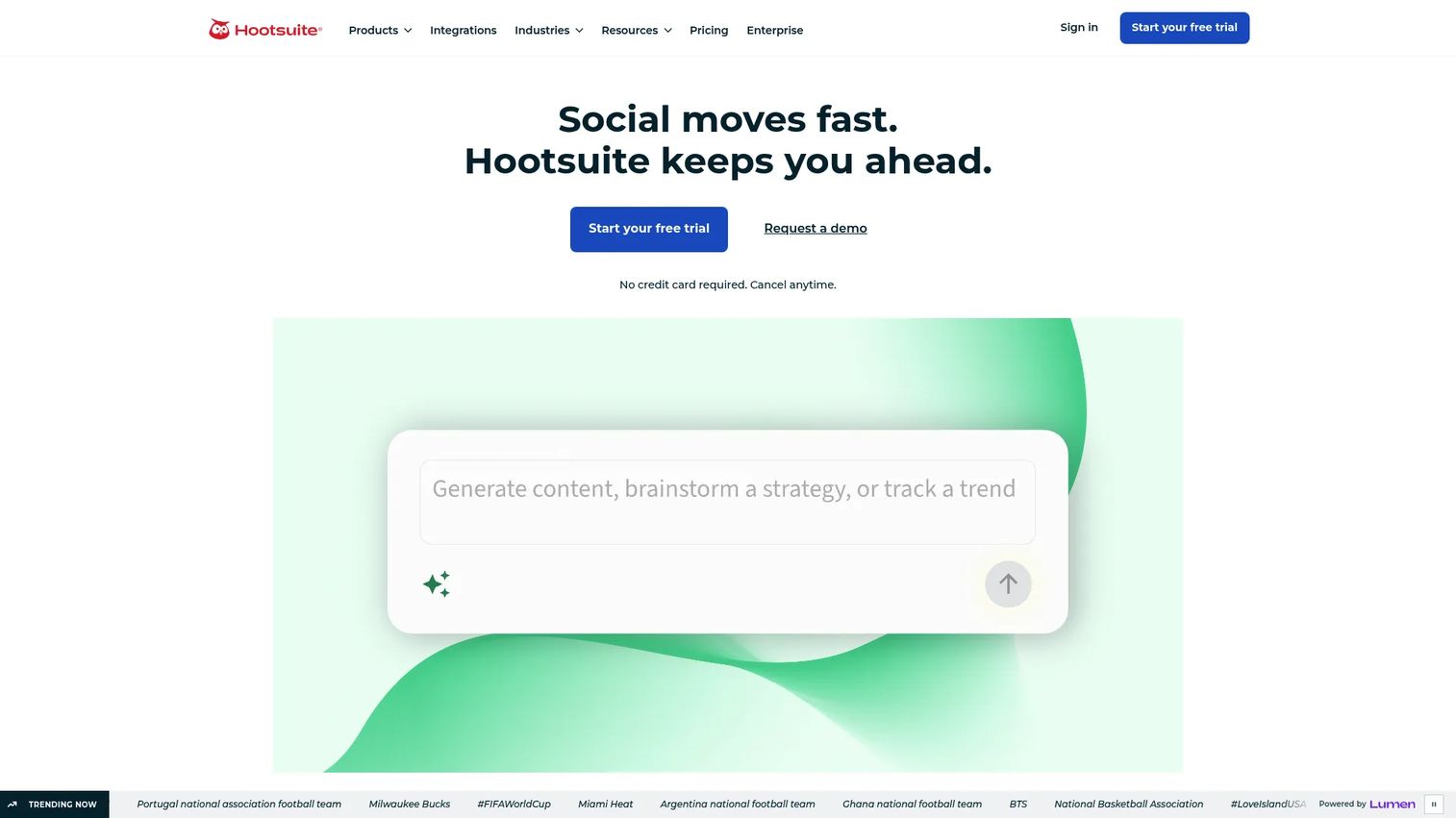
Hootsuite is the broadest social media operations option on this list. It handles publishing, a unified inbox, analytics, social listening, and team workflows from one dashboard, and it layers paid on top with post boosting and auto-boost for top-performing content. For marketers who want one connected suite rather than five point tools, it is the default starting point.
The breadth is the pitch. You schedule organic posts, boost the winners into paid, monitor mentions in the unified inbox, and track paid and organic performance side by side. Add competitor intelligence through social listening and trend forecasting, plus employee advocacy features for teams that want staff amplifying campaigns.
Best for: Teams managing multiple social channels that want publishing, inbox, analytics, and listening in one tool.
Key strengths
- Unified inbox: Manage messages and customer care across networks without tab-switching.
- Boost and auto-boost: Push top organic content into paid spend directly from the dashboard.
- Social listening: Track competitor activity and trends to inform creative and timing.
Why choose Hootsuite: If consolidation is the goal and you are willing to pay for breadth, Hootsuite covers the most ground in one place. It fits teams tired of stitching together a scheduler, a listening tool, and a separate analytics product. The trade-off is that you pay for the full suite even if you only need part of it.
Hootsuite pricing: Paid plans start at $99/month for Standard, $199/month for Professional, and $399/month for Advanced, all billed annually. Enterprise is custom pricing through sales. There is no free tier, but a 14-day free trial is available with no credit card required.
2. Sprout Social
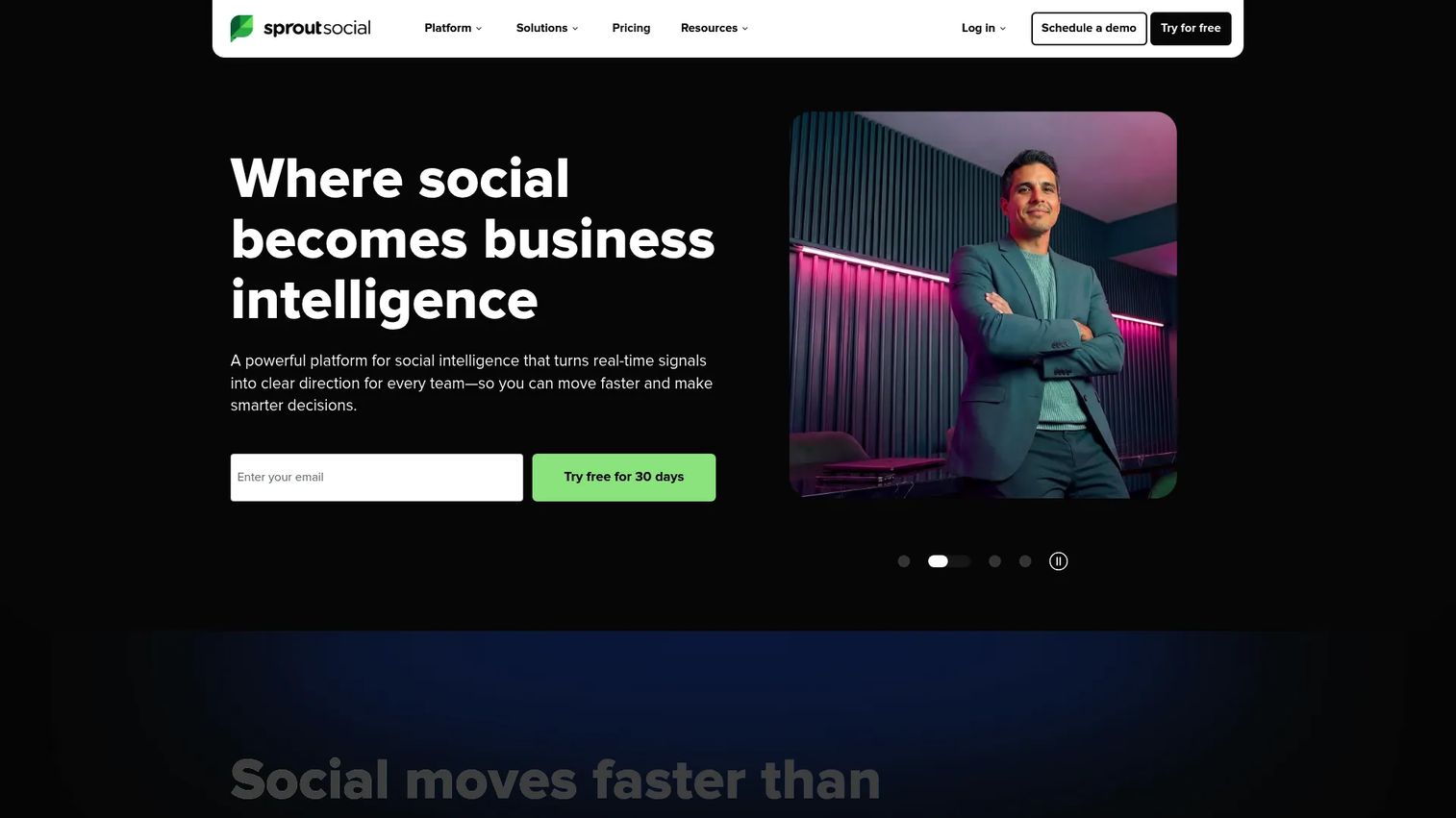
Sprout Social is the premium pick for teams that need polished reporting and clean collaboration. It pairs publishing, a Smart Inbox, and social listening with analytics that hold up in an executive readout. For mid-market and enterprise marketers who present numbers to leadership, the reporting quality is the reason to buy.
The platform is built for coordination at scale. The publishing calendar keeps distributed teams aligned, the Smart Inbox centralizes engagement, and the reporting layer turns campaign data into shareable dashboards. Creative workflow and approvals keep brand consistency intact across a larger team.
Best for: Mid-market and enterprise teams that need publishing, engagement, analytics, and listening with strong reporting.
Key strengths
- Smart Inbox: Consolidate every message and mention into one prioritized stream.
- Publishing calendar: Coordinate content across teams and networks with shared visibility.
- Social listening: Surface audience and competitor signals to guide strategy.
Why choose Sprout Social: Choose Sprout when reporting and support matter as much as execution. It fits teams that have outgrown basic schedulers and need analytics leadership trusts plus strong customer support. The premium positioning is reflected in the per-seat pricing.
Sprout Social pricing: Plans start at $79/seat/month for Essentials, $199 for Standard, $299 for Professional, and $399 for Advanced, all billed annually. Enterprise is custom. A 30-day free trial is available.
3. Smartly.io
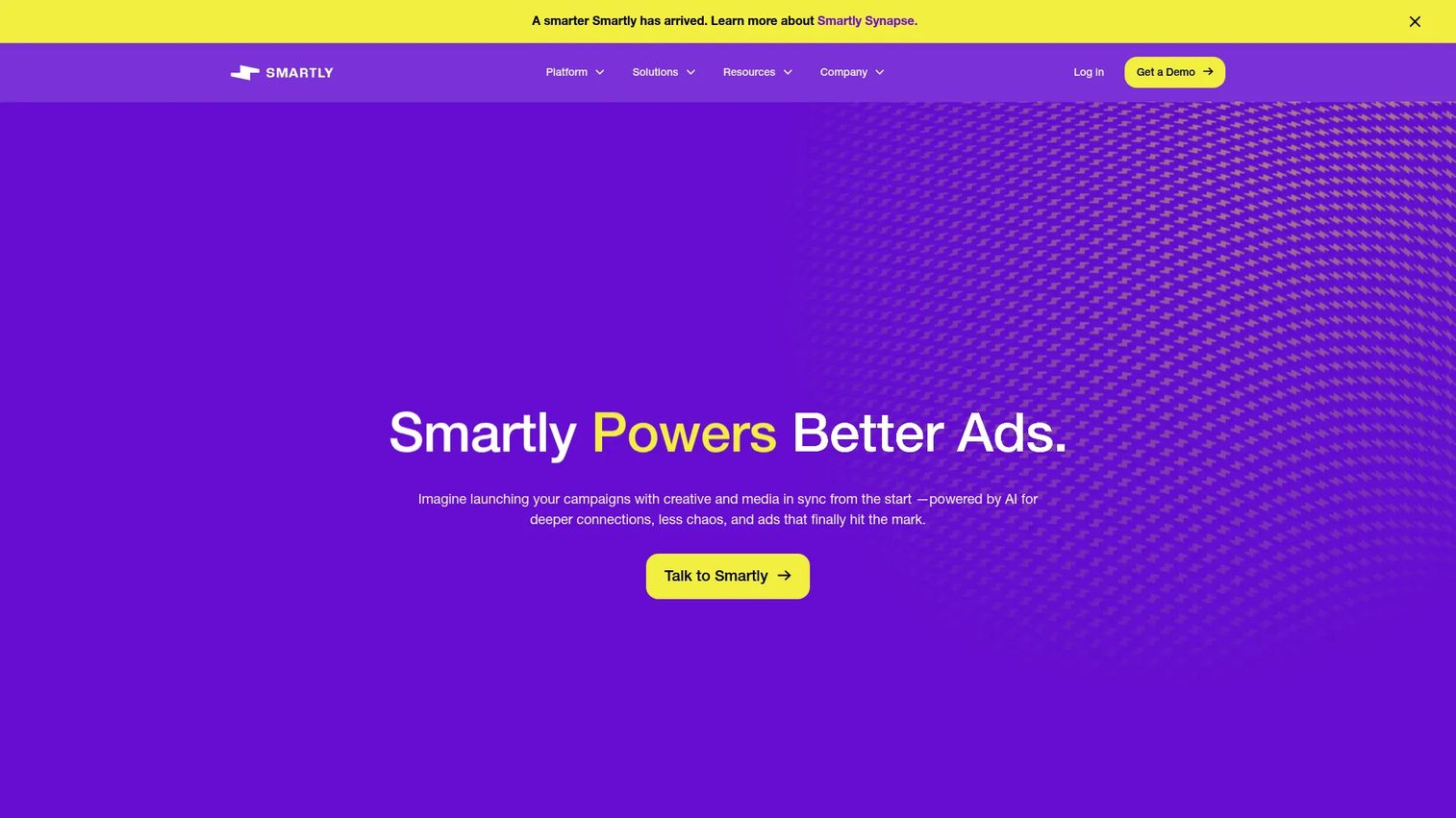
Smartly.io is the paid social and creative automation platform for performance teams running real volume. It focuses on cross-channel ad orchestration, dynamic creative testing, and AI-assisted optimization. For teams iterating on hundreds of ad variants across networks, this is the specialist option.
Where most tools on this list lead with management, Smartly.io leads with paid social depth. Dynamic Creative Optimization automatically tests and serves the best-performing combinations, Automated Ads handle launch and scaling logic, and Creative Insights tell you which assets actually drive results. It is built for the high-iteration, performance-marketing workflow.
Best for: Enterprise and performance teams scaling cross-channel ad creative and optimization.
Key strengths
- Dynamic Creative Optimization: Automatically test and serve the best creative combinations.
- Automated Ads: Apply rule-based launch and scaling logic across channels.
- Creative Insights: Identify which assets and elements drive performance.
Why choose Smartly.io: Pick Smartly.io when creative volume and optimization are the core of your motion, not an afterthought. It fits performance teams managing large budgets across Meta, TikTok, Pinterest, and more where manual creative iteration would never keep pace. It is an enterprise commitment, not a quick scheduler swap.
Smartly.io pricing: Smartly.io does not publish pricing on its site and routes prospects to a demo and sales conversation. Plan on enterprise-level packaging aligned to ad spend and team size.
4. Planable
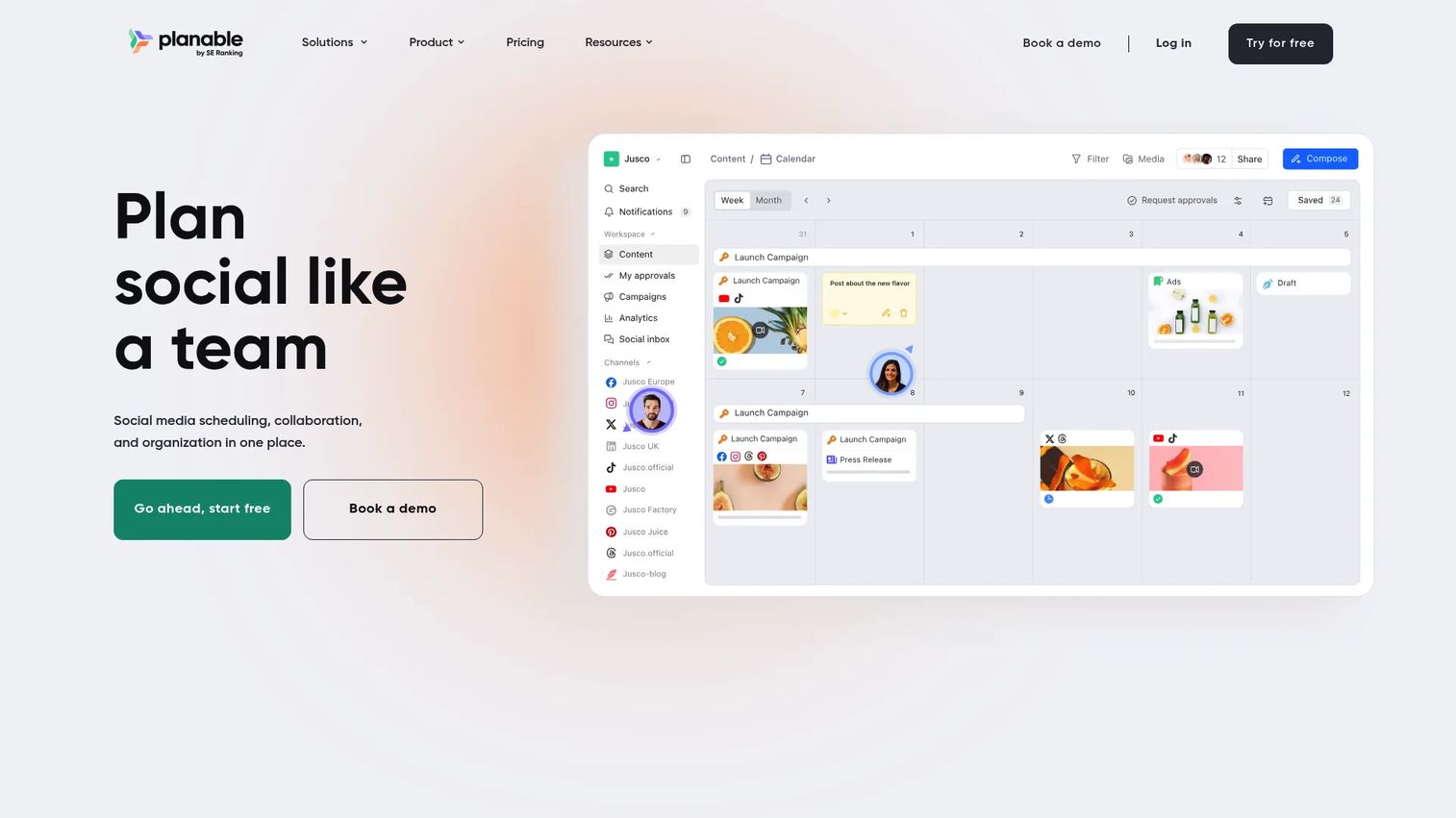
Planable is the collaboration and approvals tool for teams and agencies where sign-off is the bottleneck. It centers on a visual calendar, structured approval workflows, and client-friendly review. When the slowest part of your process is getting everyone to agree before publishing, Planable is built for exactly that problem.
The product is collaboration-first by design. A media library and shared content space keep assets in one place, the visual calendar makes planning legible to non-marketers, and approval workflows replace the email-and-screenshot loop. This is the agency workflow tool when client signoff drags campaigns.
Best for: Agencies and multi-stakeholder teams managing social content approvals.
Key strengths
- Visual calendar planning: See the full content schedule in a layout stakeholders understand.
- Approval workflows: Route content for structured sign-off instead of scattered threads.
- Media library and collaboration: Keep assets and feedback in one shared workspace.
Why choose Planable: Choose Planable when stakeholder review, not publishing, is what slows you down. It fits agencies coordinating multiple clients and in-house teams that route everything through brand or legal. It is less of a full ad-buying platform and more of a planning and approval layer that sits ahead of execution.
Planable pricing: Pricing is per workspace with unlimited users. Basic is $33 per workspace per month and Pro is $49 per workspace per month, with custom Enterprise pricing. A free option covers your first 50 posts.
5. Agorapulse
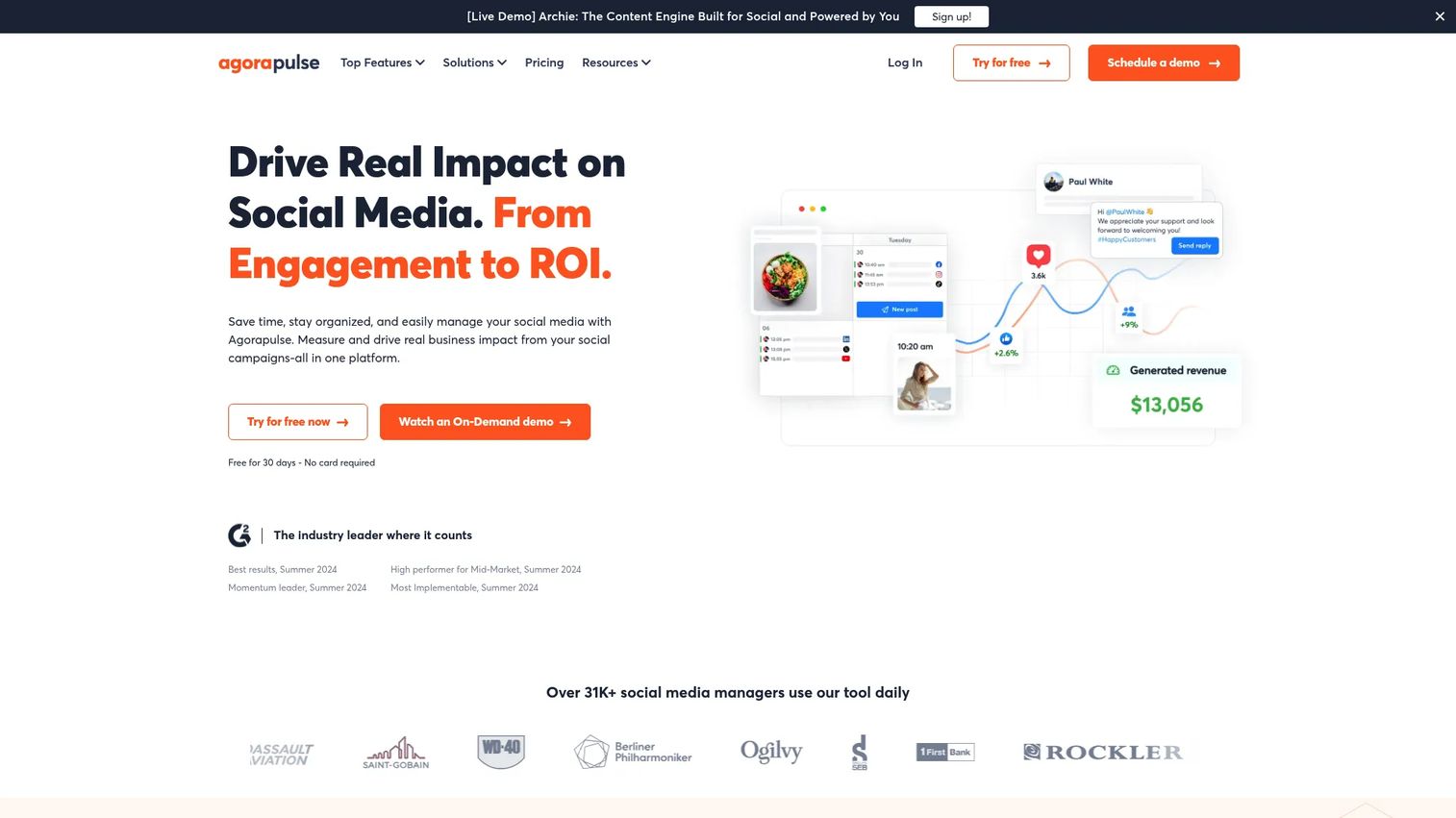
Agorapulse is the practical all-rounder for publishing, engagement, and reporting. It combines a unified inbox, moderation, scheduling, and team collaboration in a workspace that stays usable without enterprise bloat. For teams that want strong everyday tooling, it hits a sensible middle ground.
The strength here is balance. The unified social inbox keeps engagement and moderation in one place, publishing and scheduling cover daily execution, and analytics and reporting close the loop on performance. It is designed for teams and agencies running multiple channels who want capability without complexity.
Best for: Teams and agencies managing multiple social channels from one workspace.
Key strengths
- Unified social inbox: Handle messages, comments, and moderation across networks in one view.
- Publishing and scheduling: Plan and queue content efficiently across channels.
- Analytics and reporting: Track performance with reports built for everyday use.
Why choose Agorapulse: Choose Agorapulse when you want capable daily tooling without paying for enterprise features you will never touch. It fits teams that value usability and inbox management over deep paid-creative automation. The balanced feature set is the appeal.
Agorapulse pricing: Agorapulse offers a free plan for a single user. Paid plans, per third-party listings, start around $79.00 for the Standard tier with one user, and a custom enterprise option is available. Check the current pricing page for exact tiers.
6. Buffer
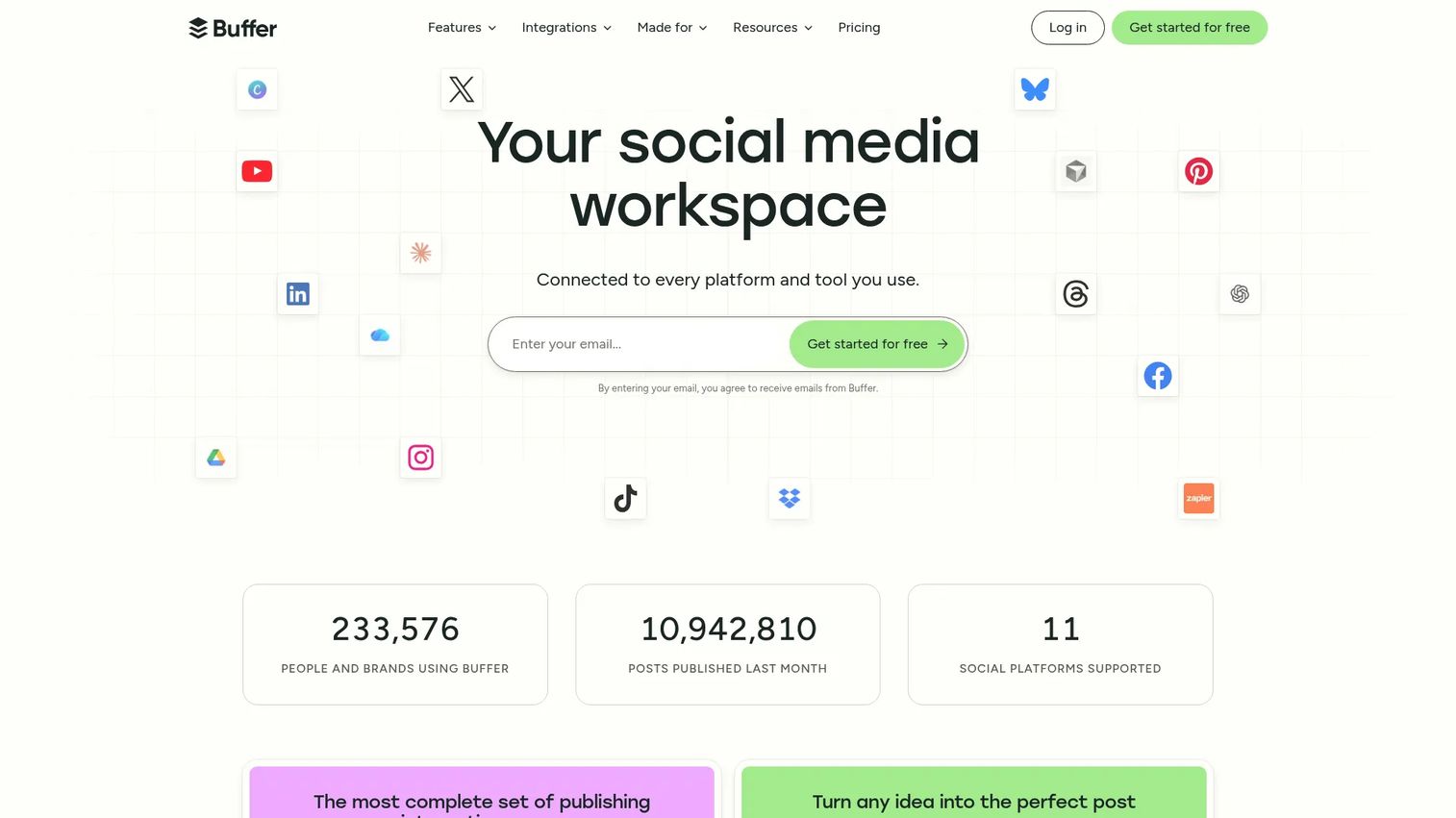
Buffer is the lightweight, affordable choice for teams that want simple publishing and straightforward reporting. It strips the workflow down to scheduling, analytics, and basic collaboration, with a low-friction interface anyone can pick up. For smaller teams that do not need an enterprise stack, it is the easiest entry point.
The appeal is simplicity and price. Social scheduling and publishing cover the core job, analytics and reporting give you the numbers that matter, and team collaboration with approvals handles light coordination. It is the tool you reach for when you want to publish well without managing a platform.
Best for: Creators, small businesses, and teams managing social media across multiple channels.
Key strengths
- Social scheduling and publishing: Queue and publish across networks with minimal setup.
- Analytics and reporting: Track post and channel performance simply.
- Team collaboration and approvals: Coordinate light review without heavy process.
Why choose Buffer: Choose Buffer when speed and low cost beat depth. It fits creators, solo marketers, and small teams that want to ship consistently without learning a complex system. The trade-off is that heavy paid-social workflows and deep reporting live in the pricier tools above.
Buffer pricing: Buffer has a free plan covering up to 3 channels. The Essentials plan is $5/month per channel and the Team plan is $10/month per channel, with monthly or yearly billing (yearly saves two months).
7. Vista Social
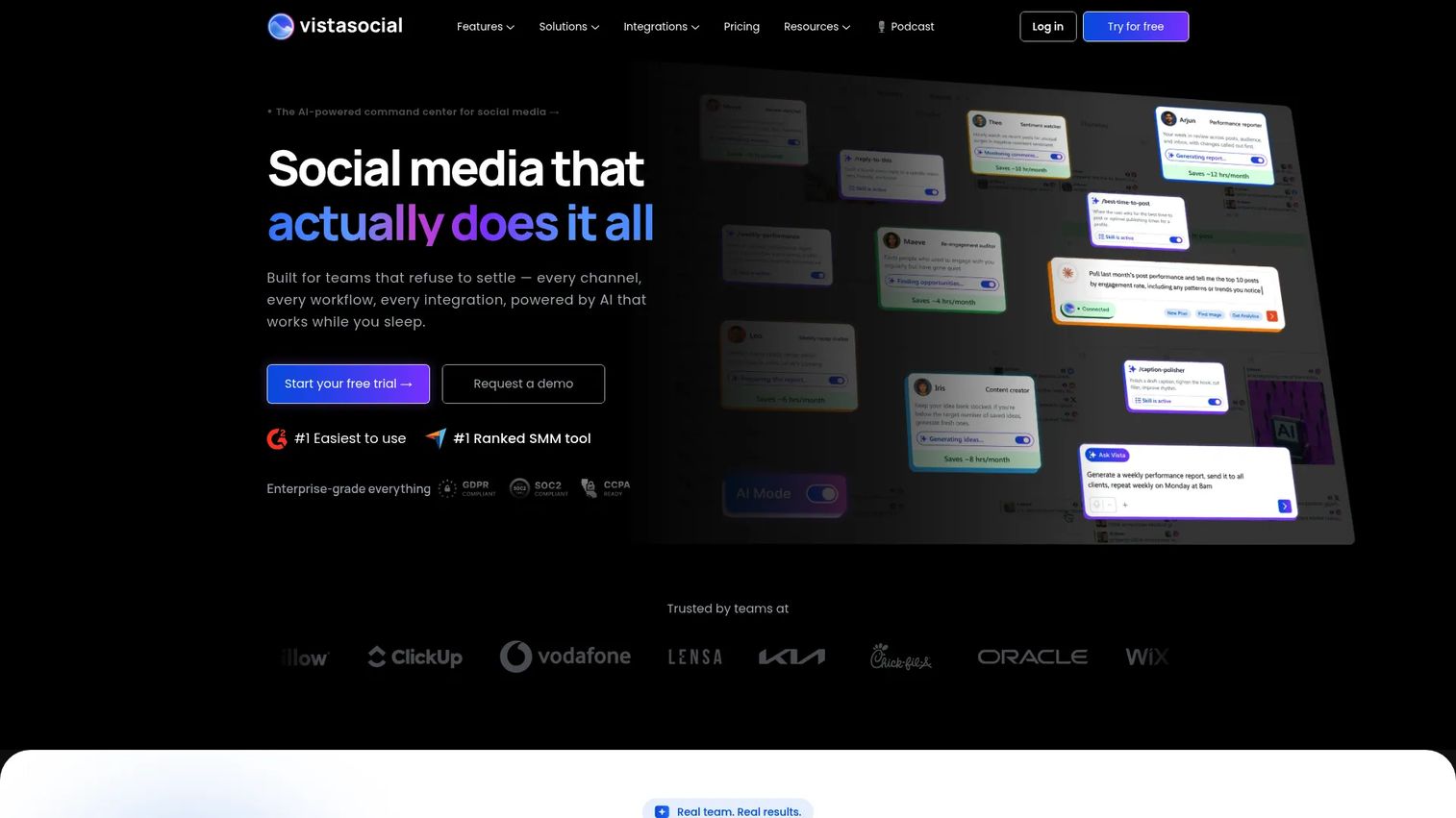
Vista Social is a newer all-in-one platform that bundles publishing, engagement, and AI-assisted workflows at a competitive price. It covers scheduling, a unified inbox, approvals, and reporting, plus add-ons for listening and employee advocacy. For small and mid-sized teams that want more than basic scheduling, it punches above its price.
The product leans modern. Scheduling and publishing handle the core, the unified inbox centralizes engagement, and social listening with trend alerts feeds strategy. Optional modules for listening and employee advocacy let you expand without switching platforms. Its high user ratings reflect a polished experience at an accessible entry point.
Best for: Brands, agencies, and social media managers needing an all-in-one suite.
Key strengths
- Scheduling and publishing: Plan and queue content across networks from one calendar.
- Unified inbox and engagement: Manage conversations across channels in one place.
- Social listening and trend alerts: Stay ahead of relevant conversations and topics.
Why choose Vista Social: Choose Vista Social when you want a complete suite without the enterprise price tag. It fits growing teams that have outgrown a basic scheduler but are not ready for premium per-seat pricing. The modular add-ons let you scale capability as needs grow.
Vista Social pricing: Public plans include Professional at $79/month, Advanced at $149/month, and Scale at $349/month, with custom Enterprise. Add-ons cover Listening (from $75/month per listener), Employee Advocacy ($199/month for 25 employees), and X/Twitter ($29/month). A 14-day free trial requires no credit card.
8. SocialPilot
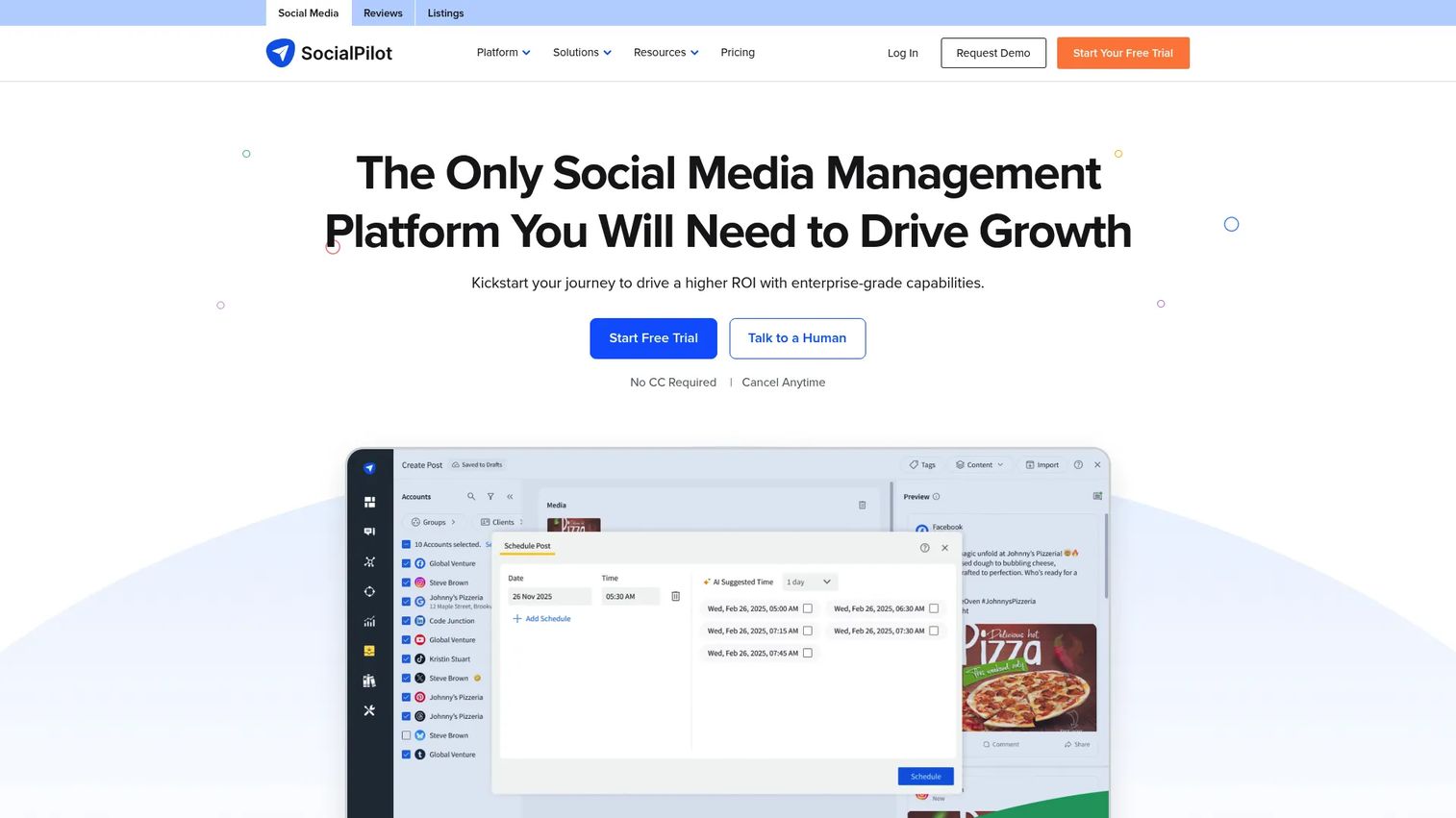
SocialPilot is the value-oriented option for agencies and small teams managing many accounts. It centers on bulk scheduling, client management, reporting, and collaboration, with pricing that stays friendly as account counts grow. For lean teams watching budget, it delivers agency-grade workflow without agency-grade cost.
The agency workflow is the focus. Bulk scheduling and bulk import let you load weeks of content fast, analytics and reporting produce client-ready reports, and team collaboration with approvals keeps reviews organized. It is built for the team running social for ten clients on a tight margin.
Best for: Agencies and small teams managing multiple social accounts.
Key strengths
- Bulk scheduling and import: Load and queue large volumes of content efficiently.
- Analytics and reporting: Generate client-ready performance reports.
- Team collaboration and approvals: Manage review across accounts and stakeholders.
Why choose SocialPilot: Choose SocialPilot when you manage many accounts and need to control cost per seat. It fits agencies and multi-brand teams that want bulk efficiency and clean reporting without paying premium platform prices. The value-per-account ratio is the draw.
SocialPilot pricing: Paid plans (billed annually, saving 15%) start at $17/month for Essentials, $34 for Standard, $85 for Premium, and $170 for Ultimate, with custom Enterprise. Monthly billing is also available, plus a 14-day free trial.
9. Metricool
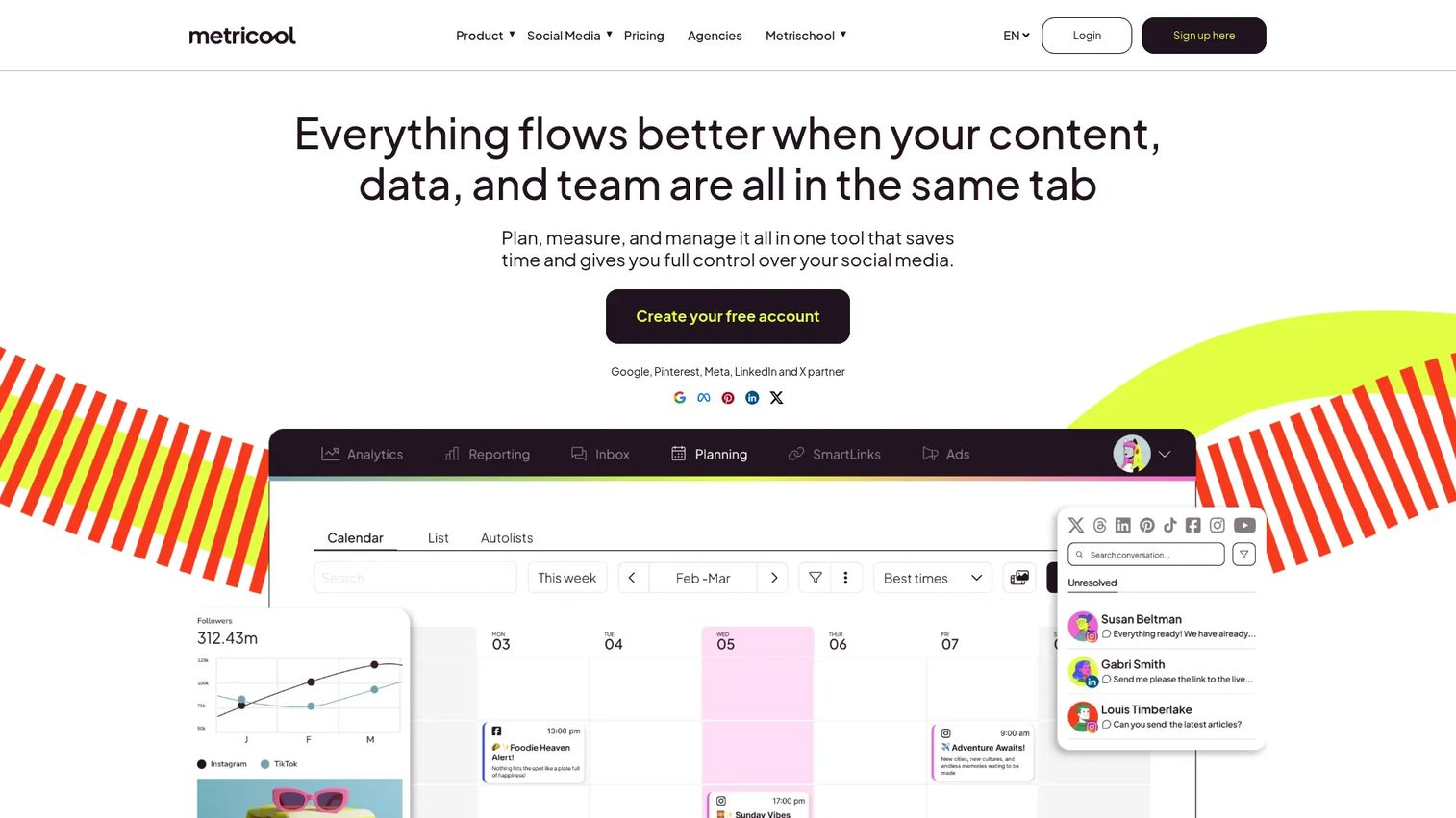
Metricool is the analytics-forward choice for marketers who want scheduling alongside genuine performance visibility. It combines content planning, reporting, ad analytics, and cross-channel insights in one dashboard. For teams that care about reporting depth without a heavy platform, it strikes a clear balance.
The reporting orientation sets it apart. Content planning and scheduling cover execution, the analytics and reporting layer goes deep on cross-channel performance, and a unified inbox with team collaboration handles engagement. It also tracks ad performance, which makes it useful for teams blending organic and paid measurement.
Best for: Teams and agencies managing multiple social channels from one dashboard.
Key strengths
- Content planning and scheduling: Plan and queue across networks from one calendar.
- Analytics and reporting: Go deep on cross-channel and ad performance.
- Unified inbox and collaboration: Manage engagement and teamwork in one place.
Why choose Metricool: Choose Metricool when analytics depth matters as much as execution and you want a free tier to start. It fits data-minded marketers and agencies that want clear reporting without enterprise overhead. The reporting-first design is the differentiator.
Metricool pricing: Metricool has a free plan at €0/month. Paid plans start from €20/month for Starter and €54/month for Advanced, with a custom tier for larger needs. Pricing displays in multiple currencies with monthly and annual options.
10. Sprinklr
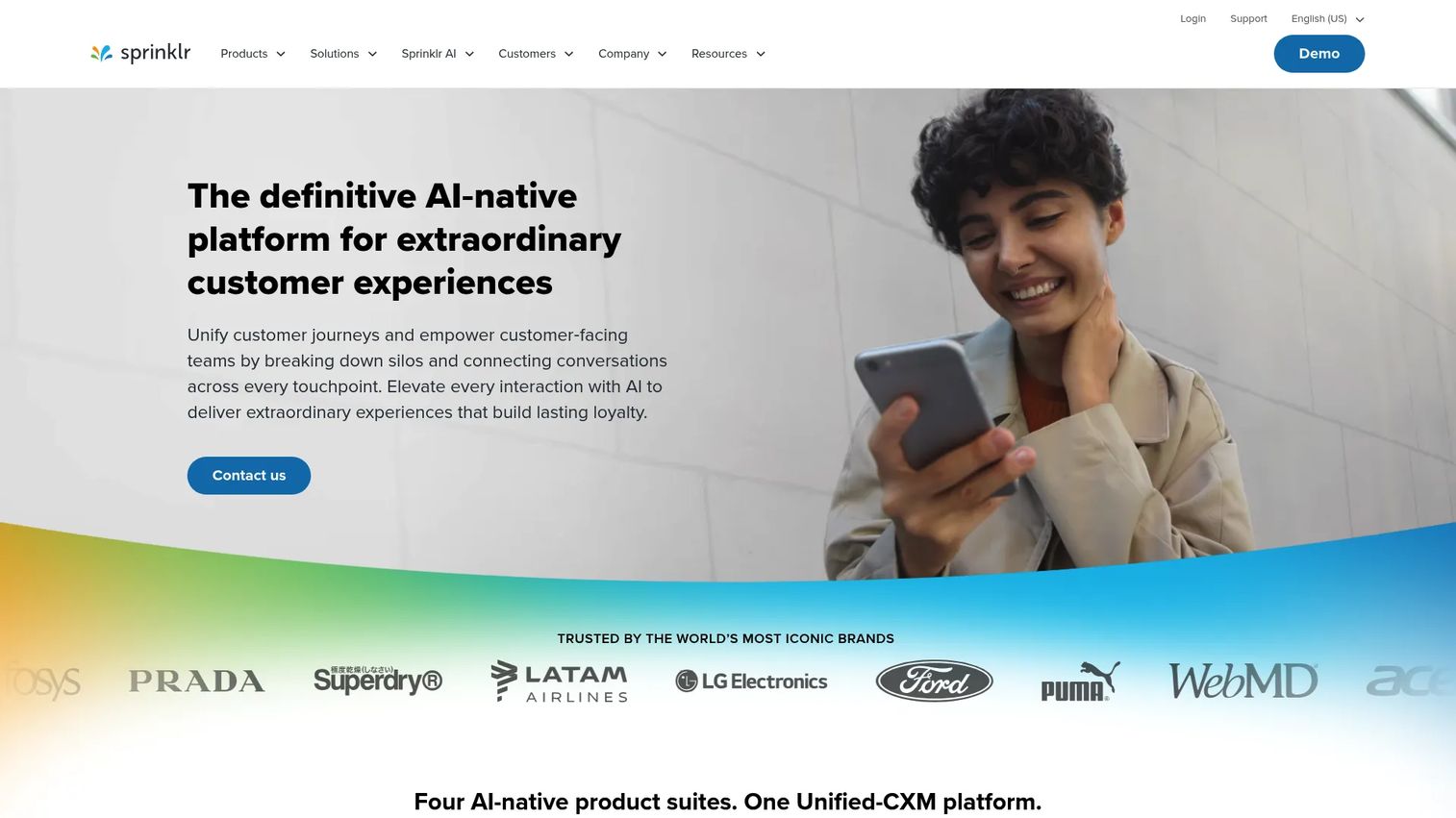
Sprinklr is the enterprise platform for organizations that need governance, scale, and broad customer experience coverage. Its AI-native Unified-CXM platform spans marketing, service, social, and insights across 30-plus digital and voice channels. For large teams with complex approval and compliance requirements, it is the heavyweight option.
The scope is the point. Paid social workflows live inside a broader CX suite, social listening operates at enterprise scale, and reporting plus approvals are built for governance-heavy organizations. AI-native and agentic workflows automate across the platform. This is the choice when social is one part of a much larger customer-facing operation.
Best for: Large enterprises needing a unified customer experience management suite.
Key strengths
- Unified-CXM platform: Connect marketing, service, social, and insights in one system.
- AI-native workflows: Automate across the platform with generative and agentic AI.
- Omnichannel coverage: Manage 30-plus digital and voice channels centrally.
Why choose Sprinklr: Choose Sprinklr when enterprise governance, scale, and compliance outweigh simplicity. It fits large organizations where social sits inside a wider customer experience mandate and where approval and security controls are non-negotiable. It is built for complexity, not for a small team that just wants to ship ads.
Sprinklr pricing: Sprinklr does not publish plan prices and routes buyers to a sales conversation. Expect enterprise packaging scoped to channels, modules, and seats.
Considerations before you buy
The best platform is the one that fits how your team actually works. Run your shortlist through these checks before committing.
Network coverage matters
The best tool is the one that supports the channels you actually spend on, not the one with the longest logo list. If 80% of your budget is Meta and LinkedIn, deep support for those two beats shallow coverage of twelve networks. Verify that paid features, not just organic posting, work on your priority channels.
Reporting depth beats vanity metrics
Impressions and likes are easy to show and hard to act on. Check what the dashboards actually export, whether attribution ties spend to pipeline, and whether you can build a report leadership will trust. Exportability and ROI reporting are where most tools quietly fall short, so test them during the trial.
Collaboration and approvals reduce bottlenecks
Review flows, permissions, and client workspaces directly affect both speed and quality. If your campaigns wait days on sign-off, prioritize structured approvals over feature breadth. For agencies especially, clean client workspaces are the difference between scaling and drowning in threads.
AI should save time, not create noise
AI drafting, optimization, and recommendations are everywhere now. Judge them by whether they reduce work, not by how they market. A good AI feature gives you a usable first draft or a real optimization lever. A weak one generates content you have to fully rewrite. Test before you weigh it heavily.
Pricing should match team structure
Per-seat, per-profile, and enterprise pricing each carry different risks. Per-seat pricing punishes growing teams, per-profile pricing punishes multi-account agencies, and enterprise contracts lock you in. Map the pricing model to how your team is structured before you fall for a low headline number.
Conclusion
Choosing social media management software for paid social comes down to matching the tool to your bottleneck. If you want one connected suite, Hootsuite covers the most ground. For premium reporting that survives an executive readout, Sprout Social leads. Performance teams iterating on heavy creative should look at Smartly.io. Agencies fighting approval delays will get the most from Planable, while SocialPilot handles many accounts on a budget. Smaller teams that want simple, affordable publishing should start with Buffer, and Vista Social or Metricool offer strong all-in-one value with a free tier to test. Enterprises with governance and compliance needs land on Sprinklr.
The selection logic is simple: breadth for all-in-one teams, premium reporting for enterprise, collaboration for agencies, and value for smaller teams. Pick the one bottleneck that costs you the most time or credibility today, then choose the tool built to solve it. Start a free trial with your top pick and run a real campaign through it before you commit.
FAQs
Social media advertising software is a platform that helps teams plan, publish, optimize, and measure paid and organic campaigns across multiple social networks from one place. It consolidates ad creation, scheduling, creative testing, and reporting that would otherwise live in separate native ad managers. The goal is faster campaigns and clearer ROI.
For a single connected suite covering publishing, boosting, listening, and reporting, Hootsuite is the strongest all-rounder. If your priority is high-volume ad creative and cross-channel optimization, Smartly.io is purpose-built for that. Mid-market teams that need polished reporting alongside multi-network management often land on Sprout Social.
Prioritize cross-channel publishing for the networks you actually spend on, campaign automation and creative testing, and social media reporting with exportable dashboards and attribution. Collaboration and approval workflows matter if sign-off slows you down. Integrations with your CRM and analytics stack keep data flowing without manual exports.
Yes. Planable is built around approvals and client review, which is usually the agency bottleneck. SocialPilot is strong for agencies managing many accounts on a budget, thanks to bulk scheduling and client-ready reporting. Both keep agency workflow organized without enterprise pricing.
Pricing ranges widely. Entry tools like Buffer start around $5/month per channel and SocialPilot starts at $17/month, while mid-tier suites like Hootsuite begin at $99/month and Sprout Social at $79/seat/month. Enterprise platforms like Smartly.io and Sprinklr use custom pricing scoped to spend, channels, and seats. Several tools, including Metricool, Buffer, and Planable, offer a free tier to start.
Social media management software focuses on publishing, scheduling, inbox, and engagement, mostly organic. Ad management software focuses on paid social: ad creation, budget pacing, creative testing, and ROAS reporting. Most modern social media advertising platforms blend both, so the distinction is about where a tool leans, not a hard line.
For premium reporting that leadership trusts, Sprout Social is a top pick. Metricool is strongly analytics-forward and includes ad performance tracking with a free tier. Smartly.io leads on creative-level performance insights for high-volume paid teams. Whatever you choose, test exportability and attribution during the trial before committing.