A parcel leaves your warehouse. It passes through a carrier hub, a regional depot, a last-mile courier, and maybe a customs checkpoint. Somewhere in that chain, your customer stops guessing and starts asking. "Where is my order?" That single question drives a huge share of post-purchase support volume, and every ticket it generates is a status lookup your team has to do by hand.
The problem is not that packages move. It is that visibility fragments the moment a shipment leaves your control. Each carrier has its own data format, its own update cadence, and its own definition of "in transit." Without a single layer that unifies that noise, your customers get silence and your support queue gets flooded.
The market has responded. The global shipment tracking platform market reached USD 2.61 billion in 2025 and is projected to hit USD 5.62 billion by 2035 at an 8.3% CAGR, according to Global Market Insights (2025). Software accounts for roughly 72% of that revenue. Tracking and real-time visibility functionality already makes up about 24% of global logistics software revenue, per Precedence Research (2025).
For a product-minded operator, the real decision is not "can this track a package." It is whether the tool delivers clean delivery visibility, integrates with your stack without months of engineering, scales across carriers and segments, and produces measurable WISMO reduction without adding ongoing maintenance load. If you also own the wider support experience, it pairs closely with your ai customer service software and your best customer data platform decisions. This guide maps seven strong options against those criteria.
What's inside
This guide is for e-commerce operators, logistics leads, and product managers evaluating a package tracking platform to improve post-purchase experience. We looked at tools that unify carrier data, expose real-time shipment tracking, and reduce support load.
We selected and ranked each tool on four criteria that matter to buyers:
- Carrier coverage and multi-carrier support across regions and shipping providers.
- Proactive alerts, ETA updates, and branded tracking pages that shape the customer experience.
- Tracking API depth and integrations into commerce and support stacks.
- Logistics analytics and shipment visibility dashboard quality for operations teams.
Pricing and ratings reflect verified, first-party sources where public. Where a vendor gates pricing, we say so.
TL;DR
- Best broad post-purchase layer: AfterShip, for teams that need tracking, returns, and shipping with wide carrier coverage.
- Best for enterprise delivery visibility: Parcel Perform, for AI-driven post-purchase and logistics intelligence at scale.
- Best branded customer experience: Narvar, for retailers who want a polished checkout-to-doorstep journey.
- Best developer-friendly tracking: TrackingMore, for teams that want a solid tracking API and branded pages with a free tier.
- Best shipping-plus-tracking workflow: Sendcloud, for e-commerce teams that ship across many couriers.
- Best delivery execution: Track-POD, for last-mile teams needing tracking plus proof of delivery and routing.
- Best WISMO reduction at scale: ClickPost, for complex operations that need multi-carrier orchestration and proactive alerts.
Strong delivery visibility feeds cleaner support, so many teams also revisit their best ai customer service agents and analytics platforms drive roi decisions at the same time.
What is shipment tracking software?
Shipment tracking software is a platform that aggregates tracking data from multiple carriers into one system, then exposes that data to customers and operations teams through branded pages, notifications, ETA updates, and analytics.
The category splits into three overlapping groups. Understanding the split is the fastest way to build a shortlist.
- Post-purchase tracking tools focus on the customer experience after checkout. Branded tracking pages, proactive alerts, and returns sit here.
- Delivery management software owns execution. Route planning, driver apps, and proof of delivery live in this group.
- Logistics intelligence platforms layer AI on top of raw tracking data. Predictive ETA, carrier benchmarking, and exception detection are the differentiators.
Core capabilities you will evaluate across all three:
- Multi-carrier support so one integration covers dozens or hundreds of shipping providers.
- A tracking API to pull normalized status events into your own apps and workflows.
- Branded tracking page and customer notifications for a consistent, on-brand post-purchase experience.
- Proactive alerts and exception detection that flag delays before the customer notices.
- Predictive ETA and ETA updates that set accurate delivery expectations.
- A shipment visibility dashboard and logistics analytics for carrier benchmarking and operational reporting.
The strongest platforms treat tracking data as a signal, not a status page. That signal feeds support deflection, retention, and even marketing. It is why teams increasingly connect tracking data to their best marketing analytics software and broader best agentic analytics software stack.
When to use shipment tracking software
Not every team needs the same layer. Match the tool to the outcome you are chasing.
Use it to cut WISMO tickets
"Where is my order" questions are almost always a visibility gap, not a delivery problem. When customers can see accurate, real-time shipment tracking on a branded page and receive proactive alerts at each milestone, they stop opening tickets. Teams that instrument this well see meaningful support deflection, which frees agents for higher-value work and keeps CSAT stable during peak. This is the same logic behind investing in best customer service software.
Use it to standardize customer notifications
If your delivery updates are inconsistent, customers lose trust. A branded tracking page plus rules-based customer notifications gives every order the same on-brand experience, from shipment to doorstep. It also turns the tracking page into a marketing surface, where you can drive repeat purchase and cross-sell rather than leak traffic to a carrier's generic status page.
Use it to unify carrier data
Multi-carrier teams fight fragmentation daily. Each provider reports status differently, and reconciling that by hand does not scale. A single visibility layer with multi-carrier support normalizes every event into one shipment visibility dashboard, so operations sees the whole network at once. That unified data is what makes carrier benchmarking and exception detection possible.
Comparison table
Here is a tight view of all seven tools, ranked by relevance to the shipment tracking software keyword. Read pricing as a starting point, since most enterprise plans are quote-based. Ratings reflect current G2 listings where verified; some vendors were not verified this run and are marked accordingly.
| # | Product | Intent | Key use case | Pricing | G2 rating |
|---|---|---|---|---|---|
| 1 | AfterShip | Post-purchase tracking + returns + shipping | Branded tracking, notifications, wide carrier coverage | From $9/month | Not verified |
| 2 | Parcel Perform | Enterprise delivery experience + logistics intelligence | AI visibility, predictive ETA, post-purchase | Custom | 4.7/5 |
| 3 | Narvar | Branded post-purchase commerce | Delivery promise, branded tracking, returns | Custom | 4.2/5 |
| 4 | TrackingMore | Developer-friendly tracking + API | Tracking API, branded pages, notifications | From $0/month | Not verified |
| 5 | Sendcloud | Shipping automation + tracking | Multi-carrier shipping, tracking updates, returns | From €0/mo | 4.5/5 |
| 6 | Track-POD | Delivery management + proof of delivery | Live tracking, ePOD, route planning | From $49/month | 4.2/5 |
| 7 | ClickPost | Post-purchase logistics intelligence | Multi-carrier orchestration, proactive alerts, WISMO reduction | Custom | 4.8/5 |
Pricing is the lowest verified public entry point. "Custom" means the vendor gates pricing behind a sales conversation. A missing rating means we could not confirm a current value from the source this run, not that the tool is weak.
1. AfterShip
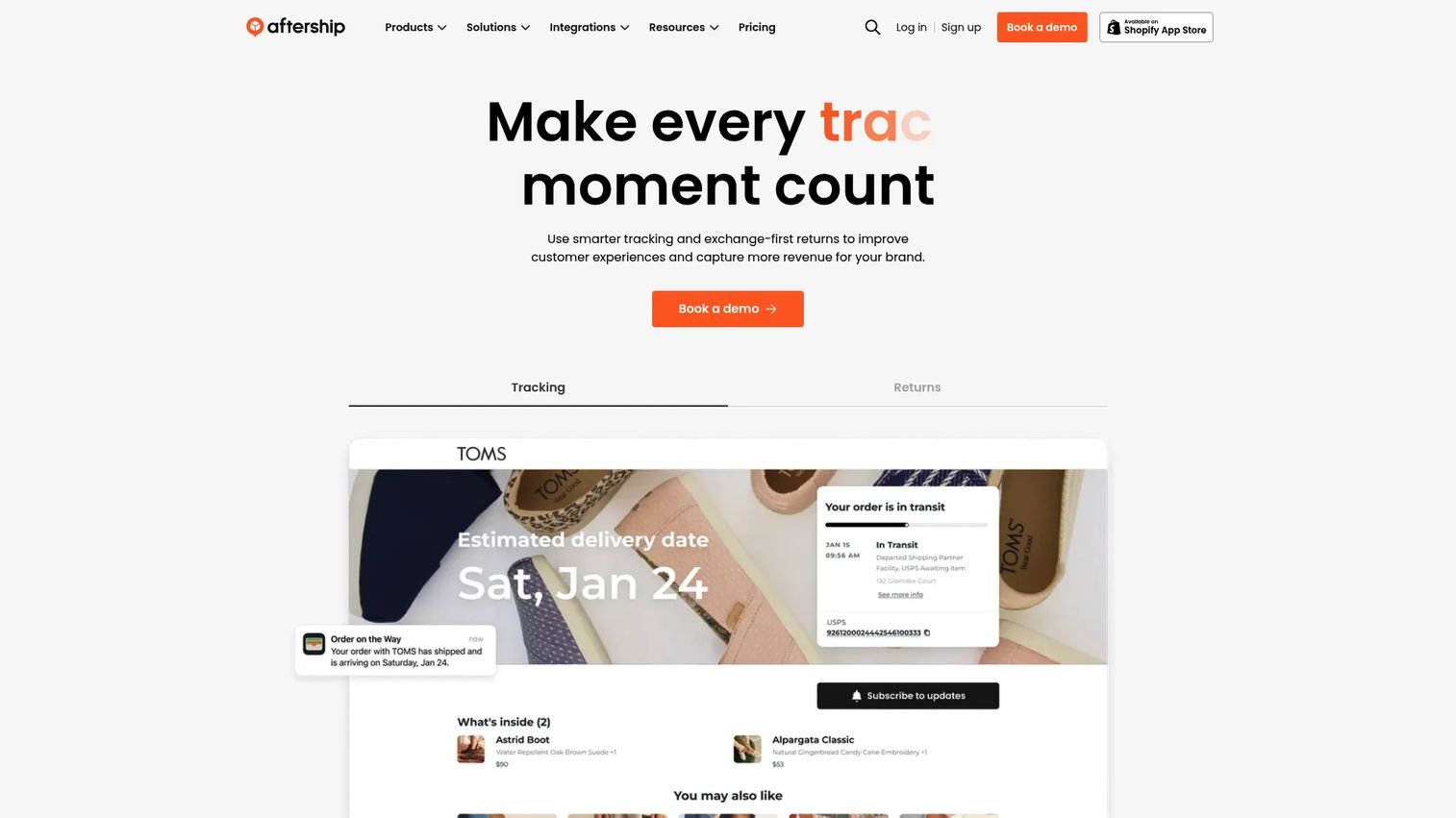
AfterShip is a post-purchase platform that combines shipment tracking, returns, and shipping in one system. It is built for e-commerce brands that want a broad layer covering the entire journey after checkout, with wide carrier coverage feeding branded tracking pages and customer notifications. For teams that want one vendor to own tracking, returns, and label generation, AfterShip is a natural first look.
Best for: E-commerce brands that need post-purchase tracking, returns, and shipping tools in one platform.
Key strengths
- Branded tracking pages with notifications: Give every order an on-brand status page plus proactive alerts, which is the core of WISMO reduction.
- Returns and exchanges automation: Handle the reverse journey in the same system, so tracking and returns share one data model.
- Shipping labels, rates, and carrier integrations: Generate labels and compare rates against broad multi-carrier support.
Why choose AfterShip: It fits teams that want a single post-purchase layer rather than stitching tracking, returns, and shipping across three vendors. The broad carrier coverage and mature branded tracking make it a safe default for growing brands. The tradeoff is that its breadth means you evaluate several product lines, each priced separately.
AfterShip pricing: Public pricing spans Shipping, Tracking, Returns, and Team plans. Shipping Essentials starts at $9/month and Shipping Pro at $69/month. Tracking Essentials starts at $29/month and Tracking Premium at $59/month. Returns Essentials starts at $9/month, and a Team plan runs $10 per member per month billed annually. A free plan and trial options exist depending on the product line, with Enterprise quoted by sales.
2. Parcel Perform
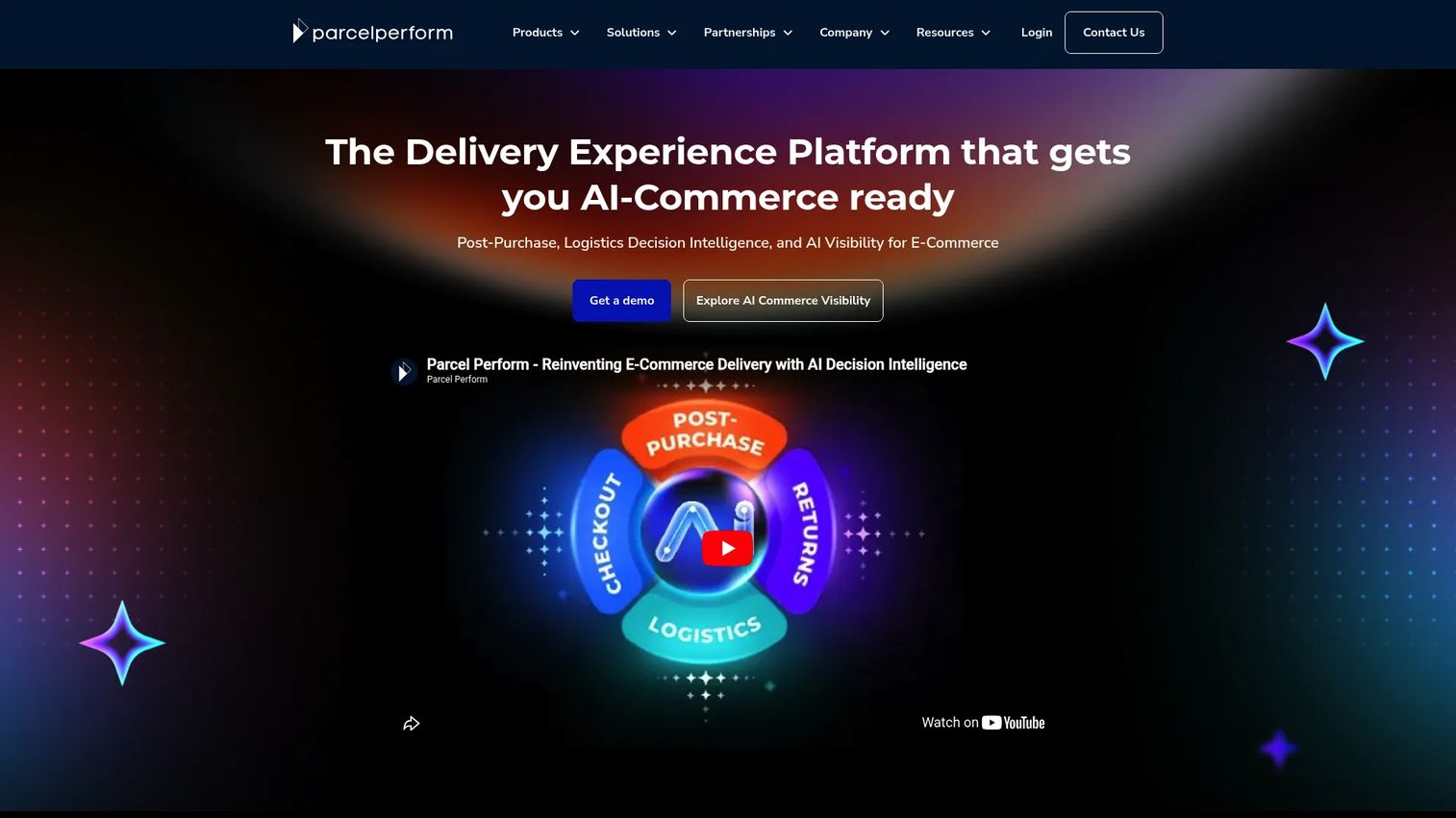
Parcel Perform is an AI delivery experience platform that covers checkout, post-purchase, returns, and logistics intelligence. It is aimed at enterprise e-commerce teams that need deep delivery visibility across many carriers plus the analytics to act on it. Where lighter tools stop at a status page, Parcel Perform treats tracking data as the input for predictive ETA and decision intelligence.
Best for: Enterprise e-commerce teams needing delivery visibility and post-purchase automation at scale.
Key strengths
- AI commerce visibility: Normalize and enrich tracking data across a large carrier network into one shipment visibility dashboard.
- AI decision intelligence: Turn raw events into carrier benchmarking, exception detection, and predictive ETA.
- Post-purchase experience: Deliver branded tracking and proactive customer notifications on top of the intelligence layer.
Why choose Parcel Perform: It suits teams whose scale makes raw carrier data unmanageable and who want AI to surface exceptions before they become tickets. The enterprise posture and logistics analytics depth are the draw. The tradeoff is that it is built for larger operations, so smaller teams may find it more platform than they need today.
Parcel Perform pricing: Parcel Perform does not publish public pricing. The site routes prospects to a demo and sales conversation, which is typical for enterprise logistics intelligence platforms. It holds a 4.7/5 rating on G2, which signals strong satisfaction among its enterprise user base.
3. Narvar
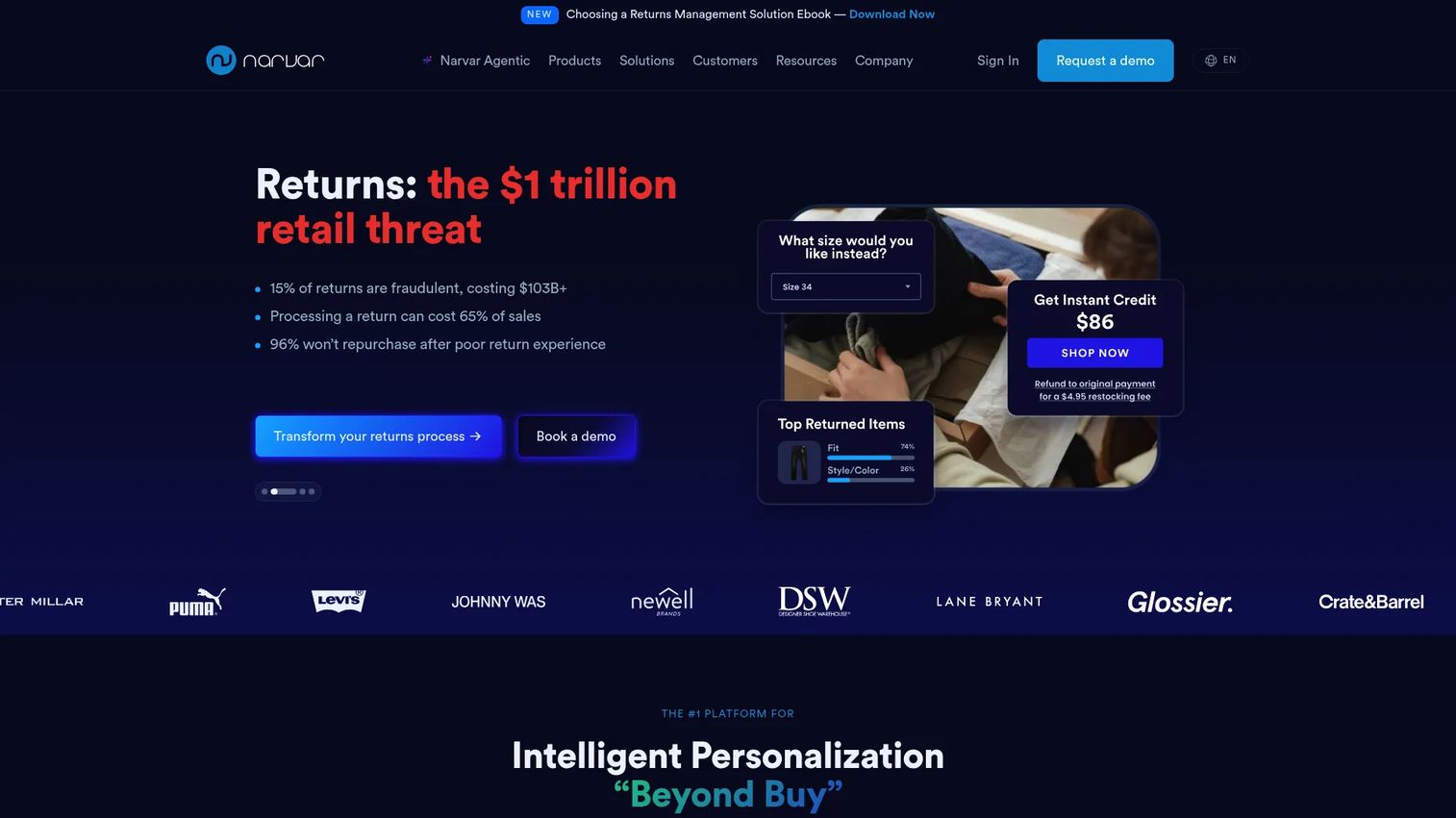
Narvar is a post-purchase commerce platform for brands and retailers, covering delivery, tracking, notifications, returns, and fraud. Its strength is the branded customer experience: a checkout-to-doorstep journey that feels native to the retailer, not the carrier. Narvar frames tracking as a retention surface, not just a status lookup.
Best for: Enterprise retailers that need a branded post-purchase platform with delivery promise accuracy.
Key strengths
- AI-powered delivery estimates (Promise): Set accurate delivery expectations at checkout with predictive ETA, which lifts conversion and cuts anxiety.
- Branded order tracking (Track): Keep customers on your branded tracking page through every milestone.
- Returns, exchanges, and fraud prevention: Round out the post-purchase journey with Shield and Assist modules.
Why choose Narvar: It fits retailers who see the post-purchase window as a brand and retention moment, not a cost center. The delivery promise accuracy and polished branded experience are its signature. The tradeoff is that it is built for enterprise retail, so the fit is strongest for brands with the volume to justify a platform investment.
Narvar pricing: Narvar does not publish public pricing and directs prospects to request a demo. It carries a 4.2/5 rating on G2. Expect an enterprise, quote-based motion aligned with its retail focus.
4. TrackingMore
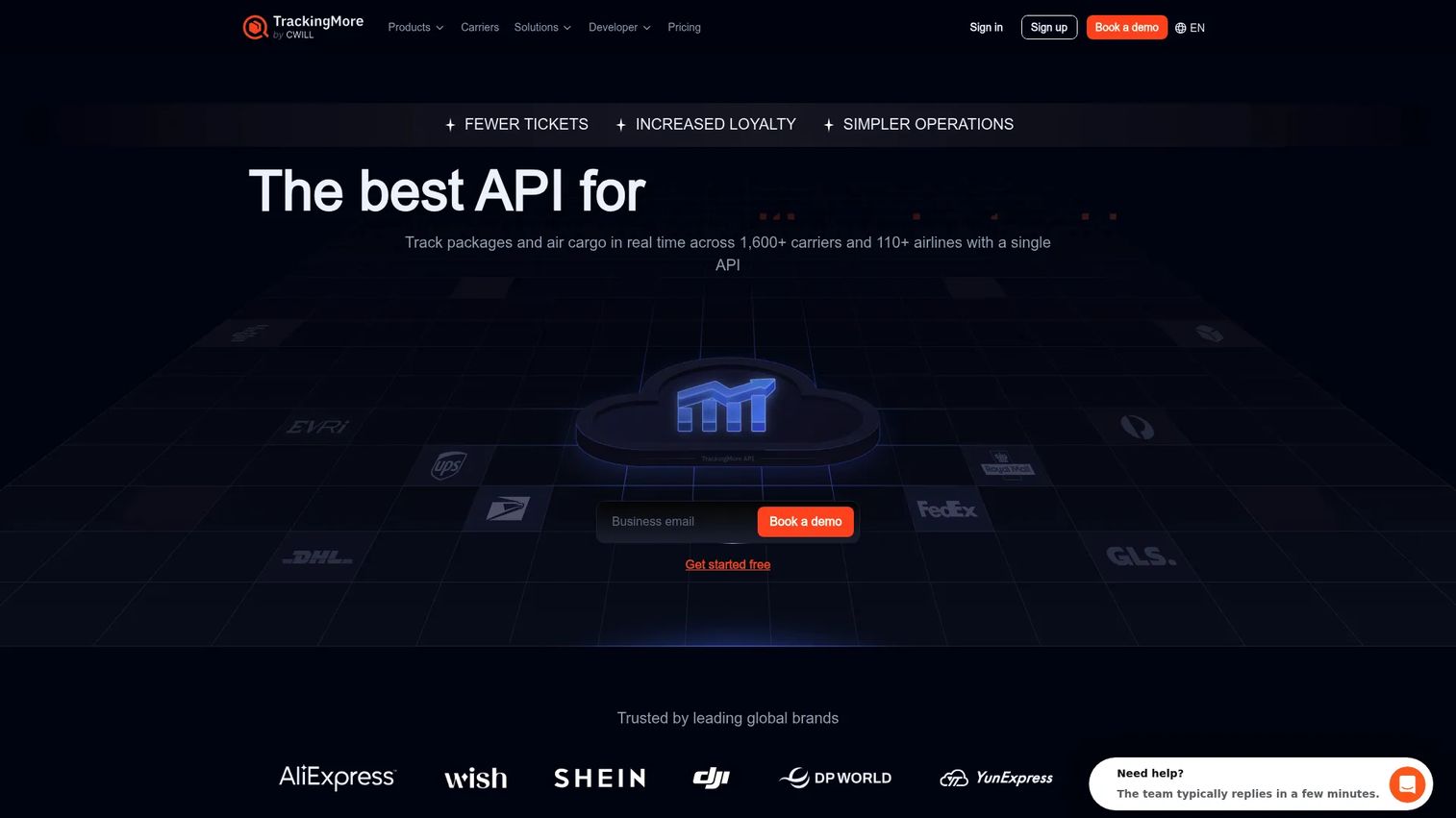
TrackingMore is a shipment tracking platform and API built for multi-carrier visibility and customer notifications. It is a practical choice for teams that want broad tracking infrastructure and a developer-friendly tracking API without an enterprise commitment. Carrier auto-detection and a free tier make it easy to start.
Best for: Businesses that need multi-carrier tracking, branded tracking pages, and shipment notifications with API access.
Key strengths
- Tracking API: Pull normalized status events into your own apps and workflows with a documented, developer-friendly API.
- Branded tracking page: Keep customers on your domain with an on-brand status experience.
- Shipment notifications: Trigger proactive alerts and ETA updates across the delivery journey.
Why choose TrackingMore: It fits product and engineering teams that want to build tracking into their own experience rather than buy a heavy platform. The free tier and clear API make it a low-risk starting point. The tradeoff is that it is tracking-first, so returns and delivery execution live in other tools.
TrackingMore pricing: TrackingMore publishes a Free plan at $0/month with basic features. The Basic plan runs $11.00 for 50 shipments per month, and Pro runs $74.00 for 2,000 shipments per month. Shipment allowances scale with the tier, which keeps entry costs low for smaller senders.
5. Sendcloud
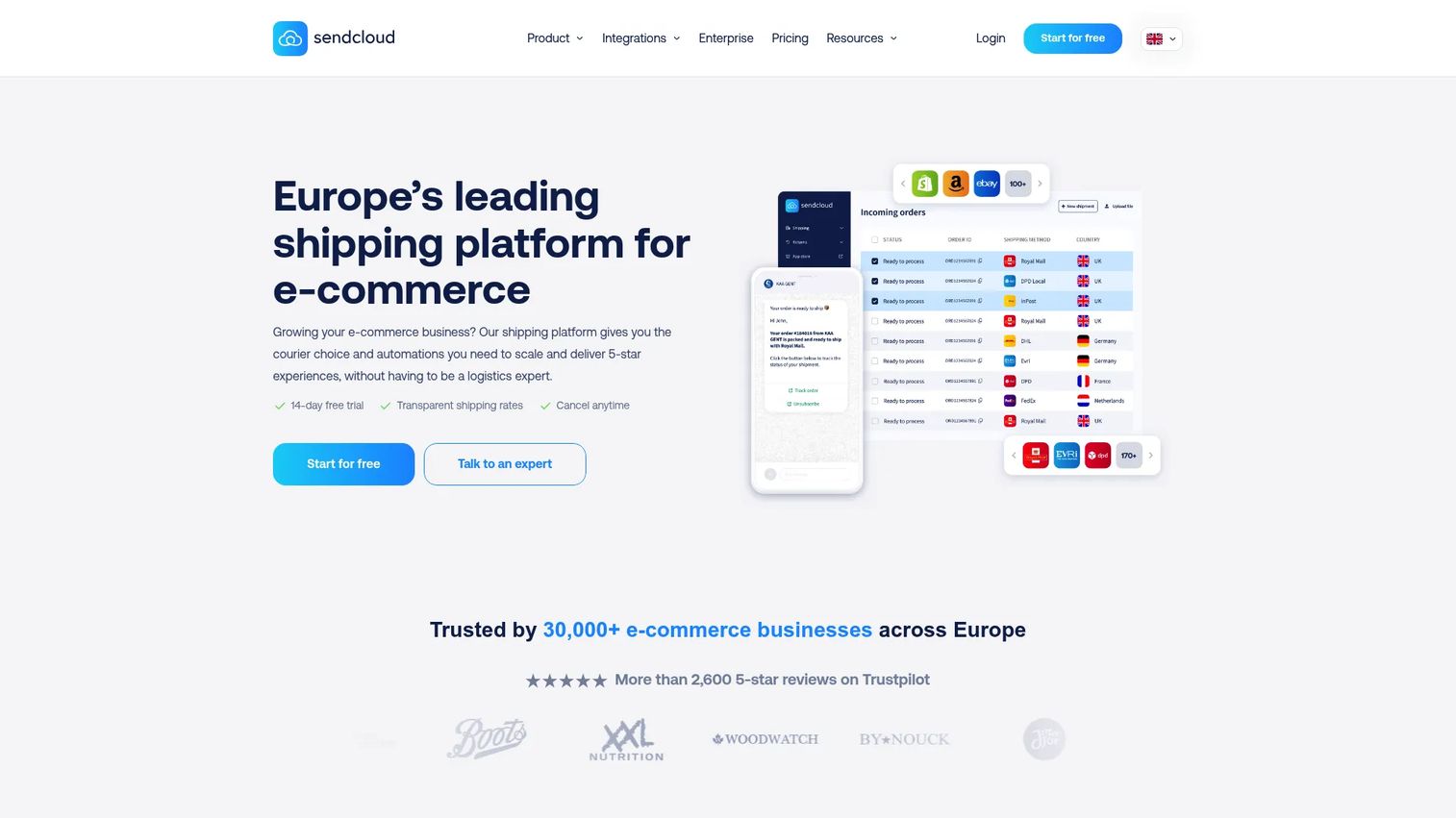
Sendcloud is an e-commerce shipping platform for multi-carrier shipping, tracking, and returns. It sits closer to the shipping workflow than pure post-purchase tools, so tracking updates and branded pages come bundled with label creation and shipping rules. For teams that ship across many couriers, Sendcloud unifies the outbound and the tracking in one place.
Best for: E-commerce teams that need centralized multi-carrier shipping and returns with tracking updates.
Key strengths
- Multi-carrier shipping and label creation: Generate labels and manage a broad courier network from one dashboard.
- Shipping rules and automation: Route orders to the right carrier automatically with rules-based logic.
- Tracking notifications and returns management: Send branded tracking updates and handle the reverse journey.
Why choose Sendcloud: It fits teams whose main pain is the shipping workflow itself, with tracking as a connected benefit rather than a standalone product. The courier network breadth and automation are the draw. The tradeoff is that its center of gravity is shipping operations, so pure post-purchase intelligence sits deeper in other platforms.
Sendcloud pricing: Sendcloud offers a Free plan at €0/mo covering up to 20 parcels per month. Paid plans include Lite at €28/mo plus €0.10 per label, Growth at €87/mo plus €0.09 per label, and Premium at €175/mo plus €0.08 per label, with a Pro tier above. It holds a 4.5/5 rating on G2.
6. Track-POD
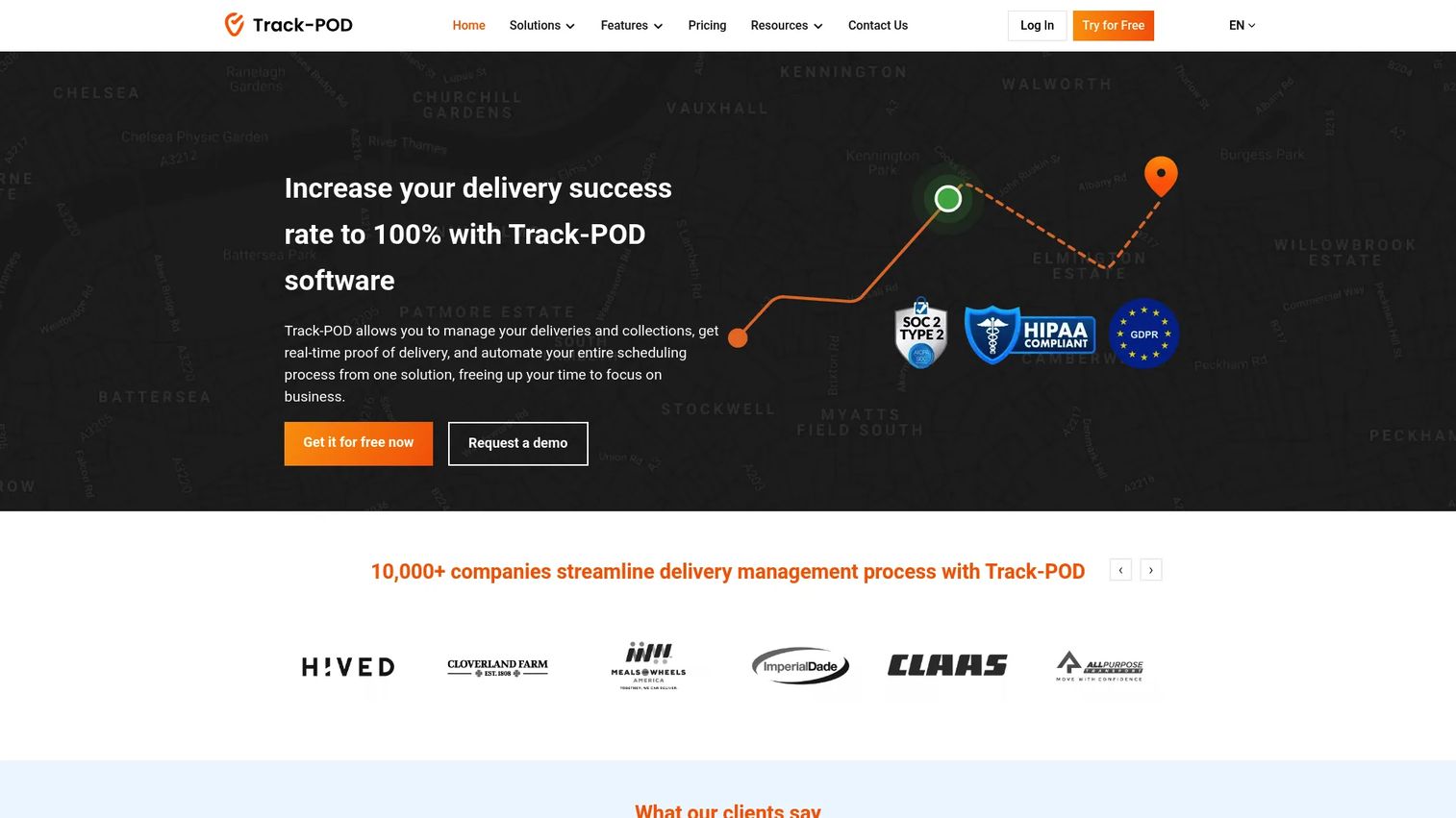
Track-POD is delivery management and proof-of-delivery software for last-mile logistics. It goes beyond tracking status into delivery execution, with a driver app, route planning, and electronic proof of delivery. If your team runs its own fleet or manages last-mile delivery, Track-POD combines live tracking with the workflow to actually complete it.
Best for: Last-mile delivery teams that need proof of delivery, live tracking, and route planning together.
Key strengths
- Real-time delivery tracking: Give customers and dispatchers live visibility into every vehicle and stop.
- Electronic proof of delivery: Capture signatures, photos, and timestamps to close the delivery loop.
- Route optimization and dispatch management: Plan efficient routes and manage dispatch from one system.
Why choose Track-POD: It fits teams that own delivery execution, not just visibility into third-party carriers. The ePOD and routing depth make it a delivery management platform rather than a pure tracking layer. The tradeoff is that if you rely entirely on external carriers, much of the fleet and routing capability sits unused.
Track-POD pricing: Track-POD prices by driver or by order volume. Driver plans start with Advanced at $49/month per driver billed annually ($59 month-to-month, minimum 3 drivers), Advanced Plus at $69/month, and Ultimate at $89/month. Order-based plans run from an S plan at $285/month for 1,500 orders up to an XL plan at $1,440/month for 12,000 orders, with Enterprise quoted for 20+ drivers. A free trial is offered. It carries a 4.2/5 rating on G2.
7. ClickPost
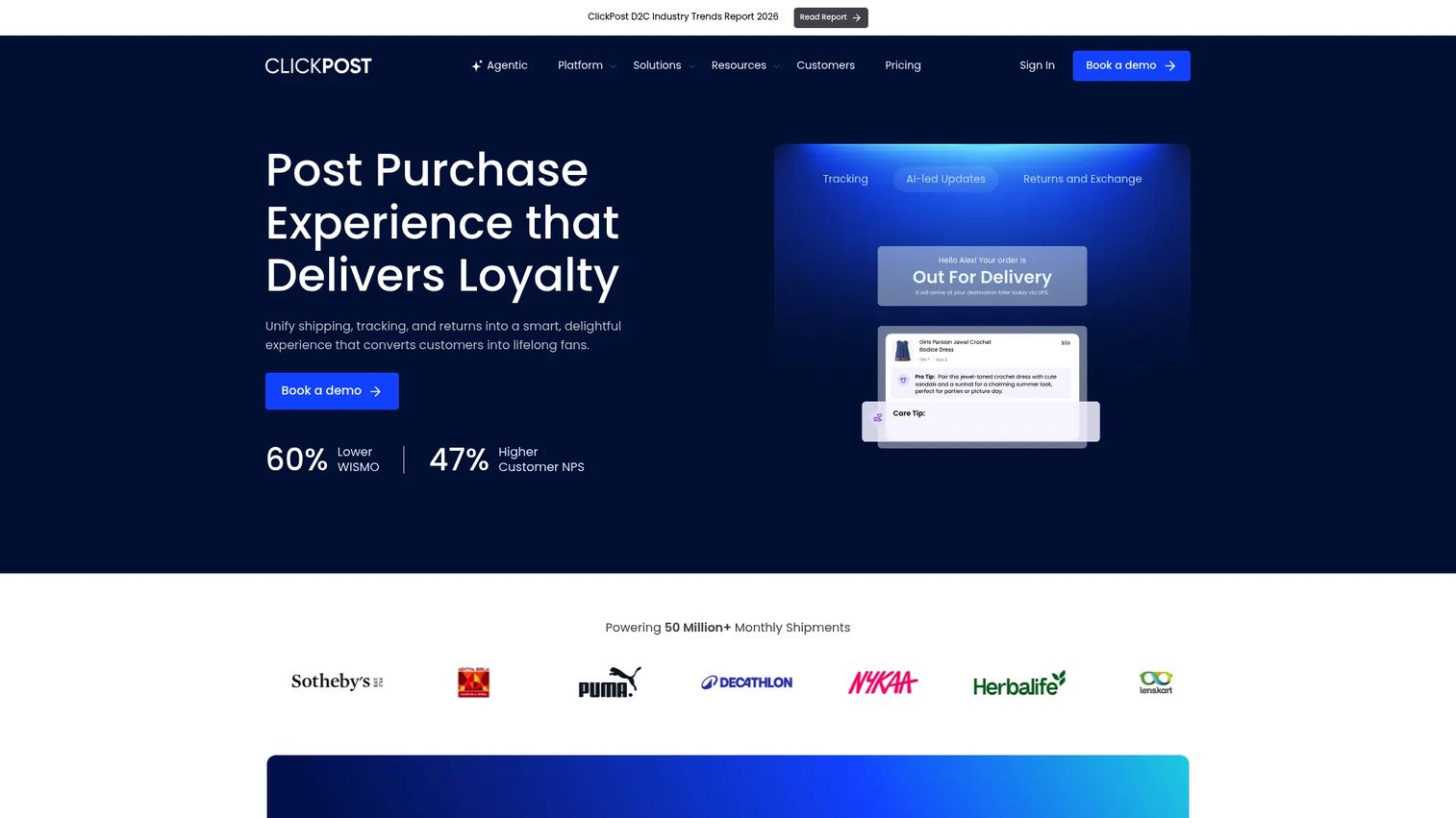
ClickPost is post-purchase logistics intelligence software for e-commerce, D2C, quick commerce, and B2B shipping operations. It combines multi-carrier shipment tracking with standardized customer notifications, AI carrier allocation, and exception management. For complex operations, ClickPost orchestrates the shipping network and reduces WISMO in one layer.
Best for: Mid-market and enterprise brands that need unified post-purchase logistics and returns automation.
Key strengths
- Multi-carrier tracking and standardized notifications: Normalize events across many carriers and send consistent, branded customer notifications.
- AI carrier allocation and exception management: Route shipments to the best carrier and flag exceptions before they become tickets.
- Returns and exchanges automation: Manage the reverse journey inside the same post-purchase system.
Why choose ClickPost: It fits teams juggling many carriers and high order volume that need orchestration plus proactive alerts, not just a status page. The AI carrier allocation and exception detection are the differentiators for WISMO reduction at scale. The tradeoff is that its depth is built for complex operations, so smaller senders may not need the full orchestration layer yet.
ClickPost pricing: ClickPost uses custom, usage-based pricing and does not publish fixed public tiers. Pricing is quoted per operation, which suits its enterprise and mid-market focus. It holds a 4.8/5 rating on G2, one of the highest in this list.
Considerations before you buy
Use this checklist to pressure-test any shortlist against your operational reality.
Carrier coverage and multi-carrier support
Confirm the platform covers your actual carriers, including regional and last-mile providers, not just the big names. Ask how quickly new carriers get added and whether coverage is normalized into one data model. Weak coverage is the fastest way to reintroduce the visibility gaps you are trying to close.
Tracking API and integration depth
Check whether the tracking API exposes normalized status events, webhooks, and the fields your apps need. Verify native integrations with your commerce platform, support desk, and analytics stack. A clean API is what lets you push tracking data into your best customer data platform and downstream workflows without custom glue code.
Branded tracking page and notification control
Evaluate how much of the branded tracking page and customer notifications you can control without engineering. Look for on-brand pages, flexible triggers, and marketing surfaces on the tracking page. The goal is a consistent branded customer experience that keeps traffic on your domain.
Logistics analytics and carrier benchmarking
Assess the shipment visibility dashboard and reporting depth. You want carrier benchmarking, exception detection, and delivery performance trends you can export, not just a static status view. This is the layer that connects to your broader analytics platforms drive roi work.
Maintenance and total cost
Factor in ongoing maintenance, not just the sticker price. Ask who owns integration upkeep as carriers and product change, and how pricing scales with shipment volume. The right tool reduces operational load rather than adding a system to babysit.
Conclusion
The seven tools here map cleanly to three buying patterns. If you want a broad post-purchase layer, AfterShip and Narvar lead, with AfterShip covering tracking, returns, and shipping and Narvar owning the branded retail experience. If you want logistics intelligence at scale, Parcel Perform and ClickPost bring AI-driven visibility, predictive ETA, and exception detection built for WISMO reduction. If you want developer-friendly tracking or shipping plus tracking, TrackingMore and Sendcloud fit, while Track-POD is the pick when you own last-mile delivery execution.
Your next step is to match the tool to the outcome. Pure post-purchase tracking, full delivery management, or logistics intelligence each point to a different shortlist. Start with the two criteria that matter most to your team, carrier coverage and integration depth, then test one platform against your real shipment data before you commit. Clean delivery visibility is what turns "where is my order" from a support cost into a retention advantage.
FAQs
Shipment tracking software aggregates tracking data from multiple carriers into one system, then exposes it to customers and operations through branded tracking pages, customer notifications, ETA updates, and analytics. It gives you real-time shipment tracking across providers without stitching together each carrier's separate feed. The strongest tools treat that data as a signal for support deflection and retention, not just a status page.
WISMO tickets happen when customers cannot see where their order is, so they ask your support team instead. A package tracking platform sends proactive alerts and ETA updates at each milestone and gives customers a branded tracking page to check on their own. When visibility is accurate and self-serve, the "where is my order" question stops reaching the queue, which is measurable WISMO reduction.
Shipment tracking software focuses on visibility into shipments moving through third-party carriers, with post-purchase tracking, branded pages, and customer notifications. Delivery management software owns execution, including route planning, driver apps, and proof of delivery for your own fleet or last-mile operation. Some platforms blend both, so map the tool to whether you need visibility, execution, or a mix.
It depends on who owns the experience. If you want to build tracking into your own app or site, prioritize a strong tracking API that exposes normalized events and webhooks. If you want an on-brand status page fast without engineering, a ready-made branded tracking page comes first. Many teams end up using both, with the API feeding data and the page presenting it.
Multi-carrier support is the foundation, so confirm the platform normalizes every carrier's data into one shipment visibility dashboard. From there, proactive alerts, exception detection, and carrier benchmarking matter most, since they turn fragmented data into action. A clean tracking API and flexible notifications round out the set for teams running many providers.
Yes. Logistics intelligence platforms use historical and real-time data to generate predictive ETA and accurate ETA updates, which set better delivery expectations at checkout and in notifications. Accurate estimates reduce anxiety, cut WISMO, and can lift conversion. The quality of prediction depends on data volume and the depth of the platform's analytics.
Start with carrier coverage against your actual providers, then check integration depth with your commerce platform, support desk, and analytics stack. Weigh how much of the branded customer experience you can control without engineering, and review the logistics analytics you can export. Finally, model how pricing and maintenance scale with your shipment volume before committing.
Confirm the new platform covers all your carriers and can migrate historical tracking data cleanly. Verify the tracking API and integrations match your current workflows, and test proactive alerts and branded pages against real orders. Check contract terms and how pricing scales, then run a parallel period so you can compare delivery visibility and WISMO impact before you fully cut over.