
Your support team answers the same ten questions 200 times weekly. AI customer service agents can resolve these problems instantly, yet customers still wait in queue. This burden affects teams across the customer journey.
Choosing the right AI customer service agents determines how quickly your team sees results.
Presales teams increasingly use interactive demos to handle routine questions.
AI customer service agents use large language models to understand and resolve inquiries autonomously. They handle routine questions instantly and escalate complex issues with context. This guide compares 12 platforms and helps you choose the right tool.
Quick Comparison of Top AI Agents
- Best for enterprise CRM integration: Salesforce Agentforce connects natively to Service Cloud and pulls customer history into every conversation
- Best for existing Zendesk users: Zendesk AI deploys inside your current ticketing workflow without migration
- Best for e-commerce: Gorgias automates order status, returns, and shipping questions with direct Shopify and BigCommerce integration
- Best for voice-first support: PolyAI handles phone calls with natural conversation quality that replaces clunky IVR menus
- Best for budget-conscious teams: Tidio Lyro offers AI support starting at $39/month with quick setup
- Best for automation-first deployment: Ada resolves inquiries autonomously across chat, email, and social channels
Guide Overview and Selection Criteria
This guide covers what AI agents do and how they differ from chatbots. You'll find a comparison table of 12 tools with pricing and G2 ratings, followed by detailed breakdowns.
Selection criteria focused on resolution accuracy, integration depth, and deployment speed.
What is an AI customer service agent
AI agents are autonomous systems using large language models to resolve issues. Unlike chatbots, AI agents interpret context and generate dynamic responses.
Here's the practical difference. When a customer asks "Where's my order?", AI doesn't just match keywords. It pulls tracking information and delivers a personalized response.
If the customer follows up, the agent understands context and explains options.
Chatbots break down when conversations go off-script. AI customer service agents adapt to unexpected questions and escalate with context. That adaptability is what separates AI customer service agents from older automation tools.
Capability | Traditional chatbot | AI customer service agent |
|---|---|---|
Response logic | Pre-written scripts and keyword matching | LLM-based reasoning and context understanding |
Query handling | Single intent per message | Multi-turn, complex issue resolution |
Learning | Manual updates by support team | Continuous improvement from interactions |
Escalation | Keyword triggers | Context-aware handoff with conversation history |
Key benefits of AI agents for customer service
Reduced operational costs
AI agents handle 80% of common issues automatically. A team fielding 10,000 tickets monthly might see 60-70% resolved automatically.
This doesn't mean replacing your support team. It means your existing team handles more volume without proportional headcount growth.
Faster resolution times
Customers don't wait when AI responds. Responses happen in seconds. Instant resolution improves customer experience for routine questions.
Improved CSAT scores
Consistency matters significantly. Human agents vary in performance. They interpret policies inconsistently. They vary in tone.
AI agents deliver consistent quality responses 24/7. Consistency and instant response times lift satisfaction scores.
24/7 support without staffing overhead
Customers have problems outside business hours. International customers span multiple time zones. Weekend issues accumulate until Monday.
AI agents operate continuously without staffing overhead.
Scalability during volume spikes
Product launches and outages create volume spikes. You either staff up or watch response times degrade.
AI absorbs demand surges without degradation. AI handles traffic spikes at consistent speed and quality.
Higher productivity for human support agents
When AI handles routine tasks, humans focus on complex issues.
AI deployment improves human agent retention. Agents spend more time on meaningful interactions.
Common use cases for AI support agents
Answering routine customer inquiries
FAQ questions consume significant bandwidth. Return policies and pricing questions repeat hundreds of times daily. Teams deploy interactive guides alongside AI for visual assistance.
AI pulls from knowledge bases for accurate answers. They handle variations and provide relevant follow-up information.
Order status and tracking updates
"Where's my order?" is the most common e-commerce question. AI integrates with order systems for tracking and delivery information.
Troubleshooting and technical support
AI guides customers through diagnostic steps. Customers receive troubleshooting guidance based on error messages.
This includes checking permissions and verifying settings.
Personalized product recommendations
AI analyzes purchase history to suggest relevant products. This means recommending alternatives when items are unavailable.
Customer sentiment detection and escalation
AI detects frustration and dissatisfaction in messages. When sentiment turns negative, AI routes to humans with context. Platforms like HelpCrunch enable manual messages during handoffs.
Humans see conversation history and pick up without repetition.
Process automation and ticket routing
AI categorizes tickets and routes issues to teams. Billing questions go to billing teams. Technical issues go to technical support.
Teams looking to reduce volume further can explore ways to reduce support tickets.
Simple issues resolve automatically. Complex issues reach humans faster.
AI customer service agents comparison table
Tool | Best for | Key differentiator | Pricing | G2 rating |
|---|---|---|---|---|
Kore.ai | Enterprise complex workflows | No-code bot builder with deep customization | Custom | 4.7/5 |
Zendesk AI | Existing Zendesk users | Native ticketing integration | Add-on to Zendesk plans | 4.3/5 |
Salesforce Agentforce | Salesforce-native orgs | CRM data integration | Custom | 4.3/5 |
Ada | Automation-first teams | High autonomous resolution rate | Custom | 4.6/5 |
Fin by Intercom | Product-led companies | Conversation quality and knowledge base integration | From $29/seat/month | 4.5/5 |
Sierra AI | SMBs adopting autonomous support | Ease of setup and conversational quality | Custom | 4.4/5 |
Yellow.ai | Multi-language support | 135+ language support with voice capabilities | Custom | 4.4/5 |
Cognigy | Contact center automation | Enterprise telephony integration | Custom | 4.6/5 |
Gorgias | E-commerce (Shopify, BigCommerce) | Order-related automation and revenue tracking | From $10/month | 4.6/5 |
Tidio Lyro | Small businesses | Budget-friendly with quick setup | From $39/month for AI | 4.7/5 |
Boost.ai | Regulated industries | Security compliance and scalability | Custom | 4.8/5 |
PolyAI | Voice-first phone support | Natural conversation quality over IVR | Custom | 4.5/5 |
12 best AI agents for customer service
1. Kore.ai
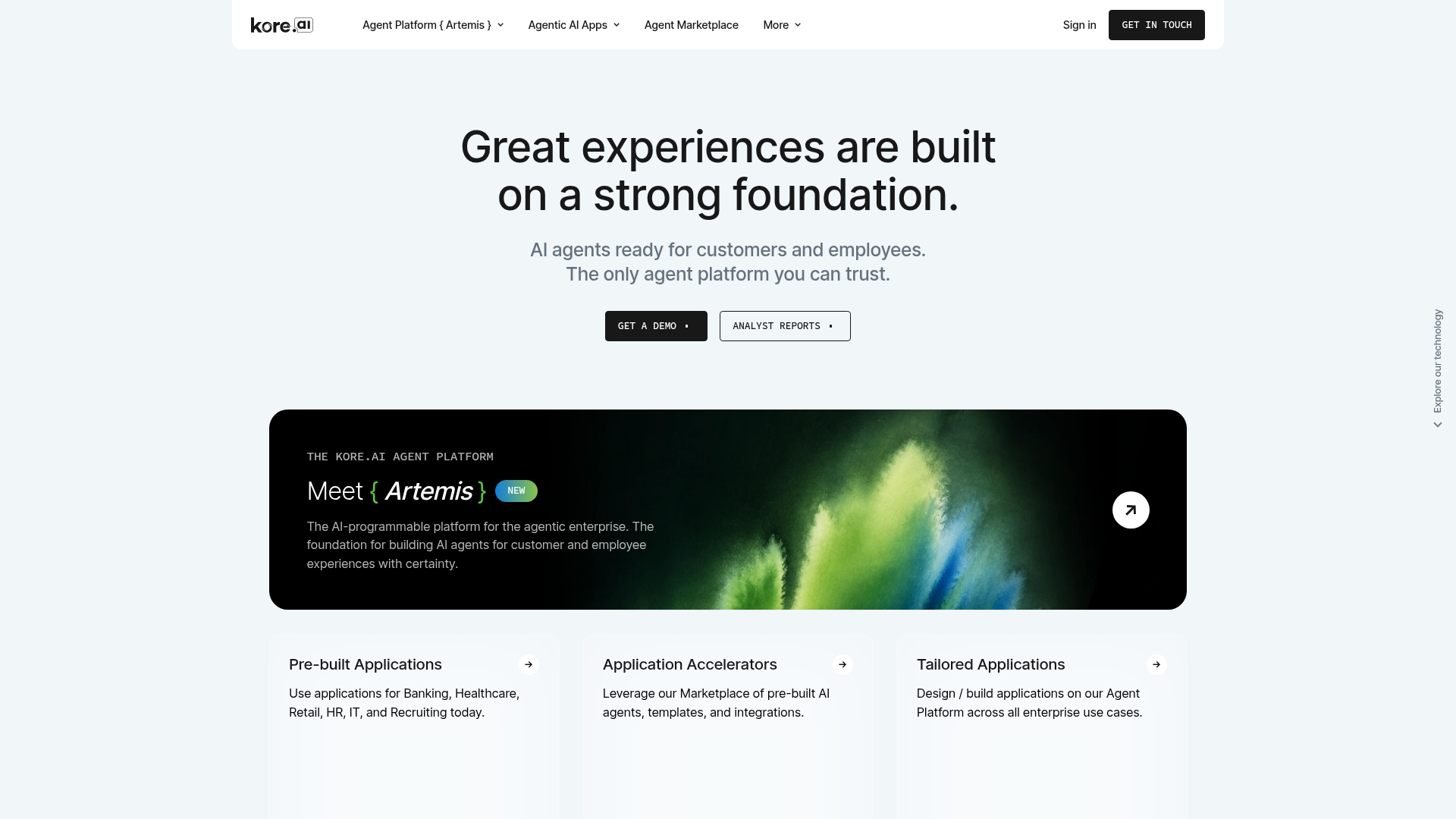
Kore.ai provides enterprise conversational AI with deep customization capabilities. The platform handles complex workflows that span multiple backend systems - connecting CRM data, order management, billing systems, and knowledge bases into unified AI-driven conversations. Teams can explore bot creation through interactive walkthroughs.
The no-code builder lets support teams design conversation flows visually. Developers can extend functionality through APIs for custom logic.
Best for: Enterprise teams with complex workflows requiring extensive customization and integration across multiple backend systems.
Key strengths
- No-code bot builder: Create AI agents without developers using visual tools
- Multi-channel deployment: Deploy across chat, voice, email, and social channels
- Enterprise integrations: Connect to SAP, Salesforce, and ServiceNow with connectors
Why choose Kore.ai
Choose Kore.ai for workflows spanning multiple systems. Implementation takes weeks to months.
Kore.ai pricing
Custom pricing based on usage volume and deployment scope.
2. Zendesk AI

Zendesk AI layers autonomous AI capabilities directly into your existing Zendesk ticketing environment. The platform analyzes incoming tickets, suggests responses to agents, and resolves routine inquiries automatically. Support teams work in the same Zendesk workspace while AI handles repetitive questions.
Best for: Support teams already using Zendesk who want AI capabilities without platform migration.
Key strengths
- Native ticketing integration: AI works within existing workflows and reporting
- Intent detection: Categorizes and routes tickets by intent
- Agent assist: Provides suggested responses to agents in real-time
Why choose Zendesk AI
Choose Zendesk AI for existing Zendesk users. Ecosystem lock-in is a consideration. Combined costs may exceed standalone platforms.
Zendesk AI pricing
AI is an add-on to Zendesk Suite. Advanced AI starts at $50/agent/month.
3. Salesforce Agentforce
Salesforce Agentforce brings autonomous AI agents directly into Service Cloud environments. The platform leverages complete CRM data including customer history, account details, and purchase records. AI agents reference previous cases and tailor recommendations by customer tier.
Best for: Organizations running Salesforce Service Cloud who want AI agents with full CRM context.
Key strengths
- CRM data integration: AI accesses customer history and account details
- Einstein AI foundation: Built on Einstein with enterprise security
- Omnichannel routing: Manages conversations across channels
Why choose Salesforce Agentforce
Choose Agentforce for Salesforce-native teams. Cost and complexity are considerations. Implementation requires Salesforce expertise.
Salesforce Agentforce pricing
Custom pricing based on Service Cloud edition and usage.
4. Ada
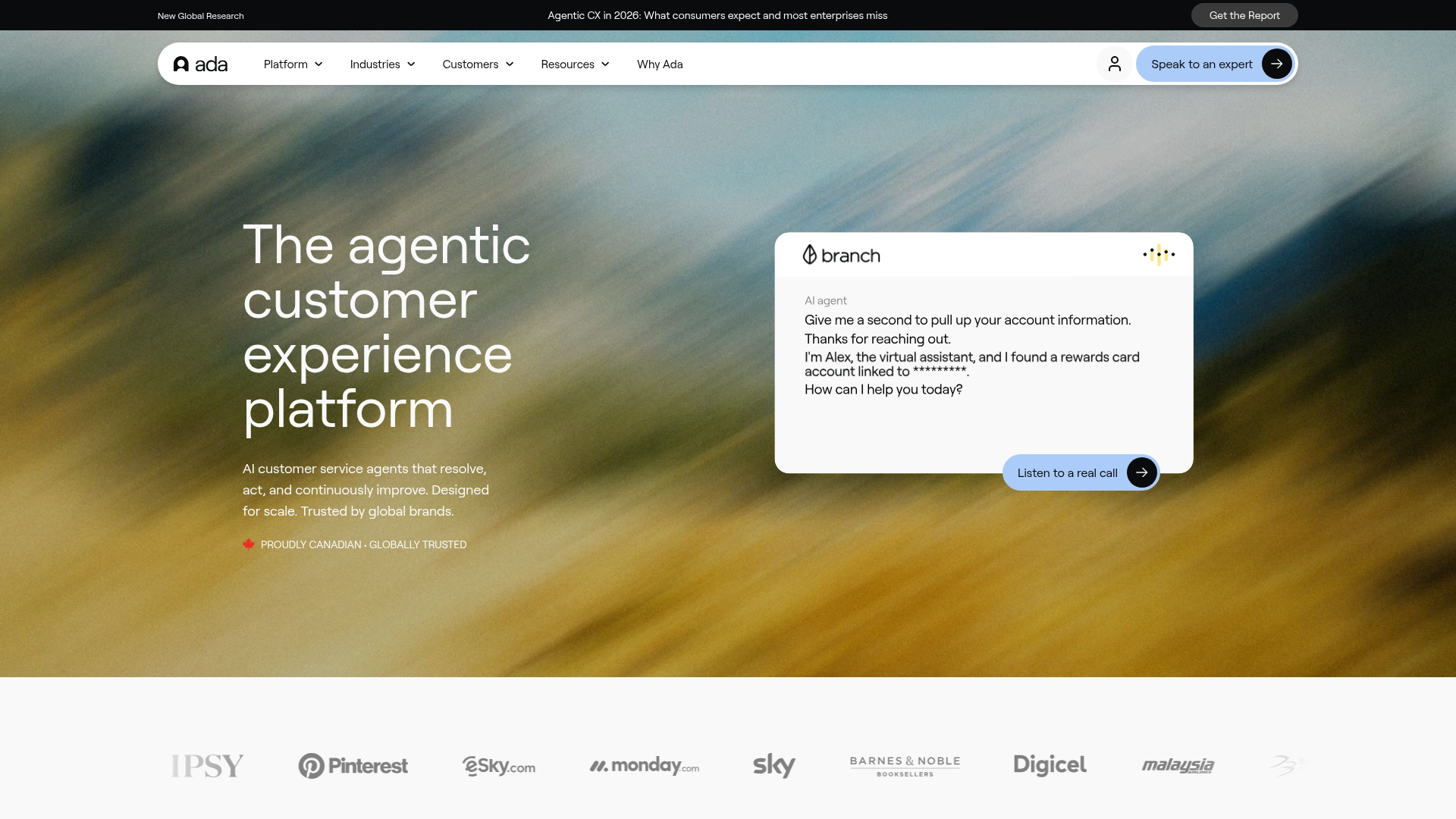
Ada focuses on autonomous resolution with a platform designed to maximize the percentage of inquiries resolved without human intervention. The platform emphasizes quick deployment through a no-code interface. Teams launch AI agents in days and see ROI through measurable automation rates.
Best for: Teams prioritizing automation rate and wanting quick deployment without extensive customization.
Key strengths
- High automation rate: Designed for high autonomous resolution
- No-code builder: Create agents without technical resources
- Multi-channel support: Deploy across chat, email, and social
Why choose Ada
Choose Ada for automation-focused teams. It optimizes for resolution rate. Customization is less flexible than enterprise platforms.
Ada pricing
Custom pricing based on resolution volume.
5. Fin by Intercom
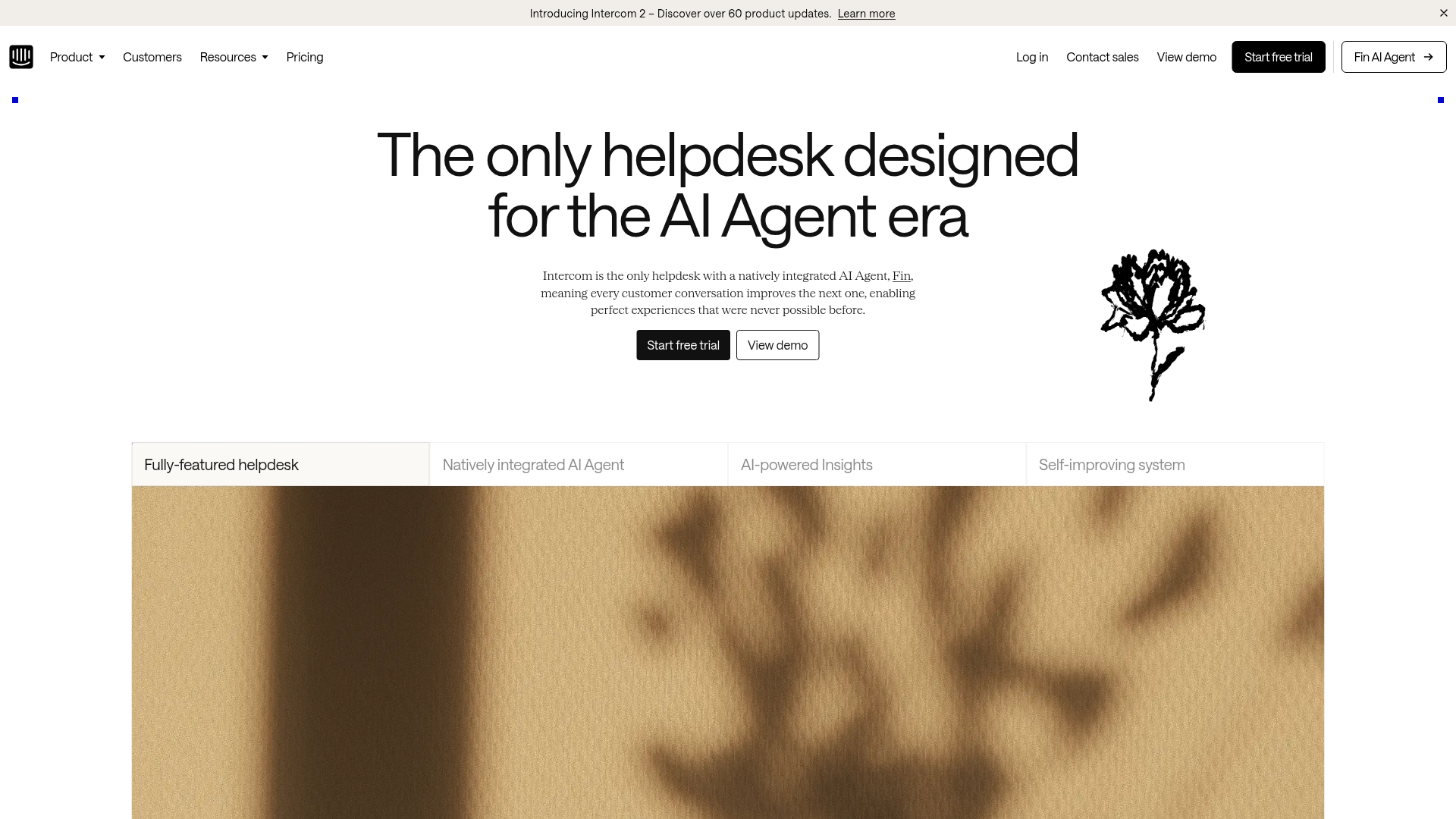
Fin is Intercom's AI agent built specifically for product-led SaaS companies that prioritize in-app communication. The platform emphasizes natural conversation quality across exchanges. It integrates with Intercom's knowledge base for accurate responses.
Best for: Product-led SaaS companies using Intercom for customer communication who want AI support that feels native to the product experience.
Key strengths
- Conversation quality: Responses feel natural and maintain context
- Knowledge base integration: Pulls from help docs and conversations
- Product integration: Embeds in your product for in-app support
Why choose Fin
Choose Fin for existing Intercom users. Fin works best within Intercom.
Fin pricing
Starts at $29/seat/month with Fin included. Resolution-based pricing available.
6. Sierra AI
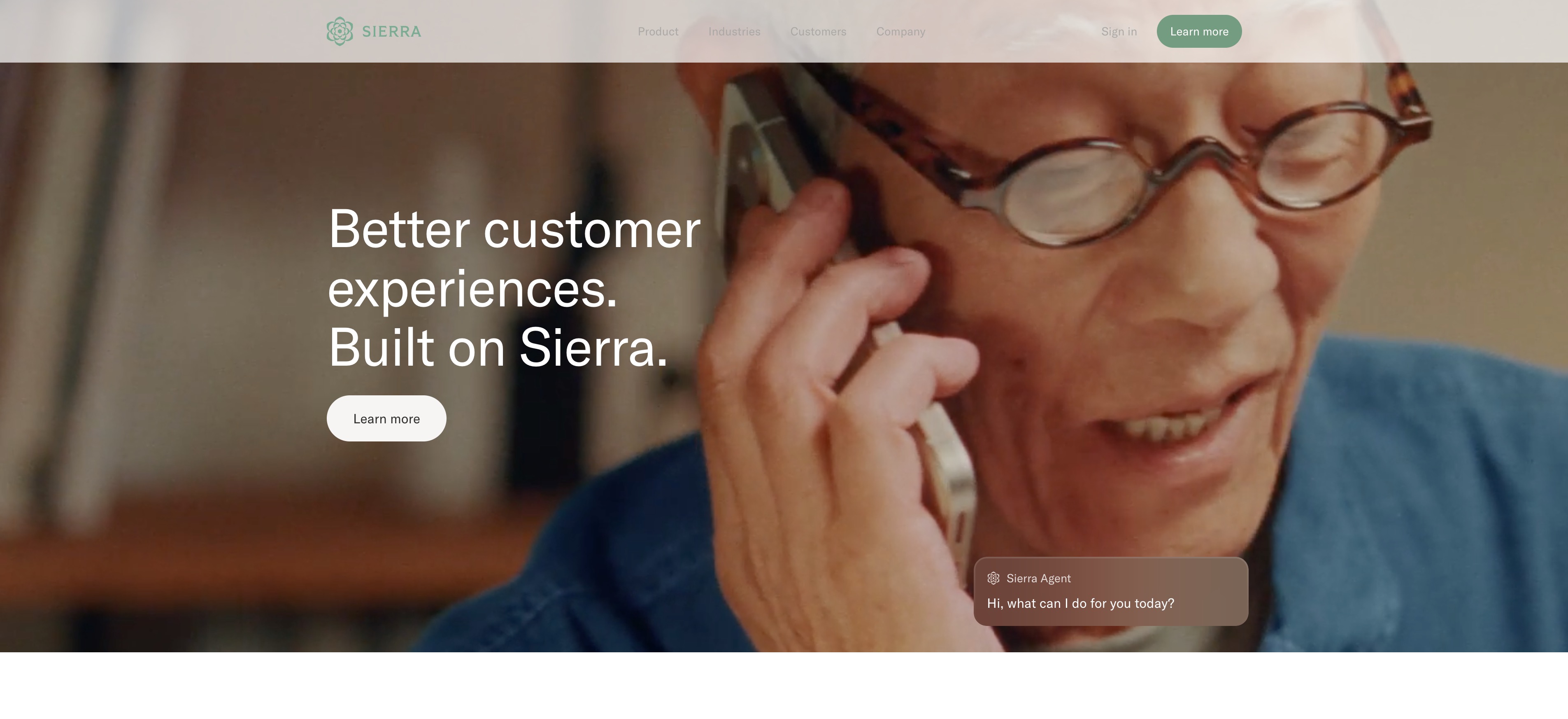
Sierra AI targets mid-market companies seeking autonomous customer support without enterprise-level complexity or implementation timelines. The platform emphasizes rapid deployment through an intuitive setup process and delivers high-quality conversational responses that maintain natural dialogue flow across customer interactions.
Best for: SMBs and mid-market companies wanting autonomous support without enterprise complexity.
Key strengths
- Quick deployment: Get running in days
- Conversational quality: Natural language responses
- Continuous learning: Improves from interactions
Why choose Sierra AI
Choose Sierra for quick AI deployment. Customization is less advanced than enterprise platforms.
Sierra AI pricing
Custom pricing based on usage.
7. Yellow.ai
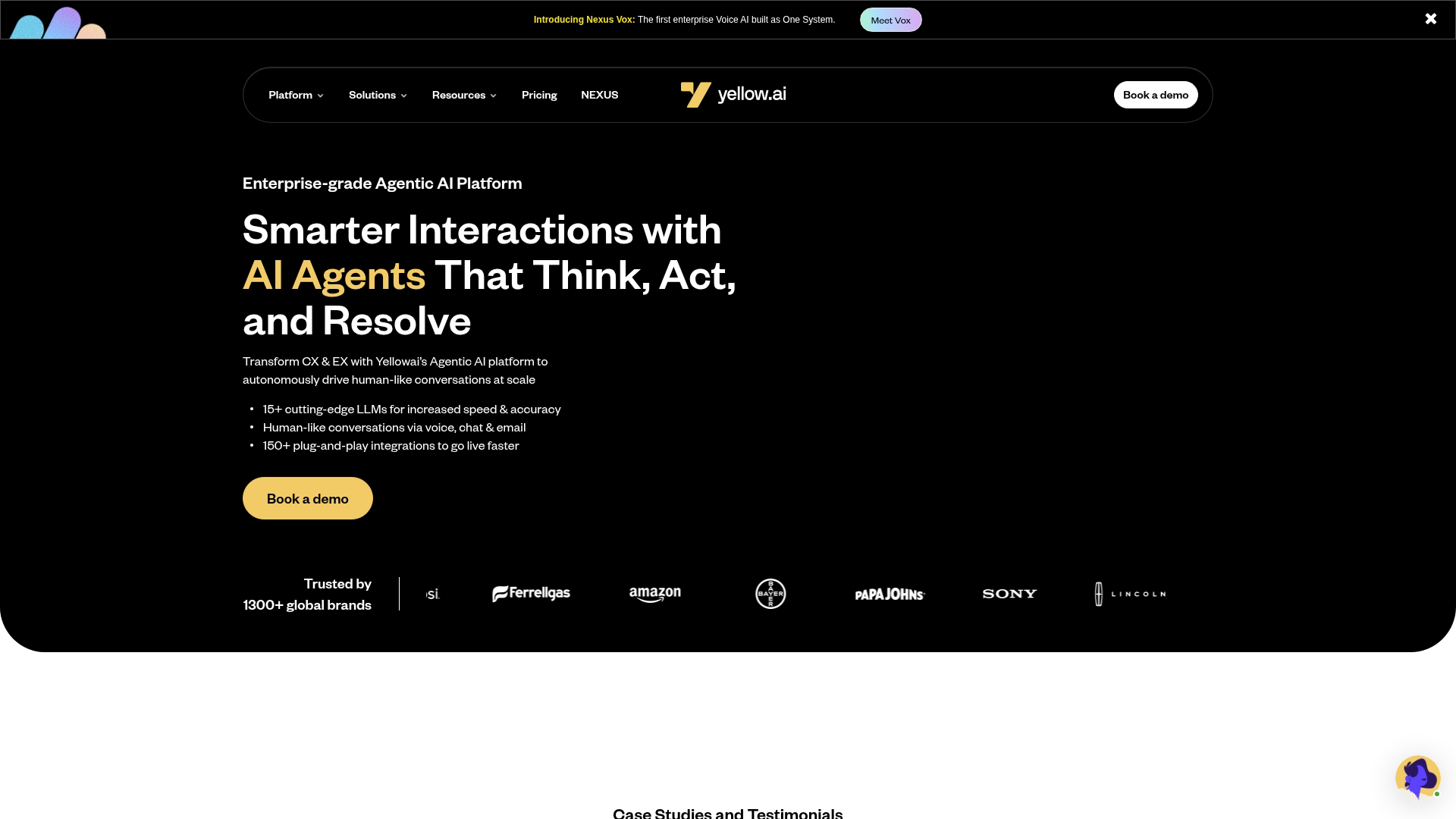
Yellow.ai provides conversational AI with native support for 135+ languages across text and voice channels. The platform serves global enterprises across multiple regions and languages. It excels in Asian and European markets with language diversity.
Best for: Global companies requiring multi-language support across text and voice channels.
Key strengths
- 135+ languages: Supports 135+ languages natively
- Voice AI: Handles phone calls naturally
- Quick deployment: Pre-built templates accelerate launch
Why choose Yellow.ai
Choose Yellow.ai for global multi-language support. Advanced features require enterprise pricing.
Yellow.ai pricing
Custom pricing based on channels and usage volume.
8. Cognigy
Cognigy specializes in contact center automation with enterprise-grade voice and chat capabilities. The platform integrates with existing telephony infrastructure including Genesys, Avaya, and Amazon Connect. It handles both inbound and outbound conversations across voice and digital channels while maintaining conversation context when customers switch between channels.
Best for: Enterprise contact centers with significant phone support volume requiring voice AI integration.
Key strengths
- Telephony integration: Connects to existing contact center systems
- Voice and chat: Unified platform for voice and chat
- Enterprise compliance: Built for regulated industries
Why choose Cognigy
Choose Cognigy for contact center voice AI. Implementation is complex.
Cognigy pricing
Custom pricing based on deployment scope.
9. Gorgias
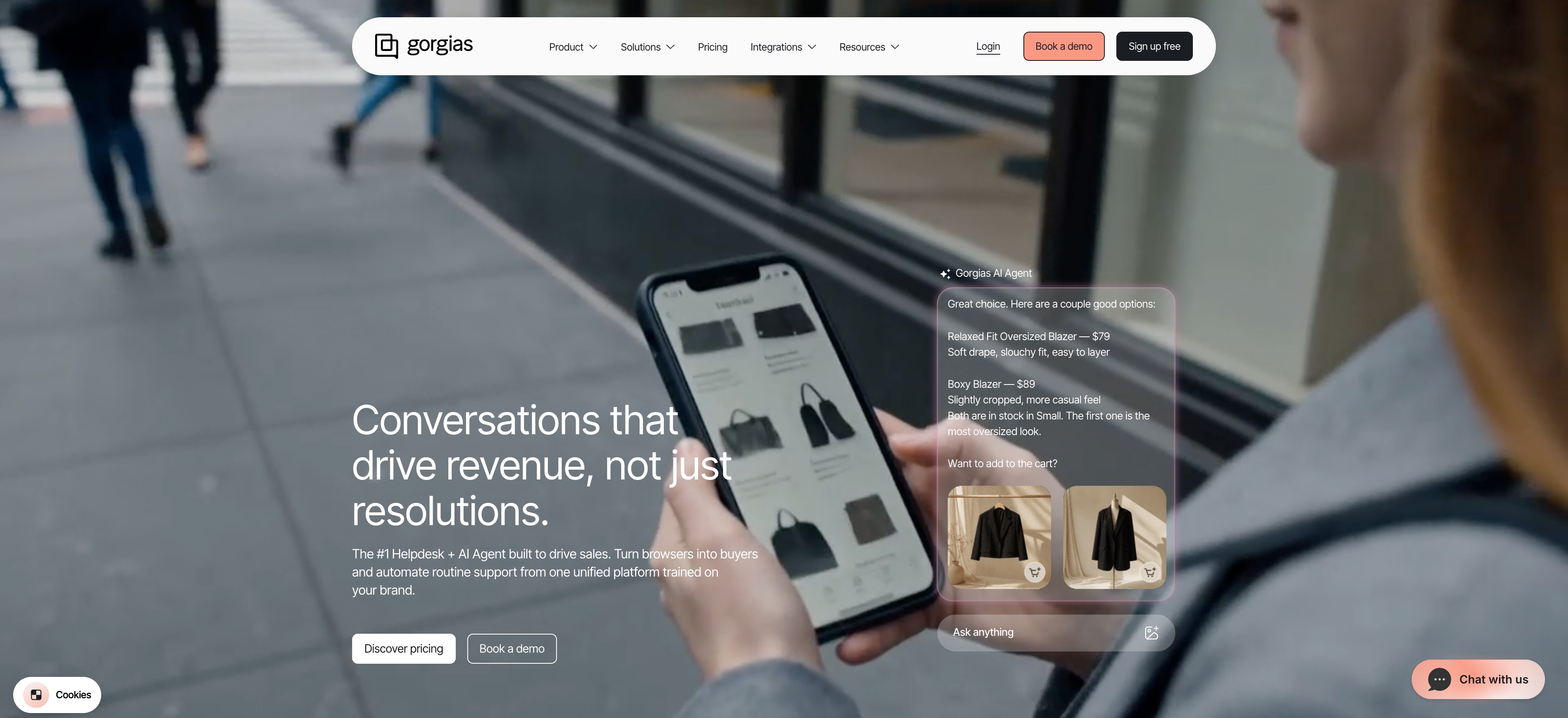
Gorgias is purpose-built for e-commerce support teams. The platform automates order status inquiries, return requests, and shipping questions by connecting directly to your store data. AI agents pull real-time information from Shopify or BigCommerce to answer customer questions without human intervention.
Best for: E-commerce brands on Shopify or BigCommerce wanting AI support that understands orders, returns, and shipping.
Key strengths
- E-commerce integrations: Connects to Shopify and BigCommerce
- Order automation: Handles order and return requests
- Revenue tracking: Attributes revenue to support interactions
Why choose Gorgias
Choose Gorgias for e-commerce AI. Limited applicability outside e-commerce.
Gorgias pricing
Starts at $10/month. AI available on higher tiers.
10. Tidio Lyro
Tidio Lyro offers affordable AI support for small businesses. It emphasizes quick setup through a visual interface and ease of use without technical requirements. The platform combines AI automation with live chat in a unified inbox.
Best for: Small businesses and startups wanting AI support without enterprise pricing or complexity.
Key strengths
- Affordable pricing: AI starts at $39/month
- Quick setup: Get running in hours
- Live chat integration: AI and humans work in same interface
Why choose Tidio Lyro
Choose Tidio for budget-conscious teams. Fewer advanced features than enterprise platforms.
Tidio Lyro pricing
Free tier available. Lyro AI starts at $39/month.
11. Boost.ai
Boost.ai serves enterprises in regulated industries like healthcare, finance, and government. It emphasizes security compliance with certifications including SOC 2, GDPR, and HIPAA-readiness, plus offers on-premise deployment for organizations requiring complete data control.
Best for: Enterprises in regulated industries requiring strict security compliance and data handling.
Key strengths
- Security compliance: SOC 2, GDPR, HIPAA-ready
- Scalability: Handles millions of conversations
- On-premise option: Deploy on-premise for data control
Why choose Boost.ai
Choose Boost.ai for regulated industries. Enterprise pricing and timelines apply. Teams in regulated sectors may also explore help desk software options for compliance-ready support.
Boost.ai pricing
Custom pricing based on deployment and compliance requirements.
12. PolyAI
PolyAI specializes in voice AI for phone support. The platform replaces traditional IVR menu systems with conversational AI that understands natural speech. Customers speak their requests directly instead of navigating numbered menus.
The voice AI handles accents, interruptions, and complex queries while maintaining conversation context across the call.
Best for: Companies with significant phone support volume wanting to replace IVR with natural voice AI.
Key strengths
- Natural voice conversation: Customers speak naturally
- IVR replacement: Eliminates menu trees
- Call handling: Resolves phone inquiries autonomously
Why choose PolyAI
Choose PolyAI for voice-first support. Voice-only focus is a limitation. Other platforms offer broader coverage.
PolyAI pricing
Custom pricing based on call volume.
How to choose an AI agent for customer service
Time to value and implementation speed
Some deploy in days. Others take months. Timeline matters when 91% of leaders face pressure.
For quick results, prioritize Tidio, Ada, Sierra. Enterprise platforms offer more customization.
Integration with your existing tech stack
Check integration depth. Platforms may sync only basic data. Others pull complete customer history.
Key integrations to verify:
- CRM: Does AI access full history?
- Helpdesk: Does it work in ticketing?
- Order management: Can it pull order data?
- Knowledge base: Does it learn from docs?
Native integrations reduce maintenance. Teams benefit from platforms connecting to existing stacks.
Omnichannel support capabilities
Where do customers contact you? Chat, email, phone, or social?
Verify AI covers active channels. Some excel at chat but lack voice. Others handle voice but neglect email.
Analytics and reporting depth
You want visibility into AI performance. Resolution rate and response time matter.
Look for insights on escalations and failures. This helps improve AI and identify gaps.
Security and compliance certifications
Requirements vary by industry:
- SaaS companies: SOC 2 Type II
- Healthcare: HIPAA compliance
- Financial services: PCI DSS, additional regulatory requirements
- European customers: GDPR compliance and data residency options
Buyers want data residency options. Where does data live? Can you keep it in regions?
Pricing model and total cost of ownership
Pricing varies: per resolution, seat, or conversation. For a broader view, see our guide to customer service software options.
Low prices may hide overage fees. Costs add up at scale. Factor in implementation and integration costs.
Best practices for deploying AI customer support agents
Start with high volume low complexity queries
Launch AI on repetitive questions. Shipping status and password resets are ideal.
Build confidence before expanding. You identify gaps and learn performance.
Prepare your knowledge base before launch
AI is only as good as source material. Outdated docs lead to poor answers.
Audit knowledge base before deployment. Update articles and ensure consistency.
Design clear human escalation workflows
Define escalation triggers for handoffs.
Ensure humans receive full context. Customers hate repeating themselves.
Train your human agents on AI collaboration
Humans work alongside AI. Only 20% reduced headcount. They review conversations and handle escalations.
Train teams on AI capabilities. Help them know when to override AI.
How to measure AI agent success in customer service
Track the following metrics to understand whether your AI customer service agents deliver value. Consistent measurement helps teams improve AI customer service agents over time:
- Resolution rate: Percentage AI resolves without humans. Watch for false positives.
- Escalation rate: How often AI escalates. Track if escalations are appropriate.
- First response time: Time from inquiry to response. AI approaches zero.
- Customer satisfaction (CSAT): Post-interaction survey scores. Compare AI and human quality.
- Deflection rate: Tickets avoided through AI. This measures volume reduction.
- Cost per resolution: Total AI costs divided by resolutions. Compare to human cost per resolution.
What to do after choosing your AI customer service agent
Selecting the right AI customer service agents is step one. Effectiveness requires supporting content.
AI pulls from knowledge bases to answer. Better resources improve AI accuracy. Teams build demo centers for visual guidance. Documentation gaps limit AI.
Interactive demos complement AI support.
Teams use Guideflow for guided experiences. Capture flows and embed in help articles. Guided interaction helps customers self-resolve.
Start your journey with Guideflow today!
FAQs about AI customer service agents
What is the difference between AI agents and traditional chatbots?
Chatbots follow pre-written scripts. AI agents use LLMs for dynamic responses. Chatbots break down; AI adapts.
How long does AI agent implementation take?
Timelines range from days to months. Ada and Sierra deploy quickly; others take longer.
Can AI customer service agents handle support in multiple languages?
Most AI agents support multiple languages. Yellow.ai supports 135+ languages. Accuracy varies by language. English performs best.
What happens when an AI agent cannot resolve a customer issue?
AI escalates when detecting complexity. Best platforms pass full context.
Do AI agents replace human support teams entirely?
AI handles routine inquiries; humans handle complex. AI typically handles 40-70% of inquiries.
What data do AI agents require to function effectively?
AI requires knowledge base access. Personalization benefits from CRM data. More context improves accuracy.
How do AI agents maintain accuracy over time?
Teams review conversations and update bases. Dashboards show where AI struggles. Maintenance prevents accuracy degradation.
Can AI customer service agents integrate with existing CRM systems?
Most offer native CRM integrations. Integrations enable automatic history access. Verify integration depth before purchasing.