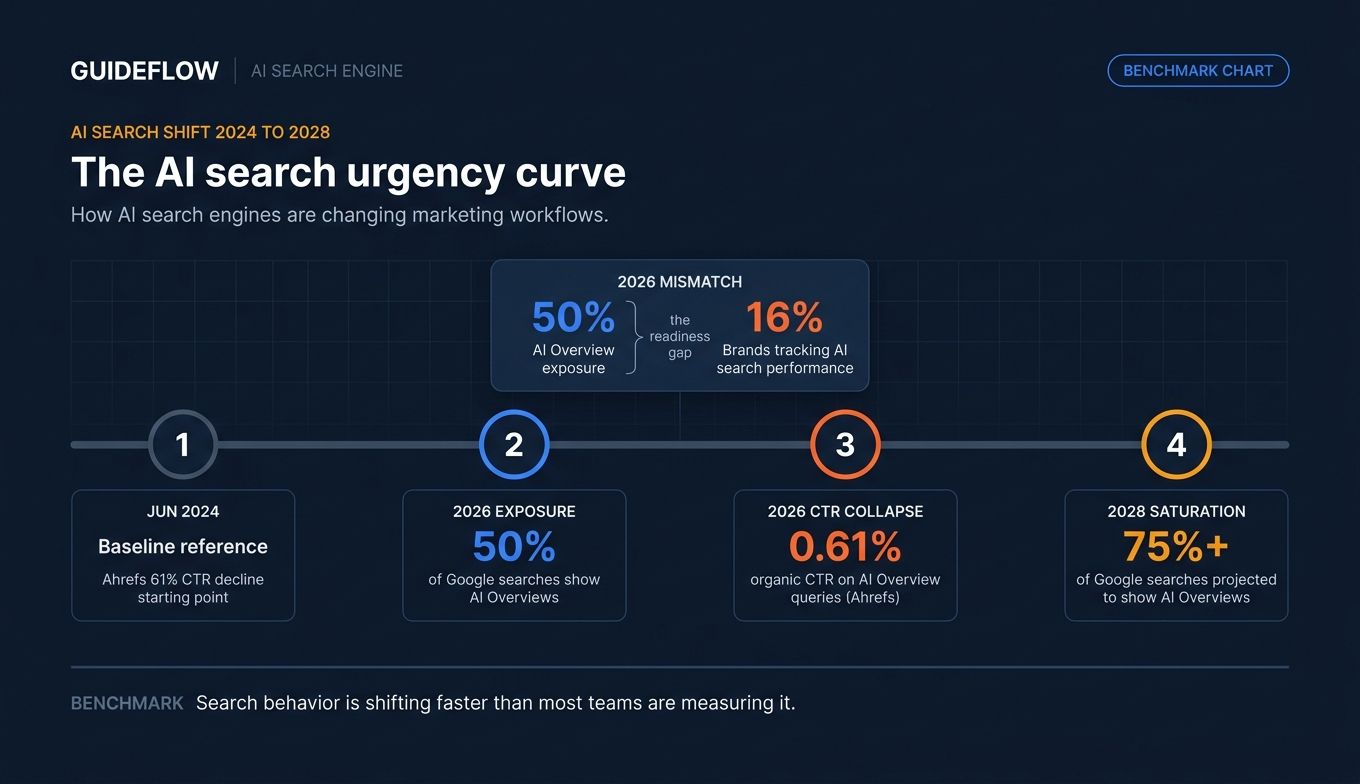
Your organic traffic chart is bending the wrong way. AI Overviews now appear on roughly half of Google searches, and organic click-through rates on those queries have fallen to about 0.61% (Ahrefs, 2026). Meanwhile, AI search platforms pulled in 27 billion visits in Q1 2026, up 42.8% year over year (Wix AI Search Lab via Similarweb).
So the research workflow you trained yourself on, twelve tabs and a Google Doc, is breaking on both ends. Google is sending less traffic to your content. ChatGPT alone gives you synthesis without citations you can defend to your CMO. And the buying committee you sell to is increasingly using an ai-powered search engine to research vendors before your SDR ever shows up.
This is the new layer in the marketing stack. An ai powered answer engine returns one cited answer instead of ten blue links. It compresses competitive intel, content research, and trend tracking into a single query. For marketers, that means faster briefs, defensible stats, and a way to see what AI models cite when prospects ask about your category.
This guide ranks the 9 best AI search engines for marketers in 2026. Honest trade-offs included.
What's inside
This guide is built for growth marketers, demand gen leads, content marketers, and SEO leads who need a research layer that does more than ChatGPT and less stitching than a 10-tab Google session. We tested and ranked 9 ai search tools against four criteria that matter for marketing work:
- Citation quality and source transparency. Can you click through every claim?
- Freshness of indexed data. How recent is what you're getting back?
- Pricing accessibility. Free tier or sub-$30/mo entry?
- Workflow fit for marketing research. Competitive intel, content research, trend analysis.
No generic SaaS roundup. Every section asks: what does a growth marketer actually do with this?
TL;DR
If you only have two minutes:
- Best overall for marketers: Perplexity. Strongest citation discipline, fastest research workflow.
- Best free option: Felo AI. Multilingual search plus built-in slide and mind map creation.
- Best for conversational research: ChatGPT Search. If you already live in ChatGPT, this is the path of least resistance.
- Best for Workspace-native marketing teams: Google Gemini. Pulls from Gmail, Docs, and Drive in queries.
- Best for enterprise marketing teams: Microsoft Copilot. Commercial data protection built in.
- Best for technical SEO research: Phind. Code-aware answers most AI tools fumble.
- Best for source-transparent academic-grade research: Consensus or iAsk for peer-reviewed depth.
Guideflow does not appear in this list. It is a demo automation platform, not an AI search engine.
Background: What is an AI search engine?
An AI search engine is a search tool that uses large language models, vector embeddings, and retrieval-augmented generation (RAG) to return direct, synthesized answers with citations, instead of a ranked list of blue links.
That's the clean definition. Now the texture.
How AI search engines work
Three components do most of the work:
- Vector embeddings. Words and concepts get mapped into a numerical space so the engine matches meaning, not just keywords. "AI search engine" and "answer engine" land near each other.
- Retrieval-augmented generation (RAG). The engine retrieves fresh web documents, then feeds them to a language model to generate an answer grounded in those sources.
- Transformers and nearest-neighbor retrieval. Transformer models rank and synthesize the most relevant passages from billions of indexed pages.
The result: you ask a question in plain English, you get a paragraph with citations.
AI search engine vs. traditional search vs. LLM chat
Three different products, often confused:
| Format | What you get | Citations | Web-fresh |
|---|---|---|---|
| Google (classic) | Ranked list of links | No (you click through) | Yes |
| ChatGPT (no Search) | Synthesized answer from training data | No | No |
| AI search engine | Synthesized answer with inline citations | Yes | Yes |
The "answer engine" framing is the same thing under a different label. Tools like Perplexity are both an ai-powered search engine and an answer engine. The category is still solidifying its vocabulary.
Why marketers care now
Four shifts compress this into urgency:
- AI Overviews appear on roughly 50% of Google searches and are expected to exceed 75% by 2028 (McKinsey, 2026).
- Research compression. One query replaces ten tabs.
- Citation transparency. You can defend a stat to your CFO with a clickable source.
- Competitive intel at higher velocity. AI search engines surface Reddit threads, X discussions, and niche forums Google buries.
If your buyers are using artificial intelligence searching to evaluate vendors, your category research needs the same lens.
When to use an AI search engine
Three moments in a marketer's week where ai search engines beat both ChatGPT alone and Google alone.
Compress market and competitor research
You used to open a Google tab, run a query, open five results, copy quotes into a doc, run another query, repeat. A good ai-powered search engine collapses that into one prompt with cited sources. A 90-minute research block becomes 15 minutes. For mid-market growth marketers running multiple campaigns in parallel, that compression is the difference between shipping briefs and missing deadlines. Pair this with dedicated competitive intelligence tools if you need structured monitoring beyond ad hoc queries.
Pressure-test claims before they hit a brief
You wrote "B2B buyers spend an average of X weeks evaluating vendors." Where did that come from? Run it through an AI search engine with strong citation discipline before your CMO does. If the source is a 2019 blog post citing another blog post, you cut it. This is the fact-check pass that separates briefs that survive review from briefs that get killed.
Track conversations Google misses
Reddit threads, X discussions, Discord servers, niche forums. Classic Google buries these unless you know the exact subreddit. AI search engines pull them into the answer because LLMs were trained on that conversational data. For competitive intel and category sentiment, this is where the real signal lives.
Comparison table
Every pricing figure below was verified against the vendor's live pricing page or first-party documentation at time of writing. Where pricing was not publicly listed in a readable form, the field is marked accordingly. G2 ratings reflect current G2 listings. Verify before relying on any number for procurement.
| # | Product | Intent | Key use case | Pricing | G2 rating |
|---|---|---|---|---|---|
| 1 | Perplexity | Sourced research | Marketing research with citations | Free tier; Pro $20/mo or $200/yr | 4.5/5 |
| 2 | ChatGPT Search | Conversational research | Brief writing, ideation, synthesis | Included in Free, Plus, Pro, Business, Enterprise | Not listed for Search specifically |
| 3 | Google Gemini | Workspace-native search | Workspace marketing research | Free tier; paid via Google AI plans | 4.4/5 |
| 4 | Microsoft Copilot | Enterprise + Bing-powered | Enterprise marketing in M365 | Chat included with eligible M365; Business $18/user/mo annual | 4.5/5 |
| 5 | Felo AI | Multilingual + creation | International campaigns, deliverables | Free tier; paid plans available | 5.0/5 (Capterra, limited reviews) |
| 6 | You.com | API + agent workflows | Custom research agents and RAG | $100 free credit; usage-based APIs from $1/1k pages | 4.4/5 |
| 7 | Phind | Technical + dev research | Technical SEO research | Free tier; paid plans available | 5.0/5 |
| 8 | Brave Search | Privacy-first AI search | Privacy-conscious teams | Free; Premium $3/mo or $29.99/yr | Not listed |
| 9 | Komo AI | Revenue + signal engine | Buyer signal and AI-assisted outbound research | Starter $99/mo; Growth $399/mo | Not listed |
Sorted by relevance to marketers, not alphabetically.
The 9 best AI search engines for marketers in 2026
1. Perplexity
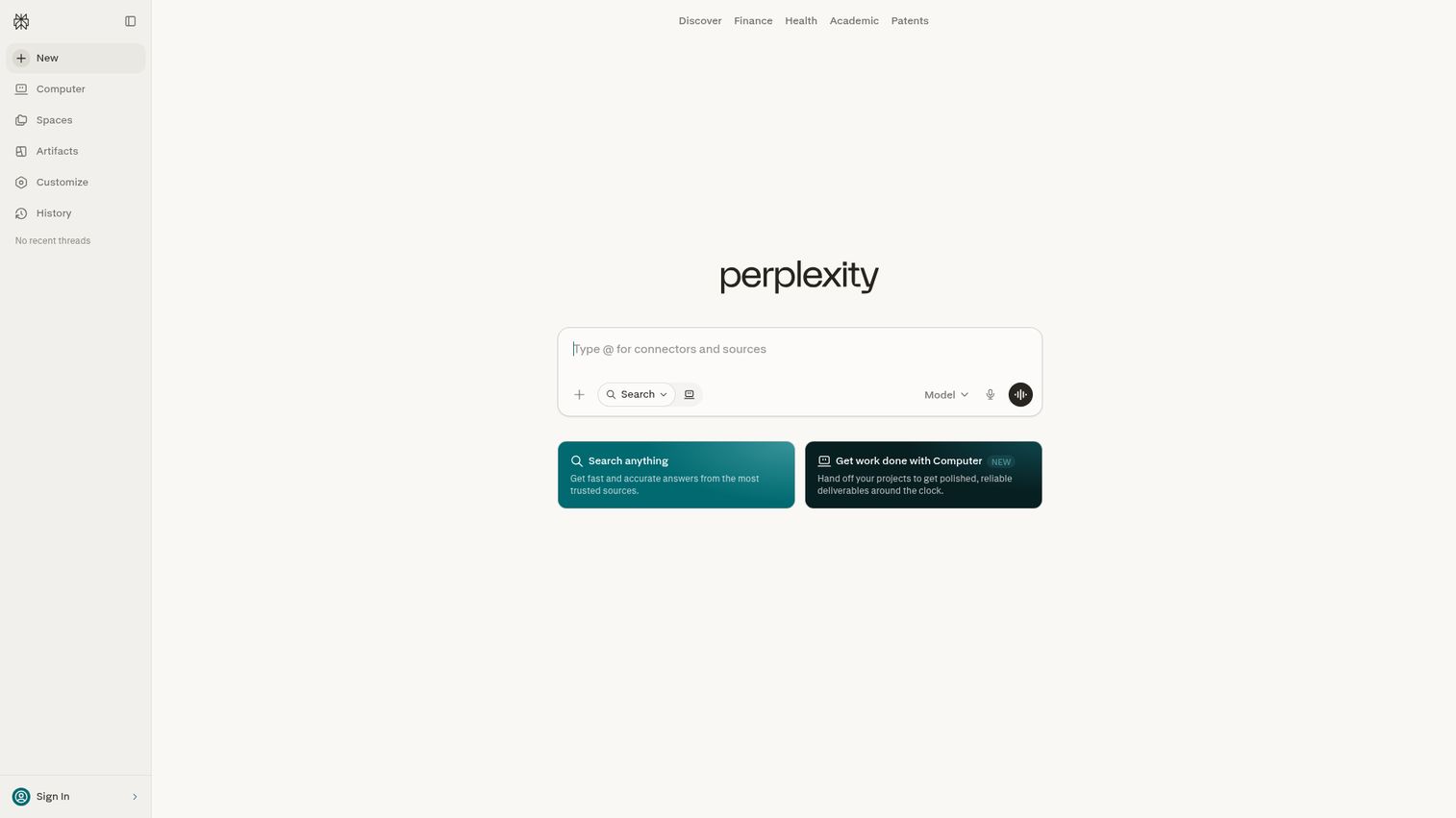
Perplexity is the AI search engine most marketers should start with. It returns source-backed answers using the latest models from OpenAI, Anthropic, and Google, and it surfaces inline citations on nearly every response. For a growth marketer, that means you can defend every stat in a brief without rebuilding the research trail from scratch. It's the closest thing to a peer who reads everything and gives you the summary with the links attached.
Best for: Mid-market growth marketers who need defensible, citation-backed research at speed.
Key strengths
- Inline citations: Every answer links to source URLs you can verify in one click. Attribution your CFO will actually believe.
- Spaces: Persistent research workspaces with file search, custom AI instructions, and app connectors for ongoing campaigns.
- Computer: Multi-step autonomous work across connected tools to research, code, create, and produce deliverables.
Why choose Perplexity: It's the rare ai-powered search engine that treats citations as a first-class feature, not a footnote. The Pro Search workflow handles multi-step queries the way a marketer actually researches: ask, narrow, compare, verify. Honest trade-off: if you live inside ChatGPT or a Google Workspace, you may not need a second tab open all day.
Perplexity pricing: Pro is $20/month or $200/year. Enterprise Pro is $40/month per seat or $400/year. Enterprise Max is $325/month per seat or $3,250/year. Teams over 250 seats contact sales. Source: Perplexity's pricing page.
2. ChatGPT Search
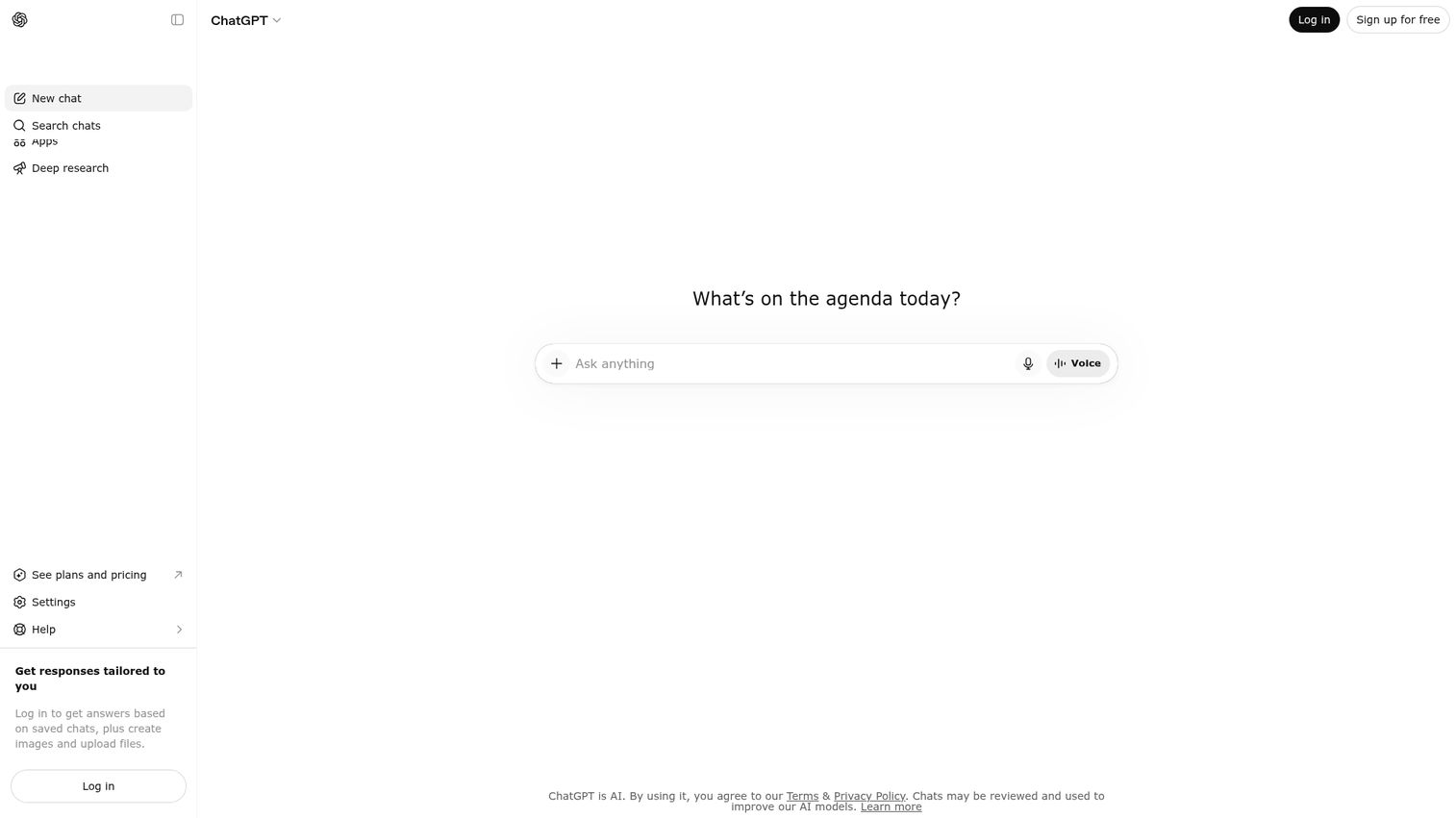
ChatGPT Search is OpenAI's search experience inside ChatGPT. It pulls timely answers from the web with links to sources, all inside the same chat thread where you're already doing strategy work. If you've been running brief outlines, ad copy iteration, and positioning brainstorms in ChatGPT, Search adds web-current data without forcing a tool switch.
Best for: Startup generalists and content marketers who live inside ChatGPT and want web-current answers without leaving the chat.
Key strengths
- Conversation continuity: Search inside the same thread as your strategy chat. Context carries forward.
- Source links and references sidebar: Citations appear in responses with a sidebar for deeper review.
- Follow-up questions: The model uses the full context of the chat to refine and dig deeper.
Why choose ChatGPT Search: The friction of switching tools is real. If ChatGPT is already your default surface, Search makes it web-aware without paying for another product. Honest framing: citation rigor sits a notch below Perplexity. Source links are present, but the synthesis is more conversational than research-grade. If writing is your primary use case, layering in AI writing tools for marketers is worth a look.
3. Google Gemini
Google Gemini is Google's AI assistant for research, writing, reasoning, and multimodal creation. It pulls real-time web research and connects to Gmail and Drive as optional sources. For marketers running campaigns inside Google Workspace, Google Ads, and GA4, Gemini is the AI search engine that sits closest to your operational stack.
Best for: Marketers already deep in Google Workspace who need search context inside the tools they already use.
Key strengths
- Deep Research mode: Real-time web research with file uploads and optional Gmail and Drive sources for multi-source briefs.
- Workspace integration: Gemini in Gmail, Docs, and Sheets pulls from your own content alongside web data.
- Multimodal creation: Image, music, and video generation directly in Gemini for campaign assets.
Why choose Gemini: If your marketing ops live inside Google, the integration tax is zero. Deep Research mode produces synthesized briefs across many sources in one pass. Honest framing: citation transparency continues to improve but lags Perplexity for source-by-source defensibility.
Google Gemini pricing: Gemini is included in Google AI Plus, Google AI Pro, and Google AI Ultra plans on Google One. The first-party plan page confirms tier names and feature differences but did not expose readable monthly dollar amounts in our review. Verify current rates on one.google.com.
4. Microsoft Copilot
Microsoft Copilot is the enterprise-safe AI search and assistant built on Microsoft's models and Bing's index. For enterprise marketing teams in M365 environments where security review gates every new tool, Copilot is the path of least procurement resistance. It searches across work content, drafts in Word, summarizes Teams meetings, and answers web queries with grounding.
Best for: Enterprise marketing teams already standardized on Microsoft 365 where IT controls the stack.
Key strengths
- Work IQ chat: Secure AI chat grounded in your work content with enterprise data protection.
- AI-powered enterprise search: Search across work content and apps from a single prompt.
- Agents: Automate common tasks or build agents that work on your behalf across M365.
Why choose Copilot: Procurement-friendly by default. If your security review takes six months for any new SaaS, Copilot is often pre-approved through your M365 contract. Honest framing: it's less marketer-tailored than Perplexity for research workflows, but it's the easiest "yes" inside large orgs.
Microsoft Copilot pricing: Microsoft 365 Copilot Chat is included at no additional cost with eligible Microsoft 365 plans. Microsoft 365 Copilot Business is $18.00 per user per month paid yearly, or $25.20 per user per month with monthly commitment. A qualifying Microsoft 365 plan is required. Source: Microsoft's first-party pricing page.
5. Felo AI
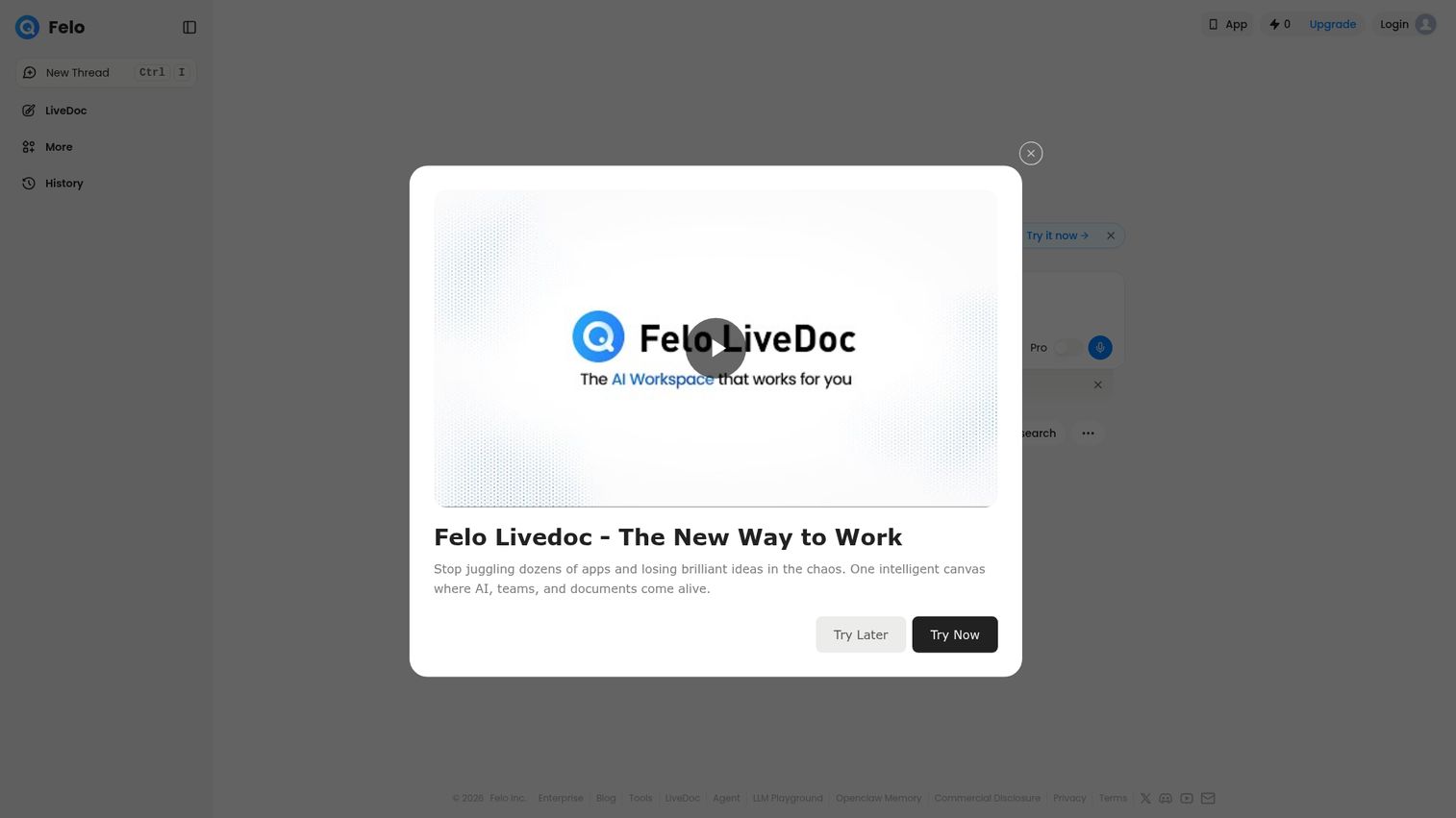
Felo AI is the multilingual workhorse with creation built in. It autonomously searches and synthesizes information into reports, presentations, and mind maps with verifiable citations, and it does this across 30+ languages. For marketers running international campaigns or repurposing research into deliverables, Felo collapses two steps into one.
Best for: Marketers running multilingual campaigns or solo operators who need to turn research into slides or pages without a second tool.
Key strengths
- AI research assistant: Autonomously searches and synthesizes information into reports, presentations, and mind maps with verifiable citations.
- Cross-lingual research: Multilingual search and synthesis across 30+ languages for international campaign research.
- Browser-based workflow tools: Slides, pages, notes, images, and automation without extra software installs.
Why choose Felo: For international marketers, the multilingual capability is structural, not a translation hack. The creation outputs (slides, mind maps, AI pages) mean research-to-deliverable lives in one tool. Honest framing: citation depth varies by query, so verify before quoting in regulated industries.
Felo AI pricing: Felo offers paid plans but did not expose a readable first-party pricing page during verification. Check felo.ai directly for current rates before committing.
6. You.com
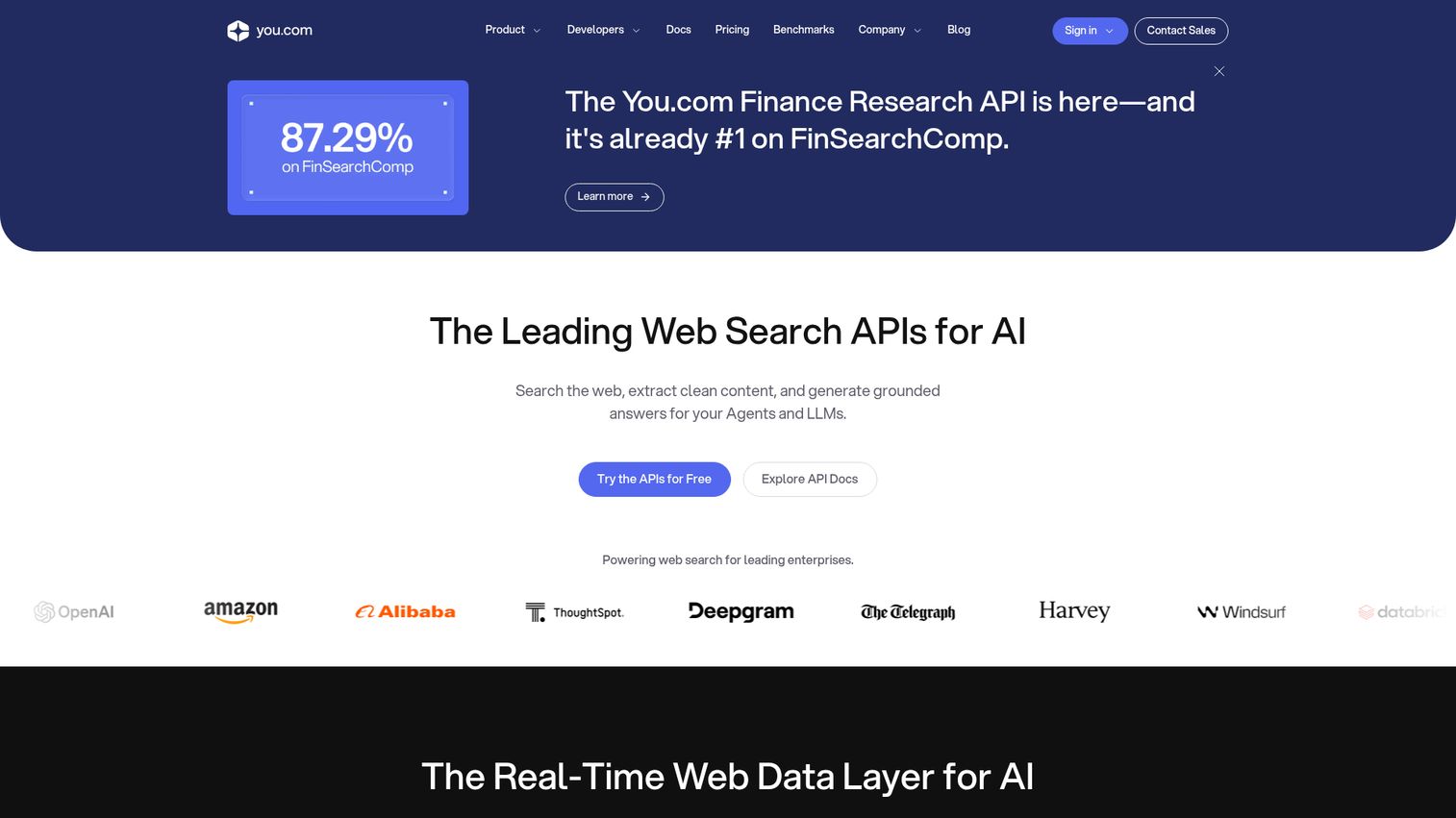
You.com has shifted toward web search APIs that let AI agents and LLMs search the web, extract clean content, and generate grounded answers with citations. For power-user marketers building custom research agents, RAG-backed content workflows, or programmatic competitive intel, You.com is now infrastructure rather than a consumer search interface.
Best for: Marketers and marketing ops teams building custom research agents or RAG-backed workflows for category monitoring at scale.
Key strengths
- Real-time web and news search results: Contextual snippets via API for agents and automations.
- Full page content extraction: Clean Markdown or raw HTML for downstream LLM processing.
- Source-backed research answers: Grounded responses with inline citations via Research API.
Why choose You.com: If your team has any technical capacity (an ops lead, a friendly engineer), You.com is the easiest way to build a research agent that watches your category and feeds your brief workflow. Honest framing: it's not a consumer search engine anymore. If you want a chat interface, start elsewhere. Teams orchestrating multiple agents at once should also evaluate AI orchestration platforms to manage them centrally.
7. Phind
Phind is an AI answer engine built for technical depth. It exposes selectable research and implementation models, web search, deep research, and reasoning controls. For a technical SEO lead or a marketer working on schema, JavaScript rendering, Core Web Vitals, or developer-adjacent content, Phind handles questions most generalist AI search tools fumble.
Best for: Technical SEO leads and marketers researching schema, JS rendering, and technical implementation details.
Key strengths
- Selectable research models: Choose the model that fits the depth and cost of the query.
- Selectable implementation models: Switch models for code-aware or implementation-oriented answers.
- Web search and deep research: Combined with reasoning controls for multi-step technical investigations.
Why choose Phind: Niche but irreplaceable. If your AI searcher of choice keeps giving you generic answers on technical SEO questions, Phind will give you specifics. Honest framing: less useful for non-technical campaign research like positioning or messaging work. Use it where it excels. For broader SERP and crawl work, pair it with one of the best SEO tools in your stack.
8. Brave Search
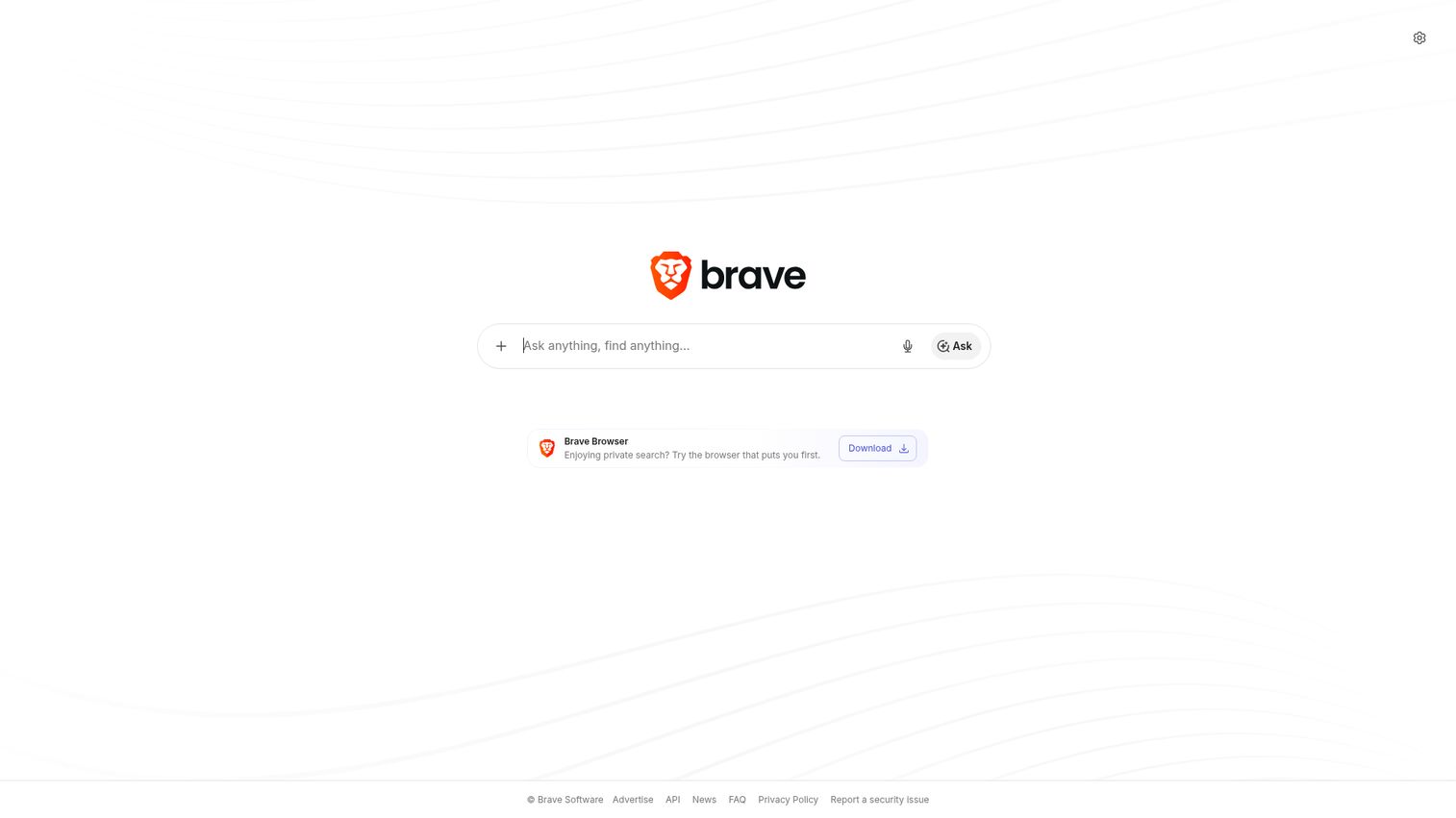
Brave Search is the privacy-first AI search engine with its own independent index, not reliant on Google or Bing. For privacy-conscious marketing teams or those wary of data exposure to large platforms, Brave is the rare option that combines AI answers with no user profiling. Built-in Summarizer and richer Snippets surface AI experiences without the tracking.
Best for: Privacy-conscious marketing teams or solo marketers who want AI search without feeding queries to large ad platforms.
Key strengths
- Private-by-default search: Does not collect personal information about you, your device, or your searches.
- Independent search index: Community-created Goggles let you customize ranking and filtering.
- Built-in AI experiences: Summarizer and richer Snippets surface AI-generated context inline.
Why choose Brave Search: Strong privacy posture and a genuinely independent index. Goggles let advanced users build custom ranking lenses for category research. Honest framing: the index is smaller than Google's, so long-tail queries can return thinner results. Use it as a primary or secondary depending on your privacy bar.
Brave Search pricing: Brave Search is free and ad-supported. Search premium is $3.00 per month or $29.99 per year for ad-free results. Source: Brave's premium page.
9. Komo AI

Komo AI has evolved from a lightweight AI search experience into an AI revenue engine focused on signal monitoring and outbound execution. For growth marketers working closely with sales (or running both functions in a startup), Komo doubles as a research tool for buyer signal and an execution layer for AI-drafted outbound. It's the most GTM-shaped tool on this list.
Best for: Growth marketers and founders running combined marketing-plus-sales motions who want buyer signal research and outbound execution in one platform.
Key strengths
- 24/7 LinkedIn Signal Agents: Monitor engagement and score in-market buyers against your ICP for real-time intent research.
- AI-drafted multi-step outbound campaigns: Email and LinkedIn sequences with human review before send.
- Playbooks: Turn SOPs into executable AI workflows that agents can run autonomously.
Why choose Komo: If your "research" job-to-be-done is really "find in-market accounts and reach them," Komo's signal-to-action workflow saves you from stitching three tools together. Honest framing: this is a revenue engine, not a generalist ai-powered answer engine. For pure category research, Perplexity is the better starting point. If you're building out the full outbound motion, also compare the best AI SDR tools alongside it.
Komo AI pricing: Starter at $99 per month. Growth at $399 per month. Enterprise at custom monthly pricing. A 7-day free trial is available. Source: Komo's homepage pricing section.
Considerations for marketers choosing an AI search engine
Before you commit, work through this checklist. The right tool depends less on features and more on how your team operates.
Citation quality and source transparency
Can you click through every claim to a verifiable source? This is the difference between a brief you can defend in CMO review and a brief that gets killed because the underlying stat traces back to nowhere. For regulated industries, this is non-negotiable.
Freshness of indexed data
For trend research, product launches, and competitive intel, you need data crawled in the last 24 to 72 hours. Some AI search engines lag by weeks because they rely heavily on training data with light web augmentation. Test with a query about something that happened this week before you trust it for time-sensitive work.
Workflow fit with your existing stack
Does it integrate with the tools you already pay for? Workspace, M365, your CRM, your CMS, your analytics. Consolidation matters more than feature breadth at this point in the AI stack. The tool that replaces three subscriptions wins.
Pricing model and free tier limits
Per-seat versus flat-rate matters at scale. Watch for free-tier query caps designed to force a Pro upgrade once you're hooked. Calculate your monthly query volume realistically. A $20/mo tool you use 200 times beats a free tool you abandon at query 30.
Output formats beyond text
Mind maps, slides, exportable briefs, structured tables. If you regularly turn research into deliverables (and most marketers do), output formats save you a downstream tool and an hour per brief.
How AI search engines are changing marketing workflows
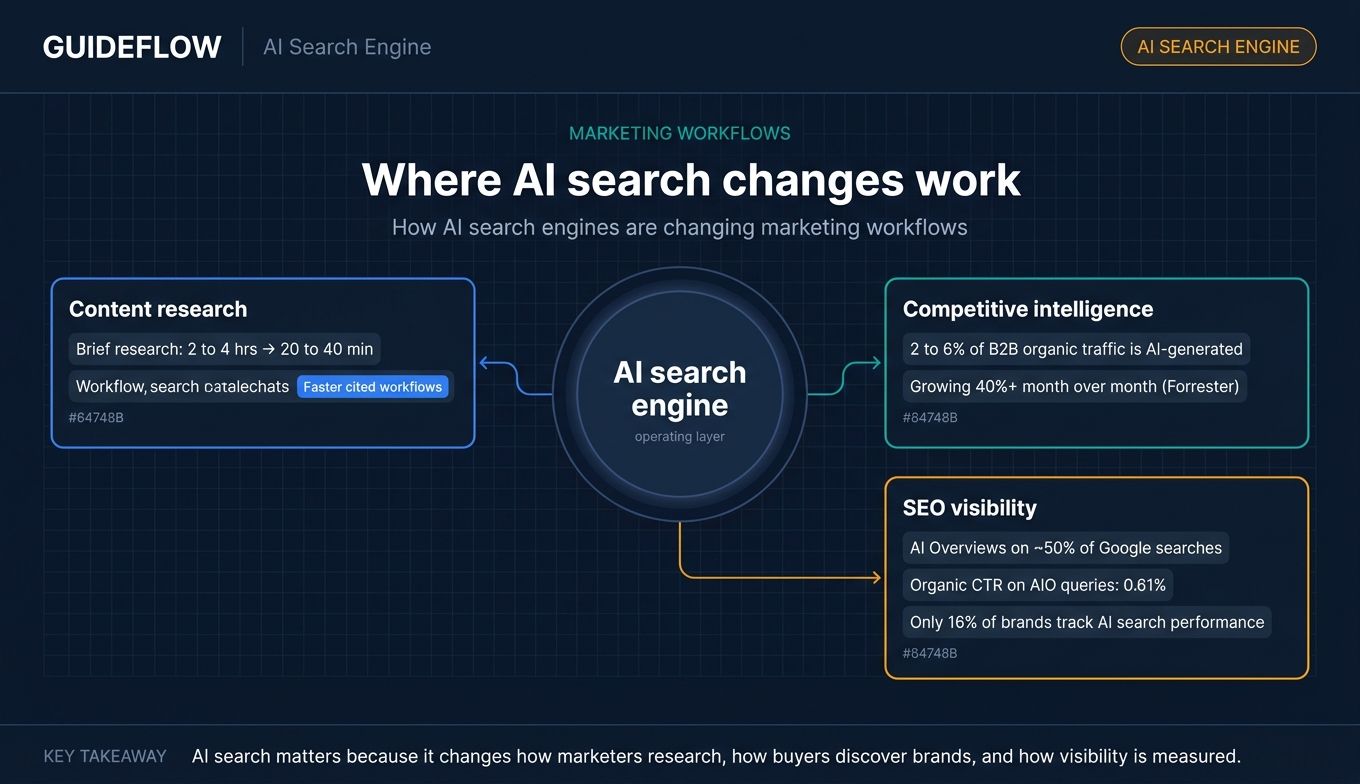
This is the section every other listicle skips. AI search engines aren't just a faster Google. They reshape three core marketing workflows.
Content research and brief writing
The research phase of a brief used to take two to four hours: gather sources, extract quotes, verify stats, write the outline. With an AI search engine that cites sources, you compress that to 20 to 40 minutes. The model surfaces the synthesis. You verify the citations. You skip directly to angle and outline.
Forrester estimates 2 to 6% of B2B organic traffic is already AI-generated, growing 40%+ month-over-month. Your competitors are doing this. Your briefs need to ship faster. If your content team is scaling production, the best content marketing tools complement AI search nicely on the production side.
Competitive intelligence at higher velocity
Reddit, X, niche forums, product communities. Classic Google buries this signal. AI search engines pull it forward because LLMs were trained on conversational data. A query like "what do mid-market PMMs complain about with [category]" returns synthesized sentiment from places you'd never manually find. For competitive positioning and message testing, this is a step-change in research velocity.
This is also where downstream tactics matter. Once you've researched how your category gets talked about, the next step is showing your product clearly to the buyers you've identified. That often means moving beyond static landing pages into an interactive demo where prospects can experience the product themselves, performing best when you want to control the narrative and guide buyers through a specific story. Research informs positioning. Positioning informs how you show, not just tell.
SEO strategy in the AI Overview era
Here's the shift. AI Overviews appear on roughly 50% of Google searches. Organic CTR on those queries has fallen to 0.61%, down 61% since June 2024 (Ahrefs, 2025). Only 16% of brands systematically track AI search performance (McKinsey, 2026).
That gap is your opportunity. Use AI search engines to see what your brand looks like when a buyer queries your category. Which sources get cited? Which claims surface? Where are competitors winning the citation? This is the entry point for what people are calling GEO (generative engine optimization) or AEO (answer engine optimization). It's just SEO with a new endpoint: getting cited in AI answers, not just ranked in blue links. A dedicated set of answer engine optimization tools is emerging to track and improve that citation visibility.
Conclusion
The AI search engine you pick should match your workflow, not the other way around.
For most marketers, Perplexity is the strongest starting point. Free tier is generous, citations are rigorous, and Pro Search handles the multi-step research a brief actually requires. If you're already in ChatGPT all day, ChatGPT Search removes the tool-switch tax. If your stack is Google Workspace or Microsoft 365, Gemini or Copilot sit closest to your operational reality.
For specialized jobs: Felo AI for multilingual campaigns and built-in deliverables. Phind for technical SEO depth. Brave Search for privacy-first teams. You.com if you're building custom research agents. Komo AI if your real job is buyer signal plus outbound.
Next step: pick one. Open Perplexity's free tier and run your next three research queries through it instead of Google. Compare the time to a citable answer. If it cuts your research time in half, upgrade to Pro and standardize your team on it. If not, try Felo or ChatGPT Search and repeat the test.
The 9 best AI search engines for marketers in 2026 are not interchangeable. They are specialized tools. Pick the one that fits how you actually work.
FAQs
For marketers, Perplexity is the strongest all-around pick because of citation discipline and Pro Search depth. ChatGPT Search and Google Gemini are strong alternatives if you're already inside those ecosystems. The "best" depends on whether you prioritize citations, workflow integration, or specialized capabilities like multilingual search.
Yes. Perplexity, ChatGPT, Gemini, Copilot, Felo AI, Brave Search, You.com, Phind, and Komo all offer either a free tier, included access, or free credits. Free-tier limits vary by query volume, model access, and feature availability. For most marketers, the free tier of Perplexity or Felo covers daily research needs before any upgrade is required.
The terms are used interchangeably in 2026. "Answer engine" emphasizes the direct, synthesized response with citations. "AI search engine" emphasizes the retrieval and indexing layer underneath. In practice, tools like Perplexity are both: an ai powered answer engine and an ai-powered search engine. Pick whichever label your team already uses.
ChatGPT without Search mode generates answers from its training data without web grounding or inline citations. AI search engines retrieve fresh web data, cite sources, and ground claims in real-time documents. ChatGPT Search now bridges this gap by adding browsing and source links to the standard ChatGPT interface, but tools like Perplexity were built around citation-first answers from the start.
Not fully, but they are absorbing high-intent research queries. AI search platforms pulled in 27 billion visits in Q1 2026, up 42.8% year over year (Wix AI Search Lab via Similarweb). Many marketers now use a search engine ai tool for synthesis and competitive intel, while keeping Google for navigational queries and deep SERP analysis. Both layers coexist.
Tools with strong citation discipline (Perplexity, Consensus, iAsk) are usable for fact-checking when you click through to the source. Treat every AI-generated stat as a starting point, not a final answer. The hallucination risk is real but lower in tools that ground answers in retrieved documents rather than generating from training data alone.
Perplexity and Consensus lead on citation quality. Perplexity surfaces inline links per claim across general web research. Consensus focuses on peer-reviewed academic sources for research-grade citations. For marketers, Perplexity covers most workflows. For regulated industries or research-heavy briefs, Consensus is worth the second tab.
Yes, significantly. About 50% of Google searches now have AI summaries (McKinsey, 2026), and organic CTR on AI Overview queries has dropped to roughly 0.61% (Ahrefs). Marketers are now optimizing for AI citation visibility (often called GEO or AEO) alongside traditional SEO. The goal shifts from ranking in blue links to being cited as the source in AI answers.
No. AI sites broadly include chatbots, image generators, and writing tools. AI search engines specifically combine retrieval (pulling fresh web data) with generation (synthesizing an answer) and citation (linking sources). The retrieval layer is what separates an ai-powered search engine from a generic AI chatbot.