
You ran a 40-lot RFQ across 18 suppliers. Prices came in. Then legal flagged a capacity risk on your lowest bidder, sustainability pushed back on a third of the awards, and finance asked why you split volume the way you did. The spreadsheet couldn't answer any of it.
That is the real job of sourcing teams in 2026. Not finding a lower unit price. Making fast, defensible award decisions across price, risk, sustainability, capacity, and contract terms, then proving why you landed where you did when someone senior asks.
The market reflects the pressure. The global sourcing software market was valued at $9.8 billion in 2025 and is projected to reach $25.4 billion by 2034 at an 11.2% CAGR, according to MarketIntelo (2025). Roughly 62% of firms are implementing sourcing platforms to reduce inefficiencies and tighten control over procurement, per Reanin (2024). The move is not about cheaper. It is about better decisions, faster, with an audit trail.
Sourcing optimization software is what lets you model those tradeoffs instead of guessing. Run scenario analysis. Compare weighted awards. Test what-if models before you commit a dollar. If your current process breaks down the moment a bid event gets complex, that is the gap these tools fill.
What's inside
This guide covers the strongest sourcing optimization platforms for enterprise and mid-market procurement teams heading into 2026. We selected tools based on four things that actually matter when you evaluate this category: depth of scenario analysis and what-if modeling, flexible and expressive bidding, AI-assisted award optimization, and enterprise usability with a real audit trail.
It is built for teams running complex RFQs, RFPs, and e-auctions, not simple three-quote comparisons. Every pick below handles multi-criteria award decisions where price is only one input. We note pricing context and G2 ratings where a current, verified source exists, and write around figures that vendors keep behind a sales conversation.
TL;DR
- Best overall for scenario-driven sourcing optimization: Keelvar, for autonomous sourcing plus deep scenario analysis on complex RFx and auctions.
- Best for source-to-pay breadth: JAGGAER, for teams that need supplier collaboration and procurement workflows end to end.
- Best for source-to-contract alignment: Coupa, for optimization living inside a broader spend management platform.
- Best for AI-heavy, data-rich procurement: C3 AI, for agentic workflows and landed-cost intelligence at global scale.
- Best for configurable enterprise suites: Ivalua and GEP SMART, for teams standardizing sourcing inside a unified source-to-pay platform.
- Best for SAP-standardized shops: SAP Ariba, for procurement built on the SAP ecosystem and supplier network.
What is sourcing optimization software?
Sourcing optimization software is a procurement tool that uses mathematical optimization and scenario analysis to help teams evaluate supplier bids across multiple criteria, price, risk, capacity, sustainability, and contract terms, then generate defensible award decisions.
Unlike a basic e-sourcing tool that collects bids and lines them up in a table, an optimization platform models the full tradeoff space. You can ask what-if questions the spreadsheet can't answer: what happens to total landed cost if we cap any single supplier at 40% of volume, or require two suppliers per region for continuity?
Core capabilities you should expect:
- Scenario analysis: compare multiple award outcomes side by side under different business rules and constraints.
- What-if modeling: test the cost and risk impact of a constraint before you commit to it.
- Flexible and expressive bidding: let suppliers bid on bundles, volume tiers, and alternatives, not just fixed line items.
- Award optimization: solve for the best allocation given all your weighted criteria at once.
- Supplier feedback and negotiation: run multi-round RFQs and give structured feedback to move suppliers toward better bids.
- Analytics and audit trails: record every rule, weight, and decision so award choices survive scrutiny.
What it is not: sourcing optimization is not the same as a full procure-to-pay suite, though several tools below bundle both. It also is not a simple reverse auction on its own. The differentiator is the optimization engine that turns messy, multi-criteria bid data into a decision you can defend.
When to use sourcing optimization software
Run complex RFQs and RFPs
The moment a bid event has more than a handful of lots, suppliers, or award constraints, spreadsheets stop scaling. Optimization software lets you compare suppliers on total value, not just unit price, weighing quality scores, delivery terms, and supplier risk in the same model. This matters most in high-volume or high-stakes categories like logistics, direct materials, and packaging, where a poor split costs real money across a contract term.
Balance price with risk and policy constraints
Award decisions rarely come down to the cheapest bid. You may need to weight sustainability, honor supplier capacity limits, meet compliance rules, or guarantee delivery windows. Optimization handles these as hard or soft constraints inside a single solve, so you see the true cost of each policy. When simple comparisons break down under competing requirements, this is where the category earns its keep.
Accelerate sourcing cycles without losing defensibility
Automation and scenario generation compress cycle times that used to take weeks. You can run more rounds, test more award structures, and land on a decision faster. Just as important, every scenario, weight, and constraint is logged, so procurement governance holds up. When leadership questions an award, you show the model, not a memory.
Comparison table
Use this table to build a shortlist fast. It sorts by fit for sourcing optimization use cases, then pairs each tool with its intent, core differentiation, pricing context, and current G2 rating where a verified source exists.
| # | Product | Intent | Key differentiation | Pricing | G2 rating |
|---|---|---|---|---|---|
| 1 | Keelvar | Scenario-driven sourcing optimization | AI-native agentic sourcing from intake to award | Custom, contact sales | 4.7/5 |
| 2 | JAGGAER | End-to-end source-to-pay | Supplier collaboration plus optimization | Custom, contact sales | 4.1/5 |
| 3 | Coupa | Spend management with sourcing | Optimization inside business spend management | Custom, contact sales | 4.2/5 |
| 4 | C3 AI | AI-heavy procurement intelligence | Agentic AI platform and applications | Custom, contact sales | 4.0/5 |
| 5 | Ivalua | Configurable source-to-pay suite | Unified, highly configurable procurement | Custom, contact sales | 4.3/5 |
| 6 | SAP Ariba | SAP-native procurement | Business network plus sourcing | Custom, contact sales | Not published |
| 7 | GEP SMART | Unified procurement platform | AI-powered source-to-pay | Custom, contact sales | 4.3/5 |
1. Keelvar
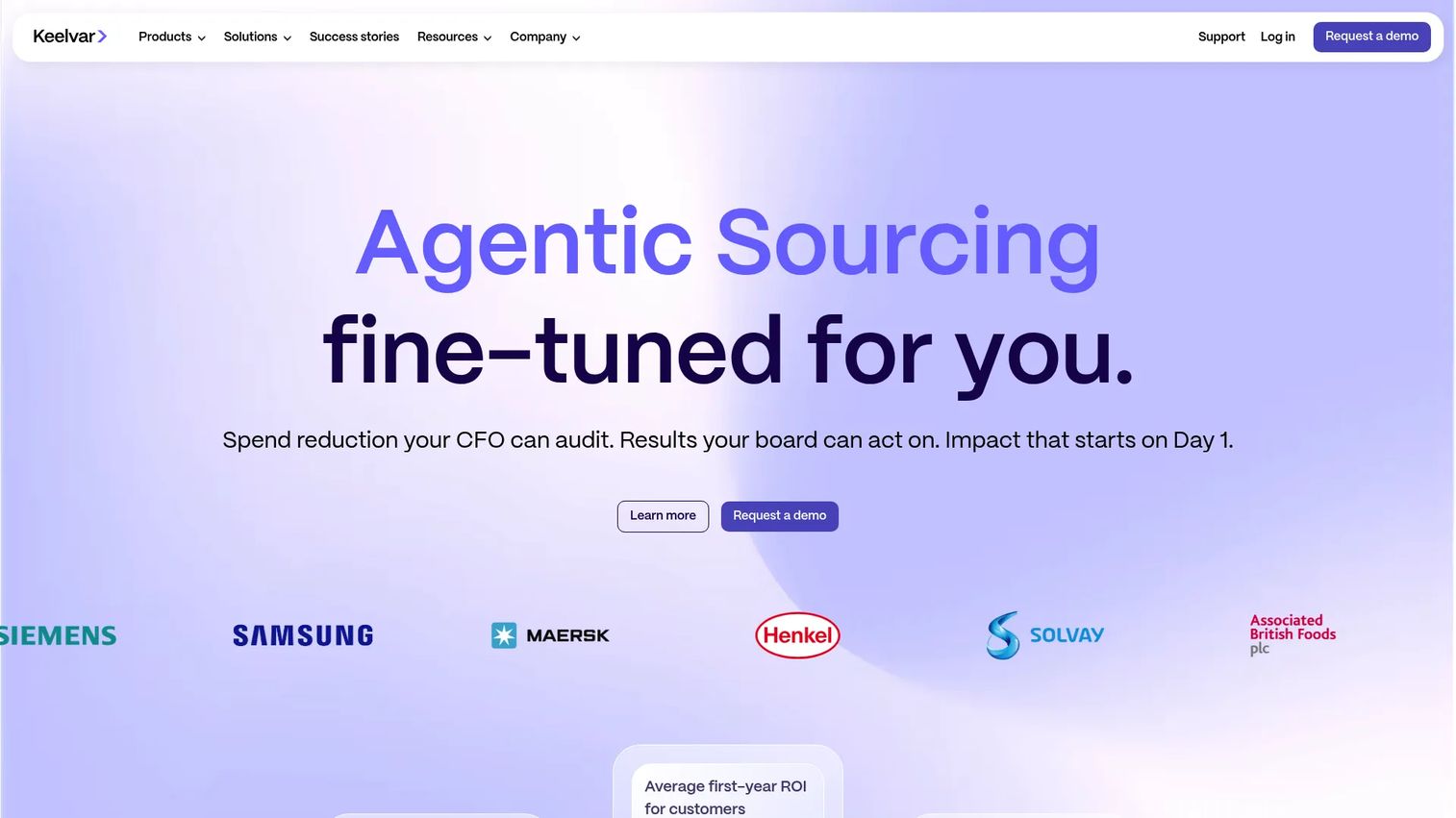
Keelvar is AI-native agentic sourcing software built for enterprise procurement. It runs complex RFx and auctions autonomously, from intake through award, and its optimization engine is the reason it leads this list. Teams that live in multi-lot, multi-criteria bid events use Keelvar to model the full tradeoff space instead of settling for a price-first comparison.
Where Keelvar stands apart is depth. Scenario analysis lets you test dozens of award structures against constraints like supplier caps, regional continuity, and capacity limits. Rate management can trigger sourcing events automatically when market conditions shift, which shortens the gap between a price change and a response. The autonomous sourcing bots handle the repetitive tail-spend events so your team focuses on the high-stakes categories.
Best for: enterprise procurement teams running complex RFx, e-auctions, and autonomous sourcing at scale.
Key strengths
- Autonomous sourcing: bots run intake-to-award events end to end, freeing analysts for strategic categories.
- Scenario analysis: compare many weighted award outcomes under real business rules and constraints.
- Rate management: automatic event triggers respond to market movement without manual monitoring.
Why choose Keelvar: if your evaluation criterion is decision quality on genuinely complex events, Keelvar is the sharpest tool here. It is purpose-built for optimization rather than bolting sourcing onto a broader suite. Teams that value a defensible, model-backed award over a one-click reverse auction get the most from it.
Keelvar pricing: Keelvar does not publish pricing on its site. Pricing is quoted through a sales conversation, and the site directs visitors to request a demo. Expect enterprise packaging aligned to event volume and scope. On G2, Keelvar holds a 4.7/5 rating, the highest in this roundup.
2. JAGGAER
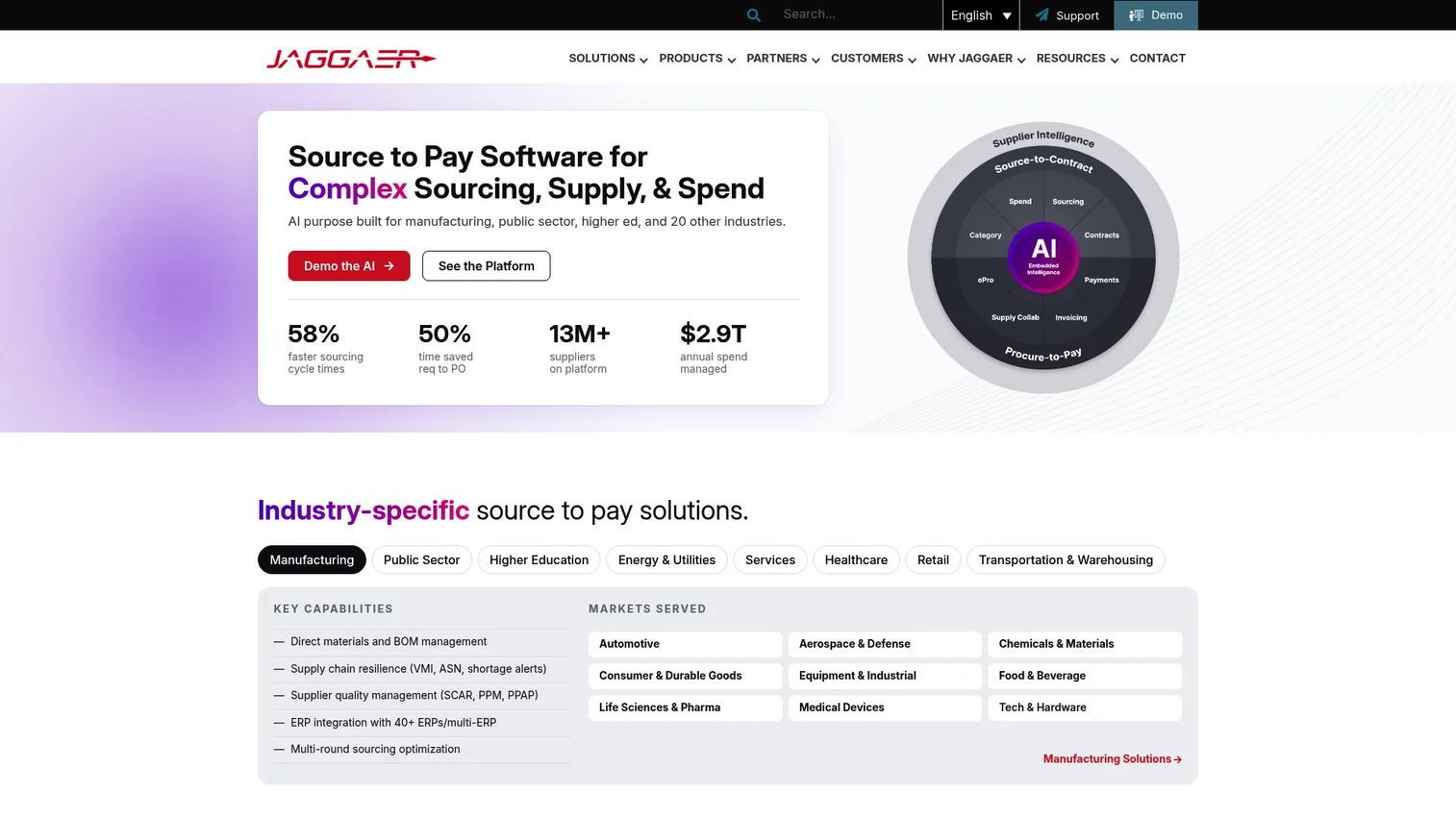
JAGGAER is an enterprise source-to-pay platform that pairs sourcing optimization with the wider procurement workflow. It suits large organizations that need award optimization, weighted scoring, and business-rule modeling inside the same system that handles supplier onboarding, qualification, and procure-to-pay. That breadth is the draw for teams tired of stitching a point solution to a separate process.
For sourcing specifically, JAGGAER supports expressive bidding, cross-event analytics, and structured supplier feedback for multi-round RFQs. Contract-linked pricing and price compliance connect the award decision to what suppliers actually invoice later, which closes a common leakage gap. Reporting and governance features give procurement leaders the audit trail they need when an award gets questioned.
Best for: large procurement organizations that want optimization plus reporting, supplier collaboration, and governance in one platform.
Key strengths
- Source-to-contract and procure-to-pay: one workflow from sourcing event to payment.
- Supplier collaboration: onboarding, qualification, and ongoing supplier management built in.
- Contract-linked pricing: ties awarded rates to invoiced prices to protect savings.
Why choose JAGGAER: choose it when the sourcing event is one part of a broader procurement mandate, and you want award optimization without a separate tool. It fits teams that value end-to-end control and defensible reporting over a narrow, best-of-breed optimizer.
JAGGAER pricing: JAGGAER does not list public pricing. Plans are scoped through sales, and the site directs buyers to contact the team. On G2, JAGGAER holds a 4.1/5 rating.
3. Coupa
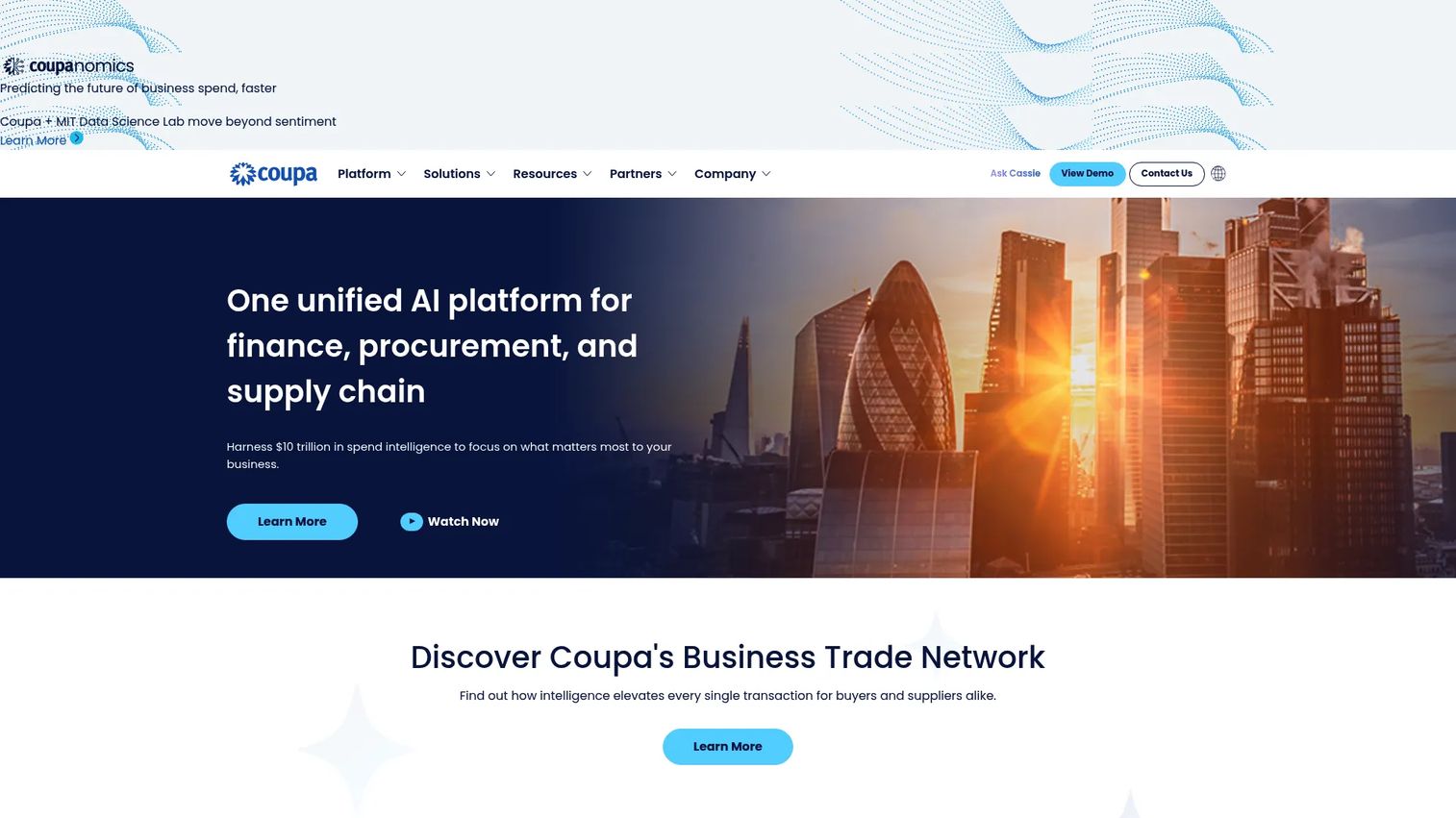
Coupa is a cloud business spend management platform where sourcing optimization sits alongside procurement, invoicing, and payments. Its appeal is continuity: run a structured sourcing event with mathematical optimization and flexible bidding, then carry the award straight into contract and spend workflows without re-keying data. For teams standardizing spend across procurement and finance, that source-to-contract alignment is the point.
Coupa applies mathematical optimization to structured comparisons, supports templates and workflow automation to speed repeatable events, and layers policy-aware award criteria so compliance rules shape the outcome. Because it lives inside a broader platform, the sourcing signal feeds downstream analytics, giving finance a clearer line from award decision to realized cost avoidance.
Best for: mid-market to enterprise teams that want sourcing optimization inside a broader spend management platform.
Key strengths
- Business Spend Management platform: sourcing, procure, invoice, expense, and pay in one place.
- Mathematical optimization: structured, multi-criteria comparison of complex bids.
- Platform capabilities: Standard and Plus tiers extend automation and controls across spend.
Why choose Coupa: pick Coupa when the priority is one connected flow from sourcing event to contract to payment, not a standalone optimizer. It fits organizations transforming procurement broadly, where the sourcing tool needs to plug into finance and spend visibility.
Coupa pricing: Coupa does not display public pricing for its core platform. Most products require a subscription, and the documentation directs interested customers to a Customer Value Manager. On G2, Coupa holds a 4.2/5 rating.
4. C3 AI
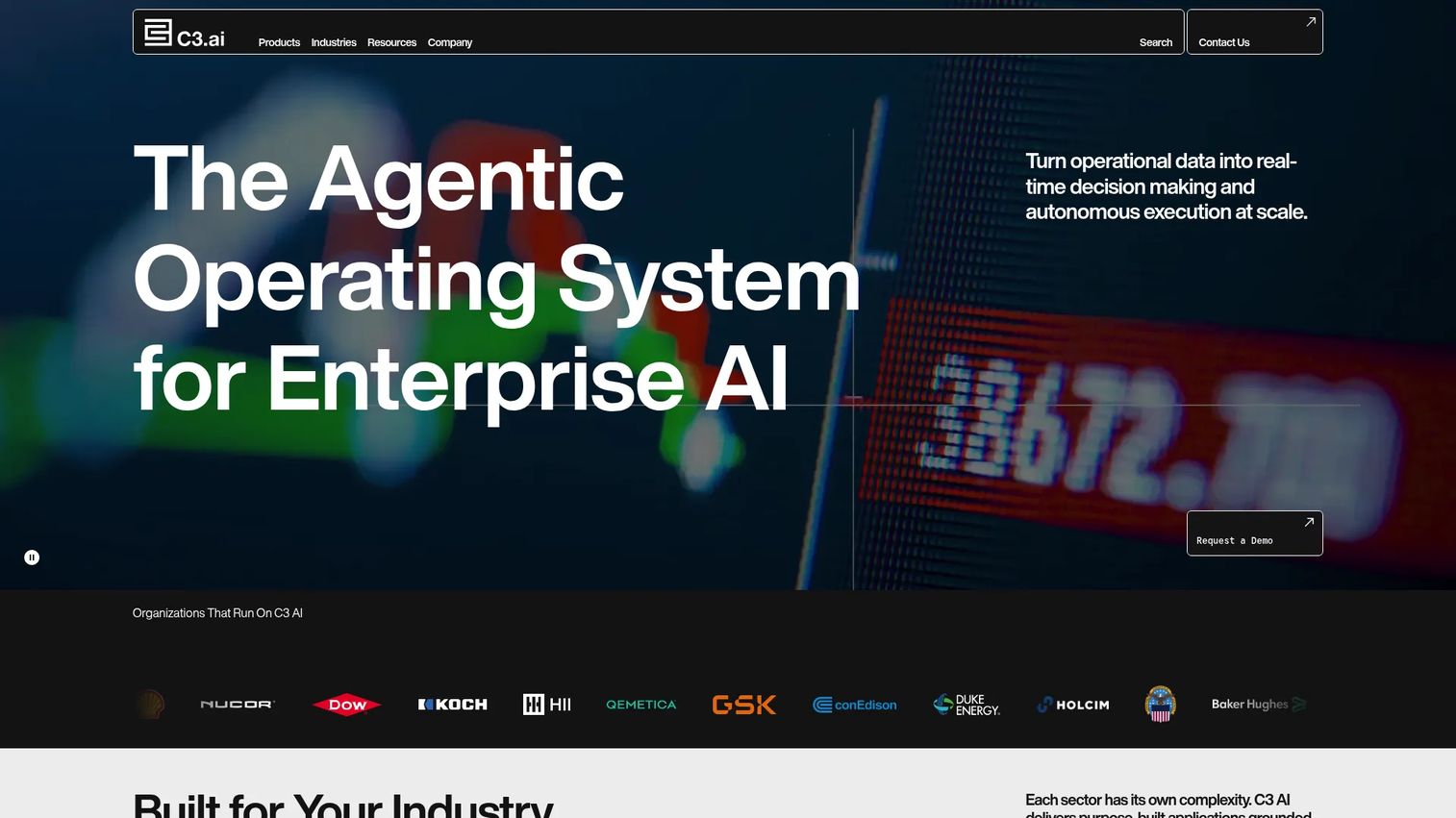
C3 AI is an enterprise AI software platform whose procurement applications lean hard into data and automation. It suits organizations with rich procurement data and complex global supply chains that want AI-assisted decisions, anomaly detection, supplier similarity analysis, and total landed cost modeling rather than a traditional bid-comparison tool. The C3 Agentic AI Platform handles data integration and model lifecycle, and applications layer sector-specific workflows on top.
For sourcing teams, the value is intelligence. Natural-language querying lets analysts ask questions of procurement data directly, agentic workflows automate repetitive analysis, and landed-cost modeling surfaces the true delivered cost across tariffs, freight, and duties. Anomaly detection flags pricing that drifts from expected patterns, which supports both negotiation and compliance.
Best for: data-heavy enterprises that want AI-assisted procurement decisions across global, complex supply chains.
Key strengths
- C3 Agentic AI Platform: data integration, model lifecycle management, and agentic orchestration.
- Industry applications: sector-specific procurement and supply-chain use cases.
- Generative AI tooling: C3 AI Studio and Code for building and querying enterprise AI.
Why choose C3 AI: choose it when your procurement problem is fundamentally a data problem, and you want AI intelligence layered across landed cost, anomaly detection, and supplier analysis. It fits large enterprises building configurable AI capability rather than buying a packaged sourcing optimizer.
C3 AI pricing: C3 AI does not publish list pricing. Commercial terms are subscription-based and quoted through sales. On G2, C3 AI holds a 4.0/5 rating.
5. Ivalua
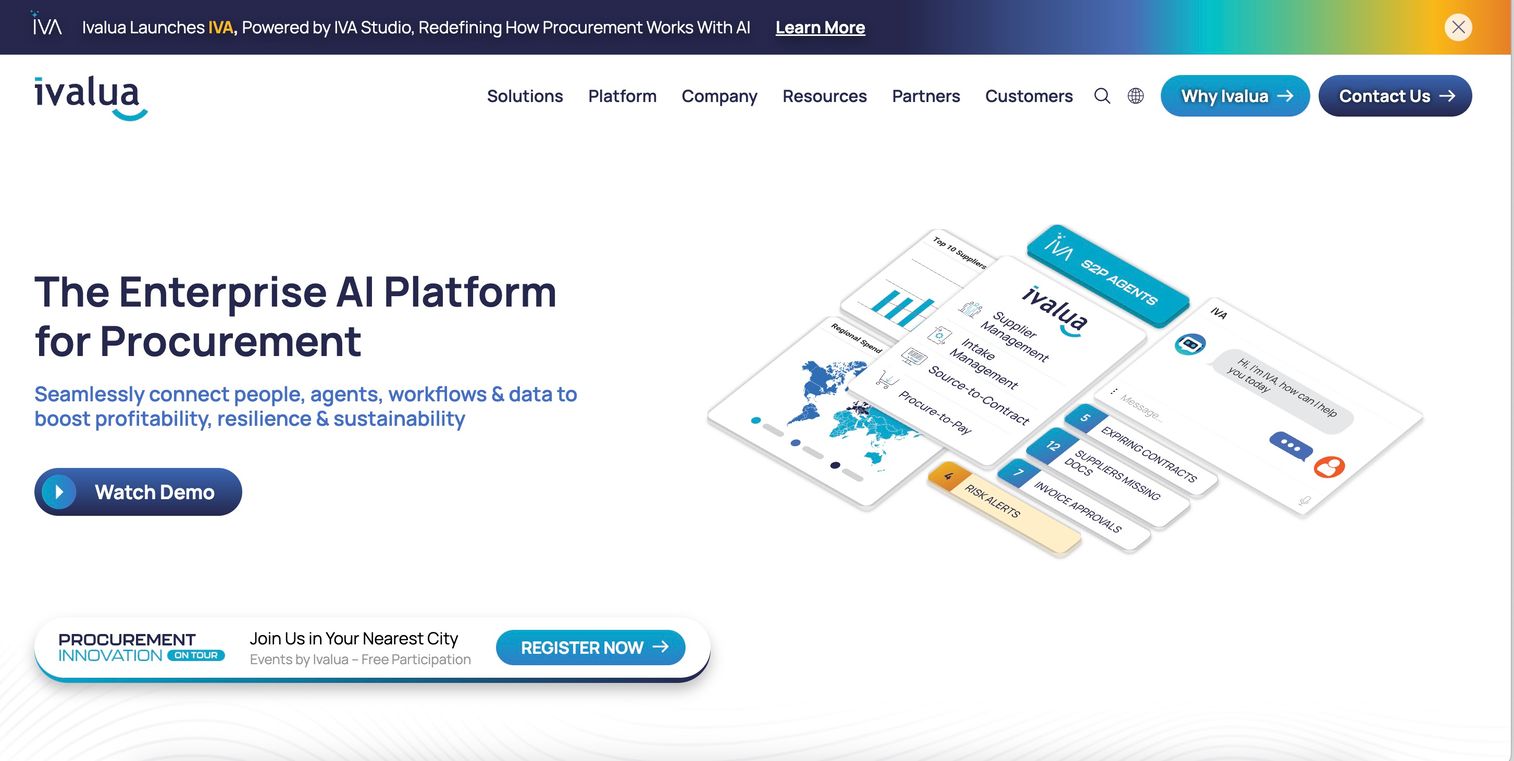
Ivalua is a unified source-to-pay procurement platform that covers supplier, sourcing, contract, and eProcurement workflows in one configurable system. It suits large enterprises that want sourcing optimization inside a broad suite and value the ability to shape process design to their own governance model. Rather than forcing a fixed workflow, Ivalua leans on configurability so procurement teams map the tool to how they already work.
For sourcing events, Ivalua supports event management, structured bid comparison, and supplier collaboration, backed by an AI, analytics, and integration hub. That analytics layer connects sourcing decisions to spend and supplier data, giving category managers the context to weigh risk, capacity, and total cost together. The integration hub matters for enterprises that need sourcing to sit cleanly inside a wider ERP and finance stack.
Best for: large enterprises seeking configurable procurement and source-to-pay automation with governance control.
Key strengths
- Unified source-to-pay: supplier, sourcing, contract, and eProcurement in one platform.
- Configurable workflows: shape process design to your governance and category needs.
- AI, analytics, and integration hub: connect sourcing decisions to spend and supplier data.
Why choose Ivalua: pick it when configurability is a priority and you want sourcing optimization embedded in a broad, adaptable suite. It fits organizations with distinct process requirements that a rigid tool would force them to abandon.
Ivalua pricing: Ivalua does not publish public pricing and directs buyers to contact sales or request a demo. Expect enterprise packaging aligned to scope and modules. On G2, Ivalua holds a 4.3/5 rating.
6. SAP Ariba
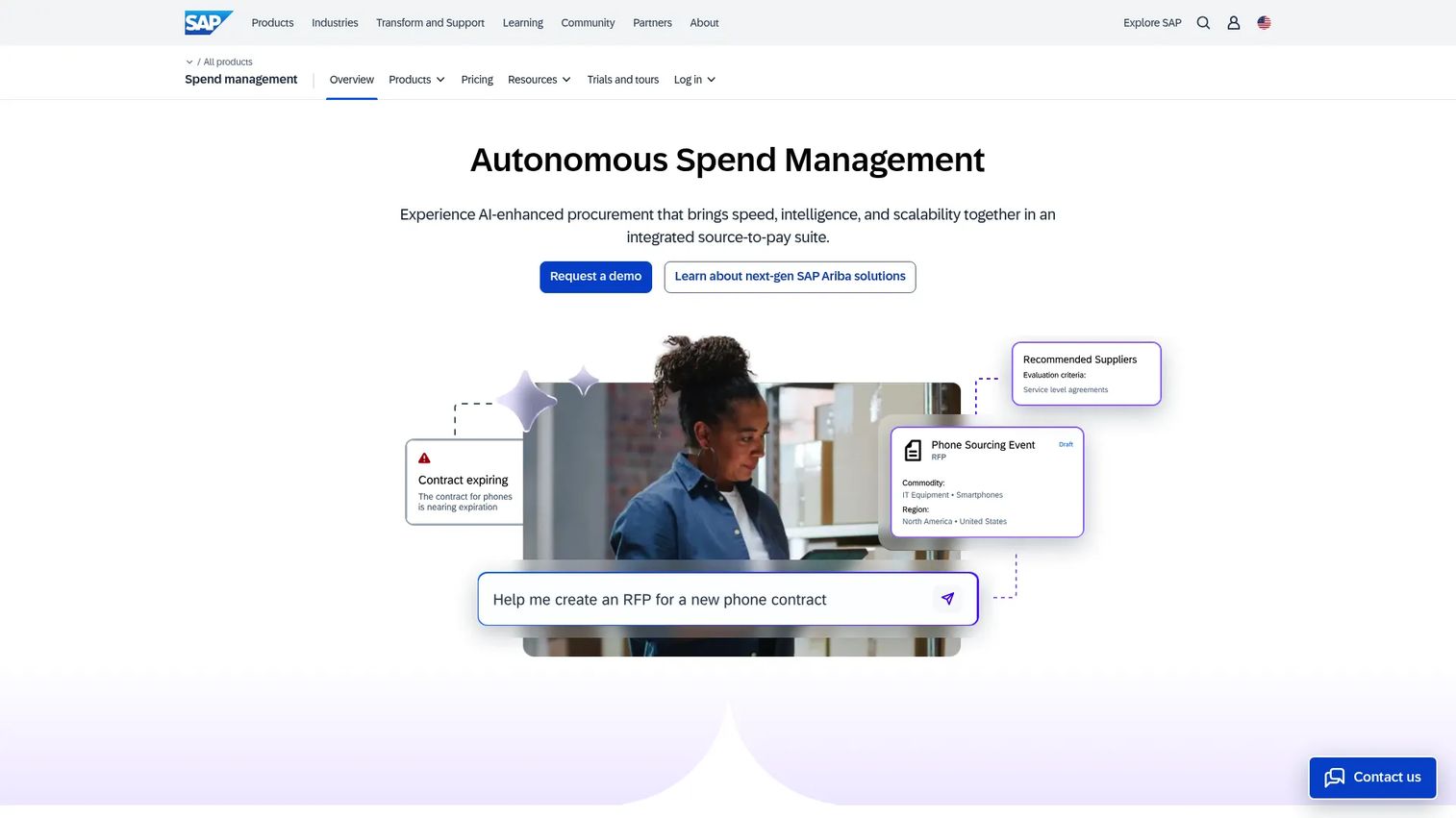
SAP Ariba is cloud procurement and business network software covering sourcing, buying, invoicing, and supplier collaboration. It fits large organizations already standardized on SAP, where sourcing events need to live inside the same ecosystem as the rest of finance and procurement. The Ariba business network adds supplier discovery and network-based trading, which is a genuine differentiator for teams that want a large connected supplier base.
For sourcing specifically, Ariba delivers sourcing and contracts capabilities alongside procure-to-pay workflows, so award decisions flow into buying and invoicing without leaving the SAP environment. Supplier network collaboration streamlines onboarding and ongoing management, and the scale suits enterprises with many suppliers across regions and categories.
Best for: large SAP-centric organizations that want sourcing, procurement, and network trading in one ecosystem.
Key strengths
- Procure-to-pay workflows: buying and invoicing connected to sourcing decisions.
- Sourcing and contracts: event management and contract capabilities in one place.
- Supplier network: discovery and collaboration across a large connected base.
Why choose SAP Ariba: choose it when your organization runs on SAP and wants procurement to stay inside that stack. The ecosystem fit and supplier network are the strongest reasons to standardize here rather than add a separate optimizer.
SAP Ariba pricing: SAP Ariba does not expose public plan pricing through its first-party pages. Pricing is scoped through SAP sales and packaging. A current public G2 rating was not available from a verified source at the time of writing.
7. GEP SMART
GEP SMART is AI-powered source-to-pay procurement software that unifies sourcing, spend management, and contract workflows in one platform. It fits enterprise teams looking for a single system across procurement motions, with sourcing depth that includes strategic sourcing, e-auctions, and contract workflows. The unified design means category managers move from spend analysis to sourcing event to contract without switching tools.
For sourcing, GEP SMART combines strategic sourcing and e-auction software capabilities with spend analysis that informs where optimization effort pays off. The AI layer supports analysis across the source-to-pay flow, and the platform approach gives procurement leaders one place to run and govern events. That consolidation is the appeal for teams reducing tool sprawl across procurement.
Best for: large enterprises that want an integrated source-to-pay platform with real sourcing depth.
Key strengths
- Unified source-to-pay: sourcing, spend management, and contracts in one platform.
- Strategic sourcing and e-auctions: event management plus reverse-auction support.
- Spend analysis: surface where optimization effort delivers the most cost avoidance.
Why choose GEP SMART: pick it when you want one platform across the whole procurement lifecycle, with sourcing strength rather than an afterthought. It fits enterprises consolidating fragmented tools into a single governed system.
GEP SMART pricing: GEP does not publish public pricing for GEP SMART, and the pricing page was not accessible from a verified first-party source. Pricing is scoped through GEP sales. On G2, GEP SMART holds a 4.3/5 rating.
Considerations before you buy
Before you shortlist, pressure-test each tool against how your team actually sources. Pricing is rarely the deciding factor in this category, so weigh these instead.
Scenario analysis depth
Ask how many award scenarios the engine can model in one solve, and how it handles both hard constraints, like supplier caps, and soft ones, like sustainability weighting. Shallow scenario tools force you back into spreadsheets the moment a bid event gets real. Run a live test with one of your own complex categories, not the vendor's clean demo data.
Award defensibility and audit trail
Every weight, rule, and constraint should be logged and reproducible. When finance or leadership questions an award six months later, you need to show the model, not reconstruct a decision from memory. Confirm the tool captures who changed what, when, and why, and that reports export cleanly for audit.
Flexible and expressive bidding
Check whether suppliers can bid on bundles, volume tiers, and alternatives, not just fixed line items. Expressive bidding surfaces savings that rigid RFQ formats hide, and it is where advanced sourcing optimization separates from basic e-sourcing. Test the supplier-side experience too, since a clumsy bidding interface depresses participation.
Integration footprint
Sourcing does not live alone. Confirm the tool connects to your ERP, contract management, and finance stack so award data flows downstream without re-keying. For SAP-standardized shops, native ecosystem fit can outweigh a deeper standalone optimizer. Map the integrations you need before you sign, not after.
Conclusion
The right sourcing optimization software depends on how complex your events are, how much governance you need, and how big your integration footprint is.
For raw optimization depth on complex RFx and auctions, Keelvar is the sharpest pick, with the highest G2 rating in this group. For weighted award decisions plus supplier collaboration and reporting in one place, JAGGAER fits large procurement organizations. For source-to-contract alignment inside a broader spend platform, Coupa keeps sourcing connected to finance. For AI-heavy, data-rich environments where landed cost and anomaly detection matter most, C3 AI leads. Ivalua and GEP SMART suit teams that want configurable, unified source-to-pay suites, and SAP Ariba fits organizations already standardized on SAP.
Shortlist two or three based on event complexity, governance needs, and integration footprint. Then run a proof of value on one of your own hard categories, compare demos side by side, and weigh implementation effort honestly before you commit.
FAQs
Sourcing optimization software is a procurement tool that uses mathematical optimization and scenario analysis to evaluate supplier bids across price, risk, capacity, sustainability, and contract terms at once. It produces defensible award decisions that a spreadsheet cannot, and logs the rules and weights behind each choice for audit.
Scenario analysis models multiple award outcomes under different business rules and constraints, then compares them side by side. You set weights and limits, like capping any supplier at 40% of volume, and the engine solves for the best allocation under each scenario so you can see the true cost of every policy before committing.
Prioritize scenario analysis depth, a complete audit trail for award defensibility, flexible and expressive bidding, and clean integration with your ERP and finance stack. Test the platform on one of your own complex categories rather than the vendor's demo data, and check the supplier-side bidding experience.
Yes, once a bid event has many lots, suppliers, or competing award constraints, spreadsheets stop scaling and hide savings. Optimization software surfaces the best allocation across all criteria and documents the decision, which is why roughly 62% of firms adopt sourcing platforms to reduce inefficiency, per Reanin (2024).
AI sourcing optimization automates repetitive events, triggers sourcing when market rates shift, and surfaces intelligence like anomaly detection, supplier similarity, and total landed cost modeling. Agentic workflows handle tail-spend events end to end, freeing analysts to focus on high-stakes categories and negotiation.
E-sourcing digitizes the bid process, collecting quotes and running auctions online. Sourcing optimization adds a mathematical engine that models tradeoffs across many criteria and constraints at once, producing an optimal, defensible award. E-sourcing lines bids up in a table; optimization solves for the best combination.
Yes, most platforms let you weight sustainability, supplier risk, capacity, and compliance as constraints inside the same solve as price. You can set them as hard limits or soft preferences, then see the true cost of each policy in the award scenario, which supports both defensible decisions and supplier negotiation.
Measure cost avoidance against a baseline award, cycle-time reduction on sourcing events, and the number of complex events your team can run without adding headcount. Track realized savings by tying awarded rates to invoiced prices, and factor in the audit-defensibility value when leadership questions past award decisions.