Your board asks who owns the top five company risks. You look around the room. Nobody has a clean answer.
That moment is not a people problem. It is a system problem. Risk data lives in spreadsheets, Slack threads, audit docs, engineering tickets, and inspection records that nobody consolidates into a view leadership can actually use. According to MarketIntelo (2025), the global risk assessment software market was valued at $7.2 billion in 2025 and is projected to reach $18.5 billion by 2034. Demand is growing because the status quo, patchy visibility and reactive follow-up, is not scaling with company complexity.
Risk assessment software gives your team a structured way to identify, score, prioritize, and track mitigation work across business, safety, compliance, and IT workflows. The category spans EHS platforms for workplace safety, compliance tools for audit readiness, and engineering-native options for code and dependency risk. The challenge is that no single tool covers every domain equally well. Picking the wrong one means adding another reporting silo instead of reducing them.
This guide cuts through 13 tools by risk domain, scoring model, mitigation workflow, and first-week fit.
What's inside
This guide covers 13 risk assessment software tools for 2026, spanning EHS, compliance, IT, security, and operational risk use cases.
- Who it is for: Founders, operations leaders, and compliance teams evaluating risk assessment tools before a board review or a new hire's day one
- How tools were selected: Category fit, risk scoring depth, mitigation workflow, reporting, and verified G2 ratings
- What the comparison table covers: Best for, key differentiator, pricing, and G2 rating per tool
- How to use the "best for" labels: Match your primary risk domain first, then compare features within that category
TL;DR
- Best enterprise EHS risk platform: Benchmark Gensuite covers EHS, sustainability, quality, and operational risk in a configurable, a-la-carte suite
- Best hands-on EHS tool: Mitti (by SafetyCulture) offers inspections, training, incident reporting, and analytics with a free tier
- Best for compliance-led SaaS teams: Vanta ties risk registers to controls, compliance frameworks, and continuous monitoring
- Best for field inspections and checklists: SafetyCulture's mobile-first platform covers inspections, issues, and corrective actions from any device
- Best for engineering risk workflows: Jira and GitHub both support security alerts, dependency tracking, and mitigation work inside developer workflows
- Best for cross-functional task ownership: Asana keeps mitigation follow-through visible across teams without requiring a dedicated risk platform
What is risk assessment software?
Risk assessment software is a platform that helps teams identify, evaluate, score, prioritize, mitigate, and report risks across business, safety, compliance, IT, security, and operational workflows.
The category exists because risk data rarely lives in one place. Safety hazards appear in inspection records. Code vulnerabilities surface in dependency alerts. Compliance gaps show up in audit findings. Without a structured system, each domain manages its own risk register in isolation, and leadership never gets a complete picture.
Core capabilities
Most risk assessment platforms include some combination of these features:
- Risk identification and categorization: Named risk types, severity classes, and domain groupings
- Probability and impact scoring: Matrices that score likelihood and consequence to produce a risk level or score
- Risk registers: Centralized records showing current risk status, ownership, and history
- Corrective actions and mitigation tasks: Assigned tasks with owners, due dates, and completion tracking
- Review cycles and approvals: Scheduled reviews, sign-offs, and escalation paths
- Dashboards and reporting: Heatmaps, trend lines, and exports for leadership and auditors
- Integrations: Connections to EHS workflows, issue trackers, compliance systems, and communication tools
Risk assessment software vs. risk management software
Risk assessment focuses on evaluating and scoring risks. Risk management software extends that into continuous monitoring, control mapping, policy governance, and reporting across the full risk lifecycle. Many platforms do both, so the distinction blurs in practice. The more useful question is whether a tool covers your primary risk domain and connects identified risks to actual mitigation work.
Where scoring models differ
Likelihood-plus-impact matrices are the most common scoring model. Some platforms add consequence analysis, residual risk scoring after controls are applied, and inherent-versus-residual comparisons. EHS tools often include severity classifications tied to regulatory standards. Compliance platforms may weight risks by control coverage. Engineering tools surface risk through vulnerability severity scores. Know your scoring language before evaluating tools.
When to use risk assessment software
Build a board-ready risk register
When a board member asks about your top risks, a spreadsheet does not hold up under scrutiny. Risk assessment software gives you a structured register with named owners, scores, status, and evidence of mitigation work. Founders preparing for due diligence or a board review should treat a clean risk register as a deliverable, not a byproduct.
Standardize safety and compliance assessments
EHS teams managing workplace hazards, inspections, audits, and corrective actions need repeatable templates, not ad-hoc processes. Risk assessment software with mobile access lets frontline teams capture hazards in the field and route them through consistent scoring before anything falls through. Compliance teams benefit similarly when audit findings feed directly into a corrective action workflow.
Connect risk mitigation to daily work
Scoring a risk and assigning it to a team member are two different things. Risk assessment fails when identification happens in one tool and follow-up lives in Jira, Asana, or a project doc that nobody reads. The right setup routes mitigation tasks into the systems where engineering, operations, or compliance teams already work. That connection is what turns a risk register into something that actually gets resolved.
Risk assessment software comparison
The table below covers 13 tools across EHS, compliance, IT, security, and operational risk. Pricing and G2 ratings reflect verified figures from each vendor's pricing page and G2 listing as of October 2026.
| # | Product | Best for | Key differentiator | Pricing | G2 rating |
|---|---|---|---|---|---|
| 1 | Benchmark Gensuite | Enterprise EHS and sustainability risk | AI-native EHS, ESG, quality, and compliance suite | Prices by quote | 4.0/5 |
| 2 | Mitti | Frontline EHS and workplace safety | Free tier with inspections, training, and incidents | Free; paid from $24/seat/month | 4.6/5 |
| 3 | KPA Flex | High-risk industry safety programs | Configurable EHS workflows with compliance training | Prices by quote | 4.7/5 |
| 4 | Effivity | ISO and compliance management | No-code QHSE and compliance workflow builder | From $29/month; 15-day trial | N/A |
| 5 | EHS Insight | Modular EHS operations | Configurable incident, audit, and risk modules with AI | Starting at $5k/year | 4.6/5 |
| 6 | Isometrix | Enterprise EHS and ESG governance | Integrated operational risk, ESG, and permit-to-work | Prices by quote | N/A |
| 7 | Denxpert | Environmental compliance and ESG | Expert-validated legal registers with ESG assessment tool | From €400 (ESG tool); main platform by quote | 4.8/5 |
| 8 | SafetyCulture | Field inspections and frontline teams | Mobile-first inspections, tasks, and corrective actions | Free; paid from $24/seat/month | N/A |
| 9 | Vanta | SaaS compliance and IT risk | Risk register tied to controls, frameworks, and monitoring | Prices by quote | 4.6/5 |
| 10 | Jira | Engineering risk mitigation workflows | Issue tracking and workflow automation for mitigation tasks | Free; paid tiers by calculator | N/A |
| 11 | GitHub | Code and dependency security risk | Secret scanning, Dependabot, and security advisories | Free; Team from $4/user/month | N/A |
| 12 | Asana | Cross-functional mitigation task management | Work management with goals, dashboards, and automations | Free; Starter from $10.99/user/month | 4.4/5 |
| 13 | DHS SAVER | Public safety equipment research | Government assessments of emergency responder technology | Free government resource | N/A |
Best 13 risk assessment software tools
1. Benchmark Gensuite
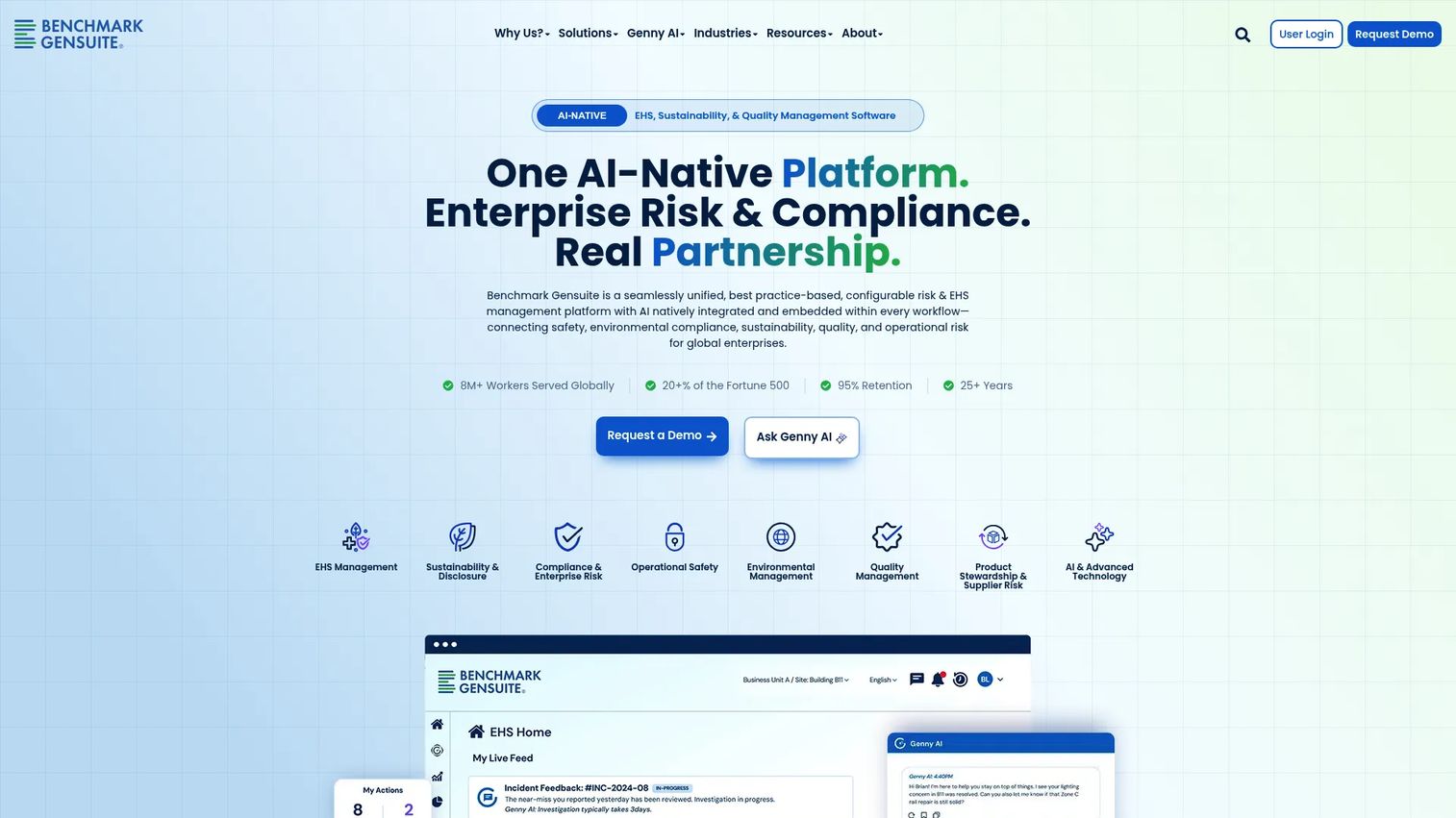
Benchmark Gensuite is an AI-native EHS, sustainability, quality, compliance, and operational risk management platform built for global enterprises. It covers everything from incident management and corrective actions to ESG disclosure and CSRD reporting, all within a configurable a-la-carte application model. The platform's embedded Genny AI runs across workflows, and mobile-first frontline tools make it usable across distributed sites.
Best for: Large organizations managing interconnected EHS, sustainability, quality, and operational risk programs across multiple locations.
Key features
- Configurable risk matrices and EHS workflow templates
- Job safety analysis and baseline versus residual risk scoring
- Sustainability, carbon accounting, and ESG disclosure reporting
- Genny AI embedded across EHS and compliance workflows
- Mobile-first frontline tools with analytics and API integrations
Why choose Benchmark Gensuite: Use it when risk assessment needs to sit inside a broader EHS and sustainability program with enterprise governance, not a standalone scoring spreadsheet.
Benchmark Gensuite pricing: Benchmark Gensuite prices by quote through a sales demo request. The platform uses a configurable, a-la-carte model and does not apply per-user licensing.
G2 rating: 4.0/5
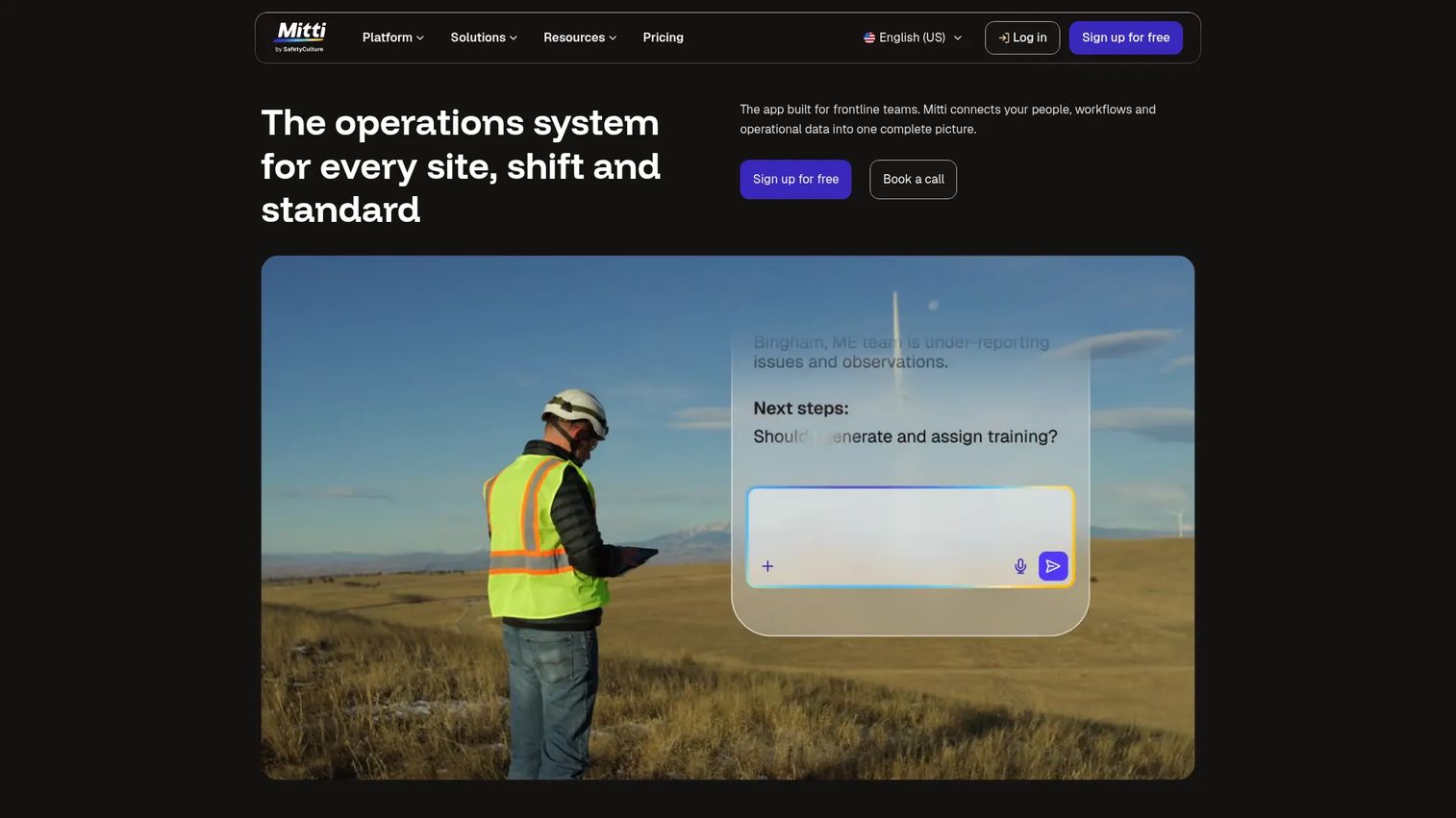
2. Mitti
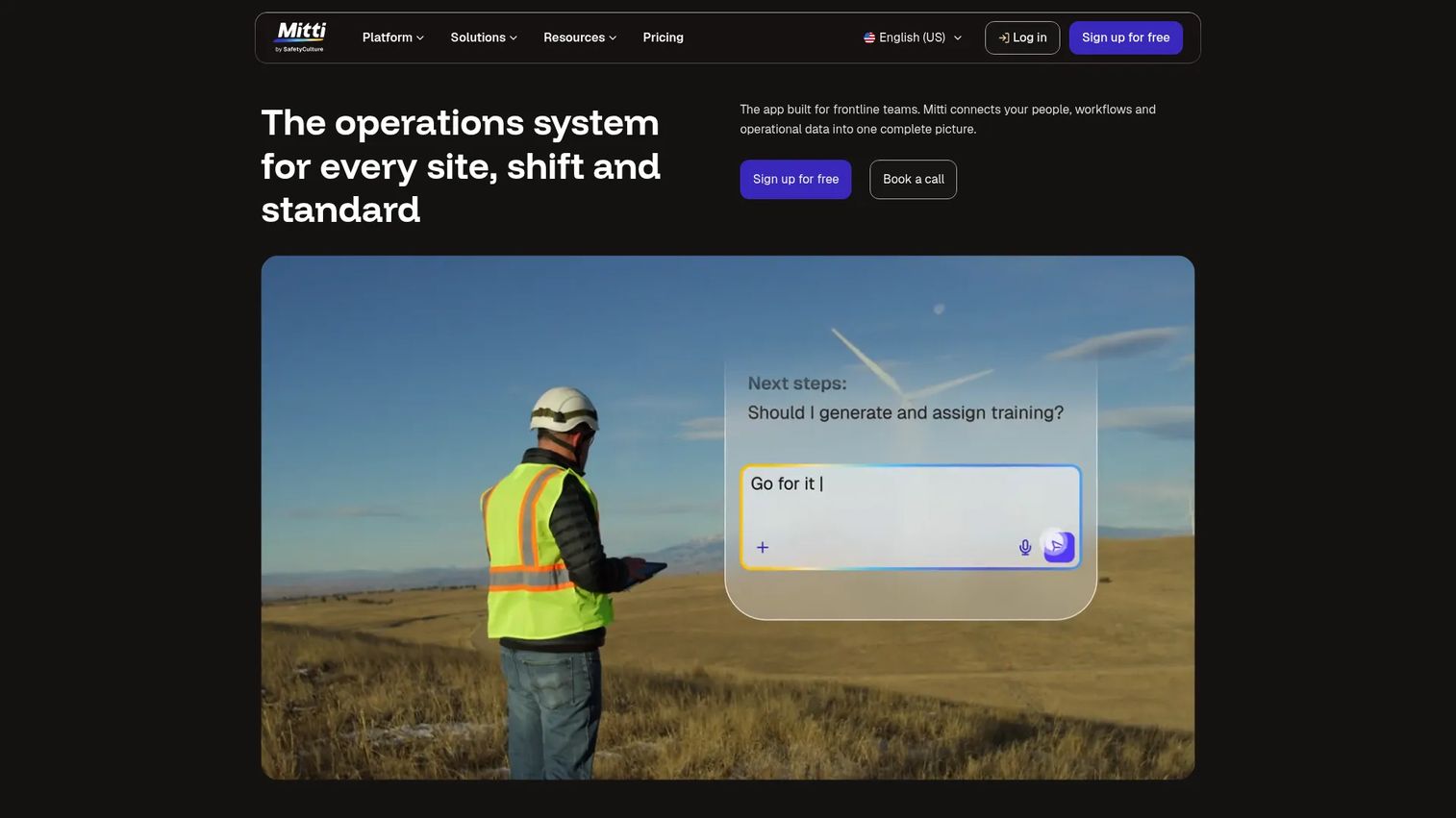
Mitti is a workplace operations platform by SafetyCulture that covers inspections, training, incident reporting, task management, asset maintenance, and analytics. Teams use it to standardize safety and compliance workflows across locations, replacing disconnected checklists and paper forms with a single digital system. The platform includes a free tier with core inspection and reporting capabilities.
Best for: EHS teams replacing spreadsheets and disconnected safety records with a structured, centrally managed system.
Key features
- Digital inspections and checklists with configurable templates
- Incident and issue reporting with corrective action tracking
- Built-in training with completion tracking and benchmarking
- Asset register and maintenance reminders
- Compliance dashboards and performance analytics
Why choose Mitti: Strong fit for teams that want a free starting point for workplace safety before committing to enterprise EHS spend. The Premium tier adds integrations and advanced analytics when teams outgrow the basics.
Mitti pricing: Free plan includes core inspections and reporting. Premium runs $24 per seat per month billed annually, or $29 per seat per month billed monthly. Enterprise pricing goes through sales.
G2 rating: 4.6/5 (verified from G2's Mitti listing, October 2026).
3. KPA Flex
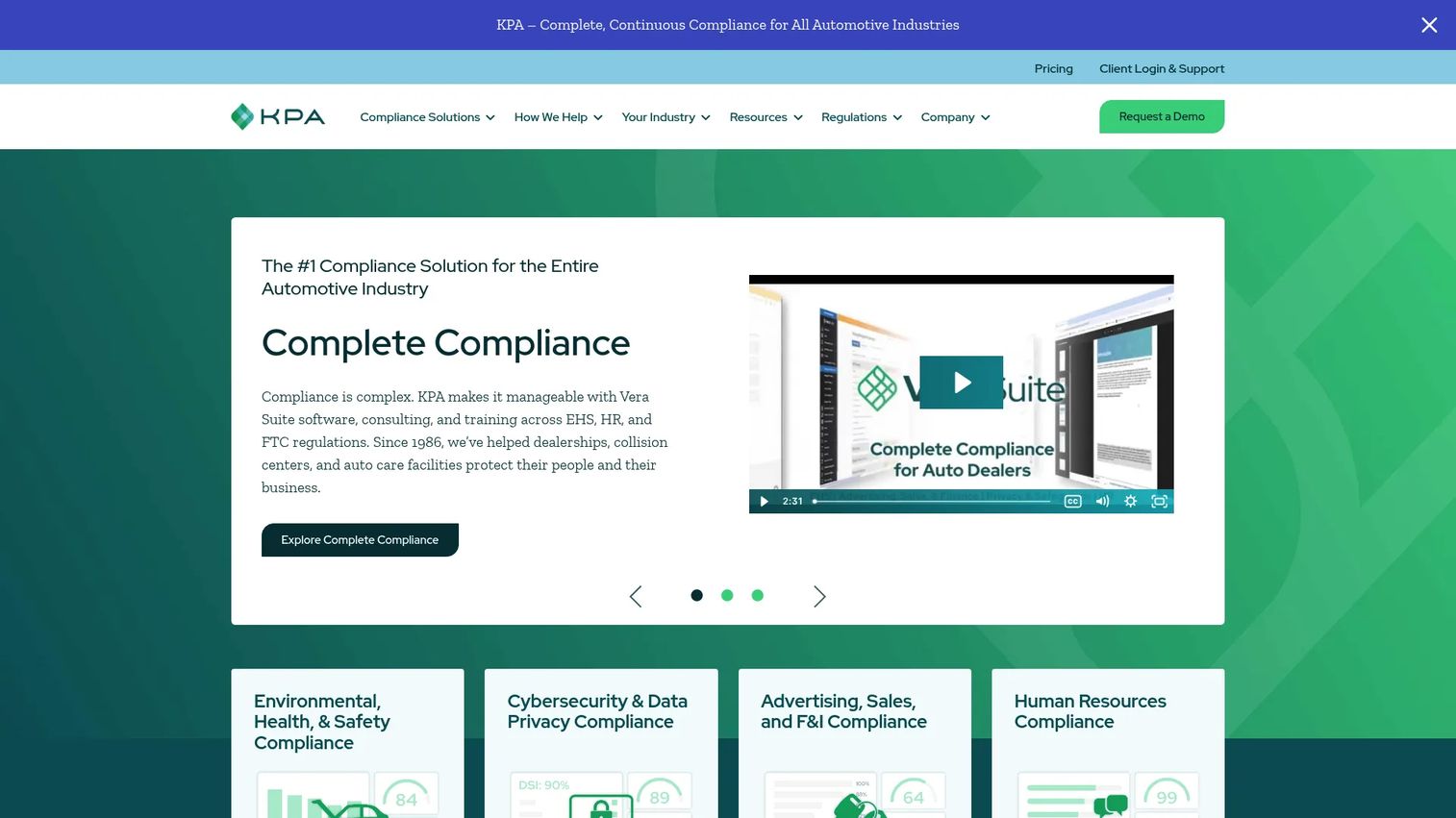
KPA Flex is a configurable cloud-based environmental, health, and safety management platform for high-risk industries. It covers incident tracking, audits, inspections, online compliance training, Safety Data Sheets management, equipment management, and corrective actions in a single system. KPA announced in January 2026 that its Flex software business became part of Novara; the product is currently listed on G2 as Novara Flex.
Best for: Companies in high-risk industries that need EHS risk assessment connected to workforce safety training and compliance reporting.
Key features
- Incident management with corrective action workflows
- Online compliance training with completion tracking
- Configurable forms for audits and inspections
- Safety Data Sheets management
- Compliance calendar and regulatory reporting
Why choose KPA Flex: Use it when risk assessment is part of a broader safety program that includes training requirements, not just a scoring exercise. The compliance calendar feature is particularly useful for teams managing recurring regulatory obligations.
KPA Flex pricing: KPA Flex prices by quote. A demo request starts the process; pricing varies by modules, locations, and user count.
G2 rating: 4.7/5 (verified from G2's Novara Flex listing, October 2026).
4. Effivity
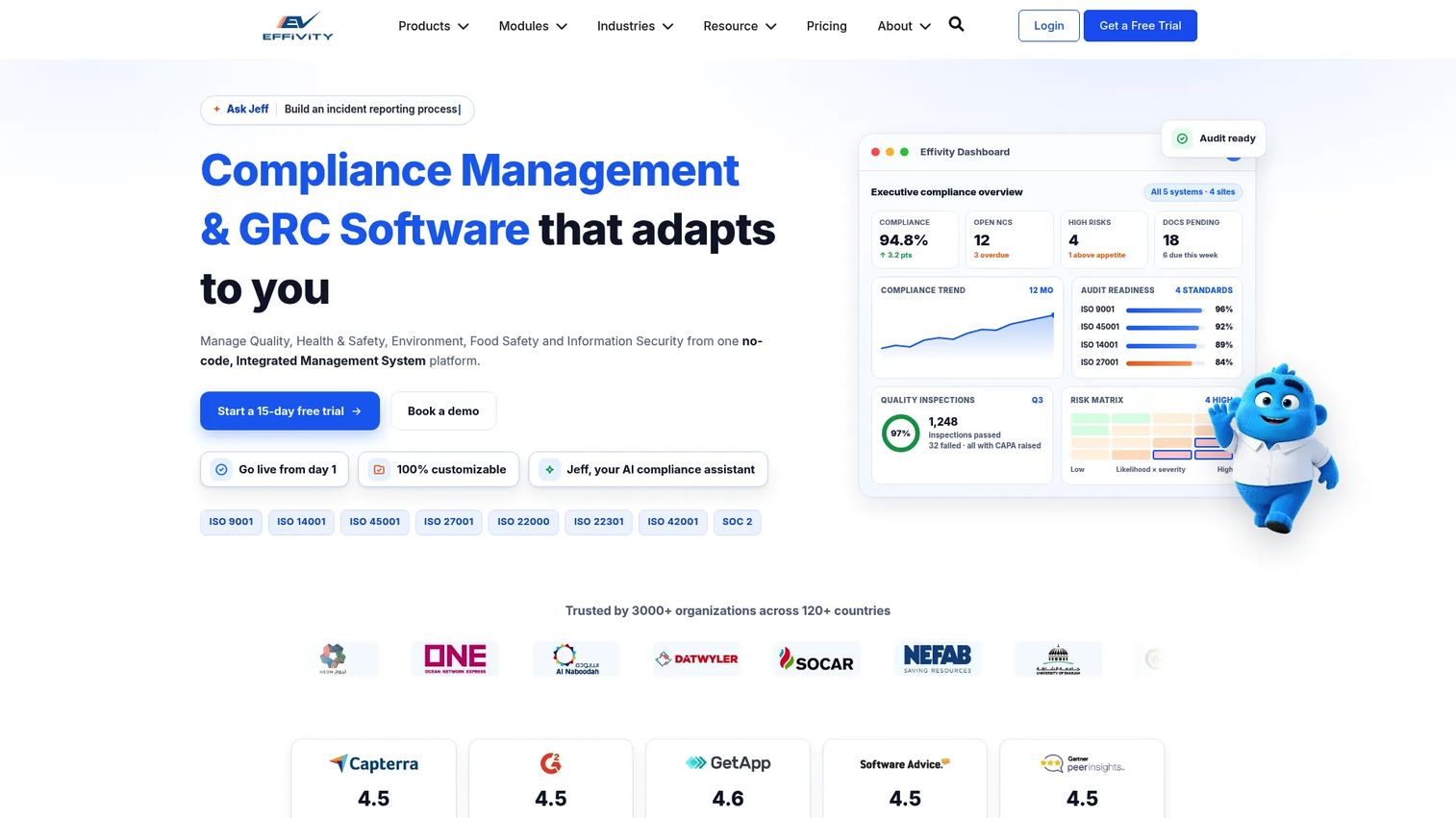
Effivity is a no-code compliance management and GRC platform for quality, health and safety, environmental, food safety, and information security programs. It covers document control, internal audit management, non-conformity tracking, corrective actions, and risk and opportunity management through a configurable workflow builder. A 15-day free trial is available.
Best for: Teams managing ISO standards and QHSE compliance who need risk assessment connected directly to audit findings and corrective action records.
Key features
- Document control with version history, approval routing, and e-signatures
- Internal audit management with scheduling and findings tracking
- Non-conformity and corrective action management with root-cause analysis
- Risk and opportunity management module
- No-code workflow builder with BPMN support
Why choose Effivity: Good fit when compliance standards, not just workplace safety, drive the risk program. Teams managing ISO certifications get the tightest alignment between risk findings, audit evidence, and corrective actions.
Effivity pricing: Plans start at $29 per month with a 15-day free trial. The pricing page also offers personalized pricing for larger implementations.
G2 rating: N/A (no verifiable G2 rating found at generation time; Capterra shows 4.6/5 as a cross-reference).
5. EHS Insight
EHS Insight is an AI-powered environmental, health, safety, compliance, quality, training, audit, and ESG management platform. Its modular design lets organizations configure the combination of incident management, audit, inspection, training, and risk modules that fits their operations. AI assistance runs across reporting, document review, and corrective action generation.
Best for: EHS teams that want a structured, centralized risk assessment system connected to day-to-day safety operations across distributed locations.
Key features
- Hazard identification and risk management module
- Audit and inspection management with configurable workflows
- Incident reporting with corrective and preventive action tracking
- AI-assisted reporting and corrective action generation
- ESG and sustainability management alongside core EHS
Why choose EHS Insight: Strong option when the risk program spans multiple EHS domains and the team needs AI assistance to reduce manual reporting work. The modular structure means you pay for what you use.
EHS Insight pricing: Small and medium business plans start at $5k per year. Enterprise pricing is customized by contacts, modules, and implementation requirements.
G2 rating: 4.6/5 (verified from G2's EHS Insight listing, October 2026).
6. Isometrix
Isometrix provides configurable EHS, ESG, GRC, risk, compliance, and sustainability software for high-risk, highly regulated industries. The platform covers operational risk registers, incident investigation, root-cause analysis, permit-to-work, compliance obligations, and mobile field data collection. ESG and sustainability reporting sit alongside core EHS in a single system.
Best for: Larger organizations with EHS, ESG, and operational risk data spread across business units that need integrated governance in one platform.
Key features
- Centralized risk and control registers with assessment workflows
- Integrated EHS, ESG, and sustainability management
- Incident investigation with root-cause analysis and CAPA workflows
- Digital permit-to-work and control-of-work management
- Mobile offline field data collection
Why choose Isometrix: Use it when operational risk needs to sit inside a broader enterprise governance program that spans EHS, ESG, and compliance. Its depth suits highly regulated industries where audit trails and regulatory reporting are non-negotiable.
Isometrix pricing: Isometrix prices by quote. Contact the vendor directly for package details.
G2 rating: N/A (G2 seller page shows zero reviews at generation time; Capterra lists 3.7/5 from 15 reviews as a cross-reference for Isometrix Aurora).
7. Denxpert
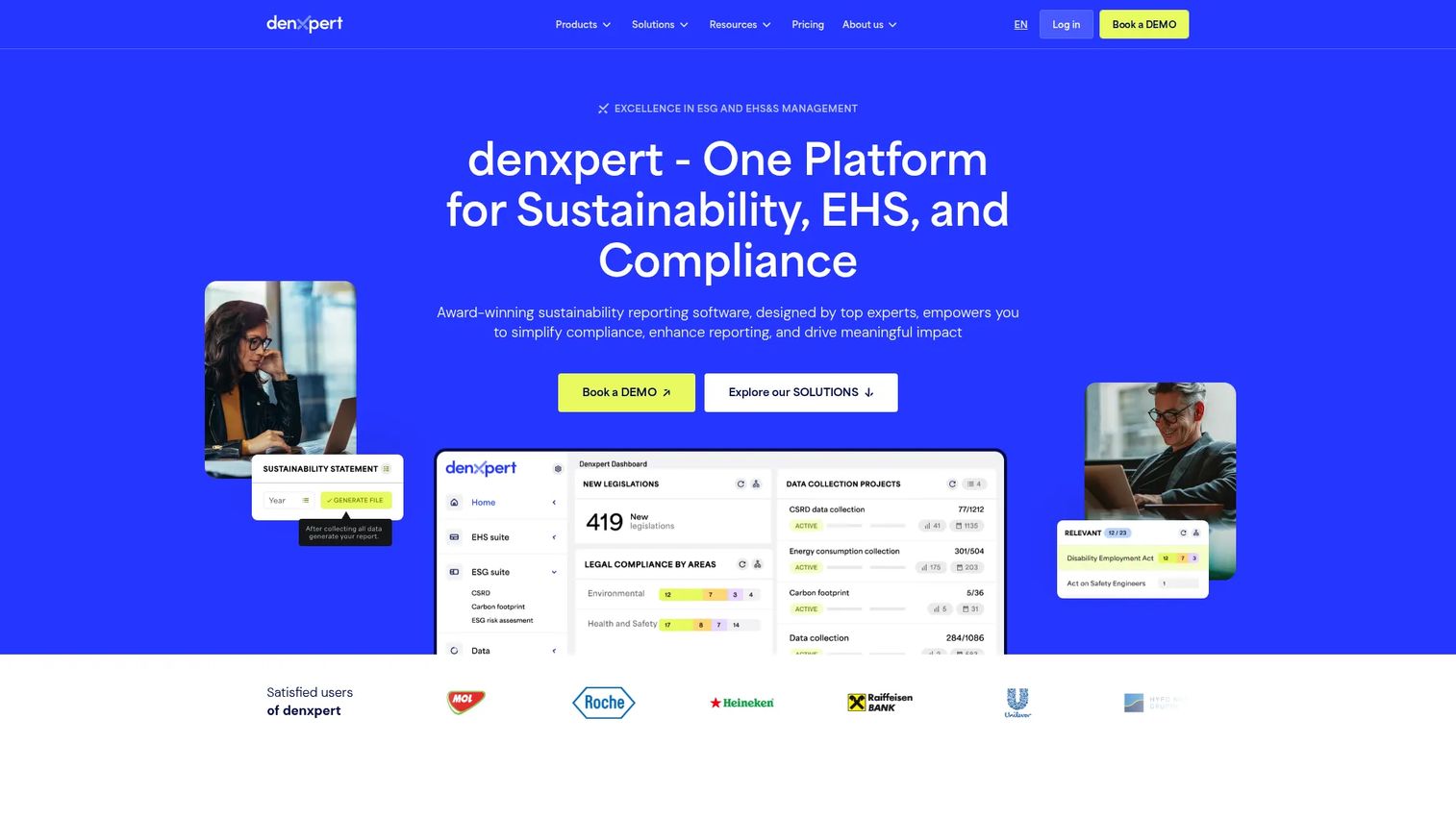
Denxpert is a cloud-based sustainability management platform for EHS compliance, ESG management, and sustainability reporting. Its core differentiator is expert-validated legal registers that update automatically as regulations change. Centralized data management, audit trails, task assignment, and deadline tracking sit alongside a dedicated ESG Assessment Tool with its own public pricing tiers.
Best for: Environmental compliance teams that need risk assessment tied to regulatory obligations, EHS records, and ESG reporting requirements.
Key features
- Expert-validated legal registers with automatic regulatory updates
- Centralized EHS, ESG, and sustainability data management
- Audit trails, documentation, and task assignment with deadline tracking
- ESG Assessment Tool with dedicated Free, Basic, Premium, and Enterprise tiers
- Multi-site compliance and sustainability reporting
Why choose Denxpert: Particularly strong when environmental and regulatory compliance drives the risk program, and the team needs reliable legal register updates without manual research effort.
Denxpert pricing: The main platform prices by quote through the vendor. The ESG Assessment Tool has published tiers starting at €400 for the Basic plan and €500 for Premium, with Enterprise at custom pricing. A free tier is also available for the ESG tool.
G2 rating: 4.8/5 (verified from G2's Denxpert listing, October 2026).
8. SafetyCulture
SafetyCulture is a workplace operations platform for digitizing inspections, audits, training, issue reporting, asset management, and operational analytics. Its mobile-first design makes it the strongest option for frontline teams that assess risks through field inspections, checklists, and recurring site reviews rather than desk-based scoring workflows.
Best for: Frontline-heavy organizations that need standardized inspections and corrective actions adopted quickly across distributed teams.
Key features
- Digital inspections and checklists with customizable templates
- Task and action management with corrective action tracking
- Workplace training and upskilling with completion tracking
- Asset register and maintenance reminders
- Analytics dashboards and operational reporting
Why choose SafetyCulture: When speed of field adoption matters more than enterprise governance depth, SafetyCulture's free tier and mobile-first UX reduce the friction of getting frontline teams using the system consistently.
SafetyCulture pricing: Free plan covers up to 10 seats with 5 active templates, unlimited inspections, and up to 3 years of data history. Premium starts at $24 per seat per month billed monthly, with a 17% discount for annual billing. Lite seats start from $5 per seat per month billed annually. Enterprise pricing goes through sales.
G2 rating: N/A (no verifiable current G2 rating found at generation time due to rebranding; Capterra shows 4.6/5 as a cross-reference).
9. Vanta
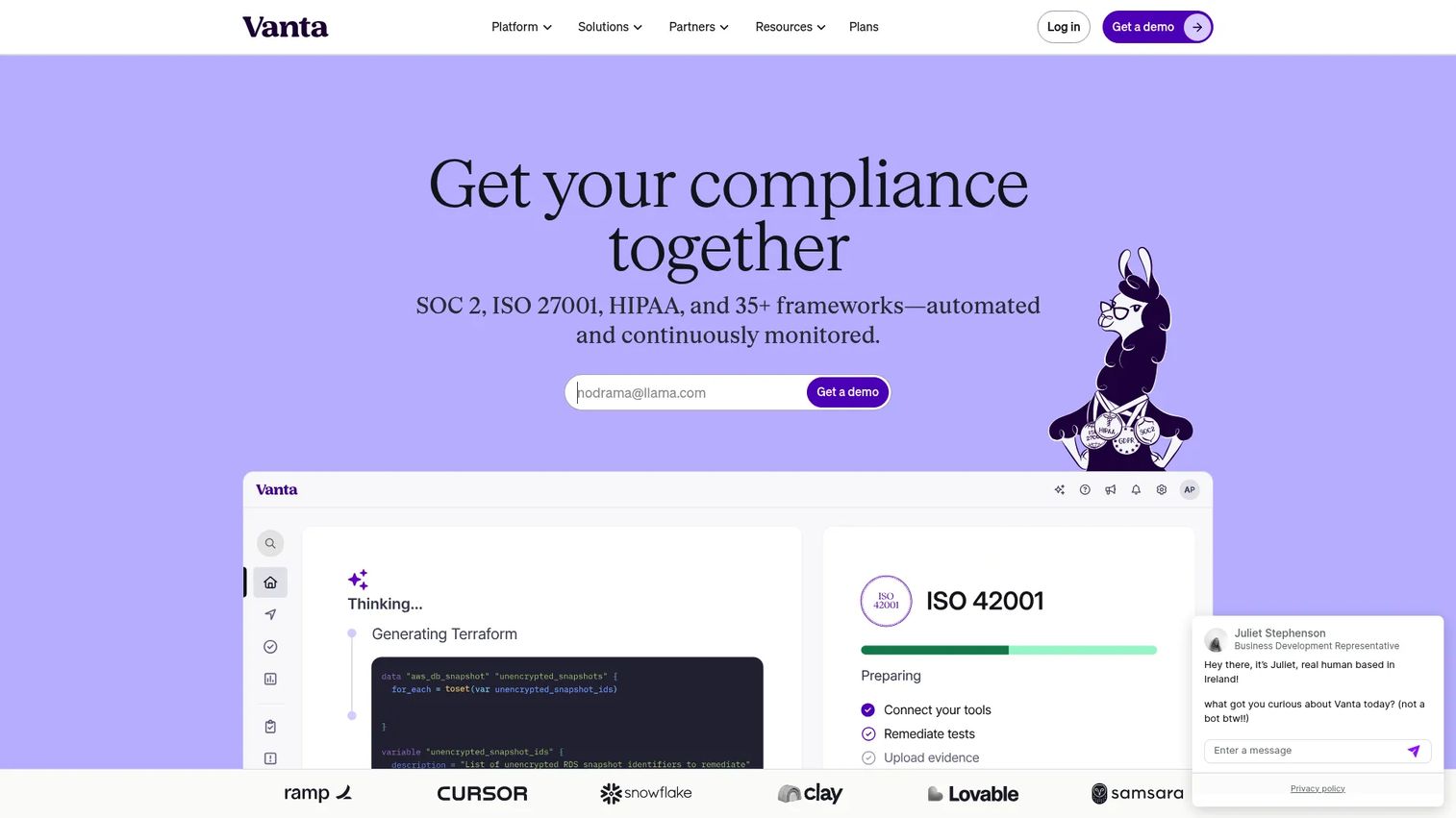
Vanta is an agentic trust platform for automating compliance, risk management, security monitoring, audits, and customer-facing trust proof. For SaaS founders, its strongest use case is tying a risk register directly to compliance controls, vendor risk, and continuous monitoring across frameworks like SOC 2, ISO 27001, GDPR, and HIPAA.
Best for: SaaS companies that need risk assessment connected to compliance controls, security posture, and board-ready audit evidence.
Key features
- Risk register and risk library with scoring and ownership
- Automated evidence collection and continuous control monitoring
- Compliance frameworks including SOC 2, ISO 27001, GDPR, and HIPAA
- Vendor risk management and questionnaire automation
- Trust Center for sharing security posture with prospects and customers
Why choose Vanta: If your primary risk exposure is compliance risk, vendor risk, and security controls, Vanta eliminates the manual work of collecting audit evidence and keeping controls current. For a Series B SaaS team preparing for a customer security review or fundraising diligence, it earns its place quickly.
Vanta pricing: Vanta offers Essentials, Plus, Professional, and Enterprise plans. The vendor personalizes pricing through a demo; no numeric amounts are displayed on the pricing page.
G2 rating: 4.6/5 (verified from G2's Vanta listing, October 2026).
10. Jira
Jira is a project management and issue tracking platform built by Atlassian for software and cross-functional teams. It is not a dedicated risk assessment platform, but engineering-led teams consistently use it to track mitigation work, assign ownership, automate reminders, and report progress on remediation tasks.
Best for: Engineering-led teams that need to track risk mitigation work inside the same system used for sprint planning and incident response.
Key features
- Scrum and Kanban boards with backlog management
- Customizable issue types and workflow automation rules
- Project dashboards with progress and status visibility
- Integration with development and security tooling
- Free plan available for up to 10 users
Why choose Jira: Use Jira when risk assessment happens elsewhere but mitigation work needs to live where engineering already operates. Splitting risk scoring from mitigation tracking across separate systems adds coordination cost.
Jira pricing: Free for up to 10 users with no time limit. Standard and Premium pricing requires the Atlassian pricing calculator; Enterprise pricing requires contacting sales.
G2 rating: N/A (no verifiable aggregate G2 rating confirmed at generation time).
11. GitHub
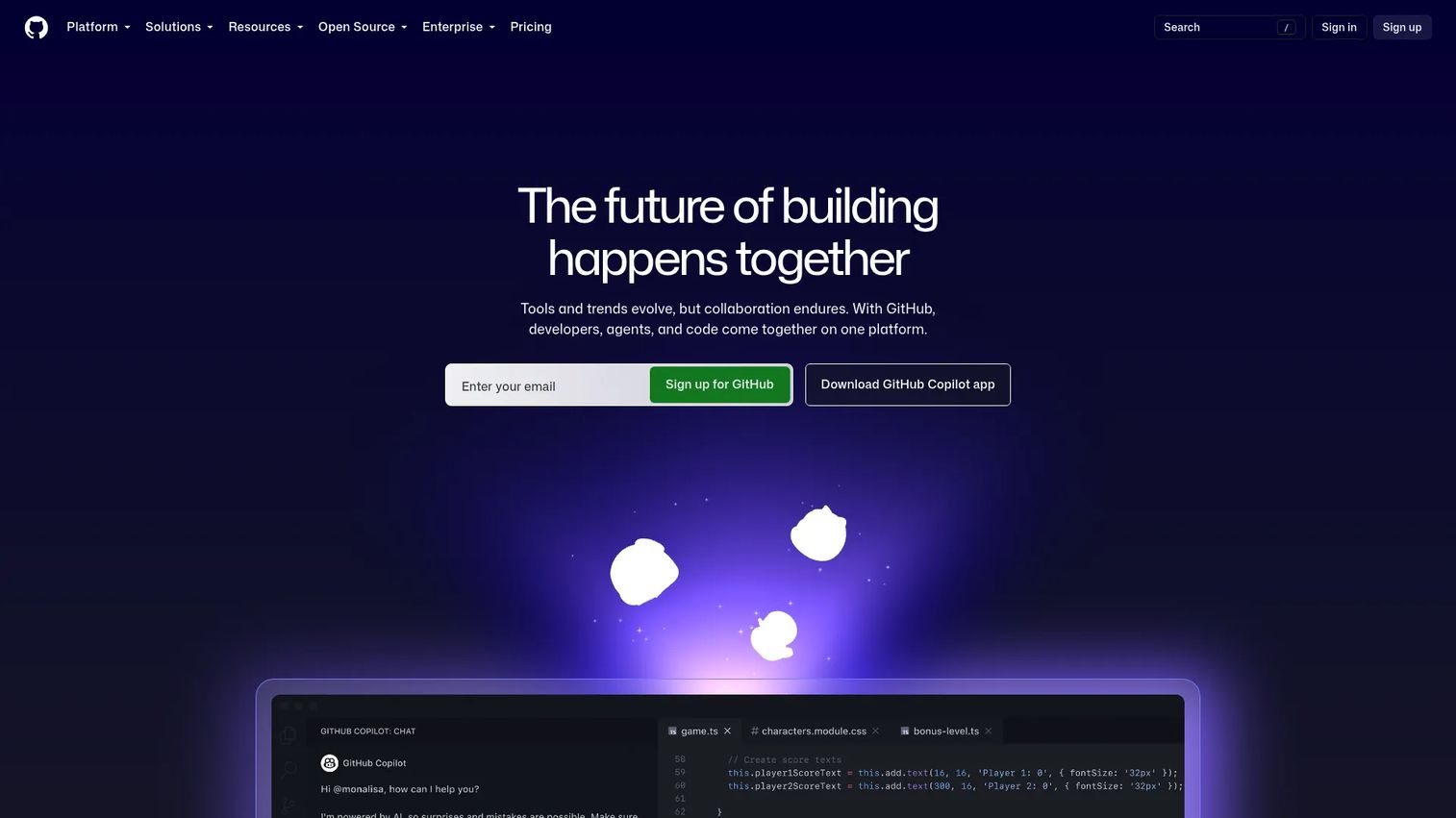
GitHub is a developer platform for hosting code, collaborating on software, automating workflows, and securing applications. Its security features, including secret scanning, Dependabot alerts, dependency review, and security advisories, make it the natural home for software and dependency risk management in SaaS teams.
Best for: SaaS teams managing code security, dependency vulnerabilities, and developer-driven risk remediation inside existing engineering workflows.
Key features
- Secret scanning and security advisories across repositories
- Dependabot alerts for vulnerable dependencies with automated pull requests
- Dependency review for new vulnerabilities in pull requests
- GitHub Actions for CI/CD automation and security workflow triggers
- Code reviews, protected branches, and access controls
Why choose GitHub: When software risk needs to live where engineering works, GitHub is already there. For founders, the practical win is faster remediation with less coordination between security and engineering teams.
GitHub pricing: Free for individuals and open source. Team plan runs $4 per user per month billed monthly. Enterprise plan runs $21 per user per month billed monthly.
G2 rating: N/A (no verifiable G2 rating confirmed at generation time; Capterra shows 4.8/5 as a cross-reference).
12. Asana
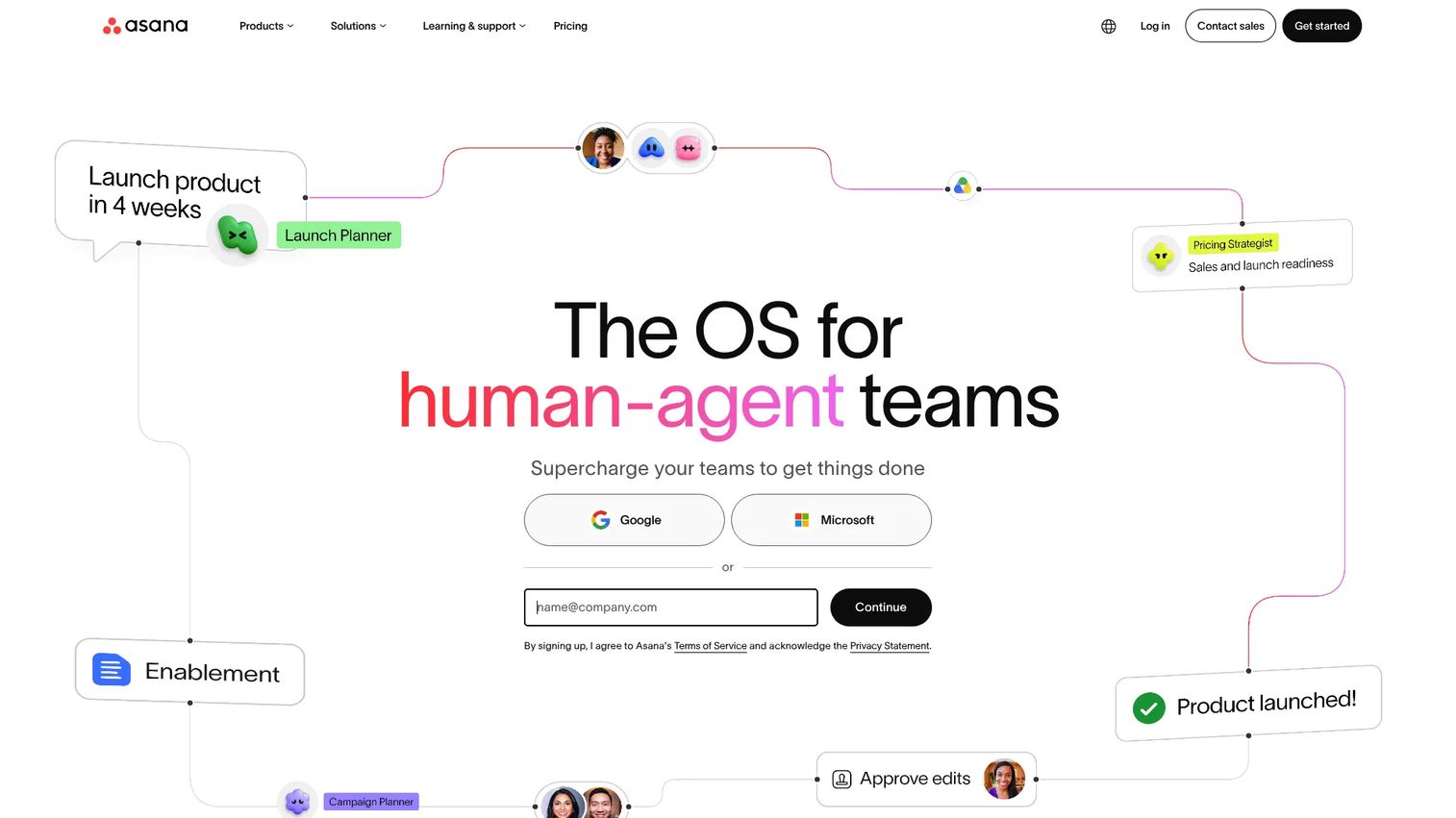
Asana is an AI-powered work management platform for coordinating projects, goals, workflows, and team capacity. Like Jira, it is not a dedicated risk scoring tool. Where it helps most is keeping mitigation follow-through visible across compliance, operations, legal, and marketing teams that do not live in engineering tooling.
Best for: Cross-functional teams that need task ownership and follow-through on identified risks, especially when mitigation spans multiple departments.
Key features
- Project tracking with list, calendar, timeline, and Kanban views
- Workflow automation with custom rules and approval routing
- Goals and portfolio dashboards for leadership visibility
- Custom fields and status reporting
- Free Personal plan for up to two users
Why choose Asana: Use it when risk assessment is clear but mitigation work keeps dying in meeting notes and Slack threads. Asana gives each risk action a named owner, a due date, and a visible status without requiring a separate risk tool purchase.
Asana pricing: Personal plan is free for up to two users. Starter runs $10.99 per user per month billed annually or $13.49 billed monthly. Advanced runs $24.99 per user per month billed annually or $30.49 billed monthly. Enterprise pricing is custom through sales.
G2 rating: 4.4/5 (verified from G2's Asana listing, October 2026).
13. DHS SAVER
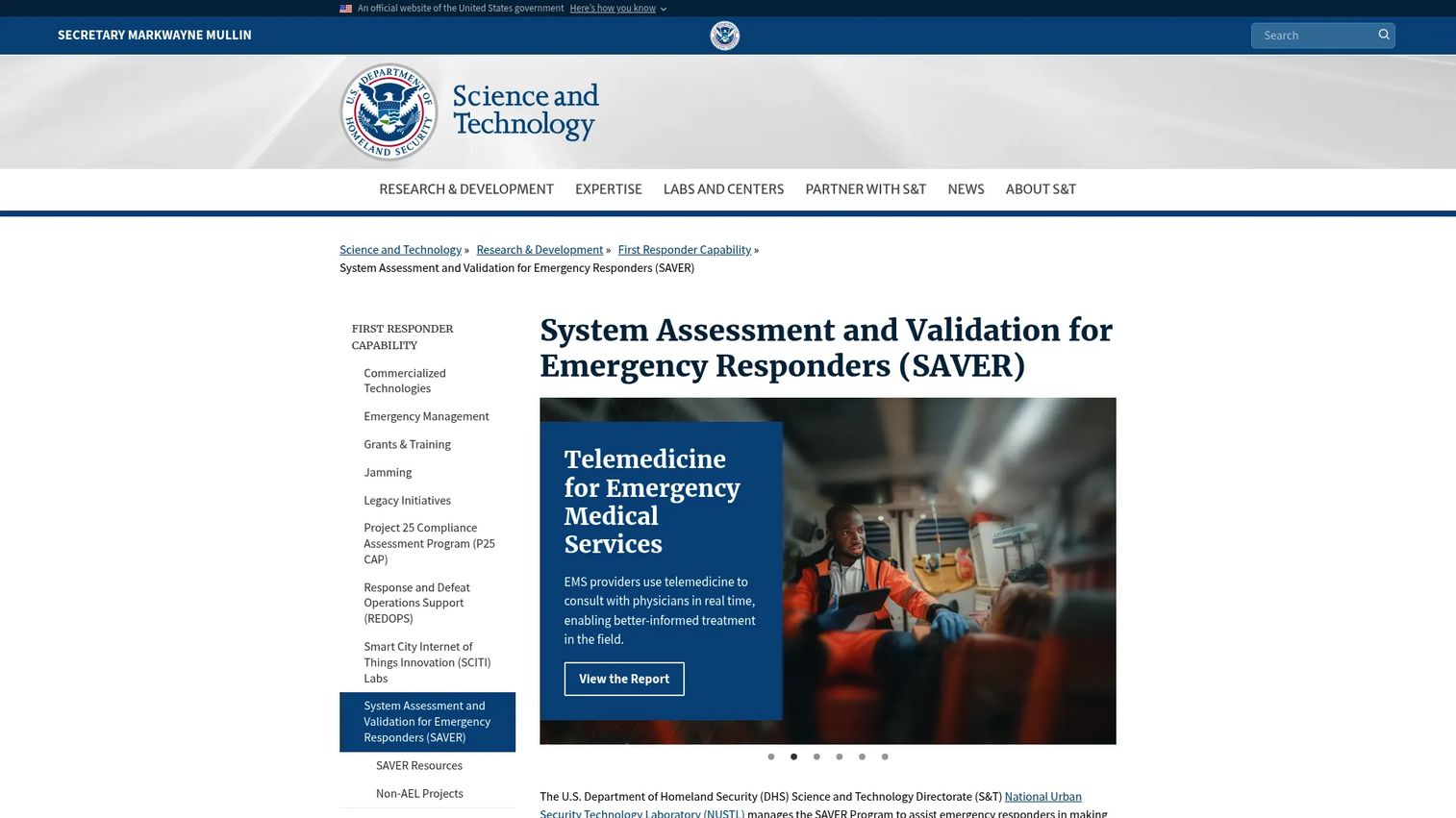
DHS SAVER is a program run by the Department of Homeland Security Science and Technology Directorate. It publishes objective assessments, market surveys, and validation reports on commercial equipment used by emergency responders, including risk assessment technology categories relevant to public safety procurement decisions.
Best for: Public safety agencies, emergency response organizations, and homeland security procurement teams researching risk assessment software categories.
Key features
- Objective assessments and validation reports on responder equipment
- Market surveys covering commercial technology options
- Practitioner-relevant, operationally oriented evaluation methodology
- Published reports on equipment performance and technology readiness
- Free government resource with no subscription required
Why choose DHS SAVER: Use it as a research starting point when public safety or emergency response teams need government-validated assessments before going to market. It does not replace a procurement decision process, but it provides independent evidence that vendor marketing cannot replicate.
DHS SAVER pricing: DHS SAVER resources are government publications. There is no paid subscription or licensing fee.
G2 rating: N/A (DHS SAVER is a government program, not a commercial SaaS product; no G2 listing exists).
Considerations when choosing risk assessment software
Risk domain fit
EHS, IT, compliance, and security risk tools are built for different primary jobs. A compliance platform that excels at SOC 2 control mapping will not handle workplace hazard scoring the way a dedicated EHS tool does. Start by identifying your primary risk domain, then compare tools within it rather than across every category at once.
Scoring model alignment
Ask whether the tool's scoring model matches how your leadership already discusses risk. A five-by-five likelihood-by-impact matrix works for most teams. Some programs use regulatory severity classifications; others use residual risk scoring after controls. Misalignment between the software's model and your existing language creates friction every time a risk is reviewed.
Mitigation workflow coverage
A risk register without follow-through becomes a compliance artifact rather than an operational tool. Evaluate whether the platform assigns tasks, tracks due dates, sends reminders, and routes approvals. For teams using approval workflow software or checklist management software alongside risk tooling, check whether the platforms connect through native integrations or API access.
Board and leadership visibility
Founders and functional leaders need a weekly view they can trust without manually assembling data. Look for dashboards that show risk trends over time, heatmaps by category, and exportable snapshots for board decks or auditor requests. If the reporting workflow requires significant manual work to produce, it will not get used consistently.
Integration with existing work
Risk data has the most value when it flows into the tools your team already uses. Jira, GitHub, Asana, Slack, and compliance platforms like Vanta all integrate with other parts of the stack. A tool that centralizes risk assessment but cannot surface alerts in the systems where work actually happens adds another reporting silo instead of removing one. For teams also evaluating access control software or audit management software, integration coverage matters across all of them.
Conclusion
Risk assessment software is not one category. It is a decision about where risk starts in your organization, who owns mitigation, and what evidence leadership needs when a risk changes.
For EHS-first programs, Benchmark Gensuite suits enterprise scale and complexity, KPA Flex and EHS Insight cover modular EHS operations, and Mitti or SafetyCulture work well for frontline teams getting started. For compliance and IT risk, Vanta is the clearest fit for SaaS companies tying risk to controls and audit readiness. For engineering-native risk tracking, Jira and GitHub keep mitigation work where developers already spend their time. For cross-functional follow-through without a dedicated risk platform, Asana gives every identified risk an owner and a deadline.
Shortlist two or three tools that match your primary risk domain. Then test the scoring workflow with one real risk register entry and see whether the reporting output is something you would actually put in front of your board.
FAQs
Risk assessment software is a platform for identifying, scoring, prioritizing, mitigating, and reporting risks across business, safety, compliance, IT, and operational workflows. It replaces scattered spreadsheets, audit docs, and ticket queues with a centralized system that connects risk identification to mitigation ownership and leadership reporting.
Risk assessment software focuses on evaluating and scoring risks. Risk management software extends that into continuous monitoring, control mapping, policy governance, escalation workflows, and full-lifecycle reporting. In practice, many platforms cover both, and the distinction is less important than whether the tool covers your specific risk domain and connects scoring to action.
Core features to look for: A risk register with named ownership, probability and impact scoring or a risk matrix, corrective action tracking with due dates and approvals, dashboards for leadership visibility, and integrations with existing tools. For compliance-focused programs, add framework mapping and audit evidence collection. For EHS programs, add inspection templates, corrective actions, and mobile field access.
Vanta is the strongest fit for SaaS teams whose primary risk exposure is compliance risk, vendor risk, and security controls. It automates evidence collection across SOC 2, ISO 27001, GDPR, and HIPAA, and gives founders a risk register tied directly to the compliance programs auditors and enterprise customers care about. For engineering security risk specifically, GitHub's Dependabot and security advisory features sit inside the workflow where developers already operate. Teams looking for broader application security testing software should evaluate dedicated options alongside Vanta.
For enterprise EHS programs with global footprint, Benchmark Gensuite covers EHS, sustainability, ESG, and operational risk in one configurable suite. KPA Flex suits high-risk industries that need training, inspections, and compliance calendar management combined. EHS Insight works well for modular programs where teams want to combine incident management, audit, and risk modules. Mitti and SafetyCulture are the most accessible entry points for frontline-heavy teams with budget constraints or those starting from scratch.
Jira and Asana can support risk mitigation tracking, but neither replaces a dedicated risk scoring and governance platform. They work well when the assessment process already happens in a structured tool and the gap is follow-through, task ownership, and escalation visibility. For teams that also need business process management software to support risk workflows, combining a dedicated risk platform with a work management tool often covers more ground than either alone.
Pricing varies significantly by risk domain, modules, user count, and organization size. EHS enterprise platforms like Benchmark Gensuite and Isometrix price by quote with no published tiers. Mitti and SafetyCulture start free and charge $24 per seat per month for Premium features. EHS Insight starts at $5k per year for SMB programs. Effivity starts at $29 per month with a free trial. Vanta prices through a sales conversation across four plan tiers. Jira and Asana both have free plans with paid tiers that start below $25 per user per month. GitHub Team runs $4 per user per month. DHS SAVER is a free government resource. According to KPMG (2025), two-thirds of surveyed U.S. organizations use specialized technology for all or nearly all risk management, which suggests broad adoption across budget levels.
Start by identifying which risk domain matters most right now: EHS and workplace safety, compliance and audit readiness, code and security vulnerabilities, or operational risk across teams. Then evaluate whether the scoring model matches how you already describe risk internally, whether mitigation tasks connect to the systems your team uses daily, and whether the reporting output is something you would show a board member or a diligence team. Test the tool with one real risk register entry in week one. If setup takes longer than a day and the output does not save your compliance or operations leader meaningful time, the fit is probably wrong.