Retailers will spend $37 billion on software over the next 12 months, representing 28% of projected IT spend, according to HG Insights (2026). That number reflects how much operational weight software now carries across checkout, inventory, ecommerce, fulfillment, and finance.
The challenge is not a shortage of tools. It is knowing which category of retail software actually addresses your bottleneck. A retailer running three stores with a disconnected POS and an inventory spreadsheet has a different problem than an ecommerce brand drowning in marketplace orders, or a multi-entity retail group trying to close the month across six P&Ls.
The right tool depends on where the breakdown is. This guide maps the retail software landscape clearly so you can identify the category you need, compare the tools within it, and shortlist vendors worth evaluating.
What's inside
This guide compares 13 retail software tools covering POS, omnichannel retail operations, ecommerce, accounting software, demand forecasting, tax compliance, and enterprise supply chain execution.
Tools were selected based on:
- Workflow fit: Does it address a primary retail job, such as checkout, inventory, fulfillment, or finance?
- Category relevance: Does it cover a recognized retail software category with meaningful market presence?
- Integration depth: Does it connect to other retail, ecommerce, ERP, or accounting systems?
- Pricing transparency: Is pricing verifiable from first-party sources or reviewer-reported data?
Pricing and G2 ratings were verified against live vendor pages and G2 listings.
TL;DR
- Best for small retail POS: Retail Plus offers a free version and one-time license pricing, making it the most accessible starting point for small store owners
- Best for specialty retail and global store networks: Retail Pro covers multi-location, multi-currency, and multi-country operations with configurable POS
- Best for omnichannel retail operations: Brightpearl coordinates orders, inventory, fulfillment, and accounting practice management workflows for multichannel merchants
- Best for ecommerce-first retailers: Shopify gives online-first businesses a fast path to store selling, payments, and marketplace connections
- Best for retail finance and multi-entity accounting: Sage Intacct handles multi-location consolidation, cash flow, and CFO-level reporting
- Best for enterprise supply chain execution: Manhattan Active coordinates warehouses, transportation, stores, and order orchestration at scale
What is retail software?
Retail software is a category of business applications that helps retailers manage selling, inventory, orders, customers, payments, ecommerce, accounting, reporting, and store operations across physical and digital channels.
Unlike generic business software, retail tools must connect the selling moment to stock visibility, fulfillment, finance, and customer data at the same time. A standalone accounting tool handles revenue recognition but cannot tell a store associate whether a product is in stock. A POS system processes a sale but may not update an ecommerce catalog or trigger a replenishment order. Retail software is designed to close those gaps.
Core retail software categories
- Point of sale: Checkout, returns, payments, discounts, receipts, and register workflows
- Inventory management: Stock counts, transfers, replenishment, purchasing, and supplier records
- Ecommerce: Online storefronts, product catalogs, carts, checkout, and marketplace connections
- Order management: Order capture, routing, fulfillment, pickup, delivery, and returns
- Accounting and finance: Revenue recognition, cash flow, reconciliation, tax, and reporting
- Analytics and forecasting: Sales trends, demand planning, SKU-level profitability, and dashboards
- Warehouse and supply chain: Warehouse execution, labor, transportation, and store fulfillment
- Tax compliance: Sales tax calculation, filing, exemption certificates, and global tax management
What makes retail software different from generic business software
Generic tools may handle one function well. Retail software is built to coordinate across functions simultaneously. When a customer buys online and returns in-store, the interaction touches the ecommerce order, the POS, inventory counts, customer records, and potentially a warehouse or 3PL. Tools designed for retail anticipate those handoffs; generic tools require custom integrations or manual reconciliation to replicate them.
For a PMM building category content or competitive intel around retail technology, the clearest framing is this: Retail software is a stack decision, not a single purchase. The right tool depends on which workflow is the primary bottleneck.
When to use retail software
Replace disconnected POS and inventory workflows
Store teams using one system for checkout and a spreadsheet for inventory hit a predictable wall: Oversells, stockouts, and slow replenishment. When a sale at the register does not automatically adjust stock counts or trigger a purchase order, the operations team is always reactive. A retail POS system with native inventory management closes this gap by keeping stock counts current in real time.
Manage ecommerce and store sales together
Retailers selling through stores, an ecommerce site, and marketplaces need unified order and inventory visibility. When a customer buys online and picks up in-store, the system must update inventory, route the order, and notify the store team, without a manual export. Omnichannel retail software handles buy-online-pick-up-in-store, ship-from-store, and cross-channel returns as standard workflows rather than edge cases.
Scale reporting across stores, warehouses, and finance
Multi-location retailers and those approaching the mid-market need store-level KPIs, demand forecasting, margin visibility, and reliable month-end close. When finance is hunting through five exports to reconcile a single month, or when buying decisions rely on gut rather than data, retail analytics and financial management tools become operational necessities rather than optional upgrades.
Retail software comparison
No single retail software platform covers every workflow equally well. The table below organizes 13 tools by their primary job, so you can match the tool to the constraint rather than comparing dissimilar products on the same axis.
Pricing and G2 ratings reflect verified data from vendor pricing pages and G2 listings. Where a G2 listing does not exist or could not be confirmed, N/A is noted.
| # | Product | Best for | Key differentiator | Pricing | G2 rating |
|---|---|---|---|---|---|
| 1 | Retail Plus | Small retail POS | Affordable desktop POS with inventory, customers, and suppliers | From $269 one-time | 2.8/5 |
| 2 | Retail Pro | Specialty and global retail | Multi-location, multi-currency POS with integrations | From $119/user/mo | 3.8/5 |
| 3 | Sage | Retail accounting and management | Retail operations, accounting, and analytics across multiple products | From $132.17/mo | 4.5/5 |
| 4 | Brightpearl | Omnichannel retail operations | Order, inventory, fulfillment, and accounting workflow automation | Custom pricing | N/A |
| 5 | Sage Intacct | Retail finance and multi-entity accounting | Cloud financial management with multi-entity consolidation | Custom pricing | 4.3/5 |
| 6 | Inventory Planner | Demand forecasting and replenishment | Configurable forecasting with purchasing recommendations | Custom pricing | 4.5/5 |
| 7 | SAP | Enterprise retail and ERP | Integrated finance, supply chain, and analytics at enterprise scale | From $295/user/mo | 4.2/5 |
| 8 | Shopify | Ecommerce-first retailers | Online storefront, POS, payments, and app marketplace | From $29/mo | 4.4/5 |
| 9 | BigCommerce | Growing ecommerce with complex catalogs | Hosted ecommerce with B2B features and flexible integrations | From $39/mo | 4.2/5 |
| 10 | WooCommerce | WordPress-based ecommerce | Open-source ecommerce with plugin flexibility | Free core plugin | 4.4/5 |
| 11 | Lightspeed | Cloud retail POS with reporting | Cloud POS with inventory, payments, and multi-location management | From $69/mo | 4.4/5 |
| 12 | Avalara | Retail tax compliance | Automated sales tax calculation, filing, and exemption management | From $69/state/mo | 4.1/5 |
| 13 | Manhattan Active | Enterprise supply chain execution | Warehouse, transportation, order, and store fulfillment at scale | Custom pricing | N/A |
Best 13 retail software tools for 2026
1. Retail Plus
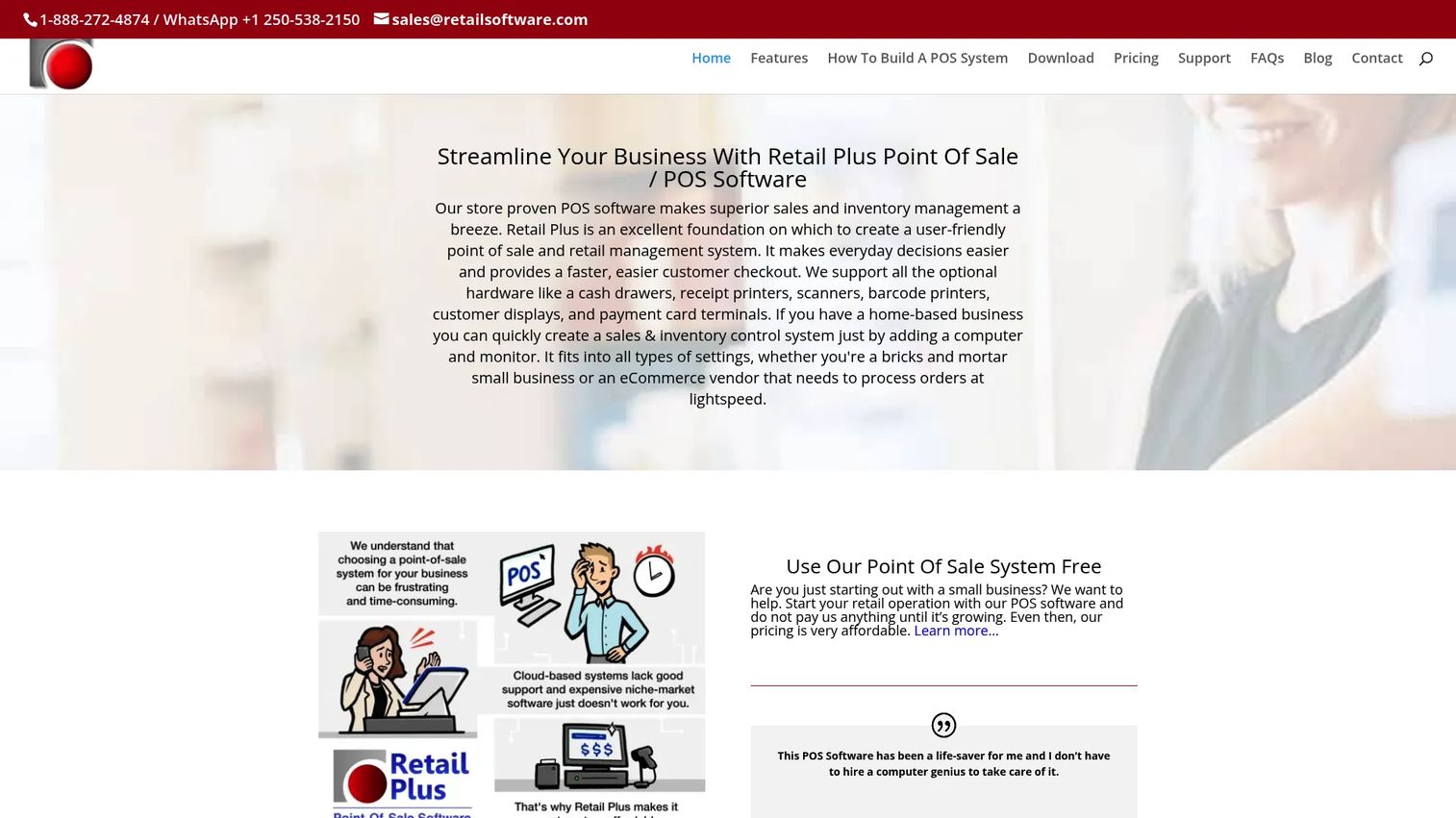
Retail Plus is a desktop point-of-sale and retail management system built for small retailers. It covers checkout with barcode scanning and card processing, inventory tracking with purchase orders and supplier management, and customer records with purchase history and loyalty rewards. The software runs on Windows and positions itself as an affordable starting point for independent retailers who need functional POS without enterprise complexity.
Best for: Small retail businesses that need an affordable, desktop-based POS with inventory and customer management built in.
Key features
- POS checkout with barcode scanning and card processing
- Inventory tracking with purchase orders and supplier management
- Customer database with purchase history and loyalty rewards
- Serial-number tracking and inter-store transfers
- Accounting exports for downstream financial reconciliation
Why choose Retail Plus: It fits store owners who want a practical, low-cost POS without monthly subscription fees. Retailers with omnichannel, multi-location, or ecommerce needs will outgrow it quickly.
Retail Plus pricing: A free version is available, covering up to 100 inventory items and 100 customer records. The paid single-workstation license is a one-time fee of $269, covering one year of support and software updates. An in-store network license runs $499 as a one-time purchase. Annual support renewals start at $119 for a single workstation.
G2 rating: 2.8/5
2. Retail Pro
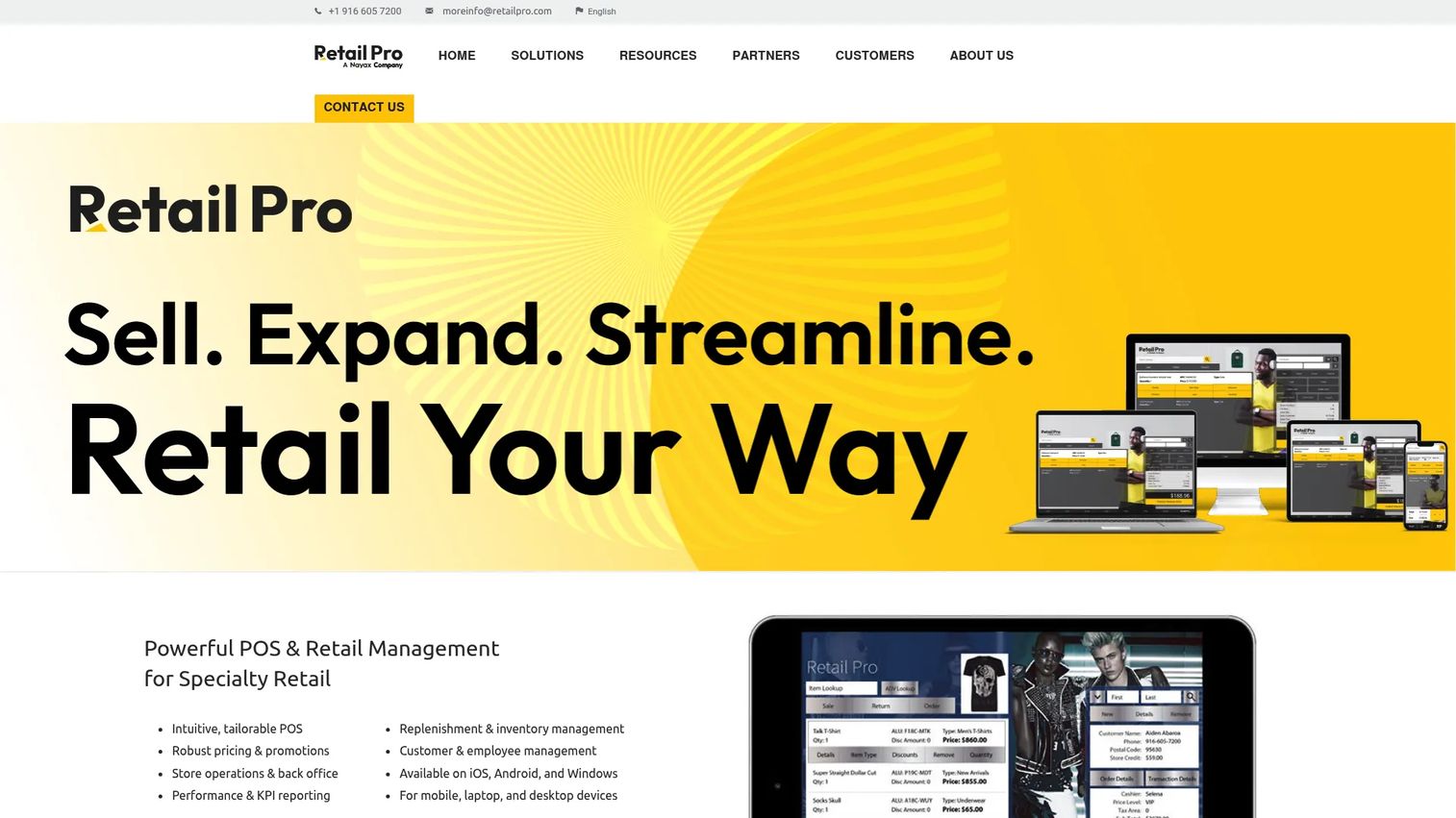
Retail Pro is a retail management platform for specialty retailers and global store networks. It covers POS across desktop and mobile devices, inventory and purchasing management, customer and loyalty programs, employee management with commission tracking, and promotions with omnichannel order fulfillment. Multi-currency and multi-country support make it a practical fit for retailers operating across regions.
Best for: Specialty retailers that need configurable POS and centralized retail management across multiple stores or countries.
Key features
- POS across desktop and mobile devices
- Inventory management and purchasing/receiving
- Customer management and loyalty programs
- Employee management and commission tracking
- Multi-currency and multi-country support
Why choose Retail Pro: The depth of configurability and integration readiness makes it a strong option for specialty retail with real complexity across locations or international operations. Smaller single-store retailers may find it more than they need at their current stage.
Retail Pro pricing: Retail Pro uses a pay-as-you-grow model. The initial user at each location costs $119 per month, and each additional user per location is $99 per month. Implementation and integration costs are separate from these base figures, so ask sales for the full package breakdown.
G2 rating: 3.8/5
3. Sage
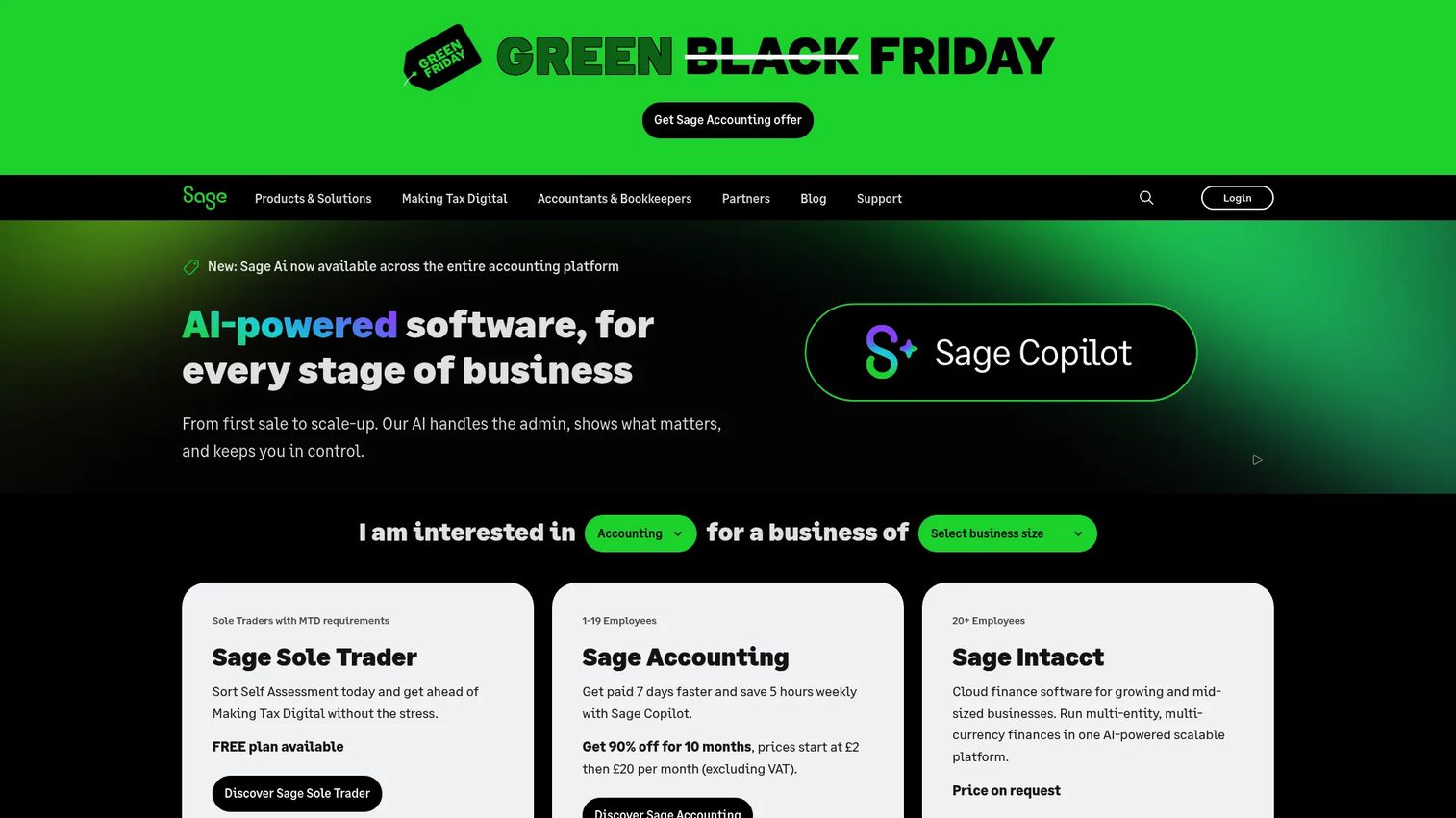
Sage is a business software portfolio covering accounting, financial management, ERP, payroll, and HR for small to enterprise organizations. For retail, it is most relevant through Sage 50 Cloud, which handles accounting, inventory management, job management, and financial reporting. Sage as a broader portfolio also covers retail operations, demand planning, and analytics through additional products.
Best for: Retailers that want finance, operations, and inventory management under a known business software vendor with a broad product portfolio.
Key features
- Invoicing, billing, and expense tracking
- Inventory and job management
- Automated bank reconciliation
- Financial reporting and cash-flow management
- AI-assisted workflows and business insights
Why choose Sage: It suits retailers that want accounting and operations under one vendor umbrella. Worth clarifying which specific Sage product covers your use case before comparing pricing, since the portfolio spans multiple distinct platforms.
Sage pricing: Sage 50 Cloud starts at $132.17 per month on a minimum one-year commitment (Pro Accounting tier). The Premium Accounting tier is $182.50 per month, and the Quantum Accounting tier is $271.17 per month. A 30-day free trial is available.
G2 rating: 4.5/5 (Sage Intacct listing; verify the specific Sage 50 Cloud listing for your use case)
4. Brightpearl
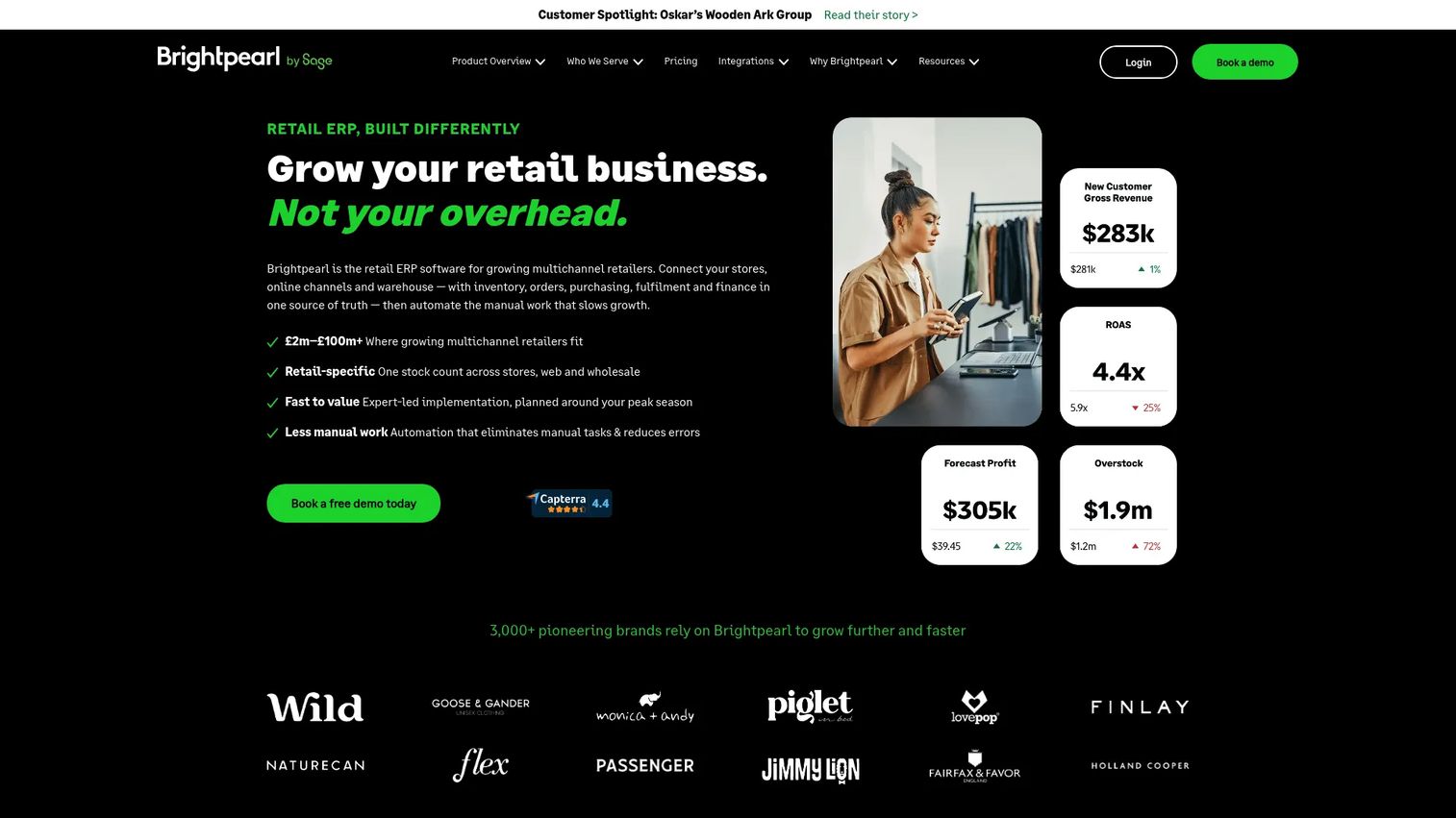
Brightpearl is a retail operations platform for multichannel retailers and wholesalers. It combines order management, inventory automation, warehouse management, fulfillment, purchasing, retail accounting workflows, and ecommerce integrations in one platform. The focus is on retailers that have outgrown manual coordination across channels, with workflow automation replacing repetitive operational tasks.
Best for: Growing multichannel retailers that need to coordinate online sales, inventory, fulfillment, and back-office operations from a single platform.
Key features
- Order management and fulfillment automation
- Inventory management across channels and locations
- Warehouse management and purchasing workflows
- Retail accounting and reporting
- Ecommerce integrations including Shopify, BigCommerce, and marketplaces
Why choose Brightpearl: The fit is strongest when ecommerce, marketplace, and fulfillment workflows need tighter coordination than a standalone POS or inventory tool can provide. It is built for merchants with real order volume and multi-channel complexity.
Brightpearl pricing: Brightpearl quotes pricing per customer based on order volume, channels, users, and required integrations. Unlimited users are included at no extra cost. Contact sales directly and ask for the breakdown covering implementation and integration fees.
5. Sage Intacct
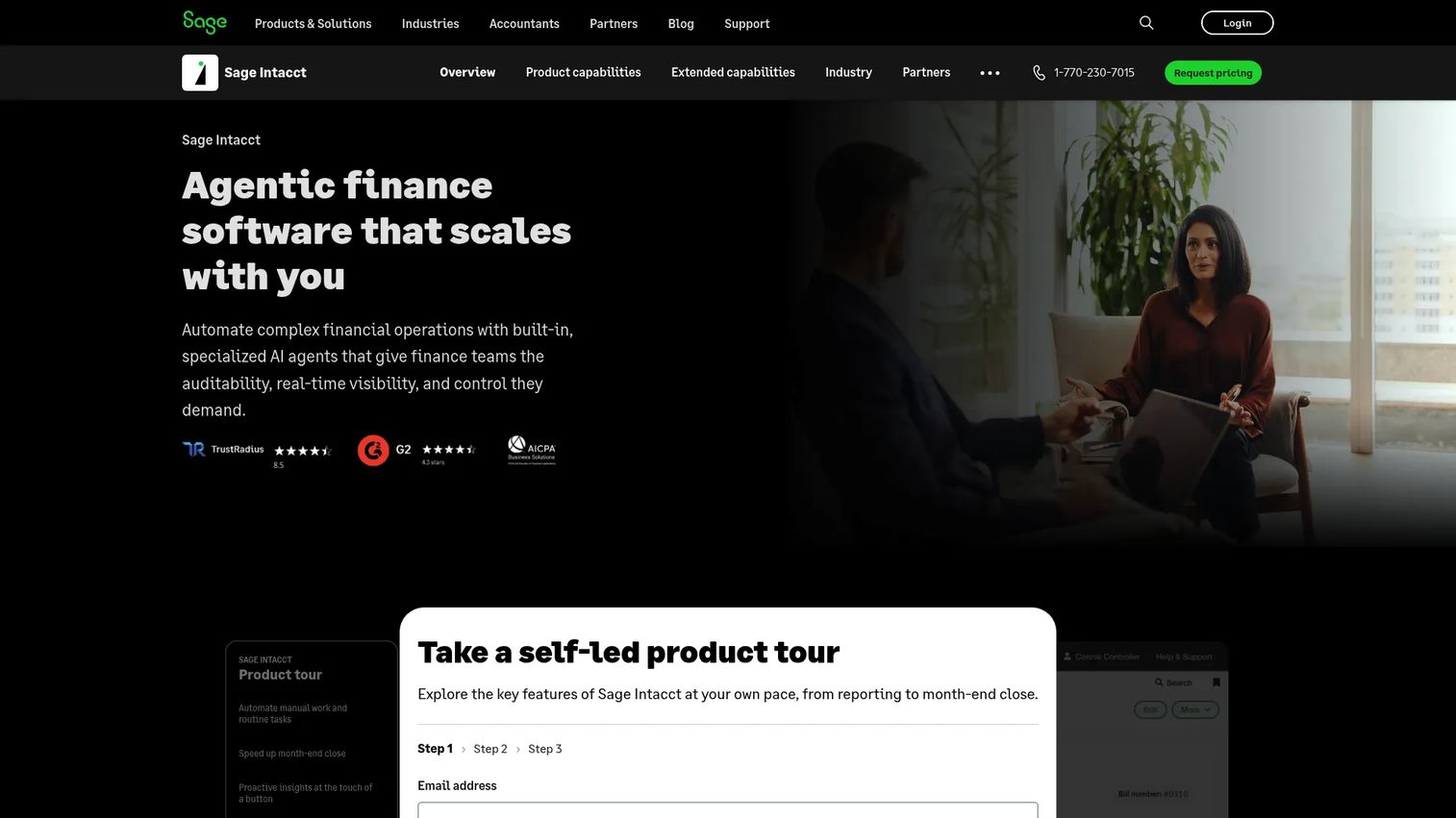
Sage Intacct is cloud financial management software built for growing and mid-sized organizations. For retail finance teams, it handles multi-entity accounting, consolidation, accounts payable and receivable, dashboards, and AI-assisted close automation. It is designed for CFO-ready reporting across multiple store locations, brands, or business entities.
Best for: Retail finance teams managing multiple stores, entities, or regions that need deeper controls than a standard accounting package provides.
Key features
- Multi-entity accounting and consolidation
- Accounts payable and accounts receivable management
- AI-assisted close automation and financial assurance
- Multi-dimensional reporting and dashboards
- ERP and retail operations integrations
Why choose Sage Intacct: When finance needs auditability, multi-entity consolidation, and profitability visibility by store or region, Sage Intacct covers ground that general accounting tools cannot. It is a CFO-level system, not a bookkeeping upgrade.
Sage Intacct pricing: Sage Intacct prices by industry, organization size, modules, and functionality. Contact sales and ask what drives the quote: Entity count, user seats, modules, implementation partner, and integrations with existing retail or ERP systems.
G2 rating: 4.3/5
6. Inventory Planner
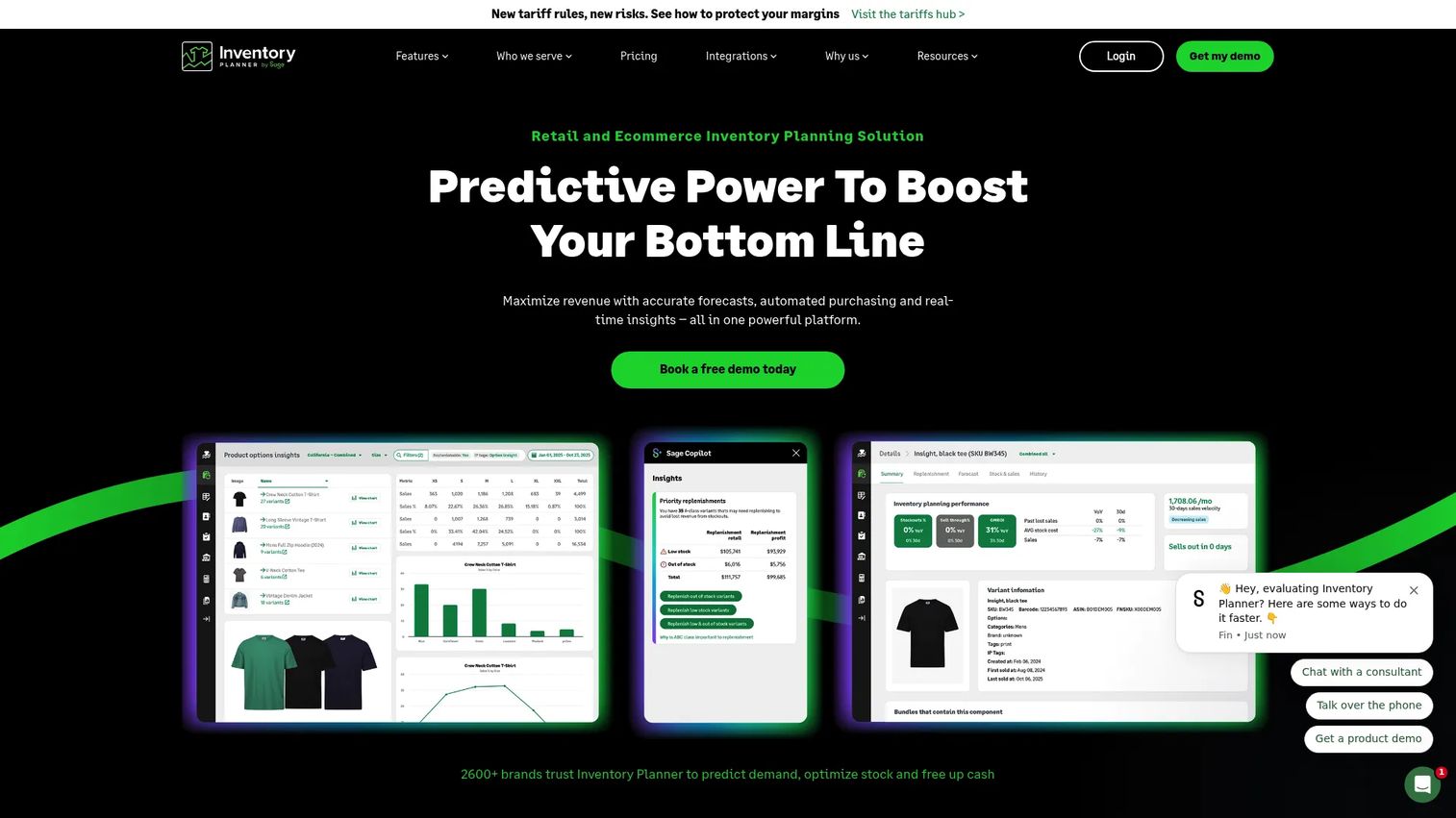
Inventory Planner is a demand forecasting and replenishment tool for retailers, ecommerce brands, and wholesalers. It converts sales history, seasonality, and stock data into purchasing recommendations, purchase orders, and stockout alerts. It connects to ecommerce platforms and retail operations systems to pull real inventory and sales data for planning.
Best for: High-volume or multi-channel retailers that need better purchasing decisions driven by sales data rather than manual estimates.
Key features
- Configurable demand forecasting by SKU and channel
- Automated purchasing and replenishment recommendations
- Multi-location inventory planning and open-to-buy planning
- Purchase order creation and supplier management
- Inventory reporting and retail analytics
Why choose Inventory Planner: The cost of poor stock decisions shows up fast: Cash locked in slow-moving SKUs, missed sales from stockouts, and reactive buying that disrupts margins. This tool addresses those patterns directly. It pairs well with big data analytics software for deeper demand insight.
Inventory Planner pricing: Pricing is calculated by inventory volume and requires a quote. Contact sales with your SKU count, channel mix, order frequency, and locations to get an accurate figure.
G2 rating: 4.5/5
7. SAP

SAP provides enterprise resource planning and cloud business applications for integrated business processes. For retail, SAP's relevance centers on its ERP and supply chain portfolio: Finance, procurement, analytics, merchandising, planning, and global operations. SAP covers the full enterprise retail technology stack for organizations where complexity spans multiple countries, business units, or fulfillment models.
Best for: Enterprise retailers that need ERP-connected retail operations, global process control, and deep integration across finance, supply chain, and analytics.
Key features
- Finance and accounting management across entities
- Procurement and supply chain management
- Business analytics and planning
- Embedded AI and intelligent automation (Joule)
- Customer experience management and integration
Why choose SAP: Choose it when retail complexity spans international operations, multi-channel fulfillment, or enterprise systems that require a single source of data truth. The trade-off is implementation lift and buying complexity that mid-market retailers may find disproportionate.
SAP pricing: SAP Cloud ERP Finance and Supply Chain Base packages start at $295 per user per month (shown for 25 to 39 users, minimum 15 users). Premium packages are $403 per user per month. HR packages require a separate quote. Final pricing varies by user count, modules, deployment, and implementation.
G2 rating: 4.2/5
8. Shopify

Shopify is a commerce platform for launching and managing online stores, multichannel selling, and in-person retail. It covers online storefronts, checkout, payments, POS, apps, inventory, marketing tools, and marketplace or social commerce integrations. Shopify is built for businesses that want to start online and expand into physical or pop-up selling without rebuilding their stack.
Best for: Retailers that want to launch online first and add in-person or pop-up selling later, without switching platforms.
Key features
- Online storefront with customizable themes and checkout
- Shopify POS for in-person selling
- Payments, shipping, and marketing tools
- App marketplace for extended functionality
- Inventory management across channels
Why choose Shopify: Shopify fits when ecommerce speed, checkout experience, and app extensibility take priority. Retailers with complex warehouse execution or ERP requirements may need additional systems alongside it.
Shopify pricing: Plans start at $29 per month (Basic, billed annually). The Grow plan is $79 per month, the Advanced plan is $299 per month, and Shopify Plus starts from $2,300 per month on a 3-year term. A 3-day free trial is available, followed by $1 per month for the first 3 months. POS Pro is an add-on above the base plans.
G2 rating: 4.4/5
9. BigCommerce
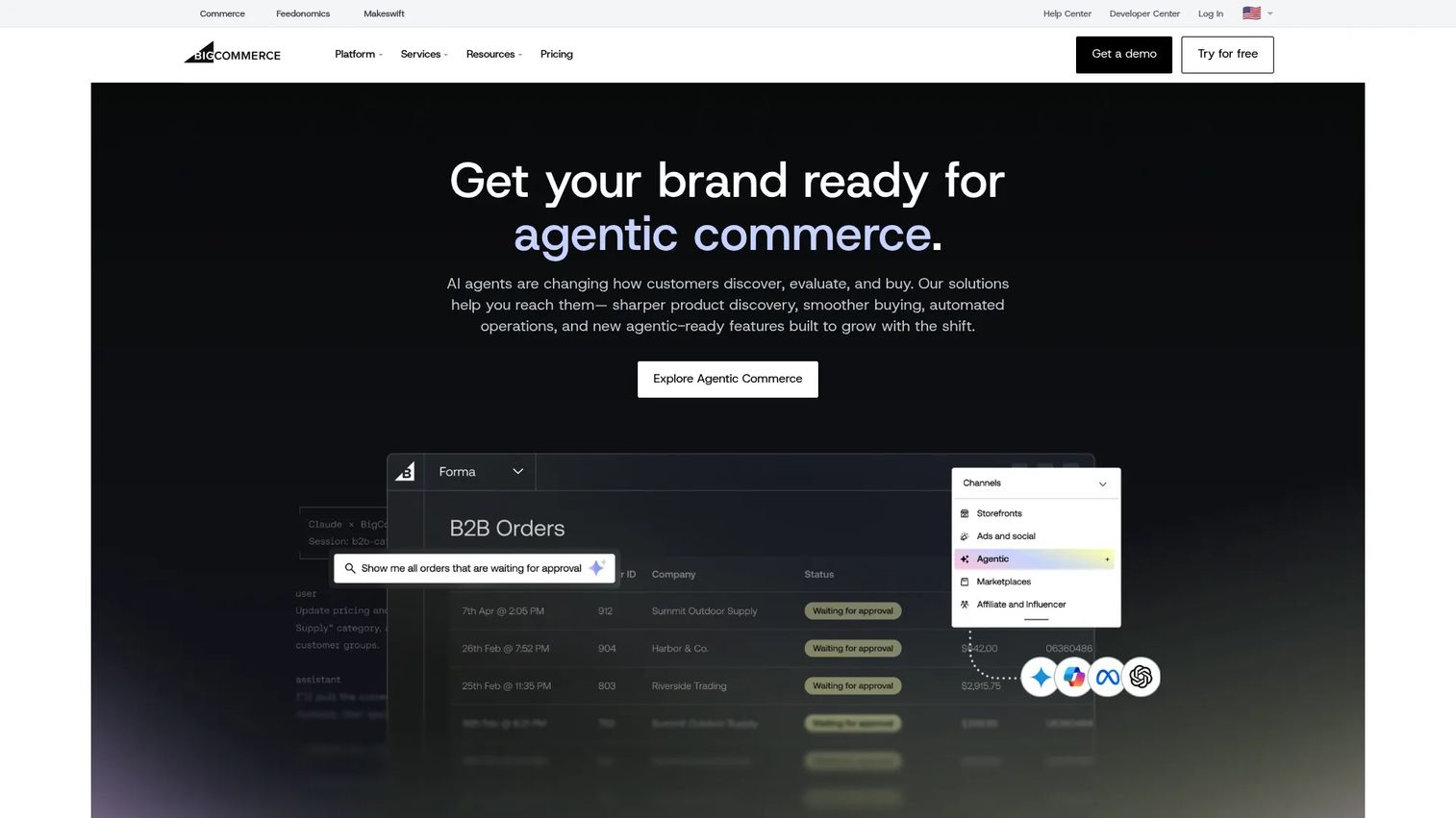
BigCommerce is a hosted ecommerce platform for growing retailers with complex catalog or B2B requirements. It covers multi-storefront management, multi-currency commerce, SEO tools, checkout customization, payment integrations, and B2B features. BigCommerce positions itself as an open platform, meaning retailers can integrate widely without being locked into a proprietary app ecosystem.
Best for: Growing ecommerce retailers with complex product catalogs, B2B requirements, or strong preferences for integration flexibility.
Key features
- Multi-storefront and multi-currency management
- B2B commerce features including customer groups and quoting
- Advanced product search, filtering, and merchandising
- Checkout customization and payment integrations
- Abandoned cart recovery and SEO tools
Why choose BigCommerce: Use it when ecommerce flexibility matters and the team prefers a hosted platform over maintaining open-source infrastructure. Its B2B capabilities are stronger than many comparable ecommerce retail software tools, which helps retailers selling to both consumers and trade buyers from one storefront.
BigCommerce pricing: The Core plan starts at $39 per month (monthly billing) or $29 per month billed annually. Growth is $105 per month ($79 annually), Scale is $399 per month ($299 annually), and Performance starts at $1,499 per month billed annually. A 15-day free trial is available.
G2 rating: 4.2/5
10. WooCommerce
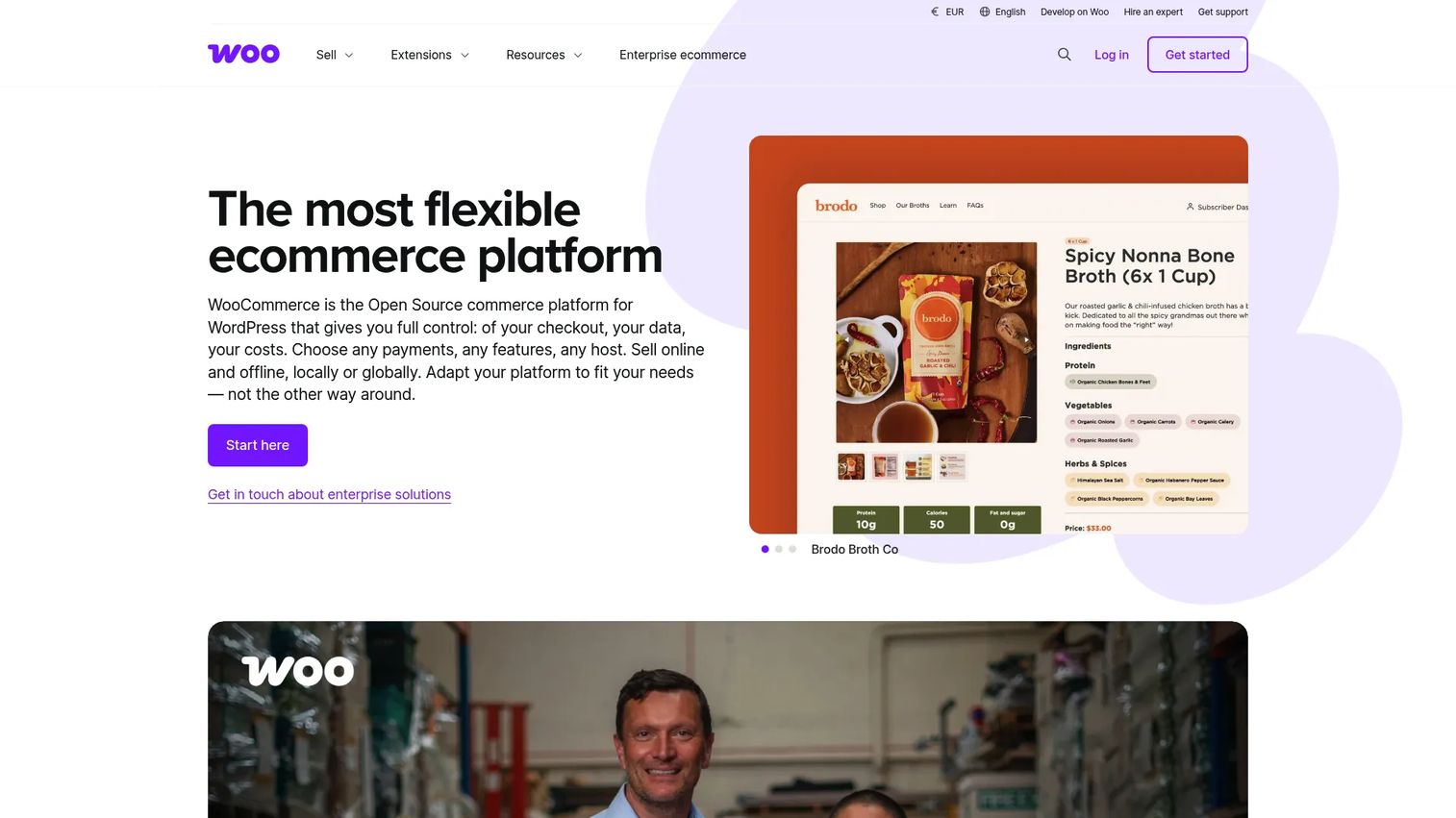
WooCommerce is the ecommerce plugin for WordPress, used by retailers that want full control over their store's code, design, and data. It supports product catalogs, payments, order management, shipping, tax, and store customization through an extensions marketplace and REST API integrations. WooCommerce carries no platform fees or revenue share on sales.
Best for: Retailers already committed to WordPress who want deep control over their ecommerce build, including hosting, theme, and extension choices.
Key features
- WordPress-native ecommerce with customizable storefronts
- Product, inventory, order, tax, and shipping management
- Multiple payment gateways and global selling support
- Extensions marketplace and REST API integrations
- Mobile app for store management on the go
Why choose WooCommerce: WooCommerce is the right call when content and commerce live together in WordPress and the team has capacity to manage hosting, updates, and extensions. The trade-off is that ongoing maintenance requires active ownership rather than a managed SaaS experience.
WooCommerce pricing: The core plugin is free. Hosting typically runs $25 to $350 per month depending on the provider and traffic. Extensions cost $29 to $299 per year each. Payment processing fees vary by gateway. Budget the full stack rather than treating the free plugin as the total cost.
G2 rating: 4.4/5
11. Lightspeed
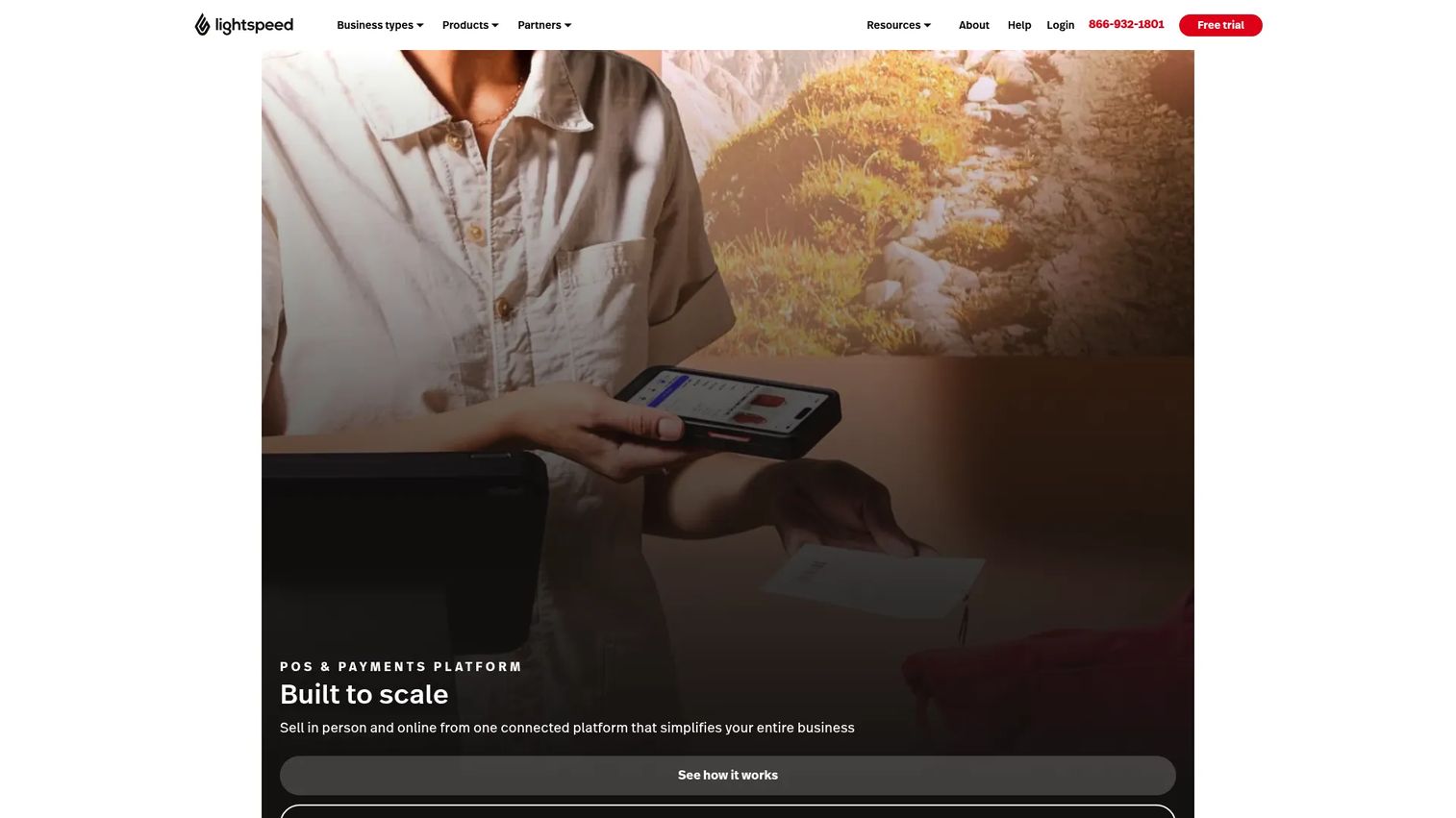
Lightspeed is a cloud commerce platform providing POS, payments, inventory management, analytics, and ecommerce capabilities for retail and restaurant businesses. Its retail product covers checkout, customer profiles, inventory across locations, integrated payments, and sales reporting. Lightspeed targets retailers that want a modern cloud POS without assembling a custom stack.
Best for: Retailers that want cloud POS with inventory, integrated payments, and reporting built in from the start.
Key features
- Cloud POS with customizable checkout
- Inventory management across locations
- Integrated payments processing
- Customer profiles and purchase history
- Advanced sales reporting and analytics
Why choose Lightspeed: It works well for store-first retailers that also need ecommerce or multi-location reporting without building a separate reporting layer. The raw API access makes it a reasonable choice for teams that want integration flexibility.
Lightspeed pricing: Published pricing for Lightspeed Restaurant starts at $69 per month (Starter), $189 per month (Essential), and $399 per month (Premium). Enterprise pricing requires a quote. Retail-specific plan pricing requires direct verification with Lightspeed sales, as the first-party retail pricing page was not fully confirmed at generation time.
G2 rating: 4.4/5
12. Avalara
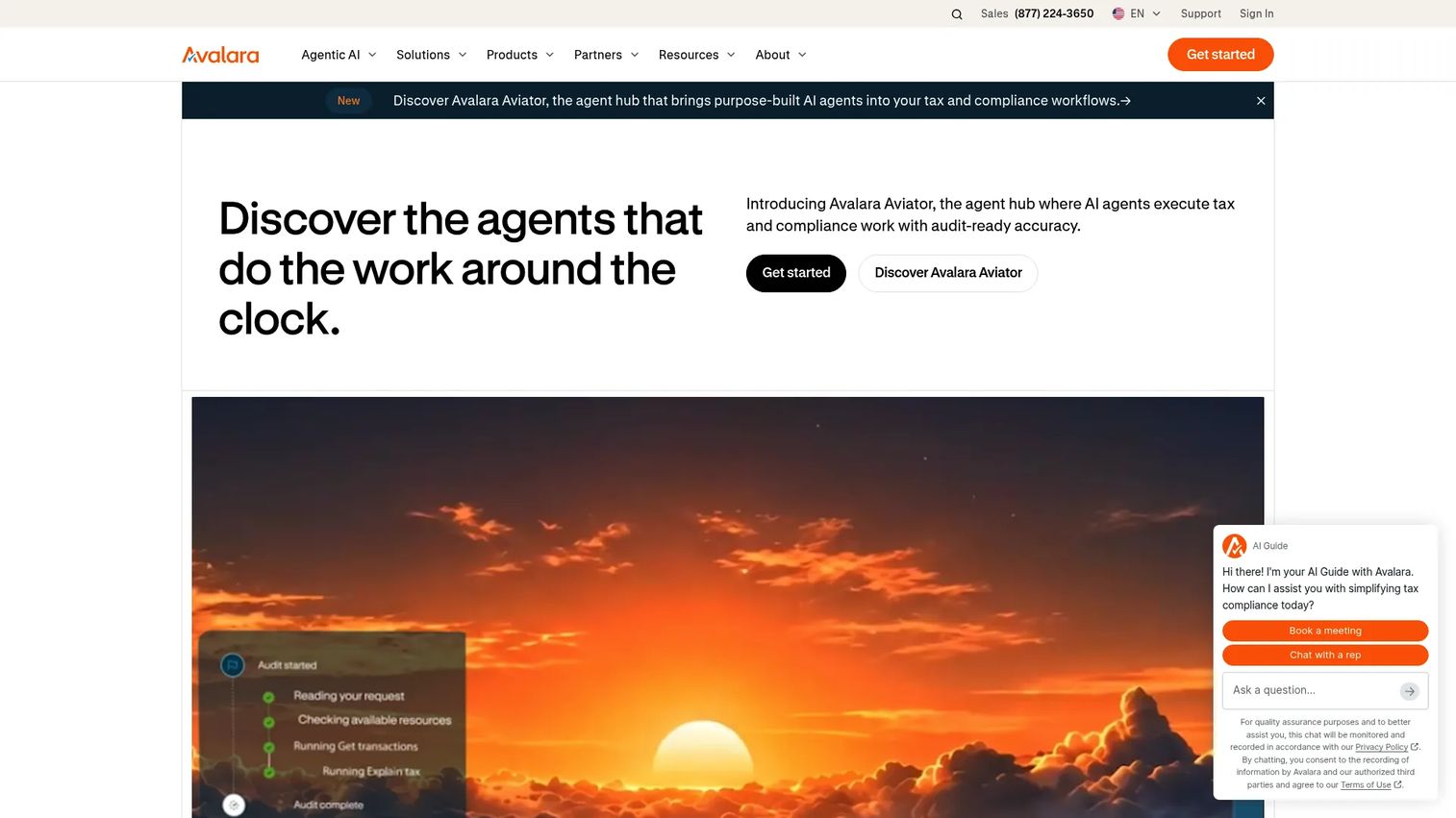
Avalara provides automated tax calculation, filing, exemption management, and global tax compliance for businesses selling across jurisdictions. For retailers, it handles sales tax across 12,000-plus U.S. tax jurisdictions, automates returns filing and remittance, monitors nexus, and manages exemption certificates. It integrates with ecommerce platforms, ERP systems, POS tools, and accounting software rather than replacing them.
Best for: Retailers selling across multiple tax jurisdictions that need automated compliance workflows to replace manual calculation and filing.
Key features
- Real-time sales tax calculation across 12,000+ U.S. jurisdictions
- Automated returns filing, remittance, and notice management
- Nexus monitoring and exemption certificate management
- Ecommerce, ERP, and accounting integrations
- International VAT/GST, e-invoicing, and cross-border compliance
Why choose Avalara: Tax complexity becomes a risk when volume and geographic reach increase. Avalara removes the manual calculation and filing burden and integrates into the existing retail technology stack. It is a compliance layer, not a full retail management platform.
Avalara pricing: Core Compliance with SST Services starts at $69 per state per month ($699 per state per year). Core Compliance without SST starts at $79 per state per month ($799 per state per year). Custom pricing is available for more complex needs. Final cost varies by transaction volume, jurisdictions covered, filing requirements, and integrations.
G2 rating: 4.1/5
13. Manhattan Active
Manhattan Active is a cloud-native supply chain and commerce software suite covering store operations, order management, warehouse management, transportation management, and store fulfillment. It operates as a continuous delivery platform, releasing updates every 90 days rather than on annual upgrade cycles. Manhattan Active targets large retailers and growing organizations where fulfillment execution is a primary operational constraint.
Best for: Large retailers coordinating complex fulfillment across warehouses, stores, transportation networks, and customer order promises.
Key features
- Cloud-native order management and customer service engagement
- Warehouse and labor management
- Transportation management
- Point of sale and store fulfillment
- Continuous feature releases every 90 days
Why choose Manhattan Active: It fits retailers where the gap between what customers are promised and what operations can deliver is the defining business problem. The continuous delivery model means the platform stays current with retail operations requirements without disruptive version migrations.
Manhattan Active pricing: Manhattan Active is available in Essentials, Enterprise, and Enterprise Premier editions. Contact sales with your module requirements, transaction volume, store and warehouse count, and implementation expectations to get an accurate quote.
Considerations when choosing retail software
Match the tool to the primary workflow
Identify the specific bottleneck before comparing vendors. A retailer with checkout and stock accuracy problems needs a retail POS system with inventory integration, not a warehouse management platform. Matching tool category to operational constraint is the single most important filter before any vendor conversation.
Check inventory and order visibility depth
Retail accuracy depends on how well stock counts update across channels and locations in real time. Ask vendors how inventory updates when a sale happens in-store, online, or through a marketplace. The answers on stock transfers, replenishment triggers, and returns handling reveal whether a tool will keep pace with your volume.
Verify integrations before committing
The retail technology stack rarely starts from scratch. Ask whether integrations with your POS, ecommerce platform, ERP, accounting software, payment processor, and 3PL are native, partner-built, API-based, or require custom development. For further reading on business process management software and how integrations shape operational decisions, the distinction between native and custom integrations has real cost and maintenance implications.
Understand implementation and support requirements
Retail software failures most often come from rollout friction rather than feature gaps. Ask about data migration timelines, product catalog setup, hardware requirements, training, and go-live support. For multi-location rollouts, ask how the vendor handles phased store launches versus simultaneous cutovers.
Compare total cost over 12 to 24 months
Monthly subscription pricing is rarely the full picture. Factor in payment processing fees, hardware, add-on modules, implementation, support tiers, integration costs, and training. Retailers evaluating best-in-category ecommerce platforms for small business often discover that the gap between the advertised plan price and the total operating cost is significant once extensions, payment fees, and hosting are included.
Conclusion
Retail software is not one purchase. It is a stack decision, and the right starting point depends on the workflow that is currently costing you the most time or margin.
For small retailers with a checkout and stock problem, Retail Plus offers an accessible entry point with no monthly fees. Retail Pro handles specialty retail complexity across locations and countries. Brightpearl coordinates the full omnichannel operation for merchants managing orders across channels. Shopify gives ecommerce-first retailers the fastest path to online sales with POS and payments included. Sage Intacct solves the multi-entity accounting challenge for retail finance teams. Manhattan Active addresses the fulfillment execution problem at enterprise scale.
For PMMs mapping this category for content, competitive intel, or customer-facing positioning: The clearest differentiator across these tools is the primary operational job each one is built for. Tools that claim to do everything equally well rarely do any single thing better than a purpose-built option.
Start by identifying the workflow costing you the most time or margin, then shortlist the two or three tools built for that specific job. Verify pricing, integrations, and implementation fit directly with vendors before committing.
FAQs
Retail software is a category of business applications that helps retailers manage selling, inventory, orders, customers, payments, ecommerce, accounting, reporting, and store operations across physical and digital channels. It covers tools from simple POS systems to enterprise ERP platforms, depending on the retailer's size and operational complexity.
For small retailers, the right starting point depends on whether the primary channel is a physical store or an online storefront. Retail Plus offers an affordable desktop POS with a free version for very small stores. Lightspeed provides a more modern cloud POS with reporting. Shopify fits small retailers prioritizing ecommerce with the option to add in-store selling later.
POS software handles the checkout transaction: Processing payments, printing receipts, applying discounts, and recording the sale. Retail software is a broader category that can include POS, inventory management, ecommerce, accounting, order management, warehouse management, and reporting. Some POS tools include inventory and basic reporting, but they do not replace a full retail management system.
Inventory Planner is the strongest option specifically for demand forecasting and replenishment recommendations based on sales history. Brightpearl covers omnichannel inventory operations across stores and ecommerce channels. Shopify and Lightspeed handle simpler inventory needs well for retailers that do not need dedicated forecasting. Evaluate each based on whether the primary need is real-time stock accuracy, purchasing automation, or demand planning.
Shopify handles both channels for most ecommerce-first retailers, with POS for in-person selling. Lightspeed covers store-first retailers adding ecommerce. BigCommerce fits retailers with complex catalog needs or B2B buyers. Brightpearl and Retail Pro serve retailers needing deeper omnichannel order and inventory coordination across both channels at higher volume.
Many POS systems export sales and payment data to accounting tools, but the export is often a summary rather than a transaction-level sync. Growing retailers, multi-entity groups, or those with complex revenue recognition needs typically require dedicated accounting or financial management software. Sage Intacct is the strongest option when multi-location consolidation, cash flow visibility, and CFO-level reporting are priorities.
POS and ecommerce tools typically start with monthly subscription plans, ranging from free to several hundred dollars per month for the platform. Enterprise retail software, ERP, supply chain, and tax automation platforms generally use quote-based pricing tied to users, transaction volume, locations, and implementation. Total cost should include implementation fees, hardware, payment processing, extensions or add-ons, support, and integration costs across a 12 to 24 month window.
Start with workflow fit: Does the tool address the specific operational bottleneck, whether that is checkout, inventory accuracy, ecommerce order management, fulfillment, or financial reporting? Verify how integrations work with your existing stack, including your payment processor, ecommerce platform, and accounting software. Ask for a realistic implementation timeline, training requirements, and total cost breakdown before signing anything.