A shopper finds the right jacket, likes the price, and then stalls at the size dropdown. Is it a medium or a large? They guess. Two weeks later, the wrong size ships back to your warehouse, eating margin and trust in one move.
That hesitation is expensive. The global virtual fitting room market sat at USD 4.2 billion in 2024 and is projected to reach USD 11.9 billion by 2030 at an 18.7% CAGR, according to Strategic Market Research (2024). The same firm expects roughly 63% of global ecommerce fashion and lifestyle platforms to integrate AR-based virtual fitting solutions by 2026. The reason is simple: sizing uncertainty quietly kills conversions and inflates returns across apparel, eyewear, and footwear.
Virtual fitting room software exists to remove that friction before checkout. It gives shoppers fit confidence, helps them visualize how a product looks or sits, and feeds size guidance into the buying flow. For product and ecommerce teams, the payoff shows up in measurable places: higher conversion, fewer size-related returns, and cleaner sizing data to act on.
If you are evaluating interactive shopper experiences more broadly, it helps to study how engagement-driven formats convert across the funnel. Teams building interactive demos for software face the same core question that retail teams do: how do you let someone experience a product before they commit? The same logic that makes ai design tools and ai content creation tools useful for ecommerce also shapes how you should evaluate fitting software.
What's inside
This guide compares seven virtual fitting software tools built for ecommerce teams across apparel, eyewear, and footwear. It is written for product managers, ecommerce operators, and merchandising leads who care about measurable outcomes, not just a flashy widget.
We selected and ranked tools using five criteria that matter when you actually have to ship and maintain this:
- Fit accuracy: how well the tool predicts size or visualizes appearance.
- Personalization: how much it adapts to a shopper's body, preferences, or behavior.
- Cross-vertical support: apparel, eyewear, footwear, or a mix.
- Implementation effort: how it integrates with your stack and storefront.
- Measurement: what data and analytics it gives you to prove impact.
TL;DR
Short on time? Here is the fast shortlist by use case:
- Best all-around virtual fitting room for fashion: Texel pairs virtual try-on and size advice in a single widget for apparel retailers.
- Best for measurement-driven apparel sizing: 3DLOOK uses smartphone body scanning to drive size recommendations from real measurements.
- Best for eyewear virtual try-on: Fittingbox specializes in real-time glasses and sunglasses try-on with deep optical tooling.
- Best lightweight size advisor: Measmerize delivers AI size guidance with simple shopper inputs and order-based pricing.
- Best for footwear fitting: Volumental builds 3D foot scanning and fit recommendations across store and online.
- Best for guided apparel fit: AstraFit focuses on virtual fitting room visualization with built-in KPI reporting.
- Best flexible entry point: Auglio offers camera-based try-on for eyewear and beauty with a free tier to start.
What is virtual fitting software?
Virtual fitting software is technology that helps online shoppers understand how a product will fit or look before they buy, using a virtual dressing room, size guidance, or visual try-on inside the shopping experience.
Under the hood, these tools combine a few enabling technologies. AR overlays a product onto a live camera feed or photo. Computer vision detects body, face, or foot landmarks. 3D body scanning turns smartphone photos or in-store scans into precise measurements. Size recommendation logic maps those measurements and shopper preferences against garment or frame data to suggest the right size.
Core capabilities you will see across the category:
- Size guidance: recommends a size based on measurements, fit preferences, or past purchases.
- Virtual try-on: shows how an item looks on the shopper or a model, common in eyewear and apparel.
- Personalization: adapts recommendations to body shape, style preference, and behavior.
- Analytics: tracks engagement, recommendation accuracy, conversion, and return signals.
Cross-vertical support matters because fit means different things in different categories. Apparel cares about body measurements and garment cut. Eyewear cares about face shape, pupillary distance, and frame proportions. Footwear cares about foot length, width, and volume. A tool tuned for one vertical rarely transfers cleanly to another, so matching the software to your category is the first real decision.
For ecommerce teams thinking about the broader shopper experience, fitting software sits alongside other conversion levers. The way an ab testing tool helps you validate a checkout change is the same discipline you should apply to fit guidance: instrument it, segment it, and measure the lift.
When to use virtual fitting software
Fitting software is not a universal add-on. It pays off in specific moments where sizing uncertainty or appearance doubt blocks a purchase.
Improve size confidence before checkout
When a shopper hovers on the size dropdown, you are one hesitation away from a lost sale or a guaranteed return. This is most acute on mobile, where comparing size charts is painful, and in high-return categories like fitted apparel and footwear. Size recommendation tools close that gap by answering "which size fits me" in the moment, which lifts conversion and reduces the cognitive cost of committing.
Support online try-on experiences
Some categories sell on appearance as much as fit. Eyewear shoppers want to see frames on their face. Apparel brands want shoppers to picture an outfit. Footwear brands want shoppers to trust the look and feel before they buy. Virtual try-on turns a static product image into an interactive moment, which drives engagement and helps product discovery. The same engagement principle that powers affiliate marketing software and conversion campaigns applies here: interaction beats passive viewing.
Reduce returns and support merchandising
For merchandise teams, ecommerce managers, and PMs, the real prize is fewer wrong purchases. Better fit confidence at the point of sale means fewer size-driven returns, which protects margin and reduces reverse-logistics load. It also generates sizing data you can feed back into merchandising, demand planning, and product development. Measure this by category and segment, not as a single blended number, so you can see where fit guidance actually moves the needle.
Comparison table
Use this table as a fast scan, not a final verdict. The "intent" column tells you what each tool is built to do, "key differentiation" tells you why you would pick it, and pricing and G2 ratings reflect verified values at the time of writing. Match the intent to your category first, then dig into the item sections below.
| # | Product | Intent | Key differentiation | Pricing | G2 rating |
|---|---|---|---|---|---|
| 1 | Texel | Virtual fitting room for fashion | Try-on and size advice in one widget | From $299/mo | Not listed |
| 2 | 3DLOOK | Body scanning and size recommendation | 80+ measurements from two photos | From $499/mo | 4.6/5 |
| 3 | Fittingbox | Eyewear virtual try-on | Real-time glasses try-on plus optical tools | From $59/mo | 4.5/5 |
| 4 | Measmerize | AI size advisor | Lightweight size guidance, order-based pricing | From $49/mo | 4.9/5 |
| 5 | Volumental | Footwear 3D fitting | In-store and online foot scanning | From $25/mo | 4.8/5 |
| 6 | AstraFit | Apparel virtual fitting room | Fit visualization with KPI reporting | From $129 | 4.5/5 |
| 7 | Auglio | Eyewear and beauty try-on | Camera-based try-on with free tier | Free / from $59/mo | Not listed |
1. Texel
Texel is an AI-powered virtual fitting room built for fashion ecommerce. Its core pitch is combining a virtual try-on experience and personalized size advice in a single widget, so shoppers can both see how an outfit looks and get a size recommendation without leaving the product page. For apparel retailers, that consolidation reduces the number of separate tools you have to stitch together.
Best for: Fashion retailers that want an online virtual fitting room and size recommendation widget in one place.
Key strengths
- Combined widget: Pairs photo-based outfit visualization with size advice in a single shopper experience.
- Personalized sizing: Tailors size recommendations to the individual shopper rather than a generic chart.
- Fashion focus: Built around apparel fit and try-on, which keeps the experience relevant for clothing brands.
Why choose Texel: If you sell apparel and want to address both "how does this look" and "what size am I" in one integration, Texel's single-widget approach reduces stack complexity. It suits teams that prefer one fashion-specific vendor over assembling separate try-on and sizing tools.
Texel pricing: Texel publishes Start-up, Business, and Enterprise plans. The Start-up plan starts at $299 per month, the Business plan is listed at $1,990 per month, and Enterprise requires a personalized quote. There is no free tier listed.
2. 3DLOOK
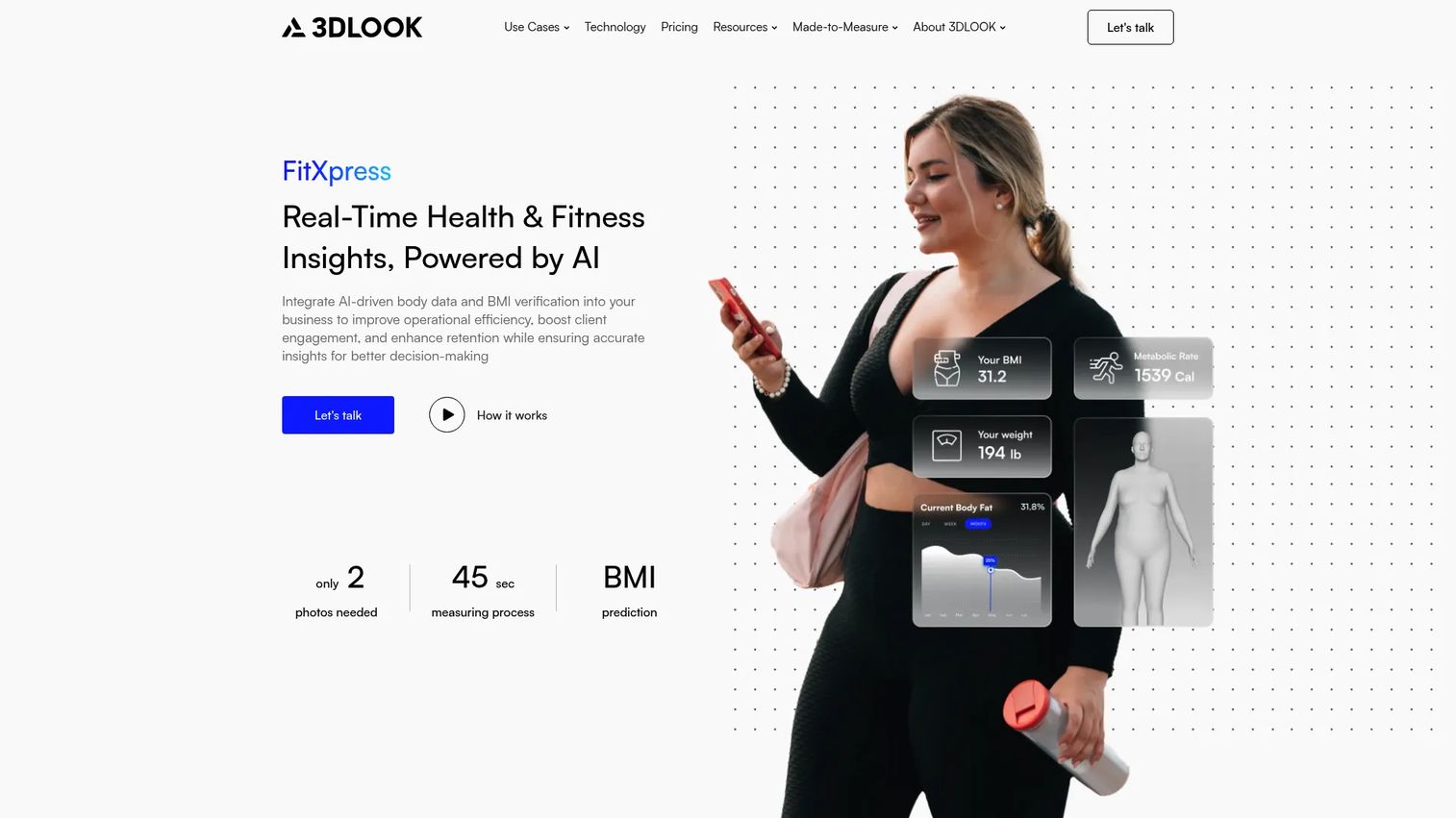
3DLOOK is an AI-powered mobile body scanning platform that captures more than 80 body measurements from just two smartphone photos. Those measurements feed size recommendations and personalization for apparel, plus health, fitness, and wellness workflows. The measurement-first approach is what sets it apart for retailers who want sizing grounded in real body data, not estimates.
Best for: Apparel businesses that need remote body measurement and measurement-driven size recommendations.
Key strengths
- Two-photo body scan: Captures 80+ measurements from two smartphone photos, no special hardware required.
- API and SDK integration: Lets product and engineering teams embed scanning into existing flows.
- Measurement-driven recommendations: Bases size suggestions on real body data for higher fit accuracy.
Why choose 3DLOOK: When your returns problem is rooted in sizing guesswork, measurement-based recommendations give you a defensible foundation. The API and SDK options matter for PMs who want to control where scanning lives in the funnel and how the data flows into their stack.
3DLOOK pricing: 3DLOOK lists two product families. Mobile Tailor runs from $499 per month (Basic) and $999 per month (Premium), with a custom Enterprise tier. FitXpress runs from $1,000 per month (Starter) and $1,500 per month (Pro), with a custom Personalized tier. No free tier is shown.
3. Fittingbox
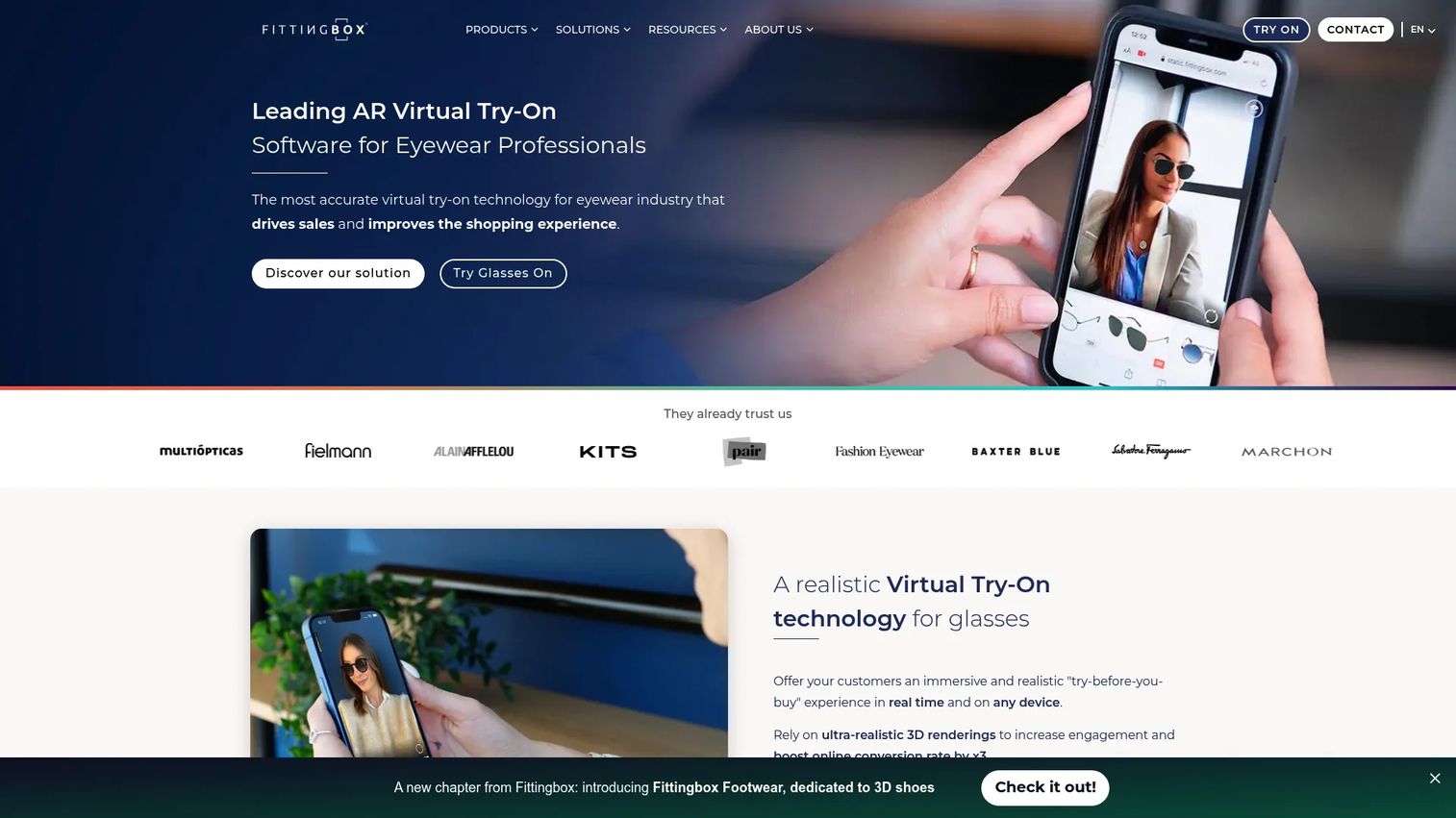
Fittingbox is AR software focused squarely on eyewear. It delivers real-time virtual try-on for eyeglasses and sunglasses, a 3D frame database with digitization, plus optical tools like PD measurement and a size guarantee. For optical retail, the depth here is the point: this is eyewear virtual try-on built by a vendor that has specialized in frames rather than general apparel.
Best for: Eyewear brands and optical retailers that need accurate, real-time frame try-on and digital frame tooling.
Key strengths
- Real-time try-on: Lets shoppers see eyeglasses and sunglasses on their face live, building fit and style confidence.
- 3D frame digitization: Maintains a frame database so catalogs render accurately in try-on.
- Optical precision tools: Includes PD measurement and a size guarantee for fit accuracy.
Why choose Fittingbox: Eyewear fit depends on face shape, frame proportions, and pupillary distance, which are different problems from garment sizing. Fittingbox is strongest precisely because it concentrates on optical, making it the better pick for eyewear than a general-purpose apparel tool.
Fittingbox pricing: Fittingbox's Shopify app lists tiered plans with a 14-day free trial: Bronze at $59 per month, Silver at $99 per month, Gold at $199 per month, and a custom tier on demand. Annual billing is available at discounted yearly rates. Broader website solutions direct you to request pricing.
4. Measmerize
Measmerize is an AI-powered size advisor and fit finder for fashion retail. It combines AI algorithms, SKU data, and consumer preferences to deliver size recommendations across apparel, footwear, and kids. The appeal for lean teams is that it reduces size-related friction with lightweight shopper inputs rather than requiring a full body scan.
Best for: Fashion brands that want automated size recommendations and fit guidance without heavy shopper effort.
Key strengths
- Multi-category sizing: Covers apparel, footwear, and kids from one size advisor.
- Lightweight inputs: Generates recommendations from simple shopper inputs to keep friction low.
- Order-based pricing: Scales cost with your order volume rather than a flat enterprise fee.
Why choose Measmerize: If you want size guidance live quickly without asking shoppers for photos, Measmerize's input-light model fits. The order-based pricing also makes it approachable for smaller catalogs that want to test fit guidance before scaling.
Measmerize pricing: Measmerize's Shopify self-service pricing is tiered by monthly order volume, starting with a 14-day free trial. It begins at $49 per month under 500 orders and scales by band, reaching $999 per month at 5,001 to 10,000 orders and $1,499 per month at 10,001 to 15,000 orders. Above 15,000 orders is custom.
5. Volumental
Volumental is fit-tech software built for footwear, using 3D foot scanning and size recommendations across store and online. It supports in-store 3D foot scanning, online mobile scanning, and a Shopify foot-measurement app, all feeding omnichannel fit data. Founded in 2012, it has built up a large base of foot scans that informs its recommendations.
Best for: Footwear brands and retailers that want 3D fit recommendations across both physical stores and online.
Key strengths
- In-store and online scanning: Captures foot data at the shelf and on mobile for omnichannel fit.
- Footwear-specialized recommendations: Tuned to foot length, width, and volume rather than generic sizing.
- Shopify foot-measurement app: Gives smaller footwear merchants a direct path to scanning.
Why choose Volumental: Footwear fit is a distinct problem, and Volumental's specialization is the reason to choose it over a general fitting tool. If you run both retail stores and an online shop, the omnichannel fit data keeps recommendations consistent across channels.
Volumental pricing: Volumental's Shopify plans are Starter at $25 per month, Growth at $100 per month, and Plus at $500 per month, each with a 14-day free trial. Broader enterprise and in-store pricing is not publicly listed and is handled directly.
6. AstraFit
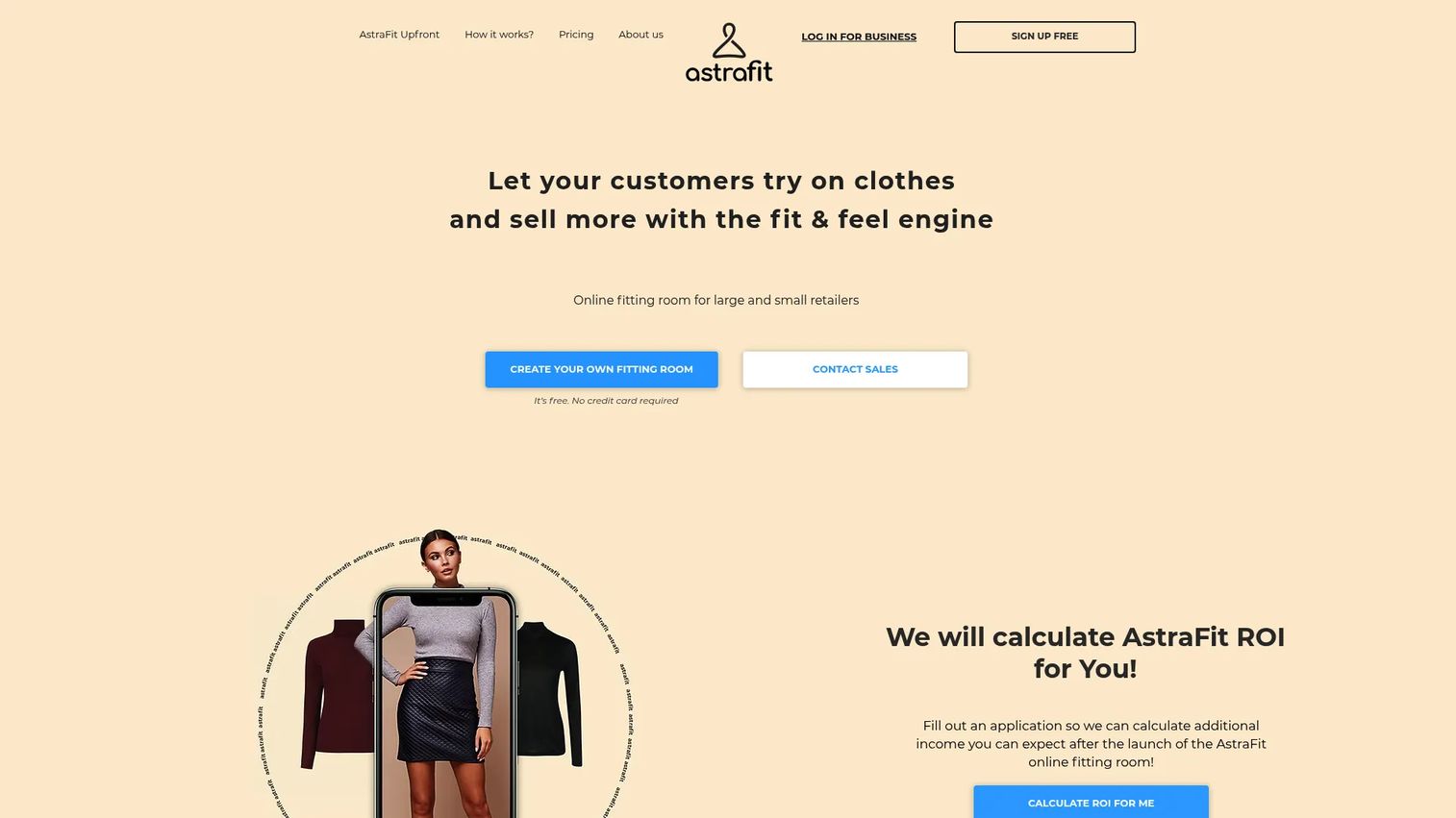
AstraFit is online virtual fitting room software for apparel retailers, pairing fit visualization with size and fit recommendation. A useful detail for measurement-minded teams: every plan includes Google Analytics integration and monthly KPI reports, so you can see how the fitting experience affects behavior rather than guessing.
Best for: Apparel ecommerce teams that want virtual try-on and fit guidance plus built-in reporting to reduce returns.
Key strengths
- Fit visualization: Provides a virtual fitting room so shoppers can picture how garments fit.
- Size and fit recommendation: Guides shoppers toward the right size to reduce wrong purchases.
- Built-in reporting: Includes Google Analytics integration and monthly KPI reports across plans.
Why choose AstraFit: For PMs who need to prove impact, the bundled analytics and monthly KPI reporting lower the instrumentation burden. It suits apparel teams that want a guided fit experience and a clear line of sight into how it performs.
AstraFit pricing: AstraFit publishes an Easy Start plan at $129 for a one-time three-month term, plus an upfront-payment option with a flexible amount. The site notes that all plans include Google Analytics integration and monthly KPI reports.
7. Auglio
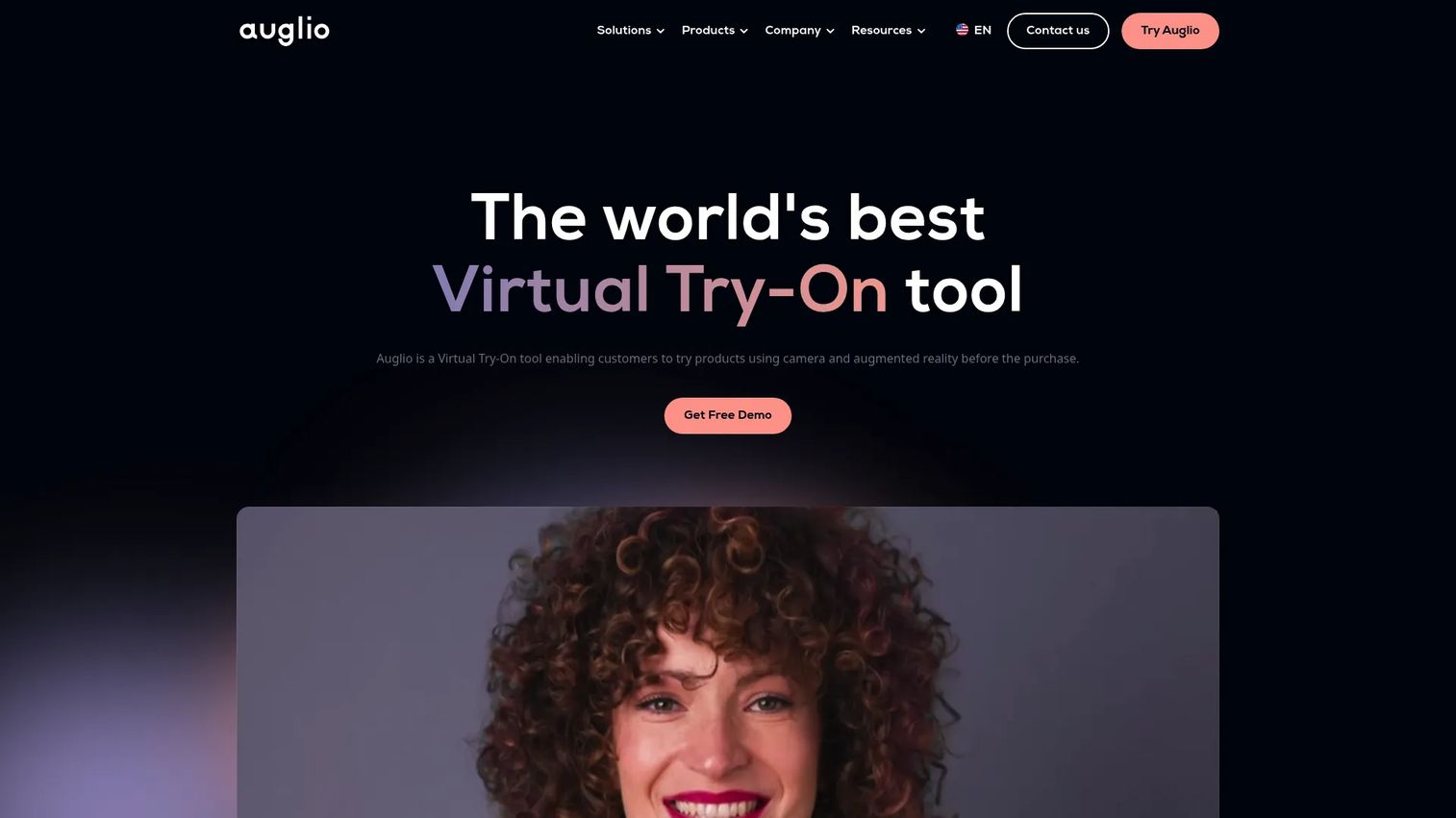
Auglio is virtual try-on and assisted shopping software for ecommerce, with strength in eyewear and beauty. It covers try-on for eyewear, cosmetics, wigs, and headwear, plus add-ons like Assisted Shopping, Auto PD Measurement, Face Shape Detection, and 360 view. A free tier makes it a flexible, discovery-friendly entry point for teams testing camera-based try-on.
Best for: Eyewear and beauty brands that want camera-based virtual try-on with conversion-focused add-ons.
Key strengths
- Multi-category try-on: Supports eyewear, cosmetics, wigs, and headwear from one platform.
- Conversion add-ons: Offers Assisted Shopping and Social Shopping to push engagement toward purchase.
- Optical detail features: Includes Auto PD Measurement, Head Measurement, and Face Shape Detection.
Why choose Auglio: The free tier and broad try-on coverage make Auglio an accessible way to test virtual try-on without a large upfront commitment. It fits eyewear and beauty teams that want to start small and scale the experience as it proves out.
Auglio pricing: Auglio's cosmetics try-on pricing runs Free, then Starter at $59 per month, Basic at $159, Professional at $359, Enterprise at $649, and a custom tier. The free plan lets you start without committing budget.
Considerations before you buy
A demo that looks impressive can still be the wrong fit for your catalog and team. Run every shortlist tool through this checklist before you commit.
Fit accuracy for your category
Accuracy means different things for apparel, eyewear, and footwear. Ask the vendor how they validate recommendations and what data they train on. A tool that nails eyewear may not handle footwear volume well, so test against your real catalog, not a polished demo set.
Personalization depth
Generic size charts are the problem you are trying to leave behind. Evaluate how the tool adapts to individual body shape, face shape, foot data, or stated preferences. The more it personalizes, the more it lifts fit confidence and reduces returns.
Analytics and measurement
You cannot prove ROI without instrumentation. Check what the tool tracks: engagement, recommendation accuracy, conversion, and return signals by segment. Tools with built-in reporting, like analytics integrations and KPI exports, lower the burden on your data team.
Implementation and maintenance
Look at how the tool integrates with your storefront and how it holds up as your catalog changes. Order-based or app-based pricing and Shopify apps lower the lift for smaller teams. For larger catalogs, confirm API depth and how the vendor handles ongoing maintenance.
Conclusion
The honest takeaway: there is no single best virtual fitting software, only the best fit for your category, measurement needs, and implementation capacity.
For apparel, Texel and AstraFit cover virtual fitting room and fit guidance, while 3DLOOK and Measmerize lead on measurement-driven and lightweight size recommendation. For eyewear, Fittingbox brings deep optical try-on and Auglio offers a flexible camera-based entry point with a free tier. For footwear, Volumental's 3D foot scanning and omnichannel fit data make it the specialist pick.
Start by matching the tool to your primary vertical, then pressure-test it against your real catalog and your returns data by segment. The right choice is the one that improves fit confidence, reduces returns where it counts, and gives you the measurement to prove it.
If your team is also rethinking how you let buyers experience a product before they commit, the same show-don't-tell logic that drives fitting software powers interactive product experiences. Start your journey with Guideflow today!
FAQs
Virtual fitting software helps online shoppers understand how a product will fit or look before they buy. It uses fit guidance, visualization, and size confidence tools inside the shopping experience, so buyers can choose the right size or picture how an item appears without a physical try-on.
It combines AR, computer vision, and size inputs with recommendation logic. AR or photo-based visualization shows how an item looks, computer vision detects body, face, or foot landmarks, and the tool maps measurements and preferences against product data to recommend the right size or fit.
It can, when it improves size confidence and reduces wrong-size purchases. The effect varies by category and catalog, so measure returns by category and segment rather than expecting one blended number. Pair the tool with clean instrumentation to see where fit guidance actually moves returns.
No. It also applies to eyewear and footwear. Apparel uses body measurements and garment cut, eyewear uses face shape and pupillary distance for frame try-on, and footwear uses foot length, width, and volume from 3D scanning. Each vertical applies the technology differently.
Focus on fit accuracy for your category, personalization depth, analytics and measurement, integrations with your storefront, and implementation effort. From a PM or ecommerce operator lens, the maintenance burden across catalog changes matters as much as the initial integration.
Not exactly. Virtual try-on is the visual layer that shows how a product looks on a shopper, common in eyewear and apparel. Virtual fitting software is broader and includes size and fit guidance. Some tools do only try-on, some do only sizing, and some combine both in one widget.
Track conversion rate, return rate, engagement with the fitting experience, and size confidence signals. Tie each metric to category and funnel stage so you can isolate where the tool helps. A size advisor on a high-return category should show return reduction; a try-on on a discovery page should show engagement lift.
Apparel, eyewear, and footwear are the most common, since fit and appearance drive both conversion and returns in those categories. Other consumer categories, such as cosmetics and accessories, increasingly use adjacent virtual try-on experiences to help shoppers visualize products before buying.