Your team shipped 40 pieces of content last quarter. Leadership wants to know which ones moved pipeline. Your analytics tab shows pageviews, bounce rate, and time on page. None of that answers the question.
This is the gap content intelligence platforms exist to close. They sit between your content production and your revenue data, pulling in signals from search behavior, CMS performance, campaign engagement, and customer journeys to tell you what to create, what to update, and what to retire. The global content intelligence market was valued at $2.01 billion in 2025 and is projected to reach $9.15 billion by 2031, according to Mordor Intelligence (2026). That growth reflects a simple reality: Marketers are under pressure to prove ROI on content budgets, and spreadsheets and basic analytics are no longer enough.
This guide compares 11 platforms, matched to the specific problems growth marketers face, from attribution gaps to creative governance to B2B buyer engagement.
What's inside
This guide is for growth marketers, demand gen managers, content strategists, and marketing ops professionals evaluating AI content intelligence platforms.
Platforms were selected based on:
- AI-driven insights and content recommendations
- Content performance measurement and pipeline attribution
- Integration depth with CMS, CRM, DAM, and marketing automation tools
- Fit across growth, creative, editorial, and enterprise marketing teams
The comparison table covers use case, key differentiator, pricing, and G2 rating. Pricing and ratings reflect verified data from vendor pages and G2 listings and should be re-confirmed before purchase.
TL;DR
- Best for enterprise digital experience: Optimizely combines CMS, experimentation, and content optimization in one platform
- Best for asset governance: Tenovos connects DAM intelligence, metadata, and content performance for large creative teams
- Best for B2B content engagement: PathFactory tracks how accounts consume content across buying journeys
- Best for SEO-led teams: Semrush for broad competitive intelligence; Clearscope for focused content grading and optimization
- Best for lifecycle personalization: Optimove applies customer-level content affinity to multichannel campaigns
- Best for creative quality control: CreativeX scores creative execution against brand, channel, and media standards
What is AI content intelligence?
This is a meaningful distinction from standard content analytics. Analytics platforms report what happened. A content intelligence platform interprets those signals and recommends what to do next.
Core data sources
Platforms in this category may analyze signals from several sources:
- Content metadata and CMS performance
- Search and keyword data
- Audience engagement and time-on-page behavior
- CRM and opportunity data tied to content touchpoints
- DAM usage and asset reuse history
- Campaign interactions across email, paid, and social
- Customer journey behavior across buying stages
Common capabilities
- Content performance analytics and dashboards
- AI recommendations for content updates, gaps, and priorities
- Predictive content scoring
- SEO and keyword intelligence
- Content governance and workflow support
- Personalization signals by segment or account
- Revenue attribution connected to content engagement
- Content reuse recommendations
What separates content intelligence from adjacent categories
Content analytics explains what happened. Content intelligence recommends what to do next. Marketing intelligence covers broader campaign spend and market positioning. SEO tools focus on search visibility, though some have expanded to connect search performance with broader content ROI.
The platforms in this list earn the "content intelligence" label by doing more than reporting pageviews. Each interprets signals and helps teams decide where to focus.
When to use AI content intelligence platforms
Prove content ROI beyond traffic
When a CFO asks which assets influenced revenue, pageview reports do not answer that question. Content intelligence platforms connect engagement data to CRM records, pipeline stages, and closed revenue. This is the core use case for growth marketers who need attribution they can defend in a budget review.
Prioritize content updates before creating more
Most teams keep producing net-new content while existing pages quietly decay in search rankings. AI content intelligence surfaces which assets are worth refreshing based on traffic decay, keyword gaps, or low engagement rates. Fixing what you have often moves more pipeline than adding new content to an already crowded calendar.
Personalize content across the customer journey
Content affinity data combined with behavioral signals and lifecycle stage can power personalized experiences at acquisition, onboarding, retention, and reactivation. Platforms like PathFactory and Optimove apply this logic to serve different content to different buyers based on where they are in the journey.
AI content intelligence platforms comparison
The table below is a shortcut, not a complete evaluation. Pricing and G2 ratings change and should be verified against live vendor pages before any purchase decision. For tools without published pricing, contact the vendor and ask about cost drivers including seats, data volume, and integration requirements.
| # | Product | Best for | Key differentiator | Pricing | G2 rating |
|---|---|---|---|---|---|
| 1 | Optimizely | Enterprise digital experience teams | CMS, experimentation, and optimization in one platform | Custom pricing | 4.2/5 |
| 2 | Tenovos | Enterprise asset governance | AI-native DAM with metadata and performance intelligence | Custom pricing | N/A |
| 3 | PathFactory | B2B demand generation | Account-level content engagement analytics | Custom pricing | 4.4/5 |
| 4 | Parse.ly | Editorial and content teams | Real-time content performance and audience analytics | Custom pricing | 4.4/5 |
| 5 | Semrush | SEO and competitive intelligence | Keyword, competitor, and content optimization data | Free; paid from $139/mo | 4.4/5 |
| 6 | BuzzSumo | Social and trend research | Content discovery and social engagement trend analysis | From $199/mo (billed annually) | 4.5/5 |
| 7 | Contently | Content operations teams | Planning, workflow, freelancer network, and analytics | Custom pricing | N/A |
| 8 | Clearscope | SEO content optimization | Content grading and search intent scoring | From $129/mo | 4.9/5 |
| 9 | Content Science | Content strategy and audits | Research-backed content evaluation and governance | From $299/year (review subscriptions) | N/A |
| 10 | Optimove | Lifecycle marketing teams | Customer-level content affinity and AI campaign decisioning | Custom pricing | 4.6/5 |
| 11 | CreativeX | Creative performance teams | AI creative scoring and media outcome connection | Custom pricing | N/A |
Best 11 AI content intelligence platforms for 2026
1. Optimizely

Optimizely is an AI-powered digital experience platform that combines content management, A/B and multivariate experimentation, real-time personalization, and analytics. It is designed for enterprise marketing and product teams that want content intelligence connected directly to publishing and testing, rather than sitting in a disconnected reporting tab. The platform includes warehouse-native analytics and AI agents that assist with workflow and optimization tasks.
Best for: Enterprise digital teams consolidating CMS, campaign experimentation, and content optimization under one platform.
Key features
- CMS and digital experience publishing
- A/B, multivariate, and server-side experimentation
- Real-time personalization and audience targeting
- AI agents for optimization workflows
- Warehouse-native analytics and dashboards
Why choose Optimizely: It fits teams that want to build, test, and optimize content experiences without switching between separate tools. If your biggest bottleneck is the gap between publishing and performance insight, Optimizely closes that loop without requiring a separate analytics contract.
Optimizely pricing: Optimizely prices by business goals and package configuration. Contact their sales team and ask about CMS tier, experimentation module, personalization, and analytics add-ons, since the cost depends on which products you activate.
G2 rating: 4.2/5
2. Tenovos
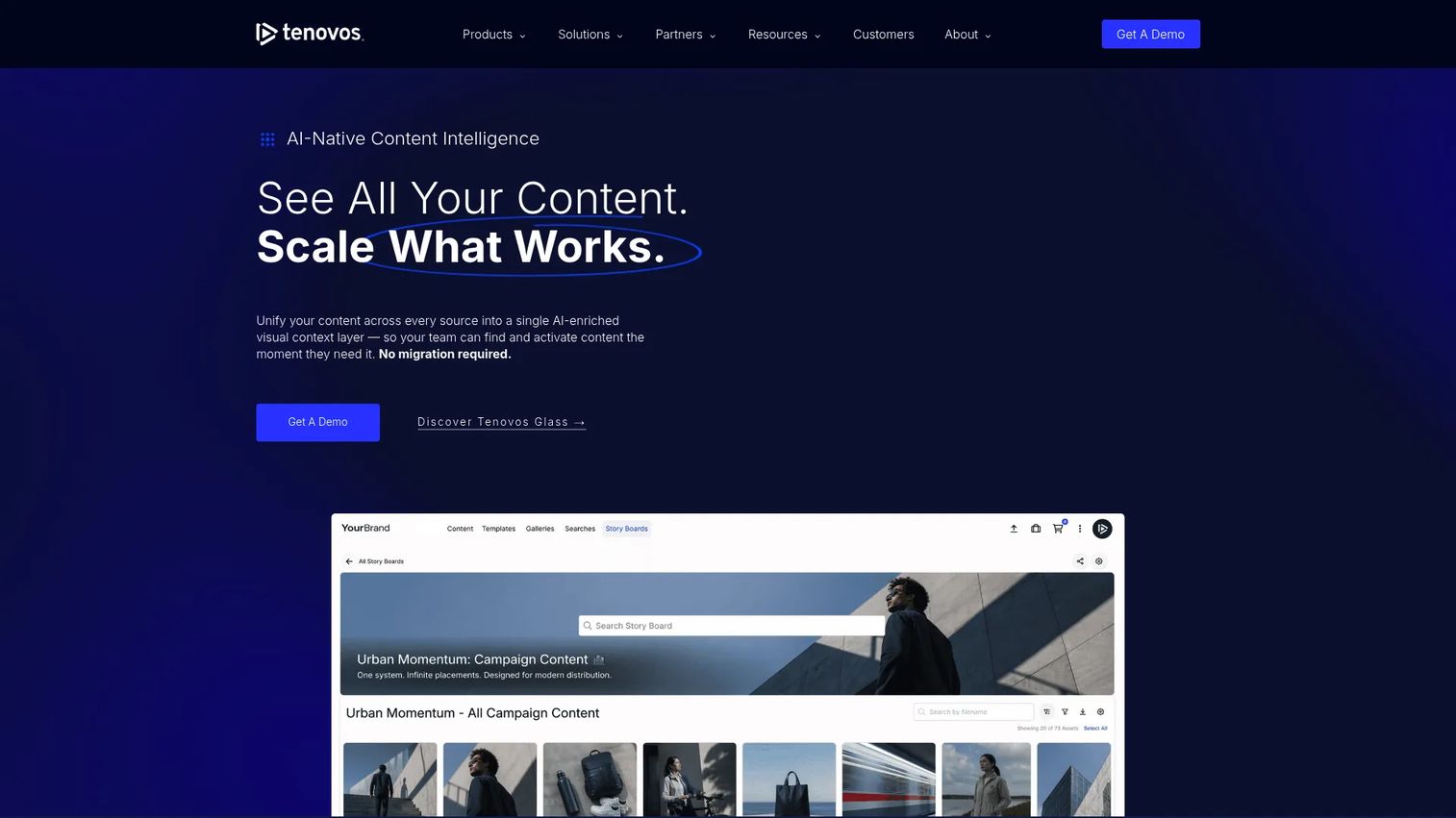
Tenovos is an AI-native content intelligence and digital asset management platform built for enterprise marketing and creative teams managing content at global scale. Its focus is on solving the asset sprawl problem: Large libraries of creative assets that are expensive to maintain, hard to find, and poorly connected to performance data. Tenovos uses AI to enrich metadata, power intelligent search, automate governance workflows, and surface which assets actually get used and perform.
Best for: Enterprise marketing and creative operations teams managing large asset libraries with complex governance requirements.
Key features
- AI-enriched metadata and intelligent asset search
- Digital asset ingestion, organization, and governance automation
- Rights management and localization workflows
- Video metadata management, transcription, and transcoding
- No-code integrations through Tenovos Connect
Why choose Tenovos: Choose it when your content intelligence problem starts with not knowing what assets you have, where they live, or whether they are being used. The platform connects asset performance data to governance workflows, which helps creative teams stop rebuilding assets that already exist.
Tenovos pricing: Cost typically depends on asset volume, user roles, number of integrations, and enterprise governance requirements. Contact the vendor directly to get a quote.
3. PathFactory
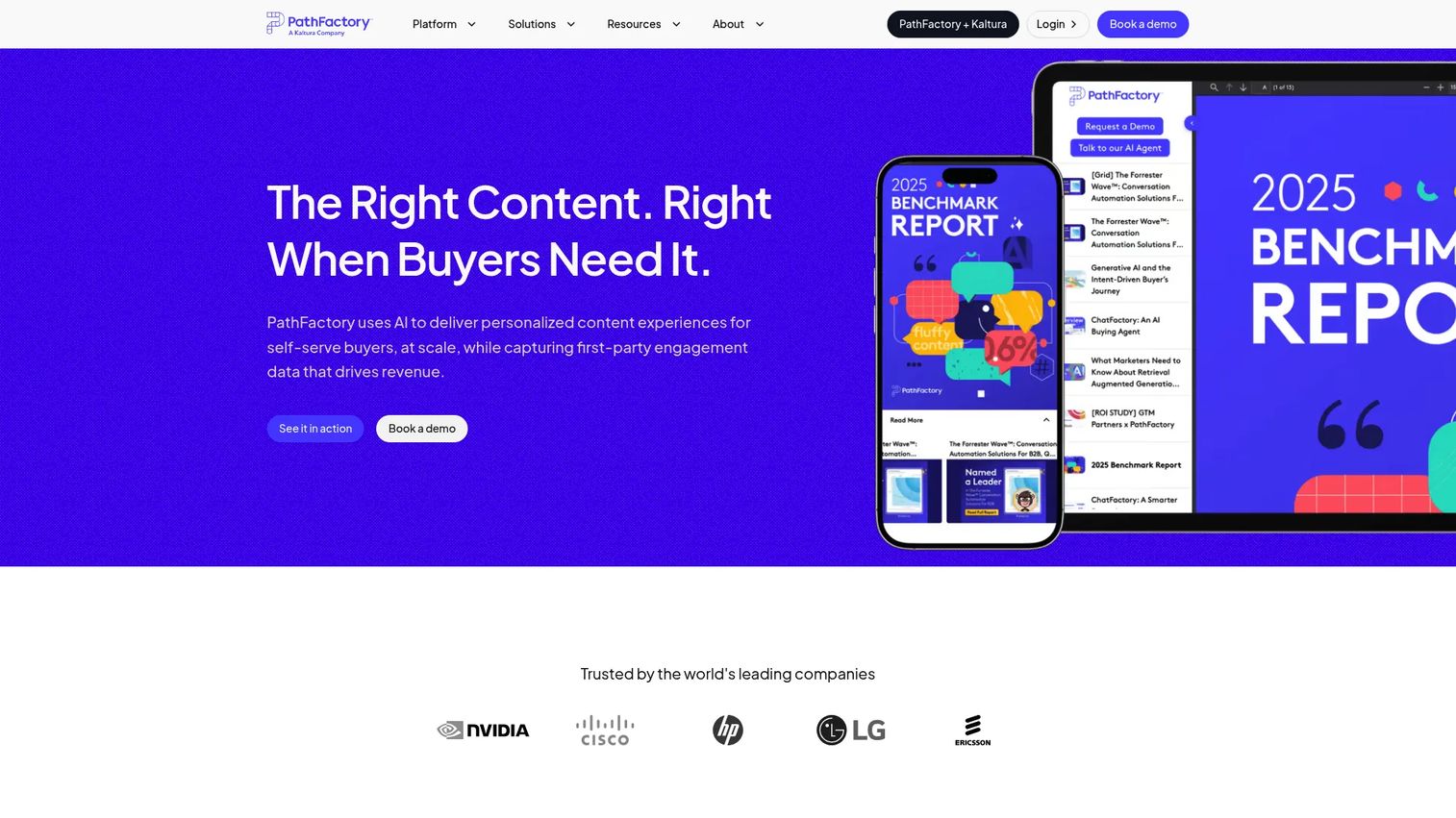
PathFactory is a B2B content intelligence and AI buyer-journey platform that helps marketers understand how buyers consume content across the full buying cycle. Rather than stopping at traffic or form fills, PathFactory tracks content engagement at the account level, surfacing intent signals that connect directly to pipeline. It includes AI-personalized content experiences, conversational buying agents, and revenue intelligence dashboards.
Best for: B2B marketers in demand generation or revenue marketing who need account-level content engagement signal connected to their CRM.
Key features
- AI-personalized content experiences and recommendations
- Account-level engagement tracking and journey analytics
- ChatFactory conversational AI buying agents
- Revenue intelligence and buying intent dashboards
- Personalized content hubs and dynamic landing pages
Why choose PathFactory: It is the right fit when your problem is not content production volume, but knowing which buyers engaged with what, and when they were ready to talk to sales. Teams using it for B2B content engagement reporting consistently highlight the account-level visibility as the primary value driver.
PathFactory pricing: Cost drivers include content volume, number of accounts tracked, CRM integrations, and journey decisioning features. Confirm these with the vendor before entering a sales process.
G2 rating: 4.4/5
4. Parse.ly
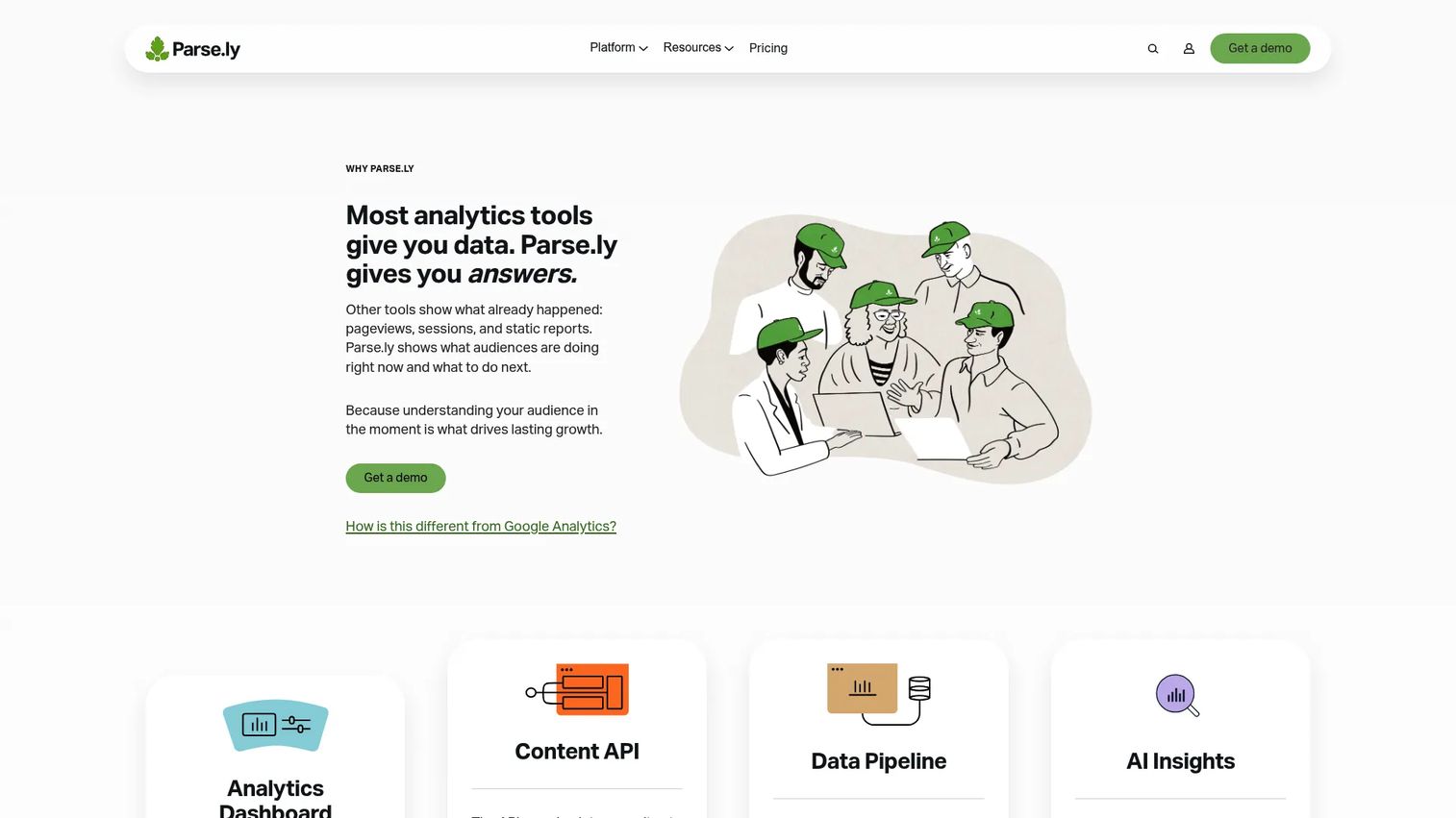
Parse.ly is a content analytics platform built for publishers, media organizations, and content marketing teams that need fast, clear answers about content performance without routing every question through a BI team. It delivers real-time audience insights, conversion tracking, content attribution, and an AI-powered conversational analytics interface. Parse.ly's Content API also enables personalized content recommendations for teams building algorithmic content experiences.
Best for: Editorial teams and content marketers who need real-time performance data without depending on data engineers for every report.
Key features
- Real-time content analytics and traffic source reporting
- Conversion and attribution analytics
- AI Insights and conversational analytics interface
- Content API for personalized recommendations
- Audience segmentation and engagement reporting
Why choose Parse.ly: It suits teams that need to make fast decisions about content calendars, campaigns, and audience growth. The real-time data and clean editorial interface mean writers and content managers can answer performance questions directly, without waiting on BI.
Parse.ly pricing: Parse.ly offers three tiers, Content Performance, Content Value, and Content Advocacy, priced by negotiation. Contact their team and ask about page volume, number of properties, historical data depth, and integration requirements.
G2 rating: 4.4/5
5. Semrush
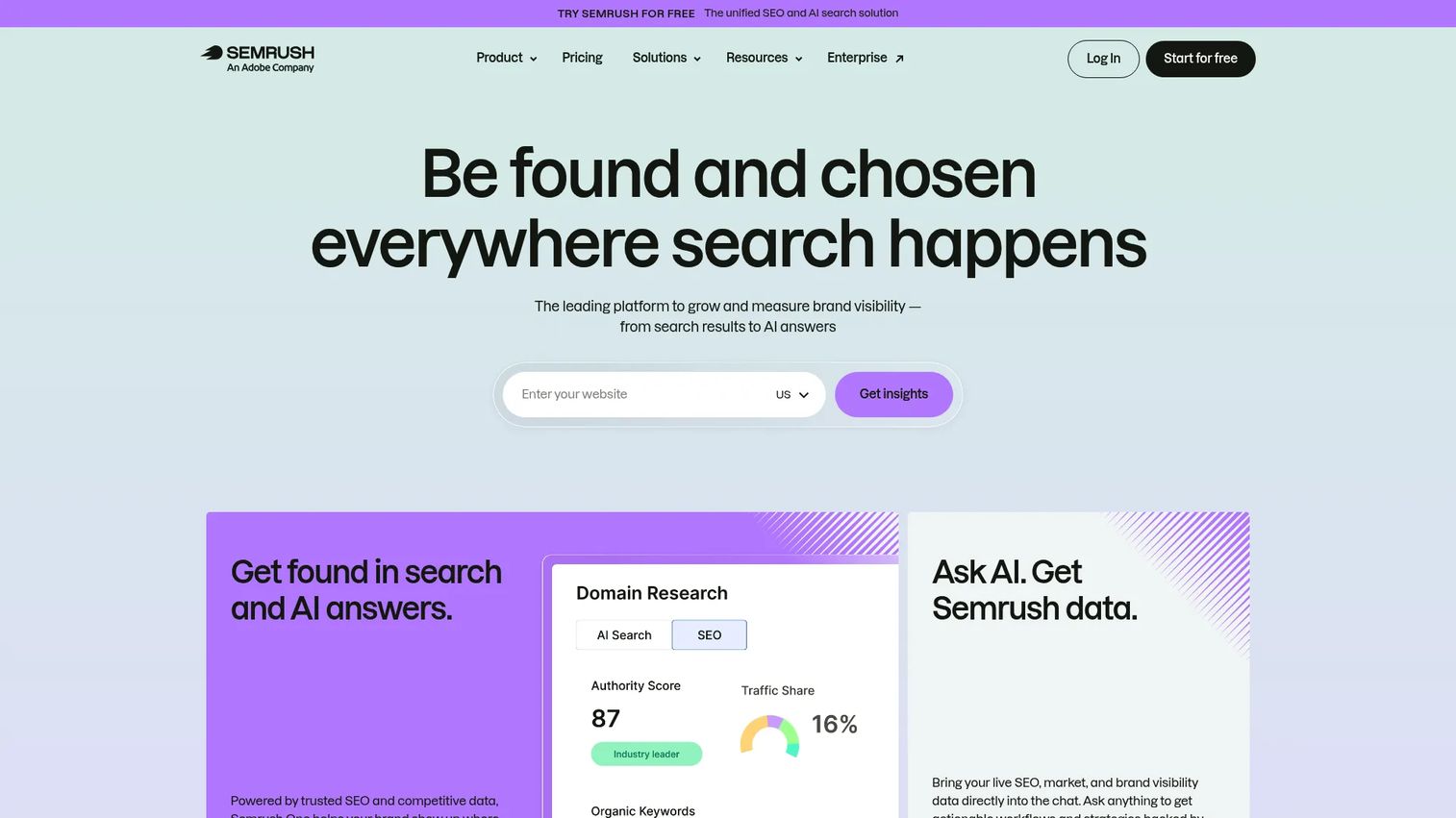
Semrush is a brand visibility management platform covering SEO, AI search visibility, competitive intelligence, content marketing, paid media, and digital PR. For content intelligence purposes, it is most valuable when your team's primary signals come from search: Keyword demand, competitor content gaps, topic discovery, and rank tracking. It has expanded to include AI search visibility tracking, monitoring how your brand and content appear in AI-generated answers across major platforms.
Best for: SEO-led growth teams who want keyword research, competitive content analysis, and organic performance intelligence in one platform.
Key features
- Keyword research and competitive analysis
- AI visibility and brand sentiment tracking in AI search results
- Technical site audits and rank tracking
- Content creation and SEO content templates
- Backlink analysis and digital PR monitoring
Why choose Semrush: It is the right choice when content intelligence starts with organic search demand. If your team needs to know what topics competitors rank for, which keywords are worth targeting, and how your content appears in AI search results, Semrush covers all three. For a broader look at AI SEO tools in this space, compare it against more specialized options before committing.
Semrush pricing: A free plan is available. The SEO plan starts at $139/month, the Starter plan at $199/month, and the Pro+ plan at $299/month, all billed monthly. An Advanced tier with custom pricing is available for larger teams.
G2 rating: 4.4/5
6. BuzzSumo
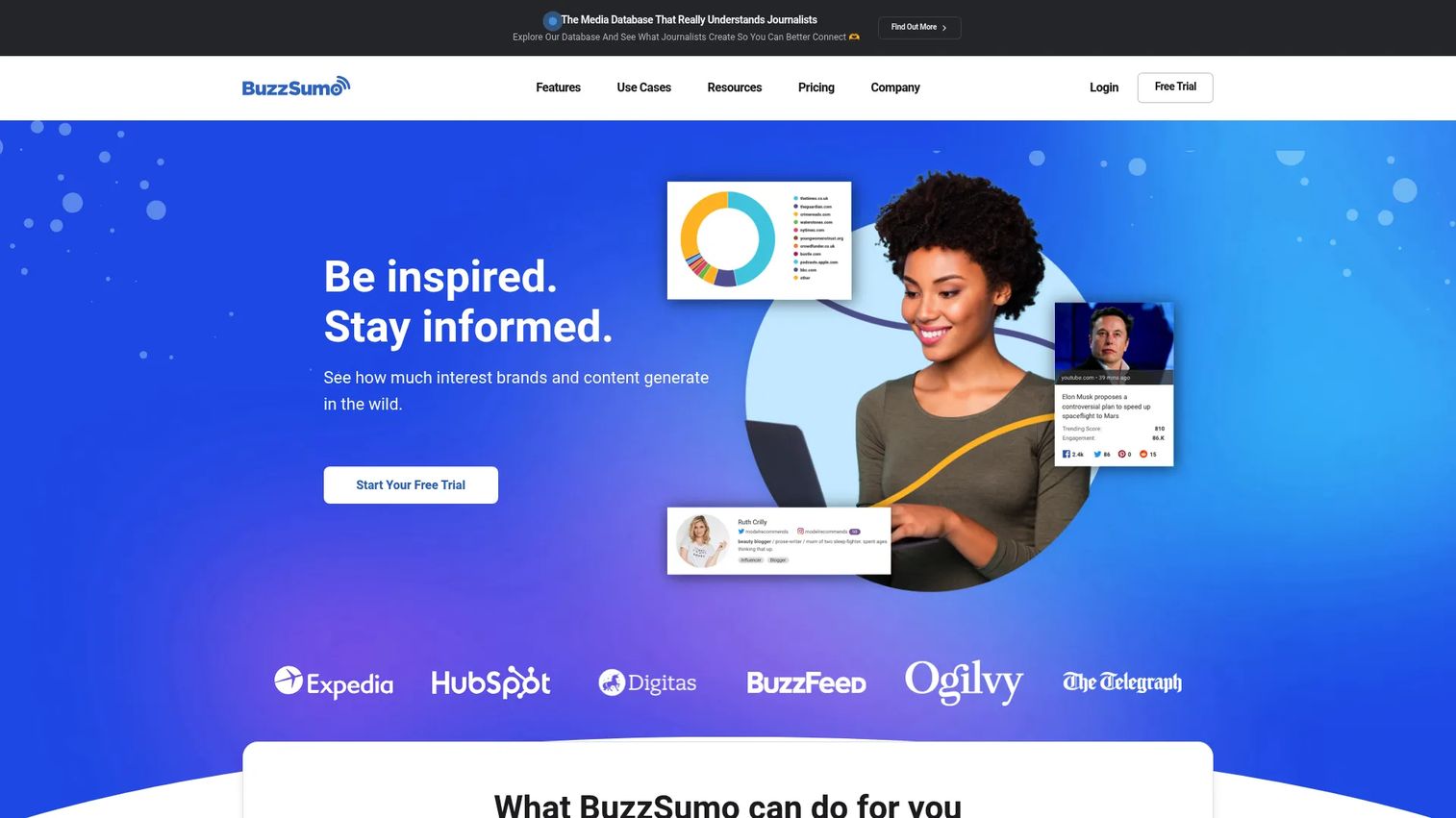
BuzzSumo is a content marketing and media intelligence platform for discovering what content performs, which topics are trending, and who is driving attention in any category. It is used by content marketers, PR teams, and demand gen managers who want early topic signal before committing production budget. The platform includes content discovery, social engagement analysis, media monitoring, journalist research, influencer identification, and keyword research.
Best for: Content marketers and PR teams researching high-performing topics, trending formats, journalist contacts, and competitor content patterns.
Key features
- Content Analyzer and content discovery by topic or domain
- Real-time trending feeds and trend monitoring
- Question Analyzer for forum and audience research
- Media Database and journalist outreach tools
- Influencer research and YouTube Analyzer
Why choose BuzzSumo: It earns a place in the stack when the team needs to answer "what should we write about and where will it spread?" before anything gets produced. It is narrower than full content intelligence suites, but faster and more focused for research-stage decisions. Pairing it with a broader content marketing tools stack gives you both upstream topic intelligence and downstream performance tracking.
BuzzSumo pricing: Plans start at $199/month for Content Creation (billed annually), with PR and Comms at $299/month, Suite at $499/month, and Enterprise at $999/month. No free tier exists, but a free trial is available.
G2 rating: 4.5/5
7. Contently
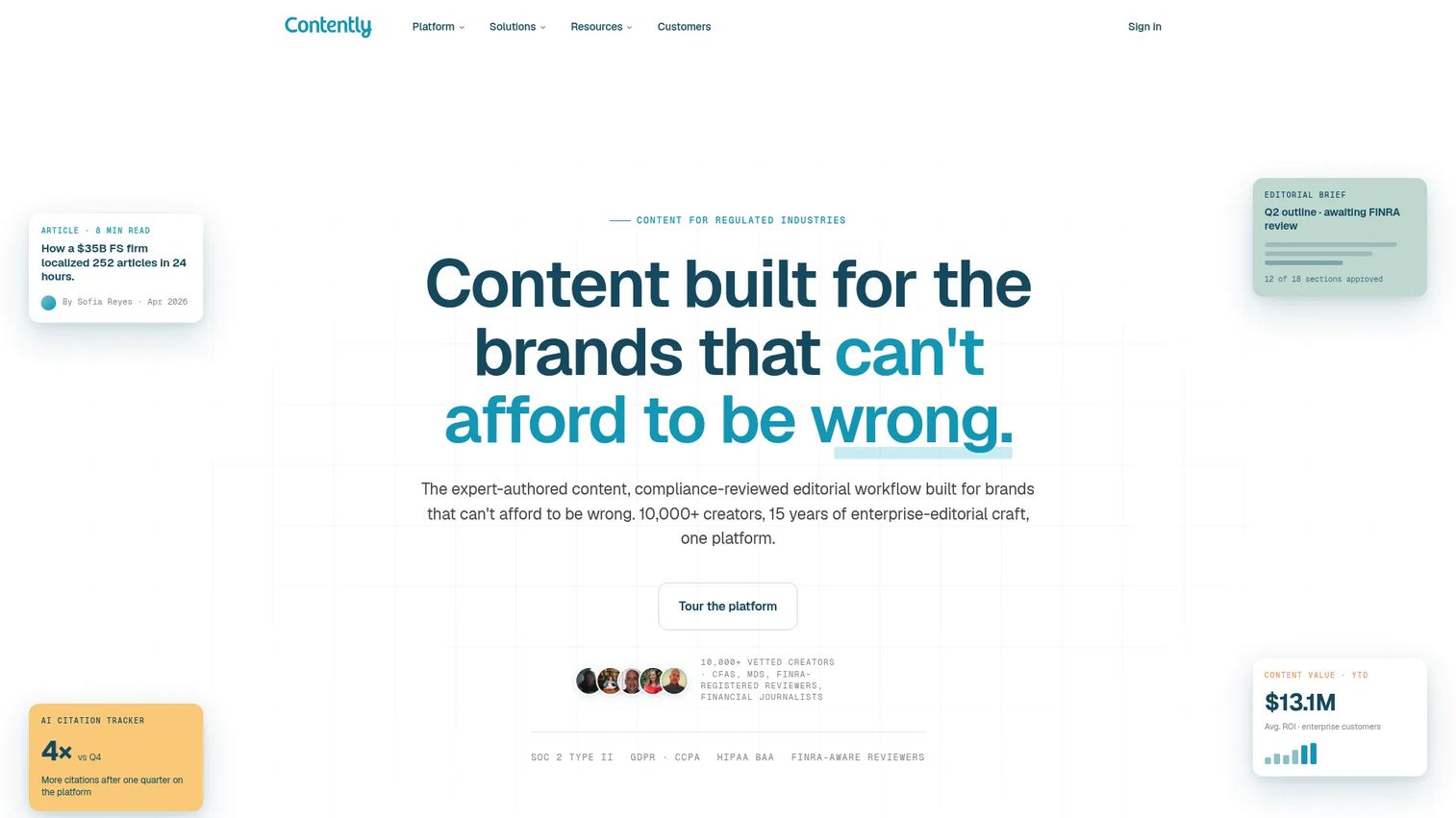
Contently is an enterprise content marketing platform that combines editorial workflow, content planning, a managed freelancer network, compliance controls, and performance analytics. It is designed for content teams that need to professionalize operations at scale, connecting content production with business outcomes. The platform covers strategy and planning, cross-channel calendar management, collaborative creation, review and approval workflows, and content value attribution.
Best for: Enterprise content teams managing strategy, freelance production, compliance requirements, and performance measurement across multiple channels.
Key features
- Content strategy, planning, and cross-channel calendar management
- Workflow-based creation, review, and approvals
- Freelancer network with talent sourcing and contracts
- Governance and compliance controls
- Content performance analytics and pipeline attribution
Why choose Contently: It suits teams that have outgrown project management tools cobbled together with spreadsheets and freelancer emails. The combination of workflow, talent access, and performance reporting in one place reduces the operational overhead that grows when content volume scales. For a broader view of best content marketing tools covering adjacent capabilities, compare it against lighter-weight alternatives.
Contently pricing: The cost depends on workflow seat count, content volume, freelancer network access, and analytics depth. Contact their team for a quote scoped to your production scale.
8. Clearscope
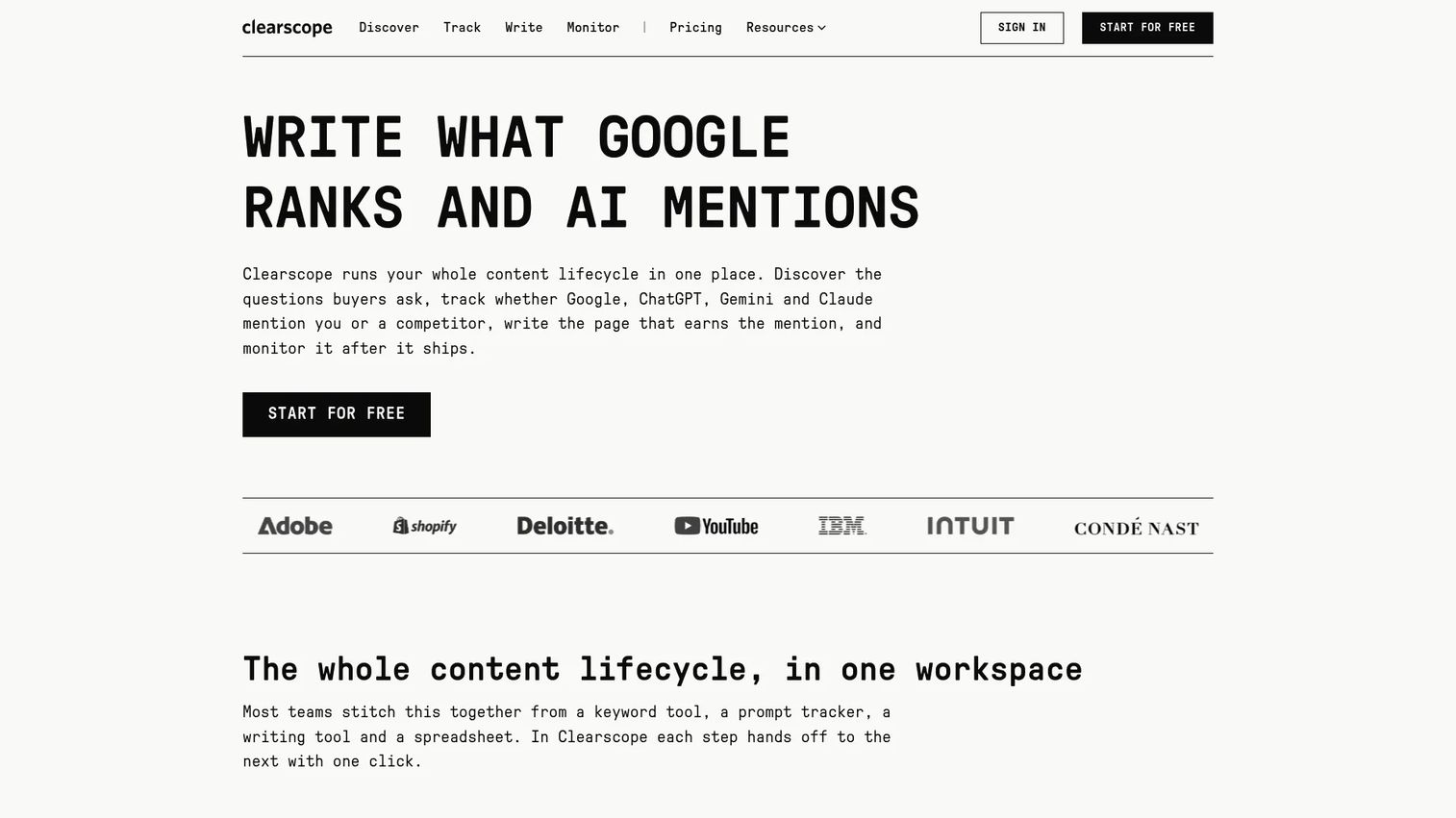
Clearscope is a content discoverability platform for researching, creating, optimizing, and monitoring content across traditional search engines and AI answer engines. It grades content against search intent, recommends terms to include, tracks AI search citations, and monitors how your pages perform across Google, ChatGPT, Gemini, and Claude. It is narrower in scope than a full content intelligence suite but consistently rated highest in its category on G2.
Best for: SEO content teams improving brief quality, draft alignment with search intent, and monitoring performance across AI-driven discovery surfaces.
Key features
- Topic and keyword exploration with SERP intent analysis
- Real-time content grading and term recommendations
- AI search citation tracking across major AI platforms
- AI-assisted draft creation and content monitoring
- Integrations with Google Docs, WordPress, and Google Search Console
Why choose Clearscope: It is the right tool when the team's core problem is producing content that actually matches what searchers want, including AI search users. The 4.9/5 G2 rating reflects strong user satisfaction with the grading accuracy and interface quality. Teams running AI SEO tools evaluations frequently shortlist it for content optimization workflows.
Clearscope pricing: The Essentials plan starts at $129/month and includes 50 tracked queries, 50 pages, and 20 monthly Discoveries. The Business plan is $399/month and adds 300 tracked queries, 300 pages, and a dedicated account manager. Enterprise pricing is custom.
G2 rating: 4.9/5
9. Content Science

Content Science is a content strategy, consulting, and intelligence provider that blends software, research, and expert services. Its core products include ContentIQ, an AI superagent for content analysis and strategy, and ContentWRX, a content effectiveness measurement tool. It also runs the Content Science Academy for training and certification. The company positions itself at the intersection of content operations, strategy research, and AI transformation.
Best for: Organizations that need structured content audits, governance frameworks, and expert-led strategic analysis alongside software tools.
Key features
- ContentIQ AI superagent for content analysis and strategy
- ContentWRX content effectiveness measurement
- Content Science Academy training, certifications, and workshops
- Content audits and benchmarking
- AI transformation consulting and content governance frameworks
Why choose Content Science: It is the right fit when you need more than a dashboard. The combination of expert analysis, proprietary research frameworks, and software is valuable for teams undertaking major content governance projects or preparing for significant content audits. For teams evaluating audience intelligence platforms alongside content strategy tools, Content Science sits in a distinct consulting-led category.
Content Science pricing: Content Science Review subscriptions start at $299/year for a Student plan, $899/year for Content Professional, and $1,499/year for Content Team. Enterprise pricing is custom. Consulting, ContentIQ, and ContentWRX are priced separately through direct engagement.
10. Optimove
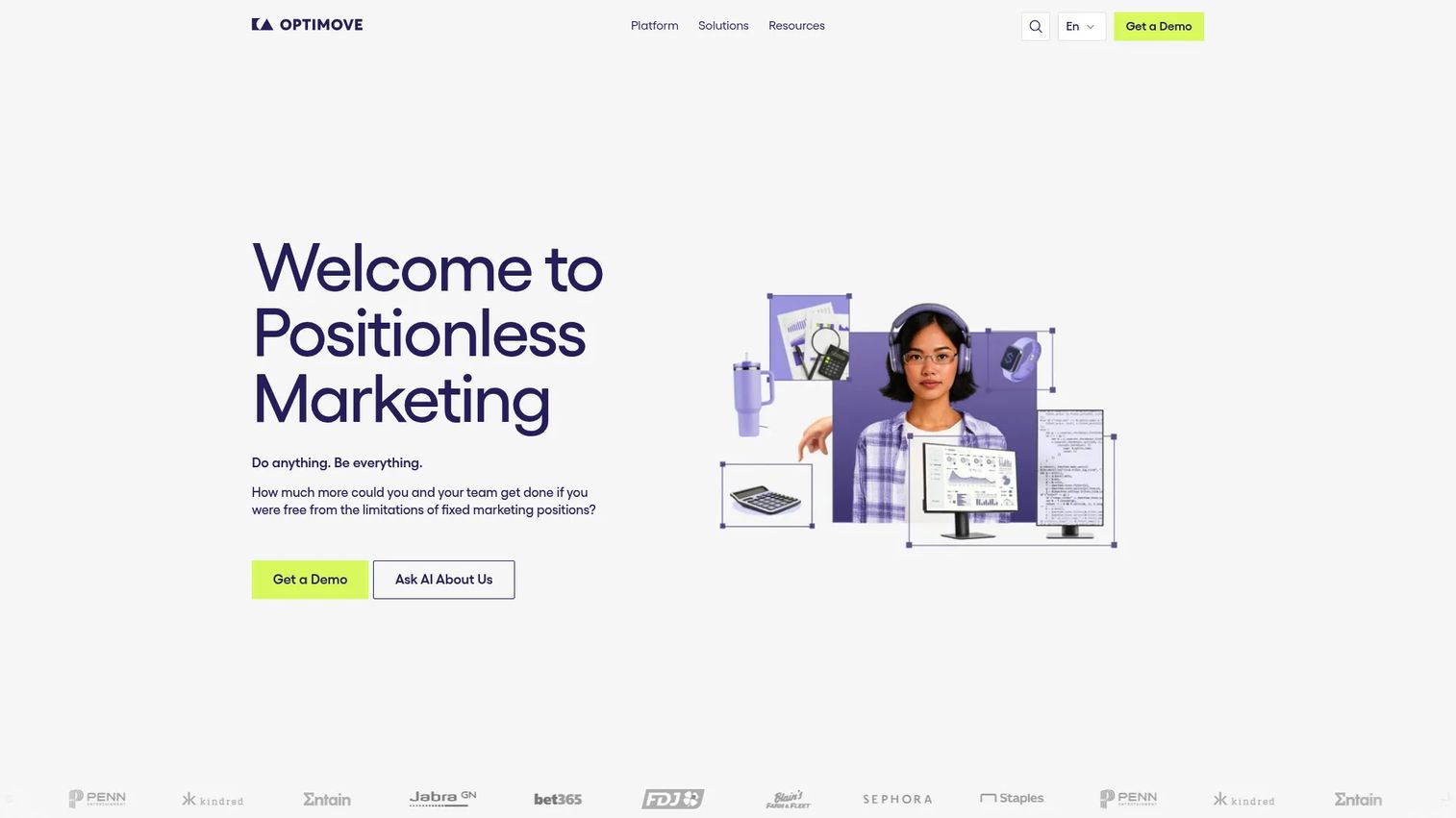
Optimove is a Positionless Marketing platform combining unified customer data, AI decisioning, multichannel campaign orchestration, and personalization. For content intelligence, it is most relevant to lifecycle marketing teams: Its AI models analyze content affinity at the individual customer level and feed those signals into campaign decisioning across email, SMS, mobile, web, and advertising channels. It includes more than 20 AI-driven recommendation models and A/B testing with incrementality measurement.
Best for: Consumer brands and lifecycle marketers who need to personalize content by customer behavior, segment, and channel across a full multichannel program.
Key features
- Unified customer profiles with embedded CDP functionality
- AI agents for content, audience, journey, and send-time decisioning
- Multichannel campaign orchestration across email, SMS, mobile, and advertising
- Real-time personalization with 20+ AI recommendation models
- Multitouch attribution and campaign optimization
Why choose Optimove: It fits teams whose content intelligence question is: Which message or offer should this specific customer see next, and on which channel? If you manage large customer databases and need to move beyond batch-and-blast campaigns, Optimove applies content affinity data to individual-level decisions at scale. For teams evaluating best customer data platform options alongside this, Optimove's embedded CDP may reduce the number of separate contracts needed.
Optimove pricing: Pricing is based on message volume and channel usage. Contact Optimove's sales team and clarify customer database size, active channels, and journey decisioning complexity to get an accurate quote.
G2 rating: 4.6/5
11. CreativeX
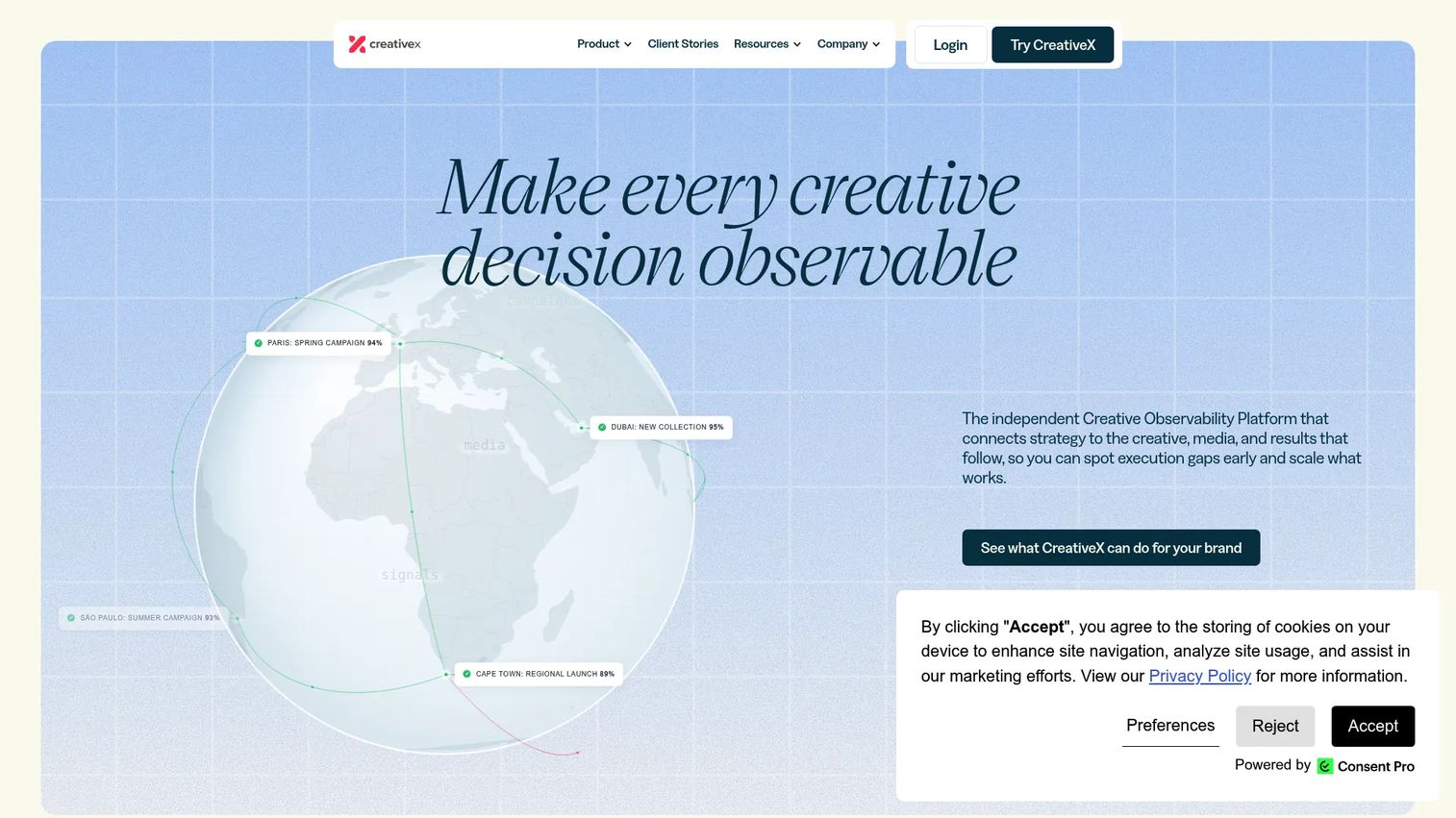
CreativeX is a creative observability platform that connects creative execution data with media performance outcomes. It uses AI to score creative assets against defined brand, channel, and format guidelines, then connects those scores to media spend and campaign results. The platform is built for enterprise brand and performance marketing teams running large-scale paid campaigns who need to know whether their creative meets the standards that drive results, and which assets are spending money without earning it back.
Best for: Enterprise brand and performance marketing teams scaling creative production and needing systematic quality control connected to media outcomes.
Key features
- Creative scoring against brand, channel, and format guidelines
- Creative and media data connection with Quality Spend analysis
- APIs for content submission, reporting, and partner measurement
- Asset-level analytics tied to media performance
- Creative governance workflows for brand compliance
Why choose CreativeX: It earns a place in the stack when creative quality is a known lever for campaign performance, but the team is operating at a scale where manual review breaks down. The connection between creative scores and media spend visibility gives brand teams a CFO-ready argument for investing in creative quality. For teams exploring broader best marketing analytics software options, CreativeX sits in a specialized creative intelligence lane that most general analytics platforms do not cover.
CreativeX pricing: Fees are set through a separate agreement and typically depend on media spend volume, asset volume, number of markets, and governance scope. Contact the vendor directly.
Considerations when choosing an AI content intelligence platform
Match the platform to your content bottleneck
Different platforms solve fundamentally different problems. Clearscope and Semrush address search visibility gaps. PathFactory addresses B2B buyer engagement signal. Tenovos and CreativeX address asset governance and creative performance. Optimove addresses lifecycle personalization. Identify which bottleneck costs you the most pipeline before shortlisting, because adding the wrong tool adds another dashboard without changing any outcome.
Check the integrations before the demo call
A content intelligence platform that cannot connect to your CMS, CRM, or marketing automation stack generates insights you cannot act on. Before any sales conversation, map out which integrations are required: Which CMS publishes your content, which CRM holds your pipeline data, which CDP or analytics platform holds your behavioral data. Tools that require custom engineering work to connect will face adoption friction later and may need IT or RevOps sign-off that slows procurement.
Ask how content ROI is calculated
Attribution methodology matters as much as the reporting interface. Ask each vendor whether they use first-touch, last-touch, multi-touch, influenced pipeline, engagement scoring, or a custom model. CFO-ready reporting needs a clear and consistent methodology that your finance team can interrogate. If a platform cannot explain its attribution logic in plain terms, that is a risk for any budget conversation.
Evaluate recommendation quality, not just dashboards
A platform that shows you what happened but cannot tell you what to do next becomes another weekly report to maintain. During any trial or demo, ask the vendor to show you a specific recommendation output: Which pages should be updated, which assets should be promoted, which topics have gaps. If the answer is a data export rather than a prioritized action list, the platform is analytics, not intelligence.
Price the full workflow
Entry-tier pricing rarely reflects total cost. Confirm seat limits, data volume thresholds, number of integrations included, onboarding support, and premium analytics add-ons before comparing sticker prices across vendors. This is especially important for mid-market teams with limited budgets who need to know what the tool replaces, not just what it adds.
Conclusion
The right AI content intelligence platform depends on where your content operation breaks down.
Optimizely suits enterprise teams wanting CMS, testing, and performance measurement under one contract. Tenovos fits creative operations teams drowning in asset sprawl. PathFactory is built for B2B revenue teams connecting content consumption to pipeline. Parse.ly serves editorial teams that need fast, clean performance data. Semrush and Clearscope cover SEO-led workflows from competitive intelligence to content grading. Contently addresses production scale and content governance. Optimove applies content affinity to customer-level campaign decisions. CreativeX brings creative quality scoring to teams running large paid media programs.
The practical next step: Identify your biggest bottleneck first. Shortlist two platforms that address it directly. Verify that each integrates with your CRM and CMS without custom engineering. Then ask for a demo using your own content data, not sample data, so you can see whether the recommendations make sense for your actual program.
If part of your content strategy includes product experiences, those assets deserve the same measurement rigor as your blog or campaigns. Start your journey with Guideflow today!
FAQs
An AI content intelligence platform is software that uses artificial intelligence, machine learning, and performance data to analyze content assets, interpret audience engagement signals, and recommend what to create, update, personalize, or retire. It goes beyond reporting pageviews by connecting content behavior to business outcomes like pipeline and revenue.
Content analytics reports what happened: Which pages received traffic, how long visitors stayed, and where they dropped off. Content intelligence interprets those signals and recommends what to do next, such as which pages to refresh, which topics have gaps, or which assets are influencing deals. The distinction matters when you need action, not just reporting.
Prioritize integration quality with your existing CMS, CRM, and analytics stack. Then evaluate recommendation quality: Does the platform tell you what to do, or only what happened? Check the attribution methodology, because how content ROI gets calculated varies significantly across vendors. Also assess governance and workflow fit if your team manages large content volumes or complex approval processes.
Semrush covers broad competitive intelligence, keyword research, rank tracking, and AI search visibility monitoring. Clearscope focuses on content grading and search intent alignment during the creation and optimization process, and currently holds a 4.9/5 rating on G2. The best fit depends on whether you need upstream research or in-draft optimization support, and many teams use both.
PathFactory is designed specifically for B2B teams tracking how accounts consume content across buying journeys. It connects content engagement data to CRM records and surfaces intent signals that map to pipeline stage. Before purchasing, verify that it integrates with your existing marketing automation platform and CRM, since those connections are what make the engagement data actionable.
They can support ROI analysis, but only when connected to CRM, campaign, and web engagement data, and when the attribution methodology is clearly defined. A platform that shows content influenced an opportunity does not automatically tell you whether that influence was decisive. Use the data alongside pipeline reports and closed-won analysis to build a credible attribution story rather than relying on a single number from one dashboard.
In most cases, no. These platforms are designed to connect to your existing CMS, CRM, DAM, and marketing automation tools rather than replace them. Optimizely is an exception, since it includes a full CMS alongside its intelligence and experimentation capabilities. For most other platforms on this list, plan on integration work rather than consolidation.
Start with one use case. Content refresh prioritization and pipeline attribution are both high-value starting points with clear before-and-after metrics. Connect the required data sources for that use case first. Define your KPIs, run the platform against your existing content data for 60 days, validate whether the recommendations match what your team would have prioritized anyway, and then expand to additional use cases. Teams that try to implement everything at once rarely generate the clean signal needed to prove value internally. For further reading on analytics-driven marketing approaches, see our guide to analytics platforms that drive ROI and the broader best predictive analytics software tools roundup.