A denied claim does not just cost billing team time. It delays cash, distorts your A/R report, and hands your VP Finance a gap they cannot explain on Thursday's operating review. According to Becker's Hospital Review (2026), 41% of providers reported that at least 10% of their claims were denied in 2025. That is not a billing problem. It is an operational and cash-flow problem dressed up as one.
The wrong medical billing platform makes it worse. Eligibility checks that happen after the visit. Charge capture disconnected from clinical documentation. Payment posting that lives in spreadsheets no one owns. The result is delayed cash, messy reporting, and a billing workflow that still routes through whoever has the institutional knowledge.
The right platform gives your operations or finance lead a clean, repeatable system: Claims in, payments out, exceptions handled without heroics. This guide helps you find it.
What's inside
This guide compares 10 medical billing software platforms for 2026. It is written for practice owners, billing managers, healthcare operations leads, and founders evaluating billing infrastructure for a growing healthcare business.
Tools were selected and evaluated against four criteria:
- Claims workflow depth: Eligibility, scrubbing, submission, denial tracking, and payment posting
- Integration fit: How well the platform connects with EHR, practice management, and clearinghouse systems
- Pricing clarity: Whether cost drivers are visible before a sales call
- Practice size fit: Whether the tool scales from an independent clinic to an enterprise revenue cycle team
For complementary reading on the financial operations side, see our guides to accounts receivable software and claims management software.
TL;DR
- Best for independent practices: Kareo (now part of Tebra) and Tebra cover billing, scheduling, and patient engagement for smaller teams
- Best for all-in-one practice management: AdvancedMD and DrChrono bundle EHR, billing, and practice operations
- Best for behavioral health: TherapyNotes is purpose-built for therapists, psychologists, and mental health practices
- Best for claims clearinghouse depth: ClaimMD and Waystar handle high-volume electronic claims and payer connectivity
- Best for scalable RCM infrastructure: Waystar and athenaCollector suit larger teams that need managed revenue cycle support
- Most budget-transparent option: CollaborateMD publishes per-claim pricing for billing companies alongside practice plans
What is medical billing software?
Medical billing software helps healthcare providers create, submit, track, and reconcile insurance claims and patient payments across the revenue cycle.
It sits between the clinical side of a practice and the payers who reimburse for care. Without it, practices depend on manual processes, disconnected portals, and spreadsheets to move money from a patient visit into a deposited payment. Most billing platforms now also cover eligibility checks before the visit, claim scrubbing before submission, and denial workflows after rejection.
The global medical billing software market reached $20.8 billion in 2025 (Grand View Research, 2026), with web-based platforms accounting for over 47% of that market. The shift to cloud-based tools reflects how practices want operational visibility without on-premise infrastructure.
Core capabilities to evaluate:
- Eligibility verification: Confirms insurance coverage before or at the time of the visit
- Charge capture: Records services rendered and maps them to billing codes
- Claim scrubbing: Catches missing data, coding gaps, and payer-specific errors before submission
- Electronic claims submission: Sends claims directly to payers or through a clearinghouse
- Denial management: Tracks rejected claims, surfaces reasons, and supports appeal workflows
- Payment posting: Matches ERA and EOB payments to open claims automatically or manually
- Patient billing: Generates statements and collects patient balances
- Reporting: Shows A/R aging, denial rate, days in A/R, collections by payer, and staff productivity
Medical billing software is narrower than a full EHR platform. Some tools cover only the billing and claims layer. Others bundle EHR, scheduling, patient engagement, and billing into one environment. Buyers should map their existing stack before choosing: A standalone billing tool may be enough when an EHR is already in place, while a greenfield practice may want an integrated suite.
For more context on the clearinghouse side of this workflow, see our guide to claims clearinghouse software.
When to use medical billing software
Reduce claim rework before it hits finance
When claims are rejected for preventable reasons, the cost is not just billing team rework hours. It delays cash collection and creates noise in your weekly operating report. A platform with real-time claim scrubbing and eligibility checks catches those issues at the point of entry, before a payer ever sees the claim.
Consolidate billing workflows across practice operations
Teams stuck between separate EHR portals, clearinghouse logins, spreadsheet trackers, and payment processors lose time to context-switching and manual reconciliation. A medical billing platform that connects eligibility, charge capture, claims, and payment posting under one roof reduces handoffs and makes ownership clearer for your billing manager.
Scale revenue cycle operations without adding headcount
Growing claim volume does not have to mean growing staff proportionally. Platforms with automated ERA posting, denial tracking rules, and reporting dashboards let a billing team handle more volume with better controls. For a Series B healthcare company scaling from 5 to 50 providers, that operational leverage matters.
Medical billing software comparison
The table below gives a fast read across all 10 platforms. Pricing reflects verified figures from each vendor's pricing page at time of publication. Ratings reflect current G2 listings.
| # | Product | Best for | Key differentiator | Pricing | G2 rating |
|---|---|---|---|---|---|
| 1 | Kareo | Independent practices | Billing and patient payments for small teams | Custom pricing | 4.1/5 |
| 2 | AdvancedMD | Multi-specialty practices | Configurable EHR, PM, and billing suite | From $130/provider/month | 3.6/5 |
| 3 | DrChrono | Mobile-first and specialty clinics | Integrated EHR, scheduling, and billing | Custom pricing | 3.4/5 |
| 4 | athenaCollector | Larger practices needing managed RCM | Network-enabled claims and revenue cycle support | Custom pricing | 3.4/5 |
| 5 | Tebra | Independent practices modernizing billing | Billing, EHR, and patient experience in one platform | From $49/provider/month | 4.1/5 |
| 6 | CollaborateMD | Cost-conscious practices and billing companies | Per-claim pricing and built-in clearinghouse | From $0.32/claim | 4.5/5 |
| 7 | RXNT | Practices wanting modular billing and EHR | Modular healthcare software from $118/month | From $118/month | 4.2/5 |
| 8 | TherapyNotes | Behavioral health practices | Specialty billing for therapists and mental health | From $69/month | 4.4/5 |
| 9 | Waystar | Enterprise revenue cycle teams | Clearinghouse, denial prevention, and payment automation | Custom pricing | 4.4/5 |
| 10 | ClaimMD | Clearinghouse-focused billing teams | Claims, eligibility, ERA, and payer connectivity | From $30/month | N/A |
Best 10 medical billing software for 2026
1. Kareo
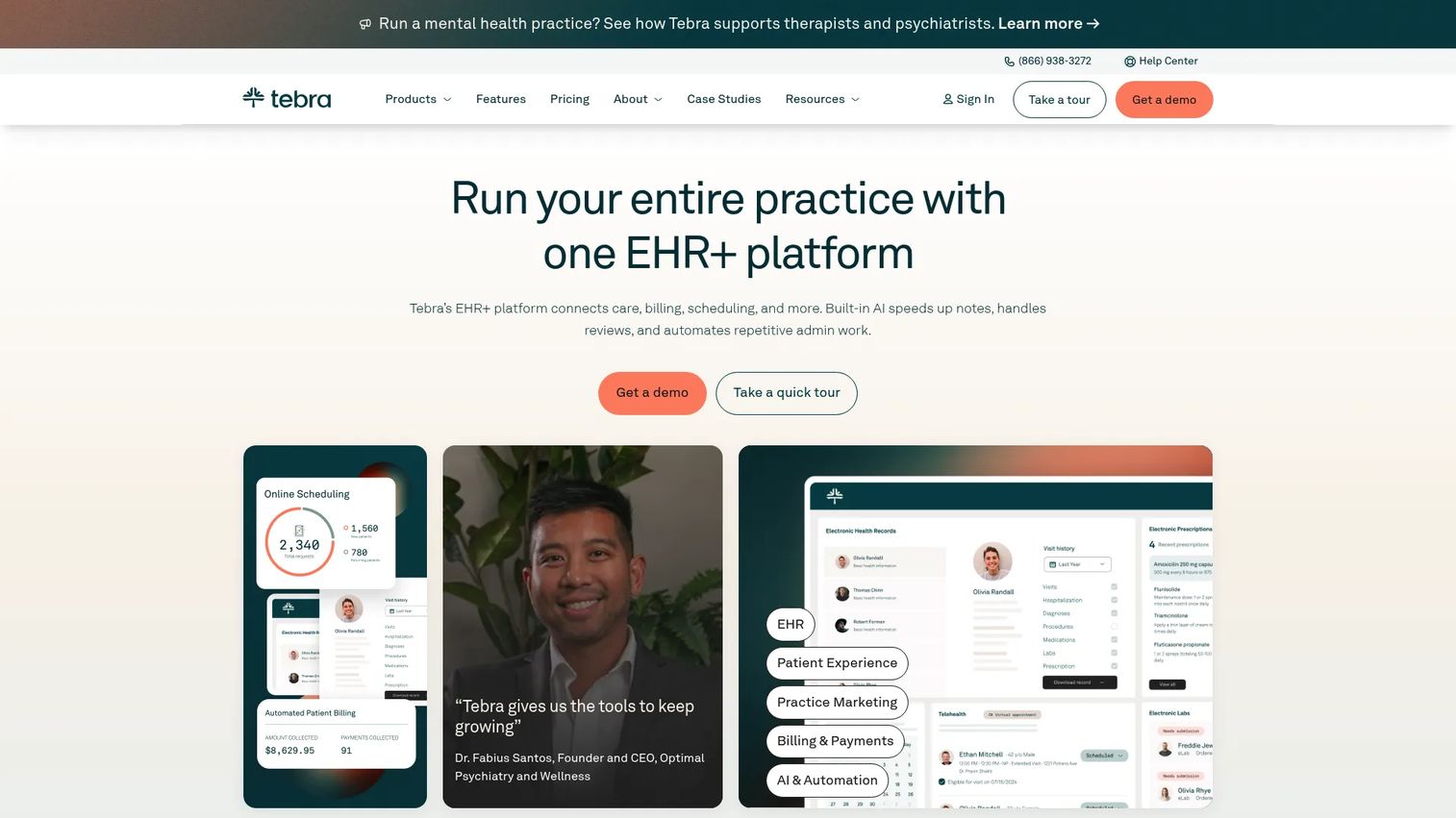
Kareo is now part of Tebra, an all-in-one EHR and practice management platform built for independent healthcare practices. It covers the full billing loop: Insurance eligibility checks, claims management, patient statements, and payment processing, alongside clinical charting and scheduling tools. The platform also includes AI-assisted clinical documentation and telehealth.
Best for: Independent medical practices that want billing infrastructure connected to scheduling, patient engagement, and clinical operations.
Key features
- Claims management and insurance billing
- Real-time insurance eligibility checks
- Patient statements and online payments
- Provider scheduling and patient portal
- AI-powered clinical documentation
Why choose Kareo: It suits practices that want billing, EHR, and patient workflows under one roof without the complexity of enterprise RCM software. Evaluate support responsiveness and onboarding timelines before committing, particularly if you are migrating from another system.
Kareo pricing: Kareo's pricing operates through Tebra's plans, which the vendor structures by provider type, feature set, and claim volume. Request a quote from the Tebra pricing page and ask for per-provider costs broken out by module.
G2 rating: 4.1/5 (listed under Tebra on G2)
2. AdvancedMD
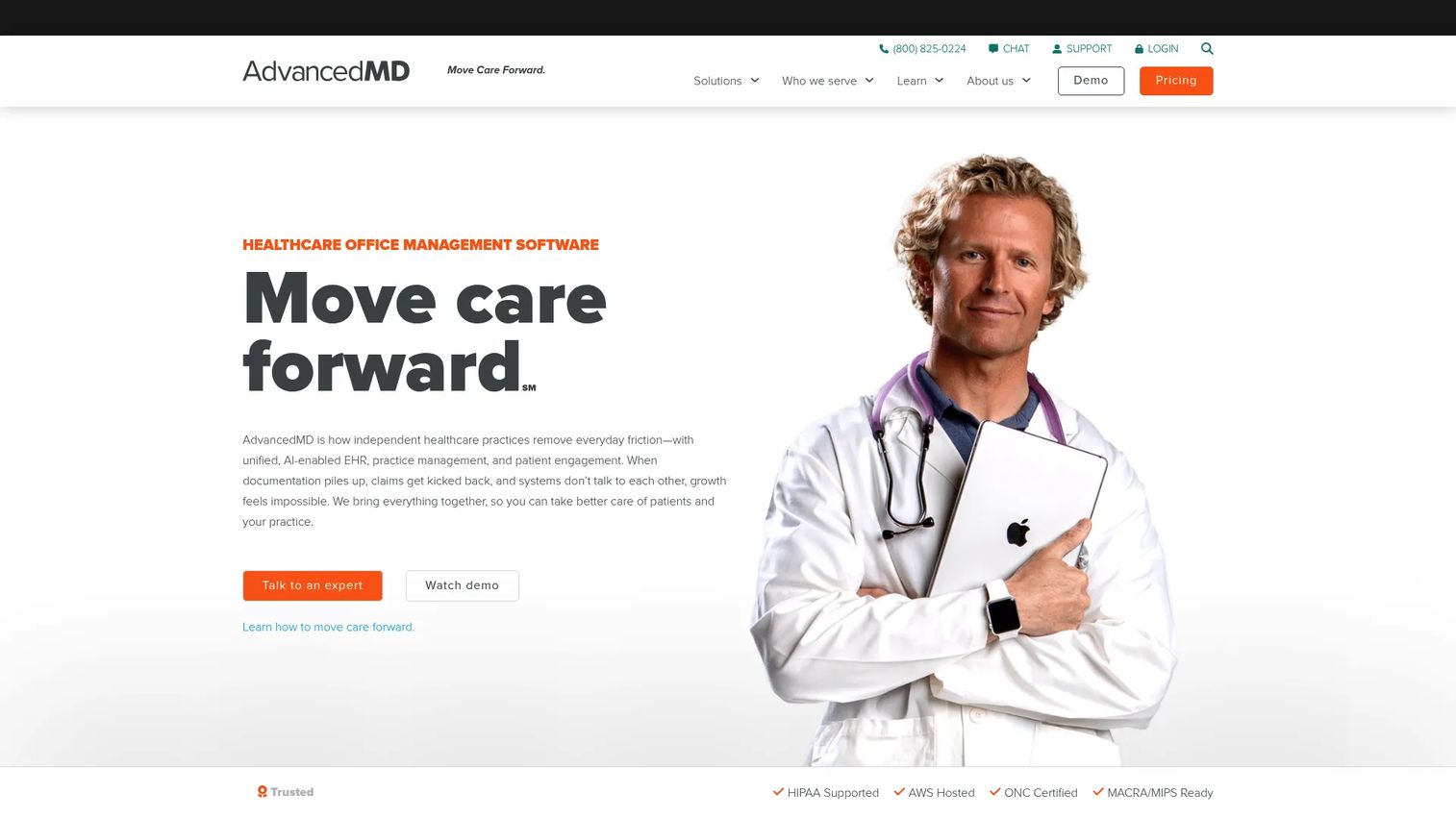
AdvancedMD is a cloud-based healthcare platform that combines EHR, practice management, billing, patient engagement, and reporting. It is built for independent practices that want a configurable suite rather than patching together separate tools. The platform also includes telehealth and AI-assisted clinical documentation.
Best for: Independent healthcare practices that need billing, EHR, scheduling, and patient engagement in one configurable environment.
Key features
- Claims management and clearinghouse tools
- EHR with scheduling and patient portal
- Patient payments and automated reminders
- AI clinical documentation
- Reporting dashboards across billing and practice ops
Why choose AdvancedMD: The breadth is the point. If your team already manages separate billing, EHR, and scheduling tools and wants to consolidate, AdvancedMD covers most of those workflows. Plan carefully for migration: Suite adoption touches several existing workflows, and implementation time is a real cost.
AdvancedMD pricing: The AdvancedMD Now entry tier starts at $130 per provider per month on a month-to-month basis after a 30-day free trial. Specialty-specific plans range from $278 to $1,070 per provider per month, depending on the specialty and included features.
G2 rating: 3.6/5
3. DrChrono
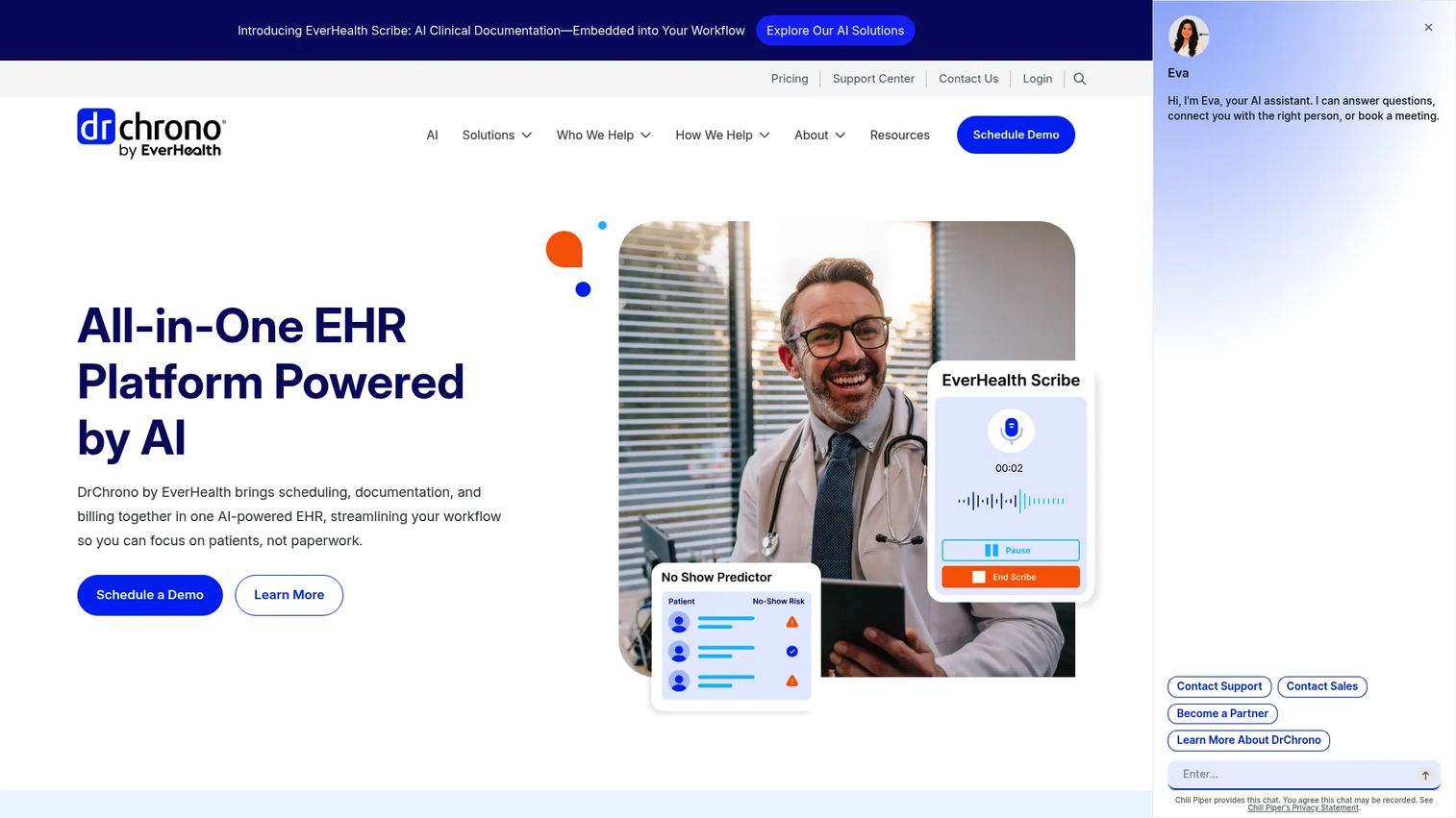
DrChrono is an all-in-one healthcare platform covering EHR, scheduling, billing, revenue cycle management, and patient engagement. It offers mobile-first workflows and supports specialty-specific documentation through customizable templates and AI-assisted charting. ERA auto-posting and integrated eligibility checks reduce manual steps in the billing workflow.
Best for: Mobile-first practices and specialty clinics that want EHR, billing, and patient engagement in a single connected platform.
Key features
- Medical billing with ERA auto-posting and eligibility checks
- EHR with specialty templates and AI documentation
- Patient check-in, portal, and reminders
- Mobile app for providers on the go
- Scheduling and task management
Why choose DrChrono: It performs well for practices that value mobile access and want clinical documentation tightly connected to billing. Evaluate billing depth against your specialty's specific payer patterns before signing.
DrChrono pricing: DrChrono offers three plans: Foundation, Growth, and Premium. Pricing is quote-based, so ask for per-provider costs and what each tier includes for billing, revenue cycle, and EHR. Some add-ons such as extended lab integration carry separate per-provider fees.
G2 rating: 3.4/5
4. athenaCollector
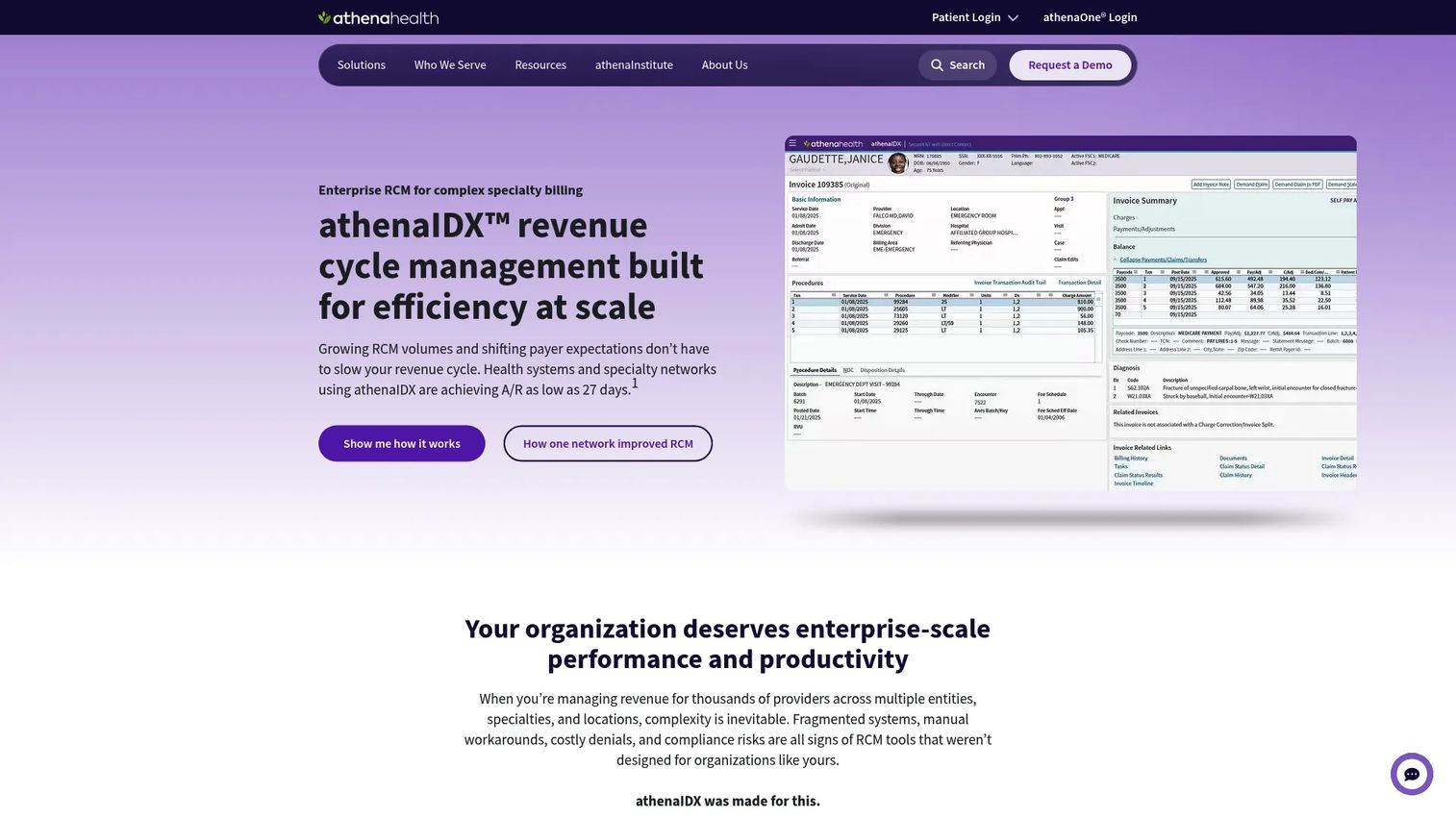
athenaCollector is athenahealth's revenue cycle management functionality, delivered as part of the athenaOne platform. It combines claims submission, denial workflows, payer rules, coding support, and performance reporting with a network-enabled approach: Athenahealth maintains payer rules and updates them across its client base. The platform also covers registration verification, authorization management, and payment posting.
Best for: Larger practices and healthcare organizations that want billing software paired with managed revenue cycle support and payer network intelligence.
Key features
- Registration verification and insurance coverage scanning
- Claim scrubbing, submission, and issue resolution
- Denial and appeal workflow management
- Authorization management
- Performance reporting and A/R analytics
Why choose athenaCollector: The network model means payer rule updates happen at the platform level, not something your billing team chases manually. It fits organizations that want operational support alongside software, not just a claims submission tool. The buying motion often involves finance, operations, and IT stakeholders, so plan for a multi-step evaluation.
athenaCollector pricing: Pricing requires a direct conversation with athenahealth sales. Ask for the fee model (percentage of collections vs. flat subscription), which services are included at each tier, contract length, and what implementation and onboarding costs separately.
G2 rating: 3.4/5 (listed under athenaOne on G2)
5. Tebra
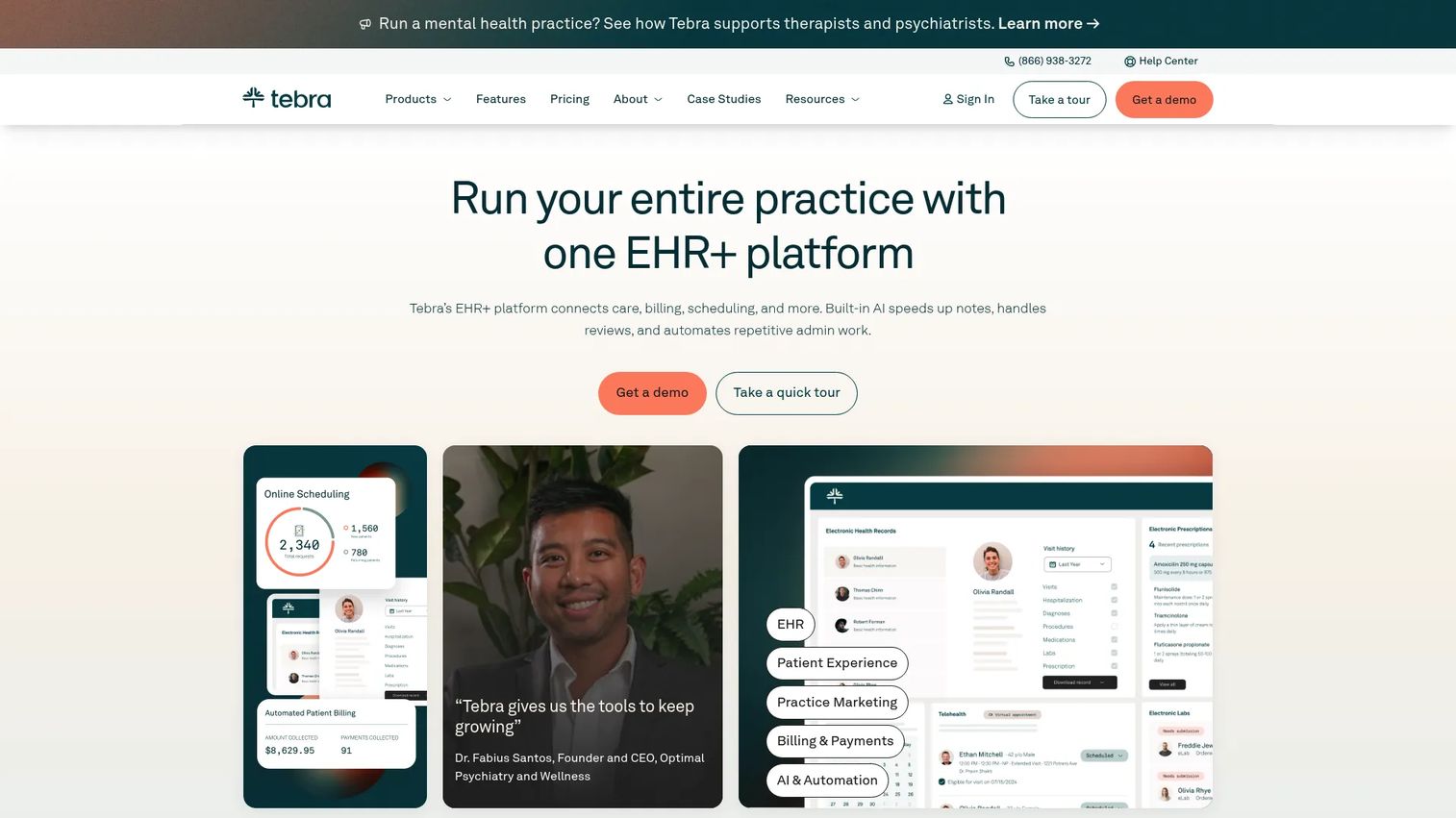
Tebra is the operating platform that now encompasses both Kareo and PatientPop. It covers EHR, billing, telehealth, online scheduling, patient engagement, and practice marketing in one environment. For independent practices, it addresses both the billing workflow and the patient acquisition side, which most billing-only tools do not.
Best for: Independent practices that want billing connected to patient acquisition, reputation management, and front-office operations.
Key features
- Integrated billing, claims, and patient payments
- AI-assisted clinical documentation and e-prescribing
- Online scheduling, digital intake, and secure messaging
- Practice marketing and reputation management
- HIPAA-compliant telehealth
Why choose Tebra: The platform is worth evaluating when your practice wants more than claims submission. If patient acquisition, online presence, and internal communications are also fragmented, Tebra addresses those in the same subscription. Compare the Practice Essentials and Practice Automation tiers for the right feature fit.
Tebra pricing: Plans start at $49 per provider per month for patient experience and marketing modules. The Billing Starter and EHR Starter tiers begin at $99 per provider per month. Practice Essentials runs $399 per provider per month, and Practice Automation is $449 per provider per month, based on non-physician standard volume.
G2 rating: 4.1/5
6. CollaborateMD

CollaborateMD is cloud-based medical billing and practice management software used by healthcare practices and billing companies. Its built-in clearinghouse, real-time eligibility verification, and AI-powered ERA auto-posting reduce manual steps across the claims lifecycle. The platform covers appointment scheduling, digital check-in, and patient payments alongside its core billing workflows.
Best for: Cost-conscious practices and medical billing companies that want cloud claims management with a built-in clearinghouse and transparent pricing for billing services.
Key features
- Built-in clearinghouse and electronic claims submission
- Real-time eligibility verification and claim scrubbing
- ERA auto-posting and denial management
- Appointment scheduling and digital check-in
- Custom reporting and patient billing
Why choose CollaborateMD: It is a strong fit when the team wants billing depth without enterprise pricing complexity. The per-claim model for billing companies is useful for teams processing variable monthly volumes. Practice plans (Core, Optimize, and Pro) are priced through sales, but the pricing structure is more visible than most competitors in this list.
CollaborateMD pricing: Medical billing companies pay $0.32 per claim, with rates decreasing at higher volumes. Practice plans (Core, Optimize, Pro) are available through sales. A Quest Diagnostics or LabCorp interface carries a one-time $2,500 fee.
G2 rating: 4.5/5
7. RXNT
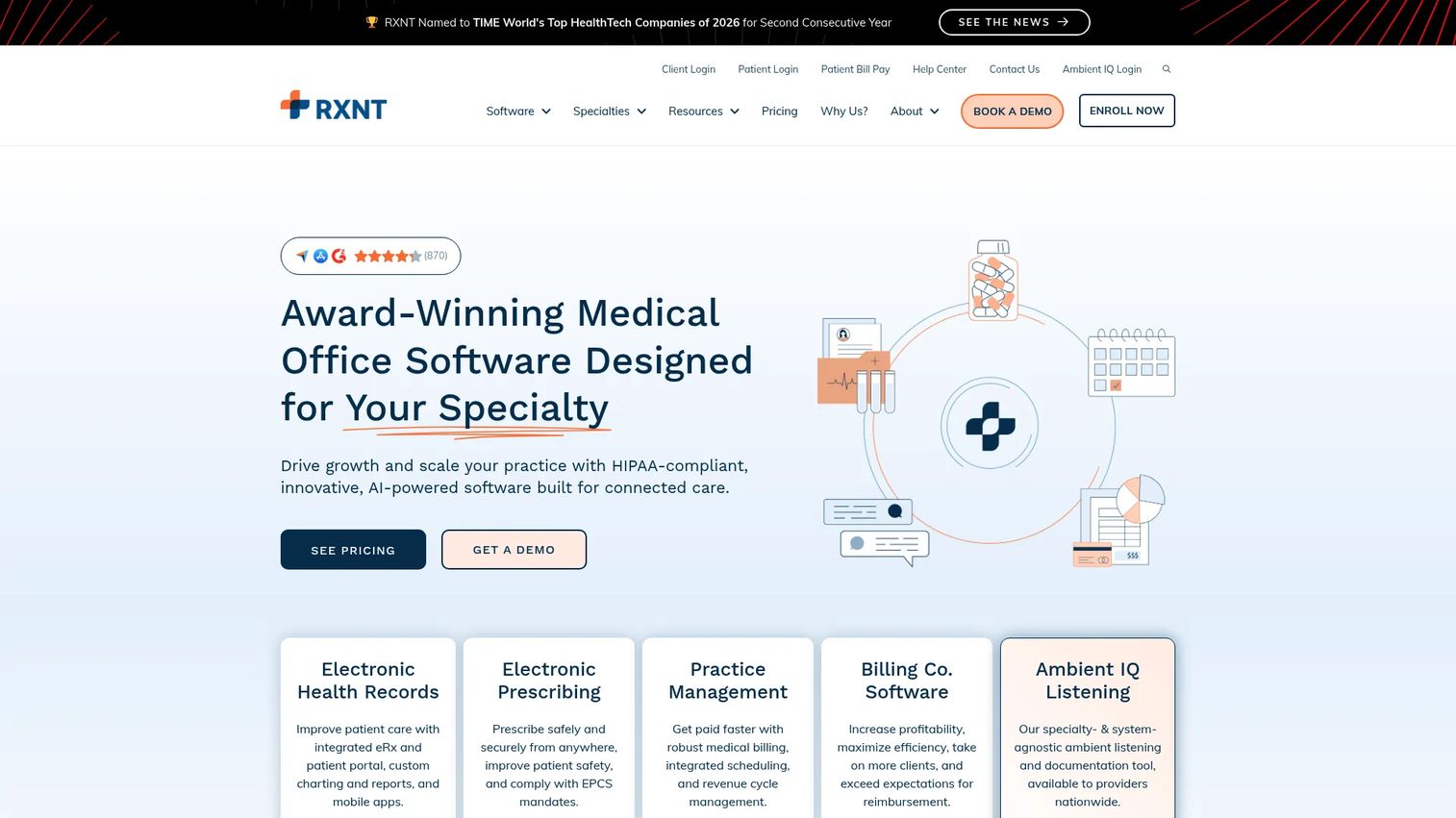
RXNT is modular healthcare software that lets practices subscribe to billing, EHR, e-prescribing, scheduling, and patient engagement as separate modules or bundled together. Annual plans receive a 10% discount. The platform suits practices that want to start with one module and add others as operations grow.
Best for: Ambulatory practices and healthcare organizations that want modular billing software they can expand into a broader clinical and practice management stack.
Key features
- Medical billing with claim scrubbing and revenue cycle management
- E-prescribing (EPCS-ready with identity proofing)
- EHR module with patient portal and secure messaging
- Online bill pay and appointment scheduling
- Practice analytics and reporting
Why choose RXNT: The modular structure matters when your practice does not need a full suite on day one. Start with billing, add EHR or e-prescribing as the team grows. Verify what each bundle includes for reporting before signing, since finance leads will want denial rate and A/R aging visible without custom exports.
RXNT pricing: RXNT starts at $118 per month for modular subscriptions. Annual billing carries a 10% discount. EPCS identity proofing and biometric authentication add $85 per year. Contact RXNT for full bundle pricing by module combination.
G2 rating: 4.2/5
8. TherapyNotes
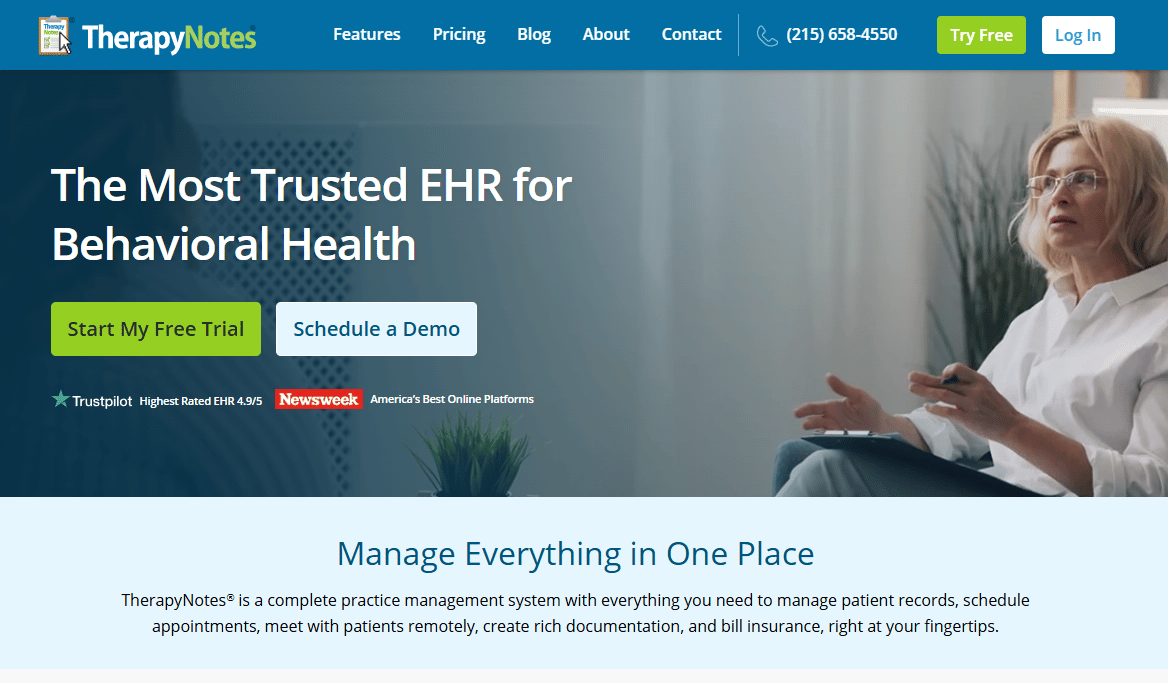
TherapyNotes is practice management, EHR, scheduling, documentation, and billing software built specifically for behavioral health. It supports SOAP, DAP, and BIRP note formats alongside insurance billing, ERA processing, and a client portal. Telehealth, secure messaging, and mobile access are included.
Best for: Therapists, psychologists, psychiatrists, and behavioral health practices that need specialty-specific documentation, billing, and scheduling.
Key features
- Behavioral health billing with ERA and payment processing
- Customizable clinical notes (SOAP, DAP, BIRP)
- Appointment scheduling and client portal
- Telehealth with secure messaging
- Electronic insurance claims and eligibility
Why choose TherapyNotes: General medical billing platforms work across many practice types, but behavioral health has specific requirements: Recurring appointment structures, therapy documentation formats, and payer patterns that differ from medical billing. TherapyNotes is designed for those workflows. A 30-day free trial lets you validate fit before committing.
TherapyNotes pricing: Solo plan is $69 per month. Group and Enterprise plans start at $79 per month for the first clinician plus $50 per month per additional clinician. Optional add-ons include Premium Telehealth at $15 per clinician per month and ePrescribe at $65 per prescriber per month.
G2 rating: 4.4/5
9. Waystar

Waystar is a healthcare payments and revenue cycle management platform designed for larger provider organizations, health systems, and billing companies. It covers financial clearance, claim submission, denial prevention, patient financial care, and analytics. Its AI-powered tools assist with eligibility verification, prior authorization, and remittance matching.
Best for: Enterprise revenue cycle teams and high-volume healthcare billing operations that need clearinghouse depth, denial prevention, and payment automation at scale.
Key features
- Financial clearance including eligibility and prior authorization
- Claims management with attachment and status tracking
- Denial and appeal management
- Patient payments, statements, and charity screening
- Revenue analytics and performance reporting
Why choose Waystar: It fits organizations where RCM is a dedicated operational function, not a task shared among clinical staff. The buying decision typically involves finance, IT, compliance, and operations leadership alongside the billing team. For practices with high claim volume and complex payer mixes, Waystar's clearinghouse depth and denial prevention tools are worth evaluating against simpler point solutions.
Waystar pricing: Waystar offers Starter, Core, Performance, and Premium claim management packages. All pricing is quote-based. Ask sales to break out costs by claims volume, modules (eligibility, prior auth, patient payments), implementation, and ongoing support.
G2 rating: 4.4/5
10. ClaimMD
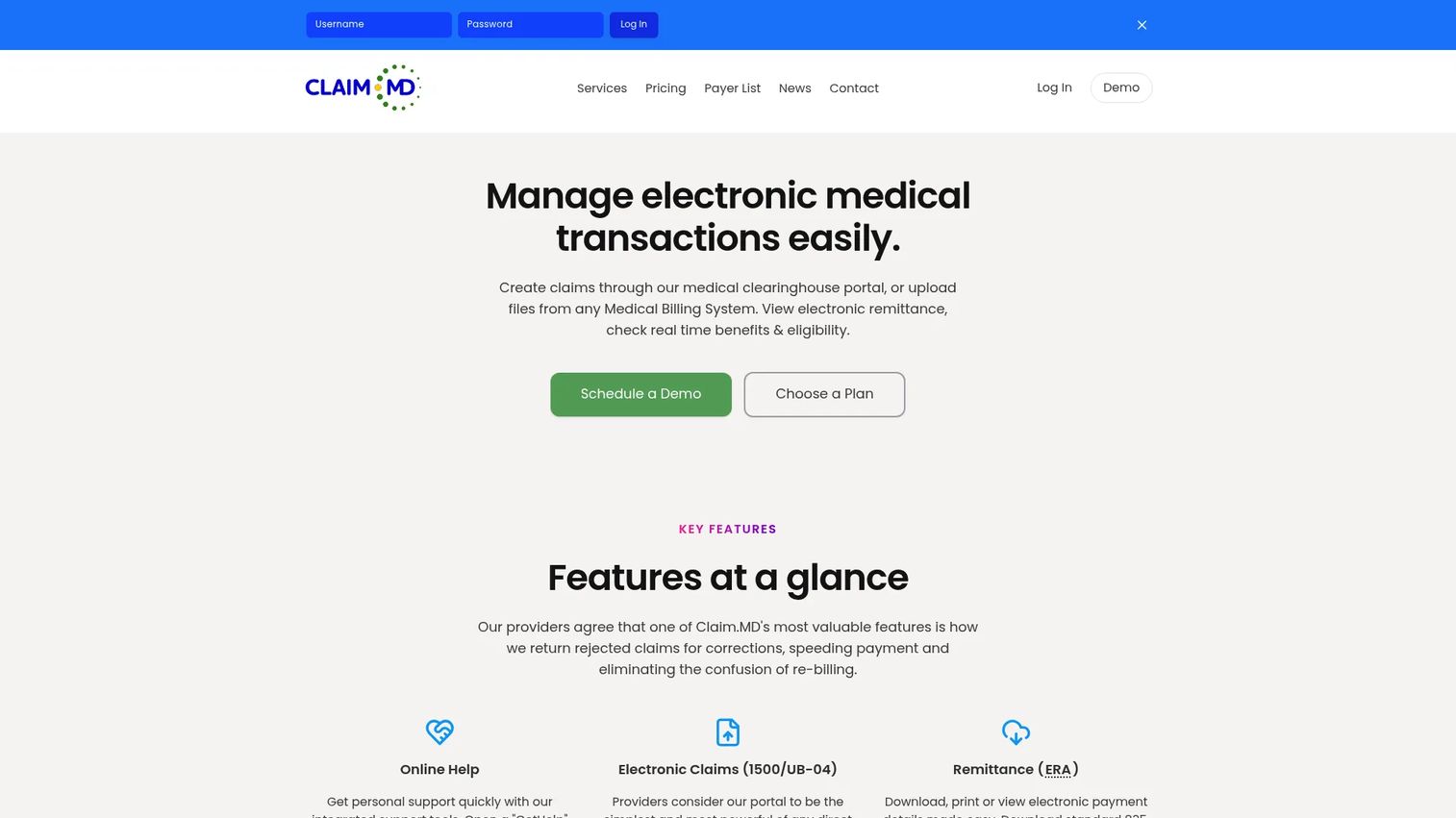
ClaimMD is a medical claims clearinghouse for electronic claims submission, eligibility verification, ERA processing, and payer connectivity. It accepts CMS-1500 and UB-04 claim formats and supports 837P, 837I, CSV, XLS, and several other upload formats. Claim correction workflows and electronic appeals are included.
Best for: Billing teams and billing companies that need focused clearinghouse infrastructure when EHR or practice management software is already in place.
Key features
- Electronic CMS-1500 and UB-04 claims submission
- Real-time eligibility verification
- ERA/835 viewing, downloading, and auto-posting
- Claim correction and rejection resolution workflows
- Electronic appeals and attachments
Why choose ClaimMD: It is a strong fit when the team already has an EHR or practice management tool but needs better claims infrastructure. The pricing model is straightforward, making it easy to evaluate cost against claim volume before buying. If you are also evaluating broader payment processing, see our guide to best payment processing software.
ClaimMD pricing: Basic plan is $30 per month (usage-based). Small Volume is $60 per month and includes 100 claims, ERA, and eligibility transactions. Unlimited is $120 per month with unlimited claims and ERA plus 1,000 eligibility transactions.
Considerations when choosing medical billing software
Claims workflow coverage
Evaluate the exact claim lifecycle the platform supports: Eligibility verification, charge capture, coding, claim scrubbing, electronic submission, denial tracking, resubmission, and ERA posting. A demo that only shows the claim creation step is not enough. Ask the vendor to walk through what happens when a claim is rejected.
EHR and practice management integration
Duplicate data entry between clinical and billing systems creates both cost and error risk. Map where patient demographics, provider information, CPT codes, ICD codes, payer details, and payment data move in your current workflow. A platform that connects those data points natively reduces reconciliation work for your billing manager and finance lead.
Reporting quality for operations and finance
Your billing platform should produce denial rate, A/R aging, days in A/R, collections by payer, and staff productivity reports without custom exports. Frame this as board-ready operational visibility. If your VP Finance cannot pull a weekly cash collection report independently, the tool is not doing its job. For context on financial workflow tooling, see our overview of accounting practice management software.
Implementation and migration burden
Data migration, payer setup, staff training, and template configuration all carry real time and cost. Ask each vendor what must happen in the first 30 days, what requires vendor support versus self-service, and what the go-live timeline looks like for a practice your size. Factor this into total cost of ownership, not just subscription price.
Pricing model and contract risk
Compare subscription fees, provider seat costs, clearinghouse transaction fees, implementation charges, payment processing rates, and RCM service fees. Some platforms charge per claim, others per provider, others as a percentage of collections. Avoid comparing headline prices without aligning on what each model includes.
Conclusion
Medical billing software is operational infrastructure. The wrong choice creates fragmented data, slower cash collection, denied claims that require manual rework, and reporting that cannot support a weekly operating review.
Here is the shortlist by fit:
- Kareo and Tebra work well for independent practices that want billing connected to patient engagement and scheduling
- AdvancedMD and DrChrono suit practices that want EHR, practice management, and billing in one environment
- TherapyNotes is the clearest choice for behavioral health teams
- Waystar and athenaCollector fit organizations with dedicated revenue cycle functions and high claim volume
- CollaborateMD and RXNT offer pricing transparency and modular flexibility for cost-conscious teams
- ClaimMD serves billing teams that need focused clearinghouse infrastructure alongside an existing EHR
Start by mapping your current billing bottlenecks: Where claims stall, where cash visibility breaks, and which handoffs create the most rework. Then shortlist two or three tools based on practice size, claim volume, and your existing stack. Run demos using the same billing scenario across vendors. Compare what the first 30 days of implementation look like and whether the reporting output is usable by your finance lead without customization.
Start your journey with Guideflow today!
FAQs
Kareo, Tebra, CollaborateMD, and RXNT each serve smaller practices well, but the right fit depends on claim volume, whether you need an integrated EHR, and how much implementation burden the team can absorb. Tebra starts at $49 per provider per month with a path to fuller EHR and billing bundles. CollaborateMD's per-claim pricing works well for billing companies and lower-volume practices. Evaluate support quality and onboarding time alongside the feature set.
Medical billing software manages the full revenue cycle for a healthcare practice: Insurance eligibility verification, charge capture, claim creation, claim scrubbing, electronic submission to payers or clearinghouses, denial tracking and appeals, ERA and EOB payment posting, patient billing, and A/R reporting. Some platforms bundle these workflows with EHR, scheduling, and patient engagement tools.
Cost depends on provider count, modules selected, claim volume, implementation scope, clearinghouse fees, and support tier. TherapyNotes starts at $69 per month for a solo clinician. RXNT starts at $118 per month for modular subscriptions. AdvancedMD's entry tier runs $130 per provider per month. Tebra starts at $49 per provider per month for patient experience modules, rising to $399 to $449 per provider per month for full practice suites. ClaimMD's clearinghouse-only plans start at $30 per month. Enterprise platforms like Waystar and athenaCollector require direct pricing conversations.
Yes. EHR software manages clinical documentation, patient records, and care workflows. Medical billing software manages insurance claims, payer communications, payment posting, and A/R. Many platforms now bundle both, but the functionality serves different teams: Clinicians use EHR, billing staff use the billing layer. When evaluating a bundled platform, test each workflow separately rather than assuming the integration is deep.
At minimum: Real-time eligibility verification, claim scrubbing before submission, electronic claims to payers or a clearinghouse, denial tracking with appeal workflows, ERA and EOB auto-posting, patient statement generation, payment collection, and reporting that covers denial rate and A/R aging. Practices that need coding support should also evaluate whether the platform flags CPT and ICD errors before submission.
It can reduce preventable denials when it catches missing data, coding issues, eligibility failures, and payer-specific formatting errors before submission. Claim scrubbing and real-time eligibility checks address the most common denial triggers. The platform will not prevent every denial, particularly those tied to medical necessity or documentation gaps, but it removes the administrative errors that are entirely avoidable.
Any software that handles protected health information must include appropriate technical safeguards, access controls, audit logs, and a signed Business Associate Agreement (BAA) with the vendor. Before purchasing, review each vendor's security documentation, ask for their BAA process, and confirm how they handle data access, encryption, and breach notification. Your legal or compliance team should review before contracting.
Software fits teams that want internal visibility, control over workflow, and clean reporting for operations and finance leadership. Outsourced RCM can fit practices that lack dedicated billing staff or want to shift operational responsibility to a vendor. Many platforms, including athenaCollector and Waystar, offer hybrid models where software and managed services combine. The choice depends on team capacity, claim volume, and how much ownership the leadership team wants over the billing function.