You are no longer optimizing for one search page. Rankings, AI Overviews, citations in Perplexity and ChatGPT, impressions in Google AI Mode, and a reporting deck leadership will actually believe - all of it lands on the same desk. According to BrightEdge (2025), 68% of organizations are actively changing their SEO strategies in response to AI search. Most of them are figuring this out while still running campaigns, writing briefs, and explaining organic performance in the weekly pipeline call.
The problem is not a shortage of tools. It is the opposite. Writing assistants, rank trackers, AI visibility platforms, and content optimizers each promise to fix a different part of the problem, and none of them fully agree on what the problem is.
This guide cuts the list to 15 AI SEO tools that cover the jobs that actually cost you time: Content research, on-page optimization, rank tracking, AI search visibility, and reporting. Choose by workflow, not by hype.
What's inside
This guide is for digital marketers, growth teams, SEO leads, and agencies building or refining their SEO stack in 2026.
- Who it covers: Startup generalists, mid-market growth teams, and enterprise demand gen
- How tools were chosen: Category fit, practical workflow value, pricing clarity, and AI search relevance
- What is compared: Best use case, key differentiator, pricing, and G2 rating
- What to watch: AI tools accelerate analysis and drafting. Human strategy, proof, and final judgment still matter
TL;DR
- Best free AI SEO assistant: ChatGPT for ideation, outlines, schema drafts, and content refresh prompts
- Best for AI search visibility: Profound for tracking brand mentions, citations, and sentiment across answer engines
- Best all-in-one SEO platform: Semrush for keyword research, competitive analysis, content tools, and AI visibility features
- Best for content optimization: Clearscope for editorial teams that need content briefs and quality scoring with a 4.9 G2 rating
- Best for technical SEO plus content research: Ahrefs for site audits, keyword data, and backlink analysis
- Best for AI workflow automation at scale: AirOps for teams building repeatable content and optimization processes
What are AI SEO tools?
AI SEO tools are software platforms that use machine learning, language models, automation, or AI-assisted analysis to improve search visibility across traditional search engines and AI answer engines.
The category has expanded significantly. It now includes general AI assistants that help with briefs and ideation, dedicated content optimization platforms, enterprise SEO suites with built-in AI features, and a newer class of tools focused entirely on tracking whether your brand appears in AI-generated answers.
Core types of AI SEO tools
- AI writing and ideation assistants: Help with drafts, outlines, and prompt-driven research
- Content optimization platforms: Grade content quality, recommend topics, and score on-page relevance
- Keyword research and competitive intelligence tools: Cluster keywords, map intent, and surface competitor gaps
- Technical SEO and site audit platforms: Crawl sites, flag indexing issues, and monitor Core Web Vitals
- AI search visibility trackers: Monitor brand citations, mentions, and sentiment in ChatGPT, Gemini, Perplexity, and Google AI Overviews
- Reporting and dashboard tools: Connect organic performance to pipeline and attribution
- Automation and workflow builders: Turn repeatable SEO tasks into scalable processes
Key capabilities to look for
- Keyword clustering and intent analysis
- SERP and competitor analysis
- Content brief generation
- On-page scoring and entity coverage
- AI visibility tracking across answer engines
- Citation, mention, and sentiment monitoring
- Technical crawl and indexing insights
- CMS, analytics, and reporting integrations
What AI SEO tools cannot do alone
They cannot manufacture first-hand experience or create genuine authority. AI scales content production in both directions, so weak inputs produce weak outputs at higher volume. Google's quality systems evaluate helpfulness, accuracy, and expertise. Tools assist the human doing the work; they do not replace the judgment behind it. Keep E-E-A-T principles front of mind: Experience, expertise, authoritativeness, trustworthiness.
When to use AI SEO tools
Build briefs faster without losing search intent
Use AI SEO tools to turn SERP data, keyword clusters, competitor headings, and search intent into content briefs your writers can act on immediately. The briefs still need editorial judgment. Original examples, data points, and product-specific proof are what separate a brief from a finished piece.
Track visibility beyond classic rankings
Classic rank tracking shows Google positions. AI search optimization tools go further: They monitor whether your brand appears in AI Overviews, ChatGPT-style answers, Gemini, and Perplexity. Citations, sentiment, and prompt coverage are now real metrics. If 68% of organizations are changing their strategies around AI search (BrightEdge, 2025), visibility reporting needs to reflect where buyers actually read.
Find content decay before pipeline drops
Pages lose traffic quietly. Use SEO platforms and analytics connections to find pages dropping in clicks, impressions, rankings, or AI visibility before that decay reaches your CAC or pipeline reports. Identifying decay early is cheaper than rebuilding authority after a significant drop.
AI SEO tools comparison
Use this table to narrow your shortlist. Pick by the job you need done, not by tool recognition alone. All pricing and ratings are sourced from vendor pages and G2 listings.
| # | Product | Best for | Key differentiator | Pricing | G2 rating |
|---|---|---|---|---|---|
| 1 | ChatGPT | Flexible SEO ideation | General-purpose AI assistant for briefs and analysis | Free / $20 per mo (Plus) | 5.0 |
| 2 | Claude | Long-form content analysis | Strong long-context reasoning for audits and briefs | Free / $17 per mo (Pro, annual) | 4.7 |
| 3 | Gemini | Google-connected research | AI assistant tied to Google Workspace and search environment | Free / $19.99 per mo (AI Pro) | 4.4 |
| 4 | Perplexity | Source-backed research | Cited AI answers for topic and competitor research | Free / $20 per mo (Pro) | 4.4 |
| 5 | Semrush | All-in-one SEO operations | Broad SEO suite with AI content and AI visibility features | Free / from €112.52 per mo (annual) | 4.4 |
| 6 | Ahrefs | SEO research and technical audits | Backlink, keyword, rank tracking, and site audit data | Free tier / Starter from ¥4,460 per mo | 4.5 |
| 7 | SE Ranking | Value-focused SEO platform | Broad SEO toolkit with AI visibility and agency reporting | From $103.20 per mo (annual) | 4.7 |
| 8 | Clearscope | Editorial content optimization | Content grading and topic coverage for SEO teams | From $129 per mo | 4.9 |
| 9 | Surfer SEO | On-page optimization | SERP-based content scoring across Google and AI search | From $49 per mo (annual) | 4.8 |
| 10 | Frase | Briefs and content refreshes | SERP research, AI writing, GEO scoring, and content monitoring | From $39 per mo (annual) | 4.8 |
| 11 | Writesonic | AI writing plus AI visibility | AI content creation with AI search visibility tracking | From $79 per mo (annual) | 4.7 |
| 12 | AirOps | AI workflow automation | Repeatable AI workflows for content teams and SEO ops | Free (Solo) / Pro: Contact | 4.7 |
| 13 | MarketMuse | Content strategy and planning | Topic modeling and content inventory prioritization | Free tier / paid plans by quote | 4.6 |
| 14 | Profound | AI search visibility | Tracks AI mentions, citations, sentiment, and answer visibility | Free trial / Enterprise: Custom | 4.5 |
| 15 | Google Search Console | First-party SEO data | Free Google performance, indexing, and query reporting | Free | 4.7 |
Best 15 AI SEO tools for 2026
1. ChatGPT
ChatGPT is OpenAI's conversational AI assistant for writing, research, analysis, coding, and planning tasks. For SEO workflows, it handles keyword brainstorming, content outlines, schema markup drafts, regex formulas, meta description variations, and content refresh prompts. It is not a dedicated SEO platform, which means it needs search data from other tools to do its best work.
Best for: Marketers who already have keyword and performance data and need a fast, flexible AI layer for ideation and drafting.
Key features
- SEO prompt workflows for briefs and outlines
- Schema markup and structured data drafting
- Regex and formula generation for Search Console analysis
- Content refresh ideation from performance data inputs
- Web search and deep research on paid plans
Why choose ChatGPT: It is most useful once you have data from Search Console, Ahrefs, or Semrush. Strong for iteration speed, weak as a standalone source of SEO truth.
ChatGPT pricing: A free plan is available. The Plus plan costs $20 per month.
G2 rating: 5.0/5
2. Claude

Claude is Anthropic's AI assistant known for strong long-context reasoning. For SEO work, this matters most when you need to analyze multiple pages at once, review long briefs, synthesize competitor content patterns, or produce readable strategy memos from messy inputs. Claude supports file and folder access, which makes document-heavy content audits faster.
Best for: Teams reviewing long content assets, multi-page briefs, or SEO strategy documents that exceed typical AI context windows.
Key features
- Long-context analysis for content audits and briefs
- File and folder uploads with code execution
- Artifacts for editable documents and structured outputs
- Editorial review and gap synthesis workflows
- Web search and connector integrations
Why choose Claude: Choose Claude when you need nuanced interpretation of large content inputs rather than quick short-form outputs. It does not replace rank tracking or technical crawl data.
Claude pricing: A free plan is available. The Pro plan costs $17 per month billed annually, or $20 per month billed monthly. Max runs $100 per month and Ultra runs $200 per month. Team plans start at $20 per seat per month (annual) for Standard.
G2 rating: 4.7/5
3. Gemini
Gemini is Google's AI assistant family, useful for research, ideation, and workflows connected to Google's productivity environment. Teams already working in Docs, Sheets, and Drive get the most value from Gemini's native integrations. Deep Research supports multi-step topic investigations, and Canvas helps structure longer content outputs.
Best for: Marketers whose SEO work happens inside Google Workspace and who want AI assistance without switching context.
Key features
- Google Workspace integration across Gmail, Docs, and Sheets
- Deep Research for multi-step topic investigations
- Gemini Live for real-time conversational research
- Canvas for structured document creation
- Gems for custom AI configurations
Why choose Gemini: Strong for teams already embedded in the Google ecosystem. Pair it with Search Console for first-party performance data. Do not expect privileged access to Google Search ranking signals.
Gemini pricing: A free plan is available. The Google AI Pro plan costs $19.99 per month and adds higher usage limits, additional models, 5 TB storage, and Gemini inside Gmail and Docs.
G2 rating: 4.4/5
4. Perplexity
Perplexity is an AI answer engine that researches the web in real time and returns concise answers with inline citations. For SEO work, it is a research tool, not a rank tracker. It helps you understand how AI engines currently frame a topic, which sources they cite, and what questions users ask around a keyword before you build a brief.
Best for: Marketers who need fast, cited topic research and want to see how AI search engines currently handle a subject area.
Key features
- Real-time web research with inline citations
- Deep Research for multi-step investigations
- Follow-up research threads for topic exploration
- File uploads and analysis
- Access to multiple advanced AI models
Why choose Perplexity: Useful for seeing how AI engines summarize a topic and which sources they surface. Use it for pre-brief research, not as your primary SEO measurement tool.
Perplexity pricing: A free plan is available. The Pro plan costs $20 per month. Enterprise Pro runs $34 per seat per month billed annually, and Enterprise Max runs $271 per seat per month billed annually.
G2 rating: 4.4/5
5. Semrush
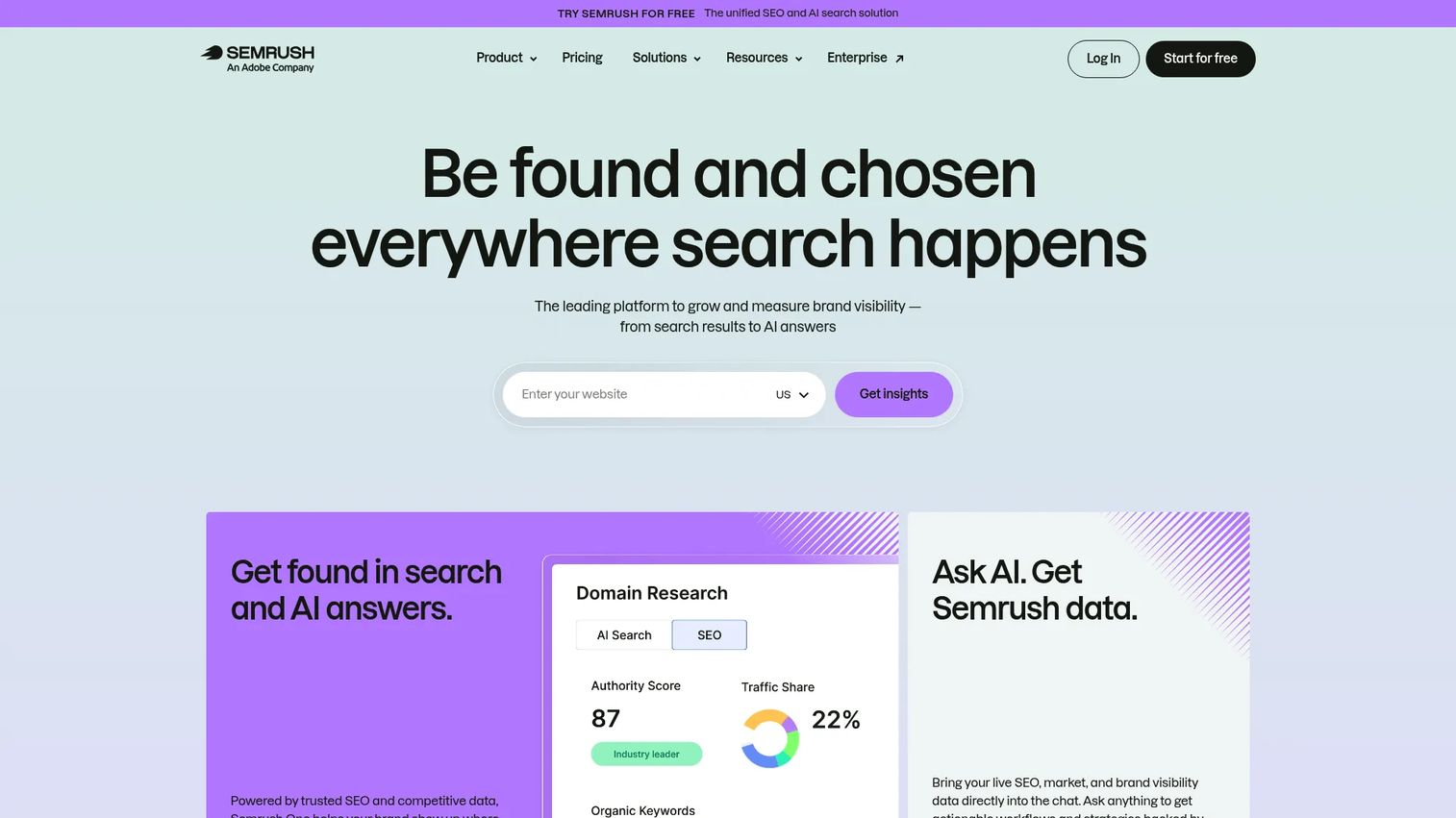
Semrush is a brand-visibility and digital marketing platform covering SEO, AI search visibility, content optimization, competitive intelligence, and local search. For growth teams consolidating tools, Semrush covers keyword research, site auditing, rank tracking, backlink analysis, and content workflows from a single platform. It also includes AI visibility and brand sentiment tracking for monitoring presence across AI search surfaces.
Best for: Growth teams that want one SEO operations hub rather than separate tools for keyword research, audits, content, and AI visibility reporting.
Key features
- Keyword research suite and competitor analysis
- AI visibility and brand sentiment tracking
- Technical site auditing and rank tracking
- Content creation and optimization tools
- Local search visibility and market analysis
Why choose Semrush: Choose Semrush when you want to consolidate SEO operations and reduce the number of platforms your team manages. Pricing rises with additional projects, users, and add-ons, so plan your usage before committing.
Semrush pricing: A free plan is available. Paid plans are priced in EUR and billed annually: SEO from €112.52 per month, Starter from €158.40 per month, Pro+ from €238 per month. Advanced pricing requires contacting sales.
G2 rating: 4.4/5
6. Ahrefs
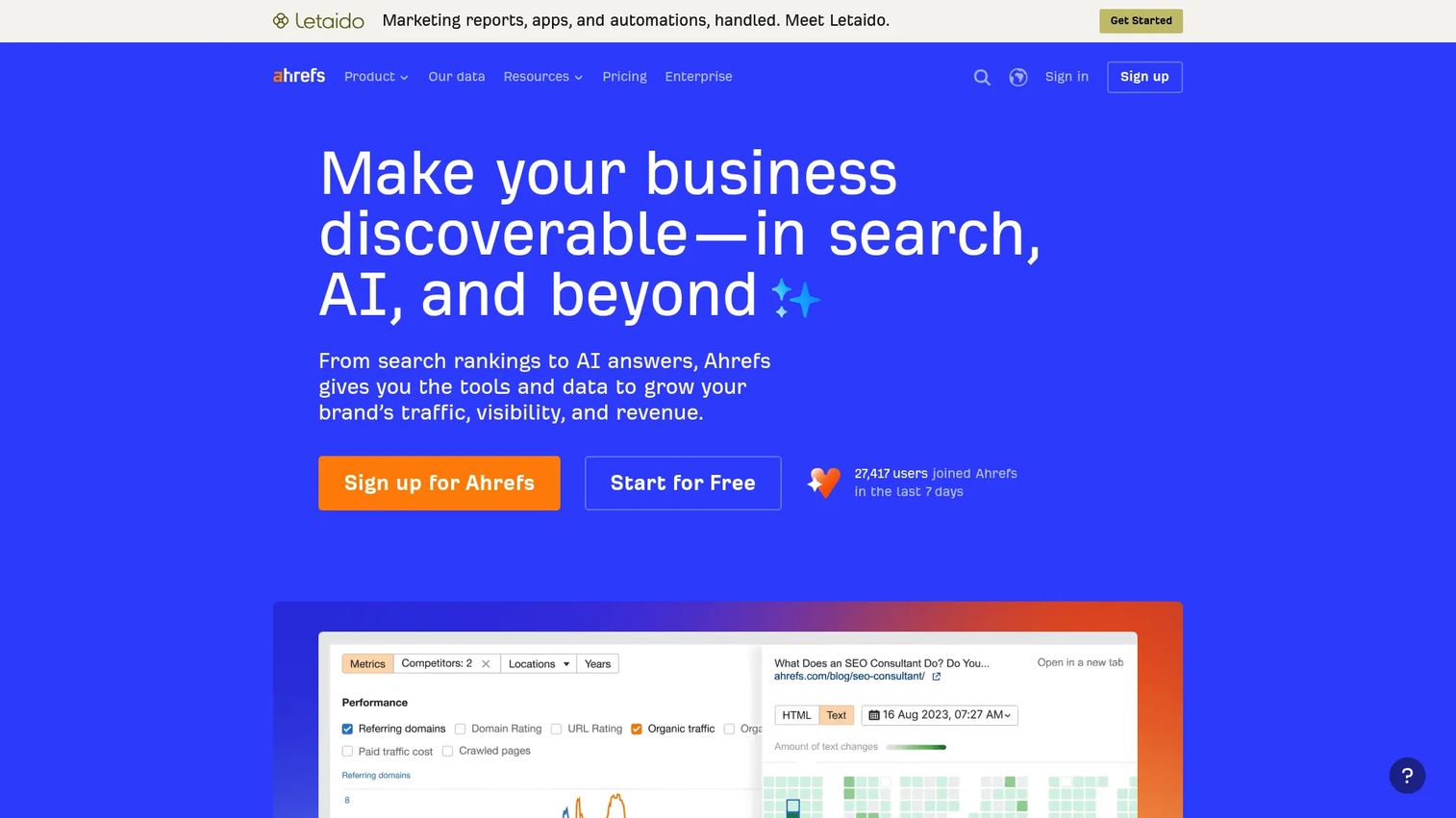
Ahrefs is an AI marketing platform built around search visibility, content research, website performance, and competitive intelligence. Its Keyword Explorer, Site Audit, Rank Tracker, and Brand Radar are reliable tools for data-backed prioritization. The Site Explorer gives deep backlink and traffic data that informs both content and technical decisions.
Best for: SEO teams that need dependable research depth, technical diagnostics, and competitive data to drive prioritization.
Key features
- Site Explorer for backlink and traffic analysis
- Keywords Explorer with intent and difficulty data
- Site Audit for crawl and indexing issues
- Brand Radar for AI search and brand visibility
- Content Explorer and Rank Tracker
Why choose Ahrefs: Choose Ahrefs when you want fewer guesses and more data-backed decisions across research, competitive analysis, and site health. Strong for technical SEO and link-focused strategies.
Ahrefs pricing: A free tier is available. The Starter plan runs ¥4,460 per month, Lite at ¥19,900 per month, Standard at ¥38,400 per month, Advanced at ¥68,900 per month, and Enterprise at ¥230,900 per month (annual commitment required). Check Ahrefs for local currency pricing.
G2 rating: 4.5/5
7. SE Ranking
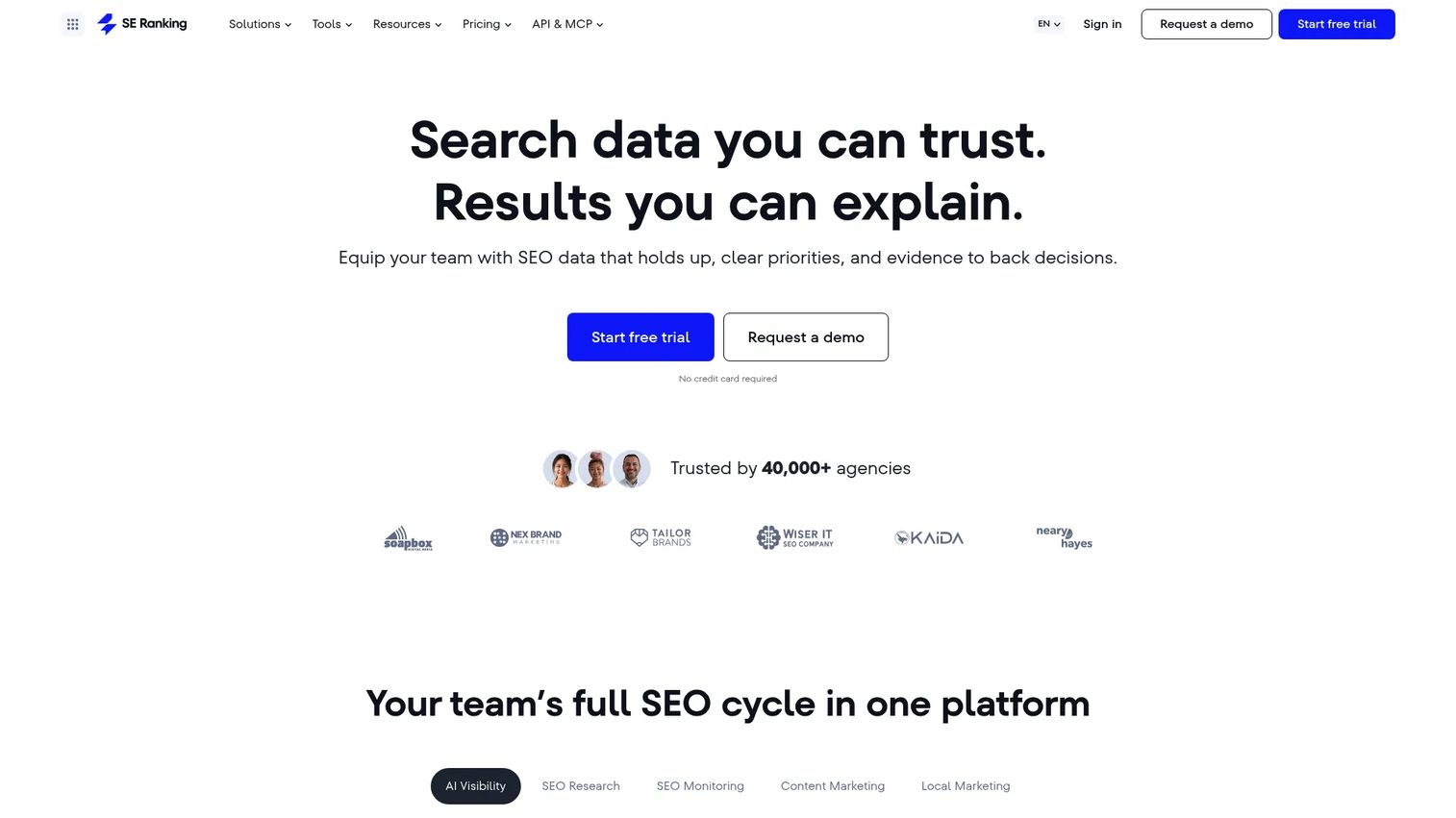
SE Ranking is an SEO and GEO platform serving agencies, in-house marketing teams, and businesses. It covers rank tracking across search engines and locations, keyword and competitor research, website auditing, AI search visibility tracking, local marketing, and reporting integrations. The pricing is notably more accessible than some enterprise suites, which makes it a practical choice for agencies managing multiple clients.
Best for: SEO agencies and in-house teams that need an integrated platform at a lower entry cost than enterprise alternatives.
Key features
- Rank tracking across search engines, locations, and devices
- Keyword, competitor, and backlink research
- Website and on-page SEO auditing
- AI visibility tracking across AI-generated answers
- Local marketing and reporting integrations
Why choose SE Ranking: Choose SE Ranking when you want broad SEO coverage without the pricing of an enterprise suite. Especially strong for agencies running multiple client projects from one dashboard.
SE Ranking pricing: No permanent free tier; a 14-day free trial is available. Core starts at $103.20 per month (annual) or $129 per month (monthly). Growth starts at $223.20 per month (annual) or $279 per month (monthly). Enterprise pricing is custom.
G2 rating: 4.7/5
8. Clearscope
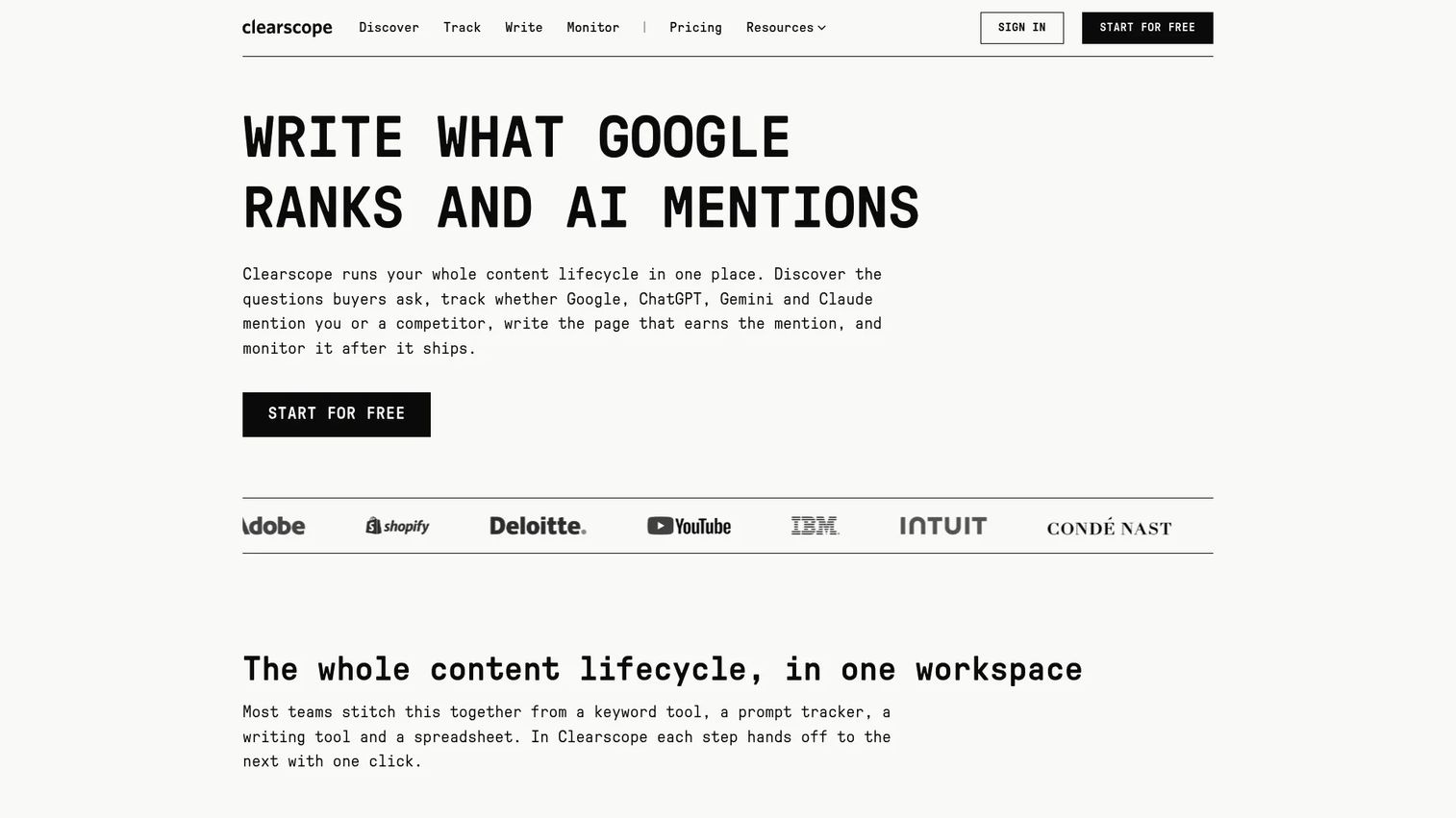
Clearscope is a content optimization and visibility platform built for editorial teams. It grades content quality, surfaces relevant topic recommendations, monitors published content via Search Console, and tracks AI search visibility alongside traditional performance. At 4.9 on G2, it consistently earns high marks from content and SEO teams for practical usability.
Best for: Editorial teams creating or refreshing SEO content who need a clear quality benchmark before publishing.
Key features
- Content grading with on-page optimization guidance
- AI and search visibility tracking
- Search-intent-driven content recommendations
- AI-assisted drafting
- Internal linking recommendations and content monitoring
Why choose Clearscope: Choose Clearscope when content quality and editorial consistency are the priority over technical SEO breadth. Pair it with a rank tracker or crawl tool to cover the full workflow.
Clearscope pricing: No free tier; a 14-day free trial is available. The Essentials plan starts at $129 per month (50 tracked queries, 50 pages). Business starts at $399 per month. Enterprise pricing is custom.
G2 rating: 4.9/5
9. Surfer SEO
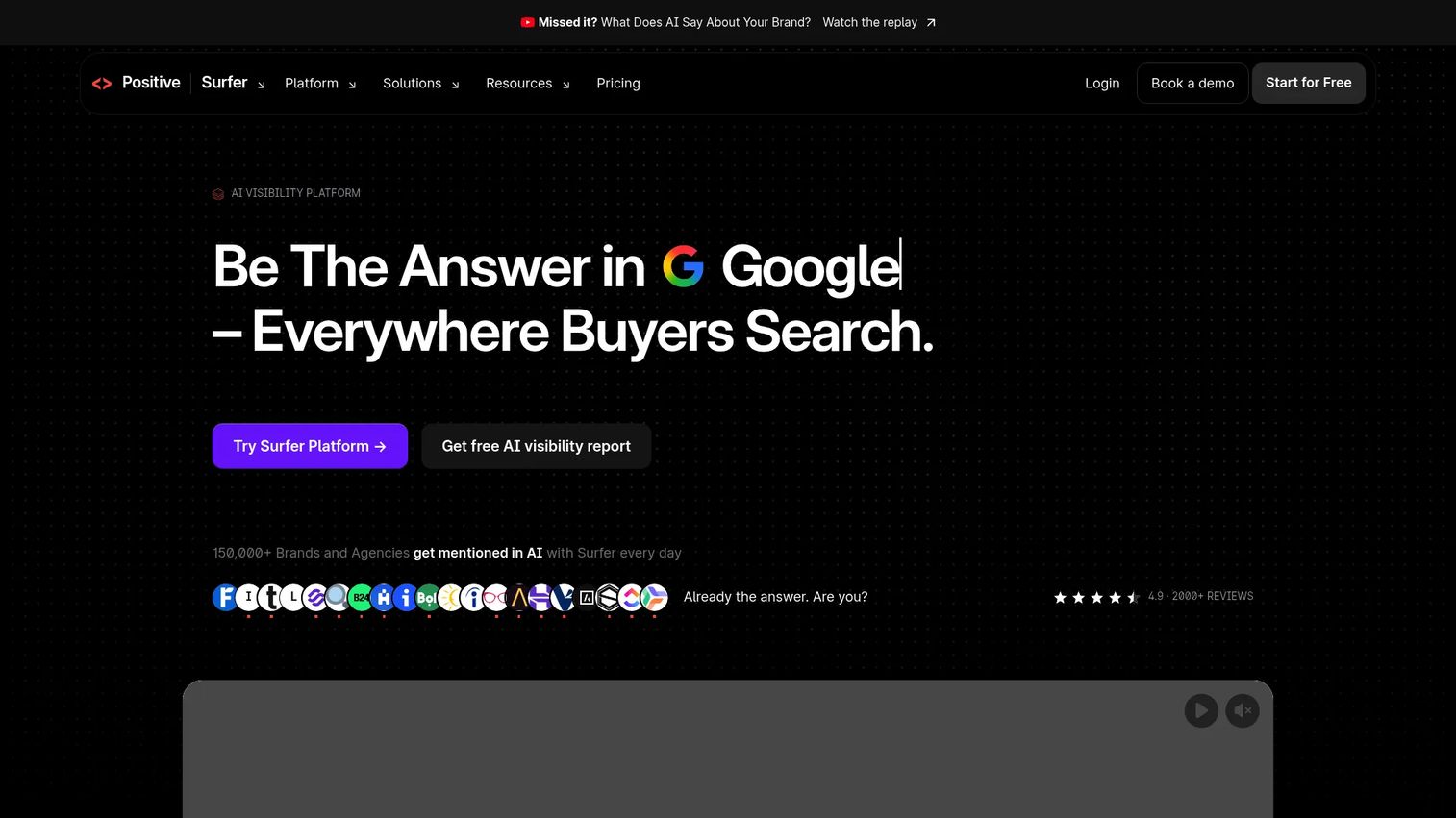
Surfer SEO is an AI visibility and SEO platform for tracking, planning, writing, and optimizing content across Google and AI search. Its Content Score gives writers a data-driven optimization target before publishing. The platform now includes AI visibility tracking across ChatGPT, Gemini, Perplexity, AI Overviews, and AI Mode, alongside its core SERP analysis and content editor.
Best for: Marketers and content creators who want a guided optimization workflow with a clear score-based target for each piece.
Key features
- AI visibility tracking across ChatGPT, Gemini, Perplexity, AI Overviews, and AI Mode
- SERP-based Content Score and Content Editor
- Keyword research and topical maps
- Surfy AI writing assistant and AI Detector
- Content Audit workflows
Why choose Surfer SEO: Choose Surfer SEO when writers need a clear optimization target before publishing. Treat the Content Score as a signal, not the only measure of quality.
Surfer SEO pricing: Billed annually. The Discovery plan starts at $49 per month, Standard at $99 per month, Pro at $182 per month, Peace of Mind at $299 per month. AI Search Analytics is $82 per month. Enterprise pricing is custom.
G2 rating: 4.8/5
10. Frase
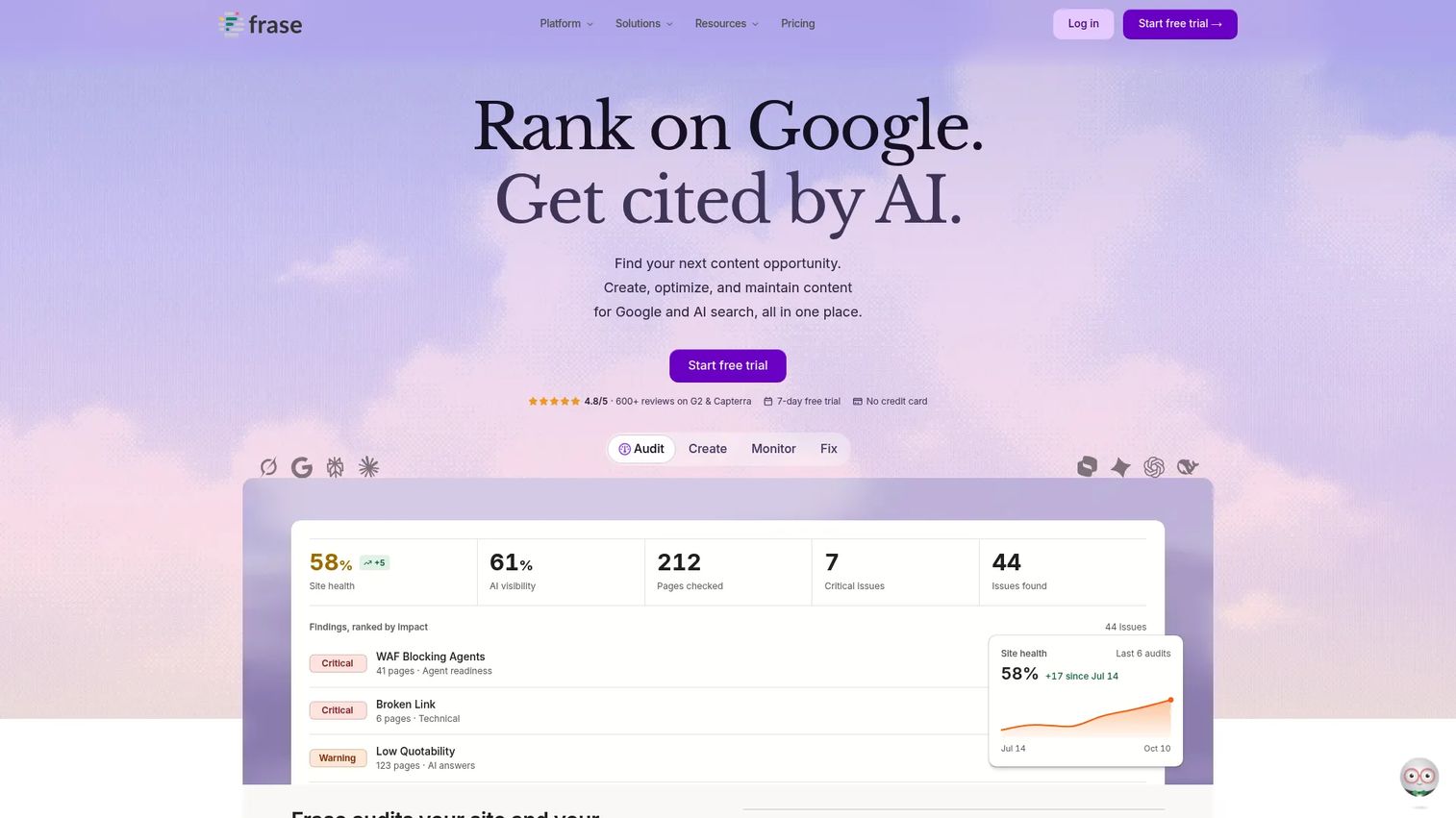
Frase is an AI SEO and GEO platform that handles content research, writing, optimization, publishing, and monitoring across Google and AI search. It includes AI visibility tracking for ChatGPT, Google AI, Perplexity, Claude, and Gemini. The Content Guard feature monitors published pages for ranking and traffic decay, which makes it useful beyond initial content creation.
Best for: Lean teams that need faster briefs, AI-assisted drafting, GEO scoring, and ongoing content monitoring without a large SEO department.
Key features
- SERP research and AI-assisted content drafting
- SEO and GEO content scoring
- AI visibility tracking across major answer engines
- Content Guard for ranking and traffic decay monitoring
- CMS publishing to WordPress, Webflow, Sanity, and Wix
Why choose Frase: Choose Frase for practical content workflow speed across research, drafting, and monitoring. It is strongest on content planning and publishing. Technical SEO and backlink analysis require a separate tool.
Frase pricing: A free tier is included. The Starter plan runs $39 per month billed annually ($49 monthly). Professional is $103 per month annually ($129 monthly). Scale is $239 per month annually ($299 monthly). Enterprise pricing is custom.
G2 rating: 4.8/5
11. Writesonic
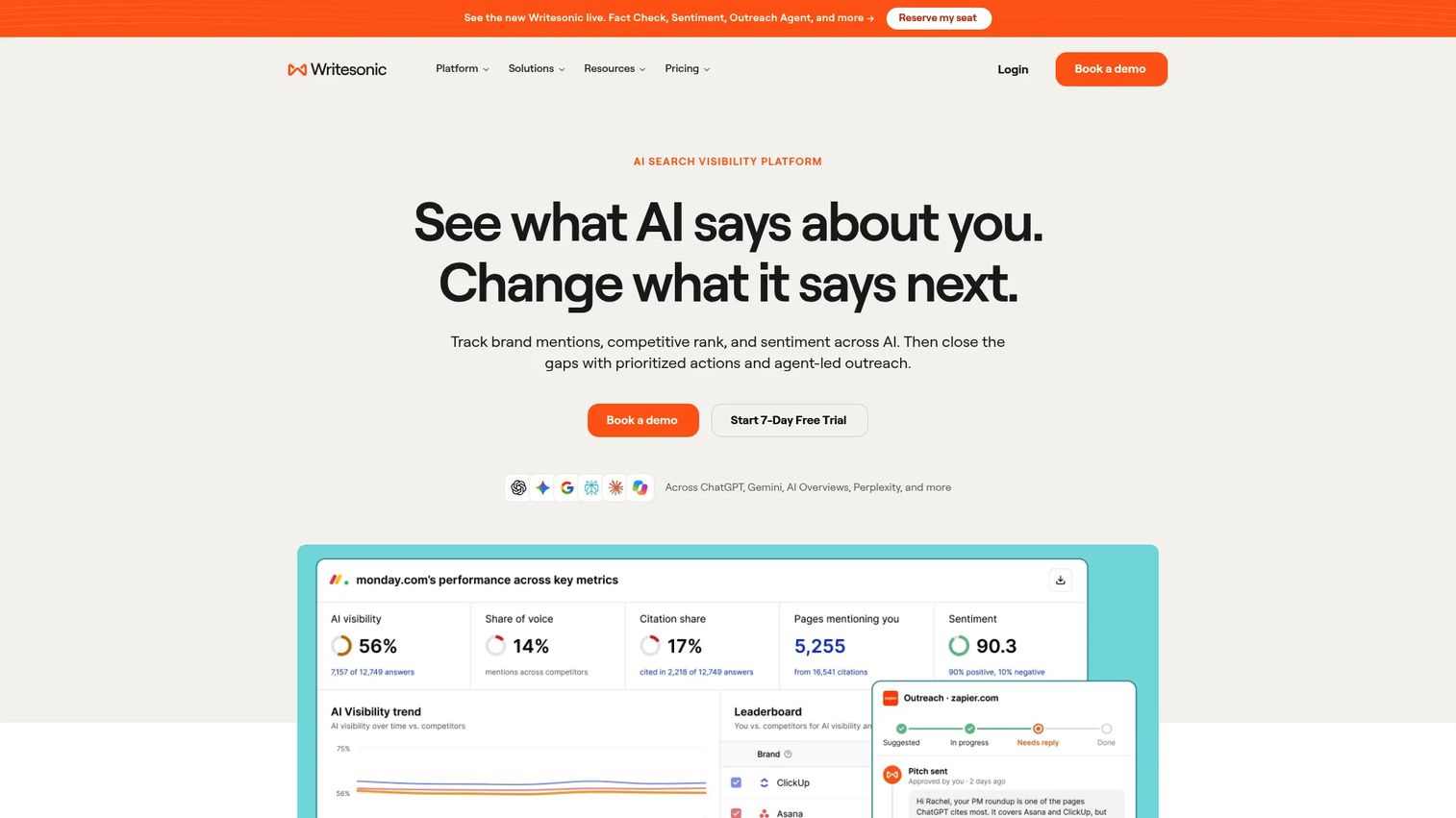
Writesonic is an AI search visibility platform that combines tracking and content workflows. It monitors brand performance across ChatGPT, Gemini, and Google AI Overviews while also generating AI articles, running site audits, and supporting agentic workflows. The Action Center surfaces prioritized optimization recommendations based on visibility data.
Best for: Marketing teams and agencies that need AI search visibility tracking combined with content creation and optimization workflows in a single platform.
Key features
- AI visibility monitoring across ChatGPT, Gemini, and Google AI Overviews
- AI article writing and content generation
- Site audits and technical analysis
- Action Center for prioritized optimization tasks
- AI agents and agentic workflows
Why choose Writesonic: Choose Writesonic when you want AI search visibility data and content production in the same platform. Human editing and original expertise remain essential for content that holds up under scrutiny.
Writesonic pricing: Plans are billed annually. Starter starts at $79 per month, Basic at $199 per month, Growth at $399 per month. Enterprise pricing is custom. A free trial is available.
G2 rating: 4.7/5
12. AirOps
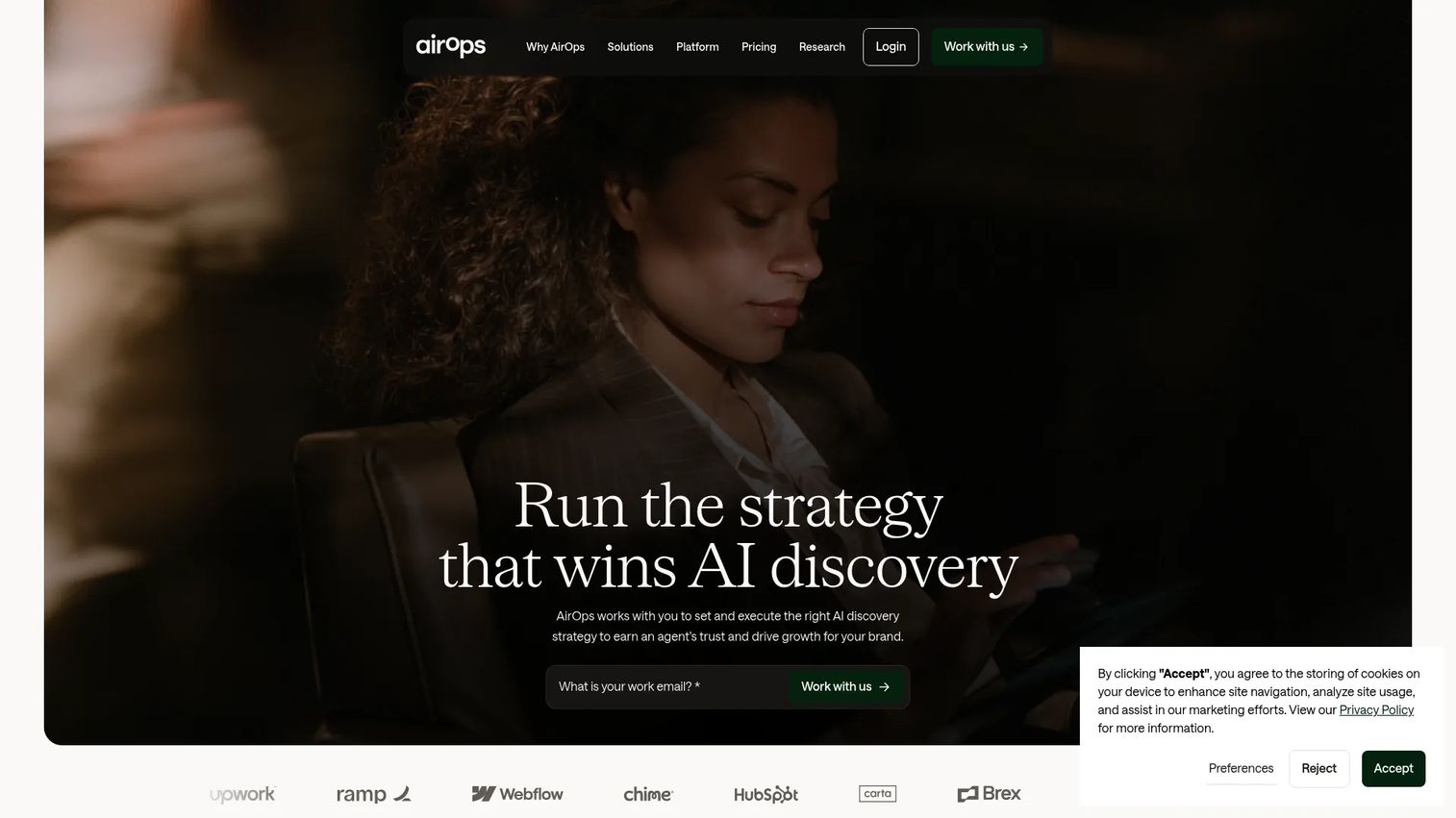
AirOps is a growth platform for AI search that helps teams measure visibility, build content workflows, and connect activity to business outcomes. It is built for teams that want repeatable AI processes, not just one-off prompts. Brand Kits and Knowledge Bases keep AI outputs on-brand across campaigns. Human review and approval workflows mean the speed of AI does not come at the cost of oversight.
Best for: Enterprise content and SEO teams that need to build governed, scalable AI workflows rather than individual tool subscriptions.
Key features
- AI search visibility and opportunity intelligence
- AI agents, workflows, and playbooks for content and monitoring
- Brand Kits and Knowledge Bases for governed brand context
- Human review, approval, and version history workflows
- CMS integrations and multi-channel measurement
Why choose AirOps: Choose AirOps when the problem is process repeatability across a content team, not just writing speed. Well-suited to teams turning SEO operations into documented, repeatable systems. Explore AI content creation tools for adjacent workflow options.
AirOps pricing: The Solo plan is free and includes 35,000 content-production tasks. Pro and Enterprise pricing requires contacting the team.
G2 rating: 4.7/5
13. MarketMuse
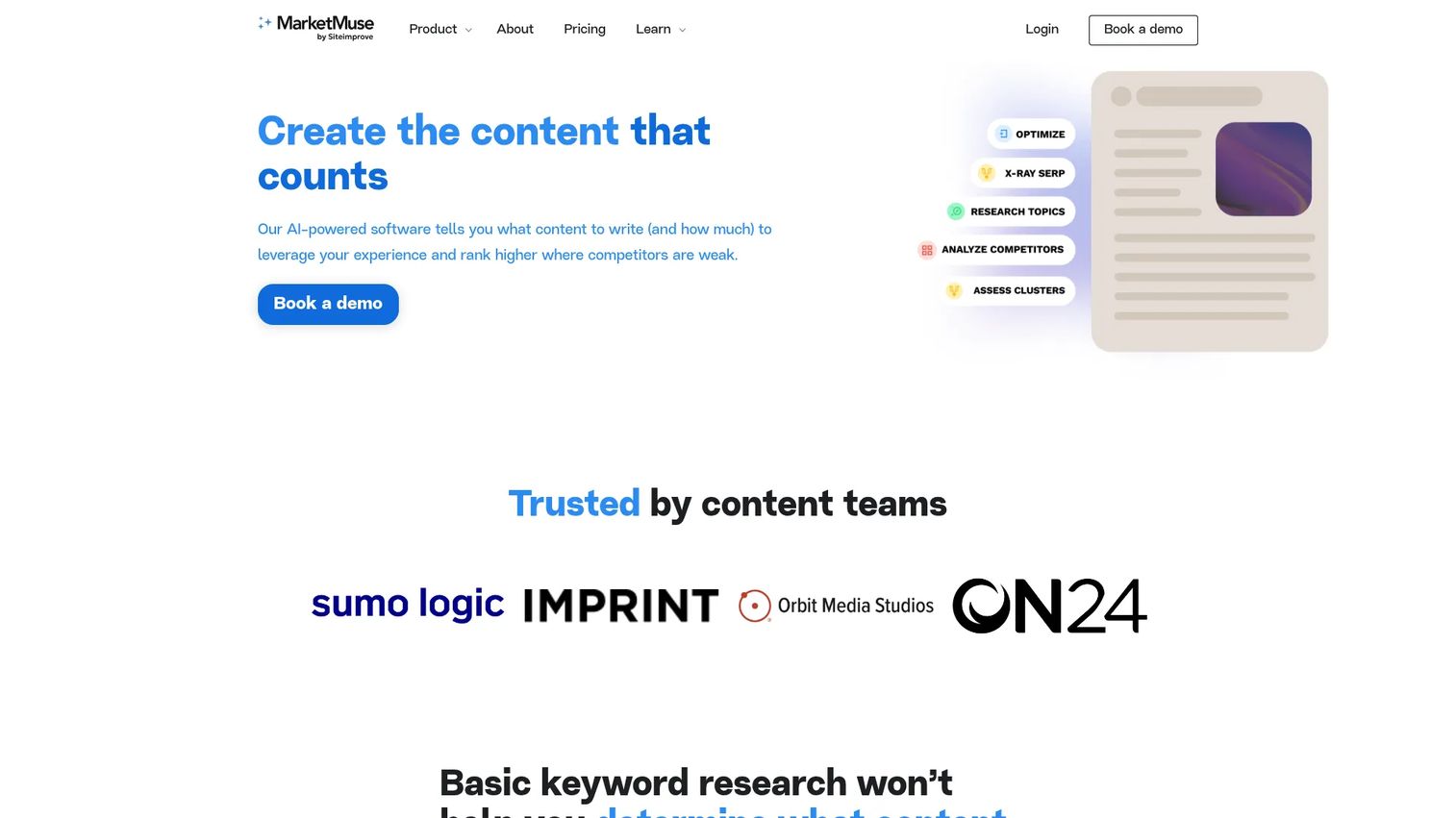
MarketMuse is an AI-powered content intelligence and strategy platform. Its topic modeling identifies which subjects your site has authority on, and which gaps need attention before you can compete. The site inventory function helps teams make prioritization decisions across a large existing content library rather than defaulting to creating new pages.
Best for: SEO and content teams managing large content libraries who need strategic guidance on what to update, create, or consolidate.
Key features
- Topic modeling and site-level authority analysis
- Site inventory and personalized content metrics
- Keyword, SERP, and competitive analysis
- Content briefs and strategy documents
- Internal linking recommendations
Why choose MarketMuse: Choose MarketMuse when content strategy across a large site is the priority over point-in-time optimization. More strategic than a lightweight writing assistant, and more analytical than most content editors.
MarketMuse pricing: A free plan is available with 1 user and 10 queries per month. Contact MarketMuse for a quote.
G2 rating: 4.6/5
14. Profound
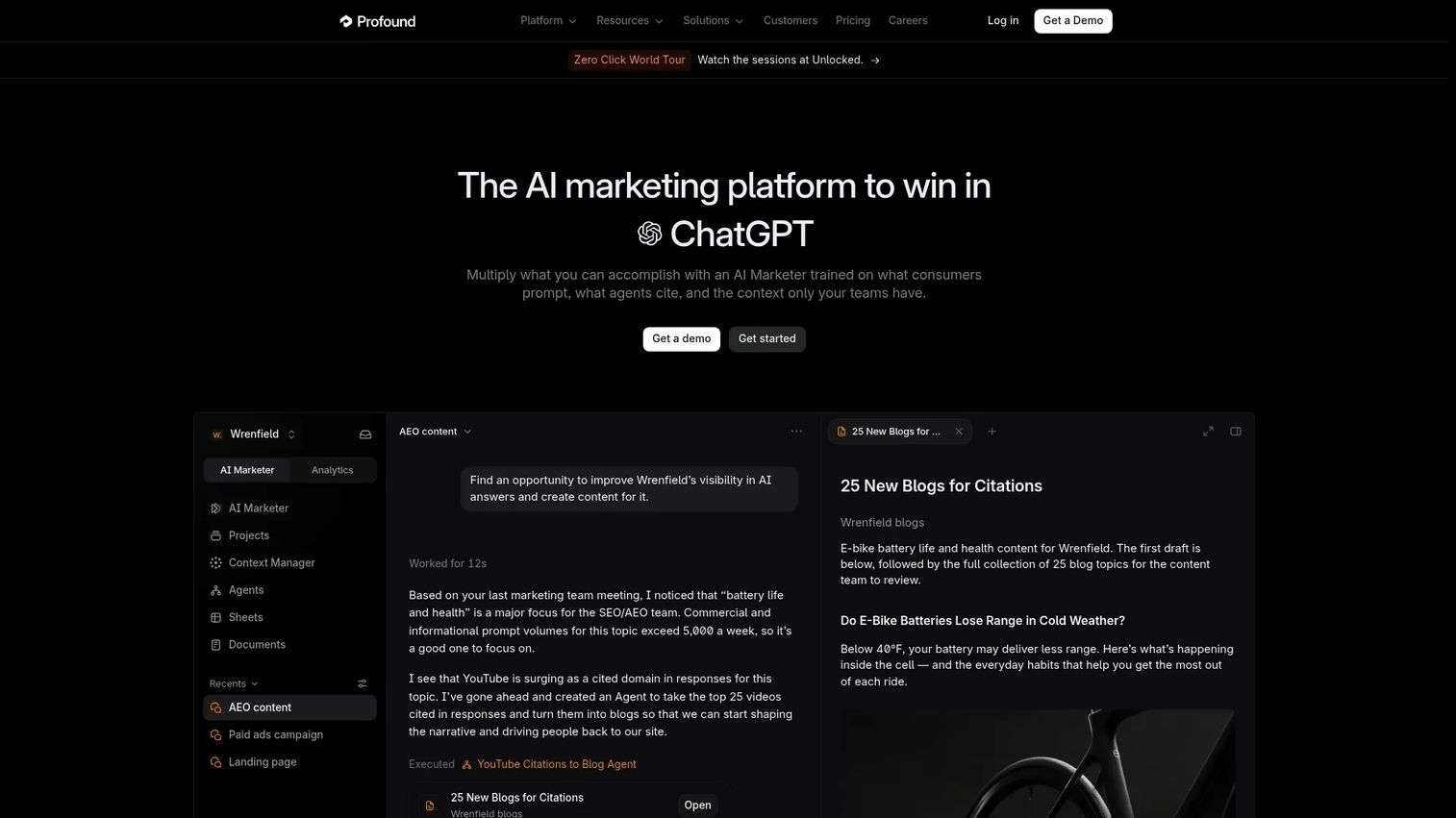
Profound is an AI marketing platform focused on AI search visibility. It tracks brand and competitor mentions, citations, sentiment, and prompt coverage across AI answer engines. The Answer Engine Insights feature shows what users ask AI platforms in your category, which informs both content strategy and competitive positioning. Agent Analytics connects AI-sourced traffic to attribution data.
Best for: Brands that need visibility reporting across AI answer engines and leadership-ready data on whether the company appears in AI-generated answers.
Key features
- Answer Engine Insights for brand and competitor AI visibility
- Prompt Volumes for analyzing what users ask AI platforms
- Sentiment analysis and citation monitoring
- Agent Analytics for AI-sourced traffic attribution
- Agent workflows and Profound Sheets for recurring marketing work
Why choose Profound: Choose Profound when leadership asks whether your brand shows up in AI answers. Pair it with classic SEO tools, because AI search visibility is one part of the organic channel. If answer engine optimization interests you, see the answer engine optimization tools guide for more context.
Profound pricing: A 7-day free trial is available. Enterprise pricing is custom. Contact Profound for a quote.
G2 rating: 4.5/5
15. Google Search Console
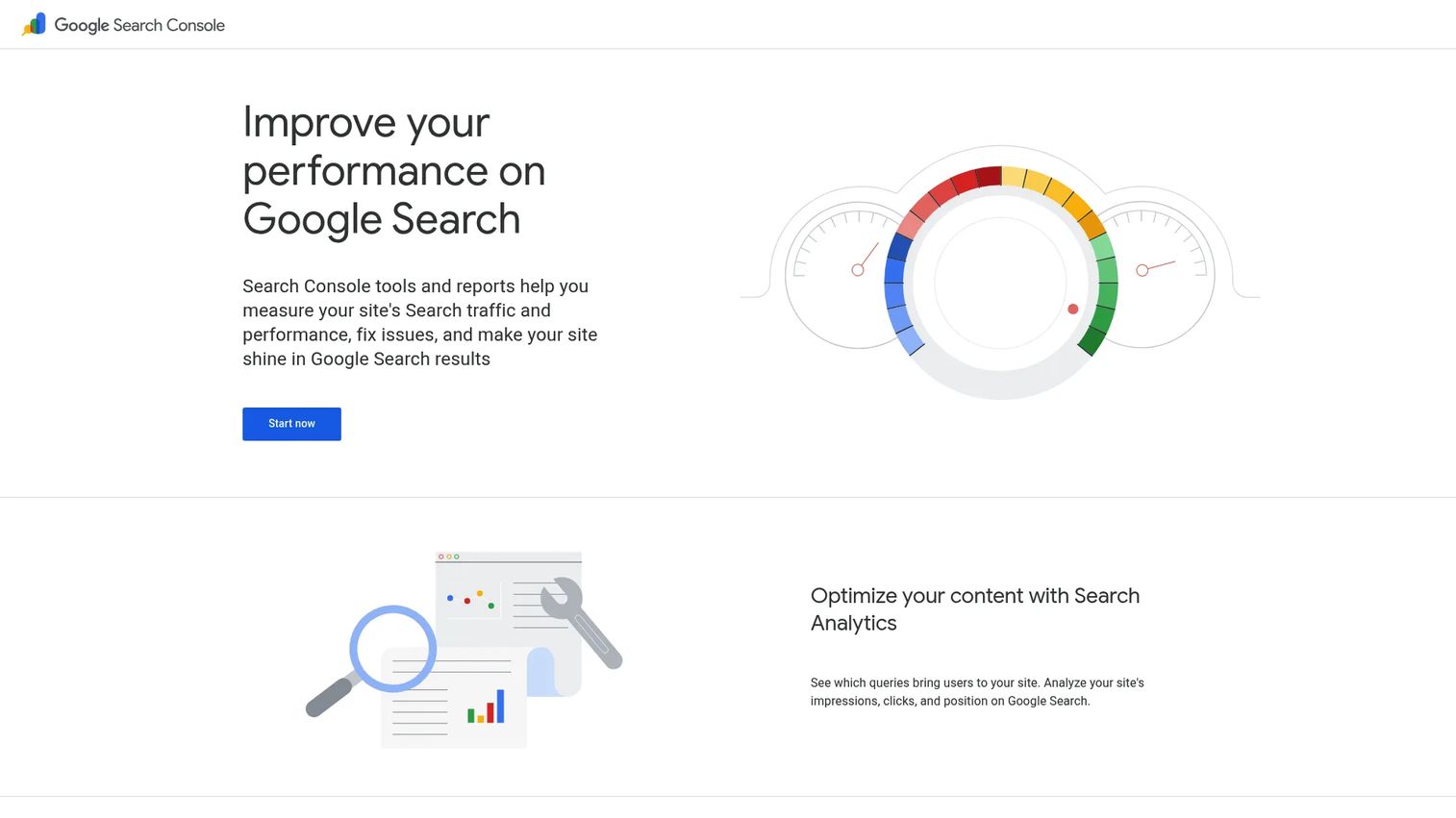
Google Search Console is Google's free web service for monitoring Search traffic and performance. Every AI SEO workflow starts here. It provides first-party query data, page performance metrics, index coverage reports, Core Web Vitals, and manual action alerts that no third-party tool can replicate with the same accuracy.
Best for: Any marketer who needs authoritative first-party Google search performance and indexing data. Required for every SEO stack.
Key features
- Search performance reports for clicks, impressions, queries, and pages
- Indexing and crawl monitoring, including sitemaps
- URL Inspection for index status and live URL testing
- Core Web Vitals and page experience reports
- Security, manual actions, and rich results tools
Why choose Google Search Console: Choose it because every AI SEO tool you layer on top needs trustworthy first-party data underneath. It is free, but it does not replace content optimization, competitor research, or multi-engine visibility tracking.
Google Search Console pricing: Free.
G2 rating: 4.7/5
Considerations when choosing AI SEO tools
Match the tool to the job it replaces
A writing assistant does not replace a rank tracker. An AI visibility tracker does not replace Search Console. A content optimizer does not replace subject-matter expertise. Before buying, write down the specific task that costs your team the most time each week, then find the tool that removes that bottleneck specifically.
Check integration quality before buying
The best AI SEO tool for your stack is the one that connects to what you already use. Look for direct connections to Search Console, GA4, your CMS, and your reporting layer. Tools that live in a silo create extra data export work and make attribution harder, not easier.
Verify the data source
Ask where keyword volumes, ranking data, citation counts, and AI visibility figures come from. Different AI search trackers use different sampling methods and prompt sets, so their outputs can disagree. Methodology matters when you are presenting results to leadership.
Watch pricing at scale
Entry prices are only part of the story. Seats, projects, tracked keywords, content credits, and API calls drive costs up quickly. Calculate total cost across your expected usage before committing, especially for platforms that gate key features behind higher tiers.
Keep humans in the loop
AI can generate drafts, briefs, outlines, and visibility reports. Humans still own positioning, fact-checking, legal review, and final publishing judgment. Use AI for repeatable analysis. Keep humans responsible for the claims that go out under your brand.
Conclusion
Most digital marketers do not need all 15 tools. Start with what your workflow actually costs you.
If your bottleneck is content production and brief quality, Clearscope, Surfer SEO, or Frase give you structured optimization workflows. If it is research and ideation, ChatGPT or Claude accelerate the thinking without replacing it. For broad SEO operations and competitive data, Semrush and Ahrefs cover the most ground. For AI search visibility reporting, Profound and Writesonic track where your brand lands in AI-generated answers. Google Search Console is non-negotiable as your free data foundation.
The tools that pay off are the ones that remove a specific bottleneck and connect their output to something leadership can see: Pipeline, CAC, or attribution. Start with the workflow that costs you the most time this quarter. Then pick the tool that removes that bottleneck without creating another reporting problem.
For more coverage of related tools, see the guides on best generative AI tools, AI search and retrieval platforms, and AI writing tools for marketers.
Start your journey with Guideflow today!
FAQs
AI SEO tools are software platforms that use machine learning, language models, or AI-assisted analysis to improve search visibility across both traditional search engines and AI answer engines. The category includes general AI assistants for ideation and drafting, dedicated content optimization platforms, keyword research suites, technical SEO auditors, AI search visibility trackers, and reporting tools. Some tools focus on one job; others attempt to cover several.
Yes, for specific tasks: Keyword brainstorming, content outlines, schema markup drafts, meta description variations, regex formulas for Search Console analysis, and content refresh prompts. It should not be treated as a standalone SEO data source. Pair it with Search Console, rank tracking data, or a competitor research tool to get accurate search signals before using ChatGPT to build on them.
It depends on your team size and primary workflow. Clearscope fits editorial teams that need a consistent quality benchmark and have strong writers. Surfer SEO fits teams that want SERP-based scoring alongside an integrated writing environment. Frase fits lean teams that need faster briefs, GEO scoring, and content decay monitoring. MarketMuse fits mature content organizations that need strategic guidance across a large site inventory.
Some tools track whether your content appears in AI Overviews and what citations they include. No tool can guarantee inclusion. Strong technical SEO, helpful and accurate content, authoritative sources, and clear entity signals are still the underlying drivers. Tools like Surfer SEO, Clearscope, and Profound surface AI visibility data, but the content work itself is what earns the placement.
Generative engine optimization (GEO) is the practice of improving a brand's visibility in AI-generated answers across platforms like ChatGPT, Gemini, Perplexity, and Google AI Overviews. It overlaps with traditional SEO but adds new measurement surfaces: Citations, mentions, sentiment, and prompt coverage. The answer engine optimization tools guide covers dedicated platforms for this workflow.
Google Search Console is the essential free baseline. ChatGPT, Gemini, Claude, and Perplexity each offer free access with usage limits, covering ideation, research, and analysis tasks. Frase, AirOps, and MarketMuse also offer free tiers with limited queries or tasks. Semrush and Ahrefs have free tiers with restricted data access. Start with Search Console and one AI assistant before adding paid tools.
They accelerate clustering, intent classification, topic expansion, SERP summarization, and question discovery. A task that might take several hours manually, like grouping 500 keywords by intent and mapping them to content stages, can run in minutes with the right tool. Search volume, keyword difficulty, and ranking data still require trusted datasets from platforms like Ahrefs, Semrush, or SE Ranking. AI alone cannot invent accurate search volume data.
Google evaluates helpfulness and quality, not simply whether AI was involved in writing. AI-generated drafts can rank if they are accurate, original, useful, and edited by humans with real expertise. Thin, generic, or unverified content carries the same risk it always has, regardless of how it was produced. E-E-A-T signals, first-hand experience, and accurate claims matter as much as keyword optimization. For more on AI content tools, see the AI content creation tools guide.