Your analysts are buried. Most SOC teams take in far more alerts each day than they can investigate, and only 33% of organizations use AI for investigating incidents, according to the SANS 2025 AI Survey. The gap between alert volume and investigation capacity is not a staffing problem. It is a workflow problem.
AI SOC agents address that gap by automating the repetitive, context-gathering work that consumes Tier 1 and Tier 2 analyst hours. They triage alerts, enrich cases with endpoint and identity data, run proactive threat hunts, and recommend response actions. Done right, they let your analysts focus on judgment calls, not data collection.
The risk is real, though. Handing response actions to AI without approval gates and audit trails is a fast path to an incident-within-an-incident. This guide explains the agent categories, compares 12 of the most relevant tools and platforms for 2026, and gives presales teams a practical framework for evaluating them with prospects.
What's inside
- Who this guide is for: SOC leaders, security architects, presales teams, and enterprise evaluators
- What counts: Triage agents, investigation agents, threat hunting agents, detection engineering agents, response coordination agents, and security validation agents
- How items were chosen: SOC workflow fit, autonomy controls, integration breadth, explainability, and operational proof
- What to verify before purchase: Vendor pricing page, current G2 rating, deployment model, and data access requirements
TL;DR
- Best starting point for alert overload: AI Analyst agent type handles Tier 1 triage, evidence collection, and case summarization
- Best for proactive security teams: AI Threat Hunter runs scheduled and ad hoc hunts across security data
- Best for improving detection quality: AI Detection Engineer suggests, tests, and tunes detection logic
- Best for Google Cloud environments: Google Security Operations combines Gemini assistance with Mandiant threat intelligence
- Best for CrowdStrike-centric SOCs: CrowdStrike Charlotte AI brings agentic workflows across Falcon telemetry
- Best for autonomous investigation without rebuilding the SOC: Dropzone AI or Prophet AI SOC Platform
What are AI SOC agents?
An AI SOC agent is a software agent that uses AI to perform or assist security operations tasks such as alert triage, investigation, enrichment, threat hunting, detection engineering, and response.
They are not chatbots. A chatbot answers questions. An AI SOC agent connects to your security data, reasons over alerts and logs, forms hypotheses, collects corroborating evidence, and either recommends or executes actions depending on the permissions you assign.
The core capability stack looks like this:
- Alert intake and deduplication
- Evidence collection and enrichment from SIEM, EDR, identity, cloud, and email
- Hypothesis-driven investigation
- Threat intelligence lookup
- Entity correlation across users, devices, and IP addresses
- Detection rule suggestions
- Response recommendations
- Ticket summary generation
- Human approval workflows
- Continuous feedback loops for model refinement
How AI SOC agents differ from SOAR and SIEM rules
SIEM correlation rules and SOAR playbooks execute predefined logic. An agent can reason over context, adapt its investigation path based on what it finds, and ask follow-up questions that no one pre-scripted. That flexibility is also the risk: an agent operating outside guardrails can make bad calls.
| Approach | How it works | Best for | Where it needs control |
|---|---|---|---|
| SIEM correlation rules | Pattern matching on log data | Known attack patterns | New attack techniques |
| SOAR playbooks | Deterministic step execution | Repeatable response workflows | Novel or ambiguous incidents |
| XDR automation | Cross-domain correlation and containment | Endpoint and identity response | Complex multi-vector attacks |
| AI SOC agents | Contextual reasoning and adaptive investigation | Unstructured alert investigation | All response actions above low risk |
Mature deployments combine all four. Agents handle the investigation reasoning; SOAR handles the governed response execution.
When to use AI SOC agents
Reduce repetitive alert triage
Alert fatigue is a capacity problem masquerading as a quality problem. AI SOC agents gather context from SIEM, EDR, and identity sources, cluster related alerts into a single case, score urgency, and draft an analyst-ready summary. For presales teams, this is the easiest use case to demonstrate because the before-and-after is visible: a noisy queue of 50 raw alerts versus one enriched case with a confidence score and recommended next step.
Speed up incident investigation
Investigation is where time gets wasted. An analyst manually pivoting between five consoles to gather evidence can spend most of an hour on a single alert. An agent can do the same evidence pass in minutes, then present a structured case for analyst review before any containment action. The key word is "review." Agents should draft; analysts should approve.
Improve detection coverage
Detection engineering agents close a different loop. They analyze investigation outcomes to identify alerts that should have fired but did not, suggest rule changes, and map gaps against MITRE ATT&CK. Security validation agents go further by running attack emulations to prove whether controls fire correctly. Teams that skip this step often discover their detections have coverage holes only after a real breach.
AI SOC agents comparison
Pricing and ratings shift frequently. Every G2 rating below was checked against the product's own G2 listing in October 2026, and every price was checked against the vendor's live pricing page. Items 1 to 5 are agent categories rather than purchasable products, so they have no vendor pricing page and no G2 listing of their own. Verify all figures again before any procurement conversation.
| # | Product | Best for | Key differentiator | Pricing | G2 rating |
|---|---|---|---|---|---|
| 1 | AI Analyst | Alert triage and investigation | Turns noisy alerts into analyst-ready case summaries | Set by the vendor implementing the agent | Not listed on G2 |
| 2 | AI Threat Hunter | Proactive threat hunting | Scheduled and ad hoc hunts across security data | Set by the vendor implementing the agent | Not listed on G2 |
| 3 | AI Detection Engineer | Detection improvement | Suggests, tests, and tunes detection logic | Set by the vendor implementing the agent | Not listed on G2 |
| 4 | SOAR-connected AI Agent | Governed response automation | Combines agent reasoning with deterministic playbooks | Set by the connected SOAR vendor | Not listed on G2 |
| 5 | Security Validation Agent | Control validation | Tests whether detections and controls fire correctly | Set by the validation platform vendor | Not listed on G2 |
| 6 | Google Security Operations | Google Cloud security teams | Gemini assistance across SIEM, SOAR, and threat intelligence | No published figures; priced by ingestion, contact sales | 4.4/5 (150 reviews) |
| 7 | CrowdStrike Charlotte AI | CrowdStrike Falcon environments | Agentic workflows across endpoint, identity, and cloud telemetry | 50 monthly AI credits for qualifying Falcon customers; beyond that, contact sales | 4.4/5 (21 reviews) |
| 8 | Microsoft Security Copilot | Microsoft security stack users | AI assistance across Defender, Sentinel, Entra, and Purview | $4 per provisioned SCU/hour in Microsoft's own billing example | 4.3/5 (12 reviews) |
| 9 | Dropzone AI | Autonomous alert investigation | Software AI analyst for end-to-end triage and investigation | No published figures; Enterprise, MSSP, and Federal packages, request pricing | No reviews on G2 |
| 10 | Prophet AI SOC Platform | Tierless SOC operations | AI agents for triage, hunting, and detection engineering | No published figures; sales-led after a proof of value | No reviews on G2 |
| 11 | Pentera Platform | Exposure validation | Validates exploitable risk and control effectiveness | No published figures; sales-led | 4.6/5 (185 reviews) |
| 12 | Torq HyperSOC | AI-driven SOC orchestration | Multi-agent case management and workflow automation | No published figures; sales-led | 4.8/5 (169 reviews, listed on G2 as Torq AI SOC Platform) |
Vendor notes you should know before comparing these rows. Google Security Operations bundles Mandiant threat intelligence, and Mandiant is owned by Google, so that intelligence is first-party rather than a neutral third-party feed. Pentera acquired DevOcean in October 2025 and EVA Information Security in November 2025, and both now sit inside the Pentera Platform rather than operating as separate products. Torq's G2 score belongs to a listing named Torq AI SOC Platform, not to a separate HyperSOC listing. Dropzone AI, Prophet Security, Pentera, and Torq all operate independently as of October 2026, each venture-funded and not owned by a larger security vendor. No two rows in this table belong to the same company.
AI SOC agents and platforms reviewed
1. AI Analyst
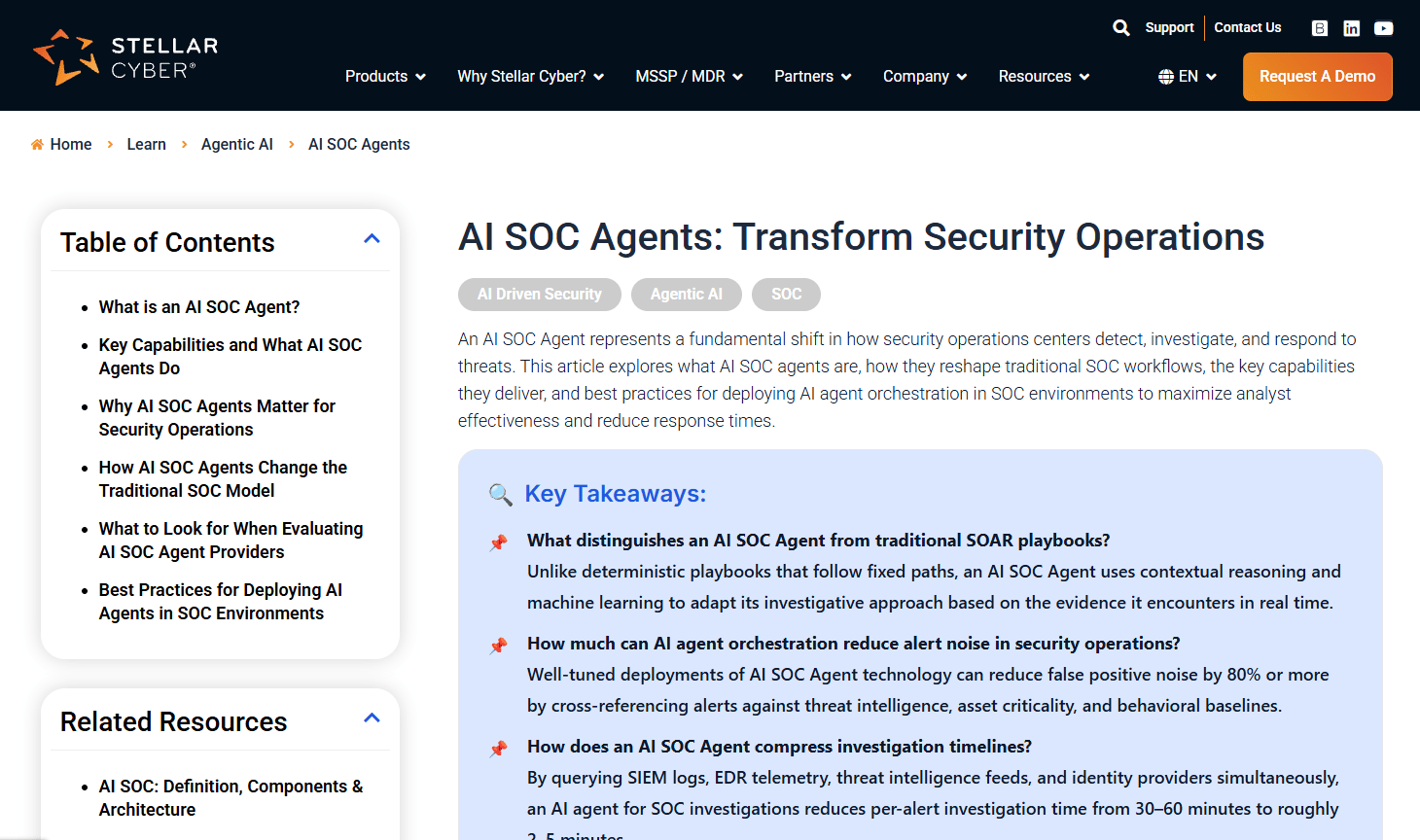
AI Analyst is the agent type most SOC teams should understand first. It handles the repetitive Tier 1 work: pulling alerts from the SIEM, querying the EDR for host context, checking identity logs for account anomalies, scoring urgency, and writing an analyst-ready case summary. The before-and-after is concrete, which makes it the easiest agent category to justify in a proof-of-value.
This is an agent category, not a single vendor product. Multiple platforms implement an AI Analyst agent with varying depth.
Best for: SOC teams drowning in Tier 1 alerts and repetitive phishing or endpoint investigation workflows.
Key features
- Alert deduplication across SIEM sources
- Evidence enrichment from EDR, identity, and cloud logs
- Case summaries with confidence scoring
- Analyst escalation with structured handoff
- Audit trail for every evidence step
Why choose AI Analyst: Start here if analyst hours are the bottleneck. The workflow improvement is visible within days and builds team trust before you expand agent autonomy.
AI Analyst pricing: Ask vendors to scope pricing around your monthly investigation volume.
2. AI Threat Hunter
AI Threat Hunter runs proactive searches across your security data rather than waiting for an alert to trigger. It forms hypotheses based on threat intelligence and known attacker behavior, queries SIEM and EDR data, inspects suspicious entity activity, and produces a hunt narrative for analyst review. Scheduled hunts run on a cadence; ad hoc hunts start from a specific indicator or analyst question.
Best for: Mature SOC teams that want proactive detection coverage rather than purely reactive alert handling.
Key features
- Scheduled hunt execution across security data
- Hypothesis generation from threat intelligence
- Entity relationship mapping
- Hunt report generation for analyst review
- Integration with existing threat intelligence feeds
Why choose AI Threat Hunter: Proactive hunting catches attacker dwell time that alerts miss. The agent supports hunters rather than replacing the expert judgment that decides when a finding matters.
AI Threat Hunter pricing: Pricing follows the security platform delivering this capability. Most vendors bundle threat hunting into their enterprise tier. Get a quote based on your data volume and expected hunt frequency.
3. AI Detection Engineer
AI Detection engineering agents help write, tune, test, and maintain detection logic. They analyze investigation outcomes to identify where rules should have fired but did not, suggest new rule candidates, map coverage gaps against MITRE ATT&CK, and test detections against historical data. False-positive tuning is equally important: agents that flag every adjustment get ignored.
Best for: Teams improving detection coverage across SIEM, EDR, XDR, and cloud sources.
Key features
- Detection rule suggestions from investigation outcomes
- MITRE ATT&CK coverage mapping
- False-positive tuning recommendations
- Detection validation against historical data
- Gap analysis reports
Why choose AI Detection Engineer: Better detections mean fewer missed threats and fewer noisy alerts. Position this to prospects as a quality layer, not just a speed improvement. Warn teams not to deploy generated rules without analyst review.
AI Detection Engineer pricing: Usually bundled inside a broader AI SOC platform or security analytics product. Standalone pricing is rare. Ask vendors which tier includes detection engineering capabilities.
4. SOAR-connected AI Agent
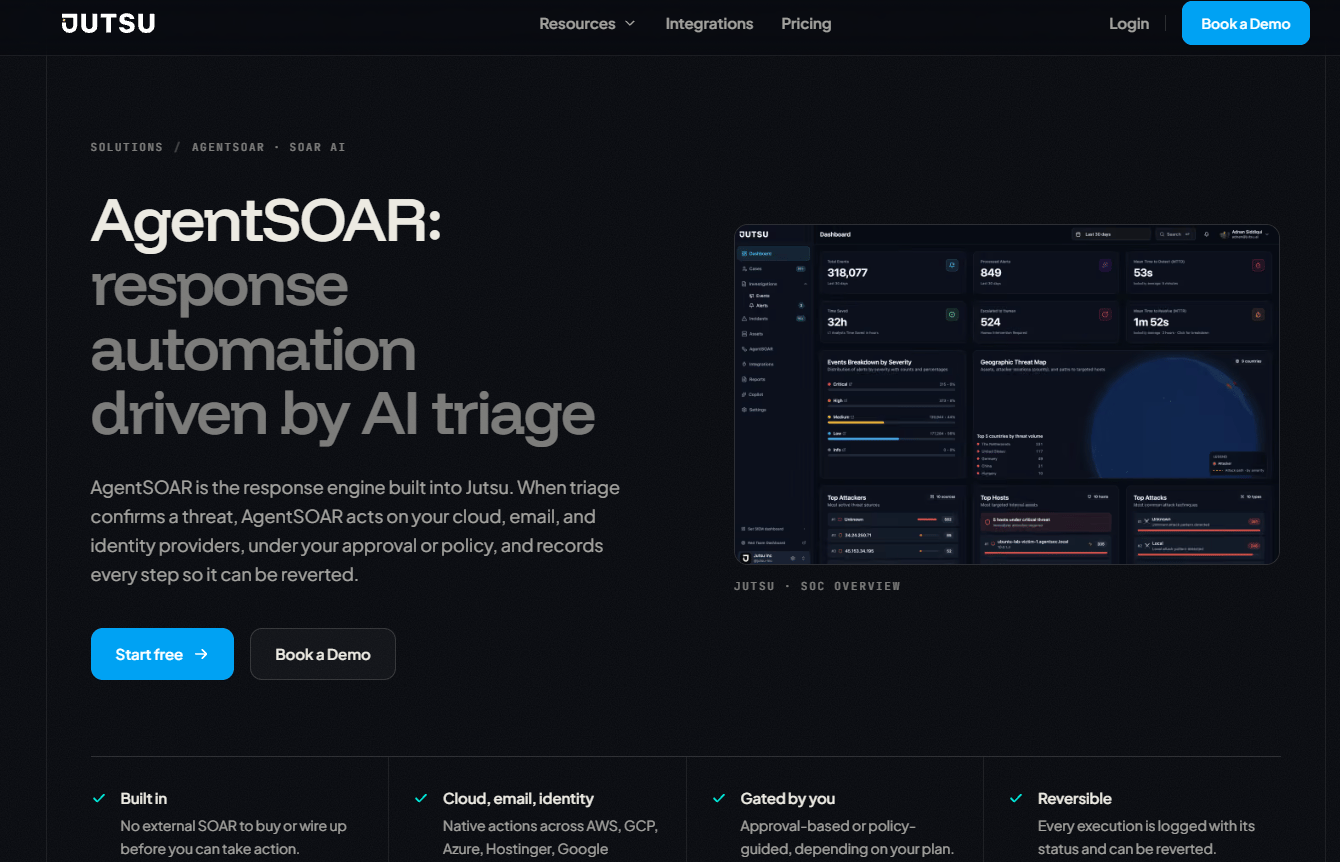
SOAR-connected AI agents combine flexible reasoning with deterministic SOAR workflows. The agent investigates, enriches, and recommends actions. Approved actions then trigger the connected SOAR playbook, which executes with the governance and audit trail teams already rely on. This architecture is the safest path to automation for teams that cannot afford an investigation gone wrong.
Best for: SOC teams that use SOAR today and want AI-assisted investigation without losing governance controls.
Key features
- AI investigation feeding SOAR playbook triggers
- Approval gates before any response action
- Ticket creation and case enrichment
- Response recommendations with confidence scoring
- Full audit trail across both AI and SOAR layers
Why choose SOAR-connected AI Agent: This is the governance-first path. Presales teams should lead with this architecture when prospects flag autonomy risk or regulatory requirements.
SOAR-connected AI Agent pricing: Pricing follows the connected SOAR or security orchestration vendor. Expect enterprise licensing tied to playbook executions, integrations, or analyst seats.
5. Security Validation Agent
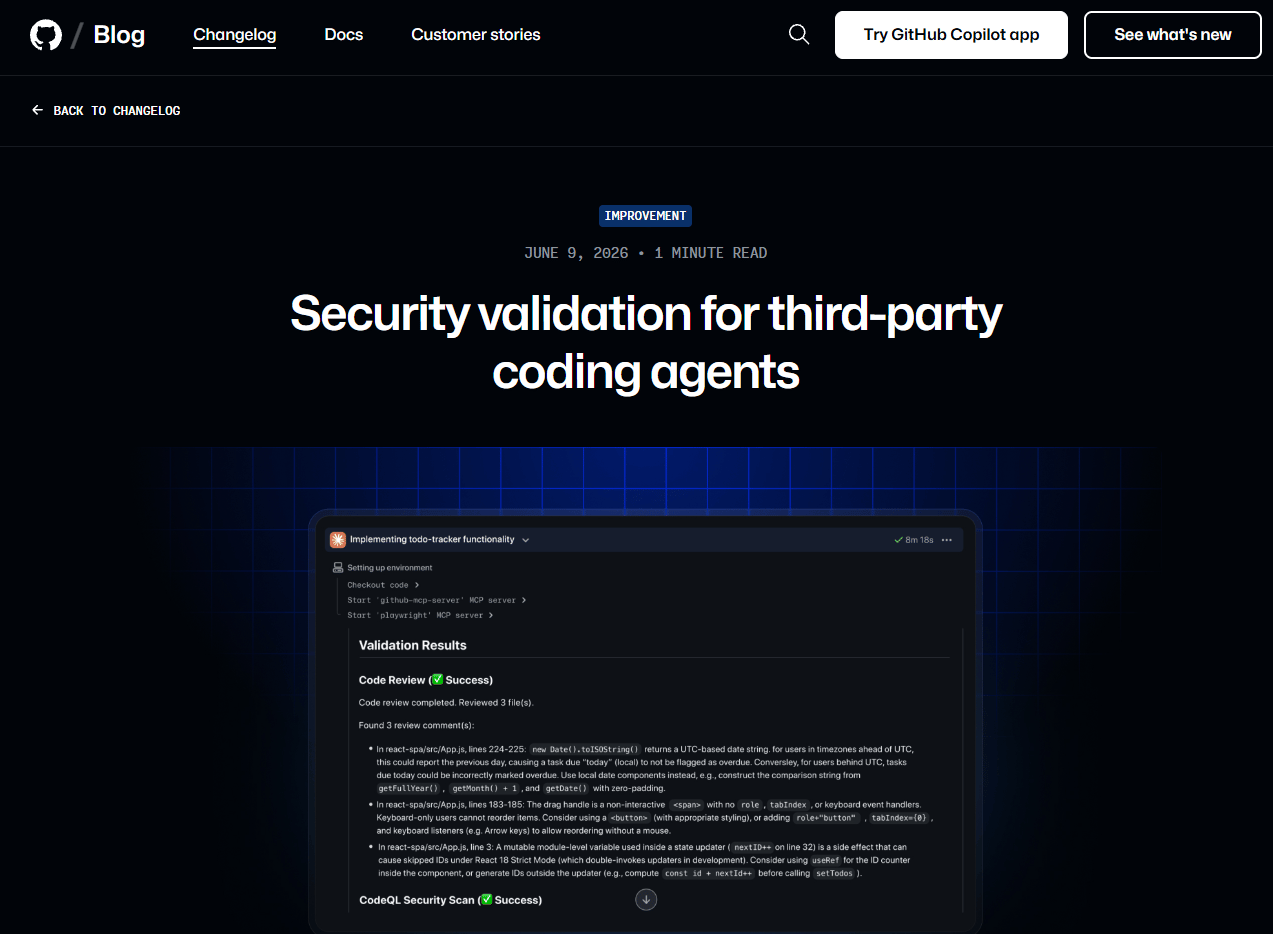
Security validation agents test whether defenses work. They emulate attack techniques against your own environment, check whether detections fire, map exposures, and prioritize remediation by actual exploitability. This is not the same as alert triage. A validation agent tells you where alerts should have appeared but did not.
Best for: Teams that need evidence their controls work before a real attacker provides it.
Key features
- Attack emulation across internal and external surfaces
- Control validation with pass/fail reporting
- Exposure mapping by actual exploitability
- Detection validation tied to real attacker techniques
- Remediation prioritization guidance
Why choose Security Validation Agent: A SOC that cannot prove its controls fire correctly has a measurement problem. This agent type closes that loop and gives security leaders defensible data for board reporting.
Security Validation Agent pricing: Pricing follows the validation platform vendor. Most use annual enterprise contracts priced by asset count or attack surface scope.
6. Google Security Operations
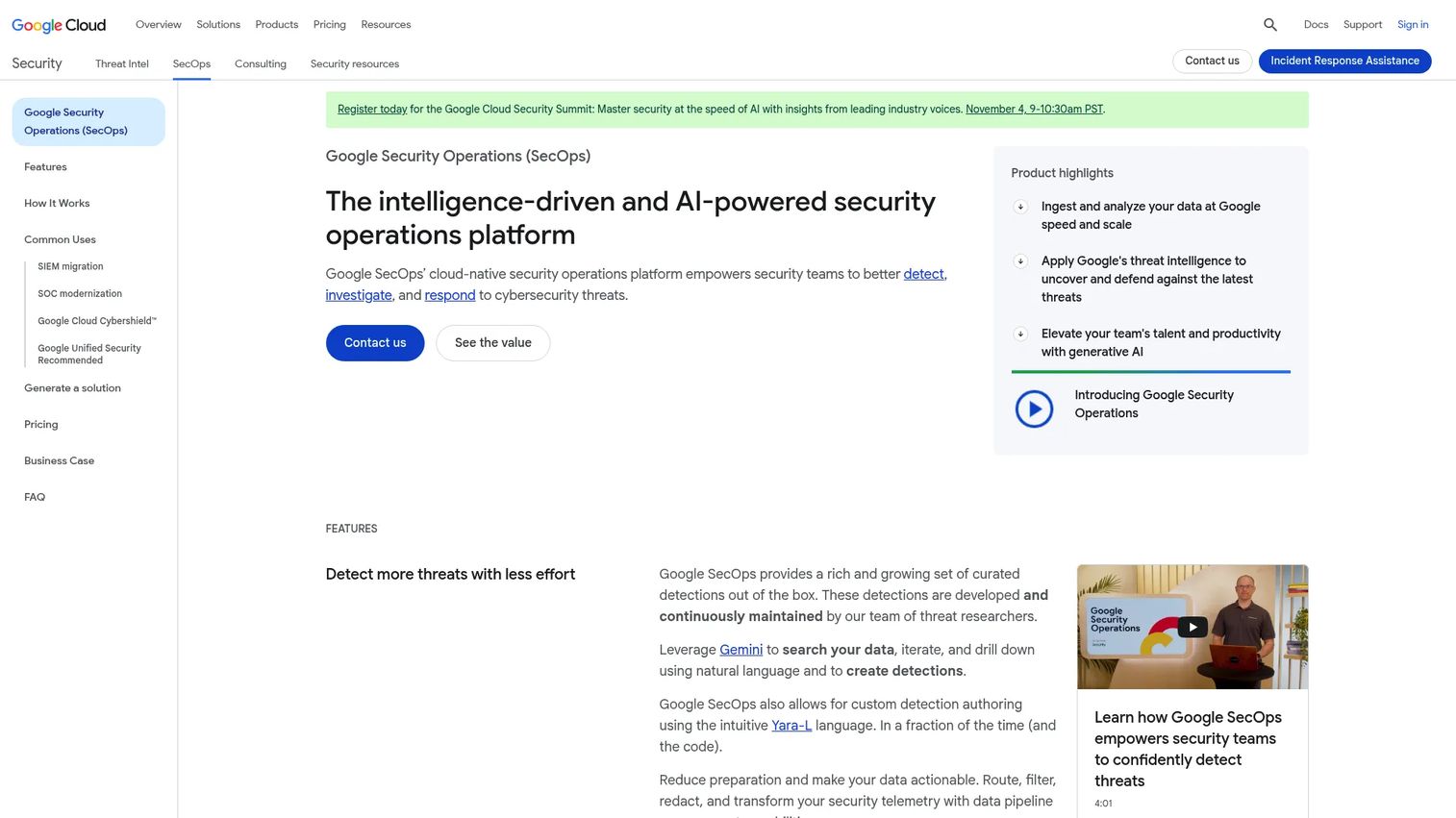
Google Security Operations is a cloud-native platform that combines SIEM data ingestion, SOAR playbook automation, threat intelligence, and Gemini-assisted investigation in a single environment. It includes over 300 SOAR integrations, curated detections maintained by Google's threat intelligence team, and Gemini capabilities for search, investigation, detection authoring, and playbook creation. For presales teams selling into Google Cloud accounts, this is the natural conversation to start.
One disclosure matters here. The Mandiant threat intelligence this platform leans on is owned by Google, so it is first-party intelligence bundled with the platform rather than an independent feed you could swap out.
Best for: Organizations already using Google Cloud infrastructure and Google's threat intelligence ecosystem.
Key features
- Security telemetry ingestion and threat detection
- Gemini assistance for investigation and detection authoring
- SOAR playbook automation with 300+ integrations
- Curated detections and threat intelligence from Google
- Case management with alert graphing
Why choose Google Security Operations: The combination of native SIEM, SOAR, and AI in one platform reduces integration overhead. Buyers already invested in Google Cloud will find the data gravity argument compelling.
Google Security Operations pricing: Three packages are published: Standard, Enterprise, and Enterprise Plus. Each is priced by ingestion volume and shows "contact sales for pricing," so scope your quote around expected daily ingest.
G2 rating: 4.4/5 from 150 reviews.
7. CrowdStrike Charlotte AI
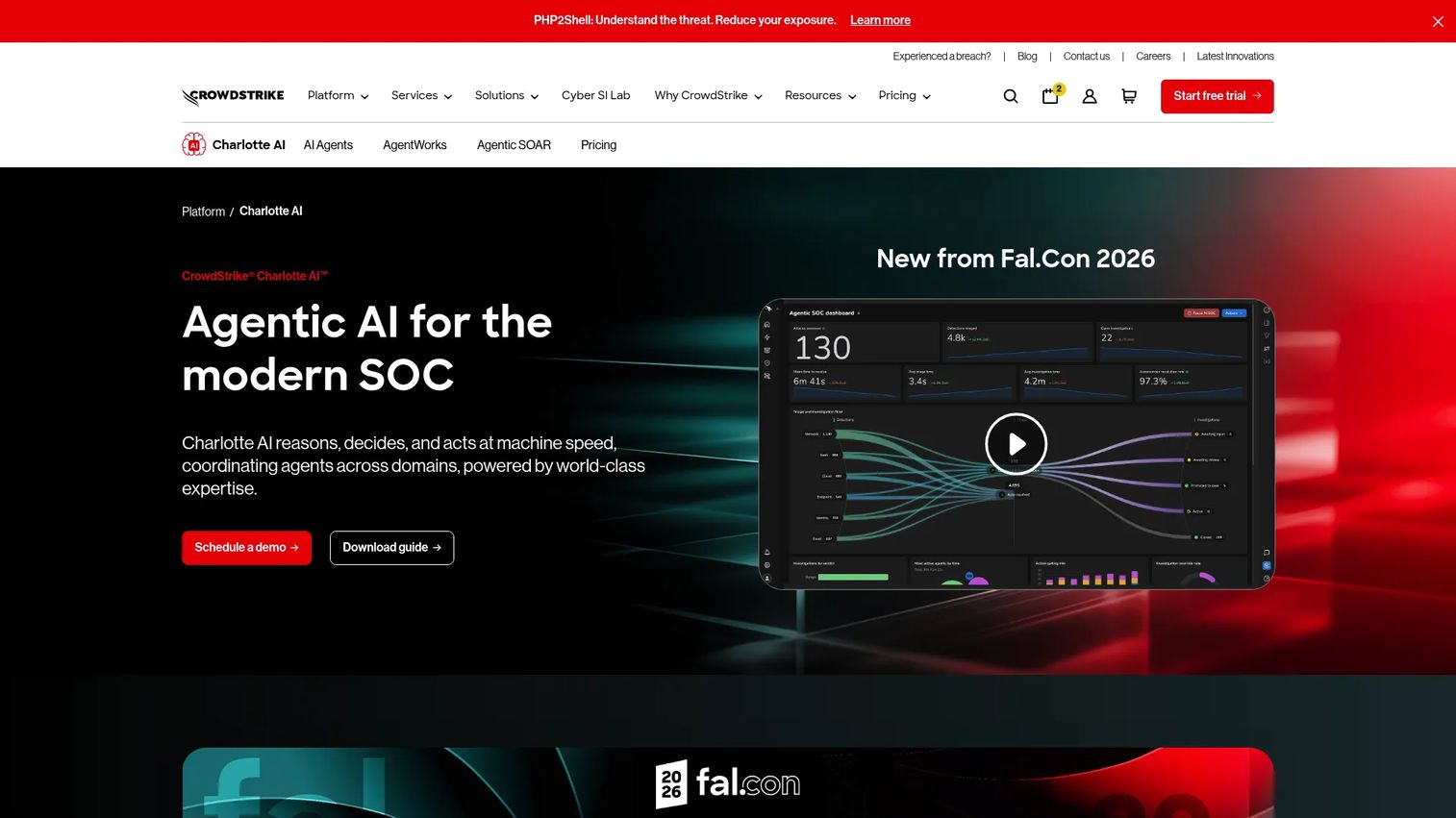
CrowdStrike Charlotte AI is an agentic AI security analyst built natively on the Falcon platform. It handles natural-language security queries, agentic detection triage, investigation automation, and response guidance. Charlotte AI AgentWorks lets teams build custom agents on top of Falcon telemetry without writing code. Qualifying CrowdStrike customers get access with 50 AI credits that renew each month at no additional cost.
Best for: Security teams already committed to CrowdStrike Falcon for endpoint, identity, and cloud coverage.
Key features
- Natural-language security queries across Falcon telemetry
- Agentic detection triage and investigation workflows
- Response guidance with analyst approval steps
- No-code custom agent development via AgentWorks
- Cross-domain investigation across endpoint, identity, and cloud
Why choose CrowdStrike Charlotte AI: For accounts where Falcon is the primary SOC data source, Charlotte AI removes the need for a separate AI investigation layer. The cross-domain investigation capability is the clearest presales differentiator.
CrowdStrike Charlotte AI pricing: CrowdStrike publishes one concrete figure, the 50 AI credits that renew monthly for qualifying Falcon customers at no additional cost. It publishes no dollar price for additional credits or expanded access, and no rate per credit, so both come through sales-led licensing. AgentWorks includes credit caps so you can control agent consumption.
G2 rating: 4.4/5 from 21 reviews.
8. Microsoft Security Copilot
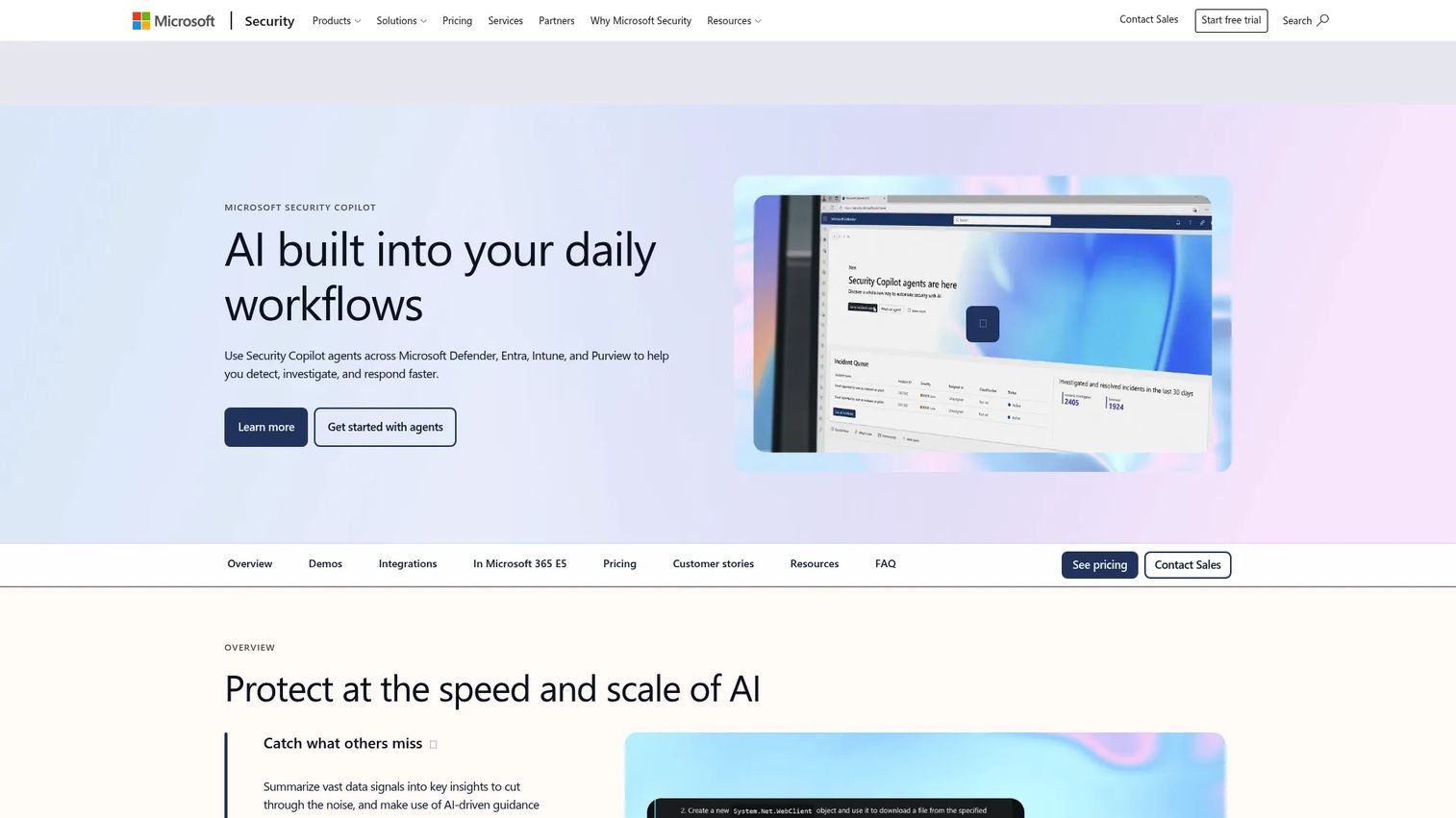
Microsoft Security Copilot is a generative AI security layer that sits across Microsoft Defender, Sentinel, Entra, and Purview. It generates incident summaries, produces KQL queries from plain-language prompts, analyzes suspicious scripts, and supports investigation workflows through prompt-based interactions. Eligible Microsoft 365 E5 and E7 customers receive included Security Compute Unit (SCU) capacity.
Best for: Enterprises standardized on Microsoft security and identity products.
Key features
- Incident summaries and response recommendations
- Natural-language KQL generation for Sentinel
- Suspicious script and threat intelligence analysis
- Defender and Entra identity insights
- Prompt-based investigation across Microsoft security stack
Why choose Microsoft Security Copilot: The strongest fit is where Defender, Sentinel, and Entra are already the SOC tools of record. The SCU pricing model means cost scales with usage, which helps teams start small.
Microsoft Security Copilot pricing: Microsoft bills provisioned SCUs hourly with a one-SCU minimum, and its own billing example on the Security Copilot pricing page uses $4 per provisioned SCU per hour and $6 per overage SCU. Microsoft presents those as estimates that vary by agreement, currency, and purchase date, so confirm your rate with the Azure pricing calculator or your account team. Eligible Microsoft 365 E5 and E7 customers receive 400 SCUs per month for every 1,000 paid user licenses, capped at 10,000 SCUs per month, and the allocation resets monthly without rollover.
G2 rating: 4.3/5 from 12 reviews.
9. Dropzone AI
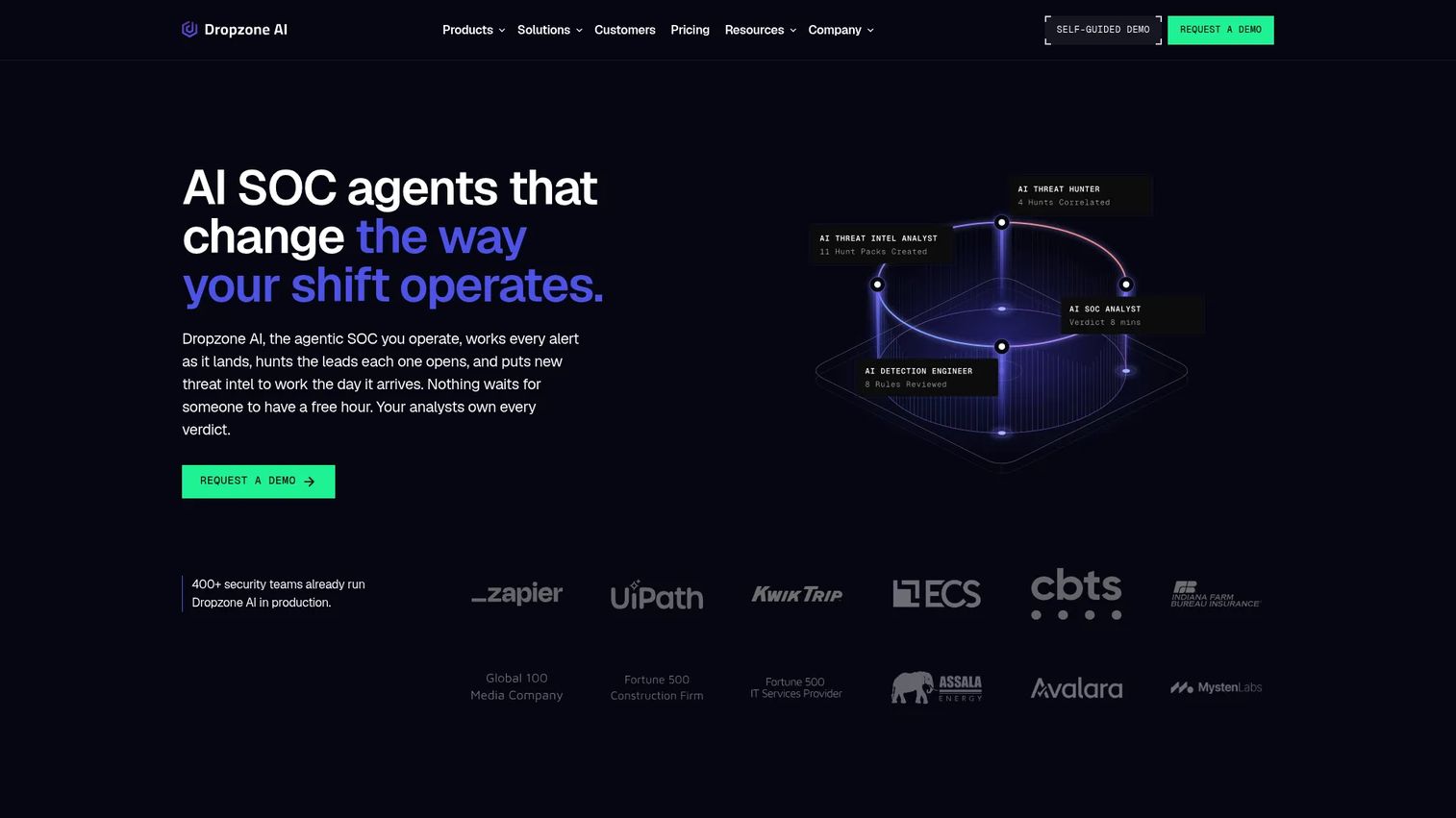
Dropzone AI is an agentic SOC platform focused on autonomous alert investigation, proactive threat hunting, and threat intelligence operationalization. It conducts end-to-end alert investigations, generates verdicts with supporting evidence, and surfaces findings for analyst review. Its AI Interviewer feature works inside Slack and Microsoft Teams, letting analysts ask follow-up questions directly. Context memory retains institutional knowledge across investigations.
Best for: SOC teams looking for autonomous alert investigation across their existing security stack.
Key features
- End-to-end autonomous alert investigation
- Hypothesis-driven threat hunting with prebuilt hunt packs
- AI chatbot for querying integrated security data
- Context memory for institutional investigation knowledge
- Integration with SIEM, EDR, cloud, and identity tools
Why choose Dropzone AI: The verdict-plus-evidence output format shortens analyst review time significantly. During proof-of-value, test escalation quality, false-positive handling, and data access depth before committing.
Dropzone AI pricing: Its pricing page lists three packages and explains how each is sized: Enterprise is sized on employee count and covers investigation, hunting, intel, and detection engineering; MSSP is assembled per agent and capacity level, with separated client environments and investigation capacity that can pool across clients; Federal is built per agent and capacity level on federal terms. All three include the same product features, among them 100+ integrations, unlimited programmatic actions, and included premium threat intelligence feeds. Request pricing from Dropzone AI.
10. Prophet AI SOC Platform
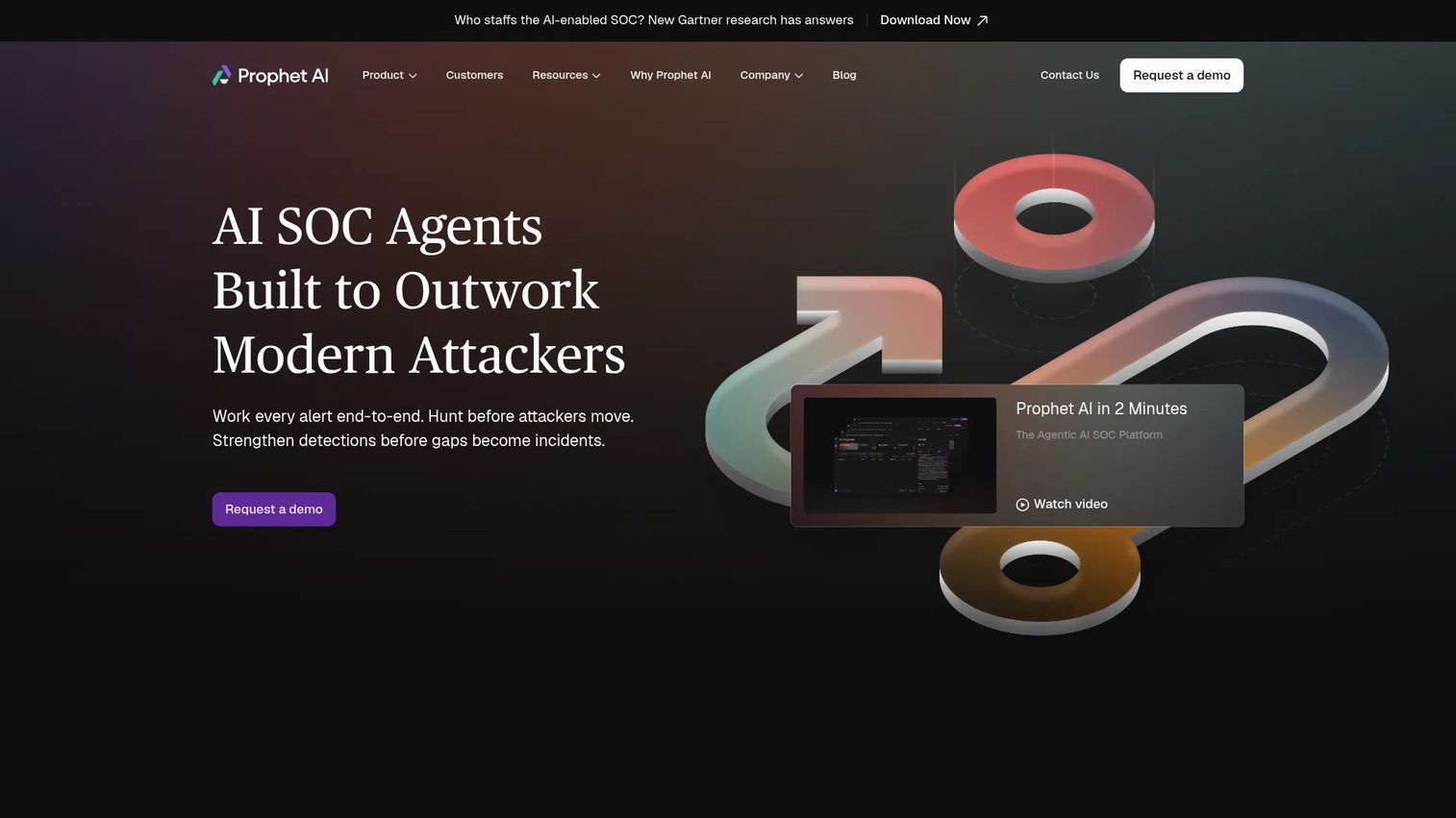
Prophet AI SOC Platform runs three distinct AI agents: an AI SOC Analyst for end-to-end alert investigation, an AI Threat Hunter for plain-language and scheduled hunts, and an AI Detection Engineer for MITRE ATT&CK coverage mapping and detection creation. The vendor describes a dedicated single-tenant deployment with a bring-your-own-key option. Prophet AI Watchtower provides 24x7x365 human expert review alongside the AI agents, and the platform lists 200+ out-of-the-box integrations.
Prophet Security operates independently. It raised a $30 million Series A in July 2025 and later took strategic investments from Amex Ventures and Citi Ventures, so no larger security vendor owns it.
Best for: Enterprise SOC teams evaluating a tierless operating model where multiple AI agents cover investigation, hunting, and detection simultaneously.
Key features
- AI SOC Analyst for complete alert investigation and scoped response
- AI Threat Hunter for scheduled and natural-language hunts
- AI Detection Engineer for coverage mapping and detection creation
- Single-tenant deployment with bring-your-own-key encryption
- 24x7x365 human expert review via Watchtower
Why choose Prophet AI SOC Platform: The three-agent architecture maps directly to the analyst, hunter, and detection engineer roles. Presales teams selling agentic SOC as a model change will find this the most complete conversation starter.
Prophet AI SOC Platform pricing: Evaluation starts with a free proof of value that the vendor says takes 30 minutes or less to set up, and pricing follows from a sales conversation. Contact Prophet Security for a quote.
11. Pentera Platform
Pentera is an AI-driven exposure validation platform that continuously tests internal networks, external attack surfaces, cloud environments, web applications, and APIs. It emulates real adversary techniques, validates which controls block or miss those techniques, surfaces credential risks, and produces audit-ready remediation reports. Pentera is not an alert triage tool. Its role in a modern SOC is proving that the detections and controls in place actually work under realistic attack conditions.
Two acquisitions shape what you are buying. Pentera acquired DevOcean, a remediation management platform, in October 2025, and EVA Information Security, an offensive security firm working on AI red teaming, in November 2025. Both now sit inside the Pentera Platform, so ask which capabilities are generally available rather than still being integrated. Pentera itself remains independent and venture-funded after a $60 million Series D in March 2025.
Best for: Enterprise security teams that need evidence of exploitable risk and control effectiveness, not just a list of findings.
Key features
- AI-driven adversarial testing across internal and external surfaces
- Cloud and hybrid environment testing
- Credential risk validation
- Automated remediation workflows with revalidation
- Audit-ready reporting with risk-based prioritization
Why choose Pentera Platform: When a prospect asks "how do we know our detections fire?", Pentera answers that question with evidence. Position it as validation infrastructure that makes the rest of the AI SOC investment provable.
Pentera Platform pricing: Pricing is sales-led and scoped to the environment under test. Contact Pentera for a quote.
G2 rating: 4.6/5 from 185 reviews.
12. Torq HyperSOC
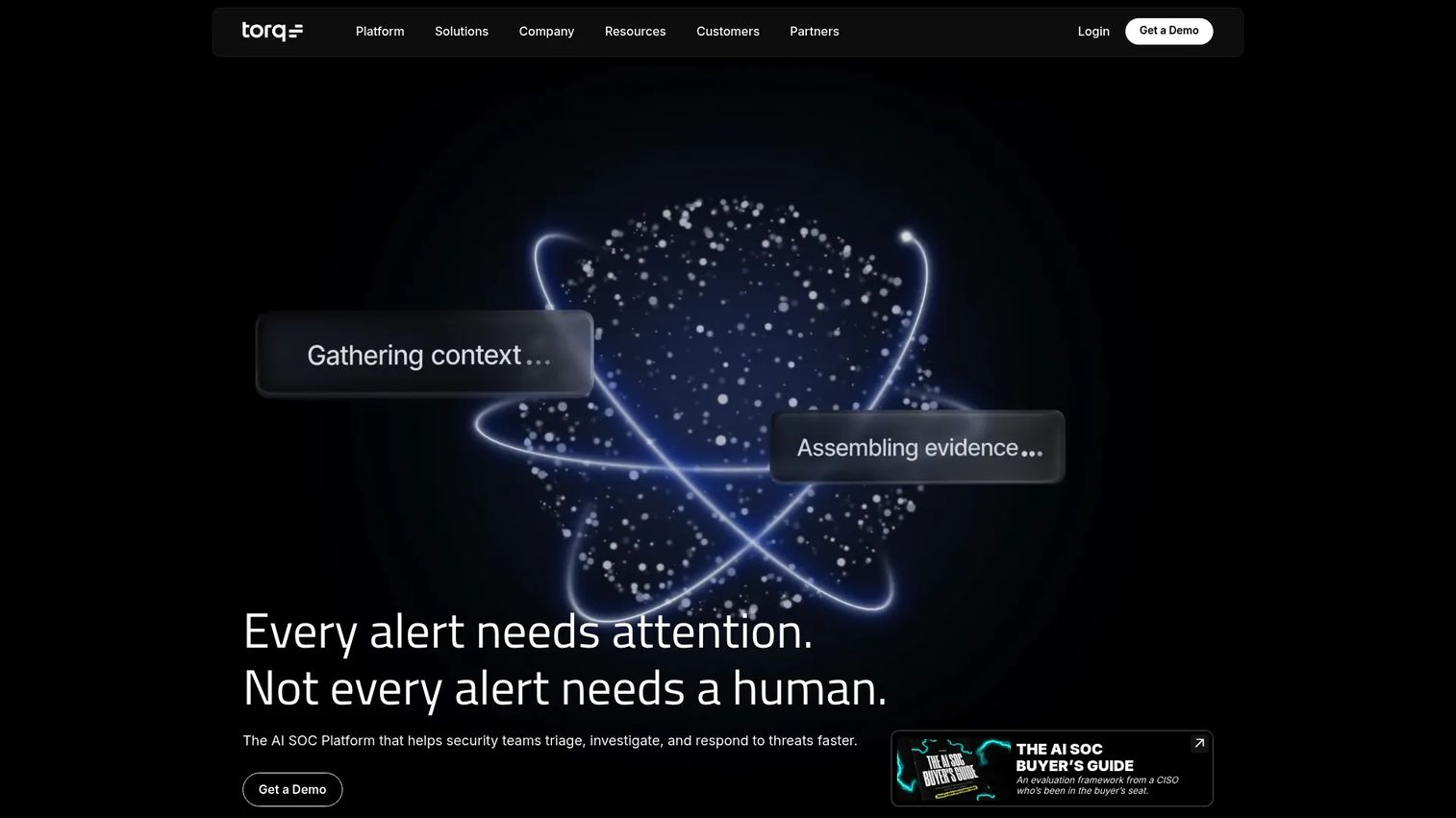
Torq HyperSOC is an AI-driven autonomous SOC platform built around a multi-agent architecture. The Socrates agent orchestrates the others, handling event analysis and context enrichment. Separate agents manage runbook execution, investigation, remediation, and case management. Together they automate the full alert-to-case workflow, from initial triage through escalation and closure, with analyst collaboration built in throughout.
Note how the rating attaches. Torq's G2 listing is named Torq AI SOC Platform and covers the wider product line, not HyperSOC as a separate SKU, so read that score as a verdict on the platform. Torq operates independently and raised a $140 million Series D in January 2026.
Best for: Enterprise SOC and MSSP teams that want AI-assisted orchestration across their full security operations workflow.
Key features
- AI-driven event analysis and contextual enrichment
- Automated investigation, triage, and remediation
- Multi-agent architecture spanning Socrates, Runbook, Investigation, Remediation, and Case Management agents
- Cross-tool integration across existing security stack
- Analyst collaboration within automated workflows
Why choose Torq HyperSOC: The multi-agent design means each specialist agent handles one job well rather than one general agent handling everything inconsistently. For large SOC and MSSP teams, that separation of function matters at scale.
Torq HyperSOC pricing: Pricing is sales-led, with cost driven by integration scope, event volume, and deployment model. Contact Torq for a quote.
G2 rating: 4.8/5 from 169 reviews, listed on G2 as Torq AI SOC Platform.
Considerations when choosing AI SOC agents
Start with the workflow, not the model
Identify the exact workflow first: phishing triage, endpoint alert investigation, identity anomaly review, cloud log enrichment, or detection engineering. The specific workflow determines which agent type fits and what integrations are required. A platform with impressive AI capabilities but incomplete access to your SIEM data will underperform a simpler tool that connects cleanly.
Define autonomy levels before deployment
Use a graduated model: observe only, then recommend actions, then draft actions for analyst approval, then execute low-risk actions, then execute high-risk actions only with strict governance. Jump directly to autonomous containment and you will face an incident caused by the agent itself. Start conservative; expand permissions based on measured accuracy over 30 to 60 days.
Verify integrations with your SOC stack
The agent is only as useful as the context it can access. Confirm native connectors for your SIEM, EDR, identity provider, cloud log sources, email security tool, ticketing system, threat intelligence feed, and SOAR. Gaps in data access mean gaps in investigation quality.
Demand explainability and audit trails
The agent should show what evidence it collected, what it ignored, its confidence level, and the action it recommends. Without that transparency, analysts cannot review decisions efficiently and incident reviewers cannot audit outcomes. Explainability is also the fastest way to build or lose analyst trust during rollout.
Measure operational impact against a baseline
Track mean time to investigate (MTTI), MTTR, false-positive closure rate, escalation accuracy, and analyst hours per case. Establish that baseline 30 to 60 days before any vendor proof-of-value engagement. Without a baseline, you cannot prove the agent changed anything.
Conclusion
Alert fatigue is a solvable problem, but the solution requires choosing the right agent for the right workflow. Start with an AI Analyst if Tier 1 triage is the bottleneck. Move to an AI Threat Hunter when the team is ready for proactive coverage. Use an AI Detection Engineer to improve rule quality and close MITRE ATT&CK gaps. Add security validation to prove controls work.
For teams standardized on a major security platform, the native AI layer from Google Security Operations, CrowdStrike Charlotte AI, or Microsoft Security Copilot will reduce integration overhead. Dropzone AI and Prophet AI SOC Platform suit teams that want agentic investigation without being tied to a single vendor's telemetry. Torq HyperSOC fits teams that need orchestration at scale.
Whatever you choose, deploy conservatively, measure everything, and expand autonomy only where the evidence supports it.
Evaluating these platforms means explaining agent reasoning, approval gates, and audit trails to buyers who cannot be handed production access. That is the same problem presales teams face when they sell them. If your team needs to walk a prospect through an investigation workflow step by step without a live environment, interactive demos make that possible with no backend access. A sandbox gives technical evaluators hands-on exploration without touching production systems. Organize multiple demo flows by persona and use case in a Demo Center.
Start your journey with Guideflow today!
FAQs
An AI SOC agent is a software agent that uses AI to perform or assist security operations tasks including alert triage, investigation, evidence enrichment, threat hunting, detection engineering, and response coordination. Depending on assigned permissions, an agent may assist analysts, recommend actions, or execute containment steps. The key distinction from a chatbot is that an agent connects to live security data and acts on it, rather than simply answering questions.
SOAR executes predefined playbooks based on specific trigger conditions. AI SOC agents reason over context, adapt their investigation path based on what they find, and can handle situations no playbook anticipated. In practice, mature deployments use both: agents investigate and recommend, and SOAR executes the approved response with governance controls intact.
Safety depends entirely on the permission model and review gates you put in place. Agents are safest when deployed to observe and recommend first, with human approval required before any containment action. Confidence scoring, audit trails, and restricted permissions reduce the risk of an agent acting on incomplete context. Autonomous containment should come only after measuring accuracy over a sustained period.
Start with an AI Analyst agent for alert triage if your team is overwhelmed by Tier 1 volume. The before-and-after is concrete and the workflow improvement is measurable within weeks. If your team already has good triage coverage, a detection engineering agent or threat hunting agent may deliver more value as the first deployment.
AI SOC agents can automate much of what consumes Tier 1 hours: evidence collection, enrichment, case summarization, and routine escalation. But human analysts still handle judgment calls, exception management, business-context decisions, and the review of anything the agent escalates. The practical outcome is fewer analysts needed for repetitive work, not zero analysts needed for anything.
A well-connected AI SOC agent needs access to your SIEM, EDR, XDR, identity provider, cloud log sources, email security platform, ticketing system, SOAR, and threat intelligence feeds. Coverage gaps in any of those sources produce investigation gaps. Ask vendors to demonstrate live integrations with your specific stack, not just a logo list.
Track mean time to investigate (MTTI), MTTR, analyst hours per case, false-positive closure rate, escalation accuracy, and mean time to containment. Establish a 30 to 60 day baseline before vendor proof-of-value so you have a real comparison point. Alert volume reduction alone is not a useful metric without a corresponding quality measure.
Over-automation is the most common risk: agents executing containment actions without sufficient confidence or appropriate approval gates. Other risks include hallucinated reasoning where the agent draws incorrect conclusions from partial context, model drift as attacker behavior evolves, incomplete data access producing blind spots, and analyst mistrust when the agent cannot explain its reasoning. Pair every autonomy level with a specific control: approval gates, confidence thresholds, audit logs, and regular accuracy reviews.