A driver drops off 40 orders. Two customers call the next day claiming the package never arrived. The paper delivery slip is somewhere in a stack in the van, unreadable and unscanned. Billing sits on hold while someone hunts for a signature that may or may not exist. Multiply that across a week and you get delayed invoices, disputed charges, and an operations team stuck reconstructing what happened instead of moving freight.
That is the exact friction proof of delivery software removes. Instead of paper forms and ad hoc confirmation, it captures signatures, photos, GPS coordinates, and timestamps at the moment of drop-off, then ties that evidence to billing, customer notifications, and an auditable record. The category is growing fast for a reason. The global proof of delivery software market was valued at USD 2.1 billion in 2024 and is forecast to reach USD 5.8 billion by 2033, a 13.2% CAGR according to the Global Proof of Delivery Software Market Outlook (2024). Cloud-based architectures now represent 81.4% of the market as of 2025, per MarketIntelo, which tells you where deployment is heading.
If you are evaluating tools, the hard part is not finding features. It is matching capture depth, route workflow, and customer visibility to how your operation actually runs. This guide breaks that down. The same "show, don't tell" logic that powers modern interactive demo experiences in software sales applies here: proof beats claims. We built this shortlist so you can compare capture methods, routing depth, and integrations without wading through vendor marketing pages.
What's inside
This guide is for delivery fleets, logistics operators, field service teams, and operations leaders comparing digital proof of delivery tools. It is also useful for product managers building or buying delivery-adjacent software who care about workflow fit, maintainability, and measurable impact, not just a feature checklist.
We selected the seven tools below based on four criteria that matter most in real operations:
- Evidence capture depth: signatures, photos, GPS, timestamps, and barcode or QR scanning.
- Customer visibility: live tracking, branded status pages, and ETA alerts.
- Operations workflow: route planning, dispatch, driver assignment, and dashboard fit.
- Integrations and reliability: APIs, order imports, sync behavior, and offline capture.
TL;DR
- Best all-around proof capture: Track-POD combines ePOD, route optimization, and live tracking in one workflow.
- Best for mobile-first teams: Detrack leads with a reliable driver app, offline capture, and clean sync.
- Best for freight and document-heavy workflows: FreightPrint handles BOLs, manifests, and e-signatures alongside dispatch.
- Best for high-volume last-mile dispatch: Onfleet centers dispatch visibility, driver chat, and customer notifications.
- Best for route-first operations: OptimoRoute optimizes routes and schedules with proof collection built into dispatch.
- Best for lean multi-stop teams: Routific pairs strong routing with a free tier and per-order pricing.
- Best for smaller fleets: Circuit for Teams keeps route planning and proof capture simple to run.
If you want to see how self-serve, interactive product experiences convert software buyers, the same principle behind proof of delivery, Guideflow is worth a look for teams shipping delivery-adjacent SaaS.
What is proof of delivery software?
Proof of delivery software is a digital system that captures verifiable confirmation that a delivery happened, using signatures, photos, GPS location, and timestamps, then links that evidence to billing, tracking, and customer records.
Sometimes called electronic proof of delivery software or ePOD software, it replaces paper slips and manual confirmation with structured, time-stamped digital records. A proof of delivery system typically bundles capture with routing, dispatch, and customer-facing tracking so the whole workflow lives in one place.
The core components of digital proof of delivery software include:
- Signature capture: on-glass signatures collected on the driver's device at drop-off.
- Photos and timestamps: photo evidence of the delivered item, its location, and the exact time it landed.
- GPS and geotags: location coordinates that confirm where the delivery occurred.
- Barcode or QR scanning: item-level verification tied to the order.
- Customer-facing tracking: live status pages, ETA alerts, and delivery notifications.
- Delivery confirmation PDFs: auto-generated proof documents ready for billing or dispute resolution.
A capable proof of delivery app runs this capture on the driver's phone, works offline in weak-signal areas, and syncs cleanly once connectivity returns. The back-office dashboard then routes that data into invoicing, customer notifications, and an auditable history. That combination is what separates a full POD software platform from a simple photo-and-signature app. If you build delivery workflows into your own product, the same self-serve logic behind digital adoption tooling applies: reduce friction at the moment of action and the data takes care of itself.
When to use proof of delivery software
Not every operation needs the same depth. Match the tool to the problem you are actually solving.
Replace paper POD
Use proof of delivery software when paper forms, manual signatures, or scanned documents slow billing and create errors. If invoices wait on paperwork that gets lost in vans, or disputes drag on because no one can find the signed slip, digital capture pays for itself fast. Time-stamped evidence closes the loop between drop-off and billing.
Give customers live visibility
Use it when customers expect ETA updates, delivery alerts, or a branded tracking page. Modern recipients treat delivery visibility as part of the product. Live tracking and automated notifications cut inbound "where is my order" calls and reduce the support load on your team. Branded tracking also keeps your company front and center at the moment of delivery.
Reduce dispatch friction
Use it when route planning, driver assignment, and live status need to sit in one workflow. When dispatch, routing, and proof capture live in separate tools, context gets lost between systems. A single platform that handles route optimization software alongside proof collection keeps your operations team out of spreadsheet reconciliation and focused on throughput.
Comparison table
The tools below are sorted by how directly they solve the core proof of delivery software job: capturing evidence at drop-off and tying it to billing and visibility. Route-first platforms sit lower not because they capture less, but because routing is their primary center of gravity, with proof collection layered in.
| # | Product | Intent | Key differentiation | Pricing | G2 rating |
|---|---|---|---|---|---|
| 1 | Track-POD | All-around ePOD and delivery management | ePOD, routing, and live tracking in one workflow | From $89/mo per driver | 4.2/5 |
| 2 | Detrack | Mobile-first proof capture | Reliable driver app with offline capture | From US$29/license/mo | 4.5/5 |
| 3 | FreightPrint | Freight and document-heavy POD | BOLs, manifests, and e-signatures with dispatch | From $99/mo | Not listed |
| 4 | Onfleet | High-volume last-mile dispatch | Dispatch visibility and driver-dispatcher chat | From $619/mo | 4.6/5 |
| 5 | OptimoRoute | Route-first operations | Route and schedule optimization with proof | From $35.10/driver/mo | 4.8/5 |
| 6 | Routific | Lean multi-stop routing | Free tier plus per-order volume pricing | Free, then $150/mo | 4.8/5 |
| 7 | Circuit for Teams | Smaller fleet route planning | Simple multi-driver routing with proof capture | From $100/mo | Not listed |
Pricing and ratings reflect verified vendor and G2 figures as of mid-2026. Always confirm current tiers on the vendor's pricing page before you commit, since order limits and per-seat terms shift.
1. Track-POD
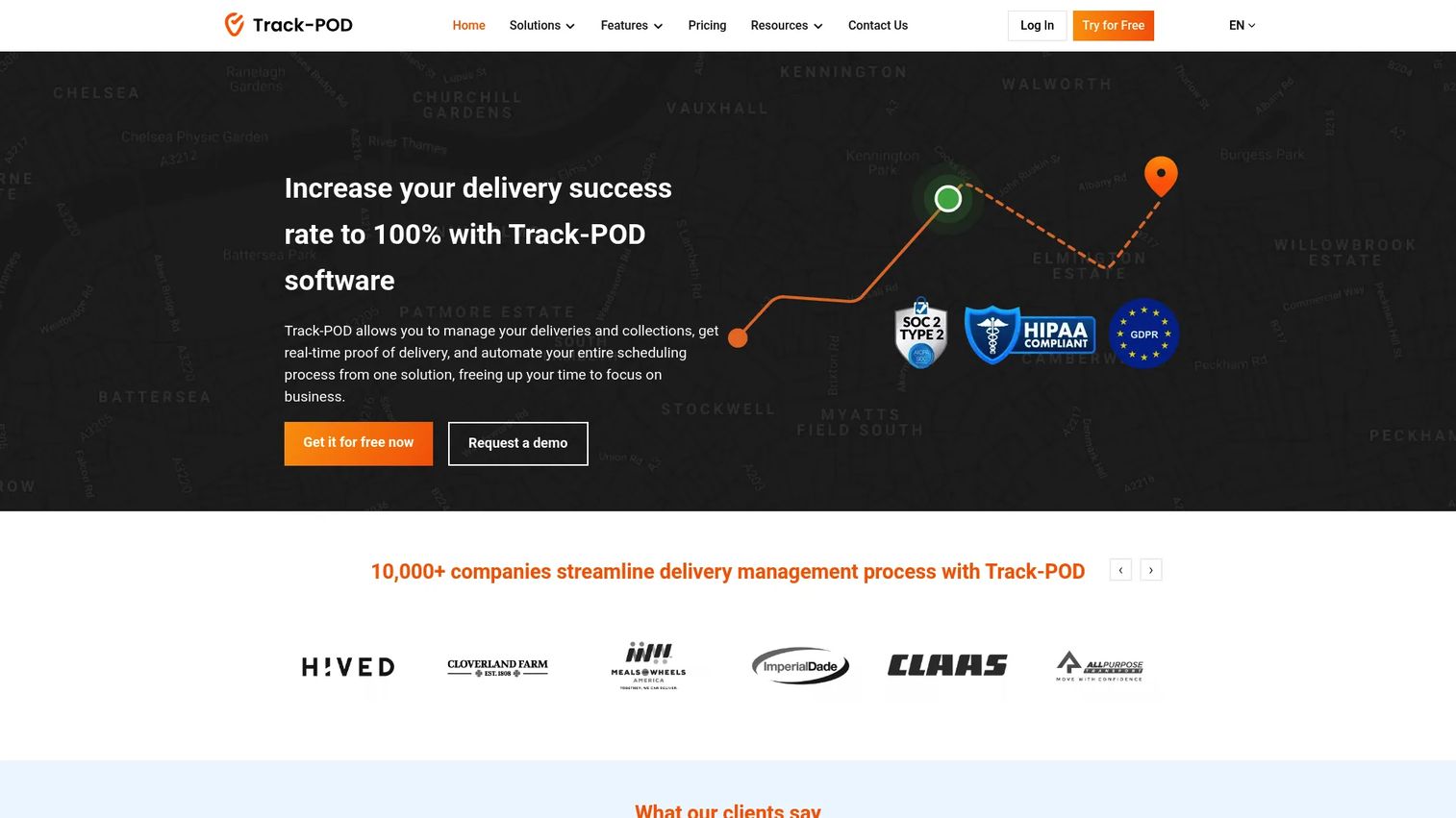
Track-POD is delivery management software that packages electronic proof of delivery, route optimization, and live tracking into a single workflow. It is built for last-mile teams that want capture, dispatch, and customer visibility in one place rather than stitched across three tools. The driver app collects signatures, photos, and timestamps, while the back-office dashboard handles routing and generates delivery confirmation documents for billing.
Best for: Last-mile delivery teams that need routing, live tracking, and ePOD in one platform.
Key strengths
- Electronic proof of delivery: captures signatures, photos, and timestamps, then produces confirmation documents ready for invoicing.
- Route optimization: plans multi-stop routes and assigns them to drivers from the same dashboard that holds proof data.
- Delivery management: connects live tracking, notifications, and dispatch so the full workflow lives in one system.
Why choose Track-POD: If your operation loses time reconciling proof, routing, and tracking across separate apps, Track-POD's all-in-one approach is the strongest fit. It suits operations leaders who want proof capture and route planning tied together without managing integrations between disconnected systems. The trade-off is that route-obsessed teams may find dedicated routing engines go deeper on optimization.
Track-POD pricing: The Ultimate plan starts at $89 per month per driver or vehicle when billed annually, or $99 month-to-month. A high-volume L Plan runs $900 per month for 6,000 orders at $0.15 per order or task. A free trial is available, though there is no permanent free tier. Confirm current terms on Track-POD's pricing page since order-based tiers change.
2. Detrack
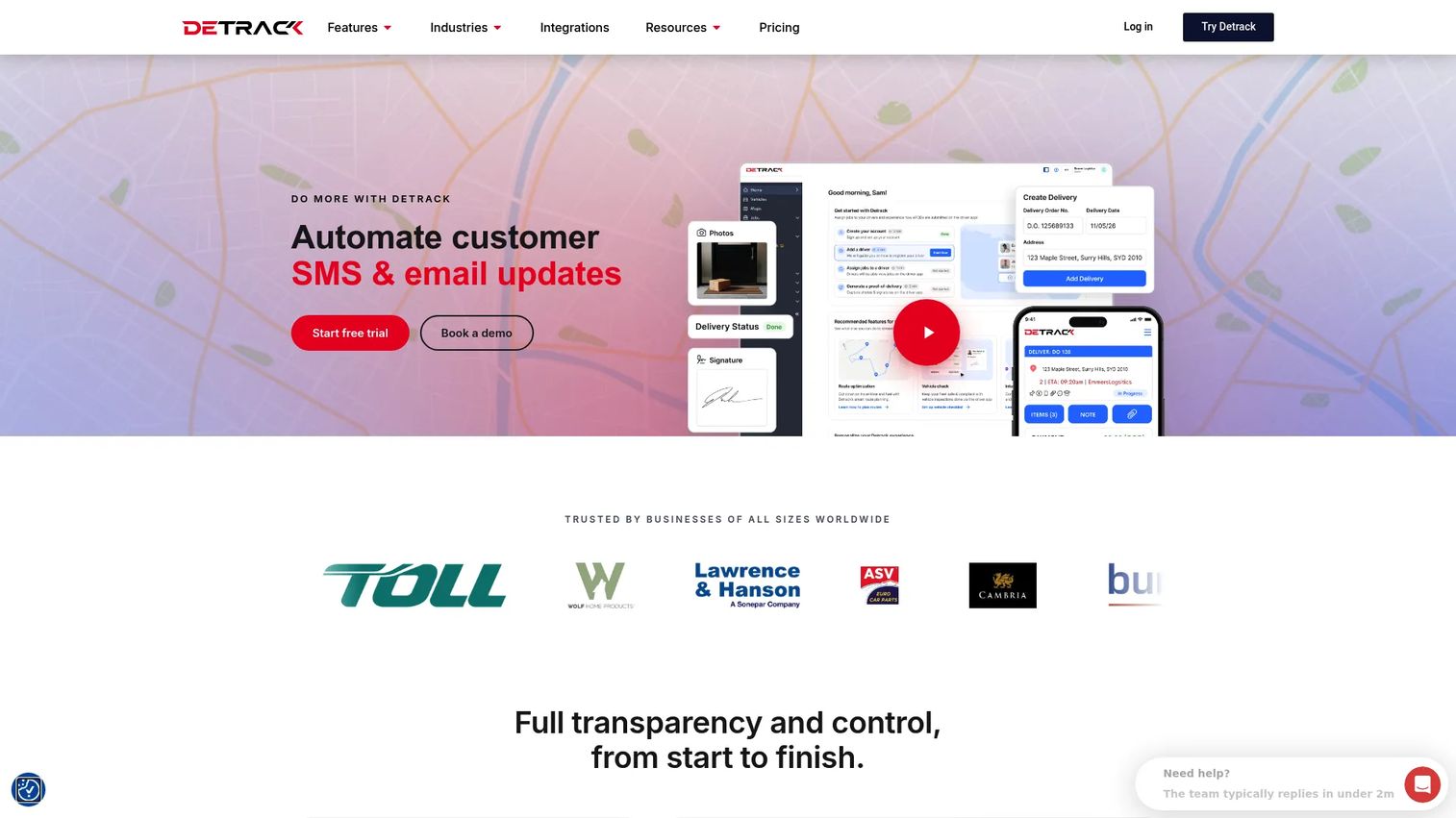
Detrack is delivery management software with a mobile-first reputation, built around a reliable driver app for proof of delivery, live tracking, and customer notifications. Its proof capture handles signatures, photos, timestamps, and offline collection, which matters for drivers working in basements, rural routes, or dead zones. Jobs captured offline sync cleanly once the device reconnects, so evidence never gets stranded.
Best for: Fleet and logistics teams that need dependable last-mile delivery management with strong mobile capture.
Key strengths
- Proof of delivery capture: signatures, photos, timestamps, and offline capture that syncs when connectivity returns.
- Live driver tracking: real-time job updates and driver location for dispatchers and customers.
- Route optimization and recurring orders: plans routes and handles repeating delivery schedules without manual rework.
Why choose Detrack: Detrack is the strongest pick when the driver app is your make-or-break factor. Teams operating in areas with patchy connectivity get proof capture that does not fail when signal drops. It fits fleets that want per-driver licensing they can scale up and down as volume shifts.
Detrack pricing: The Pro plan starts at US$29 per license per month, and the Advanced plan is US$39 per license per month, both priced per active driver. Enterprise pricing is custom. Annual billing earns a 10% discount, and a 14-day free trial covers up to 3 drivers and 10 sub-users. There is no permanent free tier.
3. FreightPrint
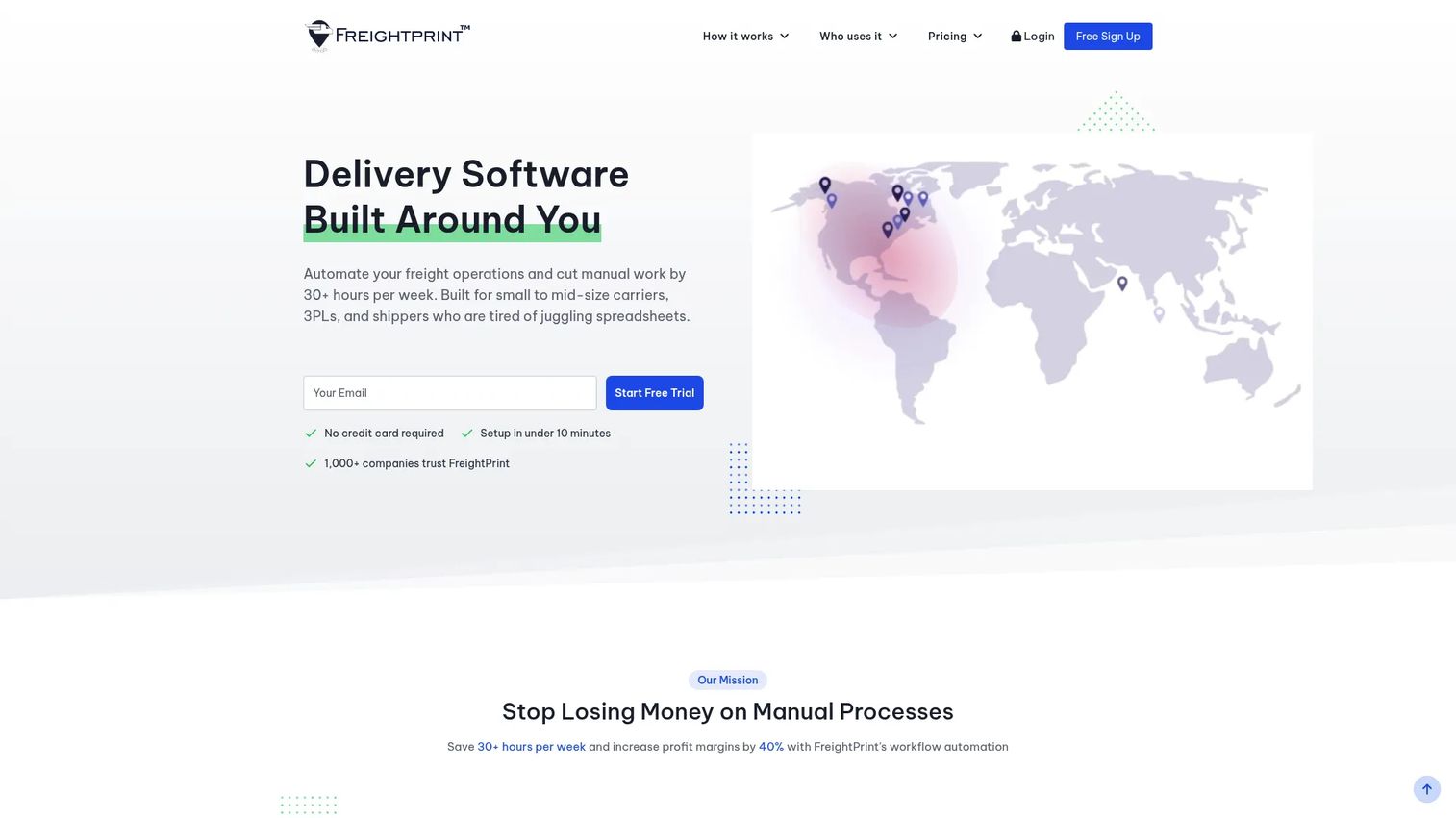
FreightPrint is logistics software for freight operations that bundles tracking, dispatch, routing, invoicing, and proof of delivery into one system. It stands out for freight and document-heavy workflows, where proof of delivery means more than a signature. FreightPrint generates POD documents with e-signatures, bills of lading, manifests, and photos, which fits carriers, 3PLs, and shippers that live in paperwork-heavy processes.
Best for: Small to mid-size carriers, 3PLs, and shippers that need freight workflow automation with document-grade proof.
Key strengths
- Automated load tracking: real-time visibility across loads without manual status updates.
- Document-grade proof of delivery: e-signatures, BOLs, manifests, and photos captured as part of the delivery record.
- Route optimization and dispatch: delivery zones, route planning, and dispatch automation in one place.
Why choose FreightPrint: FreightPrint bridges POD education and operations better than most, which helps teams new to digital proof of delivery understand the workflow. It is the right fit when your proof requirements include freight documents, not just a signature on glass. Teams doing simple last-mile drop-offs may not need its document depth.
FreightPrint pricing: The Start plan begins at $99 per month, the Grow plan at $299 per month, and the Win plan at $2,499 per month, all billed annually. A 14-day free trial is available. There is no permanent free tier, and pricing is displayed publicly on the FreightPrint site.
4. Onfleet
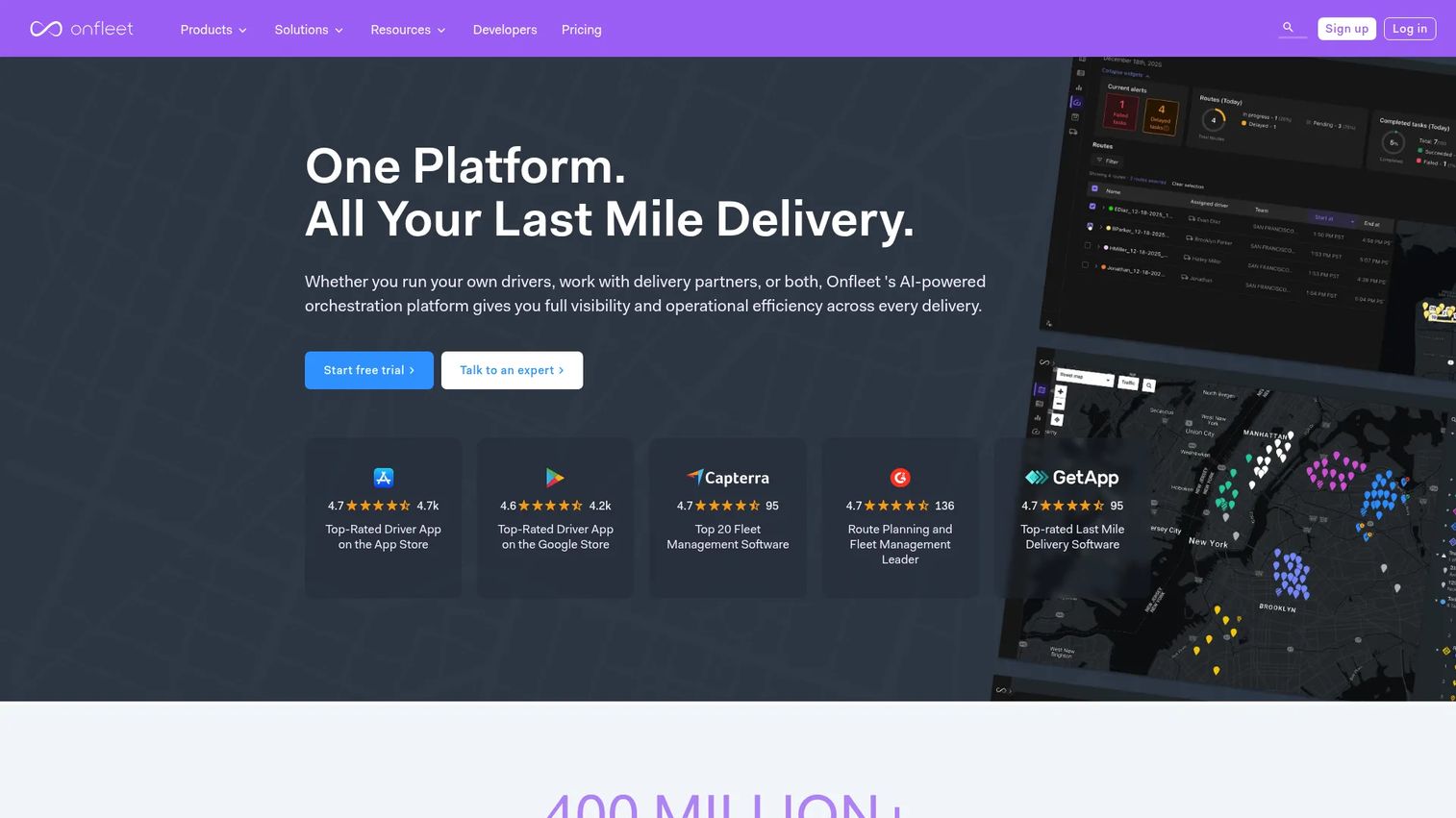
Onfleet is last-mile delivery management software focused on dispatch, routing, tracking, and proof of delivery. It shines for high-volume delivery teams that need dispatch visibility and tight driver coordination. Photo and signature proof of delivery is built in, but the platform's center of gravity is operational control: route optimization, driver-dispatcher chat, and customer notifications that keep recipients informed through the delivery window.
Best for: Teams running high-volume last-mile delivery that need a platform with dispatch, routing, and customer tracking.
Key strengths
- Route optimization: builds efficient multi-stop routes and assigns them to drivers at scale.
- Driver-dispatcher chat: keeps drivers and dispatch coordinated on route changes and exceptions in real time.
- Photo and signature proof of delivery: captures evidence at drop-off and feeds it into the delivery record.
Why choose Onfleet: Onfleet fits operations where dispatch coordination is the bottleneck, not just proof capture. High-volume delivery teams that need to move thousands of tasks a month with live driver communication get a purpose-built platform. Smaller fleets may find its entry pricing sits above lighter alternatives.
Onfleet pricing: The Launch plan is $619 per month and includes 2,500 tasks. The Scale plan is $1,349 per month for 5,000 tasks, and the Enterprise plan is $3,099 per month for 10,000+ tasks. A Courier Suite add-on starts at $299 per month. There is no free tier; contact sales for Enterprise details.
5. OptimoRoute
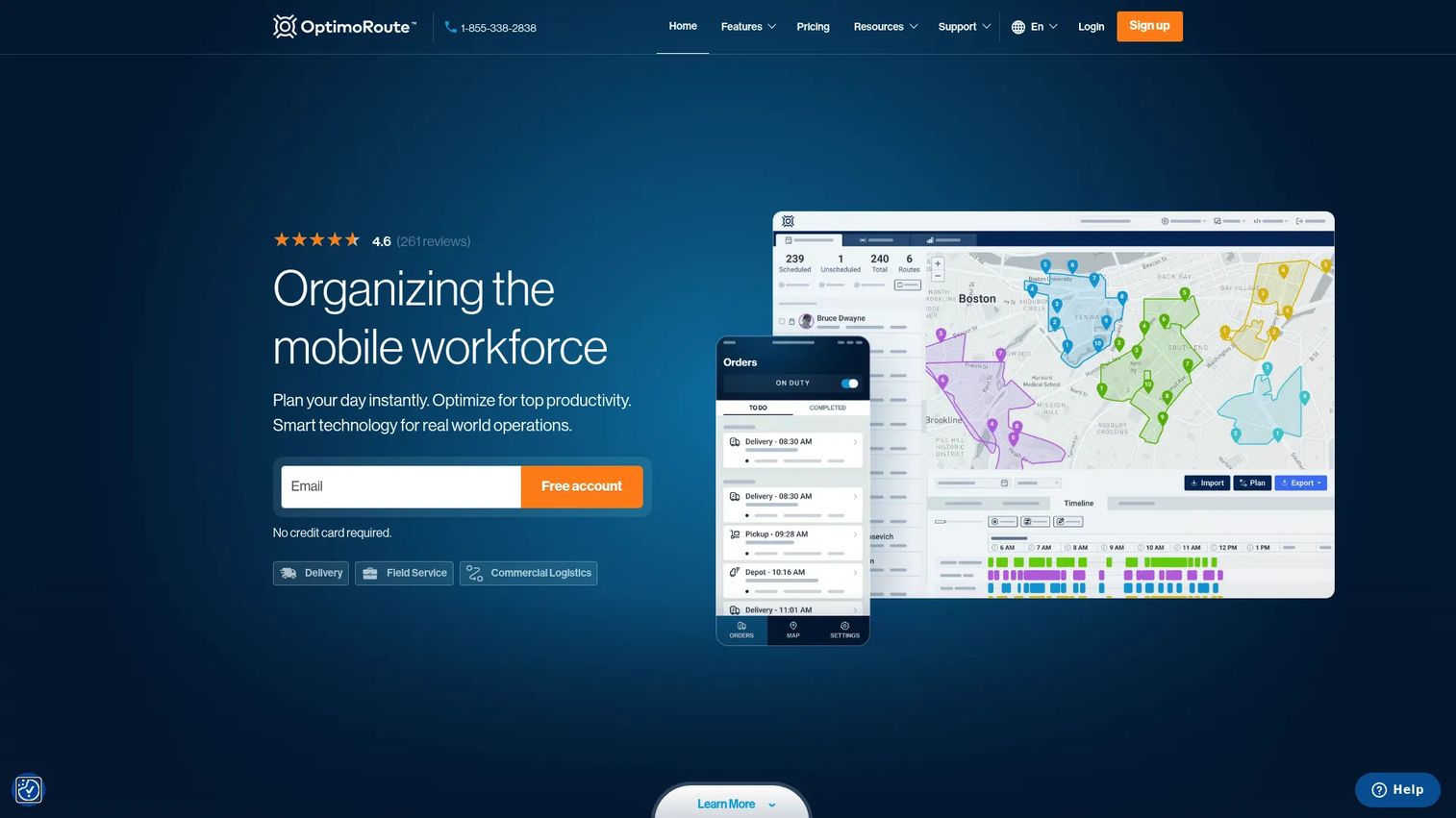
OptimoRoute is cloud-based route optimization and scheduling software for delivery, logistics, and field service teams. It is a route-first platform, so proof of delivery collection sits inside a broader dispatch and scheduling workflow rather than as the headline feature. For teams where routing efficiency drives cost, OptimoRoute's optimization engine, live tracking, and driver mobile app collect proof as part of completing each stop.
Best for: Delivery, logistics, and field service operations that need route and schedule optimization with proof collection.
Key strengths
- Automated route and schedule optimization: builds efficient routes and schedules across drivers and shifts.
- Live tracking and ETA updates: keeps dispatch and customers informed on delivery progress.
- Driver mobile app: collects proof at each stop and exports or integrates route data into other systems.
Why choose OptimoRoute: OptimoRoute is the strongest fit when routing efficiency is your primary cost lever and proof capture is a supporting requirement. Field service and delivery teams that plan complex multi-stop, multi-shift schedules benefit most. Teams whose top priority is document-grade proof may want a proof-first platform instead.
OptimoRoute pricing: The Lite plan is $35.10 per driver per month and the Pro plan is $44.10 per driver per month, both billed annually. A Custom plan is sales-quoted. A 30-day free trial is available, and annual billing includes a 10% discount. There is no permanent free tier.
6. Routific
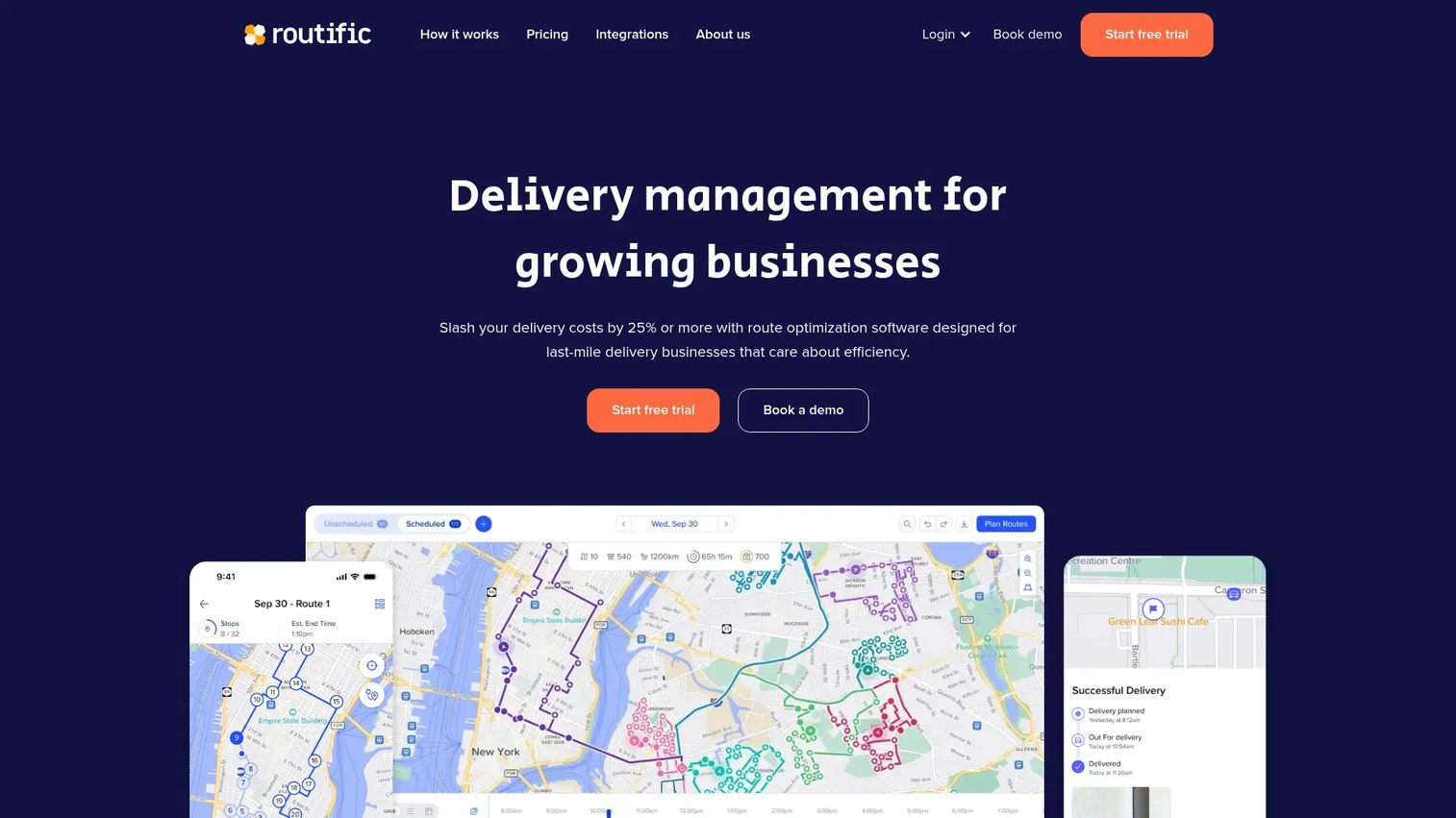
Routific is delivery management and route optimization software built for last-mile delivery businesses. Like OptimoRoute, its strength is routing, but Routific pairs smart route optimization with a driver app, customer delivery tracker, and proof of delivery in every plan. That combination makes it attractive to lean, multi-stop delivery teams that want routing depth without enterprise pricing.
Best for: Small to mid-sized delivery teams that need route planning, dispatch, and customer delivery tracking.
Key strengths
- Smart route optimization: plans efficient multi-stop routes for fleets of any size.
- Driver app: gives drivers turn-by-turn routes and captures proof of delivery at each stop.
- Customer delivery tracker: live GPS tracking and customer notifications included across plans.
Why choose Routific: Routific is the strongest pick for teams that want serious routing plus proof capture on a pricing model that scales with order volume rather than seats. The free tier lets small operations start without commitment. Higher-volume teams graduate to per-order pricing that stays predictable as they grow.
Routific pricing: The free tier covers up to 100 orders per month. The Pay As You Grow plan is $150 per month for the first 1,000 orders, then $0.15 per order above that with volume discounts at higher tiers. All plans include unlimited drivers, unlimited dispatchers, intelligent route optimization, real-time GPS tracking, customer notifications, the Delivery Tracker, and proof of delivery.
7. Circuit for Teams
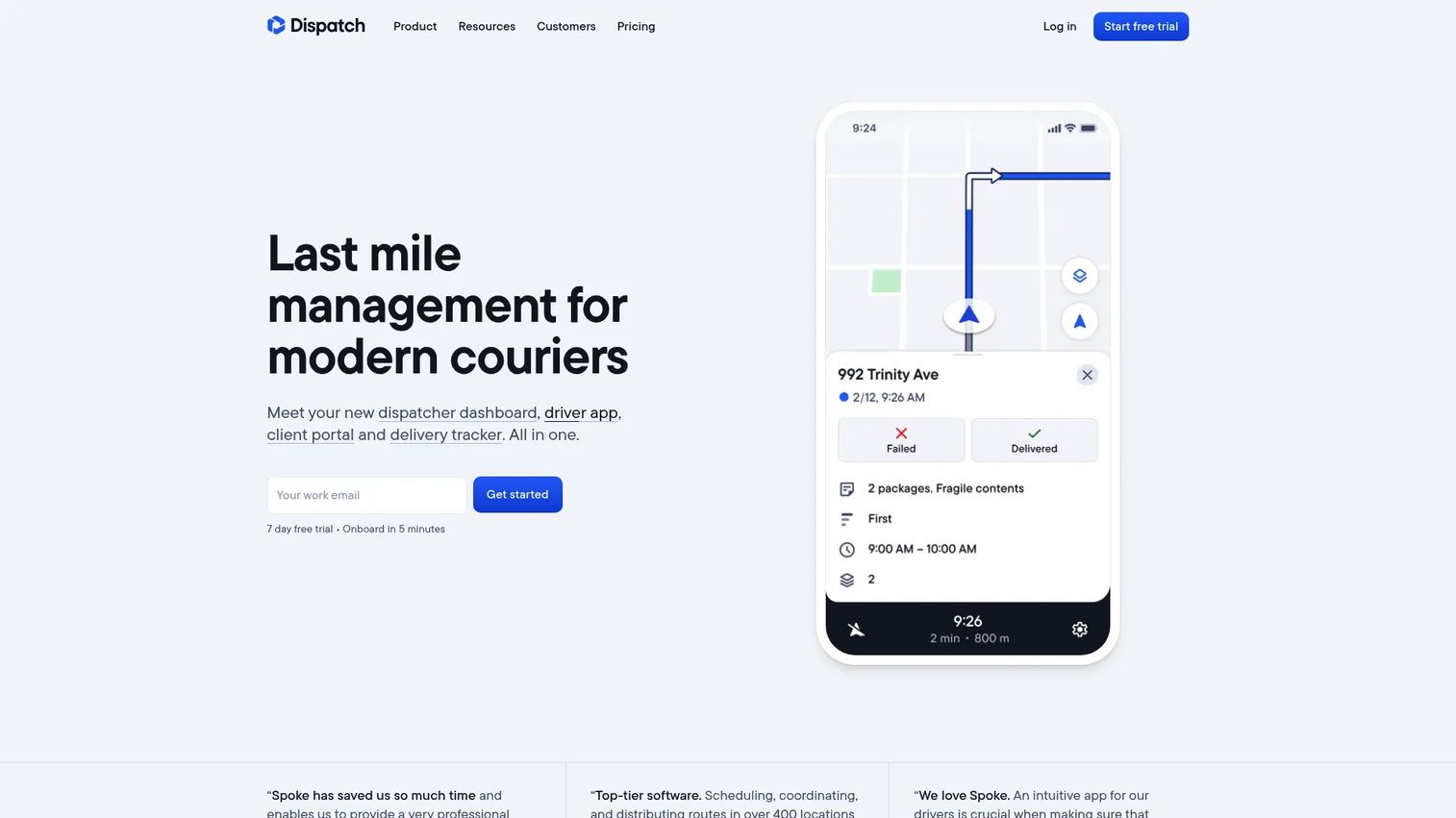
Circuit for Teams is delivery management and route optimization software built for businesses running multiple drivers. It focuses on centralized route planning, driver visibility, and proof capture basics, which keeps it approachable for smaller fleets that do not want heavy operational complexity. Proof of delivery through signature and photo capture, live driver tracking, and multi-driver route optimization cover the core needs of lean teams.
Best for: Delivery teams that need centralized route planning and driver visibility without a steep operational lift.
Key strengths
- Multi-driver route optimization: plans and assigns routes across a fleet from one dashboard.
- Proof of delivery: captures signatures and photos at drop-off for a delivery record.
- Live driver tracking: gives dispatch real-time visibility into where drivers are.
Why choose Circuit for Teams: Circuit is the strongest fit for lean teams that want route planning and proof capture without configuring a full logistics platform. Smaller fleets get the essentials, fast, without paying for features they will not use. Operations with complex document or freight requirements will likely outgrow the basics.
Circuit for Teams pricing: Plans include Starter at $100 per month, Essentials at $200 per month, Standard at $250 per month, and Pro at $300 per month. Higher tiers add more stops and features. Confirm current plan details on the Circuit site, since tier limits change over time.
Considerations before you buy
A feature list on a landing page tells you what a tool can do. It does not tell you whether it fits your operation. Run every option through this checklist before you commit.
Proof capture depth
Confirm the tool supports the evidence types your disputes actually require: signatures, photos, GPS, timestamps, and barcode or QR scanning. A signature alone rarely settles a claim. Photo and geotag evidence, timestamped at drop-off, creates a record that holds up when a customer disputes a delivery.
Customer visibility
Evaluate live tracking, branded status pages, ETA alerts, and how much control you have over notifications. Real-time tracking and a branded tracking widget cut inbound "where is my order" calls and keep your brand in front of the customer at delivery. Check whether notification timing and channels are configurable.
Operations workflow
Confirm routing, dispatching, driver assignment, and back-office dashboard fit. The best proof of delivery solutions keep dispatch and capture in one workflow so your team is not reconciling data across systems. Map the tool's flow against your actual pickup-to-delivery process before buying.
Automation and integrations
Verify APIs, order imports, sync behavior, and document workflow support. If orders live in an ERP or e-commerce platform, clean imports and reliable sync matter more than any single feature. Check which integrations exist out of the box and which need custom API work.
Offline and field reliability
Assess whether the mobile driver app works in poor connectivity and syncs cleanly later. Drivers hit dead zones in basements, elevators, and rural routes. Offline mode that captures proof locally and syncs on reconnect is the difference between complete records and gaps. Test it in the field before rollout.
Conclusion
The right proof of delivery software depends on three questions: how deep your evidence needs run, how complex your routes are, and how much customer visibility you have to deliver.
For all-around ePOD with routing and tracking in one workflow, Track-POD is the strongest starting point. Mobile-first teams working in patchy connectivity should look hard at Detrack. Freight and document-heavy operations get the most from FreightPrint. High-volume last-mile dispatch teams fit Onfleet. If routing efficiency is your primary cost lever, OptimoRoute and Routific lead, with Routific's free tier and per-order pricing suiting leaner teams. And smaller fleets that want simplicity without heavy setup will find Circuit for Teams approachable.
Shortlist two or three based on your proof needs, route complexity, and customer visibility requirements, then run a real-world trial with your own drivers and routes before you commit. The tool that wins on a demo is not always the one that survives a rainy Friday afternoon with 60 stops left. If you also build delivery-adjacent software and want prospects to experience your product before a sales call, Start your journey with Guideflow today!
FAQs
Proof of delivery software digitally captures confirmation that a delivery happened, using signatures, photos, GPS location, and timestamps. It replaces paper slips with structured, time-stamped records that connect to billing, customer tracking, and an auditable history, so operations teams can prove what was delivered, when, and where.
At minimum, look for evidence capture (signatures, photos, GPS, timestamps, and barcode or QR scanning), route and delivery visibility, a reliable mobile driver app, customer notifications, and a back-office dashboard. Stronger platforms also add offline capture, branded tracking pages, and integrations with your order and billing systems.
ePOD, or electronic proof of delivery, is the electronic version of the paper proof of delivery slip. Proof of delivery software often includes ePOD plus additional layers like route optimization, dispatch, and customer-facing tracking. So ePOD is a core component, while the broader software category bundles it with operational workflow.
It creates a time-stamped, location-tagged record of what was delivered, when, and where, often with a photo and signature attached. When a customer disputes a delivery, you have concrete evidence instead of a hunt through paper slips. That cleaner record settles claims faster and reduces the volume of disputes that escalate.
Many proof of delivery apps capture signatures, photos, and timestamps offline, then sync once the device reconnects. This matters for drivers in basements, elevators, or rural dead zones. Offline behavior varies by vendor, so verify how a given app handles capture and sync in weak connectivity before you buy.
Delivery fleets, wholesalers, distributors, freight carriers, 3PLs, and field service teams all benefit from auditable drop-off confirmation. Any operation that bills against completed deliveries, faces disputes over missing items, or needs to give customers delivery visibility is a strong candidate for a proof of delivery system.
Faster confirmation means faster invoicing. When proof of delivery is captured digitally at drop-off and instantly available as a confirmation document, billing does not wait on paperwork returning from the van. That shortens the gap between delivery and invoice, reduces back-and-forth over missing documents, and improves cash flow.