It's 11:47 PM on a Saturday. Your door has a line down the block, three promoters are texting about guest list spots, a VIP just showed up for a table nobody logged a deposit for, and the ticketing scanner froze. The problem was never demand. It was the stack holding your busiest four hours together.
That is the real job of nightclub software: keeping Friday and Saturday operations from collapsing under their own volume. The global bar and nightclub tech market hit US$3.7B in 2025 and is forecast to reach US$7.1B by 2033, a 13.7% CAGR, according to HTF MI (2025). Operators are spending because manual coordination stops scaling the moment a venue gets busy.
The catch: "nightclub software" is not one product. Some tools own reservations and bottle service. Some own guest CRM and repeat-guest revenue. Some are consumer ticketing marketplaces. Some are POS systems that happen to run a nightlife floor. Buyers compare tools that solve different jobs and then wonder why the shortlist feels apples-to-oranges. This guide fixes that.
What's inside
This guide is for club owners, operators, and founders evaluating venue software they can trust on the busiest nights of the week.
We picked tools against the workflows that actually decide revenue:
- Reservations, guest lists, and VIP table booking
- Bottle service and table deposits with no-show protection
- Nightclub ticketing software and multi-channel booking
- Guest CRM, promoter tracking, and revenue analytics
- POS integration, door check-in, and staff permissions
The list mixes venue-native platforms with a few adjacent POS-first tools where they genuinely fit. It is skimmable, honest, and built to help you match a tool to your bottleneck.
TL;DR
- Best all-in-one venue ops: TablelistPro. Reservations, ticketing, and table management in one operating layer.
- Best guest data and CRM depth: SevenRooms. Guest profiles and spend insights that drive repeat revenue.
- Best rapid setup and direct booking: Mr. Black. Same-day setup with guest list, deposits, and tickets.
- Best upscale and multi-venue operations: UrVenue. Dynamic pricing and interactive maps for premium properties.
- Best promoter-driven nightlife: Fourvenues. White-label sales pages built for list-heavy acquisition.
- Best bottle-service specialist: DQ Bottle Service Software. Purpose-built booth and table workflow.
- Best POS-first floor operations: Toast. Payments, menu, and inventory for transaction-heavy venues.
- Best smaller or mixed hospitality teams: TouchBistro. iPad POS with floor plans and reservations.
What is nightclub software?
Nightclub software is venue operations software that manages reservations, guest lists, bottle service, table deposits, ticketing, guest data, door check-in, and revenue reporting from one system. It replaces the spreadsheets, group texts, and disconnected inboxes that break down the moment a venue gets busy.
The category splits into four types that get confused constantly:
- All-in-one venue platforms: reservations, tables, tickets, and CRM under one roof (TablelistPro, Mr. Black, UrVenue, Fourvenues).
- Reservation and guest CRM tools: deep guest profiles, segmentation, and marketing (SevenRooms).
- Bottle service specialists: VIP table and booth workflow built for premium service (DQ Bottle Service Software).
- POS systems: payments, menu, and inventory that run the floor (Toast, TouchBistro).
The core functions any nightclub management software should cover:
- Guest acquisition: promoters, social, web, and email without manual handoffs
- Booking: guest list software, VIP table booking, and multi-channel booking
- Deposits: table deposits, minimum spends, and confirmation flows
- Guest CRM: profiles, spend history, and repeat-guest tracking
- Analytics: revenue analytics tied to nights, tables, and staff
- Integrations: POS integration and payment processing
Nightclub ticketing software sits inside this category too, but it is not the same as a consumer ticketing marketplace. More on that below.
When to use nightclub software
Streamline guest list and reservation workflows
If your bookings live in a shared spreadsheet, a promoter's DMs, and three staff phones, you are running blind on a Saturday. Nightclub reservation software centralizes guest list software, door check-in, and confirmations so the person at the door sees the same data as the promoter who sold the spot. When the volume spikes, one source of truth is the difference between a smooth line and a bottleneck.
Sell VIP tables and bottle service
VIP table booking is where the margin is. But table sales need real infrastructure: floor plans that show what's open, table deposits that lock the commitment, minimum spend tracking, and confirmation flows that survive no-shows. Bottle service software turns a text-message negotiation into a booked, paid, and tracked transaction. Without deposits and no-show protection, you are gambling your best inventory on a Saturday.
Track revenue and repeat guests
Booking counts tell you nothing about what actually drives money. Guest CRM and revenue analytics show you which promoters bring spenders, which tables produce the highest minimums, and which guests come back. That data is how operators stop guessing and start deciding what fills the room. It is also how a founder proves the venue scales without more manager heroics.
Comparison table
Venue-native software is built for nightlife: guest lists, bottle service, deposits, and promoter tracking. General POS or hospitality tools run the floor and payments but were designed for restaurants first. Both belong on a shortlist depending on your primary bottleneck. The table below sorts by fit for nightclub software buyers, with the venue-native platforms leading.
| # | Product | Best for | Key differentiator | Pricing | G2 rating |
|---|---|---|---|---|---|
| 1 | TablelistPro | All-in-one venue ops for clubs, bars, lounges | Reservations, ticketing, and table management in one layer | From $99/month | Not listed |
| 2 | Mr. Black | Fast-setup direct booking and deposits | Same-day setup with guest list, deposits, and tickets | From $300/month | Not rated yet |
| 3 | SevenRooms | Guest CRM depth and repeat revenue | Guest profiles and spend insights for hospitality | By inquiry | 4.7/5 |
| 4 | UrVenue | Upscale and multi-venue operations | Dynamic pricing and 3D interactive maps | By inquiry | 3.7/5 |
| 5 | Fourvenues | Promoter-driven nightlife and events | White-label sales pages and guest lists | By inquiry | Not rated yet |
| 6 | DQ Bottle Service Software | Bottle-service specialist venues | Purpose-built booth and table workflow | Quote-based | Not listed |
| 7 | Toast | POS-first, transaction-heavy floors | Integrated POS, payments, and inventory | From $0/month | 4.2/5 |
| 8 | TouchBistro | Smaller or mixed hospitality teams | iPad POS with floor plans and reservations | From $69/month | 4.1/5 |
Best 8 tools for nightclub software
1. TablelistPro
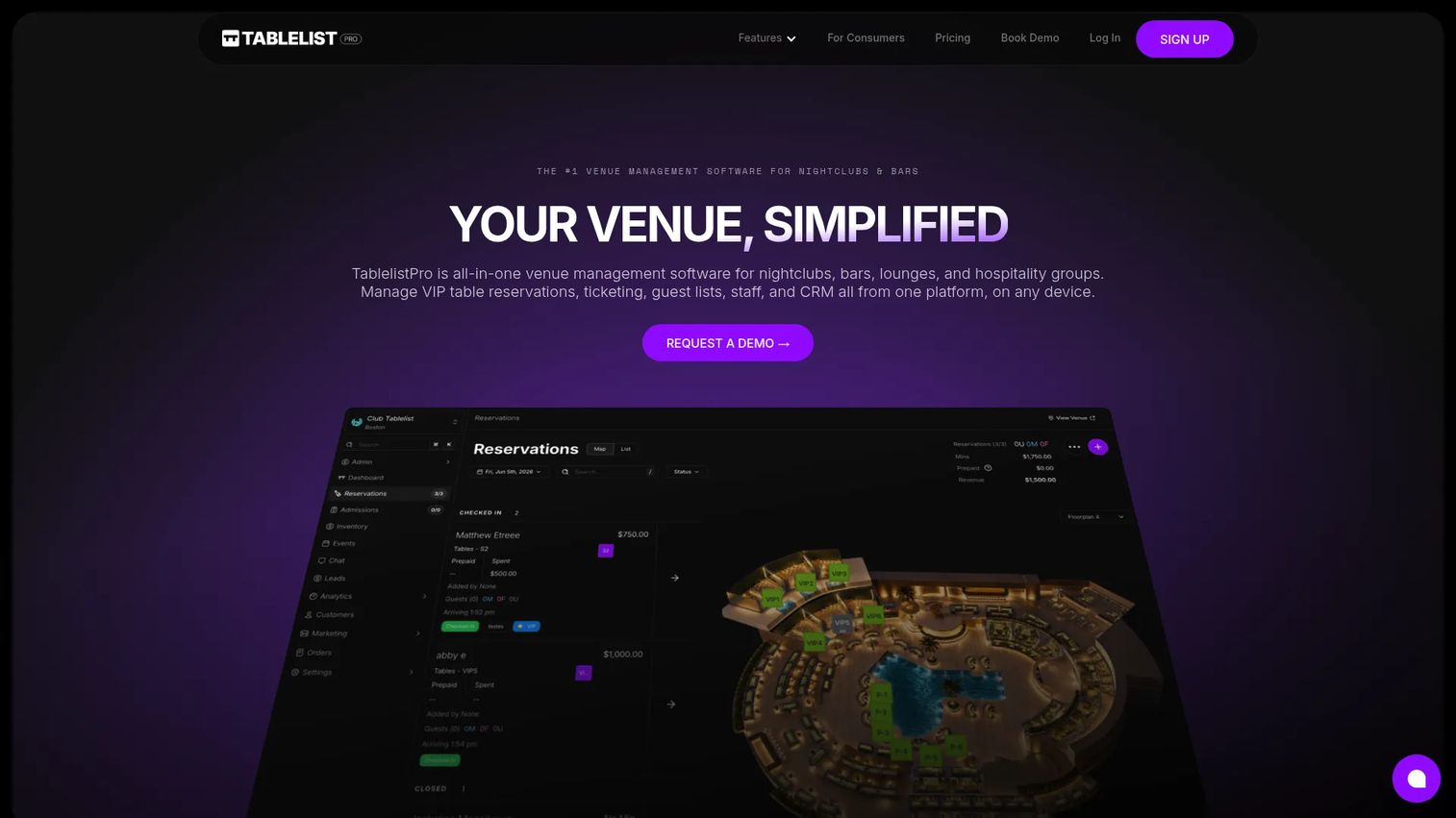
TablelistPro is all-in-one venue management software built for nightlife and hospitality venues. It pulls VIP table reservations, event ticketing, and guest list management into a single operating layer, so the same system that sells a table also tracks the guest and reports the revenue. For operators tired of stitching three tools together, it is the closest thing to one weekend-proof dashboard.
Best for: Nightclubs, bars, lounges, and hospitality groups that want reservations, ticketing, and table management in one place.
Key strengths
- VIP table reservation management with deposits
- Event ticketing and guest list management
- Embeddable booking widgets and CRM
Why choose TablelistPro: If your primary bottleneck is running reservations, tables, and tickets across disconnected tools, this consolidates the stack into one venue-native layer. It fits operators who want an operating system for the whole night, not a point solution.
TablelistPro pricing: Basic starts at $99/month, Standard at $299/month, and Deluxe at $499/month, all billed monthly. The company also offers custom pricing for seasonal venues, festivals, special event series, or one-off events.
A current G2 rating for TablelistPro was not available at the time of writing.
2. Mr. Black
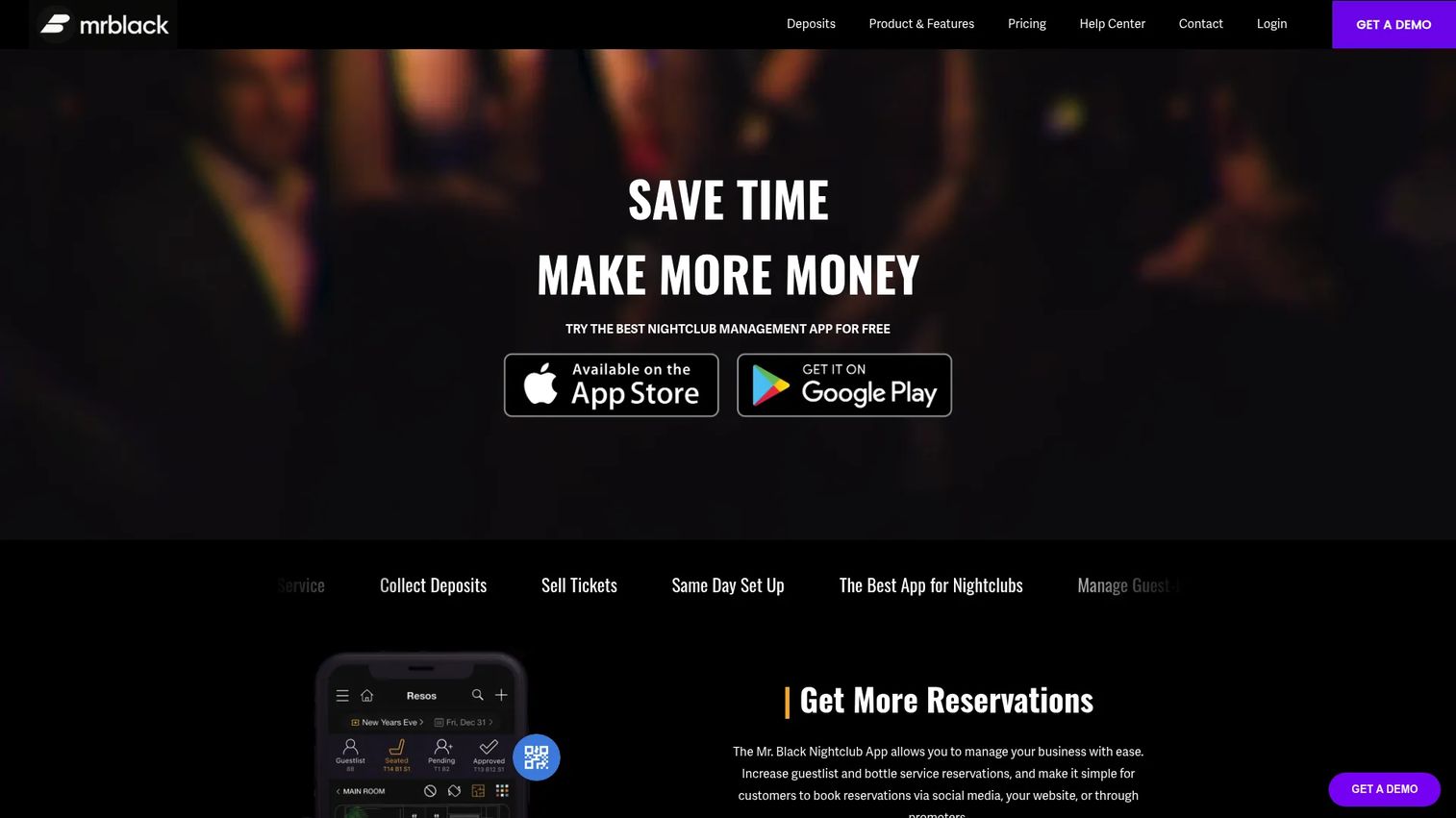
Mr. Black is nightclub and bar management software covering guest lists, bottle service, deposits, tickets, and reporting. Its edge is speed. Same-day setup means a venue can move from signup to selling tables and collecting deposits without a long onboarding cycle. That matters when you need direct-to-consumer booking live before the next Saturday.
Best for: Nightclubs and bars that want reservations, ticketing, and venue operations running in one system, fast.
Key strengths
- Guest-list, bottle service, and table management
- Deposits and payment links
- Digital ticketing and CRM/reporting
Why choose Mr. Black: If getting a direct booking and deposit flow live quickly is the priority, its fast setup and web/social acquisition focus fit venues that don't want to wait on implementation. It suits operators building a repeatable booking motion without a technical lift.
Mr. Black pricing: The Standard plan is $300/month and Premium is $500/month, both billed monthly and quoted in USD. Enterprise is available as a partnership arrangement through sales.
Mr. Black's G2 listing does not yet show enough reviews to produce a meaningful rating.
3. SevenRooms
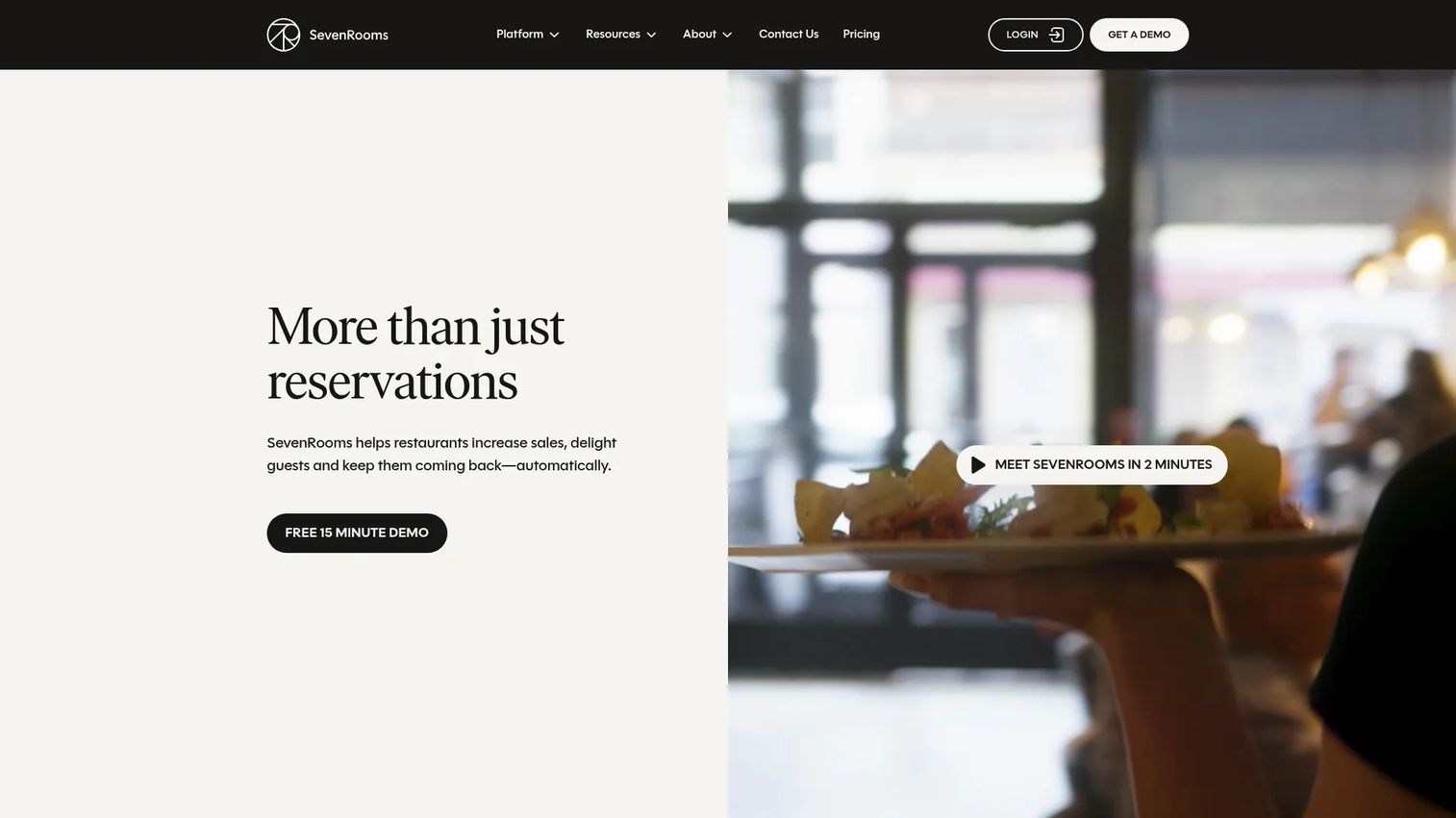
SevenRooms is a hospitality CRM and guest experience platform built around reservations, guest data, and marketing. Where other tools stop at booking counts, SevenRooms builds rich guest profiles and spend insights, so operators can see who the high-value regulars are and market to them directly. For venues that live on repeat business, that guest CRM depth is the whole point.
Best for: Restaurants and hospitality operators, including lounges and upscale venues, that need reservations, guest CRM, and marketing in one system.
Key strengths
- Reservations and waitlist management
- Guest CRM and segmentation
- Marketing and guest engagement tools
Why choose SevenRooms: If repeat-guest revenue is your bottleneck, not day-of booking chaos, its guest data and segmentation turn one-time visitors into tracked, marketable regulars. It fits operators focused on lifetime value over raw table throughput.
SevenRooms pricing: SevenRooms offers three packages with multiple add-ons, and pricing is handled through a sales inquiry rather than a public price. Contact the team for a quote matched to your venue.
SevenRooms holds a 4.7/5 rating on G2.
4. UrVenue
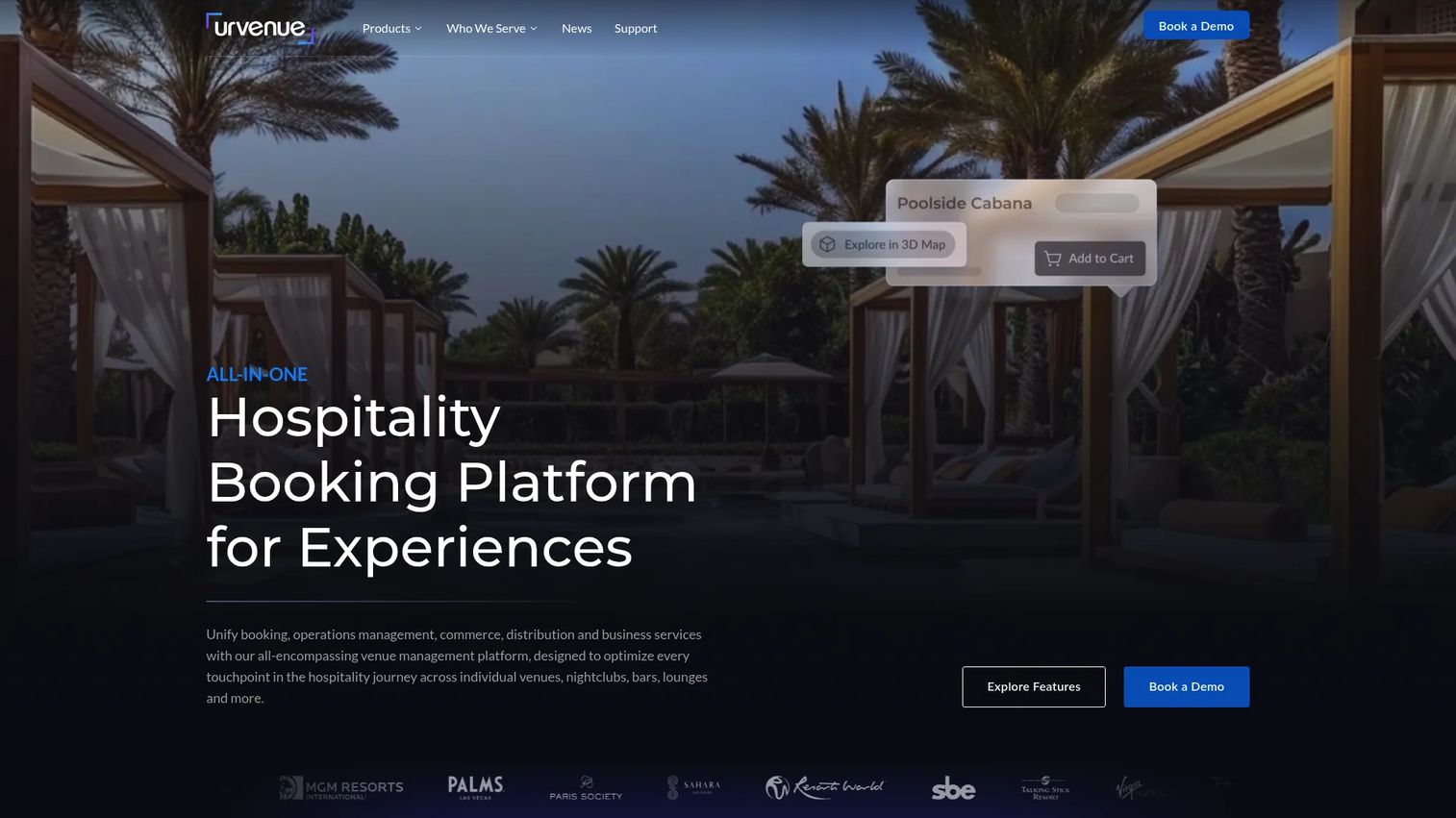
UrVenue is hospitality booking and venue management software for selling and operating experience-based inventory across nightlife, daylife, pools, and resorts. Its standout capabilities are dynamic pricing and 3D interactive maps, which let premium and multi-property operators sell the right table at the right price and show guests exactly what they are booking. It leans toward revenue optimization at scale.
Best for: Hotels, resorts, nightlife, pools, bars, and lounges that need unified booking and venue operations across multiple properties.
Key strengths
- Real-time inventory and booking management
- 3D interactive seating and floor plans
- Dynamic pricing and payment options
Why choose UrVenue: If you run upscale or multi-venue operations where table pricing and visual floor plans drive revenue, its dynamic pricing and interactive maps fit that complexity. It suits operators optimizing yield across many rooms rather than a single club.
UrVenue pricing: UrVenue prices based on venue size, feature needs, integrations, and number of venues, and directs operators to contact the team for a tailored quote.
UrVenue holds a 3.7/5 rating on G2.
5. Fourvenues
Fourvenues is event management software for nightlife venues, festivals, and promoters. Its core strength is promoter-driven acquisition: white-label sales pages, guest lists, ticket sales, and VIP reservations that flow through the people who actually fill your room. For venues where promoters and list-based acquisition drive the door, that structure fits the real workflow.
Best for: Nightlife venues and event operators that run heavy promoter traffic and need tickets, reservations, and operations in one system.
Key strengths
- White-label sales pages
- Guest lists and ticket sales
- VIP reservations and table management
Why choose Fourvenues: If promoter tracking and list-based acquisition are how you fill the venue, its promoter controls and branded sales pages fit that motion better than a reservation-first tool. It suits event-heavy operators managing many contributors to the guest list.
Fourvenues pricing: Fourvenues uses flexible, tailored pricing and directs operators to request information rather than publishing a price. Reach out for a quote based on your venue and event volume.
Fourvenues does not yet have enough G2 reviews to show a meaningful rating.
6. DQ Bottle Service Software
DQ Bottle Service Software is exactly what the name says: a platform purpose-built for bottle-service operations. It handles booth and table bookings, in-venue ordering and payments, and guest data with upsell tracking. If bottle service is the center of your business and not just a feature, a specialist tool built around that workflow fits tighter than a general platform.
Best for: Nightclubs and VIP venues that need a dedicated bottle-service workflow platform.
Key strengths
- Booth and table bookings
- In-venue ordering and payments
- Guest data and upsell tracking
Why choose DQ Bottle Service Software: If VIP tables and bottle service are your primary revenue engine, a specialist built around booth workflow and in-venue upsells fits closer than an all-in-one tool. It suits high-volume VIP venues that live and die by table service.
DQ Bottle Service Software pricing: Pricing is quote-based, with Standard and Enterprise plans available on request. The company notes the first month is on them, so contact them for a quote.
A current third-party rating for DQ Bottle Service Software was not available at the time of writing.
7. Toast
Toast is a restaurant technology platform built around point of sale, payments, and operations. It is honest to say Toast is POS-first, not nightlife-native. But for venues where transaction volume, menu management, and inventory are the real load, that POS integration and payment depth matter more than a bespoke bottle service module. Many clubs pair a POS like Toast with a venue-native booking tool.
Best for: Venues that need tight POS, payments, and inventory management alongside their nightlife operations.
Key strengths
- Point of sale and restaurant operations
- Online ordering and digital storefront tools
- Inventory, accounting, payroll, and finance tools
Why choose Toast: If your bottleneck is transactions and inventory rather than guest lists, its POS depth and payment processing fit better than a reservation-first platform. It suits high-volume floors that treat booking as secondary to the bar.
Toast pricing: Toast lists three editions: a Starter Kit at $0/month, a Point of Sale plan at $69/month, and a Custom plan through sales. Upfront hardware and implementation costs vary, and pay-as-you-go is available within the Starter Package.
Toast holds a 4.2/5 rating on G2.
8. TouchBistro
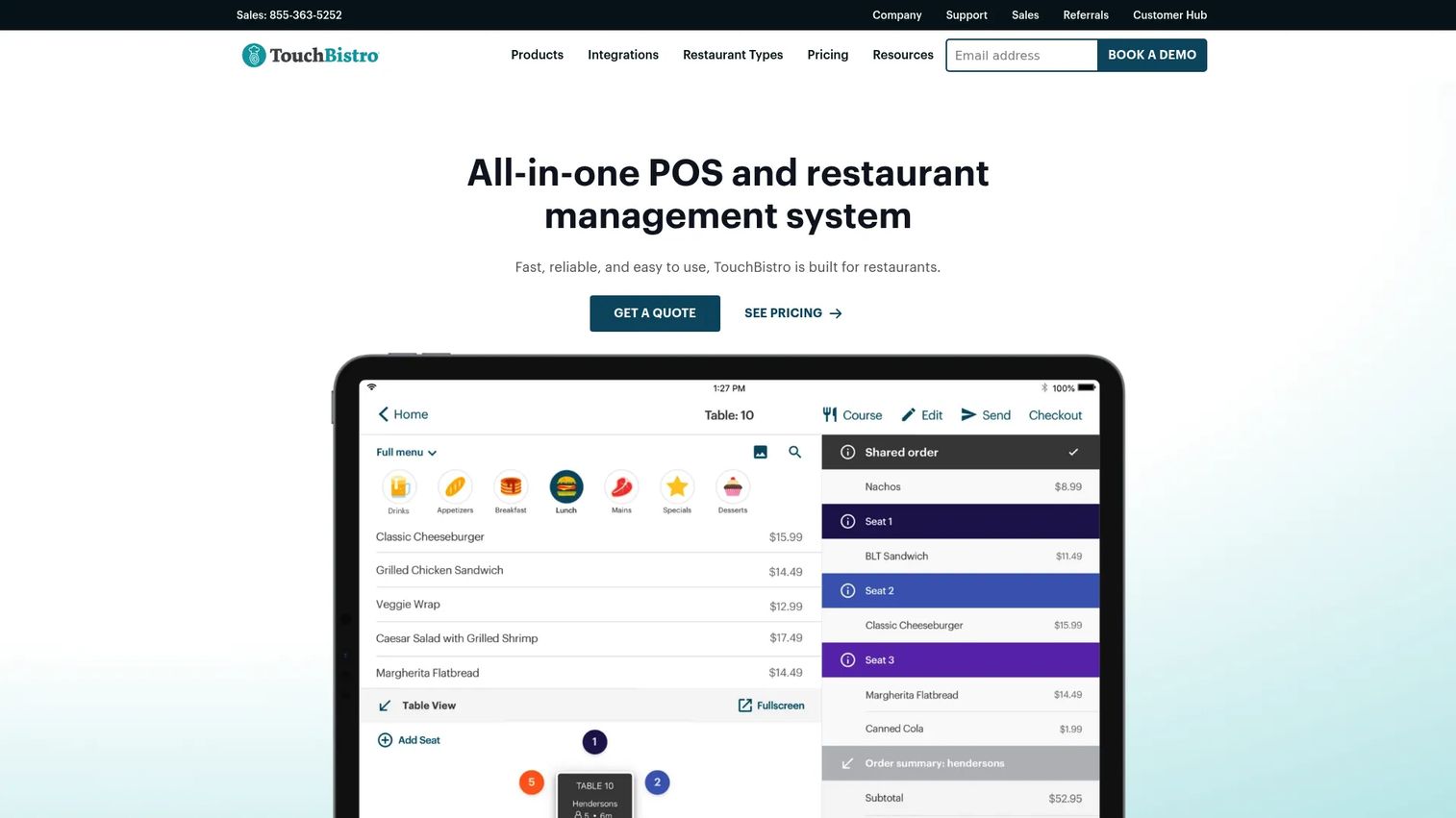
TouchBistro is iPad-based restaurant POS and management software with add-on modules for floor plans, reservations, and more. For smaller or mixed hospitality teams, a lounge or bar with lighter nightlife needs, it covers payments, menu management, floor plans, and reservations without the weight of a full venue platform. It fits when your nightclub needs are hybrid rather than table-service-heavy.
Best for: Smaller or mixed hospitality teams wanting an all-in-one iPad POS with add-on modules.
Key strengths
- Floor plan and table management
- Menu management and reservations
- Reporting, inventory, and staff management
Why choose TouchBistro: If your venue blends food service with lighter nightlife and you want one iPad-based system, its POS plus modular add-ons fit better than a heavy venue-native platform. It suits operators whose bottleneck is floor and menu management, not promoter-driven guest lists.
TouchBistro pricing: The Point of Sale plan starts at $69/month and the Essentials Bundle at $99/month, both billed monthly. Custom bundle pricing is available on request.
TouchBistro holds a 4.1/5 rating on G2.
Considerations
Guest acquisition channels
Map how guests actually reach you: promoters, social, web, and email. The right tool captures all of them without forcing manual handoffs between a promoter's list and your door. If a platform makes promoter tracking a spreadsheet chore, it will leak revenue on your busiest nights. Confirm multi-channel booking flows through one system.
Deposits and no-show protection
Table deposits are the single best defense against Saturday no-shows on your highest-margin inventory. Check how each platform handles deposits, minimum spends, and confirmation flows. A tool that locks a card and tracks the minimum turns a risky verbal hold into a committed booking. No-show protection is not a nice-to-have for VIP tables.
POS and payment integration
Your booking flow means nothing if it doesn't connect to the systems that run the floor. Verify POS integration and payment processing before you commit. Venue-native tools handle booking well but often need to talk to a POS like Toast or TouchBistro. Decide whether you want one platform or a booking tool plus a dedicated POS.
Reporting and repeat guest visibility
Look past booking counts. You want spend insights, guest CRM profiles, and revenue analytics that tell you which promoters, tables, and nights actually drive money. This is the data that lets an operator prove the venue scales without more manual oversight. If reporting stops at attendance, it won't help you decide anything.
Staff permissions and door operations
Day-of execution depends on role-based access. Door staff, promoters, and managers should see only what they need. Verify staff permissions and door check-in work under real Friday and Saturday operations pressure, not just in a quiet demo. The best tool is the one that survives a packed line at midnight.
Conclusion
The right pick depends on your primary bottleneck, not the longest feature list. For all-in-one venue ops, TablelistPro consolidates reservations, tables, and tickets. For guest CRM depth and repeat revenue, SevenRooms leads. Mr. Black wins on same-day setup and direct booking. UrVenue fits upscale and multi-venue operations with dynamic pricing. Fourvenues suits promoter-driven clubs, and DQ Bottle Service Software is the bottle-service specialist. For POS-first floors, Toast and TouchBistro handle payments and inventory.
Start with the tool that fixes your worst weekend problem. If deposits and no-shows are killing your VIP revenue, prioritize bottle service and table deposits. If you can't tell which promoters bring spenders, prioritize guest CRM and revenue analytics. Pick for the bottleneck, run it through a real Saturday, and expand from there.
FAQs
For reservations and guest list software in one venue-native layer, TablelistPro and Mr. Black are strong all-in-one picks, while SevenRooms leads if deep guest CRM and repeat-guest data matter most. The best choice depends on whether your priority is day-of booking flow or long-term guest value.
Clubs typically use bottle service software with floor plans, table deposits, and confirmation flows. DQ Bottle Service Software is a dedicated specialist, while TablelistPro, Mr. Black, and UrVenue handle VIP table booking inside broader venue platforms. Pick a specialist if bottle service is your core revenue engine.
Yes. Most venue-native platforms support table deposits, minimum spends, and payment links to lock commitments. Deposits are the main tool for no-show protection on VIP tables, so confirm the exact deposit and confirmation workflow before choosing a platform.
Nightclub management software attributes guests to the promoter who sold the spot, so you can see which promoters bring paying, spending guests. Fourvenues is built around promoter-driven acquisition and white-label sales pages, and most all-in-one tools include some promoter tracking. That data tells you where to invest your acquisition spend.
Choose a venue-native platform, TablelistPro, Mr. Black, SevenRooms, UrVenue, or Fourvenues, when guest lists, bottle service, and promoter tracking are your bottleneck. Choose a POS-first tool like Toast or TouchBistro when transaction volume, menu, and inventory dominate. Many operators run both and connect them through POS integration.
Look for revenue analytics that go beyond booking counts: guest spend insights, guest CRM profiles, promoter performance, and revenue by table and night. Strong reporting is how operators prove a venue scales without more manual oversight, so avoid tools that stop at attendance numbers.
Yes. The better platforms capture bookings from social, web, promoters, and email in one system, so nothing gets lost between channels. Multi-channel booking through a single source of truth is what keeps door check-in and guest lists accurate on busy nights.
No. Consumer ticketing marketplaces focus on selling event tickets to the public and take a cut of each sale. Nightclub ticketing software sits inside venue operations software alongside guest lists, table deposits, and guest CRM, giving operators ownership of guest data and the full weekend workflow rather than just ticket transactions.