The deal clears technical validation. Then security review starts. Suddenly questionnaires sit unanswered, SOC 2 reports are scattered across shared folders, and risk scores shift depending on who is doing the reviewing. For presales and sales engineers, this is where a qualified opportunity quietly stalls.
Third-party risk is no longer a back-office problem. According to Venminder's 2025 research, 64% of organizations now use dedicated third-party risk management software to manage vendor diligence. The average company works with 286 vendors (Whistic, 2025), and that volume makes manual spreadsheet-based reviews unsustainable. When vendor security review lacks structure, evidence goes missing, risk ownership blurs, and renewal assessments happen months late, if at all.
Vendor security assessment software fixes the workflow. It handles vendor intake, risk tiering, questionnaire delivery, evidence collection, continuous monitoring, and remediation routing in a single auditable system.
This guide covers 15 platforms across that category for 2026.
What's inside
This guide compares 15 vendor security assessment and vendor risk management software platforms for security, GRC, procurement, and presales teams.
- Who it's for: Security engineers, GRC leads, procurement managers, and SEs supporting vendor diligence in SaaS deals
- What we compared: Questionnaire workflows, evidence collection, risk scoring, continuous monitoring, remediation tracking, and enterprise readiness
- Selection criteria: Assessment workflow depth, automation coverage, integration breadth, and reporting quality
- How to use it: Start with the comparison table, then read the entries that match your vendor volume and regulatory environment
TL;DR
- Best overall for enterprise third-party governance: OneTrust Third-Party Management covers privacy, risk, and compliance lifecycle in one platform
- Best for security-rating-led monitoring: Bitsight Third-Party Risk Management gives security teams outside-in cyber risk visibility with continuous ratings
- Best for questionnaire-heavy diligence: Prevalent and ProcessUnity automate vendor assessments and evidence workflows at scale
- Best for continuous cyber posture monitoring: Panorays and CyberVadis pair automated questionnaires with external attack surface data
- Best for GRC consolidation: ServiceNow, MetricStream, and Diligent connect vendor risk to enterprise risk programs and board reporting
- Best next step: Shortlist three platforms based on your vendor volume, regulatory burden, and integration requirements, then run a sample vendor through each
What is vendor security assessment software?
Vendor security assessment software helps organizations evaluate, score, monitor, and document the cybersecurity risk of third-party vendors before and after they are approved.
It sits at the intersection of AI cybersecurity solutions, procurement governance, and GRC operations. Unlike a spreadsheet-based questionnaire or a single security rating, dedicated platforms automate the full vendor security risk assessment workflow from intake to renewal.
Core capabilities to look for:
- Vendor intake forms and onboarding workflows
- Risk tiering and vendor scoring based on data access and criticality
- Security questionnaire delivery (CAIQ, SOC 2, ISO 27001, NIST, HIPAA, PCI DSS, GDPR)
- Evidence collection and document expiry tracking
- Automated reminders and reviewer routing
- Continuous monitoring through external cyber signals and security ratings
- Fourth-party risk discovery
- Remediation tracking with task ownership and due dates
- Contract and renewal review triggers
- Executive reporting and audit exports
- Integrations with GRC, procurement, identity, ticketing, and CRM systems
How vendor security assessment software differs from adjacent tools:
Vendor security assessment software is more workflow-driven than a standalone security rating service. It is more compliance-focused than generic procurement software. It often overlaps with third-party risk management software but adds specific evidence collection, questionnaire automation, and remediation tracking that procurement tools skip.
For presales teams, these platforms become the buyer's system of record for security diligence. SEs should understand how these tools structure risk exceptions and evidence requests, because that shapes the questions buyers will ask during procurement.
When to use vendor security assessment software
Onboard vendors without losing the security trail
When your vendor onboarding process runs through email and spreadsheets, evidence requests get buried and approvals happen without review. Dedicated vendor security assessment software captures risk tiering decisions, evidence submissions, and exception sign-offs in an auditable record from day one. This matters when regulators or auditors ask how a vendor was approved.
Reduce questionnaire drag in procurement reviews
Security teams, procurement, and presales all feel the drag when questionnaires go out manually and come back inconsistently. Automated questionnaire workflows, pre-filled answer libraries, and reviewer routing cut the time from vendor request to completed assessment. SEs benefit directly: Fewer ad hoc security questions during a live deal means faster technical validation.
Monitor vendor risk after the contract is signed
Vendor risk changes after onboarding. A supplier that passed last year's review may have had a breach or let certifications lapse. Continuous monitoring surfaces these changes through security ratings, breach alerts, and document expiry notifications. Fourth-party visibility adds another layer by identifying when your vendor's own suppliers introduce risk.
Vendor security assessment software comparison
Pricing and G2 ratings change frequently. All figures below were verified against vendor pricing pages and current G2 listings. Where no public price exists, the platform sells by custom quote.
| # | Product | Best for | Key differentiator | Pricing | G2 rating |
|---|---|---|---|---|---|
| 1 | OneTrust Third-Party Management | Enterprise privacy, GRC, and vendor governance | Broad third-party workflows across privacy, risk, and compliance | Custom pricing | 4.3/5 |
| 2 | Prevalent Third-Party Risk Management Platform | Questionnaire-heavy vendor diligence | Managed assessments, risk intelligence, and remediation workflows | Custom pricing | 4.5/5 |
| 3 | ServiceNow Vendor Risk Management | ServiceNow-centered enterprise risk programs | Vendor risk tied to service workflows and enterprise operations | Custom pricing | N/A |
| 4 | ProcessUnity Third-Party Risk Management | Mature TPRM teams needing configurable workflows | AI-powered vendor lifecycle and risk model configuration | From $25,000 | 4.5/5 |
| 5 | Panorays | Continuous vendor cyber monitoring | Automated cyber posture assessments and external monitoring | Custom pricing | 4.3/5 |
| 6 | Bitsight Third-Party Risk Management | Security ratings and cyber risk intelligence | Outside-in ratings paired with third-party risk workflows | Custom pricing | 4.5/5 |
| 7 | CyberVadis | Evidence-backed cyber maturity programs | Analyst-reviewed assessments with shareable scorecards | From $1,450/year | N/A |
| 8 | MetricStream Third-Party Risk Management | Enterprise GRC consolidation | Vendor risk inside a larger integrated risk program | Custom pricing | N/A |
| 9 | NAVEX IRM Software | Compliance-led risk teams | Policy, compliance, and integrated risk management workflows | Custom pricing | N/A |
| 10 | Diligent One Platform | Board-level governance and risk reporting | Third-party risk connected to governance reporting | Custom pricing | 4.3/5 |
| 11 | Coupa | Procurement-led vendor risk | Supplier risk within procurement and spend workflows | Custom pricing | 4.2/5 |
| 12 | CyberStrong | Cyber risk quantification and framework alignment | Risk posture tied to NIST and FAIR models with executive dashboards | Custom pricing | 4.0/5 |
| 13 | Smarsh Vendor Risk Management | Regulated compliance teams | Vendor risk management for regulated industries | Custom pricing | 4.8/5 |
| 14 | SecZetta Third-Party Identity Risk Solution | Third-party identity governance | Non-employee identity lifecycle and access risk | Custom pricing | N/A |
| 15 | Vendor360 | Lightweight vendor risk operations | Practical vendor tracking and assessment management | Custom pricing | N/A |
Best 15 vendor security assessment software tools for 2026
1. OneTrust Third-Party Management
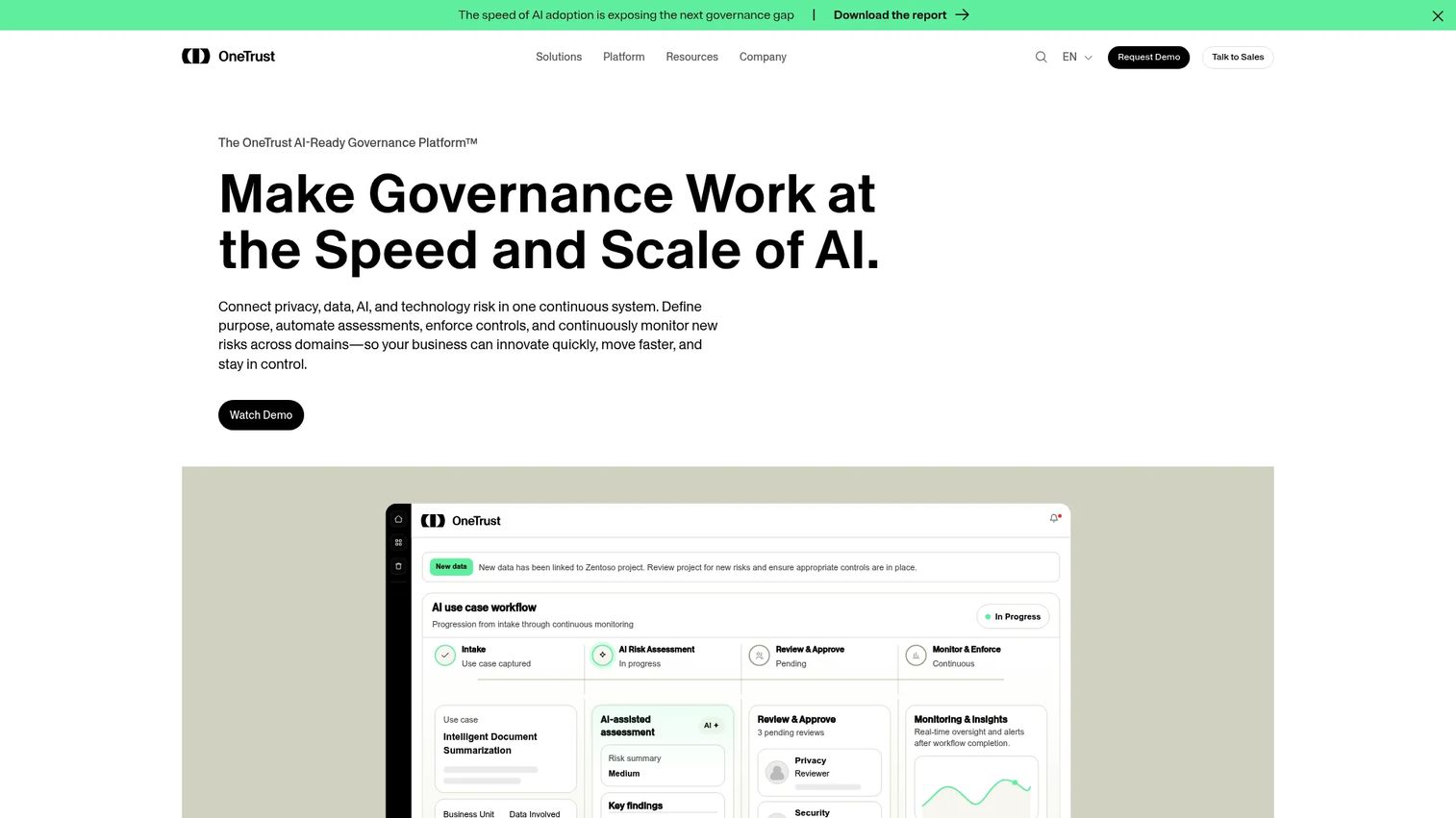
OneTrust Third-Party Management automates vendor diligence from initial intake through risk assessment, monitoring, and offboarding. The platform connects third-party security review to privacy, compliance, and enterprise governance in a single system. It handles vendor risk tiering, assessment automation, evidence management, issue tracking, and reporting for security and GRC teams that manage vendor programs at scale.
Best for: Enterprise security, privacy, and GRC teams that need vendor risk tied to broader compliance operations.
Key features
- Automated third-party intake, onboarding, and risk assessments
- Centralized vendor inventory with risk tiering and scoring
- Continuous monitoring with external cyber risk, breach, and adverse-media intelligence
- Evidence management and remediation tracking
- Governance reporting and audit exports
Why choose OneTrust: OneTrust fits teams that need vendor security assessment inside a broader governance stack. If your organization manages privacy, third-party oversight, and compliance across multiple programs, the breadth of this platform reduces the need for separate point solutions.
OneTrust pricing: OneTrust prices by custom quote, with plans based on admin users and third-party inventory volume. Contact their sales team for a package tailored to your program size.
G2 rating: 4.3/5
2. Prevalent Third-Party Risk Management Platform

Prevalent is built around vendor security questionnaires, managed risk content, and remediation workflows. It automates vendor onboarding and profiling, delivers customizable assessments with task and evidence management, and provides continuous monitoring across cyber, financial, and business risk. The platform includes built-in guidance for remediation, a vendor relationship mapping view, and pre-built integrations.
Best for: Security and vendor management teams that need repeatable assessment workflows and managed vendor risk content.
Key features
- Automated vendor onboarding and profiling
- Customizable risk assessments with workflow and evidence management
- Continuous cyber, business, and financial risk monitoring
- Unified risk registers and compliance reporting
- Remediation management with built-in guidance
Why choose Prevalent: Prevalent is particularly useful for teams fielding recurring questionnaires and evidence requests. Its managed content library and pre-built assessment templates reduce the time needed to stand up a repeatable third-party risk assessment program.
Prevalent pricing: Prevalent sells by custom quote. Reach out to their team for pricing based on vendor volume and program scope. G2 reviewers report the platform is priced for mid-market and enterprise programs.
G2 rating: 4.5/5
3. ServiceNow Vendor Risk Management
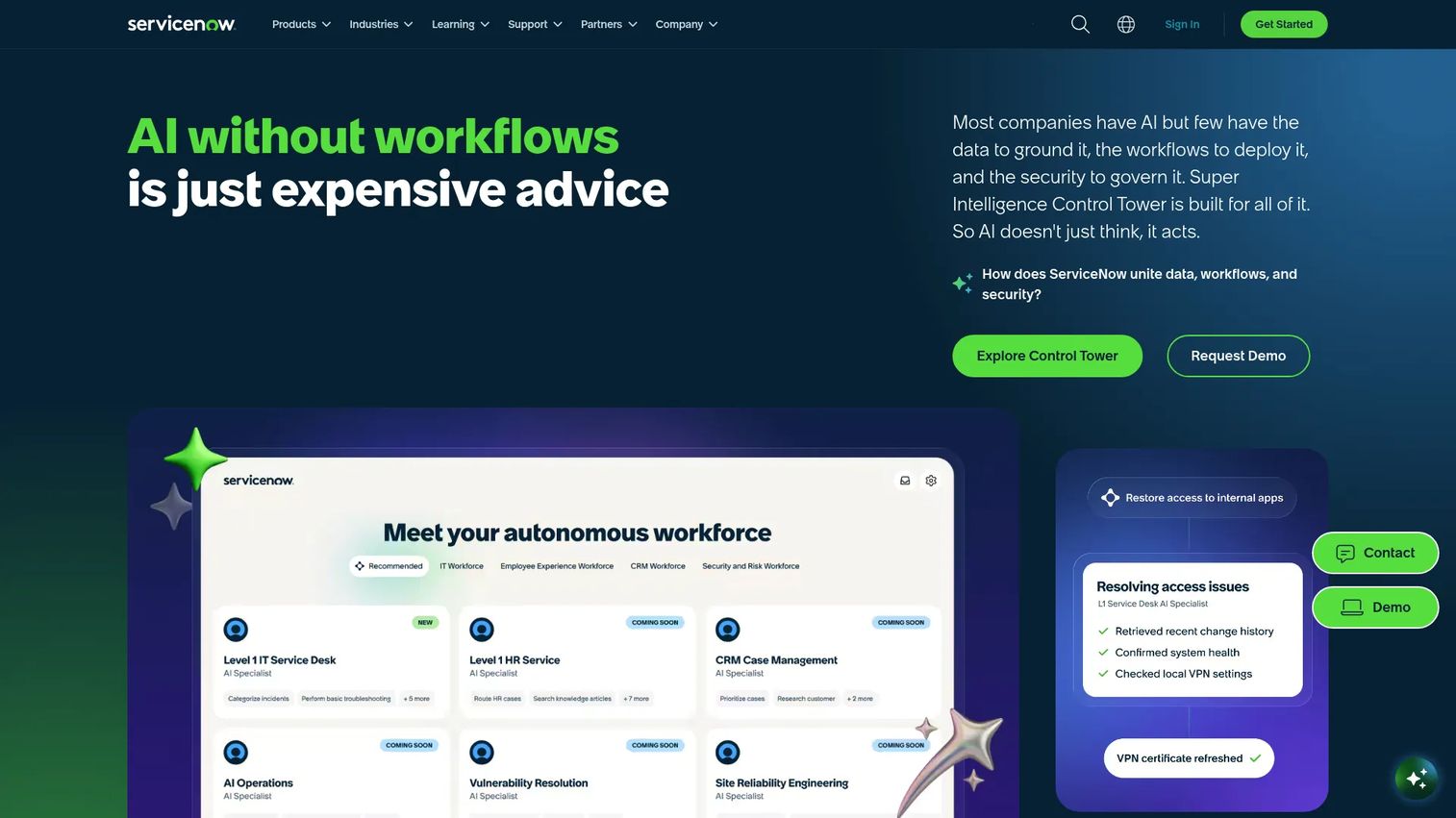
ServiceNow Vendor Risk Management, now officially called Third-party Risk Management within the ServiceNow platform, connects vendor diligence to enterprise workflows, approvals, and service operations. It centralizes due diligence, continuous risk monitoring, issue tracking, and vendor collaboration inside the ServiceNow environment. The product includes a secure vendor portal for questionnaires and a Vendor Management Workspace for dashboards and reporting.
Best for: Large enterprises already using ServiceNow for IT, risk, security, or operational workflows.
Key features
- Automated vendor due diligence and risk assessments
- Continuous third-party risk monitoring
- Vendor Management Workspace with dashboards
- Issue tracking and remediation workflows
- Fourth-party and downstream-party risk management
Why choose ServiceNow: For organizations that have built their enterprise operations on ServiceNow, keeping vendor risk in the same environment eliminates the integration overhead of a separate platform. The workflow automation and task management are consistent with what security and GRC teams already use.
ServiceNow pricing: ServiceNow prices this module through its sales team. Contact ServiceNow directly for module-specific pricing based on your current licensing and workflow requirements.
4. ProcessUnity Third-Party Risk Management
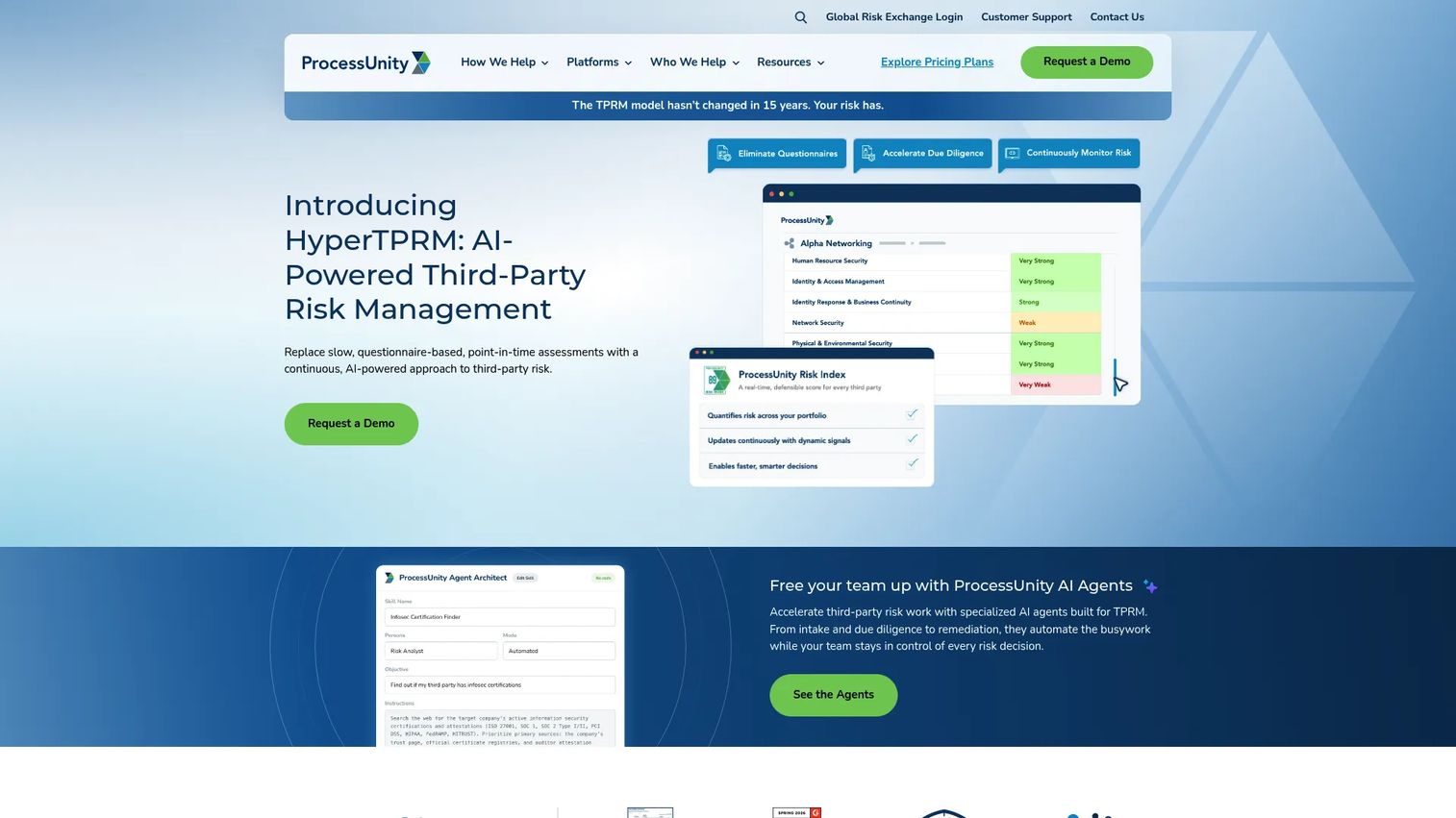
ProcessUnity is an AI-powered third-party risk management platform for vendor onboarding, due diligence, continuous monitoring, and remediation. It stands out for configurable risk models, an AI-assisted Assessment Autofill and Evidence Evaluator, and a Global Risk Exchange that surfaces completed vendor assessments. Coverage extends across cybersecurity, privacy, AI risk, and operational resilience.
Best for: Mature TPRM teams that need structured vendor lifecycle processes and configurable risk scoring models.
Key features
- AI Agents for vendor intake, due diligence, monitoring, and remediation
- Assessment Autofill and Evidence Evaluator
- Configurable workflows, risk models, and approvals
- Continuous monitoring with ProcessUnity Risk Index scoring
- Global Risk Exchange with pre-completed vendor assessments
Why choose ProcessUnity: Teams that have outgrown spreadsheets and need repeatable governance across many vendors will get the most from ProcessUnity's configurability. The AI-assisted workflows reduce manual effort on evidence review and questionnaire completion.
ProcessUnity pricing: Plans for small and medium-sized businesses start at $25,000. Enterprise pricing requires a scoping conversation with their team.
G2 rating: 4.5/5
5. Panorays
Panorays combines automated security questionnaires with external attack surface monitoring and continuous cyber risk scoring. It discovers third-party and nth-party suppliers across the supply chain, runs AI-powered assessments, and alerts teams to threats and posture changes. Remediation workflows help teams track and close identified gaps.
Best for: Security teams that want cyber posture monitoring tied directly to vendor assessments.
Key features
- Third- and nth-party supply-chain discovery
- AI-powered questionnaires and risk assessments
- External attack surface monitoring with threat alerts
- Security ratings and continuous cyber posture scoring
- Remediation tracking and risk workflows
Why choose Panorays: Panorays is a strong fit for teams that want to validate questionnaire responses with external cyber signals, not just rely on what vendors self-report. The combination of inside-out questionnaires and outside-in monitoring gives a more complete picture of supplier risk.
Panorays pricing: Panorays sells through custom quotes based on the scope of assessments and monitoring required. Contact their team for a package aligned to your vendor portfolio size.
G2 rating: 4.3/5
6. Bitsight Third-Party Risk Management
Bitsight is a cyber risk intelligence platform built on security ratings. Its third-party risk management product pairs continuous outside-in monitoring with vendor onboarding workflows, fourth-party discovery, and portfolio-level risk views. Daily security ratings track vendor posture changes, and automatic concentration risk alerts surface when too many critical vendors share the same infrastructure.
Best for: Enterprise security teams that prioritize external cyber risk visibility and board-level vendor risk reporting.
Key features
- Daily security ratings and continuous monitoring
- Automated vendor onboarding and risk assessment workflows
- Fourth-party discovery and concentration risk visibility
- Portfolio risk views with benchmarking
- Executive and board-level vendor risk reporting
Why choose Bitsight: Bitsight excels when your organization uses security ratings as the primary lens for vendor prioritization. The outside-in data is particularly useful for identifying vendors that present risk between formal assessment cycles, making it a complement to questionnaire-based programs.
Bitsight pricing: Bitsight offers two core packages: Continuous Monitoring and Continuous Monitoring plus Vendor Risk Management. Vendor bands cover ranges from 1 to 50 vendors up to unlimited. All pricing is custom and available through their sales team.
G2 rating: 4.5/5
7. CyberVadis
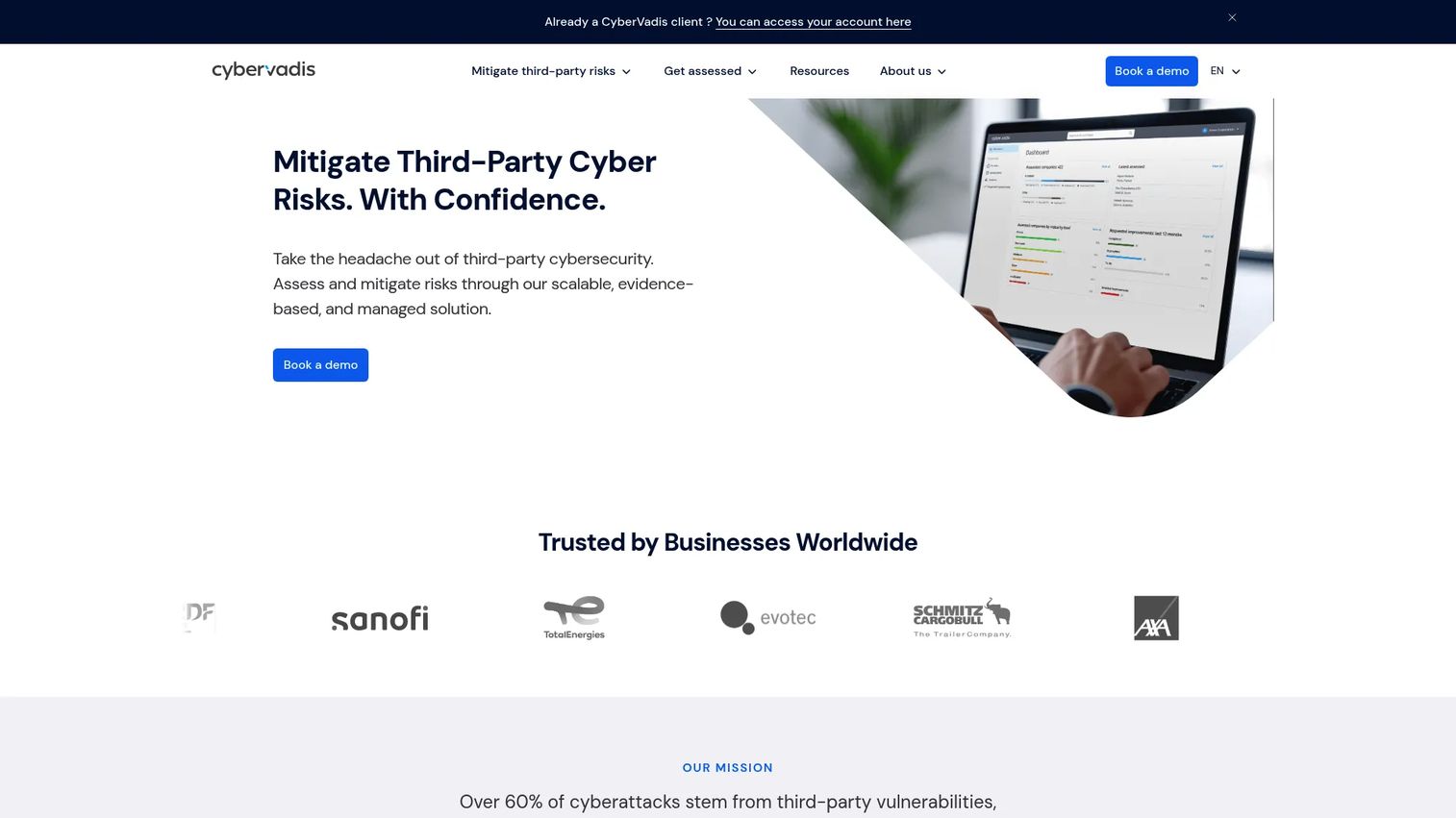
CyberVadis provides evidence-backed cybersecurity assessments reviewed by human analysts. Vendors complete a tailored questionnaire, an analyst validates the evidence, and the result is a shareable scorecard with a personalized improvement plan. External Attack Surface Management adds automated monthly scans. Benchmarking compares vendor cyber maturity against peers in the same sector.
Best for: Procurement, security, and compliance teams that need credible, analyst-reviewed supplier cyber assessments at scale.
Key features
- Evidence-based cybersecurity assessments with analyst review
- Shareable vendor scorecards and improvement plans
- External Attack Surface Management with monthly scans
- Benchmarking against sector peers
- Multilingual assessment support
Why choose CyberVadis: The human analyst review layer adds credibility that pure automated platforms cannot match. This matters for regulated industries and enterprise procurement programs where self-reported questionnaire answers require independent validation.
CyberVadis pricing: Annual subscriptions are priced by vendor company size. Assessments for vendors with up to 49 employees start at $1,450 per year, $2,900 for 50 to 299 employees, and $4,350 for 300 or more employees.
G2 rating: CyberVadis does not have a sufficient review count on G2 to report a verified rating.
8. MetricStream Third-Party Risk Management
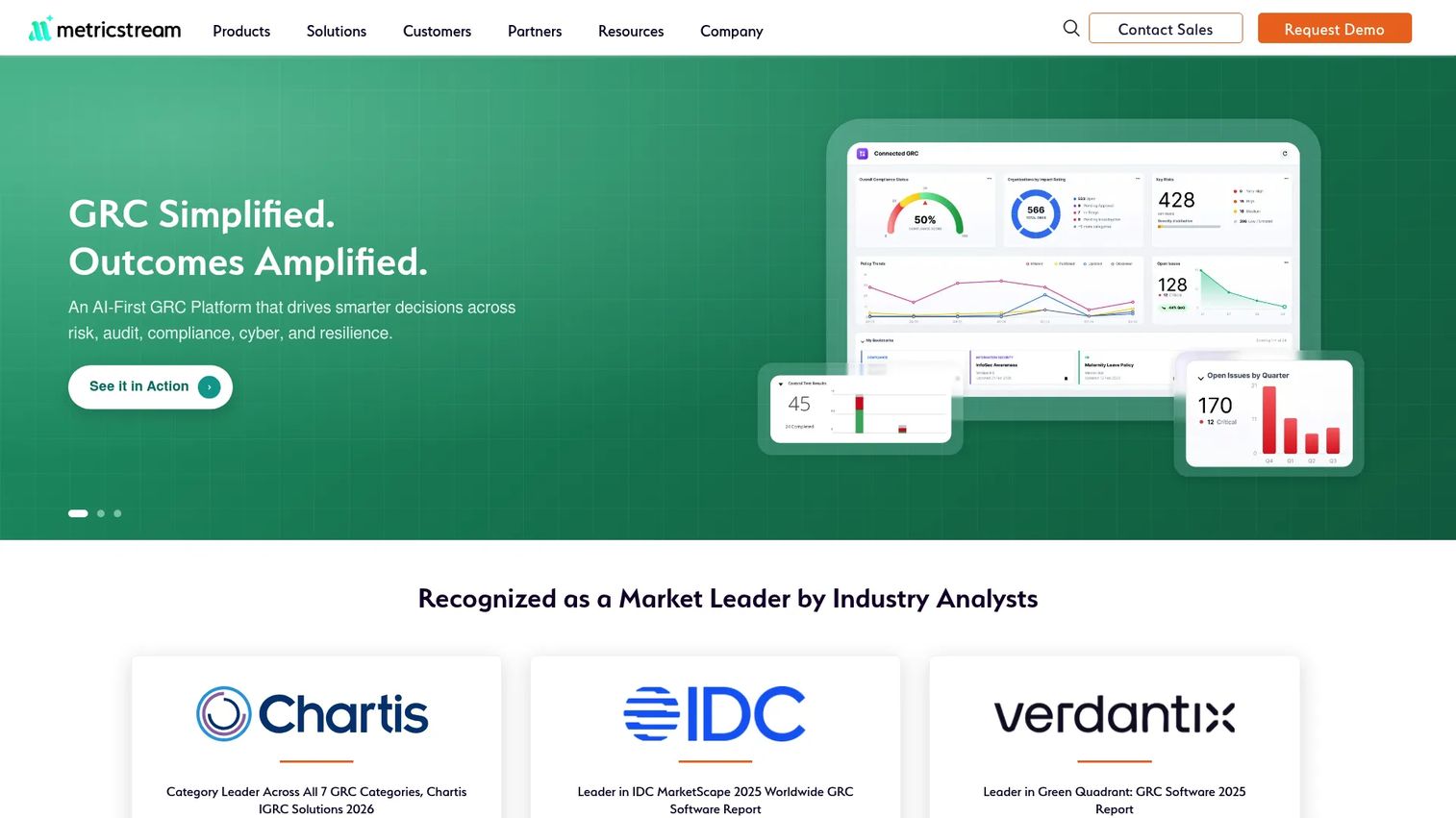
MetricStream is an enterprise GRC platform with a dedicated third-party risk management module. It handles vendor onboarding and due diligence, delivers predefined questionnaires with automated risk scoring, runs continuous monitoring with external intelligence alerts, and provides AI-assisted issue classification. Dashboards and reporting connect vendor risk findings to the broader enterprise risk program.
Best for: Large, regulated organizations managing complex third- and fourth-party vendor ecosystems inside a GRC operating model.
Key features
- Automated third-party onboarding and due diligence workflows
- Predefined questionnaires with automated risk scoring
- Continuous monitoring using external intelligence and alerts
- Vendor KPI and performance scorecards
- AI-assisted issue classification and remediation
Why choose MetricStream: MetricStream fits organizations where vendor security assessment cannot sit in a separate tool. If your risk, audit, and compliance teams already operate on MetricStream, extending vendor risk into the same platform gives a unified risk view across the enterprise.
MetricStream pricing: MetricStream prices by custom quote. Contact their team for scoping based on your vendor volume and GRC integration requirements.
G2 rating: No product-specific rating currently verified on G2 for this module.
9. NAVEX IRM Software
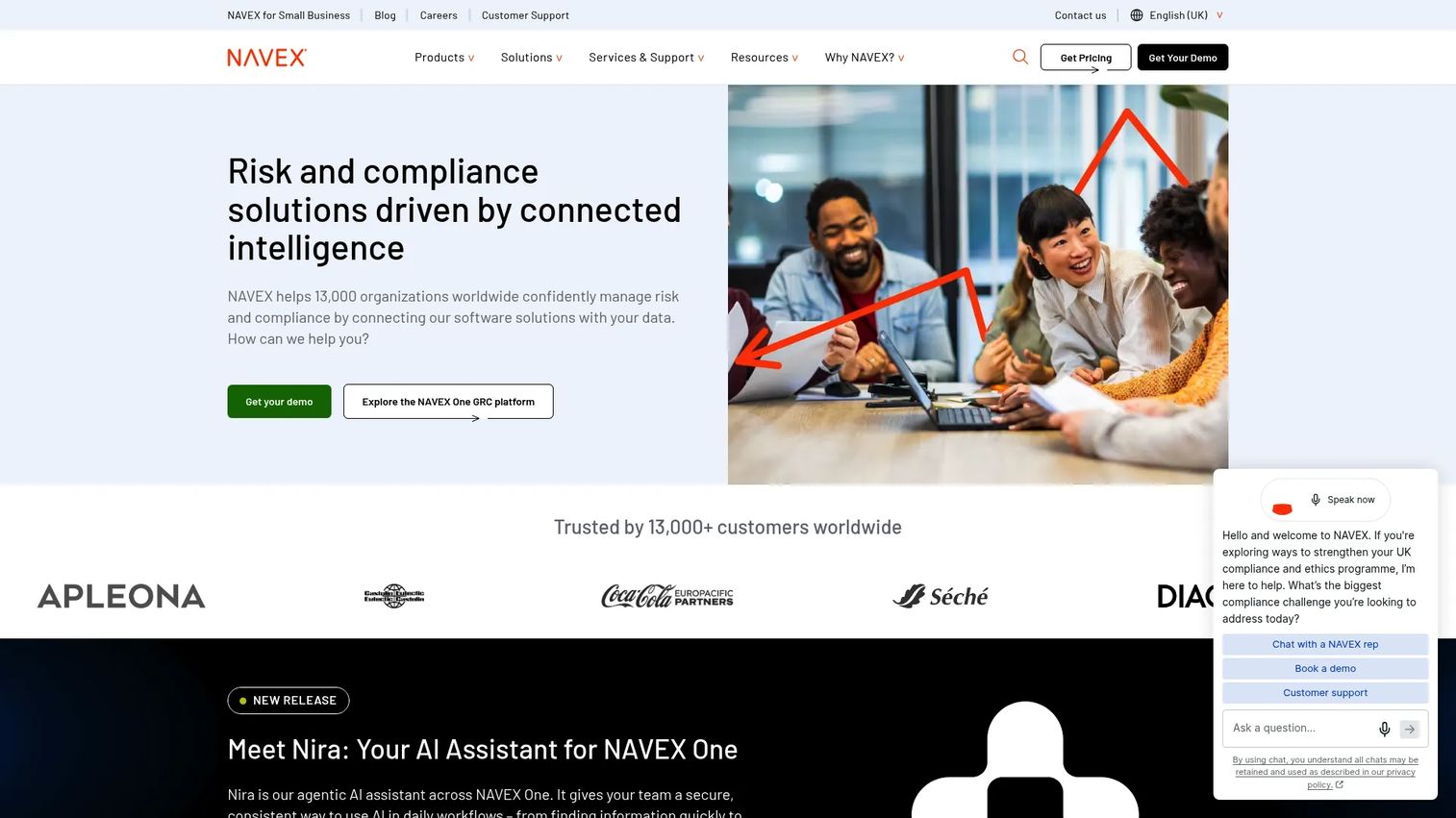
NAVEX IRM is integrated risk management software that centralizes compliance, policy, audit, third-party risk, IT risk, and operational risk in one platform. Third-party risk management sits alongside policy management, business continuity, and health and safety modules, making it practical for compliance-led teams that need vendor diligence embedded in their broader risk framework.
Best for: Compliance teams managing vendor risk alongside policy, ethics, and integrated risk programs.
Key features
- Risk registers and third-party risk assessments
- Compliance and policy management workflows
- Business continuity and IT risk management
- Issue tracking and audit management
- Dashboards and risk reporting
Why choose NAVEX IRM: NAVEX IRM is the right fit when vendor security review is one piece of a larger compliance and risk discipline. Teams that also manage policy attestations, ethics reporting, and audit workflows will benefit from having those processes connected to vendor risk in a single record.
NAVEX IRM pricing: NAVEX prices by custom quote, with the price based on organization size, selected modules, and program scope. Contact their sales team to build a package.
G2 rating: No product-specific rating currently verified on G2 for NAVEX IRM as a standalone product.
10. Diligent One Platform
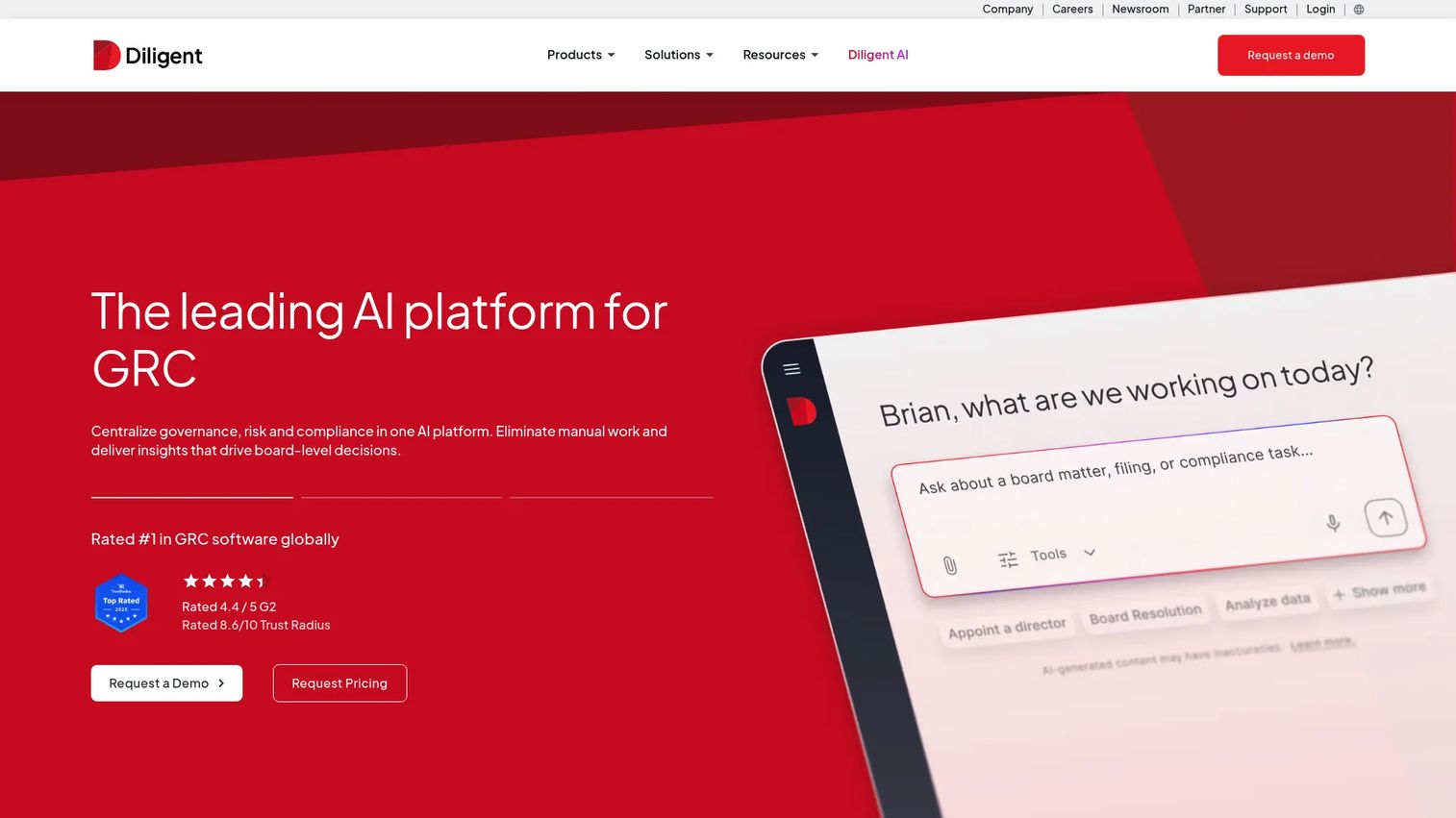
Diligent One Platform unifies governance, risk, audit, compliance, and ESG activities in a single AI-powered platform. Its third-party risk capabilities connect vendor security assessment findings to governance dashboards, audit workflows, and board reporting. Integrations with more than 100 third-party data providers support continuous monitoring.
Best for: Governance and risk teams that need third-party risk reporting visible at the executive and board level.
Key features
- Unified GRC, audit, and ESG applications
- Analytics and controls engine with continuous monitoring
- Pre-built and customizable reporting templates
- Secure generative AI capabilities
- 100-plus third-party data provider integrations
Why choose Diligent: Diligent is best when vendor security assessment data needs to travel upward, from GRC teams to audit committees and boards. The governance-first design makes it easier to present vendor risk in the context of overall enterprise risk posture.
Diligent pricing: Diligent prices by custom package based on organizational size and program requirements. Their pricing page directs buyers to request a tailored quote.
G2 rating: 4.3/5
11. Coupa
Coupa is a business spend management platform that includes supplier management and risk capabilities alongside procurement, invoicing, and payments. For teams where procurement owns vendor onboarding, Coupa surfaces supplier risk signals, tracks contract visibility, and connects vendor profiles to spend data and sourcing workflows.
Best for: Procurement-led teams that want vendor risk connected to supplier management and spend governance.
Key features
- Supplier onboarding and management
- Supplier risk signals and monitoring
- Procurement and sourcing workflows
- Contract visibility and management
- Spend analytics and risk reporting
Why choose Coupa: Coupa fits organizations where the front door to vendor risk is procurement, not a separate GRC team. If your vendor approval process is already embedded in sourcing and contract management, Coupa keeps risk signals in the same system your procurement team uses daily.
Coupa pricing: Coupa's core platform is priced by custom quote. Supplier Portal access is free; optional supplier subscriptions include a Verified tier at $549 annually and an Advanced tier at $4,800 annually.
G2 rating: 4.2/5
12. CyberStrong
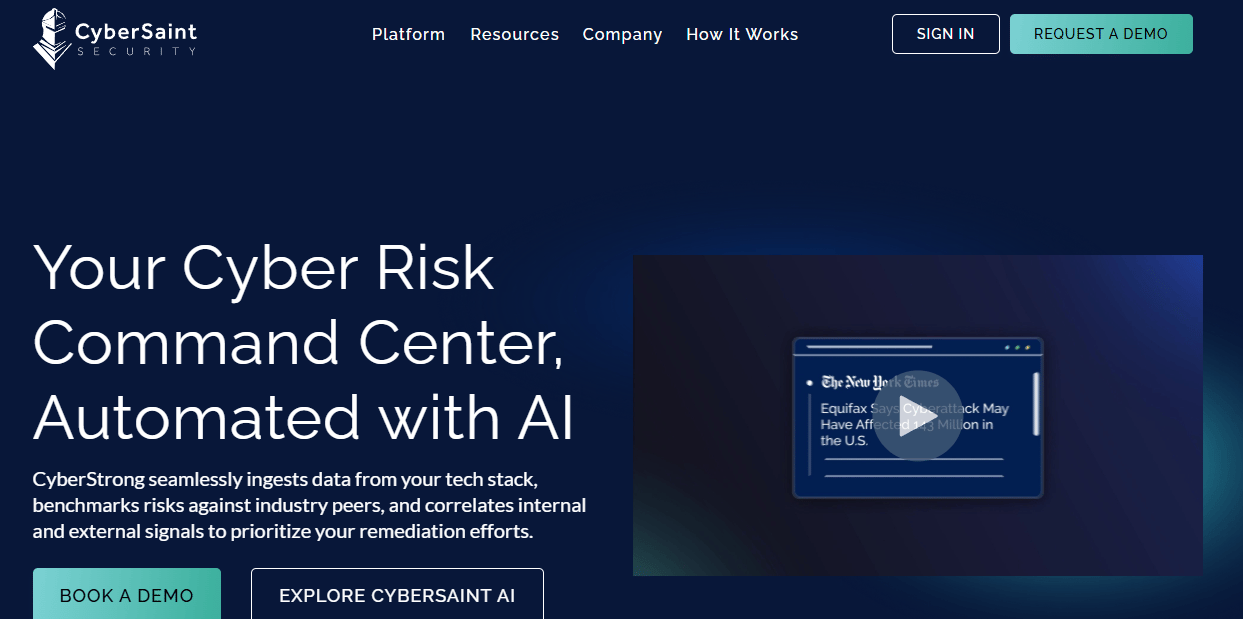
CyberStrong, built by CyberSaint, is a SaaS platform for cyber risk quantification, framework alignment, and compliance management. It maps controls to NIST, FAIR, and custom risk models, scores vendor and internal control posture continuously, and produces executive dashboards that translate technical findings into risk language. A free Cyber Risk Analysis is available to get started.
Best for: Security teams that need vendor security assessment findings connected to cyber risk quantification and framework-mapped reporting.
Key features
- Automated compliance assessments with framework crosswalking
- Cyber risk quantification using NIST 800-30, FAIR, or custom models
- Continuous control automation and real-time scoring
- Risk registers and remediation management
- Executive dashboards and reporting
Why choose CyberStrong: CyberStrong makes the most sense when your organization needs to translate vendor security assessment results into quantified risk terms for executive or board audiences. The framework alignment capabilities are particularly useful for teams that report against NIST or need to connect vendor findings to a broader cyber risk posture.
CyberStrong pricing: CyberStrong offers Compliance Hub, Risk Hub, and Executive Hub through annual or multi-year subscriptions. Pricing is custom across all tiers; contact CyberSaint for a quote based on your hub selection and organization size.
G2 rating: 4.0/5
13. Smarsh Vendor Risk Management
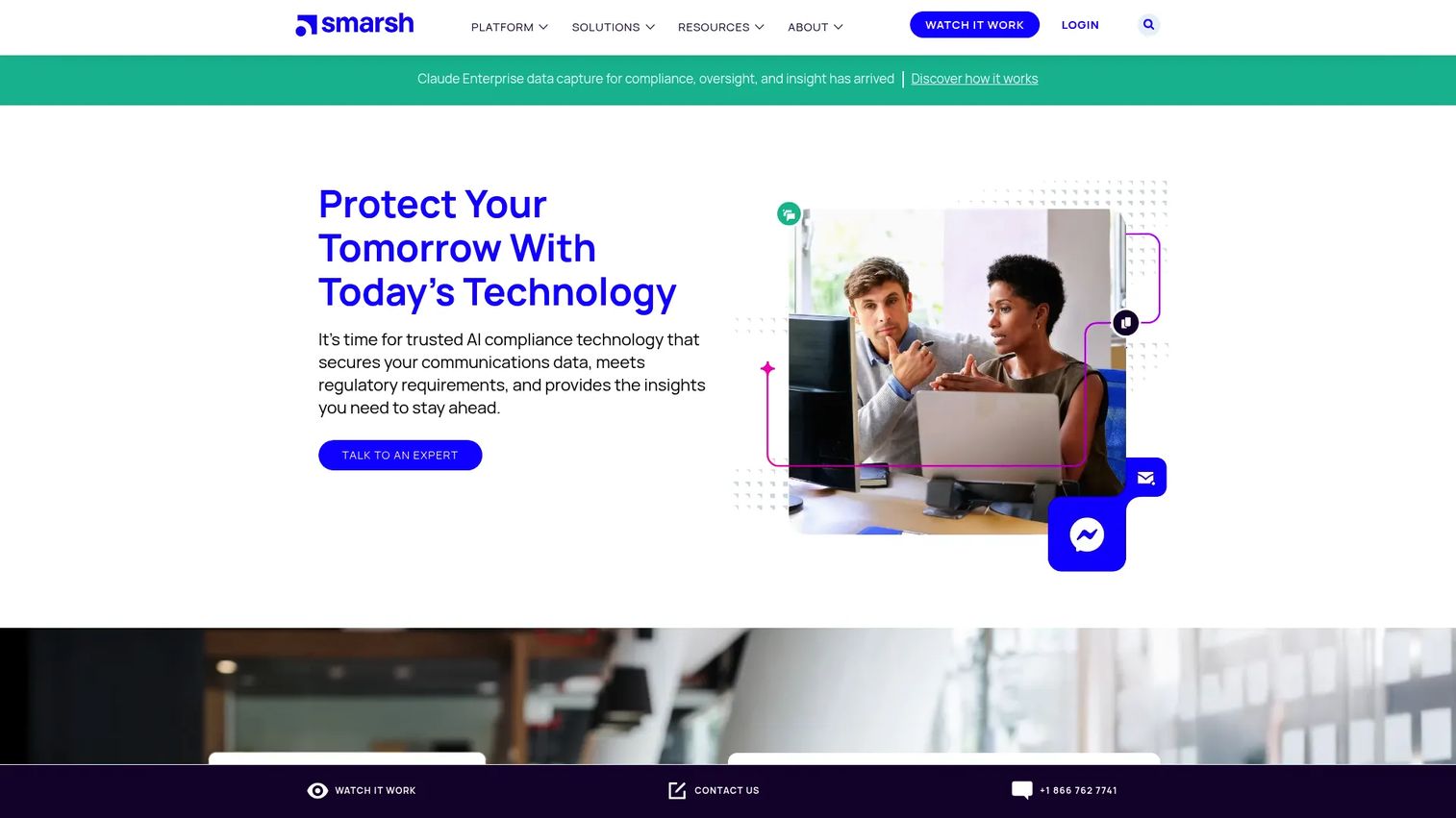
Smarsh Vendor Risk Management is cloud-based third-party risk management software focused on regulated industries. It centralizes vendor profiles, delivers custom or licensed questionnaires, automates answer scoring and risk filtering, and tracks remediation. Three service levels cover Technology, Managed, and Vendor Breach Monitoring needs. Smarsh also offers a built-in vendor breach monitoring capability that alerts teams when a vendor experiences a reported breach.
Best for: Regulated organizations, particularly financial services firms, that need vendor risk oversight aligned to compliance expectations.
Key features
- Centralized vendor registry and management
- Custom or licensed vendor questionnaires and assessments
- Automated answer scoring, risk filtering, and reporting
- Remediation tracking and workflow management
- Vendor breach monitoring and alerts
Why choose Smarsh: Smarsh is best suited for teams in regulated industries where vendor security review, communications compliance, and oversight requirements intersect in the same program. The managed service option reduces internal resource requirements for teams without a large GRC function.
Smarsh pricing: Smarsh lists Tech, Managed, and Vendor Breach Monitoring service levels, with pricing available through their sales team. Contact Smarsh for a quote based on service level and vendor portfolio size.
G2 rating: 4.8/5
14. SecZetta Third-Party Identity Risk Solution
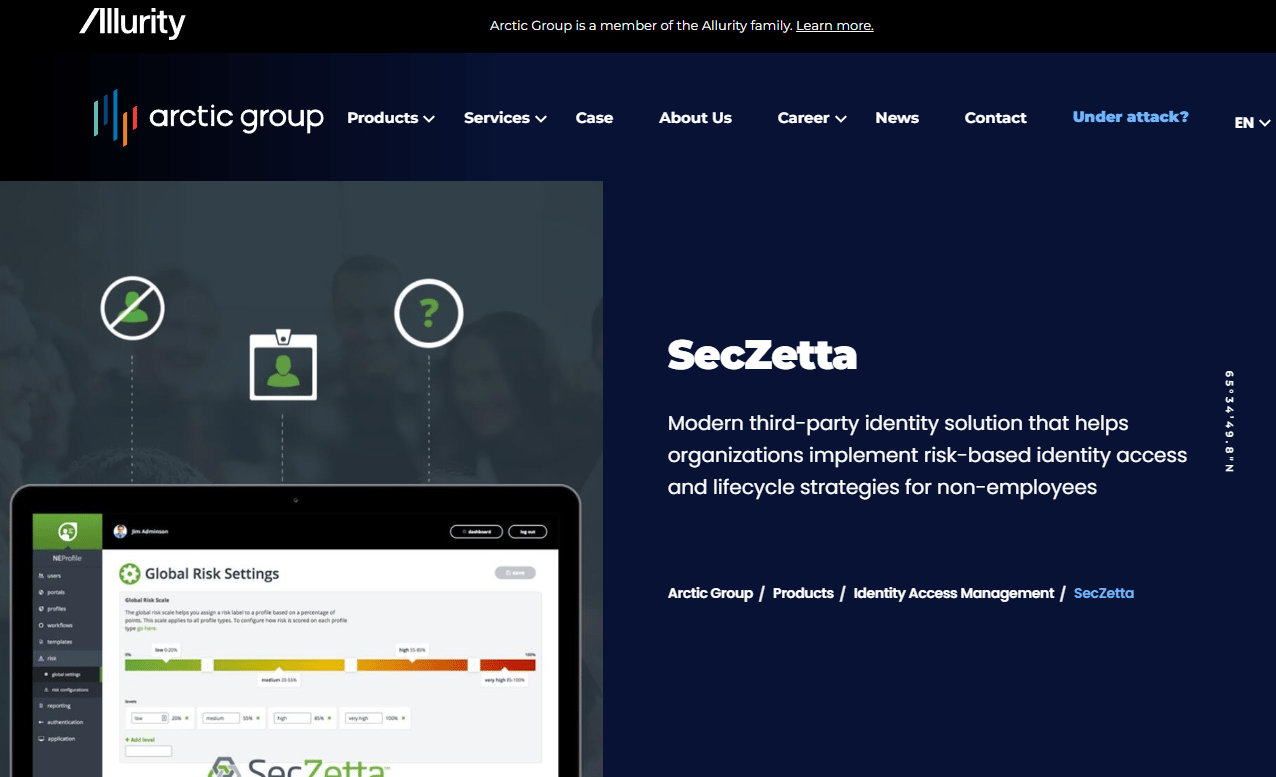
SecZetta focuses specifically on non-employee identity lifecycle management and third-party identity risk. Rather than a broad third-party risk management platform, SecZetta addresses the access dimension: Who are your contractors, partners, and suppliers, what systems can they reach, why do they have that access, and when should it be removed. Identity consolidation, risk scoring, and risk-based access decisions form the core of the product.
Best for: Security and identity teams managing contractors, partners, and other non-employees where access risk is the primary concern.
Key features
- Non-employee identity lifecycle management
- Identity consolidation and centralized identity data
- Risk scoring and risk-based access decisions
- Third-party identity governance workflows
- System integrations for access provisioning
Why choose SecZetta: SecZetta fills a narrow but important gap. If your vendor security assessment process centers on who has access and whether that access is appropriate, SecZetta provides structure that broad TPRM platforms typically skip. It pairs well with a GRC tool that covers assessment and monitoring.
SecZetta pricing: SecZetta prices by custom quote. Contact their team for details on licensing structure and integration scope.
15. Vendor360
Vendor360 is a vendor risk management tool for teams that need practical vendor tracking, assessment management, and document control without a large enterprise GRC rollout. It handles vendor profiles, assessment tracking, document management, risk scoring, and review workflows in a focused, operationally light package.
Best for: Teams that need reliable vendor risk operations without the complexity of an enterprise GRC deployment.
Key features
- Vendor profiles and registry
- Assessment tracking and review workflows
- Document management and expiry tracking
- Risk scoring
- Reporting and audit support
Why choose Vendor360: Vendor360 is a practical starting point for organizations managing a moderate vendor count that want structured oversight without implementing a platform built for hundreds of vendors and multiple risk domains. It keeps the process manageable and documented.
Vendor360 pricing: Vendor360 pricing is available through their sales team. Contact vendor360.com for current package details.
Considerations when choosing vendor security assessment software
Match the tool to your risk model
A team managing 50 SaaS vendors with limited regulatory pressure needs a different platform than a global bank managing thousands of suppliers under SOC 2, HIPAA, and PCI DSS requirements. Evaluate your vendor volume, data exposure levels, and regulatory obligations before shortlisting. A platform built for enterprise GRC consolidation adds overhead that a focused assessment tool avoids.
Check questionnaire and evidence workflows
Inspect how each platform handles your key frameworks, whether that is CAIQ, SOC 2, ISO 27001, NIST, or custom questionnaires specific to your industry. Ask about document expiry tracking, evidence libraries, and how reviewer routing works when multiple stakeholders need to sign off on a single vendor.
Evaluate continuous monitoring depth
Periodic reassessment and continuous monitoring are not the same thing. Continuous monitoring uses external cyber signals, security ratings, breach alerts, and fourth-party visibility to surface risk between formal assessment cycles. For high-criticality vendors, that gap matters. Understand whether the platform monitors passively or alerts on meaningful posture changes.
Test remediation and ownership routing
Risk findings without clear task ownership rarely get resolved. Ask how a platform converts a questionnaire gap into an assigned remediation task with a due date, an escalation path, and exception documentation. Presales teams supporting SaaS deals should confirm whether the buyer's remediation evidence can be exported cleanly for security review follow-up.
Verify integrations before procurement
Check whether the platform integrates with your GRC tool, procurement system, identity provider, CRM, and ticketing system. For presales and SEs, the ability to export clean security evidence or structured risk reports matters when supporting a buyer's vendor review. See also our roundup of AI security posture management tools for tools that complement vendor risk programs with internal posture data.
Conclusion
The 15 tools above cover the full range of vendor security risk assessment needs, from lightweight vendor tracking to enterprise GRC consolidation with board-level reporting.
For broad enterprise third-party governance, OneTrust and Diligent connect vendor risk to privacy, compliance, and governance programs. Prevalent and ProcessUnity are the strongest picks for teams running questionnaire-heavy diligence workflows. Panorays, Bitsight, and CyberVadis bring continuous monitoring and security ratings into the assessment process. ServiceNow, MetricStream, and NAVEX IRM connect vendor risk to existing enterprise risk and compliance operations. Coupa addresses the procurement-first buyer. SecZetta covers the identity access dimension. Smarsh suits regulated industries. CyberStrong translates findings into quantified risk language. Vendor360 keeps things operationally light for smaller programs.
Your next step: Pick three platforms that align with your vendor volume, regulatory burden, and workflow complexity. Run the same sample vendor through each one, comparing assessment setup time, evidence quality, and reporting output. For presales teams, confirm that the platform can produce clean, exportable evidence packages that hold up during a buyer's security review.
Start your journey with Guideflow today!
FAQs
Vendor security assessment software helps organizations evaluate, score, monitor, and document the cybersecurity risk of third-party vendors before and after they are approved. It automates questionnaire delivery, evidence collection, risk scoring, continuous monitoring, and remediation tracking in a single auditable system, replacing manual spreadsheet-based processes.
Vendor security assessment software focuses specifically on cybersecurity diligence: Questionnaires, control evidence, security ratings, and cyber posture monitoring. Vendor risk management software covers a broader scope that may include financial, operational, legal, and compliance risk alongside cybersecurity. Many platforms now combine both, but the core feature emphasis differs.
Security engineers, GRC leads, procurement managers, IT teams, legal and compliance stakeholders, and presales teams all work with these platforms. Presales and SEs often support vendor review by coordinating evidence requests and tracking open findings during a buyer's procurement process.
A complete vendor security assessment covers the vendor profile and data access inventory, a security questionnaire aligned to the relevant compliance frameworks, control evidence such as SOC 2 reports and ISO 27001 certificates, a risk score with documented rationale, a remediation plan for identified gaps, and a defined reassessment cadence tied to vendor criticality.
Continuous monitoring uses external cyber signals, including security ratings, breach alerts, dark web data, and fourth-party discovery, to track vendor risk posture between formal assessment cycles. Some platforms also send automated alerts when vendor certifications expire or questionnaire answers go stale. This is distinct from periodic reassessment, which only captures risk at scheduled review intervals.
The most commonly required frameworks are SOC 2, ISO 27001, NIST Cybersecurity Framework, PCI DSS, HIPAA, GDPR, CIS Controls, and CAIQ. The frameworks that apply to your program depend on your industry, the data your vendors handle, and the regulatory environment you operate in. Most platforms support multiple frameworks simultaneously.
AI can meaningfully reduce manual work in vendor security assessments. It can summarize evidence documents, identify missing questionnaire answers, route incomplete submissions to the right reviewer, and draft risk narratives from assessment data. Platforms like ProcessUnity and MetricStream have built AI agents into their workflows. However, AI should not replace human review for high-criticality vendors where a missed finding carries significant regulatory or operational risk.
Presales and SEs should work with their internal security team to maintain a library of approved evidence, including current SOC 2 reports, ISO certifications, and completed questionnaire responses. When a buyer initiates a vendor security risk assessment, coordinate through a single internal owner rather than answering ad hoc. Track open findings and keep the AE updated on review status so security review does not stall a qualified deal at the final stage. For more on structuring the presales workflow, see our guide to access review software and contract lifecycle management.