The booth was packed. Badge scans looked promising. Sales followed up on Monday after a Thursday show. By then, half the conversations were forgotten and the other half sat in a spreadsheet nobody owned.
This is the most common trade show failure mode, and it has nothing to do with booth design or staffing. It is a data handoff problem. The U.S. trade show industry reached an estimated $16.4 billion in direct spending in 2025, up 6.2% year over year (CEIR, 2025). That money is hard to defend when marketing cannot tie a single booth conversation to a closed opportunity.
Trade show management software exists to close that gap. The right platform keeps badge scans, meeting notes, qualification fields, and CRM records moving in the same direction, from the show floor to the pipeline report your VP actually trusts. The wrong choice leaves your team juggling four disconnected tools and writing the same retrospective every year.
Which platform actually fits the way your team plans, captures, routes, and reports trade show activity?
What's inside
This guide compares 11 trade show software platforms for growth, demand generation, field marketing, and exhibit operations teams in 2026. Tools were chosen based on:
- Planning depth: Calendars, tasks, budgets, and logistics
- Onsite execution: Registration, check-in, badge scanning, and lead capture
- Integration quality: CRM, marketing automation, and attribution
- ROI reporting: Pipeline data, cost tracking, and post-show analytics
Pricing and G2 ratings were verified against vendor pages and G2 listings. Each entry explains where the tool fits and where it becomes too heavy or too light.
TL;DR
- Best for enterprise trade show programs: Cvent covers the full event lifecycle with lead capture, appointment scheduling, and CRM integrations
- Best for trade show planning and project management: ExhibitDay replaces spreadsheets with shared calendars, tasks, budgets, and shipment tracking
- Best for hybrid trade show engagement: Webex Events combines a mobile event app, badge scanning, and sponsor tools in one platform
- Best for exhibit logistics and asset management: ExhibitForce handles inventory, crates, shipments, and fulfillment with barcode-level tracking
- Best for attendee engagement: Whova delivers a strong mobile app experience for networking, agenda management, and exhibitor visibility
- Best for virtual and hybrid expos: vFairs builds virtual exhibitor halls, sponsor rooms, and attendee engagement for digital-first trade shows
What is trade show software?
Trade show software helps teams plan, run, track, and measure trade shows across pre-show preparation, onsite execution, lead capture, exhibitor engagement, and post-show reporting.
The category covers more ground than most buyers expect. A team planning their first three-show calendar has different needs than a corporate exhibit team managing 50 events, warehouse assets, and enterprise CRM attribution. Here is how the core capability areas break down:
Event planning: Calendars, task owners, budgets, travel coordination, sponsorship tracking, and schedule management
Registration and check-in: Ticketing, attendee records, badge printing, and onsite entry
Lead capture: Badge scanning, lead notes, qualification fields, offline mode, and CRM routing
Exhibitor and sponsor management: Booth assignments, floor plans, exhibitor portals, and sponsor asset placement
Attendee engagement: Mobile event app, networking tools, messaging, polling, and virtual booth access
Logistics: Inventory tracking, crate and shipment management, fulfillment workflows, and barcode scanning
Reporting: Attendance data, leads captured, meetings booked, pipeline attribution, and ROI dashboards
Integrations: CRM sync (Salesforce, HubSpot), marketing automation (Marketo), APIs, and webhooks
The category splits into several tool types: End-to-end event management platforms, trade show planning tools, exhibitor management systems, virtual and hybrid event platforms, event registration tools, and dedicated lead retrieval tools. For more context on how the broader event management landscape fits together, see our guide to best event management software.
For growth marketers, the deciding factor is simple: Does this tool preserve lead context from the booth to the CRM, and can you build a pipeline report from it?
When to use trade show software
Plan multi-event calendars without spreadsheet drift
Teams managing several shows per year need shared calendars with task owners, budget fields, shipment deadlines, and sponsorship status in one working system. Marketing typically owns the event number while operations owns the physical logistics. When those two live in separate spreadsheets, deadlines slip and costs get attributed to the wrong show. A planning tool keeps both sides synchronized without a weekly reconciliation meeting.
Capture and route leads before intent cools
Badge scanning is table stakes. What separates a useful scan from a wasted one is qualification context: Product interest, meeting notes, rep ownership, and CRM field mapping. A Monday follow-up after a Thursday booth conversation is already late. The right lead retrieval workflow routes high-intent leads to sales during the show, not after the drive home.
Prove event ROI beyond booth traffic
Booth traffic is activity. Pipeline attribution is ROI. Growth marketers need to connect leads captured to opportunities created, meetings booked to revenue influenced, and cost per show to cost per opportunity. Without software that feeds clean data into your CRM and attribution stack, the post-show conversation stays at "the show was good" rather than "the show generated $400K in qualified pipeline." For teams building a full picture, analytics platforms paired with clean event data make the ROI case leadership will actually believe.
Trade show software comparison
The table below covers all 11 platforms by primary use case, key differentiator, pricing, and G2 rating. Use it to shortlist two or three tools before booking vendor demos.
| # | Product | Best for | Key differentiator | Pricing | G2 rating |
|---|---|---|---|---|---|
| 1 | Cvent | Enterprise event programs | Full lifecycle coverage: Registration, lead capture, integrations | Quote-based | 4.3/5 |
| 2 | ExhibitDay | Trade show planning | Calendars, tasks, budgets, shipments, ROI tracking | Free; paid from $99/mo | 4.8/5 |
| 3 | Webex Events | Hybrid trade show engagement | Mobile app, badge scanning, sponsor tools | Free; Pro from $83/mo | 4.6/5 |
| 4 | ExhibitForce | Exhibit logistics | Inventory, crate, barcode, and fulfillment tracking | Quote-based | 3.1/5 |
| 5 | Whova | Attendee engagement | Event app, networking, agenda, exhibitor pages | Quote-based | 4.8/5 |
| 6 | Bizzabo | B2B event marketing | Branded event experience with onsite and pipeline tools | From $499/user/mo | 4.3/5 |
| 7 | vFairs | Virtual and hybrid expos | Virtual exhibitor halls, sponsor rooms, and attendee chat | Quote-based | 4.7/5 |
| 8 | InEvent | Enterprise hybrid events | Registration, badge printing, QR check-in, mobile app | Quote-based | 4.5/5 |
| 9 | Swapcard | Networking-heavy expos | AI matchmaking, exhibitor lead capture, meeting scheduling | From $610/year | 4.6/5 |
| 10 | Eventbrite | Simple ticketing and registration | Fast event publishing with built-in payment processing | Free for free events; 3.7% + $1.79/ticket for paid | 4.3/5 |
| 11 | Swoogo | Registration-heavy event teams | Flexible registration sites with unlimited conditional logic | From $11,800/year | 4.9/5 |
Best 11 trade show software tools for 2026
1. Cvent
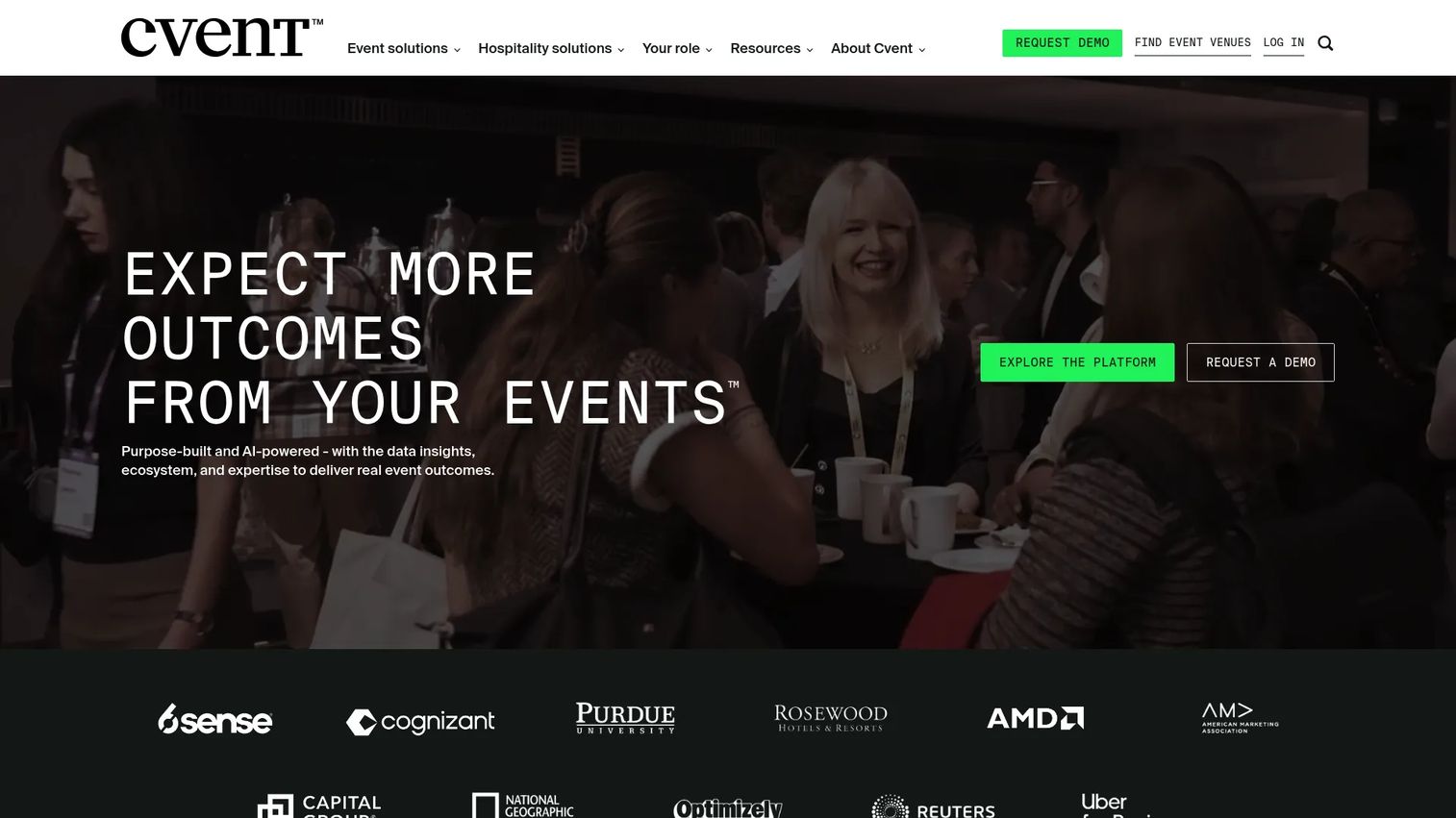
Cvent is an enterprise event marketing and management platform built for organizations running trade shows, conferences, and complex event portfolios. It covers the full event lifecycle: Registration, onsite operations, lead capture, appointment scheduling, integrations, and reporting. Teams running dozens of events per year use Cvent to manage everything from attendee records to CRM attribution in one system.
Best for: Enterprise marketing and event teams managing large-scale in-person, virtual, or hybrid programs across multiple shows.
Key features
- Event registration and attendee marketing
- Lead capture with onsite badge scanning
- Appointment scheduling and meeting management
- CRM and marketing automation integrations
- Attendance tracking and event analytics
Why choose Cvent: Cvent earns its place when trade shows feed into a larger event marketing operation where multiple systems need clean data handoffs. It is the strongest fit for teams with procurement processes, compliance requirements, or cross-functional event programs that need one source of truth.
Cvent pricing: Cvent uses quote-based pricing for its Professional and Enterprise plans. Contact sales with your attendee volume, onsite module needs, lead capture requirements, and integration scope. Free event building is available with pay-as-you-go registration fees. G2 reviewers confirm pricing is typically enterprise-level.
G2 rating: 4.3/5
2. ExhibitDay
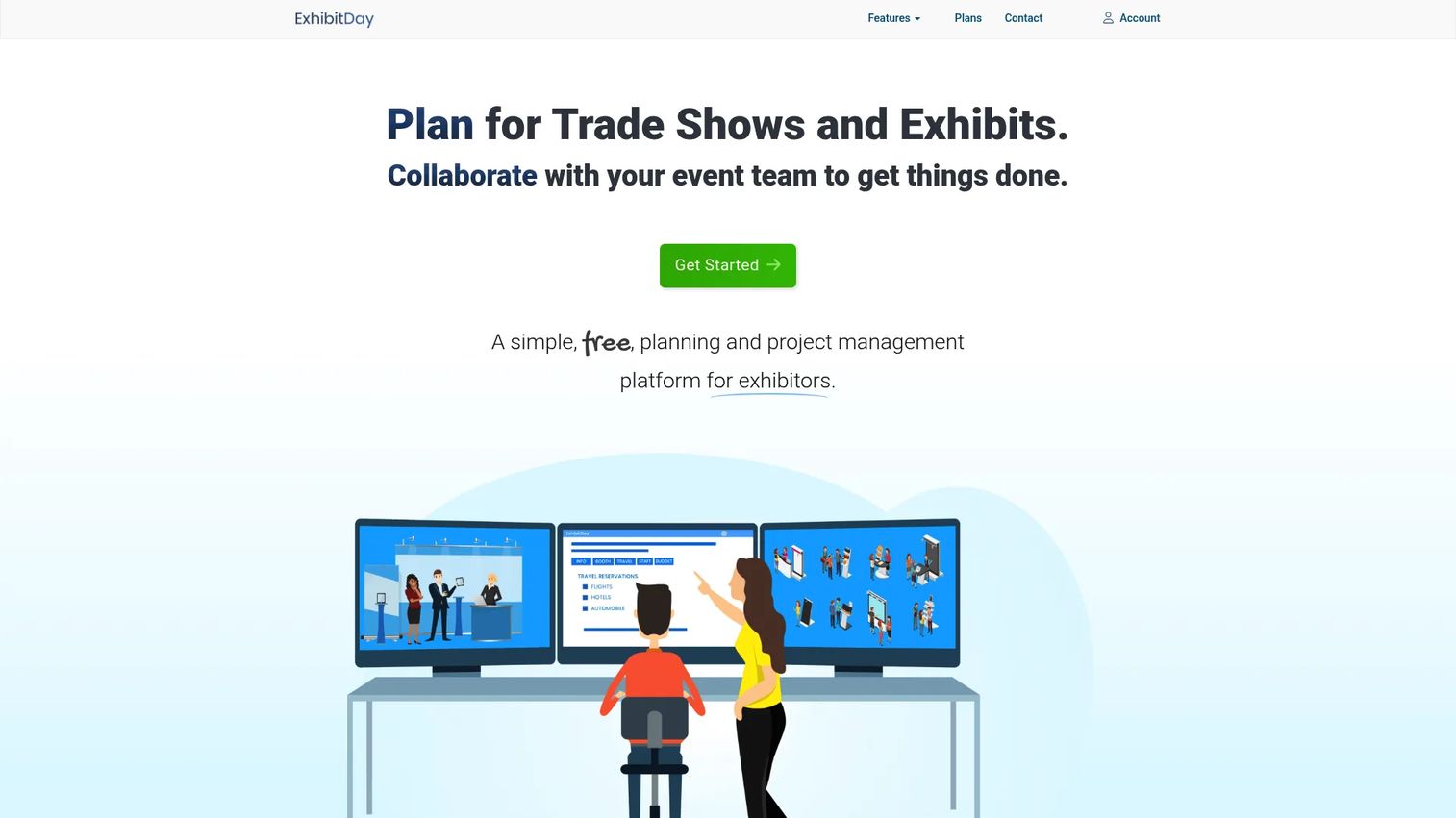
ExhibitDay is trade show planning and project management software built specifically for event and exhibit teams. Where enterprise platforms try to do everything, ExhibitDay focuses on the operational layer: Shared calendars, task ownership, budget tracking, shipment management, travel coordination, and ROI reporting. It is the tool that replaces the multi-tab spreadsheet your team has been patching for three years. For teams looking for a broader comparison of event planning software, ExhibitDay sits firmly in the planning and project management category.
Best for: Lean field marketing and exhibit teams that need operational clarity across multiple shows without a heavy enterprise event suite.
Key features
- Event calendars with shared team visibility
- Task management with deadlines and owners
- Budget tracking and variance reporting
- Shipment and travel management
- ROI and engagement analytics by show
Why choose ExhibitDay: It fits teams that need to track what was spent, what was shipped, and what was booked at each show, without the implementation overhead of a full enterprise platform. If you manage five or more trade shows per year and still run logistics out of email threads, ExhibitDay is worth a close look.
ExhibitDay pricing: A free Lite plan is available for up to 5 users. The Professional plan runs $99 per month (billed annually) for 10 users. The Premium plan is $199 per month (billed annually) with unlimited users. Enterprise pricing is custom.
G2 rating: 4.8/5
3. Webex Events
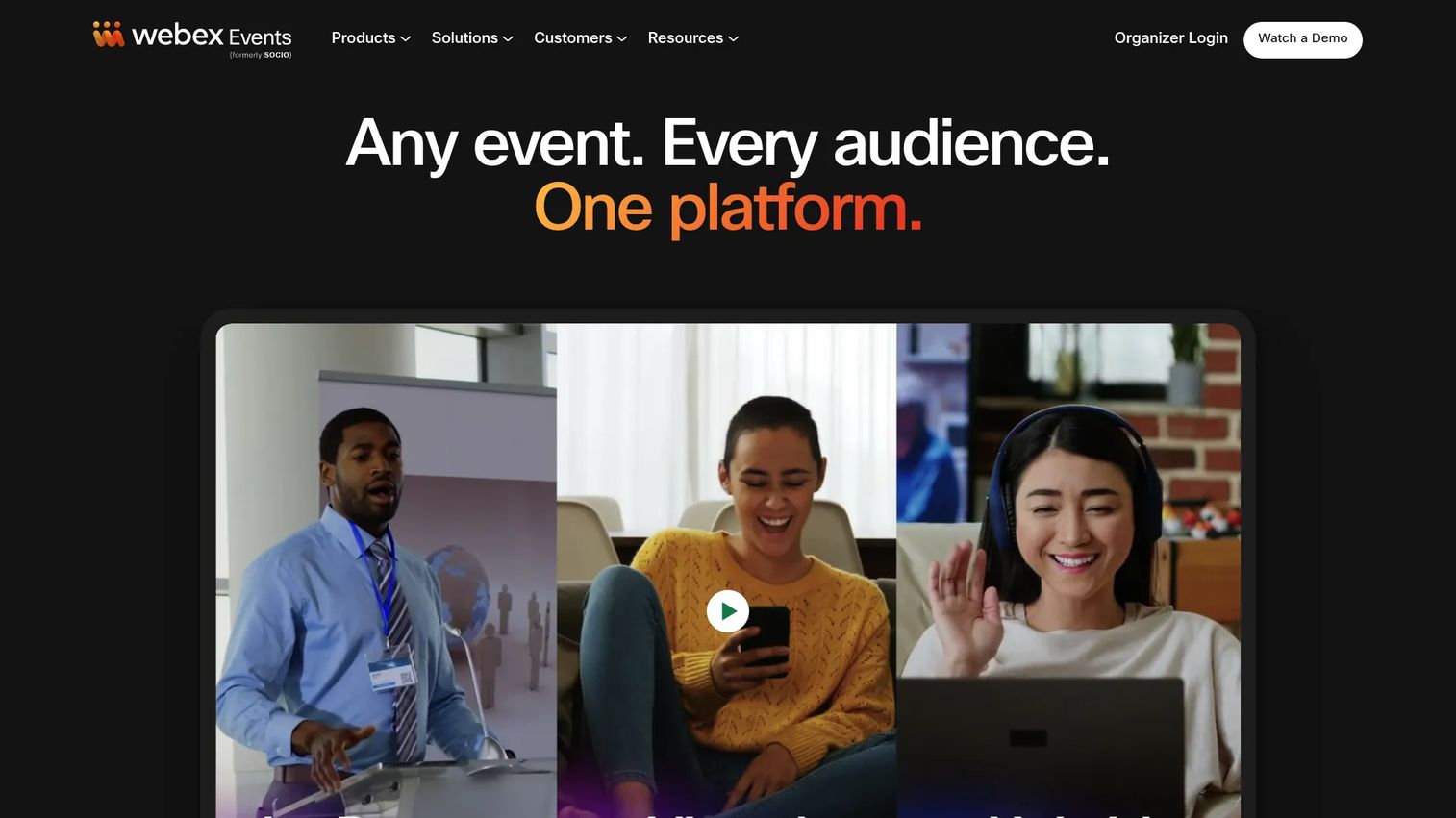
Webex Events is an end-to-end event platform for in-person, virtual, and hybrid events. Its strongest differentiator for trade show teams is the mobile event app: Attendees get personalized agendas, networking tools, session polling, and exhibitor pages in one branded experience. Badge scanning, check-in, lead retrieval, and sponsor placement sit alongside the app in the same platform. If your post-show report needs to combine badge data with app engagement, Webex Events is one of the few tools that makes that straightforward. Teams researching the best virtual event platforms will find Webex Events covers both the in-person and digital sides of a hybrid show.
Best for: Teams that need mobile app engagement and hybrid event support in a single platform, particularly where attendee networking and sponsor visibility are central goals.
Key features
- Mobile and web event app with personalized agendas
- Badge scanning and onsite check-in
- Lead retrieval for exhibitors
- Sponsor and exhibitor placement tools
- Production Studio with live streaming
Why choose Webex Events: It is the strongest fit when the attendee app is the core of the event experience and the team needs networking, sponsor visibility, and onsite operations to live in one environment. The combined app and badge data makes post-show attribution cleaner than stitching two separate tools together.
Webex Events pricing: A Free plan covers one event and up to 100 attendees per year at no cost. Pro plans start at $83 per month (billed annually at $999) for smaller attendee volumes, with pricing increasing by attendee volume. Higher volumes require contacting Webex Events directly.
G2 rating: 4.6/5
4. ExhibitForce
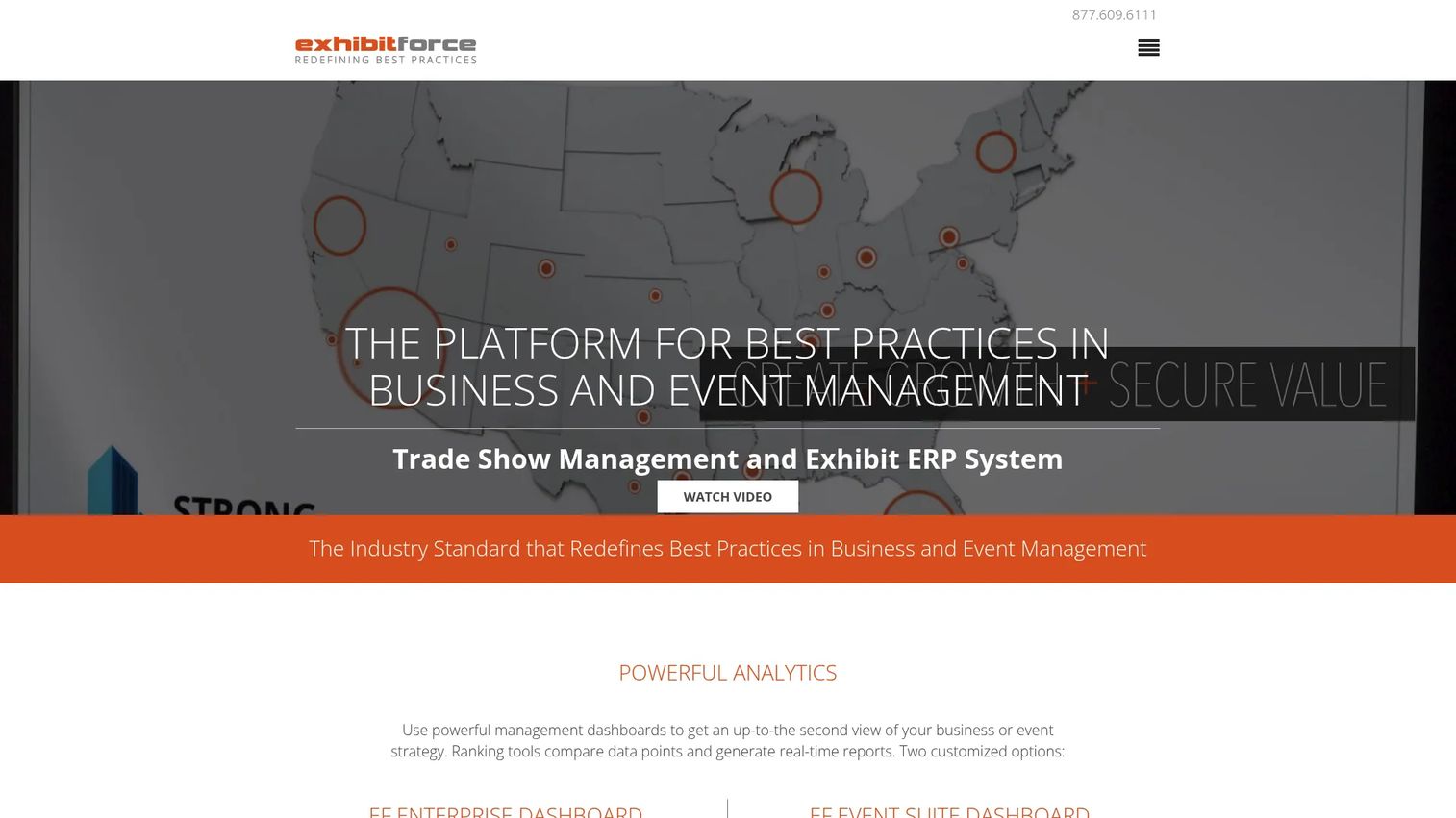
ExhibitForce is exhibit management and trade show operations software for organizations where physical asset management is as important as lead capture. It covers inventory tracking, crate and shipment management, barcode-based fulfillment workflows, real-time project dashboards, CRM integration, and enterprise BI reporting. Teams managing corporate exhibit programs with warehouse coordination, multi-event asset reuse, and integrated ERP systems will find capabilities here that general event platforms do not offer.
Best for: Exhibit operations teams, exhibit houses, and corporate marketers managing booth assets, inventory, and complex logistics across a large show calendar.
Key features
- Inventory, crate, and asset tracking with barcoding
- Shipment and fulfillment workflow management
- Real-time project dashboards and BI reporting
- CRM and enterprise integrations (Microsoft, Oracle, SAP)
- Lead capture and attendee registration
Why choose ExhibitForce: Choose it when physical asset movement, warehouse coordination, and enterprise reporting are the primary operational challenges, not just registration or attendee engagement. It is a more specialized tool than a general event platform, so it performs best in organizations where exhibit operations is its own function.
ExhibitForce pricing: ExhibitForce does not display plan prices on its pricing page. A 30-day free trial is available. Contact sales for pricing based on user count, modules required, and implementation scope.
G2 rating: 3.1/5
5. Whova
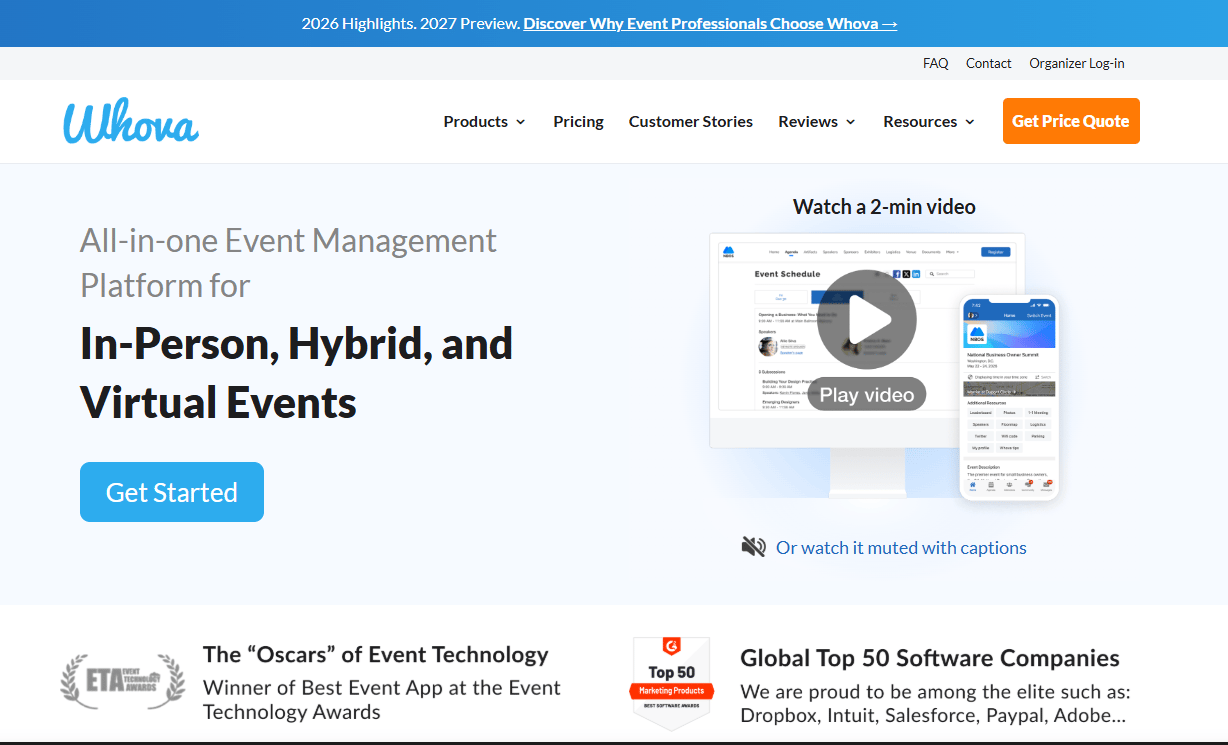
Whova is an all-in-one event management platform known for its mobile event app and attendee engagement features. Registration, event websites, speaker management, exhibitor pages, lead retrieval, check-in, and hybrid tools all sit in one platform. Its networking features stand out: Attendees can connect through the app before, during, and after the show, which makes Whova popular with associations, professional conferences, and trade shows where community building matters as much as logistics.
Best for: Organizations running in-person or hybrid trade shows and conferences where attendee engagement, networking, and exhibitor visibility are primary success metrics.
Key features
- Personalized mobile event app with agenda and networking
- Event website builder with customizable templates
- Exhibitor and sponsor management with lead retrieval
- Attendee check-in and name badge generation
- Post-event surveys and reporting
Why choose Whova: It is the strongest fit when the attendee experience is the primary goal, not just event operations. If you want exhibitors to get real value from the app and attendees to stay engaged between sessions, Whova's networking and engagement features outperform most general event platforms.
Whova pricing: Whova prices by quote. Contact sales with your event format, attendee count, app feature requirements, exhibitor tools, and onsite service needs to get a proposal.
G2 rating: 4.8/5
6. Bizzabo
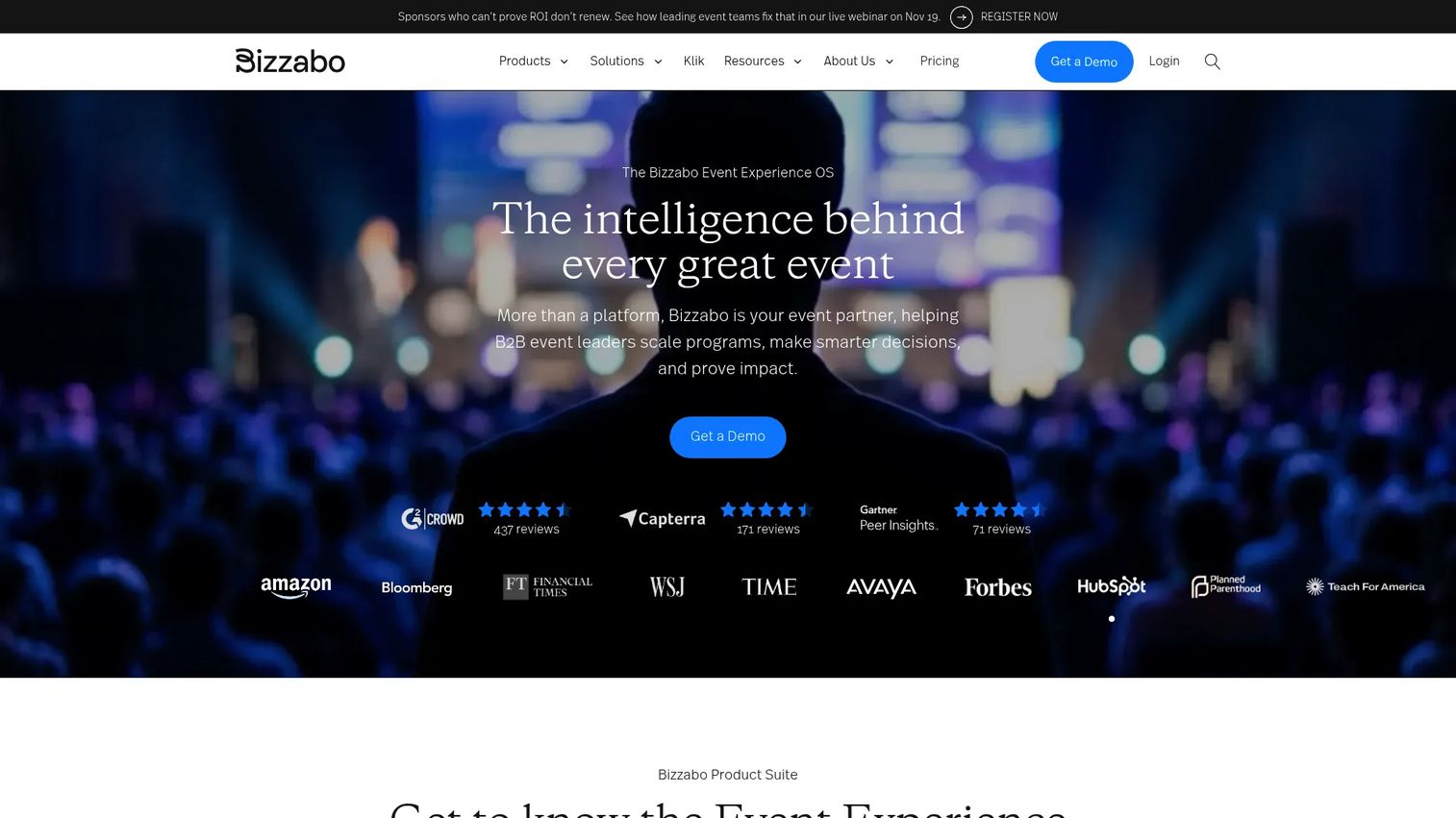
Bizzabo is an event experience platform positioned for mid-market and enterprise B2B marketing teams. It covers branded registration, event websites, attendee engagement, onsite check-in, badge printing, sponsor tools, and event analytics. Bizzabo's approach treats events as a demand generation channel, not just a logistics function, which makes it appealing to marketing teams that need to connect event investment to pipeline reporting. For teams building a full event marketing software stack, Bizzabo sits at the branded event experience end of the spectrum.
Best for: Marketing-led B2B organizations running branded event programs where event ROI, pipeline attribution, and attendee experience are all measured.
Key features
- Event websites and branded registration workflows
- Attendee engagement, chat, polls, and surveys
- Onsite check-in and badge printing
- Sponsor and exhibitor tools
- Event analytics and ROI reporting
Why choose Bizzabo: It fits teams that treat events as a revenue channel and need a platform that connects registration data, onsite engagement, and post-event pipeline reporting. The entry price is higher than most tools on this list, so it makes most sense for teams running multiple events per year with dedicated event marketing resources.
Bizzabo pricing: The Event Experience OS plan starts at $499 per user per month (billed annually, with a 3-user minimum), which puts the entry point at approximately $17,999 per year. Premium add-ons for virtual events, advanced onsite capabilities, and API access are priced separately.
G2 rating: 4.3/5
7. vFairs
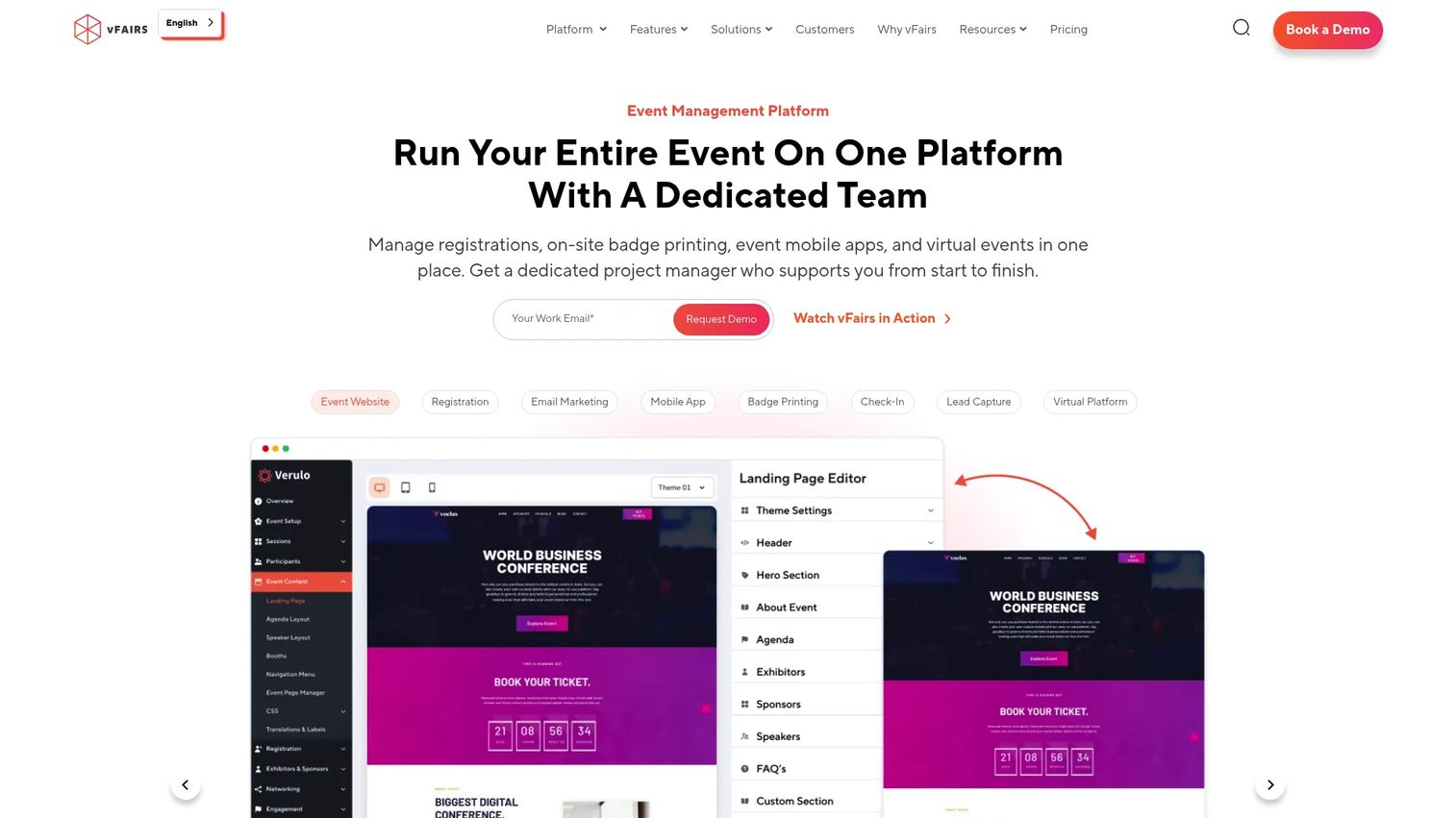
vFairs is an event management platform built for in-person, hybrid, and virtual events, with particular depth in virtual and digital exhibitor experiences. Virtual exhibitor halls, 3D booth environments, sponsor room placement, attendee chat, webinars, and networking tools sit alongside registration and onsite capabilities. Teams running digital-first trade shows, virtual career fairs, or hybrid events where exhibitors need a visible online presence will find capabilities here that general event platforms do not prioritize.
Best for: Virtual expos, hybrid trade shows, and sponsor-heavy event programs where digital exhibitor rooms and online engagement are core requirements.
Key features
- Virtual booths and 3D exhibitor halls
- Sponsor branding and placement tools
- Attendee chat, networking, and engagement
- Registration and ticketing
- Event analytics and attendee reporting
Why choose vFairs: Choose it when the virtual or hybrid component of your trade show is not an afterthought but a primary channel for exhibitors and sponsors. It is less suited for teams running purely in-person events where physical onsite operations dominate.
vFairs pricing: vFairs prices by quote, with no published plan prices. Pricing accounts for event format, feature set, exhibitor and attendee volume, support requirements, and event duration. Contact vFairs with your event details to get a proposal.
G2 rating: 4.7/5
8. InEvent
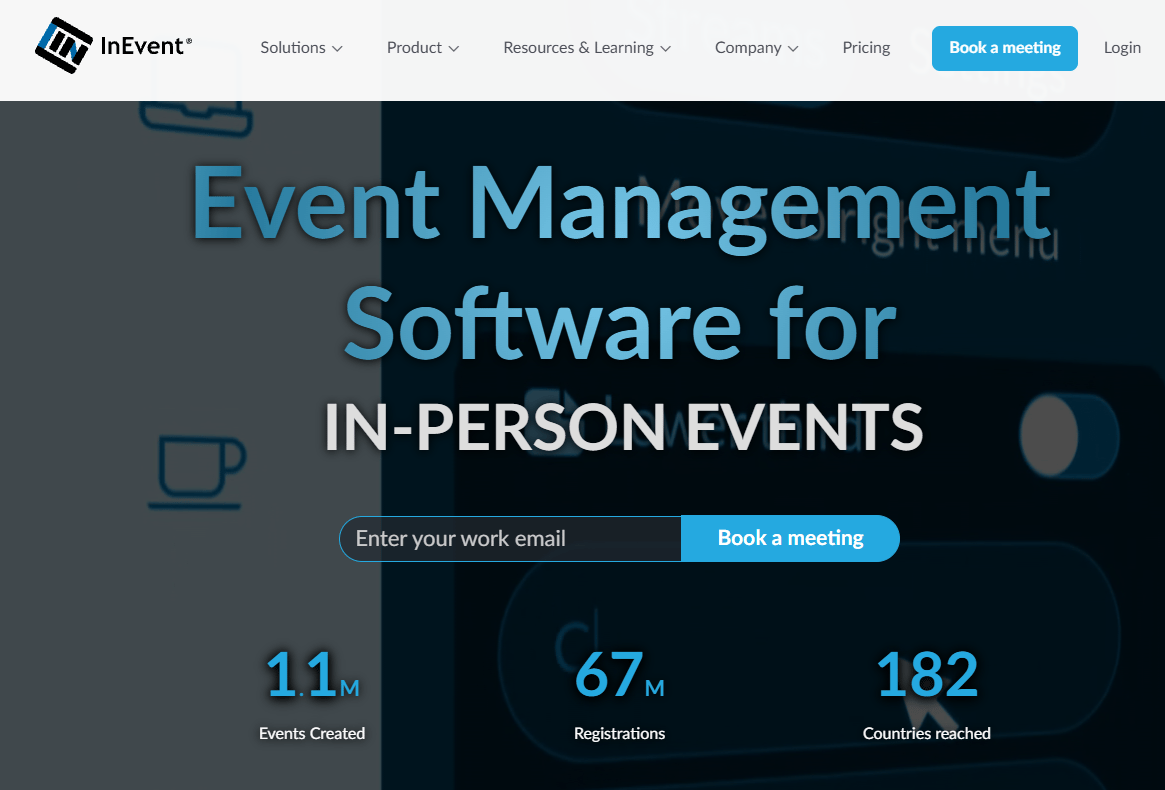
InEvent is an enterprise event platform for conferences, hybrid events, and corporate programs. Registration, event websites, badge printing, QR check-in, mobile apps, live streaming, networking tools, and CRM integrations are all available within the platform. It is built for teams that need polished onsite operations and digital engagement to run from the same system, with enough flexibility to handle complex enterprise requirements.
Best for: Enterprise teams running polished hybrid and in-person event programs with onsite operations, compliance requirements, and CRM integration needs.
Key features
- Event registration and ticketing
- Badge printing, kiosks, and QR check-in
- Mobile app with personalized agendas
- Native live streaming and virtual lobbies
- Audience engagement: Polling, chat, networking, and surveys
Why choose InEvent: It fits teams that need enterprise event infrastructure where onsite operations and hybrid engagement are both first-class requirements. The platform handles the complexity of multi-session conferences and trade shows without requiring separate tools for registration, app, and streaming.
InEvent pricing: InEvent prices by quote across its plan tiers (Webinar, V&H Pro, V&H Advanced, V&H Full, EventHub, and InEvent Start). Pricing is calculated per admin, per registration, or as unlimited usage depending on the plan. Contact sales with attendee volume, event count, onsite module requirements, and enterprise needs.
G2 rating: 4.5/5
9. Swapcard
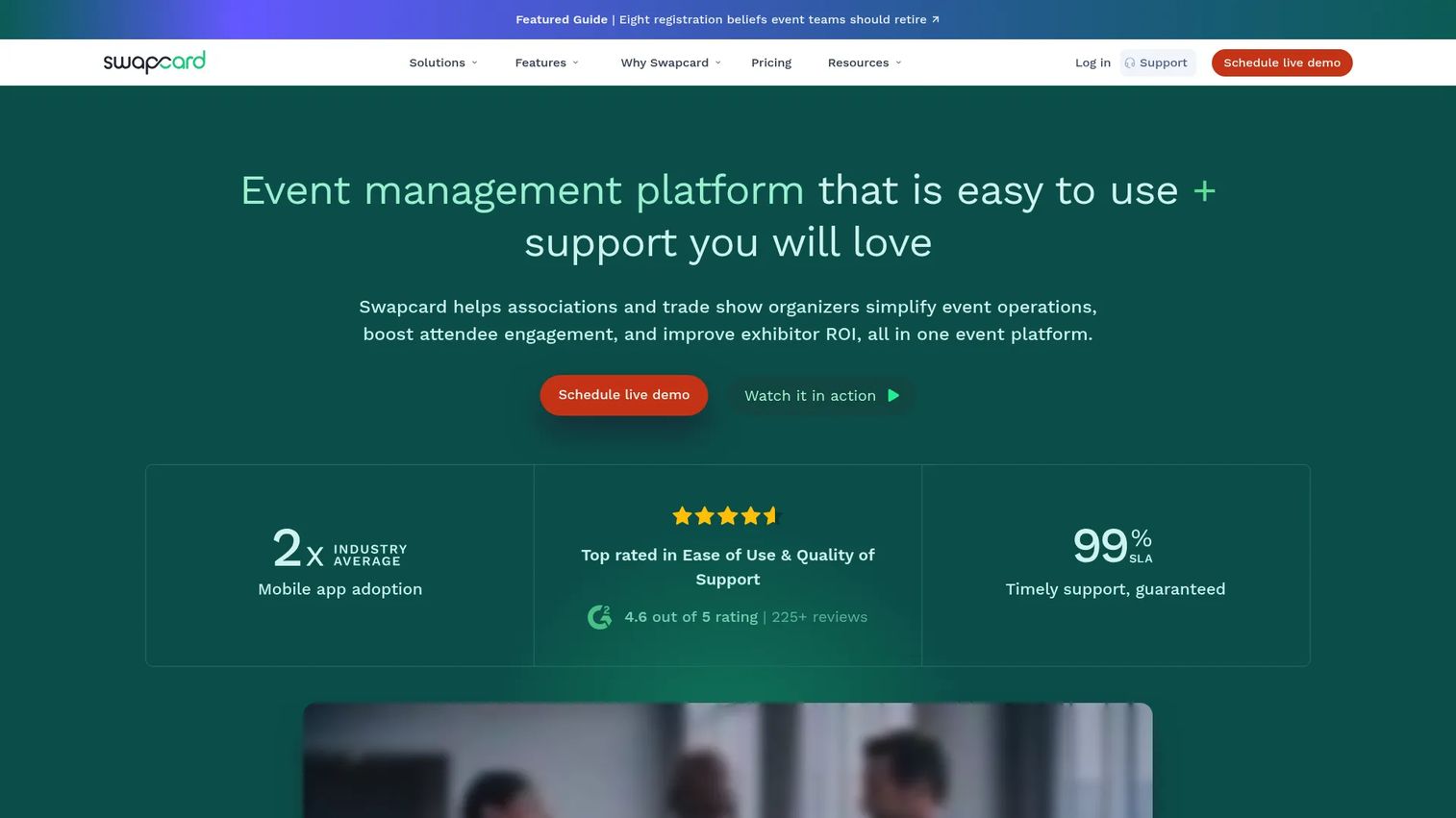
Swapcard is an event and community platform built around AI-powered matchmaking and exhibitor engagement. Its strongest differentiator is the meeting-scheduling layer: Attendees and exhibitors are matched based on profiles and interests, meeting slots are managed through the app, and lead capture flows directly to exhibitor analytics. For trade shows where the value comes from quality conversations, not just attendance volume, Swapcard's matchmaking layer gives exhibitors a measurable return on their booth investment.
Best for: Networking-heavy expos, association events, and trade shows where exhibitor-to-attendee matching, meeting scheduling, and community engagement drive the ROI story.
Key features
- AI-powered matchmaking and attendee recommendations
- Meeting scheduling with exhibitor lead capture
- Branded web and mobile event app
- Interactive floor maps and access control
- Registration and ticketing
Why choose Swapcard: Choose it when meetings booked and connections made are the primary KPIs for exhibitors. The matchmaking feature reduces the randomness of booth traffic and gives exhibitors data to bring back to their own marketing teams.
Swapcard pricing: The Event Engagement Platform starts at $610 per year (billed annually). The Registration and Management Platform uses custom annual pricing. Pricing scales by attendee volume, exhibitor count, and add-on features. Monthly billing is not offered.
G2 rating: 4.6/5
10. Eventbrite
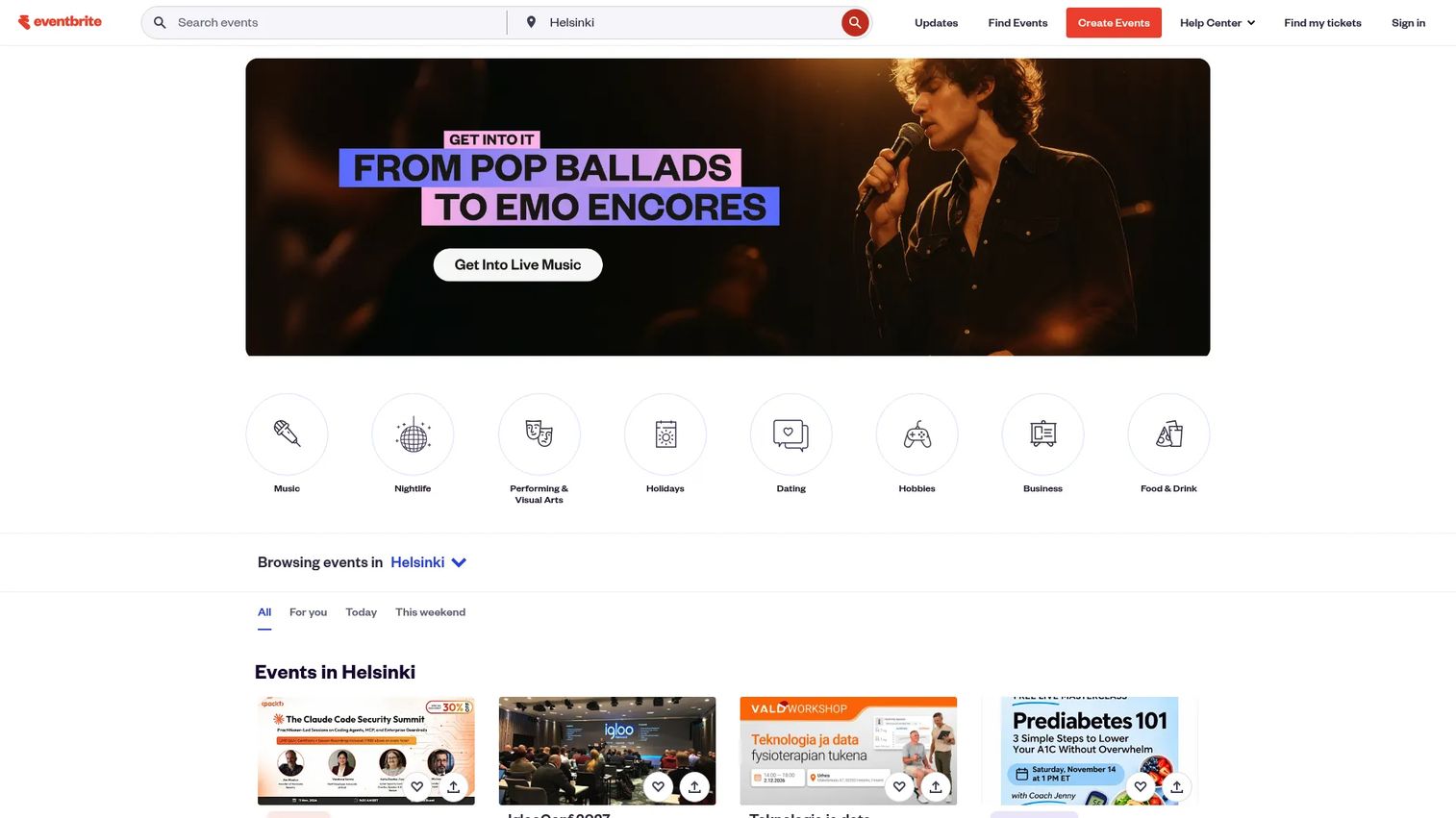
Eventbrite is an event registration and ticketing platform rather than a full trade show management suite. It handles event pages, ticket sales, registration forms, payment processing, and mobile check-in with minimal setup. For teams that need to publish a registration page quickly, sell tickets, and manage basic check-in, Eventbrite works without requiring procurement, implementation, or IT involvement. It is not built for badge scanning, exhibitor management, or CRM attribution.
Best for: Teams that need fast, low-friction event registration and ticketing for simpler trade show-adjacent events, workshops, or public programs.
Key features
- Customizable event pages and checkout flows
- Ticketing with promo codes and add-ons
- Organizer app with mobile check-in and real-time data
- Payment processing built in
- Email and social promotion tools
Why choose Eventbrite: It is the right choice when the team needs to publish an event quickly, collect registrations, and manage basic check-in without a full event platform. If your trade show needs exhibitor management, badge scanning for lead retrieval, or CRM sync, Eventbrite will not cover those workflows.
Eventbrite pricing: Free events have no platform fees. Paid tickets carry a 3.7% plus $1.79 service fee per ticket, plus a 2.9% payment processing fee per order. An Eventbrite Premium plan is available at $69 per month (or $708 per year) for additional marketing tools.
G2 rating: 4.3/5
11. Swoogo
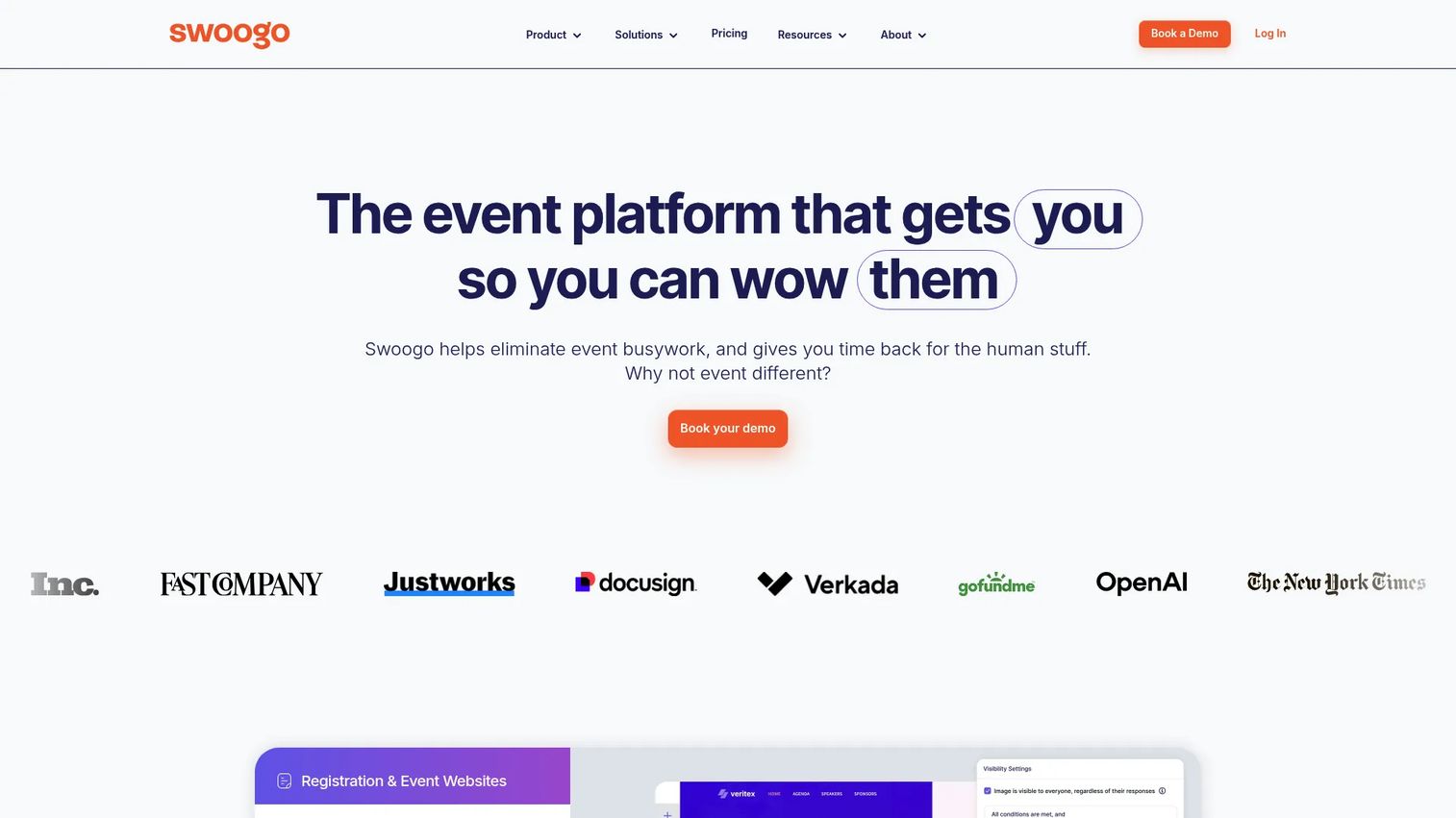
Swoogo is event management software built for teams that run recurring conferences, field events, and corporate programs with complex registration needs. Its registration builder supports unlimited conditional logic, custom paths by attendee type, and flexible form design. Branded event websites, onsite check-in, custom badges, seating charts, 30-plus pre-built integrations, REST API, and native analytics are all included. It is a strong alternative for teams that have outgrown simple ticketing tools but do not need the full breadth of an enterprise event suite.
Best for: Registration-heavy event teams that need flexible registration sites, branded event pages, and attendee data workflows across a recurring event calendar.
Key features
- Flexible registration with unlimited conditional logic
- White-labeled event website builder with drag-and-drop
- Onsite check-in with custom badges and seating charts
- 30-plus integrations, REST API, and outbound webhooks
- Native attendee analytics and customizable reporting
Why choose Swoogo: It fits teams that run several events per year and need registration flexibility and clean attendee data without the cost and complexity of an enterprise platform. The annual pricing structure rewards teams with ongoing event programs rather than one-off events.
Swoogo pricing: The Professional plan starts at $11,800 per year and includes one Full User, unlimited events and registrations, check-in, 30-plus integrations, and one custom domain. Enterprise pricing is custom. Optional add-ons include mobile event apps, Go Onsite Pro, and premium support.
G2 rating: 4.9/5
Considerations when choosing trade show software
Lead capture quality
A badge scan without qualification context is a name and an email address. Evaluate whether the tool supports custom qualification fields, rep ownership assignment, meeting history notes, product interest flags, and CRM field mapping. The gap between a scan and a qualified lead often comes down to what the platform lets you capture at the booth, not just whether it scans.
CRM and marketing automation fit
The best trade show software moves data into the systems marketing and sales already use. Before shortlisting, verify native integrations with your CRM (Salesforce or HubSpot are most common) and your marketing automation platform. API and webhook support matters for teams with custom workflows. For teams building a broader marketing automation stack, event data that flows cleanly into nurture sequences multiplies the value of every lead captured.
Follow-up speed
Speed-to-lead after a trade show directly affects conversion. Ask vendors whether the platform can route high-intent leads to sales during the event, not at end-of-day exports. The best setups trigger a CRM record and a sales alert within minutes of a qualified scan. For teams tracking this as a KPI, check our roundup of marketing analytics software to understand how event data fits into attribution reporting.
Event ROI reporting
Growth marketers need to bring a pipeline number back from every show, not just an attendance count. Evaluate whether the platform tracks cost per lead, meetings booked, opportunities created, and revenue influenced. Some platforms stop at attendance data. Others push lead data into your CRM and let you build the ROI story from there. Know which type you are buying before you sign.
Operational complexity
Large platforms carry implementation work. Smaller tools deploy faster but cover fewer workflows. The right fit depends on event volume and reporting depth. A team running two shows per year with simple registration needs does not need the same platform as a corporate exhibit team managing 40 shows, a physical asset warehouse, and enterprise CRM attribution. Match the tool to the program you are running today, not the one you aspire to run eventually.
Conclusion
Trade show software is not one category. It is a spectrum from planning tools that replace spreadsheets to enterprise platforms that connect badge scans to board-level pipeline reports.
For enterprise event programs with complex CRM needs, Cvent is the strongest fit. ExhibitDay handles trade show planning and logistics for teams that need operational clarity without enterprise overhead. Webex Events and Whova are the right choices when the mobile attendee experience and networking matter as much as onsite operations. ExhibitForce serves exhibit operations teams with physical asset complexity. For virtual and hybrid shows, vFairs and Webex Events both offer digital exhibitor environments.
InEvent and Bizzabo serve mid-market and enterprise teams where branded event experience and hybrid execution are both requirements. Swapcard earns its place when meetings booked and exhibitor-to-attendee matching are the primary value metrics. Eventbrite covers simple registration and ticketing without the complexity of a full event platform. Swoogo is the right choice for registration-heavy programs that have outgrown basic ticketing tools.
Before booking vendor demos, shortlist three tools by event type and map your required workflows. Ask every vendor to show you a lead moving from badge scan through CRM record to pipeline report. That walkthrough will tell you more than any feature checklist.
FAQs
Trade show software helps teams plan, run, track, and measure trade shows. It covers pre-show planning (calendars, tasks, budgets, shipments), onsite execution (registration, check-in, badge scanning, lead capture), exhibitor and sponsor management, attendee engagement, and post-show reporting. The right platform for your team depends on whether your primary need is logistics, lead capture, attendee engagement, or ROI attribution.
Cvent, InEvent, and Bizzabo are the strongest options for enterprise teams with complex requirements. Cvent covers the broadest event lifecycle with deep CRM integration and onsite operations. InEvent handles enterprise hybrid events with registration, badge printing, and mobile app in one platform. Bizzabo fits marketing-led organizations that measure event ROI against pipeline. The right choice depends on whether your team prioritizes operational depth or marketing attribution.
Effective trade show lead capture requires badge scanning, custom qualification fields, rep ownership, offline mode, consent capture, and CRM routing. Full event platforms like Cvent, Webex Events, and InEvent include lead retrieval. Swapcard adds AI matchmaking to route high-value connections before the show starts. For exhibitor-only teams that do not need a full event management platform, a dedicated lead retrieval tool may cover the specific workflow more efficiently than a broad platform.
Event management software is broader. It covers conferences, webinars, internal meetings, and community events alongside trade shows. Trade show software emphasizes booth assignments, exhibitor portals, floor plans, badge scanning for lead retrieval, physical asset logistics, and exhibitor ROI. Many platforms market themselves as both, but the depth varies. ExhibitForce, for example, goes deep on physical exhibit operations in ways that general event platforms do not. See our best event planning software guide for a broader category overview.
Yes, if they manage recurring shows, multiple stakeholders, lead follow-up, or budgets across events. Even two or three shows per year generate enough planning complexity and lead data to outgrow email threads and spreadsheets. ExhibitDay's free Lite plan and Eventbrite's free tier for free events give small teams a low-cost entry point. The more important question is whether the team can answer, after every show, what it cost per lead and which leads converted.
Pricing varies significantly. ExhibitDay starts free and scales to $199 per month for unlimited users. Webex Events starts free and scales by attendee volume, with a Pro plan from $83 per month. Swapcard's Event Engagement Platform starts at $610 per year. Swoogo starts at $11,800 per year. Bizzabo starts at approximately $17,999 per year. Cvent, Whova, ExhibitForce, vFairs, and InEvent all price by quote. Total event cost, not subscription price alone, is the right comparison metric: Factor in onsite module fees, per-registration charges, and implementation costs before shortlisting.
The features that tie event activity to revenue are: Lead source tracking by show, custom qualification fields captured at the booth, CRM sync speed (real-time is better than end-of-day batches), meeting tracking, opportunity creation tied to leads captured, and post-show reporting dashboards. If a platform cannot answer "how many opportunities came from this show and what is their total value," it cannot support a meaningful event ROI conversation.
Yes. Webex Events, vFairs, InEvent, Bizzabo, and Swapcard all support virtual or hybrid event formats. Features include virtual exhibitor rooms, live streaming, attendee chat, sponsor placements, meeting scheduling, and digital lead capture. The depth of virtual exhibitor experience varies: VFairs builds more immersive 3D environments while other platforms offer simpler virtual lobby and breakout room functionality. For a full comparison of platforms built primarily for virtual formats, see our guide to virtual event platforms.