


Your best expansion revenue is already inside your customer base. You know it. Your board knows it. The problem is that the signal telling you which account is ready sits in five different places: product usage in your analytics tool, a stray note in the CRM, a renewal date in the billing system, and a support ticket nobody connected to intent.
So teams guess. They blast a "check out our new module" email to the whole list. Response rates stay low. Worse, they train customers to ignore expansion outreach because most of it lands at the wrong time with the wrong offer.
That gap is why cross sell software exists as a category. The job is not "sell more." The job is spotting the right customer, at the right moment, with the right adjacent product, without generating junk.
The scale of the miss is real. Research compiled by Gitnux in 2026 found that 76% of multi-product organizations run cross-selling or upselling motions, but only 23% use a customer data platform to personalize those offers. Most teams are selling to a segment of one but treating it like a mass blast.
This guide compares six tools built to close that gap, ranging from SaaS expansion platforms to software monetization systems.
What's inside
This guide is for SaaS revenue teams, customer success, RevOps, and monetization teams evaluating upsell and cross-sell software. We picked six tools that map to real expansion motions, not just feature checklists.
We scored each option against four criteria:
- Signal quality: does it read product usage, health, entitlement, or only manual CRM data
- Automation depth: simple alerts versus full offer orchestration and handoffs
- Segmentation: how precisely it targets accounts and personalizes offers
- CRM and integration fit: how cleanly it syncs across your stack
The guide covers both SaaS expansion and software monetization use cases, so vendors selling licensed products get coverage too.
TL;DR
- Best for product usage signals: Clari captures revenue signals and prioritizes accounts.
- Best for software monetization and entitlement-based expansion: Thales Sentinel ties licensing and usage data to portfolio packaging.
- Best for customer success-led expansion: Custify surfaces health and adoption signals for CS teams.
- Best for CRM-native workflows: SuperOffice CRM runs expansion inside one sales, marketing, and service system.
- Best for revenue orchestration: MaxIQ coordinates post-sale expansion actions across the lifecycle.
- Best for deal collaboration on expansion: Accord aligns multi-stakeholder buying committees around the next purchase.
What is cross sell software
Cross sell software is software that finds complementary product opportunities inside existing accounts and helps teams act on them. It reads signals like product usage, customer health, and entitlement utilization, then routes the right offer to the right person at the right time.
Cross-sell and upsell are not the same motion. Cross-sell adds an adjacent product to what a customer already owns, for example selling an analytics add-on to someone who bought the core platform. Upsell expands the existing product, moving a customer to a higher tier or more seats. A revenue expansion platform usually handles both, because the underlying signal work is shared.
Core capabilities in a customer expansion software category typically include:
- Usage and entitlement tracking: monitor adoption, feature saturation, and license consumption
- Segmentation and account scoring: group accounts by fit, health, and readiness
- Offer orchestration: match the right module or bundle to each segment
- CRM sync: keep account records, notes, and opportunities aligned
- Workflow automation: trigger the next best action for CS, sales, or RevOps
The AI upsell and cross-sell software market was valued at $2.60 billion in 2026 and is forecast to reach $16.26 billion by 2035 at a 22.6% CAGR, according to Next Move Strategy Consulting. The category is growing because scattered signal is expensive to leave on the table.
When to use cross sell software
Identify expansion-ready accounts
Look for the patterns that predict readiness. High adoption of the core product. Feature saturation, where a team has hit the ceiling of what they own. Adjacent needs showing up in support tickets or usage of workarounds. A customer using 90% of their licensed seats is signaling expansion, not risk. Cross sell software surfaces those accounts before a human would spot them manually.
Personalize offers by segment
A generic upgrade email converts poorly. Tailored bundles, add-ons, and adjacent modules matched to a segment convert far better. Use expansion software when you can group accounts by industry, plan, use case, or maturity, then map a specific offer to each group. The average cross-sell conversion rate in SaaS and software sits at 27.6%, with top-quartile performers reaching 42.3%, per a 2026 Prospeo benchmark study. The gap between those numbers is almost entirely relevance.
Automate outreach and handoffs
Decide who acts when the signal fires. Some triggers should route to customer success for a retention-friendly conversation. Others belong to sales for a net-new module. RevOps often owns the rules in between. Cross-sell automation matters most when volume outpaces what a team can track by hand, and when a missed handoff means a missed quarter.
Comparison table
The table below sorts tools by relevance to cross-sell intent, from usage-signal expansion platforms through CRM-native and monetization systems. Use the notes to match a tool to your current data source and team ownership.
| # | Product | Best for | Key differentiator | Pricing | G2 rating |
|---|---|---|---|---|---|
| 1 | Clari | Revenue teams using signals for account prioritization | Revenue AI agents plus autocapture tie usage to pipeline | Custom quote | 4.6/5 |
| 2 | MaxIQ | RevOps orchestrating post-sale expansion | AI-native revenue intelligence across the lifecycle | Custom quote | 4.9/5 |
| 3 | Accord | Deal collaboration across expansion committees | Shared plans and execution scoring for multi-stakeholder deals | From $99/user/mo + platform fee | 4.9/5 |
| 4 | Custify | CS-led expansion from health and adoption | Customer 360 with health scores and playbooks | Custom quote | 4.7/5 |
| 5 | SuperOffice CRM | CRM-native expansion workflows | One system for sales, marketing, and service | From €45/user/mo | 4.4/5 |
| 6 | Thales Sentinel | Software monetization and entitlement expansion | Licensing and usage intelligence for packaging | Custom quote | Not listed |
Best cross sell software tools for 2026
1. Clari

Clari is an AI-powered revenue orchestration platform for go-to-market teams. For cross-sell, its value is signal capture: Clari pulls activity and usage data into a single revenue view, then uses that to prioritize which accounts are ready for expansion. If your team already lives in the CRM and wants stronger pipeline visibility, Clari sits well as the layer that tells you where to focus.
The platform leans on revenue AI agents and autocapture to keep account data current without manual entry. That data quality matters, because expansion recommendations are only as good as the inputs behind them. Clari's forecasting and pipeline management then help teams coordinate expansion motions alongside net-new deals rather than treating them as a side project.
Best for: Enterprise revenue teams that need forecasting, pipeline visibility, and account prioritization in one place.
Key strengths
- Revenue AI agents for account prioritization
- Autocapture keeps signal data current
- Forecasting and pipeline management
- Revenue orchestration across GTM motions
Why choose Clari: Choose Clari when expansion is one motion inside a broader revenue engine and you want signal, forecast, and pipeline in a single system.
Clari pricing: Clari does not publish public pricing. The pricing page uses a quote-based model, so plan cost depends on team size and scope.
2. MaxIQ

MaxIQ is an AI-native revenue intelligence platform built for RevOps teams that want to coordinate post-sale motions, not just track them. For cross-sell, its strength is orchestration: MaxIQ ties customer lifecycle views to revenue actions, so a signal about adoption or expansion readiness becomes a concrete next step rather than a dashboard number.
The platform combines forecasting and pipeline visibility with customer success and post-sales adoption workflows. That overlap is exactly where cross-sell lives, at the seam between success and revenue. MaxIQ also uses AI meeting summaries, action items, and deal insights to keep expansion conversations moving without manual note-taking dragging the process down.
Best for: B2B SaaS revenue teams that need forecasting, pipeline visibility, and post-sales coordination together.
Key strengths
- Revenue forecasting and pipeline visibility
- Customer success and post-sales adoption workflows
- AI meeting summaries and action items
- Lifecycle views tied to revenue actions
Why choose MaxIQ: Choose MaxIQ when your expansion problem is coordination, when the signal exists but the next step keeps falling between success and sales.
MaxIQ pricing: MaxIQ uses custom, quote-based pricing. The pricing page asks for team size and use case to prepare a plan, billed annually.
3. Accord

Accord is a revenue excellence platform for sales execution, playbooks, and AI-assisted deal workflows. Cross-sell often stalls not because the account is wrong, but because the expansion touches new stakeholders who were not part of the original purchase. Accord matters here because it aligns buying committees around a shared plan, so a second or third product sale does not restart from zero.
The platform enforces playbooks and methodology, then scores execution so managers can see where an expansion deal is drifting. For teams running renewal and expansion motions across multiple decision-makers, that shared-plan clarity keeps handoffs clean. Accord integrates with Salesforce and HubSpot, so expansion plans live next to the account record.
Best for: Revenue and sales teams that need structured deal execution and buyer-facing collaboration on multi-stakeholder expansion.
Key strengths
- Shared plans and mutual action tracking
- Playbooks and methodology enforcement
- Execution scoring and reporting
- Salesforce and HubSpot integrations
Why choose Accord: Choose Accord when your expansion deals involve a buying committee and the risk is coordination, not interest.
Accord pricing: Accord's Starter plan is $99 per user per month plus a platform fee. Growth is $119 per user per month plus a platform fee, and Enterprise is custom. There is no free tier.
4. Custify

Custify is customer success software for B2B SaaS teams that centralizes customer data, automates workflows, and reduces churn. For cross-sell, its edge is that expansion and retention share the same signal. When a CS team can see health scores and adoption in one Customer 360 view, the accounts that are healthy and saturated become obvious expansion targets, not guesses.
The platform layers health scores, custom alerts, and task management on top of lifecycle views, then uses automation and playbooks to trigger the right CS motion. Because expansion led by customer success tends to feel like help rather than a pitch, Custify fits teams that want retention-friendly expansion. Its segmentation and integrations keep those signals connected to the wider stack.
Best for: B2B SaaS customer success teams that need automation and account health visibility to surface expansion opportunities.
Key strengths
- Customer 360 and lifecycle views
- Health scores, alerts, and task management
- Automation and playbooks
- Segmentation and integrations
Why choose Custify: Choose Custify when customer success owns expansion and you want product usage signals feeding retention-friendly offers.
Custify pricing: Custify uses flexible, quote-based pricing and reports no setup fees. Public numeric pricing is not listed on the pricing page.
5. SuperOffice CRM
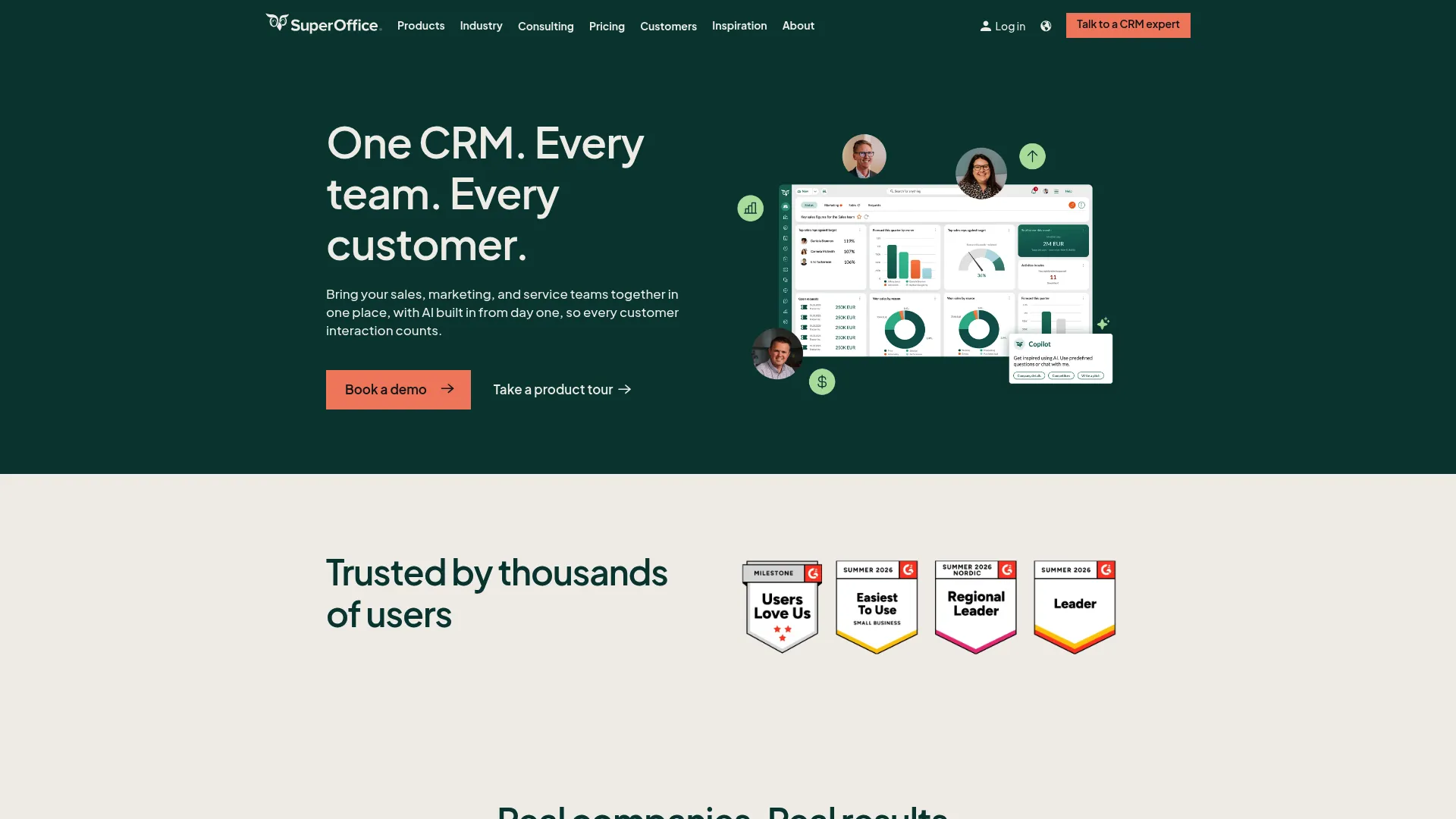
SuperOffice CRM is CRM software for sales, marketing, and customer service teams, with a strong European footprint. For teams that want one system rather than a stack of specialized tools, SuperOffice runs CRM-based expansion workflows directly against the same customer record used for everything else. Purchase history, contact management, and pipeline all sit in one place, which keeps expansion outreach grounded in what a customer already owns.
The platform combines contact and company management, sales pipeline management, and customer service ticket handling. That single-view setup supports renewal and expansion motions without exporting data between systems. Follow-up automation and reporting help teams time offers and track which expansion plays actually land.
Best for: European B2B teams that want one CRM for sales, marketing, service, and expansion workflows.
Key strengths
- Contact and company management
- Sales pipeline management
- Customer service and ticket handling
- Follow-up automation and reporting
Why choose SuperOffice CRM: Choose SuperOffice when you would rather run expansion inside your CRM than bolt on a separate platform.
SuperOffice CRM pricing: Plans are priced per user per month, billed annually: Starter at €45, Core at €65, Growth at €95, Plus at €130, and Super at €160. There is no permanent free plan.
6. Thales Sentinel
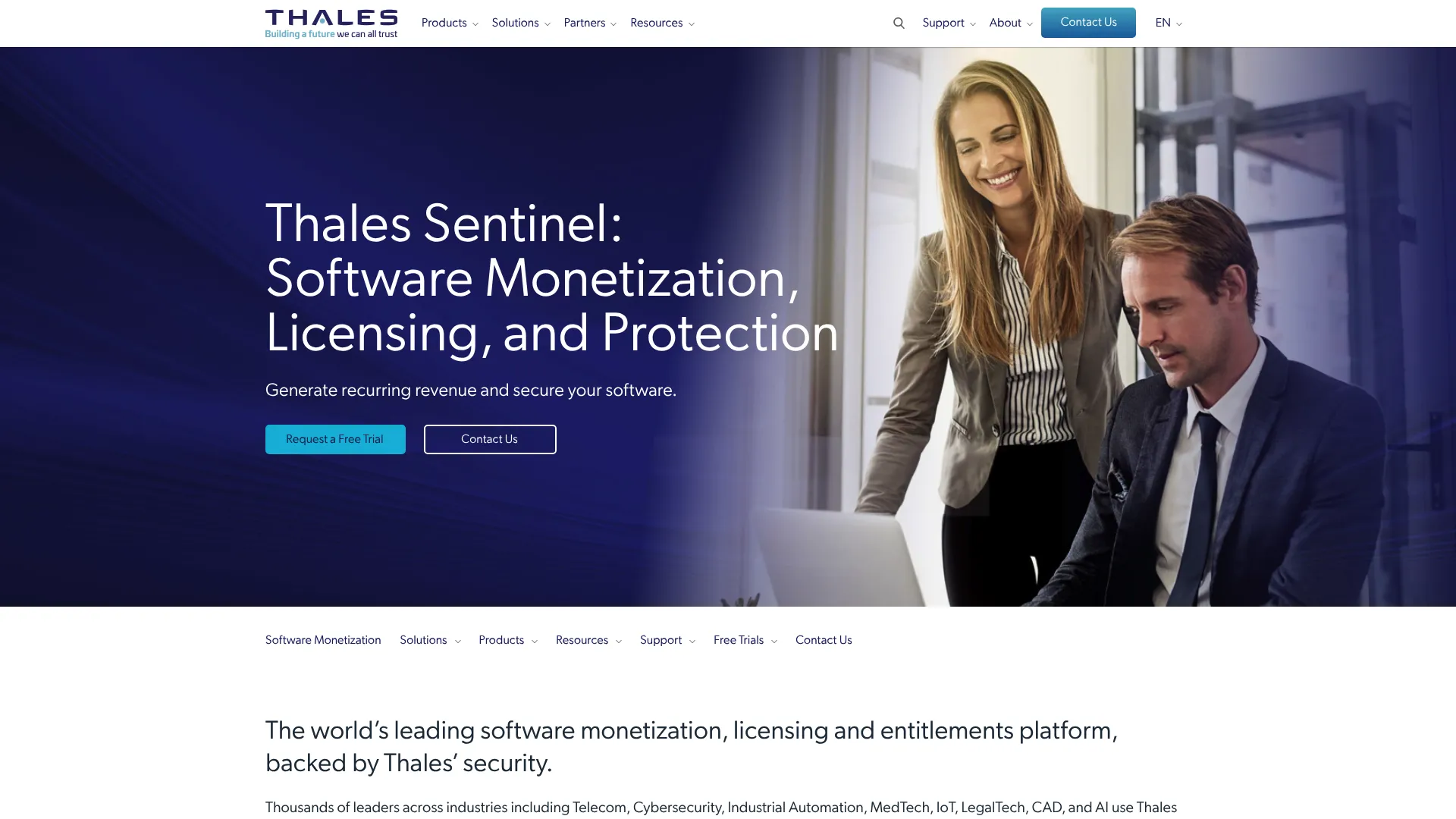
Thales Sentinel is a software monetization, licensing, entitlement management, and usage intelligence platform. It fits a different expansion motion than the CS and CRM tools above. If you sell software products with packaging, licensing, or portfolio monetization needs, Sentinel reads entitlement and usage signals to show where a customer has outgrown their current license or is ready for a higher tier.
The platform handles licensing and entitlement management, software protection and license enforcement, plus usage tracking that supports monetization. That usage-based expansion view lets vendors package modular offerings and spot upgrade moments from consumption data rather than sales intuition. For enterprise vendors managing hybrid pricing models, entitlement signals are the cleanest cross-sell trigger available.
Best for: Software vendors that need enterprise licensing, entitlement management, and usage-based expansion signals.
Key strengths
- Licensing and entitlement management
- Software protection and license enforcement
- Usage tracking and monetization support
- Modular packaging for portfolio monetization
Why choose Thales Sentinel: Choose Sentinel when your expansion signal is entitlement and consumption, not CRM notes, and packaging is core to how you sell.
Thales Sentinel pricing: Thales does not publish public pricing for Sentinel. The vendor directs prospects to contact sales for a quote.
Considerations
Signal quality
Bad inputs produce bad expansion recommendations. Before buying, confirm what actually powers the tool: product usage, customer health, entitlement utilization, or only manual CRM data. A platform that reads real adoption signals will time offers far better than one relying on a rep's last note. Verify the data source, not just the dashboard.
Workflow fit
Match the software to your motion, not the feature list. A sales-led org, a customer success-led org, and a monetization-led vendor each need different tooling. If customer success owns expansion, a CRM-native tool may not surface the health signals they rely on. If you sell licensed software, entitlement data beats CRM notes every time.
Automation depth
Decide whether you need alerts or orchestration. Simple alerts work when volume is low and a human reviews every account. Full offer orchestration matters when signals fire faster than a team can act. Check that handoff rules and playbooks are configurable, so a triggered signal reaches the right owner automatically.
Integration coverage
CRM, support, product analytics, and billing integrations decide whether signals stay connected. A connector logo on a page is not the same as clean, reliable sync. Ask how often data refreshes and whether the tool writes back to your CRM. Weak sync creates blind spots exactly where expansion signals should be strongest.
Pricing and packaging
Pricing models vary: per seat, per volume, or enterprise contract. Match the model to your expected expansion volume. A per-seat tool can get expensive as your CS team grows, while a usage-based monetization platform scales with product consumption. Check that the pricing structure will not penalize the growth you are trying to create.
Conclusion
The right cross sell software depends on where your signal lives and who owns the motion. Clari fits revenue teams that want usage signals feeding pipeline prioritization. MaxIQ suits RevOps coordinating post-sale expansion across the lifecycle. Custify serves customer success teams running retention-friendly expansion from health and adoption data. SuperOffice CRM works for teams that want expansion inside one CRM. Accord aligns buying committees when expansion touches new stakeholders. Thales Sentinel fits software vendors expanding through entitlement and usage-based signals.
The category is not really about selling more. It is about signal, timing, and automation working together so the right offer reaches the right account before the moment passes. Start with the tool that matches your current data source and team ownership, because a platform that cannot read your signals cannot route your offers.
A practical next step: shortlist two tools, compare the data inputs each one actually uses, and test one expansion workflow end to end before you commit.
Start your journey with Guideflow today!
FAQs
Cross sell software finds opportunities to add an adjacent product to what a customer already owns, like an analytics module for a core platform user. Upsell software expands the existing product, moving a customer to a higher tier or more seats. Most revenue expansion platforms handle both, since the underlying signal work overlaps heavily.
CRM data helps, but it is not the only fuel. Product usage data and billing or entitlement data can also power expansion workflows, often with better timing than CRM notes. The best results come from combining sources, which is why integration quality matters more than any single connector. Better integrations improve offer relevance.
The strongest predictors are product usage and adoption gaps, entitlement utilization approaching a ceiling, healthy customer health scores, and stakeholder changes inside an account. A team using nearly all its licensed seats or heavily adopting the core product is signaling readiness. Combining several signals beats relying on any one alone.
Yes, though the two motions overlap without being identical. SaaS expansion usually runs on usage, health, and CRM signals. Software monetization leans on entitlement and licensing data, so monetization-heavy vendors often need entitlement and packaging tools like Thales Sentinel rather than a CS-focused platform. Pick the signal source that matches your product.
Customer success teams use it to surface adjacent needs, time offers around adoption milestones, and support retention-friendly expansion. Because CS conversations feel like help rather than a pitch, health and usage signals let them recommend the next product when a customer is genuinely ready. Tools like Custify tie those signals to playbooks so the motion stays consistent.
Relevance comes from segmentation, clear rules, and timing. Group accounts by fit, health, and readiness, then map a specific offer to each group rather than blasting the whole list. Weak automation creates noise, so configure triggers and handoff rules carefully. The goal is fewer, better-timed offers that reach accounts already showing expansion signals.