Your campaign dashboard shows reach, impressions, and clicks. Your CFO asks whether any of it drove store visits. You don't have an answer.
That gap is the central problem in location based marketing. Digital spend happens online; revenue often happens in the physical world. According to a 2025 Google/Ipsos Consumer Behavior Study, 72% of consumers say they would respond to a marketing message relevant to their current location. The signal is there. The tools to activate and measure it are not always obvious.
Location data only creates value when teams can act on it through the right channel and connect it to measurable outcomes. A geofencing tool helps little if you cannot link triggered messages to loyalty activity or store visits. A foot traffic platform is interesting data until it connects to budget decisions.
This guide cuts through the category noise. The 9 tools below cover four distinct jobs: Understanding location behavior, triggering location-based campaigns, engaging visitors inside physical venues, and measuring offline impact from digital spend. No single platform covers all four equally well. That routing clarity is what this guide delivers.
What's inside
This guide covers 9 location based marketing software platforms evaluated for digital marketers and growth teams in 2026. Tools were selected based on four criteria:
- Data quality and signal source: GPS, Wi-Fi, Bluetooth, SDK events, or modeled datasets
- Activation channels: Mobile push, paid media, venue messaging, or analytics outputs
- Attribution depth: Visit measurement, control groups, and first-party data compatibility
- Integration fit: CRM, CDP, ad platform, and analytics stack compatibility
No tool on this list is presented as a universal winner. Each entry includes a primary use case fit to help you shortlist based on the actual gap in your stack.
TL;DR
- Best for location intelligence and audience activation: Foursquare, for teams that need POI data, audience products, and visit attribution
- Best for developer-led geofencing: Radar, for product and mobile teams building location events into their own app
- Best for retail and venue visitor analytics: Aislelabs, for physical locations using Wi-Fi to understand on-site behavior
- Best for omnichannel lifecycle campaigns: Xtremepush or CleverTap, depending on whether you need gamification or mobile-first experimentation
- Best for foot traffic intelligence: Placer.ai, for retail, real estate, and market planning teams
- Best for geotargeted media audiences: Adsquare, for programmatic and out-of-home buyers who need privacy-focused location data
Each "best for" label reflects a primary fit, not a claim of superiority across all dimensions.
What is location based marketing software?
Location based marketing software uses location signals, such as GPS, Wi-Fi, Bluetooth beacons, mobile app permissions, or venue data, to help marketers target audiences, trigger messages, measure store visits, or understand how people move through physical places.
The global location-based marketing and advertising market reached $38.2 billion in 2025 and is projected to reach $78.6 billion by 2030, according to MarketsandMarkets (2025). The category is not one product type. It covers four distinct software jobs.
Location intelligence and audience platforms
These tools analyze visitation patterns, market demand, and audience behavior across geographic areas. Teams use them for campaign planning, local media buying, competitive benchmarking, and store network decisions. The output is insight, not a triggered message.
Geofencing and proximity platforms
These tools draw virtual boundaries around geographic areas and trigger events when a device crosses them. Entry and exit events, dwell-time thresholds, and venue-level detection all live in this category. Signal accuracy depends on the source: GPS is precise outdoors; Bluetooth and Wi-Fi work better indoors.
On-site and venue engagement platforms
These tools use guest Wi-Fi, indoor positioning, or captive portals to understand visitor behavior inside a physical location. They suit retail stores, airports, stadiums, and hospitality venues where the marketer controls the infrastructure.
Mobile engagement and journey orchestration platforms
These tools turn location events into push notifications, in-app messages, or lifecycle campaigns. The prerequisite is a consented, opted-in mobile audience. A location trigger without a clear messaging strategy becomes noise quickly.
Key capabilities to look for:
- Geofencing and location event triggers
- Audience segmentation and media activation
- Mobile, SMS, or ad-channel delivery
- Store visit and conversion attribution
- Consent and permission management workflows
- CRM, CDP, and analytics integrations
- Location data coverage by geography
- Venue-level or market-level reporting
When to use location based marketing software
Target people near stores, venues, or competitors
Geofencing and audience targeting fit local acquisition programs, store openings, and competitive conquesting. A restaurant chain running a lunch promotion can target people within 500 meters at 11 a.m. A retailer can build audiences based on visits to competitor locations. Always verify that targeting parameters align with platform policies and regional consent requirements.
Trigger a message during a high-intent moment
Mobile apps with location permissions can send a relevant push notification when a loyalty member enters a store or arrives at an event venue. Frequency caps and message relevance determine whether this feels helpful or intrusive. A technically correct geofence still produces a poor outcome if the message lacks context.
Measure offline impact from digital campaigns
Store visit attribution, trade-area lift analysis, and market-level reporting connect paid media spend to physical-world behavior. Ask vendors how they define a qualifying visit, handle control groups, and manage duplicate device signals. Then compare platform output against POS data, loyalty activity, or door counters before moving budget.
Location based marketing software comparison
The 9 tools below represent different approaches to location data. Your shortlist should start with your primary outcome, then filter by data source, activation channel, and integration requirements.
| # | Product | Best for | Key differentiator | Pricing | G2 rating |
|---|---|---|---|---|---|
| 1 | Foursquare | Location intelligence and audience activation | Global POI dataset with audience and attribution products | From $0/month (Spatial Desktop Basic) | Not listed on G2 |
| 2 | Radar | Developer-led geofencing | API and SDK-first geofencing with 5-meter accuracy | Developer plan: Free; Enterprise: Contact sales | 4.7/5 |
| 3 | Aislelabs | Retail and venue Wi-Fi analytics | Wi-Fi visitor intelligence with consent-based data capture | Custom pricing | 4.5/5 |
| 4 | Woosmap | Store locators and location APIs | Mapping, geocoding, and geofencing infrastructure | Free plan (10k API requests/month); Pro: Usage-based | 4.3/5 |
| 5 | Xtremepush | Location-triggered lifecycle campaigns | Unified CDP with omnichannel engagement and gamification | Custom pricing | 4.4/5 |
| 6 | CleverTap | Mobile app engagement with location context | Behavioral segmentation and campaign experimentation | From $85/month (Core) | 4.6/5 |
| 7 | Placer.ai | Foot traffic intelligence and market planning | Visitation trends, trade-area insights, and competitive benchmarking | Custom pricing; limited freemium available | 4.3/5 |
| 8 | Adsquare | Geotargeted media audiences | Privacy-first location data for programmatic and OOH activation | Contact sales | 3.9/5 |
| 9 | Purple | Venue Wi-Fi and visitor engagement | Guest Wi-Fi with captive portal analytics and CRM integration | Connect plan: Free; Capture and Engage: Contact sales | 4.1/5 |
Pricing and G2 ratings verified in 2026 before publication.
Best 9 location based marketing software tools for 2026
These tools cover different approaches to location marketing. Match the platform to your primary job: Intelligence, triggering, venue engagement, or measurement.
1. Foursquare
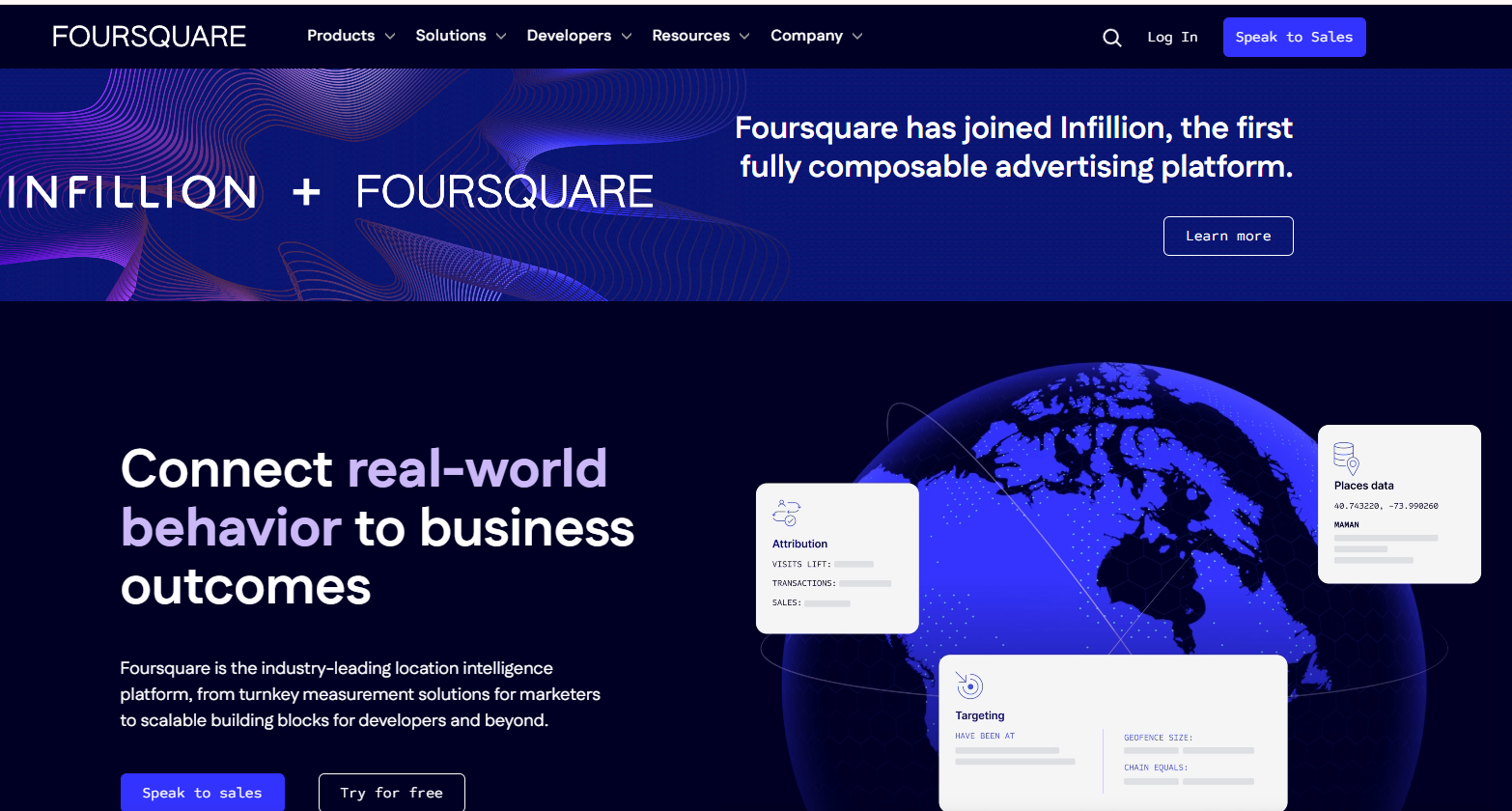
Foursquare is a geospatial technology platform built around one of the largest commercial points-of-interest datasets available, covering 100 million-plus POIs across 200-plus countries. The platform spans spatial analytics, audience products, visit attribution, and developer APIs. Teams across marketing, real estate, and media use it to understand where audiences go, plan campaigns around that behavior, and measure whether spend drove physical-world outcomes.
Best for: Multi-location brands, media buyers, and analytics teams that need location data to plan campaigns, create audiences, and assess offline impact.
Key features
- Global POI dataset: 100M+ points of interest across 200+ countries
- Geospatial visualization via Spatial Desktop and Spatial Workbench
- Audience segmentation and media activation products
- Visit attribution and place-based measurement
- Places API for developer-led location applications
Why choose Foursquare: The breadth of the underlying data is the differentiator. Teams that need location intelligence for planning decisions, media strategy, and visit measurement across multiple markets will find more coverage here than in a platform built primarily for mobile triggers.
Foursquare pricing: The Spatial Desktop Basic plan is free through 2026. The Standard plan runs $25/month and Pro runs $100/month, both billed monthly. The Spatial Workbench Developer plan is $250/month. Attribution, Audience, and Proximity products require contacting sales for commercial terms.
G2 rating: No current numeric G2 rating was available for Foursquare at the time of publication. Verify the current listing at g2.com before finalizing your evaluation.
Evaluation note: Confirm geographic coverage, audience availability, and attribution methodology for your specific target markets before committing to a contract.
2. Radar
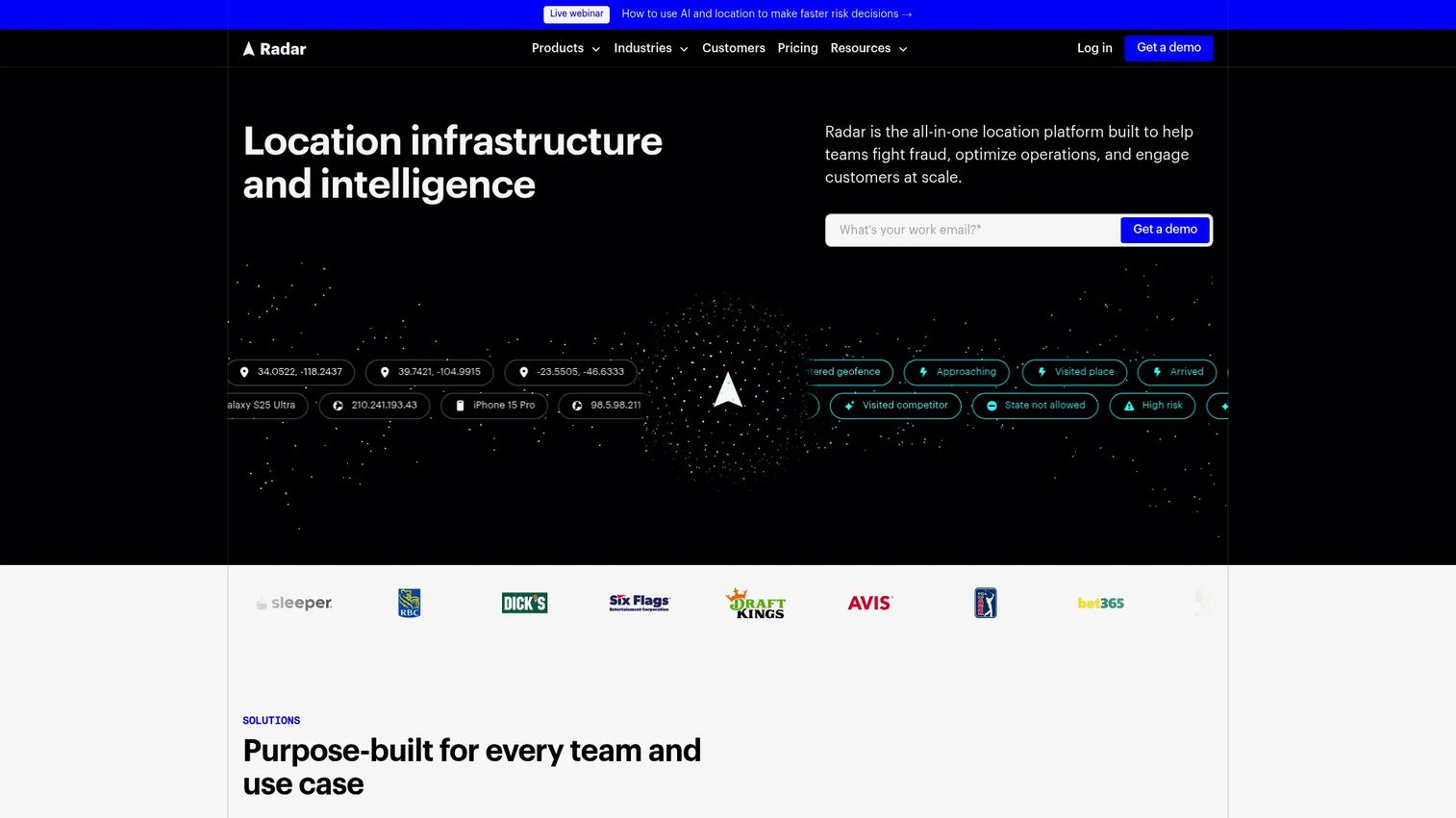
Radar is an all-in-one location infrastructure platform built for developers and product teams. It provides geofencing accurate to 5 meters, place visit detection using a global POI dataset, trip tracking with live ETAs, geocoding, and routing. Teams embed Radar's SDKs and APIs into their own mobile products rather than using a stand-alone campaign interface.
Best for: Product and growth teams with mobile developers who need geofencing, trip tracking, or place detection inside a loyalty app, delivery workflow, or customer journey.
Key features
- Geofencing with 5-meter accuracy: Unlimited polygon, circle, and isochrone shapes
- Mobile SDKs for iOS, Android, and React Native
- Place visit detection using a global POI dataset
- Trip tracking with waypoint detection and arrival alerts
- Geocoding and distance matrix services
Why choose Radar: This is an infrastructure choice, not a campaign interface. It fits teams that want to build location-driven experiences into their own product and already have the engineering capacity to instrument events and connect them to downstream messaging.
Radar pricing: The Developer plan is free. Enterprise pricing requires contacting Radar directly. G2 lists this same structure; no public numeric enterprise rate was available at verification time.
G2 rating: 4.7/5
Evaluation note: The marketing team will need a defined event taxonomy and engineering support before location events can reliably feed into campaigns.
3. Aislelabs
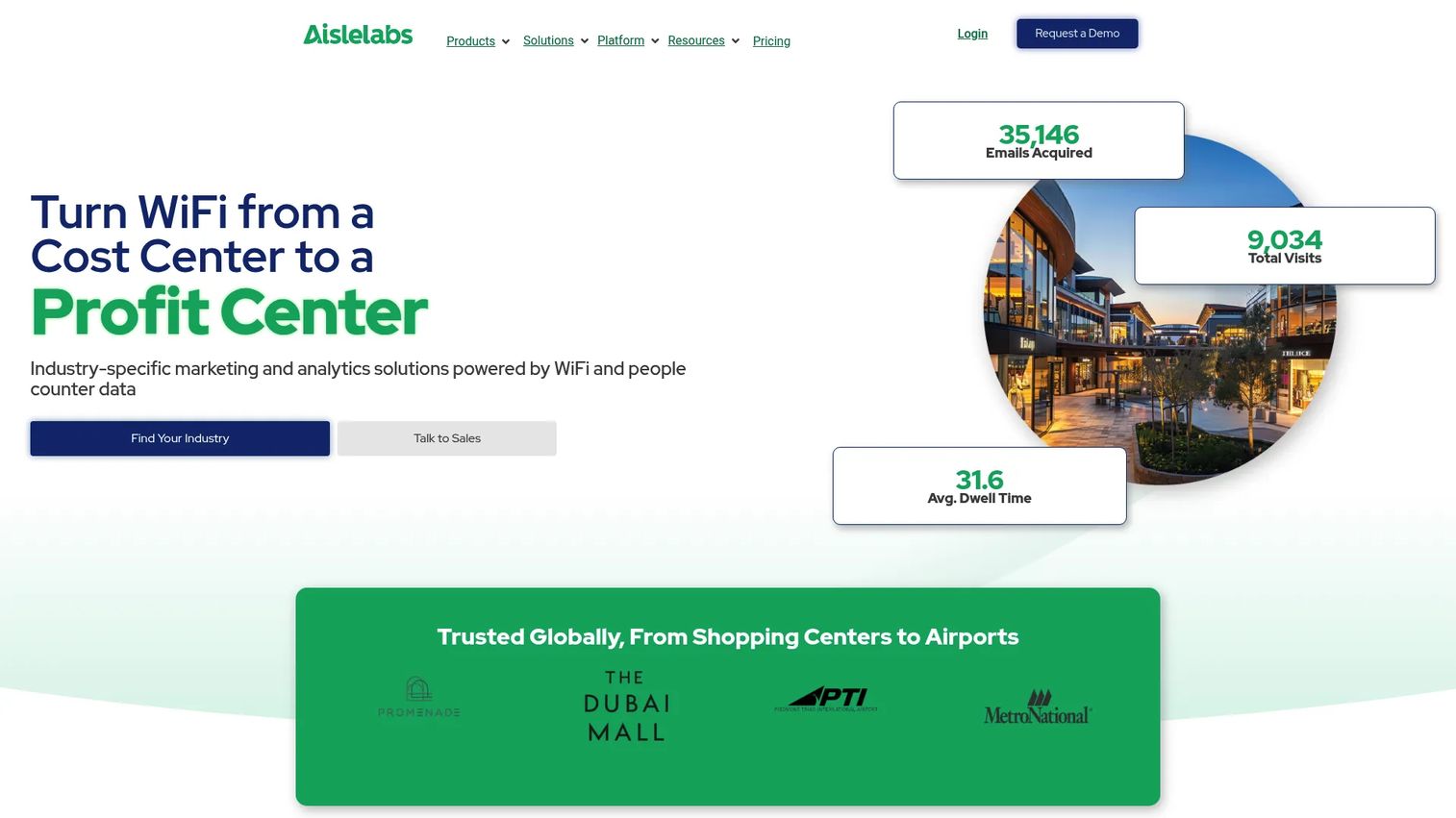
Aislelabs is a Wi-Fi-powered visitor analytics and venue marketing platform designed for physical locations with meaningful on-premise traffic. It captures foot traffic, dwell time, occupancy, and zone-level behavior through the venue's Wi-Fi infrastructure, then uses that data for visit-triggered email and SMS campaigns. Customers include shopping centers, airports, hospitality groups, and restaurant chains.
Best for: Retailers, malls, airports, hospitality brands, and campuses that want visitor intelligence and consent-based marketing from their existing Wi-Fi infrastructure.
Key features
- Foot traffic, dwell time, occupancy, and zone-level heatmaps
- Branded captive portal with consent-based first-party data capture
- Visit-triggered email and SMS marketing campaigns
- Audience segmentation by visit frequency, recency, and behavior
- Venue engagement tools across the Aislelabs product suite
Why choose Aislelabs: The strongest case is for organizations that already operate guest Wi-Fi and want to turn that passive network into an owned-data asset. The platform connects physical visitor behavior to marketing activation without relying on third-party GPS signals.
Aislelabs pricing: Aislelabs does not display numeric prices on its pricing page. Plans are organized as standalone products (Flow, Connect, Marketing) and bundles (Growth Bundle, Insight Bundle, Platform Suite). Contact Aislelabs for a quote tied to your venue count and module requirements.
G2 rating: 4.5/5
Evaluation note: Data usefulness depends on Wi-Fi coverage reliability, visitor opt-in rates, and whether your team has a workflow to act on the collected data inside your CRM or marketing platform.
4. Woosmap
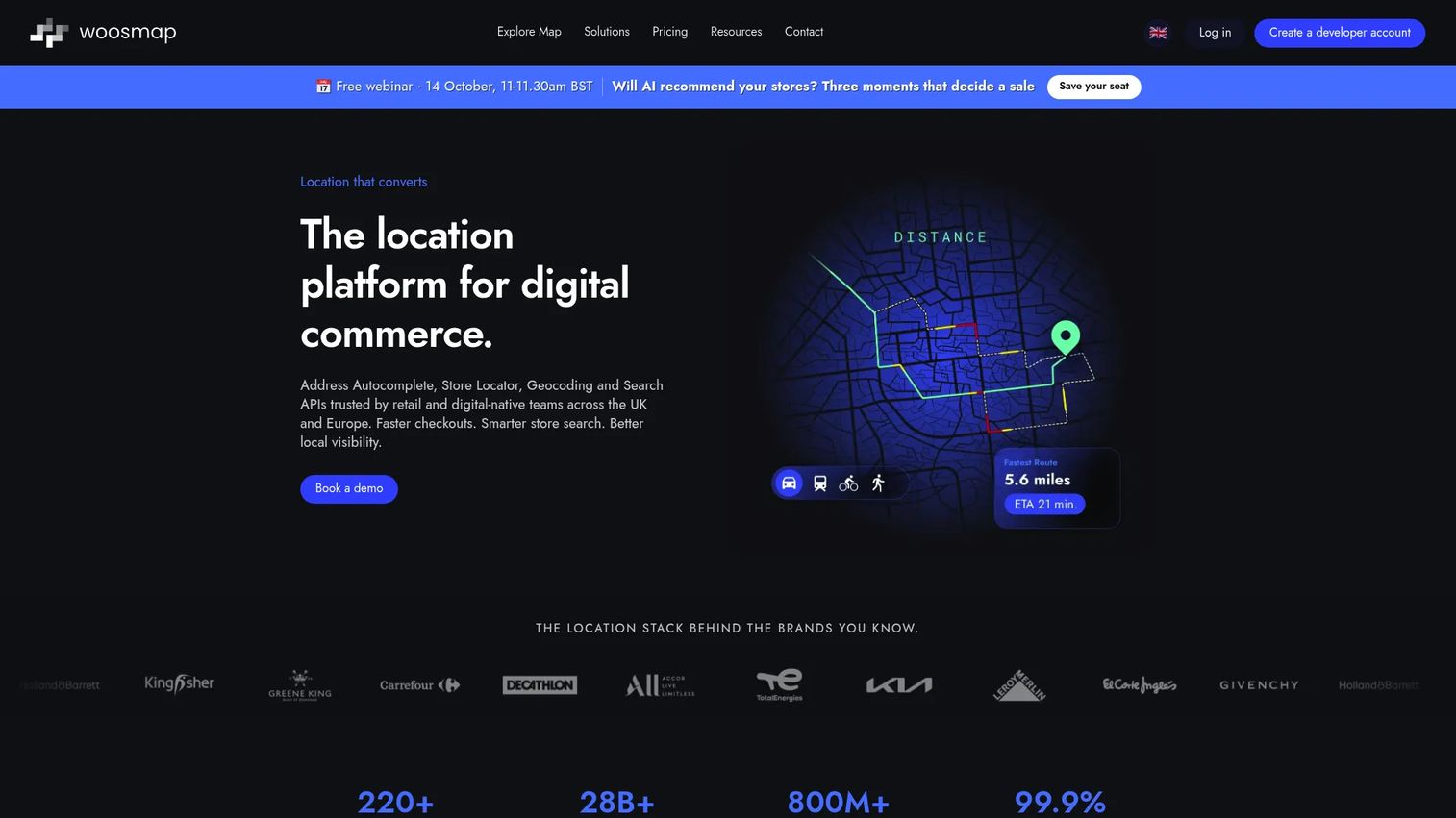
Woosmap provides location intelligence APIs and tools for teams building location-aware customer experiences. It covers store locators, address autocomplete, geocoding, distance calculations, geofencing, routing, and indoor mapping. Retailers and multi-location brands embed Woosmap into websites, mobile apps, and operational workflows to make their customer touchpoints location-aware.
Best for: Multi-location brands and digital teams that need location functionality embedded into customer-facing web properties, mobile apps, or operational routing tools.
Key features
- Store locator with map-based search and radius filtering
- Address autocomplete, geocoding, and reverse geocoding
- Distance matrix and route calculation APIs
- Geofencing API for virtual boundary logic
- Indoor mapping and wayfinding for large venues
Why choose Woosmap: It fits teams that need location infrastructure across customer touchpoints rather than a campaign reporting layer. If your gap is "customers can't find our nearest store" or "our app needs delivery zone logic," Woosmap addresses that directly.
Woosmap pricing: The Free plan includes up to 10,000 API requests per month at no cost. Pro pricing is usage-based, with costs scaling by API call volume. Enterprise tiers include volume discounts, data caching, and a 99.9% SLA. Contact Woosmap for Pro and Enterprise rates.
G2 rating: 4.3/5
Evaluation note: The strongest value comes when a team has defined use cases for store search, local routing, or geofence logic. Woosmap does not replace a full attribution platform for measuring campaign-driven visits.
5. Xtremepush
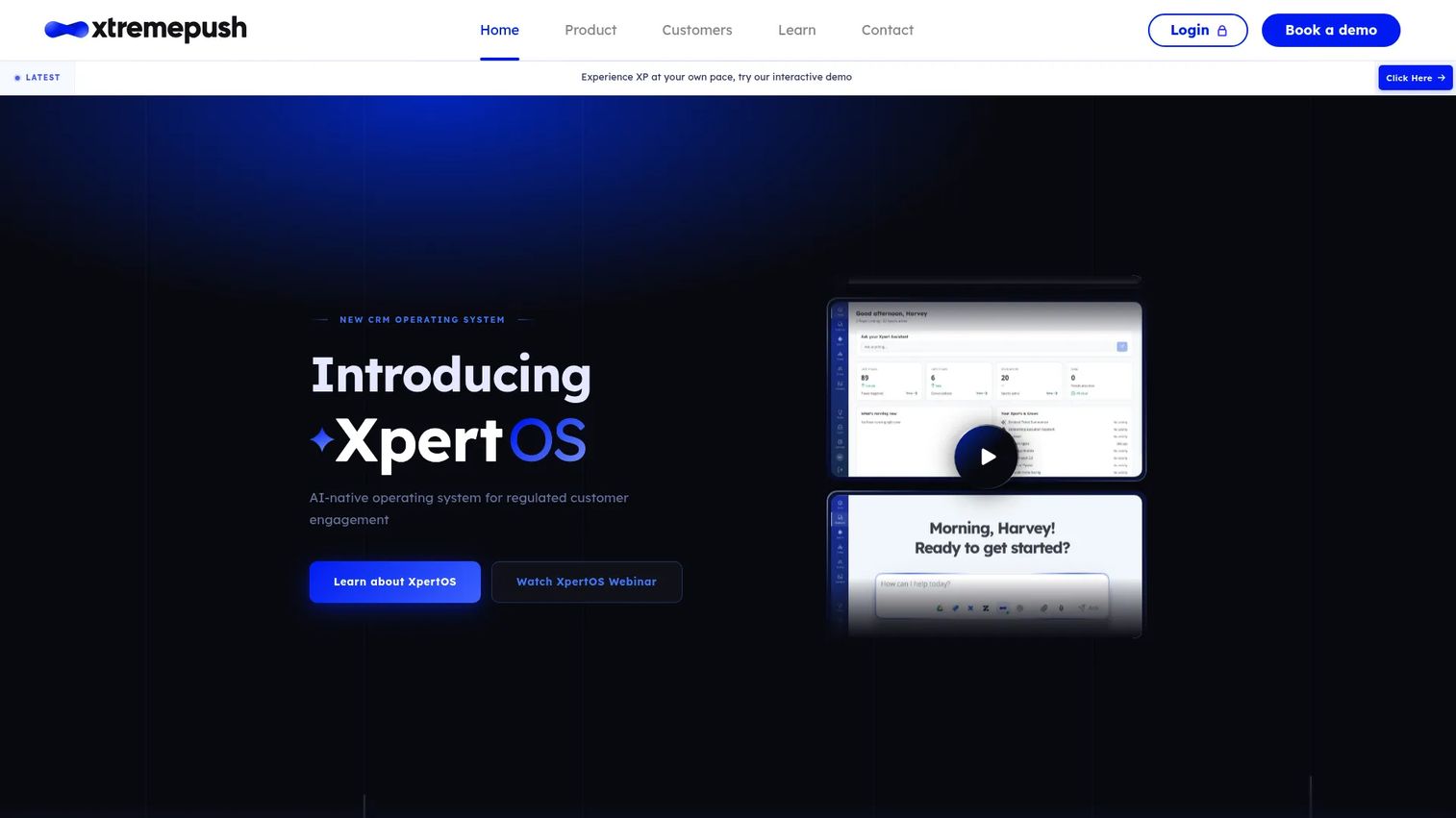
Xtremepush is a unified customer engagement platform that combines a real-time customer data platform, omnichannel campaign orchestration, AI optimization, gamification, and loyalty capabilities in one system. It activates across email, SMS, mobile push, web push, in-app messaging, microsites, and onsite messages. Location events are one trigger input within a broader lifecycle marketing motion.
Best for: Retail, iGaming, hospitality, and app-based brands with consented customer data that need coordinated lifecycle campaigns triggered by behavior, including location signals.
Key features
- Real-time CDP with single customer view across channels
- Omnichannel activation: Email, SMS, push, in-app, web push, onsite
- AI-driven campaign optimization and predictive analytics
- Gamification and loyalty program capabilities
- Journey orchestration with location-triggered automation
Why choose Xtremepush: The case is strongest when the real job is coordinating relevant messages after a location event rather than the geofencing itself. Teams that already have location signals from their app and need a capable messaging layer on top of them will find more depth here than in a pure geofencing tool.
Xtremepush pricing: Xtremepush uses usage-based pricing tied to active database size, modules selected, and channels activated. Rates require contacting the sales team directly for a quote.
G2 rating: 4.4/5
Evaluation note: Map your existing CRM, CDP, mobile app, and messaging stack before purchase. Xtremepush covers significant ground, and overlap with tools you already pay for is a real risk.
6. CleverTap
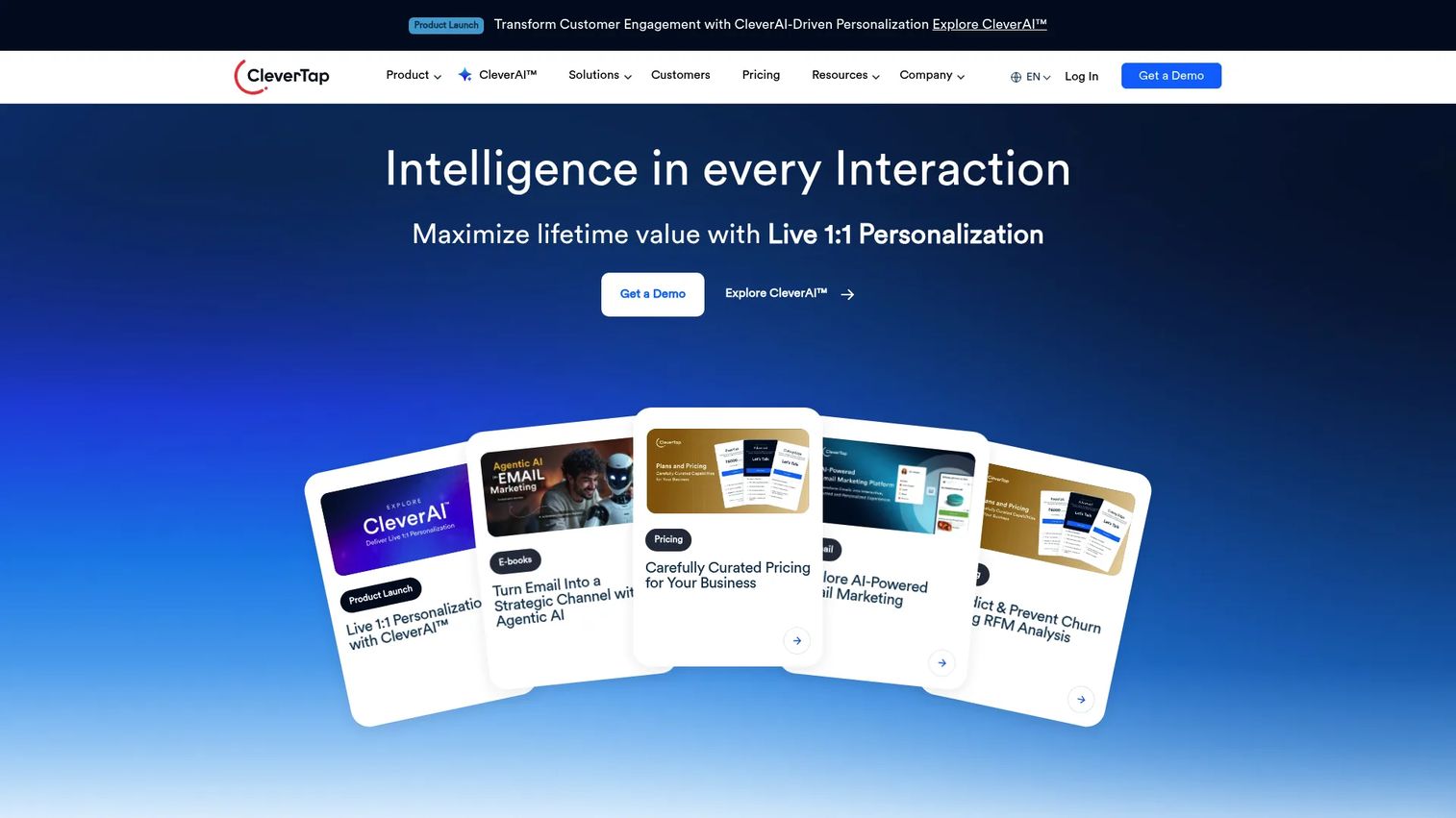
CleverTap is an all-in-one customer engagement and retention platform that combines behavioral analytics, real-time segmentation, personalization, campaign experimentation, and omnichannel journey orchestration. It is built for mobile-first businesses that need to improve activation, retention, and repeat engagement through data-driven messaging. Location context is one input within a broader customer engagement model.
Best for: App-led growth teams at mid-market and enterprise companies that need segmentation, experimentation, and omnichannel messaging in a single mobile engagement workflow.
Key features
- Behavioral analytics with real-time event tracking
- Audience segmentation using behavioral and contextual signals
- Push notifications, in-app messaging, and SMS
- Campaign A/B and multivariate experimentation
- Journey orchestration across the full customer lifecycle
Why choose CleverTap: It belongs on the shortlist when the primary KPI is app activation and retention, not just location-triggered messaging. Location data feeds into a broader segmentation and experimentation model, which makes CleverTap a stronger fit for teams optimizing the full lifecycle than for teams focused narrowly on proximity triggers.
CleverTap pricing: The Core plan starts at $85/month, billed after a 30-day trial period. Pro and Ultimate plans require contacting sales for pricing; these tiers add automated segmentation, advanced AI decisioning, and governance features.
G2 rating: 4.6/5
Evaluation note: Confirm that your app's location event source is compatible with CleverTap's SDK before assuming integration is plug-and-play.
7. Placer.ai
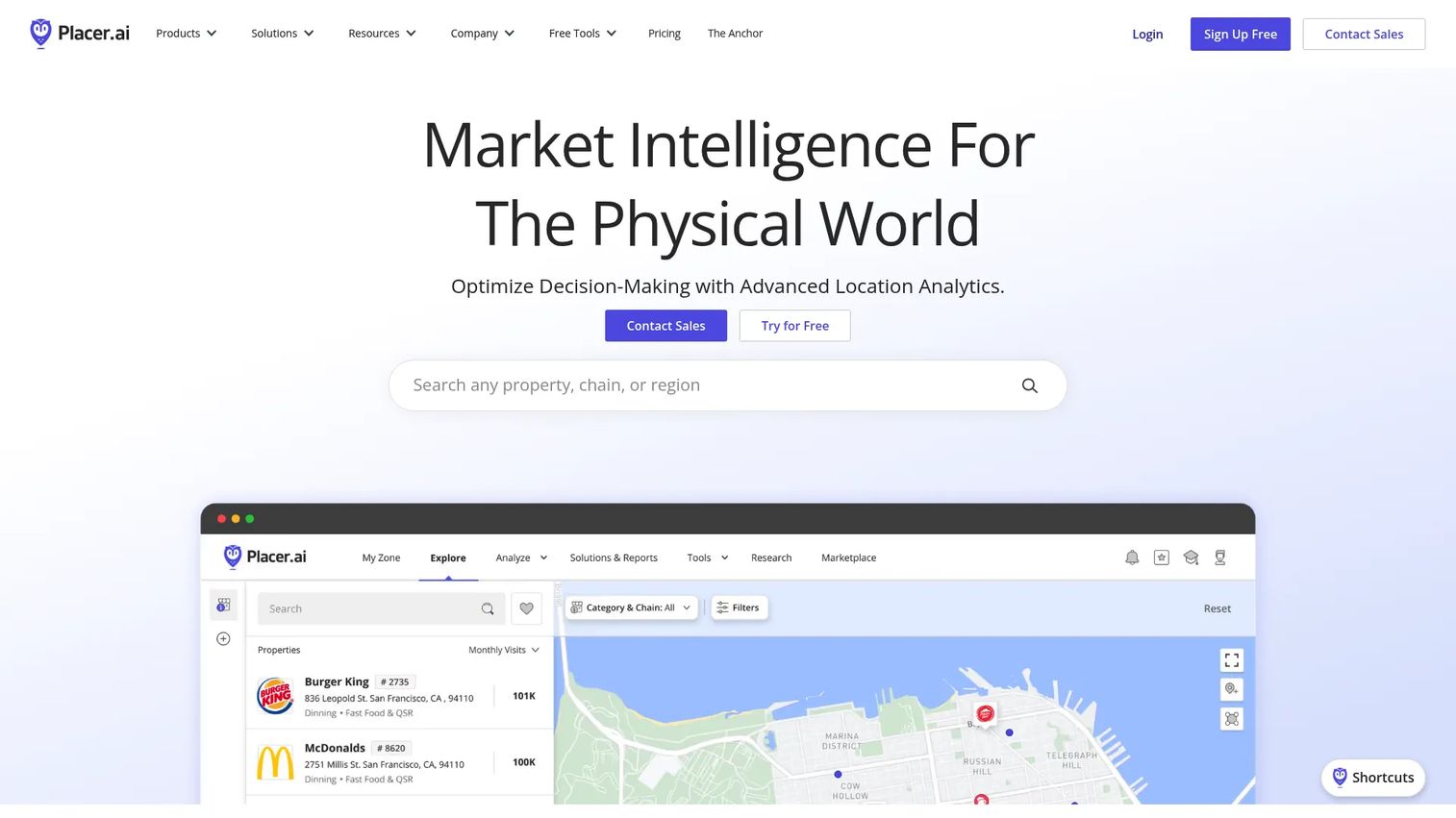
Placer.ai is a location intelligence and foot traffic analytics platform focused on understanding visitation patterns, trade areas, market performance, and competitive dynamics. It serves retail, commercial real estate, restaurants, and market strategy teams that need location data to make planning decisions and benchmark location performance. The platform is not built to trigger messages; it is built to generate insight.
Best for: Retail chains, commercial real estate firms, restaurant groups, and market strategy teams that need foot traffic data for site decisions, campaign planning, and competitive analysis.
Key features
- Visitation measurement, trends, and historical comparison
- Trade-area analysis with audience demographic insights
- Competitive benchmarking and chain-level performance comparison
- Location comparison reports across your own portfolio
- Interactive platform, API access, and data feeds
Why choose Placer.ai: Stress strategic planning over real-time activation. This is the right tool for answering "where should we open next?", "how is our trade area performing vs. last quarter?", or "are competitor visits affecting our numbers?" It is not the right tool for triggering a push notification when a customer walks by.
Placer.ai pricing: Paid plans use customized pricing based on the scope of access, markets, and features required. A limited freemium version is available. Contact Placer.ai for a subscription quote.
G2 rating: 4.3/5
Evaluation note: Treat modeled foot traffic as decision support. Validate major budget or site expansion decisions against POS data, lease performance, or local operational context before acting on the platform's numbers alone.
8. Adsquare
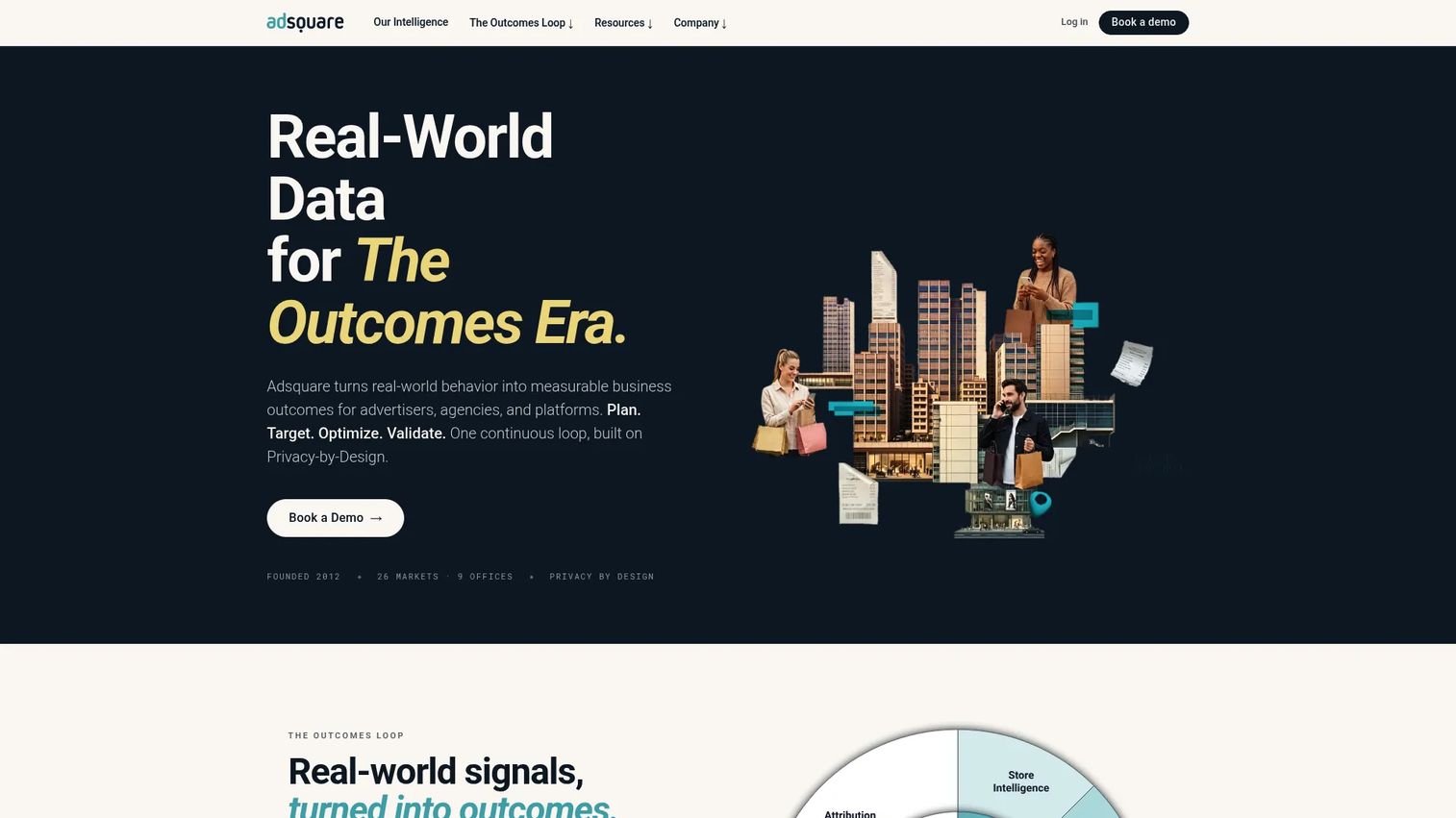
Adsquare is a privacy-first location intelligence platform designed for media buyers and advertisers. It helps teams plan, target, and validate programmatic campaigns using real-world data, including ID-precise and geo-contextual audience targeting, store intelligence, out-of-home intelligence, and offline visit attribution. The platform is built to connect location-derived insight to media activation across programmatic, social, and OOH channels.
Best for: Media teams, agencies, and brands running programmatic, connected TV, or out-of-home campaigns who need location-derived audience data and offline outcome validation.
Key features
- ID-precise and geo-contextual audience targeting
- Store Intelligence and Out-of-Home Intelligence for campaign planning
- Visit Data Feed for in-flight campaign optimization
- Campaign validation and visit-based attribution reporting
- Privacy controls aligned to consent frameworks
Why choose Adsquare: The platform fits teams whose primary job is media activation rather than owned-channel messaging. If you need to turn location signals into paid media audiences and measure whether those campaigns drove store visits, Adsquare addresses that workflow end to end.
Adsquare pricing: Adsquare does not publish numeric rates. Pricing varies by market, campaign volume, data product, and activation channel. Contact Adsquare's sales team for commercial terms.
G2 rating: 3.9/5
Evaluation note: Confirm which media platforms, geographic markets, and audience segments are supported before building campaign plans around the data.
9. Purple
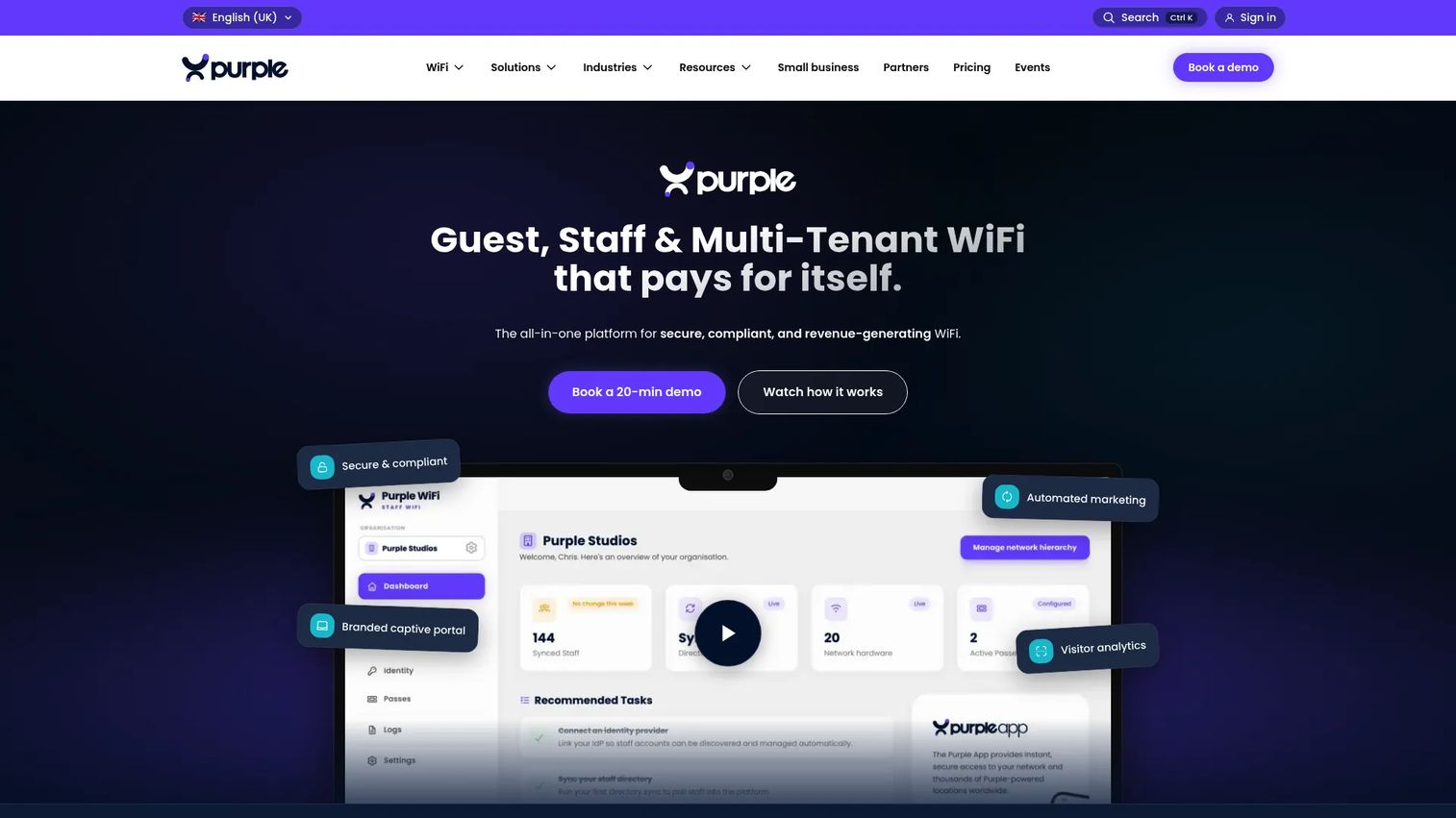
Purple is a cloud Wi-Fi platform that turns guest Wi-Fi infrastructure into a visitor analytics and engagement layer. Venue operators use Purple's branded captive portals to capture first-party visitor data with consent, then analyze footfall, dwell time, repeat visit rates, and network performance. The CRM integration connects that visitor data to marketing workflows. Purple also provides staff Wi-Fi and multi-tenant network solutions.
Best for: Venues, retail destinations, hospitality brands, stadiums, airports, and public spaces that operate guest Wi-Fi and want to connect visitor identity data to marketing and analytics.
Key features
- Branded captive portal with 25-plus language support
- Guest Wi-Fi analytics: Footfall, dwell time, repeat visits, and network performance
- CRM integration and first-party visitor data capture
- Cloud RADIUS with WPA2/3-Enterprise authentication
- Surveys add-on for in-venue feedback collection
Why choose Purple: The case is strongest when your organization already operates guest Wi-Fi and wants to turn that passive infrastructure into owned data. Purple connects the physical guest experience to a marketer-owned data asset without requiring GPS or third-party signals.
Purple pricing: The Connect plan is free. Capture and Engage plans require contacting Purple for a quote. A Surveys add-on is listed at $0.96 per response.
G2 rating: 4.1/5
Evaluation note: Visitor opt-in rates and Wi-Fi coverage consistency determine data quality. The platform delivers more value when the collected visitor data is actively used in a downstream CRM or marketing workflow.
Considerations when choosing location based marketing software
Start with the commercial outcome, not the technology
A team trying to measure whether a paid media campaign drove store visits needs different software from a mobile app team sending location-based push notifications. Define the outcome first, then identify which tool category addresses it. Buying a geofencing platform when the real need is foot traffic analytics creates a gap, not a solution.
Audit the data source and signal quality
GPS, Wi-Fi, Bluetooth, SDK events, and modeled visitation datasets carry different accuracy profiles. GPS works outdoors with good precision; Bluetooth and Wi-Fi perform better indoors; modeled datasets aggregate signals from multiple sources and carry statistical uncertainty. Ask vendors how they handle signal gaps, accuracy confidence, and geographic coverage for your specific markets.
Verify consent and privacy workflows before signing
Check how the platform captures permission prompts, stores opt-in records, handles deletion requests, and accommodates regional policy requirements. Software can support these operational controls, but it does not remove the need for legal and privacy review. Involve privacy stakeholders before launching campaigns, not after. For a deeper look at related tools, see best mobile attribution platforms and best marketing analytics software.
Test attribution claims against first-party data
Ask every vendor how they define a qualifying visit, what the reporting window is, whether they use control groups, and how they handle duplicate devices. For decisions that involve moving meaningful budget, compare platform-reported visit lift against POS data, loyalty activity, or door counters. Platform-reported visits and verified sales impact are not the same number.
Map the platform to your existing stack
Check whether the tool overlaps with a CDP, mobile engagement platform, ad platform, CRM, analytics warehouse, Wi-Fi provider, or store locator technology already in use. The right platform closes a measurable gap rather than duplicating something you already pay for. See best customer data platform for reference if you are evaluating CDP overlap.
How to choose the right location based marketing software
If you need location intelligence for planning and attribution
Start with Foursquare and Placer.ai. Foursquare suits teams that also need audience activation and media support alongside analytics. Placer.ai is the stronger fit for retail chains, real estate teams, and restaurant groups focused specifically on visitation trends and competitive benchmarking. Both require validating their modeled outputs against your own first-party data before making major budget decisions.
If you need geofencing inside a mobile product
Radar is the focused option. It fits teams with engineering resources who want to build location events into their own app infrastructure with API-level control, instrumenting geofencing, trip tracking, and place detection directly into their product.
If you run stores, venues, or guest Wi-Fi networks
Evaluate Aislelabs and Purple. The decision comes down to the scope of the analytics and marketing workflow you need on top of the Wi-Fi layer. Aislelabs provides deeper venue intelligence and visit-triggered campaign capabilities. Purple emphasizes guest connectivity, captive portal analytics, and CRM integration. Both require Wi-Fi infrastructure and visitor opt-in to generate useful data. For related tools that connect physical-world engagement to digital analytics, see best location intelligence software.
If your goal is lifecycle messaging after a location event
Xtremepush and CleverTap both address this, from different angles. Xtremepush suits teams that need gamification, loyalty, and omnichannel orchestration alongside location triggers. CleverTap is the stronger fit for mobile-first teams focused on behavioral experimentation and app retention. Both require an existing consented mobile audience. See also best mobile marketing software for a broader look at mobile activation tools.
If you need geotargeted media audiences
Adsquare is the focused choice for programmatic, social, and OOH buyers who need location-derived audience data and offline attribution reporting. Confirm market coverage, supported media platforms, and data governance practices before building campaign plans around it.
Conclusion
Location based marketing software is not one category. The 9 tools in this guide cover location intelligence, developer-led geofencing, venue engagement, lifecycle messaging, foot traffic analytics, and media audience targeting. Treating them as interchangeable wastes budget and creates reporting gaps.
Use this shortlist to guide your selection:
- Foursquare for location intelligence and audience activation
- Radar for developer-led geofencing in a mobile product
- Aislelabs for venue and retail visitor analytics
- Woosmap for location infrastructure across web and app touchpoints
- Xtremepush and CleverTap for location-aware lifecycle messaging
- Placer.ai for foot traffic intelligence and market planning
- Adsquare for geotargeted media audience strategy
- Purple for guest Wi-Fi engagement in physical venues
Pick two or three platforms based on your primary use case. Test data coverage, integration depth, consent workflows, and attribution methodology before signing a contract. Before you demo any of these tools, consider building an interactive demo of your own product to support the evaluation process.
Start your journey with Guideflow today!
FAQs
Location based marketing software uses location signals, including GPS, Wi-Fi, Bluetooth, mobile app permissions, and venue data, to help marketers target audiences, trigger messages, analyze physical-world behavior, or measure offline outcomes. The category spans four distinct buying jobs: Location intelligence, geofencing, venue engagement, and store visit attribution. No single platform covers all four equally well.
Geofencing creates a virtual boundary around a specific geographic area and triggers an event, such as a push notification, when a device crosses that boundary. Geotargeting selects audiences or delivers media based on a broader geographic area, such as a city, ZIP code, or defined radius, without requiring a real-time device crossing event. Geofencing is event-driven; geotargeting is audience-driven.
The right choice depends on the specific objective. Aislelabs and Purple suit on-site visitor engagement and Wi-Fi-based behavior analytics inside the store. Foursquare and Placer.ai fit market analysis, competitive benchmarking, and campaign planning outside the store. Xtremepush and CleverTap fit teams that want to trigger messages to loyalty app users during or after a store visit. Validate any store-level attribution results against first-party data before moving budget.
Some platforms, including Foursquare and Adsquare, provide visit attribution models that connect campaign exposure to physical-world visits. Methodology matters significantly. Ask vendors how they define a qualifying visit, what the attribution window is, whether they use control groups to establish a baseline, and how they handle duplicate device signals. Compare platform output against POS, loyalty, or door-counter data before treating visit lift as proof of revenue.
It depends on the use case. App-based geofencing and push notifications require an installed mobile app and explicit user permission for location access. Location intelligence platforms like Placer.ai analyze aggregated visitation data that does not require an app. Media targeting through a platform like Adsquare uses location-derived audience segments that activate through ad channels, not app installs. Guest Wi-Fi platforms like Aislelabs and Purple operate entirely through venue infrastructure.
The software may provide consent capture, permission management, and data deletion controls, but compliance depends on how your organization collects, stores, uses, and shares location data. Regional frameworks, including GDPR and state-level U.S. privacy laws, impose requirements that software tools support but do not satisfy on their own. Involve privacy and legal teams before launching location-based campaigns, and review consent workflows against the specific requirements of each market you operate in.
Multi-location brands need geographic coverage that matches their footprint, location-level reporting that separates performance by store or market, scalable campaign controls that do not require manual configuration per location, and reliable integrations with existing CRM and analytics tools. Franchise organizations should also assess whether the platform supports reporting and permission controls by business unit or franchisee. For related guidance, see best audience intelligence platforms.
Start by establishing a baseline before any campaigns run. Define the outcome metric: Qualified store visits, loyalty signups, repeat visits, or transactions tied to a location-triggered message. Use holdout groups or control populations where the platform supports it. Reconcile platform-reported visits against first-party data sources such as POS, CRM records, or loyalty program activity. Attribution platforms covered in this guide can connect paid media to visits, but connecting visits to revenue requires first-party data your team controls. See best attribution software tools for a broader look at attribution methodology across channels.