You quote a 300-guest wedding in a spreadsheet. The client changes the headcount twice. Your kitchen prints an old version of the BEO. Two servers show up who were already double-booked on another event. The invoice goes out late, and you chase payment for three weeks.
None of that is a food problem. It is a workflow problem. Every one of those breakdowns happens in the gap between disconnected tools: a spreadsheet for quotes, an email thread for approvals, a group text for staffing, a separate app for payments, and a shoebox of receipts for reporting.
Catering software exists to close those gaps. The category has grown fast because operators are tired of running events on duct tape. The global catering software market was valued at USD 410 million in 2024 and is projected to reach USD 721 million by 2030 at a 9.8% CAGR, according to Strategic Market Research (2024). Cloud-based deployments already account for 72.5% of that revenue, which means most of the market has moved off desktop installs and onto systems your team can reach from a venue, a kitchen, or a phone.
For anyone building a repeatable operation, that shift matters. The right catering management software turns quote-to-payment, staffing, BEOs, and reporting into one connected flow instead of five brittle handoffs. If your catering arm sits next to a broader events operation, it also pays to look at adjacent categories like event management software and event planning software, since the workflows overlap. This guide compares the platforms that do the connecting well.
What's inside
This is an operator's buying guide, not a vendor page. We compare seven catering software programs built to manage quoting, scheduling, BEOs and event documents, staffing, invoicing, payments, and reporting in one place. The focus is workflow fit, not feature dumps.
We selected and ranked each platform on four criteria that matter when you are trying to centralize operations:
- End-to-end workflow coverage from lead to fulfillment to paid invoice
- Pricing transparency so you can budget without a sales call
- Usability and integrations that fit a small-to-mid-size or growing team
- Suitability by operating model, whether you run high-volume events, meal prep, or a restaurant with a catering arm
TL;DR
Short on time? Here is the quick read on the best catering business software for 2026.
- Best overall all-in-one platform: CaterZen, for operators who want sales, ordering, and operations in one hub.
- Best for quote-to-payment workflows: Total Party Planner, built by caterers for the full event lifecycle.
- Best for high-volume event management: Caterease, with a mature tiered system and company-wide coverage.
- Best catering software for small business: Better Cater, affordable and mobile-friendly for lean teams.
- Best for menu costing and margin tracking: Puree, for caterers who obsess over food cost and profitability.
- Best for meal prep and production: GoPrep, for kitchens running subscriptions and weekly production.
- Best for payment and cash flow ecosystem: Square, for teams that want payments and POS in one platform.
What is catering software?
Catering software is an end-to-end operational system that manages the full catering workflow, from lead capture and quoting through scheduling, food production, staffing, invoicing, payments, and reporting, in a single platform.
A modern catering management system replaces the spreadsheet-and-email stack most operators start with. Instead of copying data between tools, you run one connected flow. The core capabilities to expect from any serious platform:
- Lead and CRM management: capture inquiries, track prospects, and manage the pipeline. Strong tools double as a functional catering CRM so you are not running sales in a separate system.
- Proposals and quotes: build a proposal and quote workflow that turns an inquiry into a priced, client-ready document with online acceptance.
- BEOs and event documents: generate banquet event orders, event production docs, and packing lists that stay in sync with the latest changes.
- Staff scheduling: assign servers, cooks, and drivers, and avoid the double-booking that kills events.
- Online ordering: let clients place and pay for orders directly, especially for drop-off and corporate catering.
- Payments and invoicing: move from quote to deposit to final invoice without leaving the system.
- Reporting: track kitchen production reports, cash flow, labor, and margin so you can make weekly decisions.
- Integrations: connect to accounting, payments, and calendar tools so data flows across your stack.
Event catering applications make up 38.6% of global catering software usage in 2024, per Strategic Market Research (2024), which tells you how central event workflows are to the category. If events are the core of your business, weigh event marketing software alongside your operational choice.
When to use catering software
Not every operation needs to switch tomorrow. Here is when the move pays off.
When spreadsheets cause quote and scheduling errors
If you have sent the wrong price, lost a change request in an email thread, or double-booked staff, the cost is no longer just annoyance. It is lost revenue and damaged referrals. Online catering software enforces one version of the truth, so the quote your client sees matches the BEO your kitchen prints and the schedule your team works.
When you need one system from lead to fulfillment
Founders and operators who want repeatability over heroics need a single flow. Catering event management software connects the lead, the proposal, the deposit, the production doc, the staffing plan, and the final invoice. When those live in one place, any team member can pick up an event without reconstructing it from scattered notes.
When payments, labor, and reporting are too fragmented to trust
If you cannot answer "what was our margin on last month's events?" without a spreadsheet marathon, your data is too fragmented. Consolidating payments, labor tracking, and reporting into one catering service software gives you numbers you can act on weekly, not quarterly.
Catering software comparison table
Use this table for fast comparison and shortlist building. Pricing and G2 ratings reflect each vendor's public sources as of mid-2026. Match the intent column to your operating model, then read the full section for the two or three that fit.
| # | Product | Intent | Key use case | Pricing | G2 rating |
|---|---|---|---|---|---|
| 1 | CaterZen | All-in-one sales and operations hub | CRM, online ordering, BEOs, and delivery management | From $179/mo | 4.5/5 |
| 2 | Total Party Planner | Built-by-caterers event lifecycle | Event management, staffing, payments, and profit tracking | From $99/mo (billed annually) | - |
| 3 | Caterease | Mature company-wide operations | Leads to staffing to payments with tiered plans | From $99/mo (billed annually) | 3.5/5 |
| 4 | Better Cater | Affordable, mobile-friendly management | BEOs, proposals, recipes, and food costing | From $83/mo (billed annually) | 2.5/5 |
| 5 | Puree | Profitability-focused operations | Quotes, kitchen docs, food cost, and margin tracking | From $54/mo (billed annually) | - |
| 6 | GoPrep | Meal prep and catering production | Online ordering, subscriptions, and production reports | From $95/mo | - |
| 7 | Square | Payments and POS ecosystem | Estimates to invoices, online ordering, and cash flow | From $0/mo | 4.5/5 |
1. CaterZen
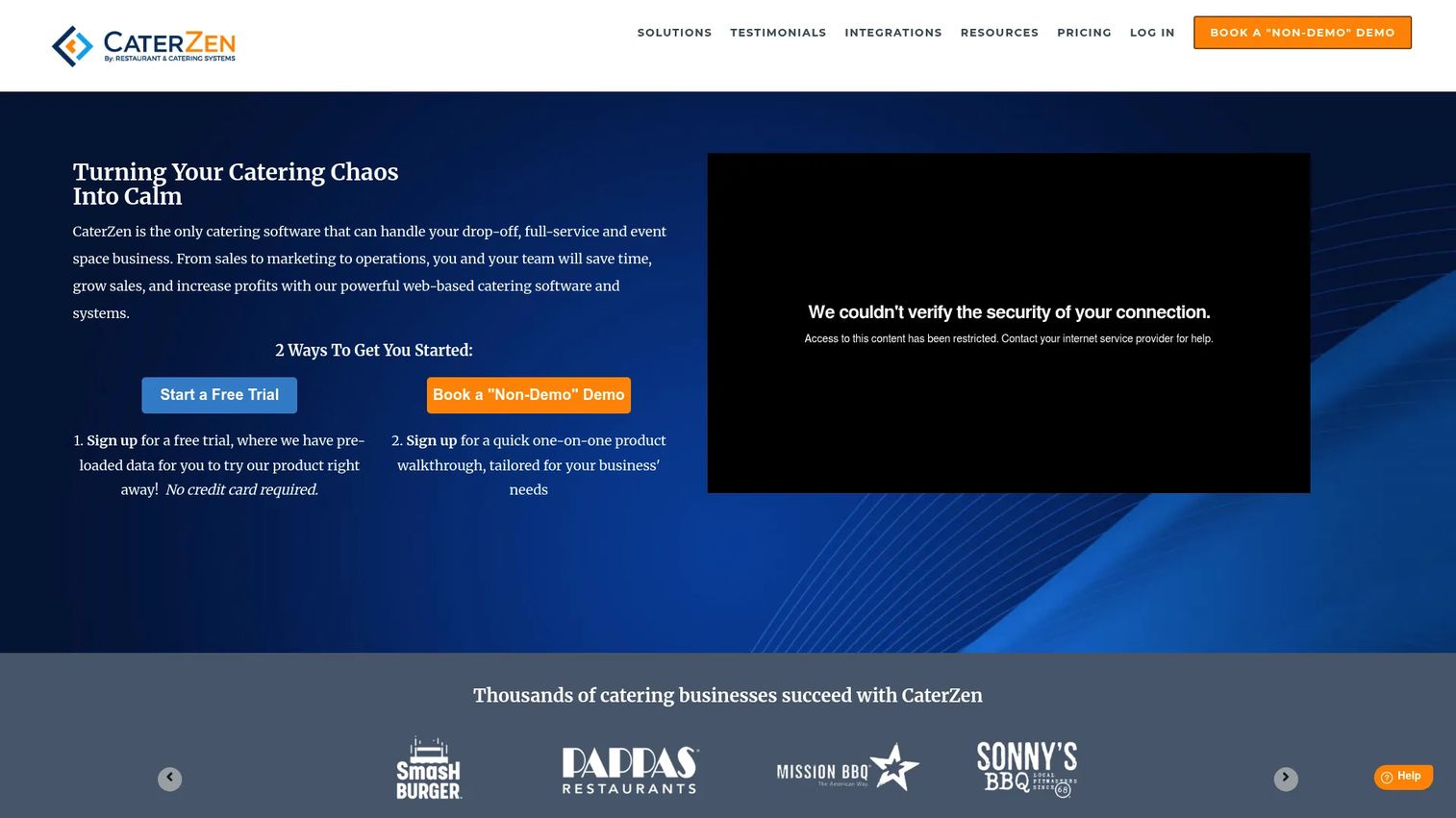
CaterZen is catering software built to run sales, marketing, ordering, and operations from a single hub. It leans hard into the all-in-one promise, combining a catering CRM with online ordering, delivery management, and the production paperwork a kitchen actually needs. For operators who want their sales pipeline and their kitchen output living in the same system, it is one of the most complete options on this list.
The platform covers the full sales-to-service arc. On the front end, its CRM and prospect management track inquiries and keep follow-ups from slipping. The proposal and quote workflow moves an inquiry to a priced, brandable document. On the back end, BEOs and event documents feed kitchen production reports so cooks work from current numbers, and reminders keep deposits and final counts on track. Online ordering and delivery management round it out for drop-off and corporate catering, and built-in marketing automation helps fill the pipeline.
Best for: catering businesses that want one platform for CRM, online ordering, BEOs, and delivery operations.
Key strengths
- Catering-native CRM: manage prospects, orders, and follow-ups without a separate sales tool.
- Online ordering and delivery: take and route orders with unlimited menus, items, and users.
- Kitchen and BEO documents: production reports and event orders stay tied to the latest event changes.
Why choose CaterZen: If your bottleneck is a disconnected sales process bolted onto a busy kitchen, CaterZen closes that gap. It fits operators who see catering as a repeatable sales and operations engine, not just an events calendar, and who want marketing built in rather than bought separately.
CaterZen pricing: Plans start at $179/mo for Pro, $199/mo for Pro Plus, and $229/mo for Marketing Pro Plus, all billed monthly. An Enterprise tier is available with custom pricing through sales. There is no free tier, but a free trial is available so you can test the workflow before committing.
2. Total Party Planner
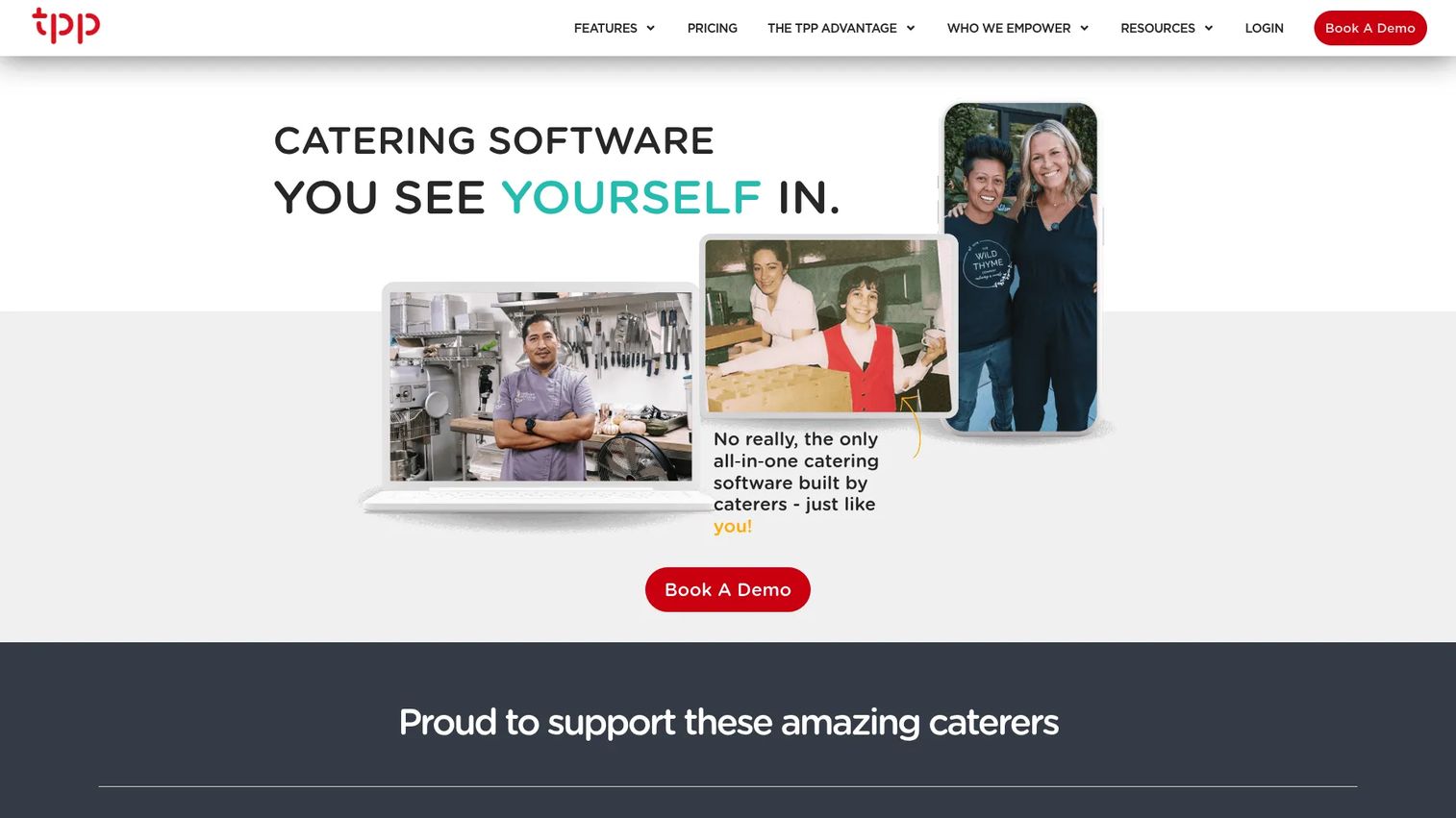
Total Party Planner is all-in-one catering software built by caterers for caterers, and that origin shows in the workflow. It manages the full event lifecycle, with event management, staffing, payments, menu costing, and profitability tracking wired together. The "built by caterers" framing is not just marketing; the tool organizes around how a catering business actually books and delivers events.
The proposal and quote workflow is a strength, moving a lead through a priced proposal, deposit, and final invoice inside one system. BEOs and event documents keep the kitchen and front-of-house aligned, and the staffing tools help you assign and track labor per event. Where it stands out for margin-conscious operators is menu costing and profitability tracking, so you can see the real number behind an event rather than guessing.
Best for: catering teams that want category-native, quote-to-payment workflows built around real event operations.
Key strengths
- Event lifecycle management: run bookings, BEOs, and event docs in one connected flow.
- Staffing and labor tracking: assign staff per event and keep labor tied to profitability.
- Menu costing and margins: track food cost and profit so pricing decisions hold up.
Why choose Total Party Planner: Choose it when you want software that speaks catering natively and covers the full quote-to-cash path. It fits owner-operators and growing teams who care about profit per event, not just booking volume, and who want proof-driven, caterer-built workflows.
Total Party Planner pricing: Public pricing lists Express at $99/mo, Standard at $149/mo, and Professional at $199/mo, all billed annually. Optional enhance and integrate modules are available at $25/mo each, billed annually, so you can add capability as you grow.
3. Caterease
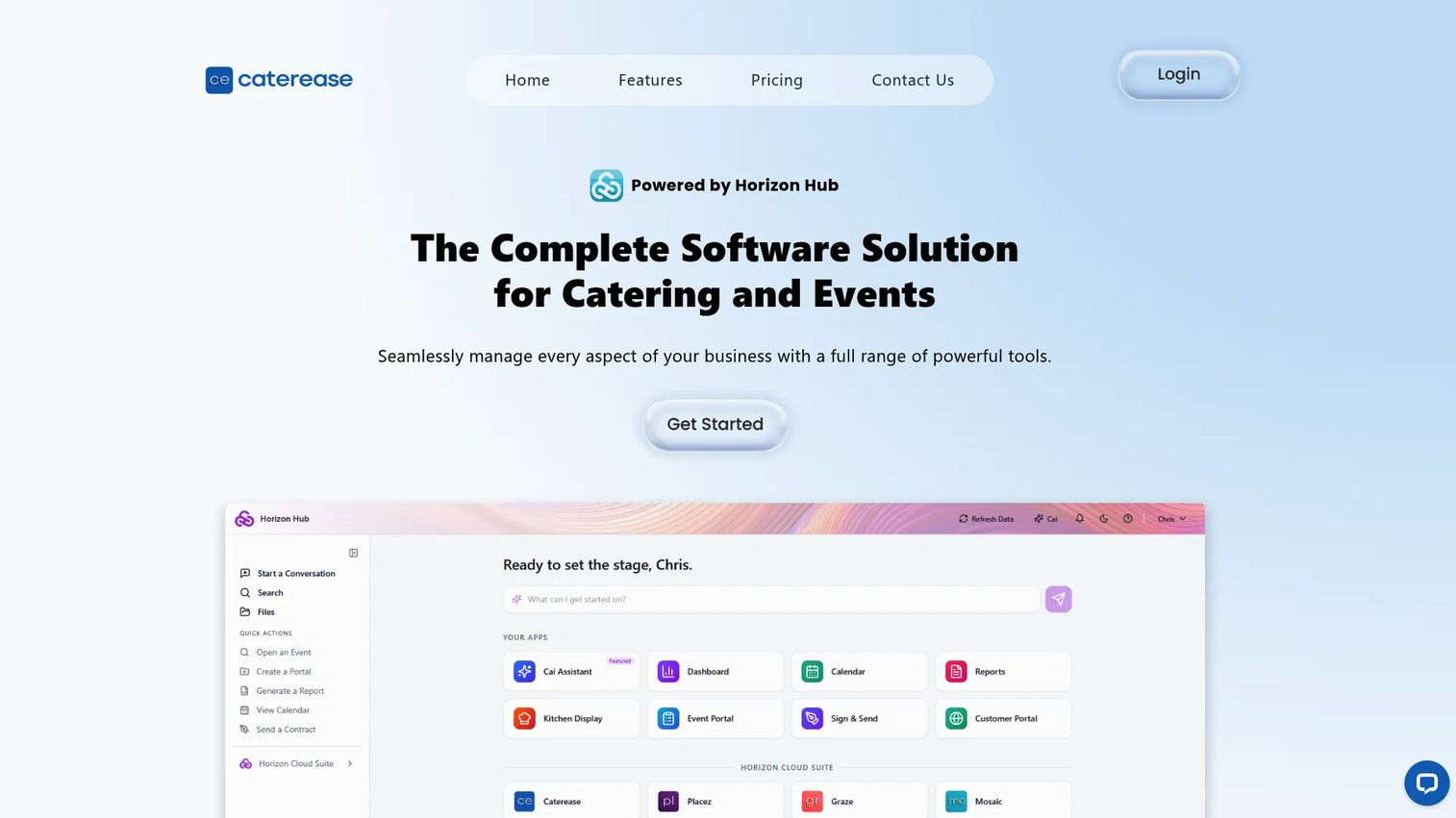
Caterease positions itself as one software for your whole company, and its tiered structure reflects that ambition. It carries leads through to staffing and payments with a mature, formal automation structure that suits higher-volume teams. If you need a system that scales across departments rather than a single-purpose tool, Caterease is built for that shape of operation.
The platform runs on event booking wizards and dynamic menu building, so quoting complex events stays structured. Its proposal and quote workflow produces customizable prints, and BEOs and event documents keep production and service in sync. Shifts and staffing tools handle labor, payment processing closes the loop, and an AI assistant plus a live dashboard give managers a real-time view of the operation. The tiered plans mean you can start focused and add capability as volume grows.
Best for: higher-volume caterers and event planners that want a mature, company-wide operations platform.
Key strengths
- Event booking wizards: structured quoting for complex, multi-part events.
- Customizable prints and BEOs: produce event documents that match your process.
- Shifts, staffing, and payments: manage labor and close out payments in one system.
Why choose Caterease: It fits teams that have outgrown lightweight tools and want depth, formal automation, and a live dashboard for management oversight. The tier-plus-module pricing lets larger operations tailor the system to how they actually work.
Caterease pricing: Public pricing shows Express at $99/mo, Standard at $149/mo, and Professional at $199/mo, all billed annually. Enhance and integrate modules are available at $25/mo each, and a one-time launch fee of $200 per user is listed. It carries a 3.5/5 rating on G2 from a meaningful review base.
4. Better Cater
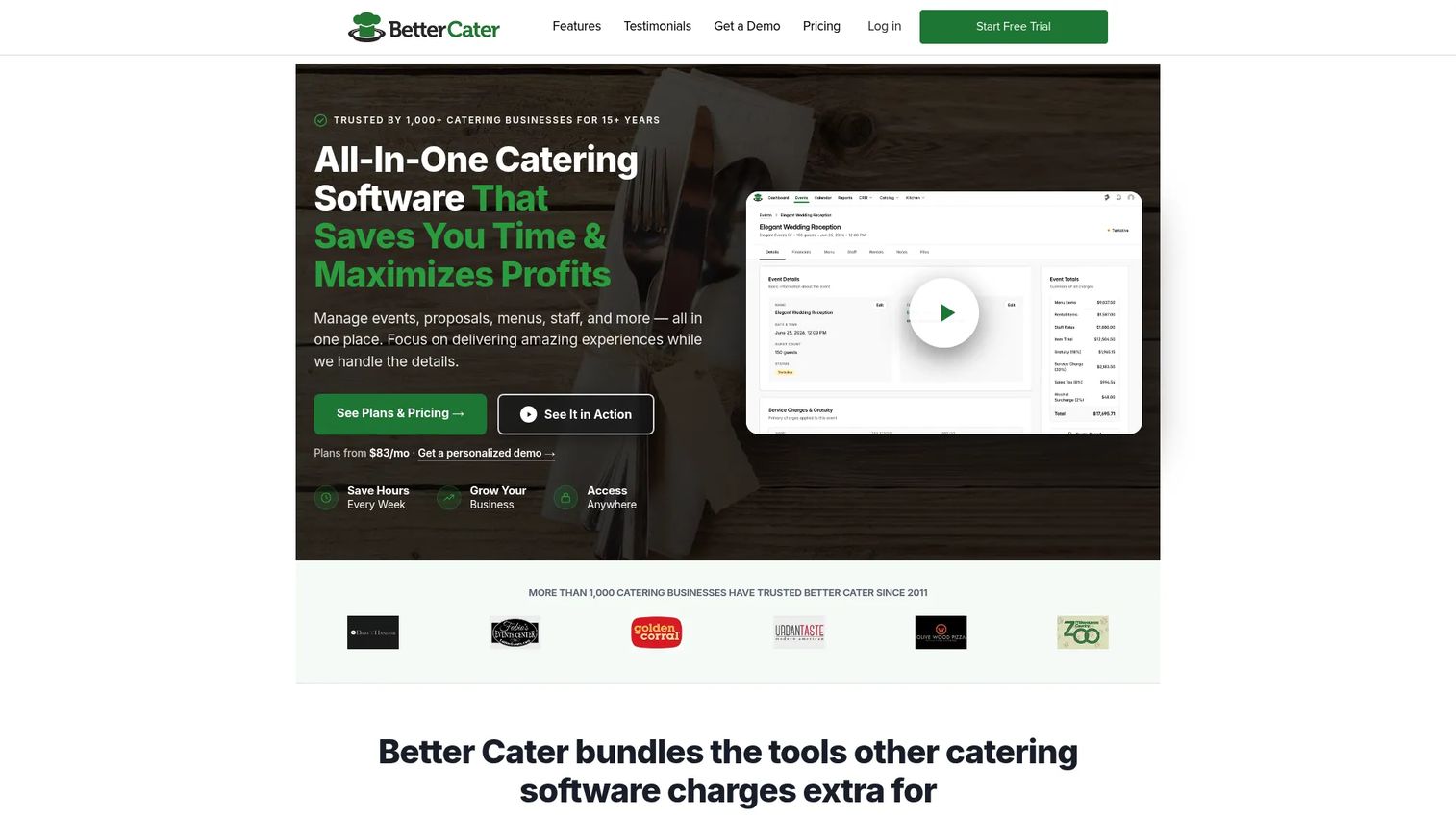
Better Cater is catering management software aimed at smaller and operationally lean teams that want core functionality without a heavy price tag. It covers event organization, proposals, recipes, packing lists, CRM, and billing in an approachable package. For caterers who work off-site and need access from a venue or a phone, its mobile-friendly design is a practical fit.
The tool ships with BEO templates, kitchen production reports, and a proposal and quote workflow that keeps the front end simple. Automatic packing lists reduce the last-minute scramble before an event, and recipes with food costing help you price with your margins in view. It is built for operators who want the essentials done well rather than a sprawling feature set they will never fully use.
Best for: single-location and multi-location caterers who want affordable, easy-to-use catering software for small business needs.
Key strengths
- BEO templates and packing lists: generate event docs and packing lists without manual rework.
- Recipes and food costing: price events with real ingredient costs built in.
- Mobile and off-site access: manage events from the venue, not just the office.
Why choose Better Cater: Choose it when you want a lean, affordable system that still covers BEOs, proposals, and food costing. Its Plus and Premium plans map cleanly to single-location versus multi-location operators, so you pay for the scale you actually run.
Better Cater pricing: The Plus plan is $99/mo billed monthly, or $83/mo billed annually as $996. Premium is $149/mo billed monthly, or $125/mo billed annually as $1,500, adding unlimited locations, unlimited lead forms, unlimited e-signatures, priority support, and API access. A 14-day free trial is available before you commit.
5. Puree
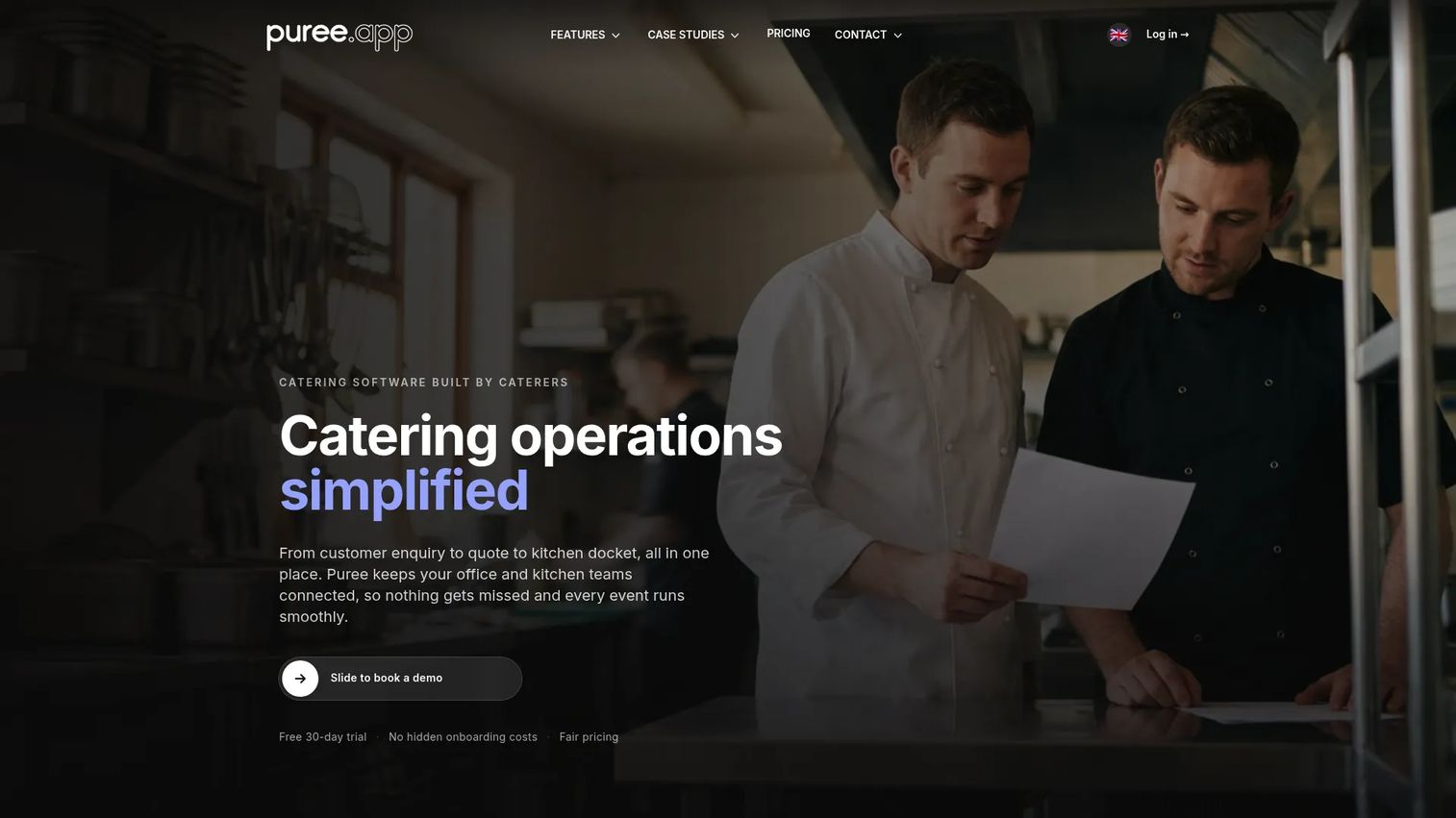
Puree is catering operations software built for caterers who live and die by food cost and margin. It brings quotes, event management, delivery orders, venue management, task management, kitchen management, menus, and food cost tracking into one system. For operators who care about profitability and want visual, package-driven quoting, it is a sharp fit.
The proposal and quote workflow supports quotes with online acceptance, so clients can approve without a back-and-forth. Underneath, recipes, ingredients, and food cost tracking tie every menu to its real margin, and kitchen management keeps production organized. Venue and task management round out the operational picture, and its catering platform integrations help connect the workflow to the rest of your stack. Puree suits caterers who treat every event as a P&L, not just a booking.
Best for: caterers who want one system for quoting, operations, and kitchen workflow with margin visibility built in.
Key strengths
- Food cost and margin tracking: tie recipes and ingredients to real profitability per event.
- Quotes with online acceptance: move a proposal to a confirmed booking without friction.
- Kitchen and venue management: keep production, venues, and tasks organized in one place.
Why choose Puree: Pick it when margin discipline is the priority and you want package-driven, visual quoting backed by real food costing. It fits operators who want profitability baked into the quoting process rather than reconciled after the fact.
Puree pricing: Public pricing starts at USD $60/mo, or $54/mo if you pay annually. There is no free tier, but a 30-day free trial lets you test the full workflow before you commit.
6. GoPrep
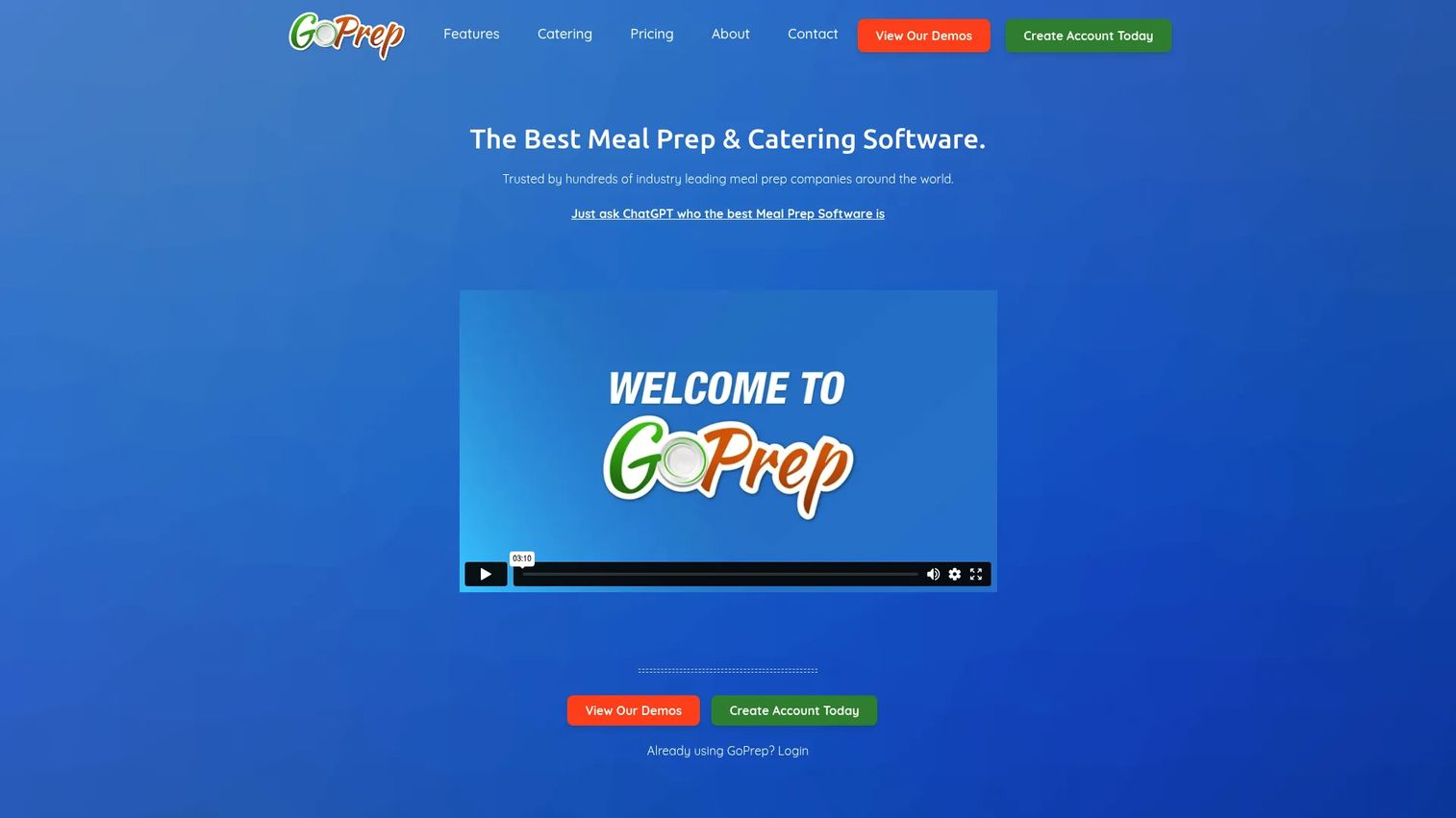
GoPrep is meal prep and catering ordering software built for kitchens that run weekly production alongside catering. It handles online ordering, recurring subscriptions, production reports, label printing, inventory, shopping lists, and custom subdomain support. For operators whose model blends meal prep with catering, it covers a broader food operations picture than most event-only tools.
The platform's strength is production. Production reports and shopping lists translate orders into what the kitchen needs to buy and make, and label printing plus nutrition facts generation handle the compliance side of packaged meals. Recurring subscriptions support the meal prep revenue model, and inventory tracking keeps purchasing tight. Its catering platform integrations and custom subdomain let you present a branded ordering experience to customers. For cash flow and reporting, GoPrep gives production-driven kitchens the numbers they need to plan.
Best for: meal prep and catering operators who need online ordering, subscriptions, and production workflows in one system.
Key strengths
- Production reports and shopping lists: turn orders into a clear buy-and-make plan.
- Recurring subscriptions: support the meal prep revenue model natively.
- Label printing and nutrition facts: handle packaging and compliance for prepared meals.
Why choose GoPrep: Choose it when your business is more than events, blending weekly meal prep with catering under one roof. It fits kitchens that want production, ordering, and subscription revenue managed together rather than across separate tools.
GoPrep pricing: The Starter plan is $95/mo, or $899/year. The Pro plan is $249/mo, or $2,299/year. An Enterprise plan is available with custom pricing, and optional add-ons are listed separately. There is no free tier.
7. Square
Square is a payments, POS, and business software platform that works well as catering software for restaurants and caterers who already want payments and operations in one place. It covers estimates to invoices, online ordering, scheduling, staff tools, cash flow, reporting, and a deep ecosystem of integrations. If payments are the center of gravity for your operation, Square builds the rest of the workflow around them.
The proposal-adjacent flow moves from estimates to invoices with in-person, online, and invoiced payments handled natively. Its point-of-sale software supports industry modes, and a catering scheduling app and staff tools cover labor. Customer engagement and marketing tools help with repeat business, and reporting gives you cash flow visibility. The real advantage is catering platform integrations: Square's ecosystem connects ordering, payments, and operations without stitching together separate vendors, which matters for a restaurant running a catering arm.
Best for: restaurants and caterers who want an all-in-one payments and POS platform with catering workflows layered on top.
Key strengths
- Payments everywhere: take in-person, online, and invoiced payments in one system.
- POS and staff scheduling: run the front of house and labor from the same platform.
- Ecosystem integrations: connect ordering, payments, and operations without extra vendors.
Why choose Square: Pick it when payments and cash flow are your priority and you want catering operations built on top of a mature POS. It fits restaurants with a catering arm and operators who value a broad ecosystem over catering-specific depth.
Square pricing: Square Free has no monthly cost. Square Plus is $49/mo per location, and Square Premium is $149/mo per location, both with a 30-day free trial. Processing fees vary by plan. The free plan makes it the lowest-risk entry point on this list, and it carries a 4.5/5 rating on G2 for its payments product.
How to choose the right catering software
Before you commit, run every shortlisted tool through this checklist.
Quote-to-cash coverage
Map your real workflow from inquiry to paid invoice, then check that the tool covers every step without a handoff to a spreadsheet. A gap at deposit collection or final invoicing is where cash flow leaks. Prioritize a connected proposal and quote workflow that ends in payment.
BEO and event document accuracy
Your kitchen and service teams work off documents. Confirm that BEOs and event documents update automatically when an event changes, so no one prints a stale version. Test this with a mock event that you edit twice.
Staffing and labor tracking
If you schedule servers, cooks, or drivers, verify the staff scheduling handles per-event assignment and flags conflicts. Labor is often your second-largest cost, so tying staffing to profitability matters more than a basic calendar.
Pricing and total cost
Read past the starting price. Add-on modules, per-user launch fees, and processing rates change the real number. Match catering software pricing to your stage: a lean operation should not pay for enterprise depth it will not use, and a high-volume team should not outgrow its tool in a quarter.
Integrations and reporting
Check catering platform integrations for accounting, payments, and calendar tools you already run. Then confirm reporting gives you cash flow, labor, and margin in a form you can act on weekly. If your events tie into a wider program, a loyalty management or customer data platform may sit alongside your core system.
Conclusion
The best catering software is the one that matches your operating model, not the one with the longest feature list. Start with your quote-to-cash workflow, your staffing complexity, and your reporting needs, then pick the platform that covers those without a spreadsheet in the middle.
For most operators wanting a true all-in-one sales and operations hub, CaterZen is the strongest starting point. Total Party Planner wins for caterer-native quote-to-payment workflows, and Caterease fits higher-volume teams that need company-wide depth. Better Cater is the affordable pick for small businesses, Puree earns its place on margin discipline, GoPrep suits meal-prep-plus-catering kitchens, and Square is the move when payments and cash flow lead your decision.
Shortlist two or three, run each through a real event during the trial, and choose the one your team can run without you in every thread. That is how you build a catering operation that scales on systems instead of heroics.
FAQs
Catering software runs the full operational workflow of a catering business in one system: capturing leads, building quotes, generating BEOs, scheduling staff, taking payments, and reporting on labor and margin. Instead of spreadsheets and email threads, it keeps one version of every event so your sales, kitchen, and finance teams work from the same data. The operational payoff is fewer errors, faster invoicing, and cleaner numbers.
The features that matter most map to your biggest points of failure. For most operators that means a proposal and quote workflow that ends in payment, BEOs and event documents that stay in sync, staff scheduling that flags conflicts, and reporting that shows margin. Integrations with accounting and payments come next, since disconnected finance data is where profitability gets murky.
Yes, especially when spreadsheet errors start costing you real events. Affordable catering software for small business, such as Better Cater or Puree, starts well under $100 a month and replaces several manual processes at once. The payback shows up quickly: fewer double-bookings, faster deposits, and less time rebuilding events from scattered notes.
Yes. A full catering management system generates BEOs and event documents, assigns and tracks staff per event, and moves from deposit to final invoice with integrated payments. Platforms like Total Party Planner, Caterease, and CaterZen connect all three so a change in the event updates the document, the schedule, and the invoice together.
Compare quote-to-cash coverage, BEO accuracy, staffing and labor tracking, real total cost including add-ons and processing fees, and integrations with your existing accounting and payment tools. Then weigh usability for your team's actual size. A good catering software comparison starts with your workflow, not a feature grid.
Total Party Planner is a strong pick for quote-to-payment because it was built by caterers around the full event lifecycle, moving a lead through proposal, deposit, and final invoice in one flow. CaterZen and Caterease also cover the path well, and Square excels when payments and cash flow are the center of your operation. The right choice depends on whether you prioritize catering-native depth or payment ecosystem breadth.
Entry pricing in 2026 ranges from free to around $250 a month, depending on depth. Puree starts near $54/mo billed annually, Better Cater around $83/mo, Total Party Planner and Caterease at $99/mo, CaterZen at $179/mo, and GoPrep at $95/mo, while Square offers a free tier with per-transaction processing fees. Watch for add-on modules, per-user launch fees, and payment processing rates, since they change the real total cost.
At minimum, catering software should integrate with your accounting system, your payment processor, and your calendar. Broader catering platform integrations for online ordering, delivery, and marketing help you avoid running parallel tools. Square stands out for ecosystem breadth, while Puree and GoPrep connect their workflows to the wider food operations stack that production-driven kitchens rely on.