Your shipments are moving. But when a customer asks where their order is, someone opens three tabs, pings a carrier, and guesses. When a delay hits, nobody knows who needs to act until the missed appointment already cost you detention fees. That gap between "the freight is somewhere" and "here is exactly what to do about it" is the problem supply chain visibility software exists to close.
The market backs this up. According to Strategic Market Research (2026), the global supply chain visibility software market was valued at USD 5.5 billion in 2024 and is projected to surpass USD 11.0 billion by 2030 at roughly 12% CAGR. Dataintelo (2025) reports that by 2026, over 68% of Fortune 500 companies will have deployed at least one enterprise-grade visibility solution, up from about 45% in 2022. Teams are not adopting these tools for novelty. They are adopting them because disconnected systems and manual status updates slow response time when it matters most.
Real-time visibility software promises something specific: end-to-end, live tracking across transport modes and systems, with predictive ETAs and exception alerts that let teams act before problems escalate. The category is crowded, and the vendors differ more than their homepages suggest. If you are evaluating a logistics visibility platform as a buyer or an influencer inside your org, the right choice depends on your transport modes, your integration surface, and the operational KPIs you actually report on. This guide compares eight supply chain visibility solutions so you can shortlist faster.
What's inside
This guide compares eight supply chain visibility tools for teams evaluating platforms in 2026. We selected each vendor based on multimodal coverage, integration depth, predictive ETA quality, exception management, analytics usefulness, and implementation fit. Those are the factors that separate a dashboard that looks good in a demo from one your ops team lives in daily. The list is written for product managers, ops leaders, and cross-functional teams who need measurable impact, not vendor marketing. Every profile includes what each tool does best, where it fits, and verified pricing and rating notes so you can build a defensible shortlist.
TL;DR
- Best overall for enterprise visibility and network depth: project44, for large shippers needing real-time tracking plus transportation decisioning across modes.
- Best for multimodal orchestration and operational KPIs: FourKites, with AI-driven resolution and deep facility-level reporting.
- Best for shipment tracking and carrier-network breadth: Descartes MacroPoint, backed by a large capacity network.
- Best for AI-native visibility plus logistics execution: GoComet, pairing tracking with procurement and invoice automation.
- Best for European and global multimodal visibility: Shippeo, with strong predictive ETAs and exception management.
- Best for asset and condition-level tracking: Tive, using sensor-driven visibility for high-value goods.
- Best for last-mile delivery orchestration: FarEye, covering routing, execution, and post-purchase experience.
- Best for container and ocean workflows: Gnosis Freight, built around container lifecycle management.
What is supply chain visibility software?
Supply chain visibility software is a platform that aggregates real-time shipment and inventory data across carriers, transport modes, and internal systems to give teams a single, live view of where goods are and what needs attention. Unlike a transportation management system, which plans and executes freight, visibility tracking software sits across your execution stack and answers a different question: what is actually happening right now, and where will it go wrong?
Most platforms in this category share a common set of capabilities:
- Real-time shipment tracking across road, ocean, rail, air, and parcel
- Predictive ETA that forecasts arrival windows and flags slippage early
- Exception alerts that surface delays, dwell, and detention risk before they escalate
- Multimodal visibility across handoffs, ports, and drayage
- Dashboards and control tower views for cross-functional teams
- Integration with TMS, ERP, WMS, carrier systems, GPS, ELD, telematics, and APIs
The category sits between planning and execution in the broader logistics stack. Your TMS decides how freight moves. Your ERP and WMS manage orders and inventory. Control tower software and visibility platforms layer on top, ingesting signals from all of them plus external carrier and telematics feeds, then turning raw location data into predictive ETAs and prioritized exceptions. That transportation tracking software layer is what lets a customer service rep answer a question in seconds instead of chasing a carrier for an hour.
For product managers, the framing matters. This is not a feature you bolt onto one workflow. It is an operating layer that touches customer service, planning, procurement, and operations at once. That makes integration depth and data quality the two variables that determine whether adoption sticks or the tool becomes another dashboard nobody opens.
When to use a logistics visibility platform
When shipments cross multiple modes and geographies
Delays rarely happen in transit. They happen at handoffs: port to drayage, ocean to rail, cross-dock to final mile. When your freight moves across modes and borders, multimodal visibility lets you see the whole journey as one continuous view instead of a series of blind spots between carriers. A single platform that tracks a container from origin port through drayage to the DC helps you coordinate transport, facilities, and customer commitments without stitching together carrier portals.
When exceptions are costing time and money
Every hour a truck sits at a dock is money. Missed appointments, dwell time, and detention compound fast, and they usually surface after the invoice arrives. Good exception management software flips that: proactive alerts flag at-risk shipments early enough for someone to reroute, reschedule, or warn a customer. The value is not the alert itself. It is the response window it buys your team and the stakeholder communication it enables before a small delay becomes a chargeback.
When teams need a single source of truth
When your TMS, ERP, WMS, carriers, and telematics feeds all tell slightly different stories, nobody trusts any of them. A supply chain visibility platform consolidates those signals into one operating layer so planning, customer service, and operations work from the same numbers. That shared truth is what turns visibility from a nice dashboard into a coordination tool the whole org relies on.
Comparison table
Before the full profiles, here is a fast shortlist. The table below sorts the eight supply chain visibility tools by relevance to end-to-end network visibility, with intent, differentiation, pricing, and verified G2 ratings so you can narrow to two or three candidates quickly.
| # | Product | Intent | Key differentiation | Pricing | G2 rating |
|---|---|---|---|---|---|
| 1 | project44 | Enterprise end-to-end visibility | Transportation, visibility, and yard decisioning in one platform | Contact sales | 4.7/5 |
| 2 | FourKites | Multimodal orchestration | AI agents and autonomous exception resolution | Contact sales | 4.5/5 |
| 3 | Descartes MacroPoint | Freight tracking breadth | Large carrier capacity network plus tracking | Contact sales | 4.7/5 |
| 4 | GoComet | AI-native visibility plus execution | Tracking with freight procurement and invoice audit | Contact sales; free basic tracking | 4.9/5 |
| 5 | Shippeo | Multimodal transport visibility | Predictive ETAs across road, ocean, ports, parcel | Contact sales | 4.8/5 |
| 6 | Tive | Sensor-driven shipment tracking | Real-time location and condition monitoring | Contact sales | 4.5/5 |
| 7 | FarEye | Last-mile delivery orchestration | Planning, routing, and post-purchase experience | Contact sales | 4.7/5 |
| 8 | Gnosis Freight | Container and ocean workflows | Container Lifecycle Management platform | Contact sales | 4.8/5 |
1. project44
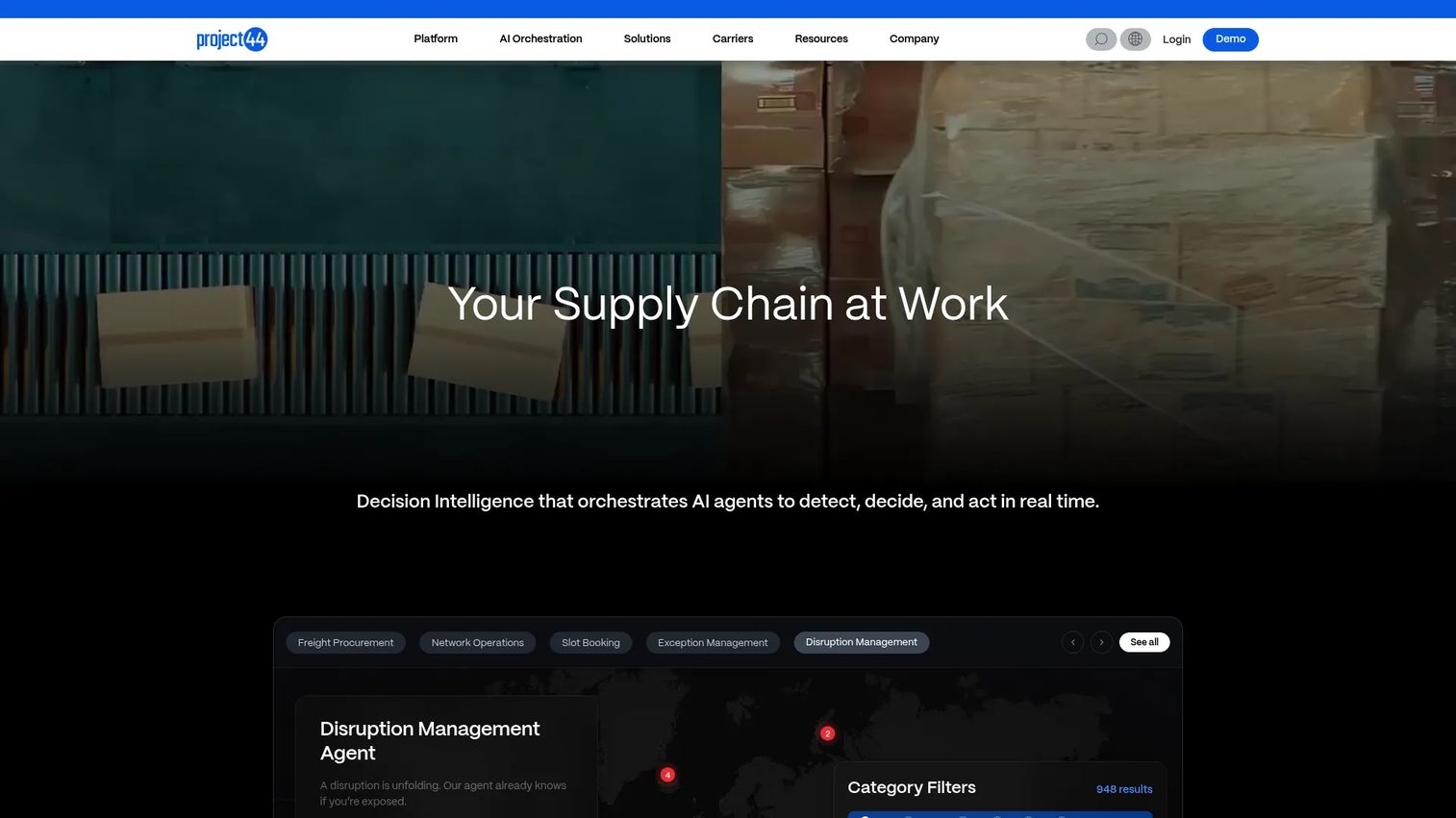
project44 positions itself as a supply chain decision intelligence platform, not just a tracking dashboard. It combines shipment and inventory visibility with intelligent transportation management and yard management, so the same platform that shows you where freight is also helps you decide what to do about it. For large shippers running high volumes across modes, that consolidation is the pitch: one system that aggregates carrier data, predicts ETAs, and surfaces exceptions at network scale.
Best for: Large shippers needing real-time logistics visibility paired with transportation decisioning across modes.
Key strengths
- Intelligent transportation management: Ties visibility signals directly to transport decisions instead of leaving them in a separate tool.
- Shipment and inventory visibility: Real-time tracking across modes with predictive ETAs and exception surfacing.
- Intelligent yard management: Extends visibility into the yard, where dwell and dock scheduling problems concentrate.
Why choose project44: If your operation spans multiple carriers and modes and you want visibility that connects to action rather than just reporting, project44 is built for that scale. It fits teams that treat visibility as decision infrastructure, and its network depth is a real advantage for enterprise shippers coordinating across many partners.
project44 pricing: project44 does not publish pricing. The site directs prospective buyers to contact sales for a tailored quote. G2 reviewers rate the platform 4.7/5. For a PM building a business case, plan to validate cost against your shipment volume and mode mix during the sales conversation, and ask specifically about integration scope with your TMS and ERP.
2. FourKites
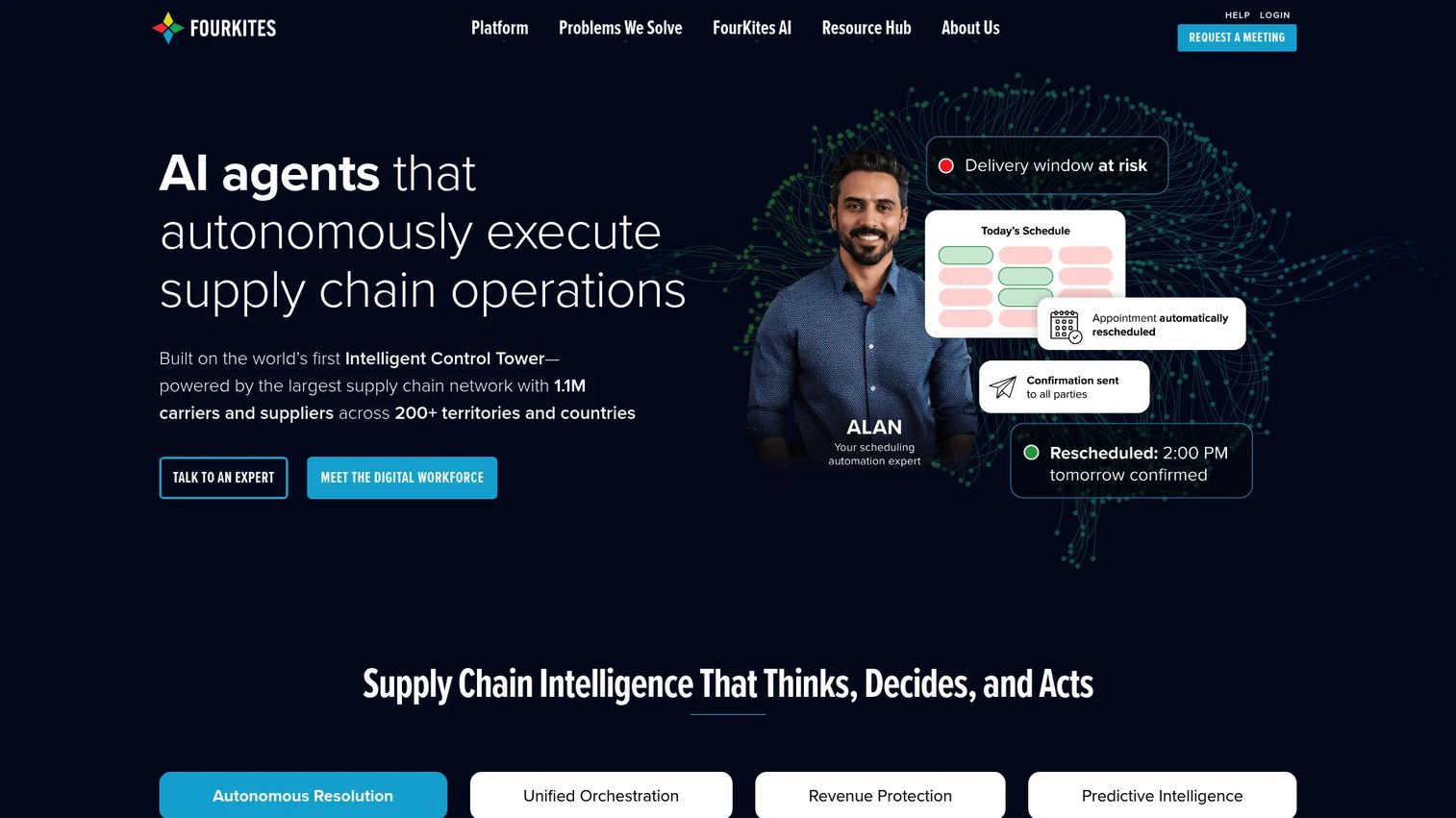
FourKites is an AI-driven supply chain orchestration and visibility platform aimed at global shippers who need more than location dots on a map. Its differentiation in 2026 leans heavily on AI agents and autonomous resolution, meaning the platform does not just flag an exception, it can act on routine ones. Combined with predictive intelligence and deep operational analytics, that positions FourKites for teams whose reporting extends into dwell time, OTIF, and facility performance.
Best for: Global shippers needing end-to-end visibility, orchestration, and detailed operational reporting.
Key strengths
- Real-time supply chain visibility: Live tracking across modes with predictive ETAs feeding downstream workflows.
- AI agents and autonomous resolution: Automates handling of routine exceptions so teams focus on the ones that matter.
- Predictive intelligence and analytics: Depth in operational KPIs like dwell, detention, and on-time performance.
Why choose FourKites: For teams that report on facility-level metrics and want scheduling and dwell-time visibility alongside tracking, FourKites excels at operational depth. The AI resolution layer is genuinely useful when exception volume is high enough that manual triage does not scale. It fits organizations ready to build workflows around the data, not just watch it.
FourKites pricing: FourKites does not display public pricing; the site routes visitors to schedule a consultation or request a demo. G2 reviewers rate it 4.5/5. When evaluating, ask how autonomous resolution is scoped to your exception types and what analytics are available at your tier, since operational reporting depth is a core reason teams choose this platform.
3. Descartes MacroPoint
Descartes MacroPoint is freight visibility and carrier capacity network software focused on tracking shipments in real time. Its strength is breadth of connection: it pulls tracking data from TMS, ELD, GPS, and mobile sources, and it sits inside the larger Descartes logistics ecosystem. For shippers, brokers, and 3PLs that need reliable freight tracking plus access to carrier capacity, that combination is why MacroPoint shows up consistently in best-of comparisons.
Best for: Shippers, brokers, and 3PLs needing real-time freight visibility and carrier capacity access.
Key strengths
- Real-time shipment visibility: Continuous tracking across a broad set of carriers and data sources.
- Integrations with TMS, ELD, GPS, and mobile tracking: Wide connection surface that captures tracking data where it lives.
- Predictive freight capacity and matching: Ties visibility to available capacity, useful for brokers and 3PLs.
Why choose Descartes MacroPoint: If your priority is dependable multi-party tracking across a large carrier base, MacroPoint's network and integration breadth are the draw. It fits teams already in or considering the Descartes ecosystem, and its capacity-matching angle sets it apart from pure visibility-only tools. Evaluate how its carrier coverage maps to the specific carriers and lanes you run.
Descartes MacroPoint pricing: Descartes does not publish a public price for MacroPoint; pricing is quote-based. G2 reviewers rate it 4.7/5. For procurement, confirm which of your carriers are already onboarded to the network, since coverage on your specific lanes drives most of the value.
4. GoComet
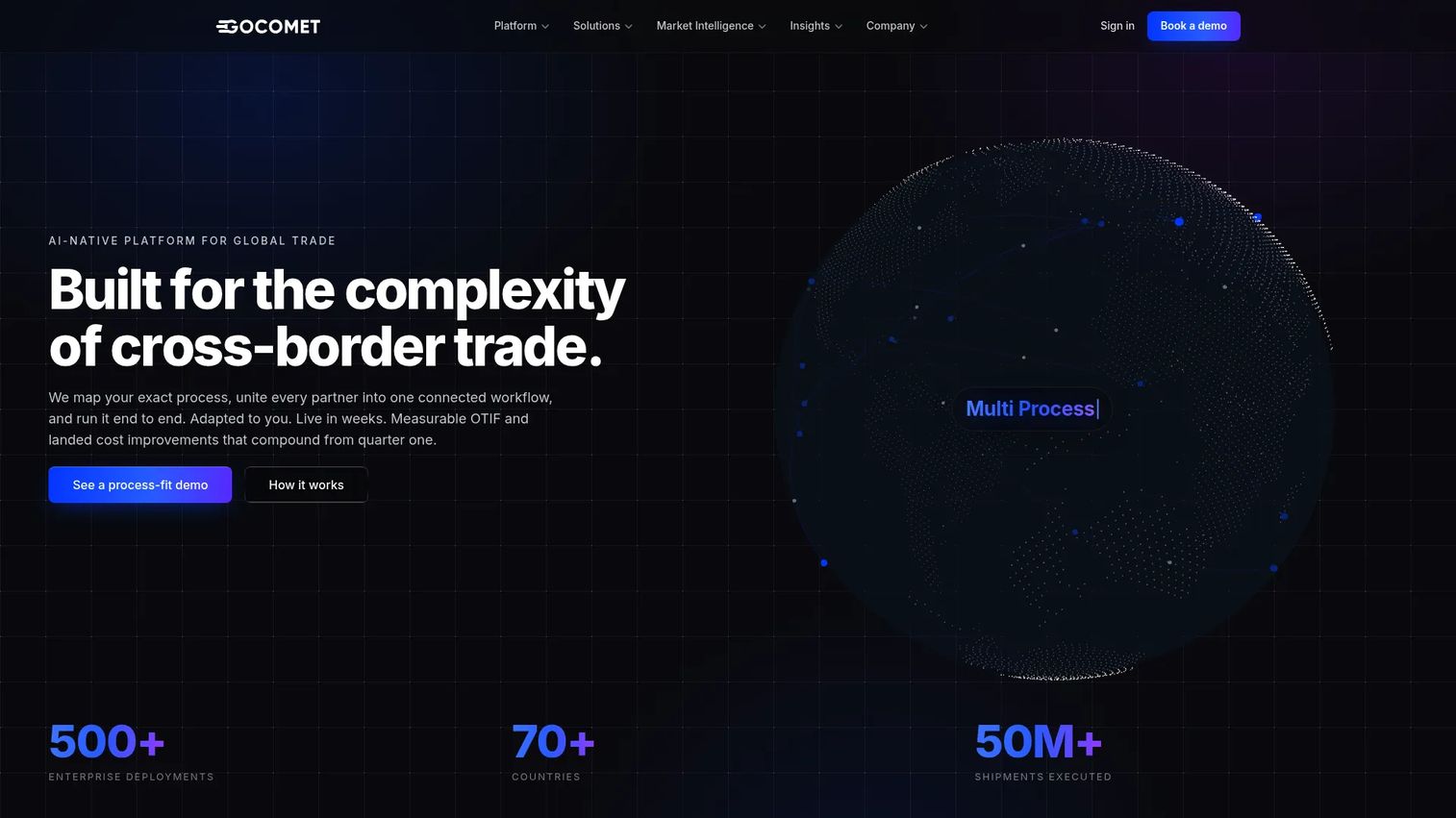
GoComet is an AI-native supply chain visibility and automation platform for global trade. What sets it apart is scope: alongside container and cargo tracking, it handles freight procurement, quotation management, and invoice reconciliation. For ops teams that want visibility and logistics execution support in one place rather than a tracking-only tool, that breadth reduces the number of systems people toggle between during a working day.
Best for: Enterprise shippers needing end-to-end logistics visibility plus procurement and automation.
Key strengths
- Container and cargo tracking: Real-time visibility across shipments and containers.
- Freight procurement and quotation management: Extends beyond tracking into sourcing and rate management.
- Invoice reconciliation and audit automation: Automates freight invoice checks to catch billing errors.
Why choose GoComet: For teams that want tracking connected to procurement and finance workflows, GoComet's AI-native breadth is the appeal, and its usability makes it approachable for operations staff who are not full-time analysts. It fits freight-forwarding and logistics-heavy operations that value fewer disconnected tools. GoComet indicates free basic container tracking, with advanced visibility on paid plans.
GoComet pricing: GoComet does not show public numeric pricing on its site. Product pages indicate free basic container tracking, with advanced visibility available on paid plans; specific figures require contacting sales. G2 reviewers rate it 4.9/5, the highest rating on this list. Use the free tracking tier to validate coverage on your lanes before committing to paid workflows.
5. Shippeo
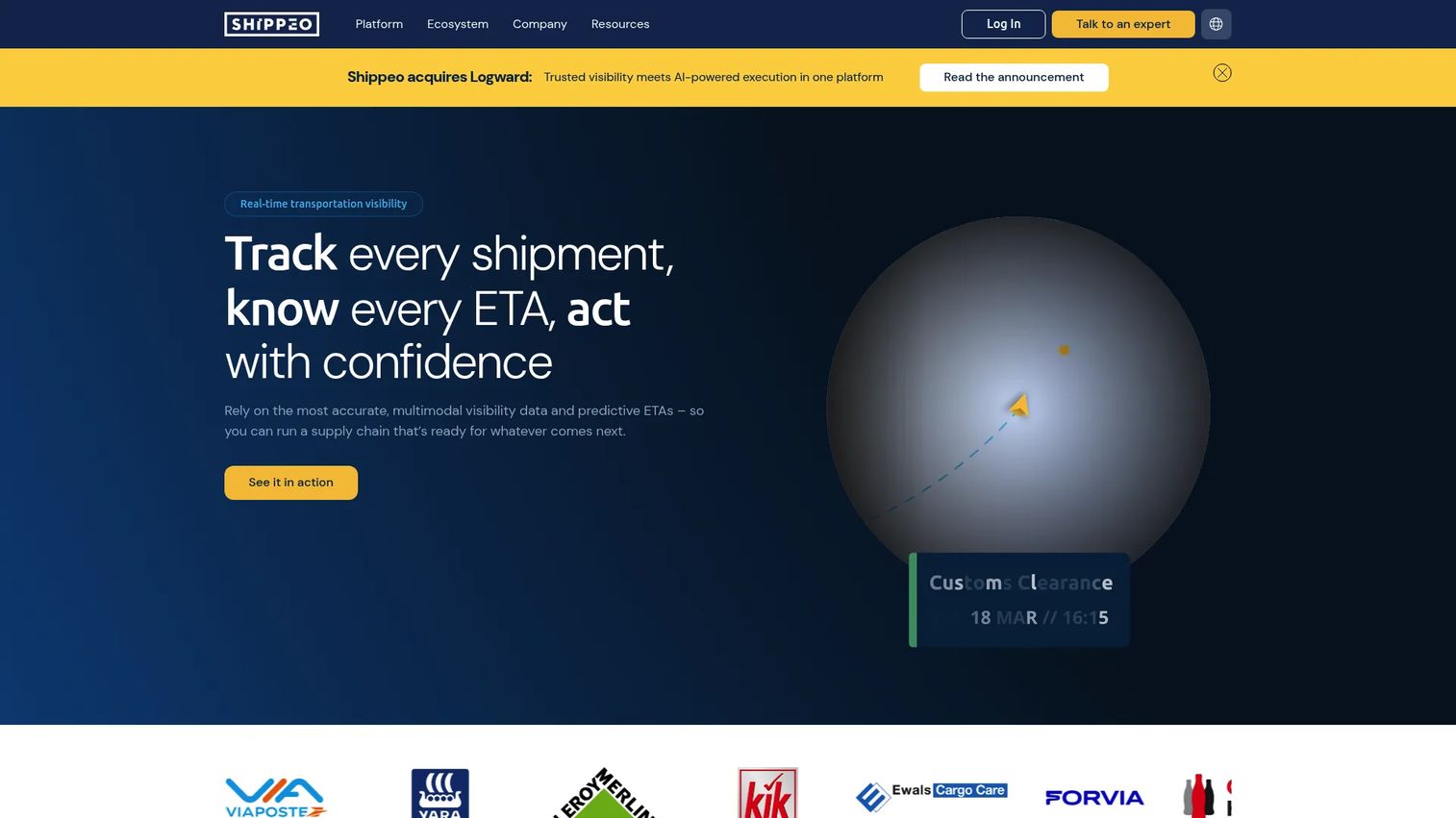
Shippeo is a real-time transportation visibility and AI-powered orchestration platform with strong roots in European and global logistics. It covers parcel, road, ocean, and ports, and it pairs that multimodal coverage with predictive ETAs and exception management. For teams whose networks run heavily through Europe or span multiple modes internationally, Shippeo's coverage and predictive accuracy are the reasons it earns a shortlist spot.
Best for: Enterprises needing multimodal transport visibility and proactive shipment exception management.
Key strengths
- Real-time shipment visibility: Live tracking across parcel, road, ocean, and ports.
- Predictive ETAs and exception management: Forecasts arrivals and flags at-risk shipments early.
- Multimodal and carbon visibility: Adds emissions visibility alongside transport tracking.
Why choose Shippeo: For transport planning and customer communication across a multimodal European or global network, Shippeo's predictive ETAs support proactive rescheduling and cleaner customer updates. It fits enterprises that treat exception management as a core workflow and want carbon reporting in the same view. Its analytics strength makes it a good fit for teams reporting on both service and sustainability.
Shippeo pricing: Shippeo does not display public pricing; the site routes visitors to sales and demo contact. G2 reviewers rate it 4.8/5. During procurement, confirm predictive ETA accuracy on your specific lanes and carriers, since that accuracy is the main driver of proactive exception handling.
6. Tive
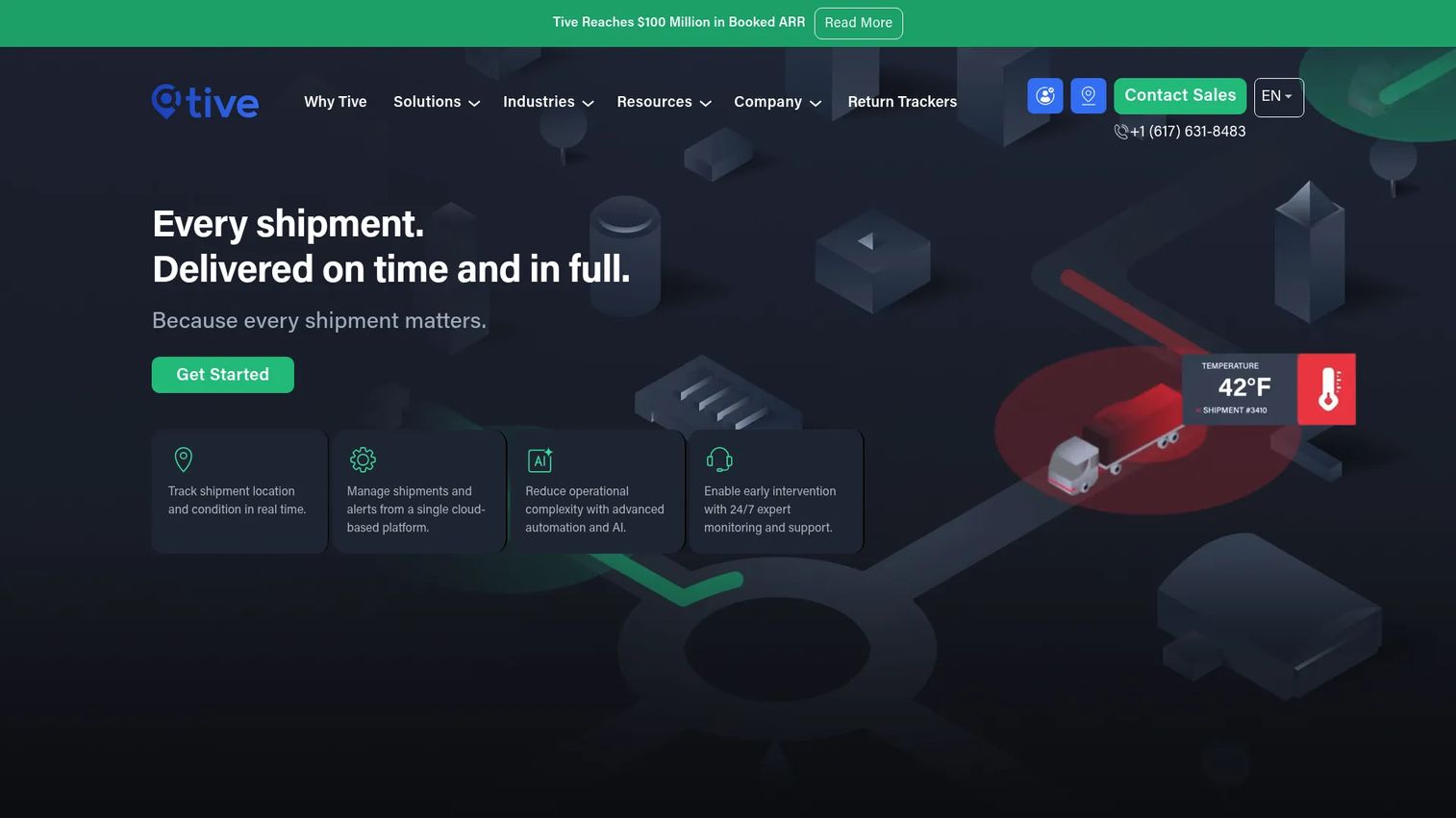
Tive approaches visibility differently. It pairs software with sensor-driven tracking, giving real-time location and condition data for shipments. For high-value, perishable, or sensitive goods, that condition monitoring, temperature, shock, and location, matters as much as knowing where a shipment sits. Tive is built for teams where a compromised shipment is a serious cost, not just a delayed one.
Best for: Shippers needing real-time in-transit visibility, alerts, and compliance-oriented shipment monitoring.
Key strengths
- Real-time shipment location and condition visibility: Sensor data covers both position and cargo condition.
- Alerts for delays, theft, and condition issues: Flags temperature excursions, shock, and route deviations.
- Cloud platform with reports, integrations, and analytics: Turns sensor data into reporting and workflow triggers.
Why choose Tive: When container, pallet, or condition monitoring matters, Tive's sensor-driven approach captures signals that software-only tracking cannot see. It fits pharmaceuticals, food, electronics, and any team with compliance or quality requirements tied to in-transit conditions. Tive publicly lists three software tiers: Essential, Plus, and Premium.
Tive pricing: Tive lists three software tiers, Essential, Plus, and Premium, though public prices are not shown and pricing requires contacting sales. G2 reviewers rate it 4.5/5. Because sensor hardware is part of the model, factor device costs and reuse logistics into your total cost estimate alongside the software tier.
7. FarEye
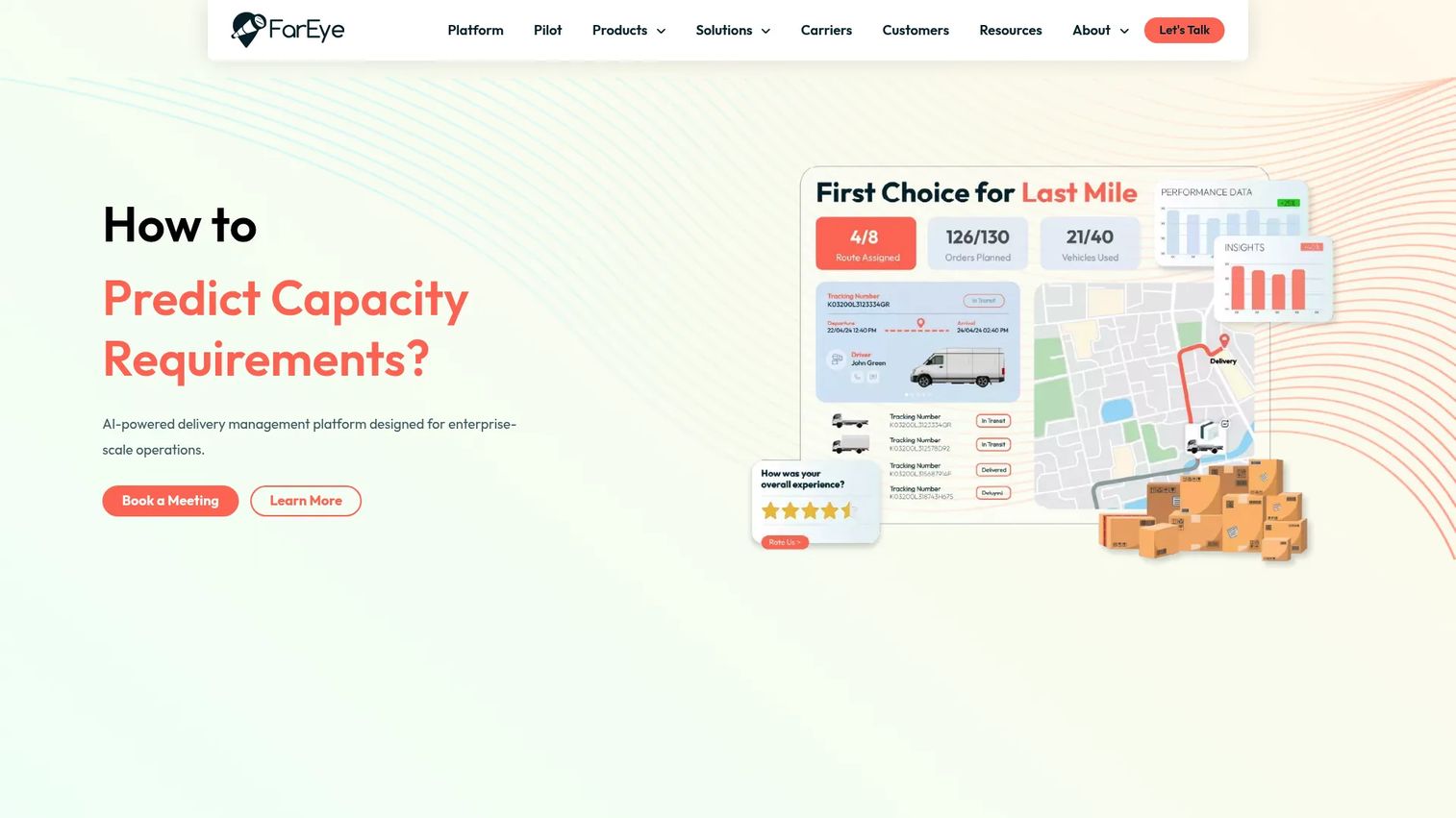
FarEye is an AI-powered delivery management platform with a strong focus on last-mile logistics. Alongside real-time delivery visibility, it orchestrates planning, routing, and execution, and extends into post-purchase customer experience and returns. For teams whose visibility challenge is concentrated in the final mile and the customer-facing delivery moment, FarEye covers workflows that broad network platforms treat as secondary.
Best for: Enterprise shippers and logistics teams needing last-mile delivery orchestration.
Key strengths
- AI-driven orchestration for planning, routing, and execution: Coordinates the full delivery workflow, not just tracking.
- Real-time delivery visibility and tracking: Live status through the final mile.
- Post-purchase customer experience and returns management: Extends visibility into the customer's delivery experience.
Why choose FarEye: When your priority is delivery execution, exception handling, and customer communication at the last mile, FarEye fits better than a broad network-visibility suite. It excels for retail, e-commerce, and distribution teams where the delivery moment shapes customer satisfaction. Its orchestration depth means it handles routing and execution, not just status reporting.
FarEye pricing: FarEye does not publish public pricing; pricing appears to be quote-based. G2 reviewers rate it 4.7/5. If last-mile is your focus, evaluate routing and post-purchase modules specifically, since those are where FarEye's value concentrates relative to upstream visibility tools.
8. Gnosis Freight
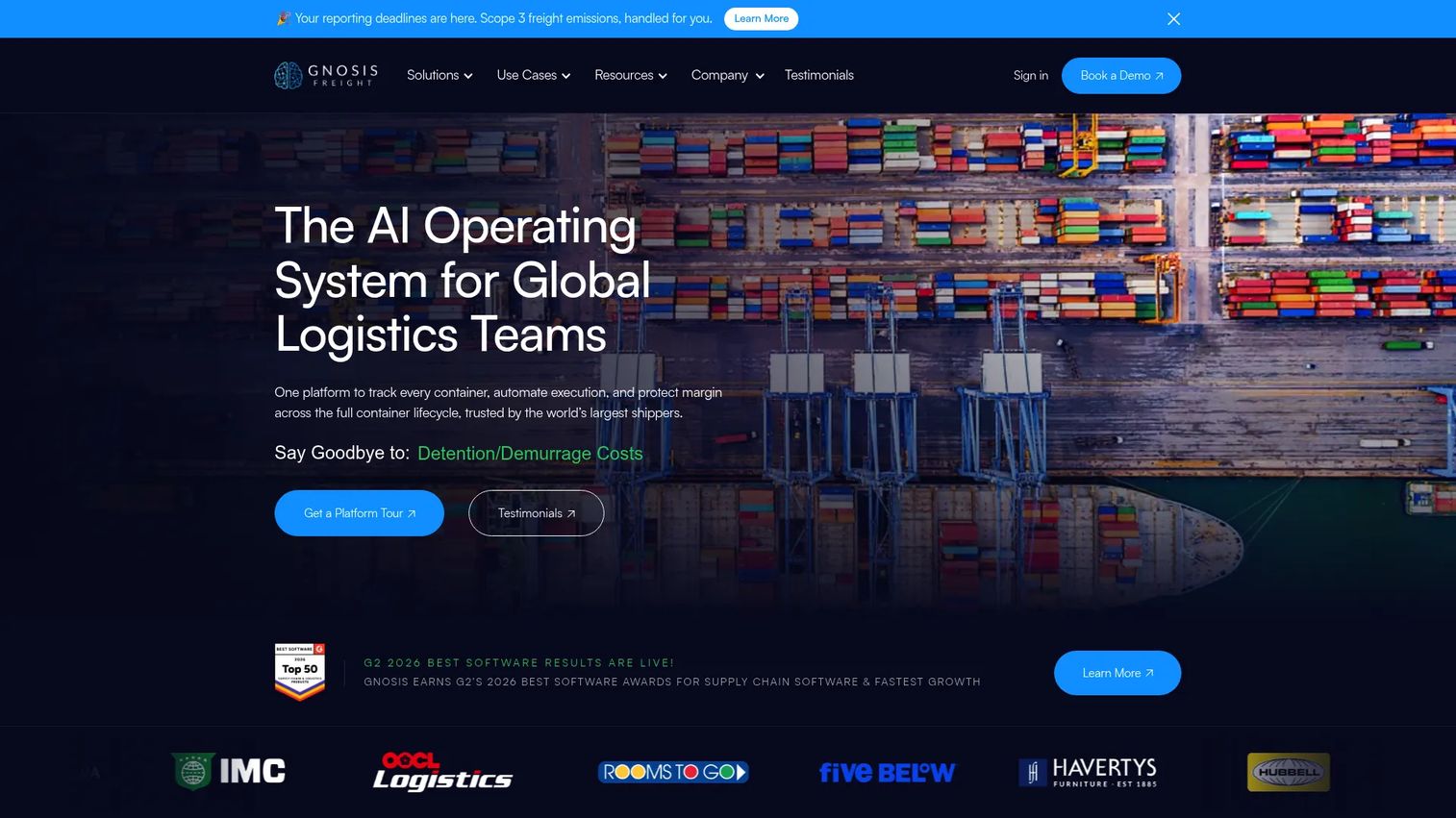
Gnosis Freight is an AI-native global freight operating system built around Container Lifecycle Management (CLM). Where general-purpose visibility suites treat containers as one data type among many, Gnosis makes them the center of the platform, covering real-time and predictive container tracking plus execution modules for drayage, warehouse, analytics, and freight FinOps. For teams managing port, drayage, and container-level exceptions, that specialization is the point.
Best for: Enterprise shippers and logistics providers needing container visibility plus execution workflows.
Key strengths
- Container Lifecycle Management platform: Organizes visibility and execution around the container journey.
- Real-time and predictive container tracking and ETAs: Forecasts container arrivals and flags port and drayage risk.
- Execution modules for drayage, warehouse, analytics, and freight FinOps: Extends beyond tracking into operational execution.
Why choose Gnosis Freight: For ocean-heavy operations where container-level exceptions at ports and in drayage drive cost, Gnosis specializes where general suites generalize. It fits importers, exporters, and logistics providers whose core pain is container flow. The execution modules mean it handles the work after the exception, not just the alert.
Gnosis Freight pricing: Gnosis Freight does not display public pricing; the site uses contact and demo CTAs, and pricing is tailored per customer. G2 reviewers rate it 4.8/5. For container-heavy teams, confirm which of your ports and drayage partners feed accurate data into the platform, since coverage on your trade lanes determines predictive ETA quality.
Considerations before you buy
The eight platforms above solve overlapping problems in different ways. Use this checklist to pressure-test any shortlist against your operation, not the vendor's demo.
Integration depth
Visibility is only as good as the data feeding it. Confirm native connections to your TMS, ERP, WMS, carrier systems, GPS, ELD, and telematics, and ask how new carriers get onboarded. Shallow integrations create blind spots, and blind spots are exactly what you are paying to eliminate. For a PM, this is the single variable most likely to determine adoption.
Carrier network and mode coverage
A platform's carrier network matters more than its feature list. Verify coverage on your actual carriers, lanes, and modes, whether that is road, ocean, rail, air, or parcel. A tool with excellent ocean coverage does little for a road-heavy domestic network, and vice versa.
Exception and alert quality
Every platform sends alerts. The question is whether they are actionable and timely, or noise your team learns to ignore. Evaluate how exceptions are prioritized, how far ahead risk is flagged, and whether alerts route to the right person with enough context to act.
Analytics and KPI reporting
Ask what the platform can actually report on: OTIF, dwell, detention, missed appointments, throughput. Then check whether that data is exportable and whether it maps to the KPIs your team already tracks. Analytics that live only inside a vendor dashboard are hard to operationalize.
Security, governance, and implementation support
For enterprise buyers, security review is a gate, not an afterthought. Confirm data handling, access controls, and compliance posture early. Ask realistic questions about implementation timelines and what internal resources you will need, since a stalled rollout kills momentum fast.
Ease of adoption for ops teams
The best data model fails if ops staff will not use it. Evaluate the day-to-day interface with the people who will live in it, not just the buyer. A tool that customer service and dock planners find intuitive beats a more powerful one that sits unused.
Conclusion
The right supply chain visibility platform depends less on rankings and more on your transport modes, integration surface, and the KPIs you report on. For enterprise, end-to-end network depth with decisioning built in, project44 and FourKites lead. For freight tracking breadth and carrier capacity, Descartes MacroPoint is a consistent pick. GoComet fits teams wanting visibility plus procurement and finance automation, while Shippeo excels for multimodal European and global networks. Tive is the choice when condition monitoring matters, FarEye for last-mile orchestration, and Gnosis Freight for container and ocean workflows.
Do not buy on a demo alone. Shortlist two to three tools that match your mode mix and integration needs, then run a pilot against real exception scenarios: a delayed ocean container, a missed dock appointment, a temperature excursion. Measure how quickly each platform surfaces the problem and how cleanly it routes the fix. The tool that shortens your response window on the exceptions you actually face is the one worth buying.
FAQs
Supply chain visibility software aggregates real-time shipment and inventory data across carriers, modes, and internal systems into one live view. It tracks where goods are, predicts arrival times, and flags exceptions like delays or dwell risk so teams can act before problems escalate. It is the layer that turns scattered carrier and telematics signals into a single source of truth for operations and customer service.
A transportation management system plans and executes freight: it books carriers, optimizes routes, and manages transport operations. Supply chain visibility software sits across your execution stack and shows what is actually happening in real time, tracking shipments, predicting ETAs, and surfacing exceptions. TMS decides how freight moves; visibility software tells you what is happening to it and where it will go wrong.
The features that matter most are predictive ETAs, real-time shipment tracking, actionable exception alerts, multimodal coverage, and control tower dashboards. Integration breadth and analytics depth round out the list, since visibility is only as reliable as the data feeding it. For most teams, alert quality and integration depth separate a tool that gets used from one that gets ignored.
A visibility platform should connect natively to your TMS, ERP, and WMS, plus carrier systems, GPS, ELD, and telematics feeds, with an open API for anything custom. The more sources it ingests, the fewer blind spots you carry. During evaluation, confirm not just which integrations exist but how new carriers and data sources get onboarded over time.
Track OTIF (on-time in-full), dwell time, detention charges, missed appointments, throughput, and productivity. Visibility tools should also help you see downstream effects like safety stock costs driven by unreliable ETAs. The right KPIs tie visibility investment directly to operational and financial outcomes your leadership already cares about.
Yes. Accurate ETAs and early exception data let customer service answer status questions in seconds instead of chasing carriers, and proactively warn customers about delays before they call in. That lowers escalations, reduces inbound "where is my order" contacts, and turns a reactive support burden into proactive communication.
Companies with complex networks benefit most: multiple carriers, multimodal shipments, international lanes, or frequent exceptions. If your team spends significant time chasing shipment status across carrier portals or discovers delays only after they cost money, that friction is the signal. The more handoffs your freight crosses, the higher the return on visibility.
Start narrow. Pick one lane, one mode, or one exception workflow and run the tool against it before broader rollout. Measure how quickly it surfaces real problems and how cleanly it routes the fix, then compare that response window to your current process. A focused pilot against real exception scenarios tells you far more than a polished vendor demo.