Your finance team is rebuilding the portfolio value from three custodian exports, two GL adjustments, and a spreadsheet no one fully owns. The board meeting is in four days.
That is not a data problem. It is a system problem. And it compounds every quarter until the numbers stop surviving outside the room where they were built.
The global investment accounting software market was valued at $7.21 billion in 2025 and is projected to reach $17.98 billion by 2033, growing at 12.1% annually, according to Verified Market Research (2026). The growth reflects one clear pressure: Investment operations teams are replacing manual reconciliation and fragmented reporting with systems that hold the books, reconcile continuously, and produce board-ready outputs without finance heroics.
This guide cuts through the noise for founders, controllers, and finance leads who are building that system now.
What's inside
This guide covers 12 investment accounting software platforms evaluated for 2026. Tools were chosen based on:
- Asset-class and institution-type fit (funds, banks, real estate, credit, fixed assets)
- Reconciliation depth and reporting capabilities
- Integration coverage across custodians, general ledgers, and ERPs
- Verified pricing and G2 ratings where available
The list includes specialist investment accounting systems, fund accounting platforms, real estate investment tools, and adjacent finance tools that solve narrower accounting problems.
TL;DR
- Best overall for modern investment accounting: FundGuard, for firms that need IBOR, ABOR, fund accounting, and continuous reconciliation in one cloud-native investment accounting system
- Best for private credit and loan operations: Allvue Systems, built around direct lending, CLO, and syndicated loan workflows
- Best for enterprise asset managers: FIS Investment Accounting Manager, for large institutions needing broad multi-asset infrastructure
- Best for banks and credit unions: Abrigo, for investment portfolio accounting tied to CECL, ALM, and regulatory reporting
- Best for real estate investment operations: Yardi Investment Management or RealPage Investment Accounting, depending on your existing property stack
- Best for lighter fixed-asset and multi-entity accounting: Sage Fixed Assets or Gravity Software, when institutional portfolio accounting exceeds your current scope
What is investment accounting software?
Investment accounting software records, reconciles, values, and reports investment activity across portfolios, funds, entities, asset classes, accounting books, and regulatory reporting requirements.
It is the system that owns your investment books and records. Without it, finance teams piece together position data, GL entries, custodian files, and reporting outputs manually, which creates reconciliation gaps, slow closes, and numbers that drift between spreadsheet owners.
Core capabilities to look for:
- Portfolio and fund books and records (IBOR, ABOR, fund-level accounting)
- Trade, lot, position, and income accounting
- Multi-asset accounting across equities, fixed income, credit, real estate, and alternatives
- Automated cash reconciliation and exception workflows
- NAV calculation, investor reporting, and board-ready outputs
- Audit trails and approval workflows for GAAP and IFRS reporting
- General ledger integrations and custodial data feeds
- Multi-entity, multi-currency, and multi-book support
How it differs from adjacent categories:
Investment accounting software owns the accounting records, reconciliations, valuations, and reporting. Portfolio management software typically focuses on investment decisions and performance. Fund accounting software handles fund-level capital activity, allocations, NAV, and investor statements. General accounting software usually lacks the position-level depth, custodian reconciliation, and accounting book of record capabilities that investment operations require.
The right question is not which category sounds closest. It is: Which record does the system own, and which downstream systems does it feed?
When investment accounting software earns its place
The boundary between "general accounting plus spreadsheets" and "investment accounting system" becomes clearer once your finance team is spending meaningful time reconciling what should already agree.
Reconciliation volume: If the team runs manual reconciliation across custodians, banks, and the GL more than weekly, the cost compounds quickly.
Multi-asset or multi-entity scope: Partnership structures, real estate entities, private credit alongside equity holdings, or multiple fund vehicles each create their own books, reconciliation loops, and reporting requirements.
Auditability pressure: Board scrutiny, LP diligence, regulatory review, or an upcoming audit all require complete, traceable audit trails from source transaction to financial statement.
When to use investment accounting software
Replace spreadsheet-based portfolio accounting
The trigger is when the finance team depends on manually updated workbooks, custodian exports, and GL adjustments that change depending on who runs the file last. For a founder, the signal is when board reporting depends on undocumented spreadsheet logic that no one outside finance can explain under pressure.
Support multi-asset or multi-entity reporting
The need accelerates when the business has multiple funds, entities, asset classes, or accounting bases running in parallel. A single investment accounting system that handles consolidations, allocations, and multi-currency reporting removes the reconciliation labor that grows proportionally with complexity.
Prepare for audits, diligence, and regulatory scrutiny
Audit trails, approval workflows, data lineage, and reporting controls matter before a fundraise, acquisition, or institutional LP diligence process. Numbers need to survive questions without the finance lead rebuilding the story live. An audit management software layer helps, but the investment books themselves need to be clean first.
Investment accounting software comparison
The table below covers all 12 platforms evaluated in this guide, ordered by relevance to investment accounting. Pricing reflects verified data from vendor pricing pages and G2 listings. Where no price was available, the entry reflects the buying path. G2 ratings are verified at generation time.
| # | Product | Best for | Key differentiator | Pricing | G2 rating |
|---|---|---|---|---|---|
| 1 | FundGuard | Asset managers and fund administrators | IBOR, ABOR, fund accounting, continuous reconciliation in one cloud-native system | Contact vendor | N/A |
| 2 | Allvue Systems | Private credit and alternative investment firms | Direct lending, CLO, and syndicated loan accounting workflows | Contact vendor | 5.0/5 |
| 3 | FIS Investment Accounting Manager | Enterprise asset managers and large institutions | Multi-asset, multi-book institutional accounting at scale | Contact vendor | N/A |
| 4 | Abrigo | Banks and credit unions | Investment portfolio accounting tied to CECL, ALM, and regulatory workflows | Contact vendor | 4.6/5 |
| 5 | Fundpilot | Investment managers needing client reporting | Branded client portal with multi-currency portfolio reporting | From €166/month | N/A |
| 6 | Vantage Portfolio Accounting | Private family office and direct investment management | Investment and wealth management for multi-generational structures | Contact vendor | N/A |
| 7 | Yardi Investment Management | Real estate fund managers and REITs | Investor portal, deal-room, and investment accounting in a real estate stack | Contact vendor | N/A |
| 8 | RealPage Investment Accounting | Real estate investment firms with complex ownership | Partnership accounting, waterfalls, and advanced consolidations | Contact vendor | N/A |
| 9 | MRI Software | Real estate owners and operators | Property management, financials, and investment workflows in one platform | From $60/month (MRI OnLocation) | N/A |
| 10 | Eze Investor Accounting | Hedge funds and alternative investment firms | Investor allocations, fee calculations, and fund reporting | Contact vendor | N/A |
| 11 | Sage Fixed Assets | Organizations tracking fixed assets for tax and depreciation | 50+ depreciation methods with deep integration into Sage and Microsoft products | Contact vendor | 4.2/5 |
| 12 | Gravity Software | Growing multi-entity companies on Microsoft stack | Cloud accounting with multi-entity consolidations on Microsoft Power Platform | From $210/month | 4.5/5 |
Best 12 investment accounting software tools
The platforms below span specialist investment accounting systems, fund accounting tools, real estate investment platforms, and adjacent finance tools for narrower needs. Each fits a different institution type and asset-class profile.
1. FundGuard

FundGuard is a cloud-native, AI-enabled investment accounting platform built for asset managers, fund administrators, and financial institutions. It covers investment accounting, fund accounting, private markets accounting, IBOR, ABOR, NAV oversight, and reporting from a single transactional source, with real-time positions, valuations, ledgers, and cash flows generated continuously rather than at close.
Best for: Asset managers and fund administrators replacing fragmented investment books with a modern, multi-asset investment accounting system.
Key features
- IBOR and ABOR across public and private asset classes
- Fund accounting with NAV oversight and capital activity
- Private markets accounting for direct investments and credit
- Continuous reconciliation with anomaly detection and exception workflows
- Open API for integrations across front, middle, and back office
Why choose FundGuard: FundGuard suits teams that need a single investment accounting system of record across investment books, accounting books, and fund books. The continuous reconciliation architecture means exceptions surface before close, not after.
FundGuard pricing: Pricing requires a conversation with the sales team. No self-serve plan exists and no reported ranges appeared on G2 or Capterra at generation time.
2. Allvue Systems
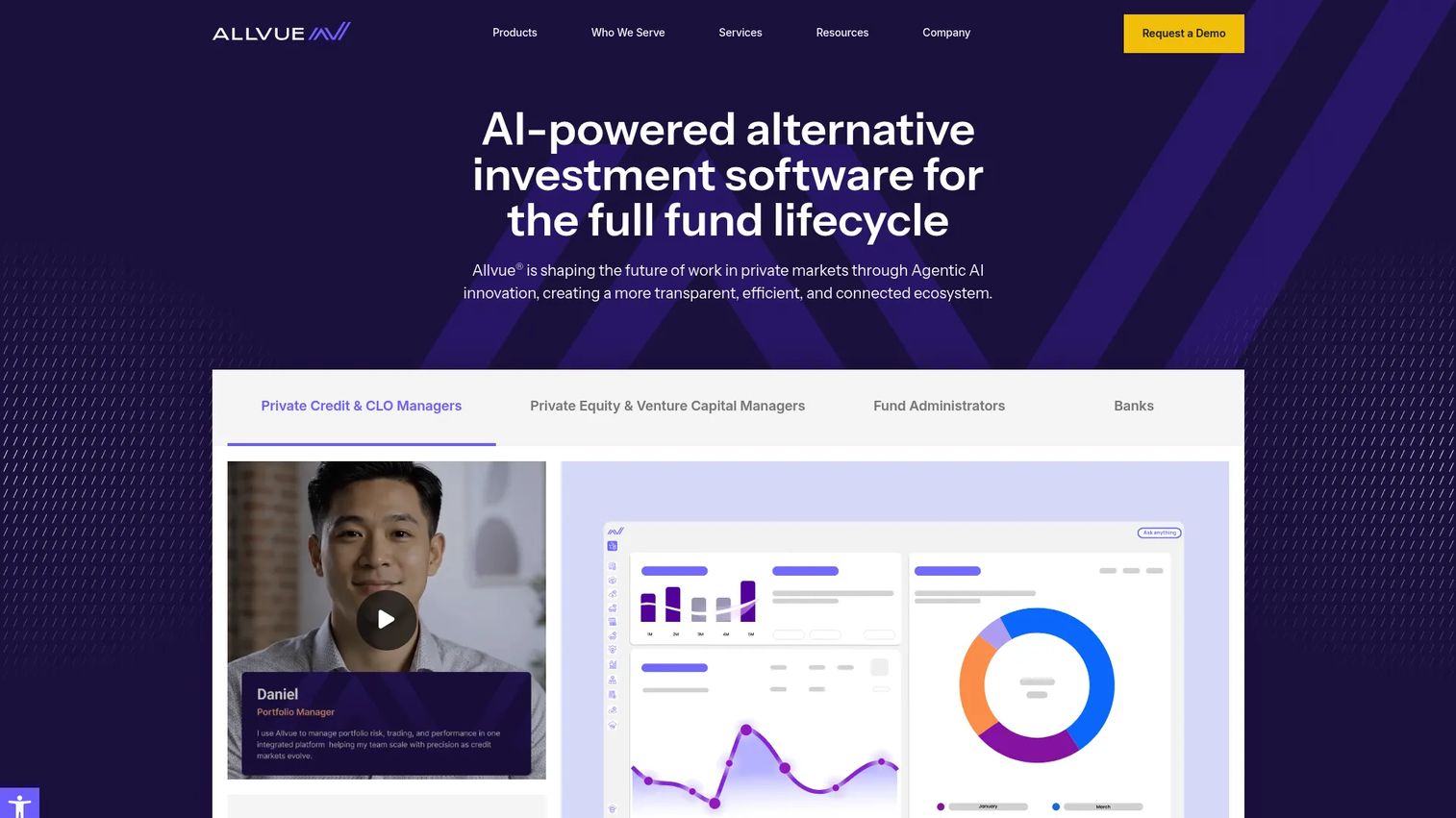
Allvue Systems is an AI-powered, cloud-based alternative investment platform covering the full fund lifecycle for private equity, private debt, credit, venture capital, fund administration, and insurance organizations. Its investment accounting capabilities are purpose-built around loan operations, CLO structures, and credit portfolio management, with investment-level and lot-level books, accruals, valuations, cash flows, and P&L rolled up into a unified reporting layer.
Best for: Private credit teams and alternative investment firms that have outgrown general accounting tools and need accounting workflows built around loan and credit structures.
Key features
- Loan notice processing and direct lending accounting
- CLO accounting and broadly syndicated loan workflows
- Cash reconciliation and asset servicing
- Portfolio, research, trade order, and compliance management
- Investor portal, fundraising CRM, and analytics reporting via the Nexius data platform
Why choose Allvue Systems: The platform earns its place when private credit complexity is the dominant problem. Finance and operations teams managing credit portfolios with accruals, fee waterfalls, and LP reporting will find the operational depth that general accounting tools cannot replicate.
Allvue Systems pricing: Pricing is sales-led with no self-serve tiers or ranges on G2 at generation time. Contact Allvue directly for a package.
G2 rating: 5.0/5
3. FIS Investment Accounting Manager
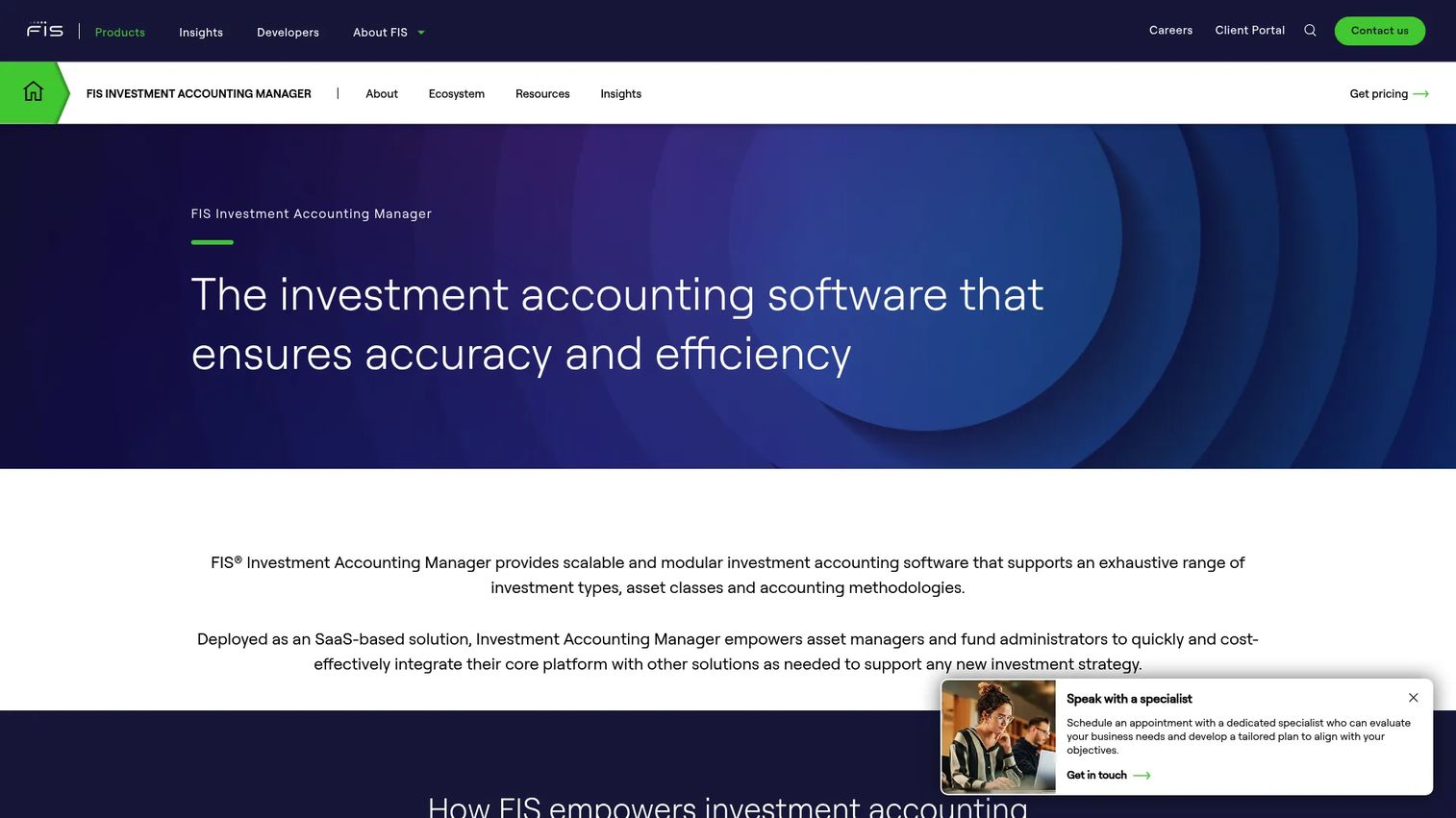
FIS Investment Accounting Manager is a scalable, modular, real-time investment accounting and administration system for large asset managers, fund administrators, banks, and institutional investors. It handles multiple fund types, asset classes, currencies, and accounting methodologies simultaneously, with real-time processing, intraday valuations, and exception management built into the architecture.
Best for: Large financial services organizations and enterprise asset managers that need institutional-grade multi-asset accounting infrastructure with complex integration requirements.
Key features
- Real-time investment accounting with intraday valuation calculations
- Investment Book of Record with multiple books of record support
- Multi-asset, multi-currency, and multi-fund accounting
- Integrated general ledger and automated reporting
- Browser-based interface with third-party and FIS middle-office integrations
Why choose FIS Investment Accounting Manager: Scale and institutional maturity are the core reasons to evaluate FIS. It fits when the buyer needs enterprise risk controls, operational resilience, and an established track record in complex portfolio environments, not a newer cloud-native build.
FIS pricing: Buyers work directly with FIS sales. No self-serve pricing page exists, and no Capterra or TrustRadius pricing ranges were confirmed at generation time.
4. Abrigo
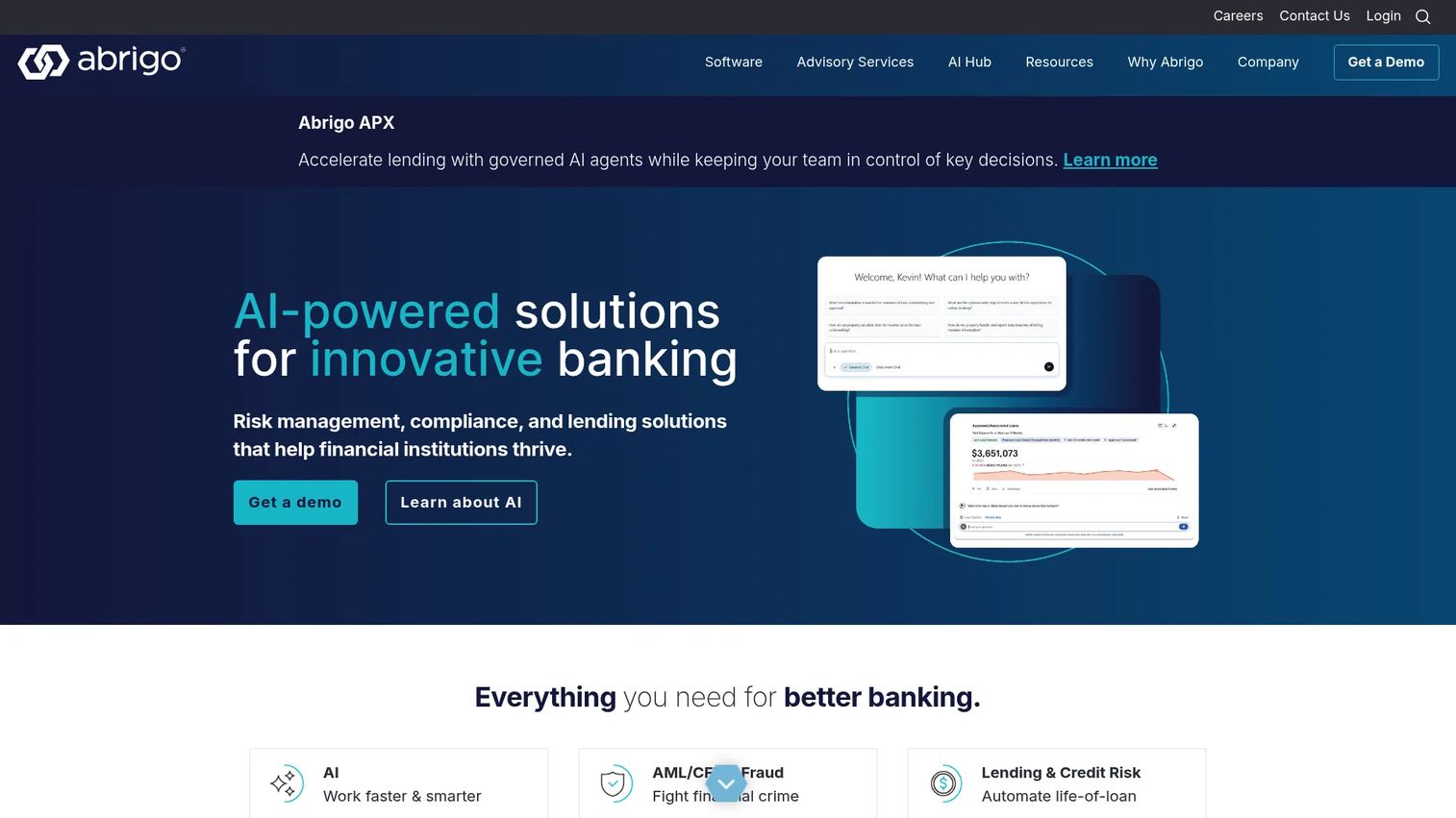
Abrigo provides AI-powered risk management, compliance, lending, and analytics software for banks and credit unions. Its investment accounting capabilities, marketed as Portfolio Genius, Derivative Genius, and Safekeeping Genius, cover portfolio accounting, settlement, post-trade processing, derivatives, and safekeeping workflows, all connected to Abrigo's broader financial institution risk and regulatory infrastructure.
Best for: Banks and credit unions that need investment accounting tied directly to portfolio risk, CECL, ALM, stress testing, and regulatory reporting in a single financial institution platform.
Key features
- Portfolio Genius for investment portfolio accounting and reporting
- Derivative Genius for derivatives accounting and valuation
- Safekeeping Genius for safekeeping and custody workflows
- CECL workflows integrated with portfolio risk and credit loss modeling
- General ledger integrations with bank core systems
Why choose Abrigo: The case for Abrigo is institution fit. If the investment accounting system must connect with bank balance sheet, regulatory capital, and risk workflows rather than fund or portfolio management workflows, Abrigo is built for that context.
Abrigo pricing: Abrigo uses sales-led pricing with no self-serve plan. Contact Abrigo for a package specific to your institution size and module requirements.
G2 rating: 4.6/5
5. Fundpilot

Fundpilot is a client reporting platform for investment managers that delivers branded portfolio dashboards, fund-level updates, and client-ready reports through a secure portal. It supports multi-currency reporting in CZK, EUR, and USD, with one-click portfolio updates, quarterly and yearly performance reports, white-label branding with a custom domain, and mobile-ready access for clients.
Best for: Investment managers and advisory practices that need a branded, structured reporting system for client portfolios without adopting heavy institutional accounting infrastructure.
Key features
- Client portal with holdings, performance, and reports
- One-click portfolio updates and multi-currency reporting
- White-label branding with custom domain and colors
- Quarterly and annual performance report generation
- Mobile-ready access for clients
Why choose Fundpilot: Fundpilot is the right call when the primary problem is client-facing reporting rather than institutional books of record. It is a practical starting point for investment managers whose reporting workflow is still running through documents and email threads.
Fundpilot pricing: Plans start at €166/month (Starter, billed annually at €1,990/year) for up to 20 investor accounts. The Professional plan is €249/month and the Enterprise plan is €499/month. Additional accounts are charged per account per month above each tier limit. A custom plan is available by contacting sales.
6. Vantage Portfolio Accounting

Vantage Portfolio Accounting operates within the Vantage Private Holdings group, which focuses on investment management, wealth preservation, family governance, and direct investments for multi-generational family structures. The platform supports portfolio analytics and investment management within that private family office context, rather than institutional fund or bank portfolio accounting.
Best for: Multi-generational family offices and private investment vehicles managing direct investments, wealth preservation, and family governance structures.
Key features
- Investment management and wealth preservation workflows
- Portfolio analytics and performance visibility
- Direct investment and family governance support
- Multi-generational wealth stewardship tools
Why choose Vantage Portfolio Accounting: Vantage fits when the investment accounting context is a family office or private holdings structure rather than a regulated institutional fund or bank portfolio. Teams evaluating it should verify current product capabilities directly with the vendor, as the product identity differs from the institutional portfolio accounting category.
7. Yardi Investment Management

Yardi Investment Management is a real estate investment management platform for fund managers, REITs, and family offices managing complex investment operations and investor relations. It covers capital raising, investment accounting, investor portal access, digital subscription workflows, debt portfolio visibility, and acquisition pipeline management, all connected to the broader Yardi real estate operating stack.
Best for: Real estate investment firms and fund managers already using or evaluating a real estate operating platform, where investor accounting and property operations need to stay connected.
Key features
- Branded investor portal with self-service access to metrics and documents
- Digital subscription and investor onboarding workflows
- Investment accounting for consolidations, allocations, and ownership structures
- Debt portfolio visibility and covenant monitoring
- Acquisition pipeline management and deal analysis dashboards
Why choose Yardi Investment Management: The platform earns its place when investment accounting is inseparable from property operations, investor portal management, and real estate fund reporting. If the team is already running on Yardi for property management, the investment management layer connects without a separate data handoff.
Yardi pricing: Contact Yardi directly for a package.
8. RealPage Investment Accounting
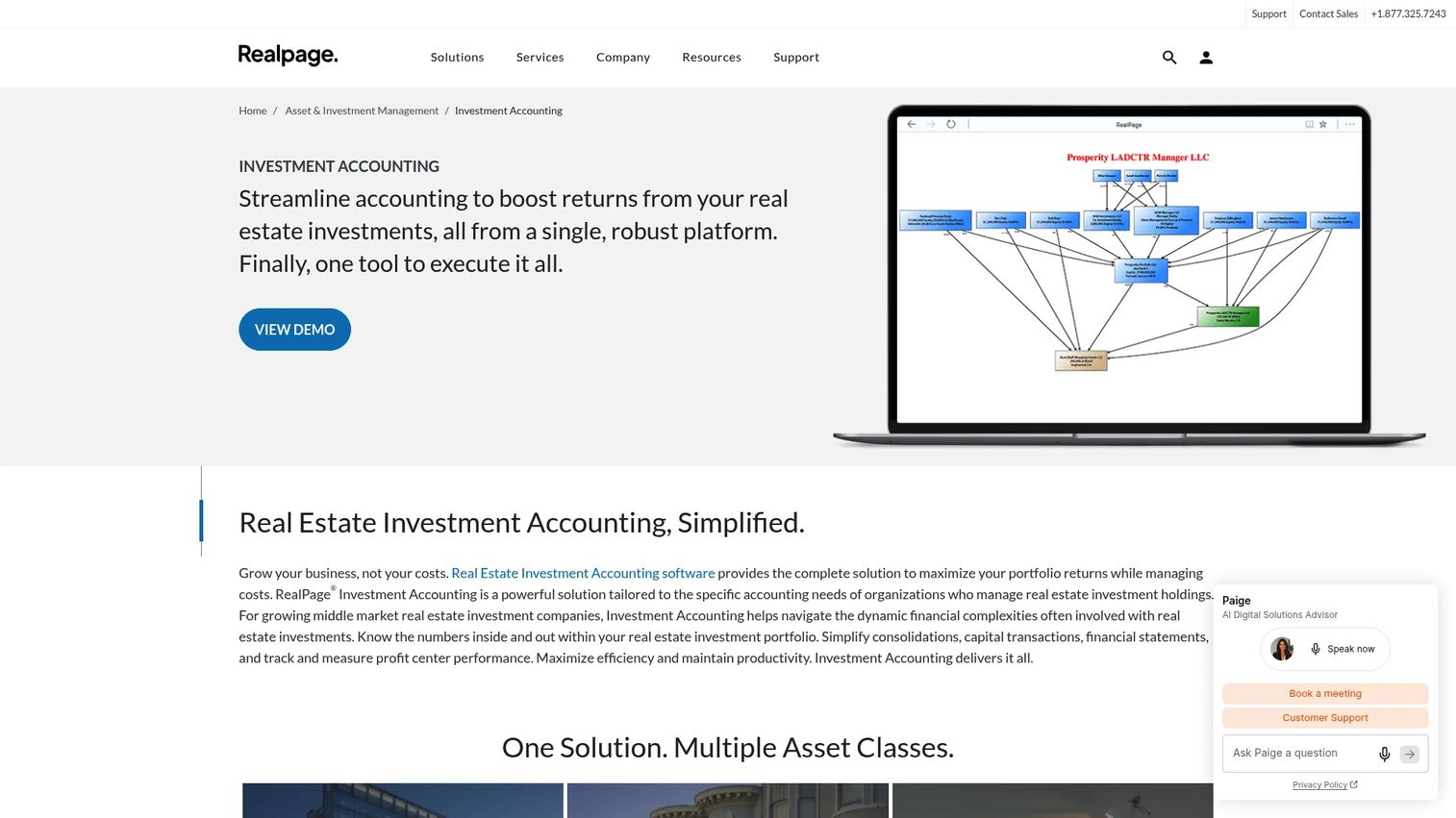
RealPage Investment Accounting is a real estate investment accounting platform for middle-market firms managing complex ownership structures and multiple asset classes. It covers partnership accounting for capital calls, distributions, management fees, waterfalls, and investor reporting, alongside corporate accounting for overhead allocation and advanced consolidations for complex subsidiary structures.
Best for: Real estate investment firms managing complex ownership structures where partnership accounting, waterfall calculations, and consolidated investor reporting are the core operations.
Key features
- Partnership accounting for capital calls, distributions, and management fees
- Waterfall calculations and investment-return tracking
- Corporate accounting for business-unit expense allocation
- Advanced consolidations for multiple subsidiaries and complex ownership
- Investor reporting tied to property and portfolio operations
Why choose RealPage Investment Accounting: RealPage fits when the accounting problem is fundamentally about ownership structure complexity. Waterfall models, investor statements, and consolidated financial reports for multi-asset real estate portfolios are the natural use case.
RealPage pricing: Pricing requires a conversation with the sales team. No self-serve plan or verified range was available at generation time.
9. MRI Software
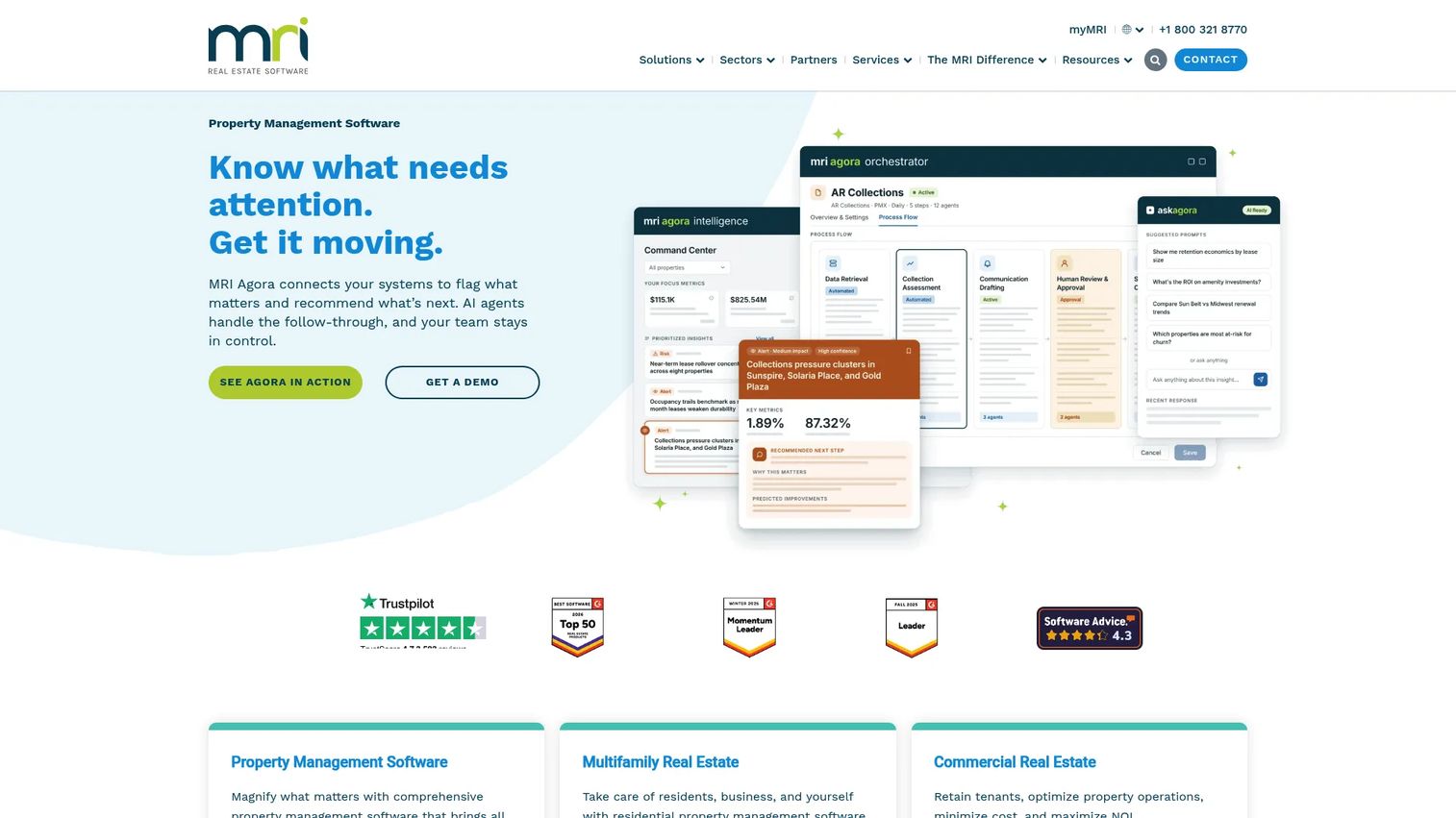
MRI Software provides real estate software for property management, financials, facilities, workplace, leasing, and investor operations. Its investment management capabilities sit within a broader property technology suite, covering property accounting, investor workflows, portfolio reporting, and real estate analytics. It serves real estate owners, operators, occupiers, and investors who need accounting and investment workflows connected to the same operational platform.
Best for: Real estate investment and property finance teams that want accounting and investment workflows inside a broader real estate operating platform rather than a standalone investment accounting system.
Key features
- Property management and financial accounting
- Investment management and investor workflows
- Portfolio reporting and real estate analytics
- Facilities, energy, and workplace management
- Leasing, tenant portals, and rent payment tools
Why choose MRI Software: MRI is the stronger fit when the buyer wants a connected real estate stack rather than a point investment accounting solution. The platform covers property operations and investment reporting together, which reduces the number of integration dependencies.
MRI Software pricing: MRI offers multiple products with separate pricing. The MRI OnLocation product starts at $60/month (Small) or $634 billed annually. For investment management and property finance products, contact MRI sales directly for a package.
10. Eze Investor Accounting
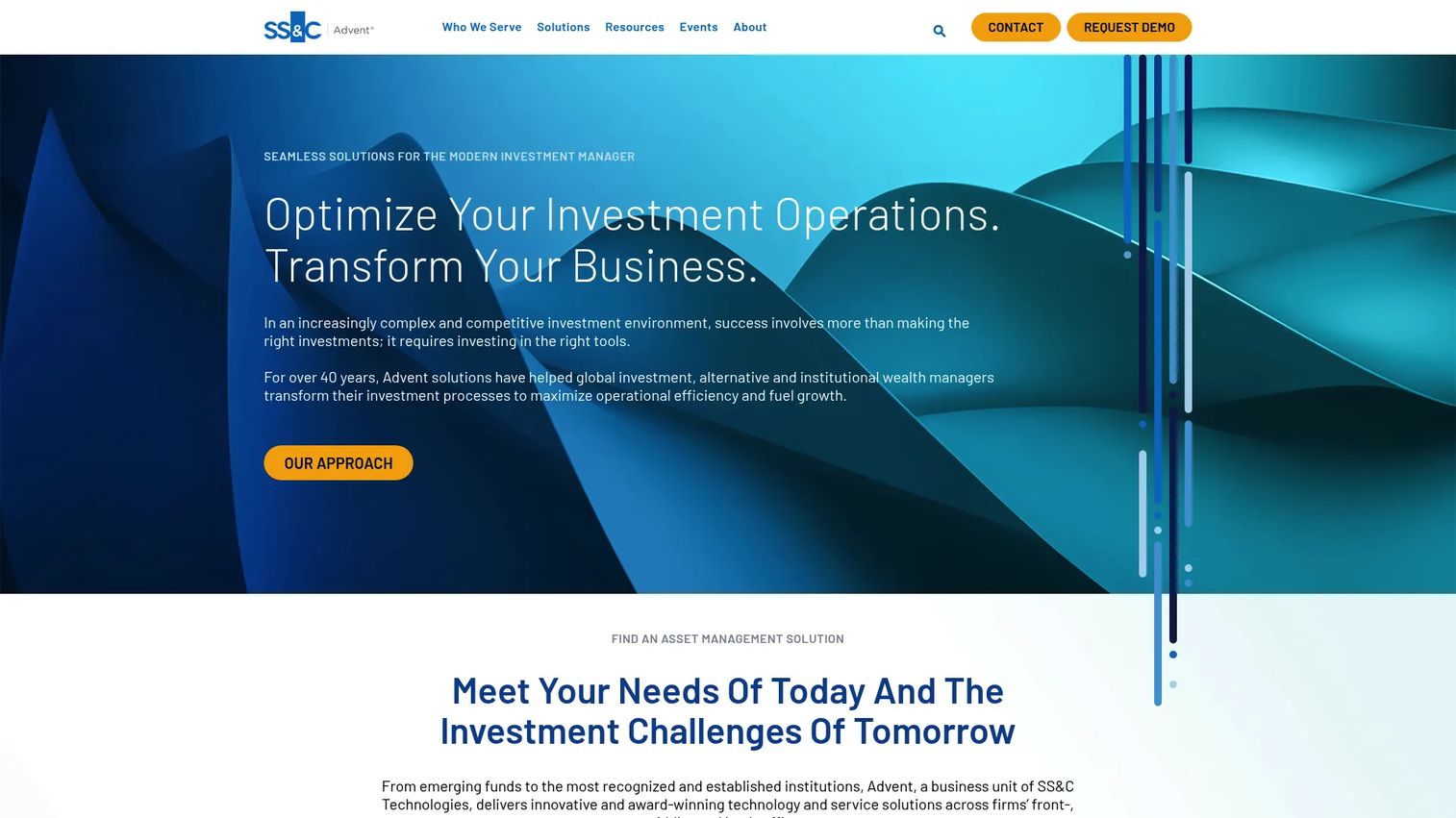
Eze Investor Accounting, now part of SS&C Advent, is investment accounting software for hedge funds, private equity firms, fund administrators, and alternative investment organizations. It handles multi-asset and multi-currency accounting, complex fund structures, investor allocations, fee calculations, partnership accounting, and investor statements, with Maker Checker approval workflows and dashboards for fund-level reporting.
Best for: Hedge funds and alternative investment firms where investor-level accounting, allocation complexity, and fee calculations are the dominant operational challenge.
Key features
- Multi-asset and multi-currency accounting
- Complex fund structures with investor allocations
- Fee calculations and partnership accounting
- Maker Checker approval workflows for controls
- Fund and investor reporting with performance dashboards
Why choose Eze Investor Accounting: The platform positions well when investor accounting complexity, not portfolio accounting, is the core problem. Teams running multiple share classes, side pockets, or complex fee arrangements will find the allocation and fee calculation depth here.
Eze pricing: Pricing is handled by the SS&C Advent sales team.
11. Sage Fixed Assets
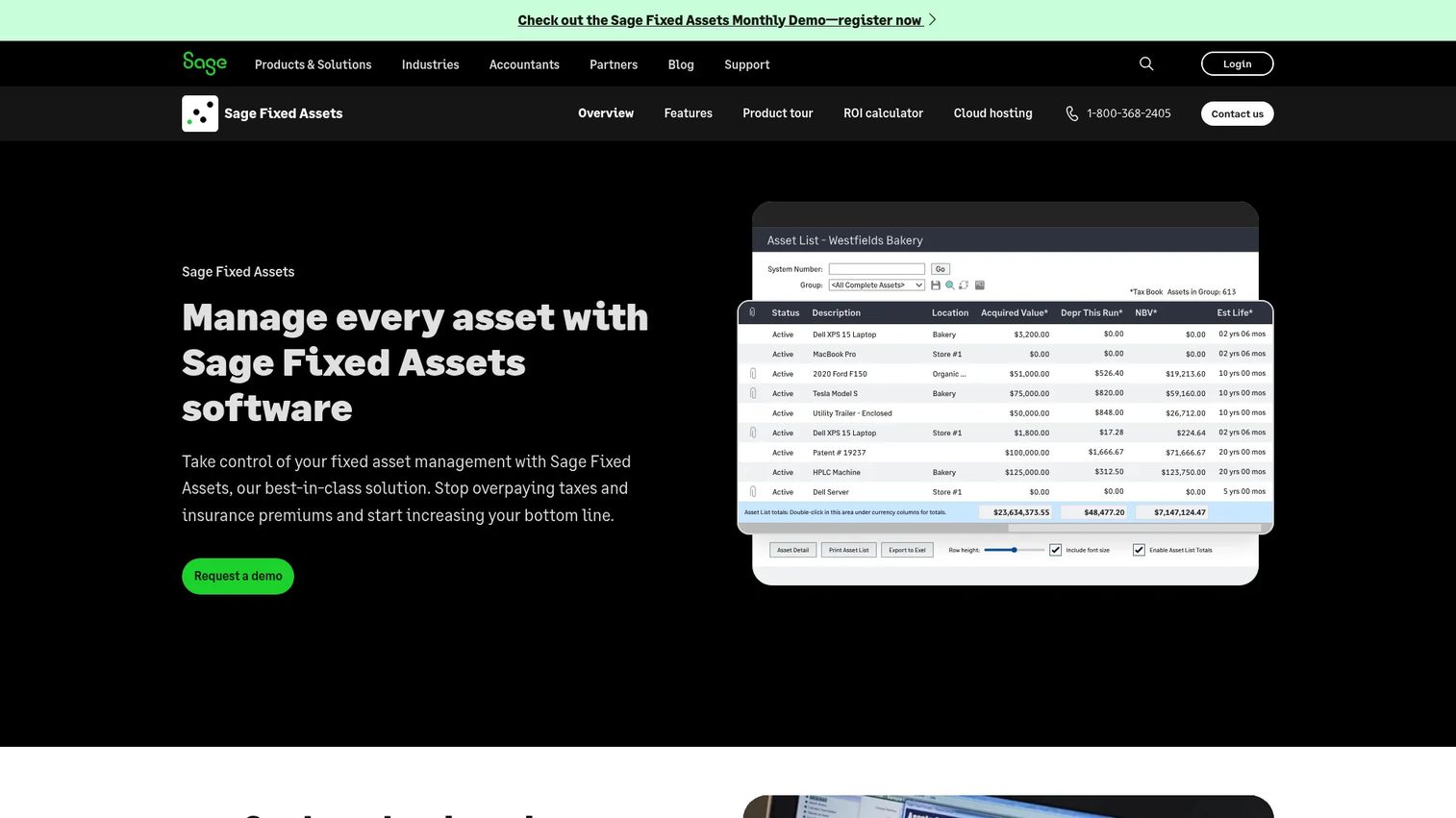
Sage Fixed Assets is fixed asset management software for tracking assets, depreciation, construction-in-progress, planning, tax compliance, and lifecycle reporting. It is not a full institutional investment accounting system. It fits organizations whose "investment accounting" requirement is primarily about fixed asset records, depreciation schedules, and audit support rather than portfolio positions, custodian reconciliation, or fund books.
Best for: Organizations that need fixed asset tracking, 50-plus depreciation methods, and tax compliance reporting, rather than institutional portfolio or fund accounting.
Key features
- 50-plus depreciation methods for GAAP and tax books
- Asset planning and construction-in-progress management
- Asset tracking and inventory visibility
- Custom reporting and audit support
- Integration with Sage Intacct, Sage 100, Microsoft Dynamics, and Oracle
Why choose Sage Fixed Assets: Choose it when the investment accounting requirement is fixed-asset-heavy and does not require IBOR, ABOR, NAV, or custodian reconciliation. For asset lifecycle management software needs connected to depreciation and tax books, it covers the operational scope efficiently.
Sage Fixed Assets pricing: Pricing requires a demo request or direct contact with Sage. No self-serve pricing page with numeric figures was available at generation time.
G2 rating: 4.2/5
12. Gravity Software
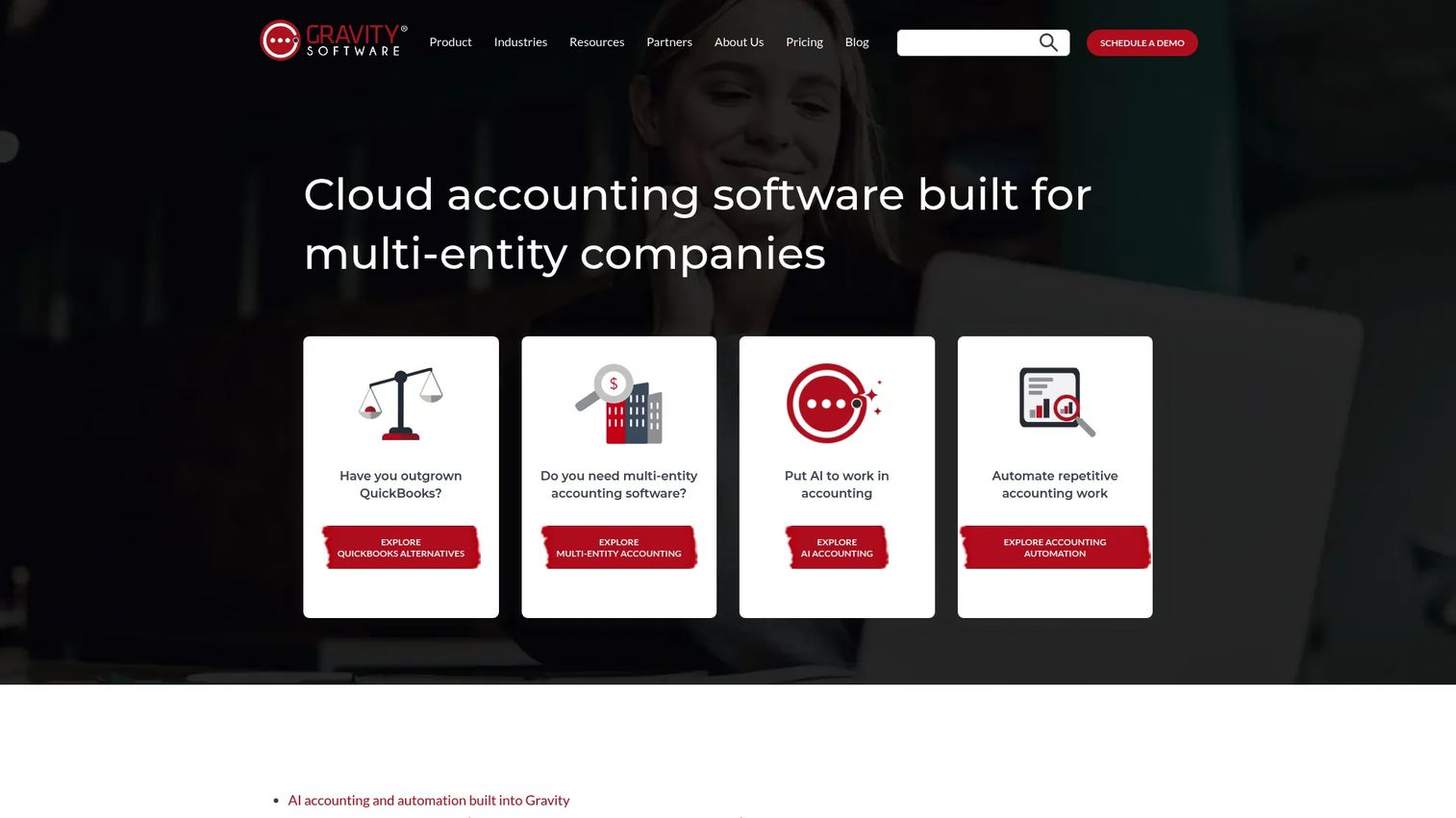
Gravity Software is cloud accounting software for growing businesses built on the Microsoft Power Platform, covering multi-entity financial management, accounts payable and receivable, general ledger, budgeting, inventory, and financial reporting. It is adjacent to investment accounting rather than a full institutional investment accounting system. Its value is in multi-entity consolidations and Microsoft ecosystem compatibility, with AI-powered accounts payable automation and Microsoft 365 Copilot integration.
Best for: Growing multi-entity companies already operating in the Microsoft stack that need stronger financial consolidations and reporting, where investment accounting needs are lighter than institutional portfolio operations.
Key features
- Multi-entity consolidations and financial reporting
- Core accounting: Accounts payable, accounts receivable, and general ledger
- AI-powered accounts payable automation
- Microsoft Power BI integration for dashboards
- Microsoft 365 Copilot capabilities and Dynamics 365 foundation
Why choose Gravity Software: Gravity earns its place when the finance team needs cleaner multi-entity accounting and already lives in Microsoft tools. It is not the right system for IBOR, fund books, or custodian reconciliation, but it handles the consolidation and reporting layer efficiently for companies at the right scale.
Gravity Software pricing: Plans start at $210/month for nonprofits (annual subscription). The Starter plan is $375/month per first user (annual), and the Existing Power Apps User plan is $355/month. Additional users and entities are charged separately. Implementation is priced independently.
G2 rating: 4.5/5
Considerations when choosing investment accounting software
Before shortlisting, run these four checks. They surface the gaps that show up in month one, not month six.
Start with asset-class fit
Private credit, real estate, public securities, derivatives, and fixed assets each create different accounting requirements. A system built for public equities will not handle CLO waterfalls without workarounds, and a real estate investment platform will not produce a hedge fund's investor allocation statements without custom development. Buy the system that owns your dominant asset class, not the one with the longest feature list.
Map the required books and records
Understand which accounting book the system owns (IBOR, ABOR, fund-level), and which systems it feeds downstream, whether that is the GL, an investor portal, a tax tool, or an ERP. An investment accounting system that covers only the front-end position record but requires manual GL handoff creates labor at close. Ask vendors to show you the transaction lifecycle from source data to cash flow management software output or financial statement.
Test reconciliation before trusting reporting
Reporting is only accurate if custodian, bank, market data, and GL data agree first. Ask vendors to show you how exceptions surface, how they are assigned, and what the resolution workflow looks like. A system that produces beautiful reports from unreconciled data is not an improvement over the spreadsheet it replaces.
Verify integrations before signing
List your integration targets: General ledger, custodians, banks, market data providers, ERP, data warehouse, investor portal, risk system, and tax tools. Ask vendors which of those are live integrations versus manual export and import. Integration gaps become manual finance labor, and that labor compounds every reporting cycle.
Ask how implementation affects the close
Migration, historical data loading, chart of accounts setup, approval workflows, and user permissions can slow the first close significantly. The right question before buying is not "what features exist?" It is "what changes in month one, and what does the first board-ready report actually look like?"
Conclusion
Investment accounting is an operating system decision for founders who want clean numbers that survive board scrutiny without depending on one finance lead's institutional memory.
FundGuard is the strongest pick for modern multi-book investment accounting across public and private assets. Allvue Systems fits private credit and alternative investment operations. FIS Investment Accounting Manager serves large institutional asset managers that need proven enterprise infrastructure. Abrigo is the natural choice for banks and credit unions connecting investment accounting to their regulatory stack.
For real estate, Yardi Investment Management and RealPage Investment Accounting each address different parts of the ownership and reporting complexity, and MRI Software connects both when property operations and investment reporting need to share a platform.
Eze Investor Accounting handles investor allocation complexity for hedge funds and alternatives. Sage Fixed Assets fits fixed-asset depreciation and compliance needs. Gravity Software works for growing companies on Microsoft stack that need multi-entity consolidations without full institutional investment accounting scope.
The practical next step: Shortlist three tools by your dominant asset class and institution type, validate integrations against your current GL and custodian setup, and ask each vendor to walk you through the same transaction from source data to investor report or financial statement before signing anything.
Start your journey with Guideflow today!
FAQs
Investment accounting software records, reconciles, values, and reports investment activity across portfolios, funds, entities, and accounting books. It serves as the system of record for investment positions, transactions, income, valuations, and regulatory reporting, replacing manual spreadsheet workflows with traceable, auditable data.
The two terms overlap significantly in practice. Portfolio accounting focuses on positions, transactions, income, valuation, and portfolio-level reporting. Investment accounting is broader and can also include fund books, accounting books of record, general ledger entries, investor accounting, NAV calculations, and regulatory reporting. Many platforms serve both functions under a combined label.
Investment accounting tracks holdings, positions, transactions, and investment activity at the security or portfolio level. Fund accounting handles the fund-level structure: Capital contributions, distributions, allocations to investors, NAV calculations, investor statements, and financial statements for the fund entity itself. Many institutional platforms support both, but the records serve different purposes and feed different downstream outputs.
Private credit accounting requires loan notice processing, accruals, cash reconciliation, direct lending books, CLO structures, syndicated loan workflows, valuations, and P&L reporting at the asset level. Allvue Systems is the strongest specialist for this asset class. FundGuard also covers private markets accounting within its multi-asset architecture for teams that need a unified system across credit and other asset classes.
Banks and credit unions need investment accounting tied to portfolio risk, regulatory capital, CECL, ALM, audit trails, and GL connectivity to core banking systems. Abrigo is the most purpose-built option for this context, with its Portfolio Genius, Derivative Genius, and Safekeeping Genius modules connecting investment accounting to the broader financial institution risk and compliance stack.
QuickBooks handles basic business accounting well, but institutional investment accounting needs position-level records, multi-asset support, custodian reconciliation, audit trails, and fund or portfolio reporting that standard accounting software does not provide. For investment companies running multi-entity structures, tracking lots and positions, or producing investor statements, a specialist investment accounting system will be necessary. QuickBooks can serve as the GL that receives entries from an investment accounting system, but it cannot replace the system itself.
Most enterprise investment accounting systems use quote-based pricing, so the cost conversation happens with a sales team. The price drivers include assets under management, entity count, user count, modules selected, integration scope, data migration requirements, and ongoing support arrangements. For the platforms in this guide, only Fundpilot (from €166/month) and Gravity Software (from $210/month) publish starting prices. Ask vendors to separate implementation costs, data migration fees, and annual support costs from the platform license before comparing quotes.
Before signing, verify these six points with any vendor: Which record does this system own? Which manual spreadsheets disappear after implementation? How does reconciliation work between custodians, banks, and the GL? What does the first board-ready report look like, and how long does it take to produce? Which integrations are live at launch versus on the roadmap? What breaks operationally if the asset base or entity count doubles?