You are not really choosing a personal trainer app. You are choosing a coaching model.
That distinction gets buried under feature lists, but it is the decision that actually matters. A live human coach texting you every morning is a different product than a self-guided workout library, which is a different product than athlete programming software, which is different again from all-in-one coaching software a trainer uses to run a business. Pick the wrong model and even the best app in its class will feel like the wrong tool.
The demand is real. The global personal training apps market is valued at $1.6 billion in 2025 and is projected to reach $3.9 billion by 2032 at a 14.0% CAGR, according to Grand Research Store (2026). Adoption backs that up: over 300 million active users across the US, Europe, and Asia engaged with at least one AI-powered personal training app in 2023, a 22% year-over-year increase per the same source. Around 73% of smartphone users access health apps, based on Business Research Insights (2026).
So the category is crowded, and the marketing all sounds the same. This guide cuts through that by sorting apps by who they serve and how they coach, not by which one has the longest feature page.
What's inside
This guide compares eight personal trainer apps for 2026 across the factors that actually change your day-to-day: coaching workflow, progress tracking, accountability, pricing clarity, device fit, and program customization. The list spans three groups on purpose: consumer apps you use yourself, coaching platforms trainers use to run clients, and athlete-focused programming tools. Each pick was chosen for practical fit against a specific use case, not for hype or marketing reach. Where pricing and ratings are publicly confirmed, they are stated plainly. Where they are not, we say so instead of guessing.
TL;DR
Short on time? Here are the decision shortcuts.
- Best for coach-led accountability: Future, real human coaches with daily check-ins.
- Best all-in-one coaching software: ABC Trainerize, workouts, nutrition, messaging, and branded apps in one place.
- Best for athlete and strength programming: TrainHeroic, structured coach-to-athlete delivery and tracking.
- Best for online coaches scaling clients: TrueCoach, clean 1:1 programming and client management.
- Best budget and beginner-friendly picks: Nike Training Club (free guided workouts) and MyFitnessPal (free nutrition tracking).
The best personal trainer app is the one that matches your coaching model and budget, not the one with the flashiest reel.
What is a personal trainer app?
A personal trainer app is software that delivers workout plans, tracks progress, and supports coaching or accountability, either directly to a consumer or through a trainer managing clients. Some replace a human coach with structured content. Others exist specifically to help real coaches run their business at scale.
The category splits into a handful of core types, and most personal training software leans hard into one of them:
- Live coaching apps: a real trainer builds your plan, checks form, and messages you regularly. Highest accountability, highest cost.
- Workout delivery and program apps: structured plans you follow on your own, with logging and progression built in.
- Progress tracking apps: logging, analytics, personal records, body stats, and watch data.
- Nutrition coaching apps: food logging, macros, and calorie targets that sit alongside training.
- Coaching platforms (apps for personal trainers): the back-office software trainers use to program, message, bill, and brand.
Most of the best personal training apps bundle several of these, but the center of gravity tells you who the tool is really for. A personal fitness app aimed at consumers optimizes for ease and motivation. Personal trainer software aimed at coaches optimizes for client management, billing, and branded delivery.
Typical features you will see across the category include:
- Workout builders and exercise libraries with video demos
- Progress logging, personal records, and analytics
- In-app messaging and check-ins
- Nutrition and habit tracking
- Wearable and phone integrations
- Payments, scheduling, and branded apps (on the coach-facing tools)
When to use each type of app
The fastest way to shortlist is to match the app to how you want to be coached.
Match the app to the coaching model
Need a real person accountable for your results? A live coaching app like Future gives you a human who adjusts the plan and nudges you. Comfortable following a plan solo? A workout program app or a consumer library gets you moving without the monthly coaching premium. Coaching athletes or a roster of clients? Athlete-style programming in a tool like TrainHeroic, or full client management in ABC Trainerize or TrueCoach, will serve you better than any consumer app.
Prioritize accountability and communication
Accountability is where most fitness goals die. If check-ins, messaging, progress photos, and habit nudges are what keep you consistent, weight your decision toward coach-led apps and coaching platforms with strong messaging. A client accountability app that pings you and shows a coach your logged sessions changes behavior in a way a static PDF plan never will.
Choose based on tracking and device fit
If you live in your data, prioritize logging depth, analytics, personal records, and Apple Watch or wearable sync. If nutrition is the lever, a dedicated nutrition coaching app such as MyFitnessPal may matter more than any workout feature. And if convenience wins, a clean personal trainer mobile app you will actually open every day beats a powerful one you dread launching.
Comparison table: best personal trainer apps for 2026
Here is the side-by-side view. Ratings reflect current public G2 listings where available; several consumer fitness apps are not rated on G2, and those are marked accordingly.
| # | Product | Intent | Key use case | Pricing | G2 rating |
|---|---|---|---|---|---|
| 1 | Future | Live 1:1 coaching | Coach-led plans and daily accountability | $50 first month, then $199/mo | Not listed |
| 2 | ABC Trainerize | All-in-one coaching software | Workouts, nutrition, messaging, branded apps | Free plan; paid from $9/mo | 4.7/5 |
| 3 | TrainHeroic | Athlete and strength programming | Coach-to-athlete delivery and tracking | From $9.99/mo | Not rated |
| 4 | TrueCoach | Online coaching platform | 1:1 programming and client management | From $26.34/mo | 4.6/5 |
| 5 | Caliber Strength Training | Strength coaching and tracking | Science-based lifting plans and analytics | Free app; coaching offered | Not listed |
| 6 | MyFitnessPal | Nutrition tracking | Food, calorie, and macro logging | Free; Premium from $19.99/mo | Not listed |
| 7 | Nike Training Club | Guided consumer workouts | Free guided training and programs | Free | Not listed |
| 8 | Peloton app | Class-based fitness | On-demand and live classes across formats | From $12.99/mo | 4.1/5 |
The 8 best personal trainer apps for 2026
1. Future
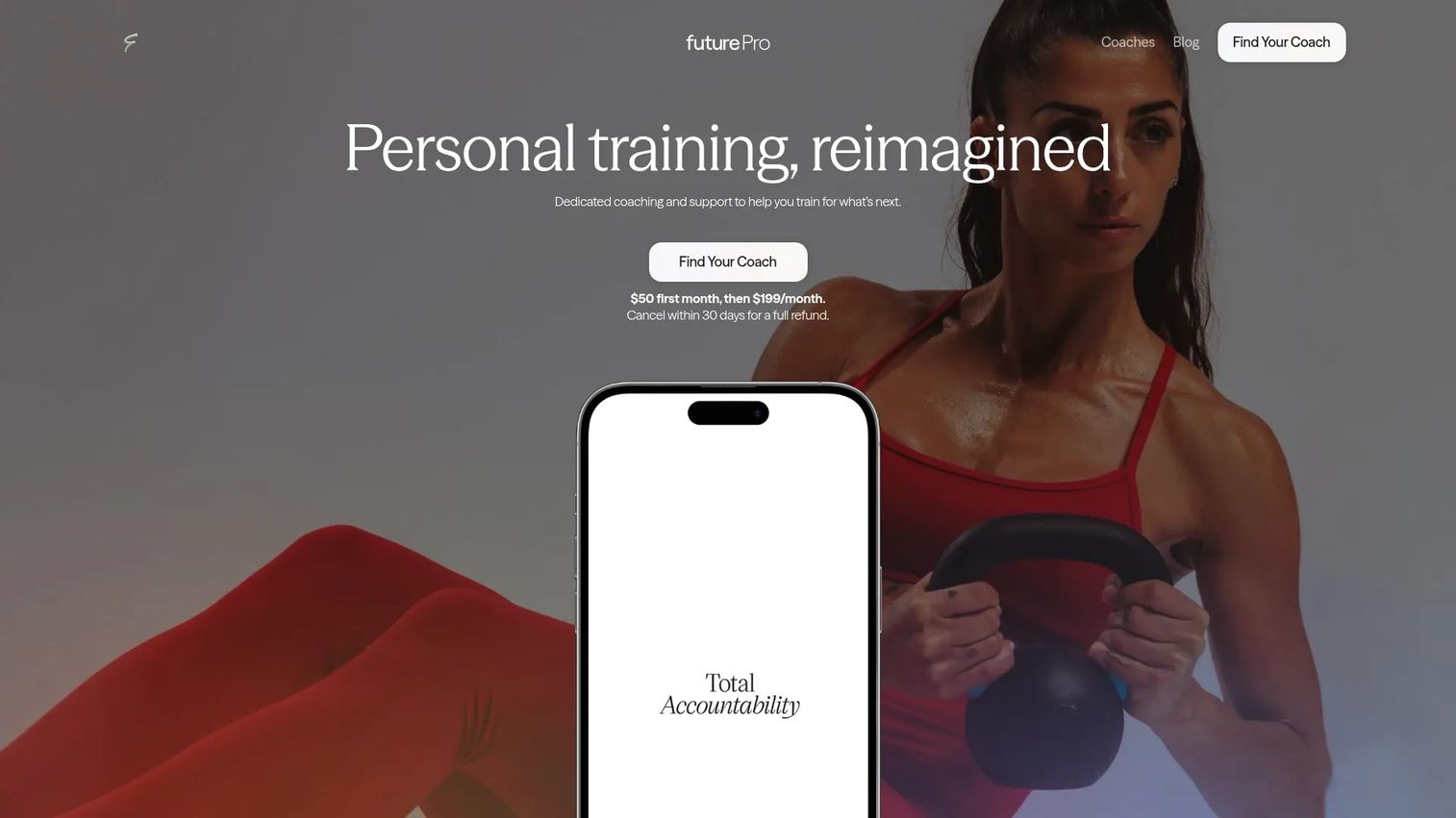
Future is built around one thing most apps only imitate: a real human coach. You get matched with a trainer who builds a personalized plan, sends video demos with form guidance, and messages you through the week to keep you accountable. The plan adapts over time based on what you actually do, so it behaves more like remote personal training than a static app.
Best for: people who want a coach-led, app-based personal training program with genuine accountability.
Key strengths
- Real human coaching: direct messaging and check-ins with an assigned trainer, not a chatbot.
- Adaptive plans: programs that adjust over time based on your logged progress.
- Guided exercise library: video demos, voice cues, and form guidance built in.
Why choose Future: If your workouts fall apart the moment nobody is watching, Future puts a person on the other end of the app. That accountability is the product. It costs more than self-guided tools, but for anyone who has bounced off free apps, the coaching relationship is what actually drives consistency.
Future pricing: Future shows an intro offer of $50 for the first month, then $199/month after that. There is no free tier. Pricing verified from Future's site as of July 2026.
2. ABC Trainerize
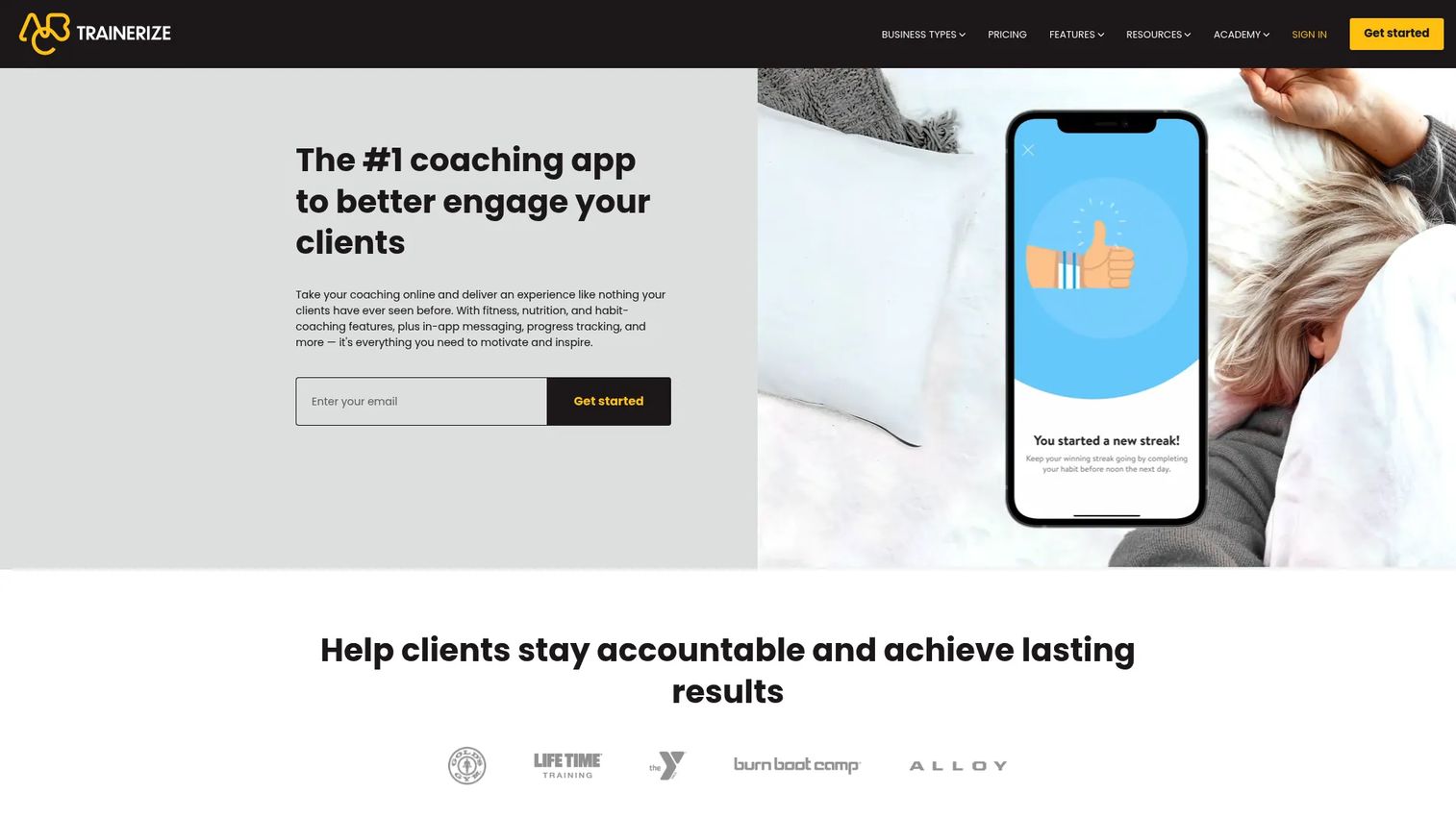
ABC Trainerize is the all-in-one option for trainers, coaches, gyms, and studios who need to run a coaching business, not just deliver a workout. It combines program building and delivery, meal and macro tracking, in-app messaging, habit coaching, and branded app options in a single platform. That breadth is why it shows up on nearly every list of the best personal trainer software.
Best for: personal trainers and fitness businesses that want coaching, nutrition, messaging, and branded apps in one platform.
Key strengths
- Workout delivery: build and assign programs clients follow inside the app.
- Nutrition tracking: meal and macro logging alongside training.
- Messaging and habits: in-app communication plus habit coaching for accountability.
Why choose ABC Trainerize: If you are a coach scaling past a handful of clients, running programming, nutrition, and messaging in separate tools gets painful fast. Trainerize consolidates that into one workflow, and the branded app option lets you put your own name in front of clients rather than a generic app.
ABC Trainerize pricing: Trainerize offers a free Basic plan, with paid tiers including Grow at $9/month, Pro 5 at $23/month, and Studio Plus at $248/month. Annual plans are billed once per year. It holds a 4.7/5 rating on G2. Pricing verified from Trainerize's pricing page as of July 2026.
3. TrainHeroic
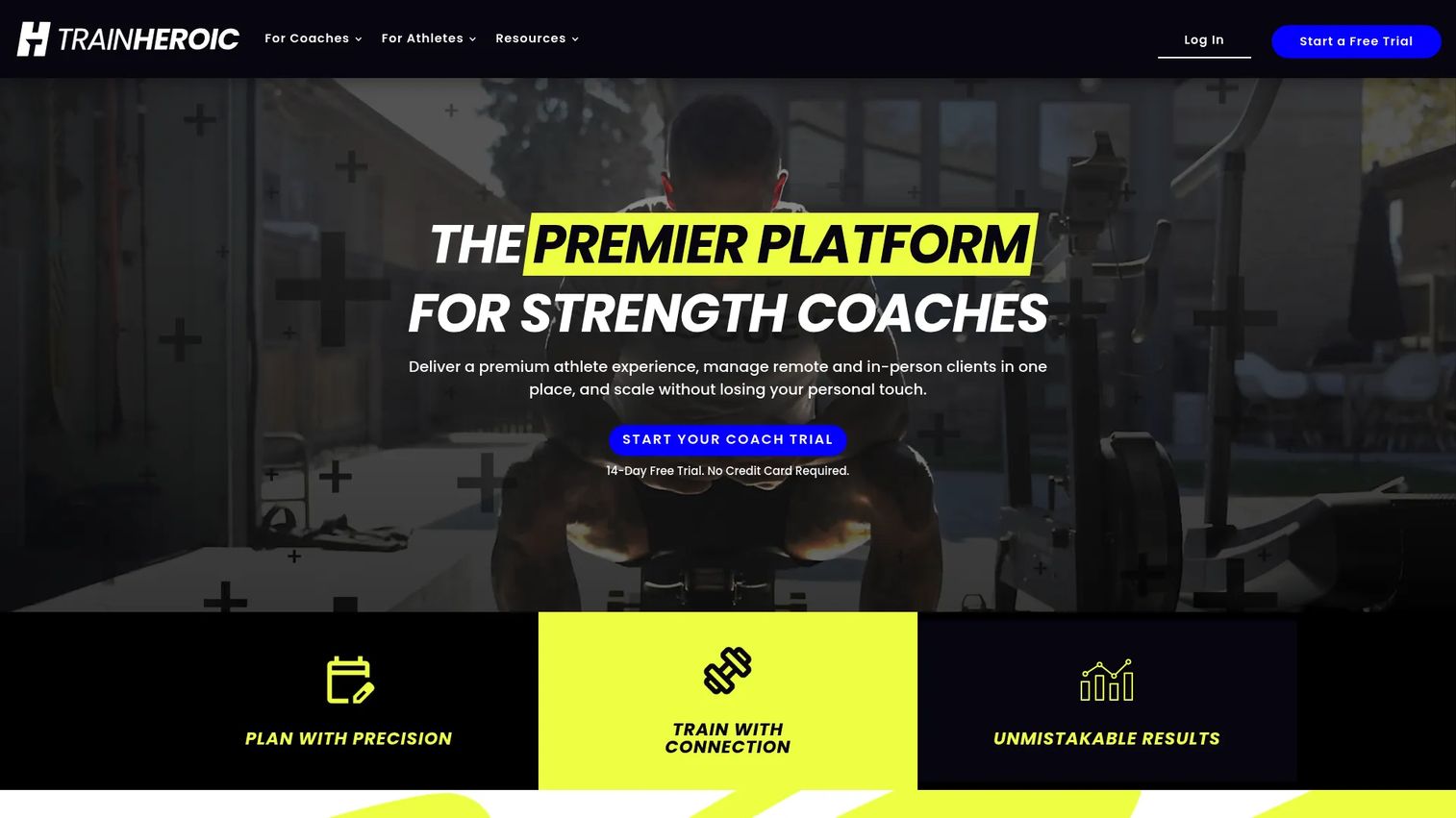
TrainHeroic is training software built for coaches and athletes who care about structured progression. It handles workout and program delivery, tracking, coach-athlete communication, video review, and client onboarding in one platform. The positioning skews toward strength and conditioning rather than general fitness, which is exactly what makes it a strong fit for that audience.
Best for: strength and conditioning coaches managing athletes in person or remotely.
Key strengths
- Program delivery and tracking: structured workouts athletes follow and log.
- Coach-athlete communication: built-in messaging tied to the training itself.
- Video review and onboarding: form review and a clean client onboarding flow.
Why choose TrainHeroic: General fitness apps treat every workout the same. TrainHeroic is built for people chasing measurable performance, so the programming, tracking, and coach-athlete loop are tuned for structured strength work rather than casual sessions. If you coach athletes, that focus matters.
TrainHeroic pricing: TrainHeroic prices coach plans by athlete count, starting at $9.99/month for one athlete and scaling up through 1,000-plus athletes; assistant coaches are listed separately at $9.99/month. There is no free tier. Pricing verified from TrainHeroic's coach page as of July 2026.
4. TrueCoach
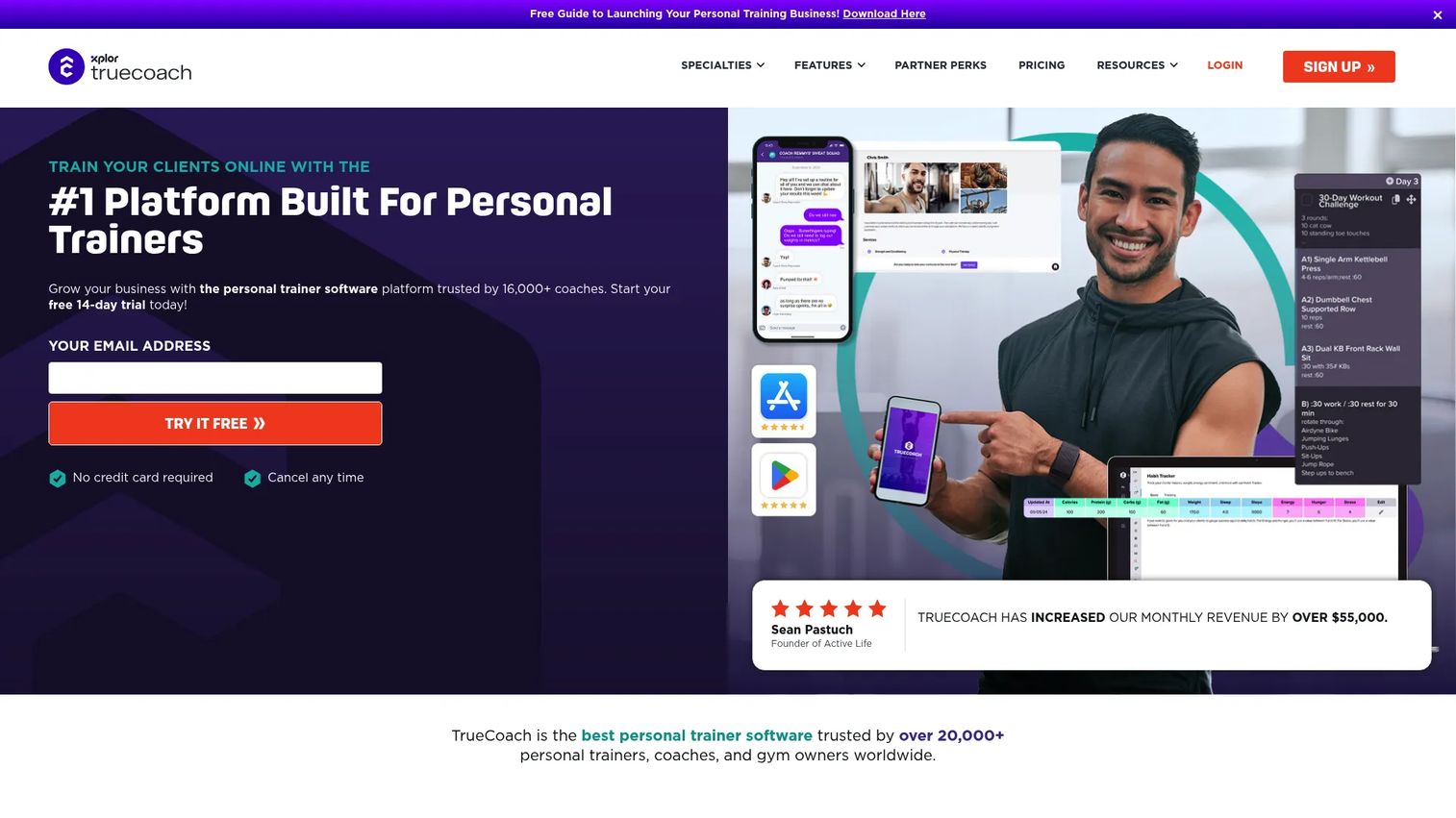
TrueCoach is personal training software built for coaches who want to manage workouts, client communication, and coaching delivery without a bloated interface. It pairs a workout logging and program builder with in-app messaging and nutrition and habit tracking. The result is a clean tool for independent coaches running 1:1 programming.
Best for: independent fitness coaches and trainers who want simple 1:1 programming and client management.
Key strengths
- Program builder and logging: create programs and track client workout history.
- In-app messaging: keep coaching conversations in one place.
- Nutrition and habits: layer diet and habit tracking on top of training.
Why choose TrueCoach: If Trainerize feels like more platform than you need, TrueCoach trades some breadth for a simpler day-to-day coaching workflow. Coaches who value a focused programming and messaging loop over a full business suite tend to prefer it.
TrueCoach pricing: TrueCoach prices by active clients: Starter (up to 5) at $26.34/month, Standard (up to 20) at $57.99/month, and Pro (up to 50) at $136.99/month. A 14-day free trial is offered, and larger accounts get custom pricing. It holds a 4.6/5 rating on G2. Pricing verified from TrueCoach's pricing page as of July 2026.
5. Caliber Strength Training
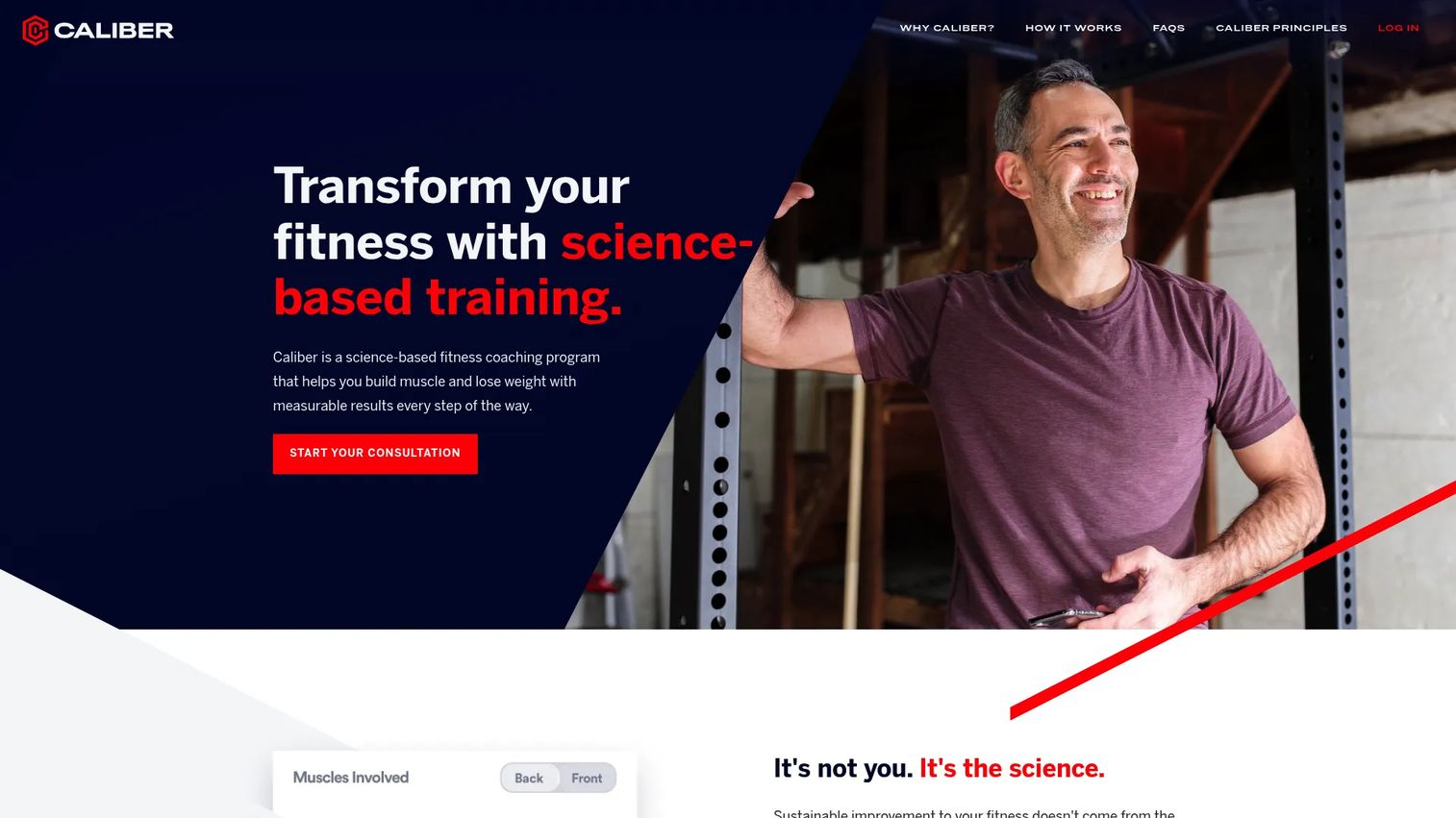
Caliber Strength Training is a science-based fitness app focused on strength training, nutrition, and habit coaching. It offers personalized, evidence-led workout routines plus workout logging with exercise history, a rest timer, and form videos. Its progress analytics, including a Strength Score, Strength Balance, and body stats, give lifters more signal than a generic tracker.
Best for: people looking for science-based strength training guidance with app-based tracking and coaching.
Key strengths
- Science-based programming: structured, evidence-led routines rather than random workouts.
- Detailed logging: exercise history, rest timer, and form videos in the workout flow.
- Strength analytics: Strength Score, Strength Balance, and body stat tracking.
Why choose Caliber Strength Training: Where consumer apps hand you a workout, Caliber hands you a progression framework. The analytics are built for lifters who want to see whether they are actually getting stronger and where their training is imbalanced, which is a different job than a general personal fitness app.
Caliber Strength Training pricing: Caliber describes a free workout app plus a separate coaching and program offering. Public pricing numbers were not visible on the pages reviewed, so confirm current coaching costs directly with Caliber before committing.
6. MyFitnessPal
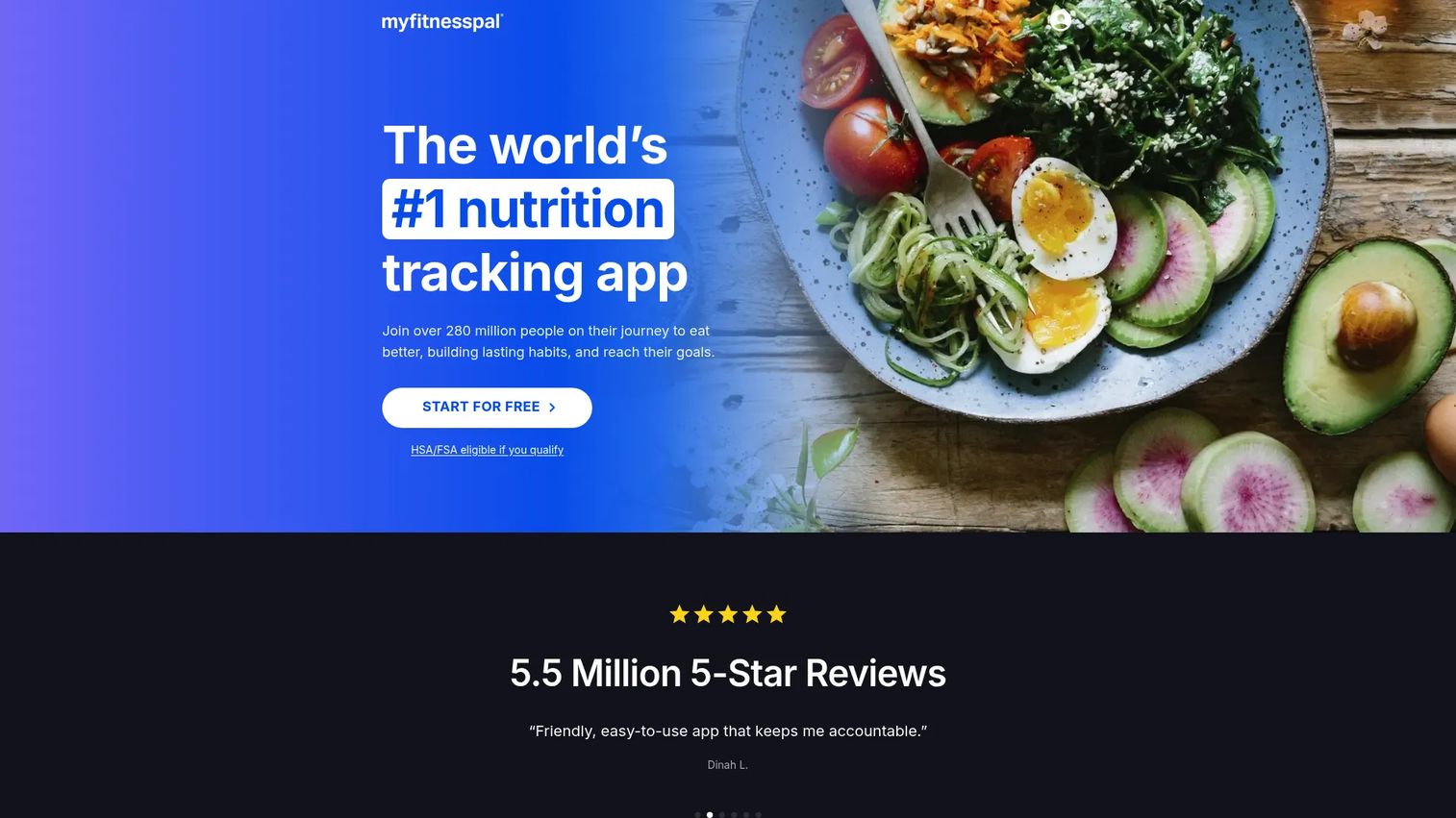
MyFitnessPal is the nutrition side of the equation. It is a food and calorie tracking app for logging meals, exercise, weight, and macros, with barcode and meal scanning to speed up logging. It is not a full coaching platform, and it does not pretend to be. It is the nutrition coaching app that sits alongside whatever training tool you use.
Best for: individuals or coaches who want to track nutrition, calories, and macros.
Key strengths
- Food and exercise logging: a deep database for daily tracking.
- Macro tracking: set and monitor protein, carb, and fat targets.
- Barcode and meal scan: fast logging that keeps the habit alive.
Why choose MyFitnessPal: Most training apps treat nutrition as a bolt-on. MyFitnessPal treats it as the whole product, which is why so many people run it next to a workout app. If diet is your limiting factor, a dedicated tracker will beat a shallow in-app food log.
MyFitnessPal pricing: MyFitnessPal offers a free tier plus Premium at $19.99/month or $79.99/year, with a Premium+ option referenced as well. Premium adds barcode scanning, voice logging, custom macro tracking, and an ad-free experience. Pricing verified from MyFitnessPal's pages as of July 2026.
7. Nike Training Club
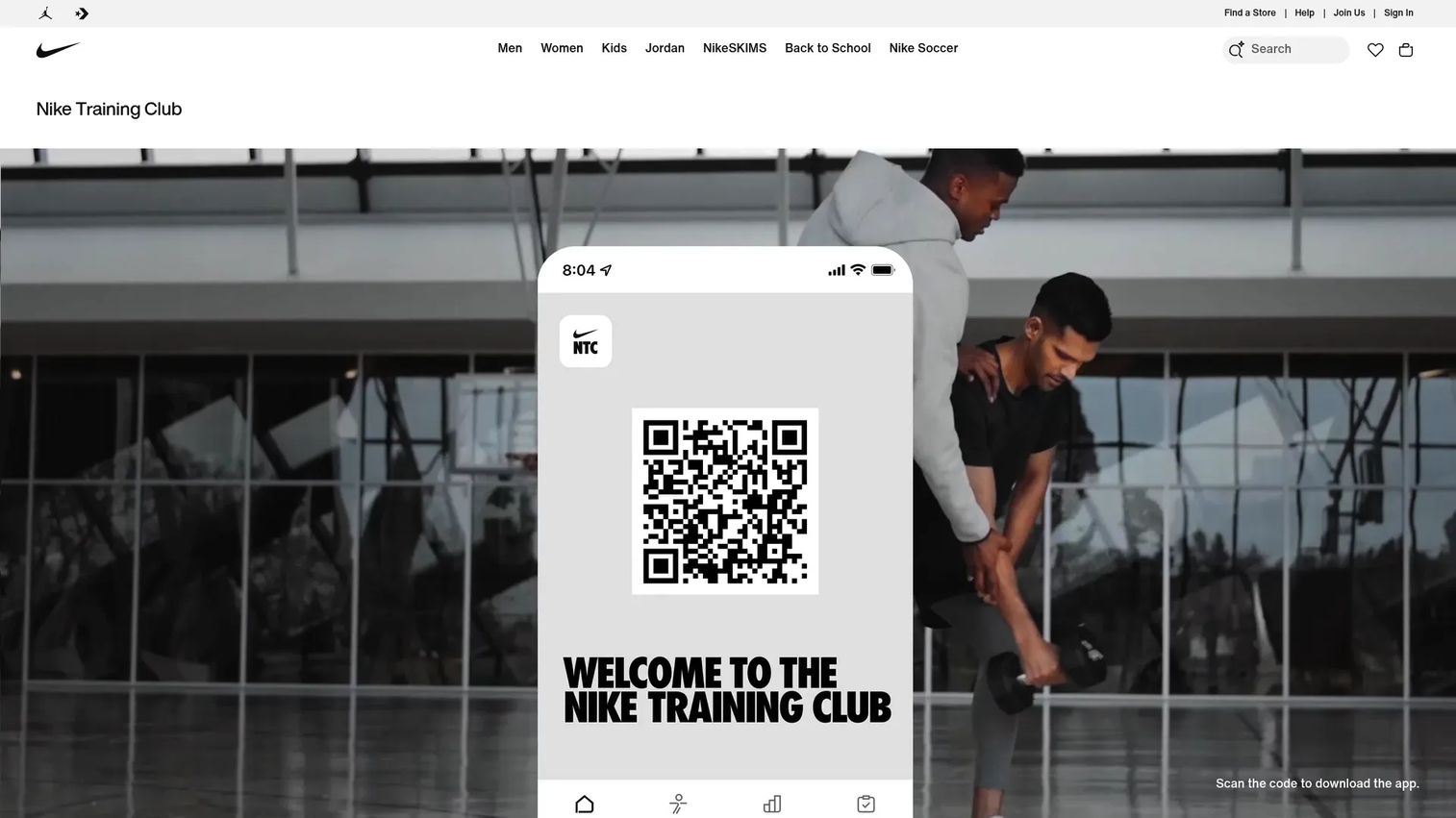
Nike Training Club is the accessible on-ramp. It is a free fitness app with guided workouts across strength, yoga, mobility, and HIIT or cardio, plus progressive training programs and wellness guidance from Nike trainers. There is no coach workflow and no client management, and for its audience that is the point.
Best for: people who want a no-cost, guided workout app from a trusted brand.
Key strengths
- Free guided workouts: a broad library across strength, yoga, mobility, and cardio.
- Progressive programs: multi-week plans with nutrition, recovery, and mindset tips.
- Expert coaching content: guidance from Nike trainers and experts.
Why choose Nike Training Club: If you are just starting or want structured workouts without a subscription decision, this removes the friction. It will not replace a human coach or a coaching platform, but as a free, polished workout program app it is hard to beat for beginners.
Nike Training Club pricing: Nike states the app is free to download, with workouts, programs, and expert tips free for Nike Members. Pricing verified from Nike's page as of July 2026.
8. Peloton app

Peloton app delivers class-based fitness without requiring any Peloton equipment. You get thousands of live and on-demand classes across 15-plus workout types, real-time metrics, and progress tracking. It is built around variety and motivation from instructors rather than one-to-one custom programming.
Best for: people who want guided fitness classes and variety without owning Peloton hardware.
Key strengths
- Huge class library: thousands of live and on-demand sessions.
- Broad format coverage: 15-plus workout types in one app.
- Progress tracking: real-time metrics and history across classes.
Why choose Peloton app: If instructor energy and variety keep you showing up more than a custom plan would, Peloton leans into that. It is a motivation and content engine rather than a personalized coaching tool, which makes it a strong fit for people who want to be led through great classes.
Peloton app pricing: The Peloton app offers a 30-day free trial for new members, then two paid tiers: App One at $12.99/month and App+ at $24/month. It holds a 4.1/5 rating on G2 at the seller level. Pricing verified from Peloton's page as of July 2026.
Considerations before you buy
Before you commit to a subscription, run your shortlist through these criteria.
Coaching model fit
Decide first whether you need a human coach, a self-guided plan, or software to coach others. This single choice eliminates most of the list. A live coaching app and an athlete programming tool solve completely different problems, and paying for the wrong one is the most common mistake.
Accountability mechanics
Look at how the app actually keeps you consistent. Check-ins, messaging, progress photos, and habit tracking drive behavior far more than raw workout count. If you have quit apps before, weight this heavily.
Tracking and analytics depth
Confirm the app logs what you care about, whether that is lifting personal records, macros, or body stats. Strength-focused users need progression analytics; nutrition-focused users need a strong food database. Shallow tracking kills long-term use.
Device and wearable fit
Verify Apple Watch, phone, tablet, and any equipment integrations you rely on. The best personal trainer mobile app is the one you will open daily, so friction on your primary device is a real cost.
Pricing transparency
Some tools publish clear tiers; others gate pricing behind a conversation. Match the model to your budget and, for coaches, to the way you charge clients. Per-client or per-athlete pricing scales differently than a flat subscription.
Conclusion
The right personal trainer app comes down to who is coaching whom.
If you want a real person accountable for your results, Future is the clearest pick. If you coach clients and need one platform for workouts, nutrition, messaging, and billing, ABC Trainerize covers the most ground, while TrueCoach is the leaner choice for independent 1:1 coaches. Coaching athletes toward measurable strength gains points to TrainHeroic, and serious lifters training solo will get the most from Caliber Strength Training's analytics. On the consumer side, Nike Training Club is the strongest free starting point, MyFitnessPal owns nutrition, and the Peloton app wins on class variety and motivation.
Next step: name your coaching model first, then pick from the two or three apps that serve it. Most of these offer a free tier or trial, so shortlist by model and test before you subscribe.
FAQs
For beginners, prioritize simplicity and low commitment over feature depth. Nike Training Club is a strong free starting point with guided workouts and structured programs, and MyFitnessPal makes nutrition tracking approachable. Both let you build a habit before deciding whether to pay for coaching.
For coaches, the best personal trainer software depends on scale. ABC Trainerize is the broad all-in-one choice with workouts, nutrition, messaging, payments, and branded apps, while TrueCoach is a cleaner fit for independent coaches running focused 1:1 programming. Strength and conditioning coaches managing athletes often prefer TrainHeroic.
Caliber Strength Training and TrainHeroic are both built around structured progression rather than random workouts. Caliber leans science-based with a Strength Score and analytics for solo lifters, while TrainHeroic is geared toward coaches delivering programs to athletes. General fitness apps rarely match that programming depth.
Some do, some do not. ABC Trainerize, TrueCoach, and Caliber include nutrition or habit tracking alongside training. If nutrition is your main lever, a dedicated nutrition coaching app like MyFitnessPal usually offers a deeper food database than an in-app add-on.
Yes. Nike Training Club is free, and MyFitnessPal, ABC Trainerize, and Caliber offer free tiers or free versions. Coaching platforms like TrueCoach and Peloton offer free trials rather than permanent free plans, so you can test before subscribing.
Match the coaching model to your goal first, then evaluate accountability features, progress tracking depth, device compatibility, and pricing transparency. Check-ins and messaging drive consistency, tracking proves progress, and clear pricing prevents surprises. The best fitness coaching app is the one that keeps you consistent.
Very, because you will only benefit from an app you actually open. Confirm Apple Watch, phone, and tablet support before subscribing, and check equipment integrations if you rely on them. A personal fitness app that syncs cleanly with your daily device removes friction and keeps you logging.