You can survive one messy board meeting. The problem is the one after that, and the one after that, where your investors start noticing that the numbers shifted between slides without explanation.
According to the SS&C Intralinks 2025 LP Survey, 81% of limited partners say aggregating data across multiple funds on a single platform would improve their relationship with GPs. The same survey found that 59% say better report analytics would strengthen GP relationships. The pressure is not abstract. Investors know what clean reporting looks like, and they notice when yours isn't.
For most founders at Series B, the underlying problem isn't effort. It's fragmentation. ARR lives in the CRM. Burn is in a spreadsheet. Retention cohorts are in the product analytics tool. Every board meeting is a manual stitching exercise, and the first time a number doesn't reconcile, trust takes a hit that takes quarters to rebuild.
Investor reporting software exists to give your finance leader a system they can own, without routing every investor update through the founder.
What's inside
This guide is for founders, heads of finance, fund managers, and investor relations teams evaluating investor reporting software in 2026. It covers 17 tools spanning board reporting, LP communications, fund administration, public-company IR (investor relations), and investor portals.
Selection criteria:
- Workflow fit for the buyer type (operating company, private fund, or public-company IR team)
- Reporting depth, including data connections, format coverage, and distribution controls
- Security posture: Audit trails, role-based permissions, and access governance
- Verified pricing and G2 ratings at time of writing
Verify all pricing and ratings against live vendor pages before making a purchase decision.
TL;DR
- Best overall for private-market investor reporting: Dynamo Software covers CRM, fund reporting, and investor portals for alternative investment firms
- Best for connected financial and regulatory reporting: Workiva handles SEC filings, fund reporting, audit trails, and complex governance workflows
- Best for SaaS finance teams and board reporting: Abacum ties FP&A planning directly to investor-ready dashboards and reporting packs
- Best for public-company IR workflows: Q4 Platform and Nasdaq IR Insight both serve enterprise IR teams managing shareholder engagement and earnings events
- Best for private-market investor portals: Juniper Square and WealthBlock support capital calls, distributions, onboarding, and secure document delivery
- Best for investment operations depth: Allvue Systems covers fund accounting, portfolio monitoring, and performance analytics for private capital firms
What is investor reporting software?
Investor reporting software helps companies, funds, and investor relations teams collect financial data, package investor-ready reports, manage secure distribution, and track stakeholder communication.
The category spans a wide range of workflows. A Series B founder needs board-ready metrics that match the CRM, billing system, and FP&A model. A VC fund manager needs LP letters, capital call notices, and K-1 delivery. A public-company IR team needs shareholder targeting, earnings workflows, and ownership analytics. The right investor reporting tool depends entirely on which of those jobs you're trying to do.
Core capabilities of investor reporting software
Most platforms in this category cover some combination of the following:
- Automated data consolidation from finance, accounting, and CRM systems
- Board and investor update workflows with approval controls
- Investor portal delivery with role-based access
- Fund reporting: LP letters, quarterly statements, and performance summaries
- Capital calls and distribution notices
- K-1 and tax document delivery
- Audit trails and version history
- Dashboarding and analytics tied to source data
- Regulatory filing support, including SEC workflows
- CRM for investor contact management
- Workflow collaboration across finance, legal, and operations
Investor reporting software versus investor relations software
"Investor reporting software" and IR software overlap significantly, but they start from different places. Investor reporting software centers on reports, data, document delivery, and secure stakeholder communication. IR software, short for investor relations software, typically adds shareholder intelligence, institutional investor targeting, earnings event management, webcasting, and public-company disclosure workflows.
Many platforms in this list do both. Evaluate by workflow first, not by category label.
When to use investor reporting software
Replace spreadsheet-driven board and investor updates
The trigger here is clear: You're still pulling ARR, NRR, burn multiple, CAC payback, runway, gross margin, pipeline coverage, and retention cohort data from different systems the week before every board meeting. Your Head of Finance spends more time formatting than analyzing. When a board member challenges a number, you can't immediately point to the source.
A dedicated investor reporting platform connects to the systems that create the numbers, enforces consistent definitions, and produces reports your finance lead can own without rebuilding from scratch each quarter.
Manage LP, fund, and private-market reporting
Quarterly reports, capital calls, distributions, K-1s, IRR, TVPI, and waterfall calculations require more structure than a shared folder and an email thread. Private-market GPs need secure investor portals, controlled document delivery, and audit trails that hold up to LP scrutiny. The reporting cycle runs on deadlines that don't move.
Support public-company investor relations
Public companies face a different set of requirements: Shareholder targeting, earnings webcasts, analyst communication, ownership tracking, and regulated disclosure workflows. IR platforms in this list serve those teams with data feeds, event management, and CRM built for institutional audiences.
Prepare for diligence, audit, or regulatory review
An upcoming fundraise or audit forces the question: Can you produce a clean history of your numbers, approvals, and communications on short notice? Investor reporting software with version control, audit logs, and source-data traceability answers that question before it's asked under pressure.
Investor reporting software comparison
The tools below serve different buyer types. A fund administrator needs different capabilities than a SaaS founder running quarterly board meetings, and both differ from a public-company IR team managing earnings events. Focus on workflow fit before feature volume. Pricing is sales-led for most of these platforms; ask vendors about fund count, user seats, portal requirements, and implementation scope before entering a demo cycle.
Pricing and G2 ratings were verified at time of writing. Confirm both before purchasing.
| # | Product | Best for | Key differentiator | Pricing | G2 rating |
|---|---|---|---|---|---|
| 1 | Dynamo Software | Alternative investment firms | Integrated CRM, fund reporting, and investor portal | Quote-based | 4.2/5 |
| 2 | Workiva | Complex financial and regulatory reporting | Connected data, SEC filing, and audit trails | Quote-based | 4.5/5 |
| 3 | Abacum | SaaS finance teams and board reporting | FP&A planning linked to investor-ready dashboards | Quote-based | 4.7/5 |
| 4 | S&P Global Capital Access | Public-company IR teams | Ownership analytics and investor targeting | Quote-based | N/A |
| 5 | Cision Investor Relations Tools | IR communications and disclosure | Financial news distribution and IR website hosting | Quote-based | 3.9/5 |
| 6 | Backstop Investor Relations Platform | Institutional investors and alternatives | Investor CRM with portfolio and reporting workflows | Quote-based | 4.7/5 |
| 7 | EQS IR COCKPIT | Listed companies managing IR and disclosure | GDPR-compliant CRM plus regulatory news distribution | Quote-based | N/A |
| 8 | ingage IR | IR teams managing meetings and engagement | Meeting management, feedback, and AI for IR | Quote-based | N/A |
| 9 | Irwin | Public-company IR targeting | Shareholder monitoring and investor CRM | Quote-based | 4.5/5 |
| 10 | Nasdaq IR Insight | Enterprise IR teams | AI-powered meeting prep and board-ready reporting | Quote-based | 4.3/5 |
| 11 | Q4 Platform | Public companies needing full IR platform | IR websites, earnings events, CRM, and AI workflows | Quote-based | 4.4/5 |
| 12 | RegiStar | Domain and web hosting needs | Domain registration and small business web hosting | From $19.99/year | N/A |
| 13 | WealthBlock | Private-market firms scaling investor operations | Investor onboarding, KYC/AML, and reporting | Quote-based | N/A |
| 14 | Juniper Square | Private-markets GPs | Integrated fundraising, portal, and fund administration | Quote-based | 4.7/5 |
| 15 | Carta | Startups and venture funds | Cap table, fund admin, and investor updates | Free tier available | 4.3/5 |
| 16 | Allvue Systems | Private capital and fund administrators | Fund accounting, portfolio monitoring, and agentic AI | Quote-based | 5.0/5 |
| 17 | Anduin | Private-market fundraising and onboarding | Digital fund subscriptions and investor data management | Quote-based | N/A |
Best 17 investor reporting software tools for 2026
1. Dynamo Software
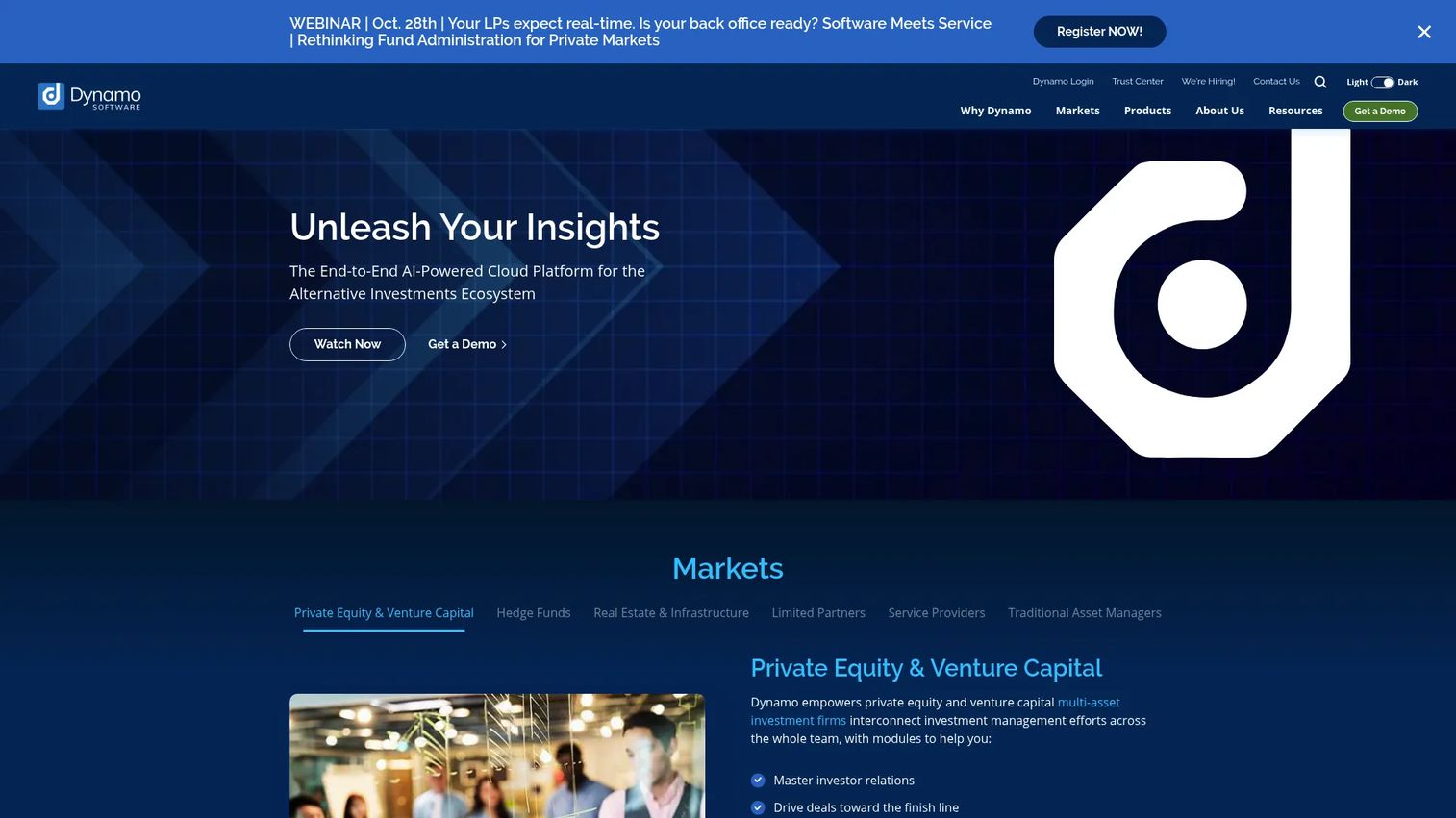
Dynamo Software is a cloud-based investment management platform built for alternative investment firms, institutional investors, and fund managers. It brings together CRM, deal tracking, fundraising, portfolio monitoring, fund accounting, and investor servicing under one system. According to Dynamo's own 2025 Fund Accounting Research Report, 64% of fund accountants cite time-consuming reporting as a top challenge, which is exactly the operational friction Dynamo is designed to reduce.
Best for: PE, VC, hedge funds, real estate investment firms, and fund managers who need investor CRM tightly coupled with reporting workflows.
Key features
- Investor CRM with deal and pipeline tracking
- Fund reporting workflows and configurable reporting
- Investor portal with secure document sharing
- Portfolio monitoring and multi-asset analytics
- Data automation and accounting integration
Why choose Dynamo Software: Choose it when investor reporting is inseparable from fundraising, relationship management, and private-market operations. This is not a lightweight board-update tool. It's the right call when your finance and investor operations teams are ready to own a structured workflow, and when the founder handoff to an ops-focused team is already in progress.
Dynamo Software pricing: Dynamo prices by module, user count, fund structures, and portal requirements. Ask sales for a quote that reflects your fund complexity and reporting cadence.
G2 rating: 4.2/5
2. Workiva
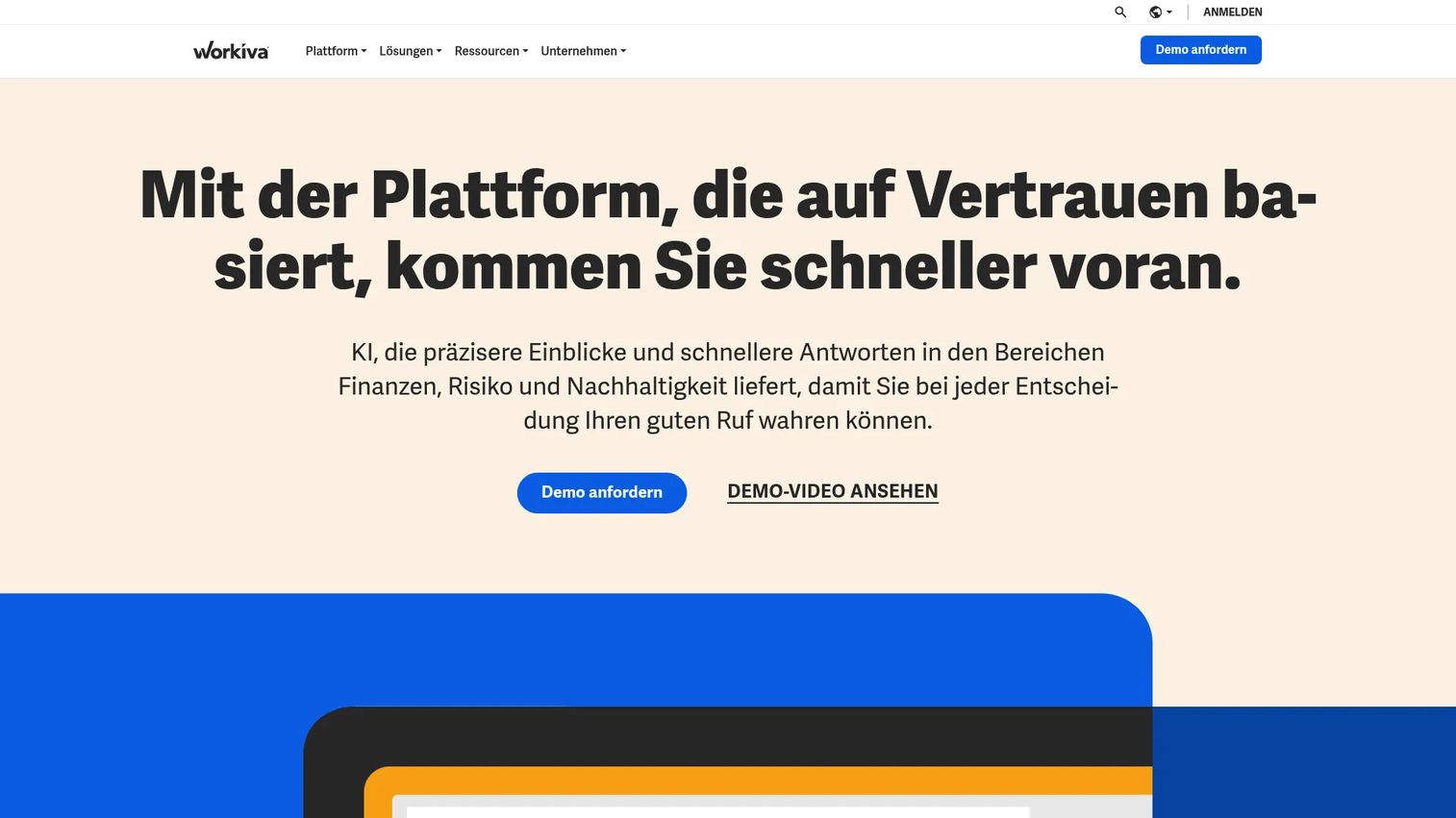
Workiva is a connected reporting platform for financial reporting, regulatory filings, sustainability reporting, audit, and risk management. Its core differentiator is data linking: Numbers updated in one place propagate across every connected report automatically, which eliminates the manual reconciliation that creates errors in board packs and SEC filings. The platform includes XBRL tagging, dynamic tables, audit trails, and Workiva AI for assisted reporting.
Best for: Larger finance, compliance, and reporting teams managing complex multi-entity reporting, SEC filings, or sustainability disclosures.
Key features
- Connected data linking across all reports
- SEC filing and XBRL support
- Dynamic tables with source traceability
- Full audit trails and version control
- Workiva AI for workflow assistance
Why choose Workiva: This is the right choice when reporting accuracy, version control, and regulatory governance are the primary drivers. If your investor reporting problem is fundamentally a governance and compliance issue, not just a communication one, Workiva fits that shape well. For a 50-person SaaS company producing board decks, it's likely overbuilt.
Workiva pricing: Workiva prices by entity count, reporting modules, filing needs, and support level. Request a quote from sales with your entity structure and reporting scope ready.
G2 rating: 4.5/5
3. Abacum

Abacum is an AI-native FP&A platform that ties budgeting, forecasting, headcount planning, revenue planning, and financial reporting into a single workspace. For SaaS founders who need their Head of Finance to produce investor-ready dashboards without rebuilding every chart manually, Abacum is the closest thing to a purpose-built answer. It connects to your existing data sources and makes board-facing financial packs a byproduct of the planning process, not a separate project.
Best for: Series B and Series C SaaS finance teams that need board reporting tied directly to operating models and forecasting workflows.
Key features
- FP&A dashboards with live data connections
- Forecasting and scenario planning workflows
- Headcount and revenue planning
- AI-assisted data cleaning and anomaly detection
- Multi-entity financial rollups
Why choose Abacum: If your investor reporting problem is that board metrics keep drifting from the underlying model, Abacum fixes that at the source. Your finance lead gets a system they can own. The founder gets out of the reporting cycle. That handoff is the whole point.
Abacum pricing: Abacum prices on a quote basis. Reach out to their team with your team size, entity count, and integration requirements.
G2 rating: 4.7/5
4. S&P Global Capital Access
S&P Global Capital Access is an investor relations workflow platform built for public companies and capital markets teams. It provides shareholder analysis, institutional investor targeting, engagement tracking, and IR program measurement. The platform is positioned for corporate IR teams that need to connect ownership intelligence with engagement workflows and prove the ROI of their IR programs.
Best for: Public-company IR teams that need integrated ownership analysis, investor targeting, and engagement reporting tied to capital markets data.
Key features
- Shareholder analysis and ownership intelligence
- Institutional investor targeting workflows
- IR engagement tracking and measurement
- Capital markets data access
- IR program ROI reporting
Why choose S&P Global Capital Access: Strong fit when investor reporting connects to shareholder intelligence and institutional relationships. This is later-stage and public-company territory. Most Series B SaaS founders won't need it yet, but it's worth knowing as a reference point for what IR operations look like at scale.
S&P Global Capital Access pricing: Pricing is sales-led. Contact S&P Global directly with your company size, IR team structure, and the data access you need.
5. Cision Investor Relations Tools
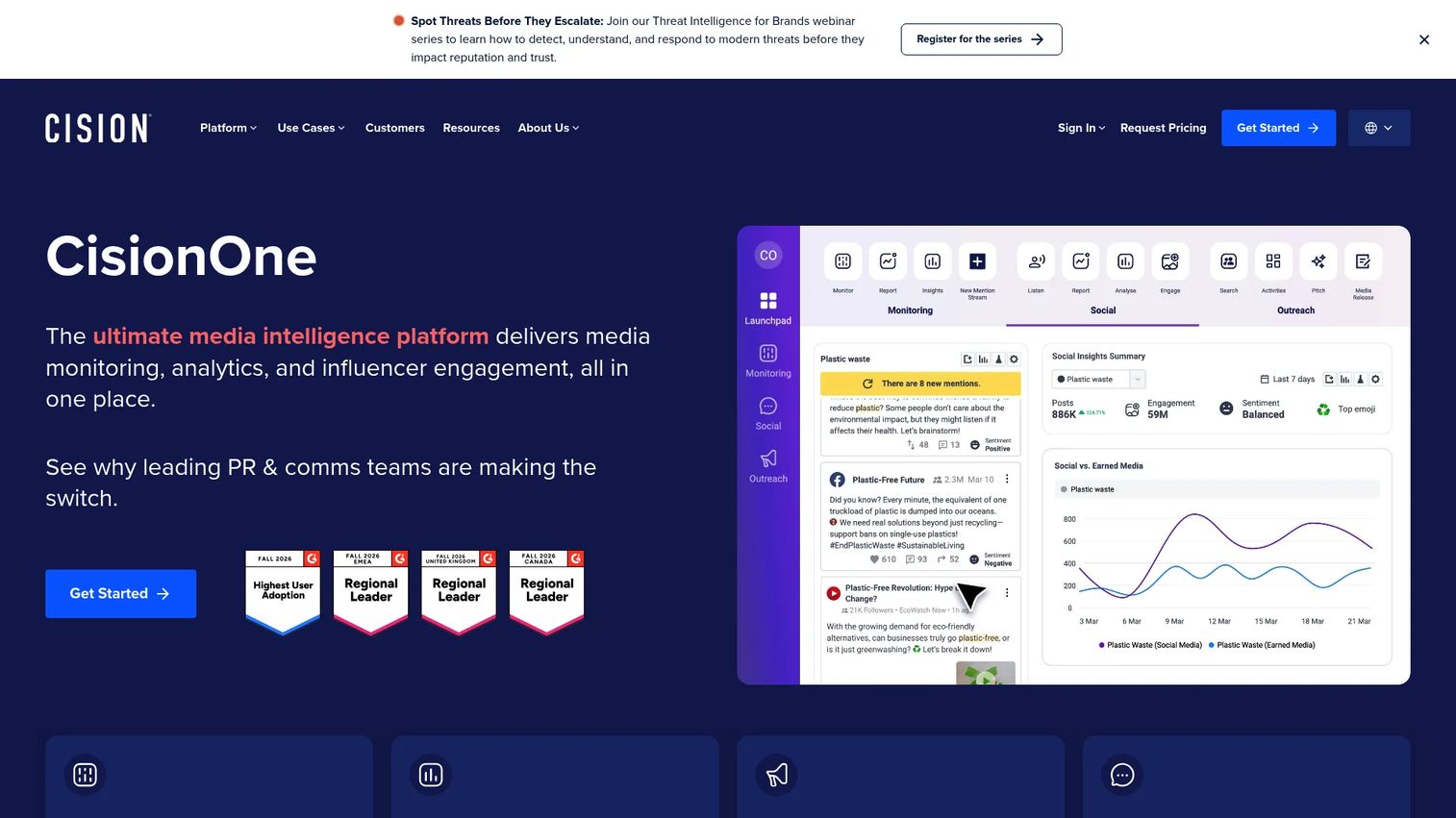
Cision offers an integrated suite of investor relations communication tools for publicly traded companies. The platform covers financial news distribution to analysts and financial websites, hosted IR and ESG websites with stock tools, single-click SEC filing through DFIN, audio and video webcasts with live Q&A, and investor targeting through curated analyst lists.
Best for: Publicly traded companies with active IR and communications programs managing news distribution, disclosure workflows, and investor events.
Key features
- Financial news distribution to analysts and investors
- Single-click SEC filing workflow
- Hosted IR and ESG websites with visitor analytics
- Audio and video webcasts with transcription
- Investor targeting lists
Why choose Cision Investor Relations Tools: Choose it when investor reporting sits close to PR, communications, and market-facing disclosure. Founders running private board updates won't find the workflow fit here. This tool is for companies that manage investor communications as a formal, recurring program.
Cision Investor Relations Tools pricing: Cision prices by package, distribution volume, monitoring scope, and user count. Contact their team for a quote.
G2 rating: 3.9/5
6. Backstop Investor Relations Platform
Backstop Solutions provides an investment management platform combining investor relations, capital raising, portfolio management, client relationship management, and a client portal. It is used by institutional investors and alternative asset managers who need investor relationship context alongside reporting delivery. The platform tracks activity history, fundraising pipeline, and investor communications alongside portfolio and performance data.
Best for: Alternative investment managers and institutional investors who need investor CRM, fundraising workflows, and reporting distribution in one system.
Key features
- Investor CRM with activity tracking and relationship history
- Capital raising and fundraising pipeline management
- Portfolio management and asset monitoring
- Client portal with investor balance and capital activity data
- Reporting distribution and performance reporting
Why choose Backstop Investor Relations Platform: The value here is relationship context alongside reports. If your reporting problem is partly a relationship management problem, and you need to know who read the last quarterly update and when they last spoke with your team, Backstop fits. This is institutional-grade infrastructure, not a lightweight update tool.
Backstop Investor Relations Platform pricing: Pricing covers modules, users, CRM scope, and investor portal requirements. Ask sales for a quote with your fund structure and investor count in hand.
G2 rating: 4.7/5
7. EQS IR COCKPIT
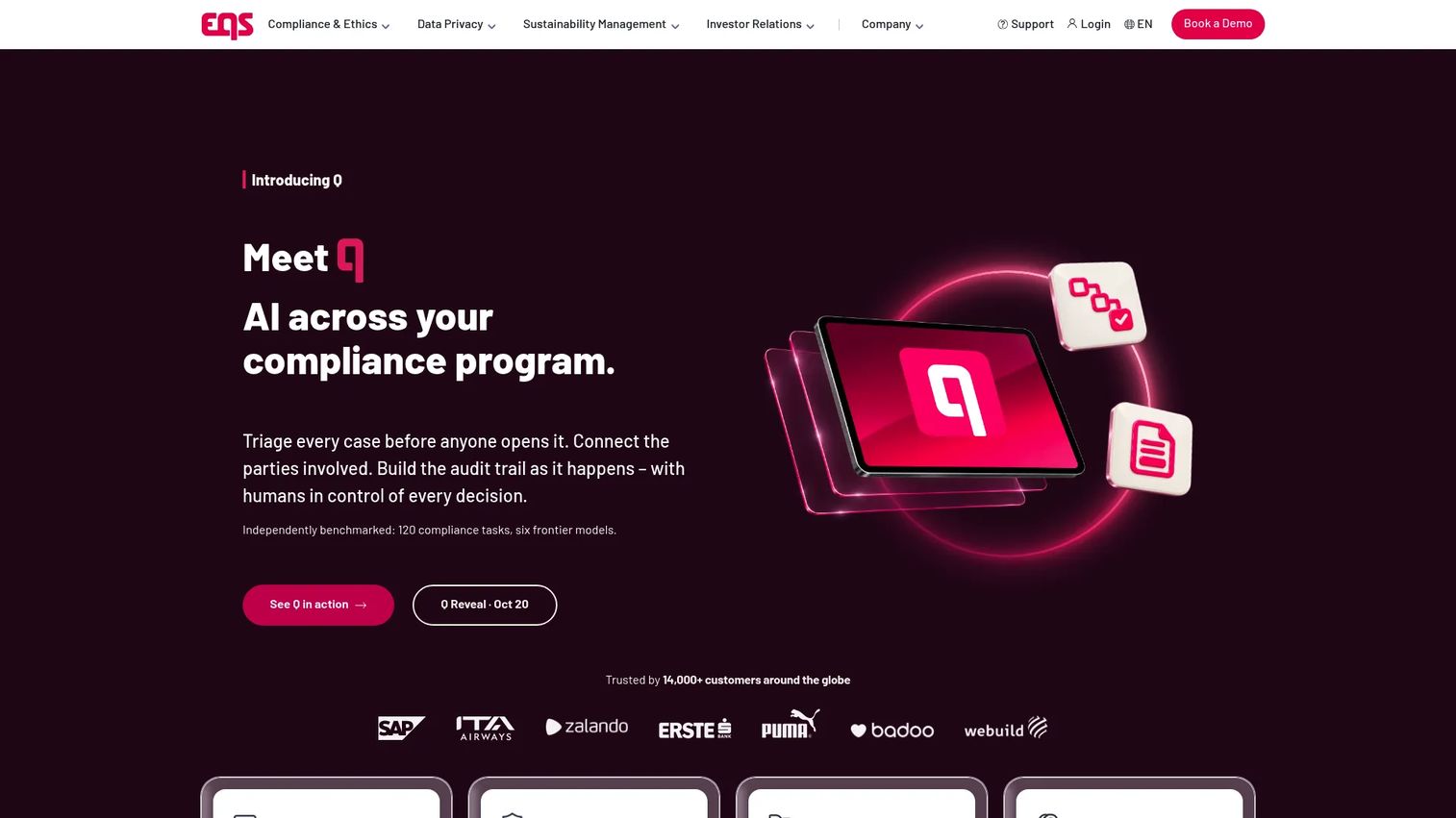
EQS Group provides IR COCKPIT, a cloud investor relations platform for listed companies managing investor contacts, disclosure obligations, and market communication. The platform combines a GDPR-compliant CRM with investor targeting, regulatory news distribution, IR reporting dashboards, and integrated investor website tools. It has strong coverage of European markets and regulated disclosure workflows.
Best for: Listed companies, particularly those with European market exposure, managing structured IR workflows, investor contact management, and disclosure compliance.
Key features
- GDPR-compliant investor CRM and mailing management
- Investor targeting and engagement tracking
- Regulatory disclosure and news distribution
- IR reporting dashboards
- Investor website and webcast integration
Why choose EQS IR COCKPIT: A solid fit for formal, recurring IR operations where regulatory disclosure is a primary workflow driver. If you're a Series B SaaS founder producing internal board decks, this platform covers a different set of problems than yours.
EQS IR COCKPIT pricing: Pricing covers modules, region, disclosure requirements, and user count. Contact EQS sales for a tailored quote.
8. ingage IR
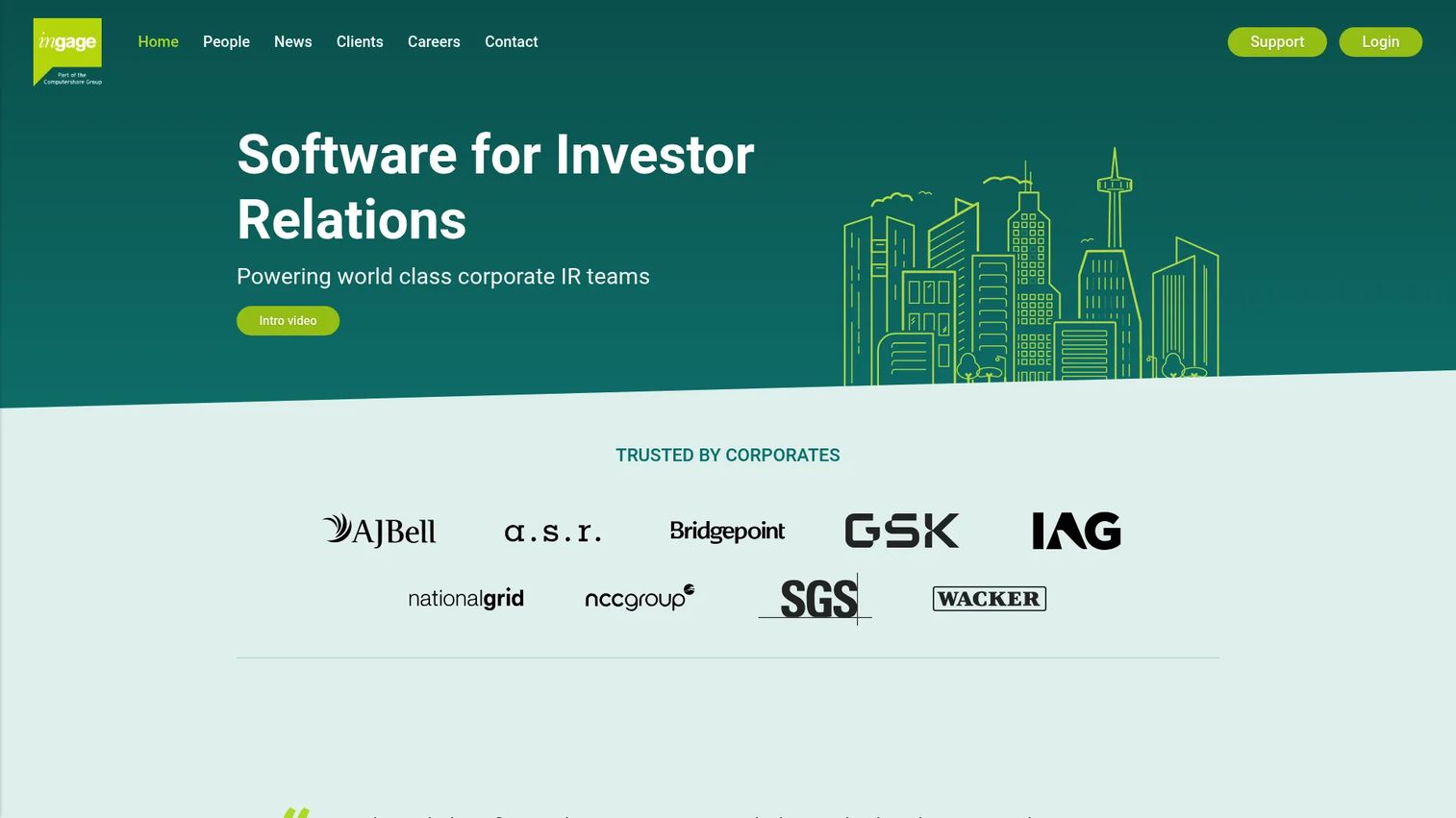
ingage IR is investor relations software for listed companies, with emphasis on investor meetings, corporate access, engagement tracking, and direct investor feedback. The platform includes an investor relations CRM, analytics, benchmarking, bulk email, Microsoft Outlook integration, iOS apps, and an AI capability for investor relations workflows.
Best for: Listed companies and IR teams that prioritize investor meetings, roadshow management, and direct engagement feedback over document-heavy reporting workflows.
Key features
- Investor relations CRM with analytics and board reporting
- Direct investor feedback and engagement tracking
- Meeting management and roadshow support
- AI for investor relations workflows
- Microsoft Outlook integration and iOS apps
Why choose ingage IR: Choose it when the investor communication is meeting-heavy and the IR team needs cleaner visibility into engagement patterns. It fits mature IR programs managing recurring investor contact, analyst coverage, and structured roadshows.
ingage IR pricing: Pricing covers meeting volume, workflow scope, and user needs. Contact ingage IR directly for a quote.
9. Irwin
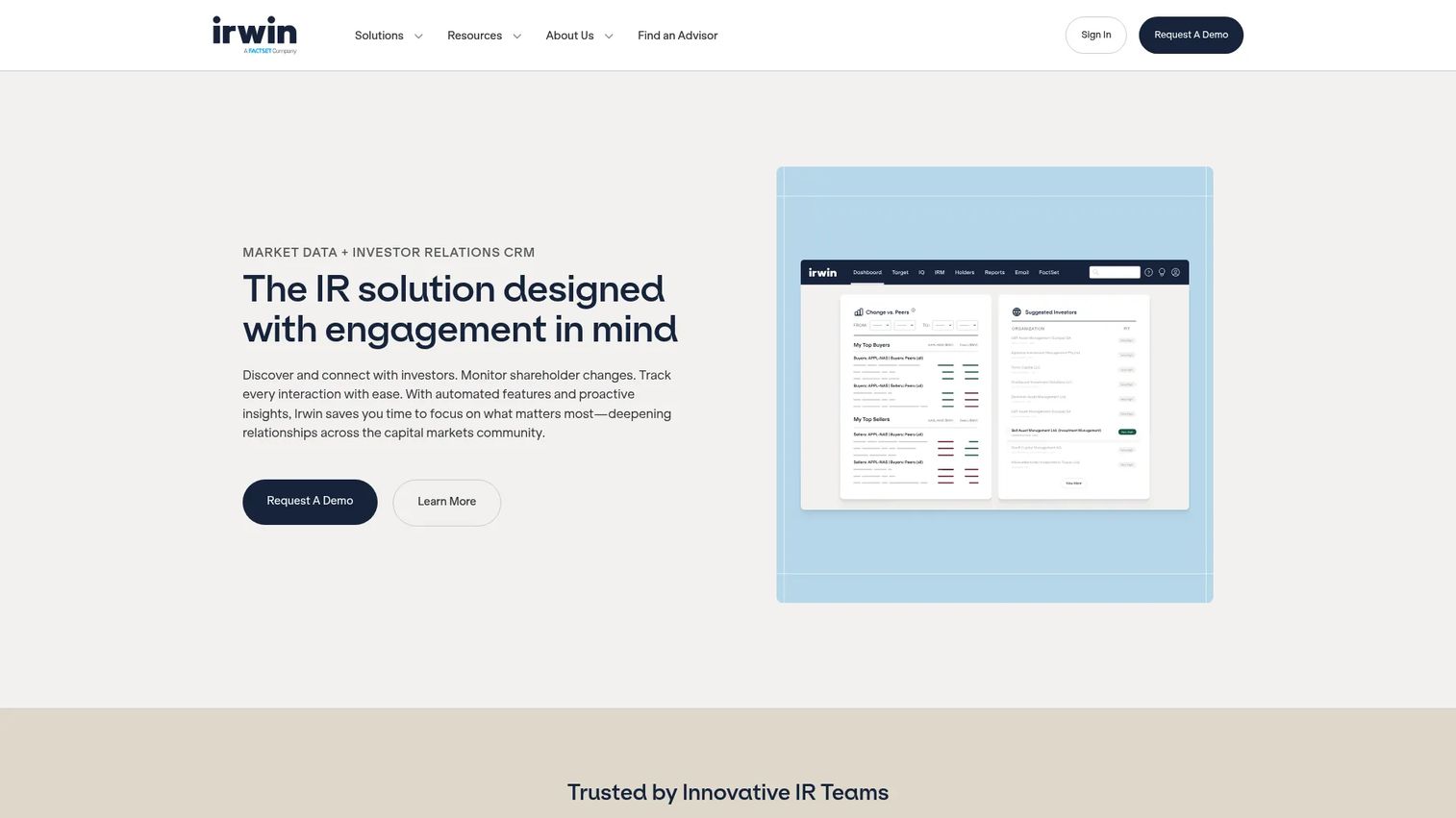
Irwin is investor relations software for public companies, built around investor targeting, shareholder monitoring, and engagement management. Its IR CRM tracks engagement history, and the Irwin IQ product provides intelligence on investor website behavior. The platform integrates with FactSet and supports professional services for investor, analyst, and board reporting.
Best for: Public-company IR teams and advisors managing investor targeting, shareholder monitoring, and relationship-driven engagement workflows.
Key features
- Investor targeting and shareholder monitoring
- Investor relations CRM and engagement tools
- Irwin IQ for website visitor intelligence
- FactSet integration
- Professional services for investor and board reporting
Why choose Irwin: Strong fit when investor reporting requires relationship context and market outreach data to be meaningful. Irwin is closer to capital markets IR than to private-company board reporting. Founders at Series B evaluating reporting software for internal investor updates won't find the workflow match here.
Irwin pricing: Pricing covers package, market data access, users, and CRM scope. Ask sales for a quote based on your IR program size. Note that Irwin IQ includes a 14-day trial.
G2 rating: 4.5/5
10. Nasdaq IR Insight
Nasdaq IR Insight is Nasdaq's purpose-built investor relations platform for enterprise IR teams and CFOs. It covers AI-powered meeting preparation, shareholder activity and ownership trend analysis, activist monitoring, proxy-voting analysis, investor targeting, engagement tracking, real-time market intelligence, and board-ready reporting. The platform integrates with Microsoft Office and provides mobile access.
Best for: Enterprise IR teams at public companies needing integrated workflow management, shareholder intelligence, and board-ready reporting in one platform.
Key features
- AI-powered meeting preparation and transcript analysis
- Shareholder activity, ownership trends, and activist monitoring
- Investor targeting, CRM, and event execution
- Real-time market and peer intelligence
- Board-ready reporting and mobile access
Why choose Nasdaq IR Insight: The depth of shareholder intelligence and the AI-assisted meeting preparation make this a strong fit for enterprise IR functions where speed and accuracy in investor engagement matter. For early SaaS companies, the market-data depth is more than most teams will use at this stage.
Nasdaq IR Insight pricing: Pricing is tailored by team size, market data modules, and issuer requirements. Contact Nasdaq sales with your IR team scope and reporting needs.
G2 rating: 4.3/5
11. Q4 Platform
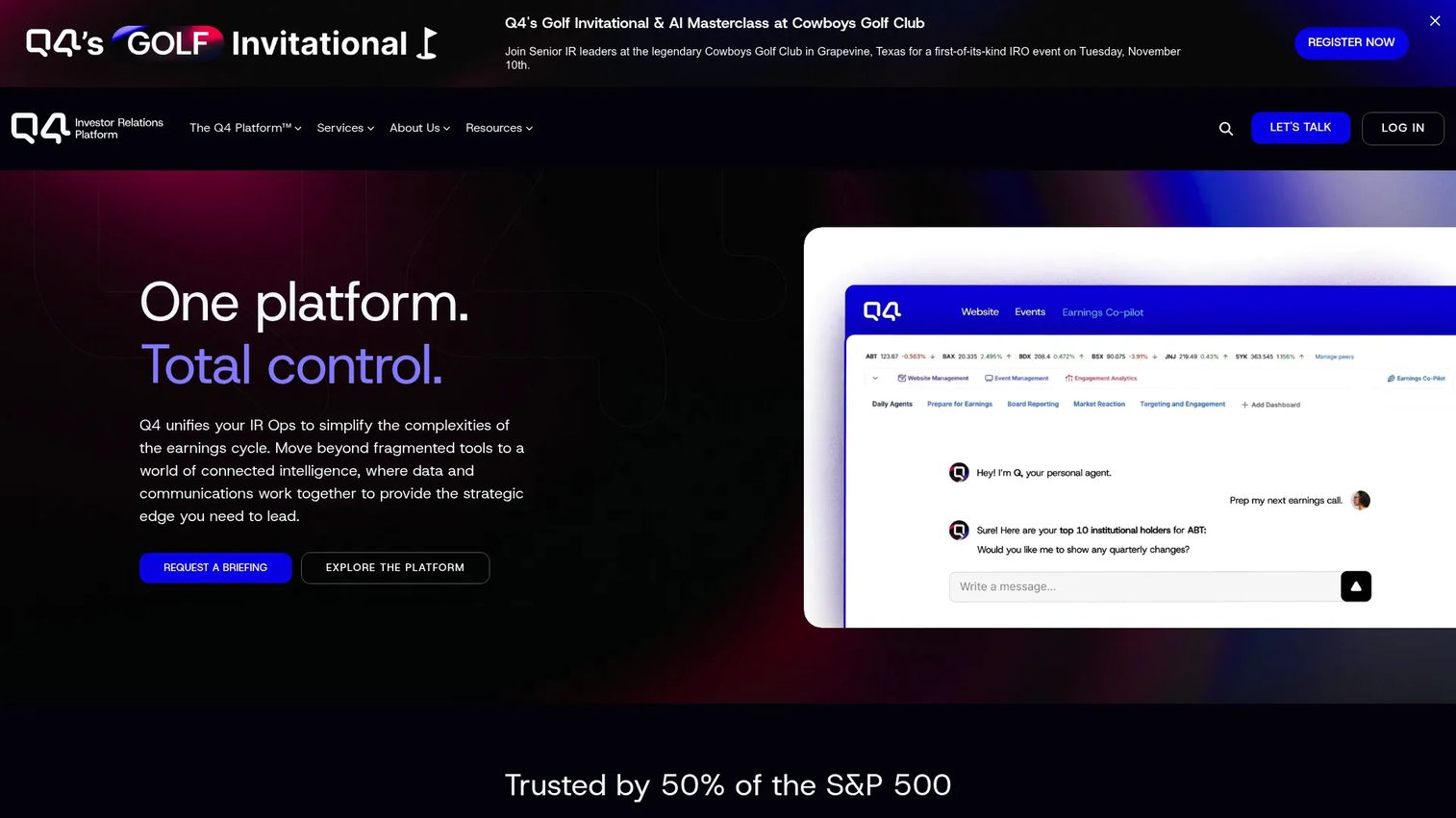
Q4 provides an AI-driven investor relations platform combining IR websites, earnings events, analytics, CRM, and investor intelligence. The platform offers a dynamic CMS for IR websites with investor behavior tracking, automated disclosures, and answer-engine optimization. Earnings workflows integrate with Zoom and Microsoft Teams, support live or text Q&A, polling, transcripts, and analytics. Q4's AI tools include an Earnings Co-Pilot, peer transcript summaries, and performance dashboards.
Best for: Public-company IR teams that need a full investor engagement platform spanning website, earnings events, CRM, and always-on analytics.
Key features
- IR website management with investor behavior tracking
- Earnings event management with Zoom and Teams integration
- AI-powered IR workflows and co-pilot tools
- Investor CRM and engagement analytics
- Ownership intelligence and peer benchmarking
Why choose Q4 Platform: This is a broad IR platform, not a narrow reporting tool. It's the right fit when investor reporting is part of an always-on public investor engagement program that covers earnings, website, targeting, and relationship management. Q4 offers Platform Plus and Platform Premium packages, with add-ons for prompt volume and agent seat expansion.
Q4 Platform pricing: Base subscription prices aren't publicly listed. Add-ons include $3,000 per year for 6,000 additional AI prompts and $500 per year for 10 additional agents with 250MB storage. Contact Q4 for package pricing.
G2 rating: 4.4/5
12. RegiStar
RegiStar is a domain registration, web hosting, and custom web design provider. Domain registration prices start at $19.99 per year for a five-year registration, $24.97 per year for two-year, and $29.95 for a one-year term. Hosting packages start at $99 per year for the Starter plan and $199 per year for the Small Business plan.
Best for: Small businesses seeking domain registration, WordPress hosting, and custom web design support.
Key features
- Domain registration with DNS management and URL forwarding
- WordPress hosting with cPanel, MySQL, and PHP
- Custom mobile-responsive web design
- Google G Suite setup support
- Hands-on setup training
Why choose RegiStar: RegiStar covers domain and hosting needs for small businesses that want managed setup and training. It is not an investor reporting or IR platform. If you landed here looking for investor reporting tools, the other entries in this list are the relevant ones.
RegiStar pricing: Domain registration starts at $19.99 per year (five-year term) or $29.95 per year (one-year term). The Starter Hosting Package is $99 per year, and the Small Business Hosting Package is $199 per year.
13. WealthBlock
WealthBlock is an investor infrastructure platform for private-market firms, covering investor onboarding, subscription documents, e-signature, KYC/AML and accreditation workflows, investor reporting, distributions, workflow automation, and role-based permissions with audit trails. It integrates with CRM, fund administration, compliance, payment, and reporting systems.
Best for: Private equity, venture capital, and real estate firms scaling investor operations and needing a structured path from onboarding to recurring reporting delivery.
Key features
- Digital investor onboarding with e-signature
- KYC/AML and accreditation workflows
- Investor reporting and distribution management
- Workflow automation with audit trails
- Role-based permissions and compliance integrations
Why choose WealthBlock: Relevant when investor reporting is part of a broader investor lifecycle that starts at onboarding. Private funds that still rely on email attachments for capital call notices and quarterly reports will find that WealthBlock structures those processes end to end.
WealthBlock pricing: Pricing depends on investor count, workflow modules, portal branding, and onboarding scope. Contact WealthBlock sales for a quote.
14. Juniper Square
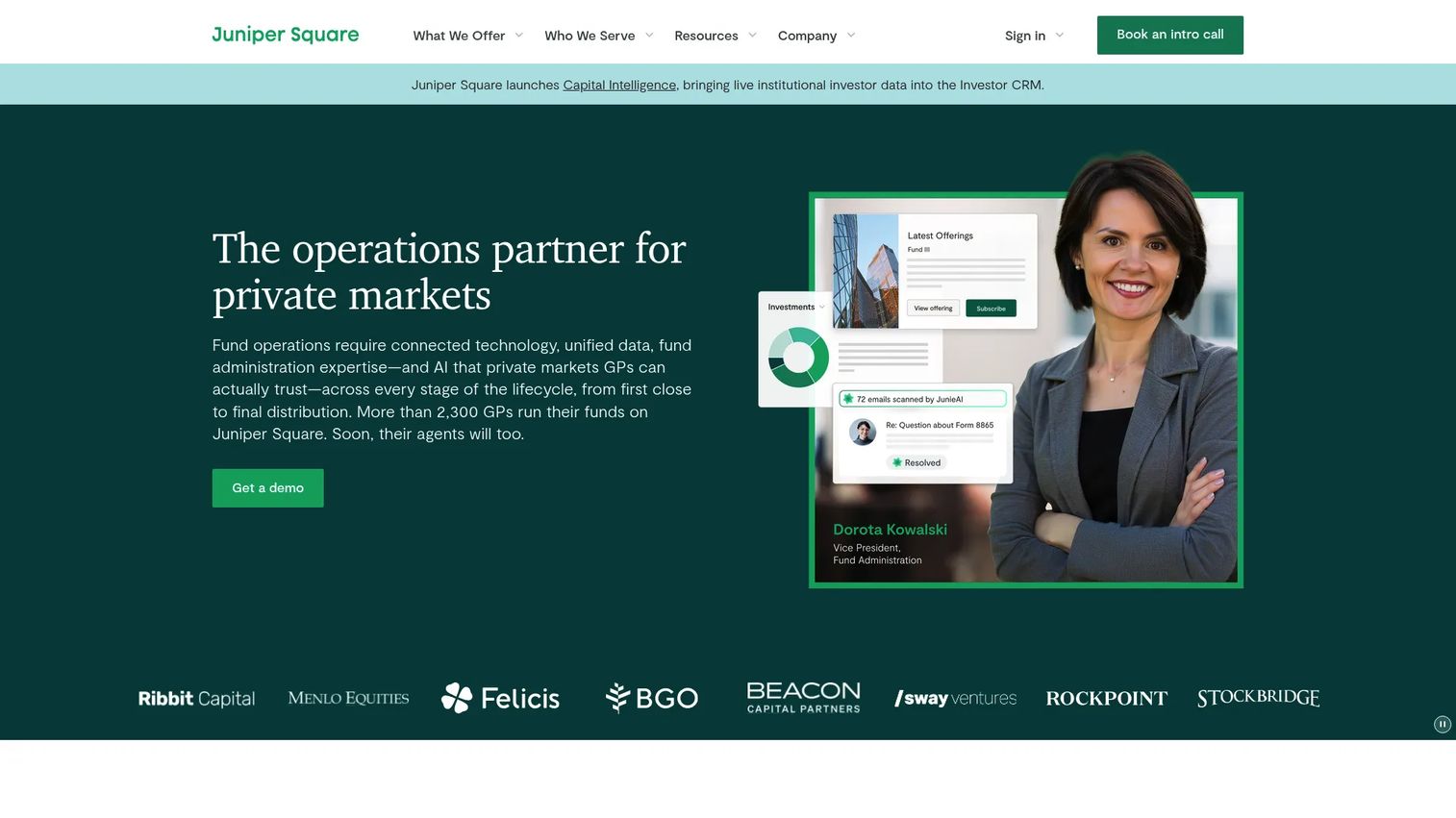
Juniper Square is a unified fund operations platform for private-markets general partners, combining software with fund administration services. The platform covers investor relationship management, digital onboarding and subscriptions, AML/KYC workflows, a branded investor portal, investor reporting (including capital calls, distributions, and performance metrics), fund analytics, APIs, and AI capabilities.
Best for: Real estate, private equity, venture capital, and private fund managers who need investor portal depth alongside fund administration and operational reporting.
Key features
- Investor CRM and relationship management
- Digital onboarding, subscriptions, and AML/KYC
- Investor portal with secure document sharing
- Capital calls, distributions, and performance reporting
- Fund analytics, APIs, and AI tools
Why choose Juniper Square: A private fund that sends quarterly reports as PDF email attachments is leaving investor experience on the table. Juniper Square gives LPs a portal to access documents, view performance, and track capital activity at their own pace. The platform is built for funds that have outgrown shared folders and manual distribution.
Juniper Square pricing: Pricing depends on fund count, investor volume, services scope, and portal configuration. Contact Juniper Square sales with your fund structure.
G2 rating: 4.7/5
15. Carta
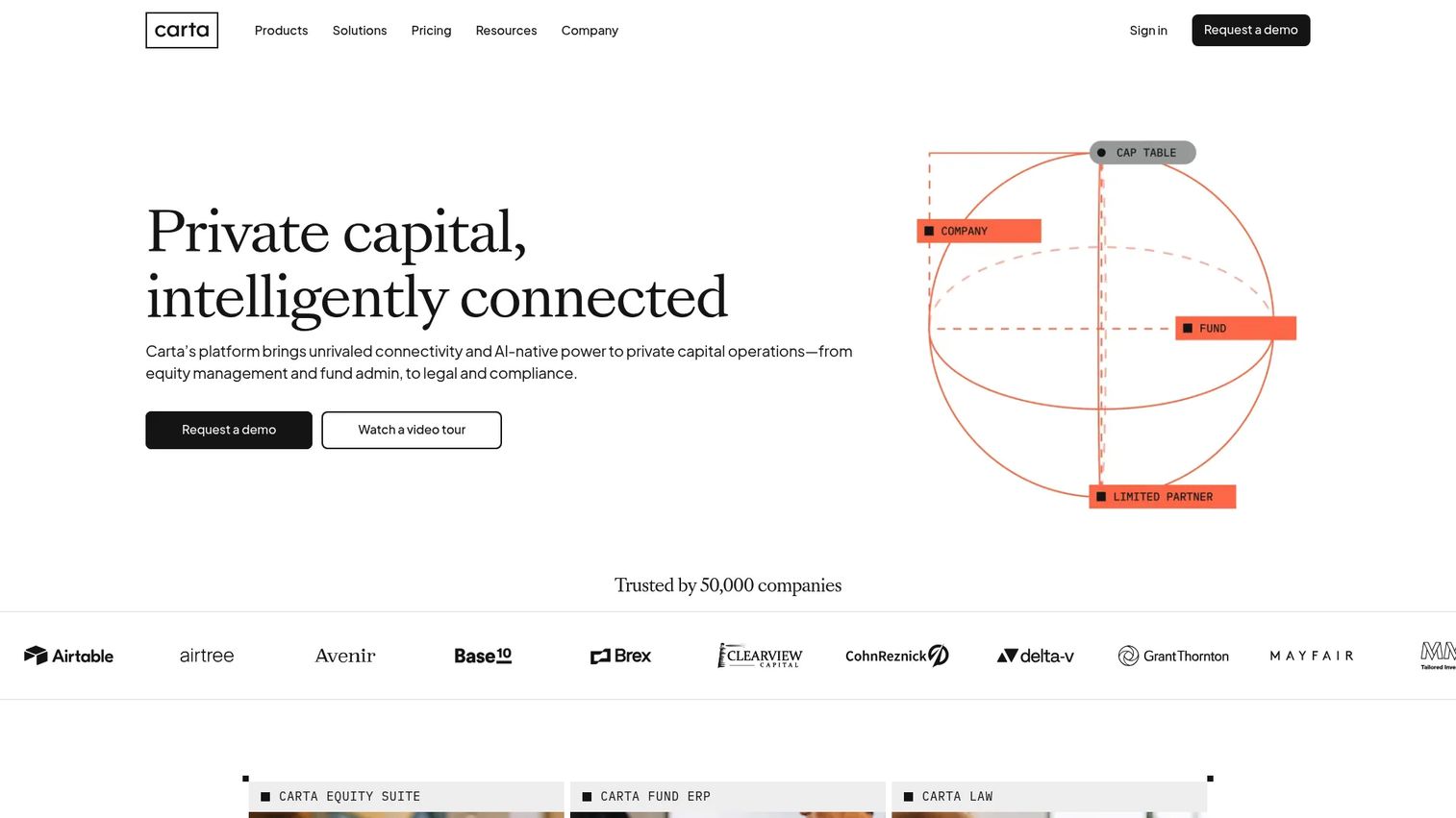
Carta is an equity management and fund administration platform for private companies, venture funds, and private-capital teams. It manages cap tables, 409A valuations, SAFE financings, fund administration, portfolio valuations, and LP portal communications. Carta is one of the most founder-accessible tools on this list, with a free Launch tier for new customers with up to 25 stakeholders and up to $1M raised.
Best for: Startups and venture funds already managing equity and cap table data in Carta who want to extend into investor updates and fund communications.
Key features
- Cap table management and 409A valuations
- SAFE financings and equity workflows
- Fund administration and LP portal
- Portfolio valuations and investor updates
- Document workflows and stakeholder communications
Why choose Carta: If your ownership data, fund administration, and investor communications are already adjacent to Carta's equity management workflows, extending into investor reporting there saves you a separate integration. Keep in mind that Carta handles investor communication, but it's not a replacement for FP&A reporting or financial planning software.
Carta pricing: The Launch plan is free for new customers with up to 25 stakeholders and up to $1M raised. Build, Grow, and Scale plans require contacting sales for pricing.
G2 rating: 4.3/5
16. Allvue Systems
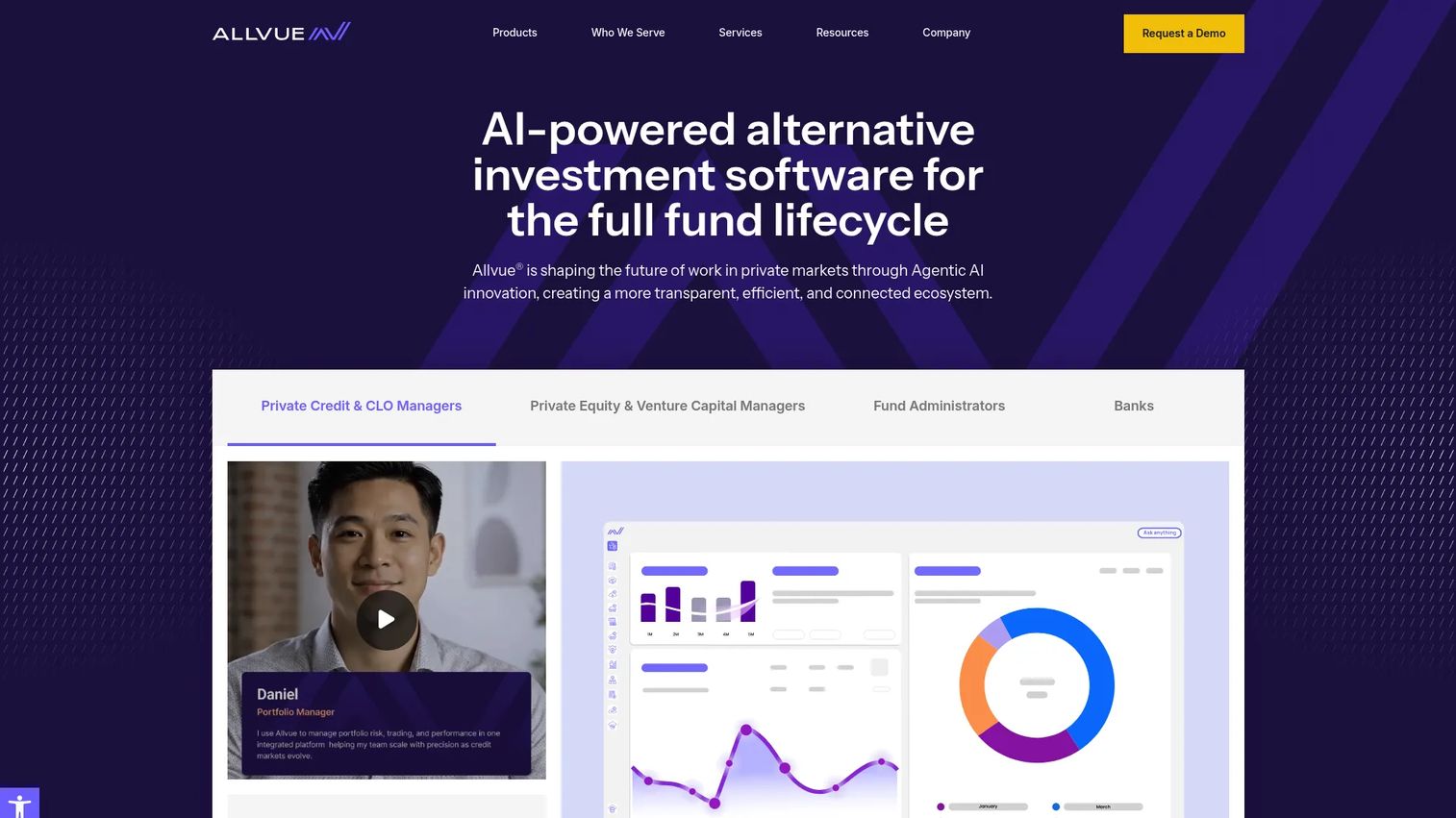
Allvue Systems provides AI-powered, cloud-based software for private equity, private credit, fund administration, and other alternative investment workflows. Its capabilities span fund accounting, investment accounting, portfolio and trade order management, compliance monitoring, investor portals, CRM, fundraising pipeline, and the Nexius data platform. Allvue's agentic AI tools, including Andi and Document IQ, support workflow automation across the investment lifecycle.
Best for: Private capital firms, fund administrators, and banks that need integrated front-, middle-, and back-office investment management software.
Key features
- Fund accounting and investment accounting
- Portfolio monitoring, research, and compliance
- Investor portals, CRM, and fundraising pipeline
- Nexius private-markets data platform
- Agentic AI: Andi, Document IQ, and workflow automation
Why choose Allvue Systems: Allvue is deep investment operations infrastructure. It's the right fit when investor reporting depends on fund accounting, complex fund structures, and operational data accuracy. A typical Series B SaaS company won't need this level of investment-management depth unless the company is itself a fund or investment platform.
Allvue Systems pricing: Pricing depends on modules, asset class, fund structure, services, and user count. Contact Allvue sales for a scoped quote.
G2 rating: 5.0/5
17. Anduin

Anduin provides an investor operations platform for private-market firms covering fundraising, investor onboarding, engagement, data management, and investor servicing. Its core strengths are branded data rooms with granular permissions and audit logs, adaptive digital fund subscription workflows with e-signature and AML/KYC collection, and a master investor data layer with pre-filled subscriptions and automated compliance checks.
Best for: Private equity, venture capital, private credit, real estate, and hedge fund teams managing investor fundraising, subscription workflows, and onboarding operations.
Key features
- Branded data rooms with permissions and audit logs
- Digital fund subscription workflows with e-signature
- AML/KYC collection and compliance checks
- Master investor profiles with pre-filled subscription data
- Integrations with fund administration and CRM systems
Why choose Anduin: Position Anduin as an investor lifecycle and onboarding workflow platform. The reporting it supports is largely a byproduct of structured onboarding and subscription data, not a primary reporting engine. Teams whose reporting problems start with messy onboarding data will find the most value here.
Anduin pricing: Pricing is sales-led with no public figures. Drivers include fund count, workflow modules, investor volume, and services. Contact Anduin for a quote.
Considerations when choosing investor reporting software
Start with the reporting workflow, not the category label
"Investor reporting software" covers a lot of ground. Before comparing platforms, list the specific reports you need to produce: Board decks, monthly investor updates, quarterly LP letters, capital call notices, distribution statements, K-1 delivery, SEC filings, or earnings workflows. The tool that serves a VC fund running LP communications is different from the tool a SaaS founder needs for clean board metrics.
Check where source data lives
Reporting breaks when ARR, accounting, CRM, ownership, and forecast data sit in different systems with no consistent source of truth. Ask each vendor how they connect to the systems that create your numbers. For SaaS founders, the relevant connections are billing, the CRM, product analytics, accounting, and the FP&A model. A reporting tool that can't reach those systems still puts the reconciliation burden on your finance team.
Verify permissions, audit trails, and version control
Investor reports carry different governance requirements than an internal spreadsheet. You need to know which investor classes see which documents, who approved a given report version, and what changed between the draft sent to the board and the final version distributed. Audit trails and role-based access are not optional for teams that may face fundraising diligence or LP scrutiny.
Match implementation effort to your stage
A Series B startup with 50 employees and a Head of Finance should not be buying a platform built for a public-company IR team running earnings webcasts. A private equity fund with quarterly LP reporting obligations should not be using a lightweight founder-update tool that wasn't designed for capital calls and K-1 delivery. Fit your tool to your workflow, not to the biggest category label.
Demand pricing clarity before the demo cycle runs long
Before engaging a vendor, get answers to these questions: What does implementation cost? How are admin seats priced? Are there investor or stakeholder caps per tier? What are the portal fees, data integration costs, and support packages? Are there contract minimums or mandatory annual commitments? Knowing the total cost of ownership before the demo cycle runs three months saves everyone time.
Conclusion
Investor reporting software covers a wide range of workflows, and the right tool depends on what kind of reporting you're actually doing. Here's how the shortlist breaks down by buyer type.
For private-market fund reporting and investor CRM, Dynamo Software and Backstop are the strongest fits. For connected financial and regulatory reporting at scale, Workiva is the go-to. Abacum is the clearest answer for SaaS finance teams that want board reporting tied to planning and forecasting. If you're running a private fund and need structured LP communications, Juniper Square and WealthBlock both cover the investor portal and document delivery workflow. For deep investment operations and fund accounting, Allvue Systems is in a different tier of capability.
Public-company IR teams have a separate set of options. Q4 Platform and Nasdaq IR Insight both serve enterprise IR programs well. Irwin, ingage IR, S&P Global Capital Access, EQS IR COCKPIT, and Cision cover different slices of the IR workflow from targeting to disclosure to events.
Start by shortlisting three tools based on workflow fit, integration requirements, and implementation effort. Verify pricing and implementation scope directly with each vendor. The tool that earns its place in your stack is the one your finance lead can own and operate without pulling the founder back into the reporting cycle.
For more software comparisons across finance and operations categories, see our guides to accounting software, account management software, and audit management software.
FAQs
Investor reporting software helps companies, funds, and investor relations teams collect financial data, package investor-ready reports, deliver documents securely to stakeholders, and track communication history. It spans board reporting tools, fund reporting platforms, investor portals, and public-company IR systems. The right category depends on whether you're an operating company, a private fund, or a public company with a formal IR function.
Investor reporting software focuses on producing and distributing reports, managing financial data, controlling document access, and maintaining audit trails. Investor relations (IR) software typically adds shareholder targeting, ownership analytics, earnings event management, webcasting, and institutional investor CRM. Many platforms in this list do both. Evaluate by the specific workflows you need to run, not by the category label.
Founders at Series B should look for tools that connect to existing finance, billing, and CRM data, produce board-ready metrics with consistent definitions, and give the Head of Finance clear ownership of the reporting workflow. Abacum is the strongest fit for founders who want FP&A planning linked to board reporting. Carta is worth evaluating for founders who already manage equity and stakeholder data there. Workiva becomes relevant when governance and audit trail requirements grow more complex.
The required report types depend on your company structure. Operating companies typically need board decks, monthly investor updates, and quarterly reports. Private funds need LP letters, capital call notices, distribution statements, K-1 delivery, and fund performance summaries showing IRR and TVPI. Public companies add earnings releases, SEC filings, and shareholder communication workflows. Match the tool to the reports you actually need to produce, not to the broadest possible feature set.
Consistent metrics definitions and controlled document delivery remove two of the most common sources of investor friction: Numbers that change between versions, and documents distributed through informal channels with no access controls. When investors receive reports from a structured portal with a clear version history, follow-up questions shift from "which number is right?" to substantive discussions about business performance.
Role-based access controls ensure that each investor class, board member, or advisor sees only the documents relevant to them. Audit logs record who accessed what and when. Version control preserves the history of what was approved and distributed. SSO and encryption matter for teams that handle sensitive financial data or operate under compliance frameworks. Involve your finance, legal, and security teams in the vendor evaluation before committing.
It can substantially reduce spreadsheet dependency in the reporting and distribution workflow, but it rarely eliminates them entirely. Financial models, scenario analysis, and ad hoc calculations often continue to live in spreadsheets. The shift is that approved numbers move into the reporting software for distribution, approval tracking, and audit purposes, rather than existing only in a shared folder with version confusion.
Lightweight board reporting and investor update tools can produce first value within a few weeks if your data sources are accessible. Fund administration platforms, investor portals, and compliance-heavy systems typically require longer configuration cycles, ranging from one to several months depending on fund complexity and integration scope. Ask each vendor for a first-value milestone, not just a full rollout timeline. That first milestone tells you how quickly your finance team can take ownership of the workflow.