You don't notice the core admin platform when it works. You notice it when every claims rule change needs a workaround, every new product launch drags through configuration, and the board asks why operating cost keeps rising while volume scales.
The stakes are real. The U.S. healthcare payers' core administrative processing solutions market was valued at $2.0 billion in 2025, with a projected 7.5% CAGR through 2033 (Grand View Research, 2026). Behind that number sits an industry still running critical workflows on platforms built before modern APIs, cloud-native architecture, or real-time analytics existed.
Wrong platform choices show up slowly at first: A claims team adding manual queues, a benefits setup that takes six weeks instead of two, a compliance report that requires three people to assemble. Then the board calls, and those workarounds are suddenly your operational story. This guide gives executive buyers a ranked shortlist, a comparison framework, and the evaluation questions that separate platforms from promises.
What's inside
This guide compares 14 core administrative processing systems software options for healthcare payers, TPAs, and payer operations teams.
- Who it's for: Operations leaders, CIOs, COOs, and executives preparing vendor conversations, RFPs, or modernization planning
- Selection criteria: Market visibility in payer operations, verified functional coverage across core payer workflows, integration and interoperability depth, and modernization relevance
- What's covered: Verified pricing guidance, G2 ratings, best-fit use cases, and buyer considerations
- Format: Side-by-side comparison table plus detailed tool entries for every platform
TL;DR
- Best for large enterprise payers: TriZetto Facets Enterprise Core Administrative Platform, for mature, multi-line payer administration at scale
- Best for complex health plan administration: TriZetto QNXT Enterprise Core Administration System, for flexible multi-product configuration
- Best for configurable payer operations: HealthRules Payor, for health plans that need to change benefit rules without custom code
- Best for integrated Medicare Advantage and Managed Medicaid operations: HEALTHsuite Mercato (HEALTHsuite Advantage), including benefits enrollment software and care coordination
- Best for TPA and benefits administrators: VBA Application, with strong claims and benefits administration software coverage
- Best for claims workflow modernization: Pega Claims Management Software, for case management and adjudication automation
What is core administrative processing systems software?
Core administrative processing systems software is the operational system healthcare payers use to manage enrollment, benefits, claims, billing, provider administration, reimbursement, compliance, and reporting.
Often called CAPS or healthcare payer core administration, this software is the operational engine behind a health plan. It connects member records to provider contracts, routes claims through adjudication rules, calculates reimbursement, triggers billing, and produces the regulatory and financial reports that keep a plan running and compliant.
Older systems typically require manual workarounds for any change outside their original configuration scope. Modern platforms emphasize configurability, interoperability, real-time analytics, and automation so operations teams can change a fee schedule or launch a new product without an engineering project.
Buyers encounter several overlapping terms in this market: Core administrative processing systems, CAPS, healthcare payer core administration, payer administration software, and core admin platform solutions. The market is shifting toward "healthcare payer core administration" and "payer core administration software" language, but most buyers still search using the CAPS acronym. Both refer to the same category.
Key capabilities to look for
- Member enrollment and eligibility management
- Benefits configuration and plan design
- Claims intake, validation, adjudication, and payment
- Provider administration, credentialing, and reimbursement rules
- Premium billing and revenue-cycle management
- Regulatory reporting and compliance support
- APIs, EDI, and interoperability with external systems
- Workflow automation and operational analytics
When to use core administrative processing systems software
Replace manual claims and enrollment work
Claims adjudication software becomes urgent when claims teams rely on spreadsheets, manual queues, or disconnected tools to handle volume. A CAPS platform centralizes intake, validation, and adjudication so errors drop and cycle times shorten. The operational efficiency gain is measurable: Fewer exception queues, faster payment cycles, and audit trails that actually hold up under review.
Launch new plans without rebuilding operations
Every new commercial plan, Medicare Advantage product, or value-based care arrangement requires benefit configuration, reimbursement rule changes, and enrollment setup. A CAPS platform with strong configurability reduces the time from product design to operational readiness. If your current system turns every plan change into a six-month project, the problem is the platform.
Modernize payer operations before scale breaks them
For executives accountable to a board, this is the forcing function question. If member volume is growing, integrations are multiplying, and executive reporting still requires a team to assemble data manually, the core platform is the constraint. A modern payer core administration platform gives operations leaders clean data, repeatable processes, and reporting that doesn't require a fire drill before every board meeting.
Core administrative processing systems software comparison
The table below covers all 14 platforms in this guide. Pricing across this category is quote-based; vendors structure fees around member volume, module selection, deployment model, implementation services, and support scope. G2 ratings are verified from live listings. Where no G2 listing exists for the specific product, N/A is noted.
| # | Product | Best for | Key differentiator | Pricing | G2 rating |
|---|---|---|---|---|---|
| 1 | TriZetto Facets | Large enterprise health plans | Multi-line enterprise payer administration | Custom pricing | 4.3/5 |
| 2 | TriZetto QNXT | Complex multi-product operations | Configurable core admin across lines of business | Custom pricing | 4.5/5 |
| 3 | HealthRules Payor | Configurable payer core administration | Rules-based configuration without custom code | Custom pricing | N/A |
| 4 | HEALTHsuite Mercato | Medicare Advantage and Managed Medicaid | Integrated admin, enrollment, and reporting suite | Custom pricing | 5.0/5 |
| 5 | HSP Payer Suite | Modular payer operations | Configurable multi-line cloud-based suite | Custom pricing | 3.5/5 |
| 6 | VBA Application | TPAs and benefits administrators | Cloud-based claims and benefits administration | Custom pricing | 5.0/5 |
| 7 | Judi enterprise health platform | Modern payer operations | Cloud-native unified medical and pharmacy admin | Custom pricing | N/A |
| 8 | CDS Healthcare Payer Suite | Outsourced payer operations | ASP, BPO, and hybrid service models | Custom pricing | N/A |
| 9 | enGen Payer | Payer modernization | Connected admin, AI-enabled operations, analytics | Custom pricing | N/A |
| 10 | Pega Claims Management Software | Claims workflow modernization | Case management and adjudication automation | Custom pricing | 4.2/5 |
| 11 | Burgess Source | Payment integrity and claims editing | Prospective claims editing and reimbursement accuracy | Custom pricing | N/A |
| 12 | Core Stack 2.5 | Multi-cloud governance (adjacent category) | Cloud governance, FinOps, and compliance automation | Custom pricing | 4.6/5 |
| 13 | eHealthsuite | Member and provider self-service portals | HIPAA-compliant portal layer on HEALTHsuite platform | Custom pricing | N/A |
| 14 | Aspen Web Portals | Portal-driven payer access | Member and provider self-service portal access | Custom pricing | 4.3/5 |
Best 14 core administrative processing systems software for 2026
1. TriZetto Facets Enterprise Core Administrative Platform
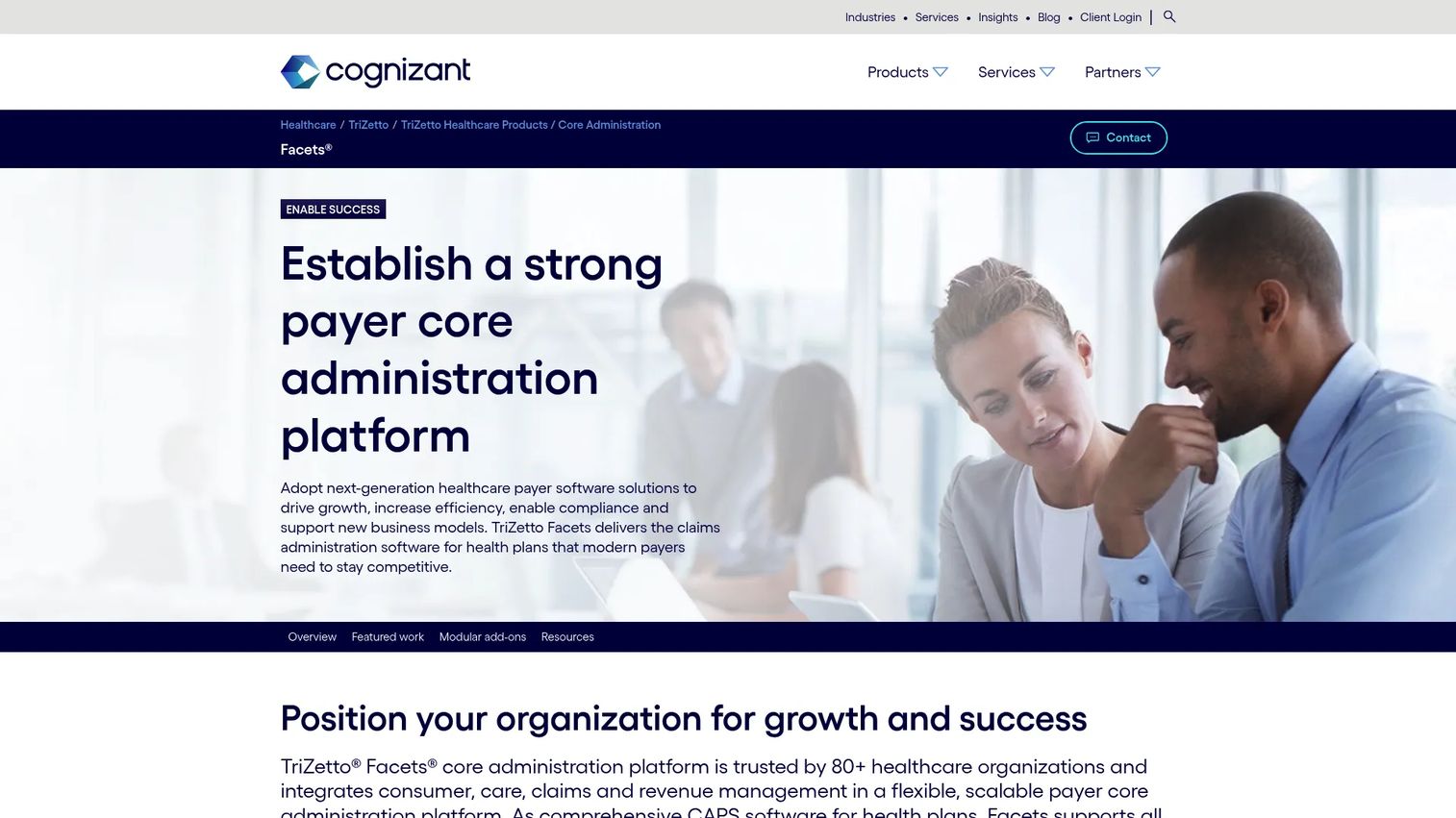
TriZetto Facets is an enterprise payer core administration platform from Cognizant that supports claims administration, enrollment, billing, care management, and network operations. It serves large commercial health plans, Medicare Advantage plans, and Medicaid programs. The platform is modular, with add-ons covering workflow automation, accumulator synchronization, dental claims, and open access for third-party integrations.
Best for: Large enterprise health plans with complex, multi-line core administration needs.
Key features
- Claims administration with auto-adjudication workflows
- Enrollment, billing, and revenue management modules
- Care and network management capabilities
- REST-based APIs and container-based cloud deployment
- Modular add-ons including Dental, Workflow, and Open Access
Why choose TriZetto Facets: Facets carries a long track record in enterprise payer operations. For a CIO or COO evaluating established footprint and vendor support depth, it belongs on every enterprise shortlist. The evaluation priority should be migration governance and integration roadmap, not just current features.
TriZetto Facets pricing: Pricing is quote-based and structured around plan size, module selection, deployment model, and implementation scope. Contact Cognizant directly for a quote.
G2 rating: 4.3/5 (based on 17 reviews)
2. TriZetto QNXT Enterprise Core Administration System
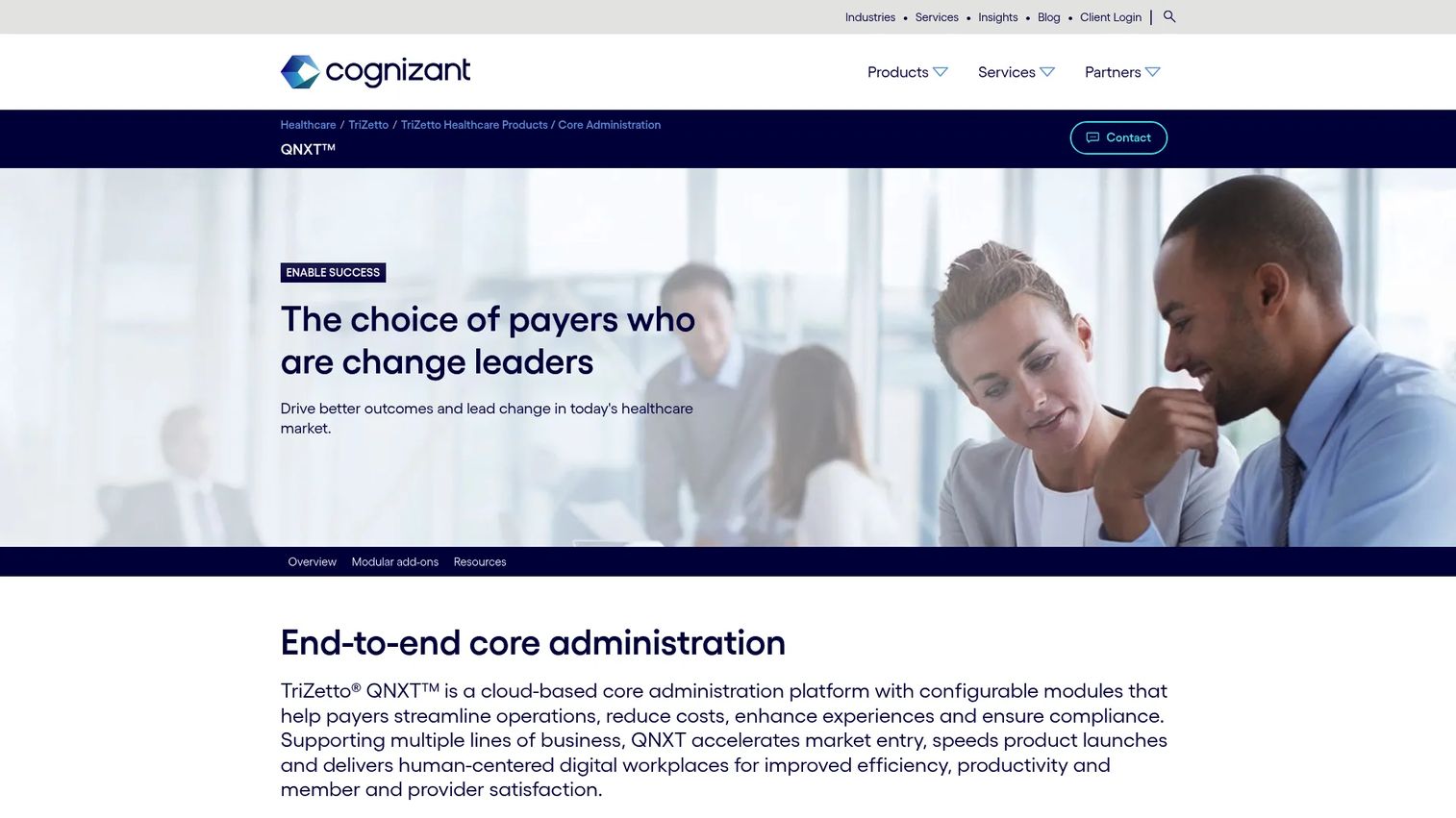
TriZetto QNXT is a cloud-based core administration platform from Cognizant designed for health plans managing claims, benefits, enrollment, and provider data across multiple product lines. QNXT is configurable across lines of business including commercial, Medicare Advantage, Medicaid, and dental. It includes third-party administration capabilities and Division of Financial Responsibility (DOFR) management, which matters for multi-payer coordination arrangements.
Best for: Health plans that need a flexible core platform across multiple products or government programs.
Key features
- Configurable modules across multiple lines of business
- Workflow automation and task routing
- Open Access web services for third-party integration
- Division of Financial Responsibility (DOFR) management
- Dental claims processing and TPA capabilities
Why choose TriZetto QNXT: QNXT fits organizations that need to run multiple product lines on a single core system without rebuilding configuration for each. Evaluate configuration flexibility, the integration strategy for your existing stack, and the modernization roadmap before committing.
TriZetto QNXT pricing: Quote-based. Cost factors include modules, lines of business, implementation services, and data migration scope.
G2 rating: 4.5/5 (based on 13 reviews)
3. HealthRules Payor

HealthRules Payor from HealthEdge is a cloud-native core administrative processing system built for health plans that need to configure benefit plans, provider contracts, and business processes without writing custom code. The platform uses HealthRules Language, a proprietary configuration layer that allows operations and configuration teams to define and change rules directly. Claims processing includes auto-adjudication and payment accuracy capabilities.
Best for: Health plans that need agile core administration without constant custom development.
Key features
- HealthRules Language for benefit plan and contract configuration
- Auto-adjudication with payment accuracy capabilities
- Integrated analytics and payer-provider data transparency
- Claims processing and enrollment administration
- Billing workflow support
Why choose HealthRules Payor: The platform is a strong fit for organizations that need to launch new plans or change reimbursement rules on a timeline that doesn't require an engineering sprint. If your current system turns every benefit change into a six-month project, this is a category worth prioritizing in your RFP.
HealthRules Payor pricing: Quote-based. Cost typically depends on member volume, modules, implementation model, and support scope. Contact HealthEdge for a quote.
4. HEALTHsuite Mercato
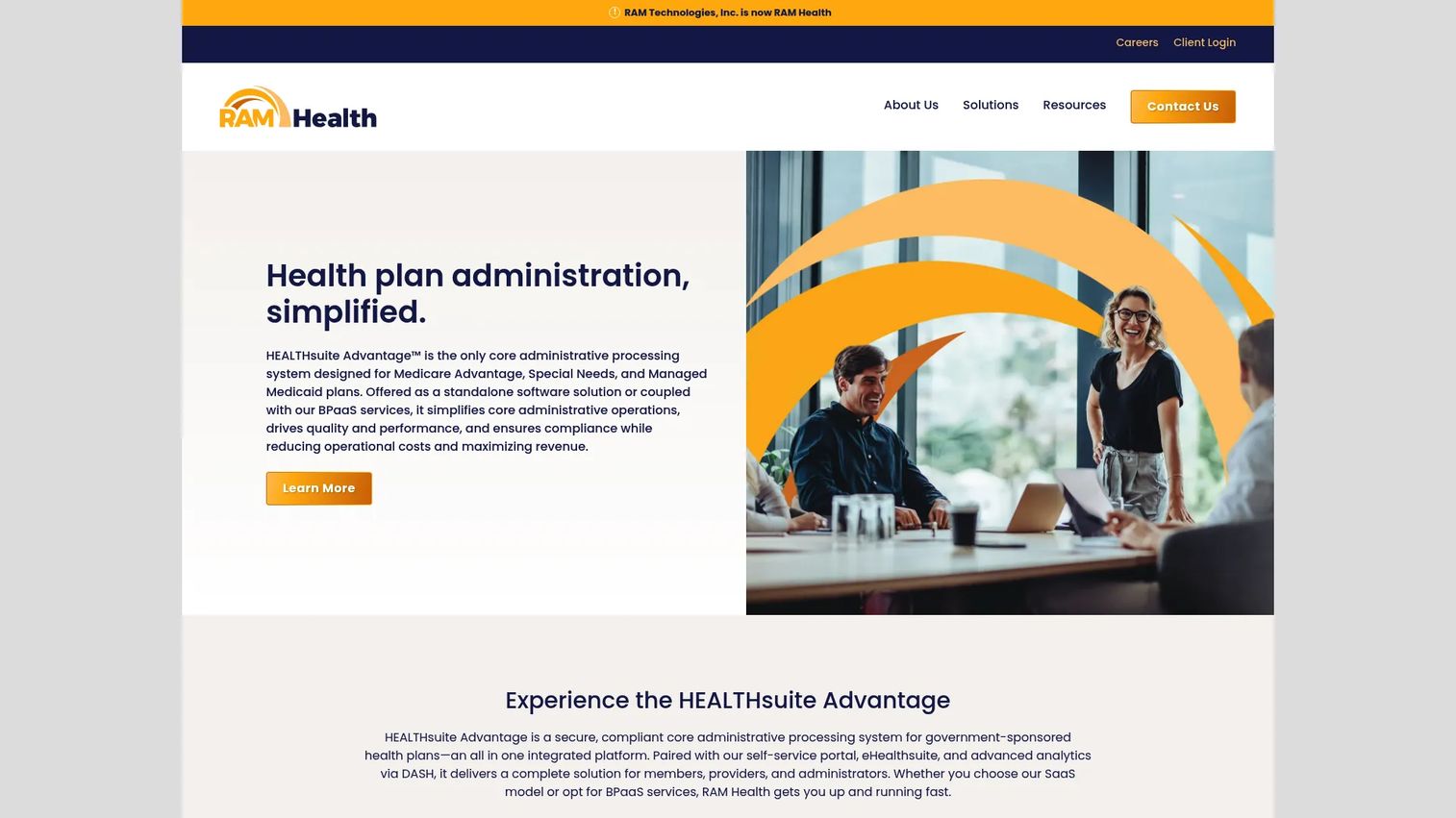
HEALTHsuite Mercato (marketed as HEALTHsuite Advantage by RAM Technologies) is an integrated core administrative processing system designed for Medicare Advantage, Special Needs Plans, and Managed Medicaid health plans. It covers enrollment, eligibility, billing, reconciliation, provider data management, claims processing, encounter processing, and CMS and state-agency integration. The vendor states implementation is offered at a fixed price, which can reduce budget risk in the initial evaluation.
Best for: Medicare Advantage and Managed Medicaid health plans needing an integrated administrative, claims, and reporting suite.
Key features
- Enrollment, billing, reconciliation, and eligibility management
- Claims processing with auto-adjudication
- Provider data management, contracting, and reimbursement
- CMS and state-agency data integration
- Encounter processing and management reporting
Why choose HEALTHsuite Mercato: For government program-focused plans, the integrated suite approach reduces the number of point solutions you need to stitch together. The fixed-price implementation model is worth verifying in detail during contracting, as scope definition drives how that commitment holds.
HEALTHsuite Mercato pricing: Quote-based. The vendor directs prospects to request a demo and describes a fixed-price implementation model.
G2 rating: 5.0/5 (based on 2 reviews, listed as HEALTHsuite Advantage on G2)
5. HSP Payer Suite
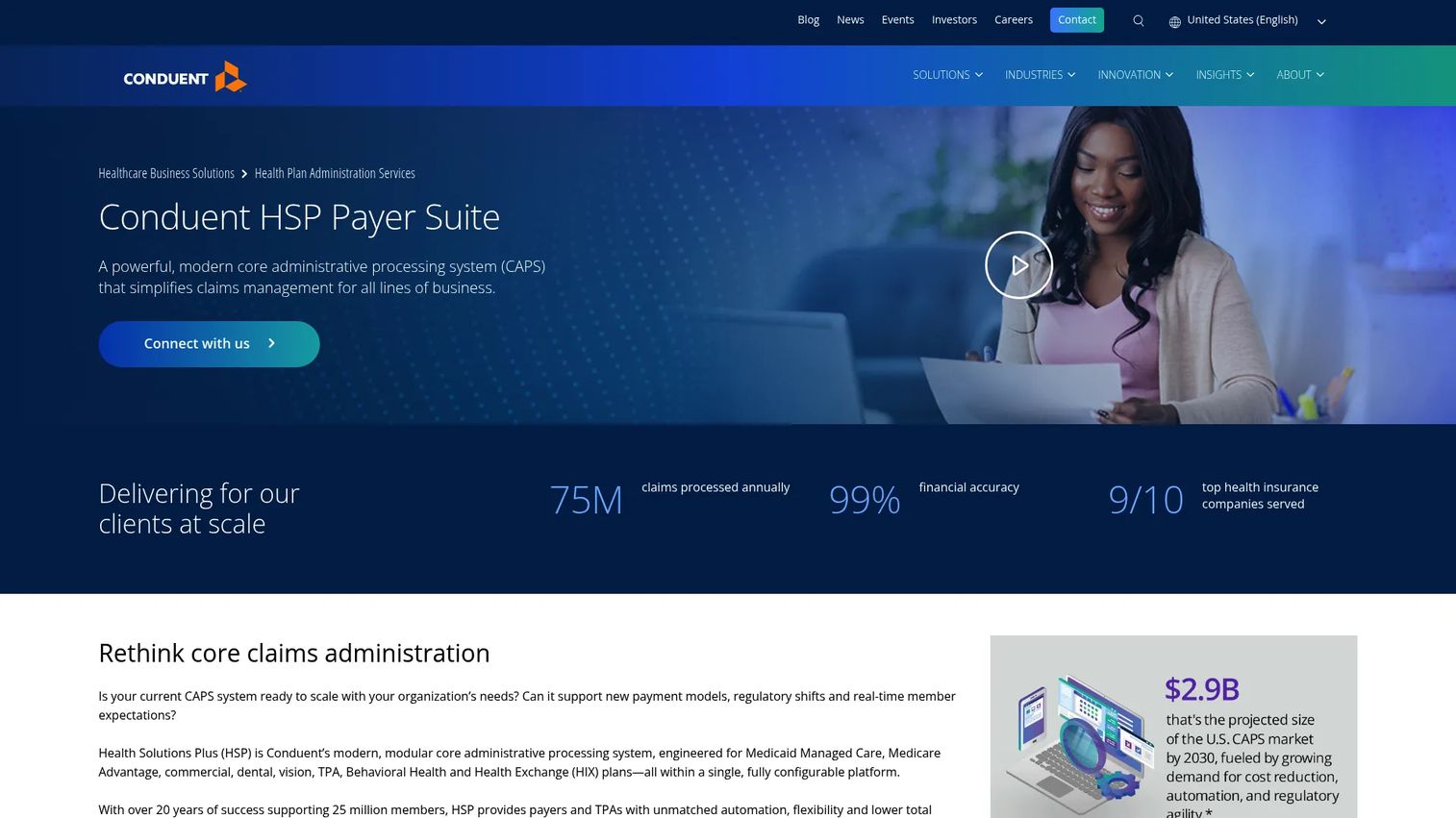
HSP Payer Suite from Conduent is a modular core administrative processing system for health plans and TPAs. It supports medical, Medicaid, Medicare Advantage, commercial, dental, vision, behavioral health, and health insurance exchange lines of business. The suite includes claims intake, premium billing, document generation, customer service management, member and provider web portals, and a configurable rules engine. Medicare Advantage in a Box tools are also included for plans entering or expanding in that market.
Best for: Health plans and TPAs that need a configurable multi-line suite with portal functionality included.
Key features
- Claims intake and automated processing across multiple lines
- Premium and claim billing
- Member and provider web portals
- Configurable rules engine and claims scrubbing
- Medicare Advantage in a Box tools
Why choose HSP Payer Suite: HSP is worth evaluating when portal functionality is part of the core requirement alongside claims and billing. The multi-line coverage makes it relevant for plans running more than one government or commercial program from a single platform.
HSP Payer Suite pricing: Quote-based. Pricing factors include lines of business, module selection, hosting model, and implementation support scope.
G2 rating: 3.5/5 (listed as Conduent Healthcare Claims Management on G2)
6. VBA Application
VBA Application (Virtual Benefits Administrator) is a cloud-based claims management software and benefits administration platform for health plans, TPAs, and ancillary payers. It covers claims processing and auto-adjudication, benefits plan and enrollment configuration, provider and network management, care management, appeals and grievances, and API-based interoperability. The platform includes over 260 canned reports with SQL access, which matters for operations teams that need flexible reporting without custom development.
Best for: Healthcare payers and third-party administrators needing configurable claims, benefits, and provider administration on a cloud platform.
Key features
- Claims processing and auto-adjudication
- Benefits, plan, and enrollment configuration
- Provider and network management
- 260+ canned reports with SQL access
- API-based interoperability and workflow automation
Why choose VBA Application: VBA is a strong candidate when the buyer's core need centers on benefits administration software and TPA operations. The cloud hosting with HIPAA and SOC II compliance removes infrastructure management from the operations team, which matters for lean payer organizations.
VBA Application pricing: Quote-based. The vendor directs prospects to request a demo or evaluation. Cost factors include population size, administrative scope, modules, and integrations.
G2 rating: 5.0/5 (based on 1 review)
7. Judi enterprise health platform
Judi is a proprietary cloud-native enterprise health platform for health plans and TPAs. It unifies medical and pharmacy claims processing, eligibility and enrollment management, benefits and plan administration, payments and remittance, care navigation, prior authorization, and formulary management on a single platform. The system also includes AI-enhanced workflow automation and data exchange via API-based access. Enterprise licensing is available through a managed SaaS model.
Best for: Health plans and TPAs seeking a modern, unified healthcare benefits administration platform.
Key features
- Unified medical and pharmacy claims processing
- Eligibility, enrollment, and benefits administration
- Payments, remittance, and prior authorization workflows
- Care navigation and formulary management
- AI-enhanced workflow automation and API-based data exchange
Why choose Judi: Judi is built for organizations that want to replace fragmented point solutions with a unified core. The combination of medical and pharmacy on one platform reduces the integration complexity that typically adds operational overhead as plan volume grows.
Judi pricing: Enterprise licensing is available through a managed SaaS model. Contact Judi directly for a quote tied to member lives, modules, and support scope.
8. CDS Healthcare Payer Suite
CDS Healthcare Payer Suite is included in the market landscape as a payer administration suite with support for ASP, BPO, and hybrid operating models. Note that the domain at publication time resolves to a different business; buyers evaluating this product should verify the current vendor contact and product scope directly before including it in an RFP. Functional claims confirmed from primary sources were limited, so treat this entry as a market reference rather than a fully verified product profile.
Best for: Buyers conducting a broad market scan of payer core administration options across operating model types.
Key features
- Claims administration workflows
- Membership management
- Billing and payment support
- Hosted and managed service delivery options
- Implementation support services
Why choose CDS Healthcare Payer Suite: Include in an RFI when comparing ASP and BPO options alongside software-only platforms. Confirm current product scope, vendor ownership, and service model directly before advancing in evaluation.
CDS Healthcare Payer Suite pricing: Quote-based. Cost varies by service model, platform scope, and implementation approach. Contact the vendor directly for current pricing.
9. enGen Payer
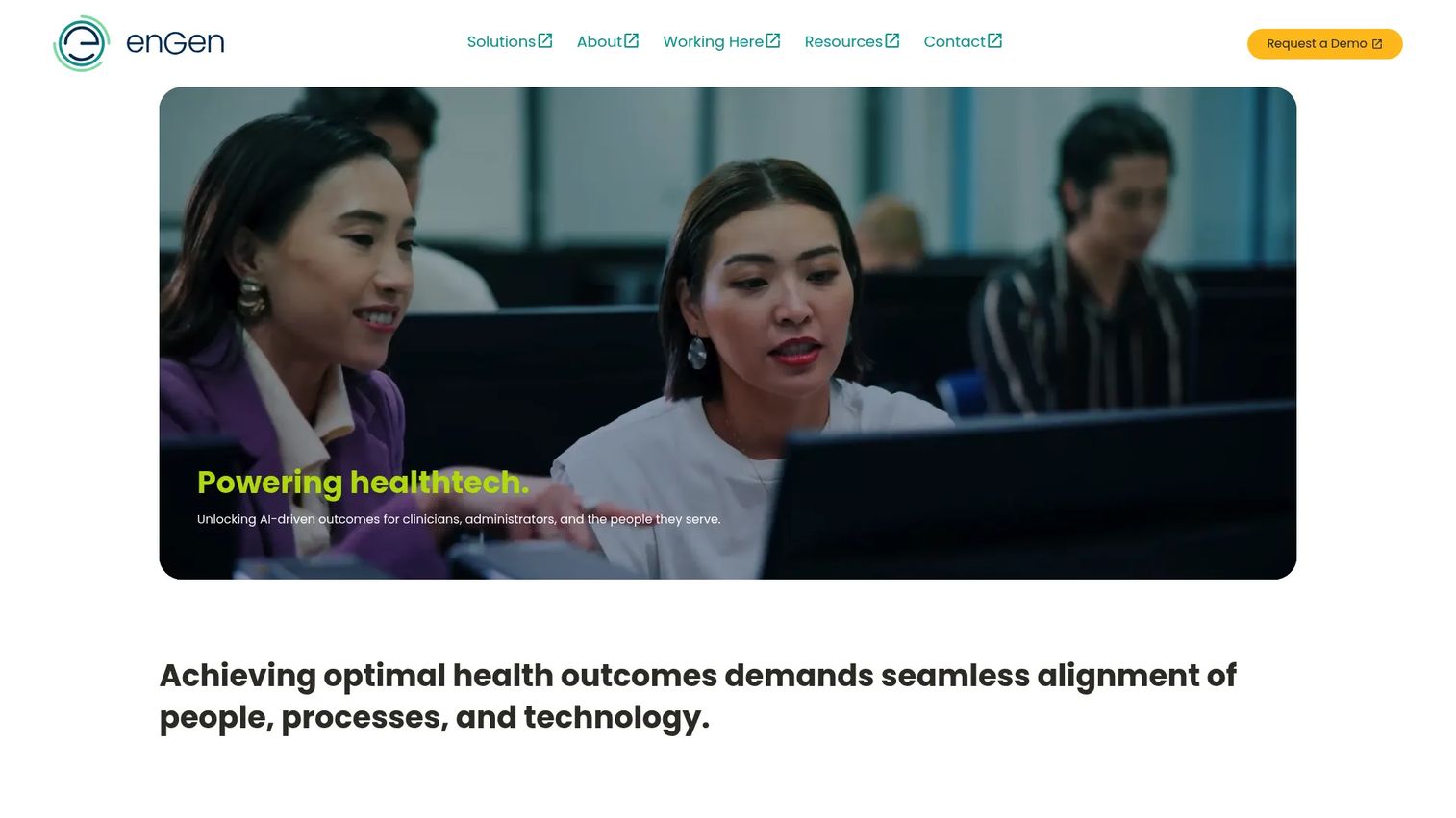
enGen Payer provides integrated technology, operations, and AI-enabled services for health plans and payer-provider organizations. The platform covers front-, middle-, and back-office payer operations including claims adjudication, benefits management, enrollment automation, utilization management, case management, disease management, appeals management, and business intelligence. According to their site, AI-powered capabilities are applied across utilization, case, and appeals workflows. enGen also offers operational services alongside the platform, which positions it differently from pure software vendors.
Best for: Health plans modernizing core administration and seeking connected operational services alongside the platform.
Key features
- Front-, middle-, and back-office payer operations
- Claims adjudication and benefits management
- AI-powered utilization, case, disease, and appeals management
- Enrollment automation and data cleansing
- Business intelligence, reporting, and analytics
Why choose enGen Payer: enGen is worth evaluating when the organization wants modernization support beyond software deployment, including operational services for areas like utilization management. The AI-enabled claims and appeals features are sourced directly from the vendor site; validate scope and deployment details during the demo.
enGen Payer pricing: Quote-based. Contact enGen for pricing tied to modules, member volume, services, and implementation scope.
10. Pega Claims Management Software
Pega Claims Management Software automates and orchestrates insurance and healthcare claims processing from intake through resolution. Core capabilities include automated claim intake, segmentation, assignment, and coverage verification; rules-driven adjudication; payment processing; fraud scoring; and investigation workflows. Pega is a case management and workflow automation platform at its core, which means it can complement a payer core admin system or serve as the claims workflow layer for organizations that already have other administrative infrastructure in place.
Best for: Large insurers and healthcare payers modernizing claims operations and workflow automation.
Key features
- End-to-end claims processing and case management
- Automated intake, segmentation, assignment, and coverage verification
- Rules-driven adjudication and payment processing
- Fraud scoring and investigation workflows
- Integration with enterprise CRM and data systems
Why choose Pega Claims Management Software: Pega is a strong option when claims adjudication software and workflow automation are the primary bottleneck. Be clear in your evaluation about whether you need a full CAPS replacement or a claims workflow layer; Pega handles the latter well but does not independently cover enrollment, billing, and provider administration in a payer-specific way.
Pega Claims Management Software pricing: Enterprise licensing is quote-based, structured around users, applications, deployment model, and implementation scope.
G2 rating: 4.2/5 (verified for Pega Platform; no specific listing for Pega Claims Management Software)
11. Burgess Source

Burgess Source from HealthEdge is a cloud-based healthcare payment integrity platform covering claims clearinghouse software functions including claims editing, pricing, auditing, modeling, and analytics. The platform is built for prospective payment integrity, meaning it applies edits and reimbursement logic before payment rather than through post-payment recovery. Key capabilities include single-call claims editing and pricing, configurable contract reimbursement terms, customizable edits, and real-time analytics for utilization and financial impact monitoring.
Best for: Health plans focused on prospective payment integrity and claims reimbursement accuracy.
Key features
- Single-call claims editing, pricing, and auditing
- Configurable contract reimbursement terms and customizable edits
- Real-time analytics for utilization and financial impact
- Policy management and audit support
- Integration with the broader HealthEdge platform
Why choose Burgess Source: Use Burgess Source when payment integrity and reimbursement accuracy are the primary evaluation drivers. It operates as a focused claims accuracy layer rather than a full CAPS replacement, so define whether you need a core platform, an editing layer, or both before advancing in evaluation.
Burgess Source pricing: Quote-based. Pricing depends on claims volume, module configuration, integration requirements, and support scope. Contact HealthEdge for a quote.
12. Core Stack 2.5
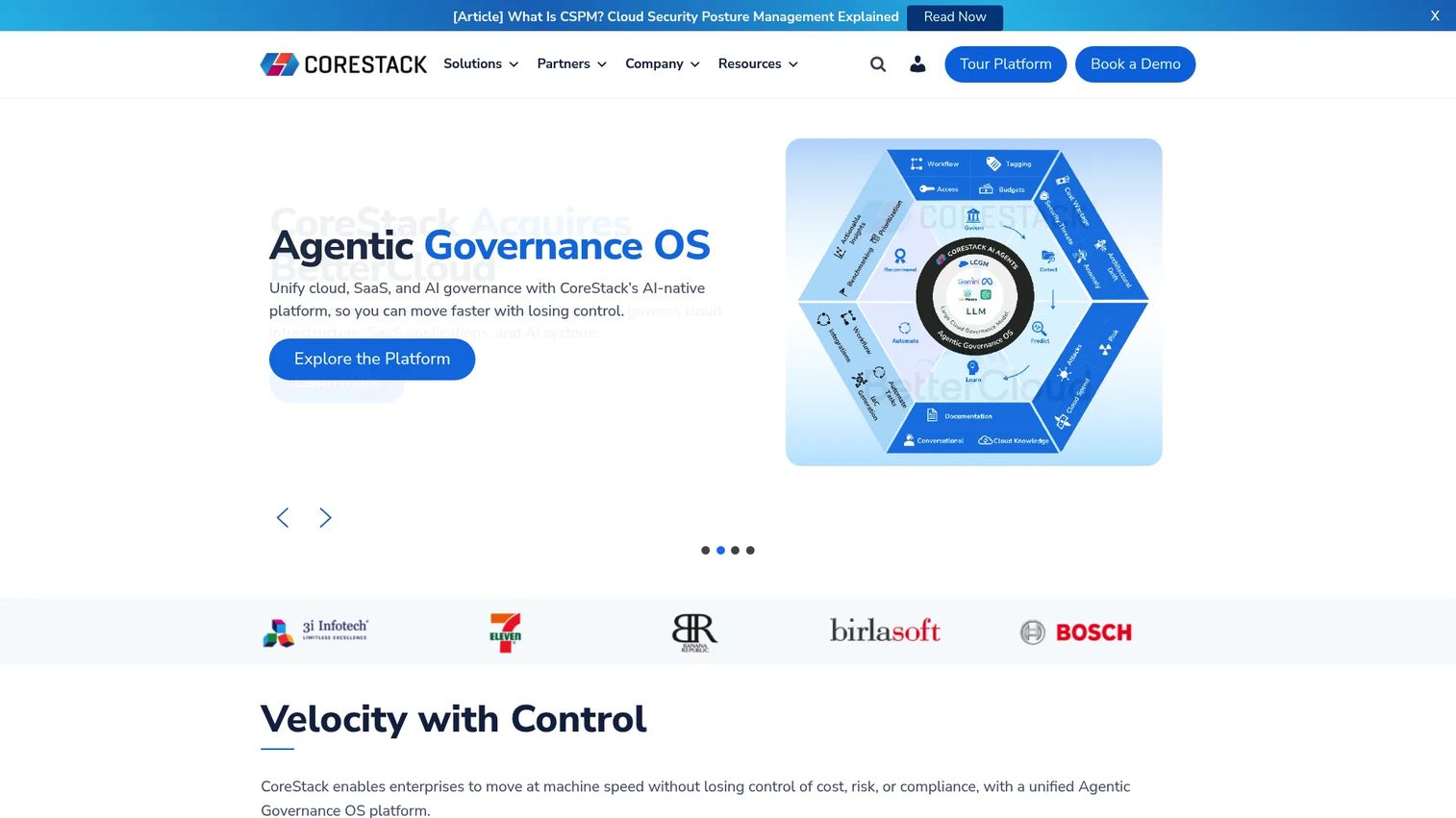
CoreStack (listed in this market scan as Core Stack 2.5) is an AI-powered cloud governance and security platform covering FinOps, SecOps, CloudOps, and continuous compliance posture management across AWS, Azure, GCP, and OCI. It is not a healthcare payer core administration system. CoreStack addresses a different operational problem: Multi-cloud cost governance, security automation, and compliance monitoring for enterprises running cloud infrastructure.
Best for: Large enterprises and managed service providers needing multi-cloud governance, cost optimization, and compliance automation.
Key features
- Multi-cloud visibility and governance across major cloud providers
- FinOps, SecOps, and CloudOps capabilities
- Anomaly detection, smart alerts, and cloud spend optimization
- Continuous compliance posture monitoring
- Automation of workflows, remediation, and policy enforcement
Why choose CoreStack: Include CoreStack in your evaluation if cloud governance and infrastructure compliance are operational gaps alongside your payer core administration search. It does not replace a CAPS platform but may address adjacent infrastructure needs for organizations modernizing their technology stack.
CoreStack pricing: Quote-based across Governance, Assessments, and Graphion purchasing options (Bronze, Silver, Gold tiers). No public prices are displayed.
G2 rating: 4.6/5
13. eHealthsuite
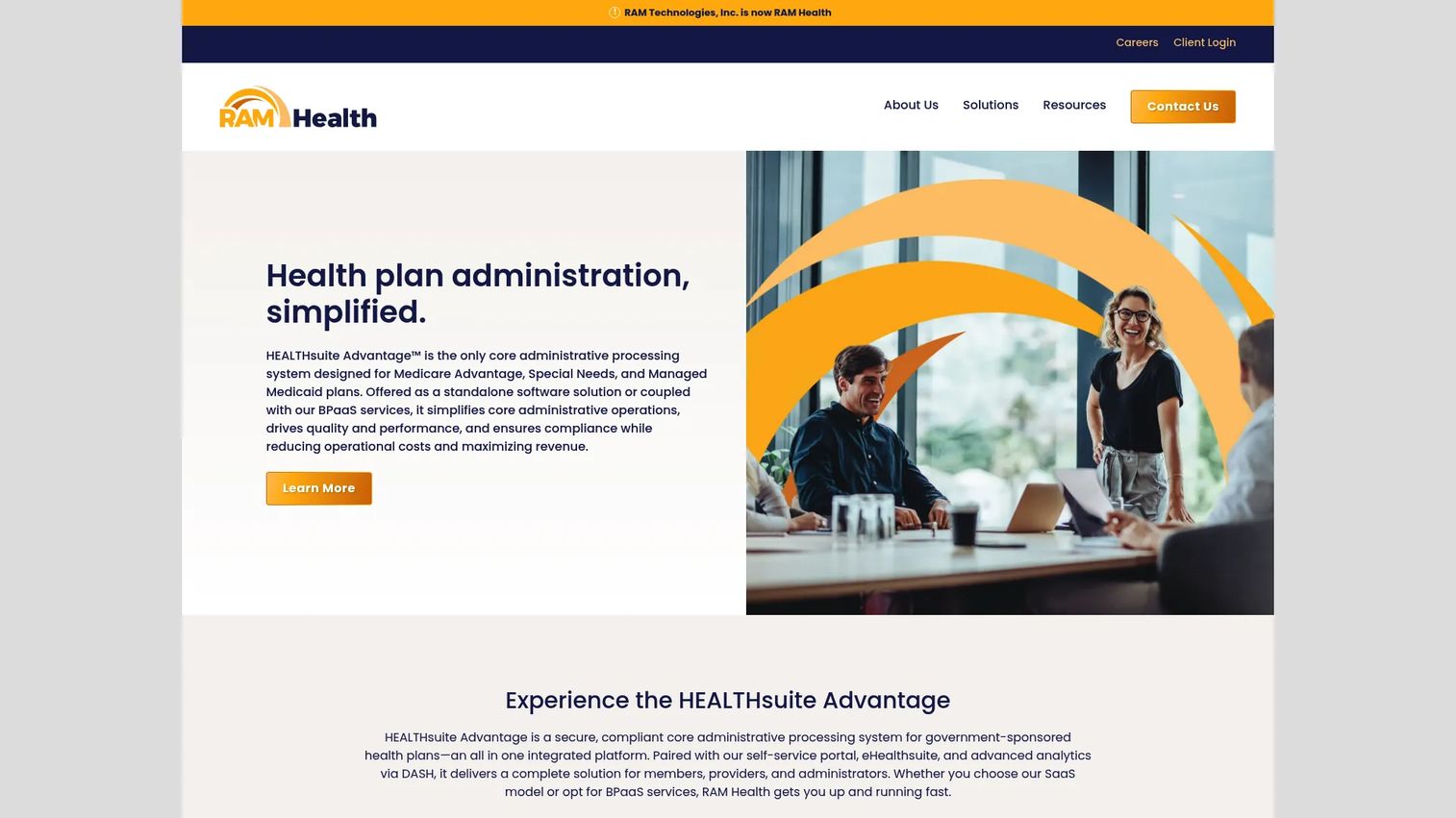
eHealthsuite from RAM Technologies is a HIPAA-compliant self-service portal platform built on the HEALTHsuite core system. It provides member self-service for claims, balances, ID cards, provider search, grievances, appeals, ACH enrollment, reimbursements, and demographic updates. Provider self-service covers eligibility verification, claims and authorization submission, status checks, and demographic management. Data synchronizes in real time with the HEALTHsuite core administrative system.
Best for: Medicare Advantage, Special Needs, and Managed Medicaid health plans needing integrated member and provider self-service portals.
Key features
- Member self-service for claims, balances, ID cards, and provider search
- Provider self-service for eligibility, claims submission, and authorization management
- Real-time data synchronization with HEALTHsuite core system
- Grievances, appeals, and ACH enrollment for members
- HIPAA-compliant portal infrastructure
Why choose eHealthsuite: eHealthsuite is the right choice when you're already evaluating HEALTHsuite Advantage as your core platform and need the member and provider portal layer included. It is not a standalone full CAPS replacement; its value is in the tight real-time integration with the underlying core system.
eHealthsuite pricing: Quote-based. Contact RAM Technologies directly for pricing tied to deployment scope, portal modules, and support requirements.
14. Aspen Web Portals
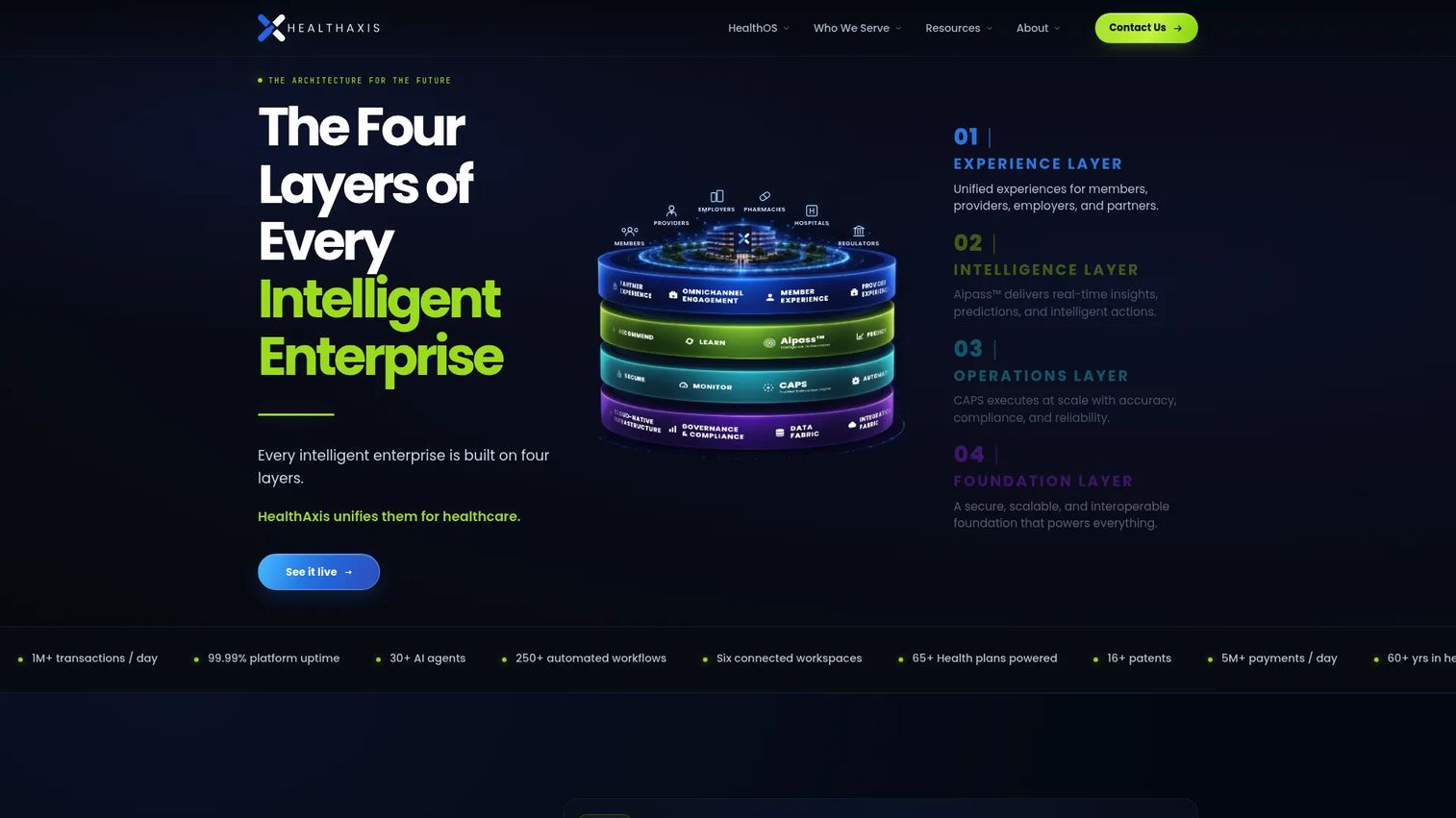
Aspen Web Portals is a healthcare payer portal platform from HealthAxis. HealthAxis's verified product offering (marketed as HealthOS Member) provides member self-service for benefits, claims, pharmacy, deductibles, and care gaps, with plain-language plan-specific coverage and claim explanations and real-time data from a shared administrative record. Note that the specific product name "Aspen Web Portals" could not be independently confirmed as a distinct HealthAxis offering; buyers should verify current product naming with HealthAxis directly.
Best for: Health plans and healthcare organizations needing integrated claims administration and member self-service portal access.
Key features
- Member self-service for benefits, claims, pharmacy, and deductibles
- Plain-language, plan-specific coverage and claim explanations
- Real-time claims and accumulator data from a shared administrative record
- Care gap identification for members
- Provider access and eligibility support
Why choose Aspen Web Portals: Useful when portal access for members and providers is a key gap, and when HealthAxis's broader administrative platform is part of the evaluation. Validate whether you need a portal layer, a full CAPS replacement, or both before advancing to an RFP with this vendor.
Aspen Web Portals pricing: Quote-based. Cost factors include user groups served, portal modules, integration requirements, security configuration, and support model.
G2 rating: 4.3/5 (verified for HealthAxis overall)
Considerations when choosing core administrative processing systems software
Claims and payment complexity
A demo should prove the full claims lifecycle: Intake, validation, adjudication, reimbursement calculation, payment, exception handling, and audit output. Ask vendors to walk a claim from receipt through the explanation of benefits. If they can't show that end-to-end in a demo environment, the integration story is doing more work than the platform is.
Configuration speed
The question is who can change a benefit rule and how long it takes. For plans that launch new products regularly, configuration speed is a competitive advantage. Ask vendors to show a benefits change without involving their professional services team, and time it. If that's not possible, factor the services dependency into your total cost of ownership.
Integration depth
APIs, EDI, provider system connections, data warehouse outputs, and regulatory data exchange are all load-bearing parts of payer operations. Ask for live integration examples with the systems in your current stack, not architecture diagrams. For bundled payment software arrangements or value-based contracts, also verify how the platform handles non-standard reimbursement logic.
Implementation risk
A cheaper platform that stalls implementation for 18 months is not cheaper. Evaluate migration approach, parallel-run requirements, data quality validation, testing protocols, and go-live support staffing. Ask every finalist for a phased implementation plan with explicit timelines and dependencies. This is the question most buyers wish they had asked before signing.
Reporting and data integrity
Executive decision-making requires a single source of truth. Fragmented data across a claims system, a billing system, and a separate analytics tool means every board report is a manual assembly exercise. Verify that operational dashboards, compliance reporting, and audit trails all draw from the same underlying data model, not separate exports.
Conclusion
For enterprise health plans with complex multi-line administration, start with TriZetto Facets and TriZetto QNXT. Both carry established market presence and deep payer operation coverage; the evaluation should focus on implementation governance and integration roadmap rather than feature lists.
For health plans that need configurability without constant custom development, HealthRules Payor is the strongest candidate. If you're running Medicare Advantage or Managed Medicaid, HEALTHsuite Mercato (HEALTHsuite Advantage) integrates enrollment, claims, and government reporting in a single system.
TPA and benefits administrator buyers should prioritize VBA Application for its cloud-based claims and benefits coverage with strong reporting depth. For claims workflow modernization specifically, Pega Claims Management Software addresses adjudication and case management at scale, though buyers should confirm whether they need a full CAPS replacement or a workflow automation layer.
For a broader modernization path that includes operational services alongside the platform, evaluate Judi enterprise health platform and enGen Payer as modern-architecture alternatives.
The right platform for your organization depends on lines of business, migration risk tolerance, existing integrations, and operating model. Use this guide to build your shortlist, then push every finalist to show, not just describe, how they handle your specific claims and configuration scenarios.
FAQs
Core administrative processing systems software is the technology platform healthcare payers use to run claims, enrollment, benefits, billing, provider administration, payment, compliance, and reporting. It is the operational core of a health plan, connecting member records, provider contracts, benefit rules, and financial workflows in one system. The category is also called CAPS, payer core administration software, or healthcare payer administration software.
CAPS is the older acronym for core administrative processing systems, widely used in procurement and legacy vendor contexts. Healthcare payer core administration is the more current term used by modern vendors and market analysts to describe the same operational category. Both terms refer to the systems that run claims adjudication, member enrollment, benefits configuration, billing, and related payer workflows. Expect to see both in RFP language and vendor documentation.
Enterprise buyers typically evaluate established platforms with broad multi-line coverage. TriZetto Facets and TriZetto QNXT are the most commonly evaluated platforms at enterprise scale. HealthRules Payor is a strong contender for organizations prioritizing configuration speed. The best fit depends on lines of business, migration risk appetite, integration requirements, and internal staffing for implementation.
A complete payer core admin platform should cover member enrollment and eligibility, benefits configuration and plan design, claims intake through payment, provider administration and credentialing, premium billing, payment processing, regulatory reporting, EDI and API interoperability, and workflow automation. Operational analytics with a single source of truth for executive reporting is increasingly a requirement, not a nice-to-have.
Pricing across this category is quote-based. No vendors in this guide publish flat-rate pricing. Cost is driven by member volume, module selection, deployment model (software-only, ASP, BPO, or hybrid), implementation services, data migration scope, integration requirements, and support level. Enterprise implementations commonly run into multi-year contracts. Request a detailed scope-based quote from each finalist and compare total cost of ownership, not just license fees.
Implementation timelines range from several months for limited-scope deployments to multiple years for full enterprise replacements involving data migration, parallel runs, and complex product configurations. Legacy platform complexity, data quality, number of product lines, integration count, and testing requirements all extend timelines. Ask every finalist for a phased implementation plan with explicit milestones, and ask for references from organizations of similar size and complexity.
A claims-focused tool like Pega Claims Management Software improves claims workflow, automation, and payment processing, but it does not independently cover member enrollment, benefits configuration, premium billing, provider administration, or regulatory reporting. Full CAPS replacement requires a platform that handles all of those functions. Define your operational gaps before choosing: If claims workflow is the constraint and everything else is stable, a focused tool may be sufficient. If the entire operational core is fragmented, a full CAPS replacement is the more durable investment.
TPAs need multi-client configuration without rebuilding the system for each employer group or plan sponsor. Key evaluation criteria include flexible benefits administration, billing across multiple clients, portal access for employers and members, strong claims workflows, configurable reporting, security controls that separate client data, and implementation support that doesn't require custom development for each new client. VBA Application is a strong starting point for TPA evaluation; also review whether the platform supports the benefits enrollment software and best payment processing software integrations your clients already use.