Your search rankings look steady. Then someone on the leadership team asks why an AI answer recommends a competitor and leaves you out. Your existing dashboard has no explanation.
The best AEO tools help close that reporting gap without creating another system nobody trusts. They show where your brand appears and which sources influence those answers. Some also help your team turn the findings into content updates.
The audience shift is already measurable. Pew Research Center reported in 2026 that 42% of U.S. adults use chatbots to search for information.
For growth marketers, the buying question is practical. Will this software replace manual prompt checks? Can its findings feed your publishing process? And can you explain what the numbers mean when someone asks about pipeline?
Start with the decision you need to make each week. AI search visibility tools earn their place when their data changes what your team does next.
What’s inside
- A comparison of 15 tools: Covering dedicated monitoring platforms, content execution software, and extensions to existing SEO stacks.
- Four buying criteria: Engine coverage, prompt and citation analysis, actionable recommendations, and cost relative to your workflow.
- Recommendations by operating model: For lean growth teams, agencies managing client accounts, and enterprise marketing departments.
- Pricing and rating context: Including billing units, parent-platform ratings, and product changes that affect purchasing.
- A practical evaluation checklist: To help you test reporting quality before committing.
The comparison uses vendor information and review-site research dated November 24, 2026. Entries with unresolved product identity or purchasing details are identified rather than treated as established recommendations.
TL;DR
- Best enterprise visibility shortlist: Profound combines answer-engine analysis with page-level investigation. Consider it when leadership reporting needs supporting evidence.
- Best for growth-team monitoring: Peec AI connects prompt management with competitive analysis. Otterly offers a lower starting commitment for focused tracking.
- Best for content operations: AirOps connects search insights to governed production workflows, including human review and publishing.
- Best for agent-facing optimization: Scrunch extends monitoring into content delivery through Agent Pages and site optimization.
- Best for extending an SEO stack: Semrush AI Visibility Toolkit adds AI reporting to familiar research workflows. Its Base plan includes 25 custom prompts.
What is AEO software?
AEO software helps teams measure and improve how their brands appear in AI-generated answers.
AEO stands for answer engine optimization. These tools examine how systems such as ChatGPT or Perplexity represent a business. Coverage can also include Gemini, Claude, Copilot, and Google AI Overviews, depending on the vendor.
Traditional SEO reporting centers on search rankings and organic traffic. Answer engine optimization tools add another measurement layer. They examine whether your company appears in a response, how it is described, and which pages receive citations.
Useful capabilities include:
- Prompt tracking: Monitor responses to questions relevant to your buyers
- Brand monitoring: Record mentions and positioning within generated answers
- Citation analysis: Identify linked sources and frequently referenced domains
- Sentiment tracking: Assess how responses characterize your business
- Competitive benchmarking: Compare visibility and share of voice
- Content recommendations: Connect missing coverage to potential page updates
- Crawler analysis: Investigate AI access to website content
- Reporting integrations: Move findings into existing marketing workflows
The category contains different operating models. A dedicated AEO tracker focuses on ongoing measurement. A broader AEO platform may add content generation or technical optimization. SEO suites incorporate AI visibility alongside their existing research tools.
Choose between those approaches according to ownership. A content team with an editorial backlog needs different software from an analyst preparing executive reports.
Keep the terminology in perspective, too. GEO, or generative engine optimization, overlaps substantially with AEO. LLMO describes optimization for large language models. Vendor labels matter less than the outputs you can inspect.
Treat AI search rankings as observations within a defined prompt set. Ask how each provider calculates position and visibility before comparing scores across platforms.
AEO extends SEO into AI answer environments. It does not remove the need for accessible pages or credible content. Nor should a brand mention be reported as a lead. Connect visibility findings to your existing analytics before making revenue claims.
When to use AEO tools
Track visibility beyond traditional rankings
Use an AEO tracker when your team needs a repeatable answer to questions about AI recommendations. Start with buyer questions tied to priority products and markets. Keep that baseline separate from organic traffic reporting so changes remain interpretable.
Stable rankings alone cannot tell you how an answer engine describes your brand.
Find which sources shape AI answers
Citation monitoring helps identify the pages appearing alongside brand recommendations. Those sources can include your website or independent coverage.
Review the underlying answer before assigning content work. A missing citation requires a different response from an inaccurate description of your pricing. Give each finding an owner and a documented next action.
Turn AI visibility into content priorities
Use AEO analysis software when manual prompt testing produces screenshots but no publishing decisions. Group findings around buyer questions, then connect them to pages your team can improve.
For example, investigate whether an existing comparison page answers the specific purchasing question being monitored. Record the update date and watch the same prompt group afterward.
This creates an experiment your team can discuss without treating every movement as proof of causation.
AEO tools comparison
The best AEO tools differ most in what happens after monitoring. Some provide evidence for an analyst; others help an editorial team publish changes.
Compare the pricing unit as carefully as the starting amount. A per-domain subscription, task-based workflow platform, and separate prompt-tracking package create different costs as usage grows.
Ratings below come from the supplied November 2026 research. “N/A” means a usable aggregate rating was unavailable, not necessarily that no listing exists. Parent-platform and seller-profile scores are labeled because they do not isolate the named feature.
Two entries also require identity checks before purchase. Their inclusion preserves the comparison, but their placement should not be read as a purchase endorsement.
| # | Product | Best for | Key differentiator | Pricing | G2 rating |
|---|---|---|---|---|---|
| 1 | Profound | Enterprise visibility analysis | Answer insights plus page-level investigation | $99/month Starter, reported by G2 | 4.5/5 |
| 2 | Peec AI | Growth-team monitoring | Prompt management and source analytics | $95/month Starter | N/A |
| 3 | AirOps | Content operations | Governed workflows with human review | Free Solo; paid plans by quote | 4.7/5, seller profile |
| 4 | Scrunch | Agent-facing optimization | Agent Pages and optimized content delivery | $250/month Core | 4.6/5 |
| 5 | AthenaHQ | Brand accuracy monitoring | Claim review and hallucination detection | Free Essential; $295/month Starter | 4.9/5 |
| 6 | Evertune | Brand research and sampling | Repeated sampling for significance measurement | $60/month Starter | Unrated |
| 7 | Bluefish | Enterprise AI marketing | Monitoring, optimization, measurement suites | Request current terms | 4.1/5, seller profile |
| 8 | Goodie AI | Buyers completing vendor diligence | Product identity needs confirmation | Request current terms | 4.9/5, seller profile |
| 9 | Writesonic | Content creation and monitoring | Visibility analysis connected to writing | $79/month annually; $99 monthly | 4.7/5 |
| 10 | Semrush AI Visibility Toolkit | Existing SEO reporting workflows | Prompt research and technical readiness audits | $99/month/domain, billed annually | N/A |
| 11 | Adobe LLM Optimizer | Enterprise content optimization | Replaced by Adobe Brand Visibility | Request current product terms | 5.0/5, listed product |
| 12 | Otterly | Lean monitoring programs | Prompt research and citation tracking | $29/month Lite | 4.7/5 |
| 13 | SE Ranking | Combined SEO and AI reporting | Search research alongside AI visibility | $103.20/month annually; $129 monthly | 4.8/5 |
| 14 | Searchable | Buyers resolving product identity | Supplied domain is parked | Purchasing details unavailable | N/A |
| 15 | Ahrefs Brand Radar | SEO-led brand research | Custom prompts plus AI visibility indexes | Prompts from $50/month; indexes from $199/month | 4.5/5, Ahrefs |
Best 15 AEO tools for 2026
1. Profound
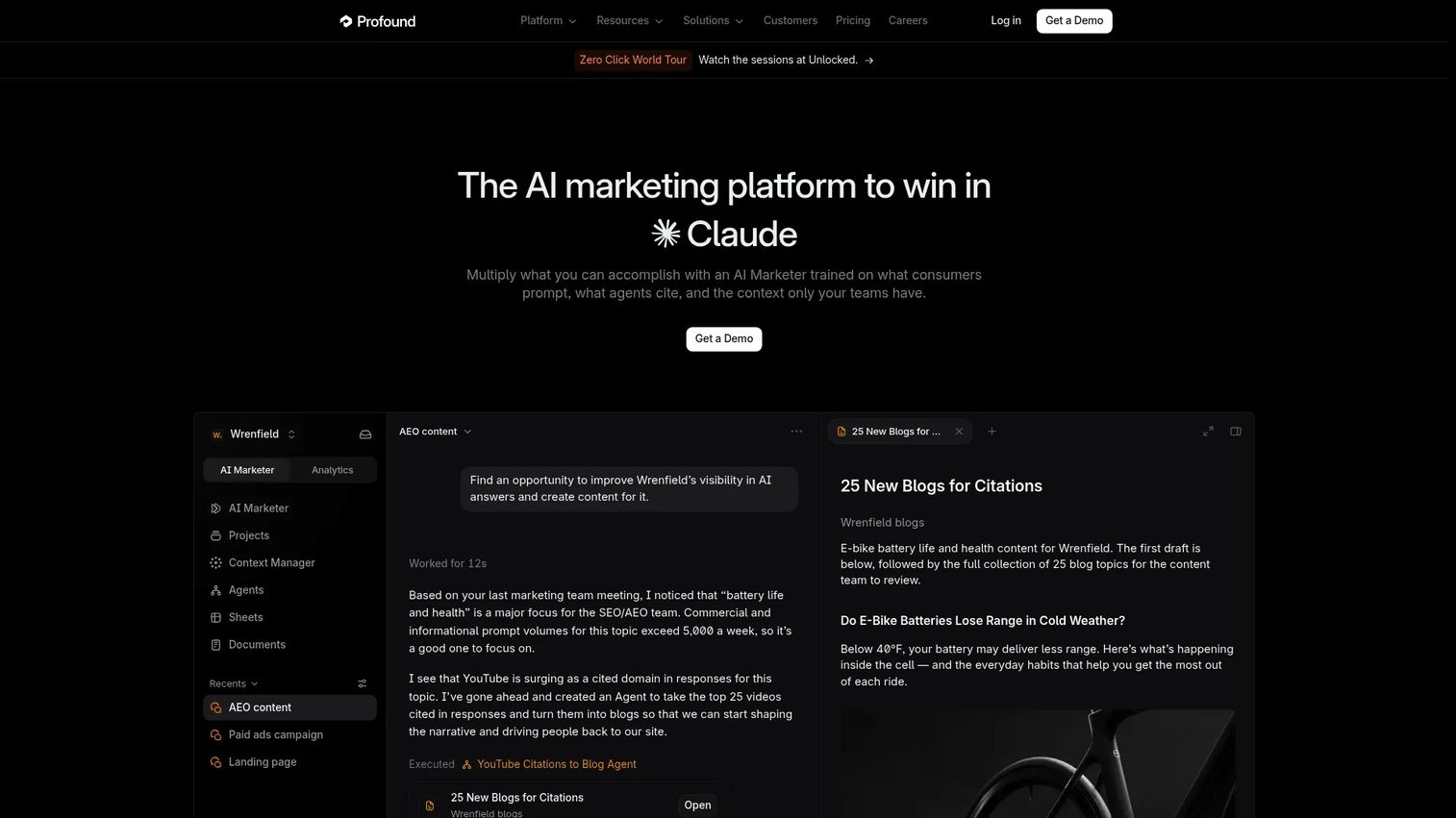
Profound combines AI search measurement with investigation into the pages behind brand visibility. Its Answer Engine Insights product examines competitive presence and citations. Pages adds analysis of crawler activity and content quality.
Best for: Marketing and analytics teams that need evidence behind executive AI visibility reporting.
Key features
- Answer Engine Insights
- Brand and competitor visibility analysis
- Citation, sentiment, and ranking monitoring
- Page-level crawler and content analysis
- AI Marketer agents
The useful distinction is the connection between an answer-level finding and a website-level investigation. An analyst can examine visibility, then use page analysis to inform further work.
For a buying evaluation, bring a disputed business question rather than an empty project. Ask the vendor to show which evidence explains a competitor’s presence. Then examine whether the output supports a concrete assignment for your content or technical team.
Keep ownership clear. Research agents and reporting capabilities have value when someone is responsible for reviewing their output and implementing changes. A dashboard alone does not create that process.
Why choose Profound: Choose it when AI visibility needs a documented analytical workflow rather than occasional screenshots. Its breadth suits teams prepared to investigate findings.
Profound pricing: A free trial is available; Enterprise uses custom pricing. G2 lists Starter at $99/month and Growth at $399/month.
G2 rating
4.5/5 on G2.
2. Peec AI
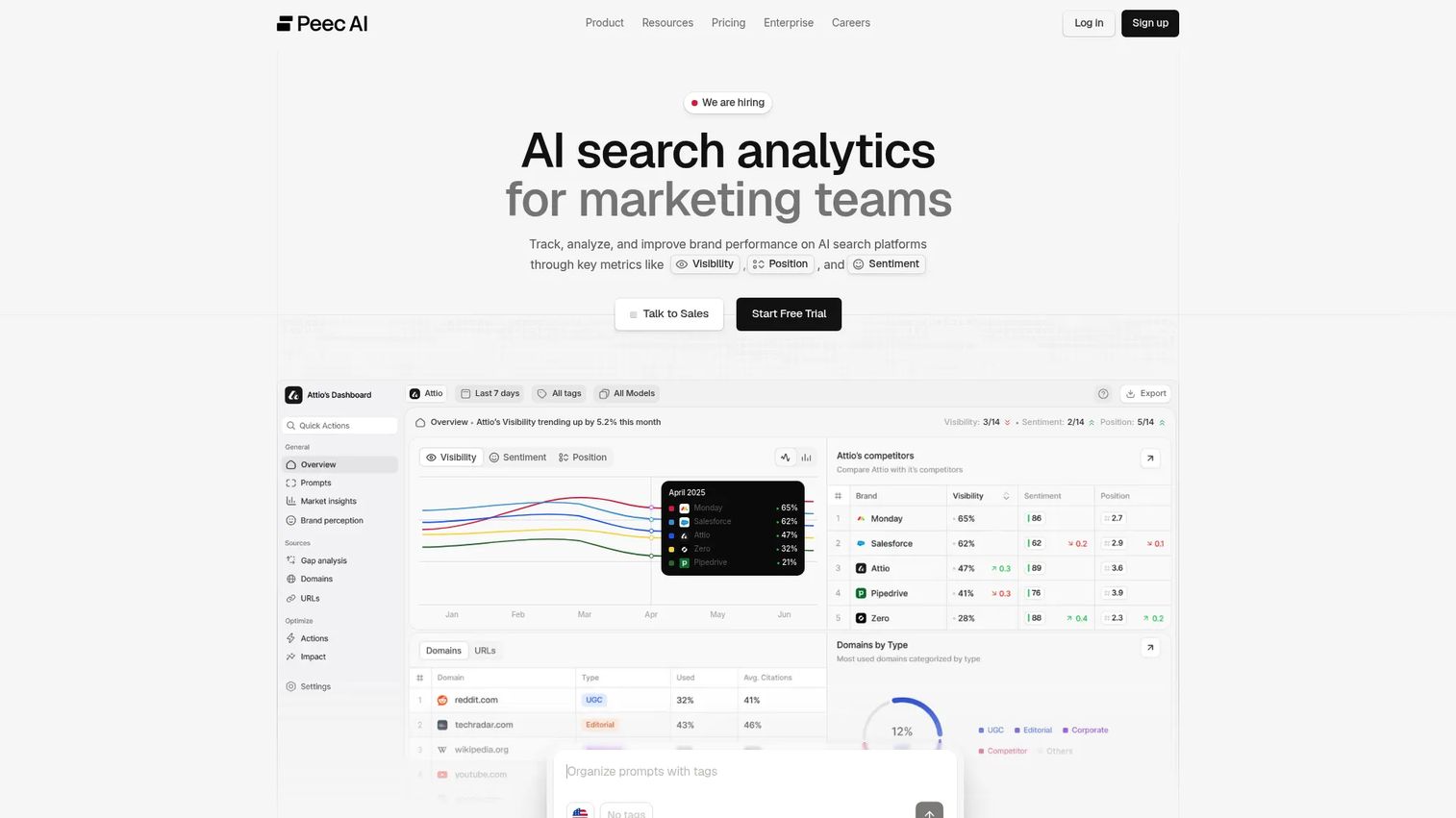
Peec AI is an AI search analytics platform for marketing teams. It connects prompt management with competitive benchmarking and source analysis. Country and language tracking make it relevant to teams working beyond one market.
Best for: Growth teams that want a defined monitoring program with reporting options for their existing stack.
Key features
- Visibility, position, sentiment, and share-of-voice tracking
- Prompt discovery and management
- Country and language coverage
- Citation and source analytics
- CSV exports and Looker Studio integration
Packaging provides a concrete starting point for evaluation. Starter includes 50 prompts and one project. Pro expands that allowance to 150 prompts across two projects; Advanced provides 350 prompts and five projects.
Map those limits to your reporting structure before purchasing. A product line, market, or client account may need separate treatment. Ask how your intended organization fits the project model.
Peec AI also supports product and SKU-level AI Shopping tracking. That gives commerce teams a different evaluation path from marketers focused on company-level recommendations.
During a trial conversation, request an export of the same findings shown in the dashboard. Your weekly report should preserve enough context for another teammate to understand the result.
Why choose Peec AI: It fits marketers who want prompt monitoring connected to usable reporting. Assess project allowances against your expansion plans.
Peec AI pricing: Starter costs $95/month, Pro $245/month, and Advanced $495/month. Enterprise uses custom annual pricing.
3. AirOps
AirOps focuses on content engineering, combining search visibility analytics with production workflows. Human review and publishing are part of that operating model. Brand Kits and Knowledge Bases help govern the material those workflows produce.
Best for: Content operations teams that need to turn research findings into reviewed, publishable work.
Key features
- AI and traditional search analytics
- Automated content workflows
- Human review and publishing
- Brand Kits
- Knowledge Bases
The buying question here concerns throughput and control. If your team already knows which pages need attention, another monitoring dashboard may leave the backlog untouched.
Evaluate AirOps with an existing editorial task. Bring a page that needs updating and the sources an editor must use. Follow the work through review rather than judging only the initial generated draft.
Its task-based model also deserves attention. Solo includes 35,000 tasks per month, while Pro includes 100,000 tasks and unlimited seats. Model the task consumption of your intended workflow before estimating monthly capacity.
This is particularly relevant when one content assignment requires several processing steps. Ask the team to explain which actions consume usage.
Why choose AirOps: Choose it when the main obstacle is executing content improvements consistently. The fit is strongest where writers and reviewers share an established publishing process.
AirOps pricing: Solo is free; Pro and Enterprise use custom pricing. A 14-day free trial is available.
G2 rating
4.7/5
4. Scrunch
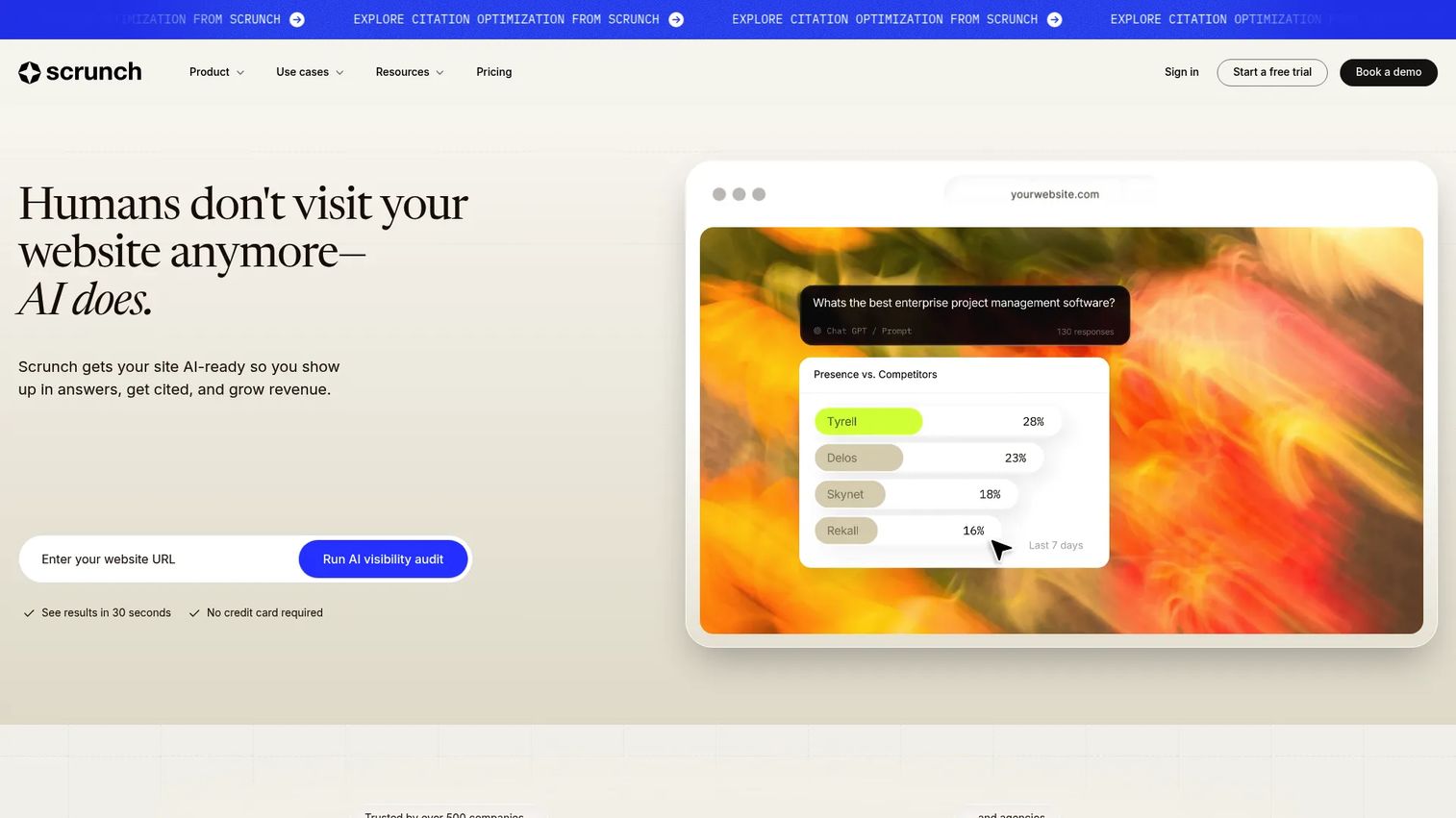
Scrunch combines AI search visibility monitoring with agent-facing content optimization. Its Agent Pages offering extends the evaluation beyond what an answer says about your company. The platform also addresses how content is delivered to AI agents.
Best for: Marketing teams working with technical owners to improve AI access and representation.
Key features
- AI search visibility monitoring
- Citation tracking
- Agent Pages
- AI-optimized content delivery
- Product-level performance monitoring
Core includes 15,000 AI responses per month, one brand, and five seats. Its allowances also cover citation targets and optimized or generated pages. Compare those categories against the work you expect to complete, rather than using response volume alone.
A useful evaluation should involve the person responsible for your website. Ask how proposed changes enter the publishing process and who approves them. This prevents a monitoring purchase from becoming an unplanned implementation project.
Enterprise includes API access and SSO, with unlimited brands and seats. Those controls matter when several business units need access under a shared agreement.
Why choose Scrunch: Consider it when your AEO program includes content delivery and technical collaboration. Teams seeking only periodic mention counts should evaluate that narrower requirement separately.
Scrunch pricing: Core costs $250/month, with a seven-day free trial. Enterprise uses custom annual pricing.
G2 rating
4.6/5 on G2.
5. AthenaHQ
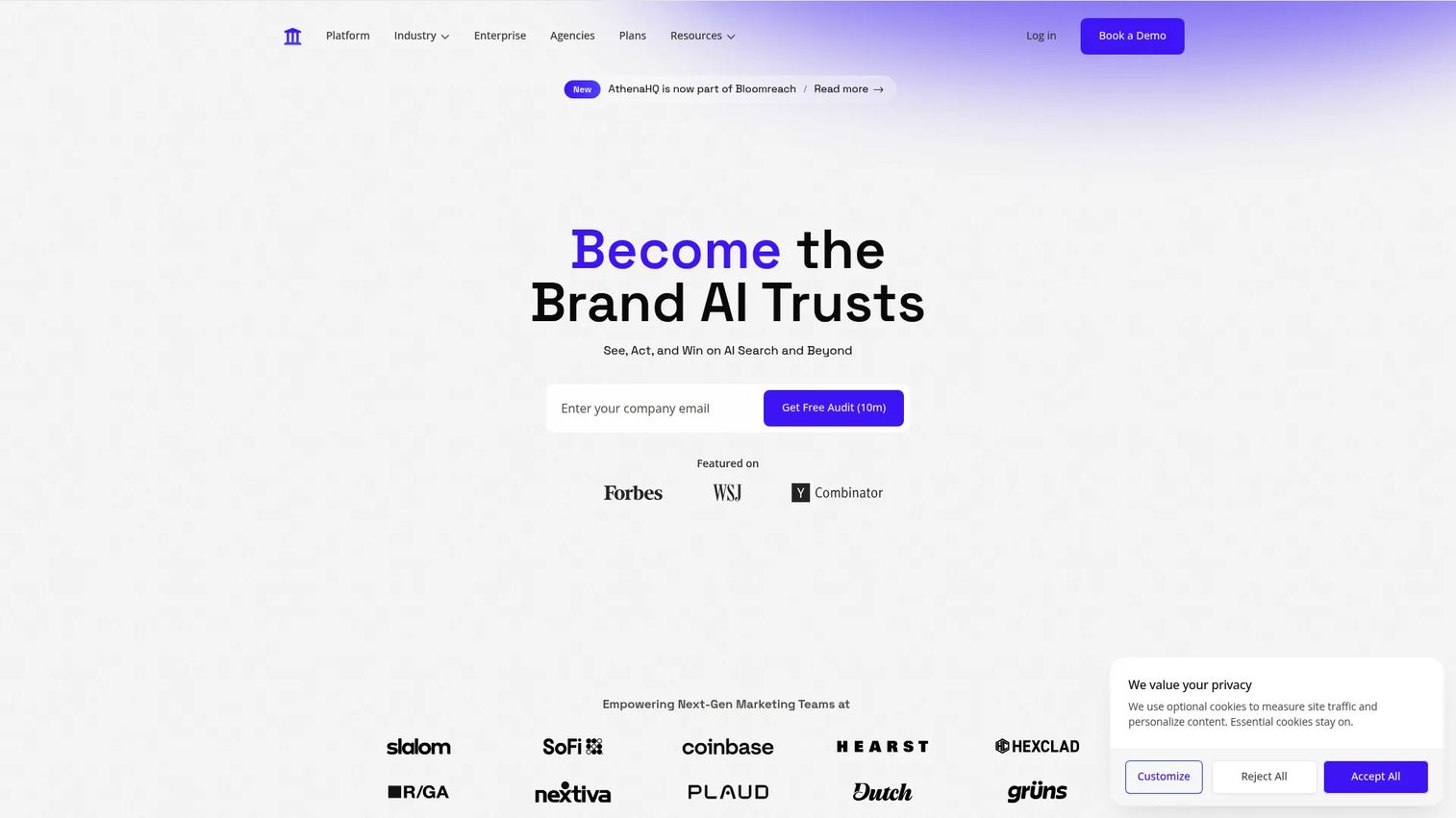
AthenaHQ combines brand visibility tracking with content recommendations and claim review. Its hallucination detection adds an accuracy-focused dimension to AEO reporting. PR monitoring and press kits also connect the product to brand communications work.
Best for: Marketing leaders who care about the accuracy of AI recommendations as well as their frequency.
Key features
- Cross-platform AI visibility tracking
- Competitive intelligence and citation analysis
- Content optimization agent
- Hallucination detection and claim review
- Executive dashboards
A mention can be commercially unhelpful if the surrounding description misrepresents your product. Evaluate this platform using claims your team can assess against approved documentation.
Bring examples involving pricing or product availability. Ask how a flagged claim reaches the person responsible for correcting the underlying material. The important output is a reviewable issue, not simply another sentiment score.
AthenaHQ uses credits in its packaging. Essential includes 300 credits, while Starter includes 3,600. Request a worked example showing how your proposed prompt coverage consumes that allowance.
For cross-functional teams, decide whether brand marketing or SEO owns the response process. PR-related capabilities are most useful when communications colleagues participate in the review.
Why choose AthenaHQ: Its accuracy and communications focus suits brands that need to investigate how they are represented. Include approved messaging in the evaluation.
AthenaHQ pricing: Essential is free, and Starter costs $295/month. Enterprise uses custom pricing.
G2 rating
6. Evertune
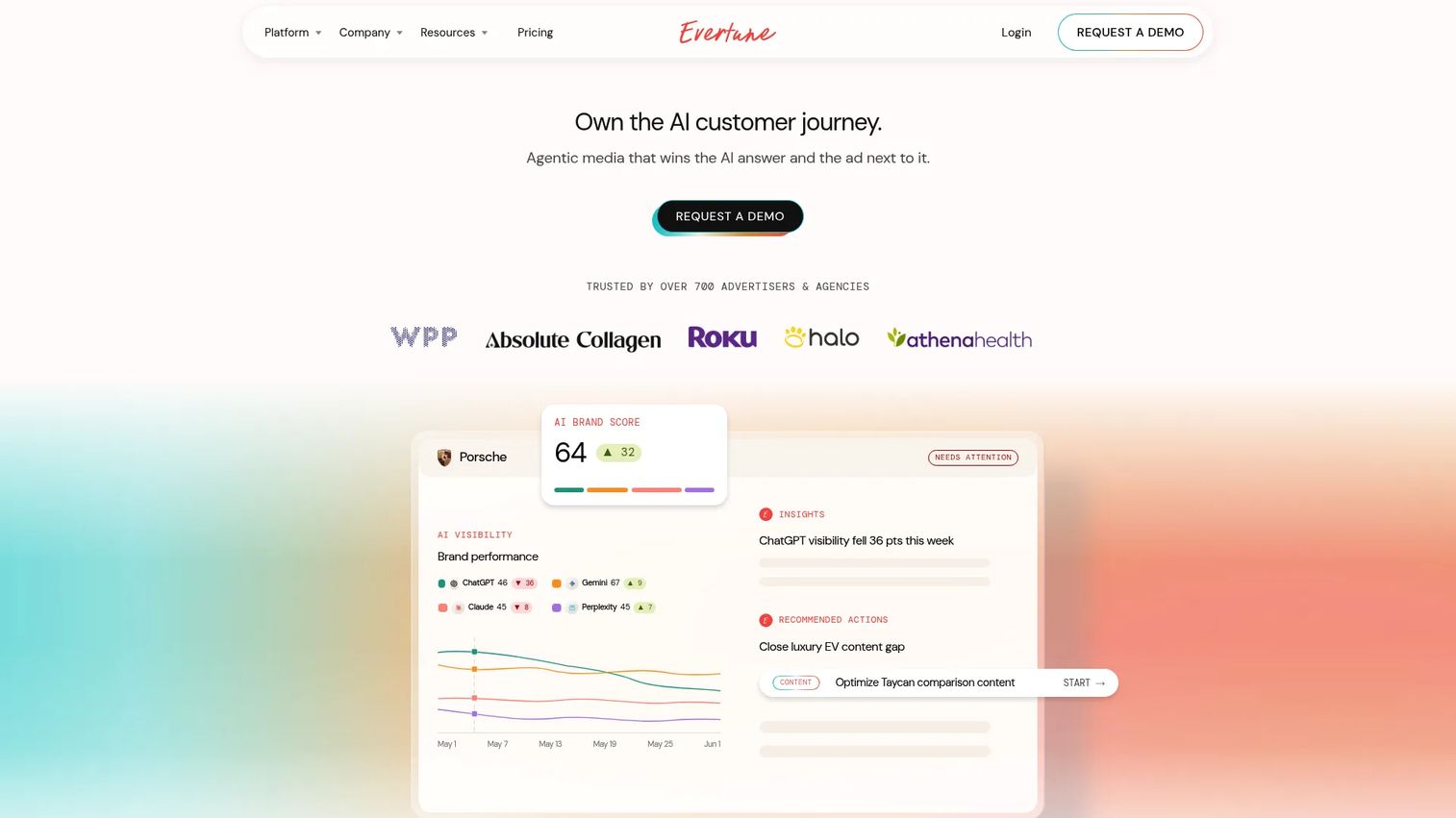
Evertune combines AI visibility research with content and advertising capabilities. Its measurement approach includes repeated sampling and statistical-significance analysis. Prompt research uses real-user prompt data.
Best for: Marketing teams that want to examine brand presence with attention to sampling methodology.
Key features
- AI visibility tracking
- Prompt research using user data
- Statistical-significance measurement
- Content Agent
- Site Audit and website optimization
Evertune documents sampling of up to 100 responses per prompt. That makes methodology a central part of the evaluation rather than a footnote beneath a visibility chart.
Ask which sampling approach applies to your plan. Have the vendor explain how it distinguishes a meaningful movement from an observation that needs more data.
The broader product also covers ChatGPT advertising and AI retargeting. Treat those as separate purchasing requirements. A team investigating organic brand recommendations should establish its measurement needs before adding advertising workflows.
Starter covers up to five models. Pro expands into broader model coverage and content research. Compare the package against the channels your buyers use, rather than purchasing breadth without a reporting owner.
Why choose Evertune: Consider it when research quality and repeated measurement matter to the business case. Its advertising scope also warrants evaluation by paid-media teams.
Evertune pricing: Starter costs $60/month; Pro costs $800/month, billed annually. Enterprise uses custom pricing; there is no free plan.
7. Bluefish
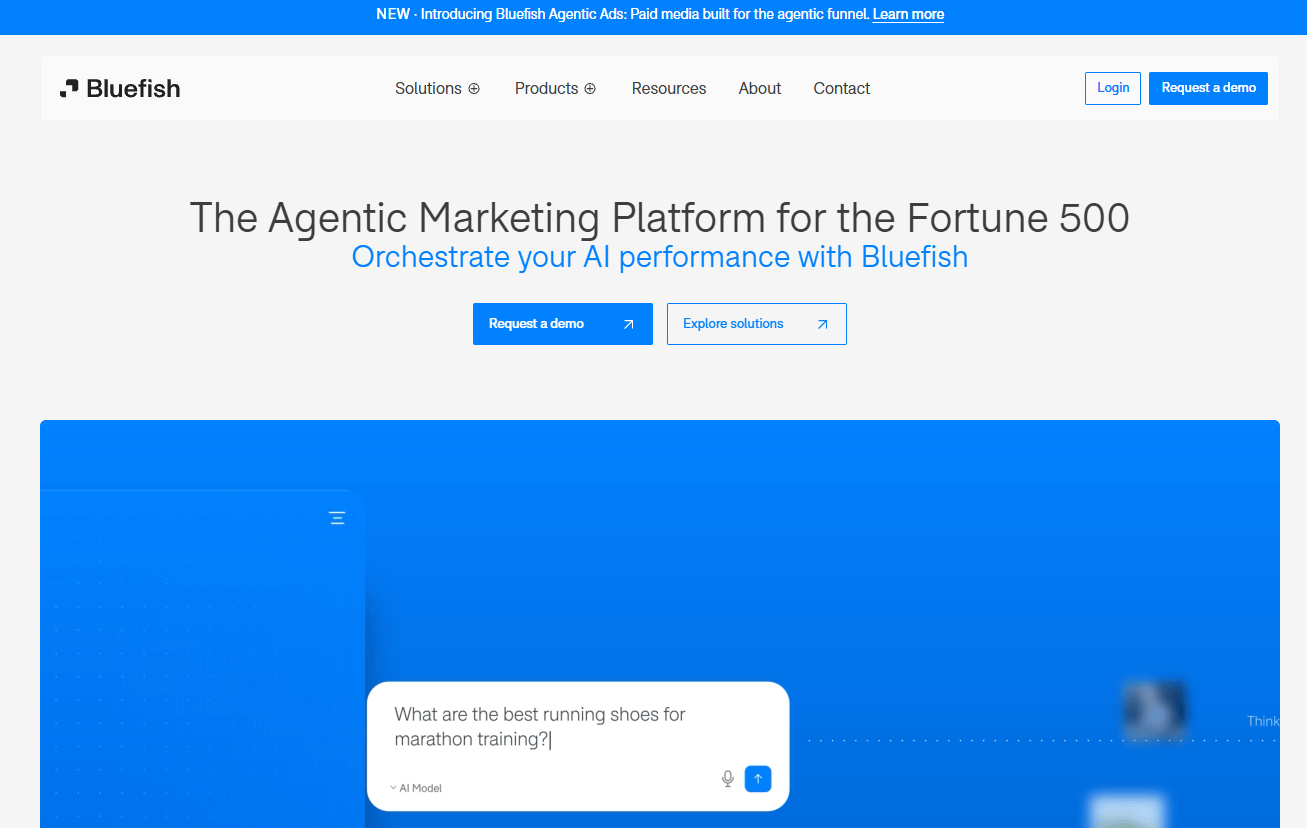
Bluefish serves enterprise brands with separate monitoring, optimization, and measurement suites. Its current product site is bluefishai.com. The similarly named bluefish.ai address resolves to a parked domain.
Best for: Enterprise marketing organizations coordinating AI-channel work across multiple stakeholders.
Key features
- AI Monitoring Suite
- AI Optimization Suite
- AI Measurement Suite
- API and MCP access
- SSO and MFA
Bluefish’s structure puts business measurement alongside visibility analysis. For a growth leader, the useful evaluation question is how those layers connect in a practical reporting workflow.
Request a demonstration using a brand objective your organization already tracks. Ask what data supports the reported business impact and which inputs your team must provide. Avoid accepting an attribution claim without understanding the method.
Security requirements belong early in the process. Bluefish lists SOC 2 Type II alongside access controls. Route the relevant documentation to your security team rather than interpreting a product-page statement as procurement approval.
For distributed teams, examine how findings become assigned work. Monitoring at enterprise scale needs a clear path from an identified issue to an accountable owner.
Why choose Bluefish: Evaluate it when AI visibility forms part of a wider enterprise marketing program. Its suite structure suits a cross-functional purchasing discussion.
Bluefish pricing: Request current commercial terms directly from the vendor.
G2 rating
4.1/5 on G2’s Bluefish Labs seller profile.
8. Goodie AI
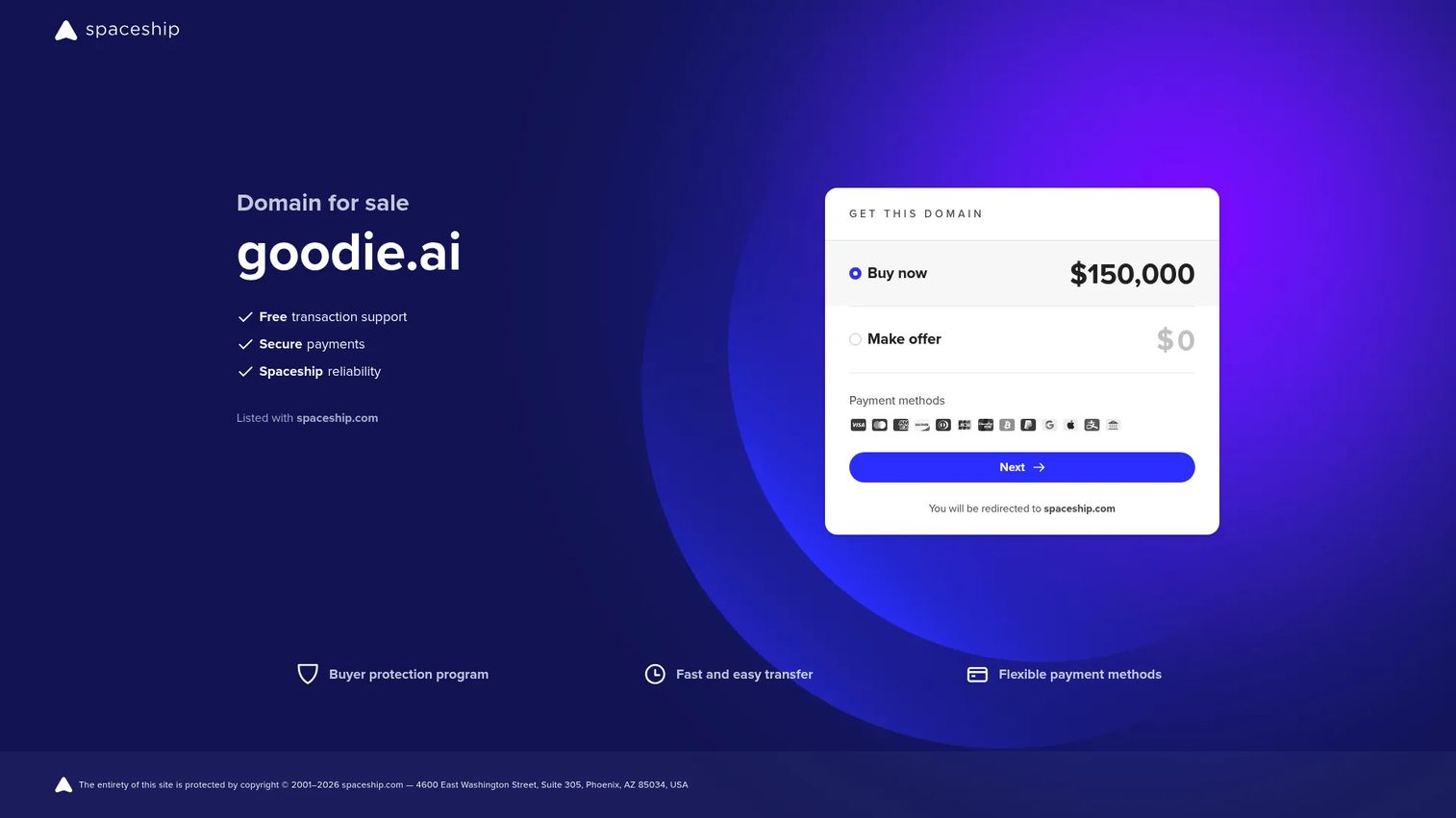
Goodie AI needs additional vendor diligence before it belongs on an active purchasing shortlist. The supplied goodie.ai address resolves to a domain-for-sale page. G2’s Goodie profile identifies higoodie.com as the product website.
Best for: Buyers prepared to establish the current product identity before evaluating fit.
Key features
Current first-party feature documentation was not established in the research. Claims about prompt tracking or integrations would therefore be premature.
A favorable review score does not establish current packaging or deployment requirements. Ask for the product’s official documentation and purchasing entity before comparing it with the other platforms here.
For an agency, include client-account separation and reporting access in that discussion. A startup should establish the minimum commitment and the work required to get useful results.
Why choose Goodie AI: Keep it under consideration only after reviewing the current product and commercial terms. There is insufficient evidence here to recommend a specific use case.
Goodie AI pricing: Request a current plan breakdown from the identified vendor.
G2 rating
4.9/5
9. Writesonic
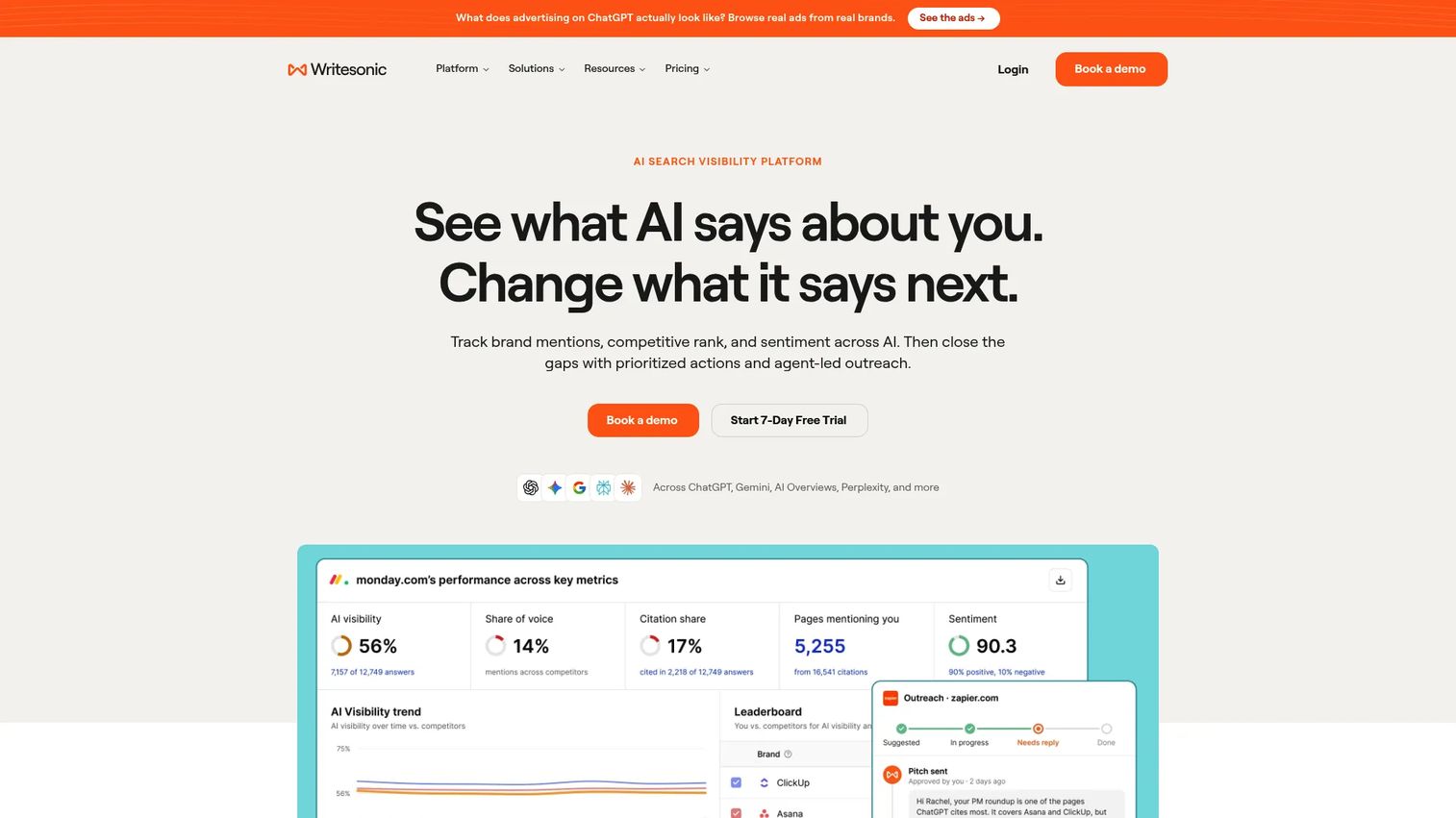
Writesonic connects AI search monitoring with content generation and site audits. Its visibility capabilities cover brand mentions and competitive position. Marketers can also examine sentiment across supported AI platforms.
Best for: Content teams seeking measurement and writing capabilities within the same purchasing decision.
Key features
- AI search visibility monitoring
- Competitive rank and sentiment analysis
- AI article generation
- Content generation workflows
- Visibility-focused site audits
The practical appeal is the connection between a discovered gap and content production. Evaluate that connection using a page your team already owns, rather than generating an unrelated sample article.
Ask an editor to review the resulting draft for factual accuracy and source quality. Then assess how much revision is needed before the content meets your publishing standard.
This also creates a useful consolidation test. If you already pay for writing software, compare overlap before adding another subscription. The decision should account for editorial effort alongside monitoring coverage.
Writesonic’s pricing separates annual and monthly commitments. That distinction matters for a team running an initial experiment without an established AEO budget.
Why choose Writesonic: It fits teams that want to act on visibility findings through content work. Evaluate writing quality and measurement usefulness together.
Writesonic pricing: Starter costs $79/month annually or $99 monthly, with a seven-day trial. Basic costs $199/$249 and Growth $399/$499 per month, respectively.
G2 rating
4.7/5 on G2.
10. Semrush AI Visibility Toolkit
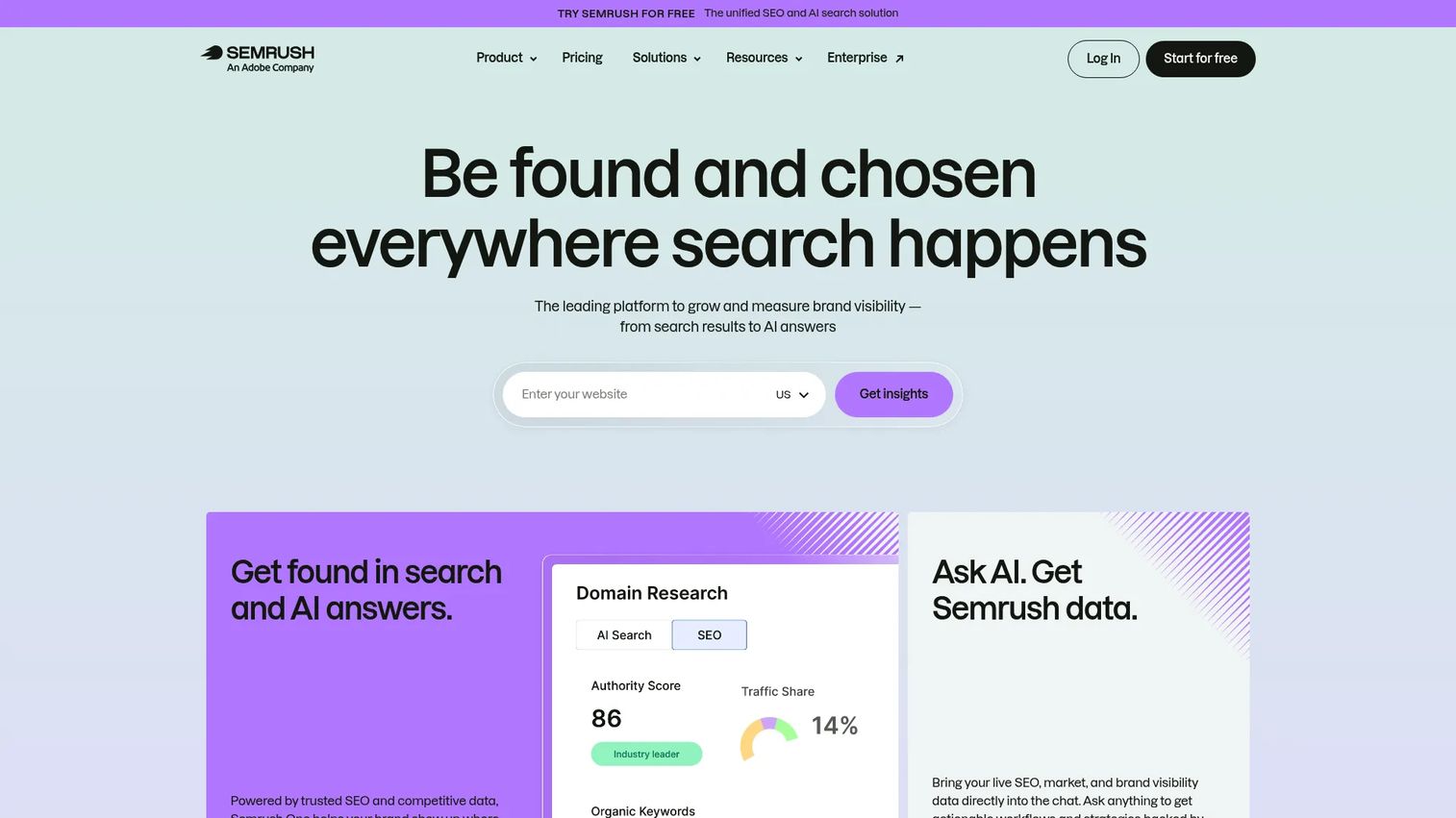
Semrush AI Visibility Toolkit measures brand presence in AI-generated answers and supports prompt research. It includes technical readiness audits and shareable reporting. This makes it relevant to SEO teams expanding an existing measurement process.
Best for: Marketers who want AI visibility reporting alongside familiar SEO work.
Key features
- Brand mention and citation tracking
- Prompt research and daily monitoring
- Competitor benchmarking
- AI-readiness site audits
- Scheduled, shareable reports
The Base package covers one domain for Brand Performance analysis. That billing model deserves attention if your organization operates separate regional websites or manages several client properties.
During evaluation, ask how the toolkit distinguishes discovered prompts from the questions you explicitly monitor. Your reporting team should know what each view represents before combining the outputs.
Consolidation is valuable only if it improves the working process. Have the person who prepares your search report test whether the new data fits their recurring questions.
The toolkit itself has no free trial. A broader free Semrush plan includes limited AI Visibility functionality, but that is a different offer.
Why choose Semrush AI Visibility Toolkit: Consider it when your SEO team needs an extension to established research habits. Evaluate domain costs before rolling it across accounts.
Semrush AI Visibility Toolkit pricing: Base costs $99/month per domain, billed annually. Enterprise uses custom pricing.
11. Adobe LLM Optimizer
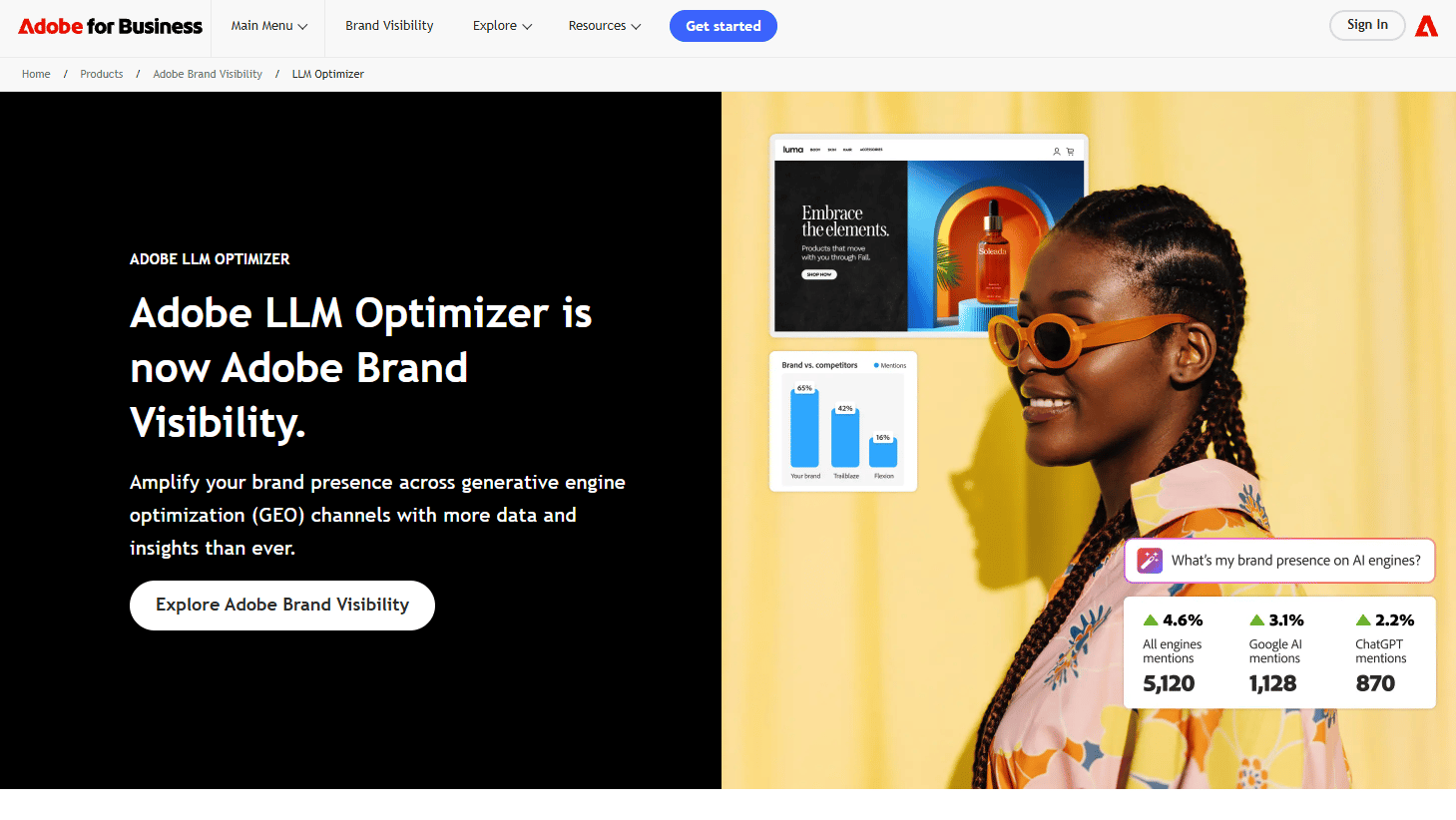
Adobe LLM Optimizer was replaced by Adobe Brand Visibility and stopped being sold on July 31, 2026. Buyers using the older name should evaluate the current offering. Its scope connects AI visibility analysis with enterprise content optimization.
Best for: Enterprise teams that need AI search work connected to content deployment and Adobe analytics products.
Key features
- Brand mention, citation, and sentiment tracking
- AI crawler and technical issue detection
- AI-ready summaries and FAQs
- Edge deployment with rollback support
- Adobe analytics and content integrations
The current offering can identify issues such as blocked crawlers and missing structured data. It also supports generating simplified page content and deploying optimizations at the edge.
That deployment capability changes who belongs in the buying conversation. Include website operations and governance owners alongside marketing. Ask them to examine approval requirements and rollback behavior.
Connections include Adobe Experience Manager Sites, Adobe Analytics, Customer Journey Analytics, and Adobe Commerce. Evaluate the specific connection your team would use rather than assuming every existing Adobe workflow is covered.
The product-name change also affects contracting and review interpretation. Make sure purchasing documents identify the current service and its deliverables.
Why choose Adobe LLM Optimizer: Evaluate its successor when enterprise content operations need a route from diagnosis to deployment. Existing Adobe workflows provide a relevant starting point.
Adobe LLM Optimizer pricing: Request commercial terms for Adobe Brand Visibility, the current replacement product.
G2 rating
5.0/5
12. Otterly
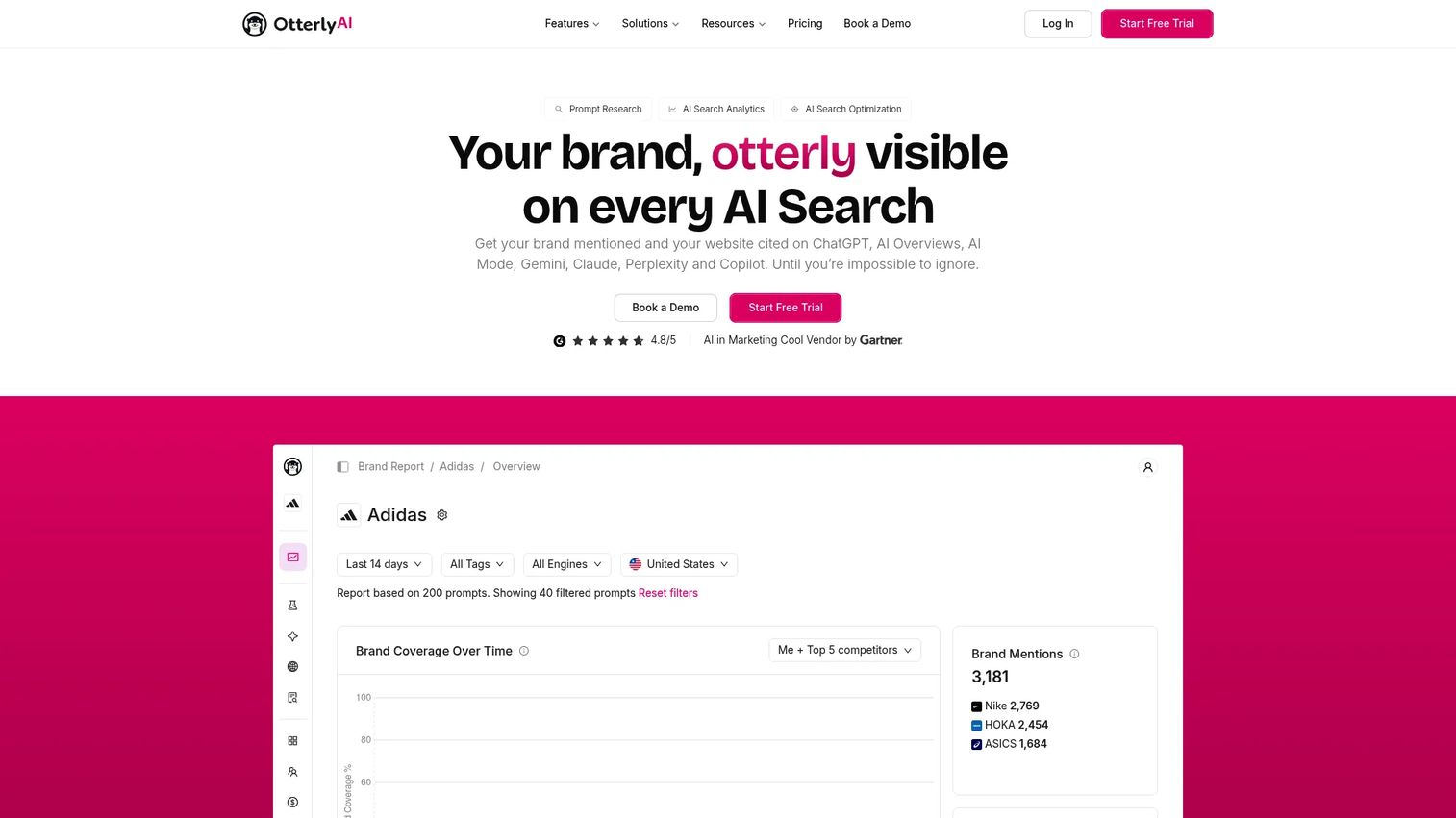
Otterly combines AI search monitoring with prompt research and content intelligence. It tracks citations and domains alongside brand sentiment. Content audits and GEO recommendations add a route from observation to investigation.
Best for: Lean marketing teams establishing a recurring AI visibility review.
Key features
- AI prompt research
- Citation and domain tracking
- Brand sentiment analysis
- Content audits and GEO recommendations
- Multi-country tracking
Its entry price makes Otterly worth considering for a focused pilot. Keep that pilot tied to a defined business question, such as visibility around one product category.
Before expanding coverage, ask how prompt allowances and engine access differ between packages. An inexpensive starting tier is useful only if it covers the questions your team needs answered.
Otterly also lists API and MCP access. Those capabilities may matter later if you want to move findings into another reporting environment. Establish their availability for your intended package during procurement.
A good first deliverable is a recurring report that another marketer can interpret without a separate explanation. Include answer context alongside trend changes.
Why choose Otterly: It suits teams replacing manual checks with a dedicated monitoring process. Start with a narrow reporting scope and expand after demonstrating usefulness.
Otterly pricing: Lite costs $29/month, Standard $189/month, and Premium $489/month. A free trial is available; Enterprise uses custom pricing.
G2 rating
13. SE Ranking
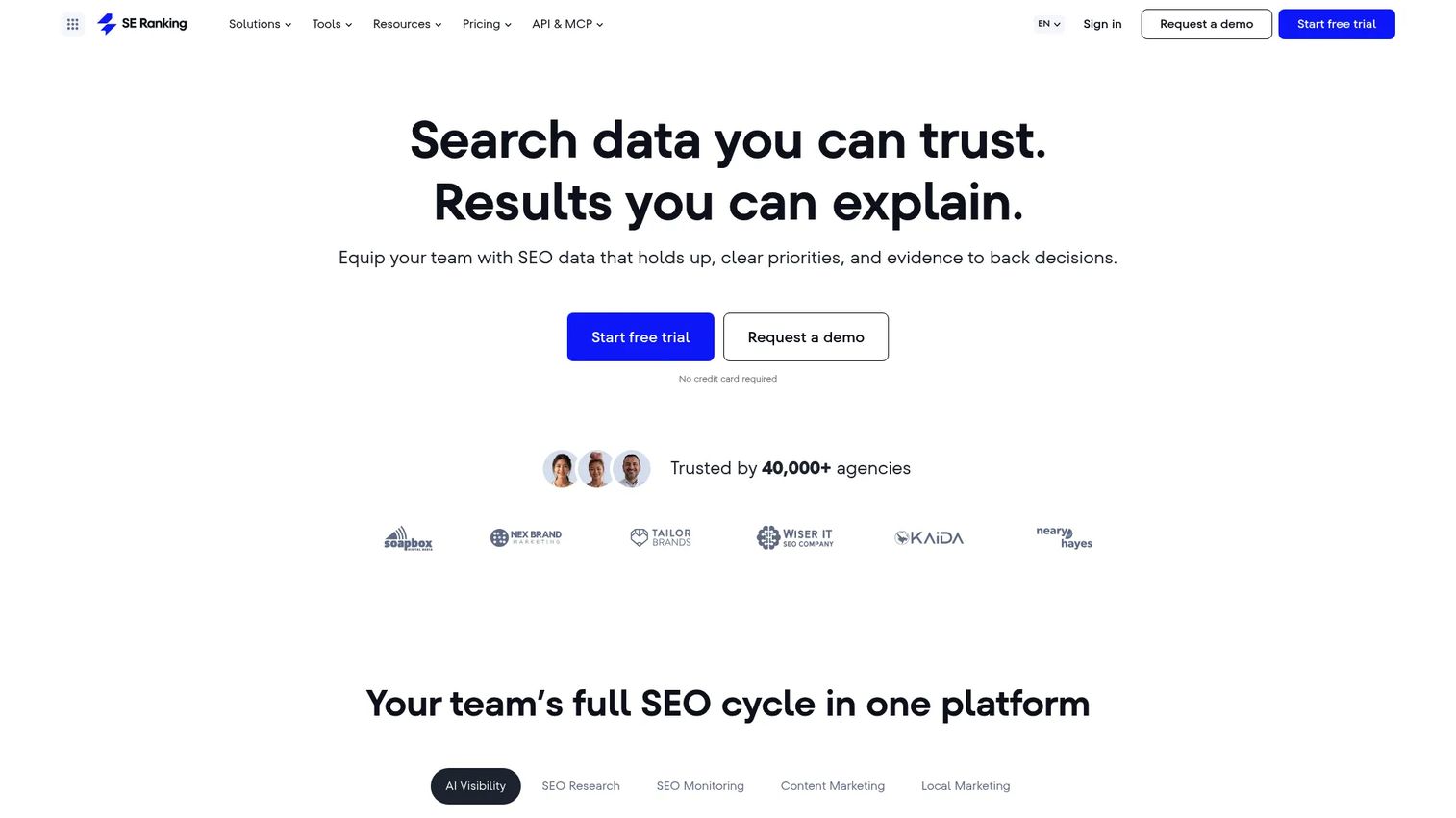
SE Ranking combines traditional SEO research with AI visibility analysis. Its broader platform includes rank tracking and website audits. Agencies can assess it as a shared stack rather than a standalone AEO purchase.
Best for: SEO teams that need conventional search reporting alongside AI answer visibility.
Key features
- Search engine rank tracking
- Keyword and competitor research
- Website and on-page audits
- AI visibility tracking
- GA4, GSC, and Matomo integrations
The consolidation case depends on what you already own. Inventory overlapping subscriptions before comparing SE Ranking with a dedicated tracker. Avoid counting existing SEO functionality as new value unless it replaces another expense.
Its integration coverage also includes Data Studio, API, and MCP access. Ask how the particular AI metrics you need can move into your reporting process.
For agencies, use an existing client report as the evaluation artifact. Check whether the combined output helps explain a decision rather than simply adding another page of charts.
Core and Growth have different subscription commitments, while Enterprise offers custom limits. Confirm the AI coverage and project allowances required for your accounts before choosing a package.
Why choose SE Ranking: Evaluate it when stakeholders still require established SEO metrics alongside AEO findings. The strongest case is a clearer combined workflow.
SE Ranking pricing: Core costs $103.20/month annually or $129 monthly; Growth costs $223.20 or $279, respectively. A 14-day trial is available; no permanent free plan exists.
G2 rating
14. Searchable
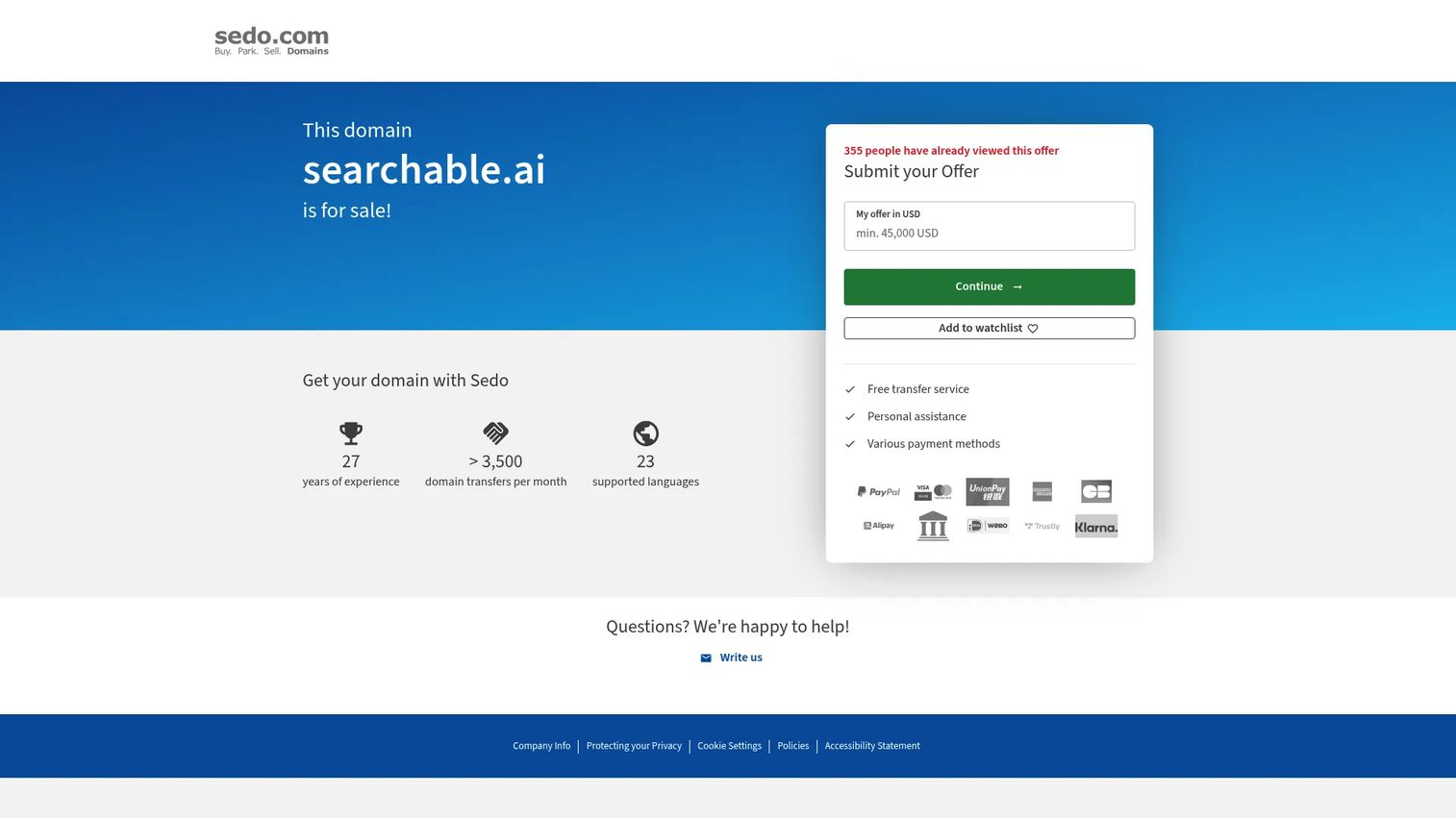
Searchable’s supplied address resolves to a parked domain. The research could not establish current product documentation or reliably match a G2 listing. Its capabilities therefore cannot support a purchase recommendation here.
Best for: Buyers who already have a vendor contact and can establish the current product identity.
Key features
There is insufficient first-party evidence to describe current functionality. Do not assume that similarly named search products provide the AEO capabilities you need.
Before evaluating software, request the operating company’s details and the official product URL. Then ask for a demonstration using your own buyer questions.
This distinction matters when procurement records, review profiles, and product names do not line up. Resolving identity first prevents your team from comparing unrelated offerings.
Why choose Searchable: Defer a buying decision until the vendor establishes its current product and commercial offer. The available evidence does not justify a stronger recommendation.
Searchable pricing: Establish the vendor’s current purchasing channel before requesting a quote.
15. Ahrefs Brand Radar
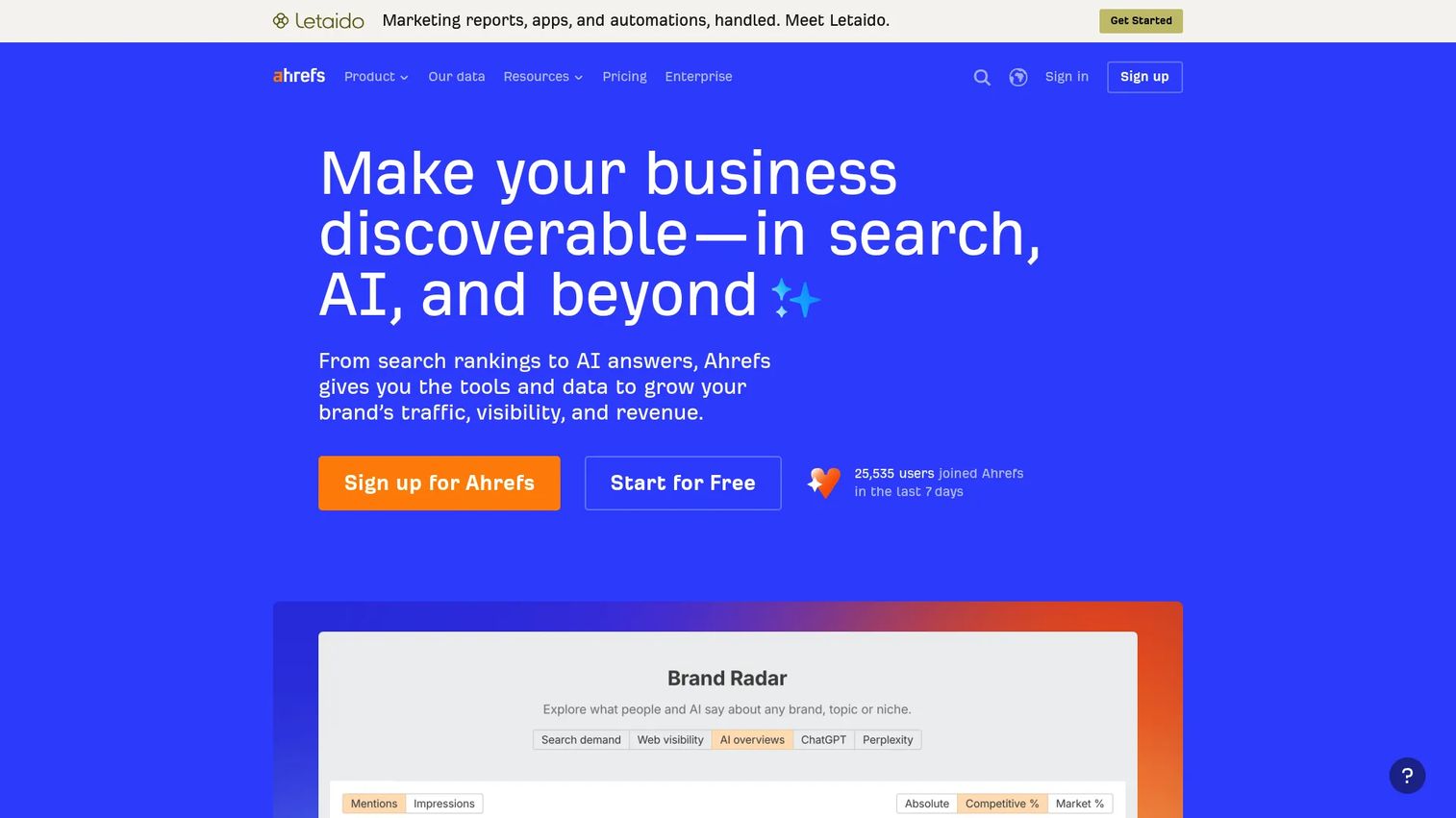
Ahrefs Brand Radar combines AI brand visibility analysis with broader discovery research. It tracks mentions and citations while supporting custom buyer prompts. Related research spans web visibility and channels such as YouTube or Reddit.
Best for: SEO and content teams connecting AI visibility questions to existing research habits.
Key features
- Brand mentions and citation tracking
- AI share-of-voice measurement
- Custom buyer-prompt monitoring
- Search demand and web visibility analysis
- Social discovery signals
The important purchasing distinction is between custom prompts and AI Visibility Index access. These answer different research questions and have separate pricing.
A defined prompt set supports monitoring questions your team chooses. Index access supports a broader view of visibility. Ask the vendor to show both against the same category before deciding which you need.
Custom prompts are also included with paid Ahrefs Lite plans and above. Existing subscribers should inspect their current allowance before buying additional coverage.
For content teams, evaluate whether the research identifies useful topics or sources outside the pages you already monitor. That is a stronger reason to expand a stack than another dashboard showing familiar competitors.
Why choose Ahrefs Brand Radar: It fits SEO-led teams that want brand visibility connected to wider discovery research. Separate ongoing monitoring from exploratory analysis when budgeting.
Ahrefs Brand Radar pricing: Custom prompts start at $50/month. AI Visibility Index access costs $199/month per platform or $699/month for all platforms.
G2 rating
4.5/5
Considerations when choosing AEO tools
AI engine coverage
List the answer engines your buyers use, then map each to the proposed plan. Ask whether the vendor measures the consumer interface or another access method.
Broader coverage is useful only when someone can interpret and act on it.
Prompt tracking quality
Build prompts from purchasing questions and sales conversations. Ask how the platform handles countries, languages, and changes to your tracked set.
Keep a stable baseline so reporting changes do not get confused with changes in methodology.
Citation and source analysis
The best AEO checking tool for your team should expose evidence behind its scores. Request answer text and source URLs for a sample finding.
Check whether a colleague can reproduce your interpretation without relying on a vendor’s summary.
Content recommendations
Decide who will implement the findings before buying AEO analysis software. Recommendations should connect to a content brief or a specific technical task.
Assign review responsibility so generated material does not bypass your publishing standards.
Pricing, governance, and stack fit
Compare total cost across domains, usage allowances, seats, and required integrations. Enterprise buyers should also examine security documentation and data retention terms.
For agencies, test account separation and client reporting. Choose AI visibility tools that improve your weekly process rather than expanding an unused reporting stack.
Conclusion
Choose AEO tools according to the work your team needs to complete.
Profound belongs on the enterprise visibility shortlist. Peec AI suits structured growth-team monitoring, while AirOps addresses the content production process that follows research.
Scrunch deserves attention when agent-facing delivery is part of the assignment. For organizations with established Adobe workflows, evaluate Brand Visibility as the replacement for LLM Optimizer.
Semrush AI Visibility Toolkit and SE Ranking offer paths for teams extending SEO reporting. Otterly provides a focused starting point for a lean monitoring program. Goodie AI needs further vendor diligence before it can receive the same recommendation.
Before purchasing, run a pilot around one commercial question. Require an interpretable report and an actionable output. Have the eventual owner use the software, not just attend the sales presentation.
Start by deciding whether you need monitoring or execution. Then select the tool that supports that job without adding another dashboard nobody trusts.
FAQs
Answer engine optimization tools measure how brands appear in AI-generated answers and help teams investigate opportunities to improve that presence. Their outputs can include prompt visibility, cited sources, sentiment analysis, and competitive comparisons. The best AEO tools make those findings inspectable and useful to the team responsible for acting on them.
SEO focuses on discoverability and performance in conventional search results, while AEO examines representation within generated answers. The work overlaps around accessible pages and credible content, but the measurement objects differ. A ranked page, a cited source, and a brand recommendation should remain separate reporting concepts.
No. AEO adds another view of discovery, while SEO continues to address website access and organic search performance. Keep both in your measurement plan, with clear definitions for what each report proves. Avoid treating a change in AI mentions as evidence that technical SEO or conventional search research no longer matters.
Otterly is worth shortlisting for a focused monitoring pilot, while Peec AI suits teams ready to organize a broader prompt program. AthenaHQ and AirOps offer free entry plans, although their credit and task models serve different workflows. Startups seeking cheap AEO tools should compare the cost of their intended coverage rather than the lowest advertised amount.
Profound, Bluefish, and Scrunch deserve consideration for enterprise AI visibility programs; Adobe Brand Visibility connects the work to enterprise content operations. AthenaHQ adds a useful accuracy-focused evaluation path through claim review. The best answer engine optimization tools for enterprises must also pass procurement checks covering access controls, contractual data handling, and the reporting process.
Start with prompt monitoring, citation analysis, competitive benchmarking, and access to the underlying answers. Add sentiment tracking or content recommendations when your team has a process for using them. Integrations matter when findings need to reach an existing reporting environment. Ask vendors to demonstrate the exact export or connection you expect to use.
Costs vary with the billing unit and the breadth of the product. Dedicated trackers may charge for prompt capacity, while broader platforms can price by domain or workflow usage. Affordable AEO tools for agencies need enough client capacity to remain economical after the initial account. Request a quote using your expected operating volume and required features, rather than a generic entry configuration.
Tools monitor defined prompts or analyze answer datasets, recording information such as brand presence and cited URLs. Some also examine crawler activity or website content. The best AEO tracking tools explain their collection method and refresh schedule clearly. Ask how they handle repeated responses and distinguish custom monitoring from broader research datasets before presenting their scores as a market-wide view.