Your finance lead wants lower transfer costs. Your compliance lead wants fewer surprises. Your engineering team would rather build product than wrangle a custom payment rail.
Traditional bank wires solve the "sending money internationally" problem in the same way a fax machine solves document sharing: It works, but you are absorbing costs your competitors are not. The global average cost of sending remittances was 6.36% in Q3 2025, according to the World Bank Remittance Prices Worldwide report. For a company running contractor payouts, vendor payments, or marketplace withdrawals across borders, that margin bleeds into every transaction.
Crypto and blockchain-based remittance rails can reduce that friction, but the category is genuinely confusing. A consumer wallet, an enterprise blockchain network, a stablecoin treasury platform, and a fiat on-ramp provider all show up in the same search results. Choosing the wrong one means either rebuilding six months from now or introducing regulatory risk your board will notice.
This guide separates the 14 most relevant cryptocurrency remittance software options for 2026 by operating model, not crypto branding, so you can pick by what actually fits your corridor, compliance posture, and finance team's workflow.
What's inside
This guide is for Series B founders, fintech operators, and finance leaders evaluating blockchain-based payment rails for contractor payouts, vendor transfers, marketplace withdrawals, or cross-border settlement. Tools were selected from software directories, remittance infrastructure categories, and crypto payment provider listings. Evaluation criteria:
- Corridor coverage: Which countries, payout methods, and assets are supported
- Settlement model: Consumer app, enterprise rail, on-ramp/off-ramp, or invoice-led flow
- Compliance posture: KYC, AML, wallet screening, and sanctions tooling
- API and finance-team fit: Dashboard access, reporting, and integration readiness
Pricing and G2 ratings were verified at the time of writing. Use "N/A" entries as a signal to contact the vendor directly.
TL;DR
- Best for consumer-first cross-border transfers: SentBe for remittance-first workflows across 50+ countries with real-time payout options
- Best for enterprise blockchain payments: Ripple for financial institutions and fintechs needing regulated institutional settlement rails
- Best for open blockchain remittance rails: Stellar Development Foundation for teams building payment products on public infrastructure
- Best for stablecoin business payments: BVNK for enterprises running fiat and stablecoin treasury workflows via API
- Best for fiat on-ramp and off-ramp coverage: BANXA for crypto companies that need compliant fiat entry and exit points
- Best for merchant crypto remittance workflows: ForumPay for businesses accepting crypto and settling in fiat without holding volatile assets
What is cryptocurrency remittance software?
Cryptocurrency remittance software helps people or businesses send value across borders using blockchain-based payment rails, digital wallets, stablecoins, or crypto-to-fiat conversion. It differs from a traditional money transfer operator in that value moves through a distributed ledger rather than a correspondent banking chain. It differs from a simple crypto wallet in that it typically includes compliance controls, payout infrastructure, and recipient cash-out paths. It is not a crypto exchange: The goal is payment delivery, not trading.
The category includes several distinct operating models:
- Consumer remittance apps: Mobile-first, send-and-receive flows for individuals and small businesses
- Enterprise blockchain rails: Institutional-grade networks for banks, fintechs, and payment companies
- Fiat on-ramp and off-ramp providers: Infrastructure for converting between fiat money and crypto assets
- Merchant crypto processors: Accept crypto from customers and settle to fiat
- Stablecoin business payment platforms: Treasury and payment operations using assets like USDC or USDT
- Wallet-led transfer tools: Crypto-linked cards and accounts for spending and sending
- Invoice-led payment software: Payment requests and accounts payable workflows for Web3 and crypto-native teams
Key features to evaluate across this category:
- Crypto-to-fiat conversion and stablecoin settlement
- Wallet compatibility and recipient payout options (bank account, cash pickup, mobile wallet, card)
- Remittance corridor and country coverage
- KYC, AML, and sanctions screening workflows
- Transaction monitoring and audit trails
- API access, dashboard reporting, and finance reconciliation exports
- FX spread and fee transparency
Understanding which model fits your use case before evaluating vendors will save your team the most time.
When to use cryptocurrency remittance software
Send cross-border payouts without rebuilding payment infrastructure
SaaS platforms, marketplaces, and fintechs frequently need to pay contractors, creators, affiliates, or vendors across dozens of countries. Building a custom payment rail for each corridor is an engineering sprint that rarely ends. Crypto remittance platforms give your finance team a structured payout layer with compliance controls already embedded, so engineering focuses on product rather than payment infrastructure. The key is matching the platform's corridor coverage to your actual recipient countries before committing.
Settle faster across expensive or slow corridors
Certain corridors, particularly US to Philippines, EU to West Africa, and Singapore to Pakistan, carry high fees and multi-day settlement windows through traditional operators. Blockchain payment rails can reduce both, but costs and timing still depend on the asset type, off-ramp liquidity, and local compliance requirements. The honest framing: Crypto rails help more in some corridors than others, and your due diligence should include testing a real transaction before you route volume.
Add stablecoin options for global recipients
Stablecoins like USDC and USDT give recipients dollar-linked value before they cash out to local currency, which removes volatility risk during transit. For recipients in high-inflation economies, receiving a stablecoin and cashing out locally at a convenient time is often preferable to receiving a fluctuating cryptocurrency. Check whether your shortlisted platform supports the assets your recipients can actually use at the off-ramp.
Cryptocurrency remittance software comparison
The table below is a shortlist for evaluation, not a universal directory. Pricing and G2 ratings were verified at writing time from vendor pricing pages and live G2 listings. Where no G2 listing with meaningful reviews exists, the column reads "N/A." Use this table to identify which operating model fits your use case, then read the item entries for detail.
| # | Product | Best for | Key differentiator | Pricing | G2 rating |
|---|---|---|---|---|---|
| 1 | SentBe | Consumer and SMB cross-border transfers | Remittance-first platform across 50+ countries | Verify live | N/A |
| 2 | MoneyGram International | Global cash-out network access | Established network with digital and cash payout options | Transaction fees vary by corridor | N/A |
| 3 | Ripple | Enterprise blockchain payments | Institutional settlement and stablecoin infrastructure | Custom pricing | 4.3/5 |
| 4 | Stellar Development Foundation | Open blockchain payment rails | Public network for low-cost payment and tokenization | Network transaction fees | 4.6/5 |
| 5 | BVNK | Stablecoin business payments | Enterprise stablecoin and fiat payment API | Custom pricing | 4.7/5 |
| 6 | BANXA | Fiat on-ramp and off-ramp coverage | Compliant fiat-to-crypto checkout and local payment rails | 1.99% processing fee (card/Apple Pay) | N/A |
| 7 | Tranglo | Asia-focused cross-border payouts | Regional payout network across 60+ countries | 1% per successful receiving transaction | N/A |
| 8 | ForumPay | Merchant crypto remittances | Free setup, crypto acceptance, fiat settlement | Free setup; per-transaction fee | N/A |
| 9 | Bitpace | Crypto payment processing | Multi-provider liquidity aggregation and settlement | Fees agreed with merchants separately | 4.4/5 |
| 10 | CoinsPaid | Crypto payment infrastructure | Full-stack digital-asset payment and compliance tooling | Custom pricing | 4.5/5 |
| 11 | Wirex | Wallet-based international transfers | Crypto card, wallet, and multi-currency accounts | Free tier; Premium from €9.99/month | 5.0/5 |
| 12 | Request | Crypto invoicing and payment requests | Business accounts with fiat and stablecoin invoicing | Free tier; Starter from $50/month | 5.0/5 |
| 13 | Everex | Blockchain remittance research | Coming-soon crowdfunding platform (verify availability) | Verify live | N/A |
| 14 | FÉLIX | Chat-based remittance for Latin America | WhatsApp-native US-to-Latin America transfers | From $2.99 per bank transfer | N/A |
Best 14 cryptocurrency remittance software for 2026
1. SentBe

SentBe is a fintech platform providing international money transfers to more than 50 countries, with a remittance-first approach built for individuals, migrants, and small businesses. Transfers can complete in real time or within one business day, with recipient payout options including bank accounts, cash pickup, cash delivery, and mobile wallets. The platform supports 15-language customer service, which matters when your recipients are in markets where English is not the operating language.
Best for: Teams wanting a remittance-first provider with broad corridor reach rather than deep blockchain infrastructure.
Key features
- Real-time or same-day cross-border transfers
- Bank, cash pickup, cash delivery, and mobile wallet payout options
- 15-language customer support for international recipient markets
- Repeat transfers using saved recipient profiles
- 24-hour mobile-accessible remittance workflows
Why choose SentBe: SentBe suits operators who prioritize corridor coverage and recipient payout flexibility over API-driven automation. Verify specific corridors and payout methods against your actual recipient countries before committing.
SentBe pricing: Transfer fees and FX margins vary by destination corridor and delivery method. Verify the applicable cost for your specific corridor on the SentBe platform before routing volume.
2. MoneyGram International
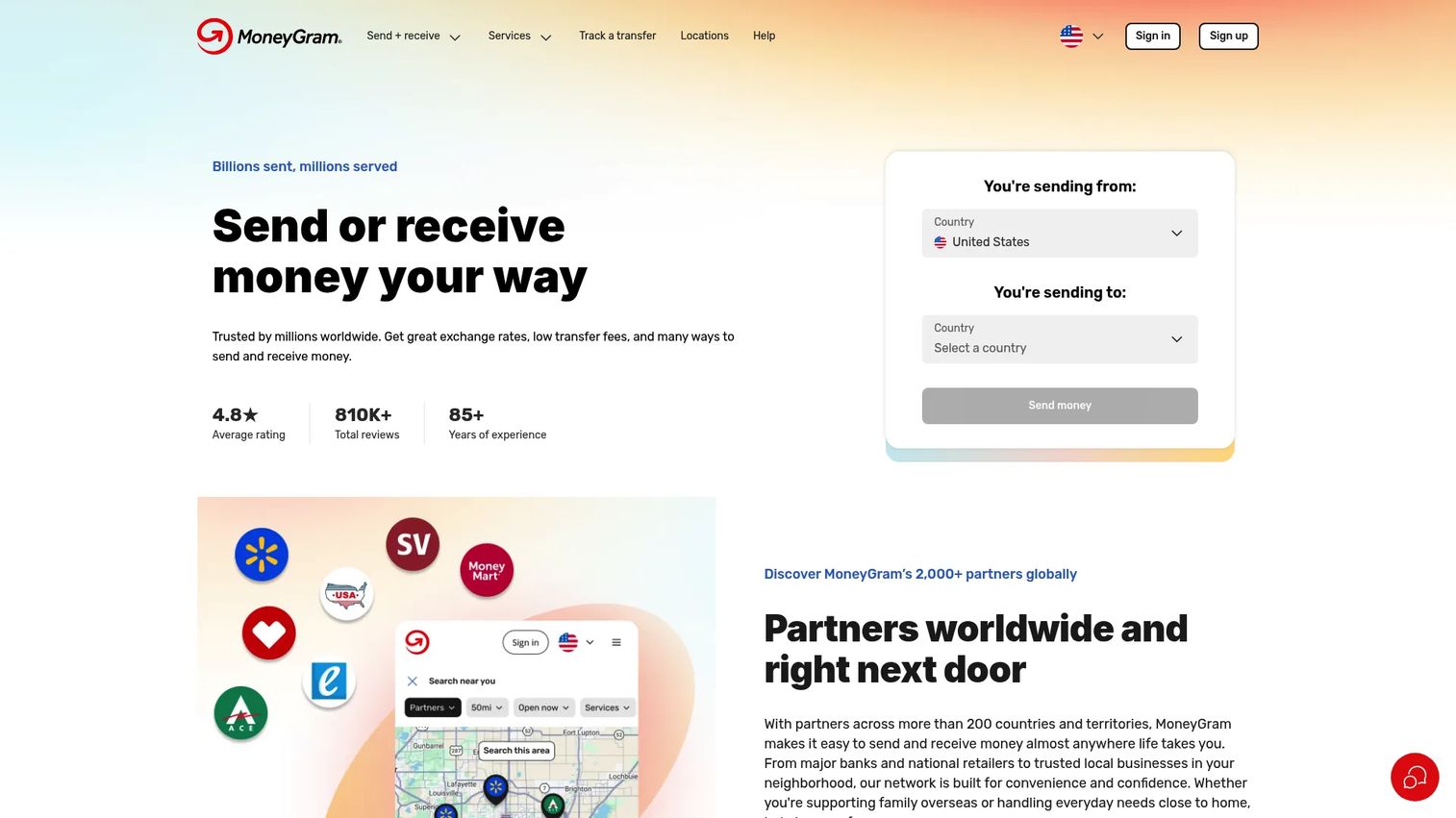
MoneyGram International is one of the largest global remittance networks, offering both digital transfer and physical cash-pickup options across a wide footprint of agent locations. The platform supports online, in-app, and in-person transfers, with delivery to bank accounts, debit cards, and mobile wallets alongside traditional cash-pickup. MoneyGram has pursued crypto and digital payment partnerships as part of its product evolution, and it maintains compliance infrastructure built for the regulated money-transfer business.
Best for: Businesses needing recipient access in markets where cash-out or physical pickup matters more than crypto-native depth.
Key features
- Online, in-app, and in-person money transfers
- Cash pickup, bank account, debit card, and mobile wallet delivery
- Bill payments to more than 13,000 billers
- Real-time transfer tracking
- Identity verification and fraud monitoring
Why choose MoneyGram: MoneyGram earns a place on this list when recipient access and trust matter more than a crypto-first architecture. It is less suitable for teams that need remittance API integrations or stablecoin-based treasury workflows.
MoneyGram pricing: Fees are transaction-specific and vary by amount, destination, payment method, and delivery method. MoneyGram displays the applicable cost before you confirm a transfer, so you can compare corridor-by-corridor. Contact MoneyGram for business or enterprise transfer arrangements.
3. Ripple
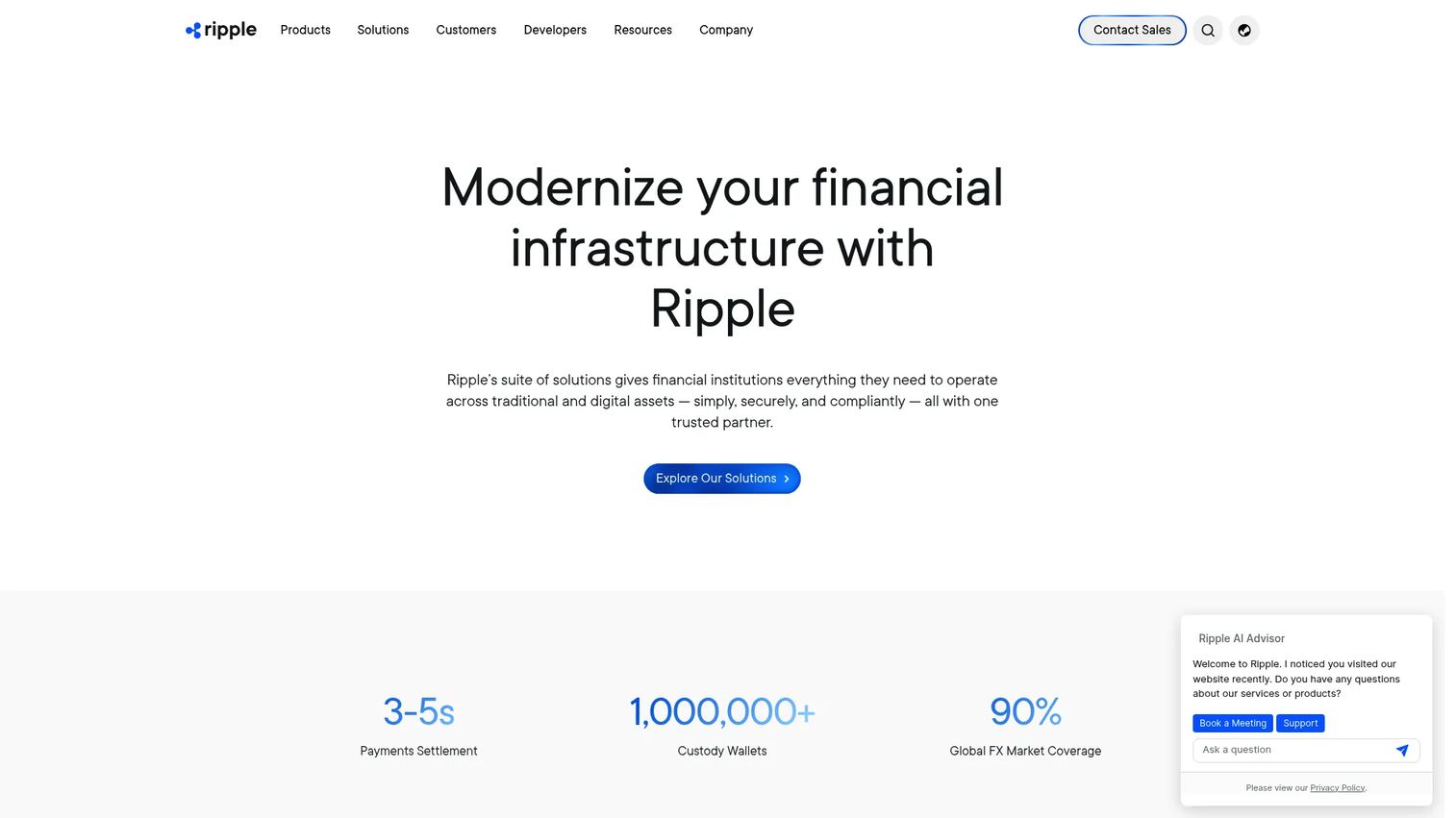
Ripple provides enterprise infrastructure for cross-border payments, stablecoin settlement, custody, liquidity, collections, and payouts across 60+ markets. It is an institutional-grade network used by banks, fintechs, and payment providers rather than a consumer remittance app. Ripple's product suite supports programmatic access via APIs and webhooks, making it relevant for finance and engineering teams building payment operations at volume. The platform handles both fiat and stablecoin workflows, including on/off ramps for asset conversion.
Best for: Banks, fintechs, and enterprise payment teams evaluating regulated blockchain settlement infrastructure at institutional scale.
Key features
- Stablecoin and fiat payment collection with automated reconciliation
- Fiat-to-digital asset and digital asset-to-fiat conversion
- Cross-border payouts across 60+ markets
- Wallet management, virtual accounts, and custody
- API, webhook, and developer tool access
Why choose Ripple: Ripple is the right fit when the buyer needs institutional rails, not a lightweight app. Budget for a compliance review, a sales-led onboarding process, and engineering integration time. This is not a tool you spin up in a week.
Ripple pricing: Custom pricing. Ripple directs prospective customers to contact sales. Pricing components are typically negotiated based on volume, corridor coverage, and product modules.
G2 rating: 4.3/5
4. Stellar Development Foundation

Stellar Development Foundation is a nonprofit organization supporting the Stellar network, an open blockchain built for financial applications, payments, tokenization, and asset issuance. It is not a single remittance product: It is an open infrastructure layer on which wallet providers, fintech builders, and payment companies build. Stellar supports stablecoins, tokenized assets, and smart contracts, with a developer ecosystem and a set of anchors that handle the local fiat on-ramp and off-ramp for specific corridors.
Best for: Engineering and product teams building payment applications or fintech products on open blockchain rails.
Key features
- Open payment network with cross-border settlement
- Tokenized asset and stablecoin support
- Smart contracts and developer tooling
- Anchor ecosystem for local fiat on-ramp and off-ramp connectivity
- Low per-transaction network fees
Why choose Stellar: Stellar works best for teams building a product rather than buying one. Implementation requires identifying and integrating with ecosystem anchors for each corridor, which means engineering work rather than a dashboard login.
Stellar pricing: Stellar network transaction fees are minimal by design. Software, partner, and anchor costs vary by provider and implementation. Verify current network fee schedules at stellar.org and budget for partner-side integration and compliance costs separately.
G2 rating: 4.6/5
5. BVNK
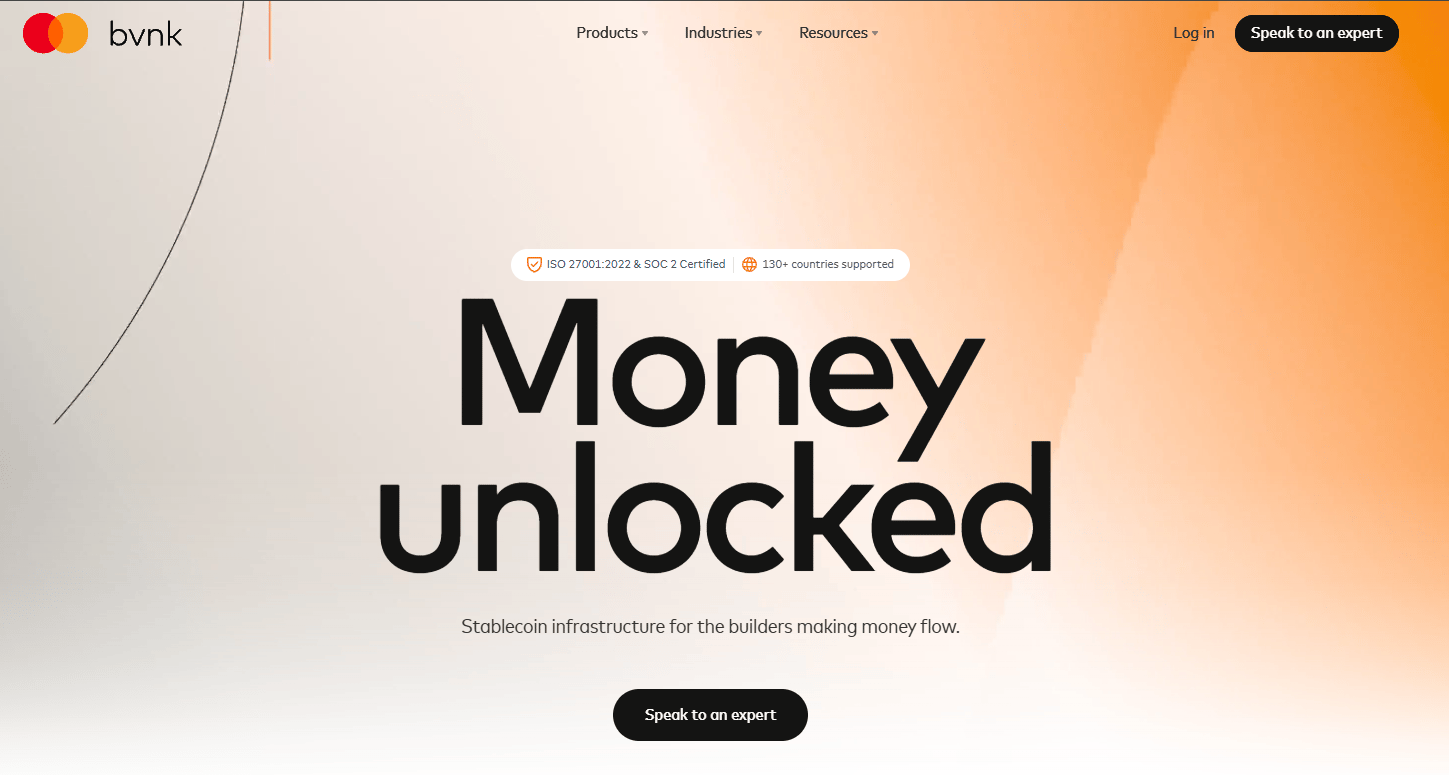
BVNK provides enterprise stablecoin infrastructure for businesses that need to send, receive, convert, store, and spend across fiat and digital assets. The platform is built for companies running global payment operations: It supports stablecoin and fiat payment APIs, embedded custodial and self-custodial wallets, and fiat-to-stablecoin conversion. Finance teams get multi-currency accounts and treasury controls alongside the payment layer, which matters when your CFO needs visibility across international flows.
Best for: Companies running stablecoin-based treasury operations and international payment workflows at enterprise scale.
Key features
- Stablecoin and fiat payments via API
- Embedded custodial and self-custodial wallets
- Fiat and stablecoin conversion with multi-currency accounts
- Compliance onboarding and know-your-customer workflows
- Treasury management and balance controls
Why choose BVNK: BVNK suits fintech companies, SaaS platforms, and marketplaces that need a structured stablecoin payment layer with finance-team controls built in. Plan for a compliance review during onboarding, as BVNK's disclosures reference onboarding fees and pre-agreed commercial terms.
BVNK pricing: Custom pricing. BVNK's pricing policy references possible onboarding, monthly platform, minimum-commitment, conversion, transfer, and blockchain fees, generally pre-agreed with customers. Contact sales for a quote.
G2 rating: 4.7/5
6. BANXA
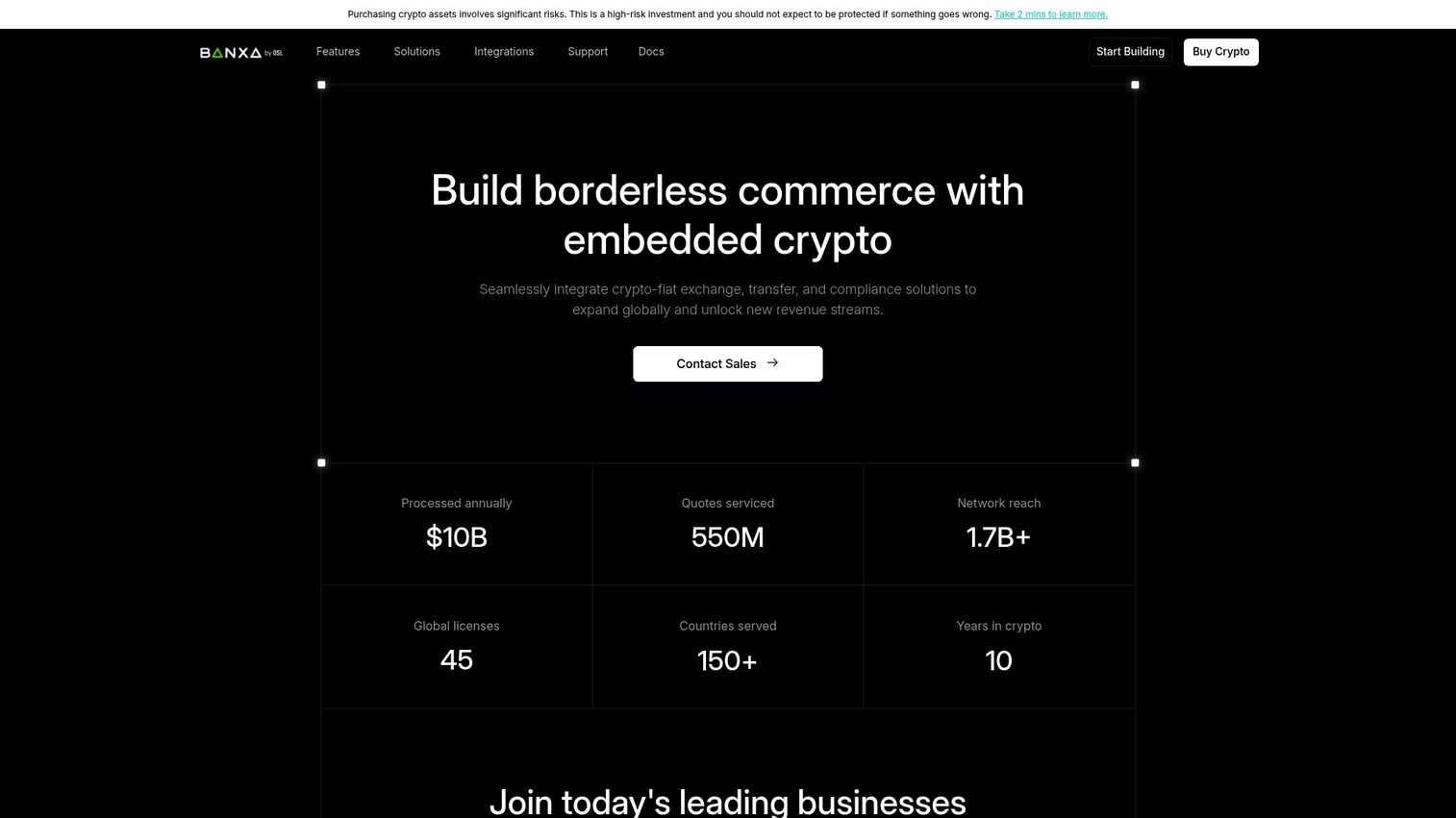
BANXA is a financial technology platform providing embedded crypto-fiat exchange, on-ramp and off-ramp infrastructure, wallet management, and compliance tooling. It is infrastructure for crypto companies rather than a standalone remittance app: Wallets, exchanges, and fintech products integrate BANXA to give their users fiat cash-in and cash-out access across local payment methods. The platform supports KYC/AML compliance, SDKs for integration, and transaction processing for card payments and bank transfers.
Best for: Crypto companies and fintech products that need compliant fiat entry and exit points across multiple markets.
Key features
- Fiat on-ramp and off-ramp infrastructure
- Local payment methods including bank transfers and cards
- KYC/AML compliance tools and solutions
- APIs, SDKs, and UX components for integration
- Wallet management and smart accounts
Why choose BANXA: BANXA is an infrastructure layer rather than a finished product. It is the right choice when you are building a crypto product that needs fiat connectivity, not when you need a standalone remittance tool for your finance team. Verify local payment method coverage by market before integrating.
BANXA pricing: Card and Apple Pay purchases carry a 1.99% processing fee alongside a market-priced network fee and variable spread. No subscription tier or flat platform fee was published at time of writing. Contact BANXA for merchant and partner arrangements.
7. Tranglo
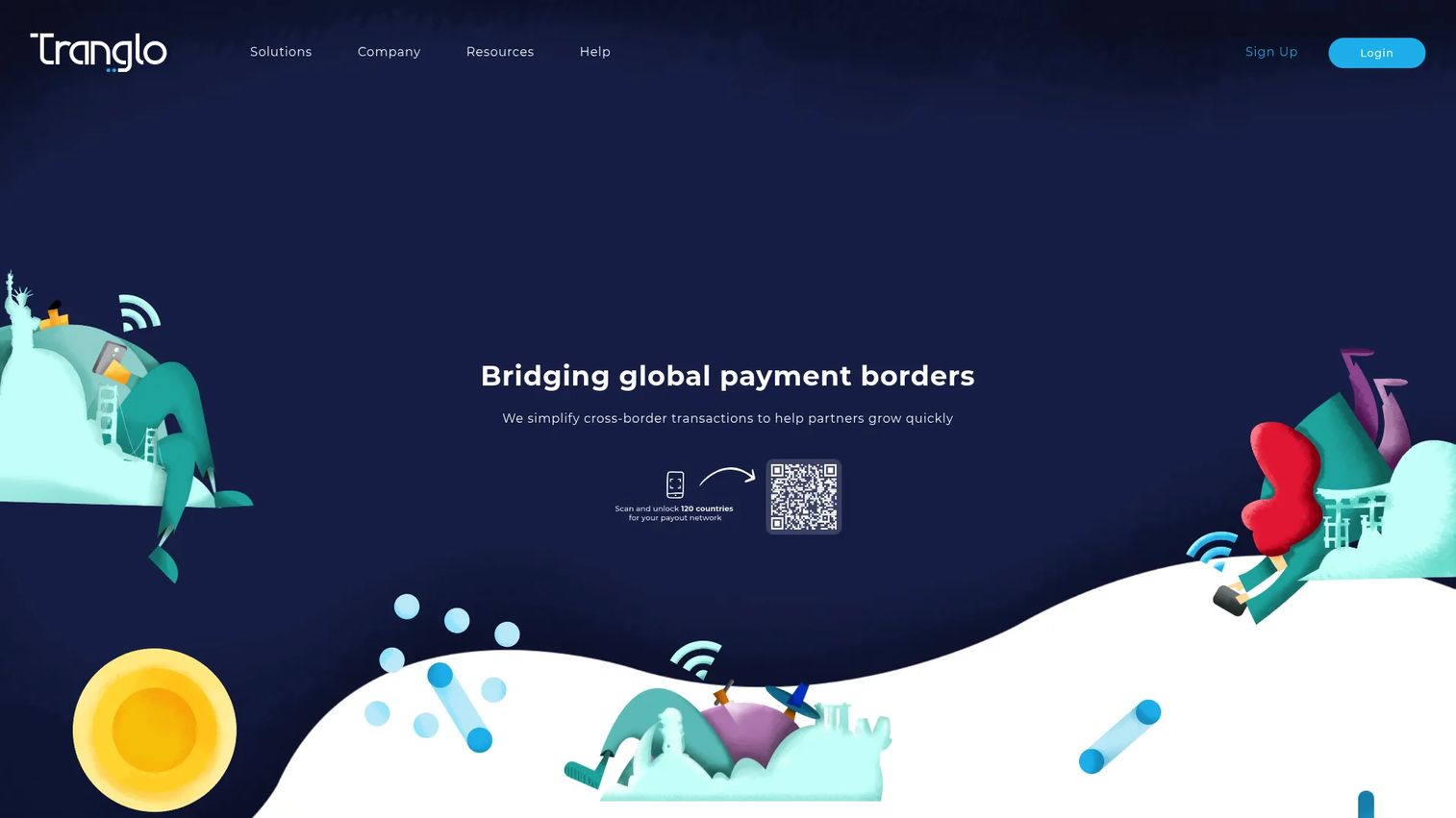
Tranglo provides cross-border payment infrastructure for businesses, covering international payouts, virtual accounts, batch transfers, and API integrations across 60+ countries. The platform has strong regional presence in Southeast Asia and the wider Asian corridor, which makes it relevant for businesses whose contractors, suppliers, or recipients are concentrated in markets like Malaysia, Indonesia, the Philippines, or Bangladesh. Tranglo also processes remittances for financial institutions and payment companies as a back-end partner.
Best for: Businesses needing reliable payout and remittance infrastructure across Asian corridors.
Key features
- Cross-border payouts to 60+ countries
- Real-time payments and 24/7 processing
- Batch transfers for bulk payment operations
- API and partner-portal integrations
- Virtual accounts and transaction reporting
Why choose Tranglo: Tranglo's corridor depth in Asia is its strongest differentiator. Validate specific local payout methods by recipient country before committing, as coverage varies by destination.
Tranglo pricing: Standard pricing is 1% per successful receiving transaction. Sending fees are fixed per transaction by corridor. Volume discounts and custom rates are available through the Customise plan. Contact Tranglo for corridor-specific fee tables.
8. ForumPay
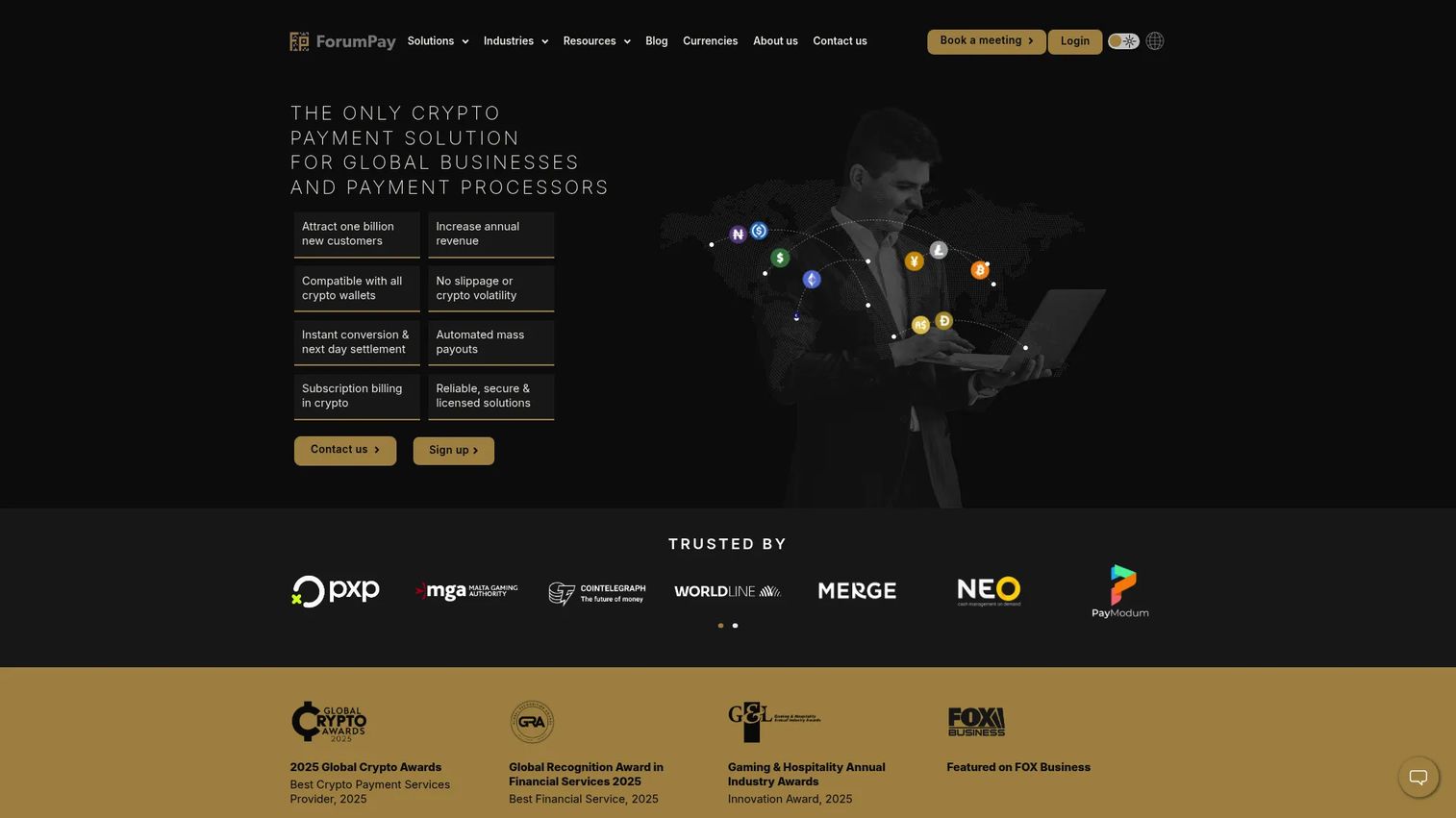
ForumPay is a crypto payment gateway that enables online, in-store, in-app, and recurring crypto payments with fiat settlement. The platform converts crypto to fiat in real time, settling to the merchant on the next business day. This structure removes volatility exposure: Businesses accept crypto but receive fiat. ForumPay supports payment links, widgets, APIs, and shopping-cart integrations alongside a merchant dashboard with virtual terminal access, refunds, and payout management.
Best for: Merchants and businesses that want to accept crypto payments and settle in fiat without holding volatile assets.
Key features
- Online, in-store, and in-app crypto payment acceptance
- Real-time crypto-to-fiat conversion with next-business-day fiat settlement
- Recurring billing and subscription payment support
- Payment widgets, links, APIs, and shopping-cart integrations
- Merchant dashboard with refunds, reporting, and virtual terminal
Why choose ForumPay: ForumPay is well suited to merchants who want crypto acceptance without crypto treasury exposure. It is less ideal for teams that need to pay recipients in crypto or route international bulk payouts programmatically.
ForumPay pricing: Account setup is free. ForumPay charges one all-inclusive transaction fee per payment. Contact ForumPay for your corridor-specific fee before going live.
9. Bitpace
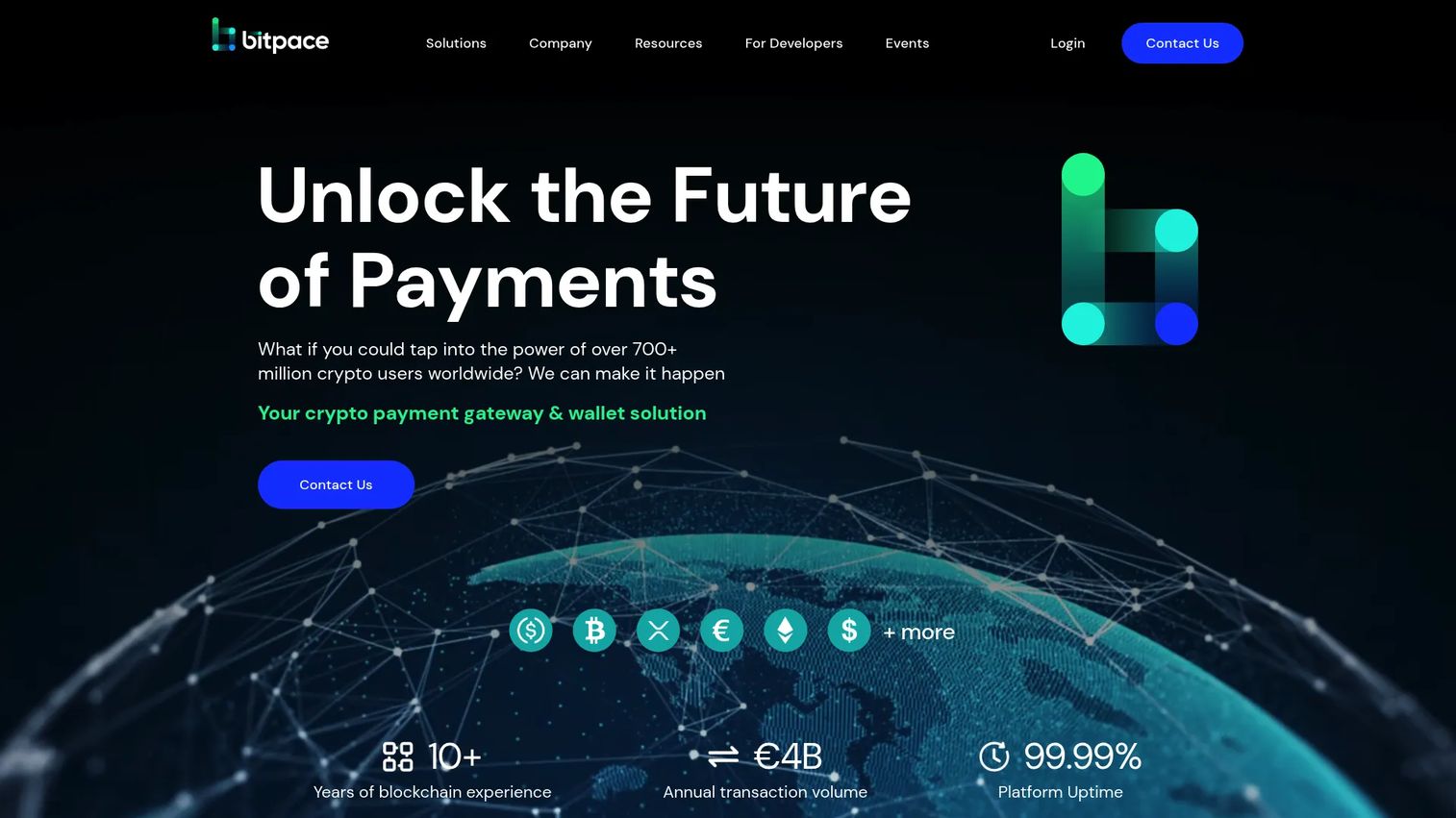
Bitpace is a business-focused cryptocurrency payment gateway and digital-asset settlement platform. It aggregates liquidity from multiple providers, supports automatic fiat or crypto settlement, and offers white-label solutions for companies that need a branded payment experience. Bitpace covers merchant payment acceptance, cross-border transactions, fraud and chargeback protection, and near-instant settlement, with API integrations and e-commerce plugins for common platforms.
Best for: Businesses needing crypto payment acceptance with multi-provider liquidity and settlement controls.
Key features
- Crypto payment acceptance with automatic fiat or crypto settlement
- Multi-provider liquidity aggregation
- White-label solutions for branded payment experiences
- Fraud and chargeback protection
- API integrations and e-commerce plugins
Why choose Bitpace: Bitpace suits payment teams that want crypto acceptance with operational-grade settlement controls and the option to white-label the experience. Distinguish this from consumer remittance: Bitpace is for accepting crypto from customers, not for sending international payroll.
Bitpace pricing: Service fees are agreed with merchants on a case-by-case basis and are displayed before acceptance. No published rate card was found at time of writing. Contact Bitpace to get corridor-specific and volume-based pricing.
G2 rating: 4.4/5
10. CoinsPaid

CoinsPaid provides full-stack blockchain payment infrastructure for financial institutions, payment providers, fintechs, and high-volume merchants. The platform covers digital-asset payments and payouts, custody and wallet management, settlement and reconciliation, exchange aggregation, and compliance tooling including KYT, AML screening, and sanctions checks. It positions itself as operating infrastructure rather than a consumer-facing product, which means it fits teams running payment operations at scale.
Best for: Financial institutions, PSPs, fintechs, and high-volume merchants launching or operating digital-asset payment infrastructure.
Key features
- Digital-asset payments and payouts across multiple assets
- Custody, wallet management, and secure key handling
- Settlement, treasury, and reconciliation workflows
- KYT, AML, and sanctions screening built in
- Exchange aggregation, merchant portals, and reporting dashboards
Why choose CoinsPaid: CoinsPaid is a strong fit when the team needs a full compliance and treasury stack alongside payment processing. Setup and integration require engineering investment. Evaluate whether your transaction volume justifies the operational depth.
CoinsPaid pricing: CoinsPaid directs prospective customers to contact its team for solution details. No transaction rate or platform fee was published at time of writing.
G2 rating: 4.5/5
11. Wirex
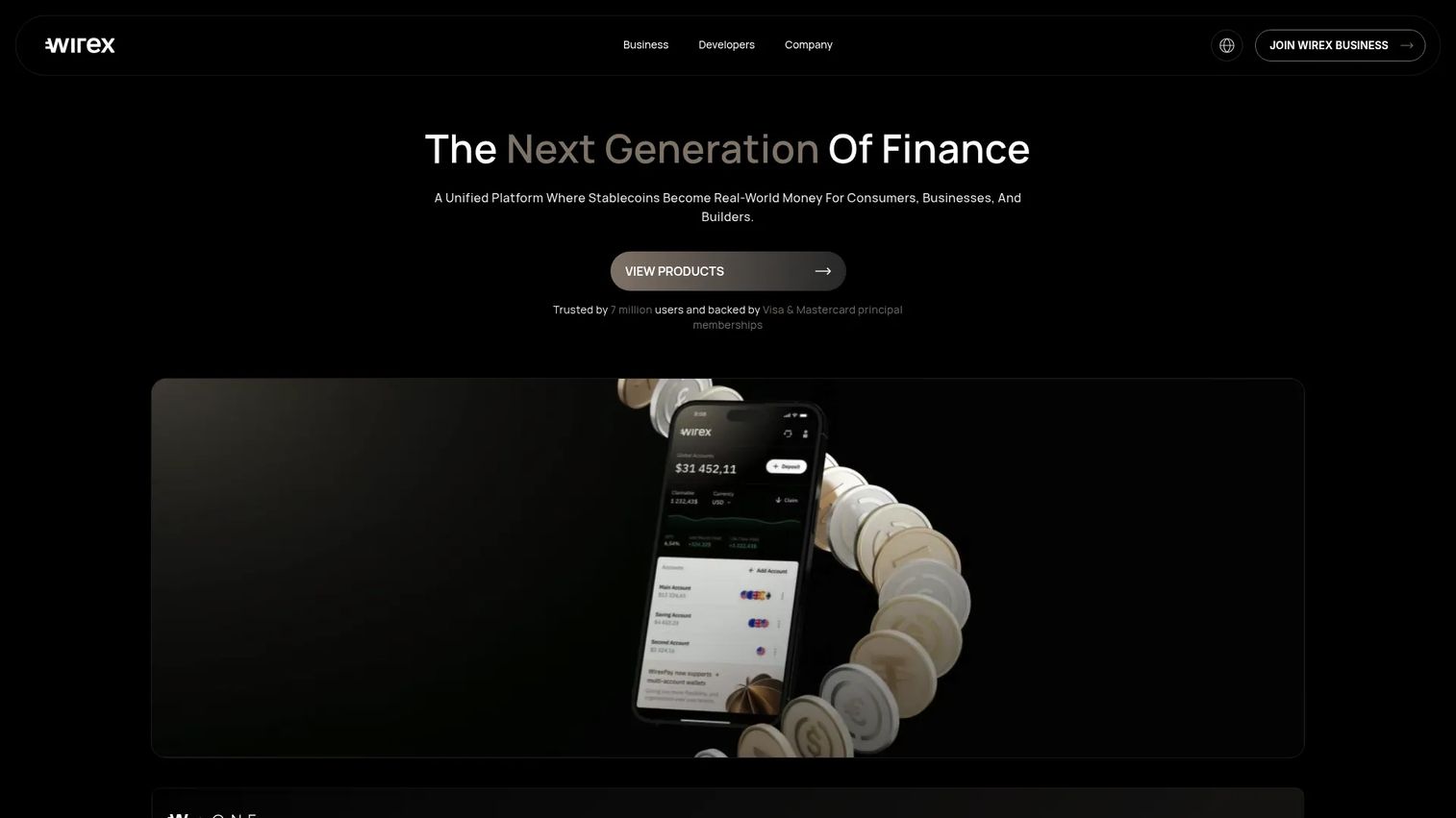
Wirex is a digital payment platform for spending, managing, and transferring fiat currencies and crypto assets. It offers virtual and physical payment cards, multi-currency accounts, self-custodial wallets, and a crypto rewards program called Cryptoback. Wirex also provides embedded financial infrastructure for fintech partners. The product is primarily consumer-oriented but covers use cases where individuals or small teams need wallet-led international transfers with crypto and fiat flexibility.
Best for: Individuals and small teams needing wallet-led international transfers with crypto card and multi-currency access.
Key features
- Crypto and fiat spending through Wirex virtual and physical cards
- Multi-currency accounts and in-app exchange
- Cryptoback crypto rewards on transactions
- Self-custodial wallets and embedded financial infrastructure
- Mobile app access across iOS and Android
Why choose Wirex: Wirex suits wallet-first users who want to spend and send across crypto and fiat. For teams that need API-driven remittance infrastructure or bulk payment operations, a more infrastructure-focused platform will serve better.
Wirex pricing: The Standard account is free. Premium costs €9.99/month or €102/year; Elite costs €29.99/month or €306/year. Additional fees apply for exchanges, card transactions, and specific transfer types depending on account tier.
G2 rating: 5.0/5
12. Request
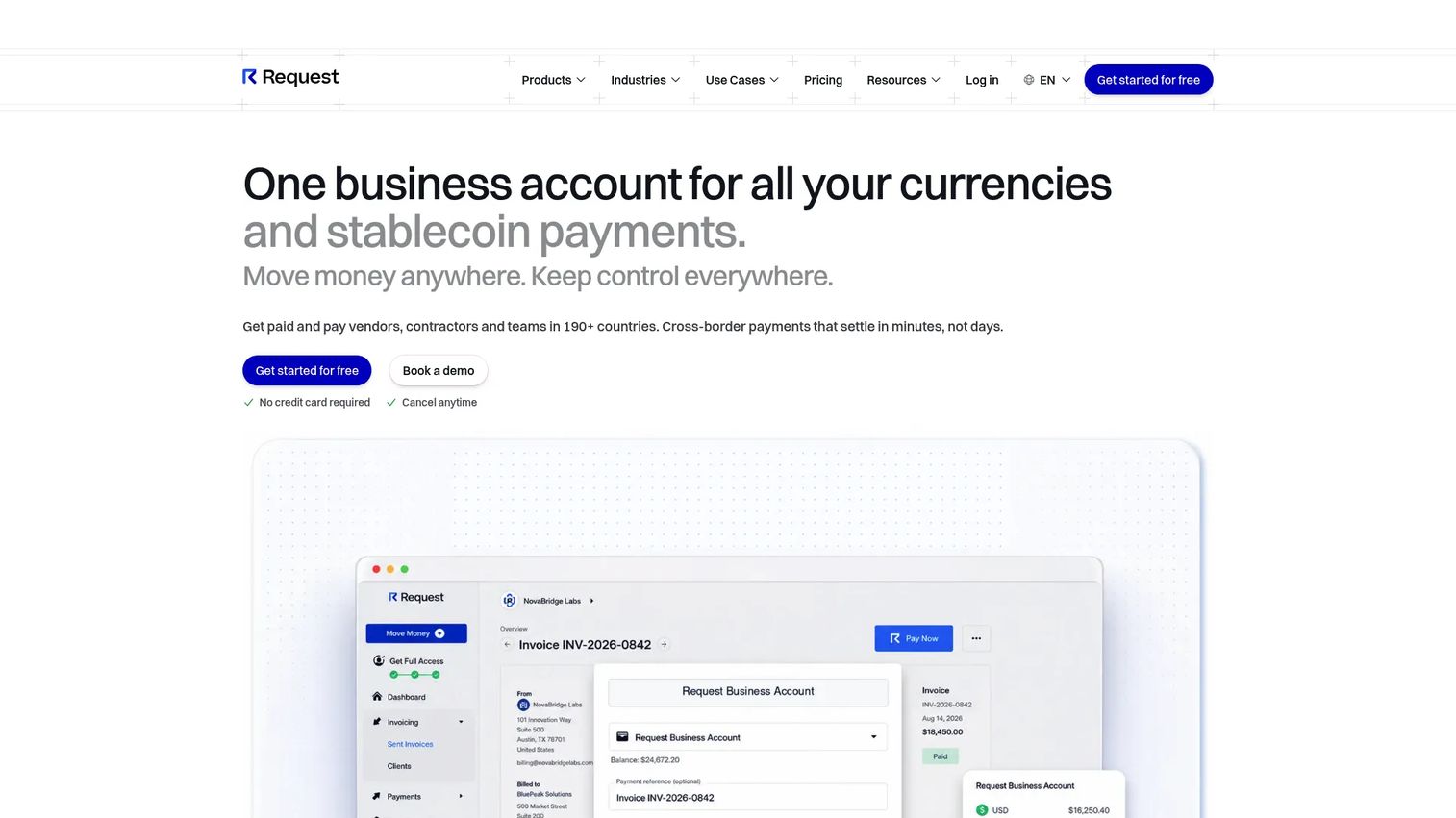
Request is a finance platform for managing fiat and stablecoin business accounts, invoicing, payroll, vendor payments, and accounting in a single workflow. It suits Web3 companies, DAOs, agencies, and contractors who receive or send crypto invoices across borders. The platform covers accounts receivable and payable, batch payroll, expense tracking, and accounting integrations with automated reconciliation, making it a practical fit where the payment workflow starts with an invoice rather than a consumer send flow.
Best for: Companies, Web3 organizations, and freelancers managing global fiat and stablecoin invoicing, payroll, and vendor payments.
Key features
- Business accounts with fiat and stablecoin support
- Accounts receivable invoicing and accounts payable vendor payments
- Payroll and batch payment processing
- Accounting integrations and automated reconciliation
- API access for programmatic payment workflows
Why choose Request: Request is the right choice when invoices drive the payment workflow. If you are paying contractors who send invoices in USDC or managing crypto-native vendor relationships, this fits better than a consumer remittance app or an enterprise blockchain rail.
Request pricing: A free tier covers invoicing. The Starter plan costs $50/month, Growth costs $300/month, and Pro costs $600/month. Enterprise pricing is custom. Paid plans include a 30-day free trial; annual plans include two months free.
G2 rating: 5.0/5
13. Everex
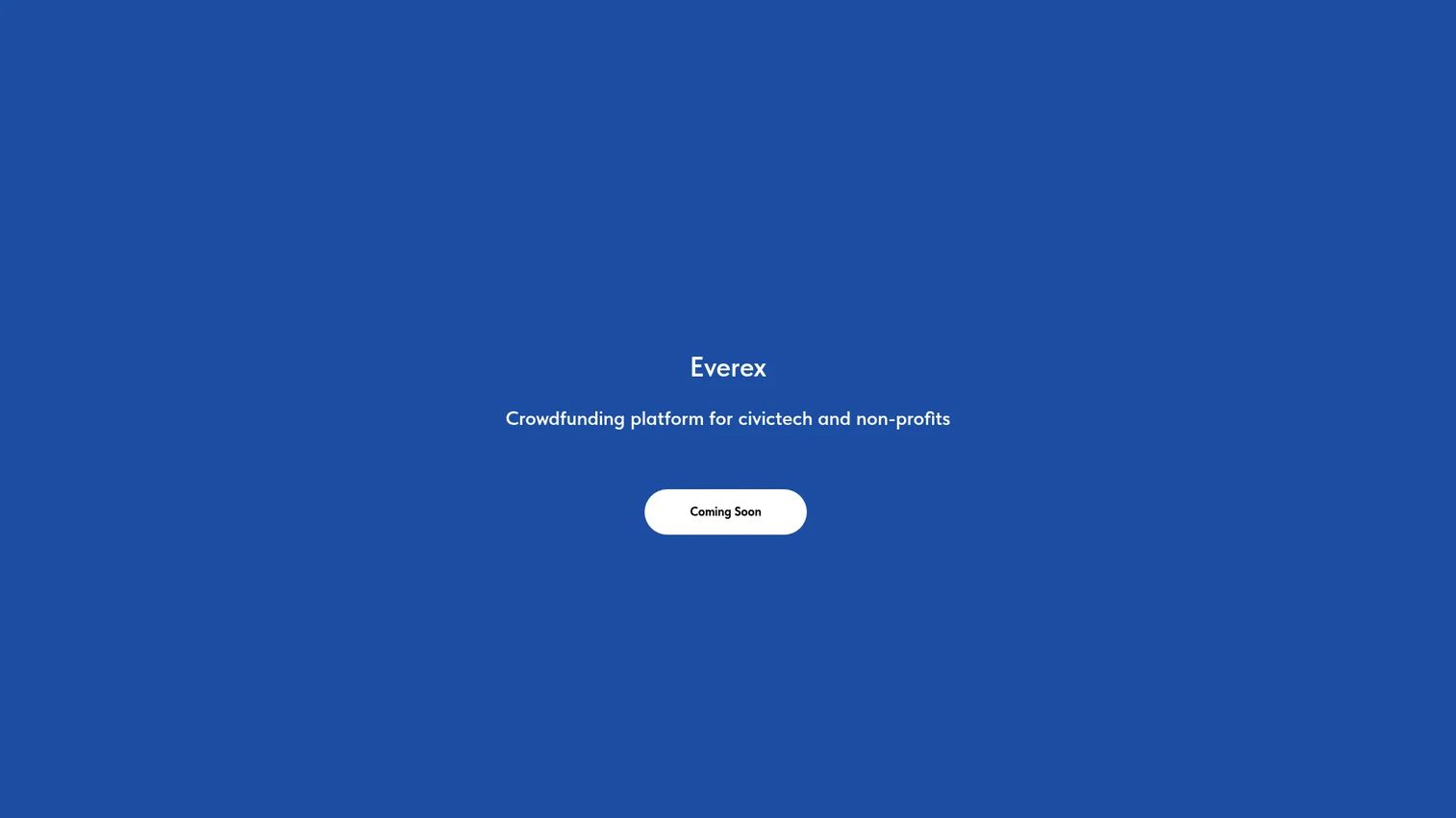
Everex is listed in this guide as a research reference point. At time of writing, the official Everex website describes the platform as a crowdfunding tool for civictech and nonprofits, marked as "coming soon." No active blockchain remittance or payment product was accessible for verification. If you have encountered Everex in a remittance context elsewhere, confirm current product status directly with the company before evaluating it as an operational option.
Best for: Teams researching historical blockchain remittance models rather than seeking an active operational platform.
Key features
- Historical blockchain remittance and tokenized payment research reference
- Crowdfunding infrastructure (current stated focus)
- Civictech and nonprofit payment use cases
- Digital asset infrastructure background
- Verify all features with the vendor before proceeding
Why choose Everex: Include Everex in your research if you are mapping the historical landscape of blockchain remittance. For active operational deployment in 2026, verify product availability directly before committing any resources.
Everex pricing: Contact Everex directly to confirm whether an operational product exists.
14. FÉLIX
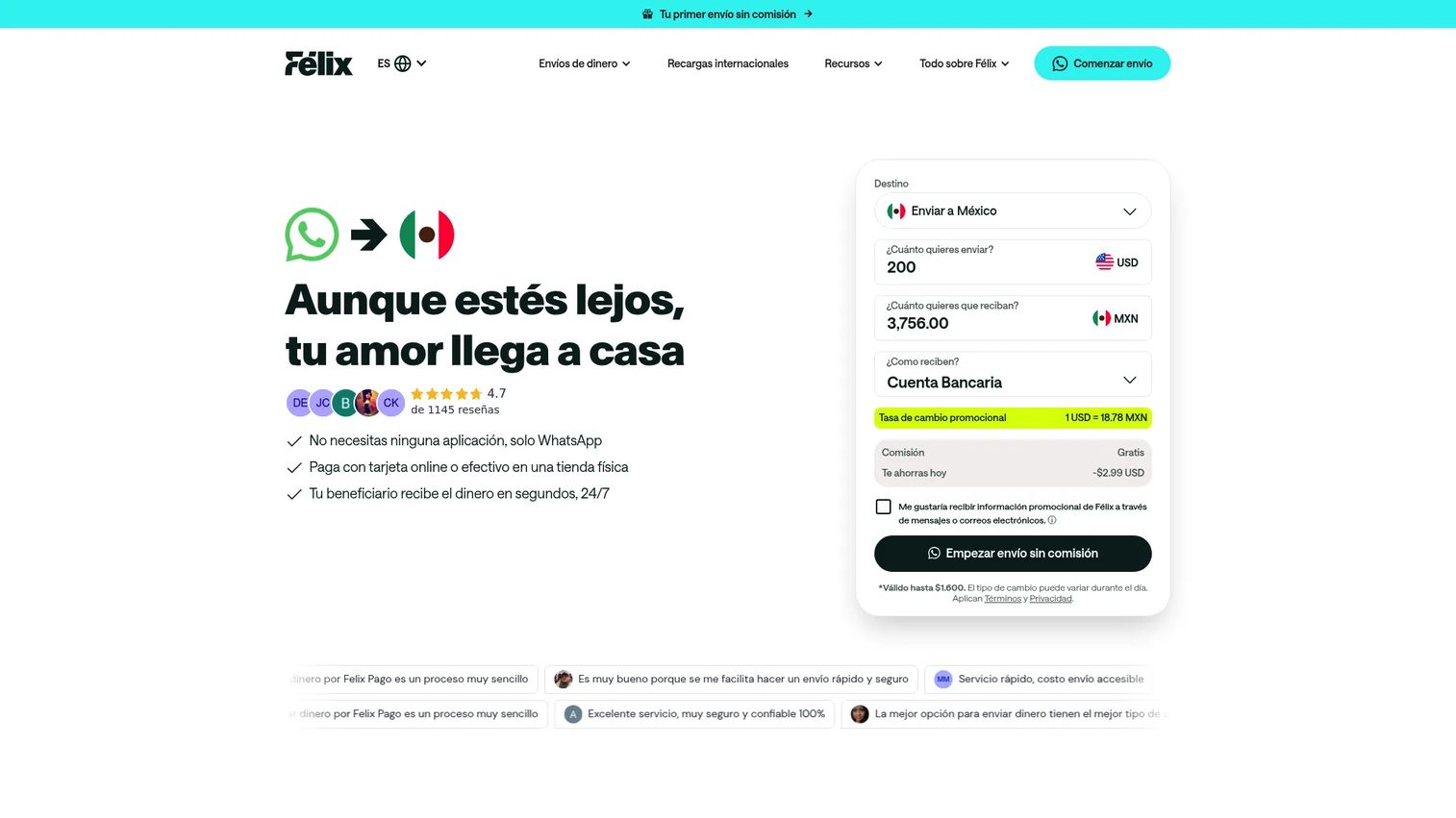
FÉLIX is a WhatsApp-based remittance service that lets people in the United States send money to Latin America and purchase international mobile top-ups without downloading an app. Senders pay by US-issued debit or credit card or cash at participating stores. Recipients can receive funds via bank account, mobile wallet, or cash-pickup location. The platform operates 24/7 with WhatsApp-native support, which reduces the friction of onboarding recipients who are already on mobile messaging.
Best for: US-based Latin American consumers and founders studying conversational remittance UX for Latin America corridors.
Key features
- International remittances via WhatsApp without an app download
- Payment by US-issued debit or credit card or cash at partner stores
- Bank account, mobile wallet, and cash-pickup delivery for recipients
- International mobile top-ups (no FÉLIX fee currently)
- 24/7 WhatsApp customer support
Why choose FÉLIX: FÉLIX is a strong example of reducing remittance friction through a messaging-led interface. For founders evaluating modern remittance UX and first-use adoption patterns in Latin America, it is worth studying. It is a consumer service, not an enterprise API platform.
FÉLIX pricing: Bank-account transfers start from $2.99 per transfer. Cash transfers to stores start from $4.98 per transfer. Fees vary by destination, amount, and delivery method. Mobile top-ups currently carry no FÉLIX fee.
Considerations when choosing cryptocurrency remittance software
Verify corridor coverage before feature depth
A platform can look strong on paper and still fail if it does not support your specific recipient country, payout method, or asset. Before signing any agreement, test a real transaction in your primary corridor, whether that is US to Mexico, EU to Nigeria, or Singapore to the Philippines. Corridor coverage gaps are expensive to discover after you have routed volume.
Separate consumer UX from infrastructure fit
Several tools on this list are excellent consumer remittance apps. Others are enterprise rails. A Series B founder evaluating cross-border payouts for contractors or marketplace withdrawals needs a platform with an API, a compliance dashboard, reconciliation exports, and finance-team visibility, not a mobile app designed for individuals sending money home. Classify each shortlisted tool by operating model before comparing features.
Treat compliance as an operating requirement
KYC, AML, sanctions screening, wallet risk scoring, transaction monitoring, and data retention are not optional features. They are baseline requirements for operating a compliant cross-border payment flow in most jurisdictions. This guide does not constitute legal, regulatory, or compliance advice. Involve your counsel and compliance team before launching any crypto remittance workflow.
Model the full cost, not the headline fee
Transfer fees are only part of the picture. The full cost includes FX spread, blockchain network fees, off-ramp fees, liquidity costs, and internal operations time for reconciliation and exception handling. Some platforms publish one fee and absorb others in the spread. Ask for a total cost example on your specific corridor and volume before comparing platforms on price.
Validate settlement and cash-out timing
A blockchain transaction confirming is not the same as your recipient having usable funds. The recipient still needs to cash out through an off-ramp partner, a local bank, or a mobile money provider. That final step carries its own timing, fees, and availability constraints. Ask each platform how long the full end-to-end cycle takes in your recipient country, not just how fast the on-chain transaction processes.
Conclusion
The right cryptocurrency remittance software depends on your operating model, not your enthusiasm for a particular blockchain brand. SentBe and FÉLIX serve consumer-first use cases, while Ripple and BVNK are built for institutional and enterprise teams. Stellar is infrastructure for builders, and BANXA gives crypto products their fiat on-ramp and off-ramp layer. For merchant crypto acceptance with fiat settlement, ForumPay starts free and keeps volatility off your books. Request handles invoice-driven crypto payments for contractors and Web3 vendors. CoinsPaid and Bitpace cover full-stack crypto payment processing for higher-volume operations.
The framework for choosing: Pick by operating model first, then validate corridor coverage, then check compliance tooling, then verify the full cost. A tool that looks cheap on the headline fee but obscures FX spread or off-ramp charges will cost more at volume.
The right tool is the one that works in your corridor, passes your compliance review, and gives finance clean visibility before volume scales.
Start your journey with Guideflow today!
FAQs
Cryptocurrency remittance software helps individuals or businesses send value across borders using blockchain payment rails, digital wallets, stablecoins, or crypto-to-fiat conversion. It typically includes compliance controls, recipient payout infrastructure, and settlement workflows, which distinguishes it from a basic crypto wallet or exchange. The category spans consumer apps, enterprise settlement networks, on-ramp/off-ramp providers, and invoice-led payment platforms.
A bank wire routes through correspondent banking networks, which often means multiple intermediaries, multi-day settlement, and fees that add up at each hop. Crypto remittance moves value through a blockchain ledger, potentially reducing intermediaries and settlement time. Total cost and speed still depend on the corridor, the asset, the off-ramp partner, and local compliance requirements, so the advantage varies significantly by route.
Legality depends on jurisdiction, the specific platform's licensing, the asset type, sanctions rules, and local money-transmission requirements. KYC and AML obligations apply to most regulated remittance flows regardless of the underlying rail. Involve your legal counsel and compliance team before launching any crypto remittance product. This article is a buying guide, not legal or compliance advice.
No single asset is universally best. Stablecoins like USDC and USDT are commonly used to reduce volatility during transit, particularly when recipients want dollar-linked value before cashing out. Other crypto assets may be useful where liquidity and wallet support are strong in the recipient market. The best asset for your use case depends on recipient cash-out options, off-ramp liquidity, and the platform's supported assets.
Yes, when the platform supports off-ramp partners, bank payouts, cash pickup, card withdrawal, or local mobile money rails. Cash-out availability varies significantly by country and provider. Verify recipient country coverage and cash-out fees for your specific corridors before choosing a platform.
Check corridor coverage for your specific recipient countries and payout methods. Evaluate API access and documentation for your engineering team. Review compliance tooling: KYC, AML, wallet screening, and audit trail capabilities. Understand the full cost, including FX spread and off-ramp fees alongside any platform or transfer fee. Confirm settlement and cash-out timing end-to-end, not just the on-chain confirmation time.
It can be cheaper in specific corridors, but not universally. The World Bank reported a global average remittance cost of 6.36% in Q3 2025. Crypto rails can reduce intermediary hops, but total cost includes platform fees, FX spread, blockchain network fees, off-ramp fees, and internal compliance operations. Run a side-by-side cost model for your actual corridor and volume before assuming savings.
An API matters when payments need to run inside a product: A marketplace payout flow, a payroll run, a wallet withdrawal, or an embedded contractor payment experience. A dashboard-based workflow can handle lower-volume or manual operations without engineering integration. The decision depends on payment volume, frequency, and whether finance can manage the flow manually or needs it embedded in a system.