Your team spends hours chasing evidence. A partner asks for the support behind a balance, and someone digs through three shared drives, two email threads, and a spreadsheet nobody remembers naming. The workpaper exists. Finding it, tying it out, and proving it was reviewed on time is the part that eats the engagement.
That friction is not a staffing problem. It is a tooling problem. Manual evidence chasing, disconnected workflows, and review bottlenecks are baked into any firm still running audits on spreadsheets and folders. Audit firm software exists to remove that friction, and the category has matured fast. The audit management software market reached $1.9 billion in 2025 and is projected to hit $3.89 billion by 2030, according to The Business Research Company (2026). The pull is real, and so is the pressure: 68% of BFSI institutions are expected to adopt automated audit software platforms by 2026, per Strategic Market Research (2026).
Audit firm software is not just another accounting tool. General ledger and tax software help you close and file. Audit software helps you prove the work: risk assessment, workpapers, documentation traceability, and a clean audit trail that survives peer review. For CPA firms and internal audit teams, that distinction decides whether an engagement scales or stalls. And with 39% of internal audit professionals already using AI-enabled audit technologies in 2025, per Precedence Research (2025), the tools that once felt optional are becoming table stakes.
What's inside
This guide is for CPA firms, accounting firms, and internal audit teams comparing platforms for audit management, automation, and documentation. We looked at eight tools that cover different firm sizes and audit maturity levels, from Excel-first shops to enterprise assurance functions.
We selected and ranked each platform on five criteria: audit workflow coverage across the engagement lifecycle, AI and automation depth, security and compliance, integrations with Excel and accounting systems, and trust signals like verified ratings. Some tools are full audit suites. Others are point solutions that make one painful part of the audit faster. We flagged which is which so you can match the tool to your actual bottleneck.
TL;DR
- Best for Excel-first teams: DataSnipper, for document matching and extraction inside the spreadsheet your team already lives in.
- Best cloud audit suite for CPA firms: AuditFile, for firms that want workpapers, trial balance, and reporting in one accessible platform.
- Best for the Wolters Kluwer ecosystem: CCH Axcess Audit, for firms wanting a connected suite with knowledge coach and validation.
- Best for enterprise audit management: TeamMate, for larger internal audit and assurance teams needing configurable workflow control.
- Best for broad GRC consolidation: Diligent One Platform, when audit is one part of a wider governance and risk mandate.
- Best for AI risk analysis: MindBridge, for data-driven anomaly detection across full transaction sets.
What is audit firm software?
Audit firm software is a category of financial audit software that helps CPA firms, accounting firms, and internal audit teams plan, execute, document, and review audit and assurance engagements in one controlled system.
The core capabilities buyers expect from audit management software:
- Risk assessment: structured scoping and materiality tied to engagement planning
- Workpapers: centralized, version-controlled documentation with review sign-off
- Trial balance: import, group, and map balances to lead schedules and financial statements
- Documentation traceability: every conclusion linked to its supporting evidence
- Reporting: generation of engagement deliverables and financial statement output
- Audit trail: a complete, timestamped record of who did what and when
- Cloud access: remote work and cloud collaboration across engagement teams
- Integrations: connections to accounting systems, ERPs, Excel, and document sources
How AI changes the category in 2026
AI is moving audit software from record-keeping to decision support. The most useful applications right now:
- Anomaly detection that scores every transaction, not a sample, to surface risk
- Document extraction that pulls figures from PDFs and invoices without manual keying
- Workpaper automation that ties out numbers and flags exceptions for review
- Explainable analytics that show why an item was flagged, so it holds up in review
AI audit software earns its place when it reduces manual review, not when it just summarizes text.
This category usually replaces a patchwork: spreadsheets standing in as workpapers, shared drives holding evidence, and manual tracking of who reviewed what. The move to cloud based audit software consolidates that sprawl into one auditable system.
When to use audit firm software
Streamline recurring engagements
If your firm runs the same audit across dozens of clients each year, you need a repeatable workflow, not a fresh spreadsheet build every time. Audit workflow software standardizes programs, templates, and review steps so quality stays consistent as volume grows. A structured audit trail also means every engagement documents itself the same way, which shortens peer review and reduces the risk of a missed sign-off.
Reduce manual evidence work
When staff spend more time copying, matching, and validating documents than analyzing them, automation pays for itself fast. Workpaper automation and document matching cut the mechanical work of tying source evidence to conclusions. This matters most for Excel-heavy processes, where the value is in the analysis, not the keystrokes. The right tool turns hours of manual tick-and-tie into minutes.
Improve quality and visibility
Partners cannot manage what they cannot see. When engagement status lives in people's heads, review becomes a scramble at the deadline. Dashboards, controls, and compliance visibility give partners real-time traceability across the team. That visibility protects audit quality and makes it easier to prove the firm followed its own methodology when a regulator or peer reviewer asks.
Comparison table
We grouped these tools by primary intent, from Excel-native automation to full enterprise audit management and broader GRC. Pricing reflects verified, publicly listed figures where available; several vendors quote custom pricing on request. G2 ratings are drawn from each product's current listing.
| # | Product | Intent | Key differentiation | Pricing | G2 rating |
|---|---|---|---|---|---|
| 1 | AuditFile | Cloud engagement workflow | Cloud audit suite with built-in programs for CPA firms | From $149/month | Not listed |
| 2 | DataSnipper | Excel automation | Document matching and extraction inside Excel | Contact sales | 4.8/5 |
| 3 | CCH Axcess Audit | End-to-end audit management | Cloud audit suite with knowledge coach and validation | Contact sales | Not listed |
| 4 | TeamMate | Enterprise audit management | Configurable audit and GRC for large teams | Contact sales | 4.2/5 |
| 5 | Diligent One Platform | Enterprise GRC | Unified governance, risk, compliance, and board workflows | Contact sales | 4.3/5 |
| 6 | Workiva | Connected reporting and compliance | Linked reporting with audit trail and collaboration | Contact sales | 4.5/5 |
| 7 | MindBridge | AI risk analysis | AI risk scoring across 100% of transactions | Contact sales | 4.4/5 |
| 8 | Inflo | Cloud engagement workflow | Modern audit, analytics, and quality management | Free QMS offer | 4.4/5 |
1. AuditFile
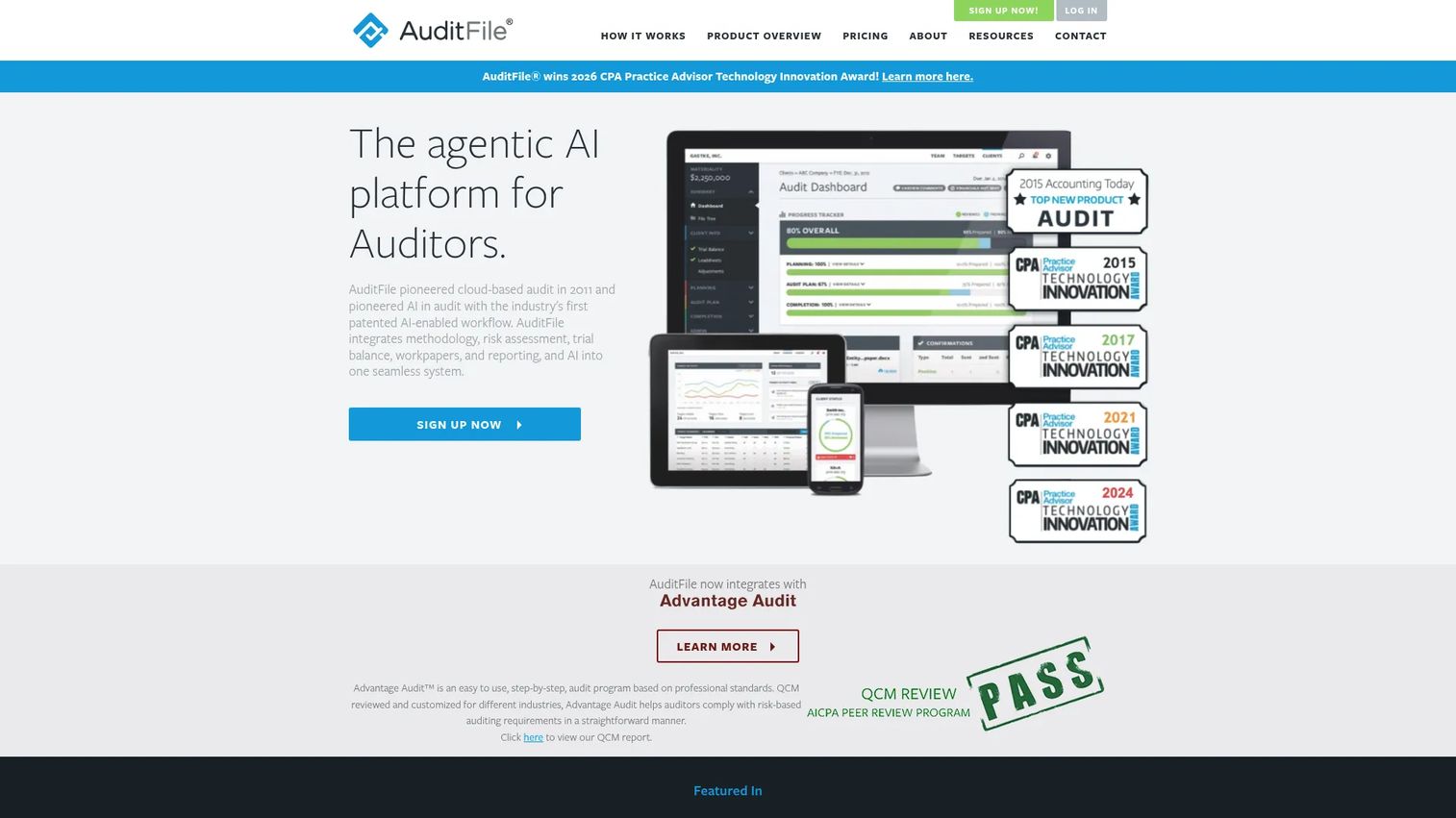
AuditFile is cloud-based audit software for CPA firms and internal audit teams that want workpapers, collaboration, and built-in audit programs in one accessible platform. It covers the traditional audit suite: trial balance, workpapers, and reporting, delivered through the browser so distributed teams work from the same file. For firms moving off desktop tools and shared drives, it is a clean entry into cloud based audit software without a heavy implementation.
Best for: CPA firms and audit teams that want a straightforward cloud audit suite with built-in programs and real-time progress tracking.
Key strengths
- Cloud-based access: the full engagement lives in the browser, so teams collaborate without version conflicts or VPN gymnastics.
- Real-time audit progress tracking: partners see where each engagement stands without asking for a status update.
- Industry-specific audit programs and templates: prebuilt programs speed up scoping and standardize methodology across engagements.
Why choose AuditFile: It fits small and mid-size firms that want a purpose-built audit suite rather than a general accounting tool stretched to fit. The cloud model suits firms with remote or hybrid staff who need one shared source of truth for workpapers and the audit trail. It is a practical first platform for a firm graduating from spreadsheets.
AuditFile pricing: Public pricing lists a Professional plan at $149 per month and a Pro Plus! plan at $249 per month, each including the first user. An Enterprise and Gov tier is available with custom pricing. A 14-day free trial is offered, and there is no free tier.
2. DataSnipper
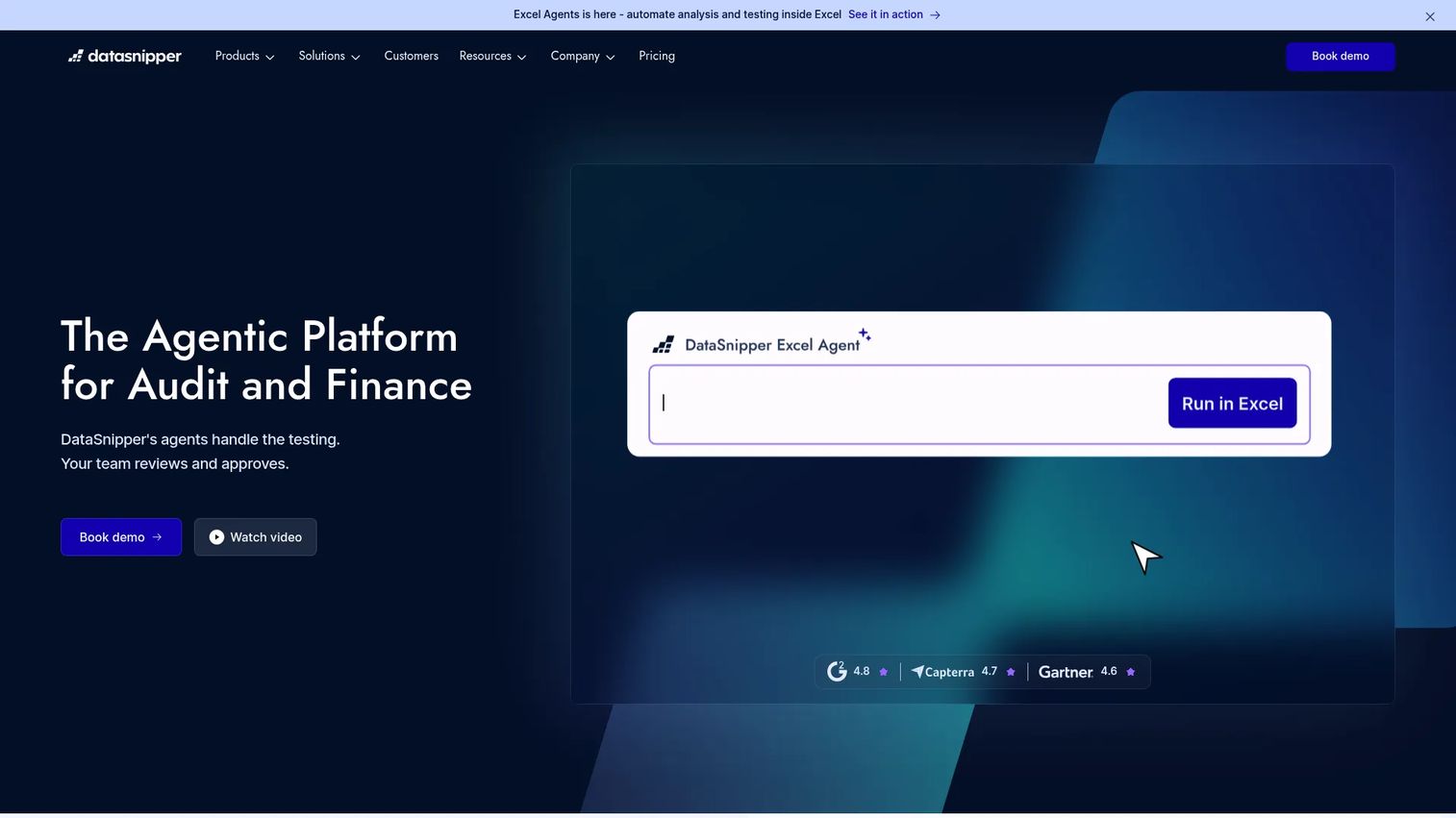
DataSnipper is an agentic audit and finance automation platform built to work inside Excel. Rather than pulling your team out of the spreadsheet, it layers document matching, extraction, and AI-assisted analysis directly into the environment auditors already use. For teams that live in Excel but want more traceability, it turns manual tick-and-tie into automated, linked evidence.
Best for: Audit and finance teams that need document extraction, matching, and review workflows without leaving Excel.
Key strengths
- Document Matching: cross-references figures across source documents and workpapers automatically, cutting hours of manual comparison.
- Advanced Document Extraction: pulls data from PDFs, invoices, and scans into Excel without manual keying.
- AI-assisted analysis and reporting: applies AI audit software capabilities to speed review and surface exceptions.
Why choose DataSnipper: It is the strongest pick when your bottleneck is evidence handling, not workflow management. Teams that want speed and traceability inside a familiar tool get both without a full platform migration. The Excel integration means adoption is fast because there is almost nothing new to learn.
DataSnipper pricing: Pricing is not publicly listed. The pricing page directs visitors to contact sales for a quote. DataSnipper holds a 4.8/5 rating on G2, one of the highest in this list.
3. CCH Axcess Audit
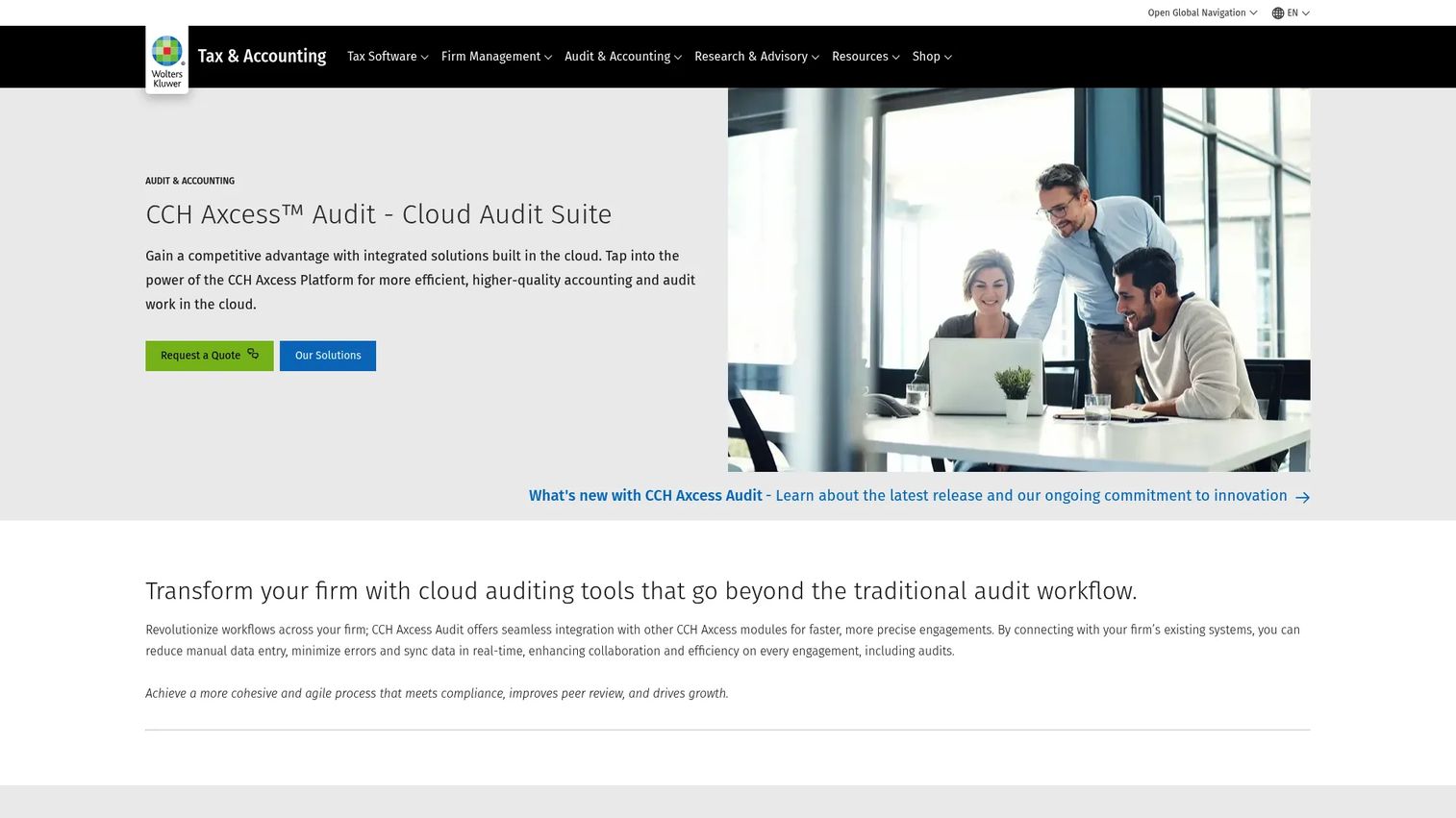
CCH Axcess Audit is a cloud-based audit suite from Wolters Kluwer built on the CCH Axcess platform. It brings engagement, knowledge coach, and validation modules together with knowledge-driven, agent-enabled audit support. For firms that want a connected suite rather than assembling point tools, the integration across tax, document, and audit workflows is the draw.
Best for: Mid-to-large accounting firms wanting a cloud audit workflow suite inside an established ecosystem.
Key strengths
- Cloud-based audit workflows: engagements run in the cloud with team access and centralized documentation.
- Knowledge-driven, agent-enabled audit support: methodology guidance is built into the workflow to support consistent audit documentation.
- Integrated engagement, knowledge coach, and validation modules: the suite connects planning, guidance, and quality checks in one place.
Why choose CCH Axcess Audit: It fits firms already inside the Wolters Kluwer ecosystem or those wanting a suite approach where audit, tax, and document management share one platform. The knowledge coach layer supports firms that value methodology guidance baked into the workflow, which helps standardize quality across teams of varying experience.
CCH Axcess Audit pricing: Pricing is not publicly listed. The official audit page requests a quote rather than showing tier prices, so plan on a sales conversation to scope your firm's needs.
4. TeamMate
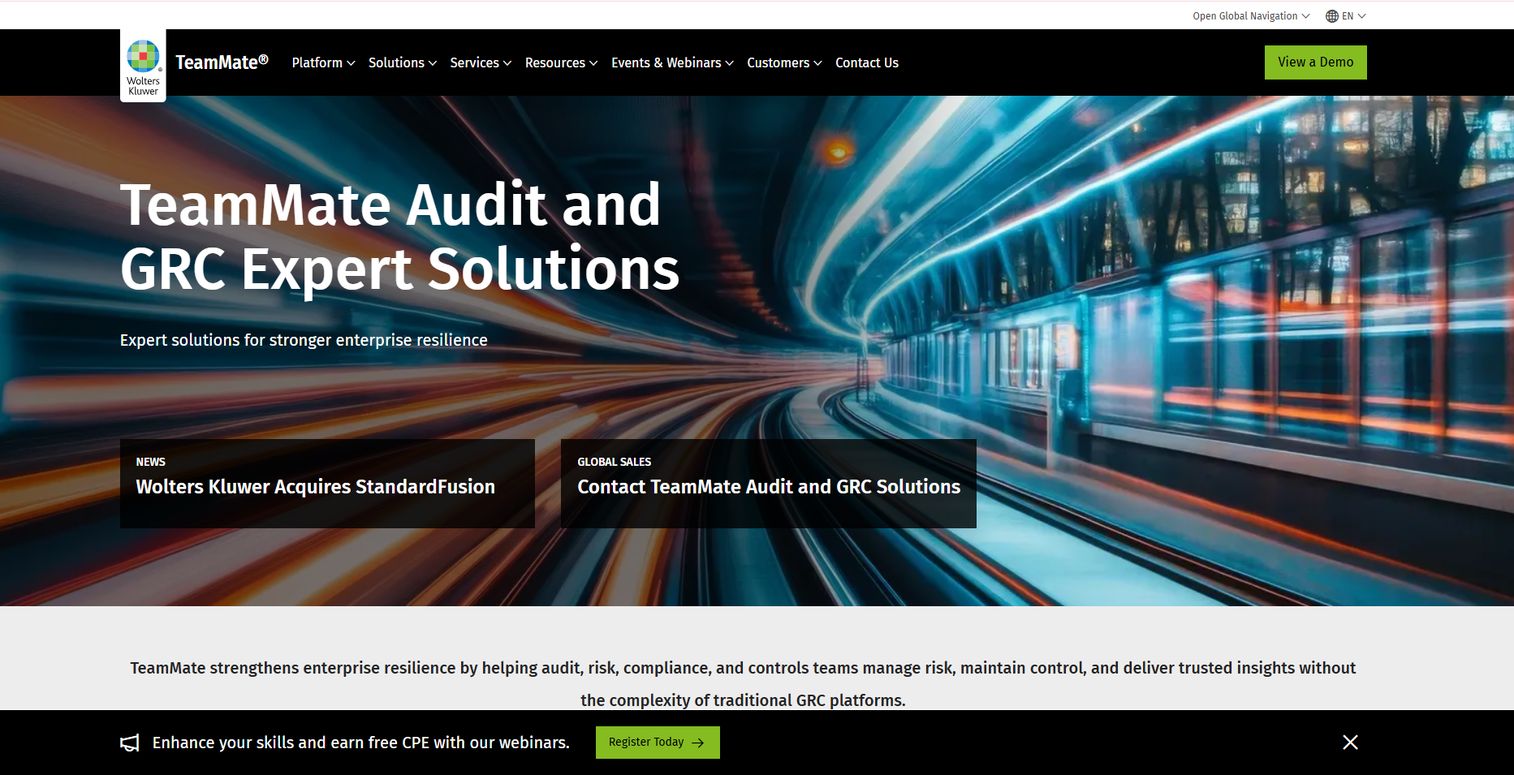
TeamMate is an audit and GRC software suite from Wolters Kluwer built for internal audit, controls, risk, and compliance teams. It handles end-to-end audit management across planning, execution, and issue tracking, with controls management and a single source of truth for GRC workflows. For larger assurance functions, its depth and configurability are the main appeal.
Best for: Enterprises and public-sector audit teams needing a configurable audit and GRC platform.
Key strengths
- Audit management across planning, execution, and issue tracking: the full internal audit lifecycle runs in one system with a complete audit trail.
- Controls management: centralized documentation and testing keep control frameworks organized and repeatable.
- GRC management: unified workflows and a single source of truth connect audit, risk, and compliance management.
Why choose TeamMate: It suits larger internal audit teams that need workflow control and visibility across many concurrent engagements. The configurability that serves complex enterprise methodologies rewards teams that invest in setting it up to match their process. Reviewers value the breadth; new users should plan onboarding time to learn the full platform.
TeamMate pricing: Pricing is quote-based. The pricing page directs firms to request a tailored quote rather than listing tiers. TeamMate holds a 4.2/5 rating on G2.
5. Diligent One Platform
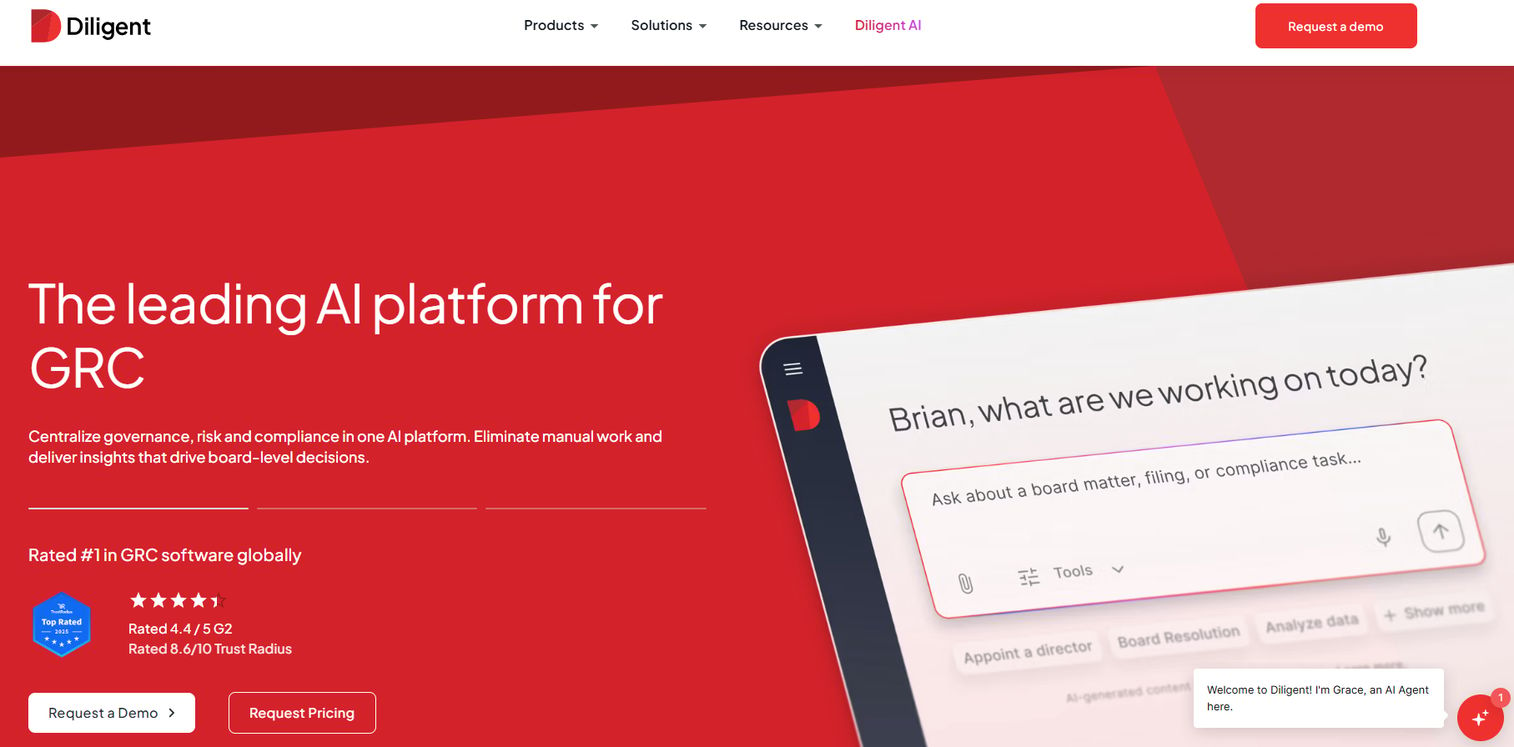
Diligent One Platform is a unified GRC and board-management platform that consolidates governance, risk, compliance, audit, and board workflows in one place. Audit is one application within a broader suite, which makes it a fit when your mandate reaches past the audit function into enterprise governance. AI-powered risk data and analytics run across the platform to prioritize what matters.
Best for: Organizations that want a single platform for governance, risk, compliance, and board workflows.
Key strengths
- Centralizes board management and GRC activities: governance and risk work live alongside audit in one connected environment.
- AI-powered risk data and analytics: platform-wide analytics support risk assessment and prioritization.
- Integrated applications for audit, risk, ethics, compliance, and board governance: each function shares a common data layer and audit trail.
Why choose Diligent One Platform: Larger organizations shortlist it when audit is part of a wider governance and compliance management program rather than a standalone function. If your firm or department already owns board and risk workflows, consolidating audit into the same platform reduces the number of systems to maintain and gives leadership one view of risk.
Diligent One Platform pricing: Pricing is not publicly listed. Diligent's pricing page routes to a request-pricing form rather than showing numeric tiers. The platform holds a 4.3/5 rating on G2.
6. Workiva
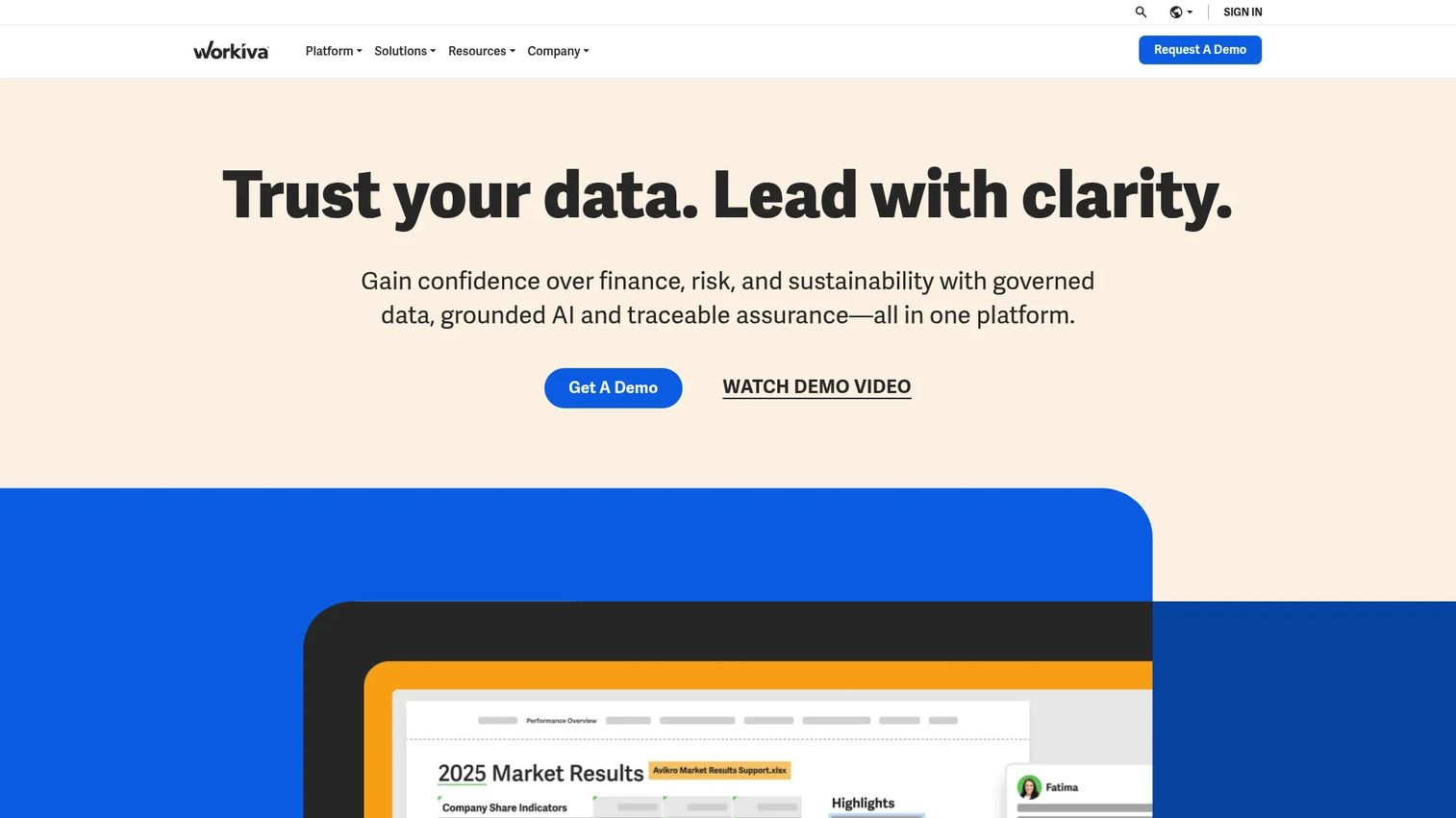
Workiva is a cloud-based platform for connected reporting, compliance, and collaboration across finance, risk, sustainability, and audit teams. Its strength is linking documents, spreadsheets, and processes so data stays consistent from source to final report, with a full audit trail on every change. For firms that need audit plus reporting and governance in one system, it consolidates work that usually spans several tools.
Best for: Enterprises needing controlled, audit-ready reporting and cross-functional disclosure workflows.
Key strengths
- SEC reporting and XBRL filing workflows: regulated reporting runs in a controlled, audit-ready environment.
- Connected documents, spreadsheets, presentations, and processes: a change in one place updates everywhere, preserving data integrity.
- Internal controls, audit readiness, and role-based permissions: controls and access management support both audit and compliance.
Why choose Workiva: It fits firms and departments that need reporting, compliance, and audit readiness to share one controlled source of truth. The connected data model reduces the reconciliation work that eats time when reporting spans multiple spreadsheets and owners. Cloud collaboration keeps distributed teams aligned on a single version.
Workiva pricing: Pricing is not publicly listed. Workiva uses a solution-based licensing model, and arrangements are typically annual or multi-year contracts. Workiva holds a 4.5/5 rating on G2.
7. MindBridge
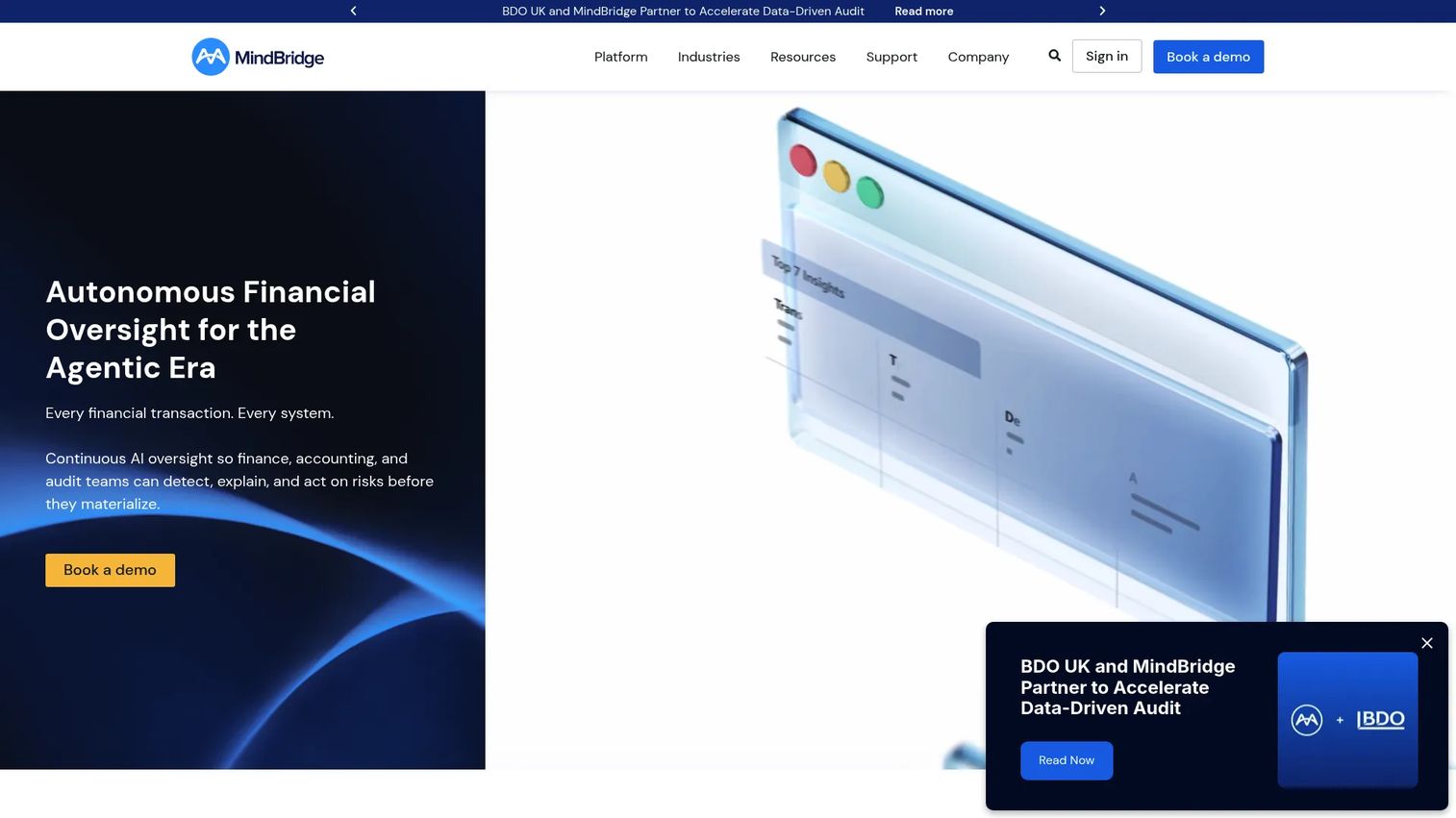
MindBridge is an AI-powered financial risk discovery and audit analytics platform for finance, audit, and accounting teams. Instead of sampling, it scores risk across 100% of transactions using machine learning, statistical methods, and rules. The analytics are explainable, which matters when a flagged item has to hold up in review or a SOX walkthrough.
Best for: Enterprise finance and audit teams needing continuous transaction-level risk detection.
Key strengths
- Automated risk scoring across 100% of transactions: every entry is assessed, not just a sample, sharpening risk assessment.
- Anomaly detection: combines machine learning, statistical methods, and rules to surface unusual activity.
- Explainable analytics: shows why an item was flagged, supporting internal controls, SOX, and audit workflows.
Why choose MindBridge: It is strongest when your team wants data-driven audit analytics and risk prioritization rather than a general workflow tool. The full-population approach changes how risk assessment works, moving from judgmental sampling to evidence across the entire ledger. Explainability keeps the AI defensible, which is the real test for AI audit software in an assurance setting.
MindBridge pricing: Pricing is not publicly listed. MindBridge directs visitors to book a demo or request contact rather than showing tiers. The platform holds a 4.4/5 rating on G2.
8. Inflo
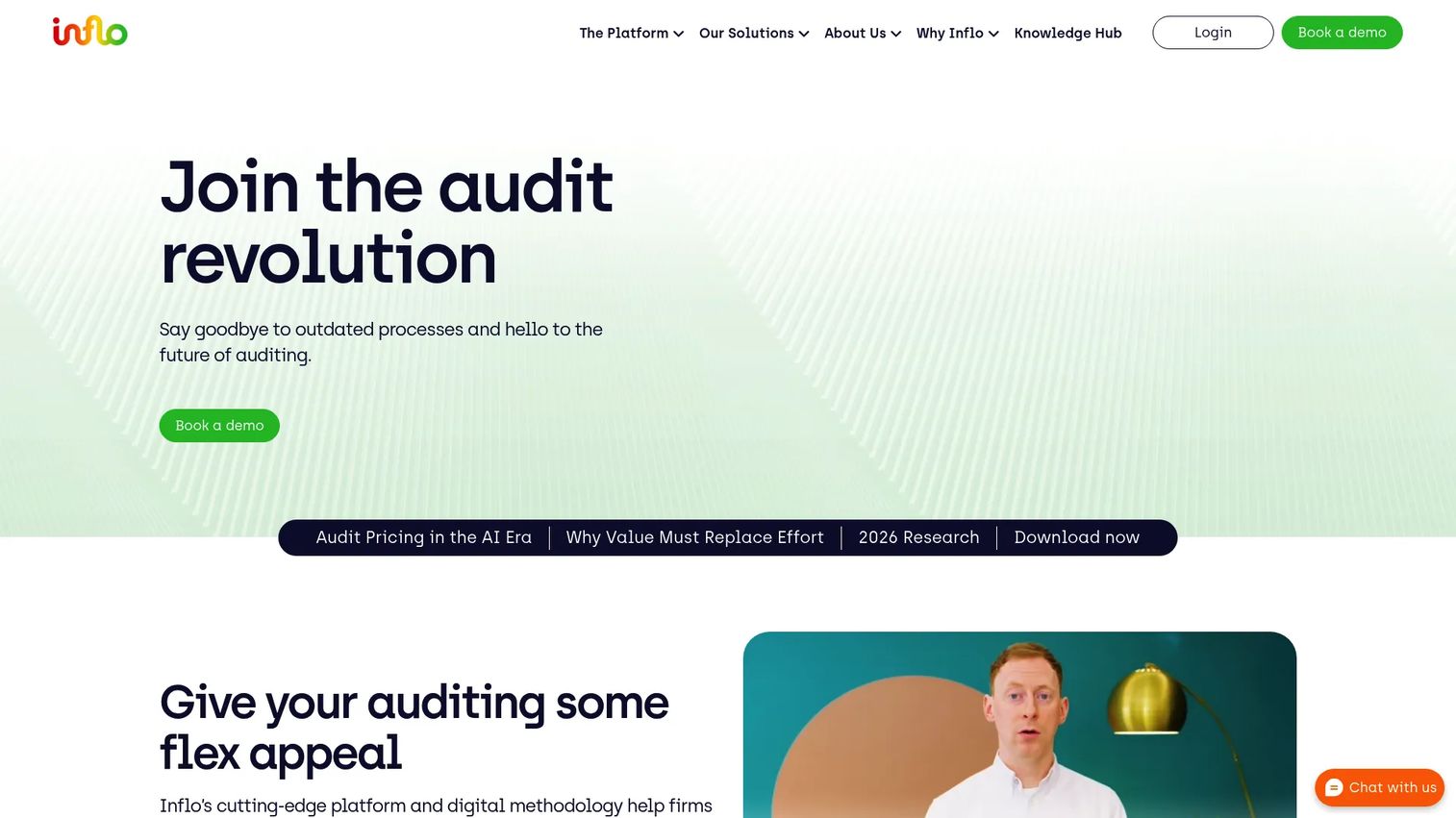
Inflo is cloud-based audit technology for accounting firms that combines working papers, audit data analytics, and digital collaboration. It aims to give firms better insight and workflow support without the weight of a full enterprise suite. For firms that want modern analytics and quality management alongside their audit workflow, it is a practical, grounded option.
Best for: Accounting firms seeking modern audit, collaboration, analytics, and quality management software.
Key strengths
- Working Papers: centralized, cloud-based workpapers with a clear audit trail.
- Audit Data Analytics: built-in analytics surface risk and support evidence-driven testing.
- Digital Collaboration: cloud collaboration keeps engagement teams and clients working from one source.
Why choose Inflo: It suits accounting firms that want audit workflow support plus analytics and quality management in a single modern platform. The analytics focus helps teams move from manual review toward risk-driven testing, and the collaboration layer keeps client and firm working in sync. It is a strong fit for firms upgrading from legacy tools who want insight without enterprise overhead.
Inflo pricing: Inflo publicly describes a free QMS offer for one user within a US-based firm, with additional users available via a paid upgrade. No public list price or tier table is available beyond that. Inflo holds a 4.4/5 rating on G2.
Considerations
Audit workflow coverage
Decide whether you need a full engagement suite or a point solution that fixes one painful step. A suite like AuditFile, CCH Axcess Audit, TeamMate, or Inflo covers planning through reporting. A specialist like DataSnipper or MindBridge accelerates a specific part, evidence handling or risk analysis, and slots into your existing workflow. Map the tool to your actual bottleneck before you buy breadth you will not use.
Excel and accounting integrations
Excel is where most audit analysis still happens, so Excel integration is not a nice-to-have. Check whether the tool works inside Excel or exports cleanly to it. Then confirm integrations with your accounting systems, ERP platforms, and document sources. A tool that cannot ingest your trial balance or source files creates the manual work it was supposed to remove.
Security and compliance
For cloud based audit software, verify access controls, audit trail completeness, data retention, and any compliance claims before signing. Ask for the specifics: how role-based permissions work, where data is stored, and how the platform documents who touched what. Security and compliance are non-negotiable for regulated firms, and a vague answer is a warning sign.
AI and automation depth
Separate marketing AI from real workflow automation. The question is simple: does the AI reduce manual review, or does it just summarize text? Tools like MindBridge score full transaction populations and explain their flags, which is genuine automation. Ask any vendor to show the AI working on a real workpaper, not a slide.
Team fit and implementation
Match the platform to your firm size and audit maturity. A small CPA firm wants fast setup and a short learning curve; an enterprise assurance team wants configurability and governance depth. Ask about onboarding effort and internal adoption. The best tool is the one your team will actually use, so weigh the workflow automation you gain against the change you are asking staff to absorb.
Conclusion
There is no single best audit firm software, only the best fit for your current bottleneck. If your team lives in spreadsheets and the pain is evidence handling, an Excel-native tool like DataSnipper removes the most friction fastest. If you want a cloud audit suite that covers the full engagement, AuditFile, CCH Axcess Audit, or Inflo give you workpapers, trial balance, and reporting in one place. If your mandate reaches into enterprise governance and risk, TeamMate or Diligent One Platform handle audit as part of a broader picture. And if risk analysis is the priority, MindBridge scores the full ledger, not a sample.
The practical next step is to shortlist two or three tools based on where your engagements actually slow down. Run a trial or demo on a real engagement, not a canned dataset, and watch whether the tool cuts manual work, improves audit quality, and fits how your team already operates. The right choice protects both your quality and your firm's profitability by turning hours of manual work into minutes.
FAQs
Audit firm software is a category of financial audit software that helps CPA firms, accounting firms, and internal audit teams plan, execute, document, and review engagements in one controlled system. It typically covers risk assessment, workpapers, trial balance, documentation, reporting, and a complete audit trail. It replaces the spreadsheets, shared drives, and manual tracking that legacy audit workflows rely on.
For audit software for CPA firms, the essentials are workpaper management with review sign-off, trial balance import and mapping, a complete audit trail, and documentation traceability. Cloud access and Excel integration matter because most analysis still touches spreadsheets. Strong security and compliance controls are non-negotiable for regulated work.
Yes, when the vendor documents its controls. Cloud based audit software from established providers typically offers role-based access, encryption, data retention policies, and a full audit trail. Verify these specifics before you sign, and ask where data is stored and how permissions are managed. For regulated firms, a vague security answer should end the conversation.
AI audit software helps most when it reduces manual review rather than just summarizing text. Practical uses include scoring risk across 100% of transactions, detecting anomalies, extracting figures from documents, and automating parts of workpaper tie-outs. The best implementations are explainable, showing why an item was flagged so it holds up in review.
For teams that live in spreadsheets, DataSnipper is the standard choice because it runs document matching, extraction, and analysis inside Excel. It adds traceability without pulling staff out of the tool they already use. Trial balance software and full suites also support Excel workflows, but a native Excel tool has the shortest adoption curve.
Audit management software focuses on the engagement lifecycle: planning, workpapers, execution, and review. GRC software like Diligent One Platform covers a wider mandate, including governance, risk, compliance management, and board workflows, with audit as one component. Choose audit management if audit is your primary job, and GRC if audit is part of a broader enterprise governance program.
A small CPA firm should prioritize fast setup, a short learning curve, cloud access, and built-in audit programs that standardize methodology. Look for transparent pricing and a free trial so you can test on a real engagement. Tools like AuditFile and Inflo are built for firms that want purpose-built audit workflow software without enterprise overhead.
Most audit firm software includes workpaper automation and trial balance software as core features, so it consolidates those functions rather than requiring separate tools. A full suite handles trial balance import, lead schedules, workpapers, and reporting in one system with a shared audit trail. Point solutions may focus on one area and integrate with the rest of your stack.