An inquiry hits your general inbox on a Friday afternoon. Someone wants a room for 180 guests in October. By Monday, three people have replied to the thread, nobody has checked the calendar, and the room is already tentatively held for another party. That is how banquet revenue leaks.
The pain is rarely a lack of demand. It is that inquiries, calendars, banquet event orders, deposits, and follow-up all live in different places. A hold in one system, a contract in email, a payment in a spreadsheet. The global banquet management software market reached USD 1.2B in 2025 and is projected to hit USD 2.3B by 2034, per Market Intelo (2025). Teams are buying because manual coordination stops scaling the moment you run more than a handful of events a week.
Good banquet booking software pulls those threads into one place. Lead capture and inquiry management on the front end. Real-time availability so two salespeople cannot promise the same room. A clean handoff from sales to operations through the BEO. That is what turns a scattered process into a repeatable booking motion. This guide compares seven tools built for exactly that.
What's inside
This guide is for venue operators, banquet managers, and hospitality owners choosing banquet hall management software that reduces manual work instead of adding to it.
We chose tools based on four criteria:
- Workflow depth: how well the tool handles inquiry, booking, BEO, and event execution end to end
- Integration fit: PMS and CRM integrations, accounting, and payment processing
- Pricing clarity: whether costs are public and predictable for the stage you are at
- Support and onboarding: how fast a lean team can get running
The list prioritizes real banquet and catering use cases over generic hospitality software that happens to touch events.
TL;DR
Short on time? Here is the fast read.
- Best for hotels and full venue operations: Pxier, with modular booking plus ops depth
- Best for guest-facing event sales workflows: Tripleseat, built around inquiry-to-booking
- Best for Salesforce-first teams: Booking Ninjas, native to the Salesforce data model
- Best for catering-heavy banquet teams: Flex Catering and Total Party Planner, for menu and service control
- Best for smaller venues wanting simpler ops: Perfect Venue, with clean event management
- Best for hotels with mixed event and group revenue: Event Temple, for sales CRM plus catering
Pricing ranges from roughly $65 to $299 per month depending on the tool and modules, with several offering trials.
What is banquet management software
Banquet management software is a platform that centralizes event booking, banquet event order creation, deposits, invoicing, floor plans, and client communication so venue teams can run events without stitching together separate tools.
It replaces the spreadsheet-plus-email process most venues start with. Instead of a hold living in someone's head and a contract living in a sent-mail folder, everything sits in one record tied to a specific date and room.
Core capabilities to expect:
- Event booking and calendar management: real-time availability across rooms and dates, with conflict alerts to stop double bookings
- BEO creation and document workflows: banquet event order software that generates, versions, and shares BEOs across sales and kitchen
- Deposits, invoicing, and payment processing: track deposits, send invoices, and collect payments in one place
- Floor plans and room setups: diagram seating, staging, and service layouts per event
- CRM, PMS, and accounting integrations: sync guest data, room blocks, and financials with the systems you already run
- Lead capture and inquiry management: route inbound inquiries into a single pipeline instead of a shared inbox
Banquet scheduling software is the layer that ties availability to the sales process, so a booked date immediately reflects everywhere.
When to use banquet management software
Reduce booking conflicts and double bookings
If two salespeople can promise the same room for the same Saturday, you need real-time availability. Banquet software locks a date the moment it is held, with conflict alerts before a contract goes out. That alone protects the revenue you already earned but risk losing to a scheduling collision.
Centralize inquiries and follow-ups
When inquiries arrive across a website form, a shared inbox, and phone messages, leads go cold in the gap. A single inquiry pipeline with lead capture keeps every request visible and assigned. Faster, consistent follow-up is often the difference between a booked event and a prospect who moved on.
Coordinate BEOs, deposits, and event execution
The handoff from sales to operations is where details get lost. A structured BEO carries menu, timing, floor plan, and special requests from the salesperson to the kitchen and floor team. Pair that with deposit tracking and invoicing, and the whole event runs off one source of truth.
Comparison table
Here is how the seven tools stack up on intent, differentiator, pricing, and rating. Figures reflect publicly listed values at the time of writing.
| # | Product | Best for | Key differentiator | Pricing | G2 rating |
|---|---|---|---|---|---|
| 1 | Pxier | Hotels and multi-module venue ops | Modular events, catering, restaurant, spa, and booking | From $65/month | 4.4/5 |
| 2 | Tripleseat | Guest-facing event sales workflows | Central lead capture, floor plans, and documents | Custom quote | 4.5/5 |
| 3 | Booking Ninjas | Salesforce-first operators | Salesforce-native property and event management | Freemium, then custom | Not yet rated |
| 4 | Flex Catering | Catering-heavy event service | Custom menus and event-specific service | Custom quote | 2.0/5 |
| 5 | Perfect Venue | Smaller venues and lean teams | Guest portal, proposals, and AI email replies | From $99/month per location | 4.8/5 |
| 6 | Event Temple | Hotels with mixed event revenue | Sales CRM plus catering and e-proposals | From $249/month | 4.8/5 |
| 7 | Total Party Planner | Caterers needing costing and planning | Menu and recipe costing with profit analysis | From $119/month | 4.5/5 |
Best banquet management software tools for 2026
1. Pxier
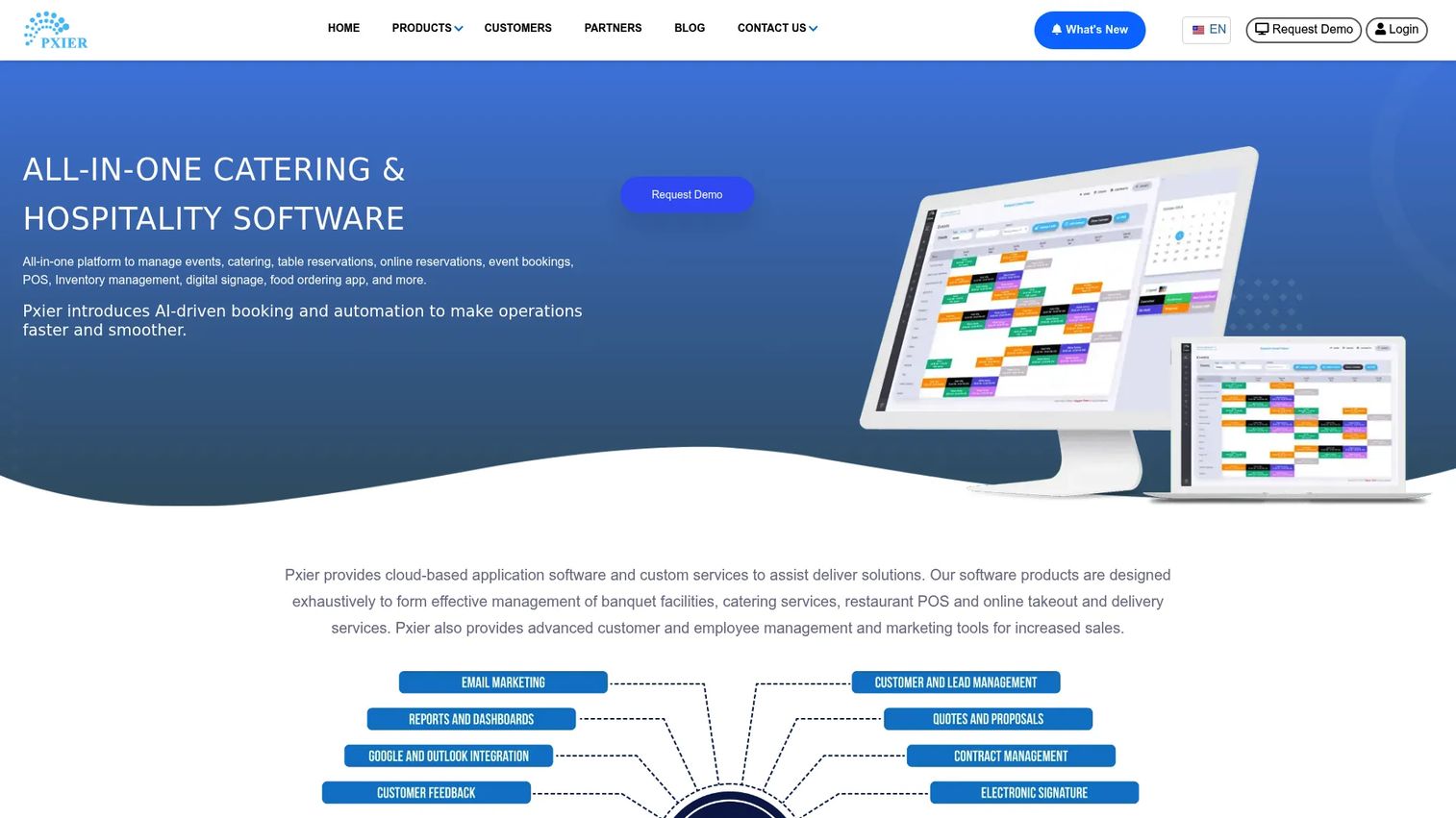
Pxier is cloud-based hospitality software covering events, catering, restaurants, spa, and workspace booking. Its modular structure means a hotel or multi-service venue can run banquet operations alongside restaurant and spa modules from one vendor. That breadth suits teams that want booking plus operational depth without buying four separate systems.
For banquet teams, the strength is coverage across the full workflow. Event booking connects to proposals, contracts, invoicing, and payments. The catering module adds a menu builder, recipe costing, and delivery routing, which matters when food service drives a large share of event revenue.
Best for: Hospitality businesses needing modular event, catering, restaurant, spa, or workspace software in one place.
Key features
- Event booking, proposals, contracts, invoicing, and payments
- Catering management: menu builder, recipe costing, delivery routing
- Takeout, delivery, POS, table reservations, spa, and desk booking modules
Why choose Pxier: If you run more than banquets, Pxier lets you consolidate several hospitality functions under one platform rather than managing point tools for each service line.
Pxier pricing: Public pricing is module-specific. The catering module starts at $65/month, and the OnTime delivery tiers run from $69 to $199/month. Larger deployments are quoted directly.
Pxier holds a 4.4/5 rating on G2.
2. Tripleseat
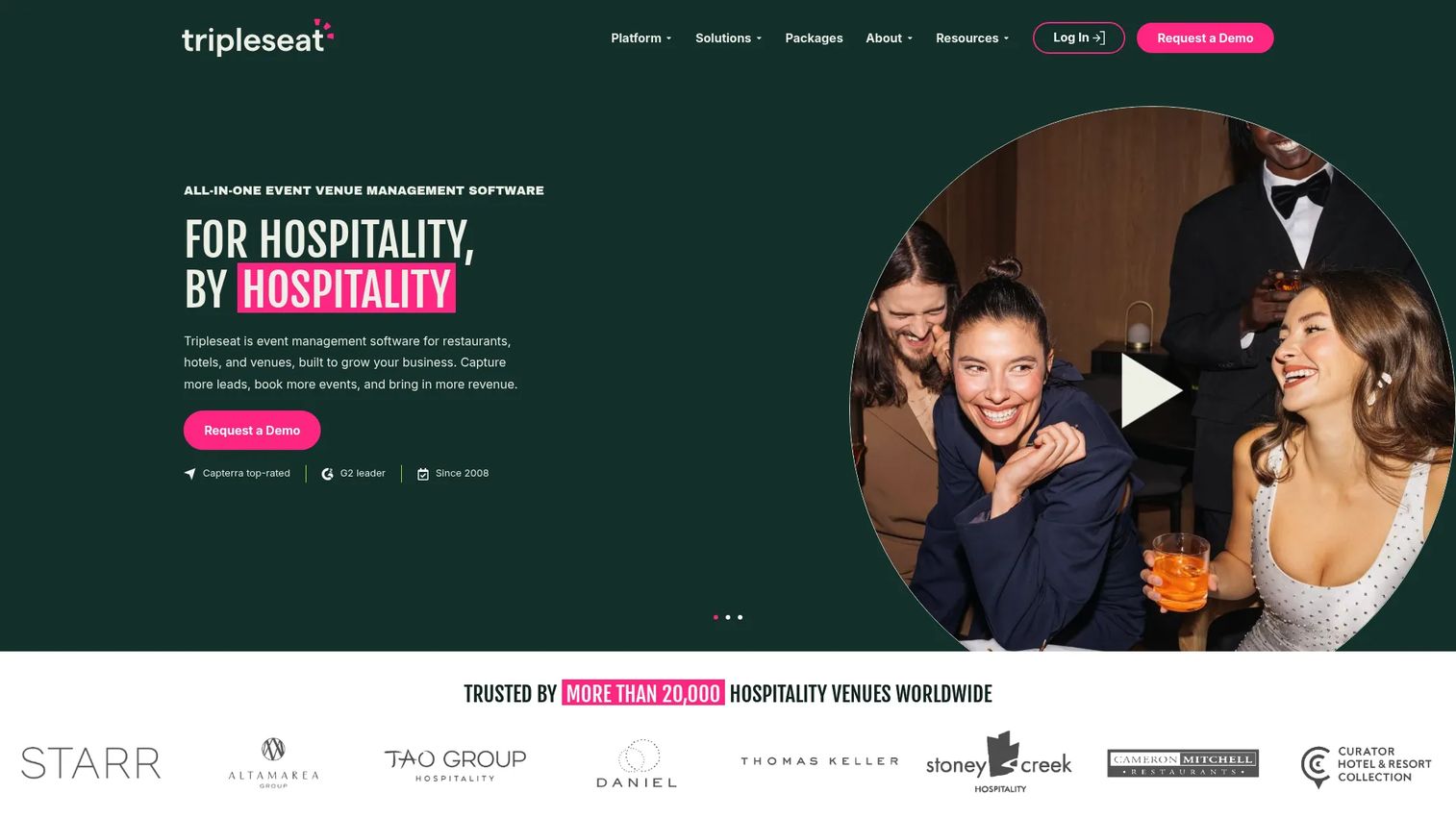
Tripleseat is event management software for restaurants, hotels, and unique venues. It centers on turning inbound interest into booked events, with lead capture feeding a single pipeline your sales team works from. For venues where the guest-facing sales experience matters, that focus pays off.
The platform handles event planning and booking workflows, plus tickets and floor plans for laying out seating and service. Documents and payments live alongside the booking, so a proposal, a contract, and a deposit stay attached to the same event record instead of scattering across email.
Best for: Hospitality venues that want a centralized platform for event sales and management.
Key features
- Event lead capture into a single pipeline
- Event planning and booking workflows
- Tickets and floor plans
Why choose Tripleseat: It fits teams whose bottleneck is converting inquiries into bookings and who want documents, floor plans, and payments in one guest-facing flow.
Tripleseat pricing: Tripleseat uses quote-based pricing. You request a customized quote through their site rather than picking from public tiers.
Tripleseat holds a 4.5/5 rating on G2.
3. Booking Ninjas
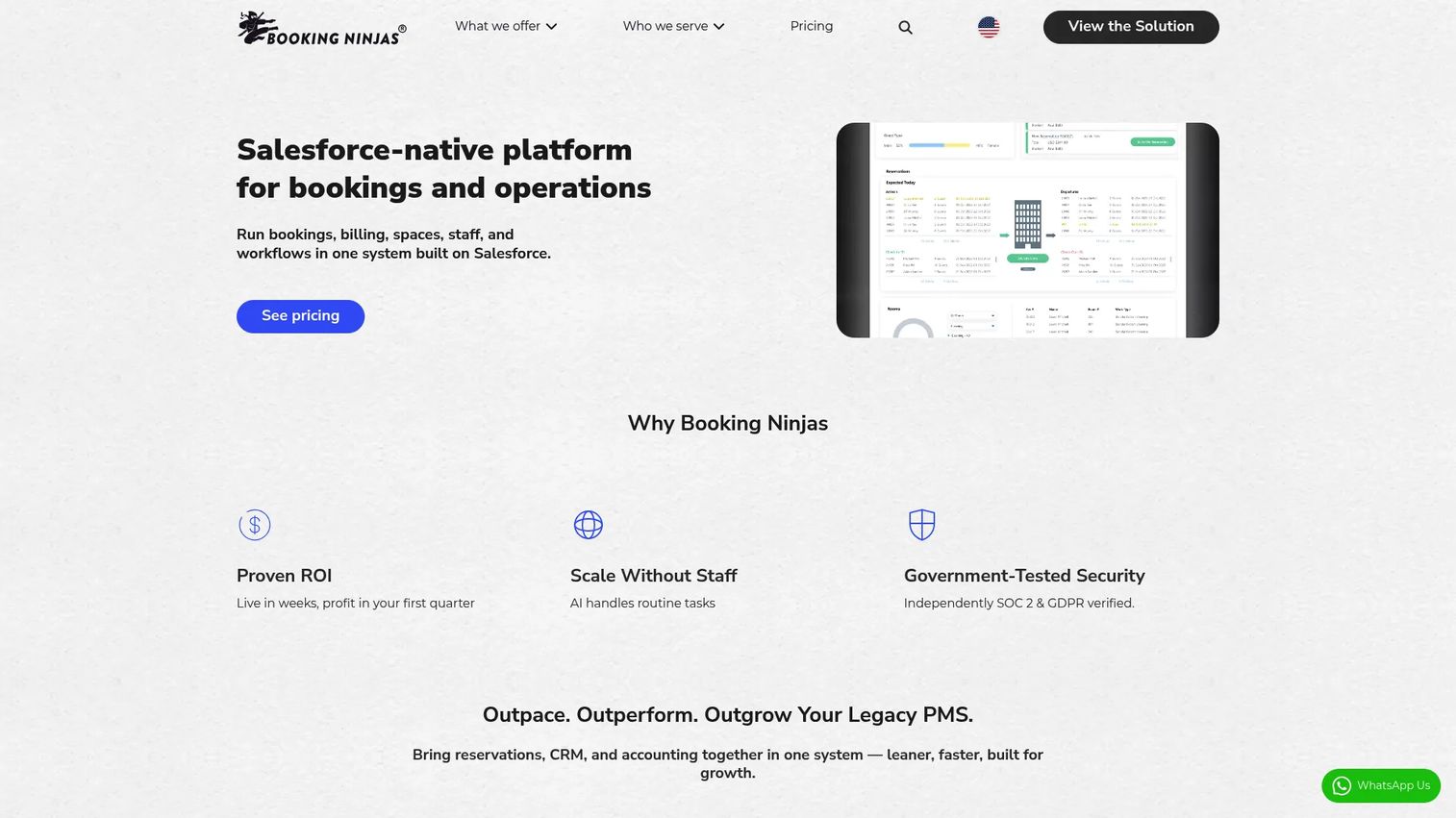
Booking Ninjas is Salesforce-native property and operations management software covering bookings, billing, and workflows. Because it sits on the Salesforce data model, teams already invested in that ecosystem get banquet and property management without leaving their CRM. Guest and account data lives in one place, which helps with multi venue management and reporting.
The platform handles booking and reservation management, housekeeping and operations, and billing with payment processing. For operators running several properties, centralizing that data under one CRM reduces the reconciliation work that fragments across separate systems.
Best for: Hotels, vacation rentals, and multi-site operators needing Salesforce-based booking and property management.
Key features
- Booking management and reservation management
- Housekeeping and operations management
- Billing, invoicing, and payment processing
Why choose Booking Ninjas: If your team already runs on Salesforce, native integration means less duplicate data entry and one system of record across bookings and events.
Booking Ninjas pricing: There is a Freemium tier at $0/year, with a one-time $499 implementation fee. Larger unit-based enterprise plans are quoted based on property count and billing term.
Booking Ninjas does not yet have a meaningful G2 rating, with no reviews listed at the time of writing.
4. Flex Catering
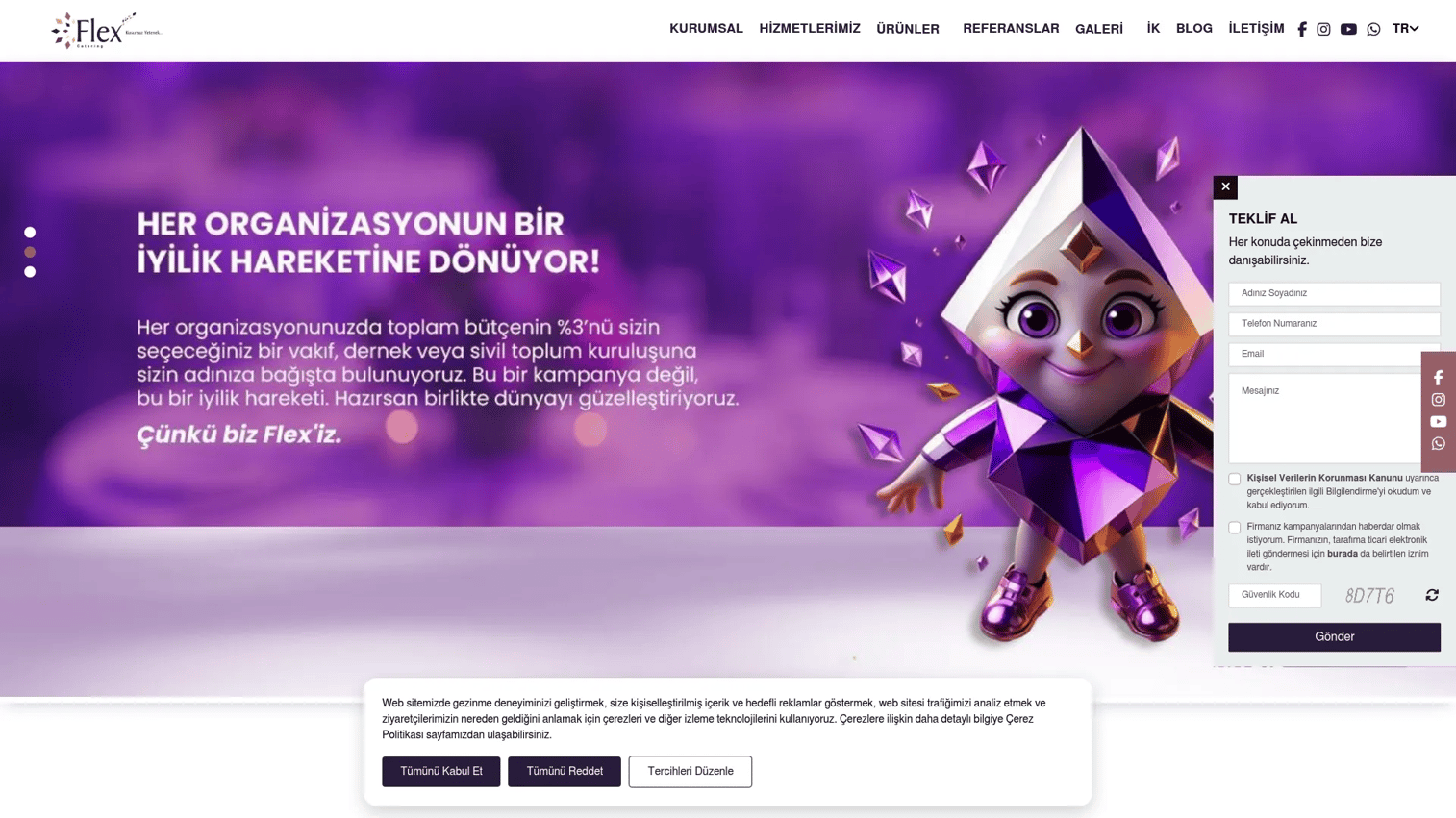
Flex Catering provides catering and event organization services with an emphasis on custom menus and event-specific planning. For banquet teams where food service complexity is high, the appeal is control over menus, table arrangements, and service staff coordination tied to each event.
The offering spans wedding, corporate, brunch, and coffee break catering, with custom menu planning and event-specific organization. Table arrangements, service staff, and equipment support round out the execution side, which matters when a banquet is judged as much on the plate as the room.
Best for: Teams or venues needing tailored catering and event service support.
Key features
- Wedding, corporate, brunch, picnic, and coffee break catering
- Custom menu planning and event-specific organization
- Table arrangements, service staff, and equipment support
Why choose Flex Catering: It fits banquet operators whose differentiator is food and service quality, where menu control and staffing coordination outweigh broad software modules.
Flex Catering pricing: Pricing is custom and quote-based per client and event. There is no public starting price listed on the site.
Flex Catering holds a 2.0/5 rating on G2 across a small number of reviews, so weigh it against your own trial.
5. Perfect Venue
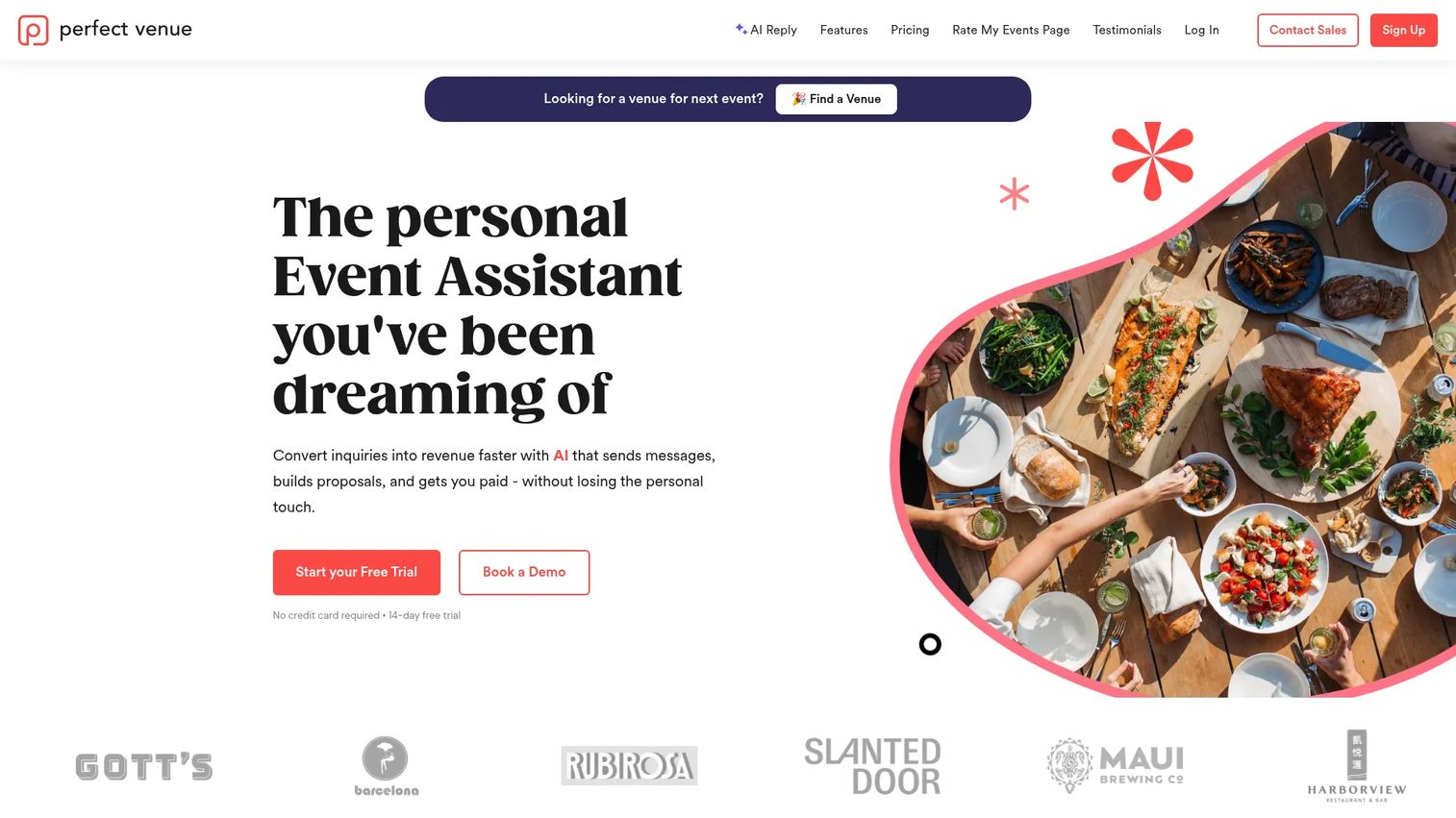
Perfect Venue is event management software for venues and hospitality teams managing private events. It aims at independent restaurants and smaller venues that want all-in-one event sales without the weight of enterprise systems. Leads, bookings, documents, and client communication sit in one clean workflow.
The platform includes a guest portal and express booking, an events calendar, and an AI email reply feature to speed up inquiry response. Proposals, contracts, and payment processing keep the money side attached to each event. For a lean team, that reduces the manual back-and-forth that eats a booking coordinator's day.
Best for: Independent restaurants and venues that need all-in-one private event sales and management.
Key features
- Guest portal and express booking
- Events calendar and AI email reply
- Proposals, contracts, and payment processing
Why choose Perfect Venue: It fits smaller teams that want fast onboarding and a straightforward path from inquiry to booked event without configuring a heavy platform.
Perfect Venue pricing: Monthly per-location plans run $99 Basic, $199 Professional, and $299 Premium, with an Enterprise tier by contact. A free trial is available, and annual billing is offered at lower rates.
Perfect Venue holds a 4.8/5 rating on G2.
6. Event Temple
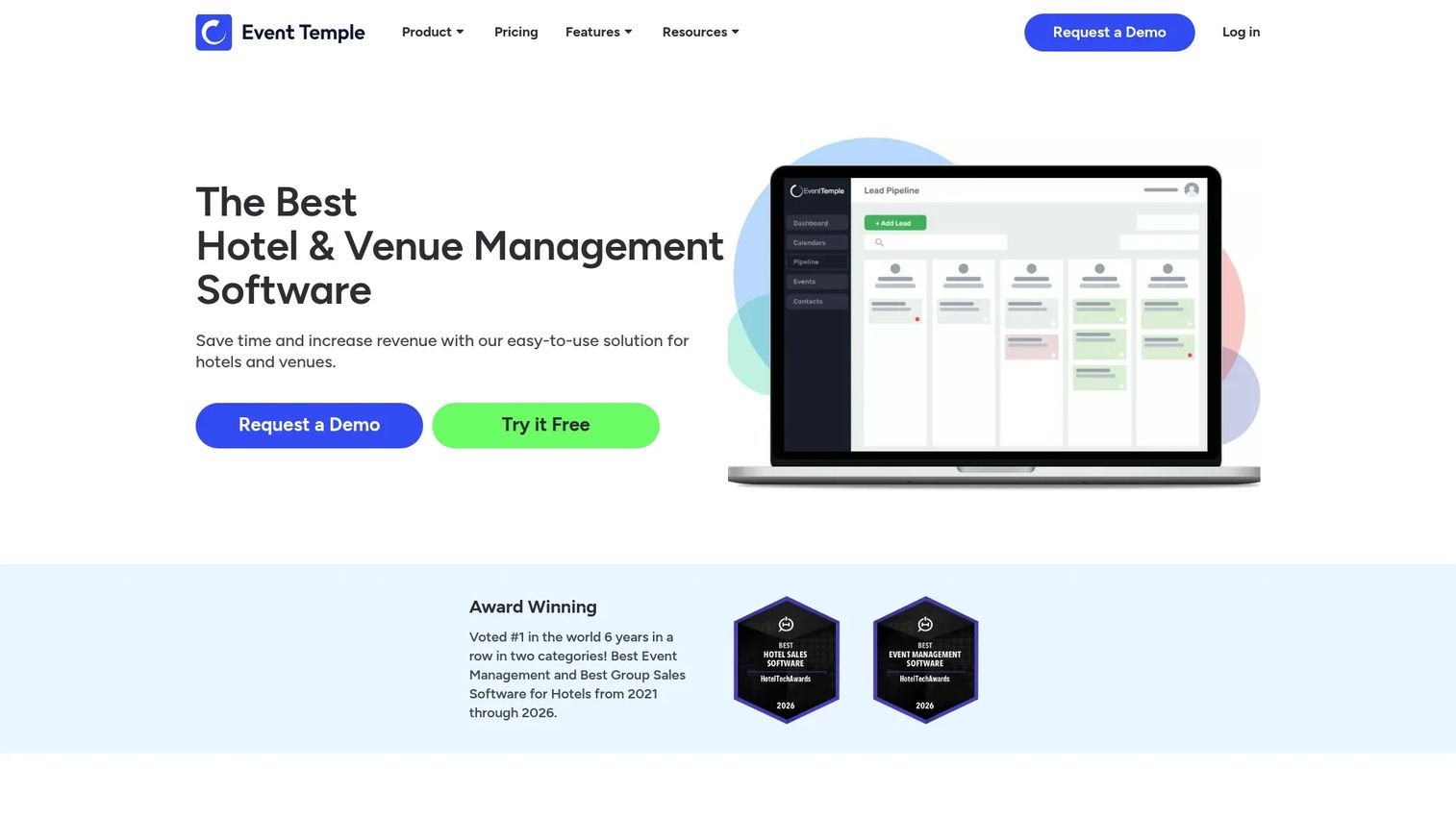
Event Temple is cloud-based venue management software for hotels, venues, and event spaces. It leans toward hotels and venues balancing event, group, and catering revenue, with a sales CRM at the core. That makes it a fit for properties where booking is as much a sales motion as an operations one.
The platform combines sales CRM and lead management with event and catering workflows. E-proposals, contracts, invoicing, and automated workflows carry a booking from first inquiry through execution, which supports room blocks and mixed event revenue that hotels manage side by side.
Best for: Hotels and venues that need an all-in-one sales and event management platform.
Key features
- Sales CRM and lead management
- Event management and catering workflows
- E-proposals, contracts, invoicing, and workflows
Why choose Event Temple: It fits hotels and larger venues where the sales pipeline drives events and you need CRM depth alongside catering and document workflows.
Event Temple pricing: Pricing starts as low as $249/month with custom quotes. Annual payment is required, and free trials are available.
Event Temple holds a 4.8/5 rating on G2.
7. Total Party Planner
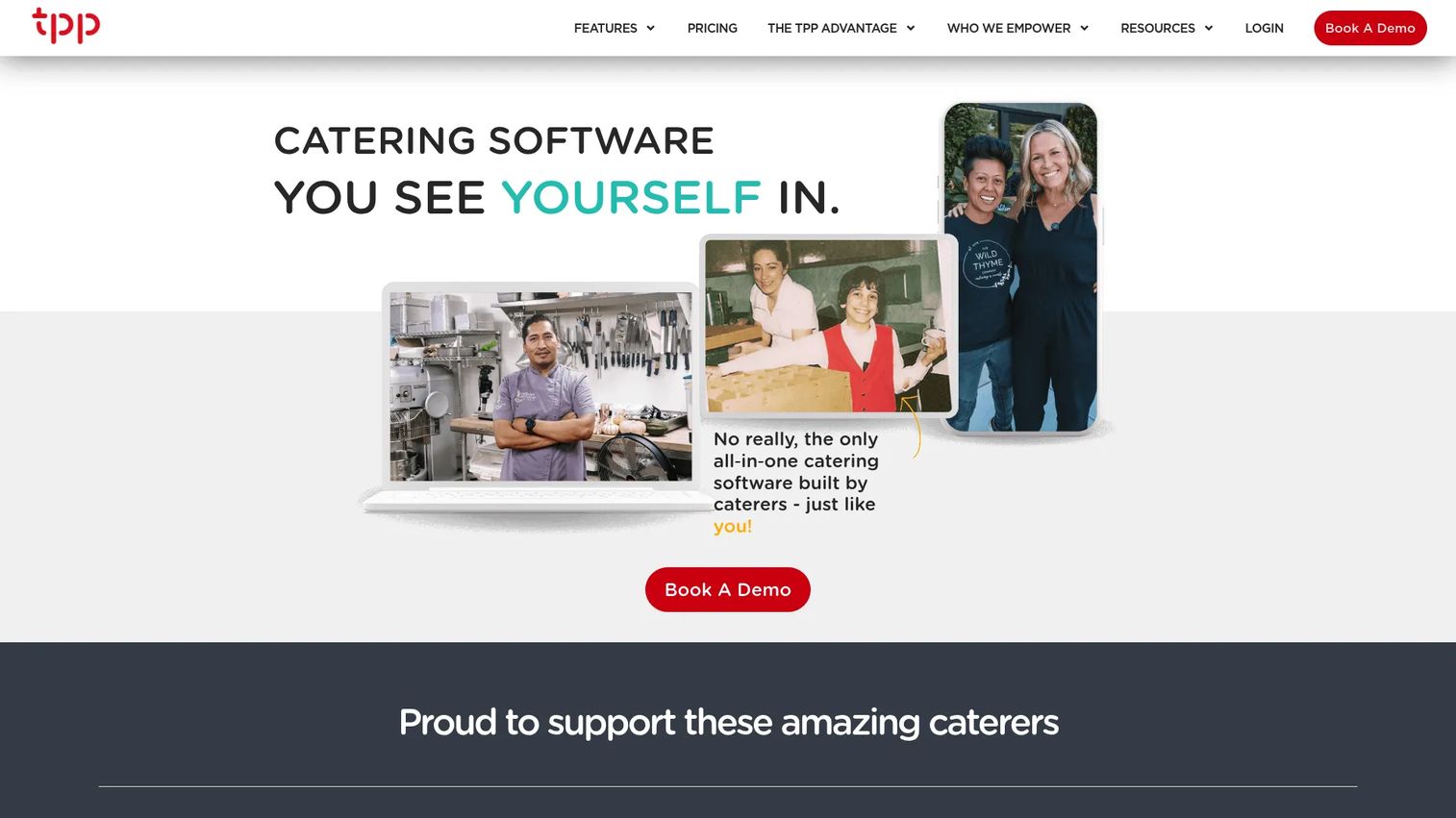
Total Party Planner is cloud-based catering and event management software built for caterers and event planners. Its edge is on the planning and costing side, which suits banquet and catering operators who need to protect margins on food-heavy events. Menu and recipe costing tie directly to profit analysis per event.
The platform covers event management and tracking, sales and lead management, and menu costing with profit analysis. That combination supports the full cycle from proposal through service coordination and billing, with team handoffs kept inside one system rather than passed through email.
Best for: Caterers needing an all-in-one system for events, proposals, costing, and payments.
Key features
- Event management and tracking
- Sales and lead management
- Menu and recipe costing with profit analysis
Why choose Total Party Planner: It fits caterers and banquet teams that need tight cost control on menus, where profit analysis per event matters as much as booking.
Total Party Planner pricing: A month-to-month plan runs $119/month, with an annual option at $1,190/year. Additional users cost extra.
Total Party Planner holds a 4.5/5 rating on G2.
Considerations
Before you commit, run your shortlist against this checklist. The right choice depends on your venue's complexity, not the longest feature list.
Booking and calendar accuracy
Test whether the calendar shows real-time availability across all rooms and dates. Check that a held date locks immediately and triggers a conflict alert before a second contract goes out. This is the single feature that protects revenue you have already earned.
BEO and document workflow
Look at how banquet event order software generates, versions, and shares a BEO. The kitchen and floor team should see the same document the salesperson built. Ask whether menu, timing, and floor plans carry through without re-entry.
Payments, deposits, and invoicing
Confirm the tool tracks deposits, sends invoices, and processes payments in one place. Fragmented money data is where events quietly lose margin. Check whether payment processing is built in or relies on a separate gateway.
Integrations with PMS, CRM, and accounting
Map the PMS and CRM integrations you actually need before buying. Hotels need room blocks synced to the PMS. Catering-first operators care more about accounting and menu costing. The integration fit should match your existing stack, not force a rebuild.
Support and onboarding speed
For a lean team, first-week setup matters as much as features. Ask how long onboarding takes and what support is included. A tool that works in your first week earns its place faster than one that needs a quarter of configuration.
Conclusion
The right banquet management software depends on how your venue makes money and how complex your operations are.
If you run a hotel or multi-service venue, Pxier and Event Temple give you booking plus operational depth, with Event Temple leaning into the sales CRM side. If your bottleneck is turning inquiries into bookings, Tripleseat and Perfect Venue focus on that guest-facing flow, and Perfect Venue is the lighter fit for smaller teams. Salesforce-first operators should look at Booking Ninjas for native CRM integration across multiple properties.
For catering-heavy operations where food service and margins drive the business, Flex Catering and Total Party Planner put menu, costing, and service coordination first.
Start by mapping your real workflow: where inquiries come from, how BEOs move from sales to kitchen, and which systems you already run. Then trial the two tools that match that shape. The best banquet scheduling software is the one your team actually uses in week one, not the one with the most modules.
FAQs
Banquet management software centralizes event booking, BEO creation, deposits, invoicing, floor plans, and client communication in one system. It replaces the spreadsheet-and-email process most venues start with, so a hold, a contract, and a payment all live on the same event record instead of scattering across tools.
Banquet management software is a focused type of event management software built for venues that run seated, catered events like weddings and galas. It emphasizes banquet event orders, room and floor plan setups, and catering coordination. Broader event management software may prioritize registration, ticketing, or conference logistics instead.
Yes. Most banquet event order software generates a BEO from the booking, versions it as details change, and shares it across sales and kitchen. The point is that menu, timing, floor plan, and special requests move from the salesperson to the floor team without re-entry or lost details.
Most tools handle deposits and invoicing directly, and many include payment processing. That keeps the money side attached to each event, so you can track what is owed, what is collected, and what is outstanding without a separate spreadsheet. Confirm whether payments are built in or routed through a third-party gateway.
It depends on your stack. Hotels usually need PMS integration so room blocks and availability stay in sync. Sales-driven teams value CRM integration for lead data. Catering-first operators care more about accounting and menu costing. Map the PMS and CRM integrations you actually rely on before choosing.
For lean teams, yes, if it reduces manual coordination rather than adding steps. Tools like Perfect Venue start around $99/month per location and focus on fast onboarding. The value is fewer double bookings, quicker inquiry response, and one system for leads, documents, and payments.
Hotels should prioritize PMS integration for room blocks, a sales CRM for group and event revenue, and BEO workflows that connect sales to the kitchen. Multi venue management matters if you run several properties. Event Temple and Booking Ninjas are built with that hotel and multi-property orientation in mind.
It shows real-time availability across every room and date, and locks a date the moment it is held. Conflict alerts warn you before a second contract goes out on a room that is already committed. That removes the gap where two salespeople can promise the same space for the same day.